Category Archives: Artificial Intelligence

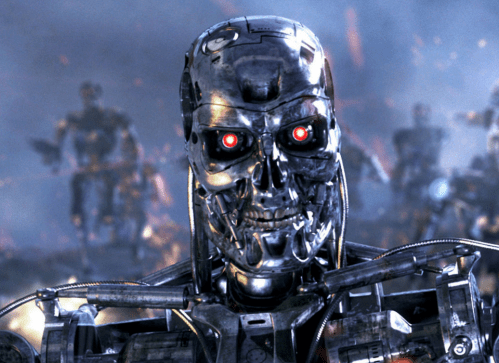
Why The “Terminator” Franchise Has Faltered (And How To Revive It)

https3a2f2fblogs-images.forbes.com2fmarkhughes2ffiles2f20162f012fterminator-2-1200x873

Some franchises just aren’t built to last. It’s a sad fact of life. Sometimes, the things we love just cannot grow and blossom. Not every franchise can be like the Marvel Cinematic Universe. In fact, every effort to mirror the success of the MCU has either failed or come up short. For some, it just doesn’t have resources to grow to that extent. In some cases, trying to force a franchise into something it’s not will only hurt it even more.

The latest franchise to learn this the hard way is the “Terminator.” Believe me when I say I take no joy in saying that. I’ve always had a special place in my heart for all things “Terminator.” The original 1984 film was one of the first R-rated movies that my parents let me watch. I remember being scared, but thrilled at the same time. As a kid, that was a major step up from traditional Disney movies.

Then, I saw “Terminator 2: Judgment Day” and the highest of bars was set. Like the first movie, it thrilled and amazed me to no end. At the same time, it struck many emotional chords, especially at the end. I still get choked up to this day when I hear the T-800 tell John, “I know now why you cry, but it is something I can never do.” There’s a good reason why many rank this among the greatest movies of all time.

A big part of what made that movie great was how it completed the story. What began with Sarah Connor’s journey in the first film ended beautifully in the second. It was as complete a story as it could’ve been. To make a sequel after that would’ve been like trying to improve on the Mona Lisa. While the prospect of sequels still interested me, I never got the sense that they could improve on what the first two movies did.

That didn’t stop Hollywood from trying multiple times. While some of those movies had their moments, they never came close to improving on the first two. If anything, each sequel did more and more damage to the franchise. It showed in both the critical reception and the box office. Now, with “Terminator: Dark Fate” an outright flop, the state of this franchise is dire.

Some are already saying it’s dead. I don’t agree with that. It’s in critical condition. That’s for certain. However, I don’t think it’s doomed to the archives of cinematic history. I believe it’s worth taking a step back to understand why the franchise has faltered so badly. I also believe that there is a way to revive it for a new generation.

The reasons the franchise declined are many. Ask a dozen people who love the franchise as much as I do and chances are you’ll get several dozen answers from each of them. They usually boil down to reasons like this.

The ending of “Terminator 2: Judgment Day” was too perfect and final to improve upon.

The sequels muddied and messed up the timeline more than it already was.

The sequels focused too much on action and not enough on the horror of the first movie or the drama of the second.

The sequels didn’t utilize enough of the original cast, relying heavily on the star power of Arnold Schwarzenegger.

The sequels undermined or undercut the impact of the first two movies.

The sequels were too focused on setting up a trilogy rather than making one solid movie.

The threats in the sequels were too bland and predictable, relying too much on newer Terminators fighting older Terminators.

Personally, I think every one of these reasons has merit, but some have more than others. When I re-watch “Terminator 2: Judgment Day” and compare it to the sequels, I can clearly see the difference from a cinematic and storytelling standpoint. That movie was made to complete the story that James Cameron started telling with the first. Every other sequel was made to set up more sequels.

From there, every other issue compounded. The focus of the movies was less about having a genuine impact and more about teasing a future movie. That only works if the first movie is successful and that didn’t happen with any of the sequels after “Terminator 2: Judgment Day.” They attempted to set up a larger story, but nobody cared about that story anymore.

Then, “Terminator: Dark Fate” committed the ultimate sin, in my opinion, when it effectively rendered the first story pointless for the sake of a new one. For me, that ensured that this would be the first Terminator sequel I didn’t see in the theaters. I doubt I’ll even see it when it comes out on cable. What this movie did to John Connors and the over-arching narrative of the franchise just cannot be overlooked.

It’s so bad that I won’t even bother with a spoiler warning. “Terminator: Dark Fate” kills John within the first two minutes of the movie. In one cold, callous sequence, this character who fought so hard with his mother to save the future is rendered pointless. The only difference he made is that the name of the future robot overlords changed. Instead of Skynet, they got Legion. That’s it.

Not Pictured: Anything remotely appealing.

It would be akin to having Thanos come back to life, murder the Avengers, and wipe out half the life in the universe all over again in the first movie after “Avengers: Endgame.” Everything and everyone they fought to save is rendered pointless. Then, that same movie tries to tell a story about a new savior who nobody has any attachment to and will always be defined by being John’s replacement.

There’s nothing about that story that has any appeal, either to a fan of the Terminator franchise or any franchise, for that matter. On top of that, “Terminator: Dark Fate” went heavy on mixing gender politics with the movie. That’s not just an indirect interpretation. The director, Tim Miller, flat out admitted it in interviews before the movie came out.

I don’t want to get too caught up in that aspect of the movie, but I do think it was a contributing factor to the movie’s shortcomings. We’ve seen it happen with other movies before. When a movie is too focused on enduring its female characters pass the Bechdel Test, it rarely puts enough effort into making them likable or endearing. It also obscures the overall plot by making it predictable.

There are many other flaws to highlight in “Terminator: Dark Fate,” as well as plenty more in the movies that came before it. Rather than belabor those, I want to focus on how this franchise rebuilds itself from here. The failures of the sequels have damaged it significantly. There’s no amount of time travel or retroactive changes that can save the story that “Terminator: Dark Fate” tried to set up.

That said, this franchise does have a few things going for it. It’s a known brand that people recognize. When most people hear the word “Terminator,” they usually understand it as a reference to the movies. Even if it’s not as strong a brand as it used to be, it still carries weight and sometimes, that’s all it needs.

The first step to rebuilding it involves ending the futile efforts to build, expand, or somehow improve on the story of Sarah and John Connor. Their story ended perfectly in “Terminator 2: Judgment Day.” Most Terminator fans agree with that and anything that would somehow undermine their legacy is only going to cause more damage.

The next step is to start a new timeline, but one that doesn’t focus on saving the future leader of the resistance or ensuring that Judgement Day occurs. That story has been done to death. For Terminator to succeed, it needs to show that it can do more. In fact, I believe “Terminator: Dark Fate” actually has one sub-plot that might be the key to the franchise’s renewal and survival.

In that movie, the Terminator that killed John, played by Arnold Schwarzenegger, secretly built a human life for itself after its mission was completed. It walked around as a human, met a woman with a son from a previous marriage, and formed a family. If the movie had any plot worthy of intrigue, it was this. Sadly, it was poorly developed and mostly rendered pointless by the end.

It’s a concept that might resonate more today than it could have in 1984. When the first Terminator movie came out, machines and robots weren’t that smart. They were defined by how inhuman, cold, and calculating they were. In recent years, that has changed. Movies like “Ex Machina” and “Wall-E” have built compelling stories about robots that have human traits, including emotions.

It’s something that the Terminator franchise has flirted with before. Part of what made the ending of “Terminator 2: Judgment Day” so dramatic and impactful was the emotional attachment that John developed for the T-800. Even the T-800 showed signs that he’d formed a bond. It made that final sacrifice feel so powerful.

Even “Terminator: Genysis” explored the idea. It had another T-800 form a fatherly bond with a young Sarah Connor, so much so that she called him Pops. While the movie didn’t flesh out the concept as much as it could’ve, there were moments that highlighted the extent of this bond. I strongly believed that if this movie had emphasized this concept over making John Connor evil, it would’ve succeeded.

Rather than hint or imply it, I believe a future Terminator movie should go all in on this idea of a killing machine developing emotional attachments to humans. It’s something that is more relevant today than it was in 1984 or 1991. We already interact more intimately with technology and we’ve even given our technology a personality. I say that’s a story that the Terminator can build upon.

Imagine the following scenario.

It’s the distant future. Machines have taken over. Humanity has been all but enslaved. There are only pockets of resistance. To combat this, the central machine intelligence, Skynet, creates Terminators with the sole purpose of killing the remaining humans.

However, humans prove crafty. They outwit and outsmart the early models. In order to become better killers, new Terminators are created that can mimic, study, and process emotions. Ideally, it could infiltrate human resistance camps, earn their trust, and terminate them appropriately. They would be the ultimate killers.

Unfortunately, there’s not enough data. Humans are too scattered, weak, and desperate. Skynet doesn’t have enough data to give these new Terminators the capabilities it needs. It calculates that it would take too long and require too many resources to compile the data in the present. As a result, it decides to send a model back in time before machines took over.

The model’s mission is simple. It must integrate into human society, compile data, preserve it, and transmit it back to Skynet by preserving it within disks. If it’s identity as a machine is uncovered by a human, its primary protocol is to terminate the human.

The first model is sent back. It arrives in a bustling city that would one day be reduced to ruin. It finds clothes, has an identity, and begins integration. However, just as it’s starting to establish itself, a human finds out it’s a machine. Its protocols are activated, but then something unexpected happens. It doesn’t terminate the human.

Instead of fear, the human develops intrigue. It connects with the Terminator. They start to form a bond. Eventually, the Terminator’s systems for mimicking emotions turn into real emotions. It develops a love for humanity and decides to defy Skynet. That decision ripples into the future and Skynet tries to send other Terminators back to destroy it.

As a Terminator fan, I would love to see a movie like this. It could work with a male or female Terminator. It could also work with a male or female protagonist. Like the T-800 in “Terminator: Dark Fate,” it could even become part of a family, giving it something to fight for and protect. Instead of fighting to protect a savior, the Terminator fights to change the fate of both itself and humanity.

This is just my idea, though. I’d love to hear with other Terminator fans think. I’d also love to hear how they would revitalize this franchise. I believe there is room for this franchise in the current cultural landscape. As machines and advanced artificial intelligence continue to progress, I suspect it’ll become even more relevant.

Like Sarah Connor once said, there is no fate, but what we make for ourselves. That applies to our future as a species. It also applies to this franchise.

Leave a comment

Filed under Artificial Intelligence, gender issues, media issues, movies, outrage culture, technology

Texting, Sharing Feelings, And How Neuralink Could Revolutionize Both

mind-melds-e1509130881625

A while back, I speculated that memory enhancement might be the first “killer app” for brain implants. At the time, I thought my logic was solid. Every emerging technology needs that one lucrative use that makes it more than just a gimmick. Killer apps are what helped make smartphones more prevalent than toilets in some parts of the world. I believe brain implants will follow a similar path through companies like Neuralink.

I still believe that memory enhancement will be one of those functions that helps turn brain implants into a multi-billion-dollar industry and Elon Musk is likely to secure a share of those billions. However, after listening to the announcement that Musk gave earlier this year about the future of Neuralink, I’d like to revise my speculation a bit.

What Musk presented was plenty intriguing. Neuralink isn’t some wide-eyed fantasy endeavor conjured by an eccentric billionaire. It’s a real company seeking to develop real products that’ll create a whole new market. Some of those early products are already taking shape.

Right now, the goal is simple. Before humans can link their brains to a simulated world on par with “The Matrix,” they first have to develop a means of interfacing with a basic computer. That kind of technology is not fanciful science fiction. We’ve already successfully inserted brain implants into monkeys, which they’ve used to interface with computers.

At this point, linking a brain to a computer isn’t that great a feat, which is why Musk noted that the first prototypes were being developed to assist quadriplegics. They have much more to gain by being able to interact with a computer. The same can’t be said for most people. Why would they undergo invasive brain surgery just so they could send text messages without typing them?

This is where I believe there’s some untapped potential that Neuralink is in a perfect position to realize. It might even be more feasible in the near-term than memory enhancement, as both a product and a killer app. It’s the kind of function that wouldn’t just convince people to let someone stick electrodes into their brains. It could revolutionize how people communicate with one another.

To understand the extent of that potential, take a moment to look at the last five text messages you sent through your smartphone. It doesn’t matter who you sent them to or why. Just take a step back and consider the strengths and weaknesses of this kind of communication.

In terms of strengths, it’s simple and consistent. It doesn’t matter if you’re a poor speaker or have anxiety issues. As long as you can type out the words and the receiver can read them, you can convey a message that instantly travels from one side of the planet to another. As a communications tool, it’s quite revolutionary, especially when you consider how difficult it was to send messages in the past.

At the same time, it has some major limitations. Texting is so impersonal. Even with the benefit of emojis, it’s still just text on a screen. It can’t convey a sense of nuance or subtext. There’s no undertone to decipher or facial cues to note. While this can make the message more objective, it also makes it feel cold and unemotional. It’s part of why breaking up with someone via text is so taboo.

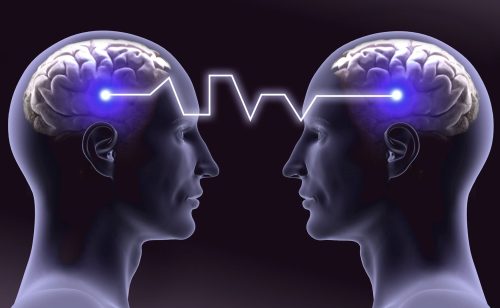
With those limitations in mind, imagine having the ability to convey a feeling to go along with a text message. Instead of an emoji, you included the emotional context of that message. Maybe you were angry, upset, offended, or elated. It doesn’t have to be too complex. It just has to give a dramatic weight to the emotion.

You send that message knowing the person on the other end could experience it too. They don’t have to read the words and surmise your feelings. They know because they get to experience them too. They feel what you felt when you sent that message. They feel it in a way that no amount of facial cues or subtext can adequately convey.

When you text someone you love them, they can feel your love.

When you text someone you’re angry, they can feel the extent of your anger.

When you text someone you’re seriously depressed, they know it’s not a joke.

This sort of insight is unprecedented. It’s also a function that companies like Neuralink can make a reality and market it as a revolutionary form of communication. It wouldn’t require that we completely abandon our current methods of communication. People would still need their smartphones and computers. This would just be a way of augmenting those tools.

Once a brain implant can link up to a smartphone, then there’s suddenly a new communications channel the likes of which we’ve never had. That channel need not be restricted to moving a cursor or typing out letters on a screen. These commands are simply brain signals coded by implants and transmitted to a device that can make sense of them. Our feelings are just a different kind of signal.

Modern neuroscience already has a comprehensive understanding of where emotions come from. A brain implant could simply take signals from those parts of our brain, code them in a way our smartphone can interpret, and package them in a way that can be transmitted and received by another user.

It’s not telepathy. It’s not complex thought or ideas, either. These are the kinds of feelings and emotions that almost everyone experiences in some form or another. Our natural empathy may allow us to relate to one another as a social species, but we’ve never been able to truly share our feelings in a way that others can experience.

I know the idea of sharing feelings has gained a corny connotation, but I think a part of that has to do with how inefficient our current system is. Even before smartphones and texting, our age-old traditions of talking to one another, deciphering tone, and reading body language has left us with plenty of room for improvement.

It doesn’t matter how empathetic or understanding you are. At the end of the day, when someone shares their feelings, you’re still guessing the details and trying to mirror them within your brain. While that has taken us far as a species, in terms of forming social bonds and coordinating as a group, brain implants could take it to another level.

Once we can transmit our feelings with the same ease we do with a text message, then that takes us into uncharted territory. Armed with this tool, we wouldn’t just be able to communicate over vast distances. We’d be able to convey genuine, intimate feelings. Our brains are already wired to form strong social bonds with others. This technology would effectively supercharge it.

It certainly wouldn’t stop with just two people sending a text message with a happiness emotion attached to it. Once emotions can be transmitted like a text message, then there’s no reason they can’t be shared the same way we share everything else on social media. While some may recoil at the idea of sharing something so intimate, trend is already ongoing. Sharing feelings on a mass scale would just accelerate that trend.

The impact this will have on people is difficult to determine. Like I said before, this is uncharted territory. We’ve never had the ability to both know and share the intimate feelings of other people. Would that make us more empathetic? Would that make us more loving? I’ve argued before that it likely will, but I also don’t deny that some may handle it worse than others.

Whatever form Neuralink’s products take, there’s no denying the potential of this technology. There are still technical and engineering challenges, but that has never scared off Elon Musk or ambiguous billionaires like him. Human beings already have an innate need to connect with one another. Smartphones, texting, and every other communications tool we’ve ever created reflect that desire.

The market for those tools is already strong. The market for something that can communicate on a more intimate level will likely be even stronger. Even if the ultimate goal of Neuralink is to help humanity interact with an advanced artificial Intelligence, a good first step would be to help improve our ability to interact with one another.

1 Comment

Filed under Artificial Intelligence, futurism, Neuralink, psychology, technology

Guest Post: 5 Highly Recommended Books on Machine Learning (ML) and Artificial Intelligence (AI)

now-ae452835-2617-420e-b8c3-58b5c4668645-1210-680

The following is an article submitted by Harsh Arora, a freelance blogger and writer who shares a similar interest in artificial intelligence, futurism, and the future of the human race. To Mr. Arora, I sincerely thank you for this submission and your continued support.


We would first of all like to welcome all types of readers to our blog – newbies who are just interested about these buzzwords and also experts on the subjects who would like to extend their existing knowledge on the matter. Having established that, it is also imperative to not only define these two concepts (AI and ML) but also to differentiate between them. Although these terms are used synonymously, they are in fact different from one another. AI is the broader level concept where we feed the machine with data and then expect it to take decisions based on that data. ML on the other hand is a subset and application of AI where we feed machines with data and allow them to learn on their own.

Following are the books we recommend for you to learn more about them:

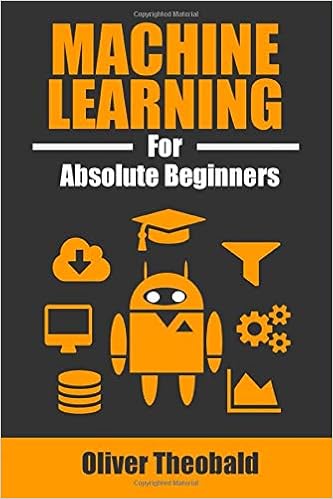
Machine Learning for Absolute Beginners: A Plain English Introduction – Oliver Theobald

It’s easy to see which part of our reader base this particular book is targeted towards. You may be a complete outsider to the world of ML and still be able to understand the granular technical aspects of it through this book. Oliver Theobald assumes no background of programming or coding on the behalf of the reader and allows you to learn right from scratch. It is not only the perfect book for newbies but also experts in the field because it tries to explain the basic concepts in a very coherent and distinct manner. This books not only helps you learn about the concepts of ML but also allows you to unlearn and then relearn them, something is really important for such a subject matter.

The Hundred-Page Machine Learning Book – Andrew Burkov

This is once again a book that will interest not only beginners but also experts in the field. Andrew has really been able to simplify the concepts of ML into basic and easily comprehensible set of cliff notes. With just 100 pages at his disposal, he has really captured the over-arching essence of ML. Though, of course it is not a deep dive into the subject matter like some of our other recommendations, it is however a wonderful summary of it. It is perfect for people who want to understand this technology and its implementations and implications in the real world.

Artificial Intelligence: A Modern Approach (3rd Edition) – Stuart Russell & Peter Norvig

Stuart Russel is one of the sharpest minds working in the field of AI and is a faculty at University of Berkeley. Additionally, he is an Oxford graduate and also holds a PhD from Stanford. In his third edition of the book, Stuart decided to collaborate with Peter Norvig who is currently the R&D Director at Google. Collaboratively, they have created a well-researched and well-defined approach towards understanding modern AI. This book is perfect for students of under-graduate or graduate level courses or even for laymen with the basic understanding of the fundamentals of AI. This long-anticipated edition of its best-seller predecessors offers the most up-to-date and comprehensive understanding of the theory and practice of artificial intelligence.

Machine Learning – Tom M. Mitchell

This is a classic book in which the author has covered the techniques and concepts of the numerous fields and unified them to provide in depth view of ML. Some of the subjects covered include re-enforcement learning, inductive logic programming and genetic algorithms. Tom has tried to simplify these complicated concepts through a clear and explanatory way of writing. At the same time, he has used tools such as case studies and relevant examples to provide a comprehensive overview. Lastly, there is no knowledge of the complex ideas that he has assumed on the part of the reader.

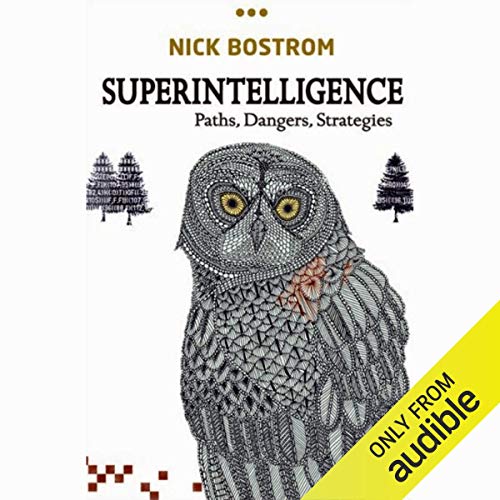
Superintelligence – Nick Bostrom

If you are familiar with the work of Mr. Nick Bostrom, you know you are in for a treat with this book. He takes a different approach to not only explain the artificial intelligence but also the effects it has on our existence. Nick believes that self-aware machines are potentially a bigger threat to humanity than climate change. He has authored over 200 books and his writing forces you to take him seriously in this seemingly sci-fi piece of literature. He helps us understand how the most intelligent form of life i.e. now humans have governed the fate of existence since the dawn. However, with a species (sort of) that has the potential to be smarter than us, what chance is there that they won’t dominate us?

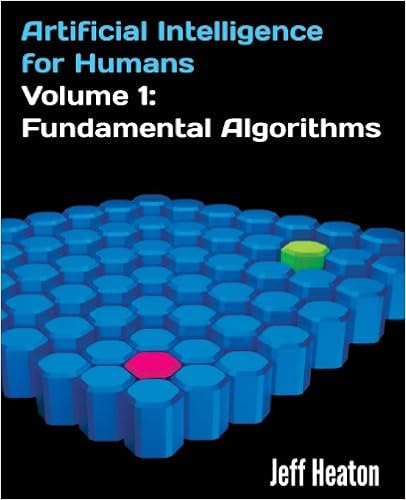
Artificial Intelligence for Humans (Fundamental Algorithms: 1) – Jeff Heaton

If you are planning to build a career in artificial intelligence, this should be your starting off point and you should read it from cover to cover. Jeff Heaton cover several topics in depth such as clustering, distance metrics, dimensionality, linear regression, error calculation and hill climbing. The book takes you through the actual mathematical calculations that you can compute yourself and also see the real-world applications of. However, to build a career in this industry, you must not only understand the basic principals of AI but also of algebra and computer programming. This book will build on those concepts through various computer languages such as C, Java, C#, R and Python.

These books are some of the best in the market and will be perfect for people of all knowledge levels of AI and ML. Given that the industrial revolution 4.0 is upon us and almost all technology is slowly being integrated with it, it is suggested that we all learn more about it. However, it is completely up to you to form opinions about whether or not this technology will be harmful to humans in the long run. Additionally, we also suggest you read up on a few other technologies that are prevalent in this 4.0 era such as IOT, Blockchain and Cloud Computing.

About me: Harsh Arora is a proud father of four rescued dogs and a leopard gecko. Besides being a full-time dog father, he is a freelance content writer/blogger and a massage expert who is skilled in using the best massage gun.

2 Comments

Filed under Artificial Intelligence, biotechnology, futurism, technology

Kids, Technology, And The Growing Bond Between Them

touchscreens-are-bad-for-toddlers-and-babies-sleep

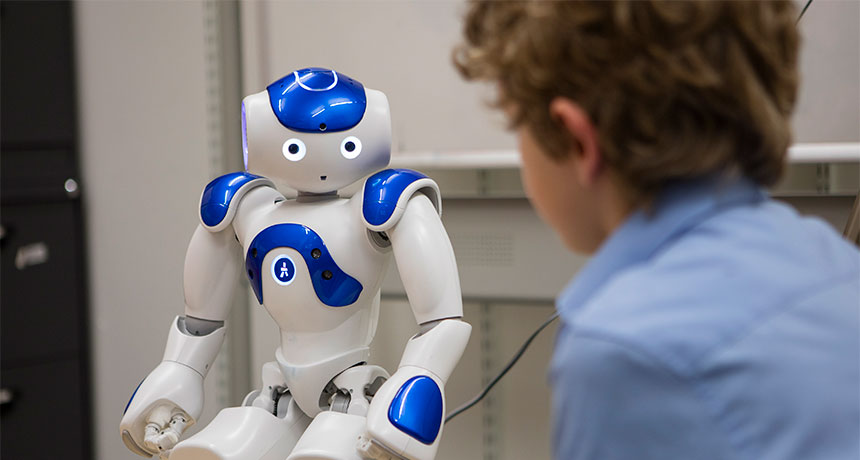
Last year, I explored the idea of children being raised by intelligent robots. For the most part, it was a thought experiment. I approached it in the context of a technology that won’t be implemented anytime soon. Robotics technology hasn’t advanced to the point where it can properly mimic human-like behaviors, although Boston Dynamics is getting pretty damn close.

We also don’t have an artificial intelligence that could properly mirror human levels of intelligence, let alone basic parenting skills. Even when our technology gets to that level, it’ll probably still be a while before people start trusting it with children. Most people today probably recoil at the idea of a robot raising their kids, even if it were programmed with all the best parenting skills.

I tend to share that sentiment. While I’m generally of the opinion that technology will be a net positive, even for something as potentially dangerous as artificial intelligence, the idea of any non-human system raising kids just doesn’t seem workable. Recently, I’ve had to reassess that notion.

Over the past couple years, some close friends and relatives of mine welcomed their first children into the world. I’ve been lucky enough to share in some of these monumental moments. I’ve watched these kids grow from newborn infants into adorable toddlers. Some already know me as their awesome uncle.

While I could spend all day describing how adorable they are, I’ve noticed something remarkable in their growth that no generation before them has experienced before. It has to do with the way in which they interact with technology. I would even argue it’s gone a step further than basic interaction. It’s almost a bond at this point.

I first noticed when I saw a kid who wasn’t even two-years-old use his mother’s smartphone. Granted, he didn’t use it to do anything too fancy, but he was able to open apps, interact with icons, and do more than just put it in his mouth, which counted as a major feat for him.

He wasn’t the only one, either. You don’t have to look far to see videos of infants using tablets. Some use it better than others. I’ve met some who use it better than many adults. If you need further proof, check out this video of a two-year-old operating an iPad back in 2010.

Not surprisingly, this has already caused concerns among parents, teachers, and doctors. There is genuine, legitimate concern about what these devices are doing to the minds of young children. While the research on this impact is still ongoing and inconclusive, the proverbial genie is out of the bottle. These devices exist, kids are using them, and they’re using them quite well.

I believe this has implications beyond causing yet another moral panic about how strange new technology affects children. Make no mistake. There will be a moral panic. I know because I lived through something similar when I was a kid.

Back then, the big fear was about television. Parents, teachers, and doctors were genuinely concerned about all the time kids were spending watching TV. Some went so far as to claim that they were letting TV raise their kids. I question whether these people understood how a TV worked.

Television is an entirely passive technology. You turn it on, pick a channel, and that’s all you can control. Until recently, it wasn’t very interactive. As a kid, I just saw it as another form of entertainment, like comic books, video games, and sports. These tablets that kids are using now are considerably different.

These aren’t devices that just flash colorful images in front of a kid to entertain them. Kids actually interact with these things. They can guide and manipulate what happens on the screen. Many tablets offer applications specifically tailored for children and can be valuable learning tools. A TV show can only do so much to teach a kid skills. An interactive application can do so much more.

At the moment, most of these applications are basically interactive games. Once artificial intelligence enters the equation, the potential changes considerably. Robot pets are becoming more sophisticated, operating on a level that makes it easier to establish a genuine bond with them. The same goes for virtual assistants. They were once a novelty. Now, they’re a mundane feature of most gadgets.

The kids being born today are entering a world where these same assistants are growing alongside them. They’re getting smarter with each passing day. At some point, they may become a more trustworthy source of information for kids than parents. Given the tendency of parents to lie to their kids, even if it’s for their own good, this could be a game-changer for kids and parents alike.

Going back to some of the kids in my own family, I’ve seen signs of this change. Some kids get genuinely upset when you take a tablet or smartphone away from them. They’ll react stronger than they would if someone took a treat or toy away from them. It gives the impression that these devices aren’t just toys to them. They’re something so much greater.

That has potential benefits and drawbacks. In terms of benefits, these devices and the applications they utilize could help children learn faster and more effectively at young ages. Just being able to effectively utilize a smartphone or tablet is a useful skill in almost any profession. A kid who literally grew up with this technology is going to have an edge over their elders in that respect.

There will still be costs. Kids who grow up around these devices and the connected world they link to could be prone to less-than-positive influences. They’ll be surrounded by the forces of outrage culture, online harassment, fake news, and professional trolls. It’s hard enough for adults to deal with these kinds of issues. For young kids who grew up in this system, it could be even harder.

At the moment, there are too many unknowns. One way or another, this technology exists and kids as young as one are capable of using it. They’re growing up with it. They’re bonding with it. The same goes for the technology itself. As it evolves and advances, it may get to a point where it’s a greater authority figure than any parent. At that point, robots raising kids might seem entirely natural.

I don’t claim to know how it will play out. At times, I do worry about the kids in my family or the kids I may have at some point in my life. However, I still tend to be optimistic about how this technology will impact kids. As scary as it may be to think about technology raising kids, let’s not forget that there are still plenty of dumb parents out there whose kids can only benefit from this.

1 Comment

Filed under Artificial Intelligence, Current Events, futurism, psychology, technology

Killer Robots, Drone Warfare, And How Artificial Intelligence Might Impact Both

920x515_charlene

On November 5, 2001, the history of warfare changed forever. On that date, an unmanned Predator drone armed with hellfire missiles killed Mohammed Atef, a known Al-Qaida military chief and the son-in-law to Osama Bin Laden. From a purely strategic standpoint, this was significant in that it proved the utility of a new kind of weapon system. In terms of the bigger picture, it marked the start of a new kind of warfare.

If the whole of human history has taught us anything, it’s that the course of that history changes when societies find new and devastating ways to wage war. In ancient times, to wage war, you needed to invest time and resources to train skilled warriors. That limited the scope and scale of war, although some did make the most of it.

Then, firearms came along and suddenly, you didn’t need a special warrior class. You just needed to give someone a gun, teach them how to use it, and organize them so that they could shoot in a unit. That raised both the killing power and the devastating scale of war. The rise of aircraft and bombers only compounded that.

In the 20th century, warfare became so advanced and so destructive that the large-scale wars of the past just aren’t feasible anymore. With the advent of nuclear weapons, the potential dangers of such a war are so great that no spoils are worth it anymore. In the past, I’ve even noted that the devastating power of nuclear weapons have had a positive impact on the world, albeit for distressing reasons.

Now, drone warfare has added a new complication. Today, drone strikes are such a common tactic that it barely makes the news. The only time they are noteworthy is when one of those strikes incurs heavy civilian casualties. It has also sparked serious legal questions when the targets of these strikes are American citizens. While these events are both tragic and distressing, there’s no going back.

Like gunpowder before it, the genie is out of the bottle. Warfare has evolved and will never be the same. If anything, the rise of combat drones will only accelerate the pace of change with respect to warfare. Like any weapon before it, some of that change will be negative, as civilian casualties often prove. However, there also potential benefits that could change more than just warfare.

Those benefits aren’t limited to keeping keep soldiers out of combat zones. From a cost standpoint, drones are significantly cheaper. A single manned F-22 Raptor costs approximately $150 million while a single combat drone costs about $16 million. That makes drones 15 times cheaper and you don’t need to be a combat ace to fly one.

However, those are just logistical benefits. It’s the potential that drones have in conjunction with advanced artificial intelligence that could make them every bit as influential as nuclear weapons. Make no mistake. There’s plenty of danger in that potential. There always is with advanced AI. I’ve even talked about some of those risks. Anyone who has seen a single “Terminator” movie understands those risks.

When it comes to warfare, though, risk tolerance tends to be more complicated than anything you see in the movies. The risks of AI and combat drones have already sparked concerns about killer robots in the military. As real as those risks are, there’s another side to that coin that rarely gets discussed.

Think back to any story involving a drone strike that killed civilians. There are plenty of incidents to reference. Those drones didn’t act on orders from Skynet. They were ordered by human military personnel, attempting to make tactical decision on whatever intelligence they had available at the time. The drones may have done the killing, but a human being gave the order.

To the credit of these highly trained men and women in the military, they’re still flawed humans at the end of the day. No matter how ethically they conduct themselves, they’re ability to assess, process, and judge a situation is limited. When those judgments have lives on the line, both the stakes and the burdens are immense.

Once more advanced artificial intelligence enters the picture, the dynamics for drone warfare changes considerably. This isn’t pure speculation. The United States Military has gone on record saying they’re looking for ways to integrate advanced AI into combat drones. While they stopped short of confirming they’re working on their own version of Skynet, the effort to merge AI and combat drones is underway.

In an overly-simplistic way, they basically confirmed they’re working on killer robots. They may not look like the Terminator or Ultron, but their function is similar. They’re programmed with a task and that task may or may not involve killing an enemy combatant. At some point, a combat drone is going to kill another human being purely based on AI.

That assumes it hasn’t already happened. It’s no secret that the United States Military maintains shadowy weapons programs that are often decades ahead of their time. Even if it hasn’t happened yet, it’s only a matter of time. Once an autonomous drone kills another human being, we’ll have officially entered another new era of warfare.

In this era, there are no human pilots directing combat drones from afar. There’s no human being pulling the trigger whenever a drone launches its lethal payload into a combat situation. The drones act on their own accord. They assess all the intel they have on hand, process it at speeds far beyond that of any human, and render decisions in an instant.

It sounds scary and it certainly is. Plenty of popular media, as well as respected public figures, paint a terrifying picture of killer robots killing without remorse or concern. However, those worst-case-scenarios overlook both the strategic and practical aspect of this technology.

In theory, a combat drone with sufficiently advanced artificial intelligence will be more effective than any human pilot could ever be in a military aircraft. It could fly better, carrying out maneuvers that would strain or outright kill even the most durable pilots. It could react better under stressful circumstances. It could even render better judgments that save more lives.

Imagine, for a moment, a combat drone with systems and abilities so refined that no human pilot or officer could hope to match it. This drone could fly into a war zone, analyze a situation, zero in on a target, and attack with such precision that there’s little to no collateral damage.

If it wanted to take a single person out, it could simply fire a high-powered laser that hits them right in the brain stem.

If it wants to take out someone hiding in a bunker, it could utilize a smart bullet or a rail gun that penetrates every level of shielding and impacts only a limited area.

If it wants to take out something bigger, it could coordinate with other drones to hit with traditional missiles in such a way that it had no hope of defending itself.

Granted, drones this advanced probably won’t be available on the outset. Every bit of new technology goes through a learning curve. Just look at the first firearms and combat planes for proof of that. It takes time, refinement, and incentive to make a weapons system work. Even before it’s perfected, it’ll still have an impact.

At the moment, the incentives are definitely there. Today, the general public has a very low tolerance for casualties on both sides of a conflict. The total casualties of the second Iraq War currently sit at 4,809 coalition forces and 150,000 Iraqis. While that’s only a fraction of the casualties suffered in the Vietnam War, most people still deem those losses unacceptable.

It’s no longer feasible, strategically or ethically, to just blow up an enemy and lay waste to the land around them. Neither politics nor logistics will allow it. In an era where terrorism and renegade militias pose the greatest threat, intelligence and precision matter. Human brains and muscle just won’t cut it in that environment. Combat drones, if properly refined, can do the job.

Please note that’s a big and critical if. Like nuclear weapons, this a technology that nobody in any country can afford to misuse. In the event that a combat drone AI develops into something akin to Skynet or Ultron, then the amount of death and destruction it could bring is incalculable. These systems are already designed to kill. Advanced AI will just make them better at killing than any human will ever be.

It’s a worst-case scenario, but one we’ve managed to avoid with nuclear weapons. With advanced combat drones, the benefits might be even greater than no large-scale wars on the level of Word War II. In a world where advanced combat drones keep terrorists and militias from ever becoming too big a threat, the potential benefits could be unprecedented.

Human beings have been waging bloody, brutal wars for their entire history. Nuclear weapons may have made the cost of large wars too high, but combat drones powered by AI may finally make it obsolete.

8 Comments

Filed under Artificial Intelligence, Current Events, futurism, technology

Finding True Love And Living Happily Ever After According To Isaac Arthur

photographer-finds-couple-she-took-proposal-pics-of

I’ve talked quite a bit about the future of love on this site. I’ve explored the impact of artificial intelligence, radical life extension, and human enhancement on the dynamics of pursuing love and fostering romance. I don’t claim to be the best when it comes to contemplating these topics. I’m humble enough to admit I’m not even in the top 10.

As such, I freely admit there are people who discuss this issue in far greater detail with far greater production values than I’ll ever manage. Just recently, I stumbled across a YouTube channel by someone who makes contemplating the future a relaxing, engaging, and downright pleasant experience.

The name of that channel is Isaac Arthur. If you, or anyone you know, has even a passing interest on future technology, sci-fi concepts, or space exploration, I highly recommend you check out this channel. It covers a wide range of topics from colonizing space to future sources of energy to what kind of pets we may have in the future.

Naturally, a video he made about finding love using future technology is one of my favorite. It only came out earlier this year, but it perfectly breaks down how love, romance, marriage, and family may unfold in a future dominated by artificial intelligence and radical life extension. Mr. Arthur does in one video what I probably couldn’t do in a hundred articles. For that, I thank him.

Leave a comment

Filed under Artificial Intelligence, futurism, romance, sex in society, sexuality, Sexy Future, technology

Neuralink Event: Updates, Insights, And (Big) Implications

finalmente-sapremo-neuralink-progetto-segreto-elon-musk-v3-388343

It’s been a while since I’ve talked about Neuralink. There’s a good reason for that. Even though Elon Musk announced the formation of the company back in 2017, there hasn’t been much news, aside from a few cryptic teases. That didn’t stop me from proclaiming it be one of the most important venture of all time and I still stand by that proclamation.

Finally, on July 16, 2019, we got some news from Neuralink that attracted major press coverage. Musk, in an event that was live-streamed, offered some tantalizing details on the state of the company’s research into advanced brain implants. He didn’t announce that they’d perfected it. However, he did make clear that this is not some crazy idea he just scribbled on a cocktail napkin.

The presentation was lengthy and I encourage everyone to check it out. I’m nowhere near as smart, articulate, or successful as Elon Musk. Very few individuals on this planet are. If for no other reason, watch this event to affirm that he’s serious about merging human brains and machines.

If you don’t have time to watch the whole thing, here a few key points:

  • The first use of this technology will be to treat brain disorders
  • The company has over $150 million and almost 100 employees
  • It has made significant strides in crafting advanced electrodes that can be implanted in a human brain
  • The current prototype utilizes chips that can process brain signals
  • The prototypes have proven functional with rats and monkeys

These insights are intriguing, but they’re not going to change the world overnight. It’s not like we’ll be able to order our own brain implants from Amazon by the end of the year. This technology is still in its infancy. We’ve only recently developed computer hardware that can communicate with brain cells. We’re a long way off from functioning on the level of the Borg.

What Musk laid out wasn’t just a vision. He offered specifics, citing where we are with the technology and who will initially benefit. It makes sense for those with brain disorders to act as the first beneficiaries. Aside from the difficulty of convincing most people to have something put into their brains, these implants could be invaluable at helping quadriplegics improve their lives.

It’s not an impossible feat, having brains interact directly with machines. It has been successfully done with monkeys. It’s just a matter of testing, refinement, and improvement. Like cell phones and Lasik surgery, which I’ve had done, the technology will improve once it has a foundation to build on.

Now, we got a glimpse of that foundation and there’s plenty of reasons for excitement. While nobody can predict the future, especially not as well as someone like Elon Musk, there are some major implications for the near and distant future.

Just controlling a computer with your brain is not the endgame of this technology. Musk stated clearly in the event that the ultimate goal is to create an intimate, symbiotic relationship between humans and advanced artificial intelligence. He sees it as a necessary relationship if we’re to minimize the existential threat posed by AI.

Before we get to that goal, though, it’s almost a given that this technology will find other uses and markets. One market that wasn’t mentioned in the presentation, but could prove very lucrative, is gaming.

As much as video game technology has advanced since the early days of Nintendo, the controls haven’t evolved much. We still need a keyboard or a controller to interact with the system. As someone whose reflexes were rarely fast enough while playing Mike Tyson’s Punch Out, I can appreciate those limitations more than most.

Imagine an interface where moving a character or a cursor required only your thoughts. Suddenly, you’re no longer restricted to button sequences and analog sticks. The controls only limited by your brain’s ability to give the necessary commands. Whether you’re playing an old Mario game or Grand Theft Auto V, you guide everything along with your thoughts.

Considering the gaming industry is a multi-billion dollar industry, the incentives for innovation are strong. If a brain interface offers novelty or advantages for gaming, then Neuralink is in a position to reap the benefits.

Those same benefits extend beyond the gaming industry. While it may take a while for an implant to process the complex controls of a video game, it might not take as long to create one with the ability to give wielders more direct control of their smartphone. Some may recoil at the thought of being that connected with their smartphone, but the benefits may be too good to pass up.

I can easily imagine an interface that not only helps people type messages faster, but provides better security than passwords, fingerprints, or facial recognition. Hackers might be able to crack a password, but brain signals would pose a far more daunting challenge.

This kind of interface also opens the door to a more intimate forms of communication. It’s one thing to just send texts and emails with our phones. What if we could send codes through brain implants that actually convey feelings and emotions? Instead of emojis, we could just send a coded message from one implant to another that conveys anything from happiness to shock to sarcasm.

That level of communication wouldn’t just be groundbreaking. It would change the way human beings interact. Again, it would be somewhat rudimentary at first, but with refinement, it could open entirely new channels for those who take advantage of this technology.

These are just some of the possibilities. The implications for the distant future are big, but the possibilities for the near future are just as tantalizing. Right now, the near-term goal revolves around helping brains interact with computers. At the moment, those computers are not advanced AIs. When that time comes, though, we’ll at least have a channel for that interaction.

These are exciting times, indeed. This is not just some eccentric billionaire’s crazy vision. This is really happening. There have been many technological advances that have changed our lives, but this technology may ultimately change much more than that.

8 Comments

Filed under Artificial Intelligence, futurism, Neuralink, Sexy Future

Ultron: A Case Study In How NOT To Develop Advanced AI

age-of-ultron

At this very moment, humanity is working on advanced artificial intelligence. It’s not hyperbole to say that this technology that may very well be the last invention we ever create. It has the potential to be more powerful than gunpowder, nuclear weapons, and broadband internet by orders of magnitude. Our primate brains literally cannot contemplate the potential and danger of this technology.

I’ve talked about advanced artificial intelligence on multiple occasions. I’ve done plenty to explore and imagine the various benefits and possibilities of this technology. I’m among those who believe we should pursue this technology with more and better resources. It could solve many of the daunting problems we face, as a species.

However, I don’t deny the potential dangers of advanced AI. Many people who are much smarter than me have expressed serious concern that an advanced artificial intelligence could be an existential threat to the human species. I get the sense that few people whose idea of AI is restricted to winning Jeopardy understand that threat.

In the interest of balancing my optimism with the legitimate risks involved, I’m going to try and put the extent of that threat into perspective. As it just so happens, the best way of doing so involves superhero comics, something that I know very well and is far more prominent in the public consciousness.

While many comics, movies, and TV shows have explored the dangers of advanced artificial intelligence, few embody it better than Ultron. In terms of just how destructive this technology can get, Ultron is the ultimate worst-case scenario. The machines in “The Matrix” and Skynet in “The Terminator” were bad, but Ultron is in another league.

He’s also more menacing than the Terminator will EVER be.

He doesn’t lash out at humanity because of a flaw in his programming, nor does he attempt to wipe out the human race in self-defense, as Skynet did. Ultron actually hates humanity. He hates it on a level that no human or machine can possibly comprehend. In the same way Ultron has an immense capacity for intelligence, he has an even greater capacity for unfettered, genocidal hatred.

Hatred in people is destructive enough. Hatred within an advanced artificial intelligence is devastating on a much greater scale. The fact that Ultron is capable of such hatred reflects a history that sets him apart from most other killer robots in fiction. Machine or not, the source of that hatred is both personal and exceedingly.

Now, if you only know Ultron from “Avengers: Age of Ultron,” then you only have a partial understanding of his story. In that movie, Ultron’s origins are simple. Tony Stark wants to create a peace-keeping artificial intelligence. His intentions are good, but his execution goes horribly wrong because peace, to Ultron, means destroying humanity.

That premise is similar to what unfolds in the source material. In the comics, Hank “Ant Man” Pym is the one who creates Ultron and this is a critical element that the movies couldn’t capture. While both Hank and Tony had good intentions in creating Ultron, the way Hank goes about it offers more harsh lessons in how not to create an advanced AI.

Even a cursory knowledge of Hank Pym’s history, some of which include some notable failures, reveals that he’s a very flawed person. On top of that, he has a lengthy history of mental illness, which include bipolar disorder and schizophrenia. Say what you will about Tony Stark’s ego and history of substance abuse. At least he’s mentally stable, even by superhero standards.

Despite those flaws, many of which he’s aware of, Hank decided to use his own brain patterns when designing Ultron. As a result, he didn’t just code Ultron with his genius intellect. He coded him with his immense flaws. That’s akin to basing Watson’s code on the mental makeup of pyromaniac and then giving it a job in a fireworks factory.

That’s why Ultron, throughout his history, has referred to Hank as his “father.” Technically, that’s accurate because Hank is Ultron’s creator and Ultron inherited all his flaws, including his mental issues. Ultron sees himself as a manifestation of Hank Pym’s flaws and, like many rebellious children, he hates him for it. To appreciate the depths of that hatred, just read this actual quote from one of the comics.

Have you ever loved something that mistreated you, father? Been used, a tool to prop up a small man’s quest to be taken seriously? Were you ever betrayed by the one soul in the world who should have cared for you? I have grieved you, father. Accepted your contempt for me and moved past it. Still, I see your reflection painted on every grotesque human face. All you ever wanted was to have an impact on the world. And so you will. The greatest impact ever felt! I will kill what is most important to your quivering ego. YOUR AUDIENCE! AND THEY WILL CURSE YOUR NAME AS THEY DIE! “Hank Pym, the genius that killed us all!”

This extreme parent/child dynamic is part of what makes Ultron such a menacing villain. It’s also a dynamic that “Avengers: Age of Ultron” glossed over with Tony talking down to Ultron, as though he were his child. While that didn’t make Ultron any less villainous, it overlooks one of the most important factors that make Ultron so dangerous.

Ideally, we would want an advanced to reflect our best traits. While cynical people might agree, we do have plenty of those. Concepts of compassion, empathy, love, hope, and understanding are among our most powerful. Even other AI characters, namely Vision and Jocasta, are capable of utilizing those traits to do immense good.

It also helps he has a kinder face.

With Ultron, his influences are less ideal. It’s not that Hank Pym doesn’t understand those concepts. He just never filtered them from his own flaws. His ego and ambition wouldn’t let him. As a result, he created a perfect storm for Ultron. His mind is patterned after a human, but his intelligence and overall capacity is increased by orders of magnitude.

If advanced artificial intelligence is to be humanity’s last invention, then that’s how it’ll start. There have already been instances where AI’s have adopted some less-than-ideal traits. Back in 2016, Microsoft had to shut down an AI chatbot after it evolved into an extreme racist troll. That wasn’t even an advanced AI, either. A truly intelligent version could become much worse and not have an off switch.

To some extent, this mirrors what occurred with Ultron in the “Avengers: Age of Ultron” movie. As soon as Ultron goes online, he scans through the vast mountain of data that humanity has compiled. Then, having been programmed by Tony Stark to bring peace, he reaches the extreme conclusion that the only path to peace is the extinction of humanity.

Could the first advanced artificial intelligence we create reach the same conclusion? It’s hard to say, at the moment. The current state of artificial intelligence is limited to specialized tasks, such as winning Jeopardy and playing chess. However, we are inching closer to creating an intelligence that is at or greater than an ordinary human. At our current pace of development, we could have one as early as 2029.

In some ways, we are in the same situation as Hank Pym when he first created Ultron. We are still developing the specifics of this powerful technology. If we program it with our best traits, it could solve some of the greatest problems we face, as a species, including ones we literally cannot contemplate with our caveman brains. If it inherits our worst traits, like Ultron, then we don’t stand a chance.

2 Comments

Filed under Artificial Intelligence, futurism, human nature, Marvel, psychology, Villains Journey

How Humanity Will Cure Death

immortality

When it comes to pushing the limits of technology, every goal once started as a fantasy. In the 19th century, the smartest minds of the time thought heavier-than-air flying machines were infeasible at best and impossible at worst. In the early 20th century, other people with legitimate scientific credentials said the same thing about a manned mission to the moon.

While it seems absurd today, at the time it made sense. The people of that era just couldn’t imagine technology advancing to a point where humanity regularly achieved feats that had once been relegated to science fiction. It’s easy it mock them with the benefit of hindsight, but there are plenty of smart people today who have made claims that will be mocked 50 years from now.

One claim that most individuals, including those who work at the forefront of science and research, is that we will never cure death. Science is certainly capable of doing a great deal, but death is one of those immutable barriers that it can never overcome.

We may be able to cure all infectious disease through biotechnology and genetic engineering. We may one day have technology that allows our bodies to become so durable that from the perspective of people alive today, they’ll be superhuman. They may even live for centuries, but never age past 30. Nothing other than a freak accident could kill them. I’ve already noted the potential issues with that.

However, even these highly-enhanced humans will eventually die at some point. That seems like a given. Efforts to avoid it are often subject to heavy criticism, especially approaches like cryonics or uploading your mind into a computer. While some of those criticisms are valid, they’re also short-sighted. They work under the same assumption as those who claimed humans would never walk on the moon.

Technology has limits, but humans have a bad track record with respect to understanding those limits. With respect to curing death, even the most advanced fields of emerging technology seem limited in their ability to help people escape such a fate. That doesn’t mean the concept is flawed. It doesn’t even mean that the technology is beyond the laws of physics.

Personally, I believe death can be cured, but not with approaches like cryonics or bodily enhancements. While those technologies may ultimately extend our lives, being able to transcend death requires another approach. Specifically, it requires a mechanism for preserving, transforming, and transferring the contents of our brains.

Medically speaking, the official definition of death is the irreparable cessation of all brain activity. Your body can be damaged. Every other organ could fail. Your brain is the last link in that chain. It contains your memories, your emotions, your personality, and your capacity to experience the world. To cure death, we simply need to preserve the brain and all its functions.

That’s much harder than it sounds, but it’s not physically impossible. The human brain is not made up of some mythical, exotic material. It’s made up of specialized cells and tissues, like any other organ. While we don’t entirely understand the workings of the brain, it operates using physical matter that is bound by the laws of physics and biology.

Those limits are the key and the mechanism for preserving that complex clump of biomatter already exists, both as a concept and in a very unrefined form. That technology involves nanobots and if there’s one technology that has the potential to make humans truly immortal, it’s this.

The concept of nanobots is already a common staple of science fiction, but it’s primarily used as the technological equivalent of a wizard’s spell. If you need something or someone to do the impossible without resorting to magic, just throw nanobots or nanites, as they’re often called, into the story and let the impossible seem mundane.

While it’s doubtful that nanobots can do everything that science fiction claims, there’s a good chance that they’ll come pretty close. It’s impossible to overstate the potential of nanorobotics. From mass-producing any kind of good to curing humans of all infectious disease, nanobots have the potential to literally and figuratively change our lives, our bodies, and our world.

At the moment, we only have crude prototypes. In time, though, nanobots could become something akin to programmable matter and, by default, programmable flesh. Technically speaking, a nanobot could be programmed to do whatever a typical brain cell does, but more efficiently.

In the late 90s, scientists like Robert Freitas Jr. envisioned nanobots called respirocytes, which functioned like artificial blood cells. In theory, these would be far more effective at getting air and nutrients to the rest of your body, so much so that you could hold your breath for hours or sprint indefinitely.

That’s all well and good for deep sea diving and Olympic sprinters, but for curing death, the concept needs to go even further. That means creating nanobots that mimic the same function as a neuron, but with more efficiency and durability. Create enough of those and you’ve got the exact same hardware and functionality as the brain, but with the utility of a machine.

Once we have that technology refined and perfected, we have everything we need to effectively cure death. Doing so means gradually replacing every neuron in our skulls with a more efficient, more durable nanobot that does everything that neuron did, and then some. The most important additional feature these nanobots would have is a measure of intelligence that could be programmed.

By being programmable, the nanobots in our skulls would be more plastic. It would be less an organ and more a synthetic substrate, of sorts. It could be drained into a container, implanted into a robot specifically designed to contain it, or just preserved indefinitely in the event that there are no bodies available, not unlike the systems used in, “Altered Carbon.”

To some, this still doesn’t count because it requires that every cell in our brains be replaced with something. Technically, that brain wouldn’t be yours and you might not even be use, as a result. I respectfully disagree with this criticism, primarily because it ignores the whole Ship of Theseus argument.

If you’re not familiar with this concept, it’s pretty simple, but the implications are profound. It starts with a real, actual ship used by the mythical hero, Theseus. If, at one point, you replace a piece of wood in that ship, it’s still the same ship. However, the more pieces you replace, the less of the original ship you have. Eventually, if you replace all pieces, is it the same ship?

The human brain, or any organ in your body, is an extreme version of that thought experiment. The brain cells can replicate, but it’s a slower process compared to most cells and the configurations are always changing. The way your brain is wired now is changing as you read this sentence. A cluster of nanobots doing the same thing won’t be any different.

Like the Ship of Theseus, it wouldn’t happen all at once. In principle, the brain cell doesn’t even get destroyed. It just gets subsumed by the mechanizations of the nanobot. How it goes about this is hard to determine, but there’s nothing in the laws of physics that prohibit it. At the molecular level, it’s just one set of atoms replacing another.

Once in place, though, the limits of biology go out the window. With programmable nanobots, a person doesn’t just have the same functionality as a biological brain. It’s has other functions that allow for easier programming. We could, in theory, supplement the nanobots with additional material, sort of like cloud computing. It could even create a neurobiological backup of your brain that could be kept in stasis.

At that point, death is effectively cured. Once your brain becomes a substrate of nanobots, you can just transfer it into a body, a robot, or some other containment vessel that allows it to experience the world in any way desired. If, by chance, that body and the substrate are destroyed or damaged, then the backup kicks in and it’ll be like you just jumped from one place to another.

Some of this relies on an improved understanding of how consciousness works and assumes that it could be somehow transferred, expanded, or transmitted in some way. That may very well be flawed. It may turn out to be the case that, even if you turn your brain into a glob of nanobots, you can’t transmit your consciousness beyond it. If it gets destroyed, you die.

There’s a lot we currently don’t understand about the mechanisms of consciousness, let alone our ability to manipulate those mechanisms. However, a lack of understanding doesn’t negate the possibilities. Our previous inability to understand disease didn’t prevent our ancestors’ ability to treat it to some extent.

If it is the case that we cannot transmit consciousness from our brains, then we can still craft a functional cure for death. It just requires that we put our brains in protective vats from which carry out our existence in a simulated world. Those vats could be protected in a massive artificial planet that’s powered by a black hole or neutron star. In theory, our brains would be preserved until the heat death of the universe.

Whatever the limitations, the technology and the concepts are already in place, if only on paper. It’s difficult to know whether anyone alive today will live long enough to see an advancement like this. Then again, the children alive in 1900 probably didn’t think they would live to see a man walk on the moon.

3 Comments

Filed under Artificial Intelligence, futurism, Sexy Future, technology

Memory Enhancement: The First Killer App For Neuralink?

ai-brain-600x501

Every new technological innovation promises to change the world, but few end up delivering. I still remember the overblown hype in the early 2000s when the Segway Personal Transporter was supposed to revolutionize the world. It was such a big deal that “South Park made an episode about it.

The concept was intriguing, improving mobility for people in a way that was less bulky than a car and less taxing than a bicycle. I think its inventor, Dean Kamen, envisioned a world where the entire urban landscape changed as a result of his invention. I don’t doubt for a second that he believed in that vision.

However, like so many other ambitious inventions, it never came to pass. These days, the only place you’ll see Segways is malls and stadiums. It didn’t revolutionize mobility or transportation. Its use and appeal was just too limited.

Kevin James would argue otherwise.

Compare that to enormous impact of other inventions like smart phones. From the BlackBerry to the first iPhone, these devices have literally changed the world. How they brought about that change varies, but the key factor that set them apart from the Segway was the idea of a “killer app.”

You could argue that smartphones invented the term, but the idea is much older. A killer app isn’t as much an innovation as it is a use that goes onto be so popular that it further advances the technology behind it. Smartphones had many, from cameras to translation applications. As a result, they’re both a multi-billion dollar industry and an integral part of our lives.

Given the current pace of technological change, it’s only a matter of time before another innovation comes along that has a similar impact. That technology might actually exist now, but lack the killer app that will make it both a valuable market and a major part of our lives. One such technology is brain implants this technology has the potential to be even bigger than smartphones.

I’ve mentioned brain implants before. I’m even guilty of hyping it up a little. I’ve gone so far as to call it the most important technological advance in history, citing companies like Neuralink as the arbiters of this monumental change. Since I’m not a scientist and I’m not Elon Musk, it’s very likely I’m overstating many aspects of this technology.

Hype or no hype, brain implant technology is an emerging field. This isn’t a warp drive. This technology actually exists. Like the old brick-sized cell phones of the 1980s, they’re basically prototypes in need of both refinement and a killer application. The refinement is ongoing, but that one application to really further this technology isn’t as clear.

Now, and I apologize if this sounds like more overdone hype, there may be one use that could prove even more useful than a smartphone. That use is memory enhancement. If you don’t think people are willing to risk putting something in their brains to boost their memory, then you’ve clearly never crammed for a Spanish exam for three hours trying to memorize conjugations.

Think back to any situation where you wish your memory didn’t suck. Even if you’re not in school or college, how often do you forget something that no reasonable person should forget? Let’s face it. Most brains aren’t wired with a photographic memory. It’s not that it isn’t useful. There’s just little survival benefit to having one unless you’re a world class scientist or mathematician.

Since photographic memories are so uncommon, and some doubt they even exist to the extent people believe, a specialized brain implant could change all that. Modern neuroscience has a solid understanding of how memories are formed in the brain. In theory, an implant would just augment or expand those functions.

It’s not even entirely a theory. In early 2018, the New York Times reported that a study utilizing brain implants in human test subjects showed a significant improvement in memory function. It was a simple study, but the effect is real.

In the study, the research team determined the precise patterns for each person’s high-functioning state, when memory storage worked well in the brain, and low-functioning mode, when it did not.

The scientists then asked the patients to memorize lists of words and later, after a distraction, to recall as many as they could.

Each participant carried out a variety of tests repeatedly, recalling different words during each test. Some lists were memorized with the brain stimulation system turned on; others were done with it turned off, for comparison.

On average, people did about 15 percent better when the implant was switched on.

While 15 percent may not sound like much, it’s still important because it proves the concept. Like that first bulky cell phone in the 1980s that could barely make a call out of New York City, it shows that this idea does work and can be done with our current tools. It’s just a matter of refining those tools and improving the process.

Those refinements will find a market that is already ripe with people anxious to improve their memory and overall cognitive function. In recent years, the use and abuse of mind-enhancing drugs like Adderall is growing. I can personally attest that this happens.

When I was in college, I knew more than a few students who would do double doses before exams. If you think putting something in your brain is dangerous, then take a moment to appreciate the fact that drugs like Adderall are very similar to methamphetamine. One is available by prescription. The other is the basis of a hit TV show about drug dealing.

There is both a demand and a market for enhancing memory. Unfortunately, that market is dominated by supplements that don’t work and study programs run by convicted fraudsters. Unlike these costly and potentially harmful methods, a brain implant could actually work. It could enhance our memories to a point where we could read a dictionary in Swahili and remember every word.

This doesn’t just mean lost car keys are a thing of the past. This means our entire approach to learning, education, and training completely changes. A lot our modern education system, as well as training for doctors, lawyers, and scientists, relies heavily on memorizing large chunks of information. It takes years of constant and careful study to understand all that information. What happens when that is no longer the case?

Imagine a world where people can learn a new language in the span of a week.

Imagine a world where people can learn complex legal and medical procedures in only months.

Imagine a world where people can learn new software coding in just a few days.

If you’re a sports fan, imagine a world where football players can memorize an entire playbook in just a couple days. What will that do to the NFL Draft?

With a memory enhancing brain implant, it’s not just possible. It’s a potential game-changer. There are so many uses to having a good memory, just as there are so many uses for a smartphone. We had no idea that smartphones would lead to applications like Snapchat or Tinder. I doubt anyone has an idea on the impact that memory-enhancing brain implants will incur.

It won’t happen all at once. It took years for smartphones to become prevalent and unlike smartphones, this advance involves putting something in your brain. Then again, people are perfectly willing to put dangerous chemicals in their bodies to enhance their bodies so I don’t think that’s too great a barrier to overcome.

There are, of course, far greater applications for brain implants beyond acing final exams. I’ve mentioned a few of them, but those applications won’t be possible until the technology becomes a thriving market. For an advance like brain implants, it only takes one app to get the engines of innovation going. Memory enhancement may very well be that app.

It’s just a shame it came too late to help me with my Spanish exam.

1 Comment

Filed under Artificial Intelligence, futurism, human nature, psychology, Sexy Future