Tag Archives: TV Shows

A Better Way To Promote Diversity

Tracer

How do you encourage meaningful change in media, culture, and social attitudes? That’s a reasonable and relevant question to ask these days. It seems everyone is either trying to push for greater diversity or whining about the lack thereof. More often than not, however, those efforts aren’t mutually exclusive.

Even if nobody has a definitive answer to the question of how, that hasn’t stopped many from trying. There have been major diversity pushes in every form of media from video games to comics to movies to TV shows. Not all of them have been successful. In some cases, they backfired horribly and cost people money.

I don’t want to belabor the specifics of those failures, but I do think it’s worth pointing out that they also have the effect of angering and/or insulting the audience. For franchises that have a huge fan base, that can be pretty detrimental. Some franchises never recover.
Image result for green lantern movie

It certainly doesn’t help that there are those who push for diversity for all the wrong reasons. There’s a very vocal contingent of critics/professional trolls who go out of their way to bemoan the lack of diversity in a certain piece of media. Whether it’s a video game having too many people of the same race or a lack of strong female characters, these people will whine about it as loud as the internet will allow.

For the most part, I don’t think anyone should give much attention to such whining. We’ve all dealt with whiny children at some point in our lives. Most people learn, often the hard way, that arguing with them rarely works out. Most people just give up to stop the whining. I’ve pointed out before why this can lead to bigger problems down the line.

It quickly becomes a brutal cycle. The more attention you give to these whiny children, the more incentive they have to whine so they can get what they want. The same applies to these “critics” who keep whining about diversity. It’s not enough for them that “Black Panther” is doing so well with a diverse cast. Some will still whine that it had no LGBT characters.

Image result for whiny children

It’s inescapable. You simply cannot win against a whiny child. No matter how much you go out of your way for them, they’ll find another reason to whine and so long as they keep getting their way, they’ll keep doing it. In the long run, though, that’s still a terrible way to promote diversity.

Ideally, producers of media will pursue diversity because they want to appeal to a broader audience. They want to make money and money doesn’t care about race, religion, or genital configuration. However, when critics/trolls rely on whining to get their way, then those efforts become less about diversity and more about stopping the whining.

Image result for whiny SJW

I believe there is a better way to promote diversity and it does not involve any whining. It doesn’t require some radical rethinking of how we go about producing, consume, or discussing media. It doesn’t even require some major protest, a new law, or diversity quotas. It’s just a simple change in approach that anyone can do for free and without that much effort.

That change can be summed up in two words: positive reinforcement. If you’ve taken a basic psychology class at any point in your education, you already know what this means. Even if you haven’t taken any classes and just deal with a lot of annoying people/children/whiners, you probably know the idea.

Rather than complaining about what is so bad about something, positive reinforcements involve focusing on the good. Rather than whine about what isn’t there, you celebrate what is there. Most importantly, though, you turn that outrage once reserved for those bad things into apathy. Most forms of media can survive outrage. They cannot survive apathy.

Image result for positive person

To illustrate this approach, consider the following scenario that tends to play out whenever someone criticizes a movie, TV show, video game, etc. for a lack of diversity.

“Just look at this terrible affront to women, minorities, and LGBTQ people! It’s so racist/sexist/homophobic/transphobic! It sends a terrible message and appeals to an audience that wants to cling to their regressive attitudes. It’s perpetuating a destructive, unhealthy mindset that directly impacts our culture. This affront should be censored, changed, or condemned endlessly until the world changes!”

Chances are, you’ve heard something like this over the past few years. Sometimes it involves a female character that doesn’t check the right boxes. Sometimes it involves a story that tries to check too many boxes. In any case, the whiners I mentioned earlier will find a reason to get upset about it. Moreover, they’ll demand some sort of change, coupled with condemnation over anyone who disagrees.

Image result for whiny SJW

That’s not going to promote diversity. If anything, that’s going to give people one too many reasons to resent pushes for diversity. Some media companies are already learning that the hard way, with Marvel being the most recent example. Ideally, you want someone to promote diversity because they want to and not because they’re afraid of a backlash.

With that in mind, here’s a second scenario that shows how positive reinforcement can further that effort.

“That thing some claim is racist/sexist/homophobic/transphobic? I don’t really care for that. Let me tell you about this other thing that I just think is amazing! I love it. It’s so much fun and it sends such a good message to men, women, and minorities of all kinds. I want more of this. I’m willing to pay for more of this. Please make more of this!”

It may come off as some peppy kid who is way too excited about something. Then again, wouldn’t you rather be around that kid instead of the one that whines to get what they want? When someone is happy and excited about something, it’s kind of infectious. It makes us want to share in that feeling.

Throw money into the mix and suddenly, the same producers that make all the media that regressive types whine about actually have a good incentive to promote diversity beyond just placating whiners. Instead of just avoiding controversy, they actually want to do diversity and do it right.

Image result for Black Panther on throne

The key is focusing on instances where it is done right. They are there. There have been plenty of examples of the media actually getting diversity right. They just don’t make the news because outrage is louder and garners more attention. Even so, excitement and praise can be just as loud.

Instead of complaining about Rey being a Mary Sue in “Star Wars,” focus on how great Princess Leia was in the first trilogy or how great Ahsoka Tano is in “Star Wars: Clone Wars.”

Instead of complaining about Lara Croft being too sexy, focus on how great Samus Aran is in the Metriod games.

Instead of complaining about the lack of diversity on shows like “Seinfeld,” focus on how great the minority characters are in shows like “Fresh Off The Boat” or “House.”

It may not sound as vocal or satisfying as venting outrage about a flaw, but it sends the kind of message that others are more likely to want to get behind. Whereas positive feelings can have many benefits to yourself and those around you, venting outrage can be very unhealthy.

Image result for venting anger

In the long run, getting others to want to promote diversity is the best way to further it. Whining about it isn’t going to accomplish that. It’s just going to make others want to stop the whining. That may work for kids, but not functioning adults.

Movie producers, TV executives, comic book writers, and video game programmers alike are all still human at the end of the day. Human beings respond positively to positive feelings. Channel those feelings into promoting diversity and you won’t just get more of it. You’ll get people who are actually excited about producing it.

1 Comment

Filed under gender issues, sex in media, sexuality, video games

Five TV Shows That Could NEVER Be Made Today (Thanks To Political Correctness)

It’s amazing how much our culture can change in such a short period of time, relatively speaking. It wasn’t that long ago that mixed-race couples were considered scandalous, depicting a toilet on a TV show was taboo, and Bill Cosby was a respectable public figure. Whether it’s decades, years, or just a few weeks, things can change quickly.

That change, however, isn’t always logical or in the right direction. Hell, I’m still trying to figure out the appeal of fidget spinners. While I like to think that most change in society is progress, I don’t deny there are instances where we all take a step backwards and sometimes fall on our asses.

This brings me TV, an undeniable catalyst for cultural change. For more than a half-century now, TV shaped, re-shaped, and upended our culture in all sorts of ways. From Elvis’ scandalous hips to the rise of music videos to shows like “Breaking Bad,” TV has been a force for better, for worse, and for just pure entertainment value.

There have been any number of shows, specials, and moments from TV that have come to define our culture. However, there are some shows that, if they happened today, would generate a very different response than they did when they first aired.

I’m not just talking about shock value or controversy either. I mean that if some these shows debuted in the current year, they would generate the kind of outrage, whining, and protests that flood social media and spur the kinds of debates that can only ever end with someone comparing someone lese to Nazis.

These are sensitive times for reasons I don’t think I have to articulate. We’ve made progress in some ways, but may be regressing in others. Some blame feminism. Some blame toxic masculinity. Some blame greed, bigotry, or political correctness. Some even blame the illuminati, but that may be pushing it.

Everyone seems to see something wrong in the culture of the past and the present. Everyone likes to blame someone or something different. More often than not, it’s a confluence of forces that make certain TV shows of the past ill-fit for the present.

Some of that is due to seriously outdated views and stereotypes. It’s entirely understandable why those shows would never work today. Most sensible people wouldn’t argue that. There are some shows, however, that would generate enormous outrage for petty, asinine reasons.

What follows is a list of classic TV shows that, whether due to content, style, or theme, would never air today. It would just be too controversial and not necessarily for the right reasons. It may reflect a lot about the sensitive nature of our culture today, but in many respects, it also shows just how erratic our collective tastes can be.


“All In The Family”

This one should be pretty obvious. “All In The Family” was already controversial in its day. It subverted the whole idea that a father figure in a sitcom should be respectable, upstanding, and just. Archie Bunker is none of those things and the show was memorable because of it.

Much of the show was built around Archie being a bigot, but a lovable bigot. In this day and age, that sounds like an oxymoron. At the time though, the early to mid 1970s to be precise, it worked for the same reason Sheldon Cooper works in “The Big Bang Theory.” You can be an asshole in a sitcom, but you can still be lovable.

Unlike Sheldon Cooper, though, making Archie’s bigotry lovable today is next to impossible without making him a B-list villain in a Tyler Perry movie. In nearly every episode, he says a line that would’ve caused legions of anti-racist, anti-sexist, anti-bigot crowds everywhere to erupt on social media. Anyone who even pretended to laugh at that show would be crucified as a Nazi sympathizer.

Beyond Archie Bunker’s bigotry, though, the overall themes of the show would be enough to make it too controversial for TV. The show routinely mentions “the good old days.” Today, though, that idea has been taken to mean the days when people could be assholes to minorities and get away with it. However anyone may feel about the show or its message, it just would just cause too many shit storms to air today.


“South Park”

I know this seems odd because “South Park” is still on the air, having just completed its 21st season. However, even long-time fans of the show can probably appreciate why it should be on this list, especially when you consider how different the show was in its early days.

Even back in the late 90s, this show generated more than its share of controversy for its vulgarity, profanity, and tendency to kill Kenny every episode. It’s the finer details of those controversies, though, that ensure the “South Park” we saw in those earlier seasons could never air today.

Eric Cartman alone would’ve made the show too controversial. Like Archie Bunker, his overt racism, anti-Semitism, and attitudes towards the poor would’ve triggered plenty of outrage. Add depictions of sacred religious icons and characters like Big Gay Al to the mix and the show wouldn’t have made it past the first episode.

The fact that “South Park” is still on the air is less a testament to its staying power and more a testament to its ability to adapt. It is not the same show it was when it debuted in that it doesn’t confront controversy the same way it used to. Even with that adaptation, it still couldn’t debut today, not with someone like Eric Cartman on the cast.


“Two And A Half Men”

This is another show that ended in 2012, which isn’t that long ago in the grand scheme of things. Even so, a lot has changed since “Two and a Half Men” debuted in 2003 and not just with respect to Charlie Sheen’s public persona. In terms of the premise and structure of the show, it could never air today without generating way too much backlash.

This is one of those shows that would enrage both feminists and men’s rights activists, alike. Beyond Charlie Harper’s blatant womanizing, treating nearly every female character a disposable sex toy, there’s also his overly emasculated brother, Alan. In addition to having an ex-wife who routinely screws him over, Alan is needy, submissive, and constantly mooching off of everyone around him.

Even by beta-male standards, Alan Harper is an affront to any man with any measure of self-respect, just as Charlie is an affront to any woman with a shred of feminist inclinations. Granted, that didn’t stop the show from being funny. I admit I loved this show while it was on, even after Charlie Sheen got replaced by Ashton Kutcher. However, its brand of humor would just never work if it aired today.

That says nothing about the depiction of the dim-witted kid, Jake Harper. His depiction would come off as more tragic than lovable than it did in 2003. In terms of the sheer volume of people this show would offend in the current year, “Two and a Half Men” is in a league of its own.


“Baywatch”

First off, I need to make clear that I’m not referring to the sub-par movie that never should’ve been made in the first place. I’m referring to the original “Baywatch” TV show that debuted in 1989, much to the joy of straight heterosexual males everywhere. The show, with its premise built around beautiful women in bikinis and David Hasselhoff’s chest hair, had plenty of appeal.

That appeal is still there today. There’s always appeal for beautiful women and manly men. However, these days it’s become distressingly taboo to admire beautiful women in any capacity that isn’t associated with Wonder Woman movies. We’re at a point where just looking at a beautiful woman is considered harassment by some people.

It’s for that reason that “Baywatch” would never work today. I can already imagine the various angry protests it would incur. People will claim the show contributes to female objectification, rape culture, toxic masculinity, and all sorts of buzzwords meant to make anyone feel guilty for committing the terrible sin of admiring a beautiful woman.

I’ve made clear how absurd this trend is. However, I don’t see it changing anytime soon. As a result, “Baywatch” would just be way too controversial and would probably draw the ire of every feminist or uptight religious zealot with internet access. It’s sad that this world would deny us a show that so nicely depicts Pamela Anderson’s bouncing breasts, but that’s the world we live in.


“Married With Children”

Once again, this show finds a way to be relevant on this site. I’ve mentioned it before in breaking down other topics. I’ll probably mention it again because it touches on so many important aspects of men, women, and family life. Despite that relevance, there’s no denying that “Married With Children” could never be made today.

The list of people this show offended, beyond the angry woman that tried to get it canceled, is as vast as it is comprehensive. This show cracked jokes about women, teenagers, marriage, genitals, animals, fat people, minorities, transsexuals, homosexuals, and pretty much every other minority group you can imagine.

It cracked these jokes in the backdrop of a sitcom that went out of its way to subvert every feel-good family drama that ever existed, so much so that it was originally called “Not The Cosbys.” In many respects, “Married With Children” went even further than “South Park” and “Two and a Half Men” in crafting a sitcom around every offensive trope in the book. It did this with a bravado and glee that you can’t help but respect.

That kind of antipathy to everything that’s supposed to make a sitcom endearing is a big part of what made “Married With Children” so successful. It came along at just the right time to subvert existing trends in TV, creating characters and icons that were raw, unfiltered, and offensive. That timing is also why it could never be made today.

Between the fat jokes, Al joking about shooting his wife, and Kelly Bundy being a stereotypical dumb blond, “Married With Children” would find a way to upset everyone. However, I still think those same upset people would laugh at the show. It was just that funny. It’s a big part of why the show still ranks as one of my personal favorites.

Even if “Married With Children” could never be made today, it still reflects an attitude that I think many people feel whenever anyone gets upset over a TV show. In a sense, it serves as the model for how a show can be so offensive, yet so funny. The fact we’ll probably never see anything like it again makes it all the more special.


4 Comments

Filed under Current Events, gender issues, sex in media, sex in society

What “The Gifted” Reveals (And Warns Us) About Ourselves

Every now and then, a TV show comes along at just the right time. Like bikinis in the summer, hot chocolate in the winter, or beer at a football game, it just makes the right connections for all the right reasons.

You could argue that shows like “Married With Children” or “South Park” were shows that just happened to come along at a time when audiences were eager for something different, but didn’t know it. Some, especially “Married With Children,” couldn’t be made today because of changing standards. The fat jokes alone would’ve triggered endless whining on social media that would’ve gone on for years.

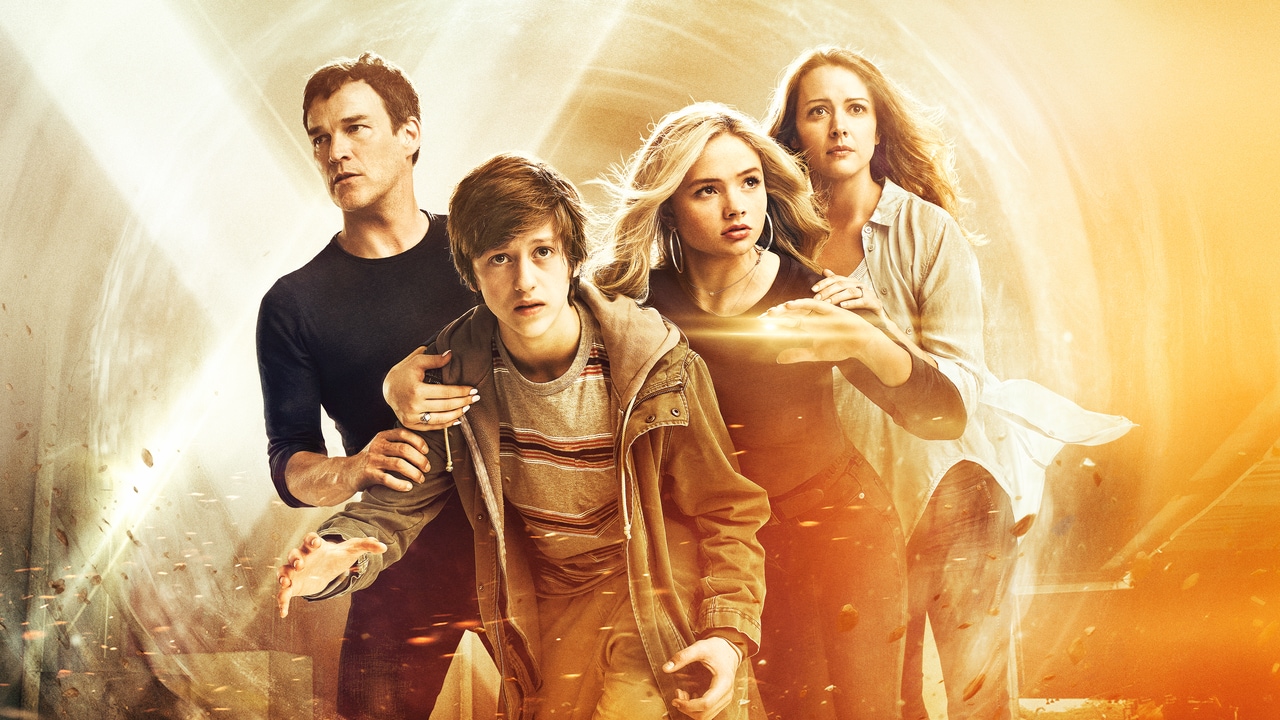
That brings me to “The Gifted,” Fox’s latest effort to squeeze every cent of profit from the X-men franchise. Yes, this is going to be another one of those posts. As I’ve done before, I’m going to tie real-world issues to one of my favorite superheroes. Unlike other posts, though, those ties go beyond getting romance tips from Deadpool.

While I’m usually skeptical about efforts to shamelessly exploit the glut of superhero shows on TV, I gladly make an exception for “The Gifted” and for a good reason. Compared to superhero melodrama on the CW or the gritty violence of the superheroes on Netflix, it’s a very different kind of show with a very different kind of struggle. Unlike aliens, blind lawyers, and secret armies of ninjas, this struggle is more relevant.

That’s because “The Gifted” doesn’t focus on heroes. Sure, it takes place in the same world as the X-men, but they aren’t the focus. Instead, the show builds its story around the Von Strucker family. They don’t live in a mansion. They don’t have their own personal hypersonic jet. They don’t even have their own personal high-tech training room.

The Von Struckers, unlike their comic counterparts, are an ordinary middle class family. They aren’t concerned with superheroes, super-villains, and insane love triangles between heroes. They’re concerned with work, school, taxes, and taking out the garbage. In a sense, they are a reflection of real people in a world with unreal challenges.

That’s a perspective that rarely manifests in the X-men movies. In fact, other than a memorable scene in “X2: X-men United,” the impact that mutants have on ordinary people is rarely touched on. Sure, they’ll show humans running in terror from a Sentinel or a pissed-off Magneto. That doesn’t give us much insight into the lives these people live.

The Gifted” builds an entire narrative around a family that lives in this world and during exceedingly tense times, no less. This is not a world where seeing the X-men take down a Sentinel is the sort of thing that happens every other Tuesday. This is a world where both the X-men and the Brotherhood have disappeared in an event that has only been referred to as “The July 15th Incident.”

That incident, much like 9/11 or a major assassination, created a dramatic/traumatic shift in society. Suddenly, mutants aren’t just another minority issue. They’re an existential threat, like nuclear weapons or mass pandemics. Mutants aren’t just a distant threat anymore. They’re a real threat.

From the perspective of the Von Struckers, at least in the first episode, the danger of mutants is like the threat of terrorism. They know it’s there. They accept the systems and precautions that society has put in place to deal with it. They’ve learned not to think much of it. They’re too busy just being an ordinary family in a world that happens to have individuals who have the mutant ability to turn into ice cream.

In a sense, we’ve done the same thing in the real world. We accept that we live in a world where the NSA reads all our emails, the CIA tries to assassinate world leaders, and gross injustices happen every day. We know, to some extent, that it’s manifesting all around us. We just shut it out and try to live our lives.

What happens, though, when that injustice hits you or someone you love? That’s what happens to the Von Struckers in the very first episode of “The Gifted.” Their blissfully oblivious lives are shattered when Reed and Kate Strucker find out their children are both mutants. Not only that, one of them ends up trashing the school gymnasium when his powers first manifest.

Their happy, middle class lives aren’t just disrupted. They’re shattered, spit on, and covered in fresh whale shit. To make matters worse, Reed Strucker, played by Stephen Moyer, was a prosecutor who made his living sending mutants to prison. Short of beating mutant children with a baseball bat for a living, he couldn’t have had a worse job.

The mutants he sent to prison weren’t always guilty of crimes. Sometimes, it was just a matter of being in the wrong place when their biology decided to act up. It would be like a teenage boy being arrested for an awkward boner, something we can’t always control. Granted, mutant powers tend to be more destructive, but they can be just as unpredictable.

It’s this revelation, as well as the events that unfold in the episodes that follow, that really highlight the impact that “The Gifted” leaves. It’s an impact more relevant than most X-men stories, including the ones that involve jealous ex-lovers. In a sense, it’s one that many minorities already understand all too well.

From the beginning of the show, there’s never a sense that Reed Strucker believed that he was hurting anyone. He never came off as the kind of guy who hates mutants and longs for the days where men like him can throw mutants into internment camps. He’s just doing his job, which he believes is making the public safer.

It’s really no different from those who genuinely believe that homosexuality is inherently harmful or that gun control will only lead to more violence. Most of the people who believe these things, the Pat Robertsons and Richard Spencers of the world notwithstanding, are decent people who want to live in a world where they’re families are safe.

Then, something traumatic comes along that shatters this worldview. They find out they have a gay son or they find themselves in the crossfire of a mass shooting. Suddenly, they can’t ignore these injustices anymore. They can’t go about their happy lives as though the system isn’t victimizing someone. It’s one of those rare situations where no amount of excuse banking can change the truth.

In a sense, the Von Strucker family are reflections of the families in the real world that find themselves on the wrong end of injustice. Whether it’s a Muslim family victimized by racial profiling or being on the wrong side of a sexual harassment claim, it’s not possible to avoid or ignore it anymore. These injustices are hurting you and the people you love. It’s soul-shattering, but that’s what makes “The Gifted” so compelling.

In the fourth episode, this message really hits hard. Reed finds himself in a jail cell right next to Polaris, a mutant who he prosecuted in the first episode, who also happens to be Magneto’s daughter. In these bleak conditions, she basically lays out all the hard truths that he and others like him avoid.

Yes, there was an incident where a group of mutants, which you could substitute for any minority, did something terrible. That was a terrible incident, but efforts to prevent other incidents like that are just hurting real people who don’t want to be superheroes fighting killer robots. Polaris is just one of them. Reed’s children are two more.

That harsh message is one that carries over in the real world, often in tragic ways. Back in 2007, a documentary called “For The Bible Tells Me So” highlighted deeply religious families who had been vehemently anti-gay, only to have one of their children turn out to be gay. Sometimes, it changed their perspective. In some instances, though, it ended tragically.

It’s a harsh, but necessary truth. We can’t control our circumstances. Much like Reed Strucker, we sometimes find ourselves in the worst situations at the worst possible times. The world is chaotic, full of strange people who do terrible things. The fact we can’t control or prevent those things is agonizing, at times. We, as a society, will do as much as we can to mitigate that danger.

In the process, though, we’ll try to fight injustice with more injustice. We’ll obsess less over what is real and more about what is potentially real. It leads us to do extreme things like throw innocent people into internment camps or create killer robots to protect people.

The Gifted” reveals the cost of those measures. It goes beyond the eccentricities surrounding superheroes and focus on the real impact that real minorities feel. Most who are lucky enough to not be part of that group remain content to ignore it. Then, when it finally affects them, they realize just how unjust it is.

At a time when injustices are harder to hide and minorities are a growing part of society, these are important messages. The X-men have been exploring these themes for years, often with colorful adventures involving cosmic birds. “The Gifted” goes even deeper and during these troubled times, these are messages worth heeding.

2 Comments

Filed under Current Events, gender issues, X-men

My Top 5 Favorite Fan Theories

There are many guilty pleasures on the internet these days, although only a few require a total clearing of your browser history. I don’t deny enjoying some of those pleasures, but there is one in particular that I’ve grown fond of in recent years. It’s one of the few that requires extra thinking, but in a fun, non-tedious sort of way.

I’m referring about fan theories, also known as the biggest chunk of Reddit that doesn’t involve celebrities answering random questions about their genitals. Now, I didn’t realize how much I loved fan theories until I started exploring them. Like pumpkin spice lattes, they’re one of those strange novelties you don’t know you like until you try them.

I didn’t even know they were a thing until Cracked.com started doing articles about them. I was among those who didn’t bother reading too much into a TV show, movie, or song. I just took them in, singled out the ones that had beautiful women in bikinis, and enjoyed the extra butter in my popcorn. Fan theories inspired me to dig a little deeper and sometimes, it can change the overall experience for the better.

Granted, some fan theories are going to be much more absurd than others, as many “Game of Thrones” fans will attest. Some are so absurd that creators have to come out and shoot it down, as a “Friends” co-creator had to do when a theory involving Phoebe and meth-fueled fantasies gained popularity. Yes, these theories can get that crazy.

Sure, those crazier fan theories are good for a laugh, but I prefer fan theories that add nuance and depth to the story. Even if they require a few contrivances here and there, I find that they enhance the overall impact of the narrative. Sometimes, they can even clarify some ambiguous plot points.

As a general fan of stories that have impact, both in the heart and in the loins, there are certain fan theories that resonate with me more than others. That’s why I’d like to list my top five favorite fan theories and why I think they improve the overall story. If nothing else, I hope it gets people to watch a little closer at the media they consume. They may surprise themselves by how a little imagination can add to the experience.


Fan Theory #1: James Bond Is A Title, Not A Name

This fan theory is beautiful in its simplicity. It doesn’t require a huge stretch of the imagination. If anything, it helps connect a few dots that you didn’t even know where there. No matter which version of James Bond you prefer, from Sean Connery to Daniel Craig, this theory fits into it.

The concept is simple. James Bond, like the 007 designation itself, isn’t the name of an actual person. It’s a title. This doesn’t necessarily mean that every James Bond movie ever made fits into the same continuity. It just means James Bond is less a person and more a concept.

He represents the epitome of a spy, a badass, and a smooth-talking ladies man. In every era, from the Cold War to today, there’s a need for men like that. James Bond represents the ideal for those men. Like Navy Seals, only a few have what it takes. Those select few earn the right to go by that name that makes women of all eras swoon. I find that inherently poetic.

If you subscribe to this theory, it even enhances other movies. It ties directly into a theory about the movie, “The Rock,” and somehow it makes Sean Connery even more badass. The sheer reach of this theory is part of why it’s my favorite.


Fan Theory #2: Stan Lee Is The Watcher

As a die-hard comic book fan, which I’ve made clear on many occasions, this theory is near and dear to my heart, if only because it further immortalizes the legend that is Stan “The Man” Lee.

As anyone who has seen a Marvel movie since 2000 knows, Stan Lee often appears as a cameo in every movie. From a hot dog vendor in “X2: X-men United” to a Fed Ex guy in “Captain America: Civil War,” he seems to pop up everywhere, regardless of which studio owns the movie rights.

Well, this fan theory takes those appearances and turns them into something more than just a fun gimmick. It says that Stan is actually playing the same character in all his appearances, namely that of Uatu, The Watcher. Those who know Marvel lore understand why this is a big deal and why it makes so much sense.

The Watcher is like a cosmic historian, documenting and cataloging every major event in the Marvel universe, going back to the beginning. He’s been known to change appearance and show up unexpectedly throughout the comics. Who better encapsulates that spirit other than Stan “The Man” Lee?

This is actually one of those theories that became so popular that it was effectively confirmed in “Guardians of the Galaxy Volume 2” wherein Stan Lee is shown interacting with the Watchers. It could mean that this theory might expand the breadth of the entire Marvel Cinematic Universe, a feat that only Stan himself could hope to accomplish.


Fan Theory #3: R2-D2 And Chewbacca Are Secret Rebel Agents

I don’t deny it. I’ve seen every Star Wars movie to date in the theaters and I love every one of them, Jar Jar Binks notwithstanding. I know there’s a popular Jar Jar fan theory that helps make “The Phantom Menace” somewhat more interesting, but I don’t think it does much to enhance the overall saga.

That’s why this theory about R2-D2 and Chewbacca is much more intriguing. It claims that at the end of “Revenge of the Sith,” R2 did not get its memory wiped. Why would it? It witnessed the rise of the Empire and the fall of Anakin Skywalker. That’s very useful information for the future rebellion.

However, R2 and anyone else associated with the old Jedi order needs to lay low once Palpatine comes to power. That’s where Chewbacca comes in, who already established a relationship with Yoda in “Revenge of the Sith.” By becoming an agent of Yoda and the rebels, he can coordinate with R2 to spread intel among the rebellion right under the Empire’s nose.

It also explains how he ended up with Han Solo, a smuggler who constantly annoys the empire with his criminal activities. By being on Tattooine, he can keep an eye on Luke along with Obi-Wan while relaying intel.

More than any other theory, it provides connective tissue between the prequels and the sequels. It also makes R2 even more lovable, which in and of itself is quite an accomplishment.


Fan Theory #4: Andy’s Parents Are Going Through (A Nasty) Divorce

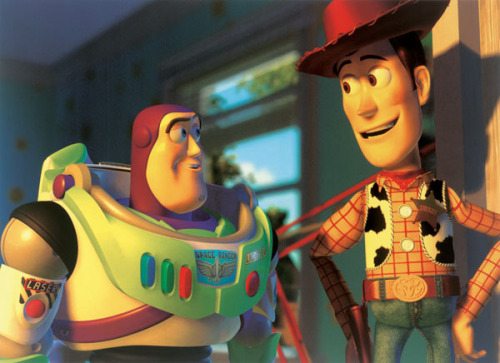
Honestly, who doesn’t love “Toy Story?” I question the emotional health of anyone who doesn’t. It’s such a fun, upbeat story full of heart and emotion. It helped make Pixar the gold standard for animated movies that make adults cry like children.

Well, get some tissues because this fan theory makes “Toy Story” just a little bit more emotional, if you can believe that. It helps make sense of why Andy is so imaginative, preferring to play with toys for hours on end in his room. The answer is simple, but solemn. His parents are going through a nasty divorce.

While there’s nothing in the movies that directly hint at it, the absence of Andy’s father is somewhat telling. Some eagle-eyed fans have even pointed out that Andy’s mother isn’t wearing a wedding ring. That hints that there’s something amiss in his home life. Either Andy’s father left his family or he got kicked out of the house. It also explains why the family was moving in the first movie.

I like this theory because it adds some context to Andy’s home life. It makes me understand why he loves his toys so much. He creates these wonderful worlds in his mind to escape and cope with a tough situation. Compared to what he could’ve done, I think it’s both healthy and refreshing.


Fan Theory #5: The Dinosaurs In “Jurassic Park” Are NOT Dinosaurs

The appeal of “Jurassic Park” is pretty easy to understand. In terms of summer blockbusters, it checks all the right boxes. It involves cute kids, running from monsters, and wondrous imagery that doesn’t entirely rely on CGI. It’s so wondrous that you don’t care that the dinosaurs in that movie look nothing like actual dinosaurs and the science behind making them is impossible in the real world.

That’s why this fan theory is so compelling because it adds an extra layer to that wonder. Simply put, Jurassic Park has no dinosaurs. All those creatures you see in every movie aren’t based on any actual creatures that once lived. They were all genetically engineered to simply look like what people think are dinosaurs.

While that may help make sense of why the creatures in the movies don’t resemble anything we see in the fossil record, it adds an even greater amount of intrigue to “Jurassic Park” because it gives Dr. Hammond a more subtle motivation. Why would he even ask a couple of paleontologist to visit his park in the first place?

This theory gives a more clear-cut answer in that Hammond knew that if he could fool a couple of paleontologists, then he knew he was onto something. He could call the creatures in his park dinosaurs instead of some zoo for genetic monstrosities. Remember, he wants to appeal to family and kids.

This theory, like the Stan Lee/Watcher theory, actually got some level of confirmation in “Jurassic World.” In that movie, Dr. Henry Wu flat out says that “there are no dinosaurs in Jurassic World.” Everything was engineered to up the spectacle. It’s one of those theories that makes too much sense, but in a good way.

2 Comments

Filed under Celebrities and Celebrity Culture, Comic Books, Jack Fisher, Superheroes, Jack Fisher's Insights

Love Or Obsession: Big Bang Theory Edition

It’s okay to love things that are flawed. Hell, if we weren’t able to love things that are flawed, romance as we know it would be impossible. It’s our ability to overlook, understand, and even appreciate flaws that allows us to love each other and the things that bring us joy in life.

That brings me to one of my favorite TV shows, The Big Bang Theory. I’ve talked about it before, specifically when discussing toxic relationships. I don’t doubt that plenty of fans of the show disagree with my assessment. I still stand by my criticism. Remember, I crafted that post with the full disclaimer that I love this show, despite its flaws.

With that love and admiration in mind, I’d like this show to be the subject of my next entry of “Love Or Obsession.” I’m actually enjoying this little exercise, breaking down iconic romances and assessing whether they constitute love or obsession. It helps add a new perspective to my understanding of romance and erotica. For someone in my field, that understanding is vital.

In the spirit of such understanding, I’d like to do this exercise for the three major romances on the show. To fans of the show, I understand I’m leaving Raj out for the moment. I was going to assess him and Emily, but that plot seems to have fallen to the wayside. If that changes, I’ll do a follow-up post. For now, I’ll be focusing on the big three, which is Penny/Leonard, Sheldon/Amy, and Howard/Bernadette.

Again, I’m open to discussing these assessments. If you disagree with me, let me know. I’m certainly willing to discuss this topic. I think, if we’re going to appreciate romance in media, it’s a discussion worth having.


Penny/Leonard

Love Or Obsession?
Obsession

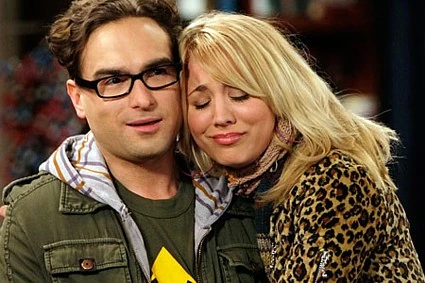
This one is, by far, the most important and iconic romance to the show. It also happens to be the one that bothers me most, as I’ve said before. This romance began at the very beginning of the show and has been a major driving force for every episode since. It’s presented as cute and it does lead to many entertaining subplots, but there’s no getting around how flawed it is.

Leonard is obsessed with Penny. He was obsessed from the moment he saw her. He was obsessed with being with her, being the man for her, and being the guy who ends up with her. There are times when I don’t think he separates the concept of loving Penny as a person and loving Penny as an idea. The concept means more than the person. Being a socially awkward nerd, this does make sense, albeit in a pathetic sort of way.

With Penny, I don’t think there’s quite as much obsession involved. I think on some levels, her love for Leonard is genuine. However, there are also times with her when I think she loves the concept more than the person. What I mean by that is she loves Leonard because he’s not the same as the guys who have hurt her in the past. That’s not a good basis for any romance.

On top of that, Penny knows she can control Leonard. She knows he can never get someone like her. She controls the relationship. She controls Leonard in pretty much every way. It’s not a healthy relationship. There is love, but it is grossly overshadowed by the flaws and the obsession behind them.


Amy/Sheldon

Love Or Obsession?
Love

This is probably the second most important relationship in the show, if only for the entertainment value it constantly brings. Amy and Sheldon are not a normal romance because they’re very abnormal individuals. They have extreme quirks that constitute major personality disorders.

Despite this, or because of this, they find a way to work. They find a way to complement each other. They annoy and challenge each other, but they’re better because of it. Amy is stronger because of Sheldon. Sheldon is less of a self-centered asshat because of Amy. This is one of those relationships that makes both sides better. I’d argue it’s probably one of the strangest, but most productive relationships on TV right now.

That’s an odd thing to say because these two characters are so odd. Sheldon, especially, takes oddities and proclivities to such an extreme that anyone who puts up with him deserves incredible sympathy. While Amy does get annoyed at times, she still puts in the effort and, despite needing a nudge every now and then, Sheldon does the same.

Every episode, it seems as though these two find a new way to annoy each other. In the end though, they find a way to be closer. It’s an incredibly odd, but fittingly beautiful thing.


Howard/Bernadette

Love Or Obsession?
Love (Mostly)

This one is hard to assess, especially since Howard was such a creepy jerk early in the show. He grew up over successive seasons, becoming more likable along the way. He’s still self-centered, lazy, and arrogant at times, but there’s no doubt that he loves Bernadette. He will go out of his way for her. He will do what he has to do to prove that he loves her, even if she needs to twist his arm.

I rule this as love not just because they were the first couple to get married. I render this ruling because I never got the impression that these two were obsessed with one another or that their relationship was built on pure infatuation. They learned to love each other as individuals and not be totally defined by their relationship.

I still added the “mostly” there because, like Penny and Leonard, it’s an unbalanced relationship. It’s not nearly as unbalanced, but it’s still a relationship where one side, namely Bernadette, exercises a larger role. She makes more money than Howard. She’s more assertive than Howard. She can get him to do things like a trained pet.

Despite this imbalance, their love does come off as genuine. They do complement each other in some respects. It’s not a wholly healthy relationship, but it works and there is a fair amount of love guiding it.

2 Comments

Filed under Jack Fisher's Insights