

The following is my review for “The Life of Captain Marvel #1” that I wrote for PopMatters. Enjoy!
‘The Life of Captain Marvel #1’ Comic Preps Fans for the Upcoming ‘Captain Marvel’ Film
The following is my review for “The Life of Captain Marvel #1” that I wrote for PopMatters. Enjoy!
‘The Life of Captain Marvel #1’ Comic Preps Fans for the Upcoming ‘Captain Marvel’ Film
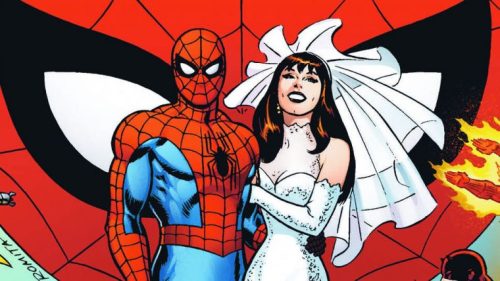
What is more emotionally satisfying than seeing someone you care about find happiness? Whether it’s a friend, a sibling, or even a celebrity you admire, don’t you feel a twinge of joy when you see them achieve something special? Unless you’re a cynic or a sociopath, you’ve probably had those feelings at least once in your life.
With those warm and fuzzy feelings inside, why shouldn’t that also extend to the iconic superheroes we know and love? When our favorite heroes finally get around to marrying the love of their life, it’s natural to want to cheer them on the same way we would cheer for our best friend as he and his bride do karaoke at the reception.

However, those tasked with building the canon seem to have an aversion to married superheroes. Just this past summer, that aversion was on full display. Two major superhero weddings were set up, one involving Kitty Pryde and Colossus in X-men Gold #30 and the other involving Batman and Catwoman in Batman #50.
Sadly, both events ended without tearful vows and a drunken toast, although one salvaged a matrimonial quickie at the last second. I’ve already broken down how one wedding just prolonged an already drawn out romance while the other denigrated the entire concept of romance, as a whole. Rather than bemoan those romantic misfirings, I’d like to step back and look at the bigger picture of married superheroes.

This is actually a controversial issue among fans of superhero comics and those who create them. I’ve been browsing comic book message boards for years. I can attest to just how much fans care when their favorite characters get married. They continue caring long after the wedding reception.
On the other side of the controversy, though, there are the creators that work for Marvel, DC, and their corporate overlords. They have a slightly different view of married superheroes and one that’s not nearly as sentimental. To say their views are complex is like saying a plumber has mixed opinions on food poisoning.
While many of those writing, editing, and producing superhero media are fans themselves, they often have to leave their fandom at the door. Companies like Marvel and DC Comics don’t pay them to write fan fiction. They pay them to tell stories that will sell, increase the value of their brand, and improve market share.

A writer or editor’s ability to do this is prone to many challenges. Fans, especially comic book fans, are notoriously fickle with their passions. If they see something they don’t like happening to a character they love, they’re pretty vocal about it. Just ask fans of Captain America, the Fantastic Four, or Cyclops of the X-men.
In that respect, I have some sympathy for the people responsible for handling beloved characters. They’re basically playing with someone else’s toys and getting paid for it. However, if they break those toys or damage them in any way, there can be hell to pay. Just look at the current situation with Star Wars.
That sympathy, though, only goes so far and I can’t extended to how some at Marvel and DC have approached marriage. DC Comics editor, Dan Dido, once went on record as saying that superheroes should not get married. Long-time Marvel editor and COO, Joe Quesda, even had to justify breaking up Spider-Man’s marriage to Mary Jane Watson by claiming that it “stabilized” Spider-Man too much.

Now in general, I try to be understanding and respectful when people hold positions that I disagree with. I’ve even tried to do that with hot-button issues like abortion, feminism, and organized religion. In this case though, I just have to call bullshit.
Claiming marriage does too much to stabilize a superhero is like saying ketchup makes food too red. It gives the impression that stability is somehow a liability with superheroes, as though they can only be interesting when their world is falling apart and they’re one stubbed toe away from a nervous breakdown.
It’s true that we superhero fans love seeing our favorite heroes fight back invading aliens, punch Nazis, and even take on renegade alien gods. However, it’s also true that we don’t expect or want that to be the only story that superheroes tell. We’re also interested in the lives they live outside their flashy costumes. It doesn’t just humanize them. It gives us more reasons to root for them.

Both Mr. Quesada and Mr. Dido try to make the case that part of being a hero involves sacrificing parts of their personal life in order to serve the greater good. There’s little doubt that being a hero comes at a price, as many of Batman’s former lovers can attest, but that doesn’t have to involve outright isolation.
It also doesn’t mean being a superhero makes a functioning marriage impossible, either. Yes, it’s a lot harder to be a loving spouse and a superhero, but I wouldn’t say it’s as daunting as battling planet-eating space gods or surviving a team-up with Deadpool. In fact, it can enhance their heroics in ways that go beyond romance.

I’m not the only one to make that point either. In wake of the recent wedding debacles by Marvel and DC, Comic Books Resources asked why publishers are so afraid of married superheroes. They cited the same excuses I did about heroes needing to sacrifice, but they also pointed out how these kinds of real-life, mundane events help people connect with these characters.
What the article didn’t get into is why this matters. Superman is a hero with god-like power who can move planets and create diamonds with his bare hands. He’s also married to Lois Lane and still has to put in the effort to make that marrage work, even when it becomes prone to complications.
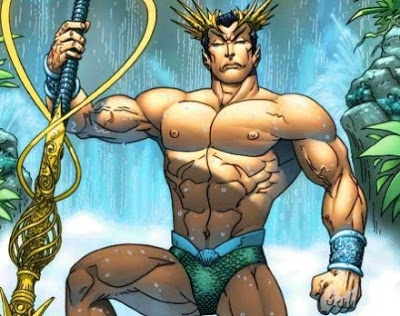
Reed Richards of the Fantastic Four is among the smartest beings in the entire Marvel Universe. He creates thought projectors, flying cars, and personal robots without breaking a sweat. He too has to work hard to keep his marriage and family functioning, especially when a handsome Atlantean king keeps trying to sleep with his wife.
Then, there’s Spider-Man. I know I’ve brought him up a number of times and not always in a positive light, but what happened to him and his marriage is still one of the most controversial things that have ever happened in comics. In many ways, he embodies the ultimate flaw in the excuses to undercut married superheroes.
In the infamous story, One More Day, Spider-Man’s marriage to Mary Jane Watson wasn’t just undone. He actually made a deal with Mephisto, Marvel’s stand-in for the devil, to sacrifice his marriage in exchange for saving his Aunt May’s life. Considering his Aunt had told him just a few issues ago that she didn’t want to be saved, Spider-Man still went through with it.

To say fans were upset by that decision would be like saying the Hulk has a slight anger management problem. This act didn’t just undercut an iconic superhero romance. It essentially reverted Spider-Man back to the state of an immature loser who had barely grown up since high school.
Again, Marvel made plenty of excuses. Long-time Spider-Man writer, Dan Slott, claimed that Spider-Man has to remain within a particular status quo. He has to keep being this lovable loser who is always struggling to hold down a job, keep a girlfriend, and still be a hero. In order to keep that unique appeal he has, and all the merchendising money it makes, he can’t be married.
I understand that logic, but I still call bullshit. You know what happens to characters who never change, grow up, or evolve over time? It’s the same thing that happens to real people. They become boring and unlikable. In Spider-Man’s case, he becomes something worse. He becomes the guy who sold his marriage to the devil to save someone who didn’t even want to be saved. That’s not heroic. That’s just plain selfish.

That’s the price a superhero pays for remaining in a prepetually regressed state. I contend that price is far higher than any associated with the inherent difficulty of writing married characters. With Spider-Man, One More Day established that no matter what he did in his personal or heroic life, he would never change. He’d always end up sleeping on his Aunt May’s couch.
It doesn’t matter if he pursues a new romance. It doesn’t matter if he becomes a billionaire and runs his own company. A reader can just assume he’ll screw it all up somehow and end up right back where he started. It’s just hard to root for any character that keeps regressing like that.
It’s like rooting for a sports team that never wins. Even terrible teams can turn it around at some point. Yes, that includes the Cleveland Browns. If that team never wins, though, why even root in the first place?
This is why marriage is so vital to the growth and evolution of superheroes. When a hero gets married, it’s not just an excuse to have a big event full of superhero-themed cakes. It’s a culmination of a much larger story about love, growth, and strength. It takes a lot to make a marriage work and not all of it can be done with superpowers.
Therein lies the ultimate appeal, though. When a superhero gets married, they go from simply pursuing a relationship to actually making it work. They have to learn how to build a life with another person and become part of a larger family, something that cannot and should not be exclusive to the Fantastic Four.

It fundementally changes how superheroes approach their lives, in and out of costume. It adds new layers of complexity and intrigue. Yes, it’s considerably harder than telling stories about Superman rescuing Lois Lane from Lex Luthor’s evil clutches. That’s exactly what makes it more compelling.
I don’t doubt that Marvel and DC will continue making excuses about married superheroes. Whether or not their approach to the issue evolves remains to be seen. However, since they’re in the business of keeping their characters relevant, they will have an incentive to adapt these characters for changing times and maturing audiences.

Being the romantic I am, I believe love will eventually win out in the end because love is part of why we root for superheroes in the first place. Love isn’t just about being unselfish. It’s also about achieving something special after so much sacrifice. Fans of superheroes want to see them achieve the things they struggle for. It affirms that all those heroics have meaning and purpose.
Marriage doesn’t have to be the ultimate achievement for a superhero. It can be part of it, though. It doesn’t have to be an end. It can be a beginning, as well. Until Marvel and DC lets its heroes get to that point, though, those stories won’t get told and hearts will keep getting broken for all the wrong reasons.
Whenever I go into a Marvel movie these days, I often wonder whether this will be the movie that finally derails the Marvel Cinematic Universe’s unprecedented winning streak. Whenever I to go to see any other kind of superhero movie, I just wonder whether or not it’ll fail miserably. For some, the extent of that failure can be pretty egregious.
It says something about the brand that Kevin Feige and Disney have created when the quality of a movie is assumed by the audience. Ever since the first “Iron Man,” the MCU has found ways to raise the bar, match it, raise it again, and make billions in the process. The brand is so strong that it can turn obscure comics involving talking raccoons into a global phenomenon.
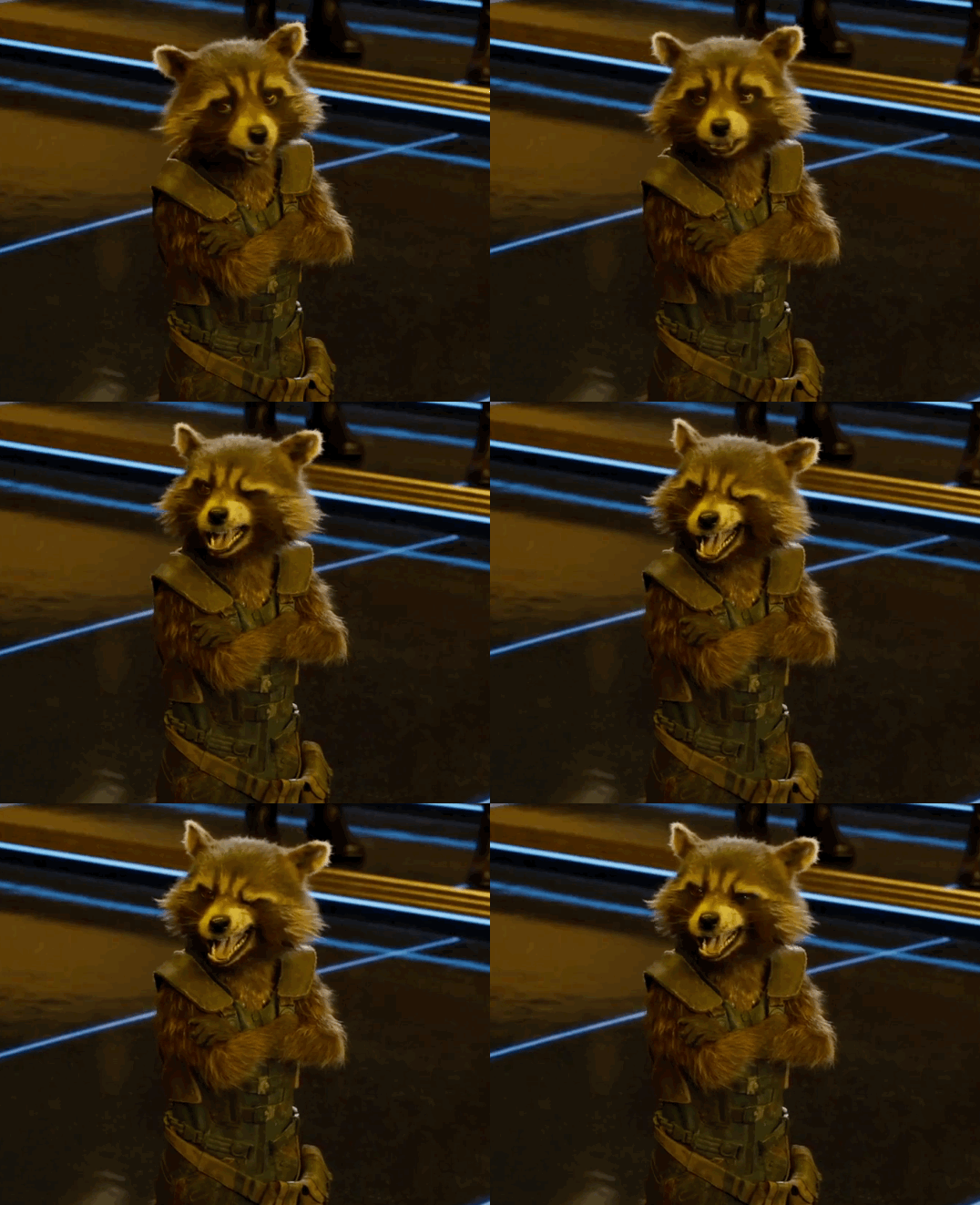
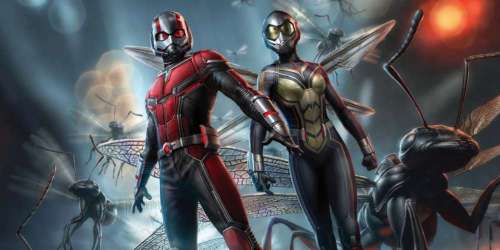
It’s for that reason I wasn’t at all surprised when Feige and our Disney overlords turned “Ant Man” into another successful franchise. Granted, he’s not nearly on the same level as Iron Man or Captain America, but he doesn’t have to be. The fact his first movie made over $500 million is proof that even obscure characters can play a part in the MCU’s winning streak.
For the most part, I thought “Ant Man” was a decent movie. It was fun, but not on the same level as “Guardians of the Galaxy” or “Thor: Ragnarok.” However, what really got me excited for the inevitable sequel was the promise of a more meaningful romantic sub-plot between Scott Lang and Hope Van Dyne.
When I heard that the title of the sequel was “Ant Man and the Wasp,” I grew even more hopeful. The first movie did a lot to establish the connection between Scott and Hope. Unlike the other romantic connections that have emerged in the MCU, this one had the potential to become something more than just a standard plot device.

It’s an understated, but emerging issue in the MCU. When it comes to romance, Marvel movies have a frustrating tendency to only go so far. Sure, it has romantic moments between Captain America and Peggy Carter, Tony Stark and Pepper Potts, and Black Panther and Nakia. However, those moments rarely go beyond moving the plot forward.
With Ant Man and Wasp, there’s an opportunity to inject a more refined level of romance into the Marvel Cinematic Universe. Beyond just giving characters added motivation, this is a relationship that can function more like a partnership rather than a plot catalyst. A good romance, after all, is an exercise in developing quality partnerships.
This is what I was hoping to see with “Ant Man and the Wasp” in addition to Paul Rudd finding new ways to be hilarious. Being a self-professed lover of romance, I wanted to see this romantic evolution happen on-screen and within the context of a larger story. Looking back on it, I might have been hoping for too much.

That’s not to say my hopes were dashed for this movie. I’ll gladly go on record as saying that “Ant Man and the Wasp” is a solid movie that improves on its predecessor. At the same time, though, I felt this movie was a missed opportunity to give the MCU an element that it has been sorely lacking for a while now.
Ever since Thor’s relationship with Jane Foster was unceremoniously cast aside after “Thor: The Dark World,” Marvel movies have been doing the bare minimum when it comes to romance. I would argue that has been part of a larger trend within superhero movie not involving Deadpool.
From the beginning, “Ant Man and the Wasp” sets itself apart by having Scott Lang and Hope Van Dyne operate as an equal partnership. They both have plenty of moments where they show off their skill. Hope gets to show off early by really shining as Wasp. Scott contributes later on in ways that are both cunning and hilarious.

In my opinion, the most important achievement of this movie is establishing how complementary Hope and Scott are as a duo. On their own, they show they’re plenty capable. However, they can only achieve what they want when they work together. That, in essence, is the foundation of any meaningful romance.
Unfortunately, “Ant Man and the Wasp” doesn’t do much to build on that foundation. There are a few romantic moments, but they’re very small and usually involve puppy love glances. There aren’t any instances where Hope and Scott get that intimate. They work together and they work well, but it’s exceedingly basic.
There’s never an impression that their relationship deserves to be elevated above a relationship like Thor and Jane. Even though Hope and Scott is a lot more balanced in terms of how they function together, it’s not necessarily the kind of love story that will strike an emotional chord.

They work well together and they’re attracted to one another. Their romance is basically not that different than a typical office romance. In many respects, their relationship is overshadowed by the one between Hank Pym and his missing wife, Janet. That ends up being a more compelling love story, which is saying a lot given the complications of their relationship in the comics.
Even that romantic element is relatively basic, though. Much of the conflict revolves around Ant Man and Wasp’s efforts to save Janet from the quantum realm, where she’s been trapped for years. It creates plenty of family-driven drama, which certainly has its appeal. In terms of overall drama, though, it only goes so far.
Outside those romantic elements, “Ant Man and the Wasp” does everything it needs to in order to maintain the brand of the MCU. It’s coherent, concise, and entertaining. The movie relies heavily on the comedic elements, which fits perfectly for a character who rides around on ants.

Ant Man is not Black Panther, Captain America, or Thor. Wasp is not Black Widow, Gamora, or Peggy Carter. They don’t try to be more than who they are. They stick to the core of their character. In an era where superheroes try too hard to be like Batman, this counts as an accomplishment.
In this same era, there’s a similar effort to develop more balanced female characters who aren’t Wonder Woman. Wasp definitely counts as progress in that effort. She can hold her own, kick ass, and complement those around her, whether that’s Scott Lang or Hank Pym. She’s still no Wonder Woman, but Marvel may be saving that effort for “Captain Marvel.”

In terms of the villain in this movie, “Ant Man and the Wasp” manages to get by with Ghost. While there is some intrigue with her character, she does little to make herself memorable. Compared to Erik Killmonger, who stole the show in “Black Panther,” Ghost was more an obstacle than a villain. She still got the job done and did so with personality.
Overall, if I had to score “Ant Man and the Wasp,” I would give it a 7 out of 10. It’s an all-around solid movie that’s fun, entertaining, and satisfying. It’s definitely a breath of fresh air after the grim circumstances surrounding “Avengers: Infinity War,” at least until the post-credits scene. However, the romance lover in me still feels that it left much of its potential untapped.
Filed under Movie Reviews, movies, romance, superhero movies

The following is a review I wrote for PopMatters on X-23 #1. Enjoy!

The following is a review I wrote for PopMatters for Ms. Marvel #31. Enjoy!
Milestones, Achievements, and Slumber Parties: Ms. Marvel #31
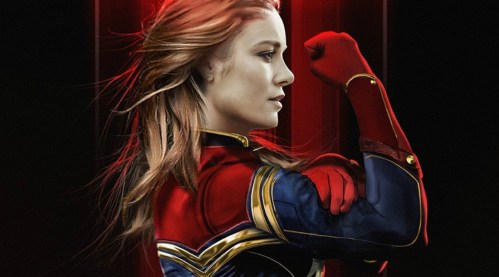
When a team is on an epic winning streak, it creates the perception that they have some supernatural ability to defy the law of averages and bend reality to their will. It happened to the 2007 New England Patriots. It happened to the 2016 Golden State Warriors. They had this aura of invincibility that made it seem as though they could never lose.
That made their eventual loss, both in championship games no less, that much more painful. However, I would argue that the winning aura of those teams pales in comparison to that of the Marvel Cinematic Universe. If the MCU were a sports team, it would include the likes of Michael Jordan, Tom Brady, LeBron James, Wayne Gretzky, Tiger Woods, and Muhammad Ali in their primes and on crack.
To say that Marvel’s movie franchises are on a winning streak would be like saying a hungry lion has a slight edge over a wounded squirrel. The Marvel Cinematic Universe hasn’t just made superhero movies the gold standard of the box office by raking in $16.8 billion worldwide to date. It has set the bar so high that even close rivals have essentially given up.

Disney, Marvel Studios, and Kevin Feige are riding higher than anyone thought possible, especially for those who still have nightmares about “Batman and Robin.” With both “Black Panther” and “Avengers: Infinity War” breaking a fresh round of records this year, it seems as though that winning streak is only accelerating.
I say all this not just to belabor how much the MCU has accomplished over the past ten years. I say it as a fan who loves Marvel comics and wants to see it keep winning. However, even with “Avengers 4” set to come out next year and make another couple billion, I believe this streak of superhero movie excellence is vulnerable.
It’s no secret that “Avengers 4” will likely mark the end of an era. Kevin Feige has gone on record as saying that this movie will act as an endgame, of sorts. While makes clear that the MCU will continue, with movies planned out until 2025, he also indicates that there will be major upheavals.

That’s somewhat necessary because with the conclusion of “Avengers 4,” many of the contracts for MCU stalwarts like Robert Downy Jr., Chris Evans, and Chris Hemsworth are set to expire. While it’s possible that some may find a way to keep going, others like Chris Evans have made clear that their time in the MCU is almost over.
That means for the MCU to continue its winning streak, it needs to move forward with new characters, new actors, and new ideas. It has to find a way to keep this world moving forward, potentially without the likes of Captain America, Iron Man, and Thor. That’s a huge challenge, even for a franchise on an unprecedented winning streak, and the comics have already failed to fill those voids.
That’s where Carol “Captain Marvel” Danvers comes in. If you saw the post-credits scene for “Avengers: Infinity War,” you know why she’s about to become very relevant to the MCU. I’ve talked about her before and established how things could easily go wrong with her upcoming movie. I imagine I’ll have a lot more to talk about in the coming months.
/2014%2F10%2F29%2Ffa%2FCaptainMarv.e9f29.jpg)
I don’t think it’s unreasonable to say that Carol Danvers and her upcoming movie, which is slated for release in March 2018, is the most important movie in the history of the genre. I believe this movie may very well determine whether the winning streak of the Marvel Cinematic Universe continues or finally falters.
I say that as someone who loves Carol Danvers as Captain Marvel. Back in 2012, Kelly Sue DeConnick effectively reinvented the character in a way that convinced me that she deserves a prominent role in any Marvel universe. In my opinion, she’s essentially Marvel’s version Wonder Woman.
Her movie has so much going for it. “Wonder Woman” established that female superhero movies could be a hit at the box office and garner critical acclaim, despite the scars left by “Catwoman.” On some levels, “Captain Marvel” is facing a lot less pressure and it has the momentum of “Avengers: Infinity War” behind it.
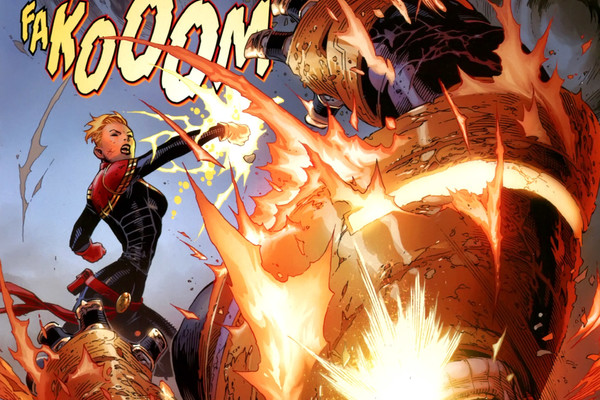
However, the stakes are actually higher for this movie compared to everything “Wonder Woman” faced. Recently, Kevin Feige stated that Carol Danvers will be the new face of the MCU. From a purely logistical standpoint, that makes sense. The MCU needs a new unifying force if Chris Evans’ Captain America is to make his final stand in “Avengers 4.”
I believe Carol can pull it off, as well. She has taken on more leadership roles in the comics and has become a central member of the Avengers’ main team. Combine that with Brie Larson’s charisma and Carol Danvers has all the tools she needs to keep the MCU’s winning streak going.
I believe she can do this simply by being the kind of character that Kelly Sue DeConnick molded six years ago. That version of Carol Danvers emerged from years of being a secondary character in Ms. Marvel who rarely got a chance to achieve the same recognition as her peers. She’s a classic case of a character who elevated themselves by embracing a new identity, a new purpose, and greater ambition.

DeConnick established Carol as someone who achieves so much in one field, but dares to seek greater challenges beyond. She contributed to the Avengers for years, but never pursued a greater vision until she became Captain Marvel. That idea of someone looking to the stars, seeking to achieve more, and pursuing it with unmatched drive is what will help her succeed in ways on par with Wonder Woman.
At the same time, though, there are potential risks and Captain Marvel may be more vulnerable to them than Wonder Woman. While Kelly Sue DeConnick did a lot to reinvent Carol Danvers for a new era, she has faltered somewhat. Recent events in the comics have put her heroic merits into question for all the wrong reasons. Some of Brie Larson’s politically-charged rhetoric hasn’t helped either.
To some extent, Carol’s reputation has faltered because in elevating her status in the comics, she has been hit with the dreaded Galbrush Paradox. The quirks that DeConnick introduced, such as Carol being a Star Wars fan and having a love interest in James Rhodes, have eroded in recent years. In addition, even her artistic depictions have devolved by reducing her feminine features for no apparent reason.

In wake of the vitriol that Star Wars received for its portrayal of female characters, I worry that “Captain Marvel” runs the risk of inviting a similar backlash. If Carol Danvers is not sufficiently compelling, she runs the risk of getting hit with the Mary Sue label that has plagued Rey since “Star Wars: The Force Awakens.”
The worse case scenario, in my opinion, involves turning Carol Danvers into a Captain America or Iron Man stand-in. In the absence of these iconic characters, and their top name actors, Feige and those at Marvel Studios may be tempted to make her too much like them. That would be a huge mistake, especially for an organization on such a huge winning streak.
Carol Danvers is not Steve Rogers, nor is she Tony Stark. She’s not just a woman who takes on a man’s role either. She’s still a woman and, especially under DeConnick, her womanly traits were on display alongside her more badass features. It’s not groundbreaking because Wonder Woman struck just the right balance, having her fight alongside men while still acting like a woman.

In the best case scenario, Carol Danvers follows Wonder Woman’s example and establishes herself as someone worthy of carrying the MCU forward. Unlike Rey, she’s a character with plenty of compelling lore to work with. The key is finding the right blend that’ll help her fit into the Marvel Cinematic Universe.
At this point, without a trailer and only a few teases to go on, it could go either way for “Captain Marvel.” It could be the next in a long line of successes or it could be the MCU’s first failure. To date, Kevin Feige and those at Marvel Studios have shown time and again that they know what they’re doing.

Hell, they took an obscure series involving a talking raccoon and made it a global brand. Until they show they’re capable of screwing up, I’ll continue to give them the benefit of the doubt. At the same time, though, I think it’s worth bracing for that inevitable setback. All winning streaks come to an end. I just hope “Captain Marvel” isn’t the one that ends it.

I love romance. I also love comics. I’ve made my fondness clear for both on numerous occasions. When they’re combined, I’m twice as thrilled. It has proven to be a very potent combination before. Like real life, comic book romance isn’t always done right, but when it works, it’s a beautiful thing.
That’s what I had hoped to see with the release of X-men Gold #30, which was billed as the overdue wedding between Kitty Pryde and Colossus. They’re one of the X-men’s most prominent romances, having a history that spans decades and includes death, resurrection, and being trapped in a giant bullet. I swear I’m not making that last part up.
Earlier this year, I detailed why the Kitty/Colossus romance was so special in annuls of X-men lore. It’s one of those romances that isn’t assumed like Superman and Lois Lane. They have to actually work to make their relationship strong, which makes it feel more real than most superhero couples.

It’s why I had such high hopes for X-men Gold #30. It promised to reward these characters for their love and the work they put into it. Being the romance fans I am, I’m a strong believer in having that kind of effort pay off for a couple.
Sadly, and this was spoiled before the comic even came out, that’s not how things played out for Kitty and Colossus. I don’t mind spoiling it, either. Kitty and Colossus don’t get married. Kitty, for reasons that are more asinine than I can put into words, gets cold feet at the last possible second and calls it off.
She doesn’t even wait until she and Colossus are alone so she doesn’t create this mass spectacle that is sure to humiliate and hurt someone she loves in a very public way. She actually gets to the point where Colossus is about to put the ring on her finger and that’s where she stops it. Short of punching his jaw after being told he can kiss the bride, it’s one of the worst things she could’ve done to this man.

On top of that, Kitty was the one who proposed to him. This isn’t a case where a man pressures a woman into marrying someone or a woman feels pressure from her family and peers. The idea, request, and desire to get married came from Kitty and her being the one to call it off like that, after her friends and family did so much to help her, just makes her look more callous than an entire army of Lex Luthors.
I wish I could provide some context to her decision. I really do. I just can’t find a believable way to make her decision anything other than an act of heartlessness, cruelty, and cowardice. There were no hints, whatsoever, in the events that led up to the wedding that would imply Kitty was having second thoughts. In fact, the events of X-men Gold #29 doubled down on her love for this man.
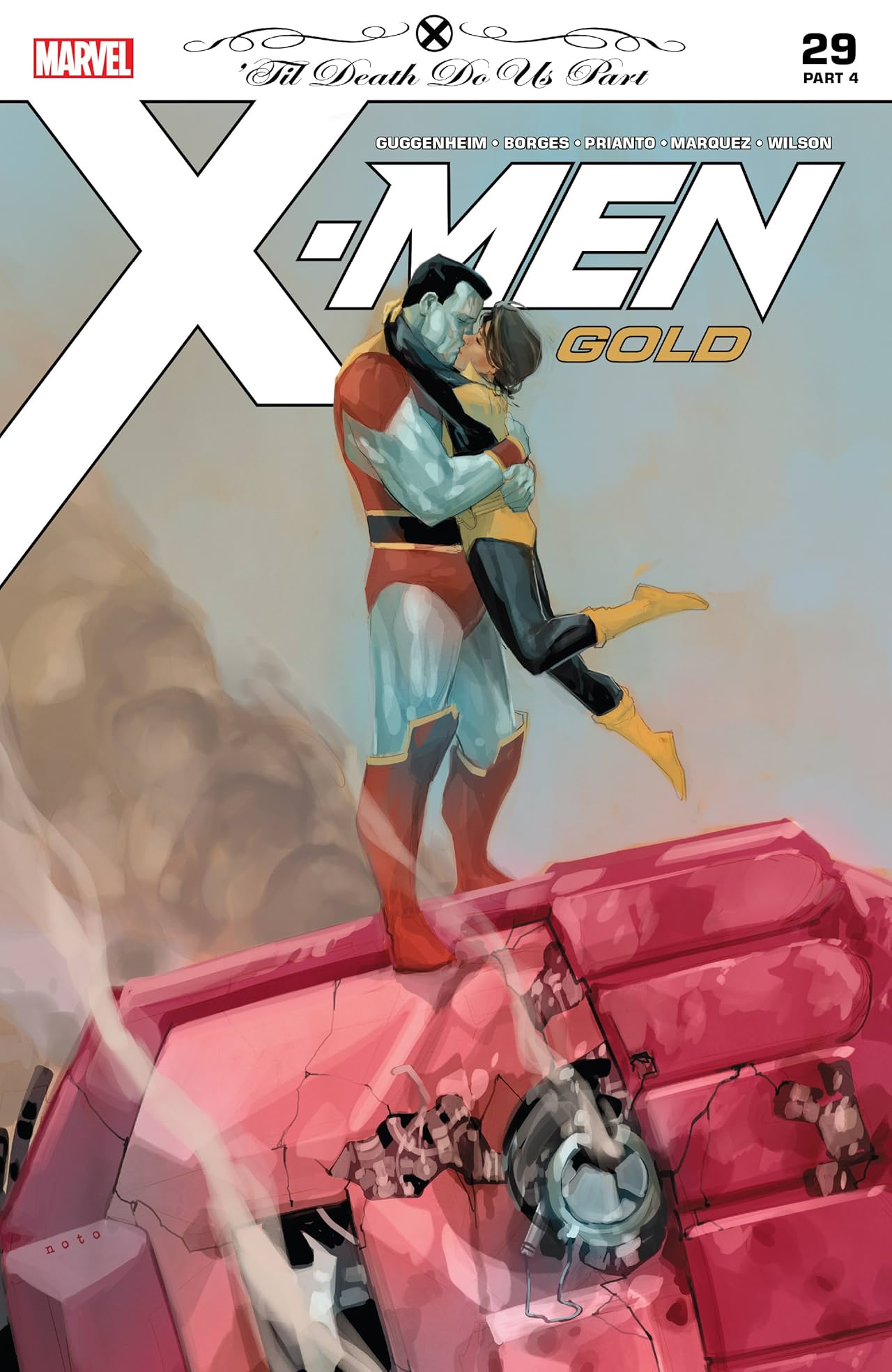
Then, in just one scene that played out early in X-men Gold #30, it all comes apart thanks to a short, unspectacular conversation with Colossus’ sister, Illyana “Magik” Rasputin. It’s not dramatic. It’s not that revealing, either. Again, I don’t mind spoiling it.
Magik just reminds Kitty that she and Colossus had to overcome a lot in order to get to this point. She also throws in that, if they were meant to be, it would’ve happened already. Bear in mind, Magik is considered one of Kitty Pryde’s closest friends on top of being Colossus’ sister. Even if that remark could be attributed to her alcohol intake, it’s still a terrible thing to say to someone who is about to get married.
It’s one of those comments that shouldn’t have derailed a couple that has worked so hard to be together, but it did. Seriously, that’s all it took to convince Kitty that she had to stop the wedding, in the middle of the ceremony, and in front of all her friends and family. Considering she’s supposed to be a leader of the X-men and one of the toughest female X-men of all time, it’s pretty pathetic.

Her decision and terrible timing, alone, could’ve made X-men Gold #30 one of the least romantic stories in the history of the comics. I still wouldn’t have put it on par with some very disturbing romantic sub-plots that played out in some Spider-Man comics. If breaking off a wedding was all this comic did, I would still appreciate it for how it imparted so much heartbreak into a story.
However, it gets even worse than that. It wasn’t enough for X-men Gold #30 to undermine one of the X-men’s most likable romances. It actually succeeded in denigrating the entire concept of romance in superhero comics. I know that sounds like an exaggeration on my part, but I’m dead serious.
Yes, Kitty and Colossus don’t get married in this issue. However, a marriage does occur and it is between another iconic X-men couple that I’m actually really fond of. The lucky couple here is Rogue and Gambit. If you watched the old X-men 90s animated series, you understand why that’s a big deal.

Now, I could write several articles on the quirks of the Rogue/Gambit relationship. It’s another one of those romances that has become iconic in its own right. I would even go so far as to put it slightly above the Kitty/Colossus relationship, if only because both characters have had to deal with some pretty unique obstacles, the least of which involves Mystique being Rogue’s adopted mother.
In the context of X-men Gold #30, though, those various quirks don’t really play into the moment. They haven’t even played into any of the events throughout X-men Gold that led up to this wedding. In fact, they only recently rekindled their relationship in a mini-series called “Rogue and Gambit” by Kelly Thompson, which I highly recommend.
Even with that development, though, them getting married at this point would’ve been rushed, forced, and downright inappropriate, given what just happened to Kitty and Colossus. It would’ve given the impression that someone had to get married in this comic. It didn’t matter who, why, or for what reason. It just had to happen to salvage the issue.

To hell with crafting a story that documents the emotional journey two characters make to get to that point. Never mind the fact that other iconic couples have gone on that journey and made for some of the most memorable moments in the history of comics. Just having Rogue and Gambit randomly decide, on the spot, to get married should carry the same weight. If I could write that with more sarcasm, I could.
Again, I want to make clear that I like the Rogue/Gambit relationship. I’m glad their romance is evolving, once more, especially after some of the other characters they’ve been stuck with. The way it was handled, though, and at Kitty and Colossus’ expense, no less, was just downright demeaning to the very concept of meaningful romance.
It sends the message that romance is as interchangeable as a box of frozen burritos. If one doesn’t heat up right, then another one works just as well. It’s not like they’re unique, having unique emotional dynamics and personal journeys specific to multiple characters. One is no more special or meaningful than the other. Again, if I could write that with more sarcasm, I would.

What happened to Kitty and Colossus in X-men Gold #30 was tragic, but it didn’t undercut romance in superhero comics, as a whole. As soon as Rogue and Gambit were randomly thrust into the moment, doing on a whim what took other couples so much time and effort, the whole issue undercut any deeper meaning that both romances had going for them.
Great romance, especially those that go onto become iconic, can’t be the kind of exchangeable gimmicks that can be sold as easily as plastic cups at Costco. Great romance is like the cookies you bake with your grandmother from scratch. There’s work, patience, and a deeper personal touch to the effort.
I get the appeal of throwing in a major twist. Comics, movies, and everything associated with M. Knight Shyamalan have been doing that for years. That appeal isn’t there in X-men Gold #30 because it comes at the cost of treating romance with the same recklessness as super-villains treat their henchmen.

On it’s own, I thought X-men Gold #30 was just really disappointing for how it handled Kitty and Colossus. However, it’s the precedent and the implications that leave me concerned for the future of romance in comics, particularly Marvel. If this is how love is treated, as something easily cut and pasted into a plot, then I worry for other comic book couples that may face similar denigration.
Here’s to hoping that the upcoming wedding between Batman and Catwoman sets a better precedent.

The following is a review I wrote for PopMatters for X-men Gold #30. Enjoy!

The following is a review I wrote for PopMatters for Deadpool Assassin #1. Enjoy!
The Maturation of (Regenerating) Degenerates In Deadpool Assassin #1

There’s an important, but understated difference between negative expectations and a self-fulfilling prophecy. Expectations are like reflexes. They’re somewhat involuntary, reflecting our assumptions and understanding of a situation. A self-fulfilling prophecy involves actual effort. Whether intentional or not, it guides our perceptions in a particular direction, one often associated with a particular bias.
To some extent, a self-fulfilling prophecy is akin to self-hypnosis. We convince ourselves so thoroughly of a particular outcome that to consider otherwise would be downright shocking, if not distressing. That’s why it’s so difficult, at times, to escape a particular expectation, especially if it’s negative.

I bring up expectations and self-fulfilling prophecies because they do plenty to shape our reactions and attitudes, especially in the media we consume. For better or for worse, often varying from person to person, we tend to determine how much we enjoy something before we even experience it.
Sometimes, it works to the benefit of a particular movie, video game, or TV show. The powerful brand of the Marvel Cinematic Universe is built heavily on the expectations that a long list of quality, well-received movies have established. Conversely, the DCEU struggles with negative expectations, thanks largely to a catalog of movies that have failed to consistently deliver.
Then, there’s “X-men: Dark Phoenix.” It’s a movie for which I’ve made my passion and my excitement very clear over the past year. It’s also a movie that is in the midst of an emerging crisis. It’s not the kind that involves negative press, actors melting down on set, or sordid sex scandals, for once. Instead, it’s an issue that involves negative expectations that may very well become a self-fulfilling prophecy.

As big an X-men fan as I am, I don’t deny that the X-men franchise is not on the same level it was in the early 2000s when it dominated the box office alongside Spider-Man. Even though I loved “X-men: Apocalypse,” I can’t deny it under-performed and underwhelmed.
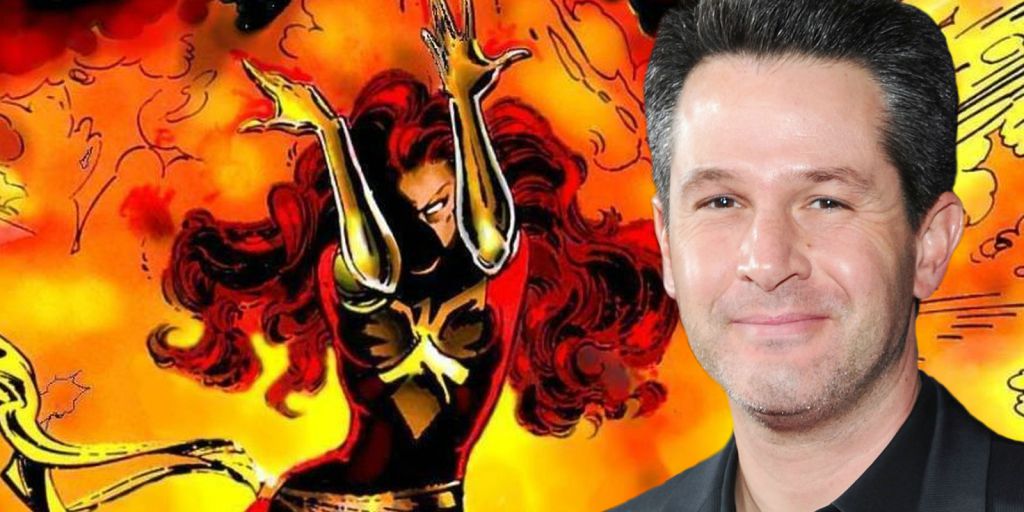
Despite that, “X-men: Dark Phoenix” has more going for it. It’s attempting to tell the Dark Phoenix Saga, the most iconic X-men story ever told. Moreover, it’s attempting to tell that story after it botched it horribly in “X-men: The Last Stand.” Even the director, Simon Kinberg, has gone on record as saying that he wants to “X-men: Dark Phoenix” to succeed where the last one failed.
Given how rare that kind of humility is in Hollywood these days, X-men fans and fans of superhero movies in general have every reason to expect better things from this movie. Given how low the bar is after “X-men: The Last Stand,” I’m more optimistic than I dare to be when it comes to comic book movies.

Unfortunately, that sense of optimism seems to beg getting less and less prevalent. Whether due to the underwhelming performance of “X-men: Apocalypse” or a growing impatience to see the X-men join the MCU after the Disney/Fox merger is complete, there’s a general sentiment that this movie is going to be bad.
I see it on popular YouTube channels. I see in the many comic book message boards I frequent. The overall consensus is that this is a Marvel movie that isn’t part of the MCU. Therefore, it’s going to be terrible. That is, by every measure, a terrible excuse to dismiss a movie, especially when we haven’t even seen a trailer.
To make matters worse, a recent string of leaks from an alleged test screening revealed details that have only fueled those negative expectations. For reasons that I’ll make clear in a moment, I won’t list the details of those links. I will, however, offer a direct quote that aptly sums up the prevailing attitude for this movie.
“I do believe some things won’t change. What can’t change is the movie being really underwhelming. Really lower your expectations because this one is not good.”
This news, if accurate, is not encouraging to anyone hoping to see a well-done Dark Phoenix Saga on the big screen. To make matters worse, those who already had negative expectations about this movie have even more excuses to resent it.

As I’ve noted before, people tend to cling to excuses that justify their preconceived notions. It doesn’t even matter if the excuse is true. Once they have it, they cling to it. It’s usually not done out of malice. It’s just a lot easier to keep thinking what you’ve already thought rather than adjust your expectations.
In this case those, the story surrounding the leaks has already confirmed to be untrue. That leak came from a Reddit post, of all things, which is akin to getting your news from 4chan. On top of that, and this is a testament to Reddit’s users, the mods have stated outright that the user was not credible. This is an exact quote.
Apparently test screen guy is Atlanta Filming, created an account and sent fake spoilers/leaks. Trying to discredit other bloggers because he wants to be “the only legit source”.
If that weren’t telling enough, it was already announced back in March that the movie was going to undergo reshoots in August. Now thanks to “Justice League,” reshoots have gotten a bad name, but they’re a fairly common practice. Even the heavily-hyped, positively-perceived “Avengers 4” is scheduled for reshoots.
Even if those leaks were accurate, chances are the cut of the movie shown at test screenings isn’t the final cut. Kinberg himself has said that the reshoots are intended to shore up the final product, as one would expect of any piece of art. It sounds so reasonable and logical.
That still doesn’t matter, though. It doesn’t change the expectations. This movie still isn’t meeting the impossible set of criteria that fans spoiled by the MCU have so unreasonably set. It’s not in the MCU, nor is it being guided by Kevin Feige. Therefore, it must be terrible.
It’s unfair, unreasonable, and just plain asinine to judge “X-men: Dark Phoenix” by those standards, especially with reshoots to come and no official trailer. At this point, the negative expectations are so heavy that they’re starting to sound more and more like a self-fulfilling prophecy.
With that being the case, I feel like I can predict the reactions from people once the trailer drops. Sure, there will be some like me who are eager to give this movie a chance after what happened with “X-men: The Last Stand,” but I think there will be more comments like this.
“It’s not the MCU. I’ll pass.”
“X-men Apocalypse sucked! I’m not even giving this one a chance.”
“To hell with this movie! Just let Marvel have the rights back already! Fox can’t do anything right!”
Now, far be it from me to defend Fox, the same company that gave us “Wolverine: Origins,” but these are all intensely petty reasons to judge a movie. I say that as someone who is guilty of setting low expectations for movies, cartoons, comics, and TV shows. Hindsight has done plenty to reveal which of those were the result of self-fulfilling prophecies. That still doesn’t make the expectations any less absurd.

Even for those who aren’t just ardently opposed to any superhero movie that isn’t a product of the MCU, I think I can predict the criticisms they’ll probably levy against this movie even after it comes out. Chances are, they’ll be every bit as petty and include comments like this.
“It’s too dark and not cosmic enough!”
“It’s too cosmic and not grounded enough!’
“It’s too much like the comics!”
“It’s not enough like the comics!”
“It doesn’t have enough [Insert Favorite Character Here]!”
“It has too much [Insert Intensely Hated Character Here]!”
There will probably be plenty more excuses for hating this movie, far more than I can list. It doesn’t even matter how subjective they are or how empty they may be. People who are determined to hate something will find an excuse that satisfies their psyche and vindicates their feelings. Anything else would require that someone actually re-evaluate their expectations and that’s just untenable.
It’s frustrating and tragic that a movie or any piece of media would be subject to this kind of debasement before it’s even completed. It’s one thing for a movie to face skepticism because of production troubles, “Solo: A Star Wars Story” being the most recent example. For a movie whose primary crime is not being in the MCU, that’s just plain absurd.
In terms of the bigger picture, it’s good for superhero movies, as a whole, if “X-men: Dark Phoenix” succeeds. It’s unhealthy for the genre if the MCU is the only acceptable avenue for quality superhero movies. We’ve seen with “Wonder Woman” that it is possible for a superhero movie to succeed in a world that doesn’t have Robert Downy Jr. or Chris Pratt.
“X-men: Dark Phoenix” deserves the same chance. That’s why I intend to keep my expectations high, but cautious for this movie. Even if it turns out to be good, though, I worry that it’ll be undercut by too many people who are too eager to hate it. It would be both a tragedy for the movie and all those involved, as well as a bad omen for the genre as a whole.
Filed under Comic Books, Jack Fisher, Superheroes, media issues, movies, X-men


