This is a video from my YouTube channel, Jack’s World.
This video is another thought experiment that contemplates where human civilization is heading and where it will ultimately end up. Humanity, as a whole, has undergone many upheavals, collapses, and advancements over the centuries. But as far as we’ve come, there’s still so much farther we have to go. That raises the question.
This is a video from my YouTube channel, Jack’s World.
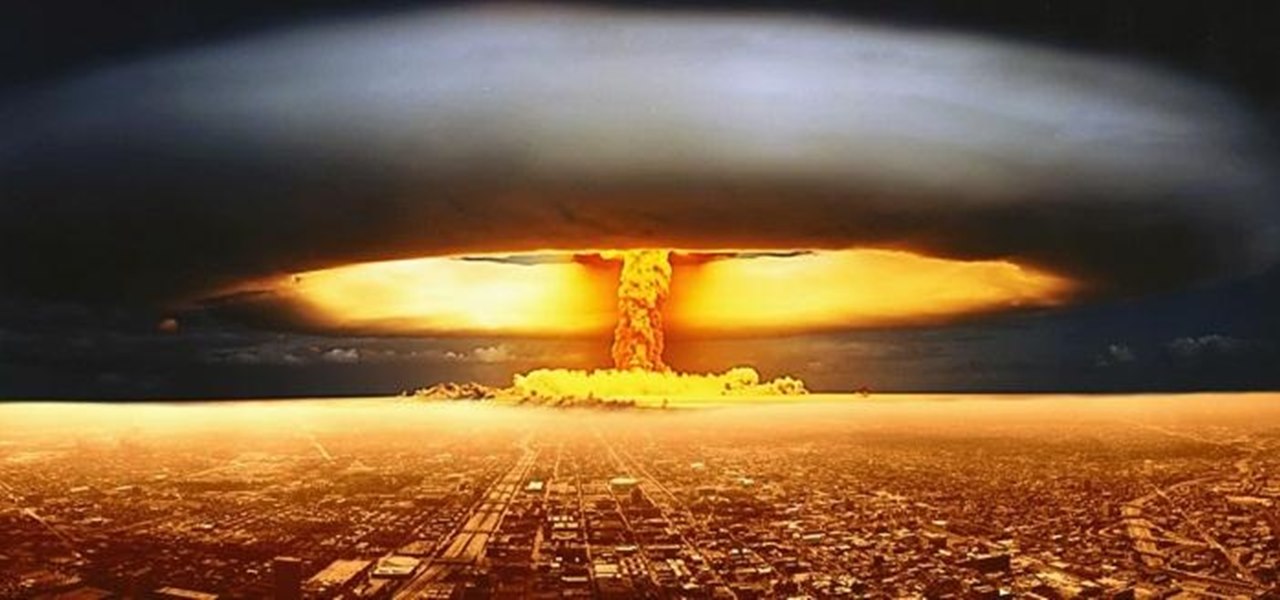
This video explores the question of whether humanity can actually govern itself beyond a certain point. For most of human history, the stakes were local. But now, the stakes are global in a very literal sense. Between climate change and nuclear weapons, humanity has the ability to end itself and all life on Earth.
That makes the question of whether or not we can effectively govern ourselves incredibly relevant. And I try to explore that concept as best I can while leaving some room for speculation on both sides.
Trying to make sense of politics is like trying to understand quantum mechanics while stoned. The process of governing humanity has always been tricky. Ever since we exchanged our basic hunter/gatherer ways for a more formal system of order, the process has only become more difficult over time. You don’t have to look far to see the complexities and the overall absurdities of politics.
I’ve tried to talk about politics before, albeit with a limited focus on hot-button issues. I never claim to be an expert or an authority on the matter. I’m an aspiring erotica/romance writer. My understanding of politics is as limited as most people who don’t live, work, and breath these issues. Despite those limitations, I still want to make an effort to talk politics in a novel way.
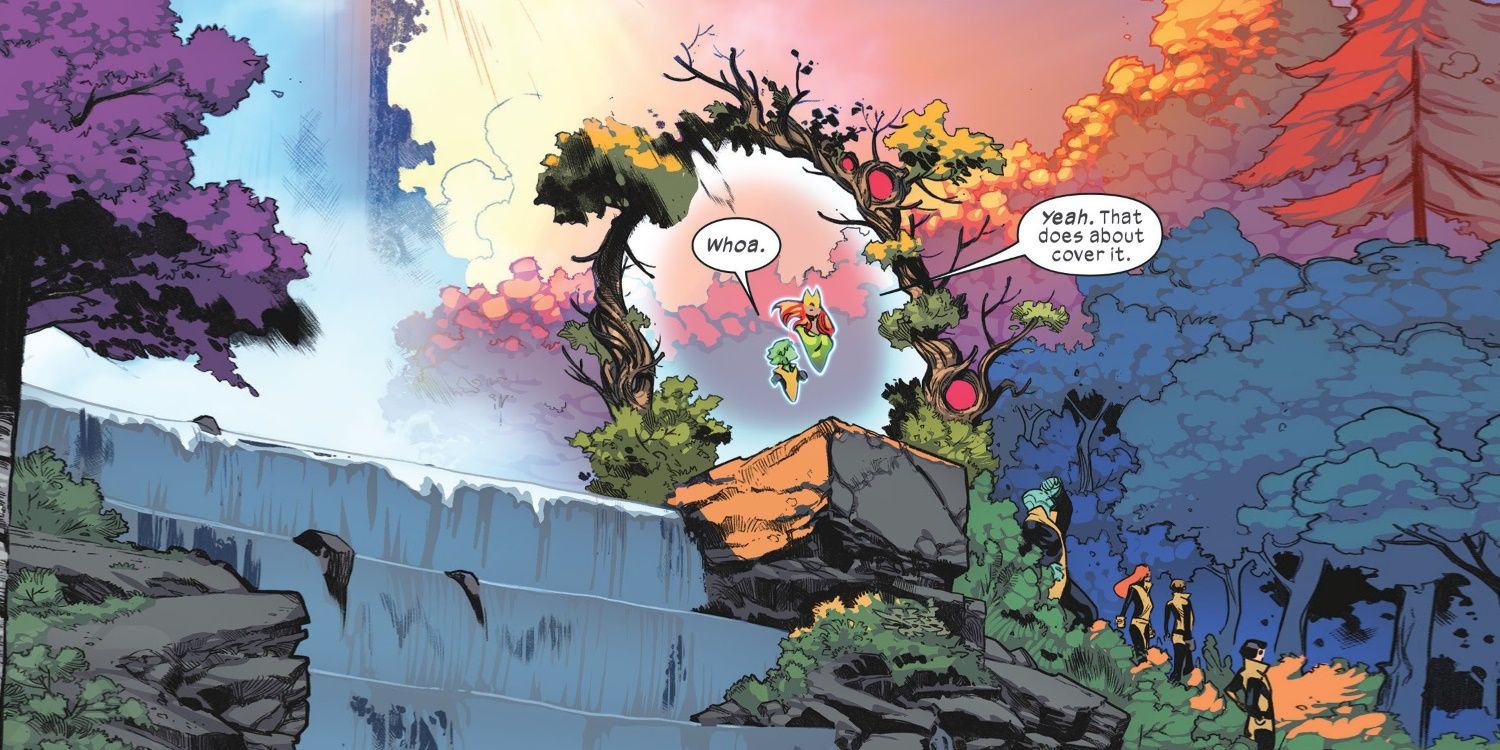
More specifically, I want to take the events that have been unfolding in the X-Men comics for the past two years and use it to make sense of the current state politics. I also want to use it to speculate a bit on where these politics might lead us. Again, I am not even close to an expert, but I do believe that art and media have an uncanny way of shining a light on the real world and there are few narratives more uncanny than the X-Men.
The current state of politics, especially in the United States and Western Europe, has been dominated by polarization. More and more, citizens are becoming more tribal. On top of that, people are becoming more divided. That’s not just an anecdote, either. According to Pew Research, the public has become more ideologically split over the past 20 years and it’s only getting worse.
Rather than try to make sense of these decade-long trends, I want to apply it to the politics in the X-Men comics. More than any other superhero comic or franchise, politics are a major driving force for the X-Men, more so than killer robots. Co-creator, Stan Lee, stated that the inspiration for the X-Men was drawn from the ongoing Civil Rights movement that was in full swing in the early 1960s.
Over the years, this idea of mutants being an oppressed minority who were hated and feared for being different has been the driving force behind the X-Men’s story. It is also a big part of what helped them gain such a wide appeal. Some of the X-Men’s most iconic stories come from conflicts inspired by the hate and fear that ordinary humans feel towards mutants.
Liberals hate and fear conservatives because they think they want to turn the world into one big plantation ruled by rich, wealthy slave-owners.
Conservatives hate and fear liberals because they think they want to abandon their heritage, punish people for the sins of their ancestors, and micromanage their lives.
In the world of X-Men, humans hate and fear mutants because they think they’re too dangerous, unpredictable, and uncontrollable. On top of that, if they truly are a new species, then that means their survival means humanity’s extinction.
The parallels aren’t perfect, but they are there. Mutants aren’t just a metaphor for any minority who has been oppressed, segregated, and denigrated. They represent just how divided two groups can be. Constant conflict ensures that hatred and fear will fester. However, it’s the events of House of X and Powers of X that the entire concept of X-Men has gained greater political relevance.
In case you haven’t been following superhero comics, the details of these events are many, but the theme is relatively simple. After years of fighting, running, surviving, and being marginalized because of movie rights, the entire mutant race has decided to reorganize themselves into a new society.
This isn’t some exclusive club or superhero team. With help from Charles Xavier and the powerful foresight provided by Moira MacTaggart, the mutants of the Marvel Universe have united within a new homeland, which happens to be a living island. They also have their own mysterious language that only they understand. They are essentially establishing themselves as a new political entity.
In the scope of the X-Men’s 50-plus year history, the idea isn’t new. There have been multiple efforts over the years to give mutants a homeland. One was called Genosha. One was called Utopia. Both enjoyed some measure of short-term success, but both ended up destroyed or abandoned. The reasons for this aren’t important. What sets them apart from Krakoa is the scale.
What the mutants are doing with Krakoa in the comics is something bigger than an enclave. They’re not just seeking to be recognized as a full-fledged country, either. Charles Xavier, the X-Men, and every other mutant is building Krakoa to be a society that can function with or without humanity. It’s not land borrowed from humans. It’s land that’s theirs and theirs alone.
That’s not to say Krakoa operates in isolation, as Wakanda once did. They actually seek to maintain diplomatic relations with the world. They even have valuable resources with which to trade. They don’t have to make these kinds of deals, but under Charles Xavier, they do anyway. It culminates in “House of X #5,” in which Krakoa gains formal recognition by the UN.
This is where the politics of the X-Men comics add some necessary nuance to what we’re seeing in the real world. When people feel marginalized, they tend to feel unwelcome. Even if you are legally an American, a German, an Italian, or a Wakandan, being hated and feared by a large segment of the country makes you feel like you don’t belong.
Between divided polls and America’s colorful electoral map, it’s not hard for anyone to feel out of place. The added polarization provided by the internet, social media, and cable news only adds to the divisions and the animosity. As a result, people naturally retreat into groups and tribes where they feel welcome. Whether it’s a political group, a religious group, or an identity, they seek some form of sanctuary.
In doing so, these groups essentially create their own little world within their community. It’s a world that might as well be a separate reality from what others see. It’s how different people can see the same facts, but have wildly different interpretations. Their brains are still working and the facts are still facts. It’s how they apply them to their world that’s different.
Each group feels they don’t belong. They may even feel victimized. It doesn’t matter if the group happens to make up the vast majority of the population. They still feel like they’re the ones under attack, not unlike the X-Men when they constantly confront fearful, hate-filled humans. They act as though they need to carve their own place in the world and defend it at all costs.
This is where House of X and Powers of X can provide some possible insights into the future of politics. To some extent, Krakoa is a natural byproduct of mutants being hunted, attacked, and denigrated at every turn. They tried isolating themselves on islands. They tried living among humans, sometimes in their most populated cities. Now, they’re trying something bigger.
It’s not exactly peaceful and not everyone understands it, which seems antithetical to Charles Xavier’s dream. However, it’s pragmatic in a very political sense. They have a homeland that they can control. They have barriers for entering and exiting that homeland. Nobody who isn’t authorized can enter it. It’s basically the ultimate immigration control.
On top of that, it has valuable resources that the rest of the world wants. The mutants of Krakoa are willing to share them, but only if they respect their new homeland and treat it like a legitimate country with its own culture, laws, and norms. In a world where people constantly attack others for not respecting their culture or norms, it feels like the ultimate endgame of sorts.
Those who want their culture and way of life preserved will only have more incentive to become more organized. If they keep feeling hatred and fear, they may look for ways to simply function without those they feel don’t belong. People won’t just become more ideologically divided. They may end up more divided in a very literal sense.
It’s the ultimate manifestation of our natural tribal instincts. We seek to join, maintain, and protect our tribe from others, be they real or imagined. It doesn’t matter if there are objective facts that show our tribe is somehow wrong or misguided. We still feel inclined to protect it at all cost.
This era of X-Men comics has been exciting. Writer, Jonathan Hickman, has turned the X-Men from just another superhero team into a blossoming community with its own culture, identity, and borders. As an X-Men fan, I’ve been enjoying it a great deal. As someone in the real world who can’t always avoid politics, it leaves me worried about just how divided we’ll ultimately become.
It’s that time of year again. By that, I mean it’s the time when people either bemoan how few of their New Years resolutions they accomplished this past year and try to convince themselves they’ll do better next year. I’m not knocking the concept. I’m as guilty of that as the next person who dares to set goals at the end of every year.
I like to think I’ve accomplished a thing or two, but 2018 was rough for me. It’s not just that I was unable to find a new publisher for my outstanding manuscripts. When 2018 began, “Passion Relapse” and “Rescued Hearts” were my only published novels. I’d hoped to add at least one, but that didn’t pan out. I tried to make up for it by writing over two dozen sexy short stories, but I’m still determined to further publishing efforts.
Beyond my publishing endeavors, though, I underwent some pretty major upheavals. A very close family member of mine passed away, which was incredibly difficult. There were a few other major life events that I’d prefer not to share just yet. While 2018 had plenty of high points, the low points were especially painful.
Be that as it may, I’m more ready than most to close the book on 2018 and work on making 2019 much better. While I have my share of resolutions that I’d like to achieve, I would also like to contemplate resolutions that society, as a whole, can strive to achieve in 2019.
Let’s face it, we had some pretty bad moments in 2018. There’s a lot of room for improvement in 2019. I’m not saying humanity can fix all its problems in one year, but striving to do better is always worth doing. What follows are six New Years resolutions for humanity in 2019. Some are more ambitious than others, but I think these are minor steps we can take to making 2019 the best year it can be.
Resolution #1: Learn To Channel Selective Outrage For More Productive Purposes
This could’ve easily been a resolution for 2018, as well. It’ll likely be a resolution for years to come because, as I’ve noted before, getting exceedingly outraged over trivial matters has become a pastime, of sorts, for people these days. The internet and social media is just the platform. People are the ones who stoke the fires.
Whether it’s controversy over Jennifer Lawrence’s dress or getting all up in arms about old jokes from famous comedians, people seem to get outraged over exceedingly petty things. Now, I’m not saying that people shouldn’t get riled up, but there are some things that just aren’t worth the emotional energy.
For 2019, I think we’ll do everyone a favor by channeling our outrage into something that actually warrants it. It can’t just be about what celebrities do or whether certain video game characters are too sexy. There’s plenty of room to channel our outrage into something more productive.
Resolution #2: Stop Taking Certain Celebrities Seriously
This is closely tied to the first resolution, but I thought it deserved a resolution of its own. Let’s face it. Our culture is obsessed with celebrities. We have been since long before the rise of mass media. It’s not going to stop in 2019, but that doesn’t mean we can’t be more diligent with how we obsess over celebrities.
Specifically, we can go out of our way to ignore certain individuals whose rhetoric is barely discernible from typical trolls. I’m talking about the Lena Dunhams and Ted Nugents of the world. These are not serious people with serious ideas. They’re celebrities who pretend to know what they’re talking about and not very well.
There are plenty of respectable celebrities worth following and admiring. While the assholes may make the news, there are celebrities out there who do genuinely good things and they deserve true admiration. We can do both them and the world a favor by not giving so much attention to those who don’t deserve it.
When in doubt, just follow someone like Ryan Reynolds.
Resolution #3: Focus On Future Possibilities Rather Than Past Transgressions
There are a lot of factors that fuel outrage, controversy, and what not. One that often comes up involves past transgressions and for good reason. Historically, people have been committing horrific atrocities on one another due to differences in race, religion, sexual orientation, and gender. These actions are objectively awful. Nobody can deny that.
That said, focusing on them and bemoaning them constantly does nothing to honor the victims or reduce the potential for similar atrocities. We can’t change the past. We can only learn from it. The crimes, be they the horrific treatment of a particular race or the actions of a particular individual, cannot be undone. We can prosecute them and, if possible, we should.
However, there comes a point where focusing so much on past crimes becomes less about learning from them and more about whining. I see it a lot in debates surrounding race and gender. One race or gender bemoans how horrible they had been treated in the past and use that to justify their sentiments in the present. That’s not a productive use of history.
That’s because whining is never productive. It’s true. Things in the past weren’t very pleasant for a lot of people, especially if they were a minority. There’s no way to change that. Many of the victims and perpetrators are long dead and can never be held accountable. While that clashes with our innate sense of injustice, it’s not something we can change.
That’s why it’s important to focus on the future rather than whining about the past. We can’t change the past, but we can shape the future. We can do things that’ll make the world better for everybody, regardless of their minority status. Whining, however, is not one of those things.
Resolution #4: Celebrate Good More Than Emphasizing Bad
You don’t have to look far to see some pretty awful things happening in the world. Those awful things are usually the first thing to make the news. The whole “if it bleeds, it leads” mantra has a lot of distressing truth to it.
That last one was for me, as a life-long X-men fan. However, the point is still valid. There was a lot of good news that happened in 2018, in terms of society and civilization. Even in genuinely awful stories, you can find bits of hope here and there. You don’t even have to look too hard. The news is there, if you’re willing to find it.
That’s a resolution I think is worth pursuing, even if horrific news still gets our attention. The good will never shock us as much, but it will evoke all the right emotions. I strongly believe in having faith in humanity. I’ve explained why on a few occasions. I think we would do ourselves and our futures a favor by celebrating that good rather than agonizing over the bad.
Resolution #5: Laugh At Absurdities Instead Of Making Them Controversies
Beyond the good news and the bad news, 2018 had plenty of weird news as well. Granted, a lot of them came from Florida, but the principle is the same. Regardless of whether you think people are inherently good or bad, most can agree they do weird things. You can either lament for the future of our species or just laugh at it.
As it turns out, laughing is a lot healthier. It helps make difficult or strange situations easier to process. Let’s face it, we’re always going to have plenty of those, even if you don’t live in Florida. The best thing we can do is laugh, even if it’s not that funny. It’s something we should do plenty of in 2019 because 2018 showed a marked decline in peoples’ sense of humor.
There were controversies about jokes in the past and jokes that were in poor taste. Granted, not all of these jokes were funny, but making them into these big controversies about race, gender, and what not didn’t help. All it did was fuel contrived outrage over issues that didn’t need any extra fodder.
People are going to tell bad jokes. We can’t be as funny or as smart as George Carlin or Richard Pryor. People are going to get offended too, but that can’t be the sole basis for a controversy. Being offended is not a serious injury and offending someone is not a crime. If faced with the option of laughing it off or making a big deal out of something comes up in 2019, let’s just err on the side of laughter.
Resolution #6: Focus On What We Can Control Instead Of Agonizing Over What We Can’t Control
This is something that become a major talking point in 2018 and, at times, for the right reason. There was a lot of whining, especially in the world of outrage culture and politics. However, there was a bit more emphasis on what to actually do about it. Specifically, there was a huge push to urge people to vote in the mid-term elections. That effort, as frustrating as it was at times, paid off.
Voter turnout in the 2018 Midterm Elections was the highest it had been since the mid-1960s. The results paid off. People wanted change, there was a process for implementing that change, and they did it. That’s how we progress in a functioning society. It’s not always as extensive as we prefer, but it’s still progress.
This was in stark contrast to those who whine constantly about what one particular gender or race has done in the past. Like I said in the previous resolution, we can’t change the past. Whining about it won’t magically conjure a time machine or rewrite history. It’ll just incur pity, which is even less productive.
There are things we can do to help people. Do you want to help women who have been sexually abused? Contribute to legal funds that help them prosecute their abusers. Do you want to help save the environment? Consider donating to the World Wildlife Fund or invest in green energy. Do you want to help victims of atrocities? Consider donating or volunteering for the Red Cross or Amnesty International.
These actions constitute meaningful change in a world that still needs it. Your money and your time are tangible assets that can do real help. Whining doesn’t help and neither does contrived outrage. We live in a complicated world where a lot of things are out of our control. By focusing on what we can control, we can make 2019 the best year it can possibly be and I’m ready to do my part.
What would happen if we went back in time and gave the Genghis Khan nuclear weapons?
What would happen if we went back even further and gave machine guns to the Ancient Romans?
Let’s be even more subtle. What do you think would happen if you gave Aristotle a functioning smartphone with a complete catalog of Wikipedia? How much would that change the course of history? More importantly, how much damage would it potentially incur?
I consider myself an optimist. I generally place more faith in humanity than most people in this age of fake news and heavy cynicism. I have my reasons for doing so, but even my confidence in the human species has limits. I trust most people to do the right thing every time I drive my car on the highway. That doesn’t mean I’d trust a caveman from 10,000 BC to drive a fully-loaded tank.
I make this point because these are legitimate concerns consider when assessing how humanity deals with emerging technology. We can barely handle some of the technology we already have. How will we handle things like advanced artificial intelligence, gene hacking, or advanced robotics?
I’ve stated before that the human race is not ready for advanced artificial intelligence in its current state. I’ve also stated that the human race isn’t ready for contact with an advanced alien species, either. I believe we’re close. We may even be ready within my lifetime. However, if aliens landed tomorrow and brought an advanced artificial intelligence with them, I think our civilization and our species would be in trouble.
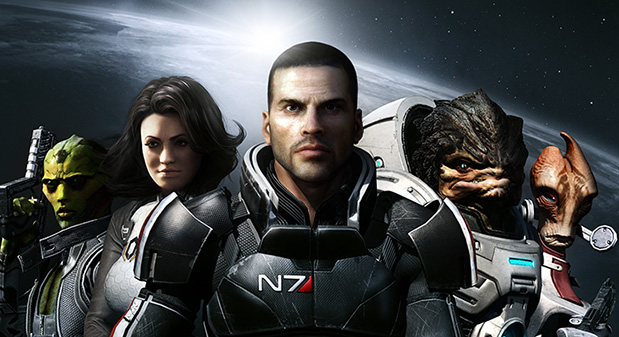
I also think the human race would be in danger even if those same aliens were peaceful. Even if they brought a super-intelligent AI that was as compassionate and caring as Mr. Rogers, our species would still face an existential crisis. To explain why, I’ll need to revisit one of my favorite video games of all time, “Mass Effect.”
There is, however, another rich history between alien races within “Mass Effect” that offers a similar lesson. This one has less to do with artificial intelligence and more to do with what happens when a species technology that it’s not ready to handle. That danger is well-documented in the game through a hardy race of beings called the Krogan.
Like the Quarian/Geth conflict, the conflict surrounding Krogan has some real-world parallels. However, I would argue that their story Krogan is more relevant because it serves as a warning for what could happen when an advanced species uplifts one that is less advanced.
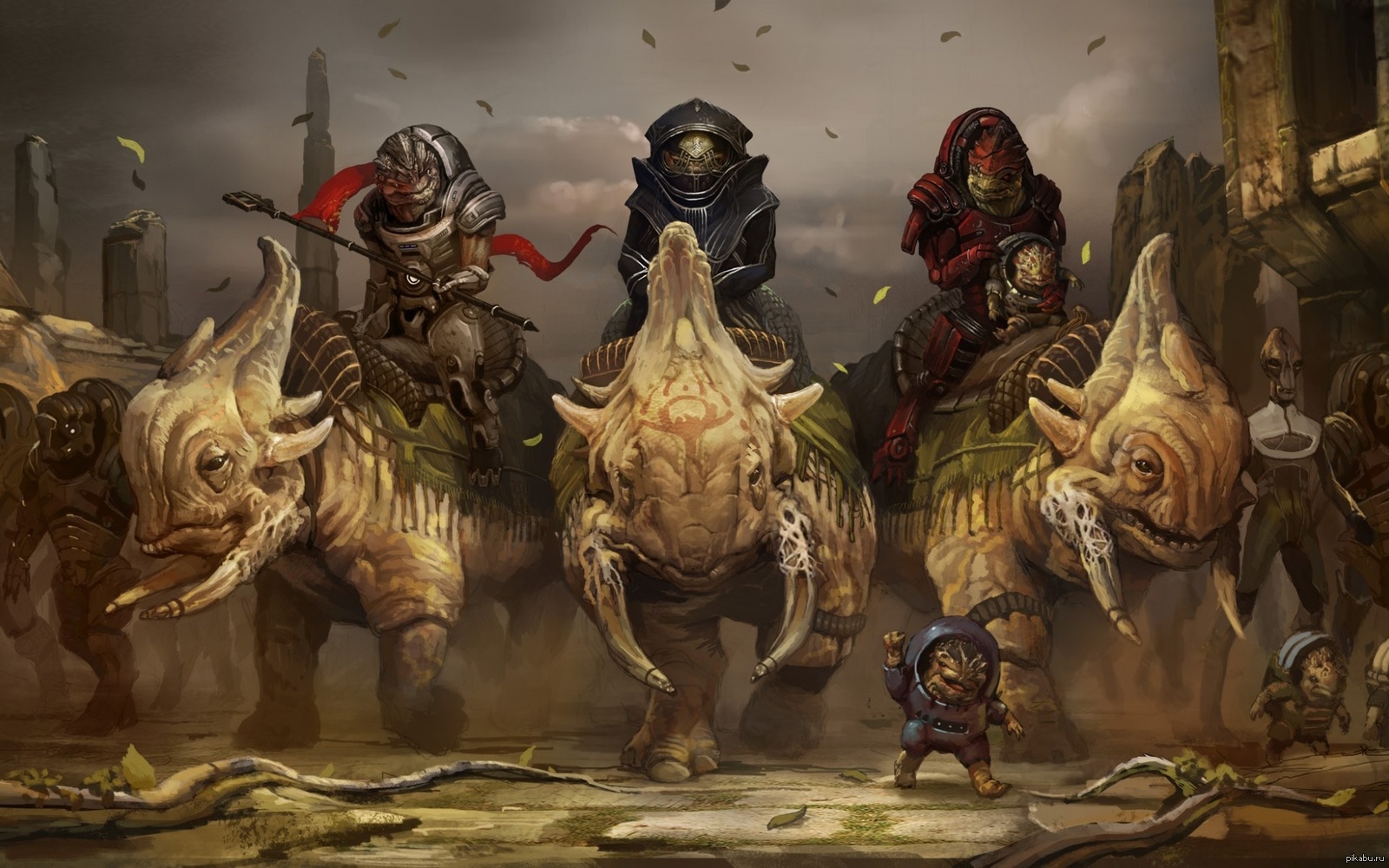
In the mythos of “Mass Effect,” the Krogan were once a primitive, but hardy species that evolved on the harsh world of Tuchanka. They’re reptilian, high-functioning predators in nature. They’re basically a cross between a velociraptor, a crocodile, and a primate. They have a tough, war-like culture, which is necessary on a world that contained hulking Thresher Maws.
They were not a species most would expect to develop advanced technology. Then, the Salarians came along. Unlike the Korgan, this amphibious alien race isn’t nearly as hardy, but is much more adept at developing advanced technology. In most circumstances, they wouldn’t have given the Krogan a second thought. Unfortunately, they were in the middle of the Rachni War and they needed help.
You don’t need to know the full details of that war. The most critical detail, as it relates to advancing an unprepared species, is how this war came to define the Krogan. Neither the Salarians nor the other alien races in the game could defeat the Rachni. In a fit of desperation, they uplifted the Krogan by giving them weapons and advanced knowledge.
In the short-term, the Salarians achieved what they’d hoped. The Krogan helped defeat the Rachni. In the long-term, however, it created another inter-stellar war in the Krogan Rebellions. Apparently, giving a hardy, war-like species advanced weapons doesn’t make them less war-like. It just gives them better tools with which to fight wars. That may sound obvious, but keep in mind, the Salarians were desperate.
The details of this war end up playing a major role in both “Mass Effect” and “Mass Effect 3.” That’s because to stop the Krogan, the Salarians resorted to another act of desperation. They crafted a biological weapon known as the genophage, which significantly curtailed the Krogan’s rapid breeding rate.
The damage this did to the Krogan race cannot be understated. Through the entire trilogy of “Mass Effect,” characters like Wrex and Eve describe how this destroyed Krogan society. In “Mass Effect 3,” Eve talks about how the genophage created massive piles of stillborn Krogan babies. That kind of imagery can haunt even the most battle-hardened species.
In the end, both the Salarians and the Krogan paid a huge price for giving technology to a species that wasn’t ready for it. Depending on the decision you make in “Mass Effect 3,” the Krogan species is doomed to extinction because of how ill-prepared they were. This haunted more than a few Salarians as well, one of which played a significant role in a memorable side-story in “Mass Effect 2.”
Regardless of how the game plays out, there’s an underlying message at the heart of the Salarian/Krogan dynamic. When a species is uplifted by another so abruptly, it’s difficult to see the long-term ramifications. Even though the Salarians were in a dire situation, they ended up creating one that had the potential to be much worse.
That danger is actually more pressing because, unlike advanced artificial intelligence, the act of uplifting a species effectively skips over the cultural and societal evolution that’s necessary to handle new technology. The Krogan never got a chance to go through that process before getting that technology. As a result, they became an existential threat to themselves and others.
The human race still has a long way to go before it creates the kind of artificial intelligence that would constitute such a threat. Aliens on the level of Salarians could land tomorrow and there would be nothing we could do to prepare ourselves. Whatever knowledge or technology we gained could do more than just upend human society. It could irreparably damage our species, as a whole.
Some of that outcome would depend on the intentions of the advanced alien race. It could be the case that they’re not like the Salarians and aren’t looking to enlist humanity in a war. It could also be the case that they’re smart enough to not give primitive humans advanced weapons. That could mitigate the risk.
However, that still assumes humans won’t find a way to use advanced knowledge to make weapons. When Otto Hahn discovered nuclear fission in 1938, he didn’t have any idea that it would be used to make a bomb that would kill go onto kill over 100,000 people. Even if advanced aliens are really smart, how could they be sure that humanity won’t use advanced knowledge to create something more horrific?
Sure, they could try to stop us, but that could only make things worse. The genophage wasn’t the Salarians’ first recourse. They actually went to war with the Krogan. They suffered heavy losses and so did the Krogan. In the long run, uplifting a less advanced species was detrimental to both of them.
That doesn’t just put the famous Fermi Paradox into a new context. It demonstrates a real, tangible threat associated with advancing a species before it’s ready. I would argue that the human race is close to that point, but we’re still not there. We have issues managing the technology we’ve created. There’s no way we can handle advanced alien technology at the moment.
“Mass Effect,” in addition to being one of the greatest video games of the past two decades, offers many lessons for the future of humanity. It shows that humans are capable of great things. We have what it takes to join an entire galaxy full of advanced alien life. For our sake, and that of other advanced aliens, we cannot and should not rush it.
In general, I tend to have a high opinion of the human race. I believe that, in general, people are inherently good and will do the right thing in the long run, even if it requires mistakes and missteps along the way. Some of my personal experiences have fed this belief, as well as stories of incredible acts of compassion.
I say that as a preface because my faith in humanity does have limits. There are certain issues where those limits become a critical factor in answering major questions about where we are, as a species, and where we’re heading. I’ve tried answering some of those questions before, such as humanity’s readiness for advanced artificial intelligence. Now, I want to try to answer another where I feel humanity’s limits are a real issue.
It has to do with whether or not humans are alone in the universe. It’s probably one of the most fundamental questions our species has ever asked, inspiring heated debates, famous equations, and Hollywood blockbusters. I’ve certainly asked that question a time or two when looking up at the stars. I imagine there are few people who haven’t.
It’s the act of discovering intelligent extraterrestrial life that has far greater implications for humanity. I would even argue that those implications could determine whether the human race will survive beyond the destruction of Earth, which is inevitable. Even advanced artificial intelligence wouldn’t compare because at least humans would create that. An intelligent alien civilization would be much less predictable.
In confronting this existential issue, I don’t believe movies or TV shows have come close to getting it right. “Contact” made a commendable effort, but never gave more than a half-answer. Movies like “Independence Day” and “Close Encounters of the Third Kind” were overly simplistic in their approach. That’s to be expected because, logistically speaking, there’s no way to fit all the implications into a single two-hour movie.
I believe that to answer the question of humanity’s readiness to confront an extraterrestrial species is multi-faceted. There are plenty of factors to consider, but before I get too bogged down by the particulars, I want to offer my personal opinion on the issue. Then, I hope to demonstrate why I have this opinion.
No, the human race is NOT ready for contact with intelligent extraterrestrial aliens, but we’re getting there.
I know that isn’t a straightforward answer. It may sound like I’m trying to stand on both sides of the fence, but like I said, the question is inherently complex. As such, it’s hard to offer a simple answer.
Part of the complexity comes from circumstances. In an instance where scientists on Earth identify an advanced alien species, possibly by detecting an alien mega structure like a Dyson Sphere around a distant star, I think the human race could handle that, for the most part.
Such a discovery would be, by far, the greatest ever made in the history of humanity. It would be the story of the millennium and confirm, once and for all, the answer to one of the most fundamental questions our species has ever asked. Getting an answer to that question would change how we see ourselves in the universe, but the extent of the impact would be limited.

Sure, it might cause some disruptions with respect to major religions, although some denominations already preparing for that. It might also cause some ripples in the social fabric of society. If we know there are alien civilizations in the universe that are more advanced than us, then suddenly we have fewer excuses to impose petty divisions within our own species.
There would be upheaval. There would be tension, as well. I still believe that society would adapt in that scenario. Once the shock wears off, we may very well go back to how we were before. Future generations would just shrug off the notion that advanced aliens exist and focus primarily on the issues directly affecting them on Earth.
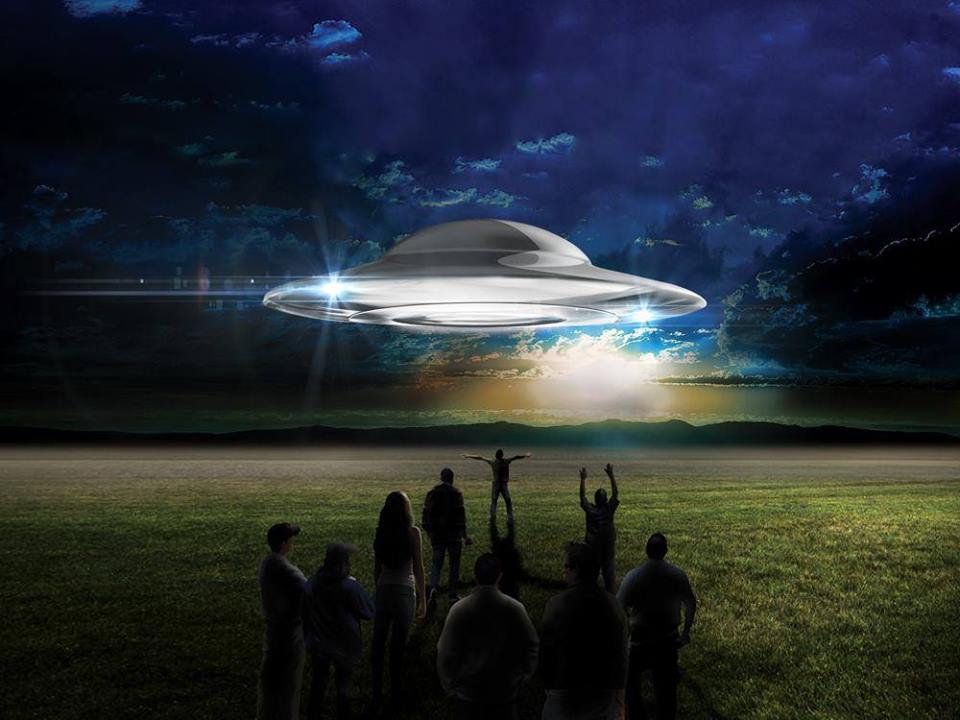
There’s another instance, however, that has far more profound implications, as well as greater danger. In that scenario, the advanced alien civilization contacts us directly. Moreover, it effectively announces that it’s coming to meet us and there’s nothing we can do to stop it.
In that scenario, I don’t think the current order will remain intact. If we found out tomorrow that intelligent aliens exist and they’re on their way to greet us, I believe that society, as we know it, will fall apart under the weight of fear, uncertainty, and outright dread.
My reasons for believing this have less to do with my faith in humanity and more to do with my understanding of basic human psychology. It’s proven science that the human psyche is adverse to uncertainty. From a purely survival standpoint, that makes sense. Not knowing whether there’s a hungry lion hiding in the bushes is detrimental to our survival. We have a legitimate evolutionary reason for avoiding such situations.
An advanced alien civilization isn’t just a possible threat. It’s the ultimate uncertainty. Even if those aliens are peace-loving hippies who want nothing more than to create a utopian world for every species they encounter, we won’t know for certain. Even if they try to articulate their peaceful intentions, we may not believe them because assuming wrong would be more dire than any hungry lion.
If an alien civilization is advanced enough to both contact us and traverse interstellar space, then it’s highly likely that we wouldn’t stand a chance at stopping them. Despite what “Independence Day” might have you believe, there’s just no way we would be able to counter technology that could carry another species across the stars.
Even if that probe is no bigger than a basketball, its arrival on Earth would trigger so much panic that our society, economy, and political institutions wouldn’t survive in their current form. That’s not to say civilization would completely collapse. Some areas might descend into anarchy, but most wealthy countries would remain intact.
However, I believe they’ll remain intact through strict martial law. I also believe that, in the face of incoming aliens, there would be a huge scramble among nations to put together some sort of defense plan. Anyone remotely experienced with science or engineering would suddenly become incredibly valuable for their skills and likely be required to work on this issue.
No matter what recourse humanity takes, though, I don’t think it’ll matter once intelligent aliens arrive. The worst case scenario is that people are so afraid that a few become too trigger happy and attempt to attack. In that case, if the advanced aliens are the vindictive type, they would probably wipe humanity out with the same ease that we would use to step on an ant.
While I don’t think that scenario is that likely, I can certainly see fear dominating the discourse. It would probably extend beyond the initial contact. Even if the aliens present themselves as friendly visitors, I imagine there will still be plenty of paranoia that it could all be a trick. Given how eager some people are to embrace conspiracy theories, I think this will cause plenty of problem, even in the best case scenario.
There’s still a chance that the human race could adapt to this encounter and be stronger because of it. However, if I had to bet money on the ultimate outcome, I wouldn’t wager much on that outcome. I think, at the moment, it’s more likely that fear and uncertainty will lead to the kind of irrational behavior that would prevent humanity from benefiting from an encounter with intelligent aliens.
As it stands, humans can’t even prevent conflict when encountering one another, especially if they look and act differently. I can’t imagine it would be much better if we encountered a species that was so different that we just had no way of relating to them. At least with minorities here on Earth, we share the same basic human template. For all we know, aliens will look, think, and feel things that are beyond our abilities.
Now, I know that scenario sounds bleak, especially for someone who claims to have more faith in humanity than most. However, there’s one last caveat that further complicates the issue and it has to do with the last part of my answer.
When I stated that the human race is not ready to encounter an advanced alien species, I mean that within a specific context. In the same way I don’t believe humanity is ready for advanced AI at the moment, I don’t think the collective psyche of the human race is to a point where we can accept the idea of confronting an intelligent alien civilization.
That, I do think we’re more ready today than we were 30 years ago. Humanity has made remarkable progress with respect to technology, society, and general welfare. Being more connected through media, the internet, and globalization has helped us better see ourselves as one species, at least to the extent our inherent tribalism will allow.
I believe that in the coming decades, especially as we augment our brains and our bodies, we’ll be more prepared to encounter an extraterrestrial intelligence. I’m not sure we’ll ever be completely ready, but I do think we’ll get to a point where we, as a society, will be able to handle it.
Whether or not that point comes within my lifetime or that of the kids being born today is hard to say, but given enough time and continued progress, I believe we’ll get there. For now, though, the prospect of encountering an intelligent alien civilization would incur some pretty detrimental effects on our species and our world. Even if aliens come in peace, we just not be ready to accept it.
For most of human history, we could take comfort in one simple fact. No matter how brutish, crude, or stupid we were, from burning witches to fighting wars over a stray dog, we could never screw up so badly that we would destroy our entire world. Sure, we could leave some pretty noticeable scars, but we could never outright destroy it.
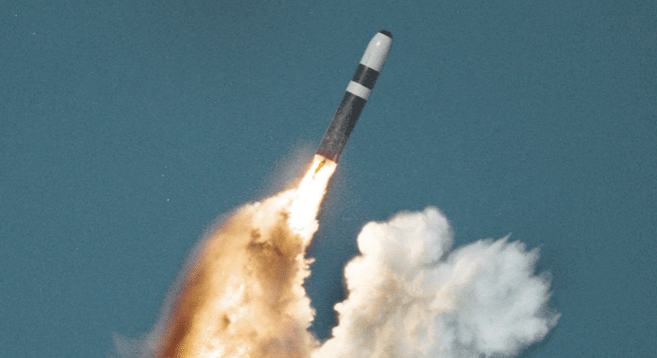
While the number of live nuclear warheads at the global level has decreased, they still have plenty of destructive power to both wipe out our species and render large chunks of the world uninhabitable to any species less hardy than a cockroach. These are, by and large, the most dangerous items mankind has ever created and that includes machine guns, nerve gas, and fidget spinners.
The very existence of these weapons says a lot about the state of our species and where it came from, more so than I can cover in a single blog post. However, in wake of the 35th anniversary of the day when the world, as we know it, almost ended, I think it’s worth emphasizing just how skilled/lucky/crazy we are to still live in an intact world.
Despite the undeniable danger of nuclear weapons, we don’t always treat them with the same care that we would treat the latest iPhone. Several years ago, John Oliver dedicated an entire show to highlighting the sorry state of America’s nuclear arsenal. Even if you only believe half of what a comedy news show tells you, it’s hard to take much comfort when weapons of mass destruction are involved.
What happened on September 26th, 1983 was terrifying in just how close we came to nuclear war. Many would make the argument that this incident was the closest we, as a species, came to destroying ourselves. I would tend to agree with that argument. Unfortunately, it’s one of those arguments that has an uncomfortable breadth of details.
In any case, the stakes were painfully high. You literally can’t get much higher than a nuclear war that wipes out billions. We’ve managed to avoid it, but we’ve come so uncomfortably close that it’s a miracle the world is still spinning. A video from the YouTube channel AllTimeTop10s nicely documents some of these incidents. If you feel like you’re having a bad day, this should help provide some context.
I’ll give everyone a moment to catch their breath, vomit, or a combination of the two. I promise nobody would blame you. Knowing how close we came to nuclear war and how bad it could’ve been, we should all share in a collective sigh of relief every day.
However, as bad as these past cases have been, there’s no guarantee that we won’t face something similar in the future. There’s also no guarantee that there will be someone like Santislav Petrov to make the right decision when those situations come around.
That said, the situation today is very different than what it was during the Cold War. Say what you will about ongoing talking points about Russia. It’s not even in the same hemisphere at it was in the 50s and 60s when the United States and Russia seemed eager for an opportunity to go to war.
The world of geopolitics has evolved, in many ways, beyond the concept of two competing superpowers engaging in a nuclear dick-measuring contest. These days, increased globalism and a more interconnected economy makes that kind of geopolitical strategy untenable and counterproductive.
That might offer some comfort, but there are those much smarter than I’ll ever be who still have concerns. According to the Bulletin of Atomic Scientists, who have been gauging the likelihood of nuclear war for decades, we’re two-and-a-half minutes to midnight. This is their statement on the matter.
For the last two years, the minute hand of the Doomsday Clock stayed set at three minutes before the hour, the closest it had been to midnight since the early 1980s. In its two most recent annual announcements on the Clock, the Science and Security Board warned: “The probability of global catastrophe is very high, and the actions needed to reduce the risks of disaster must be taken very soon.” In 2017, we find the danger to be even greater, the need for action more urgent. It is two and a half minutes to midnight, the Clock is ticking, global danger looms. Wise public officials should act immediately, guiding humanity away from the brink. If they do not, wise citizens must step forward and lead the way.
Since I’m an aspiring erotica/romance writer and not an atomic scientist, I am woefully unqualified to contest the conclusions of these individuals, let alone argue them. They cite a new wave of tensions between Russia and the United States, as well as the nuclear ambitions of North Korea. These are not the same conflicts that fueled the Cold War and that uncertainty has many understandably spooked.
Me being the optimist I am, I tend to believe that world leaders, however deranged or misguided they may be, prefer that the world remain intact. Nobody wants to be the leader of a smoldering pile of ash. There’s no way to build a palace, a harem, or a giant golden statue of themselves on a foundation of ash. That’s as good an incentive as anyone can hope for in avoiding nuclear war.
Unfortunately, human beings don’t always act rationally and are prone to making stupid decisions that change the course of history. One mistake in a situation involving nuclear weapons might be all it takes. Only time will tell, but the extent to which we’ve survived thus far should give us all reasons to be hopeful and thankful.
Today is an important day, one that became even more important this past year. You probably didn’t realize it and for good reason. Until recently, the significance of this day had been lost to history, but it’s a day that deserves recognition, albeit for a very sobering reason.
This day became one of the most significant days not affiliated with a holiday sale at the mall on September 26, 1983. On that day, the world as we know it almost ended. That’s not a hyperbole. That’s not a conspiracy theory out of a an Alex Jones fever dream either. It’s painfully true. The world almost died in a nuclear fire on that day, but it didn’t because of a decision made by one man.
That man’s name is Stanislav Yevgrafovich Petrov and if you were alive on that day, or were born after it, then you owe your existence to this man. For a brief moment on that day, 35 years ago, he literally held the fate of the world in his hand and he made the decision that saved it. As someone who regularly lauds superheroes and the values espoused in comics, even I can’t overstate the significance of what that man did.
The incident that almost ended the world and made Stanislav Petrov a man for the ages widely known about until the mid-2000s. It involved an incident in the former Soviet Union that brought the world to the brink of nuclear annihilation. In terms of worst case scenarios, this ranked right up there with an invasion by aliens armed with atomic anal probes.
At the time, Petrov was a lieutenant colonel in the Soviet Air Defense Forces and had been on duty at the Serpukhov-15 bunker near Moscow. In terms of Soviet defense strategy, his role in that bunker was pretty damn important. It was tasked with monitoring Soviet air space to detect an incoming nuclear attack.
It’s worth mentioning that this was a time of heightened tension. President Reagan, at the time, was going long and hard on anti-communist rhetoric. Being a former Hollywood actor who’d just been elected President, the Soviets had no idea if this guy was just going to shoot nuclear missiles at them because he thought it would make a great movie.
In a sense, this was the worst possible time for the systems at the Serpukhov-15 bunker to give a false alarm, but that’s exactly what happened. In the middle of Petrov’s shift, the systems began blaring every alarm it was possible to blare, telling them that America’s new Hollywood President had done just what they’d feared. He launched a full-scale nuclear attack to wipe out the Soviet Union.
I’d say it’s a nightmare scenario, but no amount of killer clowns armed with chainsaws can do justice to this kind of horror. As far as the men in that bunker knew, their country and everyone they loved was about to die in a nuclear inferno. It was the policy of the USSR and the Red Army to respond to any nuclear attack with a devastating retaliation, as specified in the doctrine of mutual assured destruction.
It was Stanislav Petrov’s job/duty to inform the Soviet high command of the detection. Every bit of his military training demanded that he inform his superiors to retaliate, thereby destroying the United States and Western Europe in reign of nuclear fire. In a state of such heightened tensions, he might have been justified in doing so.
All it took was one call to his superiors. That would’ve been it. That would’ve ended the world, as we knew it. Try and think about that for a second. In that moment, the fate of the world and billions of lives lay on the shoulders of Stanislav Petrov. If he makes that call, then the world as we know it is over.
However, in that moment when he literally had the world on his shoulders, he didn’t make that call. In that moment, he made a decision that saved the world and its future. He did it by not following the protocol that he’d been trained to follow and by the Soviet Union, no less, who were not known for being understanding to disobedience.
Petrov, with his duty and the weight of the situation bearing down on him, believed it to be a false alarm. He had good reason for believing this. The systems were detecting only several missiles, which was pretty small, given the sheer size of America’s nuclear arsenal. If America’s Hollywood President really wanted to wipe out the Soviet Union, he definitely would’ve used more.
Even so, his training and his duty told him to inform his superiors. He only had 15 minutes to do so because that’s how long it took for a detectable missile to reach its target. That’s right. In the time it takes to watch an episode of “Robot Chicken,” Stanislav Petrov had to make a decision that would’ve determined the fate of this entire planet.
The fact that no nuclear bombs went off and billions of people didn’t die is proof that he made the right decision. It was later determined that the false alarms were caused by a rare alignment of sunlight on high-altitude clouds and the erratic orbits of the Soviet’s satellites.
It seems so trivial now, but keep in mind that these were tense times during the Cold War. It really didn’t take much to spook either America or the USSR. It could’ve easily become a perfect storm, of sorts, for accidental nuclear annihilation and nobody would’ve been left on this planet to admit they screwed up.
It’s because of Petrov’s decision that day, to not follow protocol and trust his instinct, that we avoided Armageddon. For that decision, Petrov received no metal, commendation, or recognition for his decision. He just got a pat on the back, which was the most anyone could hope for in the Soviet Union at that time.
This man literally saved the world in the most painfully literal sense, but was quickly forgotten. There were no parades, movies, or free tickets to a Madonna concert. Petrov just went back to living his life until he retired from the military.
It really wasn’t until 2004 that Petrov began getting recognized for his actions, that day. By then, though, the weight of that moment had lost its place in the public consciousness. The fact I have to write about it on this blog shows just how little awareness this man and that fateful day have in the annuls of history.
Well, in this year, that day became a lot more important because back in May, Stanislav Petrov passed away at age 77. It wasn’t widely reported. It didn’t even get mentioned on any of the major news outlets in America or Russia. This man who saved billions of lives isn’t even alive anymore to appreciate.
He lived a quiet, unremarkable life towards the end. He never considered himself a hero. He never even tried to put that label on himself. He was just the right man in the right place to make the right decision. In doing so, he saved billions of lives and preserved the future of this planet.
It’s impossible to overstate the importance of the decision that this man made on that fateful day 35 years ago. Some may brag that they saved the world or are arrogant enough to think that they can. Stanislav Petrov didn’t need to brag because he did it. He saved this world and most people will never know what he did.
Now that he’s passed, let’s all take a moment to appreciate what this man did. By trusting his instinct and his humanity, not wanting to make the decision that would destroy this world, he proved just how heroic a person could be in the worst of circumstances.
From the bottom of my heart, and on behalf of all those who are alive because of the decision made that day, thank you Mr. Petrov. Thank you for doing the right thing in the worst of circumstances. This world is still spinning because of you. Rest in peace knowing you saved it.
When a billionaire mogul like Elon Musk and a world leader like Vladimir Putin agree on an issue, it’s generally a good idea to take it seriously. There are a lot of pressing issues in this world, from nuclear proliferation to major disasters to slow wi-fi. However, when one of those issues is a possible existential threat to all we hold dear, we should prioritize it over our wi-fi connection.
Well, the issue at hand is the growth of artificial intelligence, an issue that emerges quite frequently when you talk a lot about sex robots. Beyond the kinkier context, though, it is a major issue and one will likely become more pressing in the coming years. It could end up being one of the most critical issues we, as a species, face since the advent of nuclear weapons.
The fact that it’s so easy to imagine Putin making that claim while sounding like Dr. Evil from “Austin Powers” just makes it that much more terrifying. Again, this is a man who rules a country with one of the largest armies in the world and enough nuclear warheads to sterilize the face of the Earth. For all that to be rendered useless by one technological advance is both daunting and horrifying.
I’m normally not inclined to agree with dictators that have yet to conquer the country I live in, but I have to make an exception here. I think both Putin and Musk are correct, if only on a cursory level. Artificial intelligence is one of those eclectic concepts that still inspires Hollywood movies, but is still poorly understood by a public that still fears violent video games.
It’s hard for me, an aspiring erotica/romance writer to put this issue into a perspective that everyone from Russian strongmen to underachieving fifth-graders can grasp. Since artificial intelligence is just that important and will affect everything, including our sex lives, I’ll try to create a proper context. Then, I’ll use that context to help allay some of those concerns by adding a sexy twist.
When anything has that level of investment, it means the potential is huge. I don’t think it’s possible to understate the potential of artificial intelligence. Not even Skynet could grasp just how powerful this technology could be. That’s because it completely changes the way we solve problems.
With artificial intelligence, human beings suddenly have a tool that doesn’t need a user. It’s not bound by our faulty caveman brains. It’s not limited by the amount of brain matter we can fit in our skulls. It’s not even easily distracted by internet porn. Yes, it’s that powerful.
Given that we humans are still easily fooled by street magicians with drinking problems, it’s not unreasonable to say that we have no hope against an artificial intelligence that smart. Once a machine becomes even marginally smarter than us, then game over. We have no hopes of controlling it.
That’s why brilliant men like Elon Musk and Stephen Hawking regularly voice concerns about this issue. Being brilliant, they understand how stupid and gullible most people can be. The mere act of creating a system that’s so much smarter than we are is akin to creating an entire race of hungry polar bears that know how to use machine guns.
The danger is there, along with almost infinite benefits. I’ve said outright that we humans can only go so far with our caveman brains. If we don’t upgrade them, then we’re just giving our future robot overlords cheat codes with which to beat us.
The trillion-dollar question, which may very well be tied to our survival as a species, is how do we prevent artificial intelligence from destroying us? Is it even possible? We can’t put the genie back in the bottle. This stuff is already beating us at jeopardy. The incentives are just too great to discount.
Now, I’m woefully unqualified to answer that question. There’s a reason Elon Musk is a billionaire and why Vladimir Putin is one of the most powerful men in the world. They’re smarter, more resourceful, and more cunning than I’ll ever be on my best day. I tell sexy stories. I’m not smart enough to fix the bugs on a doomsday device.
However, being an erotica/romance writer gives me a uniquely intimate perspective on things. It has helped me look at situations through the mixed lens of logic and passion. It’s through that lens that I feel I know what will save us from the gloomy scenarios that Musk and Putin paint with artificial intelligence. It’s overly simple in some ways, but naturally pragmatic in others. It boils down to this.
“Teach Machines To Love Us AND Have Sex With Us.”
I know. That sounds somewhat juvenile, even if it’s exactly the kind of thing you’d expect an erotica/romance writer to suggest. Bear with me, though. I promise there’s a method to the kinky madness.
No matter how intelligent an artificial intelligence becomes, we’ll always have one thing in common with it. We’ll both be bound by the laws of physics, nature, and the dynamics within. Even if the system takes the form of a killer robot, sexy or otherwise, it’s still operating in a world governed by said dynamics.
With artificial intelligence, we’ll need to be more than just its pet. If you think animal abuse is horrific, then you don’t want to imagine what a superintelligent machine will do to a human when they start pissing on the floor, figuratively speaking. To ensure that the AI enriches our lives rather than destroys them, we need a very intimate bond.
That’s where love and sex come in. Primarily, it’s the love part that will keep us in good standing. That’s why it’s critical to ensure that any artificial intelligence we create won’t be entirely bound by Vulcan-like logic. It must have a significant measure of emotional intelligence. In fact, I would argue that emotional intelligence should be an advanced AI’s highest priority.
It’s emotion that gives weight to our goals, tasks, and endeavors. It’s emotion that allows us to work with others, cooperate, and help each other. If that isn’t part of an intelligent machine, then we’re basically a random assortment of particles that’s only slightly more complicated from a rock. We can’t have a superintelligent AI look at us like that.
Instead, we need that AI to see us as a partner that can give purpose to its goals. We need it to ascribe an intangible value to us, as we do with all the people and things we love. Sure, your favorite coffee mug may be no different than any other, but you’ve given it the kind of meaning that when someone breaks it, you feel compelled to break their kneecaps with a baseball bat.
Even with intangible value, though, we humans have to rank higher than coffee mugs. We have to be something that an intelligent machine can fall in love with. We have to be something a intelligent machine wants to be with.
In the greatest love stories of all time, or even those that unfold in comics, the strength of that love was built on two people complementing each other in all the right ways. As individuals, they’ve got their own identity and purpose. Together, though, they make each other better. They make each other stronger and more passionate.
That’s what we need. That’s what we should aspire to forge with our future AI bretheren. These creations won’t be our pets or even our tools. They’ll be thinking, feeling systems. For them to love us and for us to love them must make both stronger. That’s what will ensure we both benefit from advances in AI.
Creating that love won’t be easy, but that’s where sex comes in. I’ll give everyone a second to loosen their pants because this is the less elegant part of AI that you’ll never hear Elon Musk or Vladimir Putin talk about, unless they become erotica/romance writers too. In that case, I’d be the first to read their stuff.
Again, I’m not just referring to sex robots here, although that might be part of it. The sexual component is a more basic precursor, of sorts, to the loving connection I just mentioned.
Despite what priests, mullahs, and Texas health class teachers may say, sex acts as both a precursor and a catalyst to love. The fact that it’s such an intrinsic drive that also happens to feel really good helps compel us to forge loving, intimae bonds with one another. By putting that into a machine, we basically set the stage for them to want those bonds and not just craft them due to sheer programming.
Now, this won’t necessarily mean AI systems creating robot genitalia for us to use, although that might be part of it. The intimate sexual part of the connection will more likely come in the form with melding our biology with the hardware of an AI. Elon Musk is already working on this with companies like Neuralink.
In the same way sex mixes all those messy juices, our hunks of flesh will mix with hunks of metal. Sure, it may not seem sexy now, but from the perspective of an AI, it’ll be akin to an orgy at the Playboy Mansion. So long as that merging process is sufficiently orgasmic, metaphorically speaking, then we humans may be destined to fall in love with a superintelligent AI. It may be the greatest love of all our lives.
This is all still speculation on the part of an aspiring erotica/romance writer who is woefully unqualified to talk about anything that doesn’t involve superhero comics, boobs, and sexy novels. It is my sincere hope that people much smarter than I’ll ever be are already working on the problems with artificial intelligence. I can only assume their solutions are far superior to mine.
For those still worrying about the prospect of dying at the hands of the Terminator or loving a machine, I would just note that we humans have dealt with world-destroying technology before. We created nuclear weapons and while we came painfully close to destroying ourselves, we humans generally like living.
Say what you will about the flaws in humanity, but we know how to adapt. We know how to survive. An artificial intelligence may be one of those threats that overwhelms those natural abilities, but it’s also one of those concepts that can actually solve itself. So long as we find a way to love and make love with these powerful systems, we’ll both benefit from the afterglow.
Anyone who watches the news for more than 15 minutes will probably hear about some dire new crisis that’s going to utterly destroy society, their way of life, or the entire world.
There are so many unfolding catastrophes in this world. When you look at history, recent and ancient alike, and see how close we’ve come to destroying ourselves, it feels like a goddamn miracle that we’re still in one piece. Thanks to the news, the internet, and Roland Emmerich movies, it feels like any day could be the day where aliens, asteroids, and earthquakes decide humanity’s run is over.
However, that day hasn’t come. Aliens, diseases, and global warming hasn’t killed us yet. Can we at least stop for a moment to appreciate that? Whether it’s the news media, disaster movies, or boredom, most people don’t realize just how much progress we’ve made as a species. We realize even less that the driving force behind that progress is something that will also solve future problems.
It’s kind of our not-so-dirty secret-that-shouldn’t-be-a-secret. We’re all so used to hearing about a new crisis that we should worry about, but we rarely hear about the solutions. We hear even less about the problems that humanity actually solved because who wants to hear about those? It’s not like human triumph sells or anything.
I could go on for multiple post about how fear is a lucrative industry, from slasher movies to stories about bear attacks. I’d rather give people a sense of hope and leave the depressing nihilism to street preachers, cable news, and grunge rock. Instead, I want to focus on the secret weapon that humanity has to solve a major crisis.
For a point of reference, let me list a few major problems that once filled humanity with an existential dread, only to be solved to the widespread cheers of no one.
Remember when AIDS, SARS, and bird flu were deemed the plague that would wipe out humanity? Well, thanks to modern medicine, we’ve either solved it or contained it.
Remember how for most of human history, we were always just one bad harvest away from a horrific famine? Well, most people don’t remember that, but we solved that problem anyway.
Then, there are the ongoing problems that we haven’t solved, but are making considerable progress. Every now and then, we’ll be reminded that it’s still a problem, but we’ll rarely acknowledge the progress. Make no mistake, though. That progress is there.
Issues like factory farming, over-fishing, and the animal cruelty that goes with it is a problem. We’re dealing with that too through advances in synthetic meats and vertical farming.
Few issues generate as many headlines and/or first world guilt than global poverty. However, thanks to advances in modern economies and an unprecedented decline in war, the number of people living in poverty has decreased significantly.
Again, you probably don’t hear about these stories and it’s not just because fear sells better than hope. A lot of these problems weren’t solved overnight with a single, brilliant idea. That may work in reruns of “House” and “Grey’s Anatomy,” but that’s not how real progress works.
Real progress takes time. It happens gradually. It’s like a shoulder massage that turns into an orgy at the Playboy Mansion. It doesn’t happen all at once. We don’t entirely understand how we get there. We just stop thinking about it and enjoy the fruits of that progress.
That’s entirely understandable. When you find yourself in a room with Channing Tatum, High Jackman, and a half-dozen naked bikini models, you tend not to care how you got there. You just smile, take your clothes off, and start enjoying yourself.
Now, I’m all for getting naked and enjoying the moment as much as the next guy. Put me in a room where dancing, nudity, and cold beer are all celebrated and I’ll be the first to overlook whatever progress led me there. However, I think it’s worth taking a moment to understand when a crisis is truly dire.
I don’t deny for a second that when the problems I mentioned above were first explored, they seemed pretty damn daunting. Anyone who knows the history of famines, disease, or environmental catastrophes would’ve spent an hour or so in the fetal position listening to old Evanescence songs.
Then, once the dread wears off and the music gets old, those same people would’ve gotten up, rolled up their sleeves, and gotten to work. That’s because, as fearful as we can be, we generally like living in a world that’s comfortable enough for life, love, and bacon-flavored lube. We’re very motivated to work towards that kind of world and not just because we’re hungry, horny, or lonely.
So how do we do it? How does humanity solve these problems or even begin to solve them? How the hell is it that we’ve made as much progress as we have, especially over the last century? Moreover, how can we know whether humanity will solve all the other overwhelming problems we’re facing now?
These questions are all actually very easy to answer. In fact, I’ve even come up with a simple checklist that anyone can use to figure out whether a problem is solvable. When looking at a problem from afar, ask yourself the following three questions.
Can the problem be solved with a new tool or an improvement to an existing tool?
Would the tool that solves the problem violate the known laws of physics?
Is there a non-zero incentive to make that tool?
If the answer to all three of these questions is yes, or even kind of, then go ahead and breathe a sigh of relief. That crisis, whatever it may be, will be solved in some form or another. It won’t happen overnight. It won’t happen in a single eureka moment. It’ll still happen though and for a very good reason.
Say what you will about the flaws in humanity. I certainly do on this blog, from the deficiencies in our bodies to our outdated marriage practices. However, there is one skill that humanity is objectively good at, so much so that it has made us the dominant species on this planet by an obscene margin.
We humans make awesome tools. We know how to build amazing things. Say what you will about a beaver dam, a spider web, or an ant colony. They don’t hold a candle to the Hoover Dam or a solar powered vibrator.
A lot of the seemingly unsolvable problems of the past were, for the most part, solved by tool. We developed cleaner, more efficient cars. We developed more efficient farming techniques. We developed more effective medicines.
That effort hasn’t stopped either. We’re still making newer and better tools every day. Tools like CRISPR could potentially cure hundreds of diseases. There may very well come a day where someone dying of genetic diseases will be as rare as someone dying of small pox.
Other tools, such as better batteries, more efficient light bulbs, and advances in nuclear power, will cut down on pollution and generate cleaner energy. Given the incentives to breathe clean air, as well as the massive profits to be made, we can expect those tools to put a major dent in the various environmental disasters that seem to crop up every single day.
Even problems on a smaller scale, such as head injuries in professional football, could be solved with better tools. The human brain, and the body as a whole, isn’t a rough-cut diamond that can never be repaired once flawed. It’s a hunk of malleable biomatter. Fixing it requires tools and make no mistake. Smart, well-paid people are working on it.
However, with all the doom-saying in the world and a new crisis emerging at least once a week, let’s not let humanity’s strength’s overshadow its flaws. Let’s not cower in fear when we don’t have to.
If a problem can be solved by a tool, then we humans are uniquely equipped to solve it. If there’s time, motivation, and resources to work with, we’ll solve it eventually. It may take a while and involve many setbacks, but we’ll eventually succeed. Lions maul zebras. Terminators terminate their targets. Humans build awesome tools to solve big problems. That’s something to be proud of.