Tag Archives: comic books

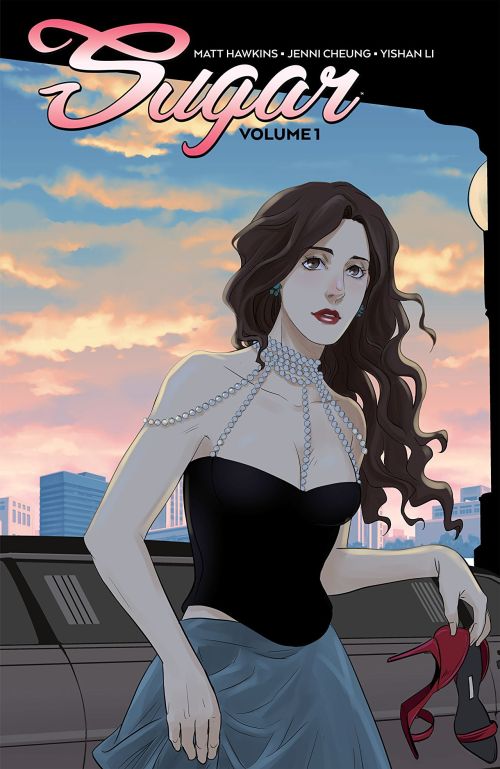
A Sweet (Atypical) Love Story In “Sugar”

677954-_sx1280_ql80_ttd_

Not every love story begins with a daring rescue followed by a witty exchange, culminating in an act of passionate lovemaking. Fairy tales and romantic comedies tend to present an obscenely skewed picture of how love actually manifests. In the same way porn gives fanciful depictions of sex, most love stories present an idealized, but flawed understanding of romance.

To be fair, though, love in the real world tends to lack that magical nuance. That’s why those fanciful depictions have so much appeal in the first place. It’s also why “Sugar,” the latest slice-of-life graphic novel from Matt Hawkins and Jenni Cheung, brings something interesting to the world of romance.

It doesn’t involve superheroes. It doesn’t involve elaborate emotional entanglements, either. It’s just a unique, engaging, and distinctly sexy story that resonates in the current year. This being the same creative team behind “Swing,” another novel love story that I lauded earlier this year, the bar is higher than most.

While I’ll won’t say “Sugar” is better than “Swing,” it has plenty to offer for those looking for a different kind of love story. This is not one of those boy-meets-girl or girl-crushes-on-cute-guy narratives that follows a familiar script. It doesn’t try to reinvent the genre, either. Instead, it takes two characters who find themselves in frustrating, but believable predicaments and has them find each other in a unique way.

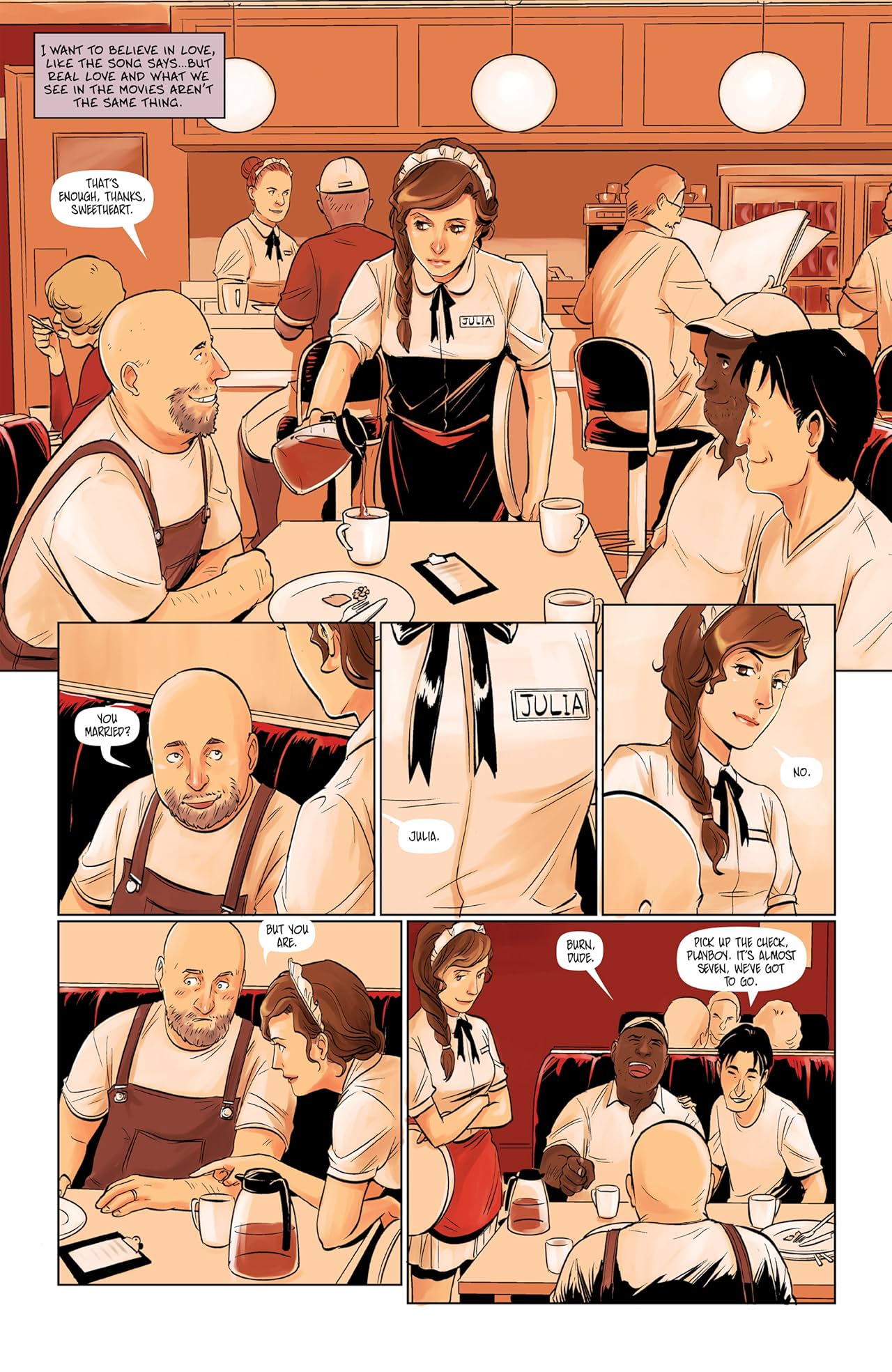
Julia Capello and John Markham aren’t eccentric personalities with extreme quirks. Julia is a 23-year-old college student working multiple jobs, constantly worrying about tuition and her financially struggling mother. It’s not a ground-breaking basis for a young woman, but it never comes off as overly-tragic. Hers is a story that many young people today can relate to.
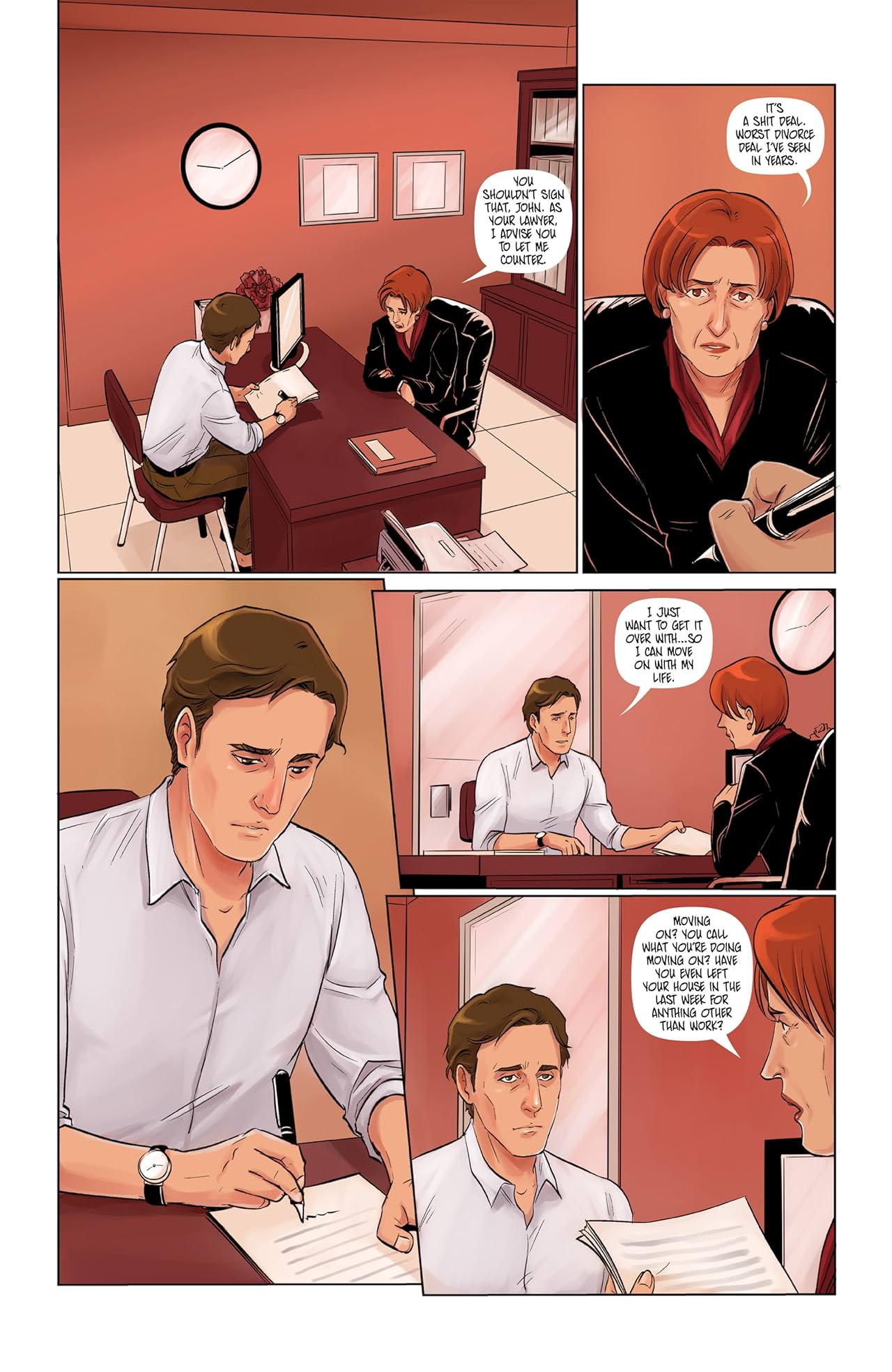
The same goes for John, a middle-aged businessman who thought he did everything right. He married his high-school love, created a thriving business, and played by the rules that men believe they’re supposed to follow. Then, out of nowhere, he finds out his wife is cheating on him and she serves him with divorce papers. In an instant, everything he thinks he knows about love is shattered.

These are two people with significant emotional deficits. Julia makes it clear that being alone doesn’t sit well with her. Her love of romance movies and her reactions to her roommates kinky antics with her boyfriend make that apparent. John is broken and lonely, needing a new connection to fill the void that his ex-wife left in his heart.

How they come together isn’t that romantic, in terms of logistics. Their first interaction is an otherwise forgettable joke in diner. However, their paths eventually cross again, this time with much sexier interactions. Instead of turning into a traditional relationship, though, these two follow a different path.

SugarTPv1_REVIEW-page-029

This is where “Sugar” twists the standard romantic narrative. Instead of two people coming together in moments that go onto inspire Taylor Swift songs, they end up following a much messier path. John, who is still very hung up on his wife, doesn’t jump into another relationship. Instead, he seeks an “arrangement,” of sorts.

Instead of an actual girlfriend, he asks Julia to be her sugar baby. That’s a term that exists in the real world and often gets conflated with prostitution. In fact, that’s a common refrain throughout “Sugar.” Julia goes out of her way to belabor the fact that she’s not just exchanging sex for money. It’s worth belaboring too because that’s not the crux of their arrangement.

Yes, the arrangement does involve sex.

Yes, the arrangement does involve activities associated with dating and relationship.

No, the arrangement does not involve the promise of marriage, kids, and a white picket fence.

No, the arrangement does not involve contracts, dungeons, and bondage in the mold of “50 Shades of Grey.”

In practice, it doesn’t necessarily convey the traits of an epic love story. It doesn’t depict that of a kinky porno, either. The arrangement between Julia and John serves a defined purpose that benefits them both.

John is someone who has spent most of his life in a relationship. Being alone for him is untenable. Julia is someone who clearly wants intimacy, but struggles to fit it into her hectic life. The arrangement they pursue together fulfills them both in a particular way. John gets companionship. Julia gets intimacy and some badly-needed financial support.

If that were the only result of the arrangement, though, there wouldn’t be much of a story. It doesn’t take long before Julia and John encounter various complications to their arrangement. Emotional entanglements do enter the picture. Some of them are a bit predictable, but others are less obvious.

SugarTPv1_REVIEW-page-071

There’s an underlying sense that neither character really understands what they feel for one another. John often finds himself pulled in multiple directions by his emotions whereas Julia tends to make more assumptions than she should. It makes for an eventful emotional journey, which leads to some interesting choices in the end.

When all is said and done, “Sugar” comes off as a real love story, but in an indirect sort of way. It take a strange, meandering path to get to that point, but it still gets there. While a second volume of the story is teased at the end, the story feels complete. There’s a sense that both Julia and John take a step forward in their lives, both together and as individuals.

There are a number of flaws with how “Sugar” goes about guiding Julia and John through the story, though. Neither character has much of a supporting cast. Both Julia and John are surrounded by archetypes with the personality depth of meathead jocks from 80s teen movies.

John’s business partner, Richard, is basically a well-dressed frat boy whose only role is to present the idea of an “arrangement.” His ex-wife, Karen, is even less developed. She is the personification of everything that rabid anti-feminists dread, a callous bitch who preys on the emotions of rich men while indulging her hedonistic proclivities on the side.
Julia’s supporting cast isn’t much better. Aside from a roommate who constantly encourages her to get laid and bosses that see her as nothing more than a cog with a pretty face, there’s nobody that really complements her. The people around her are just extra and bring little to the table.

On top of that, there are times when Julia and John rely too heavily on tired tropes. John has a few moments where he tries to be a White Knight and Julia has a few moments where she tries to be overly independent to the point of being an asshole about it. While these parts of the story can be eye-rolling at times, they don’t take away from the overall story.

At its core, “Sugar” is still a love story. It’s just a very different kind of love story. It takes two people in need of love and brings them together, albeit in an unorthodox way. It still works, though. It still evokes just the right emotion without resorting to princesses and dragon-slaying.

If I had to score “Sugar,” I would give it a 7 out of 10. It’s a solid, above-average story that applies just the right amount of romance and sex appeal. It has a novel concept that has plenty of potential, sexy and otherwise. It lacks the various support structures necessary to make it feel complete. Compared to “Swing,” it doesn’t quite measure up in terms of refinement.

Unlike “Swing,” this is a love story that feels more definitive. It’s concise, streamlined, and genuine in ways that few love stories dare to be in an era where one or more love interests has to be a superhero. Hawkins and Cheung once again achieve something special and sexy with “Sugar.” It may never be an epic love story that inspires a James Cameron movie, but it doesn’t have to in order to be sweet.

2 Comments

Filed under comic book reviews, romance, sex in society, sexuality

The following is a review I wrote for PopMatters for Old Man Logan #46. Enjoy!

Old, Gruff, and Gritty in Old Man Logan #46

Leave a comment

August 23, 2018 · 6:16 pm

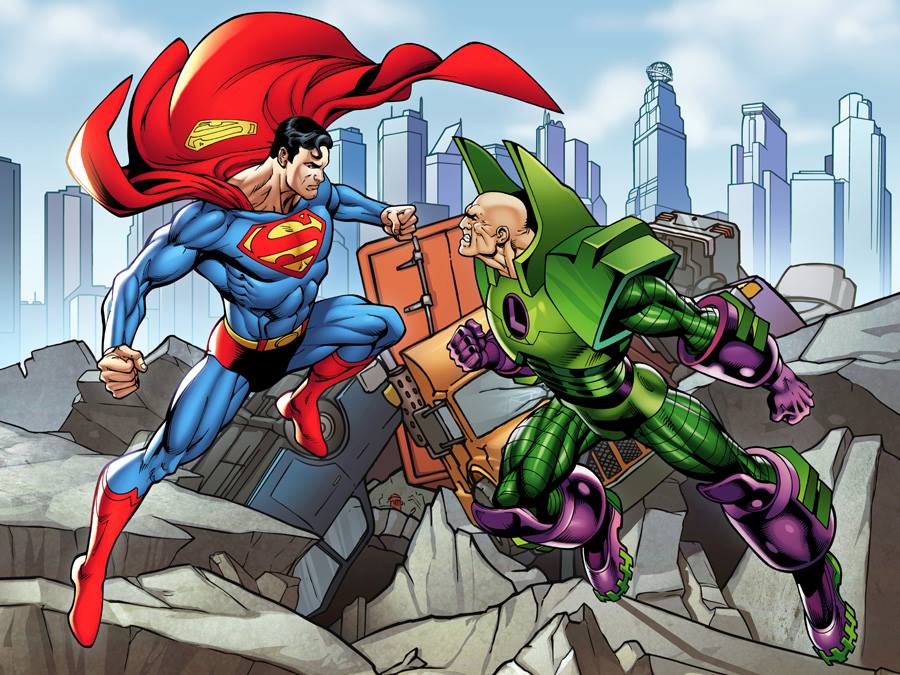
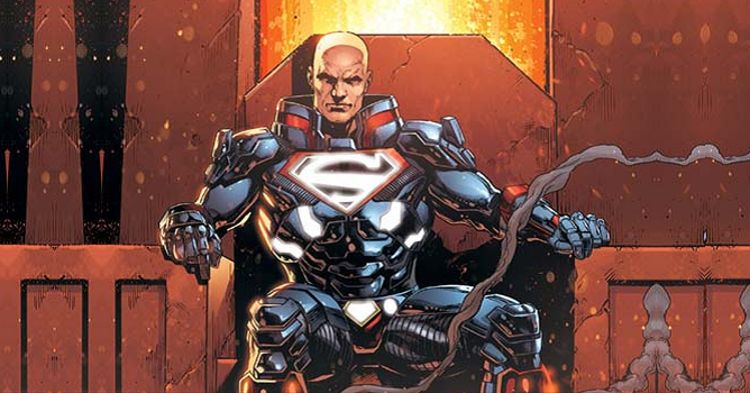
Understanding (And Learning From) Lex Luthor’s Hatred Of Superman

supes-vs-lex

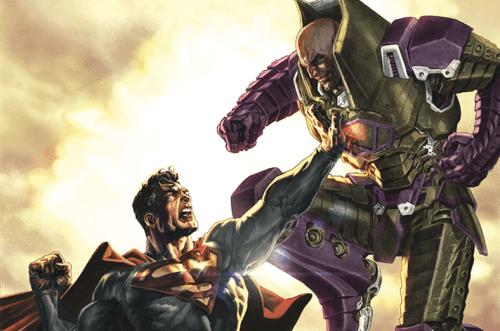
As a lifelong fan of superhero comics and someone who enjoys shows like “Breaking Bad,” I’m genuinely fascinated by villains. Specifically, I’m intrigued by what makes them tick and why they walk the villain’s path. Their journey is distinct from that of a hero, but one that can be just as compelling.

In many cases, these villains have capabilities that allow them to solve many of the world’s problems. I’ve cited Dr. Doom as one of those villains who blurs the lines of villainy because of his intentions. Characters like Dr. Doom genuinely believe that their villainous actions are justified because it will lead to a better, safer, more prosperous world. Heroes also believe that too, which helps fuel their epic battles.

For a character like Lex Luthor, though, the line isn’t that blurry. He’s a villain, plain and simple. He’s selfish, callous, arrogant, cruel, and narcissistic to an extreme. If he existed in the real world, he would check every box for narcissistic personality disorder. In terms of personality, he’s the polar opposite of his nemesis, Superman.

That goes a long way towards giving Superman an enemy who stands against his heroic ideals. I would even argue that Superman couldn’t be the iconic kind of hero he is without Lex Luthor. At the same time, I also think Lex reveals something critical about humanity, morality, and superheroes in general.

That’s difficult to see because for much of Lex’s early years in comics, there wasn’t much depth to his motivation. He just wanted to dominate the universe and Superman was in his way. It’s basic and bland, but that was typical for the early era of superhero comics. Villains like Lex were mostly just obstacles for the heroes to overcome in their journey.

That changed in the late 80s and early 90s with the modern era iteration of Lex Luthor. Finally, Lex got more backstory and depth. He was still no Walter White, but these details helped set the stage for the kind of villain he became. It also helped establish why he hates Superman so much.

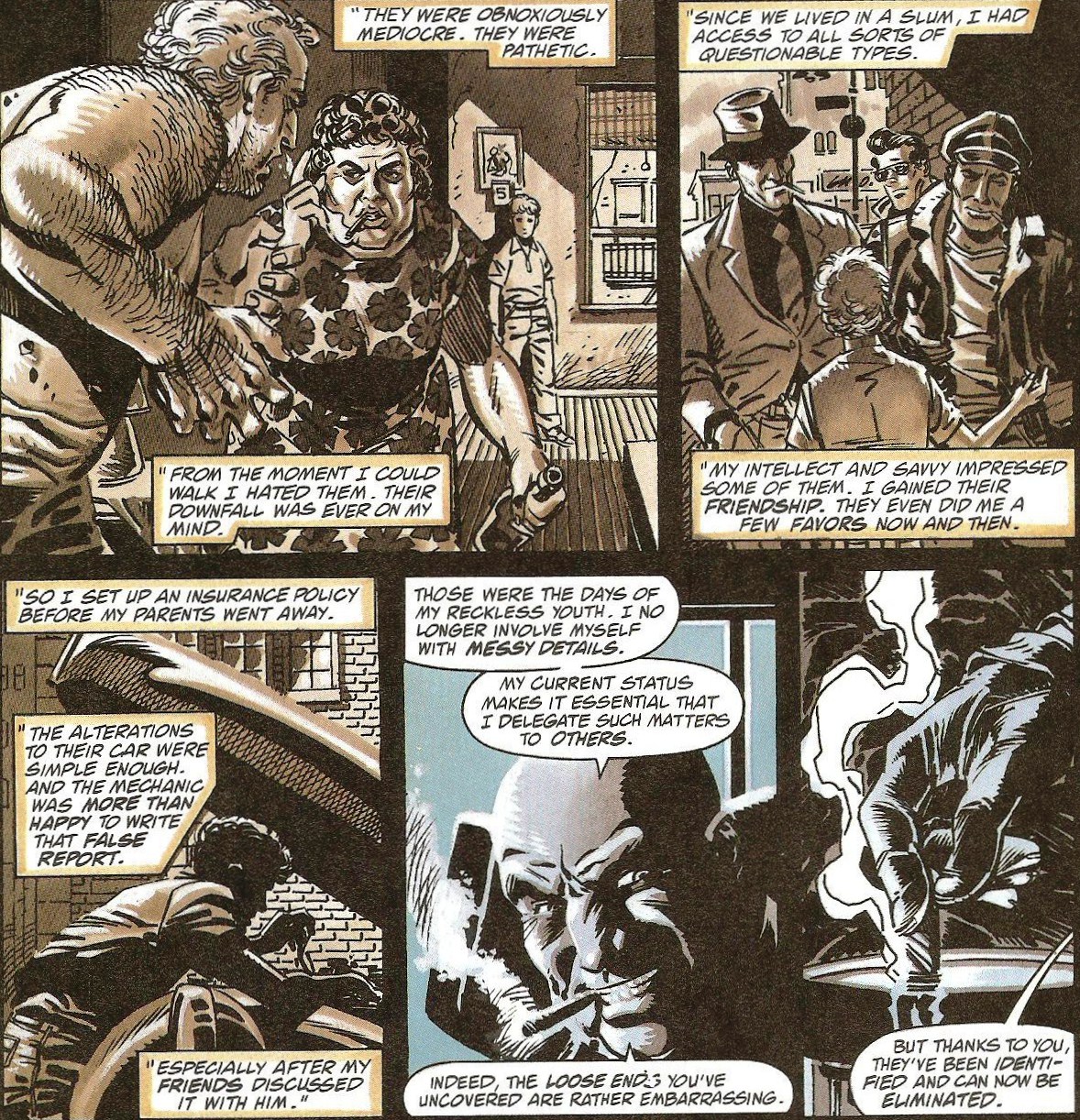
Whereas Superman landed on Earth and was adopted by loving parents, Lex grew up in a rough part of Metropolis called the Suicide Slums and was raised in an abusive household. Right off the bat, Superman gets lucky by having the best parents a child of any species could ask for while he’s unlucky enough to be born with the worst.

As a result, Lex had to be ruthless, manipulative, and cunning. Unlike other villains, though, he didn’t need much tempting. He didn’t agonize over his moral decisions, either. He just did it and didn’t feel a shred of guilt. That includes the role he played in the death of his parents.

That alone establishes Lex Luthor as the kind of ruthless villain who would oppose Superman for any number of reasons. However, as evil as that act was, it’s important to note the motivation behind it. Lex didn’t just kill his parents because murder makes him happy. He did it because they were an obstacle and an opportunity.

They were holding him back, but their deaths meant insurance money that he could use to strike out on his own and build something worthy of his genius. To him, the morality of his decision didn’t matter. Only the results mattered. That’s a critical detail and one that puts Lex Luthor’s villainy into a unique context.

Lex, being one of the smartest characters in the entire DC universe, doesn’t care much for things that are esoteric and obscure. He’s all about results that are tangible and measurable. That means things like truth, justice, and the American way are empty concepts to him. Superman champions those ideals, but for Lex Luthor, they’re just hindrances.

That kind of cold, callous approach to the world gives a unique substance to Lex’s behavior. He’s certainly not the first person to take such a materialistic approach to reality. Rick Sanchez of “Rick and Morty” does the same, but rather than misanthropic despair, Lex Luthor sees it as the key to producing the results he seeks.

Moreover, he has to produce those results without the god-like power that Superman wields. If Superman wants to move the Earth out of the way or destroy an oncoming asteroid, he doesn’t have to build anything or learn anything. He just has to flex his muscles, fly up into the sky, and destroy it with a single punch. There’s no tangible reason to his actions beyond it being the right thing to do.

To Lex Luthor, that’s not just an affront to someone who had to work for everything he ever gained. It’s an insult to his egocentric, results-focused worldview. Just saving the world because it’s the right thing to do doesn’t achieve anything. It does nothing to move humanity forward because nobody had to produce something of merit. It just allows them to continue in the same, unaltered state.

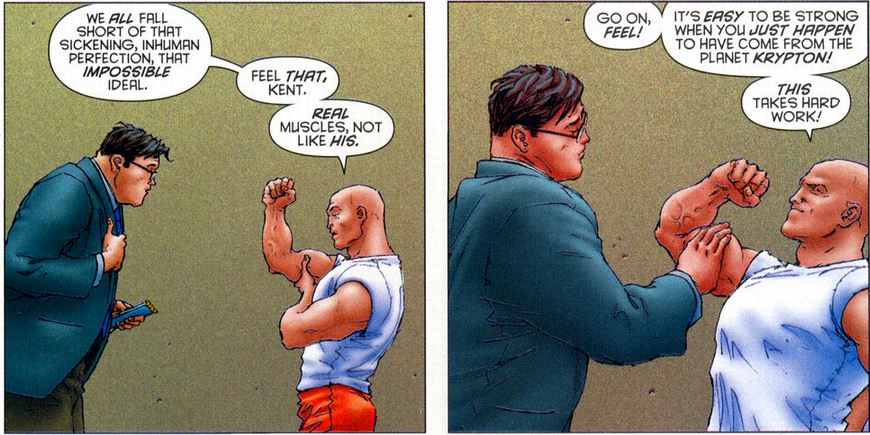
This gets to the heart of why Lex Luthor hates Superman. The extent of that hatred was fully articulated in one of the best modern Superman stories ever told, “All-Star Superman” by Grant Morrison and Frank Quitely. If you only read one Superman comic, make it this one because it perfectly encapsulates the pure heroism of Superman and the cold villainy of Lex Luthor.

In one critical part of the story, Lex tells Clark Kent, who he doesn’t know is Superman, what it means to actually work for his power. Superman, for all his idealism, did nothing to earn his abilities. He just happened to be an alien who landed on a planet with a yellow sun.

It’s like winning the lottery as opposed to working hard for a fortune. One is built on hard work and skill while the other is just dumb luck. Beyond basic jealousy, though, Lex makes another critical point about the ideal Superman sets.

From his perspective, that lofty ideal diminishes the entire human race. By being this other-worldly savior who achieves all these impossible feats, Superman reveals how inept the human race is. More importantly to Lex and his massive ego, it shows just how feeble his achievements are, despite all the work he put in.

Being the extreme narcissist he is, Lex takes that as the ultimate insult. In terms of the bigger picture, it establishes that neither he nor humanity can achieve their full potential. In that context, it’s understandable why Lex dedicated so much time and energy to killing Superman.

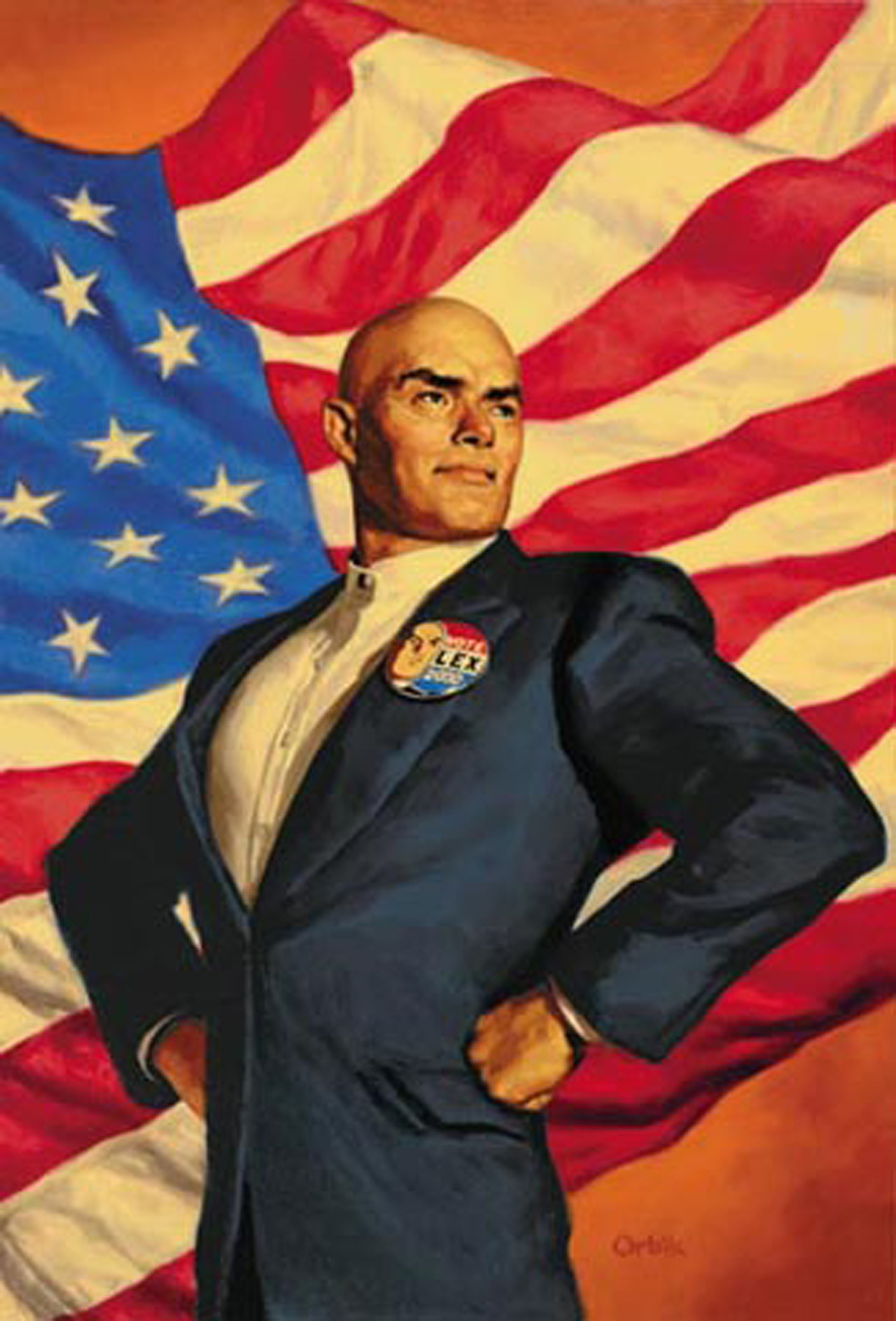
I won’t get into all the ways Lex has tried and failed over the years, although one of his plots did involve him becoming President of the United States. Whatever his methods, I think there’s a larger lesson to learn from Lex’s hatred and for once, it goes beyond his ego.

A big part of what turns someone into a villain is this sense that the world isn’t fair, but could be made better with the right guidance. Lex believes he’s capable of providing that guidance and not just because of his ego. He is, objectively, one of the smartest and most capable human beings on the planet. However, it’s Superman who keeps Lex from making the world less unfair.

Superman believes in the merits of truth and justice. He inspires others to uphold these ideals, even without his vast power. That’s a problem for Lex, who builds much of his power on lies and treachery. To him, though, he doesn’t see that as wrong. He just sees that as the most efficient way to get results.

To uphold truth and justice, in his brilliant mind, is to prevent the world from progressing. Granted, progress in Lex Luthor’s mind means him being in charge, but that doesn’t necessarily undermine the implications.

Like Dr. Doom, Lex is ambitious in that he doesn’t just want to save the world like Superman. He wants to fundamentally change it and he’s willing to cross any line to achieve that. Killing Superman is part of that change, but so is becoming a billionaire and a future President of the United States. If a billion people die in the process, then that’s acceptable because it means humanity is stronger because of it.

There have been times in the comics where Luthor’s vision has manifested. In another critically-acclaimed Superman story, “Red Son” by Mark Millar, Lex has a chance to lead the world into a brighter future. By and large, he succeeds. He’s still an unapologetic narcissist, but he still gets the results he seeks.

Like all great conflicts between superheroes and their arch-nemesis, the dichotomy between Superman and Lex Luthor is stark. They’re two extremes on opposite ends of a spectrum delineating heroism and villainy. By being on those extremes, though, it’s easier to see the inherent shortcomings of both.

While Lex’s shortcomings are easier to identify since he’s an outright villain, he does help identify an important flaw in Superman’s idealism and one that extends to superheroes, as a whole. Superman is willing to save the day, but he’s not willing to cross any lines. He will only ever do the right thing and that means not sacrificing innocent lives or usurping individual freedom.

Those heroics will keep the world turning, but they won’t move society forward. Superman believes in inspiring humanity rather than doing it for them, but Lex Luthor believes his heroism achieves the opposite. It just makes people complacent and dependent on heroes like him rather than crossing the lines that he’ll cross to get things done.

At the end of the day, both in the real world and the world of comic books, we have to determine how much we’re willing to pay for the results we seek. Lex is willing to pay any price. Superman isn’t willing to pay a cent beyond doing the right thing. Most reasonable people, including other superheroes, fall somewhere in the middle.

In the pantheon of super-villains, Lex Luthor is probably the easiest to despise and the hardest to understand. Like Superman, he exposes another side of an ongoing struggle between doing the right thing and achieving more. As society continues to progress, achieving abilities rivaling that of any superhero, it’s a struggle we’ll have to confront.

3 Comments

Filed under Comic Books, Jack Fisher, Superheroes, human nature, philosophy, psychology, superhero comics

My Top Six Non-Canon Comic Cook Romances Of All Time

deadpool-harley-quinn-kiss-unique-drawing

This has been a rough summer for fans of superhero comics, romance, and weddings. For a fan like me, this summer couldn’t have been rougher without adding a broken air conditioner to the mix. Between the depressing outcome in X-men Gold #30 and the disappointment in Batman #50, this summer has been a one-two punch to the heart.

While it’s pretty disheartening, I’m not totally discouraged. Being the admitted romantic I am, I believe love will eventually win out. I know that sounds corny and ripped right out of a Disney movie, but wouldn’t put so much energy into so many sexy love stories if that belief weren’t sincere.

Even so, I feel as though the current mood surrounding romance and superhero comics has a lot of room for improvement. Mr. and Mrs. X #1 was a good start, but only to a point. There’s only so much that I can do as a fan, aside from buying comics that depict quality romances with great sex appeal. Beyond that, my influence is limited.

As such, I’m going to take a moment from complaining about the current state of love in superhero comics and try a little exercise in romantic imagination. By that, I mean I’m going to contemplate the romantic potential of superheroes that will probably never cross paths, due to rights issues and belonging to different publishers.

It’s a sad fact of life and copyright laws that Marvel characters cannot interact with DC characters. However, that doesn’t mean certain characters don’t have romantic potential. In fact, I believe some have more potential than they do with anyone in their current continuity.

What follows is my personal list of the top six non-canon superhero couples. Not every couple on this list is a Marvel and DC character paired together, but given how many iconic characters those two companies control, it’s somewhat unavoidable. Also, please keep in mind that this is just my list. It is by no means definitive. This is just something meant to inject a little romance into a summer that badly needs it.


Number 6: Black Panther and Vixen

BPVix

When it comes to healthy romance, it helps when two people share the same quirks. Whether that’s wine tasting or underwater basket weaving, having similar distinctions go a long way towards helping a couple thrive. It’s for that reason that I believe Black Panther and Vixen have the quirks/kinks to make a romance that’s both functional and sexy.

Black Panther’s star has risen quickly thanks to a billion-dollar movie, but his romantic history has been somewhat stagnant. His brief, but bland marriage to Storm of the X-men came off as a gimmick rather than a relationship. While he has chemistry with Nakia, it’s only the very general kind.

That’s where Mari “Vixen” MaCabe sets herself apart. Her powers, abilities, and personality is largely driven by her connection to animal spirits. It’s very similar to the connection that Black Panther has with Wakanda’s native deity, Bast. Being connected to animal spirits and having a fondness for jungle-themed costumes gives these two a unique connection that they haven’t had with their in-universe love interests.

I believe these two would complement each other in unique ways. Vixen is cunning and charismatic. Black Panther is strong and diplomatic. Alone, they’re both pretty strong. Together, they’re even stronger and much sexier.


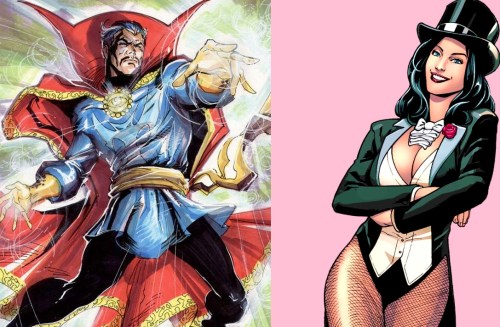
 Number 5: Dr. Strange and Zatanna

StrangeZat

This is another instance of two people having shared interests, but with Dr. Strange and Zatanna, it goes deeper than that. These two are some of the most recognizable mystical characters in their respective worlds. Dr. Strange is the Sorcerer Supreme in Marvel and Zatanna is one of the most skilled magicians in the DC Universe. Together, their magic can be pretty potent, literally and figuratively.

However, it’s not just because of their mystical skills that I believe they would be good together. In their respective universes, both characters struggle to maintain even a semi-functional relationship. Zatanna often finds herself on the outside looking in with love interests like Batman and John Constantine. Dr. Strange has never had much of a love life outside Clea, who is almost always relegated to a supporting role.

Zatanna is not the kind of woman who is content with a supporting role. She’s someone who fights alongside Batman and the Justice League. She can handle the crazy mystical threats that Dr. Strange deals with on a regular basis.

For Dr. Strange, he finally has someone who can deal with his attitude and arrogance, which is a tough barrier for any potential love interest. Again, Zatanna dealt with Batman. Any woman who can deal with Batman has an edge. The fact she isn’t afraid to show her legs off and be a bit more playful with her magic also helps.

More than anything else, Zatanna is someone who could make a man like Dr. Strange smile while he works. That, in and of itself, is a kind of magic that helps any relationship.


Number 4: Batman and Sara Pezzini (Witchblade)

BatWitch

This one kind of breaks the mold because it doesn’t pair a Marvel character with a DC character. Sara Pezzini, also known as the bearer of the Witchblade, is not a Marvel character. She’s a product of Top Cow Productions. She comes from a very different world compared to Batman, but that world makes her uniquely equipped to handle being Batman’s lover.

Batman requires that a romance be complicated and prone to tragedy. Few women can handle that. While Catwoman came very close to making it official, it’s a testament to just how tortured Batman is in his love life, among other things.

For Sara Pezzini, that’s exactly the kind of man who brings out the best in her. Unlike Catwoman, Sara was never a thief. She’s a cop and a very dedicated cop. Throughout her long-running series, she defines herself as the kind of hard-nosed, tough-as-nails person who doesn’t hesitate to run into the crossfire of a gang war or a demon army.

Beyond just being a cop, Sara deals with far larger problems that come with being the bearer of the Witchblade, an ancient weapon that tends to attract insane threats, even by NYPD standards. Batman already deals with homicidal clowns and thugs who are half-crocodile. They can handle the craziness in each other’s lives.

More importantly, though, Sara can do something that so few women have ever done for Batman. She can complement him as both Bruce Wayne and Batman. As a cop, she can actually help Batman’s efforts to fight crime in Gotham. He can, in turn, help her deal with the supernatural horror shows that tend to follow her, as only Batman can.

On nearly every level, Batman and Sara Pezzini make each other better. They’re the kind of couple that can work together and be together. That kind of romantic combination is potent. Plus, Sara Pezzini’s hardened attitude might actually help Batman crack a smile every once in a while.


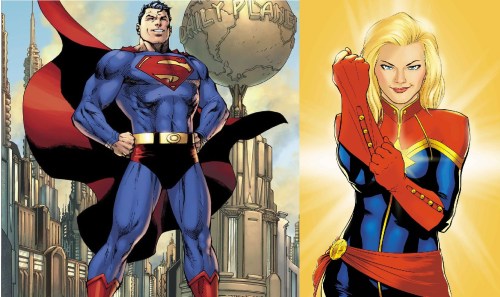
Number 3: Superman and Captain Marvel (Carol Danvers)

SuperCarol

This is probably the most controversial pairing on this list because Superman has one of the most iconic romances of all time with Lois Lane. Carol “Captain Marvel” Danvers, on the other hand, has no relationships that even come close, even if you take into account her affair with alcohol.

The reason I believe these two would forge a powerful romance is because Carol Danvers embodies the best traits of both Lois Lane and Wonder Woman. She’s a skilled fighter like Wonder Woman, having trained in the military and fought in interstellar wars. She’s also uncompromising in her pursuit of truth, much like Lois Lane.

Beyond just having the best traits of two iconic women, Carol brings something else to the table. Unlike Superman, she wasn’t born with her powers. She got them in an accident that merged her DNA with that of an alien. At the heart of her story, she’s a human who becomes an alien. Superman, by contrast, is an alien who becomes human.

That unique dynamic, the struggle between being alien and human, is something that Superman has never been able to share with either Lois or Wonder Woman. Someone like Carol could both help him through that journey and fight by his side. She’s tough enough to go up against anything, be it a mad Titan or an evil super-genius billionaire.

Superman is, at heart, an ideal. He’s an icon because he sets an impossible standard for others to aspire. Carol Danvers defines herself by doing the impossible and fighting for it every step of the way. That shared struggle can create the kind of love that empowers two already powerful characters.


Number 2: Captain America and Wonder Woman

This one is probably the most logical pairing on this list. In fact, Captain America and Wonder Woman are probably the one instance where their potential is greater than that of any in-canon romance and it’s not just because their movies were so similar.

Captain America and Wonder Woman are ideal love interests because they both represent the best of their respective worlds. Captain America is the embodiment of the American spirit of freedom and justice, reality-warping retcons aside. Wonder Woman is the personification of womanhood, compassion, and a warrior’s spirit. They both set high standards and pride themselves on achieving them at every turn.

It’s a standard that Steve Trevor never achieves, despite being Wonder Woman’s primary love interest. With all due respect to him and Chris Pine, he’s not on Captain America’s level. In fact, Captain America is the kind of guy Steve Trevor aspires to be, but never achieves. That elevates him in terms of how he relates with Wonder Woman.

Beyond just showing Wonder Woman the best a man can be, Captain America can hold his own better in a drawn out battle. He may not have Wonder Woman’s level of powers, but he’s also a man who regularly fights alongside the likes of Thor and Hulk. He’s not just capable of working with demigods. He actually leads them. It’s easy to see why Wonder Woman would fall in love with a man like that.

On Wonder Woman’s side, she can do more than just punch the Red Skull harder than most women. She’s the kind of woman whose compassion and love of justice is second to none. Even though she’s not American, she embodies many of the American principles that Captain America champions. She may very well be the only woman he can love as much as his country.


Number 1: Deadpool and Harley Quinn

This one was a no-brainer. In terms of sheer sex appeal and romantic compatibility, Deadpool and Harley Quinn are in another league on top of being from different comic book worlds.

I don’t think I need to say much about Deadpool’s eccentric tastes in romance. Between his overtly raunchy movie and the fact he married a succubus in the comics, the man isn’t just attracted to crazy. It’s practically an omega-level fetish for him. In terms of crazy, sexy, and all the weird fetishes that go with it, Harley Quinn checks every box.

Beyond her fondness for clown makeup and obscenely short pants, Harley has always been defined by her love with madness. Love is what drove her into a world of villainy when she crosses paths with the Joker. While that relationship has many quirks, plenty of which are quite unhealthy, it shows that Harley loves men who aren’t bound by sanity.

Deadpool wouldn’t just fill her crazy quota and then some. He would offer her the healthy kind of crazy. He’s the kind of guy who reserves gratuitous violence to those who deserve it and that has been a major struggle for Harley for much of her history. He wouldn’t just be able to carry her through that struggle. He’d make her laugh just as much as the Joker and with only half the property damage.

Unlike the Joker or a succubus, Harley and Deadpool are also the kind of relationship that would have a level of sex appeal that is literally crazy. Beyond Harley’s love of skin-tight clothes and Deadpool’s “super penis,” these two would know how to have fun and blow things up, in and out of the bedroom. With these two, you never have to worry about things getting boring.


There you have it. That’s my list for the best non-canon comic book couples. I imagine this list will cause some disagreements. That’s okay and I welcome further debate on the issue. If you think there are other couples I should add to the list, please let me know. This is a rich and sexy topic that’s ripe for discussion.

2 Comments

Filed under Comic Books, Jack Fisher, Superheroes, Jack Fisher's Insights, Marriage and Relationships, romance, Wonder Woman

The Emerging Problem Of Superman And Lois Lane

1234599567267158119

I think I’ve made it fairly clear that I’m a big fan of superhero romances. I’m a big fan of romance in general, but romance between superheroes has a special place in my heart. I was a comic book fan before I was a romance fan. As the years have gone by, it has been among my favorite combinations. I put it up there with pizza and a cold beer.

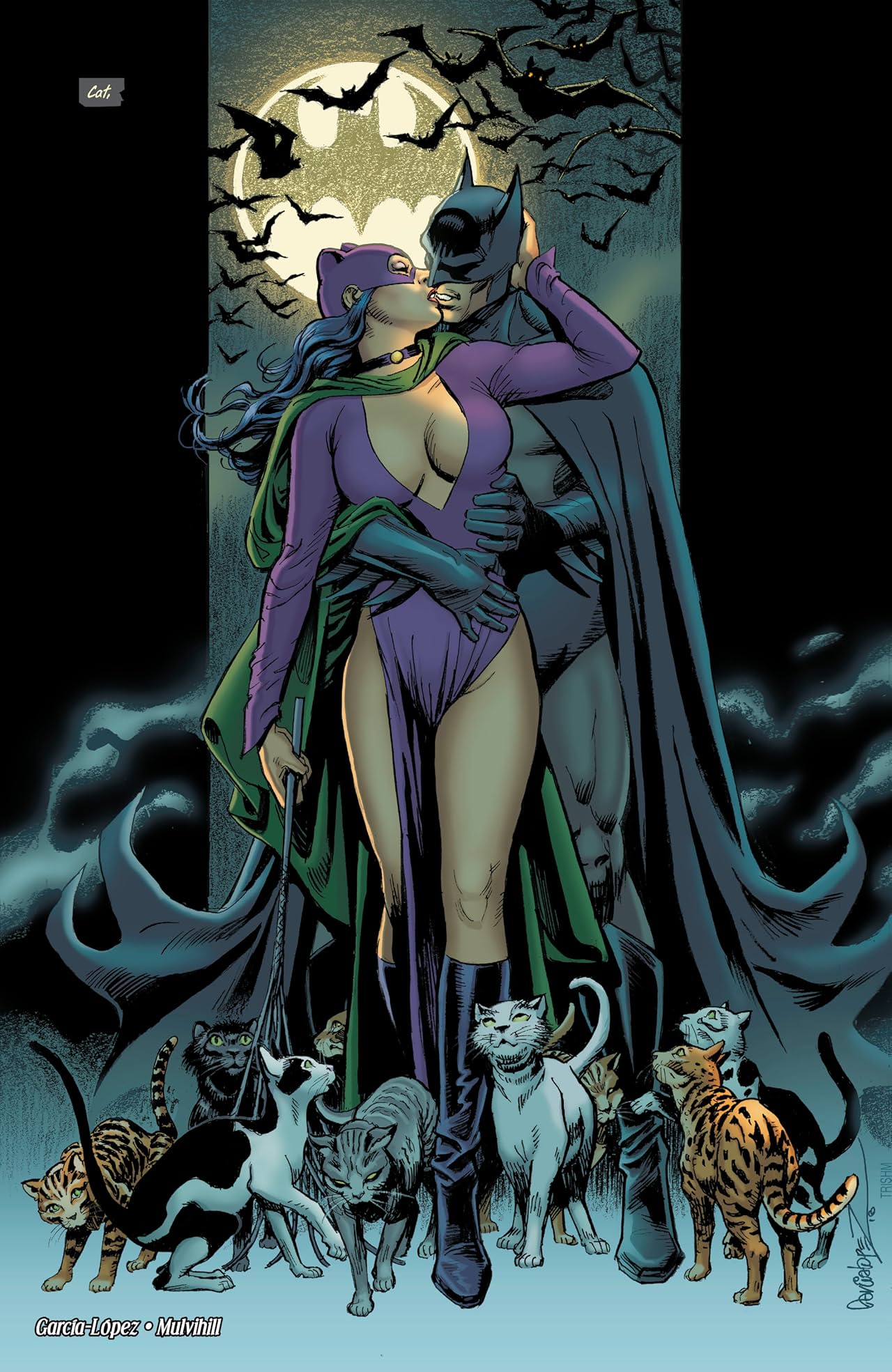
It certainly helps that superhero comics have inspired some of the most iconic romances of the past century. Say what you will about Rose and Jack in “Titanic.” I still find the love story between Batman and Catwoman is much more complex and compelling in terms of depth, not to mention many times sexier.

Superhero comics have informed a lot with respect to my fondness for romance. I also think they offer unique insights into the complexity of romance. Love is complicated enough. Adding superpowers and super-villains into the mix only compounds the drama. Sometimes it can end in tragedy. Sometimes it can make for some truly epic romance that strikes all the right emotional chords.

In some instances, though, mixing romance and superheroes can cause problems. Like relationships in the real world, there are many ways to screw it up. Comics have done plenty to mishandle romance. Just ask any Spider-Man fan about a story called One More Day and watch them recoil with disgust. I’ve even noted a few examples.

However, there are some instances where romance in superhero comics cause unique problems that are subtle in substance, but vast in implications. It doesn’t always involve relationships that are inherently toxic to multiple characters. Sometimes, those problems can emerge in even the most iconic relationship.

In the pantheon of superhero romances, the top spot is usually reserved for Superman and Lois Lane. In terms of romance in superhero comics, they are the gold-encrusted diamond standard by which all others are measured. Their love is isn’t just iconic. It’s a foundational component for both characters.

Superman loves Lois Lane. Lois Lane loves Superman. That romance is established in the pages of Action Comics #1. It’s a critical part of how both characters evolve over the years. You can’t tell Superman’s story without Lois Lane and you can’t tell Lois Lane’s story without Superman.

In the same way Superman always does the right thing and Deadpool always makes the dirtiest joke, this dynamic is fundamental. It establishes the kind of romance that is pure, unconditional, and uncorrupt. There’s no need for a previous love interest to die or a love triangle to provoke drama. Superman and Lois Lane just love each other and that’s all there is to it.

However, even with a romance this iconic, there is a problem and it’s actually a very recent problem. It affects both Superman and Lois Lane, but I believe it affects Lois to a much greater extent. It stems from an issue that I’ve been noticing more and more lately with certain romances. When it shows up in the most iconic romance in the history of comics, though, I take notice.

The nature of the problem has less to do with love and more to do with how a relationship defines certain characters. In both fiction and real life, it’s common and even romantic for two people to become so close that their lives become heavily entwined. There comes a point, though, where it stops being romantic and starts being destructive.

For most of their history, Superman and Lois Lane’s romance was built around simple, but effective dynamics. Lois Lane loved Superman, but not Clark Kent, who she didn’t know was Superman. Superman kept his identity from her to protect her many years, which created plenty of tension and made for some great moments.

Eventually, Superman reveals his identity to Lois and they eventually get married. I remember that moment. It was an amazing milestone for both romance and comics lore. The problem only came when that dynamic was complicated by a new theme that has since permeated the narrative.

It didn’t start at any particular date, but I think “Superman Returns” marked the unofficial turning point. That movie, on top of turning Superman into a deadbeat dad, made a small, but critical tweak to the Superman/Lois romance. In essence, it turned their love from a strength to a liability that is detrimental to the ideals of Superman and romance, as a whole.

At the beginning of that movie, Superman’s actions are the same as they’ve always been. He does the right thing because it’s the right thing. That’s who he is and why he’s so iconic. Towards the end, though, what he does becomes less about doing the right thing and more about resolving his relationship with Lois Lane.

Suddenly, doing the right thing and saving Lois aren’t just supplementary plots. They’re indistinguishable. One is the other and that’s a problem for reasons that go beyond romance and heroism. It wouldn’t have been that big an issue if it had only played out in one sub-par Superman movie, but in recent years, the problem has escalated.

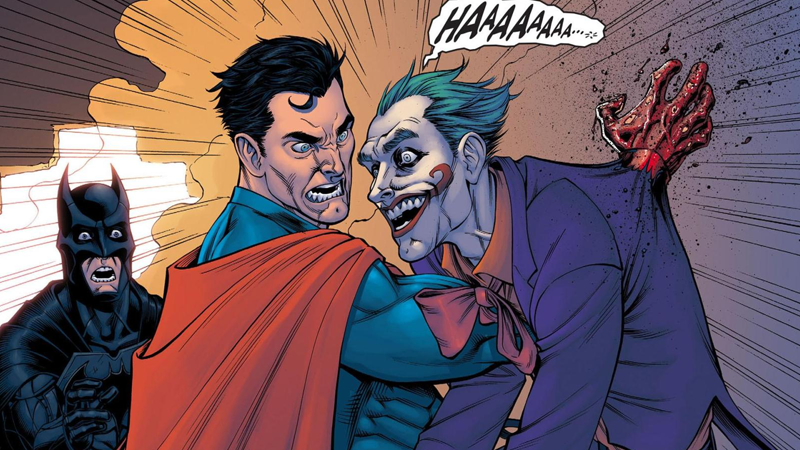
It manifested in its most overt form in “Injustice: Gods Among Us,” a video game with a comic book series tie-in that essentially provides a worst-case-scenario for Superman. In this story, Superman is tricked into killing both Lois and his unborn child by the Joker. It’s not just an atrocity and a tragedy. It fundementally breaks Superman.

I’m not just referring to his spirit either. The death of Lois Lane also marked the death of Superman, as an ideal. In both the game and the tie-in comics, he’s no longer a hero. He’s a tyrant who becomes everything he once fought against. I wouldn’t go so far as to call him a villain, but he’s definitely not the beacon of goodness that so defines his character.

While it makes for a powerful story, the particulars of that transformation are profound and not in a good way. It implies that Superman’s heroism is directly tied to Lois Lane and not supplemented by it. If she dies, then Superman ceases to be that iconic hero who stands for truth and justice.

That sends the message that Superman’s love for Lois Lane isn’t a strength. It’s a crutch. She’s not just his connection to humanity. She’s his lifeline. Beyond putting a burden on a character whose appeal is her ambitious pursuit of truth, it reduces Lois Lane to a singular role and one that’s impossible to maintain.

Unlike Superman, Lois is human. She’s going to age. She’s going to eventually die. Under this dynamic, Superman will eventually lose sight of his ideals. He’ll eventually stop being the hero that fights for truth, justice, and the American Way. Without Lois, he’s destined to give up and for a character who once moved the sun, that’s pretty weak.

This issue came up again in the plot for “Batman v. Superman: Dawn of Justice.” While I enjoyed the movie and don’t think it deserved half the criticism it got, there was one major issue that I felt undercut the story. Once again, it came back to Superman’s relationship with Lois.

Throughout the movie, Superman constantly questions his role and responsibilites as a hero, especially after seeing Batman’s approach to pursuing justice. That’s perfectly appropriate with respect to humanizing his character, but at the end of the day, he bases much of his decision to save the day around saving Lois.

That’s not to say that there isn’t merit to saving a lover, but this is Superman we’re talking about here. This is a hero whose entire appeal is built around him having god-like power, but still doing the right thing. When the right thing is only ever in the context of saving his girlfriend, then that undercuts both the ideals and the romance itself.

It’s largely for that reason, among others, that I find the romance between Superman and Wonder Woman more compelling. Back in 2012, there was a brief period in DC Comics where the timeline was tweaked, which happens fairly often, and Superman’s marriage to Lois Lane was nullified. That gave these two iconic heroes a chance to be together.

I could probably write several more articles about why I think the Superman/Wonder Woman romance is special in its own right. In many respects, I think it’s healthier than the Superman/Lois Lane relationship. It may never be as iconic, but it fundementally avoids this problem.

Wonder Woman can take care of herself. She can save herself and be a hero on her own terms. Lois Lane, however, is becoming more and more defined by how she defines Superman. For the most iconic superhero couple of all time, that’s pretty shallow.

The recent comics have done little to address this issue. With yet another tweak to the timeline, Superman is back with Lois. They even have a child now. However, the nature of their relationship is still on uncertain ground. I still feel it lacks the complementary dynamics that made it work so well for so many years.

There’s a chance it could change. Given the fickle nature of comic book continuity, it’s very likely that the Superman/Lois Lane dynamic will continue to evolve. However, I think it’s going in the wrong direction if Superman’s reasons for doing the right thing are that dependent on Lois.

Whether or not this problem deepens or subsides remains to be seen. Superman and Lois Lane are still the most iconic romance in the history of comics. That will continue to hold true, even if the problem deepens. Superman and Lois Lane are great characters in their own right. That aspect cannot and should not get lost under the weight of their iconic romance.

As much a romantic as I am, I don’t deny that it is possible for a love story to go too far. Loving someone and being dependant on them are not the same thing, especially when superpowers get involved. If a relationship becomes too dependent, then it can be more damaging than a mountain of kryptonite.

65 Comments

Filed under Comic Books, Jack Fisher, Superheroes, Marriage and Relationships, romance, superhero movies

How To Disappoint (But NOT Destroy) An Iconic Romance In Batman #50

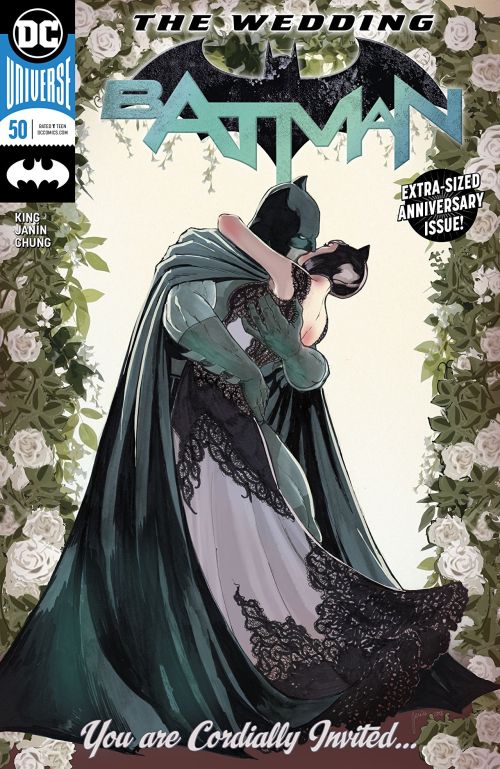
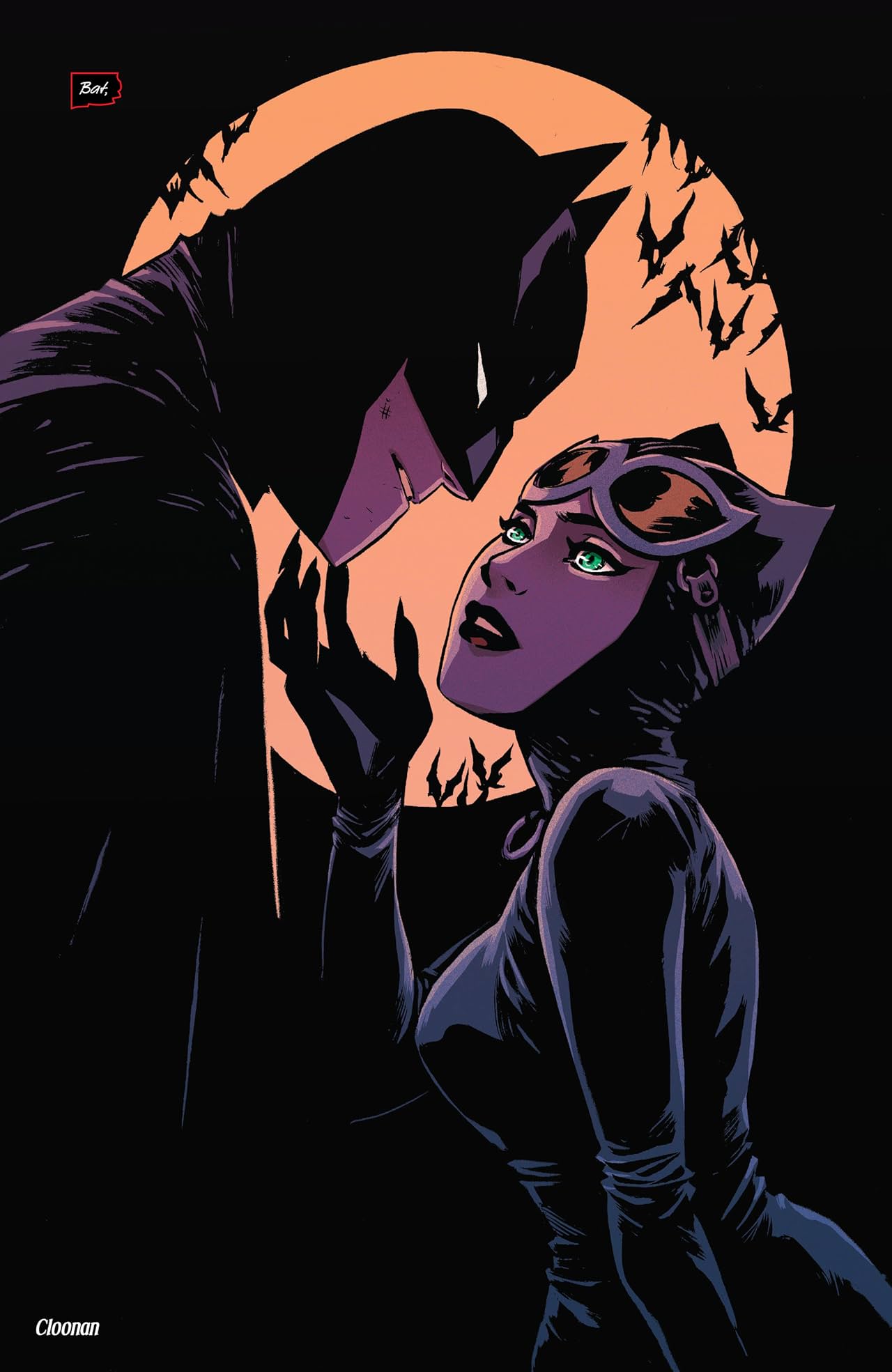
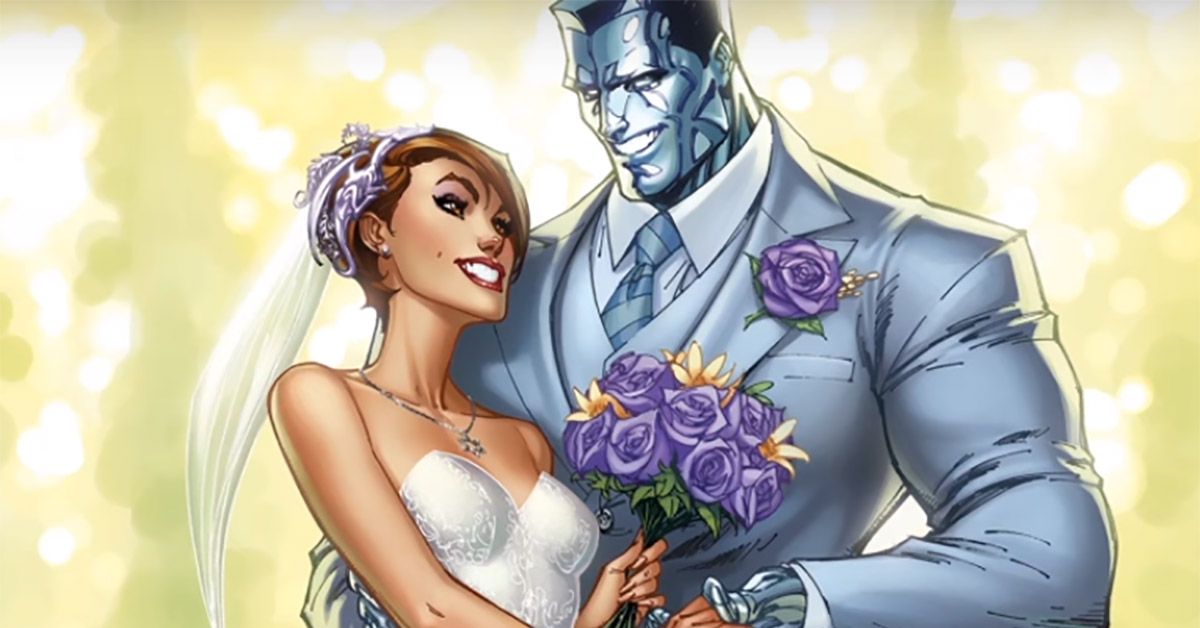
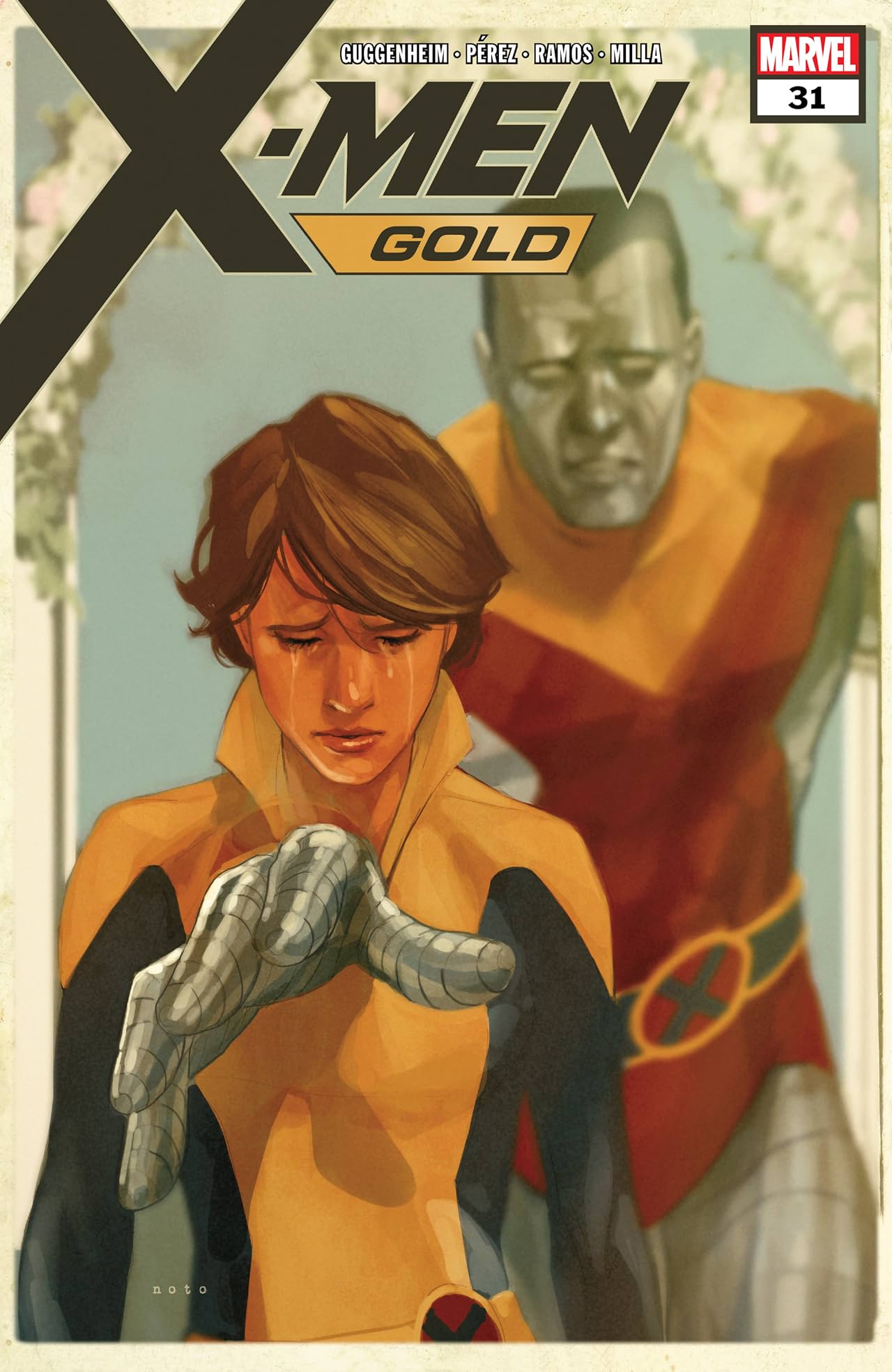
688356-_sx1280_ql80_ttd_It’s been a rough summer for fans of romance, superheroes, and superhero weddings. In fact, in all the years I’ve been reading comics and following romantic sub-plots, I can’t remember a time when there was this much melodrama and heartbreak. I understand that any epic romance is going to involve a healthy bit of emotional strain, especially when it involves superheroes. There comes a point when it just becomes too much.After the deconstruction and denigration of superhero romance that unfolded in X-men Gold #30, I feel like we’re dangerously close to that point. It’s as though everyone involved in making superhero comics is admitting that superheroes can’t get married. They can’t have a functional, compelling romance and still be interesting.That sort of sentiment is basically an affirmation of Marvel’s justification for undoing Spider-Man’s marriage to Mary Jane Watson in the infamous One More Day story. Given the relative infamy of that story line and the recent upheaval with the X-men, many fans of both superheroes and romance were placing a lot of hope that the wedding of Batman and Catwoman could help stop the bleeding in Batman #50.I certainly counted myself among those who was very excited about this event. I even admit I really wanted this to make up for the disheartening outcome of X-men Gold #30. The romantic in me wanted at least one superhero wedding this summer that didn’t end in heartbreak or tragedy.Well, if you saw the same spoilers in the New York Times that I did just two days before Batman #50 came out, you already know that’s not what happened. Bruce Wayne and Selina Kyle did not get married. That means in terms of superhero weddings, the summer of 2018 is now 0 for 2.However, that outcome did not compound my lingering disappointment from X-men Gold #30. I’ll even go so far as to say that Batman #50 didn’t send the state of superhero romance past the point of no return. It didn’t improve the state of affairs. It was disappointing, but not to the point where it damaged a story or a romance beyond repair.Before I explain, I want to establish that many of the details beyond this point are heavy spoilers. Seeing as how this comic was already spoiled a couple days prior to its release, much to the chagrin of comic retailers, I don’t think I need to place too many warnings. I still recommend that people buy the comic, but there’s more going on here than a wedding that didn’t happen, much more so than what we saw in X-men Gold #30.By nearly every measure, Batman #50 approaches the concept of a superhero wedding differently than X-men Gold #30. The wedding of Kitty Pryde and Colossus was set up as this big, momentous affair between an established couple that overcame a lot just to have the opportunity to get married. They brought in friends, family, and fellow superheroes from across the X-men comics.In contrast, the ceremony in Batman #50 was very small. In fact, there wasn’t much of a ceremony to speak of. The only ones who were present besides Batman and Catwoman were Aflred, Bruce Wayne’s butler and long-time confidante, and a lone judge who was already drunk so that he wouldn’t remember his or Catwoman’s identity. Batman always has a plan for that sort of thing. That’s why he’s Batman.On top of that, Batman is the one who proposed to Catwoman back in Batman #24. He’s the one who pitched the idea of getting married in the first place. That’s critical because Kitty Pryde was the one who proposed to Colossus in X-men Gold #20. That matters because she’s also the one who broke it off and at the last second, no less. Things were a bit less cruel in Batman #50 and that’s saying something for a Batman comic.At one point in the story, Batman makes clear that he still wants to marry Catwoman. He’s not having second thoughts. It’s Catwoman who makes the fateful decision to break it off and she doesn’t wait until half-way through the ceremony, either. To put that another way, an admitted jewel thief who enjoys having sex on rooftops showed more decency than Kitty Pryde on her failed wedding day.It’s not a public spectacle that turns into an equally public debacle. It’s a private affair that simply doesn’t pan out. There’s no awkward reception. There’s no attempt to salvage it by shoehorning another romance into the mix just so someone gets married, as though such romances can be swapped out like batteries. It just doesn’t happen.Moreover, Catwoman actually gives a reason for not going through with the wedding and, unlike Kitty Pryde, it’s not a wholly contrived. She establishes throughout Batman #50, through a series of montages documenting their romance over the years, why she loves him and why he’s such an effective hero. In the process, she reveals something profound about Batman.What makes Batman both effective and iconic is how he takes the pain of a tragedy, namely the death of his parents, and turns it into strength. The same pain that would break a lesser man drives him to do so much more. He’s the Dark Knight who defends Gotham. He’s a hero who deserves to fight alongside demigods and aliens on the Justice League. For him to be Batman, he needs that pain to fuel him.From Catwoman’s perspective, Batman finding happiness means denying him the fuel he needs to be Batman. That’s not a realization that just randomly pops into her mind at the last second, though. This is something the Joker actually points out to her in Batman #49. It has less to do with whether or not she loves him and more to do with him being the hero that Gotham needs.That doesn’t make Catwoman’s decision any less disappointing, but it’s still nowhere near as callous or selfish as Kitty Pryde’s decision in X-men Gold #30. I know it’s somewhat unfair to keep comparing the two, given the different circumstances of their relationship, but those distinctions highlight an important element that the failed Batman/Catwoman wedding has that the Colossus/Kitty Pryde wedding didn’t.What happens in Batman #50 is definitely a setback for Batman and Catwoman’s relationship, but it doesn’t fundamentally destroy it. In fact, there’s a very critical detail at the end of the issue that leaves the door open for this romance to keep evolving. I won’t spoil it, but it unfolds in such a way that makes romance fans like me want to root for this relationship.The same definitely cannot be said for the Colossus/Kitty Pryde relationship. After the way things played out during their wedding, it really feels as though their romance is damaged beyond repair. It’s no longer a love story. It’s an outright tragedy, one that would need an even greater contrivance to repair at this point. In a universe with shape-shifting aliens, though, that’s not wholly unfeasible.In the grand scheme of things, Batman #50 is still disappointing in the sense that it doesn’t let Batman and Catwoman take their love story to another level. In fact, not a whole lot changes. The way it plays out feels more like a setback rather than a tragedy. The writer of the comic, Tom King, even claims it’s just part of a much larger narrative between Batman and Catwoman.How that story will play out remains to be seen. Given how long it took Batman and Catwoman to get to a point where they try to get married, Batman #50 already gives the impression that their romance is being dragged out. For a couple who has been off and on again since the 1940s, that’s saying something.If I had to score Batman #50, as both a comic book fan and a romance fan, I’d give it a 6 out of 10. It’s a bit of a letdown, but it’s not nearly as soul-crushing as X-men Gold #30. It still leaves the state of superhero romance in a very precarious state, but at the very least, this book gives me reason for hope.I’ll still be very skeptical of any future superhero wedding for the foreseeable future, though.
5 Comments

Filed under Comic Books, Jack Fisher, Superheroes, Marriage and Relationships, romance

The following is a review I wrote for PopMatters for Ms. Marvel #31. Enjoy!

Milestones, Achievements, and Slumber Parties: Ms. Marvel #31

Leave a comment

June 28, 2018 · 5:40 pm

How Captain Marvel Can Be The Future Of The MCU (And How It Can Go Horribly Wrong)

558759l

When a team is on an epic winning streak, it creates the perception that they have some supernatural ability to defy the law of averages and bend reality to their will. It happened to the 2007 New England Patriots. It happened to the 2016 Golden State Warriors. They had this aura of invincibility that made it seem as though they could never lose.

That made their eventual loss, both in championship games no less, that much more painful. However, I would argue that the winning aura of those teams pales in comparison to that of the Marvel Cinematic Universe. If the MCU were a sports team, it would include the likes of Michael Jordan, Tom Brady, LeBron James, Wayne Gretzky, Tiger Woods, and Muhammad Ali in their primes and on crack.

To say that Marvel’s movie franchises are on a winning streak would be like saying a hungry lion has a slight edge over a wounded squirrel. The Marvel Cinematic Universe hasn’t just made superhero movies the gold standard of the box office by raking in $16.8 billion worldwide to date. It has set the bar so high that even close rivals have essentially given up.

Disney, Marvel Studios, and Kevin Feige are riding higher than anyone thought possible, especially for those who still have nightmares about “Batman and Robin.” With both “Black Panther” and “Avengers: Infinity War” breaking a fresh round of records this year, it seems as though that winning streak is only accelerating.

I say all this not just to belabor how much the MCU has accomplished over the past ten years. I say it as a fan who loves Marvel comics and wants to see it keep winning. However, even with “Avengers 4” set to come out next year and make another couple billion, I believe this streak of superhero movie excellence is vulnerable.

It’s no secret that “Avengers 4” will likely mark the end of an era. Kevin Feige has gone on record as saying that this movie will act as an endgame, of sorts. While makes clear that the MCU will continue, with movies planned out until 2025, he also indicates that there will be major upheavals.

That’s somewhat necessary because with the conclusion of “Avengers 4,” many of the contracts for MCU stalwarts like Robert Downy Jr., Chris Evans, and Chris Hemsworth are set to expire. While it’s possible that some may find a way to keep going, others like Chris Evans have made clear that their time in the MCU is almost over.

That means for the MCU to continue its winning streak, it needs to move forward with new characters, new actors, and new ideas. It has to find a way to keep this world moving forward, potentially without the likes of Captain America, Iron Man, and Thor. That’s a huge challenge, even for a franchise on an unprecedented winning streak, and the comics have already failed to fill those voids.

That’s where Carol “Captain Marvel” Danvers comes in. If you saw the post-credits scene for “Avengers: Infinity War,” you know why she’s about to become very relevant to the MCU. I’ve talked about her before and established how things could easily go wrong with her upcoming movie. I imagine I’ll have a lot more to talk about in the coming months.

I don’t think it’s unreasonable to say that Carol Danvers and her upcoming movie, which is slated for release in March 2018, is the most important movie in the history of the genre. I believe this movie may very well determine whether the winning streak of the Marvel Cinematic Universe continues or finally falters.

I say that as someone who loves Carol Danvers as Captain Marvel. Back in 2012, Kelly Sue DeConnick effectively reinvented the character in a way that convinced me that she deserves a prominent role in any Marvel universe. In my opinion, she’s essentially Marvel’s version Wonder Woman.

Her movie has so much going for it. “Wonder Woman” established that female superhero movies could be a hit at the box office and garner critical acclaim, despite the scars left by “Catwoman.” On some levels, “Captain Marvel” is facing a lot less pressure and it has the momentum of “Avengers: Infinity War” behind it.

However, the stakes are actually higher for this movie compared to everything “Wonder Woman” faced. Recently, Kevin Feige stated that Carol Danvers will be the new face of the MCU. From a purely logistical standpoint, that makes sense. The MCU needs a new unifying force if Chris Evans’ Captain America is to make his final stand in “Avengers 4.”

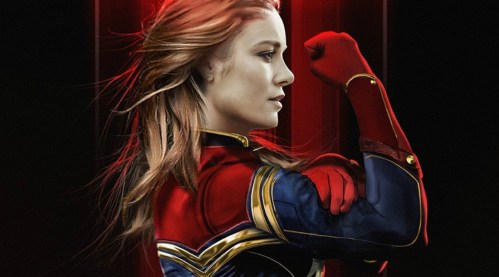
I believe Carol can pull it off, as well. She has taken on more leadership roles in the comics and has become a central member of the Avengers’ main team. Combine that with Brie Larson’s charisma and Carol Danvers has all the tools she needs to keep the MCU’s winning streak going.

I believe she can do this simply by being the kind of character that Kelly Sue DeConnick molded six years ago. That version of Carol Danvers emerged from years of being a secondary character in Ms. Marvel who rarely got a chance to achieve the same recognition as her peers. She’s a classic case of a character who elevated themselves by embracing a new identity, a new purpose, and greater ambition.

DeConnick established Carol as someone who achieves so much in one field, but dares to seek greater challenges beyond. She contributed to the Avengers for years, but never pursued a greater vision until she became Captain Marvel. That idea of someone looking to the stars, seeking to achieve more, and pursuing it with unmatched drive is what will help her succeed in ways on par with Wonder Woman.

At the same time, though, there are potential risks and Captain Marvel may be more vulnerable to them than Wonder Woman. While Kelly Sue DeConnick did a lot to reinvent Carol Danvers for a new era, she has faltered somewhat. Recent events in the comics have put her heroic merits into question for all the wrong reasons. Some of Brie Larson’s politically-charged rhetoric hasn’t helped either.

To some extent, Carol’s reputation has faltered because in elevating her status in the comics, she has been hit with the dreaded Galbrush Paradox. The quirks that DeConnick introduced, such as Carol being a Star Wars fan and having a love interest in James Rhodes, have eroded in recent years. In addition, even her artistic depictions have devolved by reducing her feminine features for no apparent reason.

In wake of the vitriol that Star Wars received for its portrayal of female characters, I worry that “Captain Marvel” runs the risk of inviting a similar backlash. If Carol Danvers is not sufficiently compelling, she runs the risk of getting hit with the Mary Sue label that has plagued Rey since “Star Wars: The Force Awakens.”

The worse case scenario, in my opinion, involves turning Carol Danvers into a Captain America or Iron Man stand-in. In the absence of these iconic characters, and their top name actors, Feige and those at Marvel Studios may be tempted to make her too much like them. That would be a huge mistake, especially for an organization on such a huge winning streak.

Carol Danvers is not Steve Rogers, nor is she Tony Stark. She’s not just a woman who takes on a man’s role either. She’s still a woman and, especially under DeConnick, her womanly traits were on display alongside her more badass features. It’s not groundbreaking because Wonder Woman struck just the right balance, having her fight alongside men while still acting like a woman.

In the best case scenario, Carol Danvers follows Wonder Woman’s example and establishes herself as someone worthy of carrying the MCU forward. Unlike Rey, she’s a character with plenty of compelling lore to work with. The key is finding the right blend that’ll help her fit into the Marvel Cinematic Universe.

At this point, without a trailer and only a few teases to go on, it could go either way for “Captain Marvel.” It could be the next in a long line of successes or it could be the MCU’s first failure. To date, Kevin Feige and those at Marvel Studios have shown time and again that they know what they’re doing.

Hell, they took an obscure series involving a talking raccoon and made it a global brand. Until they show they’re capable of screwing up, I’ll continue to give them the benefit of the doubt. At the same time, though, I think it’s worth bracing for that inevitable setback. All winning streaks come to an end. I just hope “Captain Marvel” isn’t the one that ends it.

1 Comment

Filed under Comic Books, Jack Fisher, Superheroes, media issues, movies, superhero movies

664803-_sx1280_ql80_ttd_

The following is a review I wrote for PopMatters for X-men Gold #30. Enjoy!

Misguided Matrimonial Bait-and-Switch: X-men Gold #30

Leave a comment

June 21, 2018 · 5:43 pm

The following is a review I wrote for PopMatters for Deadpool Assassin #1. Enjoy!

The Maturation of (Regenerating) Degenerates In Deadpool Assassin #1

Leave a comment

June 16, 2018 · 6:53 pm