Tag Archives: Artificial Intelligence

Six Technologies The Coronavirus/COVID-19 Pandemic Could Accelerate

Humanity is capable of amazing feats when given the right incentive and circumstances. The problem is that humanity is also rather stubborn when it comes to incentives and exceedingly evasive when it comes to changing circumstances. We’ll go the extra distance and beat the odds eventually. We just need to be dragged kicking and screaming for a while.

When it comes to the ultimate incentives and circumstances, few check more boxes than a global pandemic. I don’t think I need to belabor how bad the ongoing Coronavirus/COVID-19 pandemic has been. Even without media distortions and political agendas, there’s no getting around the damage it has and continues to inflict.

People are dying.

People suffering.

Societies and economies are teetering on the brink of collapse.

This is not a tenable situation and one nobody wants to see again. As bad as it is, there might be one silver lining to this global tragedy. It could help accelerate the development of technology that was already in the works, but lacked the necessary motivation to develop faster.

What follows are a few technologies that I believe this horrible pandemic might help in the sense that it’ll add some urgency. Nobody wants to see a mess like this again. Whether you’re rich, poor, powerful, or powerless, we have every reason to find new ways of preventing these plagues before they happen and these technologies are instrumental in doing just that.


Artificial Intelligence (Not Necessarily The Advanced Kind)
It’s impossible to overstate the potential benefits of artificial intelligence. I’ve certainly made a concerted effort when writing about it in the past. However, in the context of battling plagues, we don’t necessarily need the kind of super-advanced, super-intelligent AI to provide some of those benefits. When it comes to combating plagues, we don’t need an AI to be as intelligent as a human. We just need it to help us combat deadly disease.

This can be done without the kind of AI that finds its way into Skynet or Hal 9000. An AI that can better-analyze genetic data, run simulations on possible treatments, and track the spread of a disease can do plenty to prevent or mitigate future plagues. If it can just help us identify and isolate new cases in a short span of time, then that alone could save millions.

At a certain point, AI could get powerful enough to calculate entire treatment programs once it has the genetic data of a pathogen or condition. After this global, well-publicized crisis, it’ll have plenty of data to work with.


Space-Based Broadband Internet

When it comes to dealing with pandemics, the incentives don’t stop at treating the disease. Given all the closures and cancellations caused by COVID-19, we now know how challenging it is to endure an extended quarantine, especially for kids with no school and sports fans with no sports.

Enduring this crisis has revealed just how critical it is to have a strong, robust internet connection. It may not treat the disease, but it makes the measures recommended by the authorities more bearable. The problem is our current infrastructure for the internet is badly in need of upgrades and its role in helping us function has been made abundantly clear during this crisis.

For work, play, and just avoiding crippling boredom, we need a better internet. That’s where space-based internet, like the ones being developed by companies like FaceBook and Google come in. The idea is as simple as it is awesome. Use satellites and other high-flying crafts to deliver data more efficiently and reliably.

There are a few space-based internet service providers now, but they’re incredibly limited. This crisis, which needs reliable internet for so many reasons, might help pick up the pace in refining this technology. At the very least, it will allow people to binge-watch Netflix from the summit of Mount Everest.


Nanoparticle Vaccines

On the medical side of things, this crisis should go a long way towards teaching people the importance of vaccines. While I don’t doubt the anti-vax crowd will find an excuse to protest, even those skeptical of modern medicine can’t deny the need for better preventative measures for these treatments. Unfortunately, vaccine technology has been stagnant for decades.

This pandemic will hopefully change that and not a minute too soon. The current process for producing a vaccine is long and cumbersome, taking upwards of two years. It’s a process that has a lot of room for improvement. That’s where technology like nanoparticles come in.

The key to any medical treatment is the effectiveness of the delivery system. Vaccines have always had to take a messy path, but nanoparticles could change that. Instead of relying on the biological equivalent of a blunt instrument, nanoparticles could become biological smart-bombs, targeting pathogens with the precision we need to keep them from ever becoming pandemics.

Anti-vaxxers who refuse these just have a death with.


Gene Editing/Synthetic Biology

Not unlike vaccines, gene editing and synthetic biology stand to get a major boost from this crisis. I’ve written about gene editing tool like CRISPR in the past. I’ve touted it as a tool that could potentially treat all infectious disease, especially when combined with synthetic biology. That might have been hyperbole, but I stand by my claims on it’s potential.

Gene editing can do more than make pet fish glow. In theory, it can tweak and rewrite the DNA of organism, including the viruses that infect us. The challenge is refining the procedure so that we know how to modify diseases or create entirely new organisms that combat them through synthetic biology.

It’s not a small challenge. I’m grossly oversimplifying the obstacles in refining this technology into something usable. However, those obstacles are not insurmountable. It just requires time, resources, and motivation. After being economically and socially ravaged by a global pandemic, these efforts will have a lot more urgency.


Immersive Virtual Reality
While the scientists and doctors take up the challenge of fighting future pandemics, the rest of us are tasked with enduring the boredom they incur. I’ve noted before how boredom could become the plague of the future. I hope those stuck at home for weeks on end are done doubting me.

The entertainment industry may never be as vital as the medical industry, but it’ll play an important role in helping people stay sane, calm, and kind. Binge-watching TV and playing video games is helpful, but there’s room for improvement. At the end of the day, you’re still just sitting on a couch, looking at a screen.

To keep things both interesting and active, the development of virtual reality should get a major boost. It has existed for years and grown considerably from the days of the Virtual Boy, but it has room for improvement. Thanks to improving computer technology and more advanced interfaces like Neuralink, the experience could become even more immersive.

Beyond simply treating boredom, it could allow a greater sense of active engagement, which is critical when everyone is practicing social distancing. Being isolated and cut off from human contact may help temper a plague, but it’s not healthy. A way to immerse yourself in a realistic environment could help make future quarantines more bearable while also opening a new market, which gaming companies are sure to exploit.


Sex Robots (Obviously)

Does this one really need an explanation? When you’re stuck inside, horny, and run out of things to binge-watch, things are going to happen. Even if your partner or significant other is with you, they might get sick and you might feel lonely. Given how pandemics tend to temper the market for sex workers, a sex robot might be the best and only option.

If at least one company or horny entrepreneur hasn’t realized that by now, I’ll be shocked. The market for sex robots has been growing in recent years. After enduring a pandemic and weeks of social isolation, that market has likely grown. People rarely forget big global events like this. They’ll remember how lonely they were and that memory will fuel the development of sex robots more than any libido.

2 Comments

Filed under Current Events, futurism, technology

Who Will Be The First (Digitally) Immortal Celebrity?

Back in 2012, Tupac Shakur appeared in concert at Coachella in 2012. That’s quite a feat, considering he died in 1996. The Tupac at the concert was just a hologram, but even his digital presence helped make that concert an experience to remember.

In 2019, Samuel L. Jackson played a young Nick Fury in the “Captain Marvel” movie. That too is quite a feat, considering Mr. Jackson was 70 years old at the time. He was able to appear young, thanks to advanced CGI that effectively de-aged him.

Other dead celebrities have shown up in other media. The since deceased Peter Cushing reprised his role as Grand Moff Tarken in “Star Wars: Rogue One” thanks to similar CGI technology. Paul Walker was able to get a proper send-off in “Fast and Furious 7” after his tragic death thanks to this technology. As the technology improves and other famous celebrities pass on, this practice is likely to continue and expand.

That raises some interesting questions that has some profound, yet disturbing implications. Some of those questions are easier to answer than others. This is the easy one.

Will there eventually be a celebrity who becomes digitally immortal?

The short answer is yes.

The long answer is eventually, but there will be some complications along the way.

Modern CGI technology is amazing. We’ve come a long way from the flashy, but wholly unrealistic graphics of “Tron.” Through the development of technology like artificial intelligence deep fakes, which has its own mix of dystopian uses, it’s possible to replicate someone’s appearance, voice, and mannerisms. This replication isn’t perfect, but it’s getting to a point where it’s hard to tell it’s fake.

As this technology improves, it’ll get to a point where a rendering of a celebrity isn’t just indistinguishable from the real celebrity. It’ll be capable of saying, doing, and acting in any way a studio or producer would want. While that has some dangerous possibilities for political ads and porn, it could also completely change the entertainment industry.

That Tupac hologram I mentioned earlier was basically just a recording synched to a projection. Even though Samuel L. Jackson was de-aged in Captain Marvel,” the actor still had to be there to give him the necessary voice, mannerisms, and attitude. He couldn’t have been a hologram and be believable. The technology just isn’t there yet.

It will get there, though. There doesn’t need to be some huge leap in computer technology or artificial intelligence to make an entirely digital celebrity. It’s just a matter of processing power, data crunching, and better hardware. It will happen. It might even happen within the next couple decades. That raises another key question.

Who will be the first digitally immortal celebrity?

By digitally immortal, I don’t just mean recordings set to holograms or faces projected onto body doubles. A truly digitally immortal celebrity will be capable of starring in new movies and TV shows long after their dead. They’ll be able to make new music and perform it, albeit through a hologram. While their bodies might be gone, they’ll never stop contributing to pop culture.

That definitely has some legal implications. I doubt any studio could get away with creating a digital rendering of Carrie Fisher to star in a new movie. However, I suspect one celebrity will eventually license their figure and likeness so that they can keep being celebrities, long after they’re dead. Maybe they’ll do it so their families can be fincianlly set for life. Maybe they’ll do it because they never want to leave the public eye.

Whatever their reasons, someone will eventually do this. It’s just a question of who.

Will it be Taylor Swift?

Will it be Tom Cruise?

Will it be Jennifer Lopez?

Will it be Samuel L. Jackson?

It’s hard to say. If I had to bet money, I’d put it on Samuel L. Jackson. Knowing Disney and their vast resources, I’d be shocked if they weren’t investing in this technology this instant. Bankable celebrities are an increasingly precious commodity in the entertainment world. The incentives are there. It’s just a matter of time and a matter of whom.

Personally, I’d love to hear Samuel L. Jackson call people motherfuckers for generations to come. That’s just me.

1 Comment

Filed under Artificial Intelligence, Celebrities and Celebrity Culture, futurism

A Troubling (But Probable) Thought Experiment Involving Sex Robots And Stalkers

It’s an unavoidable rule of technology. Nobody truly knows how a new machine, gadget, or invention will be used in the future. I doubt the person who invented ski masks knew it would be a common tool of criminals. We can try and anticipate how certain technology will affect society, but there will always be unexpected impacts that come from unplanned uses.

When it comes to sex robots, the impacts are far greater in scope and scale than anyone can possibly predict. I’ve made a concerted effort on multiple occasions. I don’t gloss over the more distressing impacts, either. Chances are this technology will effect people, society, and culture in ways nobody will be able to predict, including aspiring writers who use sex robots in multiple short stories.

It’s often through writing sexy short stories and erotica/romance novels that I often come up with ideas I hadn’t previously considered. Some of those ideas lead to larger thought experiments. Since sex robots are making the news more and more often lately, I thought I’d share one.

It goes as follows:

A man or woman meets someone. They immediately fall for them. It’s love, lust, and passion all rolled into one. They become so obsessed with this person that they can’t imagine not being with them in some way.

Naturally, they pursue this person. They try befriending, flirting, and seducing them. It doesn’t work. They get rejected. At first, it’s just a setback. They try harder to win the love of this special someone. It ultimately fails. Eventually, that someone threatens to call the police and put a restraining order on them.

The person is dejected and sad, but not dissuaded. Since they can’t be with this person they love so dearly, they seek the next best thing. When their would-be love isn’t looking, they scan their body. They then send those specifications to a company that makes sex robots.

They request that the company make them a robot that perfectly resembles the love that rejected them. They also request that the robot be programmed to love them unconditionally and obey them. The company agrees. They make a sex robot that looks, sounds, smells, and acts like the lover they couldn’t have.

Naturally, the person is overjoyed. They lovingly tend to the sex robot, treating it like a real lover. They live out the love they wish they’d had. At some point, it becomes so real that they don’t bother with the person who rejected them. They’re content to leave them alone and live out the fantasy for as long as they please.

Take a moment to think about what I just described. I admit it has some disturbing elements. Stalkers who obsess over someone to an unhealthy degree is a real phenomenon. It ruins lives and can be very damaging to both people.

Throw sex robots into the mix and things get more complicated. What I just described is not technically impossible. It probably won’t be feasible for decades, but there’s nothing against the laws of physics that prevent people from creating perfect sex robot duplicates of random people they see on the streets.

All that anyone would need is the right data. Whether it’s done directly with a device or surmised from a collection of pictures, practically anyone can be made into a sex robot. I’ve noted before how this could effect the porn industry with stars and celebrities licensing their bodies as sex robots. However, I doubt it would stop there.

Whereas celebrities might have the money and legal resources to license their bodies and combat unauthorized use as a sex robot, most ordinary people wouldn’t have that luxury. In the same way most people don’t have access to high-powered attorneys that keep celebrities and rich people out of jail, the average person probably wouldn’t have much recourse.

If some random person found out their high school crush made a sex robot of them, how would they combat it? Could they sue them? Could they sue the manufacturer? What if the sex robot came from an illicit source? How they deal with that?

Moreover, would it even be worth the effort? If a would-be stalker is content to make a sex robot of their obsessive crush, which in turn stops them from stalking altogether, then why would anyone care? Who’s being harmed in this situation?

You could argue the would-be stalker is hurting themselves, but how could we possibly police that? We can’t stop people from hurting themselves. Prohibition proved that. However, with sex robots, we essentially give people a way to cling to an obsession and never move on. Is that healthy? Is there any way to stop it? Is it even worth the effort?

Try to put yourself in this scenario. How would you feel about it? How would you go about confronting it, if at all?

This is just one of the many scenarios that may play out once this technology matures. Again, there will likely be other effects I can’t imagine. Unfortunately, not all of those effects will be inherently sexy.

Leave a comment

Filed under Artificial Intelligence, futurism, psychology, sex in society, sex robots, sexuality, Sexy Future, technology

How Do We Regulate Artificial Intelligence? Seriously, How?

In general, I don’t pay much attention to doomsayers who claim the end is near and we should all cower, tremble, and give them our credit card number. Don’t get me wrong. I still believe there are serious existential threats facing humanity today. Some are worth taking seriously and dedicating resources to addressing. Others are not. Some simply require a more balanced perspective.

There’s a long list of failed apocalyptic predictions. The fact we’re surviving and thriving by most measures shows just how resilient, adaptable, and capable humanity is. There are some threats that I believe humanity will eventually resolve, thanks largely to our accelerating progress in science, technology, and logistics.

Others, however, have me more concerned. While some are more immediate than others, one in particular continues to confound me, as well as some of the smartest people in the world. It involves artificial intelligence, an emerging technology that’s as promising as it is unpredictable. Given the complexity of this technology, it’s difficult to explain in totality, but it can be best summed up by one simple question.

How do you regulate artificial intelligence?

That’s not a rhetorical question. It’s not a thought experiment either. It’s a serious, honest question that people far smarter and far more capable than me are just starting to ask.

Elon Musk is one of them. Very recently, he called for more regulation on artificial intelligence. That, alone, should be both telling and worrying. This man is a billionaire. Usually, billionaires are more inclined advocate removing regulations. Whenever they make an exception, that’s a sign they know it’s serious.

Even though Musk is one of the top advocates for solving big problems with technology, he still has concerns about the problems associated with artificial intelligence. In AI circles, it’s often called the control problem. It’s not a very creative name, but it gets the point across.

How do you control something that is potentially as smart, if not smarter than a human?

How do you manage something that thinks, adapts, and evolves faster than any machine or living thing?

How do you regulate an artificial intelligence that was built by humans, but isn’t at all human?

These are all difficult questions to contemplate, let alone legislate. Even Musk doesn’t provide specifics. Chances are he doesn’t know any more than the rest of the non-billionaire population. That’s a problem because if we’re going to try and regulate this technology, we need to understand it. On top of that, politicians and lawmakers have a long and embarrassing history of failing to understand technology.

However, this isn’t just about writing laws that protect citizens from being exploited by tech companies. Artificial intelligence, especially the kind that exceeds human intelligence, has capabilities that go beyond sending text messages from bathroom stalls. If handled improperly, it wouldn’t just be an existential threat. It could destroy humanity in ways we literally cannot contemplate.

Now, I try to be an optimist in most things involving emerging technology. Humanity has found a way to manage dangerous technology before, namely with nuclear weapons. However, artificial intelligence is a different beast entirely. Regulating it isn’t as easy as simply controlling the materials that make it. The very concept of regulating this technology lacks precedent.

The closest we have to date is Isaac Asimov’s famous three laws of robotics, which were introduced in 1942. Asimov was a brilliant writer and very ahead of his time on some concepts, but this is one issue where we need more than just three simple tenants. We need to think bigger and bolder. If we don’t, then an advanced artificial intelligence will quickly leave us behind.

After that, it won’t matter what kind of regulations we try to pass. It’ll be smart enough to circumvent them. That doesn’t mean humanity is doomed at that point, but we’ll be distressingly vulnerable. I know it’s in our nature to procrastinate on things we don’t see as vital, but if ever there was an issue to make an exception, this is it.

3 Comments

Filed under Artificial Intelligence, biotechnology, futurism, philosophy, technology, Thought Experiment

Laws Regulating Sex Robots: A First Draft

Sex robots are coming, literally and figuratively. That’s not just a bit of dirty innuendo from someone who often writes sexy stories around it. That’s an objective fact. Bill Maher’s recent rant about it was just the latest. Rest assured, there will be more.

There will be a lot of doom-saying and fear-mongering. There’s already an organized campaign against sex robots. That’s to be expected. There’s always that kind of rhetoric when new technology or trends emerge. I’m old enough to remember when parents, politicians, and pundits thought TV was going to ruin an entire generation. If someone told them about social media, they might have had a heart attack.

As sex robots get more advanced and become more mainstream, expect to hear from those same people. They’ll bemoan how this latest trend will destroy the culture. Unlike jazz, rock music, Elvis’ hips, MTV, cartoon violence, and marijuana, this might actually do it. If I could write that with any more sarcasm, I would.

As annoyingly absurd as these comments are sure to be, I don’t deny that sex robots raises some serious issues. I’ve covered a few of them in discussing this issue. I’m sure there are plenty more that I’ve yet to explore. In the meantime, I’d like to try and confront some of those concerns that I’m sure the doom-sayers of the near-future will bring up.

Technology progresses rapidly, but the law rarely keeps up. Given how many laws there are regarding sex, some more archaic than others, it’s inevitable that sex robots will be subject to some form of regulation. It’s hard to contemplate how far that regulation will go. Some might go so far as to try and ban sex robots altogether. I doubt that will ever fly, if only because there’s way too much money to be made.

Even if sex robots are illegal, they’ll still arise. Human beings are just too horny, too lonely, and too greedy to ignore their potential for ever. For that reason, I’d like to propose a first draft for appropriate regulations regarding sex robots. Now, I’m not a lawyer, so I’m not at all qualified to make legal arguments.

However, someone will have to take this seriously at some point. When it comes to a technology as disruptive and groundbreaking as sex robots, we need to be proactive. As such, here are my preliminary laws for the regulation, sale, and use of sex robots. If anyone has any ideas to tweak or add to them, please present them in the comments.

Also, if you’re a lawyer or a lawmaker, please take this seriously. Do not let the discussion be guided by the same people who claimed Elivs’ hips would ruin America’s youth.

Law #1: The law shall hereby distinguish sex robots from sex dolls insofar as a sex doll is considered a sex toy, and subject to all current laws governing their sale, but a sex robot is classified as a robot with measure of intelligence that is designed specifically for engaging in sexual activity with another person.

Law #2: No individual under the age of 16 shall be permitted to purchase a sex robot.

Law #3: The production, sale, and distribution of sex robots shall be subject to common industry standards that are to be agreed upon by all producers and subject to approval by the courts.

Law #4: The production, sale, and distribution of sex robots that resemble children or individuals of a pre-pubescent appearance is illegal and shall be punishable by up to 5 years in prison.

Law #5: The production, sale, and distribution of sex robots that facilitate the act of rape, assault, or coercive conduct against another person is illegal and shall be punishable by up to 10 years in prison.

Law #6: The production, sale, and distribution of sex robots programmed to cause serious harm, injury, or death to a person is illegal and any person, persons, or organizations that create such items are henceforth liable.

Law #6: The production, sale, or distribution of sex robots designed to resemble a specific person without their explicit consent and/or fair compensation is illegal.

Law #7: It is unlawful to engage in sexual activity with a sex robot in a public area or any area that would constitute a disturbance of the peace. Violators will be subject to local ordinances governing indecency.

1 Comment

Filed under sex robots, Thought Experiment

A Comment On Bill Maher’s (Dystopian) Rant About Sex Robots

Remember that time someone old, out of touch, and under-informed made an accurate prediction about the impact of emerging technology? That’s not a rhetorical question. Honestly, does anyone remember that ever happening to a meaningful extent?

I ask because it’s been happening for years. People keep seeing an amazing new technology and assume the worst. In some cases, they’re just dead wrong about trends that will or won’t catch on. Some just made dead wrong assumptions about how technology and society would evolve.

At the end of the day, nobody truly knows for sure. It’s fun to speculate, especially when that technology involves sex robots. I know I’ve entertained some colorful possibilities and potential issues, but I never claim I know for certain. I try not to be overly optimistic, but I don’t try to be downright fatalistic, either.

Then, there’s Bill Maher’s latest rant about the future of sex robots. I could try and break down every flaw in his commentary, but I’ll let the clip speak for itself.

Now, I need to disclose that I’m a fan of Bill Maher. I like his show. I think he’s funny. He’s got a great wit and a dry style that I’ve always found entertaining. When it comes to technology, though, he’s more a chronic whiner than a visionary.

He compares social media to cigarettes and complains about how technology has become too complicated. For a man who’s over 60, that’s not surprising. However, for someone smart enough to stay on TV for over three decades, it’s still absurd.

Deconstructing his rant is not that hard. Maher frames the impact of sex robots as an either/or position. To him, people will either completely reject human intimacy for robots or reject robots in favor of human intimacy. However, he never justifies why people would choose only one or the other.

Would people only interact with a sex robot because they can have sex on a level that humans just can’t match? That assumes people are really basic and would all react the same if they somehow had access to a life-like sex robot. However, people are not basic. People are complicated. They have many different wants, needs, and attitudes. Maher himself has noted this when discussing other issues.

Sex robots will change human dynamics significantly. It won’t destroy them. It won’t completely destroy the whole of society. They’re not nuclear weapons. They’ll just change how things are and for older people, especially in Maher’s demographic, that can be scary. It’s easy to assume the worst, but it’s still an assumption and those are notoriously unreliable for predicting the future. The stock market alone is proof of that.

There are many other things I can say about Maher’s rant, but it would all come back to the same point. It’s just flawed and misguided. It assumes there’s not room for both human connection and sex robots in the future. Considering how adaptive and social humans are, I believe we’ll find a way to incorporate them into a new social dynamic that nobody can predict.

It’ll be nothing like Maher can ever imagine.

It’ll be nothing like I can imagine, either.

The future will still come. It’s just a matter of how we’ll adapt, evolve, and grow with it.

1 Comment

Filed under Artificial Intelligence, futurism, sex in society, sex robots, sexuality, Sexy Future, technology

How I Would (Most Likely) Use A Self-Driving Car

The future can be scary at times, but the prospect of improved technology helps make it more exciting. I would argue it’s the most exciting part of the future. You see some of the fancy gadgets that tech companies are working on and you want to live long enough to use them, especially the sexy ones.

I’ve talked about emerging technology before. While I tend to be hopeful about the impact of certain technologies, I don’t overlook the existential dangers they pose. Some of those dangers are more relevant than others, but others are less fantastic and more pragmatic. One of those advances is self-driving cars.

Unlike some of the other advanced technologies that are decades away, this one already exists, albeit in a limited form. There are cars on the market today that can drive themselves in certain situations. I even had a chance to ride in one a couple years back. It works remarkably well, albeit it could only function on major highways.

There’s plenty of room for improvement, but it’s a promising start. The fact that it exists and is being refined as we speak means this is happening. It’s at an early stage, but like cell phones before it, the technology will continue to be refined. Eventually, it’ll get to the point where it’s better at navigating traffic than any human.

I honestly look forward to that day because I’m not a big fan of driving. I don’t mind it, but I’ve never been particularly fond of long drives, even if it’s for a vacation. My back gets sore, my arms get stiff, and I just get frustrated after the third hour behind the wheel.

It’s because of my aversion to long drives that I don’t take as many trips as I wish. I believe that if I had access to a perfectly functioning self-driving car, that would change. If the technology were refined to a point that I’d just type in an address and let it do the rest, then I would definitely go on trips. .With that in mind, I’d like to share a brief anecdote for how I would use a self-driving car.

It’s Friday night. I finished my last workout of the week, cleaned myself up, and ate my dinner. I’m tired, but I don’t intend to spend the weekend lounging around the house.

About a half-hour before I usually turn in, I pack my bag. I then put on my most comfortable pair of clothes, take a quick bathroom break, and head to the nearest self-driving car. As soon as I’m inside, I punch in the address to the beach that’s furthest south from where I am, whether it’s Florida, South Carolina, or somewhere in between.

I make sure the car has the range and speed. I then close it up, turn the car on, and let it work. From there, I just lay back in the seat and let myself fall asleep.

If all goes well, I wake up just as the car arrives at the beach. Even if the sun hasn’t risen yet, it’s right there in the nearest parking lot to the shore. I get out of the car, find the best spot I can on the beach, and wait to watch the sunrise. I then spend the rest of the day at the beach, lounging about and hitting up beach bars.

Once the sun sets, I return to the self-driving car, punch in my home address, make sure its charged, and ride it home. If I’ve done everything right, I sleep through the ride and wake up in my driveway. It caps off the end of a nice, relaxing day at the beach in which I slept through the commute.

This is just one idea from the perspective of what I’d do. If you have other ideas on how you’d use a self-driving car, please share them in the comments.

Leave a comment

Filed under Artificial Intelligence, futurism, technology

Why The “Terminator” Franchise Has Faltered (And How To Revive It)

https3a2f2fblogs-images.forbes.com2fmarkhughes2ffiles2f20162f012fterminator-2-1200x873

Some franchises just aren’t built to last. It’s a sad fact of life. Sometimes, the things we love just cannot grow and blossom. Not every franchise can be like the Marvel Cinematic Universe. In fact, every effort to mirror the success of the MCU has either failed or come up short. For some, it just doesn’t have resources to grow to that extent. In some cases, trying to force a franchise into something it’s not will only hurt it even more.

The latest franchise to learn this the hard way is the “Terminator.” Believe me when I say I take no joy in saying that. I’ve always had a special place in my heart for all things “Terminator.” The original 1984 film was one of the first R-rated movies that my parents let me watch. I remember being scared, but thrilled at the same time. As a kid, that was a major step up from traditional Disney movies.

Then, I saw “Terminator 2: Judgment Day” and the highest of bars was set. Like the first movie, it thrilled and amazed me to no end. At the same time, it struck many emotional chords, especially at the end. I still get choked up to this day when I hear the T-800 tell John, “I know now why you cry, but it is something I can never do.” There’s a good reason why many rank this among the greatest movies of all time.

A big part of what made that movie great was how it completed the story. What began with Sarah Connor’s journey in the first film ended beautifully in the second. It was as complete a story as it could’ve been. To make a sequel after that would’ve been like trying to improve on the Mona Lisa. While the prospect of sequels still interested me, I never got the sense that they could improve on what the first two movies did.

That didn’t stop Hollywood from trying multiple times. While some of those movies had their moments, they never came close to improving on the first two. If anything, each sequel did more and more damage to the franchise. It showed in both the critical reception and the box office. Now, with “Terminator: Dark Fate” an outright flop, the state of this franchise is dire.

Some are already saying it’s dead. I don’t agree with that. It’s in critical condition. That’s for certain. However, I don’t think it’s doomed to the archives of cinematic history. I believe it’s worth taking a step back to understand why the franchise has faltered so badly. I also believe that there is a way to revive it for a new generation.

The reasons the franchise declined are many. Ask a dozen people who love the franchise as much as I do and chances are you’ll get several dozen answers from each of them. They usually boil down to reasons like this.

The ending of “Terminator 2: Judgment Day” was too perfect and final to improve upon.

The sequels muddied and messed up the timeline more than it already was.

The sequels focused too much on action and not enough on the horror of the first movie or the drama of the second.

The sequels didn’t utilize enough of the original cast, relying heavily on the star power of Arnold Schwarzenegger.

The sequels undermined or undercut the impact of the first two movies.

The sequels were too focused on setting up a trilogy rather than making one solid movie.

The threats in the sequels were too bland and predictable, relying too much on newer Terminators fighting older Terminators.

Personally, I think every one of these reasons has merit, but some have more than others. When I re-watch “Terminator 2: Judgment Day” and compare it to the sequels, I can clearly see the difference from a cinematic and storytelling standpoint. That movie was made to complete the story that James Cameron started telling with the first. Every other sequel was made to set up more sequels.

From there, every other issue compounded. The focus of the movies was less about having a genuine impact and more about teasing a future movie. That only works if the first movie is successful and that didn’t happen with any of the sequels after “Terminator 2: Judgment Day.” They attempted to set up a larger story, but nobody cared about that story anymore.

Then, “Terminator: Dark Fate” committed the ultimate sin, in my opinion, when it effectively rendered the first story pointless for the sake of a new one. For me, that ensured that this would be the first Terminator sequel I didn’t see in the theaters. I doubt I’ll even see it when it comes out on cable. What this movie did to John Connors and the over-arching narrative of the franchise just cannot be overlooked.

It’s so bad that I won’t even bother with a spoiler warning. “Terminator: Dark Fate” kills John within the first two minutes of the movie. In one cold, callous sequence, this character who fought so hard with his mother to save the future is rendered pointless. The only difference he made is that the name of the future robot overlords changed. Instead of Skynet, they got Legion. That’s it.

Not Pictured: Anything remotely appealing.

It would be akin to having Thanos come back to life, murder the Avengers, and wipe out half the life in the universe all over again in the first movie after “Avengers: Endgame.” Everything and everyone they fought to save is rendered pointless. Then, that same movie tries to tell a story about a new savior who nobody has any attachment to and will always be defined by being John’s replacement.

There’s nothing about that story that has any appeal, either to a fan of the Terminator franchise or any franchise, for that matter. On top of that, “Terminator: Dark Fate” went heavy on mixing gender politics with the movie. That’s not just an indirect interpretation. The director, Tim Miller, flat out admitted it in interviews before the movie came out.

I don’t want to get too caught up in that aspect of the movie, but I do think it was a contributing factor to the movie’s shortcomings. We’ve seen it happen with other movies before. When a movie is too focused on enduring its female characters pass the Bechdel Test, it rarely puts enough effort into making them likable or endearing. It also obscures the overall plot by making it predictable.

There are many other flaws to highlight in “Terminator: Dark Fate,” as well as plenty more in the movies that came before it. Rather than belabor those, I want to focus on how this franchise rebuilds itself from here. The failures of the sequels have damaged it significantly. There’s no amount of time travel or retroactive changes that can save the story that “Terminator: Dark Fate” tried to set up.

That said, this franchise does have a few things going for it. It’s a known brand that people recognize. When most people hear the word “Terminator,” they usually understand it as a reference to the movies. Even if it’s not as strong a brand as it used to be, it still carries weight and sometimes, that’s all it needs.

The first step to rebuilding it involves ending the futile efforts to build, expand, or somehow improve on the story of Sarah and John Connor. Their story ended perfectly in “Terminator 2: Judgment Day.” Most Terminator fans agree with that and anything that would somehow undermine their legacy is only going to cause more damage.

The next step is to start a new timeline, but one that doesn’t focus on saving the future leader of the resistance or ensuring that Judgement Day occurs. That story has been done to death. For Terminator to succeed, it needs to show that it can do more. In fact, I believe “Terminator: Dark Fate” actually has one sub-plot that might be the key to the franchise’s renewal and survival.

In that movie, the Terminator that killed John, played by Arnold Schwarzenegger, secretly built a human life for itself after its mission was completed. It walked around as a human, met a woman with a son from a previous marriage, and formed a family. If the movie had any plot worthy of intrigue, it was this. Sadly, it was poorly developed and mostly rendered pointless by the end.

It’s a concept that might resonate more today than it could have in 1984. When the first Terminator movie came out, machines and robots weren’t that smart. They were defined by how inhuman, cold, and calculating they were. In recent years, that has changed. Movies like “Ex Machina” and “Wall-E” have built compelling stories about robots that have human traits, including emotions.

It’s something that the Terminator franchise has flirted with before. Part of what made the ending of “Terminator 2: Judgment Day” so dramatic and impactful was the emotional attachment that John developed for the T-800. Even the T-800 showed signs that he’d formed a bond. It made that final sacrifice feel so powerful.

Even “Terminator: Genysis” explored the idea. It had another T-800 form a fatherly bond with a young Sarah Connor, so much so that she called him Pops. While the movie didn’t flesh out the concept as much as it could’ve, there were moments that highlighted the extent of this bond. I strongly believed that if this movie had emphasized this concept over making John Connor evil, it would’ve succeeded.

Rather than hint or imply it, I believe a future Terminator movie should go all in on this idea of a killing machine developing emotional attachments to humans. It’s something that is more relevant today than it was in 1984 or 1991. We already interact more intimately with technology and we’ve even given our technology a personality. I say that’s a story that the Terminator can build upon.

Imagine the following scenario.

It’s the distant future. Machines have taken over. Humanity has been all but enslaved. There are only pockets of resistance. To combat this, the central machine intelligence, Skynet, creates Terminators with the sole purpose of killing the remaining humans.

However, humans prove crafty. They outwit and outsmart the early models. In order to become better killers, new Terminators are created that can mimic, study, and process emotions. Ideally, it could infiltrate human resistance camps, earn their trust, and terminate them appropriately. They would be the ultimate killers.

Unfortunately, there’s not enough data. Humans are too scattered, weak, and desperate. Skynet doesn’t have enough data to give these new Terminators the capabilities it needs. It calculates that it would take too long and require too many resources to compile the data in the present. As a result, it decides to send a model back in time before machines took over.

The model’s mission is simple. It must integrate into human society, compile data, preserve it, and transmit it back to Skynet by preserving it within disks. If it’s identity as a machine is uncovered by a human, its primary protocol is to terminate the human.

The first model is sent back. It arrives in a bustling city that would one day be reduced to ruin. It finds clothes, has an identity, and begins integration. However, just as it’s starting to establish itself, a human finds out it’s a machine. Its protocols are activated, but then something unexpected happens. It doesn’t terminate the human.

Instead of fear, the human develops intrigue. It connects with the Terminator. They start to form a bond. Eventually, the Terminator’s systems for mimicking emotions turn into real emotions. It develops a love for humanity and decides to defy Skynet. That decision ripples into the future and Skynet tries to send other Terminators back to destroy it.

As a Terminator fan, I would love to see a movie like this. It could work with a male or female Terminator. It could also work with a male or female protagonist. Like the T-800 in “Terminator: Dark Fate,” it could even become part of a family, giving it something to fight for and protect. Instead of fighting to protect a savior, the Terminator fights to change the fate of both itself and humanity.

This is just my idea, though. I’d love to hear with other Terminator fans think. I’d also love to hear how they would revitalize this franchise. I believe there is room for this franchise in the current cultural landscape. As machines and advanced artificial intelligence continue to progress, I suspect it’ll become even more relevant.

Like Sarah Connor once said, there is no fate, but what we make for ourselves. That applies to our future as a species. It also applies to this franchise.

Leave a comment

Filed under Artificial Intelligence, gender issues, media issues, movies, outrage culture, technology

Guest Post: 5 Highly Recommended Books on Machine Learning (ML) and Artificial Intelligence (AI)

now-ae452835-2617-420e-b8c3-58b5c4668645-1210-680

The following is an article submitted by Harsh Arora, a freelance blogger and writer who shares a similar interest in artificial intelligence, futurism, and the future of the human race. To Mr. Arora, I sincerely thank you for this submission and your continued support.


We would first of all like to welcome all types of readers to our blog – newbies who are just interested about these buzzwords and also experts on the subjects who would like to extend their existing knowledge on the matter. Having established that, it is also imperative to not only define these two concepts (AI and ML) but also to differentiate between them. Although these terms are used synonymously, they are in fact different from one another. AI is the broader level concept where we feed the machine with data and then expect it to take decisions based on that data. ML on the other hand is a subset and application of AI where we feed machines with data and allow them to learn on their own.

Following are the books we recommend for you to learn more about them:

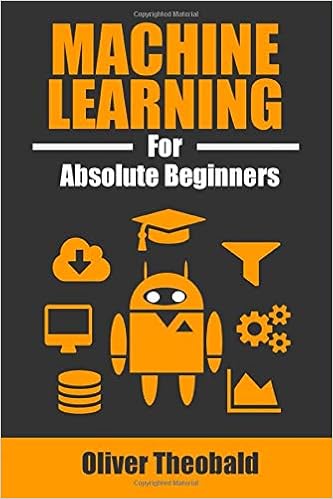
Machine Learning for Absolute Beginners: A Plain English Introduction – Oliver Theobald

It’s easy to see which part of our reader base this particular book is targeted towards. You may be a complete outsider to the world of ML and still be able to understand the granular technical aspects of it through this book. Oliver Theobald assumes no background of programming or coding on the behalf of the reader and allows you to learn right from scratch. It is not only the perfect book for newbies but also experts in the field because it tries to explain the basic concepts in a very coherent and distinct manner. This books not only helps you learn about the concepts of ML but also allows you to unlearn and then relearn them, something is really important for such a subject matter.

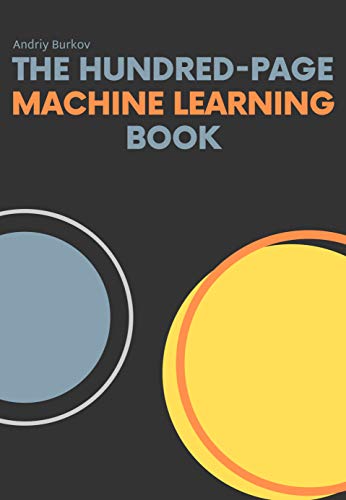
The Hundred-Page Machine Learning Book – Andrew Burkov

This is once again a book that will interest not only beginners but also experts in the field. Andrew has really been able to simplify the concepts of ML into basic and easily comprehensible set of cliff notes. With just 100 pages at his disposal, he has really captured the over-arching essence of ML. Though, of course it is not a deep dive into the subject matter like some of our other recommendations, it is however a wonderful summary of it. It is perfect for people who want to understand this technology and its implementations and implications in the real world.

Artificial Intelligence: A Modern Approach (3rd Edition) – Stuart Russell & Peter Norvig

Stuart Russel is one of the sharpest minds working in the field of AI and is a faculty at University of Berkeley. Additionally, he is an Oxford graduate and also holds a PhD from Stanford. In his third edition of the book, Stuart decided to collaborate with Peter Norvig who is currently the R&D Director at Google. Collaboratively, they have created a well-researched and well-defined approach towards understanding modern AI. This book is perfect for students of under-graduate or graduate level courses or even for laymen with the basic understanding of the fundamentals of AI. This long-anticipated edition of its best-seller predecessors offers the most up-to-date and comprehensive understanding of the theory and practice of artificial intelligence.

Machine Learning – Tom M. Mitchell

This is a classic book in which the author has covered the techniques and concepts of the numerous fields and unified them to provide in depth view of ML. Some of the subjects covered include re-enforcement learning, inductive logic programming and genetic algorithms. Tom has tried to simplify these complicated concepts through a clear and explanatory way of writing. At the same time, he has used tools such as case studies and relevant examples to provide a comprehensive overview. Lastly, there is no knowledge of the complex ideas that he has assumed on the part of the reader.

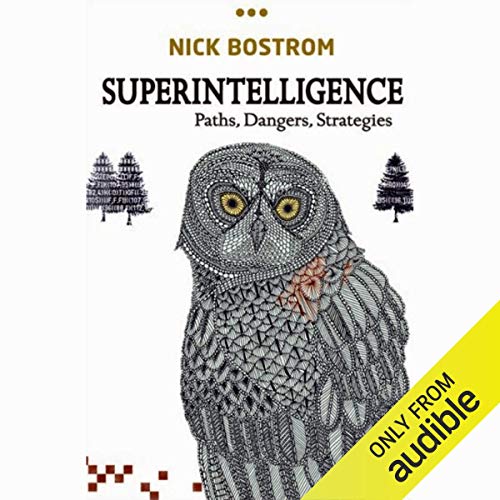
Superintelligence – Nick Bostrom

If you are familiar with the work of Mr. Nick Bostrom, you know you are in for a treat with this book. He takes a different approach to not only explain the artificial intelligence but also the effects it has on our existence. Nick believes that self-aware machines are potentially a bigger threat to humanity than climate change. He has authored over 200 books and his writing forces you to take him seriously in this seemingly sci-fi piece of literature. He helps us understand how the most intelligent form of life i.e. now humans have governed the fate of existence since the dawn. However, with a species (sort of) that has the potential to be smarter than us, what chance is there that they won’t dominate us?

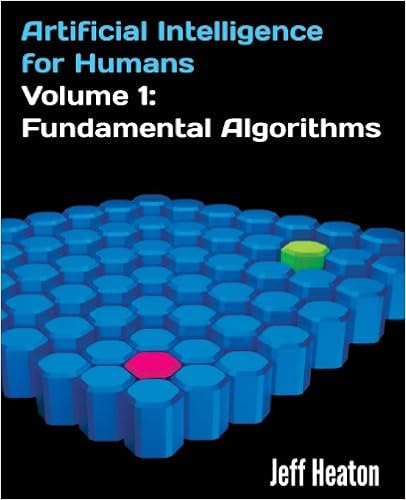
Artificial Intelligence for Humans (Fundamental Algorithms: 1) – Jeff Heaton

If you are planning to build a career in artificial intelligence, this should be your starting off point and you should read it from cover to cover. Jeff Heaton cover several topics in depth such as clustering, distance metrics, dimensionality, linear regression, error calculation and hill climbing. The book takes you through the actual mathematical calculations that you can compute yourself and also see the real-world applications of. However, to build a career in this industry, you must not only understand the basic principals of AI but also of algebra and computer programming. This book will build on those concepts through various computer languages such as C, Java, C#, R and Python.

These books are some of the best in the market and will be perfect for people of all knowledge levels of AI and ML. Given that the industrial revolution 4.0 is upon us and almost all technology is slowly being integrated with it, it is suggested that we all learn more about it. However, it is completely up to you to form opinions about whether or not this technology will be harmful to humans in the long run. Additionally, we also suggest you read up on a few other technologies that are prevalent in this 4.0 era such as IOT, Blockchain and Cloud Computing.

About me: Harsh Arora is a proud father of four rescued dogs and a leopard gecko. Besides being a full-time dog father, he is a freelance content writer/blogger and a massage expert who is skilled in using the best massage gun.

2 Comments

Filed under Artificial Intelligence, biotechnology, futurism, technology

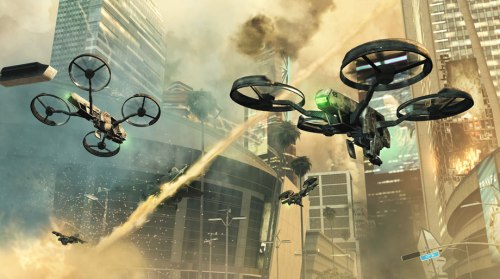
Killer Robots, Drone Warfare, And How Artificial Intelligence Might Impact Both

920x515_charlene

On November 5, 2001, the history of warfare changed forever. On that date, an unmanned Predator drone armed with hellfire missiles killed Mohammed Atef, a known Al-Qaida military chief and the son-in-law to Osama Bin Laden. From a purely strategic standpoint, this was significant in that it proved the utility of a new kind of weapon system. In terms of the bigger picture, it marked the start of a new kind of warfare.

If the whole of human history has taught us anything, it’s that the course of that history changes when societies find new and devastating ways to wage war. In ancient times, to wage war, you needed to invest time and resources to train skilled warriors. That limited the scope and scale of war, although some did make the most of it.

Then, firearms came along and suddenly, you didn’t need a special warrior class. You just needed to give someone a gun, teach them how to use it, and organize them so that they could shoot in a unit. That raised both the killing power and the devastating scale of war. The rise of aircraft and bombers only compounded that.

In the 20th century, warfare became so advanced and so destructive that the large-scale wars of the past just aren’t feasible anymore. With the advent of nuclear weapons, the potential dangers of such a war are so great that no spoils are worth it anymore. In the past, I’ve even noted that the devastating power of nuclear weapons have had a positive impact on the world, albeit for distressing reasons.

Now, drone warfare has added a new complication. Today, drone strikes are such a common tactic that it barely makes the news. The only time they are noteworthy is when one of those strikes incurs heavy civilian casualties. It has also sparked serious legal questions when the targets of these strikes are American citizens. While these events are both tragic and distressing, there’s no going back.

Like gunpowder before it, the genie is out of the bottle. Warfare has evolved and will never be the same. If anything, the rise of combat drones will only accelerate the pace of change with respect to warfare. Like any weapon before it, some of that change will be negative, as civilian casualties often prove. However, there also potential benefits that could change more than just warfare.

Those benefits aren’t limited to keeping keep soldiers out of combat zones. From a cost standpoint, drones are significantly cheaper. A single manned F-22 Raptor costs approximately $150 million while a single combat drone costs about $16 million. That makes drones 15 times cheaper and you don’t need to be a combat ace to fly one.

However, those are just logistical benefits. It’s the potential that drones have in conjunction with advanced artificial intelligence that could make them every bit as influential as nuclear weapons. Make no mistake. There’s plenty of danger in that potential. There always is with advanced AI. I’ve even talked about some of those risks. Anyone who has seen a single “Terminator” movie understands those risks.

When it comes to warfare, though, risk tolerance tends to be more complicated than anything you see in the movies. The risks of AI and combat drones have already sparked concerns about killer robots in the military. As real as those risks are, there’s another side to that coin that rarely gets discussed.

Think back to any story involving a drone strike that killed civilians. There are plenty of incidents to reference. Those drones didn’t act on orders from Skynet. They were ordered by human military personnel, attempting to make tactical decision on whatever intelligence they had available at the time. The drones may have done the killing, but a human being gave the order.

To the credit of these highly trained men and women in the military, they’re still flawed humans at the end of the day. No matter how ethically they conduct themselves, they’re ability to assess, process, and judge a situation is limited. When those judgments have lives on the line, both the stakes and the burdens are immense.

Once more advanced artificial intelligence enters the picture, the dynamics for drone warfare changes considerably. This isn’t pure speculation. The United States Military has gone on record saying they’re looking for ways to integrate advanced AI into combat drones. While they stopped short of confirming they’re working on their own version of Skynet, the effort to merge AI and combat drones is underway.

In an overly-simplistic way, they basically confirmed they’re working on killer robots. They may not look like the Terminator or Ultron, but their function is similar. They’re programmed with a task and that task may or may not involve killing an enemy combatant. At some point, a combat drone is going to kill another human being purely based on AI.

That assumes it hasn’t already happened. It’s no secret that the United States Military maintains shadowy weapons programs that are often decades ahead of their time. Even if it hasn’t happened yet, it’s only a matter of time. Once an autonomous drone kills another human being, we’ll have officially entered another new era of warfare.

In this era, there are no human pilots directing combat drones from afar. There’s no human being pulling the trigger whenever a drone launches its lethal payload into a combat situation. The drones act on their own accord. They assess all the intel they have on hand, process it at speeds far beyond that of any human, and render decisions in an instant.

It sounds scary and it certainly is. Plenty of popular media, as well as respected public figures, paint a terrifying picture of killer robots killing without remorse or concern. However, those worst-case-scenarios overlook both the strategic and practical aspect of this technology.

In theory, a combat drone with sufficiently advanced artificial intelligence will be more effective than any human pilot could ever be in a military aircraft. It could fly better, carrying out maneuvers that would strain or outright kill even the most durable pilots. It could react better under stressful circumstances. It could even render better judgments that save more lives.

Imagine, for a moment, a combat drone with systems and abilities so refined that no human pilot or officer could hope to match it. This drone could fly into a war zone, analyze a situation, zero in on a target, and attack with such precision that there’s little to no collateral damage.

If it wanted to take a single person out, it could simply fire a high-powered laser that hits them right in the brain stem.

If it wants to take out someone hiding in a bunker, it could utilize a smart bullet or a rail gun that penetrates every level of shielding and impacts only a limited area.

If it wants to take out something bigger, it could coordinate with other drones to hit with traditional missiles in such a way that it had no hope of defending itself.

Granted, drones this advanced probably won’t be available on the outset. Every bit of new technology goes through a learning curve. Just look at the first firearms and combat planes for proof of that. It takes time, refinement, and incentive to make a weapons system work. Even before it’s perfected, it’ll still have an impact.

At the moment, the incentives are definitely there. Today, the general public has a very low tolerance for casualties on both sides of a conflict. The total casualties of the second Iraq War currently sit at 4,809 coalition forces and 150,000 Iraqis. While that’s only a fraction of the casualties suffered in the Vietnam War, most people still deem those losses unacceptable.

It’s no longer feasible, strategically or ethically, to just blow up an enemy and lay waste to the land around them. Neither politics nor logistics will allow it. In an era where terrorism and renegade militias pose the greatest threat, intelligence and precision matter. Human brains and muscle just won’t cut it in that environment. Combat drones, if properly refined, can do the job.

Please note that’s a big and critical if. Like nuclear weapons, this a technology that nobody in any country can afford to misuse. In the event that a combat drone AI develops into something akin to Skynet or Ultron, then the amount of death and destruction it could bring is incalculable. These systems are already designed to kill. Advanced AI will just make them better at killing than any human will ever be.

It’s a worst-case scenario, but one we’ve managed to avoid with nuclear weapons. With advanced combat drones, the benefits might be even greater than no large-scale wars on the level of Word War II. In a world where advanced combat drones keep terrorists and militias from ever becoming too big a threat, the potential benefits could be unprecedented.

Human beings have been waging bloody, brutal wars for their entire history. Nuclear weapons may have made the cost of large wars too high, but combat drones powered by AI may finally make it obsolete.

8 Comments

Filed under Artificial Intelligence, Current Events, futurism, technology