
Tag Archives: unhealthy romance

Improving Your Love Life And Your Sex Life (With Sleep)

sleeping-positions

Maintaining a healthy romance is a lot like pursuing good sex. There’s no one right way to do it that works for everyone, but there are any number of wrong ways that can fail spectacularly. I’ve shared a few personal stories about my love life and even offered some insights on how to improve romance in the world of fiction. When it comes to real world advice, though, I try to be careful.

I’m not a relationship expert or a licensed therapist. I’m an aspiring erotica/romance writer who shares weekly sexy thoughts and bemoans how love is portrayed in popular media. Sure, I’ll occasionally give my opinion on serious issues involving gender politics and trends in popular culture, but I try to avoid giving the impression that I’m qualified to give advice.

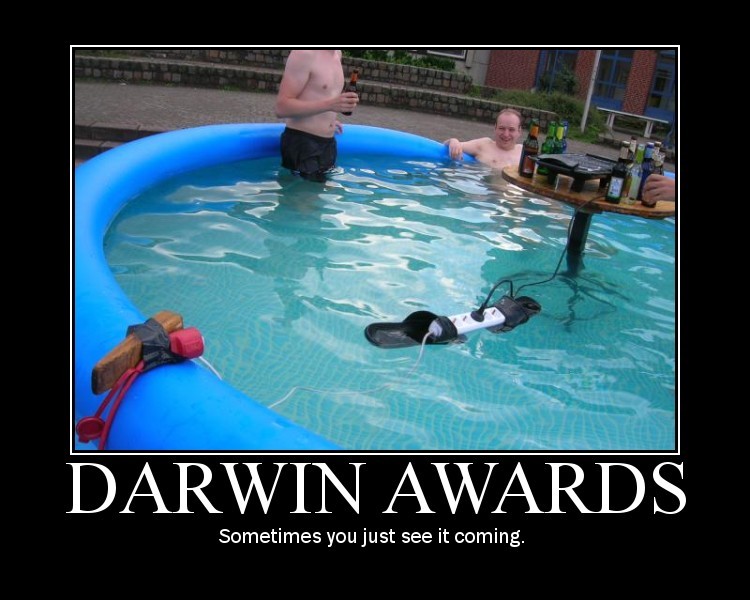
However, there are a number of things we can all do for our love lives, a sex lives, and everything in between that makes it better. There are personal experiences that demonstrate it and even scientific research that supports it. Some are just common sense, but anyone who is familiar with the Darwin Awards knows that’s not always sufficient.
With that in mind, I’d like to offer the wonderful readers of this site the simplest and easiest advice they’ll ever get. It’ll improve your relationship. It’ll enhance your sex life. It’ll make you feel better, overall. What is the magical method that does so much to help so many aspects of your personal life? It’s simple.

Get better sleep.

That’s it. That is a real, effective method for improving your relationships, be it with a long-time lover or a one-night stand in Las Vegas. There’s no need for expensive therapy. You don’t have to pay a guru or a life coach. For once, it really is that simple. Get better sleep and your love life will improve.

Now, in the interest of not sounding too obvious, there are some details here that are worth highlighting. In recent years, the importance of getting a good night’s sleep has been become more critical. A great deal of research has shown a long list of benefits that come with good sleep and an equally lengthy list of detriments for those who don’t get enough.

Good sleep helps you lose weight, alleviate illness, and recover from serious injuries. None of that is news to anyone, but I get the sense that people don’t appreciate the role sleep plays in a healthy romance and a good sex life. That role goes beyond work and afterglow, as well.

According to research published in the Journal of Psychosomatic Medicine, poor sleep can disrupt your emotions and not just in terms of being groggy in the morning. Managing and regulating emotions is core component of any functional relationship. Even those who don’t mind melodrama are going to get burned out from someone who can’t figure out whether they’re stressed, miserable, or pissed off.

It even goes beyond messy emotional exchanges. That same study also showed a link between poor sleep and depression. Considering how depression tends to dull passion of any kind, romantic or otherwise, it’s understandable how it can undermine a relationship.

It’s even more understandable in terms of how it hurts your sex life. In addition to depression limiting your capacity to get in the mood, it also creates situations where people use sex as a band aid instead of a basic emotional expression. I’ve seen this happen before with friends and relatives. They try to use sex as an anti-depressant. It can offer temporary reprieve, but it does little to resolve any actual issues.

Then, there’s the simple logistics that a lack of sleep will create. If your lover is on a different sleep schedule than you, then that makes spending time together a chore because one of you is going to be groggy. Whether it’s due to work schedules or one person being a night owl, love can only do so much when a couple is rarely rested at the same time.

This goes beyond just being restless and buying overpriced lattes. A lack of sleep can actually cause damage to the brain. Sleep is supposed to be the time when your brain heals and refreshes itself after a long, arduous day. If it never gets a chance to heal, then that could impact everything from your memories to your emotions to your genitals.

Yes, a lack of sleep does have sexual side-effects. For men, it lowers testosterone, the magically masculine hormone that drives a significant part of the male libido. It effects men whether they’re gay, straight, bisexual, or trans. When your hormones are off, your sex life will suffer. It can even lead to erectile dysfunction, which is sure to compound that nasty mood I mentioned earlier.

Women experience a similar effect as well. On top of research showing that well-rested women tend to have more sex, a lack of sleep can make it significantly more difficult to achieve orgasm. At a time when women are already already dealing with an orgasm gap, this certainly doesn’t help. Even with adequate sleep, a lack of orgasms can hurt any relationship.

Again, a lot of this is common sense, but for those looking to improve or maintain their love lives, it may seem too common. It goes against the standard romantic narrative that two people in love always have to be doing something. They always have to be off going on adventures, working hard every hour of every day to stay in love, have great sex, and grow together.

While there’s certainly a place for that kind of effort in a relationship, it doesn’t have to come at the cost of a good night’s sleep. If anything, a couple sharing a restful night in bed together should count as an act of genuine romance. It doesn’t even have to come after sex or even involve nudity, although couples who sleep naked do enjoy added benefits.

Ideally, good sleep shouldn’t just be a byproduct of a quality romance. It should be part of the process. It could be as easy as communicating with your lover how much sleep you need, when to do it, and what helps you feel most rested. It may sound mundane, but these are little things that real loving couples often overlook.

One of my old college roommates actually got sleep down to a science. He and his girlfriend made a genuine effort to line up their sleep cycles so perfectly that I could pretty much set my watch to when they would turn in. It wasn’t always romantic, but I can’t argue with the results. They were together that entire semester and I rarely saw them in a bad mood.

Most people, whether they’re in a relationship or not, are willing to put in the work to make romance work. They’re just as willing to listen to gurus, pop pills, and read sexy stories to improve their sex lives as well. While I try to do my part with the sexy stories I tell, I think it’s ironic that just getting better sleep rarely comes to mind.

Even if it makes too much sense, it’s probably the easiest way for anyone to improve their relationship. We already know how to sleep. Most of us relish the opportunity to get more. If more sleep means better sex and quality romance, then it more than warrants a higher priority in our intimate efforts.

After all, a good lover is a well-rested lover.

Leave a comment

Filed under gender issues, human nature, Marriage and Relationships, psychology, romance, sex in society, sexuality

When Your Lover Uncovers Your Porn Collection (And What Their Reaction Reveals)

porn-addictive-1000x500

I talk a lot about taboos, double standards, and various gender quirks. I don’t just do that because it highlights significant disparities among people trying desperately to get along and/or make love to each other. I do it because it offers some fascinating insight into the conflicting mentalities that drive such conflicts.

A lot of those conflicts, however, are on a larger, more impersonal scale. A typical couple, be they heterosexual, homosexual, or something else entirely, can only do so much to impact larger cultural forces that they had no role in choosing, propagating, or subverting.

These forces, from our approach to marriage to the assumptions that guide our understanding of romance, usually only effect individuals and couples indirectly. We’re all somewhat at the mercy of what our culture has built for us and we can only do so much to guide it forward.

However, there are a few lesser-known aspects of that culture that we can influence on a day-to-day basis. One such aspects involves porn and whatever porn collection that you or your significant other might have, be it hidden or not. I’m sure just mentioning it has made certain individual’s tense for various reasons that I won’t state outright.

Regardless of how you or your lover feels about porn, it exists and it exists in a big way. It’s also a huge multi-billion dollar industry. The fact it’s so huge is a telling sign that both you and your lover have probably consumed it at some point. It’s also very likely that anyone claiming that porn is immoral has probably consumed it as well.

Despite this prevalence, porn is still immersed in taboos and quirks. I don’t want to focus too much on those, since I’ve already touched on a few. The ones I want to focus on have to do with how those in a romantic relationship react to it. That reaction, in many ways, goes beyond double standards and reflects something deeper about our concept of relationships as a whole.

Most people probably don’t need much imagination to surmise how their lover would react to their porn collection. Whether or not it’s a secret, there’s this underlying sentiment about someone in a relationship who consumes porn. That sentiment usually manifests in two scenarios. This is the first and probably most basic.

A woman casually walks by her lover’s desk. Their computer screen is open and so are a wide number of files. Curious, she takes a closer look, only to find out that there’s a sizable collection of pornographic videos on the computer. She’s utterly shocked at just how much content there is.

There are videos featuring extreme, hardcore scenes. There are videos featuring bondage, S&M, and various fetishes. When her lover returns, she is outraged. She sees this level of porn consumption as an affront to their relationship and demand that the files be deleted.

This isn’t just a basic thought experiment. This sort of thing does happen in real life. A part of what inspired this article were stories like this one where a woman kicked her husband out of the house after finding some porn on his phone. Granted, her reaction was extreme, but it reflects a similar sentiment.

There are those who, when they find their lover’s porn stash or just part of it, see it as an insult and an affront to their relationship. They see their lover’s desire to seek another sexual outlet as proof that they aren’t enough and their lover isn’t attracted to them anymore. For some, it can be fairly traumatic and for understandable reasons.

Now, I didn’t specify the gender of the person who voiced that outrage like I did in the scenario. I did so because I don’t want to generalize too much. From a purely anecdotal perspective, which is admittedly flawed, women are more angered by their lover’s porn consumption than men.

Again, that’s a generalization. It also says nothing about how homosexual or transgender relationships couples react to porn. I honestly had a hard time finding research to that effect. However, I found plenty that indicated how common porn consumption is among couples and how reserved many are to admit it.

That leads me to the next scenario, which isn’t as common, but is a bit more colorful. It involves a different kind of reaction for a couple that probably has a very different dynamic from the first, but that dynamic is key in understanding the implications.

A man casually walks by his lover’s desk. Their computer screen is open and so are a wide number of files. Curious, he takes a close look and discovers a sizable collection of pornographic videos. For a moment he’s shocked, but then he’s impressed at the sheer breadth of the collection.

There are videos featuring lesbian couples. There are videos featuring bondage, S&M, and various fetishes. When he confronts his lover, it’s awkward and a little funny. However, he’s also genuinely intrigued by this side to his lover and says they should talk about it so as to re-evaluate their outlook on their sex life.

It’s not nearly as dramatic, which is probably why it doesn’t make the news as often. Again, I was vague with the gender dynamics here and I’ll probably get in trouble for saying the person in the scenario was a man. I get it. That’s a general assumption fueled largely by existing cultural expectations.

Men are okay with porn. Women are a bit more sensitive about it. Not everyone is like that. Some women don’t have a problem with porn and even enjoy watching porn themselves. Some men don’t care for porn and are genuinely averse to it. Everybody has their own attitudes towards it.

That said, there is this prevailing sentiment that men are anxious about revealing their porn habits to their significant others and women don’t like the idea that their lover has a sexual outlet other than them. In both cases, there’s an anxiety over what this means for them and the relationship.

To some extent, porn consumption and learning that your lover consumes it undercuts the romantic script that we think we have to follow. Within that script, two people are in love. They only desire one another. They’re only attracted to one another. Anything that might diver that attraction must be a bad thing. Porn does all of that and then some.

In that context, it’s understandable why some would react harshly to their lover’s porn collection. It shatters the romantic ideal they once assumed. Suddenly, their love is not on part with Romeo and Juliet. Their relationship is not some epic romance. The idea that they’re still sexually aroused by other people makes it seem less special and less meaningful.

At the same time, such a reaction has more distressing implications. If someone is  disgusted by the notion that their lover is sexually aroused by something other than them, then that implies they somehow own their lover’s desires. They own their ability to have sex and be intimate. The idea of owning another person to that extent goes beyond love and into the realm of obsession.

In that circumstance, even a stray thought anyone has towards someone other than their lover is an affront. Given the many indications that humans aren’t entirely built for monogamy and the high divorce rate, this is wholly unrealistic and a little scary and it sets unreasonable expectations among couples that are bound to disappoint.

There are, indeed, certain cases where someone’s porn consumption is detrimental to a relationship. However, from a pure numbers perspective, those instances are the exception and not the norm. From a pure betting perspective, there’s a good chance that your current lover or future over consumes porn. How you deal with it will likely reveal the strength and/or weakness of your relationship.

Leave a comment

Filed under gender issues, human nature, Marriage and Relationships, romance, sex in media, sex in society, sexuality, Uncategorized

Hard Truths: Justice, Injustice, And O.J. Simpson

I understand that not everything I say on this blog is going to be popular, sexy, or funny. I don’t doubt that there are opinions I’ve shared and jokes I’ve told that haven’t gone over well. There may be even a few people out there who have read them and felt the urge to punch me in the face through their computer screen.

I understand that. It’s just part of the internet. You’re going to say things people hate and meet people who hate your guts. I’m sure there are people who still haven’t forgiven me for my post on the mind of misogynistic men. I won’t apologize for saying what I say, but please understand that I don’t say it with the intention of hurting or upsetting people.

I say all this as a preface, of sorts, because I know some of the things I’ll say in this post are going to upset some people. If not on this post, I’m sure there will be other posts that draw anger, disgust, and disagreement. Some of these issues are not as innocent as sex robots, Wonder Woman’s BDSM origins, or the sexiness of chest hair. They’re real, serious issues.

The issue, in this case, has to do with something that’s fairly timely in the sense that it often comes up this time of year. Just this past week was the 23rd anniversary of the infamous O.J. Simpson Bronco chase. It happened on June 17th, 1994. It was one of those days where everyone remembers where they were. It’s also one of those days where everyone formed an ardent opinion that still divides people to this day.

At the time, I was fairly young and didn’t really understand the gravity of what was going on. I kept hearing the name O.J. Simpson in the news. I kept seeing people watch the trial on TV, talk about it, and obsess over it. Being so young, I thought it was annoying. All that talk about O.J. Simpson cut into time I’d rather be using to read comics, watch cartoons, and play video games.

I guess you can say I’m part of a generation that only ever knew O.J. Simpson as the alleged murderer who got away with it. Pretty much anyone born before 1982 only knows this side of O.J. Simpson. When they hear his name, they usually think of the Bronco chase, the trial, and the bloody glove. They don’t think of the larger context.

There are members of my own family, as well as major news figures like Keith Olbermann, who’ve tried to explain to me just how big a deal this was. It’s hard for them to convey to people of my generation just how beloved O.J. Simpson once was. Between his Hall of Fame football career, his acting career, and his iconic Hertz commercials, it’s impossible to overstate just how popular this man was.

There was actually a time when the name O.J. Simpson had many positive connotations. He was a celebrity sports icon whose popularity transcended race, class, and everything in between. For someone like him to be accused of a ghastly double-murder was akin to Captain America becoming a Nazi. Actually, that’s a bad example.

It’s because of that other side of O.J. Simpson, namely the one that people of my generation never saw, that his trial became the “Trial of the Century.” That trial, and the controversial verdict that followed, still divides America to this day, often among racial lines.

If you want to have an uncomfortable conversation about race, justice, injustice, and the legal system, pretty much every distressing element you can think of is highlighted by the O.J. Simpson case. It involves spousal abuse, police corruption, racism, media spectacles, and the Kardashian family. Even today, this kind of spectacle would check all the right boxes to become a total media shit storm.

There are so many aspects of the murder trial, the aftermath, the media circus, and the tenuous relationship O.J. Simpson had with his ex-wife, Nichole, that I could highlight. In every case, there are elements to that story that are both unsexy and controversial, dividing and enraging people of every opinion.

However, there’s only one part I want to single out for this particular post. It’s probably going to upset more people than most. I might even get some hate for it. That said, it’s one of those hard truths that needs to be said, even if it’s uncomfortable. Brace yourself because here it is.

The jury in the O.J. Simpson trial got it RIGHT.

Now, it’s my turn to brace myself. I know that opinion isn’t very popular. I also know most of the people in my own family disagree with it. I’ve talked to close relatives about it. They’re all convinced that O.J. Simpson is guilty. They all believe beyond a shadow of a doubt that O.J. brutally murdered his ex-wife and Ronald Goldman. There’s nothing anyone can say or do that can convince them otherwise.

Therein lies the problem, though. It’s one that I’ve pointed out before when I’ve talked about reasons, excuses, and the idea of excuse banking. We all like to think of ourselves as rational, logical human beings that Spock from Star Trek would get along with. In reality, we’re nothing of the sort.

Our brains don’t work through logic. Our brains can use it, but it’s only every a secondary function. Our default caveman setting is to form an irrational opinion first and then look for ways to justify it. It doesn’t matter if it’s racist, sexist, or wholly irrational. That’s how our brains work. That’s how most people look at the O.J. Simpson case.

The problem is, from a legal point of view, that our justice system does everything it can to circumvent those flaws and it’s not always good at it. There’s a reason why criminal justice reform is a major topic these days. The justice system is woefully inefficient at dealing with all crime fairly, especially those committed by minorities.

That’s part of what makes the O.J. Simpson case such an important case, but not for the reason you might think. The reason why it matters so much and why it’s such a harsh truth to digest is because the O.J. Simpson trial highlighted how the justice system is supposed to work. In a perfect world, every criminal would get the kind of legal defense that O.J. Simpson got. The fact that O.J. is black only makes the truth that much harder.

Like it or not, the O.J. Simpson trial got right one of the most important elements of our criminal justice system, at least with respect on how it’s supposed to work. It is built around the idea that a defendant is presumed innocent and must be proven guilty beyond a reasonable doubt.

It can’t just be probable that someone is guilty. It can’t just be likely either. To convict someone of a serious felony, like a double murder, it has to be beyond any reasonable doubt. That’s a very lofty standard and for good reason.

Legal systems in modern western societies emphasize ensuring guilt and not punishing the innocent. There’s a callous practical reason for that too. In a society built around a modern economy, we can’t have the state throwing innocent people in prisons who could otherwise be working and contributing. That’s why if someone is accused of a crime, the system has to make damn sure that they’re guilty.

In O.J. Simpson’s case, and I know this is going to make a lot of people gnash their teeth on a cinder-block, there was reasonable doubt. Pretty much all the evidence against O.J. was either circumstantial or hearsay. On top of that, the LAPD had a sordid history of corruption and racial bias. Police do frame suspects and innocent people do get charged with crimes they didn’t commit.

Unlike most of those innocent people, though, O.J. Simpson had access to the best legal help that money could buy. Those men might be despised now for defending O.J. However, there’s no getting around it. They did their jobs. They did exactly what a lawyer is supposed to do.

They revealed the reasonable doubt surrounding the case and, as upsetting as it might have been, there was reasonable doubt. The blood evidence was immense, but so was the evidence of improper handling and corruption from the officers involved. There are a great many theories as to what actually happened, but that doesn’t matter in the end.

The mere presence of that doubt meant that the jury did the right thing in acquitting O.J. Simpson. It’s a painful truth, especially to the families of Nichole Brown Simpson and Ronald Goldman. Their story will always be the biggest tragedy of the O.J. Simpson case. However, as hard as it is to accept, the justice system was right in this case.

There’s so much more to the O.J. Simpson story that I could talk about. I’m going to avoid it because any discussion about this case is bound to trigger all sorts of anger and outrage. If you want to hear more about this topic, including O.J. Simpson, check out the Unpopular Opinion podcast. They’re usually pretty balanced and pretty funny as well.

Short of a confession, complete with photographs and a bloody knife, we’ll never know what happened in the O.J. Simpson case. It’s that inability to truly know that’s the hardest to accept. Our caveman brains just can’t deal with that kind of uncertainty so we cling to our opinions and excuses.

Personally, I think it’s likely that O.J. did murder his ex-wife and Ron Goldman. At the very least, I think he had something to do with it. However, I don’t know all the facts. Nobody knows all the facts. That’s why, in the context of justice, his acquittal was the right thing to do.

It’s for that very reason, though, that we need a justice system that works around that. We, as a people, are at the mercy of our caveman brains and its inability to use logic properly. That’s the biggest challenge of our justice system, having to deal with all these shortcomings. It’s not perfect. For the O.J. Simpson case, at least, we see first-hand how it’s supposed to work, even if we don’t like the outcome.

4 Comments

Filed under Jack Fisher's Insights

When Obsession Becomes A Crime

Ever feel like you’re being watch? No, I’m not talking about the kind of watching that those in tin-foil hats and poor mental health talk about. I’m talking about the feeling of actually being watched by someone who isn’t a CIA agent, a lizard person, or an agent of the Illuminati.

This isn’t a spy movie or a conspiracy theory. This is an extension of the whole love vs. obsession discussion I began yesterday. When I started writing about this topic, I realized quickly that one post was not going to be enough. There are just so many aspects to this issue that it’s hard to capture everything necessary to convey the message I want to convey. Even this part will only convey part of that message.

When you break down the fine, but obscure line between love and obsession, you enter a strange part of human emotions that borders health and unhealthy attitudes. Love is probably one of the healthiest things you can do for your soul. There’s a good reason why those who marry and form stable, loving relationships live longer than those who don’t. In some sense, sexual healing is a real thing.

Obsession, on the other hand, is not going to increase your lifespan. It’s not going to help your social life either. Obsession at a certain level becomes a symptom of mental illness, be it crippling depression or Obsessive-Compulsive Disorder. It’s hard to know where that level is, which is why it’s so hard to know the difference between love and obsession.

There is, however, one clear line that becomes painfully apparent once crossed. It’s a line that represents the endgame of sorts in the love vs. obsession conflict because it turns emotional upheaval into an actual crime. That crime, in this case, is stalking.

Unlike obsession, stalking is a crime and can be prosecuted as such. It takes obsession, dips it in napalm, and throws it into a furnace to create a perfect raging firestorm of emotional unrest. It’s the point where any and all potential for romance fades, becoming instead a case-study in what happens when emotions go haywire.

To make matters worse, the age of the internet and social media makes a stalker’s job so much easier. It’s no longer a matter of just asking the Yellow Pages to not list your address and phone number. If you have an internet presence of any kind, someone obsessed enough can exploit it. It’s scary as hell, but that’s the age we live in.

For most of us who don’t have a vindictive ex-lover, we don’t have to worry about being stalked most of the time. It’s not a passing concern, which is why the whole love vs. obsession conflict kind of flies over our head. For celebrities, though, the concern is real and so is the harm.

So in the interest of providing perspective in what happens when obsession goes too far, here’s a video by WatchMojo detailing some of the most disturbing cases of celebrity stalkers in recent memory. They don’t include cases where the stalker was intent on murder, as that kind of skews the issue. This is just about people who took their love and obsession too damn far.

I admit these cases are extremes. The people involved have serious mental issues and I’m not just talking about the eccentricities of the celebrities either. This is what happens when emotions go haywire and become so unhealthy that it leads to real harm. For an erotica/romance writer who wants to tell stories about healthy romance, it’s an important lesson to heed.

1 Comment

Filed under Jack Fisher's Insights

Love Vs. Obsession: Why Knowing The Difference Is So Vital

We’ve all asked ourselves one fateful question. It also happens to be the question at the basis of 85 percent of all romance movies and 99 percent of all bubblegum pop music songs. It affects us all in some form or another and is a core component of the human experience.

“How do I know I’m in love?”

It’s a profound, but beautiful question to ask. To love someone is a big part of being human. One could argue it’s one of the most important parts of being human. Being in love is one of those basic, emotional experiences that drives us all. We seek out love because it helps make life worth living. Like chocolate, bacon, and hot showers on a cold winter day, it fulfills us on a fundamental level.

Love is a beautiful thing. It’s a beauty I get to admire from a unique perspective as an erotica/romance writer. Pretty much all of my books deal with love in some form or another. Some books, like “Holiday Heat” and “The Escort and the Gigolo,” go to great lengths to build up a romance. Others, like “The Final Communion” and “Jackpot,” use less elaborate forms of romance.

Whatever form it takes, I enjoy writing about romance and many of my future novels will deal heavily in romance. When mixed with a healthy dose of erotic undertones, it can make for some pretty potent narratives, among other things.

As much as we love romance and as critical it is to the human experience, there’s another question that’s somewhat linked to romance, albeit indirectly. It’s a question we don’t ask ourselves quite as often and in some cases, that’s becomes a big problem. It’s uncomfortable, unpleasant, and distressing to think about. That’s a clear sign that it’s still worth asking.

“How do I know I’m obsessed?”

Stay with me here. I know some snicker at that question the same way they would if a five-year-old came up to them and asked why dogs don’t talk. It seems like an unrelated question. It seems like something that really shouldn’t enter the equation when talking about love, but it does. In fact, I’d go so far as to say it’s a big part of the flawed narrative we collectively craft about what love is.

This is another insight I’ve been contemplating while reading “Sex At Dawn,” a book that has already offered quite a few insights into the mechanics of sex and love. The sexy parts are plenty interesting to say the least, if only for those who opt to wear tight pants, but the parts about love are just as insightful.

A big part of “Sex At Dawn,” involves breaking down what it describes as the “Standard Model.” Again, this model is just the stereotypical boy-meets-girl-and-they-live-happily-ever-after-like-an-old-Disney-movie narrative. It’s very familiar to modern Western civilization. It’s the ideal embodied in sitcoms, music, and movies.

However, in analyzing this model, the book highlights a few unflattering features that are hard to overlook. A big part of this standard model requires that the man and the woman be completely devoted to one another, the first thought they have when they wake up and the last thought they have when they go to sleep, presumably after a quick round of highly-scheduled, missionary-style sex.

That’s all wonderfully romantic on the surface, but take a closer look at the finer details of this narrative. They’re completely devoted. They direct all their romantic and sexual energy at each other. Their thoughts and feelings are completely narrow and focused on a singular person. At what point does that kind of sentiment turn from romance into obsession?

I ask that question knowing there isn’t a fine line. However, it’s difficult to decouple the details of this narrative from the definition of “obsession.” According to Dictionary.com, the definition for “Obsession” is as follows:

  • The domination of one’s thoughts or feelings by a persistent idea, image, desire, etc.

With this definition in mind, think back to the narrative surrounding the standard model of romance I mentioned earlier. How much of that romance is built on love and how much of it is built on obsession?

It’s a hard, if not impossible question to answer, but it’s a question that’s worth contemplating because it reveals something about the nature of our emotions. Part of being in love is to desire someone and to be desired. However, sometimes our faulty, flawed brains take it too far and that can really hamper the romance.

When someone is obsessed with someone, especially when it’s done out of love, it consumes a person so completely that they struggle to function on a basic level. They can’t focus at work. They can’t focus with family. They can’t focus on whatever goals, aspirations, or dreams they may have had in their lives. It all becomes secondary because of a person.

A good way to contrast this is to look at it from the opposite end of the spectrum. There are all sorts of people who are obsessed with someone out of hate. There are even entire groups devoted to hating others. For most reasonable people, this is deplorable. Devoting that much time and energy into hating someone just seems wrong. It makes no sense.

So if hate is that wrong when taken to extremes, why should love be different? Isn’t that just as unhealthy? I admit it’s not an entirely fair comparison. Comparing love and hate is like comparing candied bacon with expired kale. They’re two very different manifestations of something that’s so basic, broad, and varied. That doesn’t make the extremes any less damaging.

Being in love is a wonderful feeling, but then again shooting heroin and smoking crack can feel wonderful too. That doesn’t mean that it’s healthy. The problem is that Disney movies, pop songs, and bad romance novels have created this ideal about what love is and some of that ideal involves more obsession than love.

There are plenty of examples to explore and I plan on doing more blog posts on this issue. I hope to break it down a bit more, if only to help me craft more complex, engaging romances in my novels. For now, I’ll focus on one particular example involving music.

When it comes to sappy love songs, pop music can always be counted on to give us a massive glut of material from boy bands, country stars, and 80s hair metal bands. There are so many love songs out there of so many different kinds that if super-intelligent aliens landed tomorrow, even they would be confused about how our music defines love.

This leads me to a very famous song that is often mistaken for a love song. It also happened to be one of the biggest pop hits in 1983, voted song of the year by Rolling Stone. Chances are, if you’re over the age of 30, you’ve heard it at some point or another. If you aren’t familiar with the lyrics, you’re at least familiar with that soothingly haunting tune and the undeniably handsome face of Sting.

This song was, and still is to some extent, widely regarded as a love song. However, if you look at the lyrics a bit closer, how much of it is love and how much of it is obsession?

Every Breath You Take

Every Move You Make

Every Bond You Break

Every Step You Take

I’ll Be Watching You

In a certain context, that sounds sweet. It sounds like something a dying spouse would tell their lover before they passed away to provide comfort.

In another context, it sounds creepy as hell. It sounds like a note a stalker would leave someone, as if to warn them that they can never escape their obsession.

The mere fact that such context is even needed says a lot about our inconsistent sentiments towards love and romance. On one hand, we want to be desired. On the other, we don’t want to be stalked by someone who devotes every waking hour to obsessing over us. It’s a tough balancing act.

This conflict is something that even Sting himself, the writer of this song, admitted in a 1993 interview. He goes onto say:

 “I didn’t realize at the time how sinister it is. I think I was thinking of Big Brother, surveillance and control.”

Again, it’s pretty telling when we can’t tell whether a song is about love or obsession. It says a lot about how we assess love, sex, and romance. Since I’m in the romance/erotica business (or at least trying to be part of it), it’s something I think I need to assess more than most.

At the end of the day, stories about love and romance still strike us on a fundamental level. They have an appeal that spans generations, civilizations, and terrible pop music. I want to channel that appeal with my novels because in the end, a story about love will always be more compelling than a story about obsession.

4 Comments

Filed under Jack Fisher's Insights