Tag Archives: female superheroes

Five Reasons Why “X-men: The Animated Series” Was More Progressive Than You Think

DNcLvqLVQAAI1iI

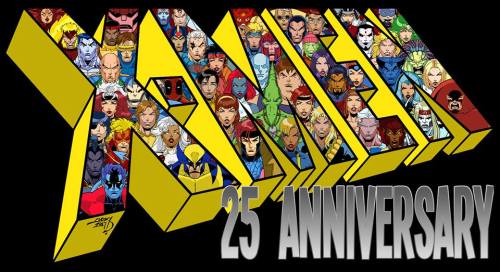
This past Halloween was extra sweet for a certain group of comic book fans, one that I just happen to be part of. Even if you’re not a comic book fan and were just a kid of the 90s, growing up on a steady diet of Saturday morning cartoons, this year marked a special milestone for one of the best shows of that era.

Yes, it involves superheroes. Yes, it involves X-men, which I often go out of my way to discuss. Yes, it involves this iconic theme music that has since become my ring tone.

That insanely catchy guitar rift that got stuck in the heads of millions of fans is from “X-men: The Animated Series.” On October 31st, 1992, this series debuted on Fox Kids and countless childhoods were forged from that day forward, including my own.

That was 25 years ago and while that thought makes me feel way older than I care to feel, it still brings back fond memories. One of my favorite parts of the day, as a kid, was rushing home from school, turning on the TV, and watching my favorite shows. “X-men: The Animated Series,” along with shows like “Spider-Man” and “Power Rangers,” were a big part of my carton diet.

I largely credit this show and “Spider-Man” for getting me into comic books, superheroes, and everything that came with it. I also credit those shows with giving me an early understanding of character development, romance, and storytelling, which would go onto help me write my sexy novels.

For that reason, and many others, “X-men: The Animated Series” has a special place in my heart. I imagine many X-men fans feel the same way because it was this show that helped the X-men really peak in the 90s. What the Avengers are today, the X-men were in the 90s. They were very much the alpha and omega of all things involving superheroes.

While this 25th anniversary gives me time to reflect fondly over how much this show enriched my childhood, my life as an adult has only further expanded my perspective. When I look back on “X-men: The Animated Series,” I’m somewhat amazed by how relevant it still is in terms of theme, drama, and story.

It’s easy to forget that this series came out at a time when most cartoons followed a simple, predictable formula, regardless of whether or not superheroes were involved. There was evil. The heroes found out about said evil. They fought it. Then, the credits roll. “X-men: The Animated Seriesdared to think bigger.

While the animation and voice acting might be somewhat dated, this show dared to speak up about social issues. It dared to explore ideas of hate, bigotry, and discrimination. At a time when parents were still fighting mortal crusades over rock music, this show tried to be relevant in a new way.

Now, as I look back on this series that lasted for five years and 76 glorious episodes, I realize just how progressive and insightful this show truly was for its time. As more and more forms of media, including comics, push for greater diversity, “X-men: The Animated Series” found a way to pull that off 25 years ahead of schedule.

In a sense, the X-men have always been about progressive themes like inclusion, diversity, and justice. Even though some of those words have become toxic today, they embodied the best of it, going back to its earliest days of drawing parallels with the Civil Rights movement. This show just captured it at a time when it a new form of progressive concepts were taking hold.

So, in honor of the 25th anniversary of this show,  I’d like to highlight five reasons why “X-men: The Animated Series” was even more progressive than you remember. Even if you’re not a fan of X-men or comics, it’s amazing to think that a show from 25 years ago achieved so much of what others are trying to accomplish today.


“Genuine bigotry and hatred was depicted in ordinary people.”

To X-men fans, it seems obvious. Bigotry and hatred are very much a part of the X-men’s DNA, going all the way back to their early days in the 60s. However, for a kids cartoon, this was akin to Miley Cyrus flashing her tits on an episode of “Hannah Montana.”

X-men: The Animated Series” did not water down the themes of blind hatred and bigotry espoused in the comics. If anything, they took it a step further by giving a voice, putting that blind hatred on display through characters like Graydon Creed.

This especially played out in the second season where hate groups like the Friends of Humanity formed. They’re the anti-mutant equivalent of the KKK. Their hate was so blind and deep that when one character, Jubilee, asked them why they hated her so much, Creed said simply, “You were born!”

That kind of hatred is harsh in real life, let alone a kids show. The fact that this show gave the X-men more than just monsters, tyrants, and aliens to fight showed an uncanny, if that’s not too fitting a term, willingness to scrutinize these painfully real issues.

As a kid, I barely understood it. As an adult, I’ve come to appreciate it even more. I like to think that exposing that kind of hate in a cartoon showed an entire generation of kids what true assholes look and sound like. Given the amount of assholes in this world, those lessons were invaluable. Plus, it was way more entertaining than “Sesame Street.”


“The characters were diverse and had vastly different personalities.”

Here’s a quick question that should trigger some unpleasant conversations on message boards, as if there are any others. Look at the cast of the Avengers movie. Aside from talking raccoons and androids, what do you notice? They’re mostly men, they’re mostly white, and they mostly have the same avenging personality.

Now, look at the X-men. You’ve got an uptight white guy, a burly Canadian, a sexy southern woman, an African goddess, a smooth-talking Cajun, a giddy teenage girl, and a guy in a wheelchair. Even by today’s absurd diversity standards, the X-men check a lot of boxes. They’ve been checking those boxes since long before diversity was even an annoying buzzword.

It’s not just that the cast of “X-men: The Animated Series” was diverse on the surface. It’s not just that they disagreed with each other, as the Avengers frequently do. They had such wildly different personalities that didn’t always mesh. Cyclops and Wolverine alone had all sorts of clashes and not just over wanting to sleep with the same redhead.

That kind of diversity of thought and personality is something modern cartoons, TV shows, and movies still struggle to achieve. “X-men: The Animated Series” managed to achieve that at a time when Hillary Clinton was still likable. It was a big accomplishment at the time and one that only gets more impressive as the years go by and people still fight about diversity in media.


“The show did feminism and strong female characters RIGHT.”

x-ladies

I’ve said it before and I’ll keep saying it in future posts. Talking about feminism is dangerous, divisive, and frustrating, especially in wake of recent scandals. Nobody seems to know how to even handle feminism or strong female characters who aren’t Wonder Woman. Long before the “Wonder Woman” movie raised the bar, though, “X-men: The Animated Series” made sure it set that bar pretty damn high.

Even by modern standards, “X-men: The Animated Series” found a way to do feminism right. Unlike other cartoons, the female characters weren’t part of the supporting cast or relegated to roles of a love interest. They actually participated on the same level as the male characters.

They didn’t have to create new female characters or force a female character into a male role. “X-men: The Animated Series” simply took characters like Storm, Rogue, Jubilee, and Jean Grey and maximized their strengths. They gave them personalities, power, and individual stories. They didn’t have to show up their male teammates. They could stand on their own and thrive as women.

In terms of feminism, “X-men: The Animated Series” was at omega-level standards long before it became a priority. At a time when we’re still struggling to make solid female characters, it’s remarkable and refreshing to see how well it was done.


“The show didn’t shy away from harsh, dramatic moments.”

People used to make a big deal about cartoon violence. The big worry was that kids would see a cartoon duck fighting with a cartoon rabbit and think that playing with double-barreled shotguns were toys. It was a very different, very strange time, to say the least.

X-men: The Animated Series” basically gave a big, adamantium finger to this debate, at least to the extent that they could get around the network censors. This show did not shy away from the harsh, dramatic moments that had played out in the comics. In fact, in the second episode of the series, one of the characters dies.

Keep in mind, this is a kids show where characters are not allowed to curse or show blood. The fact that this show killed a character in an early episode, and referenced death on more than one occasions, showed a remarkable willingness to portray real struggles with real stakes. Sure, it probably upset a few parents, but it sent a powerful message about the real world.

X-men: The Animated Series” dealt with real issues of bigotry, hatred, and intolerance. As such, it couldn’t water down the harshness and the pain it incurred. These are issues that people are still reluctant to talk about today and this show brought it up during the Clinton Administration. That shows both guts and foresight.


“The villains, heroes, and themes had layers of complexity.”

Watch any cartoon made before 1992 and chances are the characters you see will be pretty basic. You have your evil, mustache-twirling villains. You have your generic good guy/hero types. You have exaggerated violence and shameless toy promotions. There’s not a whole lot of depth there.

X-men: The Animated Series” once again dared to do more. It dared to let its characters grow and evolve over the course of five seasons. It’s an approach that worked so well that others, like the “Spider-Man” cartoon that debuted two years later, went onto adopt it. These characters had all sorts of layers and depth in the comics. The show chose not to simplify it for a young audience and embrace that complexity.

Sure, characters like Magneto, Sinister, and Apocalypse came off as generic bad guys at first, but they developed more and more depth as the series went on. There were even times when Magneto came off as genuinely sympathetic. For a kids show, these moments were pretty heavy and something you just wouldn’t get with the Ninja Turtles.

Today, everyone is trying to give their characters that Walter White style of complexity. Everyone is trying to create a series with a sense of progression. Well, “X-men: The Animated Series” were already doing that in the days of dial-up internet.


The fact this show succeeded to the extent that it did, while being as progressive as it was, even by modern standards, is nothing short of uncanny. After 25 years, the show still has a special place in the hearts of X-men fans. Sure, the animation and dialogue may be dated, but those progressive themes have never been more relevant.
10 Comments

Filed under Comic Books, Jack Fisher, Superheroes, X-men

How To NOT Screw Up The Captain Marvel Movie

It’s a sad fact of life in an overly flawed world. You hope for the best, but it’s rare that it ever actually happens. Even when it does, it’s not always as much fun as you hope. Ask anyone who lost their virginity during a dare or stood in line for hours to see the Star Wars prequels.

In my experience, it’s rarely feasible to build your anticipation around something for what it can be if everything goes flawlessly. In the real world, there’s no such thing as flawless. People make mistakes. Parties go horribly wrong. Hearts get broken. Michael Bay is given too much money, cocaine, and high explosives.

When it comes to superhero movies, though, it’s not possible to hit a home run at every turn. You can’t expect them to blow your mind and give you the kind of mental orgasm that takes a week to recover from. At best, you can just hope that it doesn’t suck. I love those kinds of orgasms as much as the next guy, but let’s face it. They’re rare and awesome for a reason.

Some movies come close to achieving that kind of cinematic bliss, though. “Wonder Woman” sure did, but as I pointed out in my review, it did have its shortcomings. They were still very minor and by nearly every measure, it is the most successful female superhero movie to date.

More importantly, “Wonder Woman” proved that female superhero movies can be successful. They don’t all have to be box office bombs like “Catwoman.” That opens the door for other female heroes to follow in Wonder Woman’s footsteps. At the moment, though, the only female solo movie besides the Wonder Woman sequel is “Captain Marvel.”

Marvel may have DC beat in almost every other aspect of its movie universe, but now there’s one area where it can’t say it dominates. Sure, it has a lot of strong female characters like Black Widow, Gamora, and the Scarlet Witch. However, they’ve largely been in supporting roles. They’ve never had a chance to shine like Wonder Woman did in her movie.

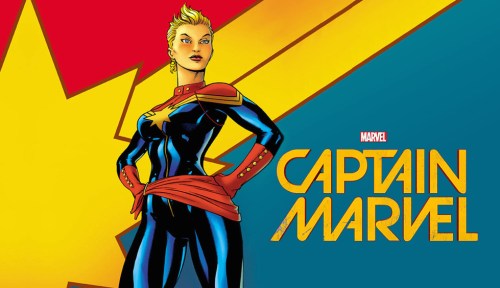
Captain Marvel will get that chance. She’s the closest hero Marvel has to Wonder Woman, thanks largely to the efforts of writers like Kelly Sue DeConnick. As much as Marvel has dominated DC at the box office, it now has a sub-perfect record. Given the amount of ego and cocaine in Hollywood, there’s no way that Marvel Studios will let that stand.

I don’t doubt that Kevin Feige and the powers that be at Marvel Studio will make every effort to ensure that “Captain Marvel” matches and exceeds “Wonder Woman.” They’ve already cast the beautiful and talented Brie Larson as Carol Danvers. They also announced some major details about the movie at the San Diego Comic Con.

On paper, it looks like this movie has what it takes to match “Wonder Woman.” Then again, on paper I’m sure “Batman and Robin” seemed like a good idea. While I have high hopes for this movie, just as I did with “Wonder Woman,” I’m not going to set my expectations too high. Between the two “Matrix” sequels and “Wolverine Origins,” I’ve been burned too many times.

With that in mind, I intend to do for “Captain Marvel” what I did for “X-men: Dark Phoenix.” I’m going to provide some tips that I’m sure Kevin Feige will never see on how to avoid screwing up the “Captain Marvel” movie.

Wonder Woman” set the bar pretty damn high and looked dead sexy while doing it. It’s unreasonable to expect “Captain Marvel” to exceed it on every level. However, there are a few simple tips to ensure it doesn’t end up enduring the same infamy with “Catwoman.”


Tip #1: Let Carol Fly High (And Take The Audience With Her)

This is the most important tip, right up there with the Marvel Studios logo and Samuel L. Jackson dropping F-bombs, as only he can. Carol Danvers has a few defining traits beyond just looking awesome and kicking ass on a cosmic level. One of those traits is what makes her feel both distinctly human and someone we want to cheer for.

Throughout her history, Carol Danvers has been ambitious in a very particular way. Everybody, male or female, will look up at the stars at night and admire their beauty. Carol, however, doesn’t just want to admire. She wants to actually go there. She doesn’t want to shackle herself to this tiny little mud ball full of killer clowns, spiders, and the Kardashian family.

That’s why she joined the Air Force and fought to outperform everyone in her path. The fact she did that without a penis was secondary. Even before she got her powers, she aspired to go to the stars. Once she got those powers, she was determined to fly higher and go farther than anyone had ever dared, regardless of whether or not they had a penis.

Therein lies the key. Carol dares to venture out into the unknown and kick the ass of anyone or anything that tries to hold her back. That’s the kind of ambition people can get behind. That’s the kind of drive that people admire and want to follow.

It’s part of what makes Wonder Woman so endearing as a character to men and women alike. She has bold ambitions, but she isn’t an asshole about it. She doesn’t just seek to prove herself. She seeks to inspire others. That’s what Captain Marvel needs to do with her desire to go to go to the stars and carry the audience along for the ride.


Tip #2: Tie Carol’s Story Into That Of Mar-Vell’s

I get that there are times when it’s not possible to incorporate certain elements from the comics into a movie. That’s why we didn’t see any not-so-subtle BDSM themes in the “Wonder Woman” movie. However, the movie still made a concerted effort to capture some of the core details of Wonder Woman’s mythos, such as her iconic outfit and her relationship with Steve Trevor.

In the same way Wonder Woman needs her lasso and a desire to have sex with men who look like Chris Pine, there are some core elements to Carol Danvers’ story as a superhero that cannot and should not be glossed over. One of the most important elements involves her connection with Mar-Vell, the original Captain Marvel whose title Carol took on after his death.

Theirs is an unique connection, one with very different dynamics compared to Wonder Woman and Steve Trevor. While there were some romantic overtones early on, their connection was more of a partnership rather than a romance. You can’t tell Carol’s story or get a feel for how she becomes a hero without telling Mar-Vell’s story as well.

That story doesn’t need to take up half the movie, but it does need to feel relevant. Mar-Vell’s story isn’t exactly boring either. He was an alien spy posing as a human on Earth on behalf of the Kree, a race that made it’s presence felt in “Guardians of the Galaxy.” There’s already some connections to build on. This movie just has to do it without a talking raccoon.

The key here is to use Mar-Vell’s story as an alien spy who grows fond of a beautiful Earth woman to supplement Carol’s story. That story is part of how Carol becomes Captain Marvel. That’s why when Kelly Sue DeConnick had Carol take on that title, it had a lot dramatic weight to it. That kind of drama is key for any successful movie, regardless of whether or not it has a talking raccoon.


Tip #3: Give Carol An Attitude (And Make It One To Rally Around)

One of Wonder Woman’s most defining traits, on top of being a beautiful warrior princess, is her capacity for love and empathy. Sure, she’ll fight with all her heart against demons, monsters, aliens, gods, and whatever asshole decided that “Ant Man” should get a movie before her. It’s that heart that makes her personality so endearing.

I point that out because Carol Danvers is not like that. Carol has an attitude and it’s not Wonder Woman. Just because Wonder Woman made a successful movie doesn’t mean Carol has to be too much like her because, in nearly every part of her 40-year history, she’s not like that.

Carol Danvers is a tough, hard-nosed woman who always pushes herself a little farther than anyone dares. That’s to be expected because she’s no princess. She’s a pilot in the United States Air Force. You need to have some attitude to make it there. There are real women who have succeeded in that effort. Let those women be the template.

The key is to do it in a way that doesn’t make her an arrogant bitch. I don’t doubt that’s going to be a challenge because the line between assertive and bitch is exceedingly blurred, more so for women than men. It’s an unfair double standards that people love to whine about, but never do anything to fix. Some argue it can’t be fixed.

That’s not an issue that “Captain Marvel” can hope to resolve over the course of a single movie. As such, it’s important that she walk that fine line in crafting her attitude. Again, Kelly Sue DeConnick struck the perfect balance when she took over Carol’s story in 2012.

She gave her a personality that was tough, but welcoming. She made her someone you want to hug, but don’t want to fuck with. Carol Danvers is ambitious and tough, but also has a strong sense of duty. Being a soldier, a pilot, and a hero, she sees that as part of her mission. It’s what makes her so likable as both a character and a hero.

She can have an edge, but she doesn’t have to be an asshole about it. Being an asshole is one of those traits that knows no gender. Brie Larson is a great actress who has proven that she can play tough, balanced roles. Let her do that and look sexy as hell in the process. That’ll help any movie.


Tip #4: Acknowledge Carol’s Faults And Let Her Bear Burdens

In addition to her attitude, Carol Danvers does has faults. Again, and it’s worth repeating, she is not Wonder Woman. She’s not some demigod princess whose beauty and strength were forged by gods. She’s an ordinary American woman who got her powers because she ended up working with an alien spy. She a fallible, mortal human being with tangible flaws. Any movie about her shouldn’t hide those flaws.

Some of those flaws are more obvious than others and I’m not just talking about the unpleasantness surrounding the plot with Marcus Immortus. Despite being ambitious and determined, Carol tends to be a bit of an adrenaline junkie and is prone to take stupid risks. This has gotten her into trouble before and quite recently in the comics.

With that in mind, it shouldn’t be too surprising that she’s also an alcoholic. However, it’s not the kind of alcoholism that we see with Iron Man. His brand of alcoholism is largely a product of irresponsibility and poor coping skills. Carol’s alcoholism is more about escaping her problems.

In the context of her character, that makes sense. She grew up looking at the stars and wanting to actually go there. She’s always pushing herself to fly a little higher and faster. When she’s unable to do that, she looks for an escape.

For her, accepting limitations is not easy. That’s how her alcoholism got so destructive in the comics, so much so that even Iron Man noticed it. When Iron Man says you have a drinking problem, you can skip the intervention.

That doesn’t mean that Carol has to be a total drunk in the movie. It doesn’t even have to be overtly stated. The reason why Carol drinks is more important than her actually drinking. Accepting limits is difficult for her. It’s a key part of her story and her personality. Let her endure those burdens. Let her confront those flaws. She doesn’t have to be Wonder Woman. Let her be human, with or without her powers.


Tip #5: Make The Kree/Skull War As Epic As Possible

This is somewhat indirect of Carol’s story, but one that’s vital if “Captain Marvel” is to be a fitting addition to the Marvel Cinematic Universe. Beyond just being one of Marvel’s most powerful female characters, her movie also has to expand the overall mythos of the MCU. “Wonder Woman” did that too with DC, albeit on a very limited scale.

In this case, though, that scale needs to be turned up to eleven and given an unlimited supply of crack. That’s because it was announced at the San Diego Comic Con that the “Captain Marvel” movie would introduce the world to the Kree/Skrull war. Talk to any long-time Marvel Comics fan, like yours truly, and they’ll tell you two things. One, She-Hulk is uncomfortably sexy. Two, the Kree/Skrull war is insanely epic.

We like to think we humans are pretty damn good at war. We’ve fought so many of them over our history. Compared to the Kree/Skrull war in the comics, though, we might as well be a bunch of two-year olds playing with melted action figures.

This war is beyond anything Stephen Spielberg or Christopher Nolan could ever capture. For one, this war is on a galactic scale. It’s not just about warring tribes who don’t agree on how many goats to sacrifice during the summer solstice. These are two very different species with very different visions for the galaxy. As big as the galaxy is, it’s just not big enough for them to co-exist.

This massive war has influenced many areas of the Marvel Universe within the comics. It’s usually inevitable that the Avengers, X-men, or any major superhero team from Earth gets caught up in it whenever they dare to leave the planet for more than five minutes. It’s a huge part of the cosmic elements to Marvel, which “Guardians of the Galaxy” just started exploring.

Given the success of those movies, “Captain Marvel” has plenty to build on. Carol Danvers is a soldier. Putting her in the middle of an epic war the likes of which few humans can even fathom will help bring out the best in that soldier. That’s why the Kree/Skrull war has to be as epic as a galactic-level war deserves to be. It’ll bring out the best and worst in all those involved.


There are a lot more tips I can give, but these are the big ones. Unlike “Wonder Woman,” Captain Marvel doesn’t have the burden of proving that female superheroes can hold their own. That has already been proven, so much so that even Ryan Reynolds from “Deadpool” acknowledged it.

More than anything else, “Captain Marvel” must show that Carol Danvers is someone who deserves to be in the same league as Wonder Woman. She’s not the same icon that Wonder Woman is, but she has the potential to be. This movie could finally help realize that potential. It could also be a “Catwoman” level screw-up and no character, male or female, deserves that.

6 Comments

Filed under Comic Books, Jack Fisher, Superheroes

The Captain Marvel Movie: News, Challenges, And Kinks

It’s official. Successful female superhero movies are a thing. Thanks to the success of “Wonder Woman,” the trauma left by the likes of “Catwoman” and “Elektra” can finally be laid to rest. Hollywood can no longer use those affronts to all things heroic, female, and shaped like boobs as an excuse to relegate lady superheroes to backup roles and eye-candy.

Chances are, with “Wonder Woman” being such a boon with critics and fans, we’re about to get bombarded with a bunch of movies that will try desperately to emulate her success. We saw it with “Die Hard.” Now, it’s time for the ladies to get their time as Hollywood’s go-to gimmick for fresh pools of money.

At the moment, though, there’s only one female superhero with a movie in active development and an official release date. That honor goes to “Captain Marvel,” who will attempt to do for the Marvel Cinematic Universe what “Wonder Woman” did for DC’s Extended Universe.

It’s a noble and entirely understandable goal. To this point, Marvel has upstaged DC in damn near everything involving superhero movies. Then, “Wonder Woman” happens and suddenly they can claim they made a successful female superhero movie before Marvel did. If you think there aren’t some bloated egos at Marvel who don’t like that, then you clearly underestimate the impact of money, press, and cocaine.

That hasn’t stopped some at Marvel from praising Wonder Woman. It is, somewhat, a relief that someone managed to do a good female superhero movie. There’s only so much cocaine can do to make Hollywood throw money at what they feel is a losing concepts. Now, “Wonder Woman” has established female superheroes as a viable part of the superhero genre.

On the surface, “Captain Marvel” looks like the perfect character with which to give the Marvel Cinematic Universe its own Wonder Woman. Talk to most Marvel fans not arguing about Thor’s hammer today and they’ll agree. Carol “Captain Marvel” Danvers is the closest thing Marvel has to Wonder Woman.

She definitely checks all the right boxes. She’s a fun, charismatic, badass fighter who regularly goes toe-to-toe with some of the Marvel universe’s biggest foes. She’s one of Marvel’s heaviest hitters. When someone like Thanos, Galactus, or the Red Skull comes to start something, she’s usually on the front lines.

However, there are some aspects to Captain Marvel that make her a challenging character for a movie. Some of them are more daunting than others. First and foremost, Captain Marvel is not Wonder Woman in terms of iconic status. That much is clear and few, even among die-hard Marvel fans, would claim otherwise.

For one, Carol hasn’t had nearly as much time to establish herself as an iconic hero compared to Wonder Woman. While she debuted as a character in 1968 in the pages of “Marvel Super Heroes,” she didn’t get her own series until 1977 and at the time, she went by “Ms. Marvel.” In fact, that’s the title she carried for most of her life.

Even with that title, a long list of potent powers, and undeniable sex appeal, most fans in those days probably wouldn’t have called her Marvel’s version of Wonder Woman. She would still be in the top five on anyone’s list of Marvel’s greatest female heroes. However, most fans would put characters like Storm of the X-men or the Invisible Woman of the Fantastic Four above her.

Despite this, Carol established herself as Ms. Marvel and was a powerhouse who could match Wonder Woman in terms of strength and grit. However, she never really established herself as Marvel’s premier female hero until recently, although the reasons for this are way more convoluted than most non-comic fans think.

This, in essence, is where Captain Marvel faces both some challenges and a few kinks. Yes, by the way, some of those kinks are of the sexual kind that will probably get skipped in any movie about her.

It’s the same challenge Wonder Woman faced, albeit in a different context. As I’ve discussed many times before, and will probably discuss again because it’s just too damn sexy, there were some very kinky BDSM undertones built into Wonder Woman’s character. For reasons that I assume involve exceedingly knotted panties, that kinky history has been purged from her history, although sometimes it pops up.

Carol Danvers’ history isn’t quite that kinky, but there is one element to it that’s kind of a headache for those who see her as Marvel’s version of Wonder Woman. It involves one of her earliest stories and includes elements such as abduction, brainwashing, rape, incest, and impregnation. Trust me, it’s even less kinkier than it sounds.

In that less-than-iconic story, Carol is abducted by a walking feminist nightmare named Marcus Immortus, the son of Kang the Conqueror, one of the Avengers’ greatest foes. He then proceeds to brainwash her into falling in love with him. They then do what people in love do. They get naked and they get frisky. That results in Carol getting pregnant.

Here’s where it gets even weirder and creepier. That kid she gives birth to isn’t exactly the apple of her and her brainwashing lover’s eye. That kid is just another version of Marcus. That means when he got her pregnant, he basically got her pregnant with himself. Trust me, it’s as confusing to the brain as it is to the genitals.

The reasons for this are too convoluted to explain, even to other comic book fans. Simply put, Marcus was aging rapidly and needed to be reborn so he just did what any deranged son of a villain would do. He found a beautiful woman, seduced her, and knocked her up with an infant version of himself. Who among us wouldn’t resort to something similar?

I’ll turn off the sarcasm for now because as the years have gone by, this part of Carol Davners’ story has become even more infamous than Wonder Woman’s BDSM past. At least with Wonder Woman, the BDSM was playful and kinky. The story involving Carol and Marcus is neither. Many, in fact, claim it counts as rape.

In some parts of the world, that claim would have some legal validity. In countries like the United States and Great Britain, there is something called “rape by deception.” It basically means that if someone lies, cheats, or gains sexual consent from someone under false pretense, then that counts as a form of rape.

Now this isn’t a universally held opinion, which is why not every country recognizes it. Some, especially those in the douche-bag pick-up artist community, would argue that consent under a false or half-false pretense is still consent. With a competent lawyer, that argument might actually hold up in court.

For Carol Danvers, though, it’s still a distressingly uncomfortable story. It also doesn’t help that it was one of her first major stories. She’d barely begun to establish herself at Marvel and this certainly didn’t set a very upbeat tone. Granted, comics had used brainwashing before, including the infamous Superman/Big Barda sex tape. However, it had never been taken this far before.
In defense of the writers at the time, this was 1980. It was long before the politically correct era where people get into fist fights over proper pronoun usage. While it wasn’t quite as bad as the world of “Mad Men,” you could still get away with making jokes about a woman’s skirt length. I also assume some were still recovering from disco, cocaine, and Quaalude binges.

Much like Wonder Woman’s BDSM origins, though, this part of Carol’s story has been subject to many “retcons,” as comic fans call it. It didn’t take years either. The process began in 1981 where Chris Claremont, the legendary X-men writer behind the famous Phoenix Saga, had Carol’s brainwashing undone, courtesy of the X-men.

From that point forward, Carol Danvers’ story underwent various forms of growth and development. She took on various titles along the way and worked with many teams, including the X-men, the Avengers, and the Guardians of the Galaxy. Like Wonder Woman, she made her presence felt on multiple fronts throughout the Marvel universe.

However, it wasn’t until a brilliant female writer named Kelly Sue DeConnick came along that Carol Danvers truly became Marvel’s Wonder Woman. If anyone wants a clear understanding of why Carol is getting her own movie starting Brie Larson, I urge them to read this series. It will make clear why she deserves to be on the same level as Wonder Woman.

It’s in this series where Carol Danvers becomes Captain Marvel. That title had been previously held by another character, an alien named Mar-Vell, no less. Unfortunately, Mar-Vell had died, as superheroes tend to do with frustrating regularity. While reluctant at first, Carol takes on that title and she’s wielded it brilliantly every since.

This is the Captain Marvel that the movie will portray. It’s also the one that has helped push Carol Danvers to the front of the lines in Marvel’s effort to appeal to a more diverse audience. While some of those efforts have been subject to a few setbacks, Captain Marvel’s status at Marvel has never been greater. The time is perfect for build on the foundation that Wonder Woman created.

Doing so, however, will be challenging in ways that even Wonder Woman never had to endure. Like Wonder Woman’s BDSM origins, it’s easier to just ignore some of those unpleasant elements of Carol’s early years. However, that won’t stop some from bringing it up.

Given the nature of the story, I can see it becoming one of those issues that certain people belabor for all the wrong reasons. If you think that’s being paranoid, remember that people actually made a big deal about Wonder Woman’s armpit hair in the movie. They’ll find a way to do something similar to Captain Marvel.

Whether or not the Marcus Immortus story becomes an issue remains to be seen. Unlike Wonder Woman’s BDSM history, it was not a major part of Carol’s development or growth as a character. If anything, it was an early obstacle that she had to overcome on her path towards becoming who she is now.

In the end, she overcame those early growing pains. She managed to carve her place in the world of comics as a great female hero in her own right. It took a while for Marvel go develop a clear plan for her, but that plan worked out in the end and I hope it works out in the movie as well. A world with a beautiful, blond, high-flying, kick-ass female superhero is objectively better for everyone.

5 Comments

Filed under Comic Books, Jack Fisher, Superheroes

Wonder Woman And Sex Positivity

download

I know I’ve been talking about Wonder Woman a lot lately. No, I’m not going to apologize for that. I’ve had a perfectly valid reason and no need for excuses. It’s not unreasonable to say that Wonder Woman is having the best year she’s had in her 75-year history and that includes the era in which she made Lynda Carter a sex symbol.

The “Wonder Woman” movie is an unabashed success. Just this past week, it surpassed both “Batman v. Superman: Dawn of Justice” and “Suicide Squad” to become the highest-grossing DC Comics movie to date on the domestic front. It managed to do all this with a female director in Patty Jenkins, a strong female lead in Gal Gadot, and a naked Chris Pine. I think ladies everywhere deserve to flex their ovaries this year.

As great a year as she’s had, there’s been another major development with Wonder Woman that will likely slip under the radar. That’s a shame too because it’s an important development, which is another way of saying it has very sexy implications. Given the nature of this blog, it would be a professional failure on my part if I didn’t talk about it.

In this case, it has to do with what’s been going on with Wonder Woman in the comics. Now, I don’t deny that a very small percentage of the people who saw the “Wonder Woman” movie actually follow the current comics. Most have probably read Wonder Woman comics in the past, seen her in various cartoons, or watched the old Lynda Carter TV show.

The current comics, however, are kind of an afterthought. That’s understandable in some cases. If you only saw the “Captain America” movie, you might be a little confused to find out he’s a Hydra agent in the comics. If you only ever saw the “Iron Man” movie, you might even more confused to find out that Tony Stark is in a coma and Iron Man is a 15-year-old black girl from Chicago.

The comics are confusing, convoluted, and frustrating to say the least. I say that as someone who has been closely following comics for nearly two decades. There are so many different interpretations, alternate universes, and re-launches that most reasonable people would decide it’s not worth the aggravation. I like to think I’m reasonable in most instances, but I guess my love of comics is just that strong.

For those Wonder Woman fans who do follow DC’s iconic comics, they got an overdue, but extra-satisfying treat. As part of DC’s ongoing Rebirth initiative, Wonder Woman’s comic was re-launched and revamped in a way that helped streamline a mess of conflicting continuities and scrambled timelines. Trust me, it’s much more complicated than it sounds. Just look up something called “Flashpoint” to see what I mean.

If you’re a Wonder Woman fan, though, you don’t need to know the cow shit to appreciate the flowers. Under the pen of Greg Rucka, an accomplished comic book writer who has written Wonder Woman in the past, and Liam Sharp, an equally-accomplished comic book artist, Wonder Woman’s entire story underwent an overhaul.

That story is one that I cannot recommend enough to Wonder Woman fans. If you loved the movie, then you’ll love these comics. They cover everything that makes Wonder Woman great. Her heart, her compassion, her warrior spirit, and her sex appeal is all on highlighted in all the right ways for all the right reasons. It may very well be the most balanced she’s ever been as a character.

However, it’s the conclusion of that story, which culminated just last week with the release of Wonder Woman #25, that introduces an important element to Wonder Woman’s story. It goes beyond simply capping off a successful run on an iconic comic book series in a satisfying way. That alone is pretty remarkable, especially at a time when comic companies can’t resist killing major characters for a sales boost.

Specifically, it has to do with Wonder Woman’s sexuality. I know that’s a favorite topic of mine and for good reason. Her sexuality is actually pretty broad compared to other male heroes who simply want to bang supermodels all day. Her origins have strong ties to the world of BDSM and in recent years, she has been revealed to be bisexual.

Despite these details, Wonder Woman has been one of those characters who has been sexually nullified, so to speak. For a good chunk of her history, she’s never been allowed to be overtly sexy. Sure, her attire is sexy and she’s not exactly shy about showing off her body. When it comes to having an actual sex life, though, it might as well be on par with the Hulk’s penis. We know it’s there. It’s just not something we talk about.

Sure, she’s allowed to have love interests. Steve Trevor, who was played by Chris Pine in the movie, is her most famous. She’s had others, including Batman in the Justice League cartoon and Superman in the comics at one point. However, the sexuality in all those relationships is severely muted, if not outright ignored.

That changed somewhat in Wonder Woman #25. Greg Rucka and Liam Sharp actually acknowledged that Wonder Woman can be sexual and it doesn’t have to be some big, shocking ordeal. She’s a powerful woman and she has sex. That should not be shocking on any level.

On top of that, Rucka and Sharp make it a point to mix Wonder Woman’s sexual inclinations with her romantic inclinations. Remember, Steve Trevor? Well, now he’s not just the man who managed to get Chris Pine naked in  the “Wonder Woman” movie. He’s the one who makes love with Wonder Woman in Wonder Woman #25. I’m sure both Chris Pine and Gal Gadot would approve.

Wonder Woman (2016-) 025-029

It was a sweet, beautiful scene that mixed both romance and sexuality. After a long journey that had many heart-wrenching moments, Wonder Woman returns to Steve, who prepared a romantic night for them. She opted to skip most of it, head into the bedroom, and make love. I’m not going to lie or apologize. That moment made me shed tears of joy and gave me a boner.

It may not seem like a big deal, Wonder Woman getting frisky with her oldest and most well-known love interest. Trust me, both as an erotica/romance writer and a comic book fan. It’s a huge deal and it adds a critical dimension to Wonder Woman’s character that tends to get censored way too often, which is sex positivity.

I’ve talked about sex positivity before, namely how it stands in contrast to sex negative feminism. I’ve even talked about distinctly sex positive superheroes like Starfire. Given Wonder Woman’s status as a feminine ideal, you’d think she would be naturally sex positive. That thinking wouldn’t be dead wrong, but it wouldn’t be right either.

It may be a result of her having not-so-subtle BDSM origins. It may also be a byproduct of the heavy censorship comics endured for most of its history, thanks largely to a bullshit moral panic from the 1950s that nearly killed the industry. Whatever the reasons, Wonder Woman’s BDSM origins were purged and her sexuality was effectively ignored.

She was still a woman, but her sexuality was about as prominent as her appendix. Her entire persona, even into the modern era, emphasized her warrior woman status. She only fought and looked good while doing it. That was pretty much the core of her character.

Now that’s not to say she had no other appeals. She most certainly did. However, her sexuality, and even her attitudes towards sex, were either ignored or circumvented. That’s why this new development in Wonder Woman #25 is so critical.

In this case, Wonder Woman actually did something even Starfire struggles to accomplish. She created a perfect balance of sexuality and love. Starfire may have a very healthy attitude towards sex and nudity, but she tends to be too casual when it comes to romance. She’s perfectly comfortable having sex, but expressing love through sex is a bit trickier.

For Wonder Woman, it’s a natural manifestation of her loving, compassionate personality. She has love for her friends, her fellow heroes, and Steve Trevor. Rucka and Sharp just let her express it through her sexuality in a way that was sincere, meaningful, and perfectly appropriate for the context of the story.

That kind of sex positivity is exceedingly rare these days. I’ve said before that the world needs more of it. There are ominous signs that society is becoming more sexually uptight. Sexuality, especially of the female variety, is still very much a taboo. Men and women alike seem to have conflicting attitudes that can manifest in unhealthy ways.

How fitting is it that Wonder Woman, the most iconic female hero of the last century, finds a way to achieve a beautiful balance between sexuality and romance? It’s a powerful element that I hope DC Comics doesn’t censor once more. A female hero knows how to fight, love, and make love in a meaningful, compelling way is a beautiful story in its own right. You could even say it’s a true wonder.

Yes, I know that sounds cheesy as hell. No, I’m not going to apologize for that either.

13 Comments

Filed under Comic Books, Jack Fisher, Superheroes

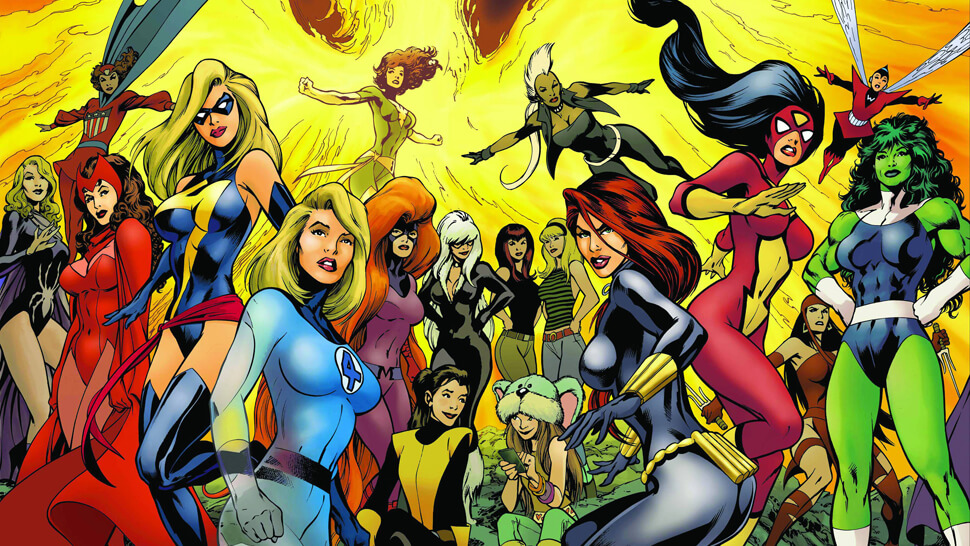
Five Female Superheros That Deserve Their Own Movie

Image result for female superheroes

It’s been a damn good week for female superheroes. Whether you’re a man, woman, or something in between, it’s hard to deny the historic significance of this past weekend. “Wonder Woman” is officially a hit. The glass ceiling for superhero movies is shattered. We can all finally lay the failures of “Catwoman” and “Elektra” to rest.

It’s sad that it took over a decade to make another female superhero movie that succeeded, but good things are worth waiting for. Anyone still waiting for a decent Fantastic Four movie should take comfort in that.

For Wonder Woman, at least, the wait is over. She has proven that female superheroes can succeed. They can carry their own movie. The fact that Wonder Woman had to prove this in the first place is kind of asinine, but that’s a trivial detail at this point. “Wonder Woman” succeeded and that doesn’t just break the myth that female superheros can’t succeed on their own. It opens the door for other female superheroes to shine.

Image result for Wonder Woman success

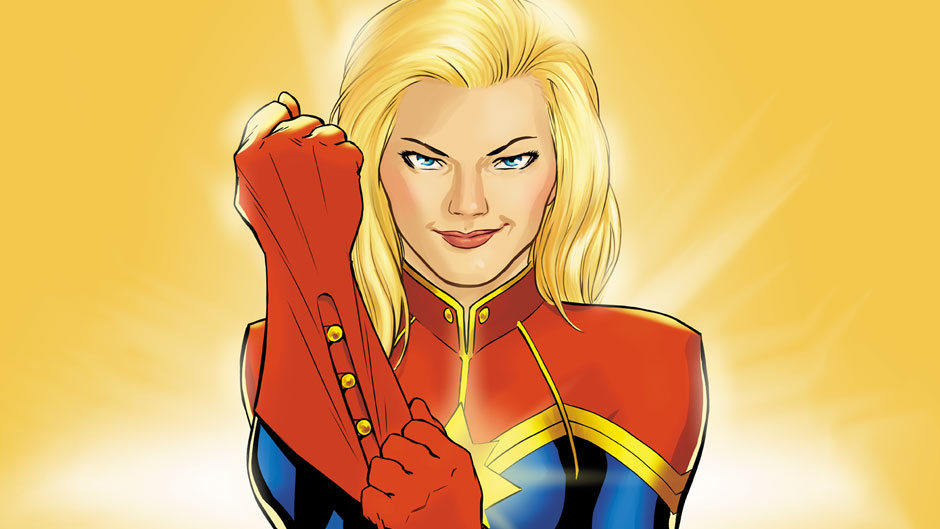
As I write this, there is only one other female superhero besides Wonder Woman who is set to star in her own movie. That character is Carol “Captain Marvel” Danvers, whose movie is set for release in 2019. With Brie Larson having been cast, the movie is already in the works. Wonder Woman’s success can only help.

Unlike Wonder Woman, though, Captain Marvel does not have the kind of iconic status as Wonder Woman. In fact, she only recently gained a surge in popularity when writer, Kelly Sue DeConnick, launched “Captain Marvel: In Pursuit Of Flight.” This series, which any Wonder Woman fan would love, effectively revamped a character who had only ever been a secondary character in the Avengers.

Since that run, Captain Marvel has become the closest character Marvel has to Wonder Woman. As such, it makes perfect sense for her to get a solo movie, if only to keep up with DC.

Image result for Captain Marvel

However, as excited as I am to see more female superheroes get their own movie, there aren’t many others to look forward to. Earlier this year, Avengers director, Joss Whedon, announced that he was pursuing a “Batgirl” movie. As exciting as it sounds, though, this movie is tentative at best. With no release date or cast, this movie could languish in development hell, as Whedon’s own Wonder Woman movie did in 2007.

With “Wonder Woman,” the floodgates have been opened. There’s a new avenue for pursuing big bucks with superhero movies and, seeing as how Hollywood values money over all else, we’re likely to see plenty more female superhero movies in the future.

With that in mind, I’d like to offer my own wishlist of sorts. Wonder Woman is a great female hero and a pop culture icon in the highest degree, but she is far from alone. There’s a wealth of great female heroes in the world of comics who would thrive in their own movie. Below is my personal list of female superheroes who I feel should get their own movie.


#1: Laura “X-23” Kinny

Image result for Dafne Keen X-23

This one is, by far, the most obvious and logical. After the success of “Logan,” in which X-23 was the breakout star, there’s already a lot of buzz around this possibility. Both Dafne Keen, the actress who played her, and director James Mangold have expressed interest in pursuing an X-23 solo movie.

Given the performance we saw in “Logan,” it would be foolish not to capitalize on X-23’s breakout success. Hugh Jackman gave X-men fans 17 wonderful years as Wolverine. X-23 is in a perfect position to carry on the mantel. She already did so in the comics, adopting both the title and the costume of Wolverine. Why not do the same in the movies?


#2: Thor (Jane Foster)

Image result for Jane Foster Thor

This one might be the most controversial. Back in 2014, Marvel made a decision that still has some comic fans whining to this day. They made Thor unworthy of wielding his hammer, Mjolnir. Since the world still needed a Thor, Jane Foster stepped in and took up the mantle, which she’s wielded effectively ever since.

Controversial or not, there’s no denying the strength of the story that followed. Jane Foster had always been a supporting character for Thor. Putting her as the main lead was a bold, but powerful move. Jane isn’t just some glorified arm-candy for any Chris Hemsworth look-alike, though. She’s very much her own character.

In the comics, Jane was dying of cancer before she picked up the hammer. By becoming Thor, she’s trying to make the most of whatever time she has left. That’s a powerful struggle and a meaningful story, especially to anyone who has lost someone to cancer. Plus, being played by Natalie Portman can only help her cause.


#3: Black Canary

Image result for Black Canary

When most people think of DC’s most iconic female heroes, they almost immediately think of Wonder Woman and rightfully so. She is, and likely always will be, the standard by which all female superheroes are measured.

That said, some female heroes make it a point to set themselves apart. That’s what Black Canary does. Dinah Lance is not a demigod warrior like Wonder Woman. She’s not a brooding vigilante like Batman either. She has her own set of superhuman abilities. She’s a tough fighter who’s gone toe-to-toe with some of the most capable fighters in the DC universe. She also looks damn sexy in fishnets.

In addition, Black Canary has a track record of sorts as a supporting character in “Arrow.” Being a successful character in TV doesn’t always translate well into movies, as Baywatch recently learned, but someone with Black Canary’s skill and sex appeal can certainly make that transition.


#4: Starfire

Image result for Starfire

Admit it. You knew I was going to put her on this list. It was just a matter of how I’d be able to justify giving a solo movie to a female hero that is so comfortable with nudity. I went out of my way to praise Starfire as a sex-positive superhero, one whose open sexuality is both fun and heroic in its own unique way.

Now, I know this one would be a real stretch. However, the success of the “Deadpool” movie has given me hope that there is a future for R-rated, sex-positive superhero movies. It may take a while, given the recent trend in outrage over any female character that dares to be sexy. Remember, people made a big deal about Wonder Woman’s armpits for crying out loud.

At some point, though, there will be a market for a female hero that just doesn’t give a flying fuck about nudity. At some point, fans are going to get sick of being shamed for wanting to see a sexy female hero in a bikini. When that day comes, Starfire will be the perfect female superhero for a generation in need of a sex-positive icon.


#5: She-Hulk

Image result for She-Hulk

To date, there have been two lackluster Hulk movies. In both cases, the story was fairly the same. You’ve got a man dealing with serious anger issues, struggling to function in a world that just keeps finding ways to piss him off. Most people are familiar with that story. Those same people, however, are less familiar with She-Hulk’s story.

Jennifer “She-Hulk” Walters is not just a female version of the Hulk. If anything, she’s a very different kind of Hulk. She’s Bruce Banner’s cousin who became the Hulk due to a blood transfusion. Unlike Bruce, she doesn’t need to get angry to become big, strong, and green. She’s pretty much stuck in her Hulk form.

That means she’s more in control of her faculties, so much so that she manages to continue her work as a lawyer. That’s right. This Hulk has a day job and it doesn’t involve smashing. Now most lawyer-driven movies since “My Cousin Vinny” have had limited entertainment value. Add a big, strong, sexy green female hero to the mix and suddenly, there’s a lot more value to go around.

4 Comments

Filed under Comic Books, Jack Fisher, Superheroes

Why Wonder Woman Matters Now More Than Ever

Image result for Wonder Woman movie

Today’s the big day. For comic book fans, superhero movies, and those who appreciate seeing beautiful women kick ass, it has been a long time coming. It shouldn’t have taken so long, but there were a few setbacks along the way. Well, we can forget about those now because the wait is over. The “Wonder Woman” movie has arrived.

I can safely say as a self-proclaimed comic book fan and a fan of sexy female superheros, I’ve been looking forward to this movie more than any other in a decade. I’ve said it before as I’ve tracked this movie’s approach, but I believe that “Wonder Woman” is the most important superhero movie since the original “X-men” movie made us forget about Joel Shumacher.

It’s not just that Wonder Woman is the most iconic female superhero of the past century. It’s not just that Wonder Woman can give female superhero movies some badly-needed credibility, especially after debacles like “Catwoman” and “Elektra.” The ideals and themes of Wonder Woman, as a character and an icon, are more important now than they’ve ever been. For once, though, it has nothing to do with her BDSM origins.

Image result for Wonder Woman Earth One

At the moment, we live in some very volatile times. I won’t get into the breadth and scope of that volatility. Pretty much anyone who has watched the news for more than five minutes understands what I mean. While I have argued that the world is getting better by most objective measures, there’s no denying that there’s still plenty of conflict.

Whether it’s wars in the middle east or uproars over comic book covers, there are so many things dividing us, as a species. We get into fights, both online and the real world, over both serious and trivial issues. We can never be too content as a society. We always have to be fighting a battle somewhere. We always have to be playing the hero to someone.

This manifests in everything from clashes over identity politics to gender-based double standards to real-world wars that take a horrific human toll. Improvements and context aside, the world is still a scary place and we’re still a bunch of scared children looking for anything or anyone to comfort us.

Image result for Wonder Woman saving children

That’s where Wonder Woman comes in. Like Superman or Captain America, she represents an ideal. Hers, however, is a unique ideal, one that embodies the greatest aspects of female strength. She stands for all that is good about women. Regardless of culture or creed, she represents the love and strength that brings out the best in women.

Regardless of whether you’re a man, woman, or something in between, Wonder Woman stands for a unique set of values that make her both a hero and an icon. She is someone every gender can look up to, but one that uniquely resonates with women. It’s not just that she can fight, fly, and wield power on the same level as Superman. She embodies a different kind of strength, one that sets her apart from other male heroes.

It’s this strength that her creator, William Marston, focused on when he created Wonder Woman. Beyond the BDSM themes, Marston was very ahead of his time in crafting Wonder Woman’s ideals. It wasn’t just about putting women in power. It was about rethinking the very concept that power should rule in the first place.

Image result for Wonder Woman

Wonder Woman, at her core, does not seek domination or destruction. She is, at her core, a voice for peace and love between innocents. She is also a warrior, but one who reserves her skills for those who would dare destroy such innocents. She will fight those who would harm innocent lives, but she won’t just use her fists.

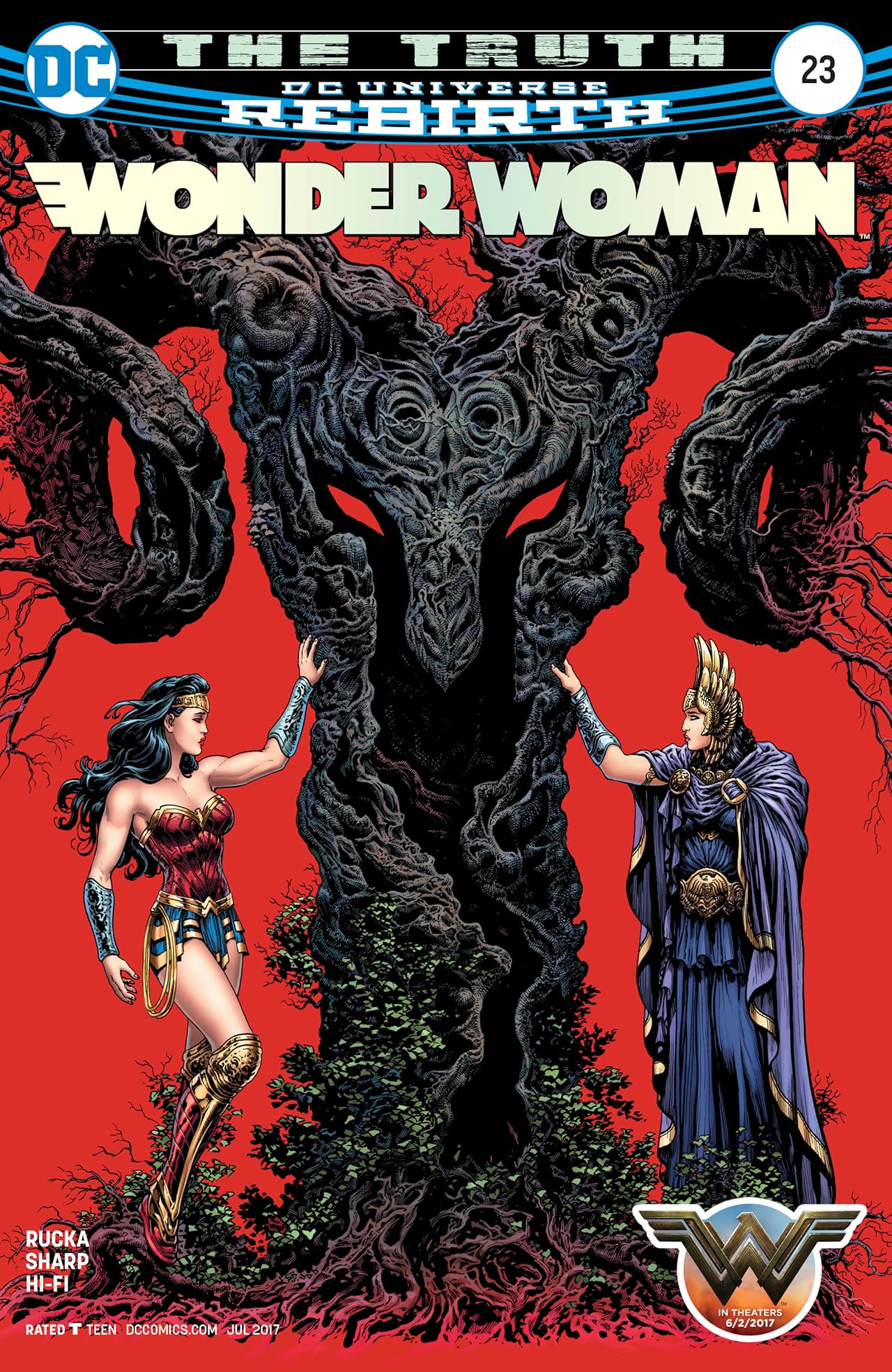
In a very timely move by DC Comics, a recent issue of Wonder Woman’s ongoing comic series demonstrated that. In Wonder Woman #23, by Greg Rucka and Liam Sharp, Wonder Woman goes up against Phobos and Deimos, the devious sons of Ares, the God of War. They try to provoke Wonder Woman into freeing their imprisoned father. It’s a situation where Superman or Batman would’ve tried to fight their way out of.

Wonder Woman (2016-) #23

However, that’s not what Wonder Woman does. She doesn’t defeat Phobos and Deimos through violence. She understands that such power with more power is bound to cause destruction, pain, and loss. Instead, she fights them in a different, wholly unique way. She fights them with love.

It’s not nearly as corny as it sounds. It’s a culmination of many conflicts that had been building over the course of a dozen issues, which included more than a few major clashes along the way. In the end, though, fighting power with more power wasn’t the answer. Wonder Woman understood this and chose a different path. It worked too. Phobos and Deimos were defeated and no innocents had to suffer.

Wonder Woman #23 is a perfect demonstration of what sets Wonder Woman apart from other heroes and why she’s such a strong female icon. Sure, the uptight asshats at the United Nations may think she’s too sexy to be an icon, but they’re dead wrong. Wonder Woman’s beauty is a reflection of her heart. That heart, and her ability to use it as well as her fists, is what makes her message more important than ever.

Image result for Wonder Woman

We currently live in an era where everything from feminism to beauty standards is becoming more and more tribal. It’s not enough to just fight for equality and understanding. Everyone has to form their tribe and help it dominate in some way, either by having it play the victim or resort to excessive virtue signaling.

That’s exactly the kind of endless power struggle that Marston criticized when he created Wonder Woman. It’s also the kind of struggle that Wonder Woman rises above. She may be a feminist icon, but she does not carry herself as one who favors one gender dominating the other.

She champions love and understanding for all. She seeks not domination of one idea over the other, but loving submission to the idea that none need dominate. It is possible for everyone, male and female, to humble themselves and open their hearts. We don’t need power over others to achieve peace.

Image result for Wonder Woman

Her message is one that should resonate now more than ever. With her movie finally released, that message has a chance to spread. Sure, there will be controversy. People make up controversies all the time. There was a controversy over Wonder Woman’s armpit hair, for crying out loud. That’s all the more reason to heed her ideals of fighting conflict with love.

It’s been a long, arduous journey for Wonder Woman to get to this point. I’m not equipped to document the sheer breadth of that journey, but the fine folks at Midnight’s Edge have already done the work for me. They recently released a chronicle, of sorts, on how Wonder Woman got to this point and why her movie is so vital to the future of DC and superhero movies in general.

However you feel about Wonder Woman or superhero movies, today is still an important day in our culture. There are still so many issues that plague men and women alike. Now, more than ever, we need heroes like Wonder Woman to show that there’s a better way for us to forge our future.

7 Comments

Filed under Comic Books, Jack Fisher, Superheroes

Jack Fisher’s Top 5 Female Characters That Make Men Hate Women

Let’s face it. There are some fictional characters that are so detestable, so irredeemable, and so shamelessly mean that even a devout nun would want to punch them in the jaw. From King Joffrey to half the cast of “Friends,” there are plenty of characters we just love to hate and hate to hate.

Within that long list of depraved individuals, there are plenty of female characters. Women are just as capable of being that infuriatingly detestable. That’s one of the few things that both radical feminists and men’s rights activities can agree on. Some of these women don’t just give their gender a bad name. They act as a legitimate reason to roll back gender equality.

There are a lot of utterly detestable women in the real world and not just Lena Dunham and Ann Coulter types either. There are plenty more in the world of fiction and they do plenty to channel the inner Archie Bunker in all of us. It doesn’t matter how politically correct or how many gender studies courses you’ve taken. These characters inspire a special kind of hate.

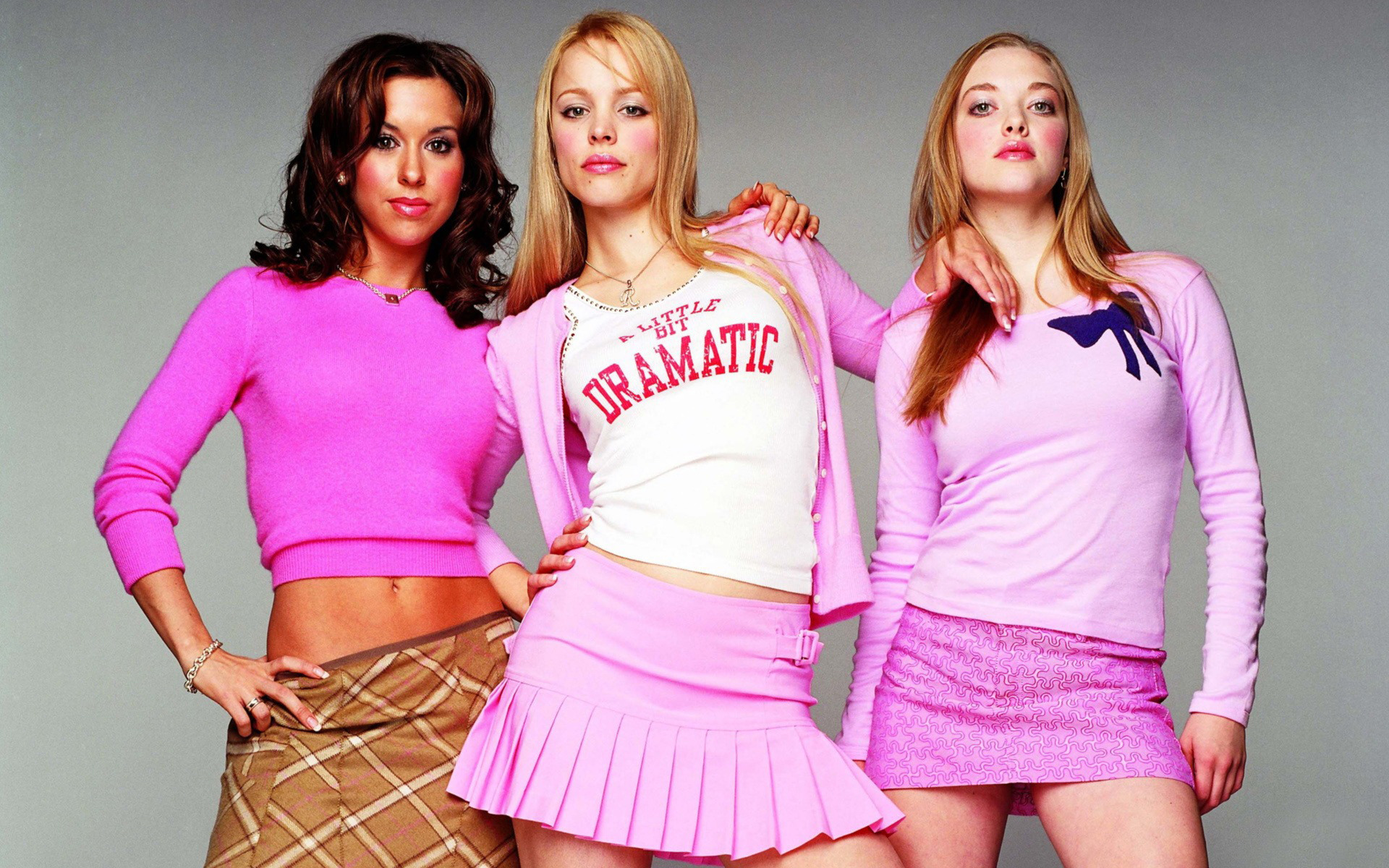
When I compiled my list of great underrated female characters, I knew I would be contrasting them with women like this. The spectrum for female characters is pretty broad, despite what those behind the Bechtel Test may claim. On one end you have Furiosa from “Mad Max: Fury Road.” On the other, you have Regina George from “Mean Girls.

In the spirit of balance on this blog, I’m going to explore the other end of that spectrum. That means I’ll be tapping into some of the sinister sentiments I’ve explored before, namely those of misogynistic men. As always, I feel compelled to disclose that I do not support such sentiments. I am not here to start a gender war. I want this blog to remain funny and entertaining.

That said, I’m going to turn off my politically correct filter and dig into this den of detestable female characters. Just as before, I’ll stick to fictional characters with this list. Feminists, radical or otherwise, may want to brace themselves here. These are Jack Fisher’s top 5 female characters that make men hate women.


5. Lucy  Van Pelt (Peanuts Comics)

There are so many lovable characters in Charles Shultz’s iconic Peanuts comic strip. Seriously, how can you not love someone like Charlie Brown, Linus Van Pelt, or Pig Pen? Unless you’re a sociopath, it’s a challenge at best.

Then, there’s Lucy Van Pelt. If lovability has to be balanced with frothing hate, then it’s safe to say that Lucy does plenty to tip the scales. It’s not just that she never lets Charlie Brown kick that damn football. She’s coarse. She’s greedy. She’s manipulative. She’s constantly belittling others and telling them what to do, often with her firsts.

She may be a kid, but she embodies traits that kids and adults adults despise. She embodies the kind of callous cruelty that men often find in women who betray them. Lucy Van Pelt is very much a proto-Regina George, but she’s willing to punch people. That’s a dangerous and abhorrent combination.


4. Black Cat (Spider-Man)

When it comes to female comic book characters, I have a soft spot for self-proclaimed vixens. Throughout the history of comics, there have been many. From Emma Frost to Starfire, they embody the raw sex appeal that puts a smile on my face and a boner in my pants.

Now I understand there are certain uptight, overly PC folks who see vixens as an overt objectification of women. Most of the time, I just roll my eyes at these remarks. These are the same humorless asshats who claimed Wonder Woman was too sexy to be a UN ambassador for women. These people deserve no credibility.

That said, some characters do way too good a job of making those humorless asshats seem logical. Most female superhero vixens at least try to develop some sense of personality and depth. Even Jessica Rabbit had some moments of growth. For Felicia Hardy, also known as the Black Cat from the Spider-Man comics, there are no such moments.

She’s sexy. She’s cunning. She’s coy. Those are all basic traits of a vixen. However, Black Cat rarely uses her sex appeal for good. She’s a thief, a con-artist, and a liar. Unlike Catwoman, who will at least try to balance out her deviant habits, the Black Cat makes no effort.

She eagerly takes advantage of Spider-Man’s gullibility. She often uses her sexiness to manipulate others. She never makes any effort to grow or improve herself. She is a walking worst-case-scenario for a female vixen. She uses all her sex appeal for selfish indulgence and never for the greater good. She’s the epitome of irresponsibility and yet Spider-Man still wants to bone her. That says just as much about her as it does about Spider-Man.


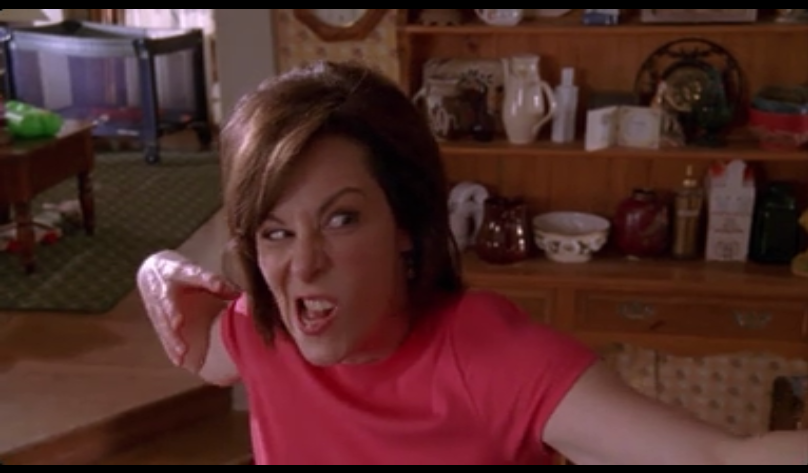
3. Lois (Malcolm In The Middle)

There are any number of overplayed archetypes for male heroes. There’s the ladies man, the nerd, the jock, the rebel, and the token black guy. In every movie or TV show, you can usually find a couple of these characters.

For women, there are plenty of archetypes as well, but they’re not always as easy to identify. Most female characters tend to avoid the extremes of a given archetype. It’s not always balanced, but it’s rarely overt.

That’s what makes Lois, the temperamental mother from “Malcolm In The Middle,” such a frustrating character. She doesn’t try to avoid the extremes. She embraces them. She is, by every measure, the ultimate ball buster. She’s bossy, if not downright tyrannical. She’s callous, going out of her way to crush spirits and make everyone as miserable as her.

She embodies the kind of woman who takes over a home and runs it with an iron fist. Lois’ husband, Hal, is exceedingly submissive to her and not in a fun way. On top of that, nothing she does makes her deranged kids any less deviant. So not only is she a ball-busting tyrant, but she fails to realize that her methods don’t work, have never worked, and never will work. She’s the kind of woman that give men nightmares.


2. Peg Bundy (Married With Children)

Lois from “Malcolm In The Middle” isn’t the only sitcom that takes female archetypes to an infuriating extreme. Before there was Lois, there was another female character who inspired a special kind of dread in all heterosexual men. Her name still evokes fear in those who are thinking about getting married and for once, it’s not the name of a divorce lawyer.

Her name is Peggy Bundy from the classic Fox show, “Married With Children.” She embodies a different archetype than Lois, but one that’s every bit as detestable. She’s not the angry, ball-busting tyrant as much as she is the parasitic, soul-crushing, self-absorbed bitch who opts to bust balls indirectly. Given the many pathetic moments Al Bundy endures throughout the show, her methods work ominously well.

At least with Lois, she tries to better her family’s situation. Peggy makes no effort whatsoever. She doesn’t cook. She doesn’t clean. She doesn’t support her husband or family in any way. However, she still expects her husband to earn enough money to support her heavy shopping habits and her love of snack food.

She’s less a spouse and more a leech. The only reason Al married her is because she got him drunk. She represents the ultimate fear of men everywhere, a woman who exists solely to leech off their hard work and contribute nothing to the relationship or the family. As a female character, she is the ultimate cautionary tale for men seeking marriage.


1. Quinn Morgendorrfer (Daria)

This is just too fitting. When I made my list of the top five underrated characters, I made it a point to highlight Daria Morgendorrfer from the classic MTV show, “Daria,” as a likable, compelling, well-developed female character from an era that was just starting to develop those kinds of characters. On top of that, Daria didn’t even have to look good in a bikini to pull this off.

In that same show, however, there was another character who highlighted all the reasons Daria was so likable by being the complete opposite. Her name was Quinn Morgendorrfer. She’s Daria’s sister, although she spent nearly four-and-a-half seasons denying it.

Quinn, despite her bubbly persona, is the worst of the worst with respect to female characters men love to hate. At least with every other woman on this list, they’ll acknowledge their ego and narcissism to some extent. They’ll even joke about it. With Quinn, however, there’s no humility whatsoever.

For men, Quinn is one of those characters that just makes you want to grit your teeth and punch brick wall. She’s shallow, boring, self-centered, manipulative, uptight, whiny, and crass. It’s not just that she’s everything Daria isn’t. More than any other character on the show, she goes out of her way to avoid being likable or respectable in any capacity.

Quinn rarely, if ever, sees anyone as anything other than obstacles or opportunities. She doesn’t date men for any kind of emotional appeal. She just uses them for social status. The same goes for her female friends. She’ll ingratiate herself to them, but only because it helps her popularity. That’s what it’s all about for her, being popular and looking cute.

Quinn is the ultimate manifestation of what men don’t like about certain women. She uses and manipulates their emotions for her own personal gain. Even when she tries to do good, it’s often only because she wants to better herself and no one else. She doesn’t care if she breaks hearts or annoys others. She just wants to be cute and popular.


I hope this list and the one I posted before offers some insight into what makes quality female characters. I also hope it serves as a guide for men and women alike. Guys, if you’re looking for an ideal woman, stay away form the Quinns and Peggy Bundys of the world. Ladies, if you want men to be more understanding of women’s issues, then don’t be like Quinn or Peggy Bundy. We’ll all get along better as a result.


4 Comments

Filed under Jack Fisher's Insights

Why Women (And Men) Need More Sex-Positive Role Models

There was a time when we just didn’t talk about the sex lives of role models and superheroes. To talk about what Superman, Wonder Woman, or Captain America did in private with lingerie, bottle of lube, and a willing partner wasn’t just obscene. It was akin to hearing your parents talk about the night we were conceived, right down to the color of the nipple clamps our moms used.

While we still shudder at the thought of our parents describing their sex lives to us, we’re a bit more comfortable with our heroes and role models filling us in on their intimate lives. In some respects, we’ve come a long way. We’ve gone from joking about how Superman can have a baby with a human woman to big (not so) shocking reveal earlier this year that Wonder Woman is bisexual.

The topic of superhero sex lives has always been somewhat taboo, except for perverse fan fiction, some of which I actually write. There’s an even greater taboo about the sex lives of our real-life role models and that can be very damaging, especially if the private sex lives of those role models become scandalous. Just ask Tiger Woods.

As an aspiring erotica/romance writer, who often navigates taboos and favors more sex-positive superheroes like Starfire, I feel like we’re vampires working in a blood bank. We’re putting ourselves in stressful, self-destructive circumstances that will only lead to disappointment and heartache with respect to our role models.

I get it. We want our role models to embody ideals. We hold them to a higher standard. We want Superman to not be concerned with whether his wife can bear his child. We want Tiger Woods to be a faithful, upstanding pillar of virtue. The problem with having such high standards isn’t that it puts undue pressure on the role models. The problem is that it makes it way too easy for us to hate ourselves for being human.

The problem with ideals is in the very definition. According to Dictionary.com, the core meaning of the word is:

  • A conception of something in its perfection

  • A standard of perfection or excellence

  • Something that exists only in the imagination

We expect our role models to embody these ideals, whether they’re real or fictional characters. The fact that we can’t even get our fictional characters to live up to those ideals, as evidenced by Superman’s role in a porno tape with Big Barda, is pretty damn telling. So why should anyone expect Tiger Woods to live up to that ideal?

What we need now isn’t an ideal for a role model. We don’t even need a flawed role model either. We already have plenty of that with Batman, Wolverine, and Mick Jagger, who just had his eight kid at 73. What we need, in my humble opinion, is a true sex positive role model.

By “sex positive,” I don’t mean a role model who isn’t afraid to talk about their sex lives. We already have plenty of celebrities and superheroes who do that. We have Cortney Love, Tony Stark, and pretty much every hair metal band from the 1980s. By sex positive, I mean someone who both embraces sexuality and subverts the stigma.

It’s that last part that’s the challenge here. It’s one thing for a hero or an icon to have sex and be casual about it. It’s quite another to do it in a way that undermines the stigma that still surrounds sex.

Make no mistake. That stigma is still there. We expect rich and successful men to have a lot of sex with a lot of random women, but when a woman does it, we think there’s something wrong with her. There’s still this frustrating taboo surrounding female sexuality and it’s ruining our sex lives, among other things.

It goes beyond the rich and powerful too. Even among youth and adults, there’s still this strange disconnect with our sexuality. It’s legal for two consenting adults to have sex for whatever reason they want, but we still shame and stigmatize it. We still have this arbitrary standard that if you have too much sex, then something’s wrong with you.

How much is too much? Well, that’s the tricky part. Nobody knows. One person’s slut is another person’s free spirit. One person’s stud is another person’s beta male. We just don’t know because we don’t talk about it. We don’t discuss it. We can’t even agree on what constitutes consent in sex anymore.

Enter a sex-positive role model. Enter someone who will approach sexuality the same way most people approach a hot cup of cocoa on a cold winter day. They don’t just embrace the crude elements of it. They embrace the beauty as well. They shatter the awkwardness. They spit on the taboos. They don’t need to flaunt their sexuality. To them, it’s just normal.

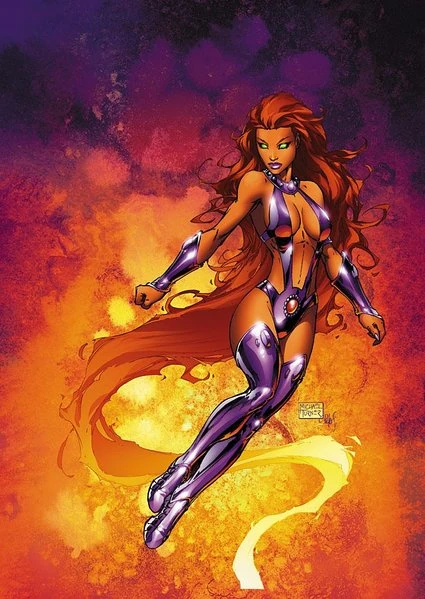
Sadly, there aren’t a lot of role models like that right now. In fact, I could only come up with two: Starfire and Deadpool. I’ve already made it abundantly clear why Starfire is the perfect sex-positive superhero. The fact she looks like this only helps.

With Deadpool, it’s a little trickier. He’s not much of a hero. He even says as such in his hit movie. However, while he’s crude in pretty much everything he does, he’s not crude when it comes to sex. It’s not this dirty, forbidden act. It’s just this basic thing that people do.

Sometimes it’s for love. Sometimes it’s for fun. Sometimes it’s how you celebrate the holidays with your lover. In that sense, Deadpool perfectly captures that spirit.

As much as I love Starfire and Deadpool, I don’t think they’re nearly enough. I think we need more sex positive role models and heroes. Some, like Amber Rose, are making an effort. I think we’ll need to make an even greater effort because all taboos and stigmas, be they sexual or not, don’t fade easily.

We human beings are anxious and uptight about things that make us uncomfortable. Our culture, going all the way back to the Puritans, the Vatican, and the Mullahs, has done too good a job at making us uncomfortable about sex. We’ve made progress over the centuries in breaking that discomfort. More sex-positive role models and heroes can only help.

2 Comments

Filed under Comic Books, Jack Fisher, Superheroes, Jack Fisher's Insights

My Thoughts (And Concerns) On The Second Wonder Woman Trailer

Over the past decade or so, there have been a major glut of superhero movies and for an admitted comic book fan like me, I couldn’t be happier. Every now and then, someone will ask me if I’m getting tired of all these superhero-themed movies. My response usually some form of “Hell no!”

This year has been a damn good year for comic book movies, thanks in large part to the contributions of Deadpool and Batman v. Superman: Dawn of Justice. It’s still not over with a Dr. Strange movie coming out this month, but that’s basically another movie about a white guy becoming a superhero. As much as I love superhero movies, I do appreciate a little variety.

That’s why 2017 holds a great deal of promise because that’s where Wonder Woman will finally enter the arena that is superhero cinema. Yes, it’s finally happening. The most iconic female superhero of the 20th century, who just happens to have an origin story with not-so-subtle BDSM undertones, is going to get her own movie. I think I speak for generations of comic book fans when I say it’s about damn time.

I already got wondrously giddy when the first trailer came out. That gave us our first taste of a cinematic Wonder Woman, played by real-life female soldier and overall badass, Gal Gadot. She already proved herself in Batman v. Superman. Say what you will about that movie (and believe me, everything that can be said has), but she was the best part of that movie. She alone made that movie worth seeing.

Now, Gal Gadot is ready to take center stage on her own movie. It’s a movie that promises to explore Wonder Woman’s origin, setting her on the path that eventually led to her arrival in Batman v. Superman. It’s an opportunity to show just how awesome Wonder Woman can be and the trailer only reinforces that sentiment.

Seeing this trailer gave me goose bumps in the best possible way. It got me excited in ways I usually reserve for holidays, parties, and strip clubs. It has all the right ingredients. It has Wonder Woman kicking ass, defending the innocent, and standing up for the values of her people. It’s a beautiful thing and she looks damn sexy doing it.

As excited as I am about this trailer, though, I do have concerns that will likely keep me up until people start whining about it on message boards (and they will because people whine about every superhero movies). I can tolerate and ignore whining. That’s one of the most important skills any comic book fan can learn. With Wonder Woman though, the stakes are a little different.

Unlike Batman, Superman, or Deadpool, there are very different stakes for Wonder Woman’s movie. At least with heroes like Superman and Batman, they have a track record. At times, that track record is mixed. Do I need to remind Batman fans of this?

I’ll avoid scrutinizing that pile of shit, but I bring it up because it sends an important message. No matter how far a franchise sinks or how bad it gets, strong characters will bounce back. Wonder Woman is one of the strongest, most iconic characters in the history of superhero comics. She’s reliant. She can endure more than one blows by Joel Shumacher.

However, it’s not the issues with horrible Batman movies that concern me. It isn’t even the acting capabilities of Gal Gadot or her co-star, Chris Pine. Both are quality actors with a solid track record of playing powerful characters in heroic roles. Gal Gadot already got a head start with Batman v. Superman. So what could possibly be so disconcerting.

It can be best summed up in one word: Catwoman. Anybody remember this? If not, consider yourself lucky.

Why do I bring up Catwoman? Why do I dare reference the abomination that even the Oscar-winning talent of Halle Berry couldn’t save? Well, it’s important to mention because the failure of this movie is part of what set back female superhero movies for so long.

There are many who complain about the absence of female leads in superhero movies. Those complaints aren’t without merit. I certainly wouldn’t lump them in with the typical whining that comes with superhero movies. What gets lost in the complaining though is the context and that context doesn’t have as much to do with sexism as radical feminists would have us believe.

As is often the case, it all comes down to that wholly unsexy force: economics. Yes, I can already sense your eyes glazing over. I can sense panties drying up and boners being killed. Bear with me here. There’s a reason for this and it’s a good reason if you want to understand why Wonder Woman’s movie is so important.

According to Box Office Mojo, Catwoman was a commercial and critical bomb that made only $82 million against a $100 million budget. It’s one thing for a movie to be critically despised. If it loses money, then it becomes an even bigger problem.

Michael Bay movies are among the most reviled by critics, but he gets away with it because movies like Transformers: Age of Extinction make over $1 billion. If Catwoman had made that much money, you can bet that Halle Berry would’ve been in no fewer than three sequels. Hell, Michael Bay may have even directed those movies.

Unfortunately, Catwoman didn’t make that kind of money. As a result, that movie’s failure sent the message that female superhero movies aren’t profitable. They’ll lose a studio money, even if they throw in Oscar-caliber talent. Studios don’t listen to much, but they do listen to money and if a movie doesn’t make money, it may as well be smothered in elephant shit.

This is why Wonder Woman is such an important movie. If it is a success, it’ll prove to Hollywood that strong female heroes can succeed. They can turn a profit. This would be huge, especially for those still pining for a Black Widow movie. Joss Whedon even said he’d return to direct that movie. That raises the stakes for Wonder Woman even more.

If, however, Wonder Woman flops like 2015’s Fantastic Four movie, then that’ll set female superhero movies back even more. That’ll only reinforce the notion that female superheroes can’t hold their own without a strong male lead supporting them. It would be the worst possible message to send to Hollywood, who still control the checkbook.

With that in mind, I eagerly and anxiously await the release of Wonder Woman. She’s entering a golden era of superhero movies. She’s got everything going for her. She got a head start in Batman v. Superman, she’s got a talented actress in Gal Gadot, and she’s got a fanbase who has been hungry for a Wonder Woman movie since Lynda Carter retired.

The stakes literally couldn’t be higher. Gal Gadot, DC Comics, and Wonder Woman have a lot riding on their shoulders. It’s going to take a special kind of female superhero to break through and show the world that women can kick ass. I can think of no one more special than Wonder Woman to make that happen.

Leave a comment

Filed under Jack Fisher's Insights

Takeaways From The “You Fight Like A Girl!” Panel At New York Comic Con

img_1686

Are you tired of hearing me talk about how awesome the New York Comic Con was this year? Well too bad! I’m still going to talk about it because there are issues and experiences worth discussing. Some of those issues apply to my work as a romance/erotica writer, both directly and indirectly. Some of them even manifested in strange, but fitting ways.

There was a lot to see at the New York Comic Con. I was only there for a day so I had to make everything I saw and experienced count. This includes being very selective with the panels I attended. Make no mistake. There were so many panels at this thing that it would take a week and a fuckton of coffee to attend every one of them. That said, I felt I selected the right panels in the end.

One of the first panels I attended turned out to be the most informative, at least as it applied to my romance/erotica endeavors. It was a panel entitled “You Fight Like A Girl!” and was meant to discuss trends in female superheroes and female characters in general. Seeing as how the kind of romance/erotica I write tends to involve multi-layered female characters, often out of necessity, it was a worthwhile discussion to have.

At this panel were some notable female writers, some of which I knew more than others. They included Tami Stronach, Amy Chu, Heidi Maconald, Dr. Katie Monnin, and Gina Gagliano, although one of them could not attend due to illness. A man named Michael Gianfrancesco moderated the panel, but he didn’t do much talking. The women here had plenty to say.

They discussed a great many topics. At first, they just shared some of the challenges they faced as women trying to break into comics, a traditionally male medium. They never gave the impression that they had to punch someone in the dick to get their foot in the door, but they definitely had to put in more effort compared to their male counterparts.

This led to some pretty entertaining stories that drew a few laughs, but one story in particular really stood out to me. It came courtesy of Amy Chu, an accomplished female comic book writer who has a unique talent for making female characters more interesting. She’s basically the kind of woman who I’d have sent wildly inappropriate love letters to if she went to my high school.

She told a brief story about her work on the title, “Poison Ivy.” For those of you who don’t know, Poison Ivy is a major Batman villain who sets herself apart in two major ways. First and foremost, she’s less a criminal and more a radical eco-terroists that even PETA would deem unhinged. Second, and perhaps more importantly for the subject of this discussion, she looks like this.

She looks like the embodiment of a lurid fantasy from a radical male vegan. Naturally, she’s one of those female characters that is frequently subjected to excessive sexualization. How could she not be? She wears only leaves for clothes for crying out loud. The imagination of horny men doesn’t have to be that elaborate.

This presents a challenge for Amy Chu. How does a female writer handle a character whose sex appeal is at a level that’ll likely guide many teenage boys through puberty? How does she make this character more than the sexy, villainous vixen that shows up in every bad porn parody ever made?

It is a challenge, but one that Amy Chu took on and subsequently kicked its ass. She then told a story about how she discussed her plan for this character with DC’s main editor, Dan Dido. The nature of this discussion definitely resonated with me for reasons that should be obvious to anyone who has ever heard someone whine about female superheroes showing too much super-cleavage.

During this discussion, Dan Dido brought up Poison Ivy’s uniform with Ms. Chu. He favored giving her more clothing, making it slightly less easy for men to masturbate to. For a character like Poison Ivy, that’s asking a lot. However, what was really remarkable about this discussion was how Ms. Chu opposed it.

She said outright that she didn’t want to “de-sexualize” Poison Ivy. She wanted to keep that aspect of her character while exploring other parts of it. She said that a female character doesn’t need to be a goddamn nun in order to explore other parts of her personality. This may sound like the most logical concept in the world, but in this insanely politically correct culture of ours, it may as well be on par with quantum mechanics.

Needless to say, my respect for Amy Chu went way up when she told this story. It also revealed something telling/troubling about the male side of the discussion. From the perspective of her editor, Poison Ivy had to put on more clothes in order to become more complex. She had to be less sexual for those complexities to reveal themselves.

As a man, I can understand this to some extent. If a topless woman walked up to me and began telling me all about her charity work in South Sudan, I’d be distracted. Heterosexual men are biologically wired to stare at boobs. It’s a bug in the system, but it’s not a bug that needs to crash the whole system.

This is where I think Amy Chu earned her credibility as a skilled writer. She shows that she willing to embrace every trait of a female character and not just ignore those that may be distractions. She’s willing to work with and/or around those distractions, but she’s not going to ignore them. Sure, she’s making it harder on herself, but the end result is a more balanced female character who also isn’t afraid to show cleavage. As a man and a comic book fan, I can only praise Ms. Chu for such dedication.

There were many fun and entertaining panels at the New York Comic Con this year, but this one was definitely the most revealing. It highlights that popular culture, despite the progress we’ve made since the days of shitty slasher movies, still has issues with what constitutes a strong female character.

Thanks to women like Amy Chu though, we’re making progress. I hope I can be part of that progress with my own work as a romance/erotica writer.

1 Comment

Filed under Jack Fisher's Insights