Tag Archives: psychology

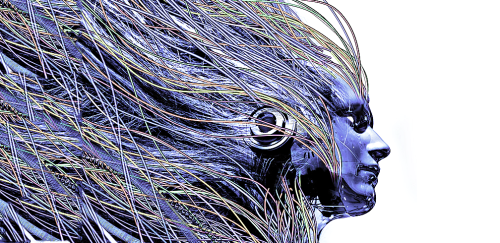
The (Hopeful) Features Of My Future Brain Implant

https://i.ytimg.com/vi/YGZujb9TDpU/maxresdefault.jpg

In talking so much about the possibilities and implications of brain implants, like the ones Elon Musk wants to build with his new company, Neuralink, I’ve strained my own brain trying to grasp the bigger picture. I don’t know if that counts as irony, but it feels oddly appropriate.

It’s an exciting topic to write about and discuss. The idea that we may one day think beyond the limits of our crude, error-prone caveman brains is so intriguing. So many of the problems we face today, both as individuals and as a society, can be attributed in some way to our collective brain workings. What will happen to us an those around us when those workings are tweaked?

It’s hard, if not impossible, for us to know for certain. I’m sure someone like Elon Musk knows more than an aspiring erotica/romance writer like me. I’m sure he sees the same societal conflicts we all do and understands that his company, Neuralink, will be the first step towards transcending them.

https://i0.wp.com/www.conspiracyschool.com/sites/default/files/styles/content_width/public/blogimages/transhumanism.jpg

Having contemplated the bigger picture and all the implications that come with it, I thought I’d take a step back and try a different mental exercise. Hopefully, it’s one in which other regular readers of this blog can participate. It involves a much simpler, less mind-bending thought experiment. If you can make a Christmas list, you can participate.

It involves a simple question. If you could create your own advanced neural implant to tweak/enhance your brain, what kinds of features would it have? Take yourself 30 years into the future. Put yourself in a Neuralink clinic. Someone has kindly paid for the best, most customization neural implant on the market. What would you want it to do?

There are so many aspects of our lives that our brain controls. Everything from our attitudes, our competence, our happiness, and even our capacity to love others begins in our brains. Every skill we have or want to have requires some aid from the brain. Any effort to tweak or enhance that is going to affect all of those features.

https://i0.wp.com/www.bioethics.com/wp-content/uploads/2014/03/transhumanism.jpg

To get things started, I’ll share my own personal wish list. It will likely be different than everyone else’s to some extent, but I’m sure there will be some similarities to. So here’s Jack Fisher’s top features for his future neural implant. I hope Elon Musk is taking notes.

  • The ability to remember, recall, and comprehend anything on demand, ensuring nothing is forgotten.

  • The ability to do advanced math in my head so I can calculate complex financial decisions on the spot and/or check the claims made by others.

  • The ability to read over vast quantities of text, be it a novel or a user agreement, and retain the information at greater speeds.

  • The ability to revise and edit large quantities of text quickly and efficiently.

  • The ability to process emotions faster and read the emotional queues of others with far greater efficiency.

  • The ability to focus on a given task and not be easily distracted.

  • The ability to learn or download new languages on demand to facilitate communication with others.

  • The ability to learn or download new mental or physical skills on demand.

  • The removal of any prejudicial inclinations or irrational assumptions when encountering a new person or situation.

  • The ability to minimize the need for sleep and improving the quality of sleep.

  • The improvement and enhancement of sexual function, including the ability to perform and sustain sexual arousal, as well as the ability to experience more intimate sensations.

  • The ability to communicate directly with the minds of others with a similar neural implant in order to share experiences, thoughts, and emotions.

  • The ability to search the internet for new information with only thoughts.

  • The ability to link my mind with a computer and turn my thoughts into text or images.

I know this is a long list of reasons, some of which are more feasible than others. I’m sure features like memory and math skills will be among the first major features of neural implants. I imagine features that improve sexual function will be next. If any technology can improve sex, then that’s going to have priority. That’s just an inescapable fact.

Other features like downloading knowledge and skills will probably be trickier. I imagine we won’t have that ability for decades. However, there are still plenty of smaller, more subtler abilities that would definitely enhance our everyday lives. Just being able to focus better without the aid of dangerous ADHD drugs is a pretty big deal.

https://jackfisherbooks.com/wp-content/uploads/2017/04/22f74-transhuman_001.png

That’s just my list though. What about everyone else? What would you want your advanced brain implant to do? How would you improve the functioning of your caveman brain? Please share your wish list in the comments. If you want to open up this discussion even more, let me know. I’ll be happy to expand it because it’s just that interesting/sexy.

1 Comment

Filed under Jack Fisher's Insights

Neuralink: How Brain Enhancement Will Make Us Sexier (And More Loving)

https://i0.wp.com/images.bwog.com/wp-content/uploads/2013/05/shutterstock_128387714.jpg

At the beginning of every year, millions people stand in front of the mirror, look at all the weight they’ve gained since Christmas, and promise to themselves that they’ll eat healthier and exercise more for the coming year. It’s an entirely noble promise, seeking greater health. It’s also a promise that most are destined to break.

Any effort to better ourselves, no matter how healthy or noble, is an uphill battle. That’s why the vast majority of diets do not work on a long-term basis. You can lose a little weight here and there, but it almost always comes back. Then, you hate yourself a little more, look for excuses, and go back to drowning your sorrows in a tub of ice cream.

However, it’s not entirely your fault that you broke that promise to yourself at the beginning of the year. It’s not even the fault of bullying, the media, or even food companies that insist on making unhealthy food that tastes too damn good. No, it’s the fault of one organ in your body. No, I’m not talking about your stomach either. It’s your brain.

Yes, your brain is the reason why you can’t keep your promises and stay health. Your brain is the reason why you can’t keep the weight off when you diet. Your brain is the reason why your body is shackled to unhealthy habits that keep our bodies flooded with greasy, sugary food and on the couch.

Naturally, this does affect our sex lives, our love lives, and everything in between. When we’re unhealthy, it makes it damn hard to get in the mood, sustain the mood, and make that mood meaningful. How can we when we’re craving sugar cookies, beer, and Netflix? Again, it’s our brains. It’s the reason why we can’t live healthier, sexier lives.

That brings me back to Neuralink. Yes, I’m not quite ready to shut up about it yet. There’s just so much to talk about and so many implications, some sexier than others. I’ve been talking largely about the big picture and the pragmatics of brain implants and brain enhancement so far. Now, I’d like to get to the sexy stuff.

Last year, I talked a bit about how I essentially shamed myself into adopting a healthier lifestyle. I went from a cookie-eating, soda-drinking couch potato to a guy who exercises almost every day and tries not to gorge on donuts every day. It shows in my health and my sex appeal. I can take my shirt off at the beach and be fairly certain that the women who see me won’t be disgusted.

That process of getting healthier was hard. My brain was my biggest enemy in that it fought me every step of the way. That’s because the human brain isn’t necessarily wired for a healthy lifestyle in an era where there are no famines and no hungry bears trying to eat us. It’s wired to basically do what makes it and the body happy.
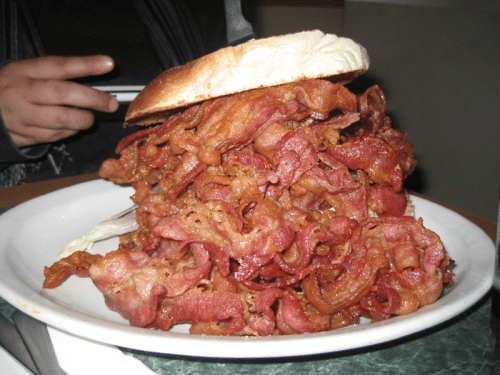
Unfortunately, that often means eating copious amounts of the fattening sugar that used to be such a rarity in the natural world before modern sugar processing. Again, you can blame big corporations as much as the kale-eating hippies of the world, but the issue isn’t capitalism. It’s our faulty brain wiring that hasn’t been updated in 200,000 years.

Our brain is wired to value sugary, tasty foods that give us a quick dopamine rush. It’s also wired to maintain existing habits and mentalities over creating new ones because change is a stressful process. Being the crude piece of hardware that it is, the brain generally tries to avoid stress.

Naturally, this unhealthy brain wiring affects our sex lives as well. While we are a very social species, our brain often struggles between selfish and affectionate tendencies. That means that once the brain gets its dopamine rush from the sex and love we make, it’s generally pretty selfish about it.

That’s why we have men who will do a few casual humps, blow their load, and then look for an excuse to turn on Sportscenter. That’s why we have women who will just lie there, bark orders, and expect their partner to do all the work. That’s why we find ourselves in relationships where two lovers just aren’t on the same page, get bored with each other, and look for the next dopamine rush, whether it’s the pool guy or the babysitter.

It’s a sad and unpleasant byproduct of a brain that has been stuck on the same settings since the stone age and is at the mercy of crude, unguided chemistry. There are those who can overcome it to lose a lot of weight and form marriages that last more than half-a-century. Unfortunately, that’s the exception and not the norm.

That’s where Neuralink comes in. It’s doing what no diet pill, self-help book, or talk show host ever dared to do. It’s getting right to the root of these problems, which is in our brains. Tweak the wiring and suddenly, every weight loss guru is out of a job.

How would that work? Well, keep in mind that Neuralink‘s stated goal is to integrate computer technology directly into our brains to improve various brain functions. Well, that improvement part isn’t just limited to basic math and keeping up with the latest season of Scandal.

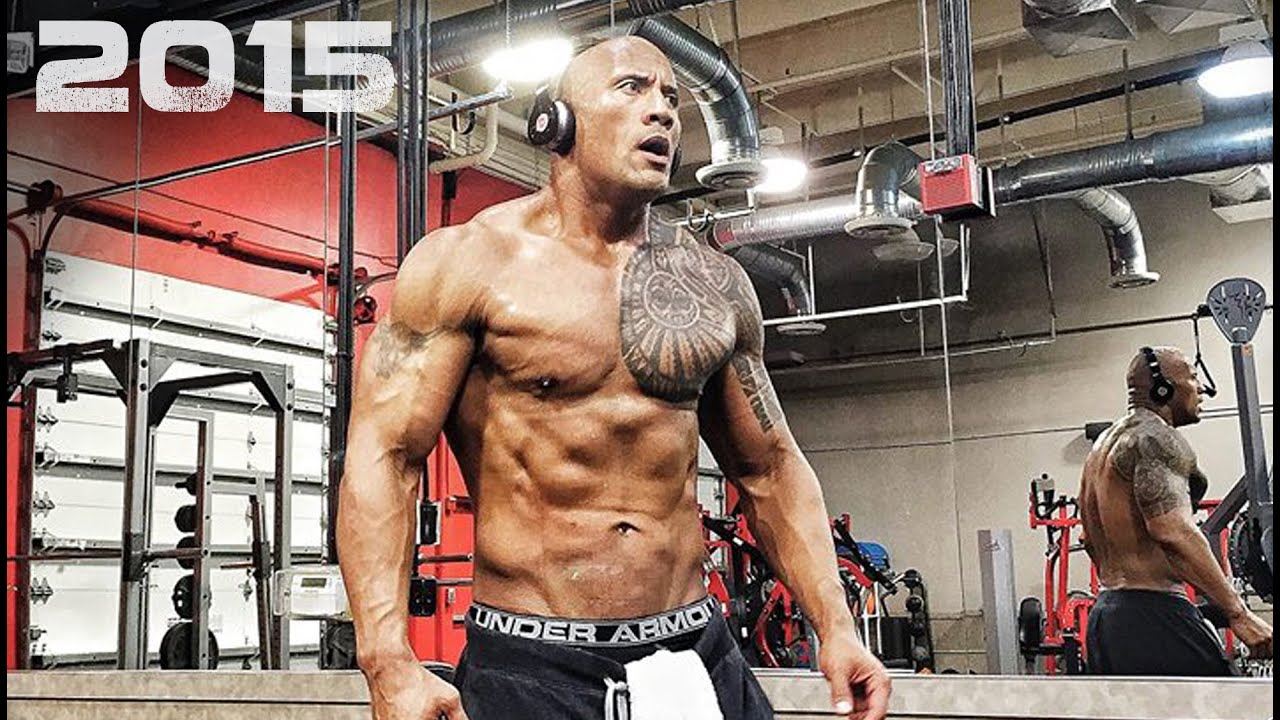
Picture the brain of someone who is insanely fit, like the Rock or Kate Hudson. How is their brain wired? How do they get themselves to do what they do? Well, we already know how to scan brains. It wouldn’t be easy to decipher the particulars of that wiring, but it’s not impossible. A neural implant would simply mimic that wiring, setting our brains up so that we have the right mindset for being healthy.
It goes even farther than that though. A neural implant means we’re not restricted to the brain’s traditional limits. That means it could, in theory, wire our brain in a way that makes us less hungry. We would no longer succumb to that powerful impulse to buy a dozen donuts every time we walk by a Krispe Kreme.

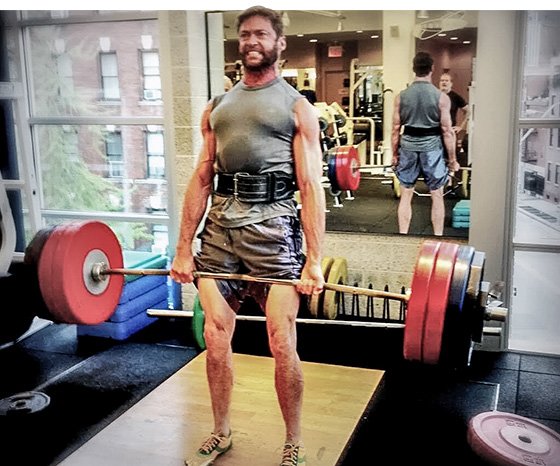
Beyond mitigating hunger, an implant could also wire our brains in a way that makes us feel an extra rush of dopamine when we exercise. Remember that so-called “coregasm” I mentioned when I talked about different kinds of orgasms? Well what if doing 100 sit-ups or 100 push ups gave us the kind of orgasm usually reserved for three-ways with cheerleaders and Hugh Jackman? You’d become a fitness junkie overnight.
The same extends to food. One of the reasons why we can’t stop eating all the unhealthy shit we eat is because it tastes so damn good. It tastes good because our brains make us believe it tastes good. Well what if a neural implant could make it so a bowl of kale tastes like a slice of chocolate cake dipped in bacon grease? Suddenly, eating healthy isn’t just practical. It’s a goddamn party.

So a neural implant can wire your brain in a way that makes you eat better, exercise more, and feel healthier. That’s all well and good, but looks alone aren’t going to make you sexier. You can look like an Olympic athlete, but if you’re an amateur once the panties come off, then you might as well be Al Bundy.

A neural implant with just the right settings can change that. Ladies, have you ever had a man just hump you for a few minutes, blow his load, and then roll over and fall asleep before you even had a chance to get wet? Well, it’s not entirely his fault. He’s still an inconsiderate asshole, but there is a biological reason for it.

In the brain, there’s this chemical called prolactin. It has a lot of complex impacts on the brain, but it’s what keeps a man from going more than a few rounds between the sheets. When his brain is full of this chemical, his soldier will not be saluting you for a while. Add the shot of endorphins that comes with a typical male orgasm and he might as well have a tranquilizer dart in his head.

Now tweak that brain chemistry a bit. Make it so a man’s brain isn’t wired so he’s “one and done,” so to speak. Ladies, you now have a lover who can hang in there for multiple rounds, keep the mood sexy, and ensure you that special trip to O-Town you crave. That’s what a neural implant could do.

It’s not just for the men either. Guys, have you ever had one of those ladies who, despite your best efforts, can’t seem to make it all the way to O-Town? Well, there are any number of reasons why that could be and not all of them are your fault. Many, in fact, are in the woman’s brain.

Using the same approach, adjusting the wiring for female settings, a neural implant could install the mental equivalent of an express lane to O-Town. That means that men can feel like Brad Pitt on crack when they’re making love, sharing multiple round-trip vacations to that special place of sensual bliss. How much better would your sex life be if your brains were wired like that?

Go even farther than that. Go beyond having the kind of hot sex that sets bed sheets ablaze. Get a little romantic and suddenly, brain implants become the most romantic thing that doesn’t involve diamonds and Hugh Grant.

It’s true. Love also has a powerful basis in the brain. There even this chemical called Oxytocin, also known as the “cuddle hormone.” It’s basically your brain’s way of creating bonds and enhancing intimacy. It’s what helps mothers bond with children, husbands bond with wives, and children with dolls. It is basically the chocolate frosting of brain chemicals.

Normally, hormones like oxytocin are secreted erratically and chaotically in the brain. It’ll emerge whether you’re making love to your spouse on your anniversary or banging your tennis instructor. Nature is just too crude and too immature to wire the brain in a way that really makes those lasting bonds stick.

Add a neural implant to the mix and suddenly, you can channel oxytocin like a biological smart bomb. You want to be more intimate with your partner? Well, you don’t need to go on vacation or buy an expensive diamond. Just adjust the settings of your implant and just like that, you’ve got more love in your heart than every Barry White song ever made.

Are you excited/horny yet about Neuralink‘s full potential? Does the idea of getting a neural implant now feel like the equivalent of a VIP pass to the Playboy Mansion? I think I’ve done enough to pain a very rosy, very sexy picture of the future. Now there will be risks, as there are with all new technologies, but I honestly can’t think of a risk that’s more worth it.

If we have a way to fix our inherently flawed brains, then we won’t just be healthier and happier. We’ll be able to love, make love, and share love on a level that no human has ever experienced before. Sure, it’s still a ways off, but with Elon Musk at the helm and Neuralink providing the platform, that future is within our grasp. I say it’s worth embracing.

16 Comments

Filed under Jack Fisher's Insights

Humans May Have A Mating Season (Kind Of)

https://previews.123rf.com/images/neelsky/neelsky1109/neelsky110900265/10704519-Closeup-of-a-Peacock-dancing-during-the-mating-season-Stock-Photo.jpg

There are a lot of crazy things that set human beings apart and I’m not just talking about our eagerness to shave our pubic hair. When compared to other animals, especially our closest primate relatives, we’re downright freaky. I mean that literally and with all the sexy undertones that an immature teenage boy might imagine.

One of those freaky traits is actually the lack of a mating season. While it may not sound like a big deal to the non-panda population, it’s actually a big fucking deal. Most mammals, including some species of primate, have a specified mating season where the females are fertile, the males are extra horny, and the proverbial bushes are rocking. It’s a beautiful thing, even if you’re not an erotica/romance writer.

There are legitimate evolutionary reasons why a species has a mating season. The world is a dangerous place full of hungry predators, natural disasters, and diseases that make you shit out your lower intestines. We need to dedicate a lot of resources just to survive that world. Pragmatically speaking, it makes sense to reserve just a certain sliver of time to focus on getting frisky so that our species doesn’t go extinct.

https://lh6.googleusercontent.com/-Fj3UZ1Yp0as/TXMOdmP8rAI/AAAAAAAABgQ/avQNk6SHuM4/w1200-h630-p-k-no-nu/41769011.DSC_9847SmilingMonkeyCROP.jpg

Humans, however, don’t have a mating season. Unlike the females of other species, human females ovulate about once every 28 days. They can, for the most part, conceive a child at almost any time in their menstrual cycle. There’s also no obvious sign, short of discarded tampon wrappers, that a woman is even in a fertile period of her cycle.

Again, this is pretty damn freaky in terms of traditional mammalian mating behavior. Most mammals ovulate and become fertile just a few times a year. That’s usually the time when everyone drops what they’re doing and focuses on boning. If a hungry predator shows up, then they’ll just have to lose their appetite or enjoy the show.

This ability for females to ovulate regularly and conceive at nearly any point in their cycle is a big reason why humans are so efficient when it comes to mating. I get that our ability to make tools, build cities, and think critically played a major role as well, but let’s not discount our mating proficiency compared to other animals. There’s a reason why some primates our endangered while we humans just keep boning and thriving.

https://s-media-cache-ak0.pinimg.com/736x/af/f3/36/aff33628ec323b39bc1959e59f1ca7bf.jpg


While we may be freaks, that doesn’t necessarily mean we’re entirely divorced from our mammalian brethren. It’s technically accurate that humans don’t have a defined mating season. We’ll bone at any time and conceive accordingly, as our demographics data shows. However, practically speaking, it may not be completely accurate to say that humans have no mating season at all.

According to a recent article from Vice, there are a few times of the year where we’re more prone to get frisky than others. Data from the CDC does show a few telling variations in terms of when more babies are born. Working backwards, we can surmise when the extra boning went on.

https://i0.wp.com/static.yourtango.com/cdn/farfuture/ASOuxxwXx5pVm5MnLL8zc9lRQYzNrRHzEfwnahR3PJw/mtime%3A1428216180/sites/default/files/styles/listing_big/public/image_blog/sexy_winter.jpeg

Using this method, researchers with too much free time and a dirty mind determined that most children were conceived in the winter. So while spring is often seen as a time for love and what not, it’s the winter when we do the humping. Again, it’s not the same as having an actual mating season, but it still functions as such.

So why is this? Well, I’d love to say that it’s a product of some complex psycho-social phenomenon with a basis in subtle neurological and physiological variations. That would make me sound much smarter than you’d expect of an erotica/romance writer.

Unfortunately, the explanation is a lot more mundane. It turns out that all that winter boning is more a product of boredom anything biological. The article puts it fairly succinctly.

A lot of people get knocked up when there are blizzards and hurricanes,” Shuey explains. “When they’re stuck indoors with nothing to do, they may not necessarily be doing it to mate, but they’re doing it because they don’t have anything else going on.”

That’s right. Being snowed in and stuck indoors during major storms leads to more babies being conceived. When you’re bored and not worrying about hungry predators, you immediately default to your mating instinct. There’s something inherently logical and sexy about that.

https://i0.wp.com/cottagelife.com/wp-content/uploads/2012/01/fireplace-e1327947537264-620x390.jpg

So keep this in mind next winter. We human may not have a mating season, but there are certain times of the year where we love to do a little extra humping. So this winter, stock up on massage oil, candles, and lingerie. If we’re going to have a quasi-mating season, we might as well enjoy the hell out of it.

Leave a comment

Filed under Jack Fisher's Insights

How To Manage Your Excuse Bank (Within Reason)

https://i0.wp.com/www.caproasia.com/wp-content/uploads/2015/08/Professional-Banker-3.jpg

When I did my first post on reasons versus excuses, I challenged readers to take a closer look at their actions and decisions. Why did they end up doing what they did? Was there a reason for it? Was that reason actually an excuse? Did that reason or excuse end with you getting laid, fired, or slapped in the face?

Given how many actions and decisions unfold on a day-to-day basis in the massive doughnut shop that is life, it’s hard to make sense of them all. I’m sure those without OCD or a personality disorder was quickly overwhelmed by the sheer breadth of reasons and excuses they came up with for their behaviors. Don’t worry and put down the vodka. That’s entirely normal.

We’re all human. We’re all bound to make bad decisions or bad reasons and/or lousy excuses. That’s part of life. The key is learning from those bad decisions and improving the skills that help us better our loves, help those around us, and even get us laid from time to time. Since I’m an erotica/romance writer, that last one was worth adding.

It’s also worth offering whatever help I can to others in developing those skills. Again, I need to remind everyone that I’m an aspiring erotica/romance writer. I’m not a scientist, a therapist, a psychologist, or doctor. I may write about people in those occupations getting involved in sexy situations, but I’m not at all qualified to offer the kind of substantive advice, complete with technical charts and an hourly bill.

https://i0.wp.com/allennance.com/wp-content/uploads/2013/12/peanuts-blogging-advice-770x433.jpg

However, in dealing with plenty of colorful personalities throughout my life and writing various personalities in my novels, I do feel like I can at least offer some insight that can help people use my colorful ramblings in pragmatic ways. I can’t guarantee they’ll work, get you laid, or make you rich. This is just me trying to make my words both sexy and useful.

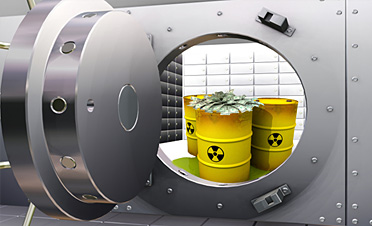
In discussing reasons versus excuses, I brought up the concept of excuse banking. It’s almost exactly what it sounds like. It’s the process of acting, believing, and learning in a way that effectively pockets an excuse to use to justify decisions later on. Since our brains are wired to decide first and then justify those decisions, excuse banking is very much a pragmatic manifestation of our collective psyche.

It’s not inherently good or bad. It can certainly get pretty darn bad, as I pointed out when I tied excessive excuse banking to political and religious extremism. Most people, though, don’t operate in extremes and if they do, it’s usually out of fear and survival, which are among the most valid reasons we can have for doing something. For the purposes of providing useful advice in excuse banking, I’d like to focus on the good.

In that spirit, I’d like to offer a quick rundown of tips and tricks for managing your excuse bank effectively. We’re all going to make excuses at some point. We’re all going to bank those excuses in some form or another. We might as well figure out how to do it in a way that improves our lives and gets us laid.


Tip #1: Maintain A Balance, But Avoid Hoarding

Like any useful bank account or credit card, it’s important to maintain a balance. You always want to have some reserves, just in case it’s an emergency and you need a valid excuse to explain why your pants are in the refrigerator. You don’t want to be stuck relying on reasons that may or may not apply. That’s just going to make you look stupid, incompetent, and decidedly unsexy.

Unlike a traditional bank account, though, you don’t want to let your excuse bank get too bloated. That’s because excuses aren’t hard assets. They’re intangible, malleable, and much easier to abuse. You may be able to use a dollar bill to snort a line of blow, but with an big enough excuse you can justify snorting blow off a stripper’s tits.

That’s why you should not hoard your excuses the same way I hoard comic books. As I noted in my post on extremism, having too many excuses that are too malleable creates all sorts of nasty temptations. Having those excuses is like having a loaded AK-47 in a traffic jam. Even if you can resist the temptation, the potential is still there and the danger of that potential can be pretty vast. Just ask any experienced traffic cop.


Tip #2: Invest With Other Peoples Whenever Possible

This part of excuse banking also highlights one of the key differences from other types of banking. In a sense, excuse banking is almost always a joint effort. It’s not enough to just have an excuse. You also need other people to believe them in order for them to be useful.

An excuse with a random stranger and an excuse with a close family member is not going to have the same value. At the same time, an excuse you bank on your own isn’t going to be as valuable as one you bank with other people. Human beings are very social creatures. When you forge close social bonds, be they with family or lovers, your excuses carry more weight and so do those of others.

In a sense, it’s a win-win investment. By banking excuses within a social group, you develop a sense of trust and understanding. That makes deposits and withdraws from your bank easier and less likely to blow up in your face. Just watch any Ben Stiller movie to see why that’s so important.


Tip #3: Know Which Investments Grow And Which Are Toxic

It’s true. Excuse banking sometimes deals in toxic assets. I’m not just talking about bad mortgages or too much stock in Enron either. When your excuse bank has toxic assets in it, you’re in big trouble.

A toxic asset in an excuse bank is often one we don’t realize is toxic. Sometimes, we even refuse to realize it. That’s what often happens with dictators, religious zealots, and child actors. Their excuse bank is so full of toxic assets that they don’t know how bad their excuses are and if someone tries to tell them, they don’t listen. That often leads to the kind of tragic self-destruction that becomes an A&E documentary.

That’s why it’s so important to identify these toxic assets before they poison you. Those assets will undermine your ability to work with others and gain their trust, two things everybody needs to survive in a functioning society. So how do you know if an asset is really toxic? Just follow these simple steps:

  • Step One: Ask yourself, “Would this excuse allow me to punch someone in the face and make them apologize for hurting my hand?”
  • Step Two: If you answered yes to the following question, then the excuse is toxic.

Tip #4: Understand An Investment’s Potential, But Don’t Ignore The Risks

Like any investment, there are risks and rewards that you have to weigh. Sometimes the risks are minimal. When you fake sick just a couple times and don’t announce to the world on FaceBook that you’re running a marathon, the risks are pretty minimal. Those risks escalate when you let them pile up, so much so that your girlfriend won’t believe you when you say you need to perform brain surgery on the President.

This is especially important for anyone in a position in power, be they the despot of a country or a manager at Walmart. Having power offers a lot of potential because it creates both excuses and reasons for people to do what you tell them. However, the risks are much greater, especially if you want to use that power competently.

It’s easy to lose yourself in power. Anyone who used cheat codes in old Mario games understands that. That’s what makes it so dangerous because it prompts us to ignore the risks. When we do that, we’re less likely to realize when our excuses become toxic. People don’t trust us and look for ways to get us out of the way. No matter how much power you have, you won’t be able to use it effectively if your excuses are toxic.


Tip #5: Avoid Banking Excuses As A Means To Improve Past Investments

This tip is directly tied to a little something called the sunk cost fallacy. Anyone who has ever had a gambling problem or knows someone who would bet their shirt at a blackjack table knows it well. It’s this annoying quirk in our psyche that compels us to keep throwing resources into a game we’ve already lost to justify past investments.

In a sense, it’s an excuse to justify stupid risks that didn’t pay off. It’s a way to alleviate the mental stress of knowing just how badly we’ve lost. In the context of excuse banking, it applies to more than just a bad run of luck at a casino.

Like trying to win back what you’ve lost, banking excuses to improve toxic assets rarely works out. When an excuse has become toxic, it usually stays that way. It’s like the boy who cried wolf. Even if the wolf does come once in a while, there isn’t much you can do to improve the utility of the excuse.

Excuses, like fresh fruit, can perish quickly. They can be finite and applicable only to specific circumstances. Once those circumstances pass, trying to cling to those excuses is like trying to make spoiled milk taste good. It just can’t be done.


Tip #6: Long Term Investments Usually Pay More Than Short Term Investments

This is where we kind of have to battle our inner caveman here. As I’ve covered before, caveman logic compels us to think primarily in the short-term. We prioritize the potential for avoiding tigers and mating with fertile partners. Those short-term investments worked well in the caveman days, but they work less well in more complex societies.

The key purpose of excuse banking is to ensure you can justify your decisions to others. If you can’t do that, then other people aren’t going to trust you, work with you, or want to have sex with you. Now there’s a time and place for short-term investments, but they’re usually very specific and rare.

Long-term excuse banking involves crafting excuses that build trust and understanding with others. Ideally, they have some amount of reason to support them, if only in part. Bank enough long-term excuses and you’ll find people who are eager to work with you, ready to trust you, and eager to take their clothes off with you.

That kind of investment usually takes a lot more time and effort, but the payoffs can be pretty damn awesome.


These are just a few tips to start out. If I come up with others or learn from someone else, I’ll share them in another post or list. If anyone else has investment advice in the world of excuse banking, please share it.

Excuses may be one of the most important investments we can make. It’s one of the few currencies that is valid in every country, culture, and society. Sure, we can’t use them to tip strippers, but they’ll help us in negotiating our lap dance.

3 Comments

Filed under Reasons and Excuses

Excuse Banking: What It Is, How It Effects Us, And Why It Matters

https://i0.wp.com/www.dailyentertain.com/wp-content/uploads/2014/12/banker-laughing.jpg

If you thought I was done talking about reasons and excuses, I’m sad to report that you’re very wrong. If you thought there’s no other way to make funny, sexy, or relevant, then I’m not so sad to report that I’m eager to prove that wrong as well. Trust me. This is a huge topic, one with many implications for writing novels and so much more.

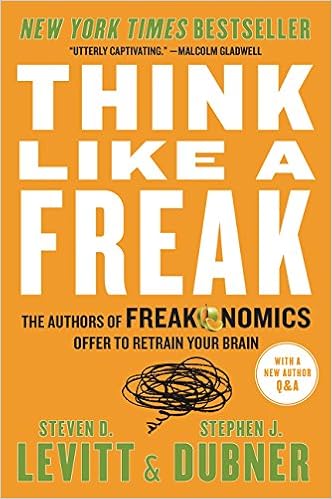
A big part of what inspired me to explore this topic is a new book I’m reading called “Think Like A Freak.” It’s a book by Stephen Levitt and Stephen Dubner, the two authors behind the best-selling “Freakanomics” books that I’ve enjoyed so much in the past.

There’s a lot to digest in this book and I’m still not done reading it yet, but the primary takeaway is fairly simple. It teaches you to step back from a situation, look at all the complex incentives and motivations surrounding it, and think in new, unorthodox ways to further your understanding. These posts on reasons and excuses are an exercise, of sorts, in understanding things from a new perspective.

I’ve already explored the basics of reasons and excuses. Now, I’d like to expand on those basics and create a new concept of sorts, one not unlike the idea of “caveman logic,” which I’ve cited so often on this blog. Please don’t mistake this for a real scientific concept. I’m as much a scientist as I am an astronaut ninja. This is just me, an aspiring erotica/romance writer, creating a term to encompass a larger concept.

With that said, ladies, gentlemen, and those of unspecified gender, I introduce to you the concept of “Excuse Banking.” It’s not in a dictionary. You won’t find it in any textbooks or erotica/romance stories yet, but it’s an idea that has affected us all to some extent.

Again, this is a term I’m inventing right now with no expertise and nothing but a blog to explore it. I understand that’s like a hobo walking into MIT and trying to build a star ship, but I want use this term to explore the more intimate aspect of reasons and excuses. As anyone who has read my books knows, I’m all for more intimacy.

First off, here’s a quick and dirty definition of what excuse banking is:

  • A form of rationalizing one’s actions by using one or more justifications that have been remembered, accepted, and understood as something of personal value;
  • A series of actions meant to mitigate or eliminate the emotional or mental stress of a decision or action that may occur in the future; and
  • The process of shaping ideas, beliefs, and morals in a manner that facilitates difficult ethical decisions.

In reading over these definitions, it should be easy to recall situations where excuse banking applies to you or someone you know on some level. Have you ever loaned someone money? Have you ever helped them with a chore? Have you ever done a favor and asked for nothing in return?

Well, in doing so, you’re effectively making deposits into the excuse bank that you can use as currency, so to speak. Sometimes those deposits gain interest over time. Sometimes they depreciate. In either case, we use this currency to either garner favors through reciprocity or mitigate stressful, demanding situations we may have at a later time.

Much like caveman logic, the idea of excuse banking reflects the understanding that our brains are wired a certain way. That wiring, unfortunately, is akin to an operating system that never gets upgraded. As far as our brain wiring is concerned, we’re still cavemen living in hunter/gatherer tribes in the African savanna.

That wiring, regardless of whether you believe it’s a product of nature or supernatural deities, is the guiding force behind everything from our social behavior to our sexual fantasies. For this particular topic, I’ll focus on the social behavior and save the sexual fantasies for my novels.

Like every other cognitive function, our social behavior does have a basis in neurobiology. That behavior helps guide what we do and why we do it. The behavior, and the wiring behind it, have two primary imperatives that take priority over pretty much everything else. Those priorities are, once again, survival and reproduction.

Nature may be blunt, imperfect, and messy at times, but you can never accuse it of misplacing priorities. When it comes to helping a species thrive, survival and reproduction have to be major priorities. Whether it involves surviving a bear attack or successfully making love to one hundred beautiful cavewomen, those priorities guide a significant part of our thoughts and actions.

It’s for that reason, as I stated in a previous post, that our process for making decisions is so different compared to what we believe. We like to think we’re rational creatures, assessing a situation logically like Spock or Dr. House, and then acting in accord with the utmost reason and morality. That’s the ideal and the basis of multiple superheroes, TV doctors, and scientists.

However, due to that pesky biological wiring that hasn’t been upgraded since the stone age, we do it ass-backwards. We first make a decision, often based on emotion and instinct, and then look for ways to justify it. It’s a good way to ensure we survive bear attacks long enough to get laid. It’s not a good way to promote rational decisions, much to the chagrin of Dr. House.

This is the domain in which excuse banking manifests. Regardless of whether or not we believe that this is how we make our decisions, excuse banking ensures we have a way to justify our actions and decisions, especially if they cause us physical or emotional distress.

We do this because there’s a 100-percent chance that at some point in our lives, we’re going to face a difficult decision. Maybe we have to decide whether to lie to a girl to get her attention. Maybe we have to decide whether or not we should trust the guy who claims to be a Nigerian prince wanting to help us collect an unclaimed lottery place. At some point, we will confront these decisions. It’s an inevitable fact of life.

Excuse banking is a way of hedging our bets, so to speak. It encompasses the actions, beliefs, and social connections we make prior to these decisions. We may have different reasons for seeking these connections, but they have the same secondary function. They help deposit excuses that we might be able to use in future situations.

The process of banking excuses is almost always secondary, in that sense. Nobody goes out of their way to do or believe something because they want an excuse to justify their actions. Nobody overtly think, “I’m going to work at this soup kitchen and provide medicine to sick orphans so I don’t feel as guilty when I strangle puppies with my bare hands.” Those that do are probably sociopaths or reality TV hosts.

Like real banking, sometimes the excuses we bank generate interest. This is especially true when actions involve forming a strong social network of people who support you, even when you screw up. They act as a safety net and over time, that net can become reinforced.

Also, like real banking, banked excuses require fees of sorts. You have to pay a price in order to bank a certain excuse. It can be the time and energy we put into crafting social networks. It can be the resources we expend to join a group, mold an identity, or sell our skills. Some fees are small. Some are much larger, but tend to be more flexible.

That’s where excuse banking starts to diverge from actual banking. Unlike hard currency, excuses can be malleable to a certain extent. You can turn past favors, past charity work, and all that money you gave to PETA into excuses you can use in multiple situations.

This is especially true of excuses built around beliefs. Since beliefs are intangible, unmeasurable, and unverifiable, they are extremely malleable. Take circumcision, a topic I’ve covered before, sometimes to an exceedingly personal degree. Absent a tangible medical condition, there’s no logical reason as to why we would cut off part of an infant’s penis.

However, if you inject a sincerely held belief that your particular religion has a tradition regarding circumcision, then that requires a hefty withdraw from the excuse bank. That excuse better be malleable and low cost as well. When it comes to beliefs, though, the cost is usually close to zero and it’s hard to beat that.

Now that’s not to disparage anyone’s sincerely held religious beliefs. I’m not saying that all religions exist as systematic forms of excuse banking. Human beings just aren’t that simple. If they were, then erotica/romance writers like me would have little to work with. Excuse banking is just one of those understated, unseen processes that emerges from our faulty brain wiring.

When put into a proper context, excuse banking can help make sense of an inherently irrational world populated by very crazy people, some of which have their own radio shows. At a time like this, when the concept of “alternative facts” is a thing, we need every tool we can get.

This is just one from an aspiring erotica/romance writer. I don’t know how useful it will be or if it’ll make anyone horny, but we can only hope.

29 Comments

Filed under Reasons and Excuses

Reasons Vs. Excuses: Why The Difference Matters

https://i0.wp.com/www.realmenrealstyle.com/wp-content/uploads/Blame.jpg

Has anyone ever asked you to do something you really don’t want to do? Actually, let me rephrase that. How many times does someone ask you to do something you don’t want to do in the past 24 hours? Let’s face it. Unless you’re a king, a dictator, or Taylor Swift, it’s happened at least once.

Whatever was asked of you, how did you try to get out of it? I know some people will just grit their teeth and do it. Those people deserve ten times the respect they get. Every now and then, if not most of the time, we try to do something to get out of doing what we don’t want to do. Whether you’re in New York City or the Gobi desert, you can’t escape these situations. They’re just part of life.

Whenever we’re in these situations, we usually try any number of things to get out of it. Whether it’s chores, homework, or ballet recitals, we all have our own set of tactics. Some are more elaborate than others.

I knew a kid in school who could throw up on demand. He didn’t even have to put his finger in his mouth. He could just concentrate, cough, and then spew the kind of chunky bile that would dissuade any teacher from giving him an exam. I lost count of how many times that skill got him out of trouble.

Most of us don’t have that talent though. We all still look for ways to get out of things we don’t want to do. I sure have. I don’t deny that. I’m not saying that’s a bad thing either. It’s a good skill to have, knowing how to avoid situations that make you miserable. However, it does reveal an important concept that I find myself noticing more and more as I get older, although sometimes I wish I didn’t.

It has to do with two simple words: reasons and excuses. They both have similar definitions. Most of the time, outside of a scientific context, we use these words interchangeably. For the most part, we understand the meaning behind them.

However, for the purpose of this discussion, as well as future discussions since this is a big topic, I’d like to focus on a particular context. Specifically, I’d like to focus on the situations and justifications we individually use to do or avoid doing something. Make no mistake. There is a difference between a reason and an excuse.

A reason is logical, narrow, and concise. It can be understood by anyone with a functioning brain and verified with simple tools. That’s not to say a reason has to be cold and callous like a Vulcan. It just has to be valid and clear.

I’ll offer a simple example. Growing up, there were a certain set of chores for which me and my siblings were responsible. If we didn’t do these chores, we didn’t get an allowance. It was that simple. The one chore I did most often was mowing the lawn. I didn’t enjoy doing it, but I still did it.

Then, one day, I got sick. I’m not talking about a headache either. I mean I got really sick, so much so that I ran a 102-degree fever. I know because my mother took my temperature twice. I was then bed-ridden for the next two days. Somebody else mowed the lawn, but I still got my allowance because I had a valid reason. My parents understood that. I understood that. There was no need for debate.

Using this same example in lawn care, I’ll highlight why an excuse is so different. If I wanted to use an excuse to get out of mowing the lawn, I sure as hell wouldn’t have chosen something that could be verified. Sure, I could’ve claimed to be sick, but that would’ve been pushing it because they could check. They could take your temperature and see if you’re running a fever.

On top of that, your parents may be really good at knowing when you’re lying. Mine certainly were. It might as well have been their mutant power. They knew when I was lying and if I ever tried, I’d just make an ass of myself.

Plus, lying to your parents isn’t just a dick move. It’s a bad long-term investment. If you lose your parents trust, especially over something as trivial as mowing the lawn, then you’ll give them way too many valid reasons not to trust you in the future, even when you have a good reason of your own.

So in order to make a more valid excuse, you need to come up with something more believable. It doesn’t have to be a lie. It doesn’t have to be completely true either. You could claim you’re depressed that your lover broke up with you. You could say there’s a movie you’d rather watch instead. You could say you just don’t feel like it. These aren’t lies. However, they are still excuses.

The primary trait of an excuse is that it doesn’t physically prevent you from doing whatever is asked of you. It defends and/or justifies your particular decisions, preferences, and what not. Being on vacation in Fiji ensures I can’t physically mow the lawn. That’s a reason. Being in a lousy mood and just wanting to sleep in does nothing to prevent me from operating the lawnmower. That’s an excuse.

With that in mind, let’s take the concept of reasons and excuses to a larger stage. Let’s assess how this applies to the overall process we use in rendering the various decisions and actions of our lives. What we do and why we do it is at the core of what it means to be a conscious human being.

For practical purposes, we like to think that we’re reasonable people. We like to think that we have valid reasons for what we do and why we do it. We break up with a lover because they’re not right for us. We buy organic food because it’s better for our health. We smoke pot because it makes us more fun to be around. Some of that may be true, but we still think of them as reasons and not excuses.

The problem with this is basically everything about it. Once again, caveman logic enters the picture and spits all over that rosy picture we have of ourselves and others. Based on our growing understanding of cognitive science and neurobiology, we have a better idea of how we make decisions and how we justify them.

When it comes to reasons and excuses, the two main factors are choice-supportive bias and cognitive dissonance. I know those sound like terms that Sheldon Cooper would use in a skit on “The Big Bang Theory” that somehow makes him sound like more of an asshole, but unlike 98 percent of what Sheldon says, these concepts are useful.

Choice-supportive bias is our tendency to ascribe positive attributes to the choices we make. It’s also a byproduct of cognitive dissonance, which is just a fancy way of saying our brain feels stressful and uncertain.

In essence, our brain is wired to avoid wrong decisions and for good reasons. Back in the caveman days, if we made a wrong decision, it usually meant we ended up as dinner for a hungry grizzly bear or ate poison berries that made us shit out our lower intestines. We’re alive because of this wiring so let’s not discount its use.

Unfortunately, nature is still a blunt instrument and our brains don’t know we only encounter bears in zoos that charge ten bucks for a soda. That aversion to making wrong decisions is still there, even when we decide something as simple as which breakfast cereal to buy.

With that in mind, we’ll do anything and everything to avoid wrong decisions and the brain stress they cause. Unfortunately, that often means making excuses to reduce the stress and justify our choice, even if it ends up being wrong.

If that weren’t bad enough, our brains don’t run our decisions through a logic filters first. Don’t worry though. That filter is still there in our brains. It’s just not at the front of the line like we all wish it were. If it were, then half the videos on YouTube wouldn’t exist.

Instead, according to current neuroscience, we make most of our decisions on snap judgments and emotions. Then, we’ll use reasons and excuses to justify those decisions after the fact. Unfortunately, since reasons are so rigid and stubborn, we’re more inclined to make excuses. Even if those excuses are mostly true, they’re still excuses.

There are so many other dynamics behind reasons and excuses. There’s no way I’ll be able to cover even half of them in a single blog post. However, there is a reason why I’m discussing this topic and it’s a good reason. It’s applies to both my novels, as well as other topics with very sexy implications.

That reason will become clearer in later posts. For now, consider this a trailer of sorts, minus the cheesy one-liners and explosions. If possible, take a moment to analyze how many excuses you make for your decisions compared to reasons. You may be shocked/appalled/disgusted by what you uncover. I promise you, though, it gets much crazier.

15 Comments

Filed under Reasons and Excuses

Why Most Superheroes Are Woefully Incompetent (By Design)

Image result for incompetent superhero

I’ve been meaning to do a post like this for a while now. It’s a topic I’ve actually tried to discuss on comic book message boards. Unfortunately, most comic book message boards too readily devolve into debates about who can lift Thor’s hammer, who Wolverine is sleeping with, and whether or not She-Hulk shaves her pubic hair. Yes, it gets that bad.

Ignoring, for a moment, the immaturity of certain crowds on message boards, there are certain issues pertaining to comic books and superheroes that are too easy to overlook. I say this as someone who is plenty eager to overlook the flaws in a story if it means seeing Starfire, Wonder Woman, Emma Frost, and Storm of the X-men kick ass and look damn sexy while doing it.

One of those flaws, ironically enough, deals with the actual pragmatics that come with being a superhero. Granted, those practical details are usually an afterthought in most superhero comics. Why would anyone give much thought to that when they could instead focus on giant monsters, killer robots, and the Hulk’s penis?

Some of the problem has entirely to do with fans like me. I freely admit that, as a fan, I’m part of the problem. Superheroes, whether they’re in comic books, cartoons, or blockbuster movies, aren’t created with the intent of being really good at their jobs. They’re created as a product to sell. That means they have to be compelling, engaging, and part of a meaningful story.

That’s why we don’t care if Spider-Man fails miserably to stop a criminal or if Superman fails miserably to keep Lex Luthor locked in prison. So long as it’s part of a story, we keep buying in. We increase our emotional and financial investment. It keeps the narrative going and, by default, the money for the company producing the merchandise.

That’s also why there will never be a superhero who is too good at fighting crime, defeating enemies, and solving problems. After a while, they do too much good and the world they live in just doesn’t have enough flaws to be interesting anymore. Who wants to read about Spider-Man anymore after he’s effectively solved New York’s crime problem and spends his days taking photos of hobos pissing on trees in Central Park?

On some levels, comic book companies and movie studios of the world knows this. They’ll never admit it outright, but in the back of their mind, they have to know that they can never let a hero be too competent. Even Superman has to slip up every now and then. Make no mistake though. He definitely has throughout his 70-plus year history, sometimes in laughably disturbing ways.

There’s a very simple reason for this and unfortunately, it’s neither heroic nor sexy. I’ll give you a hint. It’s valuable, it’s green, and it fits perfectly in a stripper’s G-string. If you need more than one guess, you should probably see a doctor.

Yes, I’m talking about money. If anything, it’s kind of ironic, given the values that many superheroes hold and how broke many superheroes often are. They’re created to embody our greatest values, but they’re sole purpose, from an image standpoint, is to make money for the company that owns their rights.

Fortunately or unfortunately, depending on how you look at it, superheroes do succeed in that respect. According to The Hollywood Reporter, Spider-Man alone makes over a billion dollars a year in merchandising. That’s not a typo. I said billion. Batman is a very distant second with a little less than half-a-billion.

Superheroes are big business these days, both in terms of making money and spending it. According to rumors by Bleeding Cool, the next two Avengers movies could collectively cost a billion dollars. Again, that’s not a typo.

It’s because superheroes make so much money and generate so much money for the economy that they have to stay incompetent to some extent. Just look at the superheroes of old, from Greek mythology to the bible to the medieval legends of King Arthur. They all have one defining trait. They all had definitive endings.

Whether tragic or triumphant, the heroes of old were part of a finite narrative that had an ending. King Arthur dies. Hector dies. Jesus Christ triumphs over the Satan. If these were comics, they would never survive in the modern market because they’re too complete. Modern superhero stories can never truly end.

Even iconic comics like Watchmen, which was supposed to have a definitive end, but DC Comics nixed that by incorporating it into their mainline superhero comics. Granted, this thoroughly pissed off Watchmen’s creator, Alan Moore, but he’s been pissed off for any number of reasons for the past 30 years so that’s not saying much.

Instead of ending, modern superhero comics are prone to a tricky phenomenon that most comic book fans know all too well. It’s called retroactive continuity, also known as a “retcon.” This is basically the literary equivalent of a mulligan.

Has Spider-Man become too convoluted, mature, and dark? A retcon will make him a lovable loser again. See “Brand New Day.”

Has Batman become too campy and goofy? A retcon will make him dark and gritty again. See “Batman Begins.”

Have the Fantastic Four become too flat and boring? A retcon will make them a team of jaded young millennials. See 2015’s “Fantastic Four,” although pretty much every Fantastic Four fan would strongly advise against it.

Thanks to retcons, superheroes never age. They can always be reinvented, re-tooled, and adapted for a new audience. Granted, that won’t stop some audiences from whining about it, but it effectively ensures that the narrative never ends and the particulars of the story at every point in the timeline are subject to change.

This can be a good thing sometimes, such as when a retcon gives us a great character like the Winter Soldier in the Captain America comics. However, it can also splatter painfully disturbing details on an established narrative that didn’t need it. Just talk to Spider-Man fans about a story called “Sins Past” and watch them become visibly ill.

In the end, however, it often means that characters never really progress beyond a certain point and the problems they hope to solve never go away. The Joker always escapes. Lex Luthor always returns. Spider-Man’s girlfriend gets killed, injured, or impregnated by his worst enemy. It’s as frustrating as it sounds.

Most superheroes will gloss over this detail by taking a stand against killing. That’s perfectly understandable on some levels. The morality of killing someone is one of those few moral issues that don’t generate too much debate, unless it involves Nazis in video games. However, in some respects, the anti-killing is both an excuse and a sales tactic.

Batman is, by far, the best example in this respect. Despite being the alpha and omega of an ordinary man achieving extraordinary feats without superpowers, Batman still cannot and will not stomach killing any of his villains. No matter how many times they escape, kill, or torment others, he refuses to kill them.

Ignoring for a moment the debate on whether he’s responsible for the deaths those villains subsequently inflict, there’s one other issue that makes Batman’s anti-killing stance more a marketing gimmick than a morality stand. Batman’s villains are iconic characters in their own right.

Just look at the list of famous Batman villains. Then, remember how many of them are popular Halloween costumes. Also keep in mind one of them earned Heath Ledger an Oscar and another got Margot Robbie to put on hot pants. Creating characters this iconic isn’t easy. That’s why comic companies and movie studios are so reluctant to kill them.

This is the dilemma that all superheroes face in modern comics and movies. If Batman kills the Joker, then there are no more iconic battles between the two. If Superman kills Lex Luthor, then there’s no more epic struggle. That means there are fewer comics to sell, toys to make, and slutty costumes to create. That situation, from both a fan and business standpoint, is untenable.

As a result, every modern superhero is, by design, incompetent to some degree. On top of that, the villains are either insanely lucky or ridiculously resilient. That’s why we’ll never see a version of Batman, Superman, or Spider-Man who actually succeed at reducing crime. That’s why we’ll never see the X-men or the Justice League actually create a peaceful world.

It’s not that it’s impossible. It’s just that it ends the story and the ability for big companies to make a boatload of money off them. That ensures every modern superhero is a walking paradox. They can never truly achieve their goal, but they can never stop trying either. It’s not because it’s the right, moral thing to do either. It’s because movie studios and publishing companies still need to make money.

That’s not very heroic, to say the least, but that’s the world we live in. Until money and movie rights stop driving superhero narratives, we’ll never see a truly competent superhero.

5 Comments

Filed under Comic Books, Jack Fisher, Superheroes

The Orgasm Gap: Biological Or Psychological?

When it comes to talking about an issue, I generally avoid the kind of crisis fear-mongering you’d see on a CNN special report, a Fox News segment, or an Alex Jones podcast. More often than not, those who resort to fear-mongering are a few steps too close to fitting their heads for tin-foil hats.

However, I’m about to bring up an issue that I believe really is a crisis. It does warrant a little fear-mongering, if only because it directly affects the erotica/romance industry, of which I’m trying to be part of. That’s because it involves orgasms.

Usually, my posts about orgasms are of the fun, positive, sexy variety. That’s to be expected. It’s not hard to make a discussion about orgasms fun. Unfortunately, it’s also not hard to make that discussion dire because when a significant portion of the population isn’t having them, then I consider that to be a big problem.

This isn’t just the sexy musings of an aspiring erotica/romance writer. This is a real issue. There really is an orgasm gap, so to speak. Men, not surprisingly, don’t have a hard time achieving orgasm. Thanks to an unfiltered imagination and internet porn, an orgasm for a man is as routine as a morning cup of coffee.

For women, however, it’s a very different story, one I wish were relegated to the kinds of sexy novels I write. The data doesn’t lie. Women are having a harder time taking a trip to O-town during intimate moments with their male lovers. Regardless of whether you’re a radical feminist or a douche-bag frat boy from an 80s teen movie, we know that’s not fair. Given the universal joys of orgasm, that kind of disparity just isn’t tenable.

Why is this an issue though? Why does this orgasm gap even exist in the first place? Evolution has given both genders a wonderful incentive to have sex, make love, and everything in between. What’s keeping us from enjoying it?

By and large, there are two major theories to explain this injustice. One theory says this gap is primarily due to biology, which is bad news for women because it means the gap is impossible to close. The other says the cause is psychological, which is somewhat less dire because it means the gap can be addressed, albeit with expensive therapy.

Most of the time, when there are two competing theories about why something exists, the truth often lies somewhere in between. In some instances, though, such as the case of creationism and evolution wherein one is definitively right and the other is a religiously-motivated fever dream, the truth is not so balanced.

So with respect to the orgasm gap, which theory is correct? I’m not a scientist and am woefully unqualified to be one. Thankfully, there are some scientists out there who value equal access to orgasms as much as I do and they have done research on this. These people are the true heroes of the erotica/romance world. So what did their research find?

Well, a recent TED talk by Peggy Orenstein does a nice job of summing up these results. I’m not saying her talk is definitive. These TED talks never are. However, her conclusions have some pretty powerful implications and not just for our collective sex lives.

There’s a lot to unpack here. As an aspiring erotica/romance writer, it reveals some major flaws in the proverbial narrative that is our intimate lives.

Parts of her talk definitely resonated with my own personal experience. I remember sex ed when I was in high school. Since my community wasn’t run by uptight religious zealots, I had the good fortune of receiving a fairly comprehensive education about sex, especially compared to Texas standards.

They were pretty thorough, talking about everything from contraception to childbirth. When it came to certain body parts, though, I do recall a distinct difference. Descriptions about male anatomy and how a penis works was fairly concise. Most of my male classmates didn’t learn anything they hadn’t already found out and were fairly assured that their manly bits were operating fine.

When the time came to discuss female anatomy, however, I sensed a distinct shift in mood. Everybody, girls and boys alike, shifted like they were trying to hide a nasty fart. The intricacies of female genitalia wasn’t so much about their beauty or aesthetics. It mostly boiled down to the idea that blood and babies come out of it. That’s about it.

On a personal note, I’ll just say I learned about the existence of the clitoris from “South Park.” What’s that say when a comprehensive sex education program from a major school overlooks something that can be gleaned from watching “South Park?” I’ll give everyone a minute to stop banging their heads against their desk.

Then again, self-image is something every teenager struggles with. I certainly did, but I had a damn good excuse because of my horrible acne problem. It’s one of those things that improves with maturity. Sure, some people mature faster than others, but most of the time, it’s women who do the maturing so how does that orgasm gap not disappear?

This is where the psychology, it would seem, overpowers the biology. Make no mistake. Our thoughts and attitudes can influence our bodies. Anyone who has tried to sleep the night before midterms knows this all too well. Then, there’s the attitudes that we, as a society, collectively impose on each other.

In this case, it’s an attitude we impose on women. Whether by the spirits of angry Puritans or the agendas of old men who vomit uncontrollably at the thought of their daughters having sex, we tell women that they’re not supposed to enjoy sex that much. They’re told the orgasm disparity is normal.

There’s supposed to be this orgasm disparity between men and women. Somehow, this disparity is supposed to keep society intact so that people don’t waste too much time enjoying orgasm. This is where Orenstein gets really personal when she recounts the woman who says:

“I guess we girls are just socialized to be these docile creatures who don’t express our wants or needs.”

The girl who said that claimed to be this fiery, assertive woman. That should reveal just how powerful these attitudes can be.

It’s not just one type of attitude either. Orenstein points out how girls see their vaginas with shame while boys let their dicks hang with pride. Being proud of a body part tends to affect it. I used to play baseball. This works with arms. It works just as well with genitals, if not more so.

However, I think Orenstein overstates genital attitudes in some areas, ignoring the fact that men will shave their balls and undergo circumcision to avoid being aesthetically unpleasing. That’s something that affects both genders more than she lets on.

That said, I agree with her wholly when she brings up one of the most telling details about the orgasm disparity. When same-sex partners are involved, that gap disappears quicker than a cold beer at a Red Sox game in July. This is where the biology theory starts to fall apart.

Now it may seem obvious on some levels, the idea that same-sex lovers can climax at the same rate. It makes intuitive sense. They’re two people working with the same equipment, so to speak. Naturally, they would know how to make that equipment perform.

I don’t doubt that’s part of it. I also think there’s more to it and Orenstein seems to agree.

“Girls’ investment in their partner’s pleasure remains regardless of the gender of the partner. So in same-sex encounters, the orgasm gap disappears. And young women climax at the same rate as men. Lesbian and bisexual girls would tell me that they felt liberated to get off the script — free to create an encounter that worked for them.”

How telling is that? Put women in a situation where certain attitudes about sex and female pleasure don’t apply and they can enjoy a trip to O-Town as much as any man. As an erotica/romance writer, it brings tears of joy to my eyes.

So the orgasm gap disappears with same-sex partners. That’s all well and good, but what about the women out there who can’t get too horny around other women? What about the women who actually want to share the joy of orgasm with men? Well, Orenstein gives hope to those women too when she cites surveys done in cultures that aren’t haunted by the spirits of angry Puritains.

Consider a survey of 300 randomly chosen girls from a Dutch and an American university, two similar universities, talking about their early experience of sex. The Dutch girls embodied everything we say we want from our girls. They had fewer negative consequences, like disease, pregnancy, regret — more positive outcomes like being able to communicate with their partner, who they said they knew very well; preparing for the experience responsibly; enjoying themselves. What was their secret? The Dutch girls said that their doctors, teachers and parents talked to them candidly, from an early age, about sex, pleasure and the importance of mutual trust. What’s more, while American parents weren’t necessarily less comfortable talking about sex, we tend to frame those conversations entirely in terms or risk and danger, whereas Dutch parents talk about balancing responsibility and joy.

Let’s all take a moment to thank the Dutch. Let’s also take a moment to understand what this reveals.

Again, no theory is truly definitive, but Orenstein lays out fairly concisely how the orgasm gap is largely a psychological issue. Men define satisfying sex by their orgasm. Women define it by the ability to please their partner, which sets the bar low and ensures an unequal outcome.

That means we, as a society, should set new standards and I can say with a fair amount of certainty that men are all for that. How do I know this? Well, let me let all the women out there on a little secret about us men that really shouldn’t be a secret.

We WANT you to have orgasms when you have sex with us.

It’s true. Men really do want the women they have sex with to orgasm. Most of the time, they don’t want women to just lie there and act like a glorified barbie doll with a pulse. They actually want their partners to feel pleasure.

It shouldn’t require a real stretch in logic. Men understand that if women feel a lot of pleasure during sex, then they’ll want to do it more often with them. More sex makes us happy. We have a powerful incentive to make sure you women share in the joys of orgasms. The problem, albeit a sexy problem, is that it requires a mutual effort.

I believe we can close that orgasm gap for coming generations. I can only do so much as an erotica/romance writer, but we collectively can do so much more. When the day comes where men and women can expect to have an equal potential for orgasms during sex, then we will have achieved true equality. I look forward to that day.

15 Comments

Filed under Jack Fisher's Insights

Sex And Hypnosis: A Prelude To Telepathy?

How many times have you wished you could hypnotize your significant other into putting on that sexy costume they refuse to wear? Hell, how many times have you wished you could hypnotize the clerk at the DMV just to make them think you’re next in line? My point is there are all times when we wish we could manipulate the minds of others.

There are some out there who think it’s already happening. They’re mainly Alex Jones fans who think that fluoride in drinking water is a secret plot by the Illuminati to make us dumb, submissive, and gullible enough to listen to men like Alex Jones. Those kinds of people probably aren’t going care much about this post, but those with functional frontal lobes should be able to get something out of this.

Why do I bring up hypnosis? Well, it sort of builds on what I discussed before about the future brain-to-brain communication, or techno-telepathy if you want to call it that. That technology is underway and it is progressing. It’s very likely that within my lifetime, people will be able to share their most intimate thoughts with somebody and that probably includes their deepest sexual fantasies, including those that involve clowns.

Before we get to that point, though, there are other ways to tap into the vast and perverse abyss that is the human mind. Granted, it’s not as scientific, nor is it as effective as we wish it were, but it still has some merit. It’s called hypnosis. It is a real thing. It’s just not as effective as cartoons, movies, and bad pornos would have us believe.

As such, I’m not talking about the kind of stage hypnosis you see in Las Vegas that involve bikini models for assistants. That’s not real hypnosis. That’s a stage act. That’s Hamilton with more partial nudity. Real hypnosis has some basis in psychological phenomena. According to Psychology Today, real hypnosis is defined as:

A state of highly focused attention or concentration, often associated with relaxation, and heightened suggestibility.

That makes sense on some levels. When you’re so focused and relaxed, you’ll basically admit you stole the Mona Lisa. You’re relaxed. You don’t care. It’s more a brain hack than it is mental manipulation.

In a sense, it’s an indirect form of brain-to-brain communication. It doesn’t involve actually hearing thoughts. It doesn’t even involve manipulating them. It just involves putting people into a state where they actually share the thoughts they don’t usually share.

Naturally, this can get sexually charged and not in the way a bad porno would suggest. Most everyone concedes that we live in cultures with some pretty mixed up or repressed views about sexuality. As such, it’s going to really mess up our thoughts and attitudes about sexuality. Just look at Texas.

Being able to share those thoughts, either through hypnosis or techno-teleapthy, will go a long way towards refining sexual attitudes. It gives people with anxieties and uncertainties a chance to share these feelings in ways that don’t involve using exceedingly uncomfortable words. We can, in turn, leave those words to aspiring erotica/romance writers like myself.

With hypnosis, there’s a way to tap into those messed-up, exceedingly repressed thoughts. I’m not talking about the kind of thoughts that reveal some uptight Texas pastor is having sex with gay prostitutes on the side either. I’m talking about the kind of thoughts that would make registered republicans gasp in horror.

The fact that hypnosis is necessary to reveal these thoughts is somewhat troubling. Being more open about sex has been shown on many occasions to be much healthier than repressive alternatives. The future of techno-telepathy may help effectively circumvent that awkwardness down the line.

For now, hypnosis is the closest we have to work with. It has shortcomings, but it’s better than expensive therapy. It can also make for some pretty sexy manifestations. As it just so happened, the fine folks at Cracked.com did a whole article on it. If you’re wearing dry panties, it’s definitely worth a read if only for three words: hands free orgasm.

The Sexy Things I Learned Working As An Erotic Hypnotist

Yes, by the way, being an erotic hypnotist is a thing. I only wish I could punch my old high school guidance counselor in the jaw for not letting me know that was an option. Granted, it’s an occupation that can get creepy, as revealed in the article, but I think you can say that about any job that deals with peoples’ inner-most fantasies.

I don’t know for sure how brain-to-brain communication will affect this process. I imagine it will build on what erotic hypnotherapists have been doing for years. I still look forward to the day when we can give each other orgasms with our thoughts alone. When our brains and genitals have that kind of synergy, the world will be a better place.

1 Comment

Filed under Jack Fisher's Insights

Sex, Lies, And The Future Of Truth

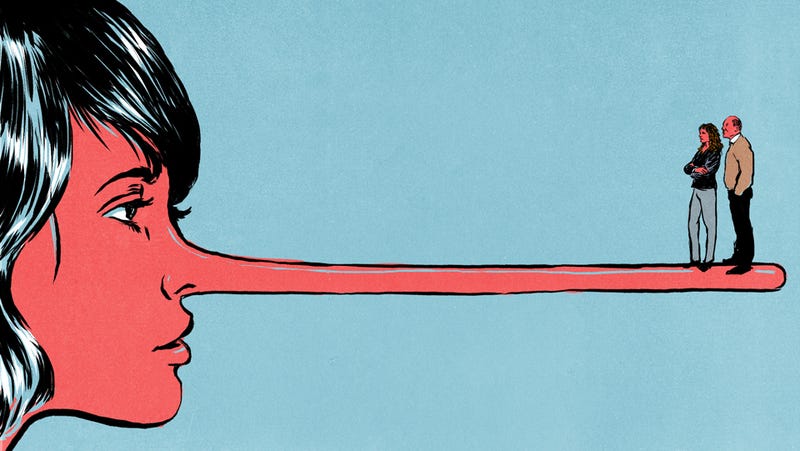
Admit it. You’ve lied before. Maybe it involved drinking in high school. Maybe it involved  strippers at a bachelor party. Maybe it involved a promise to pull out. Whatever the case may be, regardless of whether you got caught or ended up paying child support, you’ve lied at one point in your life. As the great Dr. House once said, “Everybody lies.”

Now there’s nothing inherently wrong with lying. It depends on what you’re trying to accomplish. If you’re lying to tell a story, which is basically what I do as a writer, then it’s not wrong. If done right, it can actually be pretty damn sexy. If you’re lying to deceive a lover, cheat on your taxes, or prevent your children from knowing about condoms, then that’s pushing it.

I bring up lies because, in watching my share of both superhero movies and romantic comedies, there is one common theme that binds many of these conflicts. No, it’s not Robert Downy Jr. or Hugh Jackman’s sex appeal. It’s that a lot of these plots are built on someone lying and working way harder than they need to in order to keep up the lie.

Take “The Proposal” with Ryan Reynolds and Sandra Bullock for example. In addition to being one of my favorite romantic comedies of the past several years, it’s entire plot was built around a lie that Bullock’s character crafted and Reynolds had to help preserve. Sure, it made for a hilariously entertaining story, complete with awkward nude scenes and moments with Betty White, but it was all built on the foundation of a lie.

Why do I bring up lies? Well, to answer that, I’ll have to get a little personal again and this time, it has nothing to do with me sleeping naked.

I’ve gotten a lot of romantic advice over the years from friends and family. Some of it is good. Some of it is bad. Some of it just plain crazy and involves some rather improper uses of food. However, within the good advice I’ve gotten, there was one common theme and it amounted to this.

DON’T KEEP SECRETS.

I write that in all caps and bold because they didn’t just tell me this as a casual aside. They made it a point to really emphasize the importance of being honest with those you love. No relationship can really function in the long run when both sides are keeping secrets. Say what you will about the Bundys or the Simpsons, but they are honest with each other, often brutally so.

Beyond the advice, there are a lot of romantic stories that involve secrets, lies, and deception. It’s not always in the smooth, sophisticated ways of James Bond either. Stories about lies, affairs, and elaborate deceptions are basically the bread and butter of these stories.

I’ve certainly used those themes. In “Skin Deep” and “The Escort and the Gigolo,” a big chunk of the plot is built around certain lies and deception. Not all of them are intentional either. Sometimes, the characters just don’t have a reason to believe someone is telling the truth.

This brings me to another thought experiment of sorts. Granted, it’s not exactly the sexy kind, but it has the potential to be. It involves the ways in which we expose lies. At the moment, we really can’t be 100 percent sure if anyone is telling the truth. We can’t even be 80 percent sure. People who lie, cheat, and manipulate others still operate and thrive in this world. Just ask Bernie Madoff.

Our entire justice system is built on the understanding that we can’t exactly know for sure whether someone is guilty or innocent. We can put them under oath all we want. People can and will still lie. That’s why we have principles that presume innocence and require that we prove guilt, and the lies by default, beyond all reasonable doubt.

As good as our justice system has served us, to a point, it still struggles to uncover lies. It can interrogate and intimidate all it wants. It won’t always be able to get out the truth. In fact, it can even create even more lies in the process.

This is where the thought experiment comes in. What if we had a device that could, with nearly 100 percent accuracy, tell whether someone was lying? What would that do to our justice system? What would that do to our relationships with others? Would it effectively force us to be more honest with our friends, family, and intimate lovers?

This is another one of those thought experiments that isn’t overly fanciful. Creating devices to detect lies is not a new idea. In fact, it’s been in development for over a century.

Contrary to popular belief, however, there is no functioning “lie detector” yet. Those who claim there is are probably referring to a polygraph. A polygraph is not a lie detector. If anything, it’s a stress detector. It doesn’t detect lies. It detects the stresses on your body. I’m sorry if this completely changes how you see “Meet The Parents,” but that’s the hard truth.

For that reason, the National Academy of Sciences has concluded that the vast majority of research on the use of a polygraph for lie detection is unreliable, bias, and unscientific. It’s also why polygraph tests aren’t considered a reliable form of evidence in a court of law.

This is because it is possible to fool a polygraph. It’s been done before. There are even entire YouTube videos dedicated to helping people beat a polygraph. As a lie detector, it’s not much better than flipping a coin.

Beyond the polygraph, which only measures physiological responses, there is another emerging technology called fMRI, or Functional Magnetic Resonance Imaging. This technology is more functional in principle because it measures the very source of all lies, namely the human brain. However, our limited understanding of how the brain forms lies prevents it from being a full-fledged lie detector.

Even so, the use of fMRI has been shown to be an effective way at detecting lies. It’s still not perfect. In an episode of Mythbusters, one of the hosts was able to beat an fMRI. If it can be done on a TV show, then what hope does it have in a court of law with people who lie for a living?

Despite this flaw, research has shown that an fMRI was able to detect lies with 24 percent more accuracy than a polygraph. Overall, it’s accuracy is about 78 percent. That’s pretty good. If it were a winning percentage in baseball, it would be a playoff team. However, when you’re dealing with law and relationships, 78 percent just isn’t enough.

At the very least, the technology is improving. As the science of brain imaging continues to improve, it will eventually be possible to detect lies within someone’s brain with a degree of accuracy that would make every court drama much more boring.

There may even come a day where detecting lies is as easy as talking into a smartphone. Remember that smart blood I mentioned a while back? Well if someone had that in their system, then their brains could be scanned in real time. That means people could know whether they’re lying in an instant. That would basically destroy the entire pick-up artist community.

Now that kind of lie detection is a long way off. However, and I know I say this a lot, there may come a day within our life time when this technology is functional. Given the ongoing development into fMRIs, it may only be a matter of time before someone creates a system that can detect lies with 99 percent accuracy.

What will this mean for criminal justice? What will this mean for divorce proceedings? What will this mean for relationships in general when people know there’s a way for their lies to be exposed? It’s a strange and ominous idea to imagine, but the cold hard truth is that we may have to deal with sooner than we think.

3 Comments

Filed under Jack Fisher's Insights