Tag Archives: Carol Danvers

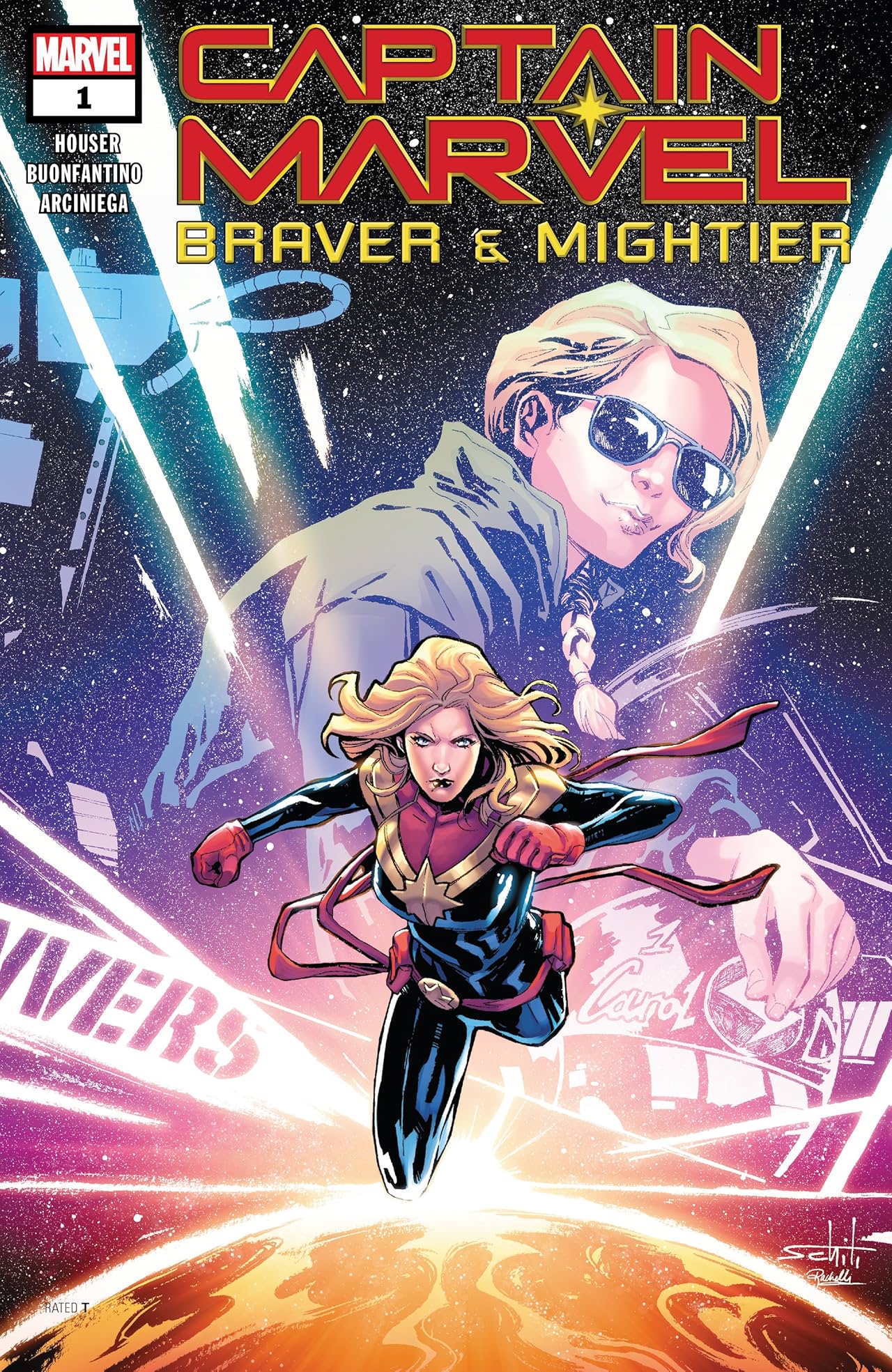
Jack Fisher’s Weekly Quick Pick Comic: Captain Marvel: Braver & Mightier #1

Every week, a new collection of comics enters this world and makes it a just little more bearable. In these times of internet trolls, political divide, and terrible movie remakes, few things are as relaxing and rewarding as enjoying a good comic on a Wednesday morning. Once again, I’m here to single out one particular comic that helps make a good morning turn into a great day.

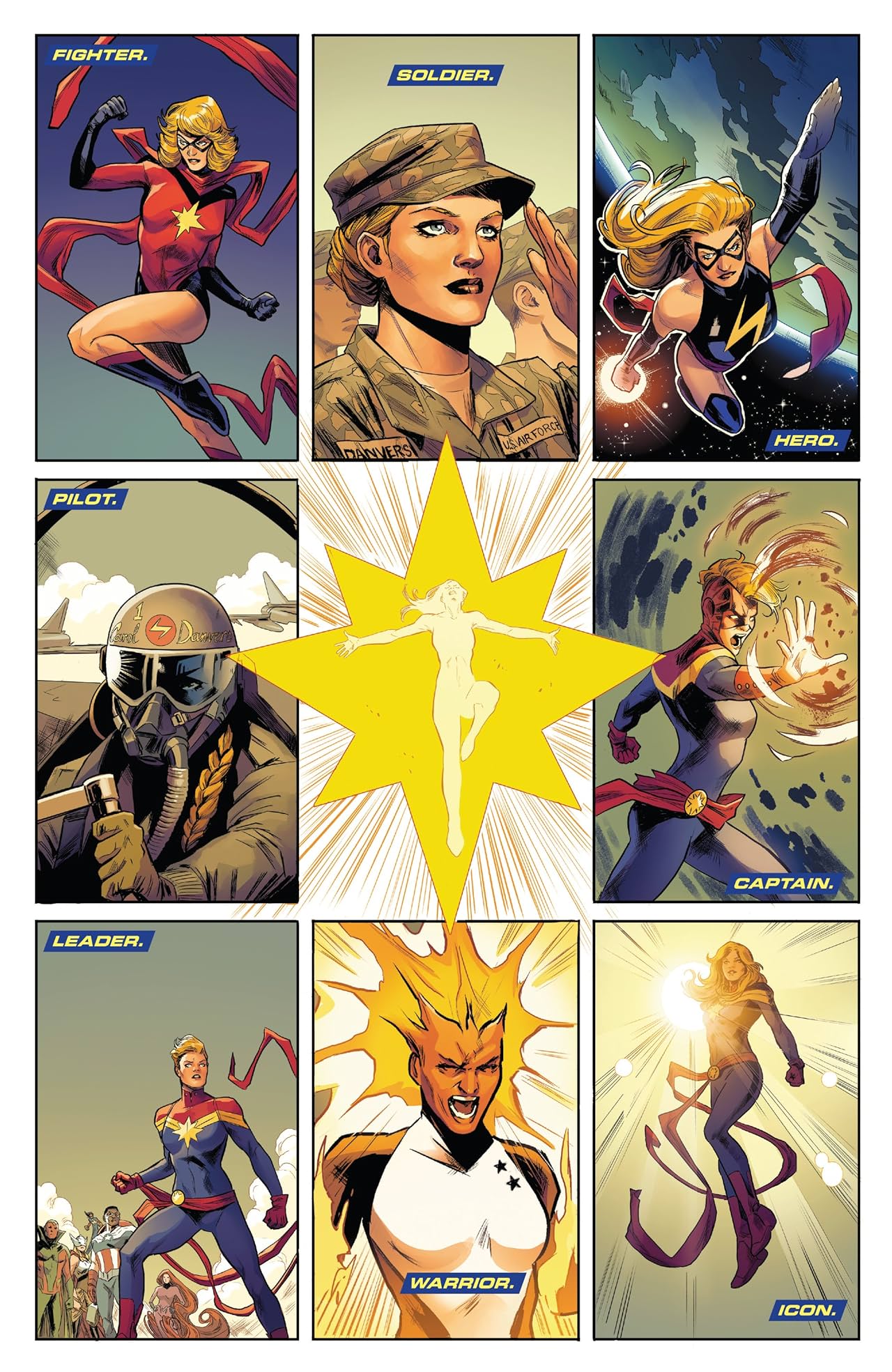
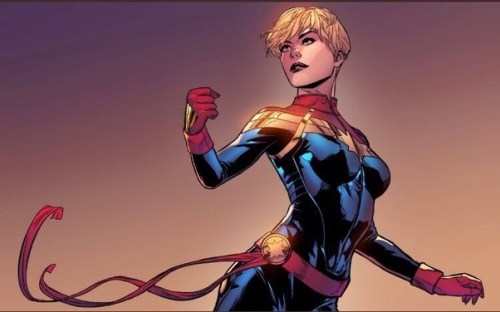
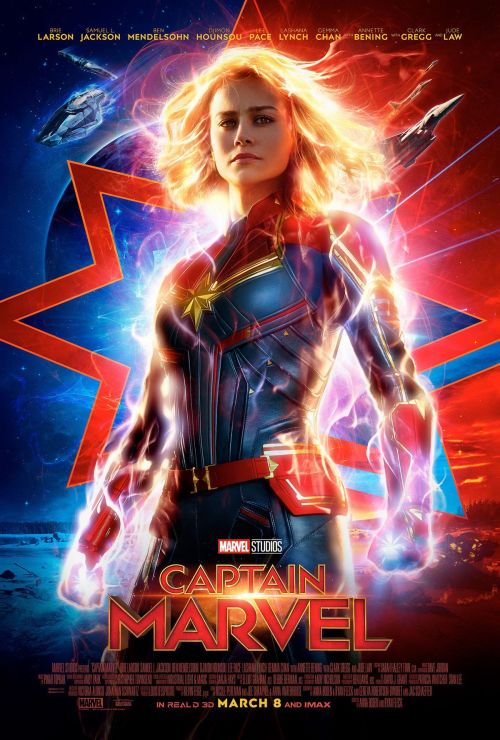
This week, along with a sizable chunk of 2019 thus far, is another great week to be a fan of all things Carol “Captain Marvel” Danvers. With her big debut movie coming out in just over a week, she’s about to achieve a rare status among comic book superheroes. That makes a comic like “Captain Marvel: Braver and Mightier #1” that much more special.

This comic isn’t actually part of Captain Marvel’s other ongoing series by Kelly Thompson, which I also highly recommend. This comic is a simple one-shot with a simple story that, in 23 short pages, highlights why Captain Marvel is a character deserving of the superhero A-list.

If you’re looking for a plot with some big, elaborate twist, you’re looking for too much here and you’re looking in the wrong place. If you’re just looking for a nice, simple summation of who Carol Danvers is and why she’s such a great hero, you’ll get everything you need and then some.

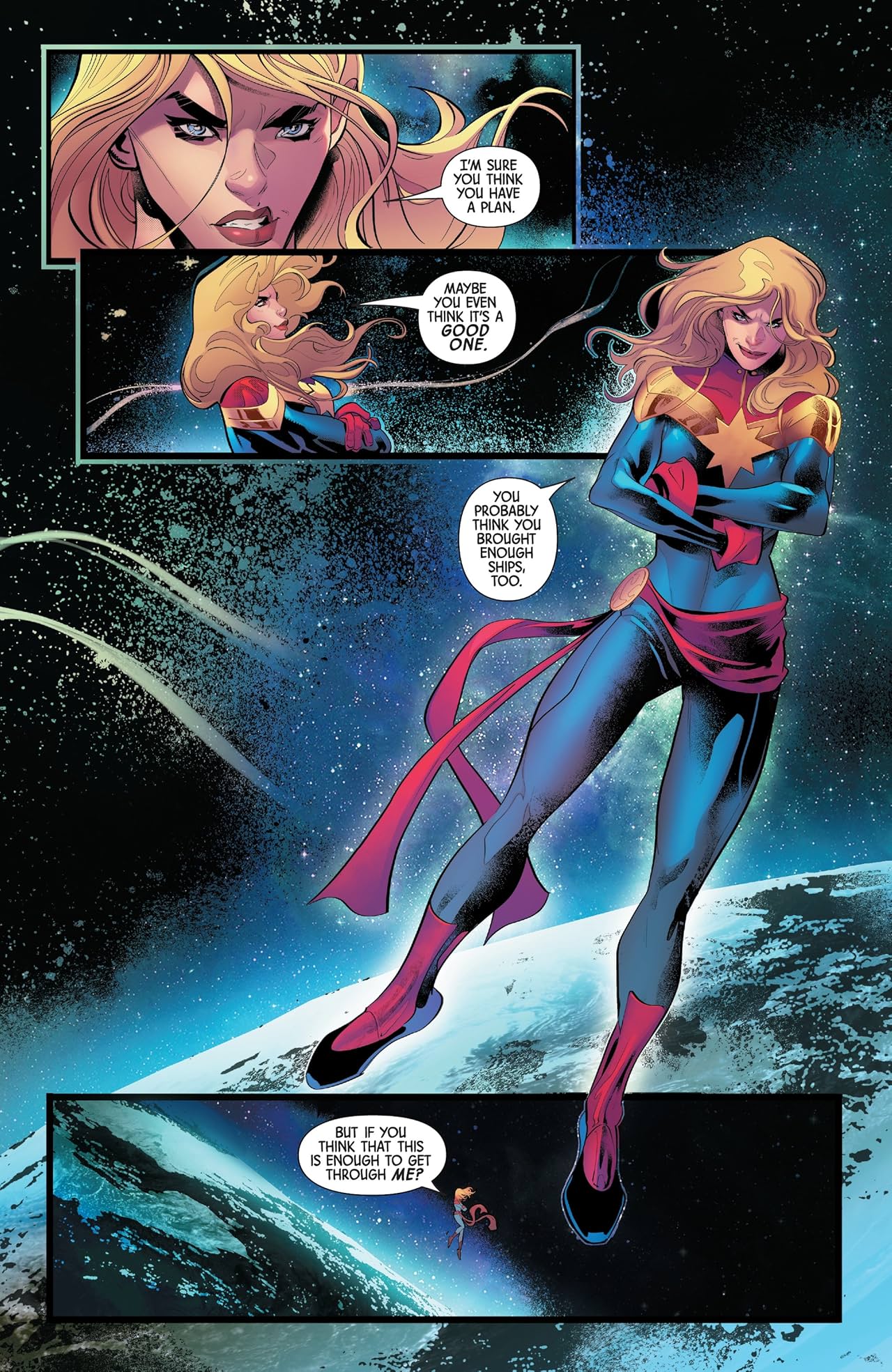
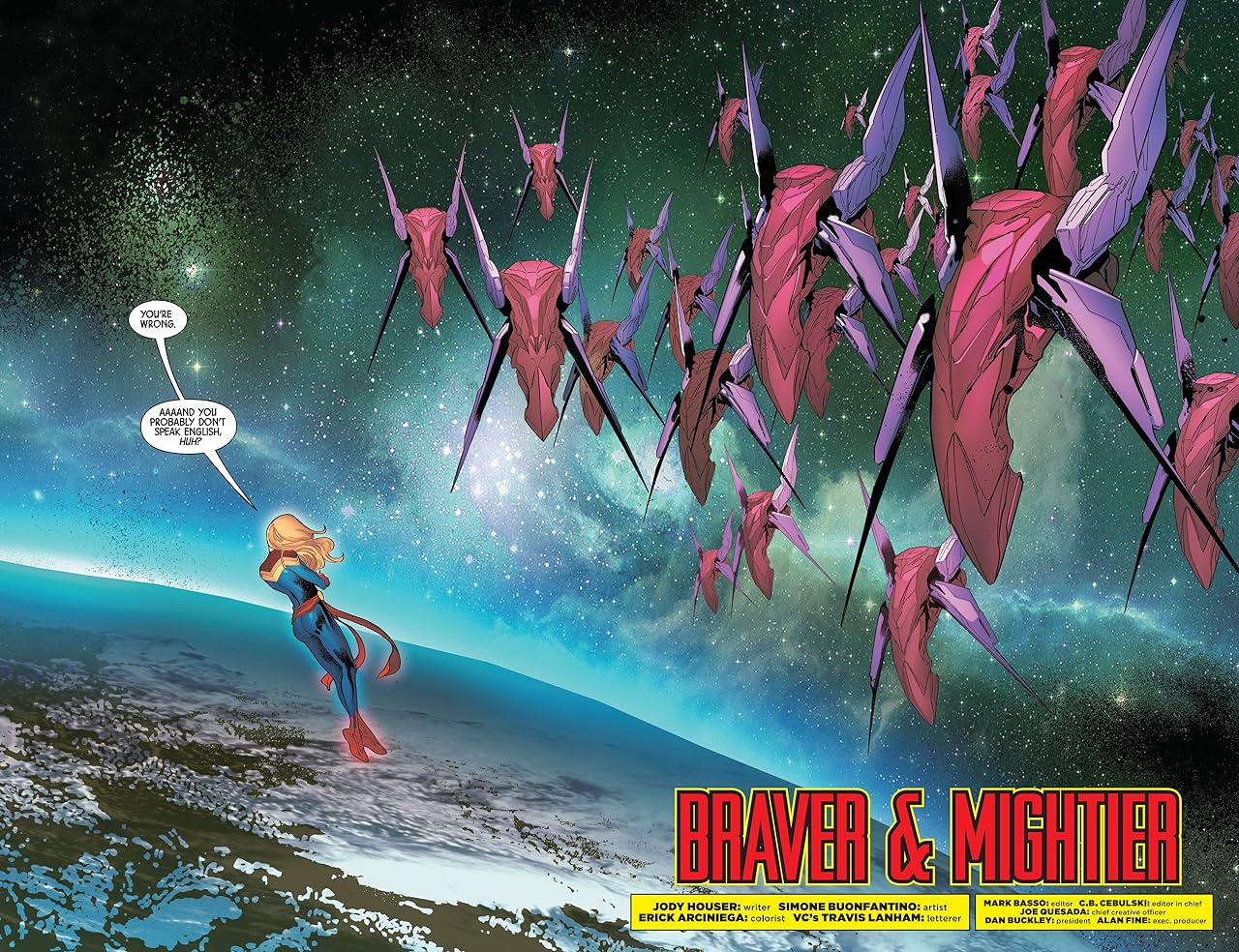
Writer, Jody Houser, puts Carol in a fairly simple setting. A fleet of mysterious aliens are threatening to invade Earth. It’s the sort of thing that happens at least once a week in the Marvel universe. It happens so often that it really doesn’t warrant assembling the Avengers. This sort of thing is right up Carol’s alley.

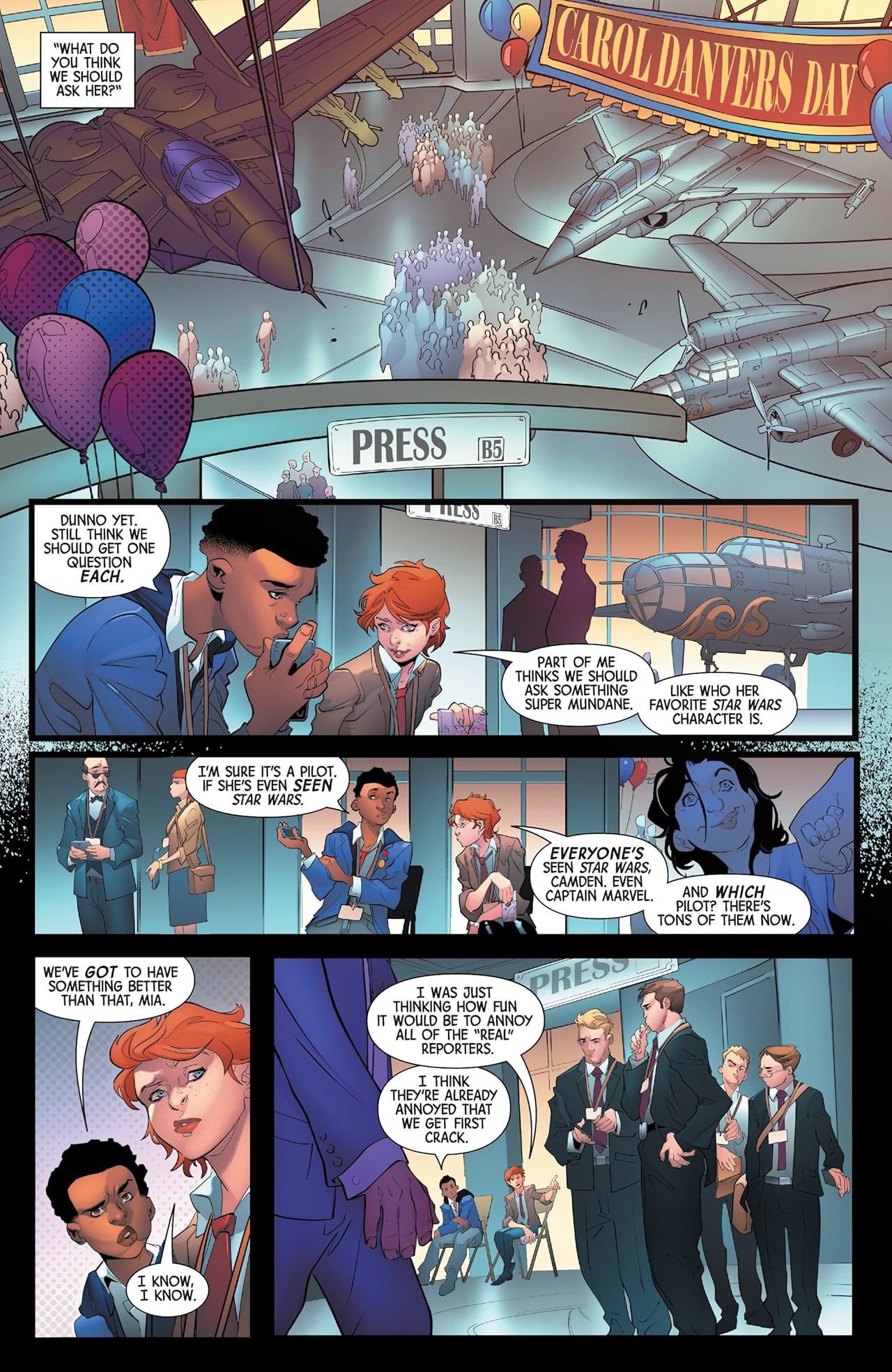
While this is going on, another smaller story unfolds back on Earth. At the Air and Space Museum back on the ground, Carol is being honored with her own little day of celebration. Having come from the United States Air Force and from NASA, it makes perfect sense that they would single her out as their preferred hero. Captain America already has the 4th of July and Tony Stark has a big enough ego.

As part of this celebration, some people in the press are looking for a chance to interview her. Among that press pool are a couple of local high school students who only got to attend because they’re local. They’re not exactly professional reports. They even admit that. However, they still have a chance to talk to Captain Marvel and they want to make the most of it.

They won’t get to ask her many questions. In fact, they need to figure out just one. All the while, they find out along with the rest of the world that Captain Marvel is fighting aliens on the same day when she’s supposed to be celebrated. It feels exactly like the sort of thing she would do, but these two plots complement each other in a way that really works in the end.

Without spoiling too much, Ms. Houser uses “Captain Marvel: Braver and Mightier #1” to demonstrate an issue that affects Captain Marvel more than most superheroes. As someone who is part human and part alien, she is often torn between worlds. Her desire to fly higher, further, and faster isn’t just about ambition. It reflects how her alien side often clashes with her human side.

Throughout her history, especially since she took the title of Captain Marvel in 2012, she often finds herself divided between confronting alien threats in Marvel’s vast cosmic landscape and defending the Earth with her fellow Avengers. As a result, it’s sometimes hard for her to relate to the people on Earth, as well as the aliens not trying to kill her.

Being able to relate to the people they’re saving is an important component for any hero, regardless of their origins or heritage. Superman is an alien and Wonder Woman is a demigod, but they still have strong connections to the world they protect. “Captain Marvel: Braver and Mightier #1” helps remind Carol of that connection.

In the end, Ms. Houser’s story and Simone Buonfantino’s artwork work together perfectly to demonstrate how far Carol Danvers has come and how much further she is poised to soar. It acknowledges the challenges she faced in the past and even noted some of her failures. However, Carol takes the good with the bad. That’s not just the mindset of a good superhero. That’s the mentality of a mature, understanding person.

The simplicity and humanity of “Captain Marvel: Braver and Mightier #1” makes it an excellent entry point for those curious about Captain Marvel beyond her upcoming movie. Again, it’s not too dense in terms of plot, but doesn’t need to be in order to work. It’s a good time to be a fan of all things Carol Danvers and this comic can only make those good times even greater.

Leave a comment

Filed under Jack's Quick Pick Comic

Why The Outrage Over Brie Larson And “Captain Marvel” Is Misguided (And Counterproductive)

captain_marvel_comics_nick-fury_avengers

Celebrities sometimes say dumb things. I doubt most people would contest that. Sometimes, celebrities say things that aren’t dumb, but badly taken out of context. I imagine most people would agree with that too. However, in an era where outrage is a national pastime and social media makes it way too easy to blow things out of proportion, it’s easy for a celebrity to cause controversy for all the wrong reasons.

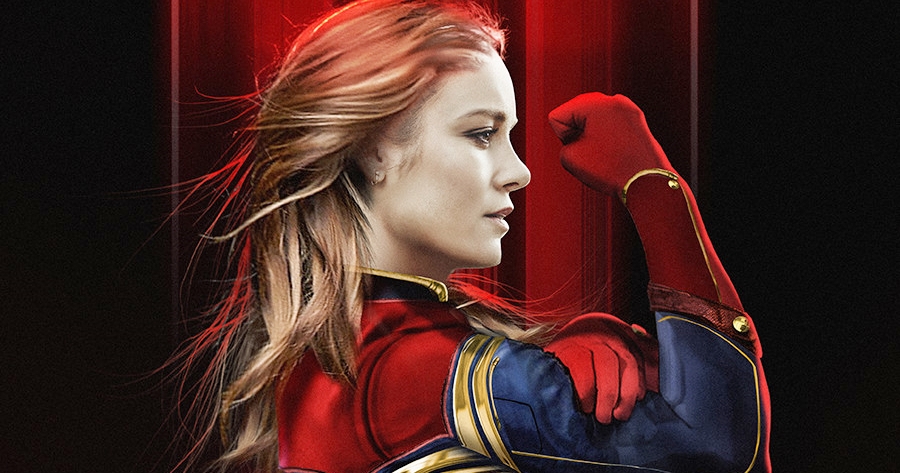
Brie Larson, whose star is set to rise considerably with the release of “Captain Marvel,” is learning this the hard way and a large consortium of angry people on the internet are intent on making it harder. What should’ve been a culmination of a young woman’s career and a female hero’s ascension to the superhero A-list is now mired in the ugliest kind of gender politics.

The origin of that controversy actually had nothing to do with Ms. Larson’s role on “Captain Marvel.” Back in June 2018, she made some overly political comments while accepting the Crystal Award for Excellence in Film. While celebrities making political statements is nothing new, Ms. Larson’s statement was hardly extreme.

It wasn’t some radical feminist tirade.

It wasn’t some angry rant about the outcome of 2016 Presidential Election.

It wasn’t even some act of elaborate virtue signaling by some smug celebrity.

All Ms. Larson did was advocate for greater diversity among film critics. She didn’t just make such a statement on a whim, either. She did so in response to a study published by the USC Annenberg School for Communication and Journalism that revealed a significant lack of representation in the industry of film criticism.

That’s not an unreasonable concern. The western world is becoming more diverse and the success of movies like “Black Panther” and “Crazy Rich Asians” shows that there’s a market for such diverse tastes. Advocating for greater representation in the field of film criticism makes a lot of sense.

Unfortunately, that’s not the message that some people gleamed from Ms. Larson’s comments. All they heard was that she doesn’t want to hear from white men anymore. They somehow got the impression that Brie Larson resents white men and her movies, including “Captain Marvel,” aren’t made for them. They’re not even welcome in the conversation.

Who these people are and the politics they represent is difficult to discern. I don’t think it’s accurate to call them conservative, liberal, feminist, anti-feminist, leftist, or any other political label. Outrage culture rarely gets that specific, but given the heated politics surrounding movies like “Ghostbusters” and “Star Wars: The Last Jedi,” it’s a frustratingly familiar narrative.

While I can understand some of the outrage surrounding “Ghostbusters” and “Star Wars: The Last Jedi,” in this case I don’t think it’s justified. That’s not just because I’m a big fan of Marvel Comics, superhero movies, and all things Captain Marvel. It’s because the actual substance of Ms. Larson’s words don’t warrant the controversy she has generated.

For specific reference, here’s what she actually said during her speech in June 2018. Read it very slowly and try to understand the context of her statement.

“I don’t want to hear what a white man has to say about ‘A Wrinkle in Time.’ I want to hear what a woman of color, a biracial woman has to say about the film. I want to hear what teenagers think about the film. If you make a movie that is a love letter to women of color, there is a chance that a woman of color does not have access to review and critique your film. Do not say the talent is not there, because it is.”

Remember, she said these words after learning how little diversity there was among movie critics. Unlike most people, she was actually in a position to do something about it. Being an Oscar winning actress who was poised to join the Marvel Cinematic Universe, her words carry more weight than most.

Even so, those words were construed as racist and sexist, two exceedingly loaded terms that bring out the worst in people, especially on the internet. Never mind the fact that she made clear in her original speech that she did not hate white men. Never mind the fact that she has since clarified her words. She is still being attacked as some angry radical feminist who hates men, especially those who are white.

It would be one thing if she had said outright that white men should be banned from criticizing certain movies. Many celebrities, including a few still relevant today, have said far worse. However, that’s not what Ms. Larson said. She never, at any point, advocated disparaging white men. She didn’t even say that people who hate her movies are racist and sexist, something the “Star Wars” crowd is painfully familiar with.

Again, all Ms. Larson spoke out against was a lack of diversity among film critics. That part is worth emphasizing because it renders the outrage surrounding her statement as utterly absurd. It also makes the targeted attack on the fan reviews for “Captain Marvel” both asinine and misguided.

Even though the movie isn’t out yet, the movie is being targeted with negative comments on Rotten Tomatoes. Since it has only screened for a handful of audiences, it’s unlikely that any of these people actually saw the movie or were inclined to see it in the first place. Some are even claiming that this has already impacted the projected box office for the movie.

Whether that impact manifests remains to be seen, but it’s worth noting that when “Black Panther” was targeted with similar attacks, it failed miserably. At the moment, early reactions to “Captain Marvelhave been glowing so the chances of these attacks hurting the box office are probably minor at best. If the pre-ticket sales are any indication, the movie will likely turn a hefty profit for Marvel and their Disney overlords.

Even if there were an impact, it would be for all the wrong reasons. It would send the message that there’s a large contingent of people who are willing to work together to tank a movie because of comments a celebrity said that had nothing to do with that movie and weren’t the least bit controversial, when taken in context.

In this case, it was simply twisting someone’s comments to make them sseem like they said things that they never said or even implied. Then, those who bought into that narrative simply use that as an excuse to disparage a movie that they haven’t seen. That’s not just absurd, even by the skewed standards of outrage culture. It sends the worst possible message from those who think they’re protecting their favorite movie genre.

It tells the world that they don’t care what a celebrity actually says. They actively look for an excuse to hate someone who doesn’t completely buy into their preferred status quo. It would be one thing if that status quo was just and reasonable, but that’s not the case here.

All Ms. Larson did was advocate for more diversity among film critics. If that is somehow too extreme, then the problem isn’t with her or celebrities like her. It’s with those determined to hate her. There are a lot of issues in the world of celebrities and movies that warrant outrage, but advocating for more diversity in film criticism isn’t one of them.

I can already hear some people typing angry comments stating that if she had said those same words, but changed the demographic to something other than white men, then it would be an issue. However, the fact remains that this isn’t what she said.

It also doesn’t help that Brie Larson identifies as a feminist and that term has become incredibly loaded in recent years. However, she has never embraced the kind of radical rhetoric that other, less likable celebrities have espoused. Until she does, those determined to identify her and “Captain Marvel” as racist, sexist propaganda are only doing themselves and their politics a disservice.

16 Comments

Filed under Celebrities and Celebrity Culture, extremism, gender issues, Marvel, media issues, men's issues, movies, outrage culture, political correctness, superhero movies

Jack Fisher’s Weekly Comic Quick Pick: Ms. Marvel #37

Every Wednesday is a holiday for comic book fans. That’s the day when a fresh batch of comics from companies we love to complain about give us a fresh dose of ink-laden awesome. Within each batch of books are plenty of comics to brighten your week and make the world a little more magical. I try to single one particular comic out from that pack that I feel has more magic than most.

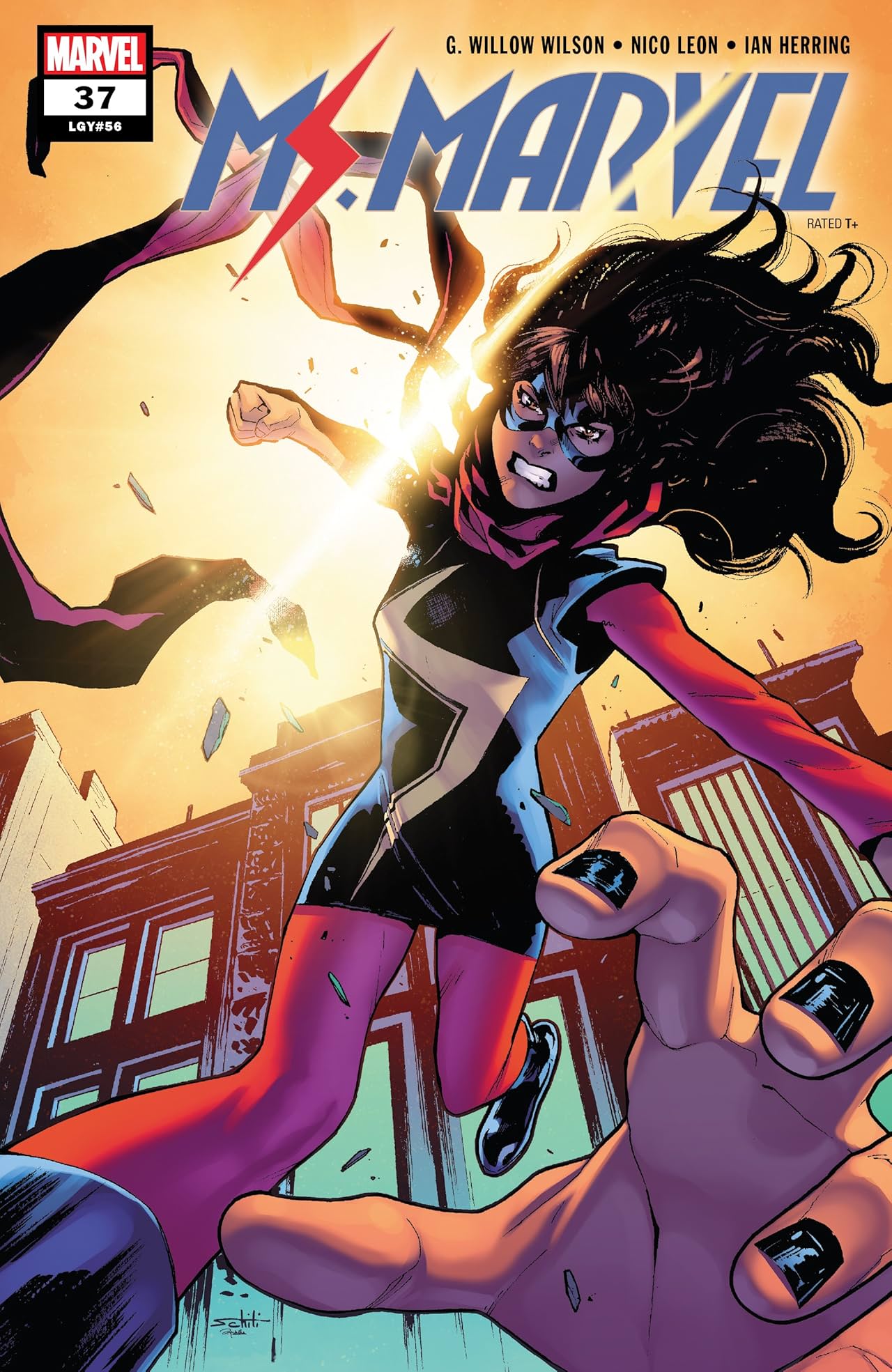
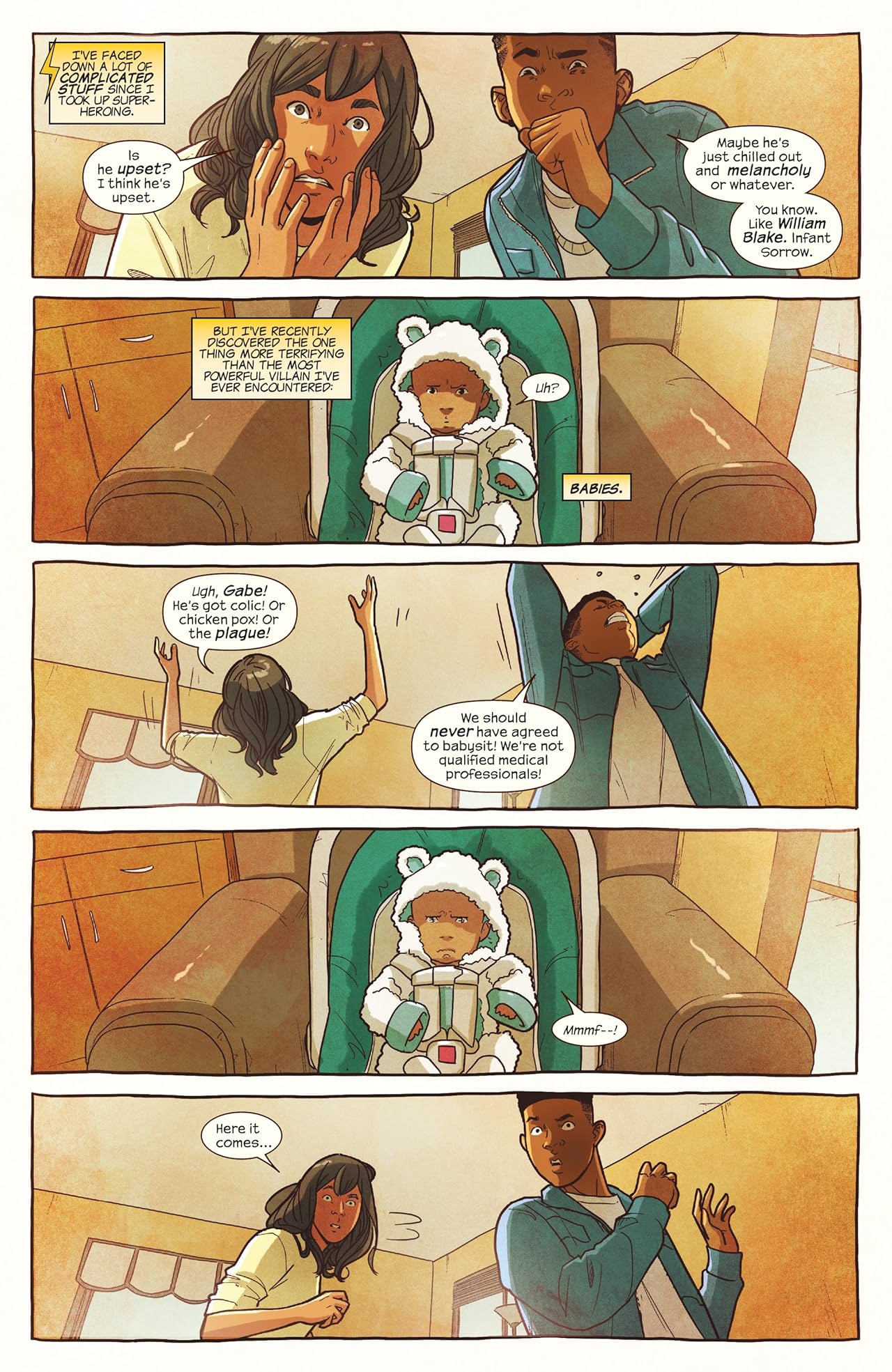
This week’s comic quick pick was tricky. There were some quality books this week from the likes of X-men, Justice League, Wonder Woman, and Spider-Man. However, one book found a way to stand out in the most adorable way possible. That book is “Ms. Marvel #37” and if you have a low tolerance for cuteness, this book may be too much for you.

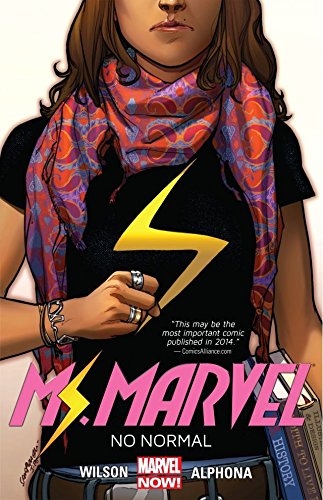
I’ve sang the praises of Kamala Khan in the past. I’ll likely find new ways to praise her in the future, especially if she ends up joining the Marvel Cinematic Universe. She’s one of the most likable characters in all of superhero comics. It helps that she hasn’t been around long enough to do something awful, but it also helps when her personal struggles and her superhero struggles blend together perfectly.

That’s the primary theme in “Ms. Marvel #37.” There isn’t a villain to fight, for once. There is a disaster, but it’s not caused by a 100-foot monster or a mad scientist with access to too much plutonium. It’s caused by some a mix of bad luck and poor infrastructure, something that just happens to be a growing issue in the real world.

It’s not nearly as preachy as it sounds. It’s the kind of issue that the Avengers and other superhero teams don’t get to do often enough, help innocent people dealing with a disaster. Kamala gets to be a different kind of hero, one who does more than just punch villains. It helps reinforce that she’s not just a hero for the sake of wearing a fancy costume. She’s a hero because she genuinely wants to do the right thing.

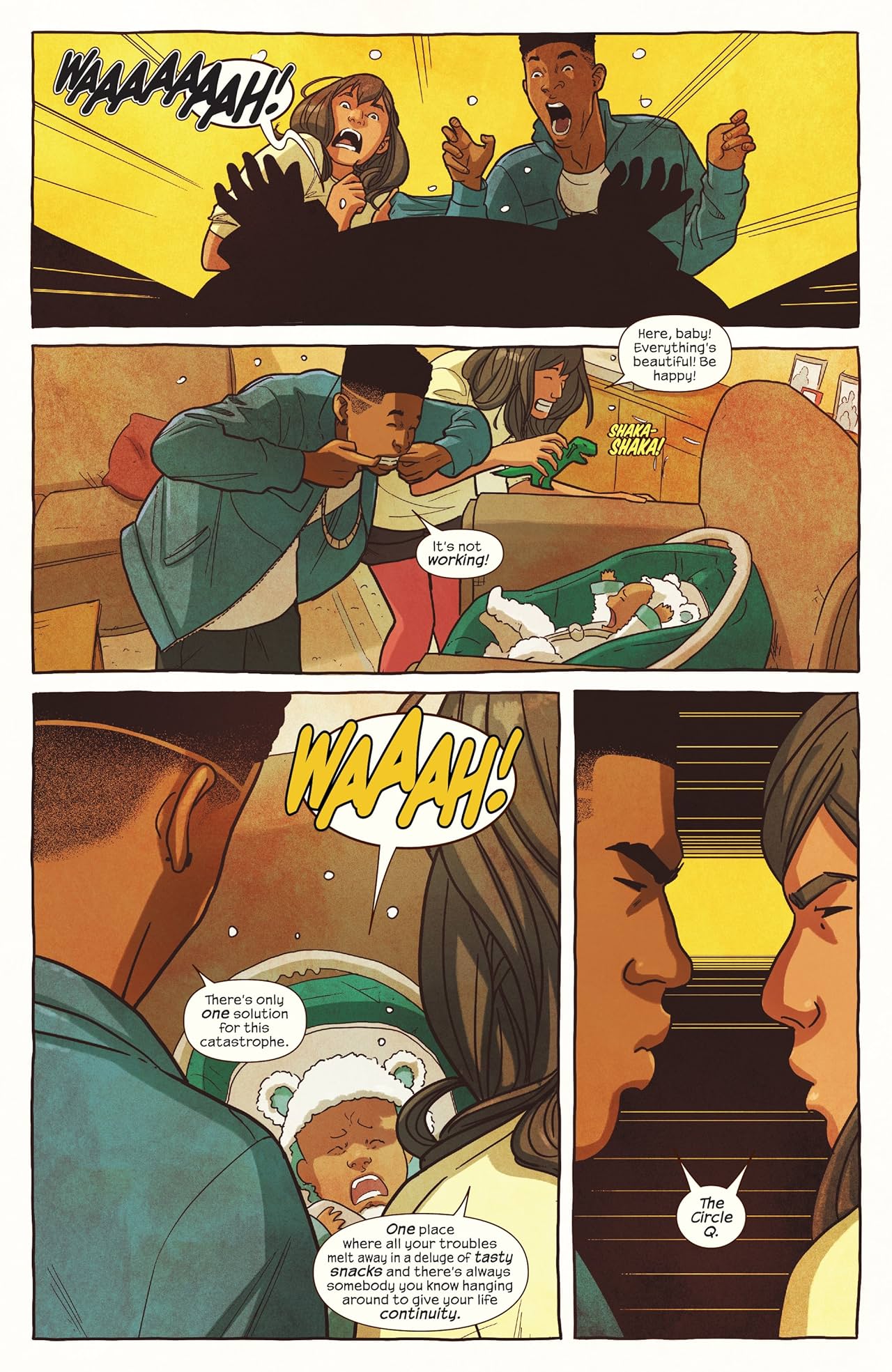
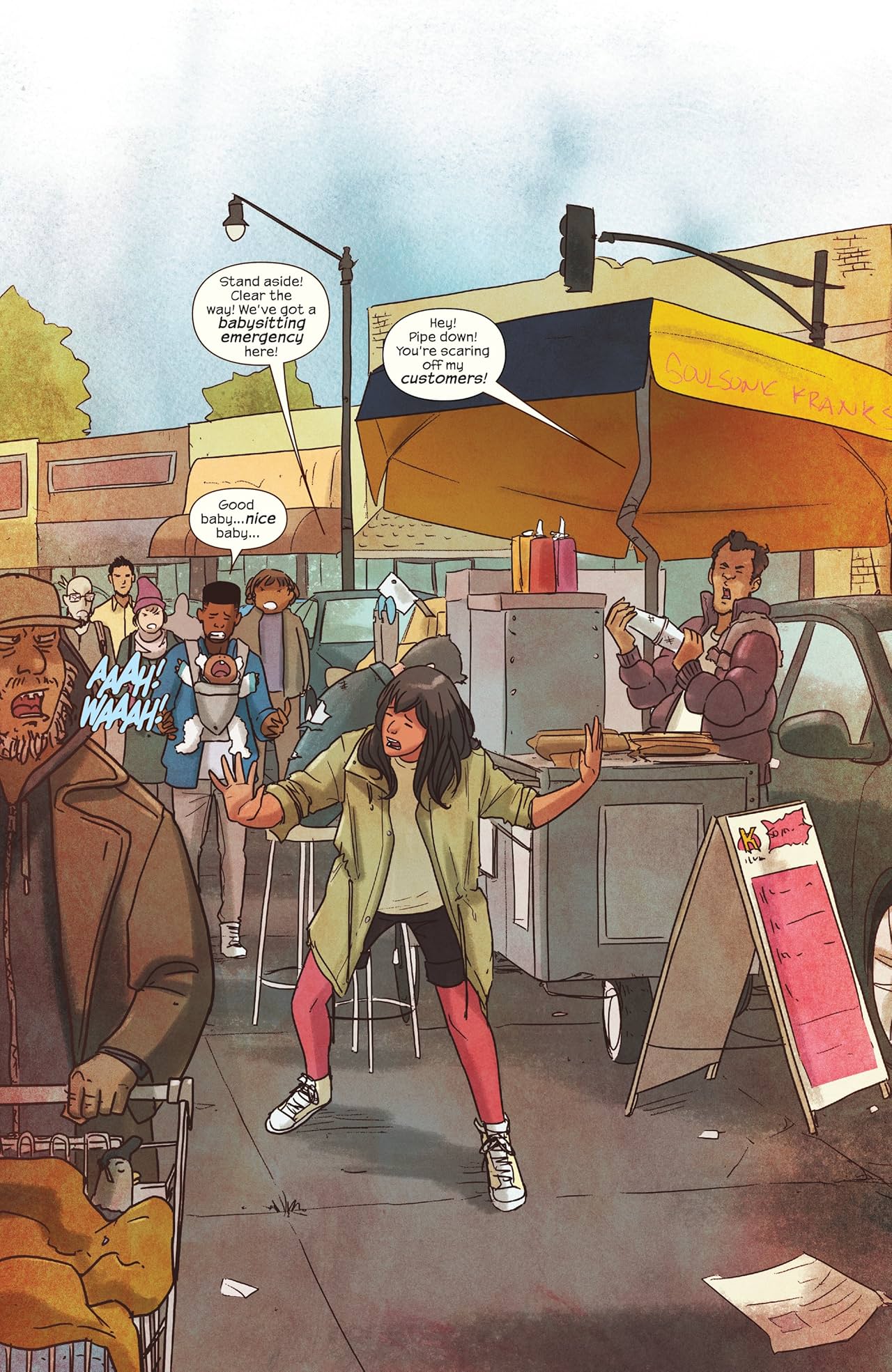
What a concept, right? Kamala is someone who just does the right thing because it’s the right thing. Superman doesn’t have to be the only one with those kinds of values. Unlike Superman, though, Kamala has to do the right thing while babysitting. No, I’m not referring to having an annoying side-kick. I’m talking about a real, actual, diaper-wearing baby.

That baby belongs to her brother, Aamir. He entrusted Kamala and his wife’s brother, Gabe, to watch him. It started going wrong before people needed rescuing, albeit in a hilariously endearing way. Kamala has dealt with some pretty major threats since becoming Ms. Marvel. However, she’s never dealt with a baby and that overwhelms her than her last team-up with Carol Danvers.

It’s as hilarious as it is fitting. It shows that Kamala is still a teenage girl. She’s still young and easily overwhelmed by things she isn’t familiar with. She ends up having to rely on friends and supporting cast to help her, of which she has many. They all have a knack for showing Kamala that things don’t have to be as dire as she thinks. Experience will help you cope, regardless of whether you’re a superhero.

It’s a good message that’s a lot more useful than old PSA’s about eating vegetables and saying no to drugs. “Ms. Marvel #37” continues Kamala’s tradition of making a positive statement through superhero comics, something that seems corny on paper, but works beautifully through her.

It’s part of what makes Kamala so endearing. It’s also what makes her such an effective superhero as Ms. Marvel. She doesn’t just save the day. She inspires others and is, in turn, inspired by them. When things get rough, she reacts in a way that feels distinctly human. In the Marvel universe, which is populated by gods, demigods, and Squirrel Girl, it’s nothing short of refreshing.

To say Kamala has a rough, but enlightening day in “Ms. Marvel #37” would be accurate. It’s just as accurate to say that she has a few low points where she lets the stresses of babysitting and superhero work get to her. That only makes how she handles it that much more fitting.

Ms. Marvel #37” is not part of a larger story arc, nor is it tied to some ongoing event. It’s a simple, self-contained comic that G. Willow Wilson and Nico Leon use to remind us why Kamala Khan is so lovable. In that sense, it works. In another, the final page provides an ominous hint that Kamala and her family are about to endure a major upheaval in the best possible way.

There are a lot of events going on in the world of superheroes. It’s tough, if not frustrating, to keep up with all of them. That’s exactly what makes “Ms. Marvel #37” so enjoyable. It’s one comic with one story about one lovable hero. You get you’re money’s worth, both in terms of satisfaction and feels. What more could you want?

Leave a comment

Filed under Jack's Quick Pick Comic

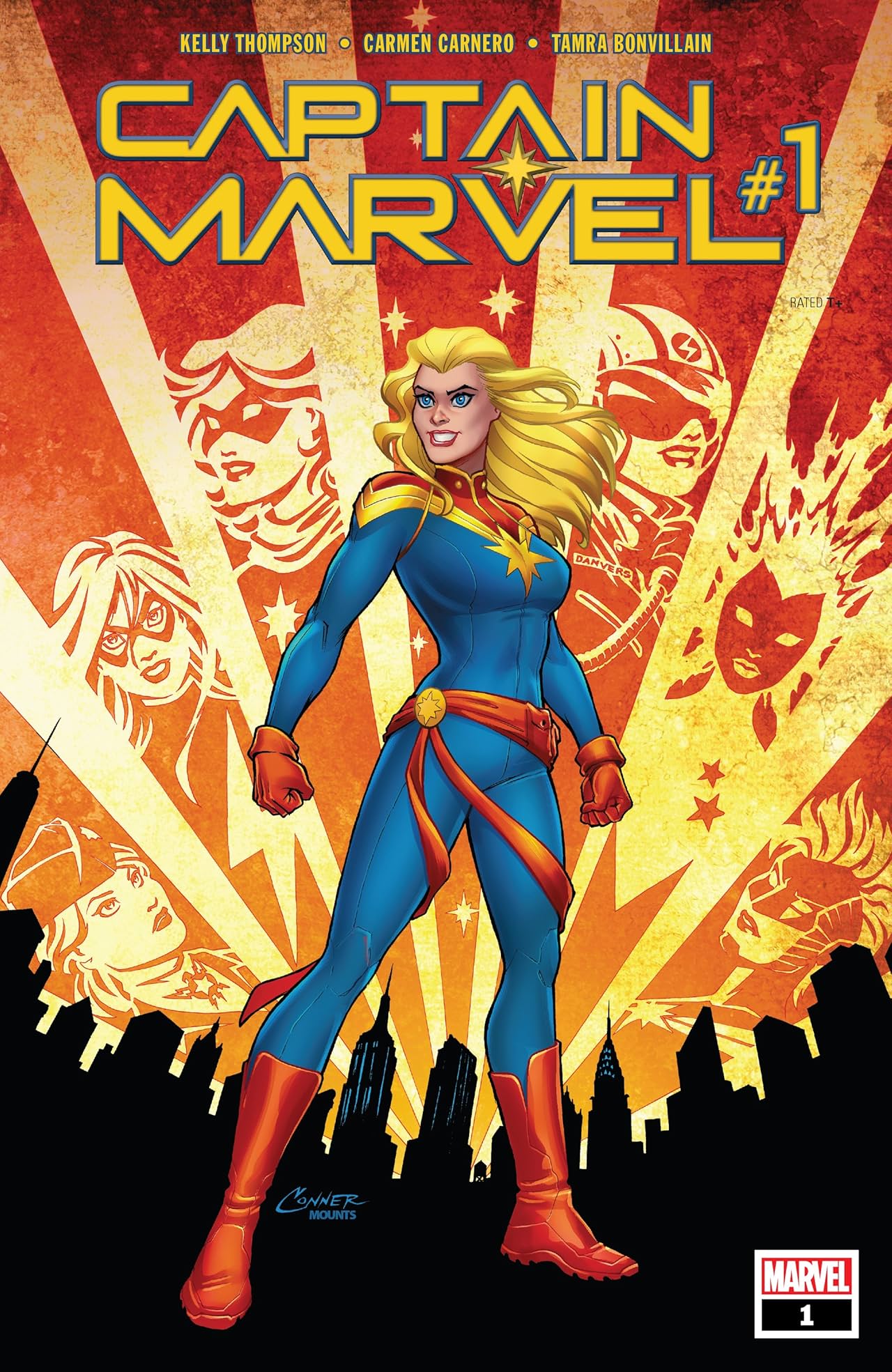
Jack Fisher’s Weekly Quick Pick Comic: Captain Marvel #1

It’s Wednesday and if you’re a lifelong comic book fan like me, you know that’s the most magical day of the week. Screw sleeping in on Saturday or going out to party on Fridays. Wednesday is new comic day, that magical day when a fresh batch of comics enter the world and make it more awesome. In celebration of this day, I offer my pick of a single comic that I feel makes new comic day that much more awesome.

This week was easier than most. If you were up late watching the College Football Championship Game, you saw the latest trailer for the upcoming “Captain Marvel” movie. This year is already shaping up to be an awesome year for Captain Marvel, Carol Danvers, Brie Larson, and everyone affiliated with this marvelous character. Writer, Kelly Thompson, helps do her part with “Captain Marvel #1.”

Even if you’ve never read a Captain Marvel comic and only know the bare minimum about Carol Danvers, this comic is for you. It’s the latest relaunch of the series and after recent upheavals in her life, the timing is perfect. I know a lot of comic fans whine about the number of relaunches that occur these days, but sometimes it’s appropriate when a character undergoes a major transition.

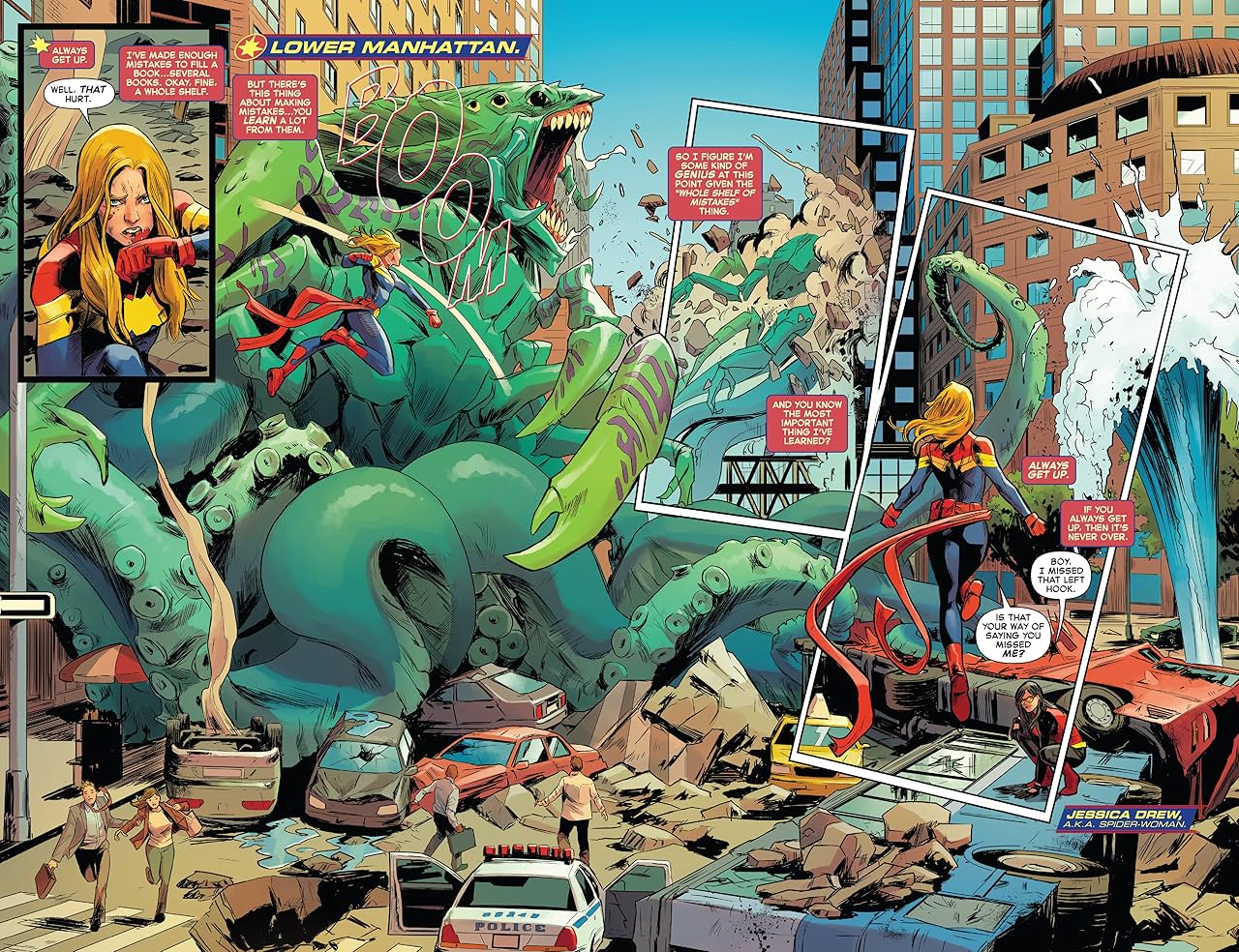
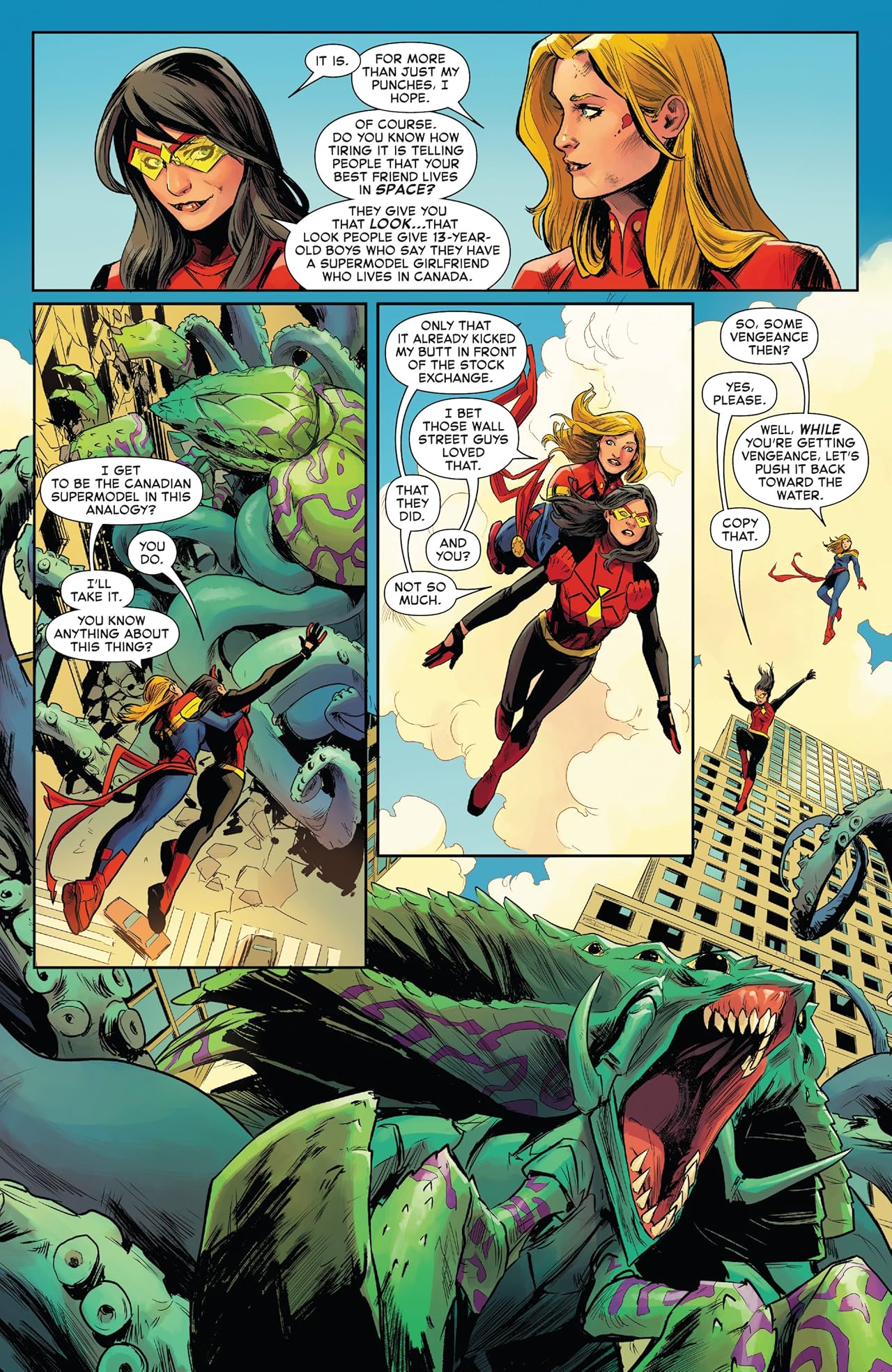
The Carol Danvers in “Captain Marvel #1” is more grounded and self-aware than the Carol Danvers of recent years. She’s focusing less on high-flying space battles and more on events unfolding on Earth. Since Earth also has the occasional Kraken attack in Lower Manhattan, it’s not like she’s short on things to punch.

Beyond just punching monsters, this comic establishes that Carol Danvers isn’t just a hero, an icon, and the star of an upcoming movie that seeks to challenge “Wonder Woman.” She’s an actual person who has thoughts, feelings, insecurities, and even pet peeves. Granted, most of those peeves center around how annoying Tony Stark can be, but that just helps show how human she is, at heart.

Only a small chunk of this comic is spent with her fighting monsters or saving the day. A lot more of it shows Carol rebuilding and reconnecting with the people in her life that matter. That includes her best friend, Jessica “Spider-Woman” Drew, and her frequent love interest, James “War Machine” Rhodes.

It makes for plenty of small, meaningful moments that bring out Carol’s humanity. It helps make the larger, more action-packed moments that much more enjoyable. There is a larger conflict unfolding. There are new threats emerging for Carol that have little to do with space aliens, superhero civil wars, or pre-ordering tickets to her movie.

The nature of those threats aren’t resolved in a few punches. In fact, it sets the stage for a larger story that’ll require Carol to raise the bar for heroes, as only she can. It shows Carol Danvers at her best in addition to showing her at her most human. It’s a perfect balance for a Captain Marvel comic.

It really is a great time to be a Captain Marvel fan. Even if you’re not, “Captain Marvel #1” makes a strong case on why she deserves to be in the upper ranks of Marvel’s greatest heroes. That makes my quick pick this week easier than usual. If you buy only one comic this week, make it “Captain Marvel #1.”

If nothing else, it’ll help tide fans over until the debut of her movie on March 8, 2019.

Leave a comment

Filed under Jack's Quick Pick Comic, Marvel, superhero comics

“Captain Marvel” Second Trailer

Another glorious preview for “Captain Marvel” has dropped. Let’s all take a moment to soak in its marvelous glory. She’s destined to fly higher, farther, and faster than any hero before her. Thanos is fucked. Nuff said!

1 Comment

Filed under Marvel, superhero comics, superhero movies

The following is a review I wrote for PopMatters for “The Life of Captain Marvel #5.” Enjoy!

Losses, Journeys, and Ascensions: ‘The Life of Captain Marvel #5’

Leave a comment

December 21, 2018 · 10:21 pm

How The Captain Marvel Movie Could Actually Fail

captain_marvel_poster_1688

I hope everyone has had a chance to catch their breath after the release of the “Captain Marveltrailer. I certainly needed a day or two. It was one of those experiences in which it takes time to process every wondrous detail. I don’t know how many times I watched it. I just know that March 8, 2019 cannot get here fast enough.

The response to the trailer has been overwhelmingly positive, which has become the norm for all things affiliated with Marvel Studios. The bar for this movie is high, but matching and exceeding high bars is exactly what Carol Danvers does. The Marvel Cinematic Universe is already on an unprecedented win streak, both in terms of acclaim and box office. By all accounts, “Captain Marvel” is poised to continue that streak.

If I had to bet on it, I would place a hefty wager on “Captain Marvel” succeeding. Marvel Studios is riding such a huge wave of hype after “Avengers: Infinity War” that the idea of one of their movies failing seems unthinkable. However, it wasn’t that long ago that people felt the same way about “Star Wars.” Then, “Solo: A Star Wars Story” came along and shattered that notion with the force of a thousand Death Stars.

Like it or not, the law of averages dictates that Marvel Studios will fail at some point. Whether or not that happens with “Captain Marvel” remains to be seen. For the moment, that doesn’t seem likely, but the possibility is definitely there. I would go so far as to say that “Captain Marvel” is more vulnerable than previous Marvel movies and not just because the bar for success is so ridiculously high.

Kevin Feige, the President of Marvel Studios, has gone on record as saying that Captain Marvel will be one of the most powerful characters in the MCU. Her presence will be a game-changer for the immediate and distant future. That means the margin for error is ridiculously small. Marvel Studios literally cannot afford for “Captain Marvel” to fail. That may end up being what makes this movie so vulnerable.

As a lifelong fan of superhero comics and a Captain Marvel fan, I feel like it’s worth contemplating this most distressing possibility. Never mind the implications for Marvel, Disney, and the entire superhero genre that may unfold in the event that “Captain Marvel” fails. How could a movie with so much going for it and an Oscar-winning actress in Brie Larson end up failing in the first place?

After watching the new trailer multiple times, reading multiple articles, and contemplating my previous comments on this movie, I’ve surmised a handful of concerns that I believe could derail this movie. Some of these concerns assume certain details that may very well be dead wrong by the time the movie comes out. I have no insight beyond the trailers I’ve seen and the details that have been made public.

I don’t expect everyone to share these concerns. Some may even have entirely difference concerns and I’d be happy to discuss them in the comics. For now, this is just me, as a fan of both Carol Danvers and superhero comics, contemplating what could go wrong for a movie that aspires to do so much.


Reason #1: Limiting The Extent Of Carol’s Agency (Inadvertently)
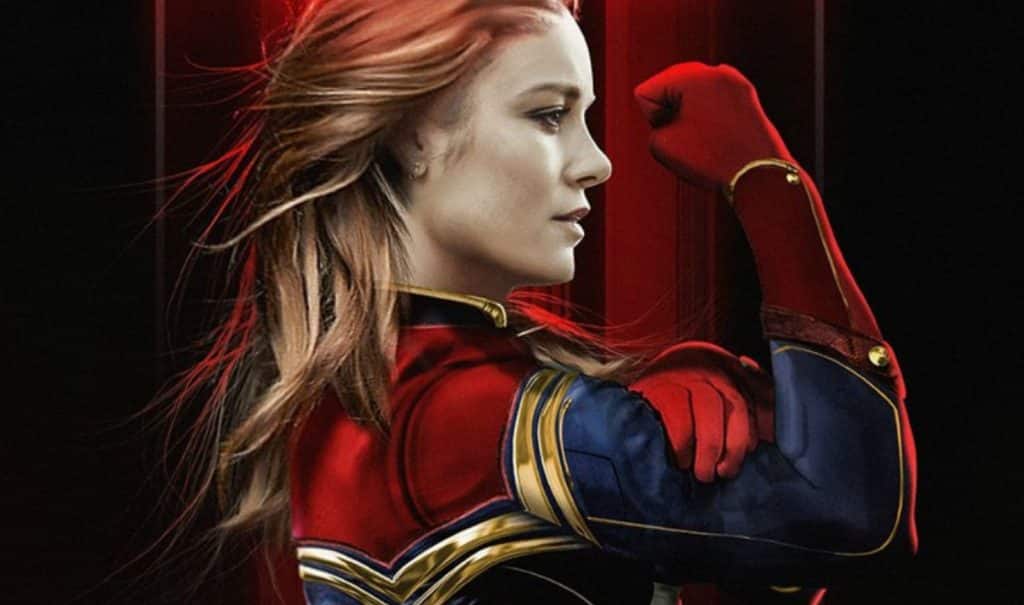
One of the biggest revelations from the second trailer had to do with an important plot point that was ripped directly from the comics. In the first minute, we find out that Carol’s memory has been erased and she’s caught up in the agenda of the Kree. Given how the only notable Kree character in the MCU to date has been Ronan the Accuser, this does not bode well for her.

This is a critical detail because in the comics, Carol lost both her memories and her powers at one point and had to effectively rebuild herself. That struggle helped establish how resilient she was, as a character. It also helped build her appeal. More importantly, though, it emphasized her struggle to regain her sense of agency.

Being mind-wiped is always a tricky plot point, as was nicely demonstrated in “Captain America: Civil War.” The biggest problem is being mind-wiped really hinders a character’s ability to make weighty choices. For Bucky Barnes, that isn’t too controversial. For Carol Danvers, a female hero in an era where female heroes have become fodder for identity politics, it could be an issue.

If, from the get-go, Carol is just a puppet of the Kree and her entire story revolves around her escaping their control, then that doesn’t just narrow the plot. It limits her agency because it makes her choices predictable. If, at any point in the story, she’s faced with a choice to follow the agenda of the Kree or go against them, it’s not going to surprise anyone when she chooses to go against the aliens trying to use her.

By making too much of the story about Carol re-asserting her agency, it makes the movie less about her fighting shape-shifting aliens and more about her regaining her independence. While that too can be a compelling story, and one in line with her history in the comics, it hinders the plot by making every choice obvious. When none of the choices in a story seem difficult, it can get boring fast.


Reason #2: Not Allowing Carol To Be Wrong

This is another factor that could make “Captain Marvel” too predictable and boring. Marvel Studios has made it clear that they want Carol Danvers to be the future of the MCU. Like Captain America, she’s poised to become the face of Marvel and their Disney overlords. For that very reason, it’s important that they allow her to be wrong.

To understand why, think back to “Wonder Woman,” the movie that set the gold standard for female superhero movies. In this movie, Wonder Woman doesn’t just make a fateful choice when she leaves Paradise Island. She also ends up being dead wrong about the identity of Ares. It made for a powerful moment that genuinely surprised me.

That moment didn’t just establish that Wonder Woman was fallible, despite being this overpowered badass warrior princess. It humanized her in a critical way. You could argue that this trait is more integral to Marvel’s heroes because they end up being wrong in a wide variety of ways. Tony Stark’s journey to becoming Iron Man started with him being wrong about something.

My concern for Carol is that making her this overpowered female hero who can defeat Thanos will take priority over everything else. The story won’t even give her a chance to be wrong or make a bad decision. That won’t just make the plot predictable and boring. It could earn Carol Danvers the dreaded “Mary Sue” label that has plagued characters like Rey.

That, more than anything, could derail Carol’s ascension to the upper echelons of the MCU. If she becomes a joke more than an icon, then she won’t be able to do carry out the bold plans that Marvel Studios has laid out for her. Part of what makes characters like Iron Man and Wonder Woman so popular is that they’re so easy to cheer for. Cheering for an annoyingly flawless character who is never wrong is much harder.


Reason #3: Not Effectively Explaining Carol’s Absence From The MCU
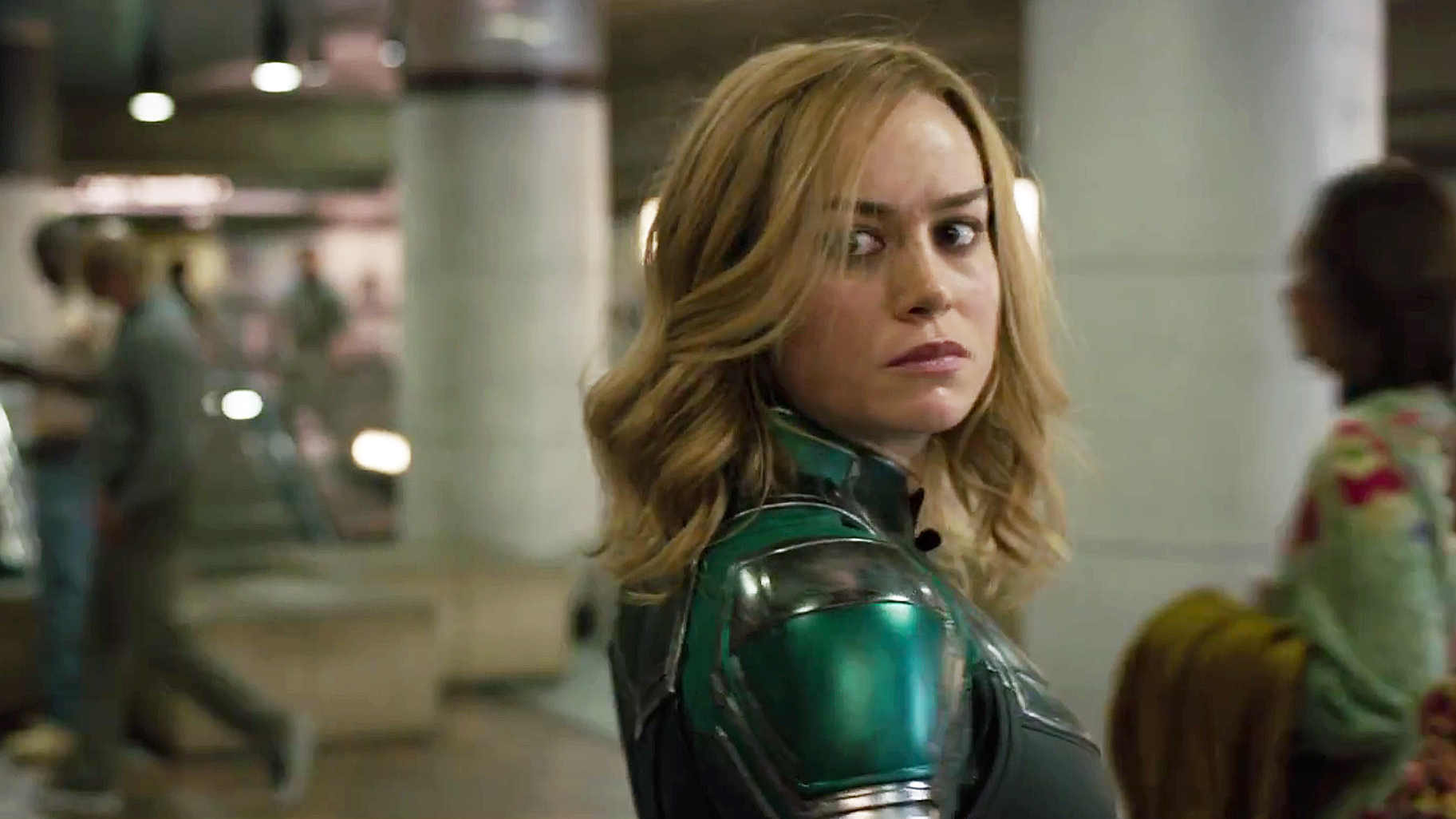
This is more a logistical concern than anything else. Before the first trailer ever dropped, it was established that “Captain Marvel” was going to take place in the 1990s. As a result, it would unfold within a world before the Avengers ever assembled and before superheroes ever became mainstream. It would also explore the origin of pre-eye patch Nick Fury, something that “Captain America: The Winter Soldier” only hinted at.

That’s an intriguing idea that digs into an unexplored aspect of the MCU. At the same time, it does raise a major question. If Carol has been Captain Marvel since the 1990s, where has she been? Why wasn’t she available when Loki or Ultron attacked? While it makes sense outside the movies in that a “Captain Marvel” movie wasn’t even scheduled before 2012, those questions are still relevant in the story.

The end of “Avengers: Infinity War” somewhat compounds this issue because Nick Fury reveals that he has had a way of contacting Carol all this time. A tie-in comic also hints at his past dealings with Carol, but is vague on why he chose not to summon her. Chances are “Captain Marvel” will try to answer that question more in depth, but that answer might not be adequate.

It’s not a trivial detail that can be glossed over. If Carol doesn’t have a good reason for not being on Earth during invasions from aliens and genocidal robots, then that makes it harder to get behind her as the most powerful hero in the MCU. It can’t come off as an excuse because Marvel Studios hadn’t planned that far ahead. Without a good reason, Carol just wouldn’t come off as heroic.


Reason #4: Making Her A Female Superhero BEFORE Making Her A Great Female Characters

This is where the stakes for “Captain Marvel” get frustratingly political. I’ve mentioned before how creating quality female characters has become mired in identity politics. This movie has already been affected somewhat by those corruptive forces. “Wonder Woman” managed to avoid it from a plot perspective and that’s the most “Captain Marvel” can do.

This means that before Carol Danvers becomes the super-powerful, high-flying badass we saw in the trailer, she needs to establish herself as a character, first. This is something I’ve seen movies, comics, and TV shows get completely backwards in recent years. There’s such an emphasis on making someone a “strong female character” that they forget the part where they’re a compelling character.

Carol Danvers has decades of character development in the comics. She’s someone who has deal with upheavals in her personal life, her superhero life, and everything in between. It’s hard to fit all of that into a two-and-a-half hour movie, but both “Wonder Woman” and “Captain America: The First Avenger” showed that it’s possible.

I can easily imagine Marvel Studios feeling tempted to make “Captain Marvel” the kind of cosmic spectacle we saw in “Guardians of the Galaxy.” I wouldn’t blame them for taking that approach, but having that without establishing the depths behind Carol Danvers would only be half a movie. Visual spectacles are great, but without quality characters, it’s just flashy images and nothing else.


Reason #5: Trying Too Hard To Make Carol Too Powerful
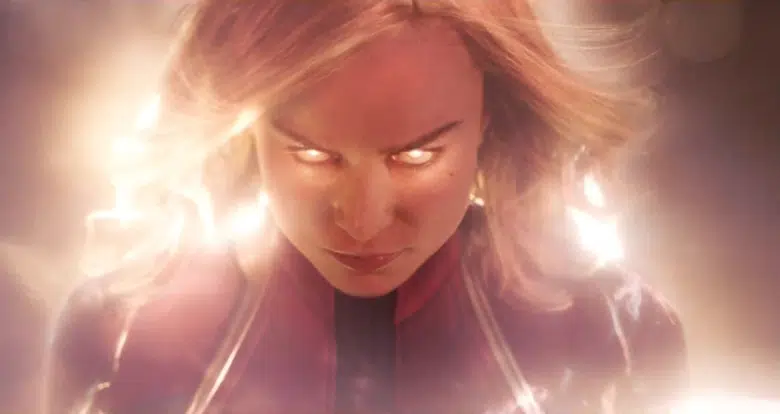
This issue is part logistics and part agenda. The events of “Avengers: Infinity War” were astonishing in terms of scope and scale. In the end, the collective might of dozens of Avengers could not stop Thanos. He was stronger than Thor, the Hulk, and the entire army of Wakanda. By default, taking him down requires a new level of power.

Carol Danvers promises to wield such power. Before the movie finished shooting, Kevin Feige dubbed her the most powerful Avengers in the MCU. That power may be necessary to defeat Thanos, but getting Carol that power could be tricky. Her power levels are already pretty extreme in the comics, but the MCU deals with different circumstances and scales.

The second trailer offers some clues as to how Carol gets her powers. Like the comics, they’re tied to her biology getting mixed up with that of the Kree. Beyond that, the scope and extent of her powers are vague. It’s not clear whether there’s something unique about her or the process that gives her so much power. At some point, she’ll have to level up and expanding powers in superhero media is always tricky.

When powers don’t have defined limits or are left vague, they tend to resolve every story in the spirit of a Deus Ex Machina trope. In short, there’s a supremely powerful threat. Then, by some contrived happenstance, the good guys gain access to power at or greater than the threat. It’s simple, but contrived. A DC movie may get a pass, but the bar for Marvel Studios is higher.


Again, I believe that “Captain Marvel” will be a great movie. Most of these concerns are just a byproduct of only knowing the movie through a couple of trailers. None of these reasons are inescapable. Given the impressive track record of Marvel Studios, there’s no reason to believe they won’t find a way to make it work and raise the bar even more.

One way or another, “Captain Marvel” is set to be a major turning point for the MCU. Whether it succeeds or fails, it will have a significant impact on the overall genre. However, it’s in the best interest for the MCU, Marvel, and superhero media, in general, that this movie succeeds.

4 Comments

Filed under Comic Books, Jack Fisher, Superheroes, gender issues, Marvel, movies, political correctness, superhero comics, superhero movies, women's issues, Wonder Woman

Marveling At The Second “Captain Marvel” Trailer

The second “Captain Marvel” trailer has dropped. There’s a lot I’d love to talk about. For now, though, let’s just take a moment to marvel at what awaits us in March 2019.

1 Comment

Filed under Comic Books, Jack Fisher, Superheroes, movies, superhero comics, superhero movies

Kamala Khan Vs. America Chavez: How To Succeed (And Fail) With Female Superheroes

birthday_present__marvel_team_up_by_viktormon-d7mq5iy

It shouldn’t be that difficult or controversial to create compelling female superheroes. In a perfect world, it would be no different than creating quality male heroes. As long as they’re compelling, enjoyable, and foster great stories, that should be enough.

Sadly, we don’t live in a perfect world. You could even argue it has become even worse in recent years for female superheroes because they’ve become entwined with identity politics. It’s no longer sufficient for a female hero to just be likable and interesting. They have to take part in the never-ending whining contest that dominates outrage culture.

As a lifelong fan of superhero comics, this really frustrates me. I get that comics, like any medium, often reflect the issues of the time. That’s not new and comics have taken positions in those issues. Iconic stories have been crafted around them. The current situation with female superheroes, however, is less a reflection of the times and more a liability.

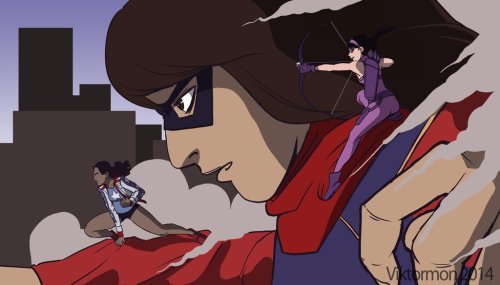
To illustrate this point, I’d like to single out two female superheroes, Kamala “Ms. Marvel” Khan and America “Miss America” Chavez. Both characters were created within the past 10 years. They’ve also been cited as prominent figures in the recent push for diversity within comics that has caused a lot of uproar or all the wrong reasons.

What sets them apart is that one character, Kamala Khan, has become a success story by most measures. Since her debut issue in February 2014, she has become popular and beloved. She has received and won numerous accolades and her graphic novels have made it onto the New York Times Best Sellers list. I consider myself a fan of hers. She’s one of my favorite female heroes.

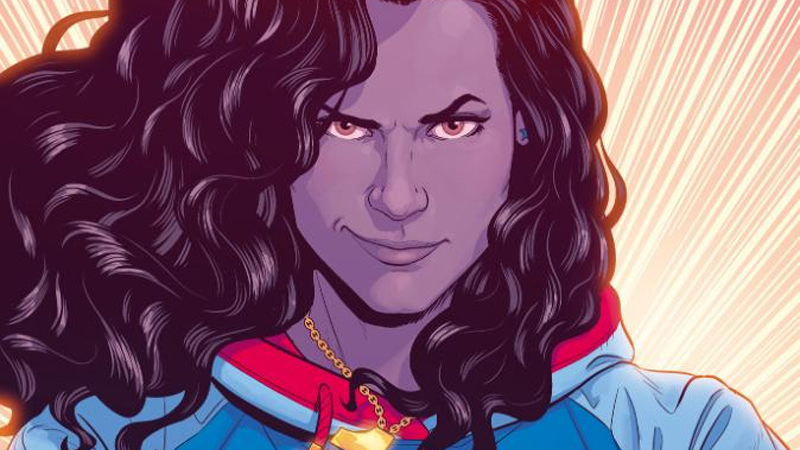
On the other end of that spectrum is America Chavez. She debuted in 2011 and went onto have her own ongoing series. Unlike Kamala, though, her series received no accolades, sold poorly, and did nothing to endear her to fans of superhero comics. She has had opportunities to establish herself as a quality female hero. With few exceptions, she has failed at every turn.

These two characters represent a stark dichotomy in the current world of female superheroes. One provides a template for success. The other is a cautionary tale of how not to create a compelling female superhero in the current climate. It’s pretty striking how two characters created within a similar cultural environment can go in such wildly different directions. However, that difference also carries with it plenty of lessons.

To be fair to the medium I love, creating female superheroes today is very different compared to past decades. If Wonder Woman, Storm, Carol Danvers, or Supergirl were created today, they wouldn’t have the same impact. They came out at different times and under different circumstances. Those circumstances played a key role in how they became iconic.

Great female superheroes, and quality female characters in general, have traits that allow them to resonate in any era. However, the timing and influences have to be right for them to carve a place in popular culture. Kamala Khan and America Chavez dealt with similar circumstances when they debuted. That makes them a good case study in how female superheroes can succeed and fail.


Why Kamala Khan Succeeded

I still remember the day I read Ms. Marvel #1. I hadn’t been planning to buy it. I remember clearly that it was a light week, in terms of comics. I happened to have a few extra bucks to spend. I had heard that there was going to be a new Ms. Marvel. Having been a fan of Carol Danvers, I decided to check it out.

I’m glad I did because that one fateful issue made me a Kamala Kahn fan for years to come. The story it told struck all the right chords. It presented a character who felt real, genuine, and relatable. The fact that she was a girl, a Muslim, and the daughter of Pakistani immigrants was secondary. She still felt like a character that I could be friends with if she were real.

The reasons why Kamala was so endearing had little to do with how many diversity points she scored and everything to do with how the writer, G. Willow Wilson, went about developing her. She spent almost the entire first issue just revealing who Kamala was and what sort of life she had. We learn about her family, her friends, her hopes, her dreams, and even her favorite hobbies.

She quickly becomes more than just another teenage character. She’s a self-professed fangirl who writes fan fiction, plays MMO games, and loves gyros. Wilson approached developing Kamala the same way Stan Lee approached developing Peter Parker. She developed the personality before turning them into a superhero.

When Kamala finally does get her powers, Wilson establishes a solid reason for why she’s a hero. Just getting powers isn’t enough. Unlike Peter Parker, however, she doesn’t need a loved one to die. Being a fan of superheroes and having decent parents puts her in a position to make that choice without anyone dying. That, alone, makes her worthy of admiration.

From that point forward, it’s easy to root for Kamala. She carries herself as someone you want to root for. She personifies how fans of superhero comics are inspired by their heroes. Her having a chance to be a hero like the ones she idolizes isn’t just endearing. It’s special. That’s why she succeeds and why it’s very likely we’ll see her enter the Marvel Cinematic Universe at some point.


Why America Chavez Failed

Take everything I just said about why Kamala Khan works and why she’s so lovable. Then, reverse it completely. That’s basically who America Chavez is and why she’s more a joke than a success.

On paper, America has a lot going for her. She’s not just another generic female hero. She’s Latina, she’s a lesbian, and she comes from a very different world, literally and figuratively. In terms of diversity points, she checks as many boxes as Kamala. She has her own unique style and she even uses a familiar moniker that has been successfully used by others.

Beyond those traits, however, there’s nothing about her character or her story that will get superhero fans cheering. She’s not relatable like Peter Parker or Kamala Khan. She’s from a place called Utopian Parallel, which is exactly as boring as it sounds. Her world was threatened with destruction, but her parents sacrificed themselves to save it. They’re the only respectable heroes in her story.

America, for reasons that are poorly told and poorly developed, decides to prove that she’s as good a hero as her parents. Her world is a utopia. It doesn’t need her. As a result, she just looks for a world that needs heroes and happens to choose one that has a massive glut of them. Already, her judgment is questionable.

If you’re expecting me to explain the depths of why she’s a hero and how she distinguishes herself, I’m sorry to disappoint. That’s the extent of her heroic journey. She doesn’t answer the hero’s call as much as she looks for an excuse. She doesn’t work her way into the world of heroism. She just throws herself into it and skips the part that makes it a meaningful story.

It certainly doesn’t help that she’s grossly overpowered in a way that makes every battle feel boring. Unlike other powerful characters, including Superman or Captain Marvel, there’s no real intrigue to her abilities. Whereas Kamala Khan and Peter Parker struggle, seeing their powers as burdens at times, America Chavez rarely strains herself. When she does, it feels forced and contrived.

On top of all that, America never comes off as a likable person. In nearly every scene she’s in, she carries herself with an in-your-face, screw-you, I’m-better-than-everyone attitude that isn’t the least bit endearing. She basically tries too hard to be a badass female hero, but forgets the part where heroes are actually supposed to be admirable.

It’s not enough to just punch a Nazi, which she does at one point. Being a hero means embodying ideals that go beyond gender politics. America Chavez’s story is so contrived, at times, that it feels like the most shameless kind of pandering. It’s why those who bemoan Marvel’s diversity push often cite America Chavez as the personification of everything wrong with that effort. Sadly, she gives them plenty to work with.


Lessons For The Future

I have high hopes for Ms. Marvel. I even hope that, at some point, America Chavez becomes a solid character. There’s plenty of room for new characters that resonate with everyone, regardless of gender, race, creed, ethnicity, or sexual orientation. It doesn’t have to come at the cost of established characters, either. Heroes can be anyone. That’s what makes them icons.

Now, I understand that there are plenty of people out there who don’t like Kamala. I don’t deny that she has her flaws and she’s had some pretty unflattering moments. I also understand that America Chavez has her share of fans who think I’m not being fair to her. I don’t claim that my take on her is definitive.

I singled these two characters out because I believe they embody the struggle facing female superheroes in the existing cultural climate. Like any creative endeavor, there is a right and wrong way to go about it. Kamala Khan and America Chavez provide important lessons on what to do and what to avoid. They include, but aren’t restricted to, the following.

Lesson #1: Build the character before the hero

Lesson #2: Appeal to everyone and not just a select few

Lesson #3: Make their struggle feel real and genuine

Lesson #4: Give the character a distinct and endearing voice

Lesson #5: Don’t just rely on punching Nazis

There are many other lessons to be learned from characters like Kamala Khan and America Chavez. Some of those lessons have to be learned the hard way, but they’re worth learning. More quality female superheroes can only help the genre, as a whole. Superheroes, by definition, are supposed to inspire others to be better. That inspiration need not be restricted to gender, race, or any other distinction.

17 Comments

Filed under censorship, Comic Books, Jack Fisher, Superheroes, gender issues, media issues, political correctness, sex in media, superhero comics, superhero movies, women's issues

Understanding The Recent Changes (And Upheavals) In The Life Of Carol Danvers

Carol

Some characters are iconic from the get-go. Spider-Man, Superman, Wonder Woman, and Batman all managed to establish themselves as special early on in their history. They’re the lucky ones, though. Most characters have to go through a long, arduous process to reach the top tier of superhero icons. A lot of them never make it, but those that do are special in their own right.

These days, the character who best embodies that spirit is Carol Danvers. You don’t have to go back too far to remember a time when she was relegated to the superhero B-list. As Ms. Marvel, she had her share of fans. I was one of them. She also had her place in the annuls of Marvel lore. However, she was never able to break through and join that elite club occupied almost exclusively of Stan Lee creations.

That all changed when Kelly Sue DeConnick came along and reinvented Carol Danvers as Captain Marvel in 2012. That process, which has since become one of my favorite runs on a comic book series of the past 10 years, helped Carol finally break into the upper echelon of superheroes. With a movie coming out in 2019 staring Brie Larson, it’s safe to say she’s entrenched.

I could write a dozen articles about why Carol Danvers’ character resonates more now than it did when she first showed up in 1968. I’ve already mentioned some of the unique challenges she faces as she enters rarefied air among Marvel heroes and female superheroes, in general. However, I want to focus on one particular aspect of her character that helps her stand out.

As it just so happens, it’s also part of her character that recently underwent a major upheaval in the comics. Among other comic book fans, it has been controversial. I’ve certainly seen more than a little whining on message boards and Reddit. I have my share of criticisms too, but I intend to justify why I believe this is a promising new era for Carol “Captain Marvel” Danvers.

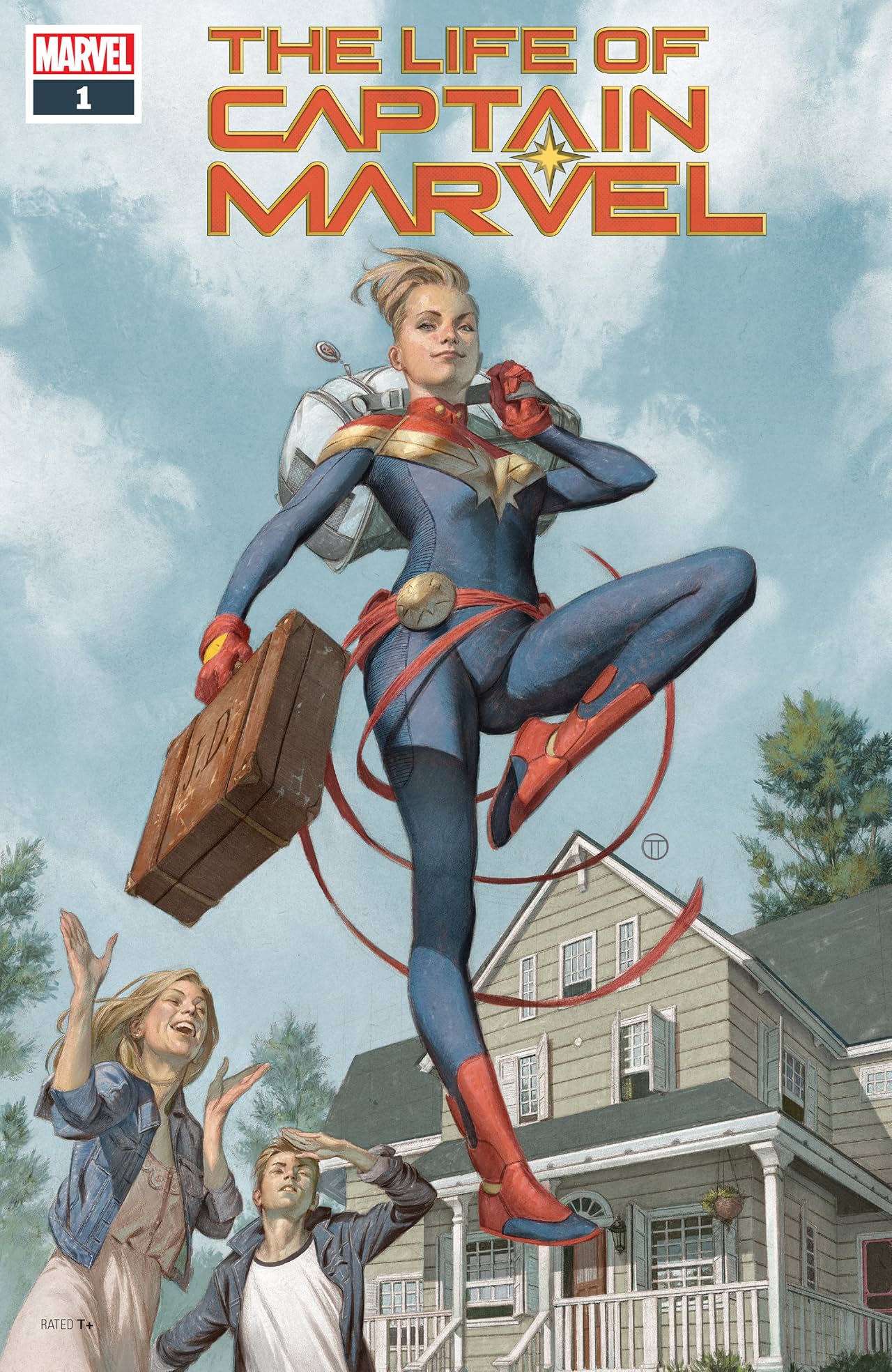
The upheaval in question occurred in a recently-launched mini-series called “The Life of Captain Marvel.” Written by Margaret Stohl, who has been guiding Carol’s journey for several years now, I cannot recommend this series enough. It is, by far, one of the best Carol Danvers stories ever written. Years from now, it will likely mark a major turning point for her story.

That’s because Stohl does something that’s both critical and controversial to Carol’s history. She makes a major alteration to an aspect of Carol’s life that doesn’t change her past, but puts it in a very different perspective. That change, in my opinion, makes Carol a much more intriguing character.

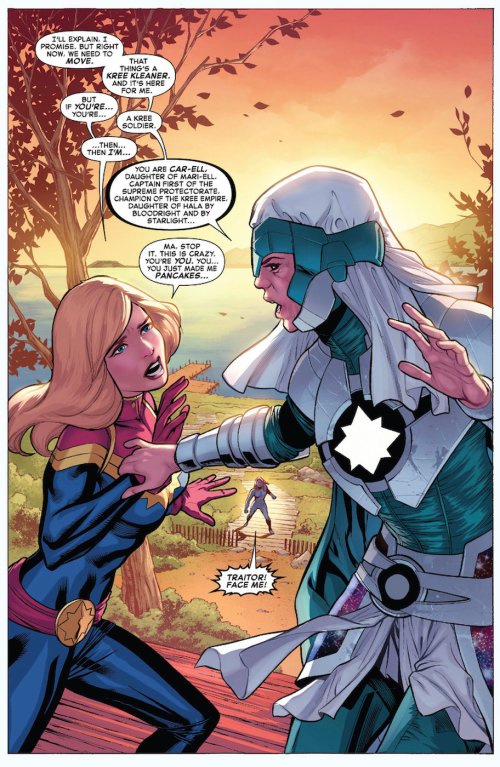
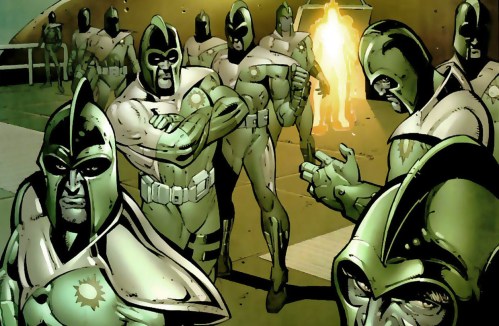
If you want to avoid spoilers, you should probably stop reading here and check out the series. Again, I highly recommend it. The big change, however, takes place in the fourth issue. Here, her mother, Marie, drops a bombshell revelation on Carol that rocks her world. She reveals that she’s half-human and half-alien. Specifically, she’s half-Kree.

Carol2

Anyone who saw “Guardians of the Galaxy” knows why that’s a big deal.

Anyone who has a passing knowledge of Marvel history knows why that’s a huge deal.

The fact that she’s half-alien isn’t that unique. Peter “Starlord” Quill has a similar heritage. The reason it’s such a big deal for Carol is because it changes the context of how she got her powers and the role she plays in the greater Marvel universe.

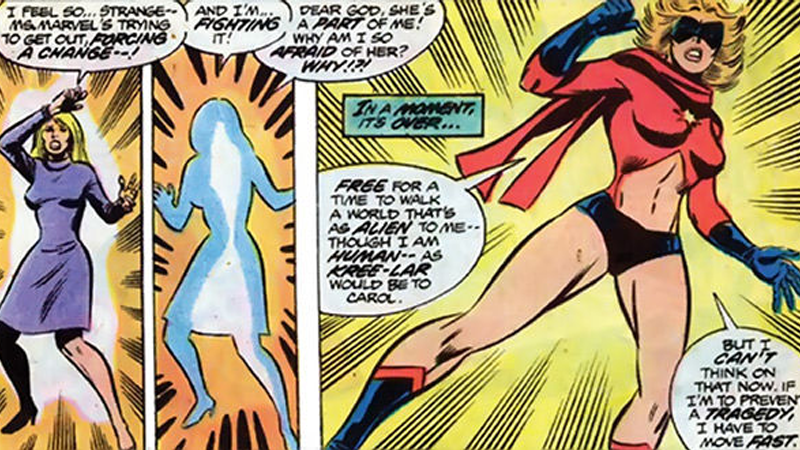
Before this change, Carol’s powers were somewhat of an afterthought. Like Spider-Man, they were the result of an accident. Her’s just involved alien device called the Psyche Magnetron. She got caught in an explosion and that explosion allegedly fused her DNA with Kree DNA to give her superpowers. It’s not the most contrived origins story, but it’s not exactly epic.

To some extent, getting her powers by accident undercut all the work she did before that. Even without powers, she managed to carve out a successful career in the air force and NASA. That work became somewhat superfluous once she got superpowers. Unlike Peter Parker, she was already on a heroic path. Getting powers just seemed like skipping a bunch of steps.

With the revelation by her mother, there’s more connective tissue between her journey as Carol Danvers and her journey as Captain Marvel. Her mother, who comes out as a full-blooded Kree warrior, tells Carol that the accident wasn’t the sole cause of her abilities. It was just the catalyst. These are her exact words.

“What humans see as Kree powers are just our biological adaptations to a life of combat. They’re triggered in battle, usually around adolescence. Sadly, most of us have known war by then.”

This implies that even if she hadn’t been caught in the crossfire of the Psyche Magnetron, her Kree abilities would’ve come out at some point. For some fans, including die-hard Captain Marvel fans, it feels like this is denigrating her origins. I respectfully disagree with that notion. I believe this gives Carol’s story a new kind of appeal.

In terms of how superheroes become iconic, how they get their powers and how they choose to use them plays a huge part in their appeal. I would argue that just making Carol an ordinary human who got caught in an accident has limited appeal. Like I said before, she’s not Peter Parker. She’s not an average person. She’s more like Batman in that she’s an overachiever who strives to do more.

Her being half-Kree adds a new dynamic to the mix because it makes Carol a product of two different worlds. She is born on Earth and lives her whole life as a human. However, she now has this alien heritage that has already influenced her life in ways she didn’t understand. You need only look at the mass appeal of Superman to see why that story is compelling.

Being half-Kree means Carol suddenly has a connection to a race that has waged war on Earth before. She also has a connection to a world that has blatantly experimented on humans before. At the same time, her human life wasn’t exactly ideal. Unlike Superman, she was not raised by picture perfect parents like the Kents.

Her mother, despite being a Kree warrior, was in an unstable relationship with Carol’s very human father. Their family suffered a devastating loss when Carol’s brother, Steve, died in combat. They never really recovered from that and, for most of Carol’s history, that loss kept her parents as a side-note at best in her journey.

With Carol’s mother being a Kree warrior, it changes her into something more than a woman who stayed in a bad marriage. It adds more layers to why she and her husband clashed. Even in the first few issues of “The Life of Captain Marvel,” her father comes off as a generic asshole. Finding out he was dealing with an alien wife makes his struggles a lot less generic.

In many ways, Carol’s parents represent her divided heritage. Her father didn’t want her embracing her Kree side and fighting alien wars. Having already lost a son, who can blame him? Her mother didn’t want to stop Carol from embracing both sides of her heritage, even though that was sure to leave her conflicted.

It effectively connects Carol’s superhero journey with that of her family. Those journeys involve some heavy losses, painful secrets, and destructive alcoholism. It’s something you’re not going to find with Superman, Spider-Man, Batman, or any of the X-men. It leaves Carol Danvers in an uncertain, but promising state.

It’s not yet clear how much of Stohl’s revisions will find their way into the “Captain Marvel” movie. To some extent, it helps that Carol’s origin isn’t as iconic as that of other heroes. The Marvel Cinematic Universe has already done some considerable tweaks to certain characters to make them fit the narrative. I have a feeling we’ll see plenty of that in the movie.

However things plays out on the big screen for Carol, I think her story in the comics just became a lot more interesting. I know there are some fans upset by this. I’ll even concede there are some parts of this revision I don’t care for. There was some appeal to Carol just being an ordinary human who worked her ass off to achieve what she did.

Every major revelation or retcon in a comic or movie comes at a price. You’re bound to upset some people. That’s unavoidable in a world full of such diverse tastes. However, I believe that Carol gained much more than she lost in “The Life of Captain Marvel.” I believe she’s bound to gain a whole lot more, both through her movie and through the new host of stories that can be told.

Whatever the case, I hope Brie Larson takes plenty of notes.

3 Comments

Filed under Comic Books, Jack Fisher, Superheroes, superhero comics, superhero movies