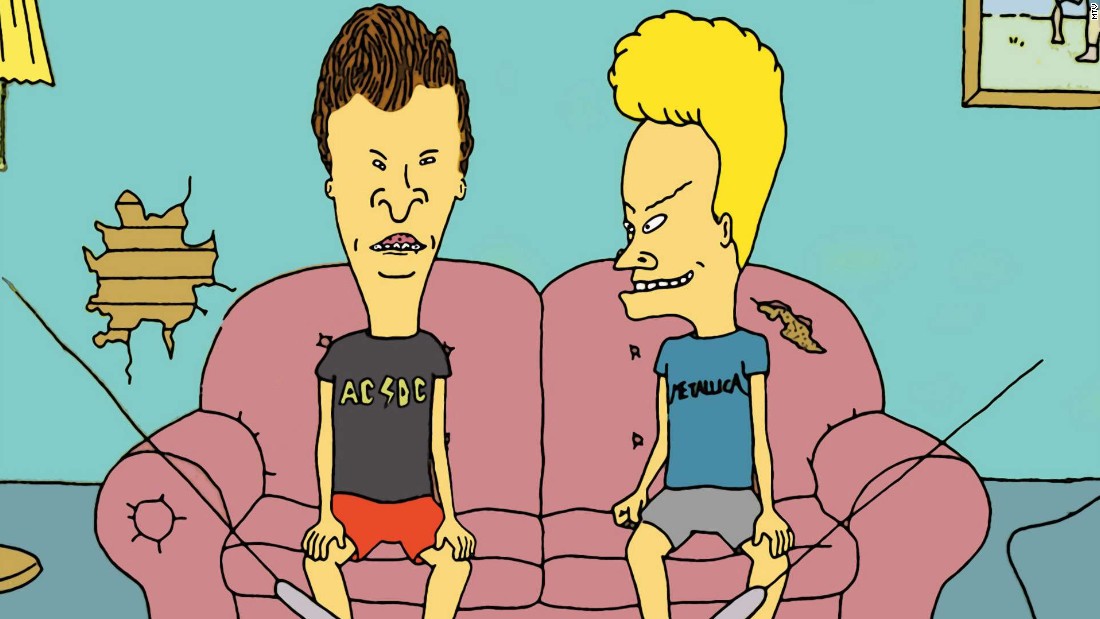
I wish I could do the laugh, but you’ll just have to use your imagination. It may take some paint fumes and expired soda, but it’ll help convey how cool this is. “Beavis and Butthead,” the lovable, dim-witted, foul-mouthed burnouts from the heart of 1990s MTV, are coming back to laugh, chuckle, and sneer at everything we hold dear in the 21st century.
It had been rumored for a while, but it was finally confirmed by The Hollywood Reporter.
The Viacom CBS-owned cable network is reviving Beavis and Butt-Head, with series creator Mike Judge returning to relaunch and reimagine the franchise as part of a sizable deal that includes a two-season order and plans for additional spinoffs and specials.
Judge will return as the show’s central driving force and will write, produce and provide voices for both of the iconic characters, who became pop culture sensations in the early 1990s on Comedy Central’s corporate sibling MTV.
In the new incarnation, Beavis and Butt-Head will enter a “whole new Gen Z world” with meta-themes that are said to be relatable to both new fans, who may be unfamiliar with the original series, and old.
For this, we should all be grateful and not just because “Beavis and Butthead” promise the kind of crude laughter we all badly need right now. I genuinely believe that we, as a culture, need this not-so-dynamic duo back in our lives.
Those who weren’t alive or of age in the mid-90s neither understand nor appreciate the impact that “Beavis and Butthead” had. I don’t think it’s hyperbole to say that they were very much the pre-cursor to shows like “South Park,” “Family Guy,” and “Rick and Morty.” They pushed the envelope at a time when we could afford to push it and pop culture is better because of that.
They were very politically incorrect, even by the skewed standards of the mid-90s. I remember plenty of parents protesting their vulgar humor. They were also one of the few shows that my parents would not allow me to watch. They’d still let me watch R-rated movies like “The Terminator,” but “Beavis and Butthead” was off-limits. That’s how crude they were.
In hindsight, I’m sure my parents might feel differently. By today’s standards, “Beavis and Butthead” almost seem quaint. They were a couple of brain-dead teenagers mocking and scoffing at the world around them, not caring about larger issues or bigger pictures. They just wanted to hang out, slack off, and look at boobs. They are the antithesis of the hyperactive activists who swarm social media with politically-charged rhetoric.
That’s exactly what makes them so necessary at the moment. It feels like every show these days, be it an adult cartoon or a sitcom, has to take part in some larger discussion about politics or social issues. It can’t just be funny or entertaining. The professional whiners of this world won’t let that happen. I have a feeling those whiners will have a hard time with “Beavis and Butthead.”
They can yell, whine, preach, and criticize these two all they want. They could scold them for objecting women, perpetuating stereotypes, or offending the wrong people all they want. The reaction would be the same. Beavis and Butthead would just keep laughing and snickering, not at all moved by their rhetoric, and make some crude remark.
I believe, in some respects, that kind of reaction is what a lot of young people are feeling these days. They hear so many protests, criticisms, and complaints about the present and the past. Everyone is yelling, whining, and accusing the other side of being Nazis. At some point, it all just becomes noise. It burns out your mind, your soul, and your capacity to give a damn.
“Beavis and Butthead” offers those tortured souls a breath of fresh air. They’re not going to preach to them. They’re not going to demand that they take a side on any issue. They’re just going to laugh, snicker, and make dirty jokes. Given how toxic the world has become in recent years, that’s just what we all need.
My new YouTube channel is small, but growing. Shortly after I posted my first video, I began work on my next one. This one is actually an expansion of a piece I wrote a while back on “F is for Family.” With a new season set to debut later this week, I thought the time was right to do a video on the show’s larger themes.
That means more discussion about why Frank Murphy is so angry with the world. It also means more insights into why he threatens to put people through a fucking wall. I hope it’s as awesome as it sounds. Enjoy!
Thanks for watching. Please like and subscribe to my new channel or Frank Murphy will put you through a fucking wall.
For any show, the difference between a good season finale and a great season finale isn’t just how much it leaves you wanting more. It’s making you want more and feel something more than impatience for new episodes. Most shows don’t go that extra mile. They’re content to just build a little excitement for the next season.
However, “Rick and Morty” isn’t most shows. After four seasons, that’s abundantly and hilariously clear.
That didn’t happen, though. This remarkable, quirky, eccentric show found a way to cap off season in a profoundly satisfying way. For a show that’s raised the bar for a lot of things, from sci-fi tropes to fart jokes, that’s saying something.
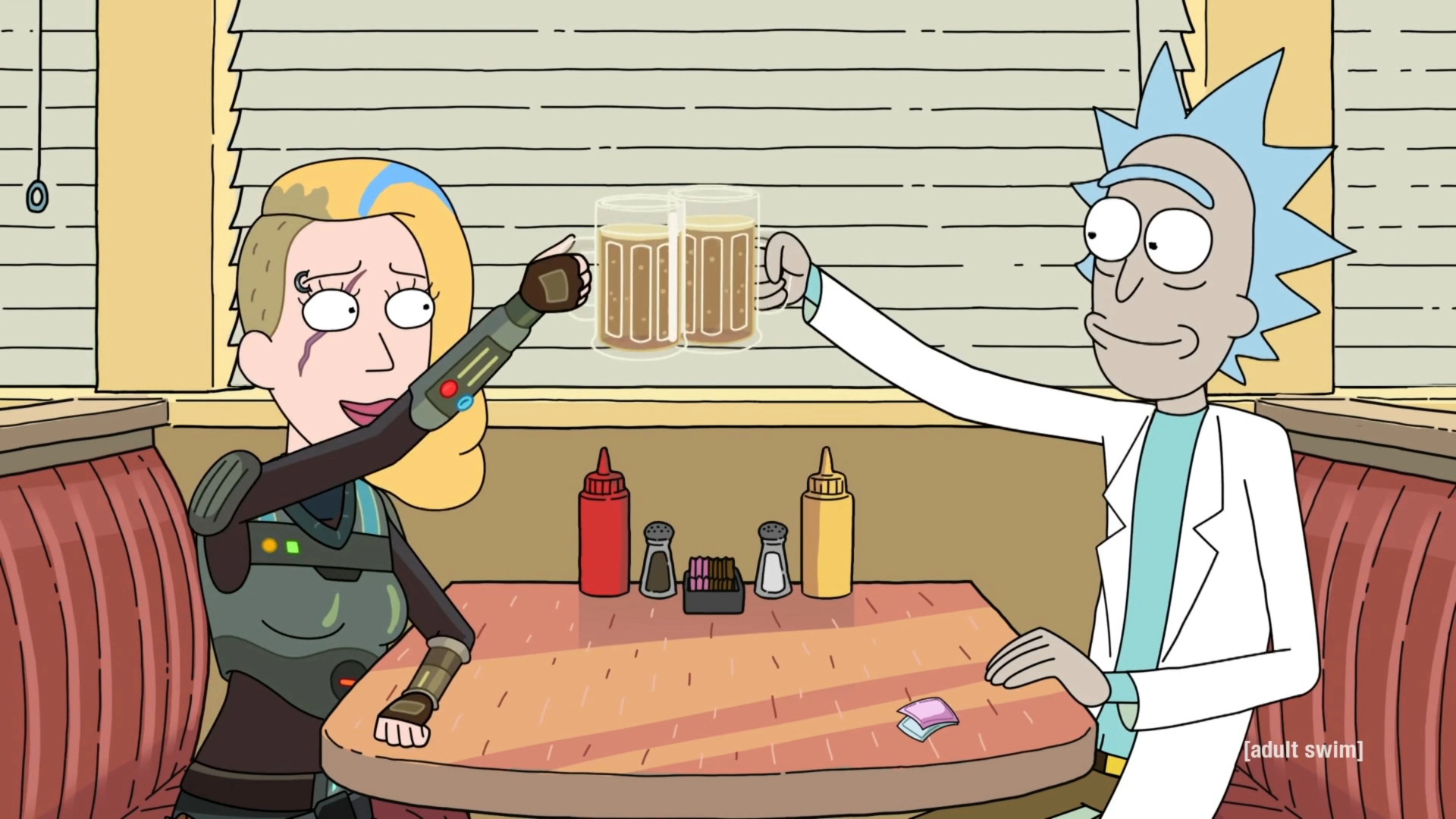
The synopsis of the episode has many moving parts. It starts with an invisibility belt and the return of Beth’s clone from “The ABC’s of Beth.” From there, it quickly turns into a bloody brawl between Rick, his family, and a newly formed galactic federation, courtesy of Tammy and a rebuilt Bird Person. I won’t spoil all the details. I’ll just say that there’s a lot of bloody brawls, spilled bear, and shameless promotion of wrangler jeans.
Trust me. That makes sense by “Rick and Morty“ standards.
As a finale, it wasn’t quite as groundbreaking as “The Wedding Squanchers,” but it had a much more dramatic impact than “The Rickchurian Mortydate.” It also helped that the episode built on the continuity established in previous seasons, namely “The ABC’s of Beth.” It took an open question as to whether Beth was a clone and turned it into a more complex story.
Personally, I had mixed feelings about this episode when it began. However, those feelings quickly changed as the episode unfolded. By the end, I felt like this episode and this season, as a whole, achieved something special. In the context of larger “Rick and Morty” lore, it gave new depth to the show and its characters.
More than anything else, the last few minutes of the episode furthers a trend that began at the end of Season 3. It was subtle for a while, but now it’s very overt.
Rick Sanchez is losing control over his family.
By that, I don’t mean he can’t influence them. He’s the smartest man in the multiverse. He literally has any number of methods for doing that. The issue here is that they no longer need him.
Since the show began, Rick has asserted himself as someone his family needs to some extent. Morty needs him to grow, both in terms of strength and capability. Beth needs him because she needs her father’s approval. Jerry and Summer need him, by default, since Beth and Morty need him.
Control matters to Rick. It matters a lot. If he’s not in total control of his world, then he can’t handle it. He values being able to do anything at any time with his genius. Throughout the show, he demonstrates capabilities that are almost god-like. Hell, at one point in this season, he actually fights a god.
However, he can’t do any of that to the degree he wants without maintaining control. This is perfectly demonstrated in the episode, “The Old Man and the Seat.” It’s an episode with a similar ending, in terms of tone. In that episode, Rick is left by himself, berated by other holograms of himself. He’s sad, alone, and miserable. It’s not quite as dark as the ending to “Auto Erotic Assimilation,” but it sends the same message.
Rick Sanchez is not well.
He’s broken, damaged, and flawed.
He’s a terrible father, a bad friend, and hates himself.
He’s miserable, despite being the smartest, most capable being in the universe.
He can manage all that through the connections he has with his family, on top of his copious alcohol consumption. However, as season 4 has unfolded, we see his family drifting further and further apart. It’s not that they’re pushing him away. They just make it clear that they don’t need him. To Rick, that’s even worse than being pushed away.
Whereas season 3 began with Rick having almost complete control over his family, Season 4 ends with him losing it. It raises an intriguing question.
What does Rick Sanchez do when nobody needs him anymore?
This episode even teased a distressing answer. Tammy points out that when Rick is alone, he’s not a threat to anyone other than himself. Without Morty or his family, he’s lacking and it shows in how much he gets his ass kicked. It hints that without his family, Rick Sanchez loses a part of himself that he can’t replace, even with his genius and alcohol tolerance.
It’ll be interesting to see if this trend continues in Season 5, whenever that may come. It’ll also be interesting to see how it effects other dangling plot threads, namely Evil Morty. A more broken Rick Sanchez is sure to be a more dangerous and unstable Rick Sanchez. Given how big an asshole he can be at times, it’s hard to sympathize with him. However, “Star Mort: Rickturn of the Jerri” managed to make us feel for him.
Every now and then, a TV show comes along that transcends its genre. From “Bojack Horseman” to “Rick and Morty,” these shows are more than just binge-worthy entertainment. They leave a real, tangible impact. You don’t always expect it, but that’s what makes it so exhilarating. The concept of the show may not seem appealing, but it still finds a way to be great beyond all expectations.
We need shows like that now. Given the current state of the world and the agonizing isolation it has incurred, those shows are more critical than we’ve ever been, if only for our mental well-being. I have my collection of shows that help keep me sane during these difficult times, but there’s one in particular that I’d like to suggest to everyone who shares that struggle.
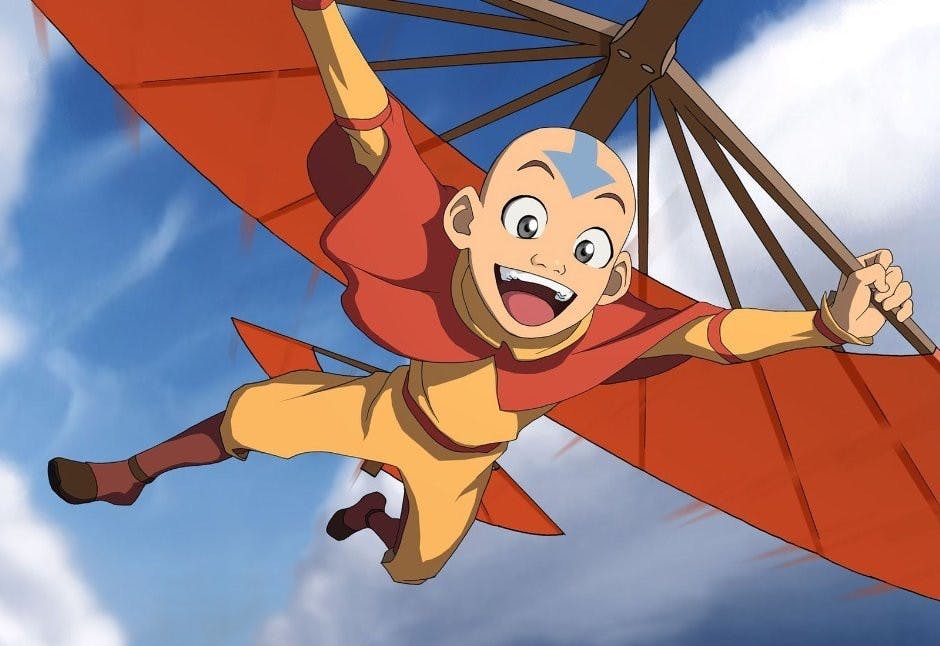
On the surface, it looks like a typical kids show. It takes place in a fanciful world full of fanciful characters wielding amazing powers. However, it would be irresponsible to call this “Avatar: The Last Airbender” a show for kids.
It’s one of the most underrated shows of its kind. It only ran for three seasons in the mid-2000s and aired on Nickelodeon, of all places, but rest assured this is no “Spongebob Squarepants.” This is a show that has action, depth, heart, and incredible voice acting. It’s a show that finds a way to be dramatic, tragic, fun, and heartfelt.
In fact, I honestly can’t think of any great feeling that this show doesn’t evoke.
It’s a show that deserved much more success than it got. Make no mistake. This show has some passionate fans and for good reason. It really is that good. Kids and adults alike can find something to enjoy. If you need further proof, just binge it over the course of a weekend. You’ll be glad you did.
Let’s face it. We all feel a bit like Frank Murphy at the moment. Being stuck at home, with sports and movies being cancelled on top of it, we’ve all fought the urge to put someone through a fucking wall. These are tough times. Sometimes, we just need to go on a profane rant.
That’s where Frank Murphy comes in. He’s that angry rage beast in all of us and that’s why we love him.
A while back, the first teaser trailer hinted at how this season would revolve around Frank reuniting with his father, voiced by Jonathan “Mike Ermantrout” Banks. Like most plots in this show, it promises to inspire a whole new level of profanity from Frank Murphy.
Now, a longer and more detailed trailer has come out. In addition to Frank’s father joining the profanity-laced fun, some other plot elements are hinted at. They include, but aren’t restricted to heavy drug use, kids beating each other with hockey sticks, and graphic depictions of female genitalia.
In short, “F is for Family” is really stepping up its game and Frank is going to need to build more walls. Just watch the trailer. You might be inclined to help him build a few.
Beyond the profanity, blood, and graphic depictions of female anatomy, this season promises more than Bill Burr’s angry rants. Sue is almost ready to give birth. Bill and Kevin are building on their arcs from previous seasons. While Bill looks like he’s embracing his inner rage monster, Kevin is making new connections, which may or may not lead to more hilariously awkward moments.
The presence of Frank’s father is sure to heighten these moments. There are definitely some deep-seated issues between Frank and his dad. Some of those issues have clearly affected his relationship with his kids. It fits right into the larger themes of the show, which I’ve explored before. I look forward to seeing how this season builds on that.
While watching Frank hulk out is fun, “F is for Family” often tries mixing in some deeper elements. It has happened slowly, but each character has gained more layers as the show has progressed. The more we see, the more we understand where these characters are coming from and why they are the way they are. It’s part of what makes this show engaging, as well as entertaining.
Frank’s angry, profanity-laden rants will always be the primary draw, but there’s so much more at work in this show. That’s why I look forward to watching the whole season once it comes out on June 12th.
We should all start building more walls in anticipation.
The following is an article submitted by my good friend, DC-MarvelGirl 1997. We’d both been working on pieces about “13 Reasons Why” and she was generous enough to submit this. She tackles an issue that I was very hesitant to write about and for that, I thank you. She does great work on her website, which I encourage everyone to visit.
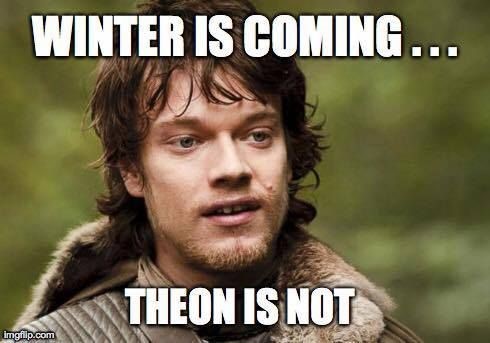
We live in a world filled with double standards. It’s by far one of the biggest diseases we have in society. I’m not putting this to the same standards of COVID 19, which is by far the deadliest pandemic we’ve ever faced in worldwide. Double standards are a different kind of disease, meaning they breed this false sense of contentment. And no, I’m not just referring to the Theon Greyjoy memes, which are truly sad and pathetic. I’ll admit it. When I look up those memes, I at first chuckle. But then I remember why they were made, and it is to point out that Theon no longer has his penis. Suddenly, those memes are no longer funny.
As much as I wish this article is about those Theon Greyjoy memes, it’s not. That’s what’s painful for me. This article is about the frankly piss-poor representations of male sexual assault in entertainment. And no, I am not referring to Burt Reynolds’ “Deliverance,” which was one of the first movies to put rape of a man into a scene. At least with that movie, it was done well. Even made for TV films like “The Rape of Richard Beck” did it better, because with “The Rape of Richard Beck,” now known as “Deadly Justice,” they blacked it out before the rape happened.
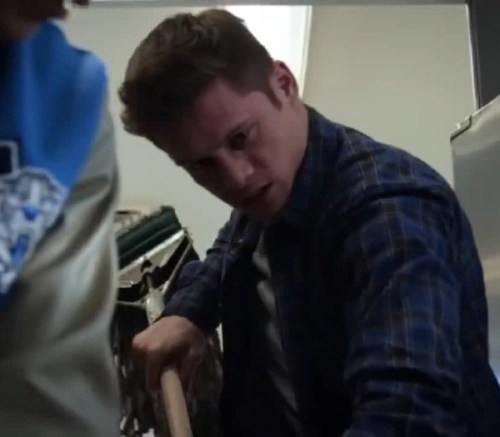
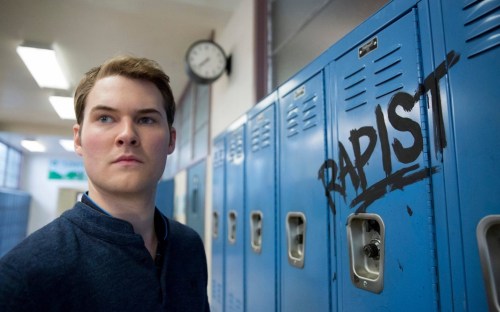
Now, I’ll admit it. I never watched “13 Reasons Why,” because it was banned from my household by my mother. And after hearing about how the show got progressively worse, I’m glad I didn’t watch any other episodes beyond the pilot. It’s a show that psychiatrists cautioned teenagers from watching, because it could be triggering to those thinking about suicide. Not only does it send the contrived message that you can use suicide to get revenge, but it handled male sexual assault in one of the worst ways possible. Because I’ve never watched the show for myself, I had to do a little bit of research on the “13 Reasons Why” wiki pages, and look up articles critiquing it. The male rape scene centers around the character of Tyler, who gets sodomized with a mop handle by a character named Montgomery. Not only was the scene unnecessarily graphic, triggering, and disturbing leaving many either crying, getting sick, or feeling disgusted, but the aftermath of it all is what I’m most critical of.
I understand that “13 Reasons Why” wanted to show that men can be raped as well. But their delivery was terrible. Like I said, the scene was downright disgusting and stomach-churning. But they didn’t bother showing Tyler doing something effective to get the bullying to stop. It doesn’t help that the teachers in the show are portrayed as incompetent of seeing what’s right in front of them, giving this sense that you cannot even trust your teachers to keep you safe. But the show didn’t bother giving us scenes of Tyler handling the aftermath with maturity. They just cut to him wanting to shoot up a school dance, mirroring the Columbine massacre which is one of the most devastating tragedies in US history.
Let’s just say, I would have handled this rape scene and aftereffects a lot differently.
If I were to write out that rape scene between Tyler and Montgomery, I would have shown the graphic violence of Tyler being drowned in the toilet and having his head slammed against the mirror. Then, I would have an extreme close-up of Montgomery’s hand reaching for the mop handle as the camera shakily backs away to display him leaning over Tyler’s back. Then, the scene would fade to black, signifying what’s to come. After that, I would have it fade into Tyler sitting on the bathroom floor with his pants down. That to me is more than enough to let the viewer know what happened, without giving you every, horrible detail of what happens. Then, there would be other scenes I’d add in.
How about having Tyler go to a hospital to be examined by a doctor? All the signs could be there, showing he’d been raped, but the doctor neglects to acknowledge this and that’s one of the things that pushes him.
How about showing Tyler being interviewed by police, but an officer telling him he was asking for it? That would also give him a reason to want revenge.
The reason why I put those two suggestions above, is because male rape isn’t given the same consideration as female rape. When a female is raped, it becomes a world-wide news story. When a man is raped, it’s not treated the same way. I tried to research cases of male rape in the recent years, and you wouldn’t know if there was, because the news doesn’t talk about it. Look at cases such as Corey Feldman and Brent Jeffs. Brent Jeffs I’m just mentioning, because his story is downright heartbreaking. He was raped by his own uncle, Warren Jeffs, the head of the FLDS. Jeffs’ story is one that many do not consider at all. Of course, people have the knowledge that Warren Jeffs raped and molested boys and girls alike, but they often forget to acknowledge that boys in that “church” were raped. They’re blinded by how horrifically the women and girls in that “church” are treated, that they forget about the boys. That to me is the saddest thing.
If “13 Reasons Why” bothered displaying how the criminal justice system fails to acknowledge male rape victims, then that would have been a much more powerful impact than Tyler trying to shoot up a school.
Overall, “13 Reasons Why” failed in a major way to display consequences of male sexual assault. They neglected important details with the character of Tyler, and didn’t even bother showing Tyler going to the authorities until season 3. And the fact that Montgomery was just arrested on the spot for raping Tyler, when there’s no rape kit having been done? I don’t buy that for one second.
However, keep in mind, they did the same thing with Hannah Baker in season 1. She didn’t go to the police reporting teachers’ negligence. She didn’t go to a hospital to be examined by a doctor. She just blamed everyone for her suicide with tape recordings, claiming it to be all their fault when she didn’t bother going to higher authority for help. And the fact that they display her mother blaming everyone as well? To me, that’s even more pathetic. I understand that you are hurting because your daughter took her own life and that she was raped. But she also failed to get help beyond going to a guidance counselor, who clearly wasn’t doing his job.
Therefore, do yourself a huge favor, and do not watch “13 Reasons Why.”
There’s a place for mindless, shallow, escapist entertainment in this world. I would argue that place is even greater now as we cope with a global pandemic. Sometimes, you just want to turn your brain off, watch your favorite superhero movie or Michael Bay explosion-fest, and enjoy yourself. There’s nothing wrong with that.
There’s also a place for entertainment that attempts to have a meaningful, serious conversation about a real-world issue. I’d also argue that kind of entertainment is more important now than it was last year. I know this kind of entertainment is risky, especially when it tackles taboo subject or social politics. Sometimes, that effort evokes distress, disgust, or outright hate. It’s still worth doing.
However, that kind of media can be counterproductive when it gets an issue wrong, flawed, or ass-backwards. When the conversation it attempts to have is misguided or contrived, then its effects can be outright damaging.
This is how I feel about “13 Reasons Why.” It’s one of Netflix’s most serious shows in that it attempts to confront serious, painful issues. From teen suicide to bullying to sexual assault to mental illness, this show attempts to portray these issues in a way that helps us talk about them. I respect that goal. I think the show’s creators, actors, and producers had good intentions.
I also think they failed in too many critical ways.
I don’t just say that as someone taking the time to critically analyze a show. As someone who was a miserable teenager, I really wanted this show to start this conversation. I wanted it to send a good, meaningful message through its morbid themes. After the first season, I was very disappointed and a little depressed.
The premise of the show has the right ingredients. It revolves around the suicide of Hannah Baker, a teenage girl who took her own life and left pre-recorded tapes behind for her fellow students, namely Clay Jensen, to follow. The story attempts to explore what led Hannah to this grim decision that left her family, friends, and community devastated. Unfortunately, in doing so, it starts the wrong conversation.
That’s not just my opinion. Organizations like the National Association of School Psychologists and the United States Society of Clinical Child and Adolescent Psychology have criticized the show for how it depicts suicide. It has also been linked to an uptick in suicides and suicidal ideation among teenagers. Now, that might just be an unlinked correlation, but it’s still a distressing sign.
Then, there’s the plot of the show itself. This is where I felt the show really lost sight of its mission because, as a show, there’s a need for drama. Unfortunately, incorporating that drama undermines the conversation and, in some cases, turns it against itself.
Beyond the graphic depictions of Hannah’s suicide, which was received so negatively that was subsequently cut out, the whole show is built around a world of teenage caricatures that don’t exist in the real world. It portrays a world that relies heavily on stereotypes, gives little depth to characters no named Hannah or Clay, and makes every issue seem overly simplistic.
That’s good for dramatic moments and concise plots, but not for having real conversations about complicated issues. The people in Hannah’s life, from her parents to her friends, barely function as background characters. The authority figures, namely those in the school or in the police, are even worse. They’re essentially portrayed as never caring in the slightest, only seeing teenagers like Hannah as a nuisance.
For a show that wants to have a real conversation about teen issues, this is a terrible message. Teenagers already have an incomplete view of the world. Many of them already think nobody cares about them. The sequence of events in “13 Reasons Why” only confirms that. How is that supposed to help any teenager who might be contemplating suicide?
That’s still not the worst part, in my opinion. If “13 Reasons Why” has one glaring flaw, it’s how Hannah’s suicide essentially affirmed her motivations. To some extent, Hannah got exactly what she wanted when she killed herself and made those tapes. She punished the people she held responsible. Her story became the story that everyone talked about.
This isn’t just a terrible message with a depressing premise. It effectively misses the entire goddamn point in the conversation about suicide and teenage issues. In effect, Hannah doesn’t commit suicide because she’s clinically depressed or mentally ill. She does it as a very graphic “Fuck you!” to a world that didn’t listen to her.
It doesn’t just hurt her family. It doesn’t just cause more pain to her friends, some of which genuinely tried to help her. It gives the impression that suicide will make someone relevant. It’ll make everyone who didn’t care suddenly care. It ignores the pain caused by someone’s suicide and focuses on how it punishes those who wronged her.
Hannah was wronged. There’s no doubt about that. She was outright raped. She was a legitimate victim. If the show had decided to focus only on sexual assault and avoid suicide altogether, it might have sparked a more meaningful conversation.
However, the show grossly simplifies her issues, as though one egregious act is all it takes to send her overboard. People, even teenagers, tend to be more complex than that. On top of that, Hannah is shown to make bad choices and take little responsibility for her actions. We, the audience, are supposed to sympathize with her, but she makes that more difficult than it should be.
I wanted to like “13 Reasons Why.” I really did. I wanted it to further an issue that I think should be addressed. I was genuinely disappointed with how it panned out. The fact the show got multiple seasons only made it worse, rendering every serious issue as little more than a catalyst for drama. I don’t recommend this show to anyone if they want to confront issues like suicide and depression.
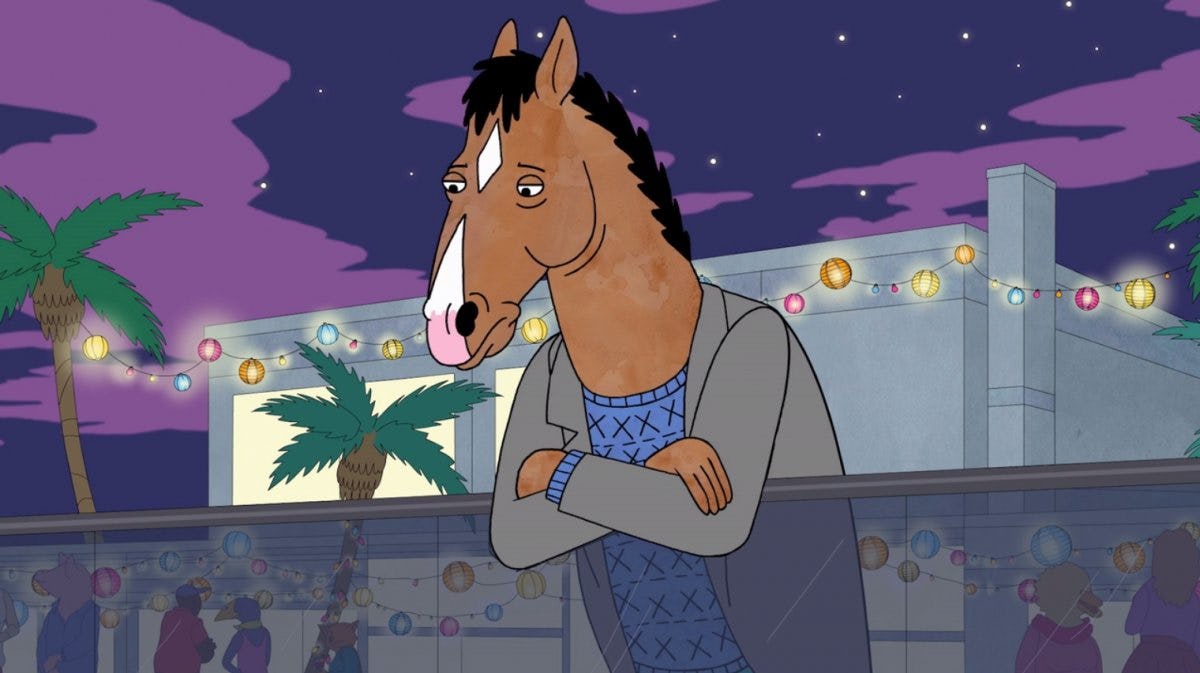
Ironically, if not tragically, Netflix already has a show that addresses these issues in a much more meaningful way. It even manages to do this with cartoon characters that depict humanoid horses. Yes, I’m referring to “Bojack Horseman.”
I understand it’s a cartoon. I also understand it’s a comedy that’s meant to make you laugh at times. However, the fact it still manages to depict the real struggles of depression and mental illness in a relevant only makes “13 Reasons Why” more tragic in the grand scheme of things.
These are serious issues that deserve serious conversations. If you can’t start that conversation better than a cartoon horse man, then you’re doing something very wrong.
How does a man get so angry that he regularly threatens to put his kids through fucking walls?
How does a man become so volatile and unhinged that the mere act of calling him during dinner will send him into a rage?
How does a man struggle so much to cope with such an unfair world?
These are just some of the many questions I find myself asking after watching three seasons of “F is for Family.” It’s not easy when I have to contemplate such things in between bouts of hysterical laughter, but they’re still worth contemplating. Given long wait we’ve endured for season 4, I think we’re all ready for some answers.
Recently, we finally got a tease in the form of a teaser trailer. The trailer even offers hints as to what makes Frank Murphy tick and why he’s prone to hulking out at a moment’s notice. It also offers some colorful F-bombs. It just wouldn’t be “F is for Family” without a healthy dose of F-bombs.
True to the cliffhanger we got at the end of Season 3, we’re about to meet Frank Murphy’s father. We don’t know much about him, but the trailer hints that there’s a good reason why Frank rarely mentions him. The fact he’s voided by Jonathan “Mike Ermentrout” Banks is another revealing insight.
This show has been subtle, but smart when it comes to revealing the character of Frank Murphy. I’ve noted before that he has more complexity than most TV dads. Even if he is a volatile ball of issues who often makes his problems worse with his anger, there is a context to his personality. A lot of it had to do with how his plans got derailed and how the American Dream essentially left him behind. Now, his father enters the mix.
The trailer hints that he did not have a good relationship with his father. It also hints that his father was more abrasive to him than he is to his own children. For a character who already demonstrates many issues throughout the show, it adds more intrigue that is sure to lead to many more angry rants laced with F-bombs.
At a time when everyone is on edge and inclined to put each other through a fucking wall, I think Frank Murphy is exactly what we need.
Throughout the history of television, the best shows are often the ones that resonate with audiences through different eras, cultures, and places. It’s one thing for a show to be a hit when it’s on the air. It’s quite another for a show to still have appeal many years later.
Within that rare collection of TV shows with that special level of appeal, “Parks and Recreation” is in a class of its own. It started as a generic rip-off of “The Office.” It eventually developed into one of the most beloved and endearing TV shows of the past several decades.
For now, I want to highlight another element of “Parks and Recreation” that I believe has become much more relevant lately. At the rate we’re going, we’ll come to see certain themes in “Parks and Recreation” as prophetic warnings, of sorts. It might not be as prophetic as “The Simpsons,” but it’s still critical, given the current state of affairs.
To understand the importance of those themes, take a moment to think about politicians. I’ll give everyone’s inner Ron Swanson a moment to endure the nausea. What ideas and images come to mind when you think of politicians? What’s the most common perception that most people would agree with? If you walked up to a random person, they’ll probably describe politicians as follows.
They’re all corrupt.
They’re all crooks.
They’re all power-hungry.
They’re all evil.
They’re all arrogant.
They’re all narcissistic.
They’re all greedy.
They’re out to steal our money/land/guns/rights/whatever someone happens to value.
It’s easy to have negative perceptions about politicians. To their credit, they do plenty to affirm those perceptions. You don’t have to look hard to find cases of laughably corrupt or downright evil politicians who couldn’t care less about their constituents. It’s enough to make understand where Ron Swanson is coming from when he brilliantly chastises government.
That said, there’s another side of the story that rarely gets explored. A big part of the comedy in “Parks and Recreation” stems directly from how it explores the challenges that governments face. It doesn’t avoid cases in which government officials behave in deplorable ways. It also doesn’t avoid the role the voting citizens play in enabling those same officials.
It’s the lesser known, but equally distressing aspect of government corruption. It’s not always the case that they just muscle their way into positions of power. In fact, it’s not that uncommon for these deplorable human beings to be legally elected to office. Some don’t even need to rig the vote. They’re able to win within the existing democratic institutions.
That’s the case for multiple politicians in the world of “Parks and Recreation.” Some characters are so laughably scandalous that it’s easy to forget that some of them were inspired by real-world events. However, this only compounds the underlying issues that the show explores, both directly and indirectly. At the heart of those issues is a simple question about the nature of government corruption.
Is it us, the people, or the politicians who foster corruption?
It’s not a strict either/or question with a clear answer, but it’s one that “Parks and Recreation” does more than most shows to explore. Take, for instance, the chaotic town hall meetings that the department holds in multiple episodes. Just look at how the citizens of Pawnee conduct themselves.
Some of these people are just obnoxious. Others are downright malicious. However, every one of them still votes. They’re the ones who ultimately decides who gets elected and who wields the power in their city. As a result, the many absurdities surrounding the fictional city of Pawnee tend to reflect that sentiment.
Throughout the show, the citizens of Pawnee aren’t depicted as exceptionally informed. They often make unreasonable, absurd demands. They’re quick to react and cast blame on others. They hold government officials to impossible standards. Even genuine, sincere public servants like Leslie Knope get attacked for not delivering, even when their requests are unreasonable and/or misguided.
On top of that, many of these same people are easily swayed by corrupting influences. In Season 5, Episode 2, “Soda Tax,” Leslie works with her good friend and competent nurse, Ann Perkins, to implement a soda tax that would curb the sale of exceedingly unhealthy soda consumption. It’s based on a real-world proposal. It addresses a real-world health issue. It’s the kind of thing you’d want a caring government to address.
Take a moment to think about the bigger picture. In every season in “Parks and Recreation,” Leslie Knope conducts herself as an ideal politician who simply wants to do good for her community. She has to fight, tooth and nail, just to get elected in Season 4. Even when she does good by her citizens, they still vote her out.
Leslie dares to tell the truth and be honest with the people. Others, like Jeremy Jamm and Bill Dexhart, simply tell people what they want to hear and/or hire the right people to manipulate the public. They don’t force the public to vote a certain way. They don’t even rig the votes because, in the end, they don’t have to. The people are swayed by the necessary forces and vote accordingly.
Now, you can make the claim that the people of Pawnee are more gullible than most and, as the show often depicts, it would be a valid observation. They still have the power of the vote. They’re still the ones who ultimately make the choice to elect or depose public officials like Leslie Knope or Jeremy Jamm.
Politicians do all sorts of shady things with their power, but that power is still contingent on the will of the people, to some extent. Are the people not somewhat responsible for enabling the corruption that they so deplore? The plot and themes of “Parks and Recreation” don’t attempt to provide a definitive answer, but the show makes a relevant observation that has become even more relevant in recent years.
That’s not to say that the people who voted for such a deplorable human being are bad people. Chances are they either didn’t believe in the allegations levied against him or simply voted for him out of loyalty to a political party. Given the limitations of the democratic system, sometimes people are simply left with two bad choices and have to pick the one that’s least awful to them.
Limitations aside, the fact remains that very few of these corrupt politicians would be in positions of power if people just didn’t vote for them. Even if they had power, they wouldn’t have much influence if those same people didn’t support them, even if they aren’t overly corrupt. It’s why politicians often pander to their base supporters so much. They need that support, even if they’re corrupt.
There’s a lot of ugliness to go around in politics. Part of what made “Parks and Recreation” so endearing was how it forged humor in that environment. In doing so, it also shed some light on the absurdities surrounding politics, democracy, and society in general. It didn’t hide from the flaws. The show even magnified them in many cases.
As real-world politics gets uglier and meaner, the insights within the characters and plots of “Parks and Recreation” may prove more impactful in the long run. The show will always be funny, if only for the moments involving Ron Swanson and Jean-Realphio. It’ll give us a chance to laugh at how corrupt elected officials can be, but it won’t hide the fact that we still voted for them.
Whenever a TV show, movie, or other piece of media tries to do a realistic take on a serious issue, I tend to roll my eyes and brace myself. That’s because nine times out of ten, the writers and producers of these rarely sincere efforts get things half-assed or ass backwards. Sometimes, they’re not just wrong in their portrayal of an issue. It’s downright destructive. See the first season of “13 Reasons Why” for disturbing proof.
That makes any show that succeeds in portraying a serious issue all the more powerful. By that standard, “Bojack Horseman” is a diamond within a golden crown atop a pile of steaming cow shit. I apologize for the visual, but I feel like that’s the best way to get my point across.
I’ve found plenty of reasonsto praise this show since it ended, but being stuck at home for weeks on end has given me more time to appreciate the many amazing things this show achieved. It’s hard enough to get emotionally worked up over a show about real people. To get worked up about a show of cartoon human/animal hybrids counts as a special achievement.
It’s not secret that “Bojack Horseman“ tackles a lot of sensitive issues with varying degrees of sincerity, humor, and tact. The show always tries to entertain, but it also makes a concerted effort to approach these issues in a way that doesn’t feel shallow or half-hearted. Again, see “13 Reasons Why” for an example of how poorly this can go.
I’ve already highlighted how this show gives a well-developed take on the nature of addiction, an issue that is rarely more than plot catalyst for zany antics in most shows. There’s another issue that “Bojack Horseman” handles with just as much skill and it’s one that shows almost always get wrong when they try to tackle it. That issue is depression.
I’m not talking about the kind of depression we feel when a loved one dies, a spouse divorces us, or the show that made us a famous actor in the 1990s gets cancelled. I’m referring to real clinical depression, which is a real medical issue that plagues a lot of people in the real world, including people I know personally.
Now, I understand why depression is so difficult to confront in a half-hour/hour-long TV show. It’s not like the flu or some visible wound that you can treat directly and watch heal. Depression, at its core, is a one-two punch of chemical and mental that complement one another perfectly to make someone miserable to a crippling degree.
It’s chemical in that there are parts of the brain that just aren’t operating properly. The systems that usually make someone happy and content just aren’t working right. They often require medication or extensive cognitive therapy to get that system going again.
The mental part plays off those deficiencies in that they foster this mindset that keeps people in a constant state of doom, gloom, and misery. That mindset often acts as a catalyst for various destructive behaviors, from substance abuse to violent outbursts to self-harm. The effects vary wildly from person to person, but the mentality remains the same.
Where TV shows and movies often fail with depression is two-fold. First, it fails to depict the extent of someone’s depression. Second, it fails to show how it’s properly treated. Just showing someone in a saddened state isn’t the same as showing someone who’s clinically depressed. It only gets worse when that same show or movie tries to treat it as though it has a singular cause.
Sometimes, it’s because a character was abused.
Sometimes, it’s because a character lost a loved one.
Sometimes, it’s because a character didn’t make one single choice that haunts them.
Those are all decent catalysts for character development, but that’s not how depression works. It doesn’t just come from one action or inaction, nor can it be treated by confronting it. You can’t just go on a quest, save the day, and suddenly be a glowing ball of happiness. Depression is more complex than that.
That’s why it was so refreshing to “Bojack Horseman” take a very different approach. Throughout the show, Bojack is shown to have many issues. Depression is just one of them. He’s a substance abuser, a narcissist, and insanely self-destructive. If he went to a therapist, they’d need overtime to treat all his issues.
However, most therapists would agree that Bojack meets the criteria for clinical depression. He’s in a constant state of misery throughout the show and goes to great lengths to alleviate that misery, but often ends up making himself more miserable due to bad behavior and terrible judgement. In essence, his other personal issues often compound his depression.
Unlike other shows, though, the source of his depression is never framed as one particular thing. While he is shown to have abusive parents, substance abuse problems, and crippling guilt from his many bad decisions, there’s never a point where one issue becomes the source.
That, in and of itself, is an important distinction in portraying depression in a realistic way. However, of all the moments that highlight the extent of Bojack’s depression, one episode stands out over all the others. That episode is aptly called “Stupid Piece of Sh*t.”
In this episode, Bojack is trying to deal with his previously estranged daughter (who turns out to be his half-sister) and his abusive mother, who is declining mentally in her old age. Like the many other challenges he faces throughout the show, his depression makes this difficult. What makes this episode stand out, though, is how it’s rendered through Bojack’s thoughts.
Through the colorful animation and the haunting voice talent of Will Arnett, these internal monologues give a voice to a depressed mentality the likes of which few shows have captured. It still utilizes a semi-humorous tone, but never stops being real or serious. It’s a powerful insight into what Bojack goes through every day. It doesn’t excuse his awful behavior, but it does provide an important context.
What makes this portrayal all the more powerful is when Hollyhock, his half-sister, asks him about it later in the episode. Like Bojack, she appears to be struggling with that same inner monologue and it’s not a pleasant feeling. She’s young hasn’t lived long enough to make Bojack’s mistakes, which makes her question at the end downright heartbreaking.
That voice in the back of my head that tells me I’m dumb and stupid that’s just stupid, it goes away it’s just a teenage girl thing right. Those voices… they go away, right?
That question, and the way Bojack answers it, cements this episode and this show as one of the best portrayals of real depression in any medium. At a time when we’re all isolated, I think it’s important to understand what real depression looks like. Even if it comes from a show about talking horsemen who sound like Will Arnett, it’s an important perspective that we can all appreciate.