Monthly Archives: December 2017

Sexy Sunday Thoughts: Holiday Shopping Edition

By now, everyone should be done digesting their Thanksgiving dinner, as well as any leftovers. If not, those leftovers have probably gone bad and I wouldn’t advise trying to digest them at this point. That holiday is over now. It’s time to move onto the next big event. This one doesn’t just involve gut-busting food or eggnog spiced with whiskey. This one involves decorations, lights, and shopping.

That’s right. Christmas is upon us. Kids wait eagerly for this month every year. Adults wait for it too, if only to see the holiday specials they loved as kids. I admit it. I still watch those specials. I still love them. However, what I love more about this time of year is the shopping.

Yes, I’m a man. Yes, I love shopping. No, I’m not going to apologize for it. That should explain why I love Christmas more than most. Ask anyone who has known me for more than a year and they’ll tell you the same thing. I love Christmas and I love shopping for presents.

That may not be very sexy, even for an aspiring erotica/romance writer. Then again, I did write a holiday-themed sexy novel called “Holiday Heat” so I think I deserve an exception. I still stand by it, though. Shopping during the holidays is one of my favorite activities that I can’t legally do naked.

I don’t know how many feel the same, especially among my male audience. However large or small it is, I’m still dedicating this week’s edition of Sexy Sunday Thoughts to holiday shopping. Your wallet may hate you, but other parts of your body will thank you later.


“Who among us hasn’t accidentally dripped melted chocolate on a beautiful woman’s cleavage, just to watch her lick it up?”


“Time moves so slow watching your lover strip, frustratingly fast once they get in bed, and not slow enough when the afterglow settles in.”


“No epic romance begins with a poop joke, but many endure because of them.”


“A sexy accent is a good substitute for men too cheap to buy cologne.”


“Assuming someone is good at oral sex is as foolish as assuming a plumber is good at brain surgery.”


“True love is a man who doesn’t lose his erection when his lover accidentally farts.”


“It takes balls to get the love of your life, but it also takes a willingness to let someone else hold them an uncomfortably strong grip.”


Whether you love or hate holiday shopping, this is the time to get started. This is the time to be proactive and finish it off quickly. I made sure mine was done before the end of November. Now, I can just sit back, sip some eggnog, and enjoy Christmas specials for the rest of December. It’s a damn good feeling and I hope others get to enjoy it as well.

Leave a comment

Filed under Sexy Sunday Thoughts

The TomatoMeter: Is It Ruining Movies?

Let’s not lie to ourselves. We all have that one movie that we love, but everyone else, from our friends to professional critics, hate with a passion. I don’t deny I have my share. In fact, I have more than one. Some of my favorite guilty pleasure movies involve such critically panned classics like “Dude Where’s My Care?” and “Terminator Genisys.”

I don’t apologize for loving those movies, nor should anyone else apologize for liking the movies that they like. Everybody is entitled to their own tastes in movies, TV shows, comics, and porn. Granted, tastes in porn can be somewhat revealing about a person, but that’s another discussion for another article.

The discussion I’d like to have now has less to do with our ability to love critically panned movies and more to do with what’s happening with the movie industry, which has released more than it share of terrible movies. These are strange times for Hollywood and not just because it’s much harder to hide a sordid sex scandal.

Anyone who has watched at least one movie or been to the non-pornographic parts of the internet for at least ten minutes has probably heard of a site called Rotten Tomatoes. It is to movies what a rectal thermometer is to your health. Most people don’t like using it. Many try to ignore or avoid it. Sometimes, though, it tells us important things about our general health.

I’ll try to keep the rectal analogies to a minimum because there’s a growing issue with respect to Rotten Tomatoes and how it’s effecting the industry. More than one major producer has come out and bemoaned the site’s impact on the industry. Granted, one of those voices is Brett Ratner and his credibility has taken a huge hit lately. That doesn’t make that impact any less serious.

There was a time as recently as 2007 that a movie could get a lousy score on Rotten Tomatoes and still do well at the box office. Most recently, movies like “Transformers: Revenge of the Fallen” were the poster boy for this phenomenon. That movie earned a pitiful 19 percent on the Tomatometer, but it still managed to rake in over $836 million at the box office.

Personally, I really enjoyed that movie. I thought it was a lot of fun, despite Shia Lebouf’s goofy demeanor, at times. However, that movie might have been the last of its kind in that it failed so hard with critics, but still made plenty of money, both domestically and at the foreign box office. Later movies did much worse domestically and had to rely on international box office receipts to turn a profit.

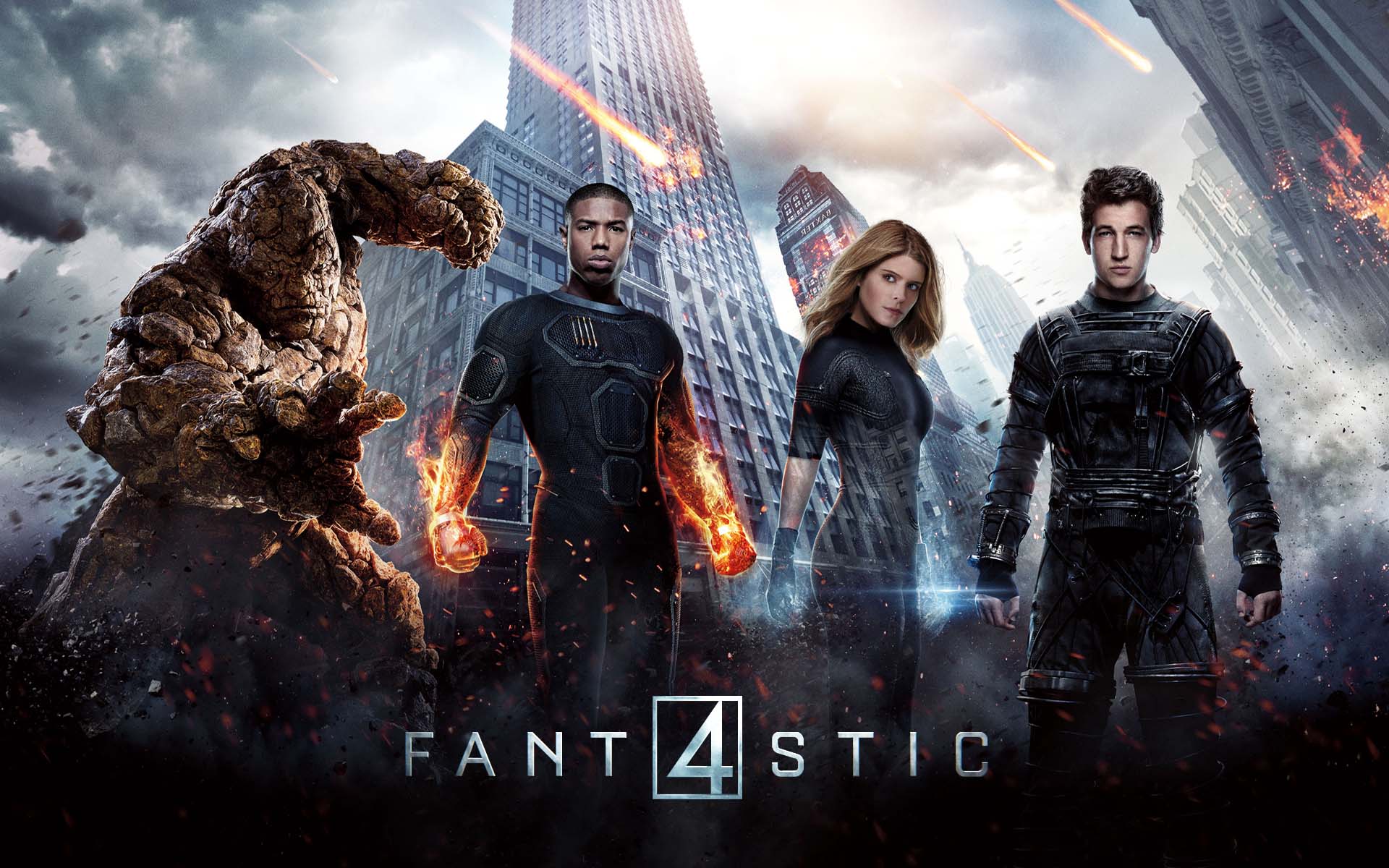
Since then, a bat Tomatometer score can really hurt a movie’s profits. Most recently, the two movies that suffered this the most were “Fantastic Four” and “Batman v. Superman: Dawn of Justice.” Both of these movies didn’t just under-perform. In some cases, major studios singled them out as a reason for declining profits.

Even more recently, the “Justice League” movie took a major hit when its Tomatometer score tanked, even though the majority of audiences liked it. There’s already a lot of doomsaying going on that, due to the poor reception of the movie, it could end up losing a great deal of money for Warner Brothers.

Think about that for a moment. The critics hated that movie, but the audiences loved it. However, due to the poor Tomatometer score, a movie like “Justice League” is doomed to go down in history as a failure. Even if the point of the movie is to entertain the audience, which “Justice League” seemed to achieve, it’s going to fail because a handful of critics said so.

This is where the influence of Rotten Tomatoes gets kind of scary. There are a great many movies that audiences love, such as “Independence Day” and “Home Alone” that have lousy Tomatometer scores, but were still huge box office successes. They succeeded because they pleased audiences and not critics. They’re certainly not the only ones.

If those movies had come out today, then they wouldn’t have been as much a success. Today, it’s easier than ever to look up how acclaimed a movie is and judge its quality, based on its score. Some of the people who ended up loving movies “Home Alone” might never have seen it, just because of the Tomatometer.

On some levels, that’s understandable. People don’t want to pay to see a movie that sucks. We waste our money on enough crap these days. We don’t want to pay $15 to see a movie we don’t like. However, how do we even know we won’t like it until we see it? Are we really going to trust critics to do that kind of thinking for us?

Now, there will be some who never pay much attention to what critics say. Even if Rotten Tomatoes had been around years ago, I still would’ve seen “Dude Where’s My Care?” because that’s just the kind of guilty pleasure movie I love.

However, if too many studios are concerned about what the almighty Tomatometer says, then movies like that might not even get made in the first place. Sure, the world wouldn’t change much if a movie like “Dude Where’s My Care?” had never been made, but that’s not the point.

If an entire industry is going to obsess over what a handful of critics on Rotten Tomatoes say about their movie, then they’re going to focus on pleasing them instead of audiences. This has already caused some consternation among movie fans, some of which suspect that there’s something corrupt going on behind the scenes.

While I don’t usually subscribe to conspiracy theories, I don’t think this one would take a full-blown CIA operation to achieve. If a movie studio wants to spend a few extra million dollars bribing movie critics to prop up their Tomatometer score, then I can’t think of how anyone could stop them.

Sure, it’s unethical, but nobody is going to prison for that. Human nature tells us that if there’s a low-risk way to achieve high-risk returns with little chance of getting caught and only minor repercussions at best, then it probably will happen at some point. It’s not unreasonable to suspect that it has happened in the past, but those involved are smart enough not to get caught.

With the Rotten Tomatoes, though, that kind of corruption becomes even easier because the result is quantifiable. You can see it in the Tomatometer score of a movie. It’s hard to imagine such a powerful tool not getting corrupted at some point.

For now, I suspect this trend will continue with Rotten Tomatoes wielding greater and greater power over a movie’s success. That trend could easily change or reverse down the line. For now, though, I won’t go so far as to say that Rotten Tomatoes is actively ruining movies. I’ll just say that it’s setting a dangerous precedent.

1 Comment

Filed under Celebrities and Celebrity Culture, Current Events, Movie Reviews

What “The Gifted” Reveals (And Warns Us) About Ourselves

Every now and then, a TV show comes along at just the right time. Like bikinis in the summer, hot chocolate in the winter, or beer at a football game, it just makes the right connections for all the right reasons.

You could argue that shows like “Married With Children” or “South Park” were shows that just happened to come along at a time when audiences were eager for something different, but didn’t know it. Some, especially “Married With Children,” couldn’t be made today because of changing standards. The fat jokes alone would’ve triggered endless whining on social media that would’ve gone on for years.

That brings me to “The Gifted,” Fox’s latest effort to squeeze every cent of profit from the X-men franchise. Yes, this is going to be another one of those posts. As I’ve done before, I’m going to tie real-world issues to one of my favorite superheroes. Unlike other posts, though, those ties go beyond getting romance tips from Deadpool.

While I’m usually skeptical about efforts to shamelessly exploit the glut of superhero shows on TV, I gladly make an exception for “The Gifted” and for a good reason. Compared to superhero melodrama on the CW or the gritty violence of the superheroes on Netflix, it’s a very different kind of show with a very different kind of struggle. Unlike aliens, blind lawyers, and secret armies of ninjas, this struggle is more relevant.

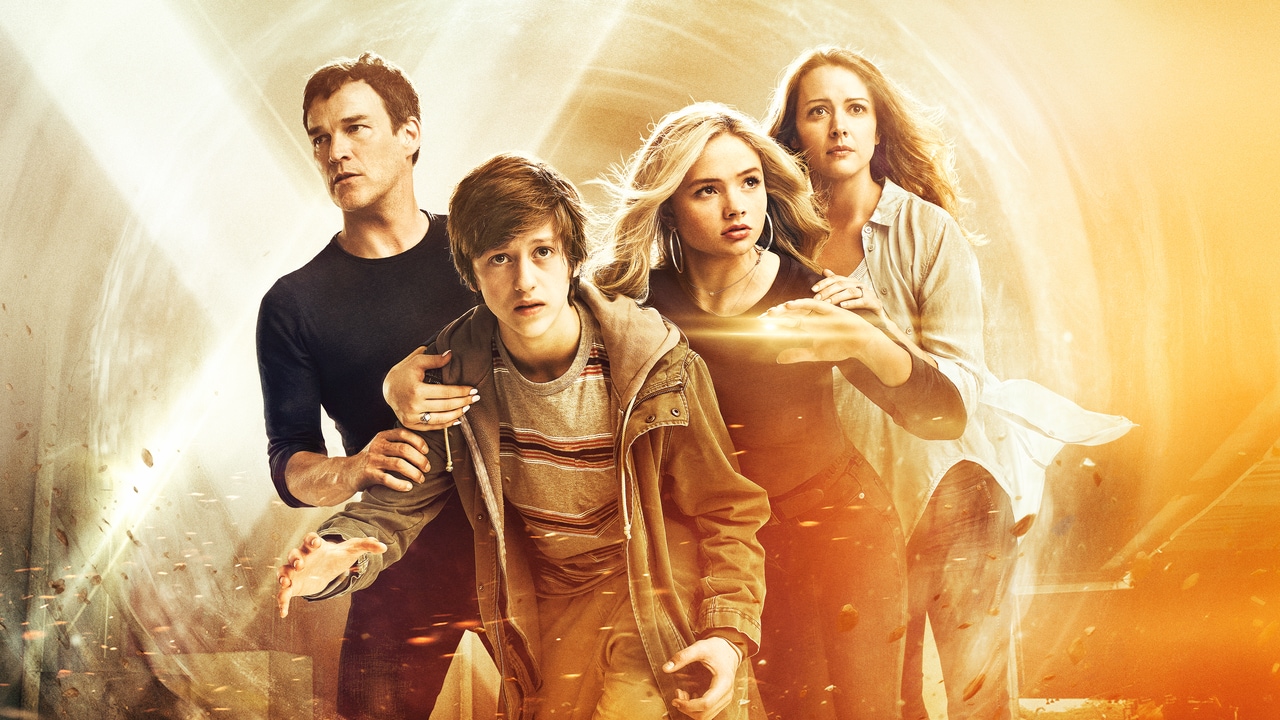
That’s because “The Gifted” doesn’t focus on heroes. Sure, it takes place in the same world as the X-men, but they aren’t the focus. Instead, the show builds its story around the Von Strucker family. They don’t live in a mansion. They don’t have their own personal hypersonic jet. They don’t even have their own personal high-tech training room.
The Von Struckers, unlike their comic counterparts, are an ordinary middle class family. They aren’t concerned with superheroes, super-villains, and insane love triangles between heroes. They’re concerned with work, school, taxes, and taking out the garbage. In a sense, they are a reflection of real people in a world with unreal challenges.

That’s a perspective that rarely manifests in the X-men movies. In fact, other than a memorable scene in “X2: X-men United,” the impact that mutants have on ordinary people is rarely touched on. Sure, they’ll show humans running in terror from a Sentinel or a pissed-off Magneto. That doesn’t give us much insight into the lives these people live.

The Gifted” builds an entire narrative around a family that lives in this world and during exceedingly tense times, no less. This is not a world where seeing the X-men take down a Sentinel is the sort of thing that happens every other Tuesday. This is a world where both the X-men and the Brotherhood have disappeared in an event that has only been referred to as “The July 15th Incident.”

That incident, much like 9/11 or a major assassination, created a dramatic/traumatic shift in society. Suddenly, mutants aren’t just another minority issue. They’re an existential threat, like nuclear weapons or mass pandemics. Mutants aren’t just a distant threat anymore. They’re a real threat.

From the perspective of the Von Struckers, at least in the first episode, the danger of mutants is like the threat of terrorism. They know it’s there. They accept the systems and precautions that society has put in place to deal with it. They’ve learned not to think much of it. They’re too busy just being an ordinary family in a world that happens to have individuals who have the mutant ability to turn into ice cream.

In a sense, we’ve done the same thing in the real world. We accept that we live in a world where the NSA reads all our emails, the CIA tries to assassinate world leaders, and gross injustices happen every day. We know, to some extent, that it’s manifesting all around us. We just shut it out and try to live our lives.

What happens, though, when that injustice hits you or someone you love? That’s what happens to the Von Struckers in the very first episode of “The Gifted.” Their blissfully oblivious lives are shattered when Reed and Kate Strucker find out their children are both mutants. Not only that, one of them ends up trashing the school gymnasium when his powers first manifest.

Their happy, middle class lives aren’t just disrupted. They’re shattered, spit on, and covered in fresh whale shit. To make matters worse, Reed Strucker, played by Stephen Moyer, was a prosecutor who made his living sending mutants to prison. Short of beating mutant children with a baseball bat for a living, he couldn’t have had a worse job.

The mutants he sent to prison weren’t always guilty of crimes. Sometimes, it was just a matter of being in the wrong place when their biology decided to act up. It would be like a teenage boy being arrested for an awkward boner, something we can’t always control. Granted, mutant powers tend to be more destructive, but they can be just as unpredictable.
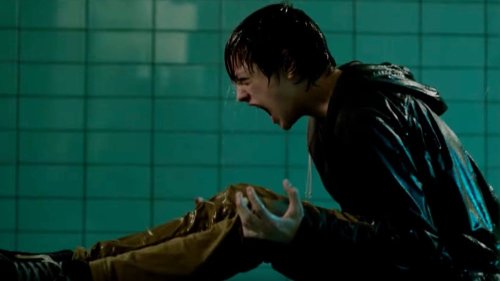
It’s this revelation, as well as the events that unfold in the episodes that follow, that really highlight the impact that “The Gifted” leaves. It’s an impact more relevant than most X-men stories, including the ones that involve jealous ex-lovers. In a sense, it’s one that many minorities already understand all too well.

From the beginning of the show, there’s never a sense that Reed Strucker believed that he was hurting anyone. He never came off as the kind of guy who hates mutants and longs for the days where men like him can throw mutants into internment camps. He’s just doing his job, which he believes is making the public safer.

It’s really no different from those who genuinely believe that homosexuality is inherently harmful or that gun control will only lead to more violence. Most of the people who believe these things, the Pat Robertsons and Richard Spencers of the world notwithstanding, are decent people who want to live in a world where they’re families are safe.

Then, something traumatic comes along that shatters this worldview. They find out they have a gay son or they find themselves in the crossfire of a mass shooting. Suddenly, they can’t ignore these injustices anymore. They can’t go about their happy lives as though the system isn’t victimizing someone. It’s one of those rare situations where no amount of excuse banking can change the truth.

In a sense, the Von Strucker family are reflections of the families in the real world that find themselves on the wrong end of injustice. Whether it’s a Muslim family victimized by racial profiling or being on the wrong side of a sexual harassment claim, it’s not possible to avoid or ignore it anymore. These injustices are hurting you and the people you love. It’s soul-shattering, but that’s what makes “The Gifted” so compelling.

In the fourth episode, this message really hits hard. Reed finds himself in a jail cell right next to Polaris, a mutant who he prosecuted in the first episode, who also happens to be Magneto’s daughter. In these bleak conditions, she basically lays out all the hard truths that he and others like him avoid.

Yes, there was an incident where a group of mutants, which you could substitute for any minority, did something terrible. That was a terrible incident, but efforts to prevent other incidents like that are just hurting real people who don’t want to be superheroes fighting killer robots. Polaris is just one of them. Reed’s children are two more.

That harsh message is one that carries over in the real world, often in tragic ways. Back in 2007, a documentary called “For The Bible Tells Me So” highlighted deeply religious families who had been vehemently anti-gay, only to have one of their children turn out to be gay. Sometimes, it changed their perspective. In some instances, though, it ended tragically.

It’s a harsh, but necessary truth. We can’t control our circumstances. Much like Reed Strucker, we sometimes find ourselves in the worst situations at the worst possible times. The world is chaotic, full of strange people who do terrible things. The fact we can’t control or prevent those things is agonizing, at times. We, as a society, will do as much as we can to mitigate that danger.

In the process, though, we’ll try to fight injustice with more injustice. We’ll obsess less over what is real and more about what is potentially real. It leads us to do extreme things like throw innocent people into internment camps or create killer robots to protect people.

The Gifted” reveals the cost of those measures. It goes beyond the eccentricities surrounding superheroes and focus on the real impact that real minorities feel. Most who are lucky enough to not be part of that group remain content to ignore it. Then, when it finally affects them, they realize just how unjust it is.

At a time when injustices are harder to hide and minorities are a growing part of society, these are important messages. The X-men have been exploring these themes for years, often with colorful adventures involving cosmic birds. “The Gifted” goes even deeper and during these troubled times, these are messages worth heeding.

2 Comments

Filed under Current Events, gender issues, X-men