Tag Archives: Pandemic

An (Awesome) Alabama Principal Channels MC Hammer For An (Awesome) PSA Announcement For Returning Students

The current state of the world sucks. Let’s all admit that.

The state of that world isn’t going to get substantially better anytime soon. Let’s concede that point, as well.

On top of that, kids and teenagers are set to go back to school in a few week, albeit in a very unusual capacity.

I remember going back to school. It was often one of the worst days of the year for me, even without a pandemic. However, even during these objectively awful times, there are still some glimmers of awesome from those who make the effort.

Case and point, I’d like to share this uplifting tidbit with you in hopes that it will make these times a bit less awful. It comes courtesy of Dr. Lee, an Alabama principal who is set to welcome his students back to class in a few weeks. However, a simple statement and some empty platitudes aren’t enough for him. He’s too cool for that.

So, despite the horrible situation with a global pandemic, he offers something that’s both informative and just plain awesome. He makes a parody video of MC Hammer’s “U Can’t Touch This” for returning students. I wish I could put into words how incredible this is during these dark times. Instead, I’ll just post the link here and let the awesome speak for itself.

On behalf of your students, former high school students, and everyone else who is sick of the long string of terrible news, I thank you Dr. Lee. You’re making the world a better place by being so cool. The Hammer would be proud.

Leave a comment

Filed under Current Events, Uplifting Stories

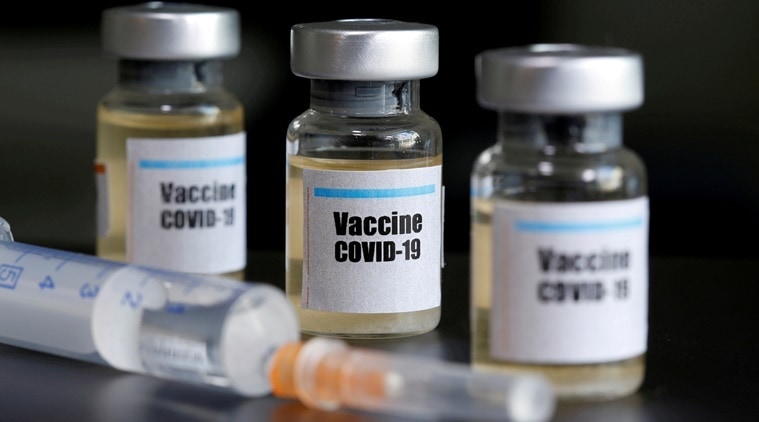
Why You Should Be (Very) Skeptical About Russia’s COVID-19 Vaccine

There’s no way around it. This global pandemic has been a year-long gut punch to everyone on this planet. Some nations have taken those punches better than others, but even those who’ve handled it well still contend with its effects. It’s frustrating and agonizing. Nobody denies that at this point.

We also accept that there’s no way to definitely end this pandemic without a vaccine. That’s why many people, including myself, follow any news about potential vaccines closely. It’s easy to get excited when we hear about the progress some organizations have made. It’s even tempting to think that we’re close.

Avoid that temptation because, if you take the bigger picture into account, we’re not that close. It’s very likely that we’ll be without a proven vaccine for the rest of the year. It’s for that same reason that you should take Russia’s announcement of a successful vaccine, which it dubbed Sputnik V, with immense skepticism.

I’m not just saying that as an American or as someone who has mixed opinions about Russia and its autocratic government. Believe me, I’d love it if this vaccine were as effective as Russian claimed. I’d gladly celebrate it and commend Vladimir Putin’s knack for “motivating” development. That’s how much I want this pandemic to end.

However, there are some very good reasons to be cautious about this claim. Forget, for a second, that it’s coming from Russia, a country with an extensive history of large-scale disinformation campaigns. Just consider this simple scenario.

Imagine if someone walked up to you and claimed they had an app on their phone that could predict lotto numbers. You’re both intrigued and impressed. You ask for proof that it works. That person refuses to give it. They also ask for information about the program. They only give you the barest of basics, which you can’t verify.

Would you be willing to accept that this program works?

Moreover, would you be willing to accept it if doing so meant risking your life and that of your entire community?

Chances are most reasonable people would be skeptical and for good reason. That’s exactly why you should be skeptical of Russia’s claim. Russia has not released any scientific data on its vaccine testing and has not conducted the kind of large-scale test that most vaccines require to determine their safety and effectiveness. Without that kind of test, it’s impossible to tell whether the vaccine is effective.

That’s why practically every major health organization on the planet isn’t celebrating just yet. They’re not completely discounting it, though. There is a genuine interest in reviewing the data. That’s critical since this isn’t some fancy space probe. This is something we’re injecting into living human beings. We need to make sure it’s safe. Otherwise, we could end up causing more suffering than we prevent.

Beyond just causing a spike in cases, due largely to a false sense of security, an ineffective vaccine could undermine the public’s faith in public health. Vaccines have already been subject to all sorts of negative scrutiny in recent years. If this vaccine proves less-than-effective, it could set public health back years and lots of people will die because of that.

That’s what’s at stake here. There’s a time to rush something and a time to take bold risks. This isn’t one of them. Public health and medical science is not something we can rush. This isn’t like going to the moon or breaking the sound barrier. Those efforts required risks, but that risk was taken on by a few willing and brave individuals.

When it comes to medicine, the risks go beyond the test subjects. We cannot and should not take big risks when millions of lives are potentially at stake. This virus has already killed way too many people. Buying into a vaccine before we know for sure it’s effective could ultimately kill even more.

I’ll say it again. I want this pandemic to end as much as anyone. I want this vaccine to work as well as the Russian government claims. However, I’m not prepared to roll up my sleeve until those claims are verified. I encourage others to exercise similar caution.

2 Comments

Filed under Current Events, health, human nature, technology

New York Comic Con 2020 Is Cancelled (And Everything Is Worse)

In case I haven’t made it clear enough, this year fucking sucks. I want nothing more than to purge the year 2020 from my memory. Every week, it seems, a new brand of awful emerges to crush our collective spirits. Most of it stems from the global pandemic that has cancelled damn near everything we love.

Some of those cancellations hurt more than others. Personally, I can endure going a year without the NCAA basketball tournament. I can even endure NBA and NHL playoffs getting pushed back. Those are painful, but they’re bearable.

Then, there’s the New York Comic Con. Losing that is a different kind of pain. Losing that hurts me on a level that I cannot put into words. I’ve been bracing for it ever since the San Diego Comic Con got cancelled.

Finally, it became official and still, it hurts. As bad as this year has been, this just makes it utterly irredeemable.

Verge: New York Comic Con is Cancelled

New York Comic Con’s physical presence is canceled this year. The annual convention typically takes place in Manhattan’s Javits Center. Organizers announced today, however, that “it likely comes as no surprise that NYCC 2020’s physical event at the Javits will not be able to run as intended.”

Because of the pandemic, all major events this year — including Google I/O, E3, and SXSW — have come to a stop. Organizers canceled San Diego Comic-Con in April for the first time in 50 years in favor of an online event. NYCC will follow suit with an online-only event, taking place October 8th-11th, through an online portal dubbed New York Comic Con’s Metaverse. “We are partnering with YouTube to bring to life four days of incredible content from the biggest studios, publishers and creators in the business,” organizers said.

Although digital is the best effort any event can safely make, events like Comic Con are social affairs. The fun for many fans is dressing up, seeing favorite celebrities in person, and spending time with fellow geeks. Online events are also ripe for logistical problems; SDCC’s online event, which took place late last month, had streams taken down due to copyright claims or required fans to have access to several streaming platforms.

I’ll say it again and I’ll belabor it as much as I damn well please. This hurts me. This hurts me a lot. I don’t care for some live “virtual” event. That didn’t work for San Diego. It’s not going to work here, either. Having a virtual comic convention is like having a virtual massage. It’s just not physically possible.

I’ve been going to the New York Comic Con every year since 2012. I’ve documented some of those trips. What makes it worth going to has less to do with the news that often comes out of these conventions and everything to do with the experience. You cannot replicate that with a fucking livestream video that cuts out and gets interrupted by shitty insurance commercials ever 20 minutes. You just can’t.

You go to congregate with your fellow fans.

You go to share a colorful, engaging experience with people who share your interests.

You go to meet new people, bond over your hobbies, and enjoy the many activities that you can experience in New York City.

Now, I’m not the most socially capable person on the planet, but at the New York Comic Con, I feel like I can connect with anyone. I can make new friends, flirt with cute girls, and share memorable moments. It’s an experience surrounded by spectacle. There’s just so much to see and do. The idea of not being able to do it this year is just soul-crushing.

I get why it can’t go on. Given the crowds at the New York Comic Con, it’s not exactly easy to social distance. We’re in a pandemic. Thousands have died and thousands more are likely to die before all is said and done. It’s awful. It’s taking lives and destroying the things that make life worth living.

There’s no upside. There’s no hope, aside from waiting another year, assuming the world is still intact. I’m willing to be patient, but my spirit is now fully and utterly crushed. The New York Comic Con is cancelled this year and everything is worse. There’s nothing more to say.

4 Comments

Filed under Current Events, superhero comics, superhero movies

My (Fragile) Hopes For The XFL With The Rock

Earlier this year, I was very excited about the inaugural season of the second iteration of the XFL. Being a lifelong football fan, as well as a proponent of anything that could shake up the NFL/NCAA duopoly, I was genuinely hopeful for the future of this league.

It was doing everything right. It learned from the mistakes of the first version of the XFL. The league took its time. It got the right people. It dared to innovate how the game was played. It also had the beer snake. Who could forget the legendary beer snake?

Then, the pandemic hit and destroyed everything.

That’s not an exaggeration. I know the COVID-19 pandemic has ruined a lot of things this year, but it utterly destroyed the XFL. This was a brand new league trying to forge a new identity. It had a plan, but that plan did not account for the impact of the worst global pandemic in a century. How could it?

Sadly, the league declared bankruptcy in April. I was deeply saddened. I didn’t post anything about it. The thought of trying to put my disappointment into words was just too much. I was content to just swallow my anguish and find another way to endure the ongoing horror that is 2020.

Then, Dwayne “The Rock” Johnson stepped in and bought the league for $15 million. Suddenly, the slightest glimmer of hope for the XFL and the future in general has emerged.

As part of the bankruptcy procedures, the XFL went up for sale. There aren’t many people who could’ve bought its assets and inspired any hope that it would live again. Dwayne “The Rock” Johnson is definitely one of them. He’s one of the most successful and beloved entertainers of the past 20 years. Say what you will about his movies, but the man is just one of the most likable guys you’ll find in entertainment these days.

Compare that with Vince McMahon. There just is no comparison worth making.

He’s also former football player, himself. He loves sports. He has a genuine love for the game. Both he and his business partner/ex-wife, Dany Carcia, plan to play games again. How they’ll go about it and how they’ll make it work remains to be seen. We still have to survive 2020 in one piece.

However, this news gives me a genuine, yet fragile hope for the XFL. It’s fragile because after the events of this past year, everything feels more fragile. The XFL did everything right the second time and still got screwed over by forces beyond anyone’s control. Naturally, I’m very reluctant to put my hopes on something that just seems to attract bad luck and bad circumstances at every turn.

Make no mistake. I want the XFL to come back. I want it to succeed. I think it was on the right path to do so before the pandemic hit. Now, with the leadership and brand appeal of The Rock, I think it’s in a good position to emerge from this dystopian stretch with a viable future.

However, I don’t think it can succeed if it just tries to go back to the way things were. It’s way too late for that. Right now, the XFL has a bad reputation of either being trashy, unlucky, or prone to bankruptcy. That’s not a good brand identity, to say the least.

At the same time, the XFL has an opportunity to re-align the entire football world in a good way. The XFL wasn’t the only sports entity to get screwed over by the pandemic. The NCAA is in a state of enormous upheaval right now. It lost nearly a billion dollars when it had to cancel the big basketball tournament this past spring. It’ll lose even more if it has to cancel fall sports, which is already happening.

Now, say what you will about the brand of the XFL. It’s still more admirable than the NCAA. The current system the NCAA uses to exploit college athletes while enriching itself just cannot be justified. The fact they’re fighting so hard get college sports going shows how little they care for the student part in “student athlete.”

That system is utterly untenable. The pandemic is just exposing how flawed and fragile that system always was. This is where the XFL can step in. If the Rock and his business partners are a smart as I hope, they’ll jump at the opportunity to recruit displaced college athletes. If only a handful of big time college schools can still operate, then that means hundreds of skilled players will be left out.

The XFL can help them and help itself. It can offer these aspiring athletes actual money to play a sport they love. That shouldn’t be such a radical concept, but the NCAA has kept it radical for far too long. At some point, it can’t keep justifying the practice of not paying athletes who make millions for their league and their school. If they keep trying, then the XFL is in position to step in.

At some point, this pandemic will end. Sports will return and people will flood football stadiums as they once did. The NFL will always reign supreme in the world of football, but the XFL will greatly improve the sport by supplanting the NCAA. Other sports leagues have developmental leagues for young, aspiring athletes beyond college. The XFL can be that league.

To get to that point, it’ll take hard work and someone with the vision and grit to see it through. There aren’t a lot of people who are up to that challenge. Dwayne “The Rock” Johnson is definitely one of them.

I hope he succeeds.

I hope the XFL prospers.

The football world needs it.

The XFL already has two strikes against it. This time, hitting a home run won’t be enough. It needs to hit a grand slam. I’m still very hesitant, but I’m also hopeful.

1 Comment

Filed under football, sports, XFL

My (Early) Thoughts On Pandemic-Era Live Sports

This past weekend felt like a turning point for the world of sports. For sports lovers like me, it was a weekend we thought might never come. This past year and the global pandemic that has consumed it has ruined so many things, canceling so much of what we love. It got to a point where some of us seriously wondered if sports would go the way of concerns, indoor restaurants, and strip clubs.

As a lifelong lover sports who builds spring and summer afternoons around watching baseball games, this was a terrifying thought. I was already bracing myself for the worst, thinking that 2020 might become a year without sports. For once, the worst didn’t entirely come to pass. Baseball, hockey, and basketball all made a comeback and sports fans everywhere could breathe a bittersweet sigh of relief.

Having spent the past few days watching a little of everything, from late night ball games to the new NBA playoffs, I certainly share that relief. I am very happy to see sports return. It feels like a real sign that we’re navigating this pandemic. We’re making a genuine effort to get our lives back. That said, the experience of watching sports is very different during a pandemic.

The most jarring thing, at least for me, was watching a Red Sox vs. Yankees game with no fans. Even though the broadcast tried to pump in crowd noise, it just felt so off. This is one of the most heated rivalry in the history of sports. It doesn’t matter whether it’s the playoffs or the regular season. When these two teams play, it has real dramatic stakes.

You can hear it in the crowd.

You can feel it with every home run, lead change, and scoring opportunity.

It’s part of the experience, even if you’re watching from home. Without real fans and real visceral crowd noise, it just felt incomplete.

Don’t get me wrong. I still enjoyed watching the game. After several months with no sports outside of Korean Baseball, it was incredibly cathartic. You could just tell that this is an incomplete product, but for very good reasons. The subsequent outbreaks that followed opening day were proof of that. I have a feeling that won’t be the last outbreak before the season is done.

That season might even get cancelled. That’s a real possibility and one that doesn’t bode well for football season, which is just a month away.

It seems basketball and hockey are faring somewhat better. They still had the benefit of nearly being done with their season by the time the pandemic hit. I managed to watch a few basketball and hockey games. It wasn’t quite as jarring as baseball, but it still felt very incomplete.

If you’ve ever seen how the Las Vegas Golden Knights put together an opening show, you know why. It also changes the stakes, somewhat. When the both the NBA and NHL seasons were put on hold, teams were still fighting for playoff positions. Those positions matter because higher ranking means a chance at home field advantage.

Well, since both leagues are playing in a bubble in limited locations with no fans, there’s no such thing as home field advantage. There’s no crowd energy. There’s no real sense that any team has an advantage, besides the record they earned before all this happened. For some, that’s disappointing. At the same time, this might be the most level playing field these teams have ever had.

In those circumstances, how do we treat the team that ultimately wins it all? How can you judge any team that wins a championship when an entire season got disrupted by a global pandemic? Does that championship deserve an asterisk? Will people and players alike see it as legitimate? Will the fans even be able to celebrate it? It’s not like parades are conducive to social distancing.

These are sentiments I still find myself contemplating as I celebrate a return of sports. I’m sure those sentiments will change as the rest of the year unfolds. If baseball gets cancelled or football season gets delayed, that’ll be another sign of just how bad this pandemic is and how terrible we’ve been at dealing with it.

Again, I’m still bracing for the worst. For me, the worst-case scenario is the NFL season getting canceled or cut short, due to an outbreak. I suspect, with billions of dollars on the line, everyone involves will try to avoid that. However, if this pandemic has taught us anything, it’s that the unthinkable is more possible than we care to admit.

I don’t know how it’s going to play out. I’m just glad sports are back, in some capacity. I just worry about what the end results will be when all is said and done.

1 Comment

Filed under Current Events, football, health, sports

Global Pandemic Likely To Decrease Birthrates (After I Predicted The Opposite)

In general, human beings are awful at predicting the future. That’s why those who successfully do are so celebrated. I’ve certainly made a few predictions in the past. Some are broad and far-reaching. We won’t know how accurate or dead wrong they are for years, possibly until after I’m long gone.

However, some are simply bound to be proven wrong in short order. There’s no shame in that. You dare to speculate. Sometimes, you just end up being wrong. Earlier this year, I speculated that the lock-downs caused by the COVID-19 pandemic would lead to a miniature baby boom.

I thought my logic was sound. People are going to be stuck at home with their significant others for extended periods. The aspiring erotica romance writer in me thought that was all it would take. Keep two people together at home long enough with little else to do and eventually things will get sexy. When things get sexy, babies tend to get made.

The logic may be simple and sexy, but the real world is complicated and chaotic. Now, recent reports indicate that my prediction was so wrong that the opposite might be happening. The Daily Mail reports that, amidst the pandemic, very few women are getting pregnant and the overall fertility rate is plummeting.

Daily Mail: Americans are NOT getting pregnant amid the pandemic as experts warn already declining fertility could plummet further

In addition to the unsteady economy, couples are also likely experiencing fear and anxiety over the public health crisis and its uncertain end.

Fertility rates have been steadily declining over the last several years and some believe the COVID-19 crisis could cause these rates to plummet.

Demographers and public policy experts say fewer children will mean not enough healthy, young workers to keep the economy going and replace the aging US population.

One report has even predicted that as many as 500,000 fewer babies could be born, which coupled with the death toll from the virus, could lead to a stagnating economy.

I freely admit I got this wrong. In hindsight, I shouldn’t have made that prediction on such simplistic logic. I should’ve also factored in the anxiety that comes with a massive economic downturn and the fear that comes with not knowing if you or your loved ones will get sick. Those are incredibly relevant forces. They do plenty in terms of undermining anyone’s inclination to get frisky.

It’s a dire situation on so many levels. It’s also understandable. Who would want to have kids during a crisis like this? Who would even want to try? These are not good times for starting families. The world, the economy, and society in general is in a very precarious state. Isolation or not, few people are in the mood and that’s not likely to change in the near-future.

Declining birth rates was already an ongoing trend. This pandemic might just accelerate it. How low will it go? I won’t try to predict that. I’ve already demonstrated that I’m not good at predicting the extent to which people will get frisky.

As for what happens when the pandemic is over, that might be worth speculating on. I’ll try not to make too bold a prediction here, but I will say this. Whenever this crisis ends, whether it’s when a vaccine emerges or when new cases drop to zero, I think people will celebrate. Some of those celebrations might get sexy. Will it be enough to offset this sudden dip in baby-making?

I don’t know. Only time will tell. We just have to get through this first. That should be our main priority. The sexy stuff can and should come afterwards.

Leave a comment

Filed under Current Events, health, human nature, sex in society, sexuality

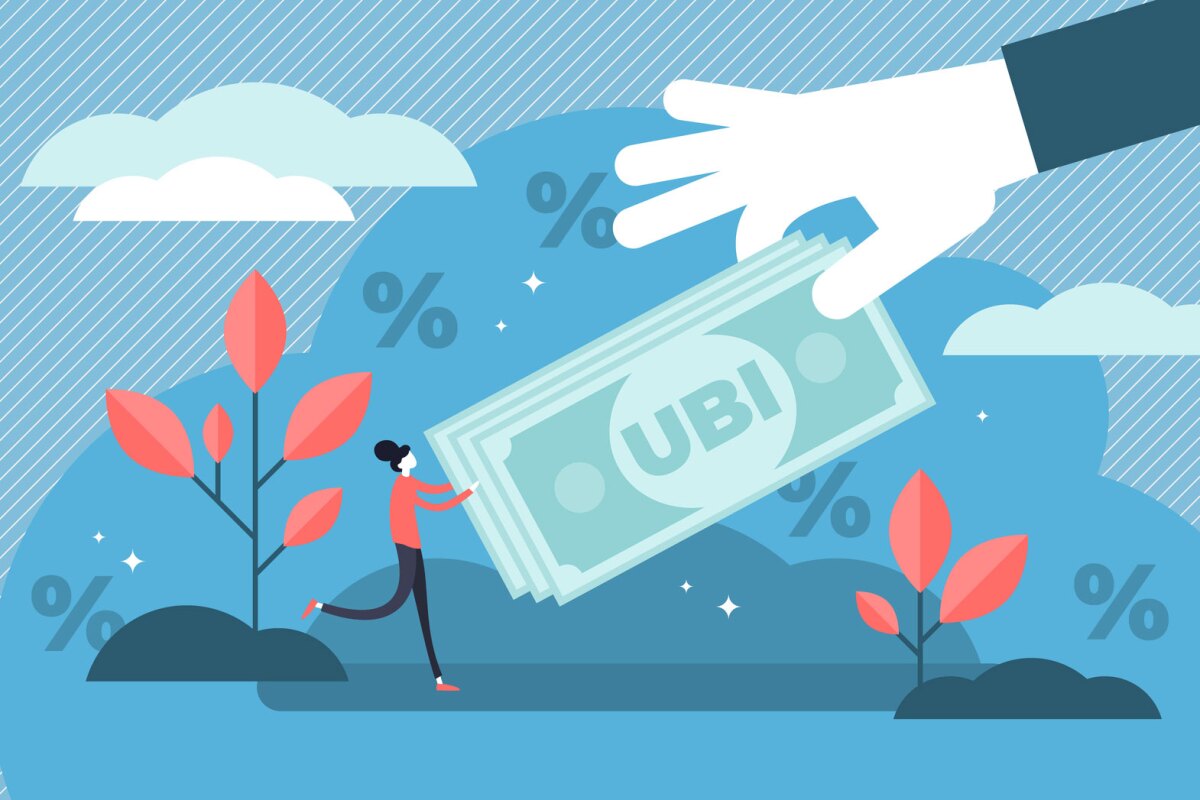
From Stimulus To UBI: Has The Pandemic Made Basic Income A Relevant Issue?

Sometimes, it takes a big, jarring, and outright awful incident to spark meaningful change. It’s an unfortunate necessity, given the stubborn proclivities of human nature. People naturally resist change. Change is hard, risky, and potentially dangerous. Even when the current state of affairs is awful, we won’t pursue meaningful change without kicking, screaming, and whining every step of the way.

The murder of George Floyd was one such incident. As bad as previous acts of police brutality had been, this one was just too awful to stomach. It triggered a wide range of vocal protests that, while limited in their impact, has made the need for change more palatable. It’s frustrating that it takes this kind of horror to get us to change an objectively flawed system, but that’s just the cards we’ve been dealt.

While efforts at justice reform and tempering police brutality are important endeavors, there’s another major change that has been brewing in recent months. Again, it’s becoming relevant due to something utterly horrific. In this case, it’s the COVID-19 global pandemic that has upended our lives, our economy, and our politics.

Now, let me make one thing clear. This pandemic is fucking awful. It’s killing people. It is, by any measure, doing a massive amount of harm to people all over the world. There is no silver lining that’s worth all the lives that have been lost and all the suffering this disease has caused. From killing thousands to canceling major events, this pandemic is as bad as it gets.

That being said, this might be the big, horrific event that makes Universal Basic Income a relevant issue and a feasible recourse for the future.

I wrote about Universal Basic Income, also known as UBI, a few years back. At the time, I considered it a fringe issue that wasn’t going to gain traction in the United States, or any other country, for at least a couple decades. It shouldn’t be that radical, giving people money directly instead of having them jump through so many bureaucratic hoops. Unfortunately, it was still seen as an extreme by ever political party.

That started to change with the surprisingly successful Presidential campaign of Andrew Yang, who made UBI the central pillar of his bid. That campaign helped expose more people to the idea while making it a legitimate political policy.

Then, as has been the common mantra of 2020, the pandemic hit and everything changed.

Now, with millions out of work and unemployment benefits being incredibly limited, the idea of UBI doesn’t seem so extreme anymore. If anything, it’s starting to feel necessary. That could ultimately accelerate this issue’s ascension to the mainstream much sooner than any could’ve expected.

In America, millions have already gotten a taste of it in the form of a one-time $1,200 stimulus check. It wasn’t much, in the grand scheme of things. It certainly wasn’t going to fix the many problems that were unfolding as millions of people lost their jobs, due to the pandemic. It was still real money that people desperately needed.

I can personally attest to how useful this money was. Like many, I received a stimulus check around mid-April. While I wasn’t in the same dire straits as millions of other working class families, that check still helped a lot.

At the time, I had some back-taxes that I was still trying to pay off from having purchased my current home. I wasn’t in a position to pay it back all at once. I would likely need a payment plan, which would’ve accrued interest over time. Then, the stimulus check came and I was able to pay it all off at once with no interest. I even had enough left over to do some overdue car repairs.

My situation was not typical. Millions of people spent their stimulus checks on a variety of goods and services, but therein lies the key. It still got spent. In economic terms, that’s critical for a functioning economy. While the state may take a short-term hit in its finances, a sizable chunk of that hit will be countered by people buying things and subsequently paying taxes on them.

While economics is an insanely complicated endeavor, most people understand the importance of having money to spend to keep businesses going and communities intact. Other countries are conducting even bolder experiments in this pandemic. The results vary, but the basic trends are the same. When you give poor, desperate people money, they spend it. They have to in order to survive.

If you’re rich, or even upper middle-class, you have the luxury of saving. An extra $1,200 isn’t going to do much. For some, it’s not even a single mortgage payment. However, since most people aren’t that rich, it’s guaranteed that money is going to get spent and push the economy along. It helps poor people and it generates business for the not-so-poor.

It certainly isn’t without cost, but the benefits thus far have been more than worth it. As more people who experience those benefit, the idea of UBI is only going to grow in terms of appeal. It’ll even become more feasible because these recent stimulus checks have proven that the government has the infrastructure to make this work. It just needs the scale.

Even after this pandemic ends, there will be huge upheavals for rich and poor alike. The economy is never going to be the same. Society will never be the same. The continued impact of automation and artificial intelligence is sure to accelerate that change. UBI might not have seemed feasible or necessary before, but 2020 has changed that. Expect more changes before all is said and done.

This pandemic has caused a lot of pain and irreparable losses. If, however, it can be the catalyst to make UBI a viable policy, then we might be able to draw some meaningful good from it. Only time will tell.

2 Comments

Filed under Current Events, politics, technology

Why I Won’t Be Too Disappointed If College Football Is Cancelled This Fall

I love sports. I think I’ve made that abundantly clear already.

I really love football. I hope I’ve made that clear too.

Like many fellow sports fans, this year has been agonizing. So many major sporting events have been cancelled over the past several months. A few are trying to start back up, but their efforts have been mixed at best. As much as I want to see live sports again, I’m not too optimistic. I assume it’s going to get worse before it gets better.

The worst case scenario, at least for me, is how much this pandemic will affect the upcoming football season. For me, and America as a whole, football is king. It’s the top sport of the country and one I build my entire weekends around. I’m already expecting to have to change those weekend plans for the upcoming season.

I really hope the NFL finds a way to play a full season. I imagine it’ll be traumatic for many football fans like myself to see the season cancelled or diminished in any way. However, as dire as this news might be for football fans, there is one potential silver lining that I hope comes to pass.

If college football is cancelled this year, I think it’ll be better for the sport and college athletes in the long run.

Now, don’t get me wrong. I love college football. I went to many raucous football games while I was in college. They’re something people build their entire Saturdays around and it generates big business for networks and universities alike. That’s all well and good, but there’s just one problem. This all comes at the cost of exploiting the labor of college athletes.

It’s not a new issue. The debate on paying college athletes or somehow compensating them with something other than a scholarship has been ongoing for years. Having gone to college and known college athletes personally, I understand that it’s not a simple issue. At the same time, it’s hard to argue that the current system is horribly flawed.

The only reason that system hasn’t changed much, despite plenty of concerted efforts, is because the money kept pouring in. Peoples’ appetite for football is insatiable and the NCAA was not inclined to change what had been working so well for them.

Then, the pandemic happened.

Suddenly, that steady stream of money, fueled by the sweat of unpaid college athletes, might not be there anymore. Some conferences have already canceled their fall sports programs. More are likely to follow. If the rate of infections and death keeps rising, there’s a real possibility that all of college sports will be canceled this fall, including football.

As a football fan, this is terrifying.

As someone who has no sympathy whatsoever for the NCAA or the current system of college athletics, I’m oddly hopeful.

It takes a lot to change a corrupt system that’s making a select few very rich. A global pandemic definitely qualifies. While I understand some of the arguments behind not paying college athletes, I don’t think that’s enough to justify the current way of doing things. These kids deserve to get paid.

I’ve seen what they go through. I’ve known players who strain their minds, bodies, and souls under this system and get so little out of it. I’ve also known players who grossly exploit the system for their own benefit. It needs to change. It should’ve changed years ago, but it only became more entrenched.

If losing an entire college football season will finally bring that change, I’ll gladly take it. If it leads to a better system for the players, the schools, and the sport in general, I’ll endure. This pandemic will end. Sports will eventually return. As bad as this current situation is, it’s also an opportunity real, meaningful change. I hope the sports world embraces it.

Leave a comment

Filed under Current Events, football, health, sports

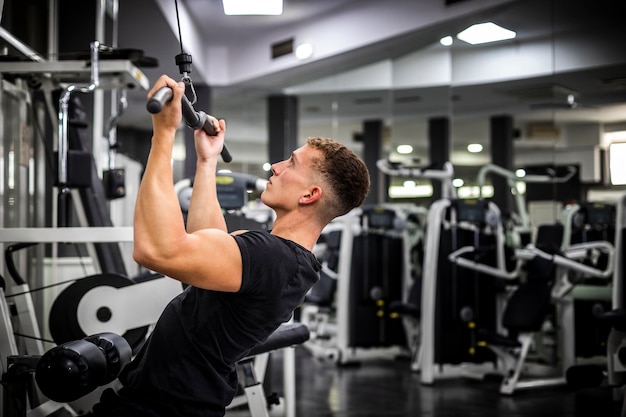
Going Back To The Gym: Relief And Realizations

I missed going to the gym.

Those are words my teenage self never thought I’d say, write, or think. That makes them all the more satisfying to say in the past tense.

This global pandemic has ruined a lot of things and disrupted a lot of lives. It’s also not done. It’s definitely going to get worse before it gets better. Many of us are already feeling nostalgic for a time when we didn’t have to wear masks, could go to a movie theater, and went out to eat on a whim. That was only four months ago. Let that sink in.

Coincidentally, that was also the last time I went to the gym before this week. Back in early March, I was told by the gym manager, who knows me very well after going twice a week for nearly a decade, that the gym was closing indefinitely. I thought it was only temporary. I’d hoped to be back in a few weeks. Weeks turned to months. We all know what happened during that time.

I was starting to lose hope. I still made an effort to stay in shape. If anything, I became more motivated. Being healthy during a pandemic is an objectively good idea. However, that wasn’t easy without the gym.

I don’t have a lot of exercise equipment of my own. My exercise routine was restricted to doing push-ups, sit-ups, and squats before running along the local trails. That definitely helped, but it wasn’t the same. Plus, I was at the mercy of the weather. If it was cold or rainy out, then I couldn’t do much.

It wasn’t the same and I felt it. I lost some muscle mass and gained some weight. It was frustrating, but that was the situation I had to deal with.

Finally, that changed this past week. I finally got word that my gym was re-opening, albeit to a limited extent. We can only go for hour-long chunks at a time and the capacity is severely restricted, but I can work within those constraints. After these past four months, I’m willing to jump through some extra hoops.

When I made it back, it wasn’t just a relief. It was cathartic. I almost forgot how satisfying it was to make it through a nice, rigorous workout. I also forgot how nice it was to have the luxury of doing something other than running in the blazing summer heat for cardio. I’ll never take that for granted again.

I also realized that I am definitely behind the curve. I still remember where I was, in terms of how many reps and sets I could do at a certain weight. When I tried to go back to where I was four months ago, my body did not cooperate. I had to turn the weight down to get through my sets. It was humbling. It also revealed that my efforts to duplicate the results of a gym were only partially successful, at best.

I know it sounds like I’m making a big deal about this, being able to go to a gym again. Believe me, if my younger self was reading this, he would’ve believed an impostor wrote this. However, the act of regaining part of my old routine, as trivial as it might be in the grand scheme of things, was nothing short of therapeutic.

The world is still in an awful, chaotic state. We’re nowhere close to being back to “normal,” as though that’s possible anymore. However, the fact that I can go back to the gym gives me hope that the effort, struggle, and persistence will pay off in the long run. We can’t regain the lives we lost, but we can push forward.

That will inspire me with future workouts. I hope it inspires others, especially those still living in a state of lock-down. There is a light at the end of the tunnel. It is worth enduring. Just hang in there. Like a good workout, this kind of strain will only make you stronger in the long run.

Leave a comment

Filed under Current Events, exercise, health, Jack Fisher's Insights, psychology

Why You Should Be Pessimistic About Optimistic News On Vaccines

In general, I’m a pretty optimistic person. I try to focus on the positives, even when I’m surrounded by a lot of negatives. It’s part of my personality. Granted, I wasn’t always like that. As a teenager, I was a pretty miserable, jaded, self-loathing cynic. There’s a long story behind that, but it’s not important right now

The reason I make that disclaimer is because the past few months have killed my sense of optimism. Actually, that’s an understatement. The impact of this massive global pandemic has taken my optimism, shot it five times with a shotgun, and ran it over eight times with a fully loaded pickup truck. My optimism is dead. It will be for the foreseeable future. That’s what this pandemic has done.

At this point, I question the sanity of anyone who has clung to any sense of optimism. Thousands of people are dead. Infections are in the millions. Things are getting worse every day. That’s not an opinion. That’s just basic goddamn math.

Now, I’m not trying to turn everyone into a pessimist, nor am I trying to crush everyone’s hopes. The point I want to make here is that there are just some things that hope cannot help, no matter how many inspirational quotes you read. Yes, hope and optimism can go a long way in many fields. A global pandemic just isn’t one of them.

To that point, I want to highlight the recent “optimism” surrounding vaccine research. I admit I too have been following this closely, too. How can you not? Even a cynic would agree. The best way to end this pandemic and get our lives back is with a vaccine. That’s somewhat distressing, given all the negative press vaccines had leading up to this moment.

At the same time, it’s remarkable how much the world has united behind this effort. I can’t remember a time when so many countries and so many organizations were this unified in their effort to achieve something. I want to find hope in that, but there are still a few intractable problem. This time, it has to do with both math and physics.

Making a vaccine is hard. There’s just no way around it. Even if you know the exact molecular sequence, producing it on a mass scale and distributing it to a large number of people is also difficult. It’s not a matter of will. It’s a matter of resources and logistics, the likes of which can’t be solved overnight or even within a year.

For that reason, when you see a positive story about a vaccine for COVID-19, you should be very pessimistic. Just look at this recent story from the Associated Press regarding Moderna’s vaccine research.

AP: First COVID-19 vaccine tested in US poised for final testing

There’s no guarantee but the government hopes to have results around the end of the year — record-setting speed for developing a vaccine.

The vaccine requires two doses, a month apart.

There were no serious side effects. But more than half the study participants reported flu-like reactions to the shots that aren’t uncommon with other vaccines — fatigue, headache, chills, fever and pain at the injection site. For three participants given the highest dose, those reactions were more severe; that dose isn’t being pursued.

Some of those reactions are similar to coronavirus symptoms but they’re temporary, lasting about a day and occur right after vaccination, researchers noted.

“Small price to pay for protection against COVID,” said Dr. William Schaffner of Vanderbilt University Medical Center, a vaccine expert who wasn’t involved with the study.

He called the early results “a good first step,” and is optimistic that final testing could deliver answers about whether it’s really safe and effective by the beginning of next year.

On the surface, it looks rosy. It hints that a vaccine is getting closer. It may even arrive at the end of the year. They’re even saying that research is moving at record speed. It all sounds so great.

Don’t get your hopes up.

Don’t expect this pandemic to be over by Christmas, either.

Notice that I bolded the phrase “a good first step.” Also, note how few details about the research are actually listed or linked to. It just notes how many people were involved and how many will be utilized in the next step. That’s both a sign and a red flag.

It’s a common problem whenever the media tries to report on science. Actual scientific research, namely the kind reported in journals, is not the kind of thing you can fit into a simple news blurb. You can’t fit it in an article, let alone a tweet. Most scientific research, especially of the medical variety, involves a lot of numbers, intimate details, and chemical constructs that most people aren’t equipped to understand.

It’s not that the news media has to dumb it down for us, the public. It just can only report on the broadest details. Those details often include the various complications and shortcomings of the research. Make no mistake. Those complications are there. If they weren’t, then the scientific research wouldn’t be necessary. It’s why becoming a doctor is so difficult and laborious.

I don’t doubt for a second that most of these doctors want to end this pandemic. Some are probably hopeful that they’re close. However, you can’t be a good doctor without sticking to rigorous science. Breakthroughs don’t happen all at once. Those light-bulb moments we see in movies and TV shows aren’t even close to what happens in real life.

In real life, medical breakthroughs still take years if not decades. The sheer complexity of disease and our methods for treating it preclude easy fixes to big problems. In terms of problems, pandemics are as big as they come. If ending it required only one breakthrough, it would’ve been found by now and thousands of lives wouldn’t have been lost.

That’s why you should never look at vaccine news in terms of a breakthrough. Even headlines that inspire hope in this field can only ever tell part of the story. Unfortunately, science is hard and so is creating effective medicine. You can’t rush it. You can’t encourage it. It’s at the mercy of hard limits that you can’t bullshit your way around. That’s what makes it hard. It’s also why it works.

Remember that the next time you see headlines about the prospect of vaccine research. Don’t assume it’s going to finish tomorrow. Don’t assume a miracle will speed it up. That’s not how science works and that’s not how this pandemic will end. For now, the best we can do is endure, brace ourselves, and retain our sanity until things eventually do change for the better.

1 Comment

Filed under Current Events, health