
The following is a video I made for my YouTube channel, Jack’s World. It’s a video version of an article I wrote a while back. I added and removed a few details to the video. If necessary, I’ll do a follow-up. Enjoy!
The following is a video I made for my YouTube channel, Jack’s World. It’s a video version of an article I wrote a while back. I added and removed a few details to the video. If necessary, I’ll do a follow-up. Enjoy!

We currently live in a golden age of villains. Between Thanos, Erik Killmonger, the Joker, and Walter White, there has been a veritable surge of complex characters who also happen to be compelling villains. While there’s still a place for the kind of pure evil that Disney villains have relied on for years, this trend in a more refined brand of villainy feels both refreshing and overdue.
I’ve written extensively on villains before. As a lifelong fan of superhero comics and movies, I’ve consumed, contemplated, and scrutinized hero/villain dynamics more than most. In doing so, I’ve noticed plenty of trends. Like most aspects of popular culture, it’s always evolving. Very few themes and details remain constant, especially when it comes to antagonists.
That said, there’s one trend in villains that has remained somewhat constant over the course of my lifetime. It’s also a trend that I see as intensifying, albeit in a subtle way. Some of it coincides with the growing complexity of villains in popular culture, but most of the trend precedes the current era of superhero-dominated media. If anything, superhero media helped accelerate it.

While most villains and heroes rarely identify with a certain political affiliation, it’s usually not hard to discern how most would vote in a contemporary election. I would even argue that it’s easier to surmise what a villain’s political leanings are compared to that of heroes. Take any villain from the past 10 years of movies, be they superhero or otherwise. Chances are a vast majority of them would identify as conservative.
Now, I understand conservatism is an exceedingly broad term. It has a dictionary definition, but as a political philosophy, there are many sub-sets, divisions, and variations. From fiscal conservatives to social conservative to neoconservatives, there are many wildly different ideologies that still identify as conservative. A few actively clash with one another.
Those complexities aside, there are some core tenants associated with conservatism and it’s those very tenants that make it such an effective basis for villains. Chief among conservative values is the idea that traditional norms, institutions, and values be maintained. Change isn’t actively dissuaded, but it is viewed with caution and suspicion. To be conservative is to affirm the status quo, to some extent.
That’s all well and good if the status quo is beneficial to everyone. It’s not so preferable for those who either fail to benefit or are actively screwed over by that same status quo. Since there has never been a society in history that has achieved perfect prosperity for everyone, regardless of their minority status, there’s bound to be people who get left behind.
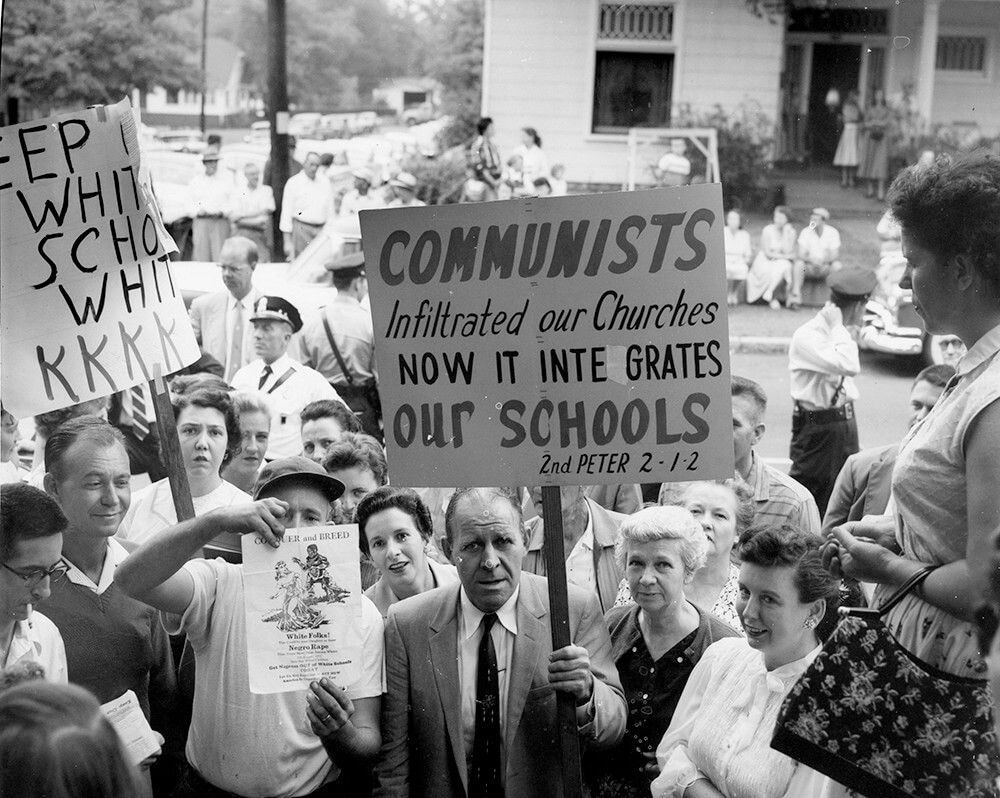
In our own real-world history, we’ve seen people from those disaffected groups organize and fight the status quo to better their lives. That struggle has played out in the Civil Rights movement of the 1960s, the movement for women’s rights, and the LGBT rights movement that’s still going on today. Those who oppose these movements tend to have, broadly speaking, conservative leanings.
Look at the groups that opposed the Civil Rights movement.
Look at those who actively oppose LGBT rights, women’s rights, and immigrants.

They all espouse rhetoric that would put them at odds with Superman, Captain America, and most other superheroes who value justice, truth, and peace. For some, their talking points sound like ideas that only villains in the mold of Lex Luthor would agree with. While not all of them identify as overtly conservative, the standard principles are there.
Anything too different from the status quo must be wrong or evil.
Anybody too different from the people everyone else in a society must be bad, evil, or devious.
Any idea, trend, or movement that is disruptive or deviant in any way is something to be opposed.
It doesn’t just manifest in superhero movies or underdog stories, either. Look at a movie like “Footloose.” In this story, the people who ban dancing are uptight, dogmatic, religious zealots who likely voted for Ronald Reagan in 1984 when this movie came out. They were the antagonists of that story and the kids, while not overtly liberal, dared to defy them.

It can even manifest subtly in other media. In kids shows like “Recess,” “Hey Arnold,” and “Rocko’s Modern Life,” the most common antagonists are uptight authority figures who have no tolerance for new ideas, big changes, or anything remotely fun. It’s hard to imagine any of these characters voting for someone who builds their slogan around change, reform, and reinvention.
They like things the way they are. Most of them benefit from the current system and will naturally seek to preserve their place in that system. While they won’t always see themselves as villains, it’s difficult for them to come off as heroes. You can only be so heroic when your side is closely aligned with predatory business practices, fun-hating religious zealots, and unabashed war-mongers.
That’s not to say it’s impossible for liberals to be villains too. It does happen and it can be done very well when done right. I would argue that Erik Killmonger in “Black Panther” was more in line with an extreme liberal revolutionary who didn’t just want to pursue change. I would make a similar argument for Ra’s Al Ghul in “Batman Begins.”

These characters didn’t just seek to change society from its current unjust state. They sought to violently destroy it and rebuild it from the ground up. That kind of liberalism exists in the real world and it can make for compelling villains.
However, the number of villains who align with the politics of Killmonger are far fewer than those who would align with the politics of Lex Luthor. In general, it’s easier to resist change rather than embrace it. It’s also necessary to some extent for those to resist change to be uptight authority figures who are okay with coercing others to maintain traditions. Logistically, the villains in many conflicts must be conservative.
Now, that’s not to say that villains will always lean conservative in popular media. What it means to be conservative changes over time. If you were to listen to conservative rhetoric 50 years ago, they would sound very different. They might even sound liberal by today’s standards.
The same goes for liberalism of previous eras. It hasn’t always been closely aligned with the politics surrounding minority rights, income inequality, or political correctness. The liberals of the 1920s would likely clash with the liberals of today. That’s just part of the ever-evolving nature of politics.
For the time being, though, being a villain in popular culture usually means being conservative to a certain extent. Conservatives are more likely to be the rich, greedy business people who would gladly burn down a rain forest or exploit slave labor to raise profits. Conservatives are more likely to be the rule-loving, fun-hating, curfew-enforcing religious zealots who wouldn’t mind electing theocrats with every election.
These types of individuals are far more likely to be villains in a story. At the very least, they’ll side or tolerate the villain. It’s easy to believe that those who side with the religious right and well-connected rich people will generally oppose a selfless, likable protagonist. From a narrative perspective, these kinds of villains are better in that we tend to root for heroes who oppose authoritarian bullies like that.
Again, it’s guaranteed that political and cultural trends will likely change what it means to be conservative, liberal, and everything in between. For the time being, if you were to bet on the political leanings of an antagonist, the odds are mostly in favor of that antagonist being conservative.

In general, I try not to comment on “cancel culture.” It’s not because I don’t have an opinion. I just think it’s a waste of time, for the most part. I’ve never seen it lead to a productive conversation on anything. Most of the time, it just amounts to people publicly whining about something they find offensive to a point where others cave, if only to stop the whining.
I am not a fan of this, to put it mildly.
Every time I see it trend, I want to bash my head on my computer screen while telling some of these people to grow thicker skin.
The world is a chaotic, ugly, offensive place. We can only do so much to change it. No matter how much change we manage to implement, it won’t change the past or the context in which it transpired. That’s especially true if the people others are trying to cancel are long dead.
Now, as much as I despite the term and what it represents, I also understand that it’s not as simple as its critics make it out to be. At times, I find the people who whine about cancel culture to be just as insufferable. Their whining can basically be boiled down to, “Other people want to cancel the stuff I like and it hurts my feelings!” That’s just as pathetic as wanting to blackball a celebrity for old tweets from 2009.
Both efforts are equally absurd.
Both efforts do nothing to make the world a safer, more tolerant, more inclusive place.
Most of the time, I find the effects of “cancel culture” to be inconsistent, at best. People will complain about the lack of diversity in media, politics, business, and certain industries, but those same people can’t be bothered to vote or support the things that reflect those preferences. They always revert to whining.
People on both sides of the political spectrum will do this. The same people who laugh at those who complain about a video game character being too sexy while whine just as much because Brie Larson said something that hurt their feelings. They’ll claim their efforts are not contributing to cancel culture, but it’s the same damn concept.
Unfortunately, despite the best efforts of decent human beings with thick skin and a good sense of humor, cancel culture is still a thing. People are going to condemn celebrities and public figures for things they said or did years ago. We saw it with Kevin Hart, which cost him a chance to host the Oscars. We’re seeing that now with celebrities like Jimmy Kimmel and Sarah Silverman, who once did skits involving blackface.
All this is happening as statues of historical figures who did deplorable things are coming down. Never mind the context or bigger picture of why they’re historical in the first place. They did something awful. Any image that exists that may glorify them in any way is just too much for our tender sensibilities.
In addition to people, the urge to cancel all things offensive has extended to art. Movies like “Gone With The Wind,” which definitely had some offensive imagery, was removed from streaming recently. Shows like “Paw Patrol,” which is geared towards children, was seen as too offensive at a time when police brutality is a hot topic.
Now, I’m not going to justify old tweets or outrage about movies from a different era. I know there’s nothing I can say to change the minds of those who are so offended by statutes, celebrities, or the names of football teams that they want them all canceled. There’s also nothing I can say to change the minds who think it’s part of some elaborate censorship effort meant to destroy freedom.
Instead, I’d like to ask a few simple questions for both sides to consider.
What exactly does canceling something achieve in the long run?
At what point does canceling something amount to censorship?
Why is canceling something more viable than simply growing thicker skin?
At what point does context stop mattering for something that’s offensive?
How does condemning the ugly history of the past make the present or future any better?
What right do you have to be offended by the feelings and preferences of someone else?
I won’t claim these are easy questions to answer, but to those who are behind or protesting certain cancel-this hashtags, I hope they offer perspective. Like it or not, cancel culture isn’t going away anytime soon. People are always going to be offended by something or someone.
In years past, it was uptight religious zealots who were aghast at anything that didn’t reflect or promote the values of a 1950s sitcom. Now, it’s uptight activists who are aghast at anything that doesn’t reflect their utopian fever dream that just happens to align with their politics. The passion is real, but the motivations are misguided.
You can tear down every monument.
You can censor every byte of media.
You can rewrite every textbook or novel that ever reflected outdated attitudes.
It won’t change what happened in the past. It won’t prevent people from being assholes in the future. If anything, it sends the message that people are too weak, stupid, or traumatized to handle certain ideas. That, in my opinion, is the most offensive thing of all.

A while back, I wrote a piece about cops using the Punisher’s logo. In looking over news clips of that story, I decided that it warranted a full-fledged video on my YouTube channel, Jack’s World. I believe this is an important story and an important point worth making in multiple forms. I hope others feel the same.
There are some topics I generally avoid talking about. It’s not because I’m ignoring or downplaying the issue. I just feel like I don’t have anything meaningful to contribute. It’s for that reason that I haven’t touched on recent issues surrounding police brutality, Black Lives Matter, and defacing statues of historical figures. I’m neither qualified, nor knowledgeable enough to add anything to the conversation.
I support the efforts of Black Lives Matter to raise awareness of police brutality.
I’m against police brutality.
I’m in favor of prosecuting the officers responsible for George Floyd’s death to the fullest extent of the law.
I’m in favor of police reform, which includes demilitarization and criminal justice reform.
I have little else to contribute beyond that. I acknowledge that my perspective is limited. I’m not a young black man living in an urban area that’s subject to significant police brutality. I won’t claim to understand anything about the issues people in that situation face every day for years on end. That’s not why I’m finally talking about this.
I only decided to throw my voice into the mix when I read a story about police officers using the famous emblem of the Punisher as a logo. As someone who is a lifelong comic book fan, and a general proponent of a fair and just society, this bothers me in so many ways. I’ll even take it a step further. I’ll make a larger statement that I hope other cops, comic book fans, and overall decent human beings can appreciate.
The cops who are co-opting the Punisher’s logo are hypocrites.
There’s no way around it. There’s no nicer way to say it, either. These police officers, who took an oath to uphold the law, are hypocrites on a level that would make Ted Haggard blush.
If they’d read more than one Punisher comic, they would understand why and think twice about plastering that logo on their cars. I doubt they know the Punisher as anything other than that tough, badass ex-soldier who kills criminals in the most brutal ways possible. That’s not even a half-accurate representation of who Frank Castle is and why he does what he does.
Now, I won’t get into the elaborate lore surrounding the Punisher. Most people can find that information easily. But you don’t have to know much of that lore to understand why cops using his logo is antithetical to Frank Castle’s mission.
The basics are simple. Frank was just a normal, law-biding citizen. He served his country. He loved his family. He did everything a decent, upstanding person is expected to do. Then, while picnicking with his family, a group of criminals who have no appreciation for the law, the people who uphold it, or human life in general, brutally murder his wife and children.
That’s what begins Frank Castle’s mission, but it’s a mission that decent, law biding people can’t take part in. That’s especially true if you’re a police officer and not just because Frank is a former soldier. A cop joining Frank’s mission would be like a vegan opening a chain of slaughterhouses.
At his core, the Punisher carries out this mission so others don’t have to. He’s already lost everything. He’s already broken. He’s got nothing left, other than the killer instincts he’d honed as a soldier. That’s why he chooses to channel those skills into taking out the kind of people who murder an innocent family just trying to enjoy a picnic.
It’s worth noting that the targets of this mission are not kids selling drugs, petty thieves, and assholes who park in a handicap spot. Those people may break the law, but they still live within the society the law helps foster. The kind of people who murdered Frank’s family do more than just break the law. They scoff at the very notion of it. They’ll hurt anyone they want and not give a damn about the consequences.
The Punisher is extremely selective. He reserves his wrath for those he knows deserve it. He also breaks the law to inflict it. That part is worth emphasizing too. Frank is a vigilante who murders. He is not and cannot be part of the justice system because he ignores it. He has to because the monsters he hunts ignore it too.
Someone still has to be around to both respect and uphold the law. That’s what good, respectable police officers are supposed to do. To use the Punisher’s brutal methods undermines that critical purpose.
Unlike Frank, Cops also have families, friends, and communities to uphold. They are supposed to enforcers of the law. They’re part of a system meant to serve and protect. If they start ignoring those critical parts, then the system just doesn’t work. It goes back to Frank doing what he needs to do so that others don’t have to.
When a cop usurps the Punisher’s logo, they’re sending a message that they don’t give a damn about a fair and just society. They just want to punish the people they think need punishing. That’s a crude, misguided interpretation that is antithetical to the basics of law enforcement. They may think they’re being badass heroes in their minds, but they failing to see the hypocrisy of subverting the law to enforce it.
This is a big reason why the Punisher’s creator, Gerry Conway, has gone on record as saying he opposes cops using the logo. They’re not just co-opting his creation. They’re using it to justify atrocities. That’s not just wrong. It’s disturbing that anyone who claims to champion the law would take that approach.
It’s also worth noting that in one iconic Punisher story, Welcome Back Frank by Garth Ennis, the Punisher encounters a group of people who tried to follow his example. They became vigilantes as well and tried to punish those who they thought deserved it. They said they admired him. They even wanted to join him. What was Frank’s response?
He shot them dead on the spot.
That, more than anything, proves the hypocrisy of cops who use that logo. They already have a logo. They have a badge and a uniform that tells society they’re there to uphold the law. If that’s not enough for them, then maybe they shouldn’t be cops.
Filed under Current Events, human nature, Marvel, political correctness, politics, psychology, superhero comics
A big part of being a fan of anything is enduring the hard times. Whether you’re a fan of a sports team, a celebrity, or a particular author, there are going to be missteps. For every “Dark Knight,” there’s going to be a “Batman and Robin” that’ll make even the hardest of hardcore fans cringe.
It’s no different for superhero comics. There have been times when being a fan of X-Men, Justice League, the Avengers, or Batman have not been pleasant. Sometimes, the quality of the material being produced just isn’t that great. Sometimes, it’s downright infuriating. Just ask any Spider-Man fan about One More Day or the Clone Saga.
However, there’s a big difference between enduring hard times and just whining about something. There’s a big difference between criticism and whining, but some people who claim to be fans can’t seem to tell the difference. A few even manage to whine loud enough to draw an audience, albeit for the wrong reasons.
If you follow comics as closely as I do, you know who I’m talking about. They’re the kind of people who find a comic, single out a few particular elements, and go on these long whiny rants that basically say the same thing.
It’s all blah-blah-blah-SJW-blah-blah-blah-political correctness-blah-blah-blah-it’s too damn woke-blah-blah-blah-the industry is doomed-blah-blah-blah-they’re insulting older fans. I won’t single out any of these frail, emotionally-stunted losers by name or handle. They don’t deserve the extra attention and I refuse to give it to them.
They’ll claim they’re defending the industry they love. They’re just whining loudly and hoping to attract clicks in the process. It’s pathetic. It’s also predictable. That’s why I groaned when I saw this recent news from Marvel regarding a relaunch of their New Warriors series.
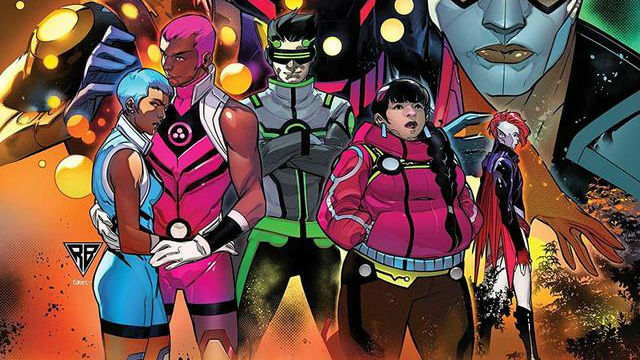
Marvel: Introducing The New ‘New Warriors’
When Kamala’s Law goes into effect in the highly anticipated one-shot, OUTLAWED, super heroics will be left to the adults and underage heroes will be banned unless they have official government assigned mentors. That’s where THE NEW WARRIORS come in.
Now, I’m not the biggest fan of New Warriors. I’ve heard of them before and I know their history to some extent, but this is hardly the most outrageous thing Marvel could’ve done. They’re not killing off older characters and replacing them with young, diverse characters, a la Riri Williams. They’re not radically changing the background or history of established characters, like they did with the Maximoff Twins.
In fact, they’re doing exactly what these same whiny losers always say they should do. They’re creating entirely new characters with diverse backgrounds instead of forcing them into roles that others have occupied. They’re not canceling, changing, or undermining the characters we’ve loved since the days of Stan Lee and Jack Kirby. They’re just creating something new to supplement those characters.
Despite that, these same “critics” still whine about it. They whine the same way they whined endlessly about “Star Wars: Rise of Skywalker.” The mere fact that this new title exists, especially its two non-binary characters, Snowflake and Safespace, is enough to make them cry like immature babies who just had their blanket taken away.
It’s one thing to criticize Marvel for trying to force new characters into the roles of established characters. That rarely works out. It’s quite another to complain when companies like Marvel try to make new characters from scratch who don’t resemble the many other characters around them. It’s almost as if characters aren’t allowed to be different beyond a certain point.
If that weren’t bad enough, these same whiny losers are judging this book before they’ve even read it. I admit it doesn’t look too appealing to me, but I haven’t read it. How am I supposed to know if it’s good? How will I know that Snowflake and Safespace aren’t good characters?
There’s a word for people who judge things before they actually give it a chance. It’s not a very flattering word, but I doubt the same whiners will admit to knowing it. They’ll still claim they’re defending their preferred genre, but all they’re doing is trying to justify their prejudice by whining.
Once again, the wise words of Abraham Simpson sum it up best.

Nuff said!
Filed under Marvel, outrage culture, political correctness, superhero comics

Every controversy seems absurd when you look at it with enough hindsight. Think of all the big social and political controversies going on right now. From mansplaining and safe spaces to all-female movie remakes to sexy Super Bowl Halftime shows, there’s no shortage of outrage and moral panics. In general, I try to avoid contributing, but I’d be lying if I said I wasn’t affected to some extent.
Even if the issues feel genuinely serious, it’s worth taking a step back and maintaining a certain perspective. What seems serious now won’t always end up being that serious in the grand scheme of things. Things like the Cuban Missile Crisis were serious. The impact of playing Dungeons and Dragons don’t even come close. For the most part, these controversies become obscure footnotes in the history of pop culture.
In the interest of preserving a balanced perspective, I find it helpful to think back to Elvis’ hips. For anyone under the age of 50, I’m sure that sounds strange, but make no mistake. At one point in time, Elvis’ hips were the most controversial thing in the world.
It’s hard to imagine now, given the accessibility of sexy music videos and internet porn, but there was a time when Elvis Presley shaking his hips on live TV was the most scandalous thing in the free world. People at the time deemed his dancing too sexual and obscene. There was serious, genuine concern that this was just too shocking and lurid for innocent eyes to see.
Granted, this took place in 1956. The world was a very different place in 1956. However, that’s not exactly an ancient time period. There are plenty of people alive today who were alive in 1956. They lived through that controversy. They might have even watched that fateful episode of the Ed Sullivan show where Elvis dared to shake his hips in too sexy a way. Now, compared to a standard Beyoncé video, it almost seems quaint.
Even if it sounds absurd now, take a moment to appreciate the context of this controversy. There was a time when people genuinely thought Elvis shaking his hips was too obscene. These same people genuinely thought such overt sexuality would do serious damage to society.
Now, look at everything we deem too obscene, controversial, or damaging today. How much of it will seem just as absurd as the sexiness of Elvis’ hips several decades from now? We may think that our standards have been fully refined, but history has shown time and again that this rarely holds. What is obscene today may be mundane tomorrow and obscene again a decade from now.
Controversies are fleeting, petty, and often build on a foundation of absurdity.
People are often irrational, following emotions over logic while claiming every emotion is perfectly logical.
Trends are unpredictable and fleeting. In 1956 it was Elvis’ hips. In 2003 it was Janet Jackson’s nipple. Who knows what it’ll be this year or in the years that follows?
With time and perspective, it rarely ends up being as serious as we thought. Even if it was, people and society adapt. That’s what we have to do, as a species. We might make fools of ourselves along the way, getting worked up over something that ended up being so petty and contrived. The best we can do is laugh and learn from it.
Think about that the next time someone complains about a halftime show or a music video. Remember Elvis’ hips and the perspective they offer. It’s every bit as powerful as his music.

Most people aren’t born into wealth. The vast majority of the population has no idea what it’s like to be a billionaire, a millionaire, or someone who just doesn’t live with the constant dread that they’re just one missed paycheck away from total ruin. There’s a reason why they’re called the one percent and it goes beyond basic math.
I admit I’ve often contemplated what it would be like if I suddenly became wealthy. I’ve even articulated some of those musings in detail. I suspect most people have day-dreamed at some point what they would do if they suddenly had a billion dollars at their disposal. For most people, it’s difficult to contemplate because, like it or not, money changes people and not always for the better.
When someone asks what you would do with a million dollars, it’s easy to come up with all sorts of answers. Some are inevitably going to be more absurd than others. The movie “Office Space” articulated that point perfectly. However, there’s another question that I feel is worth asking and I also feel it’s more revealing.
How much money do you really need?
I’m not talking about fantasy wealth here.
I’m not talking dream vacations, dream homes, or spending sprees.
How much money do you actually need to live a happy, comfortable life by whatever standards you define it?
That’s a harder question to answer because it varies for everyone. There are some people in the world who think a million dollars isn’t enough. Depending on where you live in the world, that’s not an unreasonable position. Even with those variations, it still doesn’t zero in on the answer. How much is enough?
I’ve seen how people act when the lottery gets above the $300 million mark. In my experience, once things get over $100 million, that’s when even a typical day dream isn’t enough to appreciate just how much money that is. I’ve tried to imagine it and in every case, I come to the same conclusion.
If I had that much money, I honestly wouldn’t know what to do with it.
It’s not that my needs are simple or cheap. I think my costs are fairly average for someone living in a suburban area. If I had $100 million, didn’t invest a penny in stocks or bonds, and stopped making money today, I still wouldn’t be able to spend it all before I turned 100.
I probably couldn’t even spend $50 million. When things get into the billion-dollar territory, it gets even more absurd. Even millionaires have a hard time fathoming how billionaires operate. Most people, even with decent math skills, don’t understand just how much money a billion dollars is.
At that point, you’re way beyond basic needs and wants. You’re in a domain in which you literally cannot spend all that money at once. You have to legitimately try to lose it all and while some people have done that, it often happens in the process of seeking even more billions to add to their fortune. It rarely occurs just by spending money on your day-to-day needs.
In that context, contemplating how much money you actually need says more about you and your situation than it does about your understanding of finance. If you need that much money to be comfortable, then that says something about your mindset and it’s not just about greed. Some want to change the world for the better with that money. Some want to impose their will on it. It depends on who you are and what drives you.
For me, personally, I don’t think I need anything above $10 million. I probably wouldn’t need more than $5 million just to maintain my current living costs, adjusting for inflation, and planning for my future. That might change if I ever get married and have kids, but for now, that’s my perspective.
I’m interesting in hearing how others would respond to this question. How much money is enough for you? How much would you need to be content, stable, and happy? Let me know in the comments. I’d be happy to revisit this issue again down the line.
Filed under Current Events, human nature, philosophy, politics, psychology
.jpg)
As a general rule, I try not to talk about politics with anyone. I avoid getting into political debates online, as well. I used to actively seek that out. I’ve since learned there are less frustrating ways to waste my time.
A significant part of that frustration comes from talking politics with people who are significantly older or significantly younger than me. I’m in my thirties now. I still remember my teen years, but I also can’t deny that I’m different now than I was back then. I’m still the same person. Time and perspective just have a cumulative effect.
I think most people experience the same thing, regardless of their age. I’ve talked about issues regarding generation gaps before. I imagine they’ll become even more prominent as Generation Z comes of age. It’ll only get more divisive as the Baby Boomers start to retire.
I know this because I’ve gotten into more than a few debates with older relatives and family members. Every time politics comes up, they’ll share stories with me about how things used to be, how they see things now, and how they think things are going to pan out in the future. I’m not going to lie. It has led to more than a few “Okay Boomer” moments.
Those moments shouldn’t define the discourse, nor should it be an intractable barrier. I’ve faced similar barriers in talking politics with people far younger than me. It’s hard to explain the complexities of the world to teenagers when their experiences are so limited.
With that in mind, I’d like to take a moment to offer a brief perspective on generation gaps and discussing controversial issues. Whether it’s politics, society, or life in general, I feel it might help to take a step back and try to see the forest from the trees. To that end, here’s a quick insight that I hope people from every generation can appreciate.
Your attitudes, beliefs, and assumptions are not the same as they were 10 years ago.
Your attitudes, beliefs, and assumptions will not be the same as they are 10 years from now.
However, at your core, you are still the same person.
The attitudes, beliefs, and assumptions of every functioning adult you’ll encounter are not the same as they were 10 years ago.
The attitudes, beliefs, and assumptions of every functioning adult you’ll encounter will not be the same 10 years from now.
However, at their core, they’re still the same people.
You and the people around you may change, but change is never anyone’s first inclination. It only takes hold when it feels right, necessary, or convenient.
Whether you’re young, old, or middle aged, I hope this helps make sense of things. I don’t claim to be smarter or more insightful than anyone else with an internet connection. I just believe that making sense of this chaotic world and the many people within it starts with a balanced perspective.
You won’t be able to understand every idea from every generation, but it’ll remind you that people have more alike than they are different. We don’t have to identify with all those differences. It’s just easier to get along when we remember just how similar we are.
Filed under Current Events, human nature, philosophy, political correctness, politics, psychology

Most people under the age of 40 are too young to remember the controversy surrounding Dr. Jack Kevorkian, also known as “Dr. Death.” For a time, he was one of the most polarizing figures in the world because he made assisted suicide a major socio-political issue. From 1989 to 1998, he took part in approximately 130 assisted suicides. It’s because of him that every state has a law regarding the practice.
Before I go any further into this very sensitive, exceedingly emotional issue, I want to make one thing clear. I don’t have a strong position on assisted suicide. I’ve had a hard time arguing in either direction. On one hand, I can understand someone in chronic pain wanting to end their life. On the other, I also worry that making such a practice mundane could undermine efforts to treat debilitating conditions.
I have people in my family who have fought debilitating illnesses. Some have lost those fights. Others won out and are stronger because of it. I believe that if you had talked to them on a particularly bad day, they might have seriously considered assisted suicide as an option. It’s a heart-wrenching issue that I’m not qualified to debate.

Despite those qualifications, I believe I’m still capable of scrutinizing certain aspects of the debate. Reasonable people can make reasonable arguments for and against assisted suicide. I’ll leave that part of the debate to people smarter and more informed than me. For the bad arguments made by unreasonable people, however, I think I’m as qualified as anyone.
One of the most vocal opponents of assisted suicide come from organized religion, especially the Catholic Church. Their position is fairly clear. Suicide is an egregious sin and a crime against human dignity. Even if you’re in debilitating pain, it’s not your place to take your own life. Only the all-powerful, all-knowing deity of their faith can do that. Some go so far as to claim that suicide automatically condemns a soul to Hell.
Setting aside, for a moment, the kind of theology that would condemn suffering people to more suffering in the afterlife, it’s worth taking a step back to ask why assisted suicide is an issue for organized religion in the first place. What interest could any religion have for getting involved in such an immensely personal issue?
To answer that question, it’s also necessary to distinguish between organized religion and the personal faith that people have. Your personal faith is personal. It’s between you and your loved ones. When religions get organized, they become impersonal and subject to different influences. As demonstrated by corporations or governments, those influences aren’t always holy, to say the least.
An organized religion, be it a huge institution like the Catholic Church or just a small denomination of churches, temples, and mosques, are driven by the same incentives. They need money, adherents, labor, and support from as many followers as possible. How they go about obtaining those resources varies from faith to faith. When it comes to maintaining those assets, however, things get less varied.
I’ve noted before how religious institutions have used dogma to maintain and reinforce social inequality. Any institution, religious or not, has a strong incentive to keep its followers in a state of ignorance, poverty, and dependence. It also can’t have too many people questioning the dogma, nor can it have people with enough resources or comforts to function without its help.

With religion, those incentives are easier to codify because it can claim that their doctrine doesn’t come from law, money, or brute force. It’s ordained by a powerful deity that is on their side. People can argue against politicians, protest greedy businesses, and question long-standing traditions. They can only do so much against a powerful, invisible deity.
It’s within this context that organized religion clashes with assisted suicide. Like with inequality, assisted suicide directly undermines the manpower and resources of religious institutions. It doesn’t just take from them an adherent or a potential convert. It strikes at the foundation on which organized religion builds its influence on people.
In the same way that a business needs customers with money to spend on their goods, organized religion needs people who feel deficient, impoverished, or desperate. It’s a well-documented phenomenon. Those who are poor, hungry, and suffering tend to gravitate towards organized religion.

Sometimes, this is a good thing because there are religious organizations out there who provide food, comfort, and care. Even if doing so acts as an indirect way to recruit adherents, it still provides tangible help to people who need it. That’s an aspect of organized religion that deserves respect. When it comes to suffering and dying, however, the practices aren’t nearly as commendable.
When people are dealing with a suffering loved one, it’s incredible difficult. It takes an emotional toll on both the individual and their family. It’s heart-breaking on so many levels. It’s also an unscrupulous opportunity for organized religion.
While they won’t outright prey on someone else’s suffering, they’ll often act as a source of relief and comfort. They’ll try to act as a shoulder to cry on, telling both the person suffering and their families everything they want to hear. It earns them points from both them and the larger community. They can claim they’re helping a suffering family, but without actually helping them.

They stop short of paying for an expensive, life-saving procedure. They’ll also stop short of paying medical bills that might have piled up. They’ll sometimes promise to promote scientific research to treat whatever is causing so much pain, but in terms of over-arching incentives, that makes sense in the context that any organization wants to keep its adherents alive.
When assisted suicide enters the equation, the religious organizations miss out on that opportunity. Instead of comfort from a priest, mullah, rabbi, or monk, those suffering can get relief from a simple medical procedure. Their family can also enjoy a sense of closure in that their loved one isn’t suffering anymore. No religious influence is necessary here.
For some, that’s not just a problem. That’s a threat. Anything that subverts the need for the religious organization undermines its ability to maintain and grow its influence. Assisted suicide does all that and then some. However, it goes beyond simply not having the chance to endear themselves to sick people and their families.

From their perspective, assisted suicide sets a dangerous precedent. If too many poor, desperate, suffering people start killing themselves to escape, then they lose one of their best sources of new adherents. It’s the same reason why they discourage abortion and contraception, hoping that adherents produce more adherents for the organization. It all comes back to maintaining and growing the institution.
That usually isn’t the stated purpose. Almost every major religion that discourages assisted suicide will argue from a moral perspective. However, the indirect effect is certainly there. That’s not to say that the heads of these religious organizations secretly meet in dark rooms and craft their dogma with these factors in mind. It’s simply a byproduct of large groups of people responding to incentives.
Even if the implications of opposing assisted suicide are indirect, it’s still not a good reason to oppose the practice. It requires that people overlook the suffering and pain of others while convincing them that they don’t have the right to make important choices in their lives. That effort only leads to more suffering and that can never be justified, no matter how much dogma is applied.
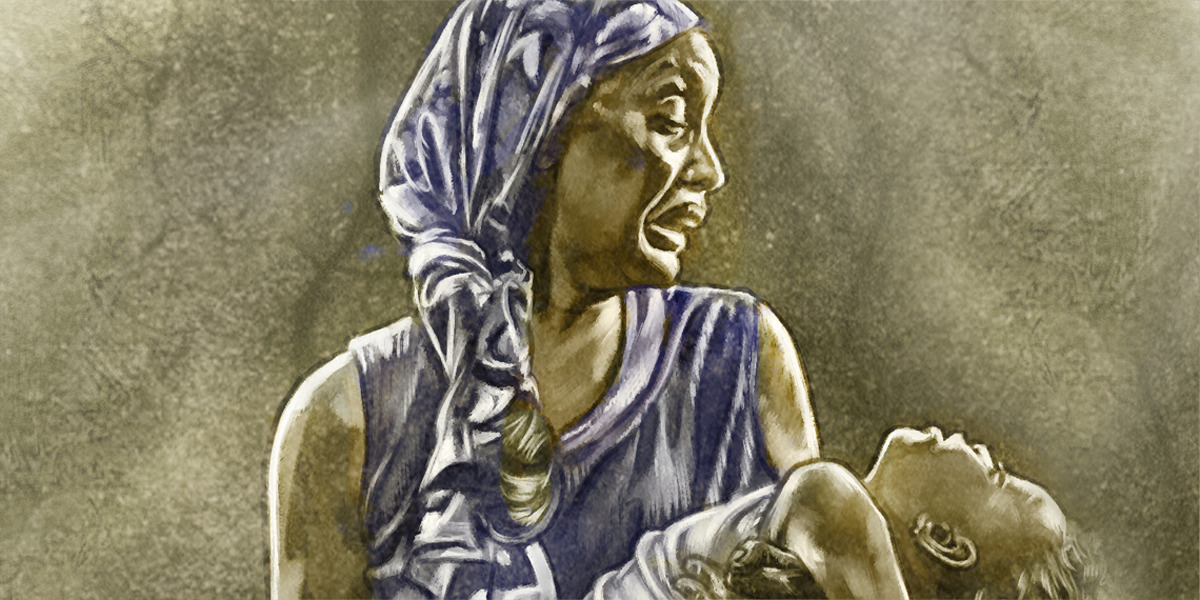
As always, I want to make clear that I’m not calling all religious organizations malicious for opposing assisted suicide. I don’t believe that those within these organizations are out to cause more suffering. Most believe, in their heart of hearts, that they’re doing the right thing. The problem is that dogma, doctrine, and powerful incentives can overshadow those efforts.
There are good, legitimate reasons to oppose assisted suicide. Unfortunately, organized religion rarely relies on those reasons. On top of that, they have one too many incentives not to focus on those reasons.
Filed under health, philosophy, politics, psychology, religion


 Jack Fisher's Official Publishing Blog