Category Archives: political correctness

How Much Are We Willing To Hurt The Innocent To Punish The Guilty?

symbol-of-justice

There are certain questions that nobody likes to ask, but still need to be answered. Questions concerning crime, justice, and punishment are usually at the top of that list. Lately, answering those questions has becom more urgent. If current cultural trends continue, that urgency will only increase.

That’s not because people are becoming more keen on justice. It’s more a byproduct of injustice being so much more visible in the age of the internet and social media. Crimes don’t just make the news these days. They can trigger full-blown social movements, destroy careers, and bring down powerful people.

To some extent, this is a good thing. We, as a social species, have an innate sense of justice hardwired into us. When we see something unjust, be it a kid stealing a cookie or a gruesome murder, most sane people want to see some level of justice enacted. When it isn’t, that bothers us. That’s where our sense of empathy comes from.

That said, it is possible for that innate desire for justice to go too far. Nature is a blunt instrument, largely out of necessity. Our desire for justice is no different and in the same way egregious injustices are harder to hide, gross misapplications of justice are becoming more visible as well.

As of this writing, the Innocence Project, a non-profit legal organization that works to exonerate those who’ve been wrongly convicted of a crime, have freed 350 people, some of whom were on death row. Those are the lucky ones, though. In a 2014 study, the National Academy of Sciences estimated that approximately 4 percent of those sentenced to death row may be innocent.

Think about that, for a moment, as a simple math problem. For every 100 people who are executed by the state for their crimes, 4 of them are completely innocent. Whether you’re liberal, conservative, libertarian, or communist, the murder of an innocent person offends our humanity to the core. Only a sociopath would be comfortable with that math.

That murder of some innocent people for the sake of punishing the guilty is an extreme example, but one that nicely highlights the potential pitfalls of our reckless crusade against injustice. I don’t bring it up to start a debate on the death penalty, which is very much a dead-weight issue within politics these days. I’m using it to provide context for misapplications of justice that aren’t as clear cut.

Thanks to social media and global connectivity, it’s a lot easier attack injustice without the rigid bureaucracy of legal justice system. It’s largely because of this emerging technology that the ongoing anti-harassment movement and the push for greater diversity have become more vocal. Instances of injustice that might have been ignored in the past are now much easier to confront.

Instead of hiring a lawyer, getting the cops involved, or going door-to-door to raise awareness, these perceived injustices can be attacked online, which can subsequently lead to offline consequences. While that can be an effective recourse for those who wield great power and have an army of lawyers, it does come at a cost and innocent people have felt that cost.

While there are plenty of cases that don’t become mainstream news, some of the most notable include the Duke Lacrosse incident or the UVA rape case. These are both cases that struck the right and wrong chords at the right and wrong time, evoking in people their inherent aversion to injustice in the utmost. It got people upset and emotional, so much so that they didn’t stop to wonder whether those involved were really guilty.

The alleged crimes were undeniably heinous. There’s no question about that. Anyone guilty of such crimes deserves to be punished. However, in wanting to punish such crimes, innocent people suffered. Some had their reputations temporarily ruined and others have been irreparably destroyed.

There are other lesser known cases of innocent people suffering because of an accusation that later turned out to be false. There are likely more in which the innocent person never gets justice. It’s impossible to know how common they are. Most will point out how rare those instances and in terms of raw numbers, that’s true.

However, that still implies that we have to accept the price that some innocent people will suffer in our pursuit of justice. It also highlights how important it is to have a functioning justice system that includes traditions such as due process and the presumption of innocence.

It’s a tradition worth belaboring too.

It’s an imperfect process, admittedly. There have been notable cases where someone likely got away with a crime because the standards for a conviction are so high. The principle behind that system is that, in the name of not condemning the innocent, we accept the price that some of the guilty may escape justice.

For some people, that’s more untenable than the condemnation of an innocent person. That has become a much more prominent theme in recent years, due to the anti-harassment movement. That’s somewhat understandable, given how long men like Harvey Weinstein got away with their deplorable behavior.

In the effort to prevent or punish such deplorable behavior, though, those critical tenants of our justice system that are supposed to protect the innocent are being cast aside. There are some within the anti-harassment movement who emphasize the importance of believing the victim’s accusations in lieu of the presumption of innocence.
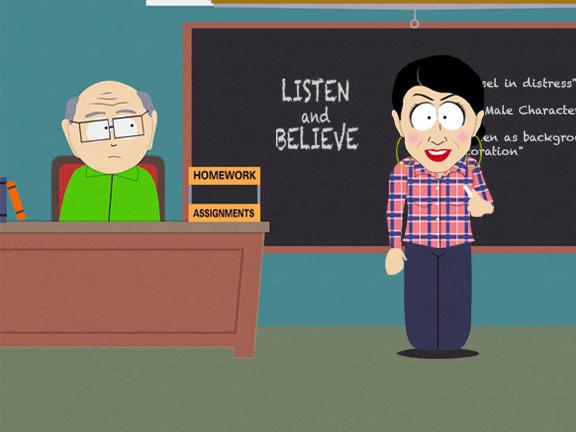
Other, more radical, voices in the movement have favored changing the standards of evidence for rape cases so that they would no longer be subject to reasonable doubt. Granted, these are somewhat extreme measures that probably won’t upend our justice system anytime soon. Others far smarter than me have already pointed out the dangers and debunked many of the assumptions.

None of this is to say that the anti-harassment movement or the effort to hold people accountable for their behavior is entirely misguided. I’m in favor of exposing crimes and having the guilty pay for those crimes, provided they really are guilty. I support efforts to reduce harassment, sexual or otherwise. I support efforts to reduce sexual assault on women and men. Most decent human beings share that sentiment.

What I don’t support is the idea that it’s okay for more innocent people to suffer for the sake of capturing even more guilty people. As I mentioned before with the Innocence Project, our flawed justice system already condemns innocent people. A willingness to let more innocent suffer is the wrong direction to go in fighting injustice.

I know that’s easy for someone like me to say because I’ve never been the victim of a serious crime. I’ve had some stuff stolen before, I’ve been cheated out of some money, and I have been roughed up before, but I’ve never been seriously injured or assaulted. I can’t imagine how someone who has been seriously victimized feels about what happened to them.

Their suffering matters. The suffering of innocent people matters too. It’s why the question surrounding hurting the innocent to punish the guilty needs to be asked, even if the answers make us uncomfortable. The fact those answers make us uncomfortable reflects the flaws of our justice system and how imperfect our world really is.

At the same time, it also reminds us why seeking justice and combating injustice matters. We, as a society and a species, cannot function if there isn’t some semblance of justice. For victims and innocent alike, we need those institutions so that we can prosper and grow as a civilization.

From the anti-harassment movement to crusading prosecutors to overt bias in the court system, there comes a point in the pursuit of justice where compromising the innocent is a price that some are willing to pay. Once that line is crossed, though, it sets a dangerous precedent that relies on dangerous assumptions.

To be willing to compromise the innocent, it’s necessary to believe that people who fit a certain profile are guilty by default. If their gender, race, ethnic group, religion, or nationality checks enough boxes, then innocence becomes an afterthought. It becomes another numbers game in assessing potential guilt over actual guilt.

That’s a precedent that can easily devolve into a panic and, as history has shown, panics tend to harm the innocent far more than the guilty. It also undercuts the suffering of actual victims because if actual guilt becomes an afterthought, then so too does actual victimization.

That, in many ways, is the greatest price that comes with compromising innocence. Punishing a guilty criminal simply rights a wrong. Punishing an innocent person has impacts that go beyond simply making an undeserving individual suffer. It has a ripple effect on the entire concept of justice, much of which cannot be qualified.

That’s why, even if it is as rare as some claim, the punishment of one innocent person should offend our sense of justice more than a guilty person escaping. A guilty person is still going to be guilty, no matter what their high-priced lawyers say. An innocent person who is punished for a crime they didn’t commit often lose so much more than just their innocence and that’s an injustice no one should tolerate.

1 Comment

Filed under Current Events, gender issues, human nature, philosophy, political correctness

What Radical Feminists and Incel Men Have In Common

bandw-man-and-woman-arguing

Since I’ve been browsing the internet, I’ve tried to keep up with its assorted jargon, slang, and euphemisms. Given the rapid pace of technology and the uneven pace at which society adapts, it can be pretty daunting. There are times I feel like I have fallen behind. I still remember feeling foolish when I asked someone what a hashtag was.

While I make an effort to keep up, there are certain parts of net-based sub-culture that I prefer to avoid. I’m not just talking about Twilight message boards. I’m talking about the kind of domains on the internet where people who have genuine, in-need-of-help problems congregate to whine, complain, and otherwise compound their problems.

One such sub-culture that I’ve avoided talking about on this site or in general is that of the so-called incel community. For those of you who haven’t heard of it, and I envy those who had avoided it thus far, incel stands for “involuntary celibate.” In essence, they identify themselves as men who would like to have sex, but cannot because women and society at large has prevented this. It’s as crass as it sounds, but it gets much worse.

I would’ve been content to never even mention the incel community on this site. Then, a self-identified incel carried out a deadly attack in Toronto that killed 10 people and suddenly incels weren’t just in the news. They were a genuine danger. Since I try to discuss relevant topics on this site, be they sex robots or superhero movies, I’m going to grit my teeth and talk about this frustrating phenomenon.

It’s not just frustrating because it gives men, masculinity, and people with poor social skills a bad name. It’s frustrating because it’s so inherently pathetic and juvenile. Moreover, it’s something that has an ironic, but fitting parallel with radical feminism.

Yes, I know that sounds counter-intuitive. I also imagine there are some self-identified feminists out there who want to punch me through their computer screen. To those individuals, I ask that you restrain yourself for just a moment so I can explain.

Before I go any further, I want to make one thing clear. I do not associate radical feminism with more mainstream brands of feminism that, for the most part, are fairly reasonable in their rhetoric and sincere in their efforts. I also want to make clear that I do not associate the incel community with men’s rights activists, who are every bit as reasonable and sincere.

The incel community and radical feminists are extremists, plain and simple. They don’t even try to be reasonable. Like the extremists of a religion or political ideology, they cannot and will not be dissuaded. Their attitudes and conduct are built on a foundation of unceasing, uncompromising outrage.

This is where, ironically and fittingly, both incels and radical feminists intersect. They are, to a large extent, defined by their outrage. They despise a world that they feel has deprived them of something they deserve. They carry themselves as perpetual victims, trapped in a society that actively plots against them to keep them miserable.

You don’t have to look too far to see the similarities here. The incel community doesn’t even try to hide its blatant misogyny, just as radical feminists don’t even try to hide their overt man-hating. The targets of their hate are different, but the intent behind it is the same.

The hatred is a catalyst and a rallying point for those inclined to embrace more extreme forms of ideology. That hatred simplifies complex issues, allows them generalize large swaths of people, and believe without question that there’s a cabal of evil bullies actively plotting against them. They are basically the Alex Jones of gender conflicts.

It’s for that reason that few take them seriously, even within feminist and men’s rights communities. Even when a radical feminist claims all heterosexual sex is rape or an incel man claims that all women are sluts, they’re either ignored or written off as trolls. However, in wake of recent events, that’s getting somewhat harder.

Between the attacks in Toronto and the growing spread of outrage culture, both radical feminism and the incel community have many ways of making their voices louder and spreading their hatred. Like any extreme within an ideology, they will complicate or outright corrupt reasonable debate on reasonable issues involving gender.

I believe those issues should be discussed and I’ve tried to approach them on this site in as balanced a way I can, at least to the extent I can as a man and an aspiring erotica/romance writer. However, in the same way creationism obscures science, radical gender ideology obscures real gender issues.

It even goes beyond derailing otherwise important debates about relevant issues. In the one area where both incel men and radical feminists are most alike goes back to their attitudes. Beyond the hate and trolling, there’s one other trait that binds them. They embrace and cling to the idea of perpetual victim-hood.

Incel men believe they are victims of greedy, selfish women who refuse to give them the sex and intimacy they want. Radical Feminsts believe they are victims of a greedy, oppressive patriarchy that only exists to bully them and hold them back. In that context, they are always victims. They never have to claim a shred of responsibility. They can just blame their perceived oppressors.

That’s not just insulting to real victims. It’s flat out lazy. Incel men and radical feminists carry themselves as though other people must go out of their way to give them something, be it sex, justice, or reparations of some sort. They, themselves, don’t have to do anything. They just whine, complain, and shame others to get what they want.

I would call that approach childish, but that would be insulting to children. The absurdity of that mentality is impossible to overstate. However, and I think reasonable feminists and men’s right activists would agree, there are a few basic truths that we all must accept, regardless of our gender.

The universe is not fair.

Some people are born with more advantages than others.

Nobody owes you anything, be it sex or preferential treatment.

Respect, achievement, and merit must be earned and not given.

These are the simple, inescapable facts of life. We learn them at some point in our lives. Some take longer than others, though. What makes incels and radical feminists so similar, and so unworthy of respect, is how they utterly refuse to learn those lessons. As a result, they’re just setting themselves up for more frustration.

6 Comments

Filed under gender issues, human nature, political correctness, sex in society, sexuality

The Boredom Filter: How To Know If Your Agenda/Politics/Ideology Is Doomed

image1

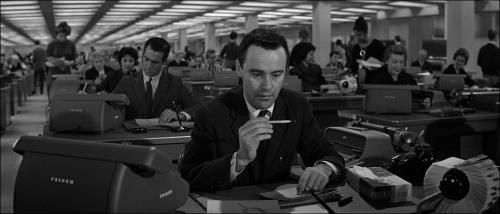
Whenever I talk about boredom, I make it a point to emphasize that it’s a powerful force that’s easy to overlook. In a society that’s full of distractions and ongoing outrage, it’s easy to shrug at the effects of boredom because it’s so easy to find something that keeps you from remembering just how agonizing it can be. I would argue that only makes us more vulnerable to boredom and it’s corrosive effects.

That said, I don’t intend to belabor the power of boredom more than I already have. I feel like I’ve made my case in calling it a potential plague of the future and a force with the ability to subvert the entire concept of Hell. Instead, I’d like to use the power of boredom as a critical tool of sorts, one that might prove useful for those seeking to avoid or exploit its influence.

I call it the Boredom Filter. It’s not unlike the Simpsons Filter that I’ve referenced before in that it’s a method of assessing a message or ideology in terms of how it’ll appeal to the masses. In that context, the Boredom Filter is kind of what it sounds like, but runs so much deeper.

It doesn’t matter if you’re a liberal, a conservative, a communist, a reactionary, a theocrat, or an anarchist. It doesn’t even have to be a political ideology either. It can be a philosophical underpinning like Marxism or a social movement like feminism. The Boredom Filter applies to it and, if used properly, can reveal just how viable that ideology is in the long term.

That is, after all, one of the most important measures of an ideology. Any idea, be it a social movement or a new philosophy, can enjoy a brief wave of success. It’s a matter of how well it endures over time that shows just how valuable or useful it is. From fad diets to one-hit wonders in music, the Boredom Filter help reveal whether an idea has what it needs to really last.

Applying the filter is actually fairly simple. It does require some speculation, a few quick thought experiments, and even a touch of brutal honesty. That might be difficult to contemplate for those immersed in extreme ideology. As I’ve noted before, people clinging to those ideologies will make any excuse to justify them.

With that in mind, here’s the process for the Boredom Filter. To ensure the best results, I urge those using it to be extra thorough.

Step 1: Assess the ultimate goals of the ideology and identify which elements may be prone to boredom.

Step 2: Imagine, for a moment, that all the goals of an ideology were achieved and integrated into a society.

Step 3: Within that ideologically pure society, assess how much conformity is required for it to work and contemplate the mentality of the common people residing within it who have no political power.

Step 4: Ask and honestly answer the question as to whether the lives those people are allowed to live, under the ideology, will get boring over an extended period of time.

Step 5: If the answer to the question in Step 4 is no, then the ideology passes the filter. If, however, the answer to the question in Step 4 is yes or even a probably, ask and honestly answer the question as to whether the ideology is flexible enough to adapt over time.

Step 6: If the answer to Step 5 is yes, then ideology passes the filter, but only to a point. If the answer to Step 4 is still yes and the answer to Step 5 is no or even probably not, then the ideology is doomed.

I understand that part of that process involves contemplating the boredom threshold for other people. That can be somewhat subjective. Everybody is wired differently. Some people can crunch numbers on spreadsheets all day and never feel bored. Others will get bored if it involves spending more than five minutes of reading. For some, it can get so bad that it requires medication.

That said, you don’t have to know or assume everyone’s threshold for boredom. When it comes to speculating on applying an ideology on a large scale, though, it helps to assume a fairly low threshold. That’s because, if history is any guide, people tend to get frustrated with any system that requires a significant level of conformity.

It may not seem like conformity to those who champion the ideology. It definitely won’t seem that way to those the ideology empowers to enforce it, be it a dictator, a religious zealot, or revolutionary. That makes applying the Boredom Filter for those contemplating the ideology all the more critical.

As an example, let’s use the Boredom Filter to examine the two most common political ideologies, liberalism and conservatism. Now, I know these ideologies mean different things to different people in different regions of the world. For the sake of this exercise, I’m going to try and keep things general.

For conservatism, I’m referring to the kind of conservatism espoused by right-wing, religiously-driven ideology that emphasizes traditional morality, gender roles, and free market economics. For liberalism, I’m referring to a brand of ideology that emphasizes secularism, evolving social norms, and economic systems that emphasize regulated management over free enterprise.

I know there are a lot of other intricacies to both ideologies, but it’s not necessary to account for every one of them. The most important aspect, with respect to the Boredom Filter, is knowing enough to speculate how it would function if implemented on a large scale. By that, I don’t just mean a small community or tribe. I mean on a scale of at least 100,000 people that is not totally isolated and has contact with the outside world.

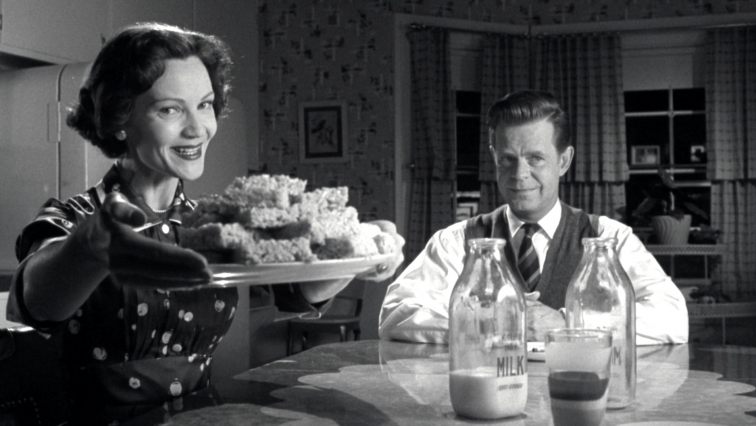
With that in mind, let’s picture a society that’s a perfect model of conservatism. It’s basically the utopian world envisioned by Ben Shapiro, Rush Limbaugh, and Sean Hannity. Everyone goes to the same church, loves the same historical icons, favors the same social policies, condemns the same media messages, and lives in the same family structure. It’s basically “Pleasantville” for Republicans.

Does that world pass the boredom filter? If we’re applying it honestly, the answer is no. It doesn’t. Remember, that world involves a society in which monogamy is the only acceptable relationship, non-procreative sex is condemned, and scandalous media content is censored in the name of protecting children. It’s a world that does not lend itself to a diverse range of activities that alleviate boredom.

Eventually, a world where you have only a certain kind of sex, consume only a certain kind of media, and live a certain kind of lifestyle will get boring at some point. Some people might be able to cope, but others won’t. Even if they still manage, their kids and their grand-kids won’t stand for it. At some point, they’ll be so bored that they demand change, if only to offer a different kind of stimulation.

I’ll give a few conservatives a moment to fume on that assessment, but bear with me because I’m going to do the same to liberalism. You might think that liberalism would be more adept at passing the boredom filter. It’s ideology, at least the classic version, is built on freedom and individual rights. How can boredom possibly infect that?

Well, and I’m sure self-identified liberals will be just as upset, but this ideology doesn’t pass the Boredom Filter either. It’s more flexible in some areas, namely those involving social norms. Liberalism accommodates different family structures, artistic expressions, and social expressions. That certainly provides some of the flexibility necessary to alleviate boredom.

Where liberalism fails, at least in the context of modern liberalism, is how it tends to promote micromanaging of life, economics, and feelings. It may not favor censorship, but like conservatism, it does play favorites. The rise and growth of political correctness has really strained liberalism’s ability to pass the Boredom Filter and it may be getting worse.

In that liberal utopia that Bernie Sanders, Nancy Pelosi, and Rachel Maddow envision, there’s not just equality. There’s enforced equality. That equality is done in the name of fairness, but in trying to be so fair, it’s much harder for any person or idea to stand out. If nothing stands out, then everything becomes more monotone and monotone becomes boring.

Liberalism’s association with belaboring oppression and victimhood don’t help either. It’s not that fighting against oppression and protecting victims is a bad thing. Conservatives are against that too, albeit from a different angle. With liberalism, though, that effort has become clouded with endless virtue signaling that comes off as a never-ending struggle.

Even if it’s a struggle worth fighting, it’s going to get boring if there’s no nuance to it. Taken to an extreme, everything becomes too fair and too bland. Media isn’t offensive anymore. History, debates, and discourse are watered down. Add micromanaging the economy to some extent, even if it’s in the name of preventing exploitation, and you end up with the same economy in fifty years that you have today.

In the long run, the Boredom Filter undercuts pure liberalism just as hard as undercuts pure conservatism. I say pure because, contrary to what Fox News and the Huffington Post may claim, few societies in America or any other country not run by Dr. Doom are ideologically pure. Even in the most repressive regimes, there are some moderating forces.

Technically speaking, every political party in every country is moderate to some degree. The key is understanding the extent of that degree and using that as the basis for the Boredom Filter. From that, you can make a fairly accurate assessment of their goals. Some will even state them outright.

Use that as a guide when both applying the filter and contemplating the world this ideology is trying to create. A conservative world that has no porn, only one acceptable family structure, and one moral code that never changes is going to get boring. A liberal world where nothing offensive is allowed, the economy rarely changes, and life is micromanaged by government gets boring too.

It’s rare, if not impossible, for an ideology to ever get to the point where it can implement every policy it seeks and achieve every goal it pursues. That’s why boredom hasn’t destroyed conservatism or liberalism yet. However, the failure of extreme systems like communism and repressive right-wing dictatorships shows that such ideologically pure societies tend to be unstable, at best.

That instability may not always be related to boredom. However, the documented effects of boredom combined with extreme efforts to engineer that utopian society every ideology seeks make for some significant obstacles. For most, if not all, boredom presents an insurmountable obstacle that no ideology can overcome. By applying the Boredom Filter, it helps to uncover which ideology is more vulnerable to it.

5 Comments

Filed under human nature, philosophy, political correctness, religion, War on Boredom

Are Cheerleaders An Endangered Profession?

cheerlader

There are certain professions that go extinct and for perfectly valid reasons. Occupations like elevator operator, switchboard operators, and milkmen are all jobs that just don’t have a place in the economy or society anymore. Technology and trends have rendered them unnecessary or obsolete.

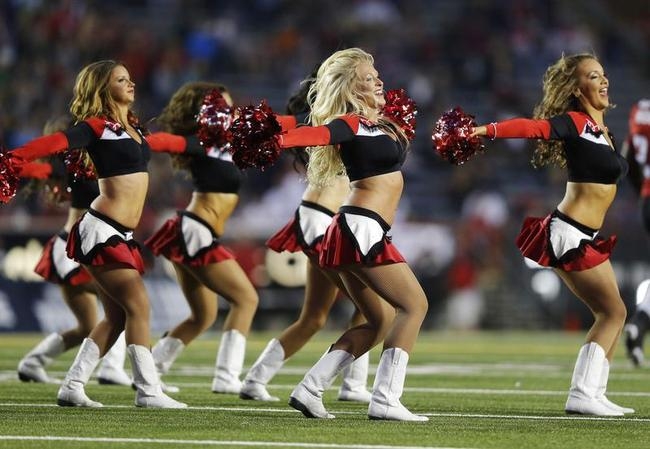
For a small, but vocal contingent of regressive individuals with a low threshold for outrage, there’s a particular occupation that they’d like to add to that list. That is the profession/hobby of cheerleading, specifically the kind that involves parading beautiful women in sexy attire so they can dance, shake pom-poms, and get a crowd excited. Hell, it’s not like there’s anything inherently appealing about that.

That last sentence was sarcasm, by the way. I want to make clear that, as both a man and an avid sports fan, I love cheerleaders. They embody so many wonderful concepts about the world. They combine sports, sex appeal, dancing, and excitement. They bring happiness, excitement, and spirit to an event. There is literally no downside.

Unfortunately, that regressive crowd who insist on seeing sexism, misogyny, and oppression at every corner sees none of that. They only see beautiful women being paraded around in sexy attire for horny men to gawk at. It doesn’t matter if those women choose to do so or are paid to do. Beautiful women attracting the attention of horny men is seen as inherently oppressive to all women everywhere.


That was sarcasm too. I’m sorry if I’m using more than usual, but I find it’s the best way to highlight the sheer absurdity of this attitude. However, it’s an absurdity with serious implications because it reflects a growing trend. Now, in an era where it’s suddenly scandalous to depict the female body in any sexual context, cheerleading is a growing target.

It’s a target that has already taken a few hits. Earlier this year, Formula One Racing announced that it would no longer utilize grid girls, who are basically cheerleaders for racing. This act was cheered by the radical anti-sex feminist crowd. It was probably secretly cheered by priests, mullahs, and monks, as well. While it did inspire somewhat of a backlash, it hasn’t stopped that same crowd from aiming at other targets.

More recently, NFL cheerleaders are in the spotlight. In terms of cheerleading, as a profession, this is basically going for the very top of the hierarchy. The NFL is for cheerleaders what the Pro Bowl is for NFL players. It’s seen as the very pinnacle of the profession and it may be in danger.

It hasn’t helped that there have been some distressing scandals involving how some NFL cheerleaders are treated. The recent scandal involving the Washington Redskins cheerleading squad has only added more fuel to the outrage. Never mind that the facts of these scandals are limited and anecdotal, in some cases. It gives the regressive crowd everything they need to cry sexism and misogyny.

Now, none of this is to downplay some of the real issues surrounding cheerleading, as a profession. There are certainly issues with respect to how much cheerleaders are paid and how their lives are micromanaged. Those issues should be addressed and reformed. However, that’s not the conversation anyone wants to have.

Instead, cheerleading is getting lumped into other outdated traditions like arranged marriages, virginity tests, and being forced to cover their ankles in public. It’s not a profession or a passion that needs to be reformed and improved. It’s something that needs to be outright purged from society.

That’s not just an extreme reaction to a job that isn’t even the most dangerous or the most prone to sex scandals. It’s an attack on the very idea that beautiful, sexy women can and should be used to promote anything, be it a sports team or a fast food meal. The problem isn’t how the job is unfairly managed. It’s the job itself.

From the perspective of cheerleading’s opponents, it objectifies the female body and commodifies female sexuality for the consumption of men. In an era where sexually harassing a woman is seen as the ultimate evil, whereas sexually abusing a man isn’t nearly as outrageous, that’s just unacceptable.

The attitudes of the women who seek this profession don’t matter. The attitudes of the men who enjoy the sexiness and excitement that cheerleaders inspire especially don’t matter. All that matters is that cheerleaders are too sexually stimulating to the masses and that’s feeding a culture of misogyny and sexism. I wish that were sarcasm, but that’s what these regressive people genuinely believe.

For them, undermining the freedom and agency of those who want to pursue cheerleading and those who want to admire cheerleaders is a price they’re willing to pay. While some, like the Grid Girls, try to fight back, they’re facing an uphill battle and it’s one that cheerleaders might end up losing.

That’s because these are exceedingly sensitive times. Just trying to inject reason and criticism into the movement against sexism is subject to irrational outrage. Matt Damon found that out the hard way. More and more, people are just avoiding the conversation altogether because it just keeps fueling more outrage.

The current dynamic is as simple as it is unfair. If you stand up for cheerleaders, then the regressive crowd can just claim you’re a sexiest who wants to gawk at beautiful women. Even if you’re a woman speaking on behalf of cheerleaders, your criticism can be cast aside because you’re just brainwashed by the patriarchy and you’re for the objectification of women.

Never mind the fact that the very concept of objectification is fundamentally flawed. Never mind the fact that that flawed concept is also prone to some pretty disturbing double standards. The protests against cheerleading is framed as a protest against sexism, misogyny, and patriarchal oppression. It doesn’t matter how wrong or misguided that notion is. That’s the perception and there’s just no way to win that argument.

These days, being called a sexist is bad for business and for your profession. I believe the regressive crowd knows that, to some extent. They understand that the NFL is a business and one that has already been ravaged by negative press. Their success and their profits are dependent on their brand. If they see something as potentially damaging to their brand, then they’re going to either get rid of it or downplay it.

I’m not good at predicting the future, but depending on how these recent cheerleading scandals play out, I suspect that the NFL might just slowly phase out cheerleaders, altogether. It’s the path of least resistance. Keeping them around means keeping the outrage around. That’s just more risk and frustration than it’s worth.

It would be another major loss, one far bigger than the loss of the Grid Girls. However, as much as I love cheerleaders and the sex appeal they bring, I can totally understand why a major organization like the NFL would resort to such an extreme. By just removing cheerleaders, altogether, the crowd of regressive outrage will move onto their next crusade and, hopefully, leave them alone.

It’s a scenario that nobody wins. If the NFL ends up eliminating cheerleaders, it won’t be because they’ve seen the error of their ways and are now champions of women’s empowerment. They’re just protecting their brand. They’re trying to stop the whining, an approach that only offers the illusion of progress and not actual progress.

Personally, I hope the NFL resists the outrage. The more ground we give to regressive attitudes, the more regressive our society becomes. This is a crowd that won’t stop until everything that might potentially evoke sexual feelings or portray women in a sexy way is either eliminated or stigmatized.

As both a fan of all things sexy and an aspiring erotica/romance writer, that’s not a world I want to live in. That’s not a world that even other women want to live in, as the Grid Girls have shown. It’s a boring, unsexy, downright dystopian world that’s worth resisting and I hope there are plenty of cheerleaders, male and female alike, who will cheer on that effort.

Leave a comment

Filed under Current Events, gender issues, media issues, political correctness, sex in society, sexuality, sports

Stereotypes, The Simpsons, And The (Empty) Complaints About Apu

season_25_icon

For nearly three decades, our society has had an unspoken, but clear understanding. For something to become culturally relevant, it has to be mentioned “The Simpsons.” Whether it’s a major plot on something like boy bands or a subtle joke about a classic novel, it’s not truly a mainstream idea until it shows up on “The Simpsons.”

I happen to be among the demographic who have always lived in a world where the “The Simpsons” existed. I honestly cannot remember a time when this show wasn’t on the air or relevant in some ways. For a show that has been on the air for nearly 30 years, it’s remarkable just how much impact it has had, despite so many changes in trends, culture, technology, media, and tastes.

There have been controversial moments, though. I still remember how controversial it was when John Waters voiced a gay character on the show. That was considered controversial in 1997. Looking back on it, I can see why. The more recent controversies, however, are a bit harder to understand.

That brings me to Apu Nahasapeemapetilon, Springfield’s lovable Indian owner of the Kwik-E-Mart. I say he’s lovable because, for the most part, he’s one of the show’s most colorful side-characters and for the right reasons. He’s smart, he’s got a unique personality, and he’s undergone plenty of growth over the years.

However, according to a documentary by Indian comedian Hari Kondabolu called “The Problem With Apu,” this established character on an iconic TV show is contributing to a serious social ill in the world. The fact that Apu exists is a factor in the many causes of social injustice, racism, and bigotry. He’s almost as bad as video game characters being too sexy. If I could write that with more sarcasm, I would.

With all due respect to Mr. Kondabolu, who lives a minority in a country that has a spotty history with race to say the least,  I sincerely question his method for picking certain battles. There are many serious issues surrounding race relations in America and throughout the world. Those issues have all sorts of complexities and nuances to them.

Instead of scrutinizing those, however, he singles out a popular cartoon character to make his point. Even That doesn’t just undermine the serious issues he discusses in that movie. It ensures that his point will get lost in the collective groans of those who bemoan political correctness.

I know that whining about political correctness has become a source of whining in and of itself, but there is a continuum of sorts that separates serious issues about representation in the media from outright trolling. The separation isn’t always clear, but in the case of Apu and Mr. Kondabolu, it’s too petty to be subtle.

The idea that Apu is now problematic, a word that has gained a lot of frustrating connotations in recent years, sends an indirect message that I don’t think Mr. Kondabolu wanted to send. It’s not that racism and bigotry aren’t important issues. It’s the idea that anyone who enjoys “The Simpsons” and appreciates characters like Apu are somehow on the same level as old school, George Wallace level racists.

For most reasonable people, that notion is both insulting and absurd. Again, I doubt that’s the direct message Mr. Kondabolu was saying, but that’s the subtext of the message he sent with that documentary. “The Simpsons” and the people who enjoy it are somehow bad people and contributing to a problem.

Understandably, both fans and the creators of the show aren’t going to respond with homemade chocolates and hugs. Even though the creators promised to address it, the way they did so did not involve an extended apology about how the show has depicted Apu and paying massive reparations for all the hurt feelings it has caused.

Instead, they worked it into a side-plot in the episode, “No Good Read Goes Unpunished,” wherein Marge tries to rewrite her favorite book so that it’s free of anything that might be considered offensive in 2018. As many in Hollywood and the media are finding out the hard way these days, that’s next to impossible.

It all culminated in a moment where Marge and Lisa partially broke the fourth wall, Deadpool style, and indirectly confronted the controversy by basically saying that there’s not much you can do when old characters who weren’t offensive at first become offensive years later. Those characters exist, as do their stories. Lisa flat out asks to the camera, “What can you do?”

It’s a very relevant question that Mr. Kondabolu isn’t able to answer. In fact, I don’t think the question has an answer. At the very least, the scene didn’t mock him directly or discount his feelings. It was surprisingly even-handed for a show that regularly mocks popular trends. This is how the scene that played out.

Needless to say, that response rubbed plenty of people the wrong way, included Mr. Kondabolu. According to Entertainment Weekly, this was his response.

“Wow. ‘Politically Incorrect?’ That’s the takeaway from my movie & the discussion it sparked?” wrote Kondabolu. “Man, I really loved this show. This is sad.” In another tweet, he said, “In ‘The Problem with Apu,’ I used Apu & The Simpsons as an entry point into a larger conversation about the representation of marginalized groups & why this is important. The Simpsons response tonight is not a jab at me, but at what many of us consider progress.”

I want to be sympathetic to Mr. Kondabolu’s feelings. I really do. However, the problem with his response is that he didn’t even try to answer the question that Lisa asked. She asked what can you do. He just whined that this response wasn’t the one he wanted from the show. On top of that, he didn’t even try to explain what he’d hoped to hear.

This why I find his protest of Apu so empty. It’s also why I find a lot of complaints about offensive characters or stereotypes so asinine. It’s not enough that someone is offended. They basically set it up so that there’s no way for them not to be offended. They present a problem with no solution. If they offer one, it’s vague and easy to move the goalposts when someone doesn’t respond to their satisfaction.

For Mr. Kondabolu, he doesn’t just move the goalposts, though. He essentially tries to play an entirely different game on an entirely different field and expects everyone else to know the score. Even by scrutinizing the content of his own documentary, Mr. Kondabolu reveals just how misguided his arguments are. In another article by Entertainment Weekly, this was his justification for singling out Apu.

As Kondabolu made clear in his film, the problem with Apu extends beyond a brown character voiced by a white actor; the problem was not just with The Simpsons, but with its viewers, the drunk idiots on the street who call any South-Asian person “Apu” and who repeated “Thank you, come again,” as a mocking refrain.

I highlighted those bold parts because they’re the most revealing part of Mr. Kondabolu’s argument, as well as the greatest flaw. He links the depiction of Apu to the “drunk idiots” who harass people like him of South-Asian descent. From his perspective, the problem isn’t the drunk idiots doing the harassing. It’s the cartoon character.

In that context, it’s understandable why even a bleeding heart liberal like Lisa Simpson, a notable lover of cartoons, wouldn’t take up Mr. Kondabolu’s cause like she has so many others. It’s not just empty. It completely overlooks the actual source of the problem, namely the drunk idiots.

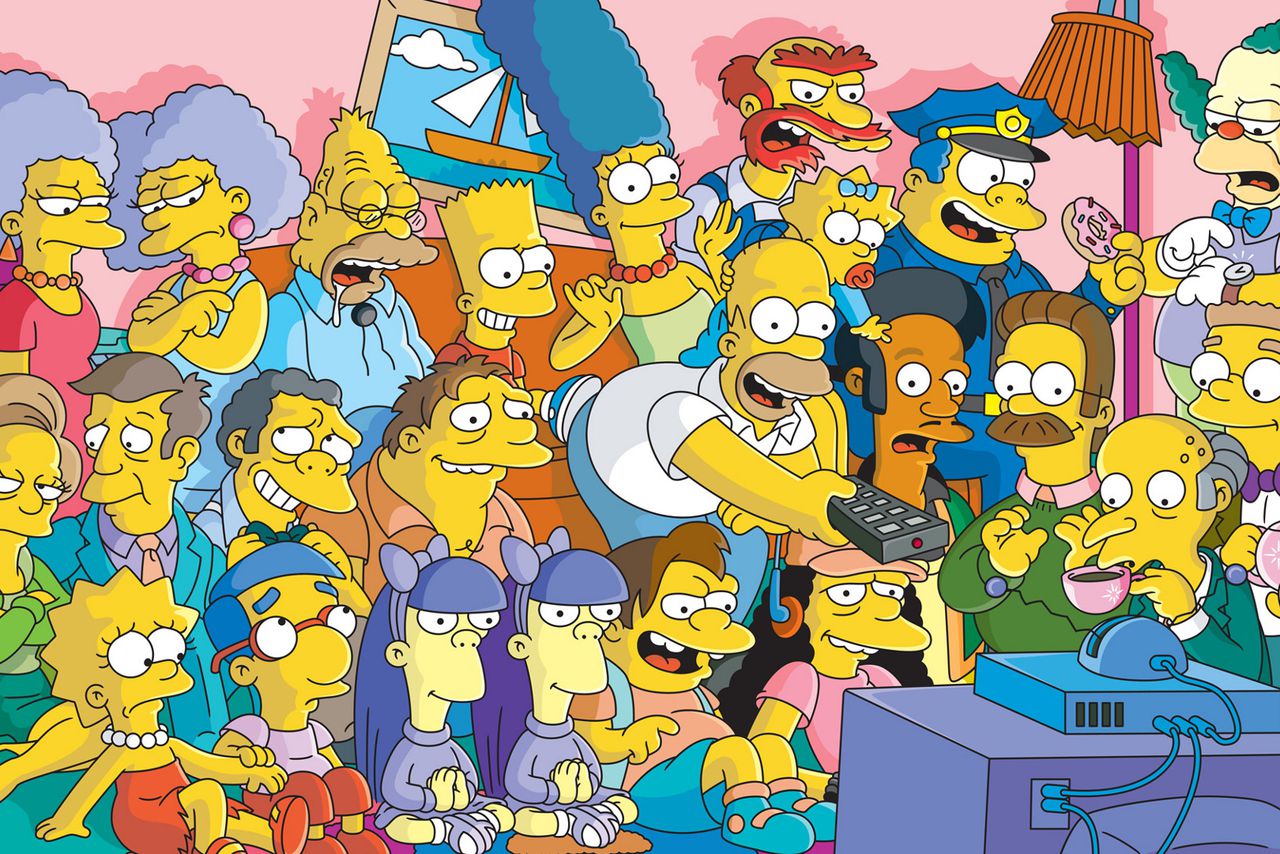
Are they drunk idiots because they watched “The Simpsons?” Are they drunk idiots towards people of South-Asian descent because of Apu and the stereotype he represents? Well, if that’s the argument Mr. Kondabolu is going to make, then he’s got a much bigger problem. “The Simpsons” are full of so many other stereotypes that to single just one out as “problematic” isn’t just asinine. It’s petty.

Homer Simpson is a stereotype of a dimwitted, drunk middle class working stiff.

Lisa Simpson is a stereotype of a whiny, bleeding heart liberal social justice lover.

Marge Simpson is a stereotype of a nagging housewife.

Groundskeeper Willie is a stereotype of an angry Scotsman.

Barney Gumble is a stereotype of a fat, drunk alcoholic slob.

Cletus Spuckler is a stereotype of a white trash hillbilly.

Luigi Risotto is a stereotype of an Italian chef.

Fat Tony is a stereotype of an Italian mobster.

I could go on, but with nearly 30 years of characters, “The Simpsons” has such a huge cast of characters that there’s no way I could list every character and the stereotype they represent. In fact, it’s because “The Simpsons” has so many characters and so much history that it’s possible to find a character that embodies an offensive stereotype of some type. The only requirement is that you have to be really petty.

That’s what Mr. Kondabolu had to do. He had to get really petty to single out Apu, which also required he ignore the real, non-animated people who were harassing minorities. Again, none of this is to say that racism and harassment aren’t problems. They are. However, when highlighting this issue requires a level of pettiness that involves singling out cartoon characters, then there’s something wrong with that approach.

1 Comment

Filed under Current Events, media issues, political correctness