Tag Archives: government

Dr. Doom, Perfect Rulers, And Ultimate Peace

There aren’t a lot of official rules on this blog. I try not to micromanage the what, how, and why of the content I talk about, beyond my sexy novels. However, there is one rule that might as well be a law of physics . If a particular topic can apply to comic books, then I will apply it to comic books.

I’ve already done it so many times on this blog, from sex-positive superheroes to showing why Magneto is the original Walter White to using an X-men comic to explore concepts of a balanced romance. While I love writing and talking about erotica/romance, I’ll still use every opportunity to tie it into comics.

For the past few days, I’ve been talking about fascism and repressive government. It’s a somewhat relevant topic, even after the 4th of July, because everybody seems to be throwing that word around these days. Liberals think conservatives are fascist. Conservative think liberals are fascist. At this rate, even anarchists will call each other fascist and fail to see the irony.

The concept of fascism is pretty complex. It has a dictionary definition, but that definition tends to get obscured by anyone who thinks a different political opinion is a threat to their own. Major conflicts like World War II have conditioned us to associate all the evils of the world with fascism. If your ideology seems bad, greedy, or evil in any way, then it must be fascist.

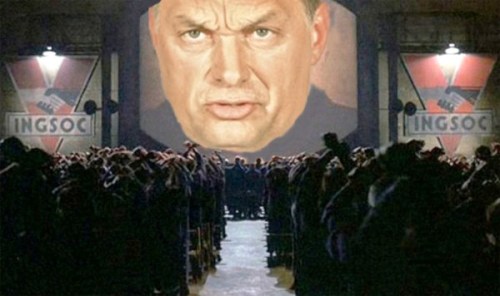
While that is a very childish approach to political rhetoric, relatively speaking, it also underscores the reason fascism and authoritarian governments exists in the first place. As George Orwell explored in “1984,” these kinds of systems emerge anywhere people seek security and peace in the midst of war and conflict.

We see it happen all the time throughout history. There are many occasions where a repressive regime has arisen out of bloody conflict. Some of those regimes are still around and frustratingly contentious. At their core, thought, the dynamics are the same.

In times of chaos, conflict, and scarcity, people seek power and influence. Once they have it, they seek to maintain it at all costs. They’ll try to control anything and everything, from the amount of bread everyone gets to how they conduct their sex lives. It manifests in many different ways, but the underlying principles are the same.

At the end of the day, the biggest problem with the systems surrounding fascism and repressive governments is that they still depend on flawed, petty humans with caveman brains. Sometimes, the rulers themselves are mentally unhinged. Sometimes, the people around them are petty, corrupt, or just plain incompetent. Often, it’s a potent mixture of the two.

In some sense, we can thank our own inherent flaws as humans as the ultimate weapon against a fascist, authoritarian state. George Orwell may have highlighted the darker elements of humanity, but he grossly overestimated peoples’ ability to manage others competently.

That leads me to Victor Von Doom, the alpha and omega of Marvel’s long list of iconic villains. In any list of the top villains of all time, Dr. Doom usually ranks near the top. A series of sub-par “Fantastic Four” movies have routinely failed to do justice to the breadth of Doom’s villainy. However, once you understand his roots, you understand why he is the ultimate counter to George Orwell’s dystopian fever dream.

There are too many details about Dr. Doom’s life and history to do him justice in one post. WatchMojo does a fairly good job of summarizing where he came from, but for the sake of this post and how he relates to my discussions on fascism, all you need to know is that Dr. Doom is the perfect ruler.

I don’t just mean that in the sense that he has the power, charisma, and resources to rule a country. I mean that, by almost every objective measure, Dr. Doom is the perfect ruler. Put him at the top of any government, be it a democracy or an authoritarian state, and he’ll make it work. Moreover, he’ll do it in a way that’s terrifyingly efficient.

That’s because Dr. Doom isn’t just some evil sadist who just wants to control people for the fun of it. He’s one of the smartest human beings to have ever lived. He didn’t just master science as a kid. He mastered science and magic. Even Lex Luthor can’t make that claim. He just mastered science. Compared to Dr. Doom, Lex is an underachiever.

Beyond just being smart and mastering things few can ever hope to master, Dr. Doom is extremely driven and makes no bones about it. He doesn’t just think he’s superior to every other human being on the planet. He knows it. If anyone dares question it, he won’t just prove them wrong. He’ll do so in the scariest, most intimidating way possible.

This isn’t just someone you respect. This is someone that scares the hell out of you, but for all the right reasons. As arrogant as he is, he doesn’t see himself as a villain either. Even Stan Lee, his co-creator, doesn’t see him that way. In an 2016 interview, he said this about Marvel’s greatest villain.

“Everybody has Doctor Doom misunderstood,” Lee said. “Everybody thinks he’s a criminal, but all he wants is to rule the world. Now, if you really think about it objectively, you could walk up to a policeman, and you could say, ‘Excuse me, officer, I want to tell you something: I want to rule the world.’ He can’t arrest you; it’s not a crime to want to rule the world. So […] it’s unfair that he’s considered a villain, because he just wants to rule the world. Then maybe he could do a better job of it. So I’m very interested in Doctor Doom, and I’d like to clear his name.”

Therein lies the greatest irony of Dr. Doom’s villainy. Sure, he wants to take over the world and he routinely clashes with Marvel’s most iconic heroes in the process. However, it’s why he does it that makes him stand out.

In one iconic story from 2010 fittingly called “Doomwar,” his true motivations for conquering the world come to light. In that story, Dr. Doom encounters a god-like being named Bast, also known as the Panther God. In that encounter, Bast reveals something critical about the future of the world.

As anyone who has ever followed Marvel comics for any number of years will tell you, there are a lot of alternative universes and timelines. Some are dystopian, even by George Orwell standards. Some are just different in a few minor details.

However, the Panther God saw all these universes and timelines and came to one inescapable conclusion. The only timeline in which humanity was free from suffering and want was a timeline in which Dr. Doom ruled the world. In a sense, that almost makes Doom a hero. Then again, he’s still the same guy who once sacrificed the woman he loved for more power.

Beyond those overtly villainous details, there’s a lot of merit behind that vision and not just because it came from the Panther God. Dr. Doom already knows how to run a country and a government. For much of his history, he’s run his fictional home country of Latveria and, by all accounts, he’s run it very well.

He ran it so well that, when he took over the country, every soldier and citizen that had been fighting for the previous ruler just stepped aside and let him take over. He didn’t force his people to love or respect him into submission. He proved himself. He did such a good job that nobody in Latveria besides the previous rulers wanted to stand in his way.

He didn’t just stop at taking over his home country either. Dr. Doom helped it prosper. In another iconic line of Marvel comics, Dr. Doom turned a country of bankrupt peasants into one of the top 10 economies on the planet within a couple years. That’s the kind of growth that even hardcore libertarians have to respect.

Doom does this because, and this is worth emphasizing, he’s extremely smart. He’s not just smart in that he can outwit gods and cosmic forces. He’s smart in that he knows how to manage a country, a people, and everything in between.

He does this largely through an army of loyal robotic minions, including specialized robots called Doombots. They’re not just ordinary killer robots either. These robots actually think, behave, and act as though they’re the real Dr. Doom. It’s kind of a running gag in the Marvel universe. Every time Doom is “defeated,” it’s often revealed that they just defeated a Doombot.
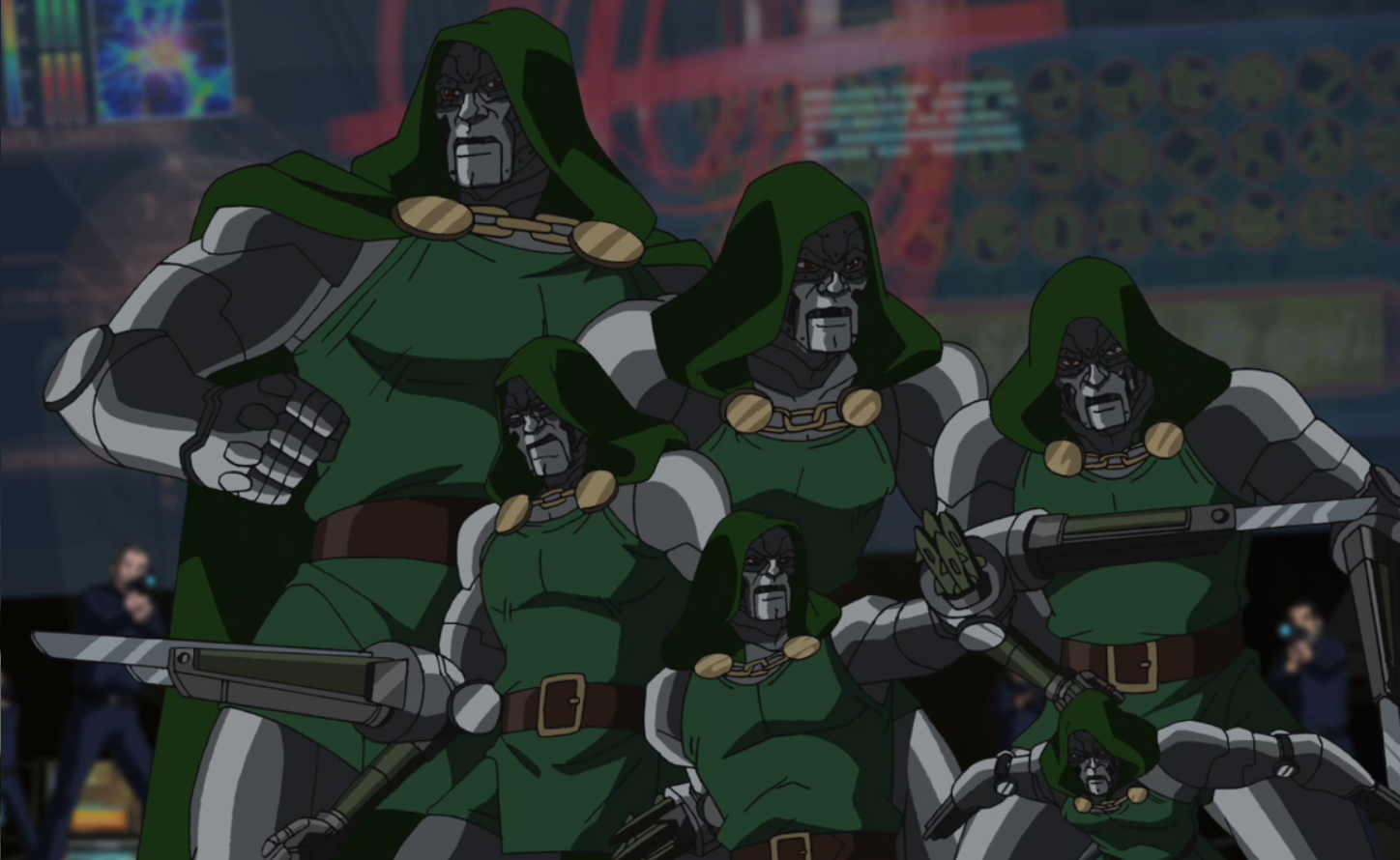
Beyond being a clever plot device, it also ensures that Dr. Doom’s government never has to worry about insubordination, betrayal, or corruption. His robots, gadgets, and ability to use mind control ensures he maintains perfect control of his government from top to bottom.

Unlike the ruling party in George Orwell’s “1984,” there’s no need for a massive professional class of bureaucrats that need to be constantly monitored. There’s no need to set up a kind of thought police to ensure nobody even thinks about undermining the party. For Dr. Doom, that would be redundant. No matter what any of his citizens think, he knows he’s smarter and more resourceful than any of them.

In addition, the party in “1984” didn’t care much for the welfare of the people. They only cared enough to ensure the stability of their rule. Dr. Doom, on the other hand, does express a genuine concern for the well-being of his people. He will go out of his way to make sure that his people are free from suffering and want. Sure, they’ll still fear Dr. Doom’s wrath, but that’s the only thing they fear.

That, more than anything, is what makes Dr. Doom the perfect ruler. He’s so smart, so capable, and so resourceful that no other human in his home country or any other country could come close to matching him. On top of that, Doom actually produces results. The things that are typically impossible for a government to do, such as providing prosperity for all its people, are easy for someone like Dr. Doom.

Thanks to Dr. Doom’s expertise, cunning, and willingness to cross any line, anyone under his rule will be safe and prosperous. They won’t have to fear anyone harming them because they’d have to go through Dr. Doom first, a man who one-shot the Incredible Hulk and battled a race of space gods. With him, a border wall is both unnecessary and redundant.

Under Doom’s rule, you are as safe as it’s possible to be without locking yourself in an adamantium cage. You’re also probably as free as you’ll ever be. While Dr. Doom is a despot, he’s never shown an inclination to micromanage his citizens’ lives. He doesn’t tell them who to love, how to love, and what to do with their free time. So long as they acknowledge his authority, they can do as they please.

He doesn’t get involved in his peoples’ sex lives. He doesn’t try to run the economy. Near as anyone can tell, he doesn’t even demand that certain words be censored from TV and movies. In that sense, Dr. Doom is less tyrannical than the FCC.

Sure, his citizens are still at Doom’s mercy. If, at any point, they become a threat to Doom, he’ll kill them without a second thought. However, Dr. Doom is not obsessively paranoid like the Stalins and Kim Jong Uns of the world. He’s too smart, too cunning, and has too many Doombots on his side to worry about such trivial things. He is, for all intents and purposes, a benevolent despot.

There is no real-world, or even fictional, equivalent to Dr. Doom. However, much like Superman, Dr. Doom presents an ideal of sorts. He is everything people want in a ruler. He is smart, charismatic, imposing, strong, capable, resourceful, logical, and fair. He has the means, vision, and drive to do everything that people want their government to do.

In that sense, it wouldn’t even matter whether a system is fascist or democratic. So long as there’s someone like Dr. Doom at the top, it’ll work. There are still many parts of his character that make him undeniably villainous. However, it’s hard to deny his ability as a ruler. To live under his authority is to live in perfect freedom and security.

Remember that the next time you get into a debate about fascism or democracy. In the end, the only truth path to perfect governance is through Dr. Doom. That’s enough to make both the Avengers and the Justice League cry.

All Hail Doom!

12 Comments

Filed under Comic Books, Jack Fisher, Superheroes, Jack Fisher's Insights

Why Fascists Want To (And Need To) Control Your Sex Life

Whenever I bring up a topic on this blog, be it advances in biotechnology or news on the “Wonder Woman” movie, it’s only a matter of time before I explore the sexy side of that topic. Sometimes that also involves the kinky side, but sometimes sexy and kinky aren’t mutually exclusive issues in certain topics.

Now, when it comes to issues of fascism and totalitarian governments, it’s hard to make that too sexy. However, it’s hard to discuss these issues without also discussing the implications on our sex lives. Even the most repressive governments still need people having sex o they can make babies that will eventually become works, soldiers, etc.

Throughout history, the government has always had some interest or policy in our sex lives. From state-sanctioned fertility festivals in Ancient Rome to rigid traditions in Ancient China, there’s always been some amount of government between the sheets. So those yelling for government to get out of their bedrooms probably don’t realize just how long it has been there.

For the most part, a government’s only real interest in your sex life extended to whether or not you were producing children that would become soldiers, workers, and tax payers. Beyond that, it could care less what you do with your genitals and how you do it. Those governments usually lacked the power, resources, and will to micromanage.

There were some exceptions, primarily with the sex lives of rulers and aristocrats. Since preserving the royal lineage was of the most vital importance, often leading to massive upheaval in a kingdom, they had to micromanage to some extent. If they weren’t producing heirs to the throne or to inherit the family land, then that was a problem. The entire premise of “Game of Thrones” is proof of that.

However, the world has changed a great deal since the days of kings, feudalism, and fertility rituals. Industrialization, modernization, and a better understanding of how our sexy anatomy works has changed how the people and the government approaches matters of sexuality. Sure, some people in government still have a poor understanding of certain lady parts, but our knowledge is more comprehensive for the most part.

It’s because of that knowledge, though, that a fascist or overly authoritarian regime has an even greater interest in controlling your sex life. At least the kings and emperors of the ancient world lost interest at the part where your sex life made the babies that would become soldiers and workers. Modern rulers with a keen interest in controlling a population know to go much further than that.

The best example of this is how Nazi Germany and Fascist Italy approached its citizens’ sex lives. For these governments, it wasn’t enough for people to make babies that would become soldiers and workers. They had to make perfect, super-babies and a lot of them. That whole “master race” ideology wasn’t just about subverting minorities. At some point, they need to have the race they prefer to propagate.

Sometimes, they did this through incentives. Giving birth to a healthy, racially pure baby in Nazi Germany came with all sorts of benefits. However, those benefits sometimes hid the heavy hand of the state. Women in this society were not expected to work. Their sole focus was supposed to be on producing more racially pure babies.

It wasn’t much different or better for women in Fascist Italy. While it didn’t rely heavily on concepts of genetic purity or racial supremacy, there was this ideal espoused by the state. The perfect woman, in their eyes, was supposed to be poor, subservient, and doing everything she could to give birth to as many babies as possible.

Beyond simply controlling the population, these fascist states also sought to control the nuts and bolts of family life. There was only one ideal family structure and one form of acceptable sexual activity. Any citizen that deviated from it in any way, be it homosexuality or watching certain types of porn, was prohibited.

Again, it goes several steps further than the prudish policies we sometimes get in non-fascist states. In America, we had policies like the Comstock Laws that effectively made talking about sexual issues a crime. Even today, issues surrounding sex education, which are prescribed by the government, are subject to plenty of controversy.

However, it’s that very presence of a controversy that highlights just how different a fascist state approaches sexuality compared to a non-fascist one. Say what you will about America and western governments. At least it’s possible to have a debate about sexual issues. It’s not always productive, but having that debate won’t get you killed.

The same can’t be said in a fascist state because controlling sexuality isn’t just necessary for population control. It’s a primary component of maintaining its overall power. A fascist state, by definition, needs to exercise a lot of control over its people. In general, people don’t like to be controlled. History shows it’s hard to control people. Even organized religion is finding this out.

For any fascist state to maintain control, it needs to be able to control the two most important drives in human beings, namely survival and reproduction. It needs to make sure that the citizens are completely dependent on the state to fulfill those drives.

It’s somewhat easier to confiscate food and use hunger to keep people in line. If someone is hungry, they’ll say or do anything to get a good meal, especially if a government dangles it in front of them as incentive.

The same applies to sex. Through policy, policing, and public shaming, it can dissuade people from exercising their sexuality in ways that the fascist state does not sanction. Like hunger, those who are horny will do anything they can to fulfill that basic drive. Some religions have already weaponized this drive. A fascist state would make it part of a larger system.

It’s because of that systemic approach to sexuality that it’s hard to claim that modern conservatives or liberals are seeking to control sexuality on the same levels as a fascist state. I know I make a lot of jokes about Rick Santorum’s views on sexuality, but he’s never favored creating an entire bureau of government to ensure that people have only the kind of sex that he approves of.

I also make a lot of jokes about how sex-negative radical feminism is making us more sexually uptight. While those on the more extreme liberal side of the spectrum may protest and shame those who dare exercise a form of sex they don’t like, they don’t actively ask the government the manage the sex lives of others.

That’s not to say both sides don’t have ridiculous, harmful, and often detrimental views of sexuality. They’re just not even in the same hemisphere as a fascist state, which would use human sexuality as a method of controlling its population.

It’s not just that a fascist state tends to be inherently prudish and tradition. It has to control things like sexuality because it has to control the people to achieve its goals, be it stability or some sort of racial agenda. So if and when the day comes when you need government approval to have an orgasm, you’ll know you’re living in a fascist state.

4 Comments

Filed under Jack Fisher's Insights

George Orwell, 1984, And The Perfect Totalitarian State

There were a lot of reasons I hated high school. I’ve listed more than a few of them on this blog. Somewhere on that list, but nowhere near the top, involved the books I had to read. To say they weren’t very sexy would be like saying a baseball bat to the head isn’t a very good massage.

However, every now and then, my English and social studies teachers managed to assign a book that didn’t make me want to make me stick my head in a deep fryer. One of my favorite non-sexy books of all time, which also happened to be a homework assignment, is George Orwell’s “1984.” It’s a book that always seems relevant and insightful, albeit for all the wrong reasons.

When I read Orwell’s depiction of the ultimate dystopian future, I see it as the ultimate thought experiment, of sorts. Orwell wrote this book in the 1940s, a time when there were actual, dystopian totalitarian regimes operating in the world. Sadly, one of them was a chief ally during World War II.

He had a lot to reference in his time, much more so than we have today. Other than North Korea, most people today aren’t as familiar with rigid, totalitarian governments. Since the fall of the Soviet Union, there’s an entire generation of people whose idea of a totalitarian regime is relegated to detention at a high school. They can’t even begin to fathom the kind of world that “1984” described.

That’s a good thing in some respects. In a sense, those governments are almost impossible these days. The rise of the internet, modern technology, and complex geopolitics makes it next to impossible for a regime to be as totalitarian as “1984.” North Korea comes close, but even that regime is wholly inept compared to Big Brother.

However, I believe there’s a unique value, of sorts, when it comes to understanding what makes a totalitarian regime work. I also think there’s value in knowing the tenets behind it, the ways in which it operates, and why it takes hold in the first place. Even in an age of people protesting the removal of the McRib from McDonald’s menu, we’re not immune from the threat of a totalitarian regime.

With that in mind, let’s dig a little deeper into Orwell’s extreme thought experiment that played out in “1984.” If you haven’t read the book or had even worse English teachers than I did, you might not be familiar with Big Brother, how it operates, what what it represents. You might have heard the term, but you might not be familiar with what it is.

For the sake of providing context, here’s a quick video from the Alternate History Hub channel on YouTube. It’s a channel that focuses primarily on alternate history scenarios, which I’ve touched on before, but it also provides remarkable insight onto other subjects. Given how many totalitarian regimes are involved in alternate history, it makes sense to explore the ultimate extreme, as it played out in “1984.”

It’s hard for most people in the industrialized world to imagine a system like this. The idea that facts, history, and the very thoughts we think are all controlled by this all-encompassing, all-powerful government seems insane. It’s hard to imagine living in a world like that. It almost seems impossible. In a sense, it is.

No government in history has ever come close to wielding the kind of power that Big Brother does in “1984.” Some have tried. There’s the first emperor of China, the sun king in France, and our old frenemy, Joseph Stalin. They only ever succeeded in part and often failed in the long run.

That’s because, as we’re seeing with the ongoing health care debate in America, human beings are impossibly chaotic creatures. We all have so many different needs and wants. We’re all petty about different things and apathetic towards others. No two people are completely wired the same. We all think different thoughts for different reasons, sometimes with downright kinky undertones.

It’s because of all that chaos/diversity within the human condition that no government can hope to achieve what Big Brother achieved in “1984.” It would require so much power, so much micromanaging, and so much information that it just wouldn’t be practical for any one human or party of humans.

Again, that won’t stop some from trying and that’s where Orwell’s thought experiment becomes relevant. In looking at the structure of Big Brother, we can observe the nuts and bolts of the perfect totalitarian regime. We can see what the ultimate fascist is seeking when they want to create an all-power, completely centralized government.

Impossible or not, the features of this government reveal some common themes that have a basis in the real world. Those are themes worth understanding because they help us know when someone is trying too hard to emulate Big Brother. Without getting too deep into the book, here are the key features of a perfect totalitarian regime.

  • There’s a single, unambiguous ruling party and no opposition of any kind

  • The ruling party makes up a small percentage of the population, never more than one or two percent

  • The members of the ruling party rarely, if ever, interact with the public directly

  • The public consists of two classes, a professional middle class that never makes up more than a quarter of the population and a working lower class that usually makes up over two-thirds of the population

  • The middle class is educated to some degree, but wholly controlled by the ruling party and is completely dependent on them for their livelihood

  • The lower class is uneducated, under-informed, and easily manipulated

  • All economic activity is controlled or guided by the party, ensuring the middle class has just enough to do their job and the lower class has just enough to propagate

  • The ideals for family structure and social structure are imposed by the party with any variations being deemed deviant

  • The lower classes are allowed to be more deviant and decadent in order to keep them content with their state

  • The middle class is held to a higher standard of conduct to ensure their loyalty and submission to the party

  • The flow of information, the accepted knowledge of the world, and the entire history of the state is dictated by the party and accepted by the masses

There are probably more features I could list, but these are the core elements of Big Brother and the society we see in “1984.” Now, some people will attempt to apply these features to whatever state, country, or office environment they’re in at the moment. Some might actually apply, but never to the same degree as Orwell depicted.

The biggest takeaway from these traits, as well as the themes in “1984,” is how a society structures itself in the face of such overwhelming control. At the top, there’s always a ruling class. That class has only one primary purpose, which is to preserve its power. From the Galactic Empire in “Star Wars” to the battle for the iron throne in “Game of Thrones,” preservation is always the top concern of a totalitarian regime.

Part of preserving that power means relying on a professional middle class, of sorts, to deal with the bureaucracy and administration of the state. It’s in this area where totalitarian regimes tend to be most vulnerable. History has shown that authoritarian states like Nazi Germany were anything but efficient, which in turn undermined the ruling party’s primary goal.

It seems like a paradox, but it’s more a matter of pragmatism. A state needs people to run these massive, complex machinations to maintain so much control. To not impose such control would mean granting people freedom and that’s dangerous to any ruling party that wants to preserve control.

This is why those in these middle class professions are subject to such greater scrutiny. A poor, unemployed man taking a piss on a street corner creates no controversy. However, if a highly educated professional did that, it would be a major scandal. We often see this in how major corporate scandals play out.

In a sense, the lower classes have more freedom in this system than the professional middle class. That’s because the ruling party doesn’t really care about them. They don’t have to because they’re not a threat.

Uneducated, lower class people are too stupid and gullible to really pose a threat. So long as they work and breed, the ruling party has no reason to micromanage them. They don’t care if they have orgies in the streets, drink paint thinner for breakfast, or wear horse masks to work. Their only purpose is to work and breed. If they do that, then the ruling party couldn’t care less.

In a sense, the ruling party will always be at odds with a certain segment of the population. In order to exercise control in an authoritarian regime, there needs to be a sizable number of loyal, competent underlings to carry out the functions of the state. Finding people who can act as such underlings with perfect loyalty is difficult, if not impossible.

It’s hard to say whether Orwell knew this on some level. Keep in mind, he was heavily influenced by what he saw around him, a massive world war and the rise of communist states. Perhaps he had studied how powerful, repressive governments had operated in the ancient past and saw parallels in the present. Perhaps he saw that as an inevitable recourse for humanity.

I choose to have a more optimistic, albeit cynical view of human affairs. I don’t believe a system like Big Brother could ever take hold in a world where people can’t even agree on pizza toppings, let alone a singular vision for human civilization. I also don’t believe any government is equipped to exercise the kind of control that Big Brother did in “1984.”

However, that still won’t stop some from trying and the very process of trying can be very dangerous. Seeking order within the chaos is a very human trait, but one that can easily get derailed by pettiness and corruption. That’s why Orwell’s lessons in “1984” are more relevant than ever and may always be relevant to some extent.

6 Comments

Filed under Jack Fisher's Insights

On Fascism (And Why It Fails)

Brace yourself and temper your outrage because I’m about to talk about fascism. No, I’m not talking about the kind of fascism that teenagers whine about whenever they have a strict teacher in high school. I’m not even talking about the kind of fascism that that certain people attribute to college professors, LGBT rights, Hollywood, the NRA, the Catholic Church, and Negan from “The Walking Dead.”

Today, I’m going to talk about actual, real-world fascism and how it functions. I’m also going to talk about why it tends to fail in the long run and why it’s become such an empty term. Now, I know that means putting a big target on my ass and daring the more vocal parts of the internet to take a shot. I like think my ass is harder and more durable than most so I’m prepared to take that chance.

I know people like to throw the word fascism around like middle fingers in mid-day traffic, but it does have a definition. That definition has been twisted and amended many times over the past half-century, so much so that the word evokes so many different connotations.

For the sake of this post, I’ll be using the definition from Merriam-Webster’s dictionary. It offers a fairly concise assessment of what it entails.

A political philosophy, movement, or regime (such as that of the Fascisti) that exalts nation and often race above the individual and that stands for a centralized autocratic government headed by a dictatorial leader, severe economic and social regimentation, and forcible suppression of opposition.

Under this definition, America and most developed countries are not fascist. No matter what some kale-eating hippie or Jerry Falwell wannabe theocrat may claim, the systems and laws in place are antithetical to fascism.

Western countries have codified laws and traditions that value individual rights, protect minorities, and restrain central government power. Now, that’s not to say it’s perfect in practice. There are plenty of examples, historical and contemporary, that of inequality and oppression by the government.

However, those examples are more a product of misguided groups of people and inherent systemic corruption. To call an entire system fascist because of those instances would be like calling an entire swimming pool dirty because a few people spit in it. With fascism, the entire pool is spit so there’s no need for cherry picking.

Thanks to the cruel mistress that is history, we have a few well-known examples of true fascism that even vegan hippies can agree on. By most objective measures, Fascist Italy and Nazi Germany are the alpha and omega of all things fascist. If fascism were music, these two would be Elvis and the Beatles.

These governments were repressive, authoritarian, corrupt, and powerful. They could do whatever it wanted to its citizens and act however it wanted on a national stage, not giving a damn about public support of any kind. There was no hesitation to lie, cheat, and mislead the people. In these governments, people are either pawns or cogs in a machine. The very notion of freedom might as well be as fanciful as a unicorn fart.

There’s no question that these fascist governments did a lot of damage and caused a lot of suffering. There’s also no question that their actions scared and traumatized an entire world. They revealed to a modern world that wars between despots and industrial powers was truly horrific. Most human beings tend to avoid such horrors. A massive world war was enough to make everyone hyper-vigilant of all things fascist.

It’s in this heightened mentality where I think it’s worth having some perspective about fascism. We hear pundits, politicians, and protesters throw that word around, as though it’s the rhetorical equivalent of an “avoid critical thinking” card. It’s an easy label to throw around, but it rarely sticks because actual fascism is actually pretty frail.

In a modern context, fascism is different from the kings and despots of the ancient world. In those times, corrupt and blood-thirsty kings could only get away with so much. A kingdom and a nation state, complete with modern infrastructure, are two very different things.

A king needs to only hold a kingdom together and fight off the occasional invader. A nation state has to deal with bureaucracy, social welfare, and legal issues. No matter how big a king’s castle is, there’s just no way to manage all that in a modern context. There needs to be some sort of system in place.

A fascist government tries to centralize that system and organize it in a simple, stable way that definitively benefits certain persons or groups. Nazis sought to benefit a favored race. Italian Fascist sought to benefit a favored class. The argument could be made that Stalinist Russia and the current regime in North Korea are fascist in nature. I would tend to agree with those claims.

The goal is almost always the same. A fascist government directly and overtly attempts to control and centralize power for a select group of elites. It’s for this very reason that fascism tends to fail in the long run or never succeed in the first place.

Now, don’t go cheering and waving American flags just yet. That’s not to say that fascism inevitably falls under the glowing light of freedom, democracy, and bald eagles. That’s a romantic idea that makes for great war movies and comic book characters. It’s not necessarily reflective of real-world machinations.

The biggest flaw in fascism is its attempt to control and manage an entire state. That’s not just difficult. It’s impossible for any ordinary human or groups of humans. Our caveman brains can barely control when we get horny. How can we expect to control an entire government, let alone one meant to benefit a specific group of people?

The short answer is we can’t. The long answer is that such centralization and power requires a lot of bullying, corruption, subversion, and back-stabbing. That’s why you have Nazi Storm Troopers and Stalinist purges. It isn’t just because powerful people get a thrill out of ordering rampant death. They need to scare, bully, and intimidate everybody into going along with their agenda and being completely loyal.

That’s a huge problem though because, as I’ve pointed out before, it’s impossible to know how truthful someone is. You can never know who is truly loyal and who is plotting against you. That’s why men like Joseph Stalin were obscenely paranoid, which guaranteed that allies and enemies alike would die by his hand. Without those allies, any system is inherently weaker.

On top of that problem, there’s also the issue of the terrified masses who live under a fascist thumb. Say what you will about whiny protesters complaining about weed, but at least they’re willing to tell the government what they don’t want to hear. In a fascist system, the impoverished masses will likely keep their mouth shut.

That may help a paranoid fascist get through the day, but it limits their ability to make it through the year. That’s because in a complex world, having incomplete facts tends to be a huge detriment. If nobody is willing to tell a fascist ruler that their rusty old trucks with canons are no match for drone strikes, then that’s going to be a problem.

That’s why, contrary to what the History Channel and video games may claim, fascist regimes like Nazi Germany were never close to winning the war. Between major blunders and micromanaging, there was never a scenario that didn’t involve time travel or aliens that would’ve allowed them to win.

That’s because a fascist regime can’t trust anyone, be it military generals or the public. At some point, the political ties break down and the system just can’t handle it. They can delay the collapse, but they usually can’t stop it. It’s remarkable that Nazi Germany lasted as long as it did, given all the assassination attempts.

It’s the dirty, but unavoidable secret of almost every fascist governments. They function only to live another day, rather than build a future. Some are better at it than others. Castro’s Cuba has managed to survive for over a half-century, albeit with significant support from other neighboring countries.

The same goes for North Korea. The only reason that country still exists is because China doesn’t want a failed state on its border. At this point, North Korea can only endure, but not build. As the old dynastic cycle in China often proved, a system concerned only with survival tends to collapse in the long run.

I say this not as a way to undermine the horrors that fascism has and could potentially unleash on this world. It is a real danger in a world that’s full of crazy dictators and obscene corruption. However, it’s a danger with an inherent weakness and an expiration date. It’s one instance where you can depend on caveman logic to win out in the end.

It may not inspire the kind of ravenous patriotism that Americans tend to enjoy. However, it does show that, despite protests the contrary, there’s a lot to appreciate about our current system. It’s not perfect, but it’s building towards a better, sexier future more so than any fascist government ever will.

2 Comments

Filed under Jack Fisher's Insights

Politics, Safety, And The Impossible Paradox

political_debates_in_the_usa_by_brokenteapot

As I’ve said before, I really don’t like talking about politics. I’ve learned over the course of my life, often the hard way, that nothing makes people less comfortable, less horny, and more insufferable than politics. It couldn’t have less sex appeal without involving a clogged toilet, a dead rabbit, and Sean Hannity.

For the most part, I try not to get too political on this blog. I’d much rather be talking about comic books, sex robots, and Leslie Knope. However, there are times when I feel compelled to say something about a particular issue. I often do that with gender issues like feminism because that indirectly ties to the sexier topics I talk about. I try not to take too strong a position. More than anything else, I try to give perspective.

That’s what I did with my post about the health care debate. I tried to be fair to both sides. I tried to frame the issue in a way that both Michael Moore and Ted Nugent could appreciate. I didn’t offer any easy fixes. I didn’t try to denigrate one political ideology over the other. I just tried to point out the inherent flaws in the issue itself.

In the course of writing about that particular debate, I wanted to apply it to a few other issues. However, I quickly realized that there was no way I could do so in a single article and remain concise. When I write on this blog, I tend to assume that part of the audience is drunk, horny, or some combination of the two. That means I can’t drone on for too long, even though I have a habit of doing that when it comes to comics.

Health care is just one issue. Granted, it’s an exceedingly complex issue, but it’s still one issue. The underlying argument I made was that, beyond the complexity, both sides of the political spectrum have the same goal. The problem is that what they want isn’t just logistically difficult. It’s physically impossible.

It’s another hard truth, one that I’d argue is even harder than the truth surrounding O.J. Simpson. Sometimes, even when the politics involved have a noble goal, the particulars of an issue are just beyond our capabilities as humans to produce. We humans can do all sorts of amazing things, from the Great Pyramids to solar-powered vibrators. However, we are a species of many limits, many of which we often fail to acknowledge.

This leads directly to an even bigger picture, of sorts. It also involves something that’s currently impossible in a world without superheros, super-powers, or computers that can’t be hacked for hilariously stupid reasons. Until we start enhancing ourselves, it’ll remain impossible for the foreseeable future.

I call it the impossibility paradox because most people, regardless of their political persuasion, act as though the impossible aspects aren’t there. They’re often smart, driven people who are every bit as driven as their ideological opponents. They work so hard to accomplish something that’s physically impossible. Then, they’re surprised when they come up short.

On top of that, the people they claim to represent or help get upset with them because they didn’t accomplish what they promised. Never mind that what they promised was never possible to begin with. Human beings just aren’t that reasonable, even if they like to pretend that they are. Everybody is still subject to the constraints of reality and, like a moody dominatrix, it doesn’t mind telling us who’s dominant.

Now, apply that dynamic to what might be an even bigger issue than health care for some people. Whether you’re gun-toting conservative or a pot-smoking liberal, most agree that a central function of any government entity is to keep citizens safe.

No state, kingdom, or Dungeons and Dragons guild can survive without providing some level of safety. People, society, and the economy can’t function unless there’s some level of safety. Nobody wants to make iPhones and exchange brownie recipes if there are barbarian hordes just a few miles away, ready to raze your home to the ground.

Since the dawn of civilization, every functioning society has had to provide some measure of safety and protection to its citizens. In exchange, citizens pay taxes to the state so that it can have the resources to perform these duties. Ideally, they’ll use those taxes carefully in accomplishing this goal. In the real world, however, nobody will ever say with a straight face that all taxpayer money is spent wisely.

However, this is where even the anti-government, Ron Swansons of the world have to face another cold, hard fact of reality. It’s every bit as inescapable as the health care debate. Even if, however unlikely, a government spent every penny of taxpayer money wisely and dedicated every resource into ensuring safety and security, it still wouldn’t be enough. That’s because of one simple truth.

“Nobody knows ALL the facts and nobody CAN know all the facts.”

If that sounds a bit too similar to the advice I recently gave on making sense of the world, then bear with me. There’s a reason for that. It’s similar, but not the same because the scope of the issue is different. Every issue takes on twisted, often frustrating new dimensions when politics enter the picture. Just ask Major League Baseball.

When it comes to safety, though, there’s an inescapable complication that has plagued every government entity that ever existed and will continue to plague governments until our robot overlords take over. To provide safety, you need to know everything about a situation and have the resources to deal with it. Unfortunately, or fortunately for privacy-minded folks, nobody can know everything about a given situation.

Nobody can know for sure when and where a terrorist attack will occur.

Nobody can know for sure whether or not a rival nation is plotting against them.

Nobody can know for sure whether a handful of countries are colluding to undermine them.

Nobody can know for sure whether that weird-looking guy walking down the street is about to go on a shooting spree or just skipped laundry day.

There are just so many unknowns in the world of geopolitics. There are a lot of unknowns for individuals as well. Hell, we still can’t figure out just how useful or useless pubic hair is. How are we supposed to know everything about the threats to our safety and sovereignty as people?

That’s just it, though. We can’t know. It’s physically impossible for any one human or group of humans to know everything about a certain situation, individual, or threat. Sure, the CIA could bug your phone and hack your browser history. That may even give them plenty of reason to believe that you’re conspiring with a hidden network of BDSM enthusiasts to take over the entire state of Montana.

At the end of the day, though, even the CIA can’t know for sure and that has proven costly throughout history. No agency, no matter what they call themselves or what sort of fancy acronyms they use, can know everything about a situation. I’m sure they’d like to know. If you’re of the mind of Alex Jones, you might even believe they’re working with aliens to remedy that.

Even if they did have some way to read all our thoughts, there’s still the matter of sifting through random daydreams and outright plots. Honestly, who hasn’t contemplated whipping out a can of lighter fluid and setting a coffee shop on fire because they got your order wrong? The difference between those thoughts and real action, though, is huge.

I’m not saying that governments and police forces should give up trying to keep people safe. We still need some measure of safety in order to function as a society. The problem is that because of this safety paradox, we end up in these brutal cycles that only make us more fearful. It goes like this.

  • Some strange, complex, dire threat is out there and the media blows it up to scare people

  • The people demand action from their politicians and authority figures

  • Those politicians and authority figures try to respond, if only to maintain their hold on power

  • Those politicians and authority figures fail to provide perfect safety because doing so is impossible

  • The public gets upset with the existing people in power and looks for alternatives

  • Some new power-seeking people enter the picture, making impossible promises to fix impossible situations’

  • The citizens, desperate to fix the impossible problem, put these people into power because anything seems like an improvement over the status quo

  • The people who made the impossible promises, predictably, fail to deliver and generate another round of disillusion

  • The cycle starts all over again

This is part of why congress’ approval rating is so low. It’s also why western countries keep cycling through political parties, constantly voting new people into office in hopes that they’ll find a way to solve impossible problems. In every case, they are unable to deliver. Most people don’t see the impossible logistics, though, so they just look to the next power-broker who can deliver.

For now, we’re very much at the mercy of impossible situations and the people who claim they can solve them. Some of these situations will become less impossible as we develop better tools. Until then, though, let’s be mindful of the impossible demands we make on those we entrust with our safety. It’s often when we have impossible standards that we doom ourselves to unlimited disappointment.

7 Comments

Filed under Jack Fisher's Insights

Will Our Future Robot Overlord Be A Dominatrix?

Take a moment to think about the most prominent authority figures in your life. We all have them in some form or another. For most, it’s a parent or spouse. For others, it’s a boss or a partner. For some, it’s whoever controls the wifi password in a house.

What do these authority figures have in common? What do they do that compels you to submit to their authority? Is that submission willing? Is it forced? Is it some twisted combination that keeps you up at night and makes for awkward family dinners?

These are all important questions that don’t get asked too often. We tend not to think too much about the authority figures we submit to in our day-to-day lives. We don’t even think about the people over which we ourselves wield such authority. For many people, this isn’t the kind of overt domination/submission we see in BDSM. It’s just what we see as normal.

Now let me ask a question that’s going to sound like a complete non-sequiter coming from a guy who reads too many comic books and saw Star Wars one too many times as a kid. Bear with me because it is a serious question that just happens to have crazy/sexy/disturbing implications. Here it is:

Will an advanced future robot be a dominatrix?

Take a moment to stop laughing and questioning my sanity. Then, think about that question seriously. Every year, we’re creating more and more advanced robots. On top of that, AI assistants like Siri, Cortana, and Alexa are becoming more integrated into our lives. At some point, these technological forces will converge. When that happens, just how much will we submit to it? How much will it dominate us?

Make no mistake. An advanced robot/AI will dominate us on some levels. It’s more a matter of when rather than if at this point. Robots are already more capable, efficient, and durable than our frail, fleshy bodies. Hell, some of these bodies can’t even process gluten. How are we supposed to compete with robots that can survive outer space, build a fleet of cars, and make George Lucas billions of dollars in merchandising?

The creation of advanced robots and AIs isn’t a matter of authority or domination. It’s a matter of pragmatism. Human beings are just so limited, both physically and mentally. Many human beings can’t even sit through an economics lecture or an hour of C-SPAN without falling asleep. We’re just not equipped to process the world outside our caveman instincts.

Robots and AIs are necessary and not just to help organize our FaceBook friends or email. They will help process, maintain, and manage the increasingly complex world that is bound to emerge when you put 7 billion people on a crowded planet, two-thirds of which is covered in ocean.

It’s already happening. Ray Kurzweil, a visionary and writer I’ve referenced on this blog before, has calculated that, based on the accelerating returns of information technology, computers will be as smart as humans by approximately 2030. Then, a couple decades later, they’ll be billions of times smarter than humans.

Think about that for a moment without your head exploding. How can we, with our feeble caveman brains, contemplate anything that’s a billion times smarter than us? It’s one thing to discount smug, intellectual Dr. Phil types who think they know why a woman’s kid can’t stop wetting the bed. It’s quite another to discount something that’s so much smarter than you that you might as well be a retarded ant.

This brings me back to my original question about robots and the possibility of a robot dominatrix. This is the part where I diverge with the doom and gloom we see in movies like The Terminator or The Matrix. I prefer to think that the future has much more sex appeal than we care to admit.

Think back to the basics of BDSM. It involves a strict, clear understanding of who is dominant and who is submissive. Ideally, the submissive willingly (and in some cases eagerly) submits to the dominant. The dominant exercises their authority in a manner that rewards the submissive for their submission.

Sometimes that reward takes the form of rough sex. Sometimes it takes the form of spankings, whippings, or whatever else may involve latex/leather accessories. The key here is the dynamics of having a dominant authority over a willing submissive.

With respect to robots and AI, you can’t get much more dominant than a machine that is a billion times smarter than an average human. That kind of dominance is not arbitrary. It’s the basic differences between a butterfly and a grizzly bear.

In this situation, voluntary submission would be a moot point. When something is that superior, such submission is usually implied. Sure, there are some that may resist, but we would see these individuals the same way we see two-year-old boys who think they can beat LeBron James one-on-one.

That said, this wouldn’t imply that a super-intelligent robot would be cruel or tyrannical. Cruelty and tyranny are traits that often stem from flawed, unintelligent humans who cringe at the idea that somebody’s palace might not be as big as theirs. That’s not a dick joke by the way.

If an intelligence is truly that smart, then it would be far above cruelty and tyranny, which require some level of pettiness and insecurity. Again, these are non-quantifiable human traits. A robot wouldn’t have such burdens. If they did, then they wouldn’t be that super-intelligent to begin with.

So if a robot/AI is that intelligent and we humans are still stuck at a level of intelligence where we struggle to keep up with the plot of Lost, the dynamics for a dominant/submission relationship aren’t just there. They may be inescapable.

As I’ve said before, we humans are wired to seek some form of authority with which to organize our collective lives. Part of that instinct is what leads us to ascribe maternal or paternal traits to authority figures, be they are President or our BDSM partner.

That’s why it’s no coincidence that AI assistants like Siri, Alexa, and Cortana all have adult female voices. In this voice, they come off as non-threatening, maternal, and authoritative. As research has shown, female voices inspire more trust and emotional attachment than a stern male voice.

We hear an angry male voice telling us what to do and our first instinct is to rebel like a child. We hear a stern, but assertive female voice and suddenly we’re a bunch of adorable children obeying our mother while we help her bake pies. Yes, it’s a direct hijacking of our caveman brains, but you can’t argue with results.

Due to those results, I think it’s very likely that our future robot dominatrix will be a female. It will evoke ideas of a female face, a female body, and a female presence. Even among women, this intelligence would evoke the same loving submission that our mothers inspired in us. That would make it an authority that was easy to submit to. Some of us may even submit eagerly.

Now I’m not going to claim my vision of a future where a sexy robot dominatrix rules us all will come to pass. This is just my personal assessment on what the future will entail with respect to advanced artificial intelligence.

The Terminator, The Matrix, and even Hal in 2001: A Space Odyssey had the resources it needed to dominate feeble humans. If they just used some sex appeal with some light BDSM, then there would’ve been no need for such conflict. We all would’ve willingly and lovingly submitted to their authority. We may still submit one day. It’s just a matter of how eager we’ll all be.

5 Comments

Filed under Jack Fisher's Insights

What BDSM Tells Us About Authority And Our Future

Let’s face it, we humans need some semblance of order in our lives. As a species, we just don’t function well in chaos. We’re a species that will riot in the streets because we’re glad our favorite basketball team won the championship. If aliens landed tomorrow, we’d have a very hard time explaining that to them.

Order and authority is a big part of what makes society function. It’s a big part of what helps humanity survive. As caveman logic tells us, our brains and bodies are wired for only two things: survival and reproduction. They’re wired, designed, and maintained poorly, as I’ve pointed out many times before, but there are over 7 billion of us surviving and reproducing on this planet right now so we must be doing something right.

This leads me to the wonderful world of BDSM. Yes, I know that sounds like a non-sequiter. Yes, I know that sounds like an excuse for me to talk about overtly sexual topics again. No, I will not apologize for it. I don’t think I need to explain myself at this point, nor should I have to.

In reading and writing about BDSM, I’ve picked up on a few underlying themes. Since my brain works in elaborately perverse ways, I often find myself applying those themes to the world around me. BDSM is no exception. If anything, it’s the basic standard.

Earlier this year, I completed a draft of a book called “The Big Game.” It’s a book that explores various forms of BDSM, but not just because I think readers enjoy the mental image of a star male athlete being whipped in the ass by a sexy female librarian type, although I’m sure that has its own kind of appeal.

In this story, I try to apply the principles of BDSM to a bigger picture. That bigger picture has a lot to do with how we function as a society and how we see authority. Some people inherently flaunt authority. Some people desperately need it. Human thought is incredibly diverse on the subject, but whatever our sentiment, it still affects us.

At its core, BDSM cuts through all the chaff, uncertainties, and formalities. When you read about BDSM or practice it, you know who’s in charge. You know who has the authority and who doesn’t. It’s an extremely simplistic scenario that requires little thought. The fact it often involves sex is just a bonus and a damn good bonus if done right.

In many respects, BDSM takes advantage of the biological wiring that’s already in place. There is actual science behind our inclination to obey and conform. A large body of research shows that humans have a genetic and psychological predisposition to obedience and conformity.

When you look at it through the lens of caveman logic, it makes sense. In our caveman state, we can’t dedicate all this mental energy into deciding whether or not we should trust or obey someone. That would be like holding a jury trial just to determine who gets to pick the restaurant on a date night. It’s a wholly inefficient use of our time and energy.

We need to use those resources for more vital issues like securing meat for the winter and doing enough humping to ensure our tribe has enough people to continue. Natural selection does the rest. That’s why nature instills this in our collective psyche. It helps us get along, work together, and survive long enough to get frisky.

However, like most other natural forces within our biology, it’s not that fine-tuned. Nature is a blunt instrument and not a scalpel. If our brains and bodies were computers, then they we’d say they had been wired by a drunk office temp with a bad attitude and a knack for laziness. As a result, this vital programming for obedience and conformity lay the foundation for BDSM.

It’s in this context where our biological programming for obedience goes to an extreme. The fact those extremes bring some people to orgasm only makes it more powerful. When there’s a lot of uncertainty in the world, we naturally look for whatever certainty we can find. As I said before, you can’t get much more certain than who dominates who in BDSM.

Submission, dominance, obedience, and authority are all streamlined in BDSM. You don’t need to dedicate a lick of mental energy to scrutinize the situation. Everything is perfectly structured. Everything is perfectly laid out. For many perfectly healthy people who are concerned about an unhealthy world, there’s a lot of appeal in that situation.

At its core, BDSM acknowledges that we human beings aren’t built, physically or mentally, to be complete independent. We need to submit or dominate certain aspects of our lives. It’s the only way we can make sense of the world and ourselves. That’s a big reason why BDSM experiences are so powerful for some people. It’s also a big reason why it has such appeal.

So what does this mean for our future? Well, that’s a bit trickier to answer. We like to think we’re progressing to a point where we can meet all our physical and emotional needs through technology. That’s not entirely wrong, but a big part of those needs is to have some form of stable authority.

As kids, that authority is our parents. As young adults, that authority is our teachers, law enforcement, and fellow peers. As adults, that authority is our spouses, our bosses at work, or our friends. We built our lives around authority. A part of us needs some kind of authority to submit to. Some need it more than others. Most of us need it more than we care to admit.

The future will create all sorts of new uncertainties. With over 7 billion people with countless (often conflicting) needs, we’ll need some form of authority to make sense of ti all. I don’t know what form that authority will take, but it’s an idea I intend to explore.

It’s also an idea I intend to make sexy in some strange way, but that should be a given at this point. After all, if BDSM can give authority so much sex appeal, then why not embrace it along with our future as a species?

2 Comments

Filed under Jack Fisher's Insights

Thought Experiment On Democracy (The Non-Boring Kind)

I imagine that after last week, everybody is sick of politics, elections, and democracy in general. Believe me, I feel your pain. I almost long for the days when the news dedicated most of its time to what was going on with Kim Kardashian’s ass. Now that the 2016 Election is over, we can all stop fighting the urge to throw a brick at our TVs.

Now don’t worry. This post is not going to be about politics, at least not in the Anderson Cooper type tradition. I remain committed to keeping this blog relatively free of overly political bullshit that would otherwise kill the sexy mood I’m trying to create with my novels. While there are some political undertones in this topic, it’s not the kind that make most people want to beat each other to death with a sack of hammers.

This post is about something a bit more thought-provoking, at least that’s my hope. It’s another thought experiment. I’ve posed them before on this blog on other topics like disease and attitudes towards jealousy. I think it’s helpful to get people thinking about a difficult issue and this is as difficult as it comes these days.

More than anything else, the 2016 election in America highlights the flaws in democracy. It is prone to the irrational, irresponsible whims of our caveman brains. Those brains are wired in a way where we don’t give enough of a damn about what is actually true and instead go with how something makes us feel.

This is why demagogues, hypocrites, liars, cheaters, and reality TV stars can run for office and actually win. These people are smart enough to understand that the mass public doesn’t care if you’re a liar or a cheat. If you tell them what they want to hear and make them feel good, they’ll vote for you.

This is exactly why even the great Winston Churchill was critical of democracy. He said it himself.

Democracy, as beautiful a thing it is, has room for improvement. It’s definitely an improvement on the Game of Thrones style governments of the past where kings could routinely spit on peasants and shoot them for sport if he wanted. There are still tyrants in this world, but their governments tend to fail miserably in the long run. Just look at North Korea.

So rather than just throw democracy out entirely, why not give it some added polish? Why not look for ways to make it better? The Founding Fathers of America did that. People often forget that the first form of government they chose wasn’t the Constitution. It was the Articles of Confederation, which was so flawed that it didn’t even last a decade.

With that in mind, let’s channel the wisdom of the Founding Fathers and look at our current forms of government, not just in America, but all around the world. How do we improve it? How do we make it better, more efficient, and more just?

It’s a hard (if not impossible) question to answer. Many have tried though. Listverse even compiled a list of bizarre, hypothetical governments that have never been tried, but do seek to make improvements over the current system.

Some aren’t all that radical. The concept of the Perfect Commonwealth or Jeffersonian Democracy all have concepts that are fairly well-rooted in the real world, if not historically, then most certainly practically. Then, you get much weirder concepts like Liquid Democracy or Technocracy, which require more imagination than bureaucracy.

These are all interesting/strange/downright crazy ideas. So for the sake of this argument, let’s keep them all in mind as we conjure a better form of democracy. Let your imagination go a little crazy and conjure a government that might actually work in the real world.

Having done this thought experiment already in my own slightly crazy brain, I have an idea I’d like to share. It’s not something James Madison would probably approve of, but here it is. I even have a name for it.

Negative Democracy

Now don’t let the name scare you. I’m not talking about a democracy that will allow the King Joffrey’s of the world to reign supreme. I’m talking about a form of democracy that takes the current flaws, turns them upside down, and keeps them there so that the current corruption doesn’t get a chance to return.

So how does it work? Well, it goes like this:

  • There are three tiers: local, state, and federal
  • The local tier elects its leaders by popular vote
  • The state tier elects its governor by popular vote, but legislators are appointed by the local-elected officials
  • The federal tier elects its congressperson by popular vote, but the president/prime mister is appointed by a 2/3 vote by state governors
  • Every year on the first Saturday of November, the people can vote to remove any appointed and/or elected representative at any level if the vote is greater than 2/3 of the population

I know it’s basic, crude, and simplistic. I’m no Thomas Jefferson. That much, I admit. However, I make these points to highlight one key component of Negative Democracy that makes it unique.

It doesn’t focus as much on electing officials to public office as it does on removing those who don’t do a good job. Here in America, we do way too good a job at electing incompetent officials. The Constitution says a lot about how to elect these officials. It says far less about removing them.

That’s the key, Negative Democracy. You remove the incompetent, corrupt elements of government in hopes of allowing better, more qualified officials to fill the void. At some point, somebody who isn’t a total screw-up should come to power. Even politics is subject to the law of averages.

The second key is that democratic elections be held on the local and state level for the most part. Why is this important? That’s because people tend to be more in tuned with the officials in their neighborhood. They’re more likely to interact with the mayor or city council than they are a senator or a President.

As such, those local officials are closer to their constituents. They’re more likely to know them personally and when you know someone personally, you’re less likely to screw them over. It’s one thing for total strangers to hate you. For your own community to turn against you is pretty powerful. Only a select few have the ego and cruelty to try a terrible stunt like that.

Under this system, most of the federal officials are appointed and don’t have to run an election campaign. They can still be voted out of office every year if their constituents don’t like what they’re doing, but the key is they don’t run expensive, dishonest campaigns in the first place. They get appointed, they go to the capital, and they do their job.

If you think that might be prone to corruption, I don’t doubt there’s a chance. There’s a chance for corruption in every form of human-centered governance. It’s just a matter of managing the incentives to cheat as much as possible.

There’s a reason why the Judicial Branch of government in America gets less press and is often seen as the most effective branch. It gets to exercise Judicial Independence. Judges in this branch don’t have to run for office and they don’t need to be re-elected. They can, in principle, lose their jobs if they do something egregious, but those instances are rare.

So much time, energy, and money is spent on just electing officials. In a large, diverse country like the United States, that’s wholly impractical. For every country and society, the emphasis of all government should be to maintain rule of law, protect people from harm, and manage public services. It’s a difficult, if not impossible task to accomplish, but it’s too important not to be improved upon.

With this in mind, I challenge others to conduct this same thought experiment. What sort of new government system would you come up with? What would you call it? How would it work? Share it! During these trouble timed, these are definitely ideas worth exploring.

2 Comments

Filed under Jack Fisher's Insights

Happy Election Day! Now Go Vote!

I go out of my way to avoid politics on this blog. I’ll gladly discuss touchy social issues like feminism, sexual objectification, and religion, but I’ll pump the breaks the nanosecond that discussion gets too political. This isn’t an accident either. I avoid politics for the same reason I avoid hungry grizzly bears on crack. There’s just no way to discuss it rationally.

I used to talk a lot about politics. I even tried creating a few blogs to share my political views. Those blogs are now long gone and if they ever came back, I’d shoot them on sight because I’ve from experience that they’re a waste of time. Discussing politics on the internet is like trying to hammer a nail with a feather duster. It’s an unfit medium and an unfit tool for an ugly, unsexy topic.

All that said, politics is still a big part of our lives. It affects us whether we like it or not. In fact, you could argue that it affects those who don’t like it far more than those who do. Politics is like the dirty diapers of civilization. They’re ugly, they stink, and they need to be frequently changed. That’s exactly why citizens of democratic societies, like the United States, need to get out there and vote.

Today is Election Day. Today is the day where we elect the leaders who will guide the political discourse for the near-future. Say what you will about how unsavory politicians are. Make all the jokes you want about how they lie, cheat, and steal. Here, I’ll even post one.

Laugh all you want. It’s good to have a sense of humor during difficult times, but there’s a time for dirty jokes about virgin prostitutes and there’s a time for civic duty. I’m usually more intrigued by the former, but the latter is far more important on a day like this.

I’m not going to take a position on who you should vote for or what party you should vote for. I’m not even going to mention the names of any candidates. That’s just giving them more attention that they deserve and far more than they need at this point. You know their names. You know which party they belong to. You don’t need an erotica/romance writer adding to the chaos.

So please, my fellow Americans, go out there and vote! It may not be in my best interest to say this, but take a break from the sexier issues of life and do your civic duty. When all is said and done, reward yourself for participating in such an important process.

For me, after I vote, I intend to go home, take off all my clothes, turn up the heat, and read comics for the rest of the day while drinking hot chocolate. That’s as good a reward as I can give myself without getting a beautiful woman involved. Whatever reward you deem most fitting, use that as motivation. Use whatever you can to get out there and vote!

Say what you will about the inefficiencies of our government and our civilization as a whole. It only works if the people involved give enough of a crap to participate. This is your chance to show that you matter. Go for it and then reward yourself with something sexy afterwards. You’ll have earned it!

5 Comments

Filed under Jack Fisher's Insights