Tag Archives: Geopolitics

Why Hate And Bigotry Always Win Out (To A Point)

This is a video from my YouTube channel, Jack’s World.

This video is about hatred and bigotry. I’ve witnessed it manifest in many forms over the course of my life. It is a dark, disturbing insight into humanity’s collective psyche. But in that same experience, I came to a number of realizations about hatred and bigotry that I wish to share. Hopefully, it broadens everyone’s perspective on the matter.

Leave a comment

Filed under Current Events, human nature, Jack's World, psychology, rants, YouTube

CAN Humanity Effectively Govern Itself Video?

This is a video from my YouTube channel, Jack’s World.

This video explores the question of whether humanity can actually govern itself beyond a certain point. For most of human history, the stakes were local. But now, the stakes are global in a very literal sense. Between climate change and nuclear weapons, humanity has the ability to end itself and all life on Earth.

That makes the question of whether or not we can effectively govern ourselves incredibly relevant. And I try to explore that concept as best I can while leaving some room for speculation on both sides.

Leave a comment

Filed under Current Events, Jack's World, politics, YouTube

What Recent X-Men Comics Can Teach Us About Present (And Future) Politics

house-of-x-variant-cover-xavier-1200x676

Trying to make sense of politics is like trying to understand quantum mechanics while stoned. The process of governing humanity has always been tricky. Ever since we exchanged our basic hunter/gatherer ways for a more formal system of order, the process has only become more difficult over time. You don’t have to look far to see the complexities and the overall absurdities of politics.

I’ve tried to talk about politics before, albeit with a limited focus on hot-button issues. I never claim to be an expert or an authority on the matter. I’m an aspiring erotica/romance writer. My understanding of politics is as limited as most people who don’t live, work, and breath these issues. Despite those limitations, I still want to make an effort to talk politics in a novel way.

As it just so happens, I’ve come up with just such a way and it involves X-Men comics. Considering how much I’ve written about X-Men and superhero comics in general, this should surprise no one.

More specifically, I want to take the events that have been unfolding in the X-Men comics for the past two years and use it to make sense of the current state politics. I also want to use it to speculate a bit on where these politics might lead us. Again, I am not even close to an expert, but I do believe that art and media have an uncanny way of shining a light on the real world and there are few narratives more uncanny than the X-Men.

The current state of politics, especially in the United States and Western Europe, has been dominated by polarization. More and more, citizens are becoming more tribal. On top of that, people are becoming more divided. That’s not just an anecdote, either. According to Pew Research, the public has become more ideologically split over the past 20 years and it’s only getting worse.

Rather than try to make sense of these decade-long trends, I want to apply it to the politics in the X-Men comics. More than any other superhero comic or franchise, politics are a major driving force for the X-Men, more so than killer robots. Co-creator, Stan Lee, stated that the inspiration for the X-Men was drawn from the ongoing Civil Rights movement that was in full swing in the early 1960s.

Over the years, this idea of mutants being an oppressed minority who were hated and feared for being different has been the driving force behind the X-Men’s story. It is also a big part of what helped them gain such a wide appeal. Some of the X-Men’s most iconic stories come from conflicts inspired by the hate and fear that ordinary humans feel towards mutants.

In the real world, hatred and fear are powerful forces that don’t need killer robots to cause upheaval. Hatred and fear is at the heart of debates surrounding migrants and immigrants. That same hatred and fear is at the heart of the political polarization.

Liberals hate and fear conservatives because they think they want to turn the world into one big plantation ruled by rich, wealthy slave-owners.

Conservatives hate and fear liberals because they think they want to abandon their heritage, punish people for the sins of their ancestors, and micromanage their lives.

In the world of X-Men, humans hate and fear mutants because they think they’re too dangerous, unpredictable, and uncontrollable. On top of that, if they truly are a new species, then that means their survival means humanity’s extinction.

The parallels aren’t perfect, but they are there. Mutants aren’t just a metaphor for any minority who has been oppressed, segregated, and denigrated. They represent just how divided two groups can be. Constant conflict ensures that hatred and fear will fester. However, it’s the events of House of X and Powers of X that the entire concept of X-Men has gained greater political relevance.

In case you haven’t been following superhero comics, the details of these events are many, but the theme is relatively simple. After years of fighting, running, surviving, and being marginalized because of movie rights, the entire mutant race has decided to reorganize themselves into a new society.

This isn’t some exclusive club or superhero team. With help from Charles Xavier and the powerful foresight provided by Moira MacTaggart, the mutants of the Marvel Universe have united within a new homeland, which happens to be a living island. They also have their own mysterious language that only they understand. They are essentially establishing themselves as a new political entity.
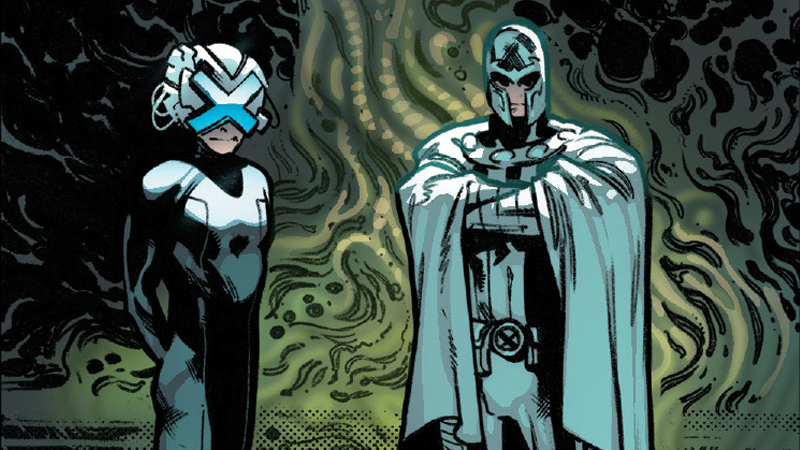
In the scope of the X-Men’s 50-plus year history, the idea isn’t new. There have been multiple efforts over the years to give mutants a homeland. One was called Genosha. One was called Utopia. Both enjoyed some measure of short-term success, but both ended up destroyed or abandoned. The reasons for this aren’t important. What sets them apart from Krakoa is the scale.

To understand it in a real-world context, think of Genosha and Utopia as enclaves within a community. They’re akin to neighborhoods in America or Europe that are predominantly populated by a particular ethnic group or religion. Many are quite successful in their own right. Others have become the sites of atrocities and tragedies.

What the mutants are doing with Krakoa in the comics is something bigger than an enclave. They’re not just seeking to be recognized as a full-fledged country, either. Charles Xavier, the X-Men, and every other mutant is building Krakoa to be a society that can function with or without humanity. It’s not land borrowed from humans. It’s land that’s theirs and theirs alone.
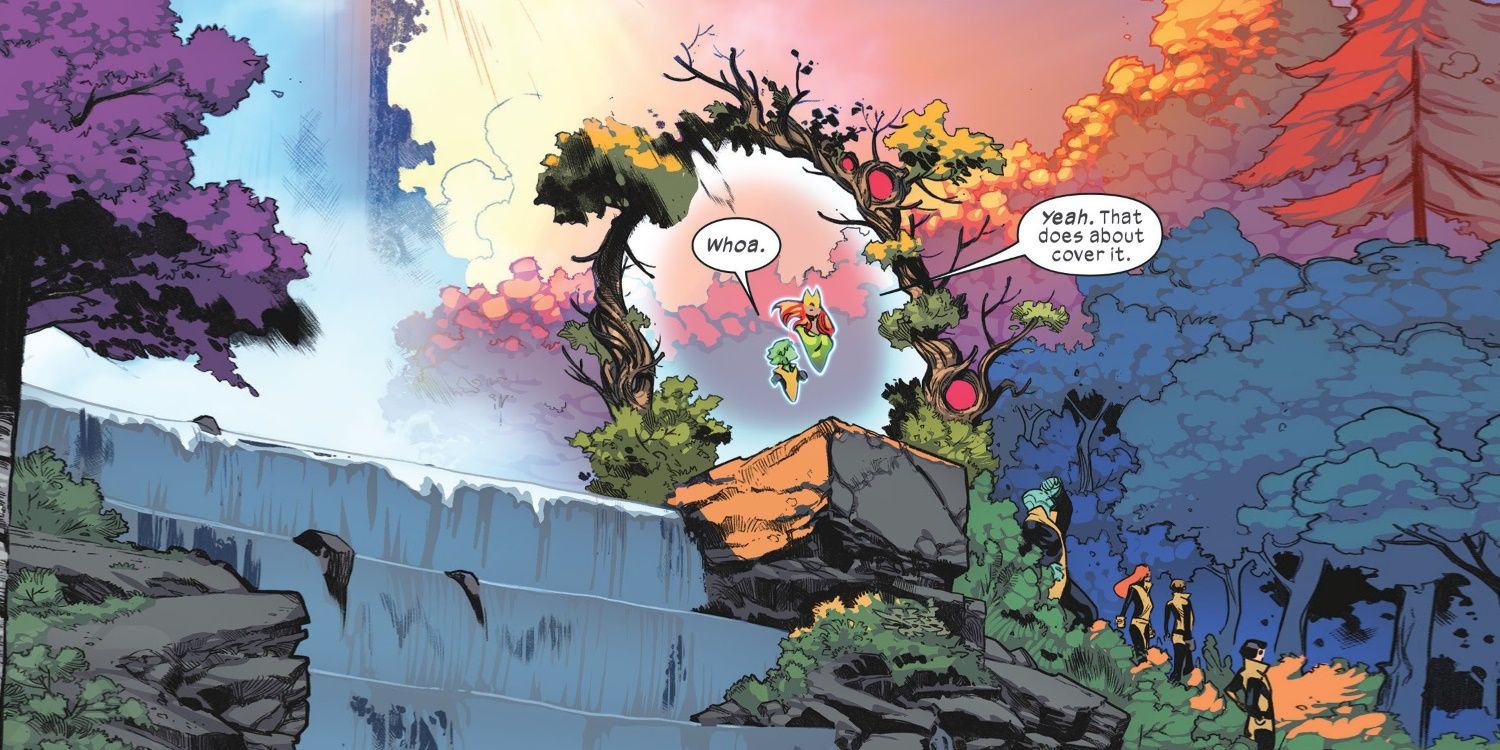
That’s not to say Krakoa operates in isolation, as Wakanda once did. They actually seek to maintain diplomatic relations with the world. They even have valuable resources with which to trade. They don’t have to make these kinds of deals, but under Charles Xavier, they do anyway. It culminates in “House of X #5,” in which Krakoa gains formal recognition by the UN.

This is where the politics of the X-Men comics add some necessary nuance to what we’re seeing in the real world. When people feel marginalized, they tend to feel unwelcome. Even if you are legally an American, a German, an Italian, or a Wakandan, being hated and feared by a large segment of the country makes you feel like you don’t belong.

Between divided polls and America’s colorful electoral map, it’s not hard for anyone to feel out of place. The added polarization provided by the internet, social media, and cable news only adds to the divisions and the animosity. As a result, people naturally retreat into groups and tribes where they feel welcome. Whether it’s a political group, a religious group, or an identity, they seek some form of sanctuary.

In doing so, these groups essentially create their own little world within their community. It’s a world that might as well be a separate reality from what others see. It’s how different people can see the same facts, but have wildly different interpretations. Their brains are still working and the facts are still facts. It’s how they apply them to their world that’s different.

Each group feels they don’t belong. They may even feel victimized. It doesn’t matter if the group happens to make up the vast majority of the population. They still feel like they’re the ones under attack, not unlike the X-Men when they constantly confront fearful, hate-filled humans. They act as though they need to carve their own place in the world and defend it at all costs.

This is where House of X and Powers of X can provide some possible insights into the future of politics. To some extent, Krakoa is a natural byproduct of mutants being hunted, attacked, and denigrated at every turn. They tried isolating themselves on islands. They tried living among humans, sometimes in their most populated cities. Now, they’re trying something bigger.

It’s not exactly peaceful and not everyone understands it, which seems antithetical to Charles Xavier’s dream. However, it’s pragmatic in a very political sense. They have a homeland that they can control. They have barriers for entering and exiting that homeland. Nobody who isn’t authorized can enter it. It’s basically the ultimate immigration control.

On top of that, it has valuable resources that the rest of the world wants. The mutants of Krakoa are willing to share them, but only if they respect their new homeland and treat it like a legitimate country with its own culture, laws, and norms. In a world where people constantly attack others for not respecting their culture or norms, it feels like the ultimate endgame of sorts.

Those who want their culture and way of life preserved will only have more incentive to become more organized. If they keep feeling hatred and fear, they may look for ways to simply function without those they feel don’t belong. People won’t just become more ideologically divided. They may end up more divided in a very literal sense.

It’s the ultimate manifestation of our natural tribal instincts. We seek to join, maintain, and protect our tribe from others, be they real or imagined. It doesn’t matter if there are objective facts that show our tribe is somehow wrong or misguided. We still feel inclined to protect it at all cost.

This era of X-Men comics has been exciting. Writer, Jonathan Hickman, has turned the X-Men from just another superhero team into a blossoming community with its own culture, identity, and borders. As an X-Men fan, I’ve been enjoying it a great deal. As someone in the real world who can’t always avoid politics, it leaves me worried about just how divided we’ll ultimately become.

Leave a comment

Filed under human nature, politics, superhero comics, X-men

How Conservatism, Christianity, And (Failed) Prophecies Created A Death Cult

When it comes to religion and religious people, I have a very simple standard for handling it.

If your religion gives you comfort and fulfillment, then that’s great. More power to you. I fully support you.

If being religious makes you a better person, then that’s great too. I fully support that as well.

If you sincerely believe what you believe and can tolerate others who believe differently, then that’s also great. We won’t have any problems. We’ll probably get along, as I’ve gotten along with many people who hold such beliefs.

However, if you use your religious beliefs to justify being an asshole to other people who don’t share your views, then that’s where I draw the line.

I’m willing to tolerate a lot of beliefs and theologies. I am not willing to tolerate that. Being an asshole is still being an asshole, no matter what deity, holy text, or preacher tries to say otherwise.

I make that disclaimer because there are certain sub-sets of every religion that does this. It doesn’t matter what they call themselves or what holy book they favor, they always seem to emerge. Assholes will find a way to be assholes. Religion just gives them more excuses than most and it’s incredibly frustrating. It’s one of the reasons I tend to criticize organized religion so much.

Religion can be a source of great comfort and fulfillment. It can also be a powerful tool for the corrupt and the power-hungry grifters who will jump at any opportunity to exploit people. Most of the time, it’s just infuriating to anyone with basic human decency. When religious zealots gain power, it becomes a serious concern.

However, there comes a point when serious concern turns into a legitimate, existential danger. It’s one thing for a group of uptight religious zealots to whine about a TV show that shows too many gay characters. It’s quite another when their policies and goals actively pursue the end of the goddamn world.

That’s not hyperbole.

That’s not even me taking their rhetoric out of context.

It’s true. There really is a certain segment of American Christianity that actively pursues a policy intended to bring about the end of days, as vaguely articulated in their holy book. They don’t hide it, either. That’s part of what makes it so scary, both to non-believers and other Christians who prefer the world not end.

This phenomenon is a dangerous and toxic convergence of extreme conservatism and evangelical Christianity. It centers largely around the nation of Israel, a country that has a way of triggering all sorts of extreme rhetoric. I won’t get into the particulars of that rhetoric. That’s not because I don’t think it’s relevant. It’s just impossible to talk about Israel these days without being accused of anti-Semitism.

There’s a reason why even Rick Sanchez got anxious when Israel came up.

All you need to know is that these end time beliefs rely on Zionism. Without getting too deep into the politics or the rhetoric surrounding this term, it’s a catch-all word for the creation and maintenance of a Jewish state in the holy land. Despite the historic presence of the predominantly Muslim Palestinians, these end times beliefs basically need Israel to be there. If it isn’t, then the prophecies in the bible can’t occur.

It’s the primary reason why this subset of Christianity is so dogmatically supportive of Israel, no matter what they do. It shows in polls. According to the Washington Post, half of evangelicals support Israel because they believe it’s important for fulfilling end-times prophecy. That continued support is a key political position for conservative politics. You can’t appeal to this brand of Christianity without supporting Israel.

Now, it’s one thing to dogmatically support another ally on the geopolitical stage. It’s quite another when your reasons for doing so have a basis in bringing about the end of the goddamn world. According to the prophecies that these right-wing Christians so ardently believe in, Israel has to exist in order for the anti-Christ to return and seize power.

Once the anti-Christ returns, the world basically descends into a massive glut of carnage and suffering. Countless people suffer and die. The world, as we know it, falls apart and becomes so objectively horrible that it’s basically indistinguishable from being in Hell. Anybody alive during this time, be they Christian or not, is left to suffer horribly.

Again, this movement wants this to happen. They, the conservative Christian evangelicals that so routinely vote for like-minded politicians, actively pursue policies that bring this suffering on. They’ll justify it by saying Jesus will come in the end and save everybody, as their holy text prophecies. Never mind the many times biblical prophecies failed to come true. These people are willing to take that chance.

It is, by any measure, a death cult. It helps explain why these same conservative religious zealots seem unconcerned with preserving the environment or facilitating peaceful relations in the Middle East. To do so would mean delaying the end of days and they don’t want that. They seem both eager and determined to bring about apocalyptic destruction their holy book depicts.

It would be one thing if these individuals were just another fringe cult in the mold of David Koresh and Marshall Applewhite. These people have legitimate political power. They have an entire political party in their palms. When they’re in power, they have access to nuclear weapons and military force. For anyone who doesn’t want the world to end, regardless of their religious affiliation, this should be troubling.

Death cults are dangerous enough, but one with this kind of influence is especially concerning. As someone who sincerely doesn’t want the world to end, I find this movement very concerning. Like I said earlier, I can respect anyone’s religious beliefs, but when those beliefs prompt you to support ending the goddamn world, how can anyone of any faith honestly respect that?

6 Comments

Filed under Current Events, philosophy, politics, rants, religion

Remembering (And Learning From) The Cuban Missile Crisis In 2020

I know 2020 has been historically awful.

I know this year will leave an unmistakable scar on countless many for multiple generations.

I know it seems like the world, as we once knew and took for granted, is ending and is never coming back.

I’m living this year-long nightmare with the rest of you. I’m experiencing all the bleak news, life disruptions, and major cancellations. For the rest of my life, no matter how it unfolds, I’ll remember 2020 and how it felt like the world was falling apart. While I don’t deny it will recover, albeit slowly, we will move forward.

At the same time, I think it helps to offer a little perspective. As bad as this year has been and as dire as things seem, you can’t definitively say this is the worst it’s ever been. That’s hyperbole and hyperbole is rarely accurate or helpful. To help make this point, I’d like to remind everyone of a real historical event in which the world almost did actually end.

That event is the Cuban Missile Crisis. It’s also a wholly relevant event because, as of this writing, we’re entering the third week of October. That puts us right within that critical timeframe between October 15th and October 27th, 1962. During those fateful days, the crisis unfolded. You don’t need to be an expert in history to appreciate how close we came to nuclear war.

The specifics of the crisis are well-known. The USSR had shipped missiles with nuclear warheads into communist Cuba. The United States, feeling threatened, demanded those missiles be withdrawn. Tensions ensued. Diplomatic and military preparations were made. Every hour counted. Every decision was critical. One wrong move and millions would die in nuclear hellfire.

At one point, it came down to the decision of a single human being on a Russian sub. His name is Vasili Arkhipov and I’ve mentioned him before. It’s not an exaggeration to say that his decision not to fire nuclear-armed torpedoes in response to depth charges prevented nuclear war. We really were that close. This video nicely explains the situation.

Personally, I probably owe that man my life. My father was just kid at the time, but he, my grandmother, and grandfather lived just outside of Washington DC at the time. To offer some perspective, they were less than a 30-minute drive from National Mall and that’s accounting for traffic.

If nuclear war broke out, it’s a given that DC would be among the first targets hit. Had the missiles started flying, my entire family would’ve been among those millions of dead. I wouldn’t be here and it’s doubtful that most of the people reading this wouldn’t be here. Unlike a deadly pandemic, it wouldn’t have been a natural disease. Our destruction would’ve been our own doing.

It all unfolded in the span of two weeks. Think about that, relative how skewed our concepts of time have become in 2020. In just two weeks in 58 years, we almost destroyed ourselves and our entire civilization. We were that close to the brink, but we got through it.

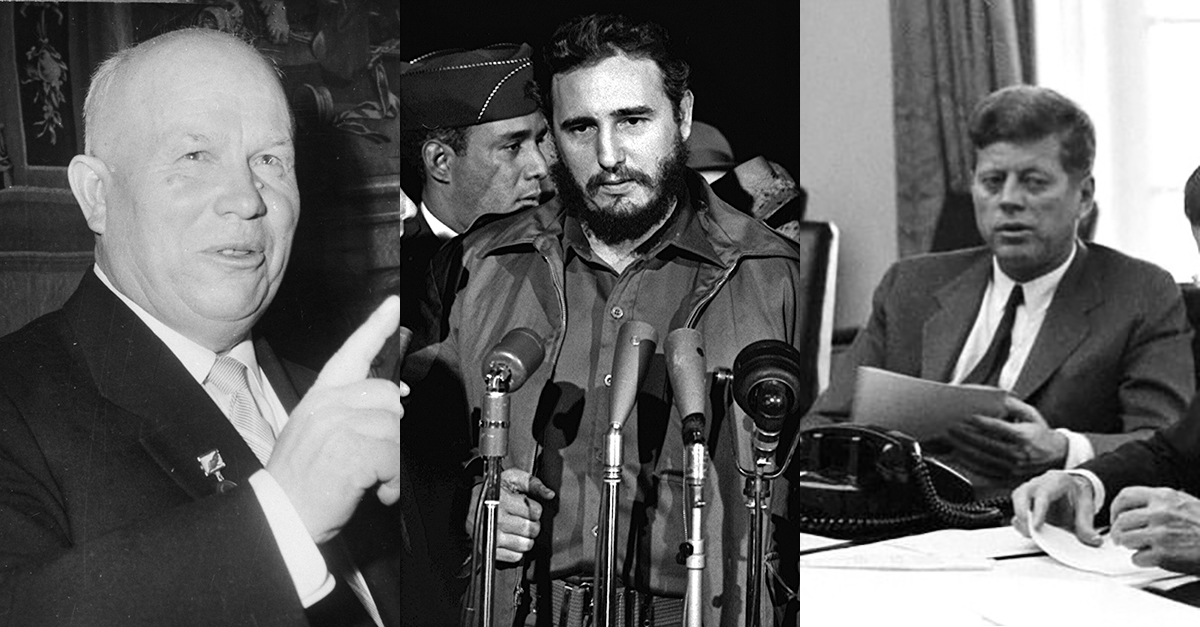
It was tense. It took some key decisions from men like Vasili Arkhipov, John F. Kennedy, and Nikita Kruzchev to make it through in one peace, but we made it. There were plenty of opportunities to mess up or make the wrong decisions, but we didn’t. That’s why we’re here in 2020, alive and complaining about having to wear a mask in a restaurant.

Take a moment to appreciate that context.

Take another to appreciate how we moved forward from that event.

After the crisis, both sides of the Iron Curtain went to great lengths to avoid a situation like that. The world shrunk in the sense that communication became more critical. Countries and communities needed to communicate with one another to make sure nothing got overlooked, lost in translation, or mistook.

When there are nuclear weapons in play, you literally cannot afford to make mistakes.

Those were hard lessons for everyone. That’s why I have some sliver of hope that the scars from 2020 will teach us similar lessons. This pandemic has shown just how fragile our civilization still is. It also shows that the deadly forces of nature are apolitical. They don’t care about your ideology, race, or beliefs. They’ll hit us just as hard. They’ll hurt us just as much.

Pandemics don’t give a damn about borders. They don’t give a damn about divisions. They’re as chaotic as a nuclear explosion. They’ll burn and scar anything that gets in their path. We can’t negotiate or bullshit our way out of it. The only way we get through it is by cooperation, compassion, and understanding.

It’s been 58 years since the Cuban Missile Crisis. It left scars on a generation, but those scars ensured we worked harder to avoid nuclear war. I sincerely hope that the scars left by this pandemic will teach a new generation how to cooperate and how to get through a global crisis like this.

Those hopes may seem overly ambitious, given how divided we still are. I believe our desire to not live in a world ravaged by disease or nuclear war will motivate us to unite in the long run.

Leave a comment

Filed under Current Events, human nature, Jack Fisher's Insights, politics

How Mixing Politics And Religion Ruins Both

Some things just aren’t meant to go together. Whether it involves putting pickles on a peanut butter sandwich or wearing a bra with a tube top, certain combinations are just inherently incongruent. At best, it’s messy, unattractive, or unappetizing. At worst, it does legitimate damage to everything that went into it.

In terms of volatile mixtures, religion and politics is probably the worst. There’s a reason why it’s a general rule of etiquette to avoid discussing either in a civil scenario. Both have a tendency to bring out that sense of blind tribalism that’s still hardwired into us and both have inherent flaws that keep even the most reasonable people from having a productive discussion.

That’s not to say religion and politics can never be discussed in a civil, respectful manner. It’s just exceedingly difficult, especially in these very polarized times. However, I am confident in stating that it’s practically impossible to mix religion and politics in a way that fosters greater civility. If anything, it derails any related issue beyond the point of absurdity.

I say this as someone who tries to be reasonable whenever discussing religion and politics. That’s not easy because I’ve made my criticisms of organized religion and certain political leanings quite clear. I don’t deny that I have my biases, but I make a concerted effort to see things from the other side.

When politics and religion mingle, however, I can’t justify that effort. From my perspective, there’s just no way to mix either without them becoming hopelessly corrupt.

It’s not difficult to understand why they become intermingled. Both are powerful institutions with immense influence over large swaths of people. They’re either going to coordinate or conflict with one another and coordination is almost always more productive, regardless of goals.

On paper, it almost makes sense. If you’re looking to strengthen your political position, adding religious elements that resonate with a significant segment of the populace can only help your effort. Even if those same people are skeptical of your rhetoric, they’ll give you the benefit of the doubt if you subscribe to the same theology.

When put into practice, however, it’s the logistical equivalent to mixing nitro and glycerin. It doesn’t take much to trigger a volatile reaction. More often than not, that one reaction triggers many more like it. Before long, the corruption isn’t just extensive. It becomes entrenched, so much so that it’s seen as entirely normal.

The best and most relevant example of this is how the religious right effectively entwined itself with conservative politics, especially in the United States. In recent years, even as religious affiliation has declined considerably, the link between religious conservatives and conservative politics has only gotten stronger, much to the detriment of both.

The history of the religious right in the 20th century is well-documented. While there had been previous efforts to effectively codify Christian dominance in the United States, it had always been a fringe position. In fact, there was a time when churches discouraged mixing religion with politics because politics was seen as a dirty business wholly concerned with worldly affairs.

Then, after a combination of major social upheavals and significant scientific advancements, organized religion became more reactionary. The rise of fundamentalism, which was not exclusive to Christianity, prompted certain religious organizations to do more than preach a more rigid form of theology.

To some extent, those organizations had no choice. There’s only so much you can do to convince ordinary people that they should be more devout, denying themselves comfort, novelty, and fun. In order to have greater influence, they need political power. However, gaining that kind of power almost always requires some level of corruption and at that level, corruption is a two-way street with many potholes and blind spots.

That’s not just an opinion held by cynics and casual observers, either. There is plenty of historical precedent that demonstrates what happens when religion and politics cooperate too closely. A cursory glance at the history of the Middle Ages offers plenty of documented evidence alongside absurd, yet historically accurate anecdotes.

It may be difficult to imagine for those who have grown up in secular societies, but there was a time when the Catholic Church was the only game in town and every political entity had to acknowledge that. They were basically a secondary government that could levy additional taxes, except they called them tithes. As an organization, their wealth was beyond measure.

On top of that wealth, the Pope could essentially make or break kingdoms by approving or denying marriages. If you said or did anything that offended, undermined, or in any way inconvenienced the church, they could do more than just condemn you. They could legally kill you and call it holy.

Regardless of the theology involved, this kind of power made the Catholic Church prone to all sorts of corruption. In some cases, it manifested in the election of Popes with decidedly unholy behavior. At one point, the papacy was actually sold between Popes like a high-stakes auction for gold and land.

While stories of organizational corruption can be comically absurd, other types of corruption did real harm. Like any powerful organization, the church dedicates a considerable amount of time and effort to preserving that power and isn’t always reasonable about it. That led to church-supported atrocities that included witch burnings, war crimes, and even animal abuse.

Again, little of these activities can be justified on a theological basis. There was nothing in the bible or the teachings of Jesus that promoted an all-encompassing organization that blurred the line between religion and politics. Most of that occurred through a convergence of various unholy forces that range from political ploys to theological debates. Conveniently, God was always on the side of whoever won out.

After centuries of corruption, other forces more powerful than any prayer or Pope eroded the influence of the Catholic Church. Some would argue that losing the power to make war and influence kings helped get the church in touch with the core teachings of Christianity. I think that’s a tenuous argument, given how dogmatic it is on certain outdated traditions, but I do see some merit in it.

Even with this historical precedent, the religious right keeps making a concerted effort to wield the kind of power that the Catholic Church once did. You need only compare the Republican Party’s platform in 1912, which contained no reference to any deity, to the overtly anti-demographic policies espoused in contemporary Republican talking points.

It’s in that blending of policy and theology in which both ultimately undermine one another. From the religious side, there’s nothing in the bible that demands tax cuts for the rich or bans in stem cell research. However, thanks to being entertained with conservative politics, this somehow becomes entwined with their theology, even if it means ignoring actual teachings of Jesus Christ.

From the political side of things, it means policies don’t even have to have a logical, pragmatic element to them anymore. They can only be viewed in the context of whether or not said policies get or maintain the support of religious adherents. Even when those policies are objectively bad for the environment and the poor, they support them. They’ll even support policies that require a big, bloated government by default.

In a sense, for religion and politics to function alongside one another, both require significant levels of hypocrisy. A religion will have to support policies that run counter to its theology and a political organization will have to support measures that run counter to its principles. The only way to make that work is to make excuses, which only invites corruption.

These aren’t minor complications. These are flawed processes that ensure neither religion nor politics can benefit without undermining themselves along the way. Anything they accomplish must come at the expense of principle or ideology. For conservative politics and religious dogma to pursue their goals, it must in turn use the same draconian tactics of Big Brother, even when it directly contradicts their highest values.

From that perspective, should we really be surprised when politicians with the backing of the religious right turn out to be utter hypocrites?

7 Comments

Filed under Current Events, human nature, politics, religion

Jack’s World: Why Conservatives Make Better Villains (For Now)

The following is a video I made for my YouTube channel, Jack’s World. It’s a video version of an article I wrote a while back. I added and removed a few details to the video. If necessary, I’ll do a follow-up. Enjoy!

Leave a comment

Filed under Current Events, extremism, human nature, Jack's World, media issues, philosophy, political correctness, politics, psychology, superhero comics, superhero movies, Villains Journey, YouTube

Why Conservatives Make Better Villains (For Now)

mr._burns_smile

We currently live in a golden age of villains. Between Thanos, Erik Killmonger, the Joker, and Walter White, there has been a veritable surge of complex characters who also happen to be compelling villains. While there’s still a place for the kind of pure evil that Disney villains have relied on for years, this trend in a more refined brand of villainy feels both refreshing and overdue.

I’ve written extensively on villains before. As a lifelong fan of superhero comics and movies, I’ve consumed, contemplated, and scrutinized hero/villain dynamics more than most. In doing so, I’ve noticed plenty of trends. Like most aspects of popular culture, it’s always evolving. Very few themes and details remain constant, especially when it comes to antagonists.

That said, there’s one trend in villains that has remained somewhat constant over the course of my lifetime. It’s also a trend that I see as intensifying, albeit in a subtle way. Some of it coincides with the growing complexity of villains in popular culture, but most of the trend precedes the current era of superhero-dominated media. If anything, superhero media helped accelerate it.

While most villains and heroes rarely identify with a certain political affiliation, it’s usually not hard to discern how most would vote in a contemporary election. I would even argue that it’s easier to surmise what a villain’s political leanings are compared to that of heroes. Take any villain from the past 10 years of movies, be they superhero or otherwise. Chances are a vast majority of them would identify as conservative.

Now, I understand conservatism is an exceedingly broad term. It has a dictionary definition, but as a political philosophy, there are many sub-sets, divisions, and variations. From fiscal conservatives to social conservative to neoconservatives, there are many wildly different ideologies that still identify as conservative. A few actively clash with one another.

Those complexities aside, there are some core tenants associated with conservatism and it’s those very tenants that make it such an effective basis for villains. Chief among conservative values is the idea that traditional norms, institutions, and values be maintained. Change isn’t actively dissuaded, but it is viewed with caution and suspicion. To be conservative is to affirm the status quo, to some extent.

That’s all well and good if the status quo is beneficial to everyone. It’s not so preferable for those who either fail to benefit or are actively screwed over by that same status quo. Since there has never been a society in history that has achieved perfect prosperity for everyone, regardless of their minority status, there’s bound to be people who get left behind.

In our own real-world history, we’ve seen people from those disaffected groups organize and fight the status quo to better their lives. That struggle has played out in the Civil Rights movement of the 1960s, the movement for women’s rights, and the LGBT rights movement that’s still going on today. Those who oppose these movements tend to have, broadly speaking, conservative leanings.

Look at the groups that opposed the Civil Rights movement.

Look at those who actively oppose LGBT rights, women’s rights, and immigrants.

They all espouse rhetoric that would put them at odds with Superman, Captain America, and most other superheroes who value justice, truth, and peace. For some, their talking points sound like ideas that only villains in the mold of Lex Luthor would agree with. While not all of them identify as overtly conservative, the standard principles are there.

Anything too different from the status quo must be wrong or evil.

Anybody too different from the people everyone else in a society must be bad, evil, or devious.

Any idea, trend, or movement that is disruptive or deviant in any way is something to be opposed.

It doesn’t just manifest in superhero movies or underdog stories, either. Look at a movie like “Footloose.” In this story, the people who ban dancing are uptight, dogmatic, religious zealots who likely voted for Ronald Reagan in 1984 when this movie came out. They were the antagonists of that story and the kids, while not overtly liberal, dared to defy them.

It can even manifest subtly in other media. In kids shows like “Recess,” “Hey Arnold,” and “Rocko’s Modern Life,” the most common antagonists are uptight authority figures who have no tolerance for new ideas, big changes, or anything remotely fun. It’s hard to imagine any of these characters voting for someone who builds their slogan around change, reform, and reinvention.

They like things the way they are. Most of them benefit from the current system and will naturally seek to preserve their place in that system. While they won’t always see themselves as villains, it’s difficult for them to come off as heroes. You can only be so heroic when your side is closely aligned with predatory business practices, fun-hating religious zealots, and unabashed war-mongers.

That’s not to say it’s impossible for liberals to be villains too. It does happen and it can be done very well when done right. I would argue that Erik Killmonger in “Black Panther” was more in line with an extreme liberal revolutionary who didn’t just want to pursue change. I would make a similar argument for Ra’s Al Ghul in “Batman Begins.”

These characters didn’t just seek to change society from its current unjust state. They sought to violently destroy it and rebuild it from the ground up. That kind of liberalism exists in the real world and it can make for compelling villains.

However, the number of villains who align with the politics of Killmonger are far fewer than those who would align with the politics of Lex Luthor. In general, it’s easier to resist change rather than embrace it. It’s also necessary to some extent for those to resist change to be uptight authority figures who are okay with coercing others to maintain traditions. Logistically, the villains in many conflicts must be conservative.

Now, that’s not to say that villains will always lean conservative in popular media. What it means to be conservative changes over time. If you were to listen to conservative rhetoric 50 years ago, they would sound very different. They might even sound liberal by today’s standards.

The same goes for liberalism of previous eras. It hasn’t always been closely aligned with the politics surrounding minority rights, income inequality, or political correctness. The liberals of the 1920s would likely clash with the liberals of today. That’s just part of the ever-evolving nature of politics.


For the time being, though, being a villain in popular culture usually means being conservative to a certain extent. Conservatives are more likely to be the rich, greedy business people who would gladly burn down a rain forest or exploit slave labor to raise profits. Conservatives are more likely to be the rule-loving, fun-hating, curfew-enforcing religious zealots who wouldn’t mind electing theocrats with every election.

These types of individuals are far more likely to be villains in a story. At the very least, they’ll side or tolerate the villain. It’s easy to believe that those who side with the religious right and well-connected rich people will generally oppose a selfless, likable protagonist. From a narrative perspective, these kinds of villains are better in that we tend to root for heroes who oppose authoritarian bullies like that.

Again, it’s guaranteed that political and cultural trends will likely change what it means to be conservative, liberal, and everything in between. For the time being, if you were to bet on the political leanings of an antagonist, the odds are mostly in favor of that antagonist being conservative.

1 Comment

Filed under Current Events, extremism, human nature, media issues, philosophy, political correctness, politics, psychology, superhero comics, superhero movies, Villains Journey

Is It Us Or The Politicians? How “Parks And Recreation” (Hilariously) Explores Corruption And Those Who Enable It

Throughout the history of television, the best shows are often the ones that resonate with audiences through different eras, cultures, and places. It’s one thing for a show to be a hit when it’s on the air. It’s quite another for a show to still have appeal many years later.

Within that rare collection of TV shows with that special level of appeal, “Parks and Recreation” is in a class of its own. It started as a generic rip-off of “The Office.” It eventually developed into one of the most beloved and endearing TV shows of the past several decades.

Personally, it’s one of my all-time favorite shows. The recent reunion special only reminded me how much I loved it. I’ve gone out of my way to praise it in the past, from highlighting the respectable ideals of Ron Swanson to celebrating the joyous spirit of Leslie Knope. There are many more lovable characters on this show that are worth highlighting. I could write entire articles on the secret appeal of Jerry Gergich.

For now, I want to highlight another element of “Parks and Recreation” that I believe has become much more relevant lately. At the rate we’re going, we’ll come to see certain themes in “Parks and Recreation” as prophetic warnings, of sorts. It might not be as prophetic asThe Simpsons,” but it’s still critical, given the current state of affairs.

To understand the importance of those themes, take a moment to think about politicians. I’ll give everyone’s inner Ron Swanson a moment to endure the nausea. What ideas and images come to mind when you think of politicians? What’s the most common perception that most people would agree with? If you walked up to a random person, they’ll probably describe politicians as follows.

They’re all corrupt.

They’re all crooks.

They’re all power-hungry.

They’re all evil.

They’re all arrogant.

They’re all narcissistic.

They’re all greedy.

They’re out to steal our money/land/guns/rights/whatever someone happens to value.

It’s easy to have negative perceptions about politicians. To their credit, they do plenty to affirm those perceptions. You don’t have to look hard to find cases of laughably corrupt or downright evil politicians who couldn’t care less about their constituents. It’s enough to make understand where Ron Swanson is coming from when he brilliantly chastises government.

That said, there’s another side of the story that rarely gets explored. A big part of the comedy in “Parks and Recreation” stems directly from how it explores the challenges that governments face. It doesn’t avoid cases in which government officials behave in deplorable ways. It also doesn’t avoid the role the voting citizens play in enabling those same officials.

It’s the lesser known, but equally distressing aspect of government corruption. It’s not always the case that they just muscle their way into positions of power. In fact, it’s not that uncommon for these deplorable human beings to be legally elected to office. Some don’t even need to rig the vote. They’re able to win within the existing democratic institutions.

That’s the case for multiple politicians in the world of “Parks and Recreation.” Some characters are so laughably scandalous that it’s easy to forget that some of them were inspired by real-world events. However, this only compounds the underlying issues that the show explores, both directly and indirectly. At the heart of those issues is a simple question about the nature of government corruption.

Is it us, the people, or the politicians who foster corruption?

It’s not a strict either/or question with a clear answer, but it’s one that “Parks and Recreation” does more than most shows to explore. Take, for instance, the chaotic town hall meetings that the department holds in multiple episodes. Just look at how the citizens of Pawnee conduct themselves.

https://www.youtube.com/watch?v=In9oSjjltOs

Some of these people are just obnoxious. Others are downright malicious. However, every one of them still votes. They’re the ones who ultimately decides who gets elected and who wields the power in their city. As a result, the many absurdities surrounding the fictional city of Pawnee tend to reflect that sentiment.

Throughout the show, the citizens of Pawnee aren’t depicted as exceptionally informed. They often make unreasonable, absurd demands. They’re quick to react and cast blame on others. They hold government officials to impossible standards. Even genuine, sincere public servants like Leslie Knope get attacked for not delivering, even when their requests are unreasonable and/or misguided.

On top of that, many of these same people are easily swayed by corrupting influences. In Season 5, Episode 2, “Soda Tax,” Leslie works with her good friend and competent nurse, Ann Perkins, to implement a soda tax that would curb the sale of exceedingly unhealthy soda consumption. It’s based on a real-world proposal. It addresses a real-world health issue. It’s the kind of thing you’d want a caring government to address.

Even so, the Pawnee Restaurant Association restaurant lobby rallies the people against it. Even though it passes, it ultimately plays a part in Leslie being voted out of office in a recall election during Season 6. That means her reward for trying to do public good is to lose her job while those mired in multiple sex scandals continue to hold power.

Take a moment to think about the bigger picture. In every season in “Parks and Recreation,” Leslie Knope conducts herself as an ideal politician who simply wants to do good for her community. She has to fight, tooth and nail, just to get elected in Season 4. Even when she does good by her citizens, they still vote her out.

Leslie dares to tell the truth and be honest with the people. Others, like Jeremy Jamm and Bill Dexhart, simply tell people what they want to hear and/or hire the right people to manipulate the public. They don’t force the public to vote a certain way. They don’t even rig the votes because, in the end, they don’t have to. The people are swayed by the necessary forces and vote accordingly.

Now, you can make the claim that the people of Pawnee are more gullible than most and, as the show often depicts, it would be a valid observation. They still have the power of the vote. They’re still the ones who ultimately make the choice to elect or depose public officials like Leslie Knope or Jeremy Jamm.

Politicians do all sorts of shady things with their power, but that power is still contingent on the will of the people, to some extent. Are the people not somewhat responsible for enabling the corruption that they so deplore? The plot and themes of “Parks and Recreation” don’t attempt to provide a definitive answer, but the show makes a relevant observation that has become even more relevant in recent years.

There are multiple real-world cases of people voting against their own interests for reasons that often confound outside observers. Even an alleged child predator managed to get 48.4 percent of the vote in his state in running for the United States Senate. Even though he lost, the margin for his loss was so narrow that it’s disturbing to think that people are willing to put a man like that in a position of power.

That’s not to say that the people who voted for such a deplorable human being are bad people. Chances are they either didn’t believe in the allegations levied against him or simply voted for him out of loyalty to a political party. Given the limitations of the democratic system, sometimes people are simply left with two bad choices and have to pick the one that’s least awful to them.

Limitations aside, the fact remains that very few of these corrupt politicians would be in positions of power if people just didn’t vote for them. Even if they had power, they wouldn’t have much influence if those same people didn’t support them, even if they aren’t overly corrupt. It’s why politicians often pander to their base supporters so much. They need that support, even if they’re corrupt.

Since “Parks and Recreation” went off the air, people have only become more politically divided. The rhetoric on both sides of the political spectrum has gotten increasingly extreme and the COVID-19 pandemic only made it worse. Both politicians and the voters are guilty of conducting themselves as arrogant assholes. Thanks to the internet and social media, this conduct is being captured for everyone to see.

There’s a lot of ugliness to go around in politics. Part of what made “Parks and Recreation” so endearing was how it forged humor in that environment. In doing so, it also shed some light on the absurdities surrounding politics, democracy, and society in general. It didn’t hide from the flaws. The show even magnified them in many cases.

As real-world politics gets uglier and meaner, the insights within the characters and plots of “Parks and Recreation” may prove more impactful in the long run. The show will always be funny, if only for the moments involving Ron Swanson and Jean-Realphio. It’ll give us a chance to laugh at how corrupt elected officials can be, but it won’t hide the fact that we still voted for them.

1 Comment

Filed under Current Events, Parks and Recreation, politics, television

Why Biological Weapons Will Be A (MUCH) Bigger Threat In The Future

diabolical-biological-warfare

It wasn’t too long ago that the biggest existential threat facing humanity was nuclear war. I’ve noted before how distressingly close we’ve come to a nuclear disaster and how the threat of a nuclear holocaust is still present. However, that threat has abated in recent decades, especially as nuclear weapons have gotten so destructive that their use is somewhat redundant.

More recently, people have become more concerned about the threat posed by advanced artificial intelligence. The idea is that at some point, an AI will become so intelligent and capable that we won’t be able to stop it in the event it decides that humanity must go extinct. It’s the basis of every Terminator movie, as well as an Avengers movie.

While I certainly have my concerns about the dangers of advanced artificial intelligence, it’s not the threat that worries me most these days. We still have some measure of control over the development of AI and we’re in a good position to guide that technology down a path that won’t destroy the human race. The same cannot be said for biological weapons.

If there’s one true threat that worries me more with each passing day, it’s that. Biological weapons are one of those major threats that does not slip under the radar, as evidenced by plenty of movies, books, and TV shows. However, the extent of that threat has become more understated in recent years and has the potential to be something more powerful than nuclear weapons.

By powerful, I don’t necessarily mean deadlier. At the end of the day, nuclear weapons are still more capable of rendering the human race extinct and turning the whole planet into a radioactive wasteland. The true power of biological weapons less about how deadly they can be and more about how useful they could be to potential governments, tyrants, or extremists.

For most of human history, that power has been limited. There’s no question that disease has shaped the course of human history. Some plagues are so influential that they mark major turning points for entire continents. The same can be said for our ability to treat such diseases. However, all these diseases had one fatal flaw that kept them from wiping out the human race.

Thanks to the fundamental forces of evolution, a deadly pathogen can only be so deadly and still survive. After all, an organism’s ultimate goal isn’t to kill everything it encounters. It’s to survive and reproduce. It can’t do that if it kills a carrier too quickly. If it’s too benign, however, then the carrier’s immune system will wipe it out.

That’s why even diseases as deadly as Ebola and Influenza can only be so infectious. If they kill all their hosts, then they die with them. That’s why, much to the chagrin of creationists, evolution doesn’t favor the natural emergence of apocalyptic diseases. They can still devastate the human race, but they can’t necessarily wipe it out. It would only wipe itself out in the process and most lifeforms avoid that.

It’s also why the large-scale biological weapons programs of the 20th century could only be so effective. Even if a country manufactured enough doses of an existing disease to infect every person on the planet, it won’t necessarily be deadly enough to kill everyone. Even at its worst, smallpox and bubonic plague never killed more than two-thirds of those it infected.

That’s not even factoring in how difficult it is to distribute these pathogens to everyone without anyone noticing. It’s even harder today because powerful governments invest significant resources into preventing and containing an outbreak. If large numbers of people start getting sick and dropping dead at a rapid rate, then someone will notice and take action.

That’s why, for the most part, biological weapons are both ethically untenable and not very useful as weapons of mass destruction. They’re difficult to control, difficult to distribute, and have unpredictable effects. They also require immense resources, considerable technical know-how, and a keen understanding of science. Thankfully, these are all things that extreme religious zealots tend to lack.

For the most part, these powerful constraints have kept biological weapons from being too great a threat. However, recent advances in biotechnology could change that and it’s here where I really start to worry. With recent advances in gene-editing and the emergence of tools like CRISPR, those limitations that kept biological weapons in check may no longer be insurmountable.

While I’ve done plenty to highlight all the good that tools like CRISPR could do, I don’t deny that there are potential dangers. Like nuclear weapons, this technology is undeniably powerful and powerful technology always carries great risks. With CRISPR, the risks aren’t as overt as obvious as fiery mushroom clouds, but they can be every bit as deadly.

In theory, CRISPR makes it possible to cut and paste genetic material with the same ease as arranging scattered puzzle pieces. With right materials and tools, this technology could be used to create genetic combinations in organisms that could never occur naturally or even with artificial selection.

Imagine a strain of smallpox that was lethal 100 percent of the time and just as infectious.

Imagine a strain of the flu that was as easy to spread as the common cold, but as deadly as bubonic plague.

Imagine a strain of an entirely new pathogen that is extremely lethal and completely immune to all modern medicine.

These are all possible, albeit exceedingly difficult, with genetic editing. Unlike nuclear weapons, it doesn’t require the procurement of expensive and dangerous elements. It just needs DNA, RNA, and a lab with which to produce them. It’s a scary idea, but that’s actually not the worst of it, nor is it the one that worries me most.

A doomsday bioweapon like that might be appealing to generic super-villains, but like nuclear weapons, they’re not very strategic because they kill everyone and everything. For those with a more strategic form of blood-lust, advanced biological weapons offer advantages that sets them apart from any other weapon.

Instead of a pathogen infecting everyone it comes into contact with, what if it only infected a certain group of people that carry a specifics traits associated with a particular race or ethnic group? What if someone wanted to be even more strategic than that and craft a pathogen that attacked only one specific person?

In principle, this is possible if you can manipulate the genetics of a disease in just the right way. Granted, it’s extremely difficult, but the potential utility makes it more useful than a nuclear bomb will ever be.

Suddenly, a government or terrorist organization doesn’t need a skilled assassin on the level of James Bond to target a specific person or group. They just need the right genetic material and a working knowledge of how to program it into a synthetic pathogen. It could even be made to look like a completely different disease, which ensured it didn’t raise any red flags.

It’s not the ultimate weapon, but it’s pretty darn close. Biological weapons with this level of refinement could potentially target entire groups of people and never put the attackers at risk. As a strategy, it can effectively end an entire conflict without a shot being fired. Those infected wouldn’t even know it was fired if the pathogen were effectively distributed.

It’s one of those weapons that both terrorists and governments would be tempted to use. The most distressing part is they could use it in a way that’s difficult to detect, let alone counter. Even after all the death and destruction has been wrought, how do you even prove that it was a result of a bioweapon? Even if you could prove that, how would you know who made it?

These are the kinds of questions that only have disturbing answers. They’re also the reasons why I believe biological weapons are poised to become a far bigger issue in the coming years. Even if it’s unlikely they’ll wipe out the human race, they can still cause a special kind of destruction that’s almost impossible to counter.

Unlike any other weapon, though, the destruction could be targeted, undetectable, and unstoppable. Those who wield this technology would have the power to spread death with a level of precision and tact unprecedented in human history. While I believe that humanity will eventually be able to handle dangerous technology like artificial intelligence, I doubt it’ll ever be capable of handling a weapon like that.

2 Comments

Filed under biotechnology, CRISPR, Current Events, futurism, technology