Tag Archives: disease

Religious Zealots, Vaccines, And (Unavoidable) Hypocrisy

To some extent, a global crisis is the ultimate bullshit filter. You can bullshit your way through a lot of things. Things like politics, economics, theology, and philosophy can all be twisted and obscured by a skilled bullshitter who has little concern for the truth, ethics, or decency. However, no amount of bullshit can circumvent the grim realities of a global pandemic.

A disease like the coronavirus/COVID-19 doesn’t respond to fancy rhetoric, dogmatic beliefs, or ideological divides. It responds only to the immutable laws of physics and biology. To this virus, you’re not a liberal, conservative, Christian, Muslim, atheist, or Satanist. You’re just another host.

It’s a grim, yet sobering perspective. It’s also revealing in other ways. As I’ve noted before, I believe we’ll eventually beat this disease. Not since World War II has there been a crisis that has unified humanity’s effort to a singular cause. It will take time and people will still die, but we’ll ultimately save more lives because of the advances we make. The fact that nobody dies of Small Pox anymore is proof of that.

As hopeful as I am for this outcome, which still seems so far away, it does bring up another issue that will likely emerge once this crisis ends. That issue has less to do with the science and more to do with the religious zealots who have spent decades trying to inject themselves into scientific circles.

I’ve mentioned religion before in pointing out some of the humorous headlines they’ve inspired in this crisis, but there’s nothing funny about this particular issue. As always, I want to disclose that most religious people aren’t zealots. They don’t take their religion, their holy text, or their eccentric leaders too seriously. They believe what they believe, but live their lives as decent, loving human beings.

This is not about them.

The people I’m referring to here are the people who yell the loudest whenever someone points out a scientific fact that contradicts their preferred holy book. These are the people who demand that their theology be treated with scientific credence in a classroom. They’re also the ones who demand special treatment by the government and greater influence in society as a whole.

I single these people out because in a crisis like this, they can’t survive with the rest of society without being hypocrites in the highest order. I say that as someone who freely admits he can’t predict the future to any degree. However, I’ve met enough religious zealots in my life to surmise predictable patterns.

With that in mind, here’s how I predict religious zealots will react when a vaccine or treatment is found for COVID-19.

They’ll thank their deity and not the doctors or scientists.

They’ll eagerly get in line to receive the treatment, whatever it might be.

They’ll later claim that their deity protected them over the course of the crisis

They’ll then claim the crisis was a punishment for insert-hot-button-social-issue-here.

On top of that, they’ll do all of this with a straight face and a clear conscious. They won’t think of themselves as hypocrites, but that’s what they’ll be by the very definition of the word.

They’ll have claimed that prayer heals and protects adherents, but conveniently overlook how it failed to protect anyone during this crisis.

They’ll have claimed that any science that contradicts their theology, namely evolution, has no merit and should not be supported on any level. Then, they’ll gladly enjoy the fruits of that same science once a vaccine is perfected. Chances are they’ll go right back to bemoaning the same science because it doesn’t line up with their holy books.

Even those who openly defied orders by health officials will face few consequences for their behavior. Even if it’s proven that people suffered and died because of their reckless behavior in the face of a pandemic that doesn’t respond to prayers or preaching, they aren’t likely to change their ways. Even if their hypocrisy is thrown in their face, it won’t change them or their zealous dogma.

That’s the most frustrating part. Most reasonable people, regardless of their faith, understand that there’s a time for prayer and a time for working with the science we know to solve a big problem. Many of those working on a vaccine as I write this are religious. Some might even be motivated by their religion to save as many lives as possible. These people are truly heroic in their own right.

Those who build their religious zealotry on false promises, false hope, and even outright fraud deserve no such praise. Their theology depends on a foundation of bullshit and when a crisis like this cuts through it, then the only thing left is hypocrisy.

I take some comfort in the knowledge that, thanks to the internet and social media, a record of their hypocrisy will remain. They might try to bullshit their way around the facts, but at some point, all the bullshit in the world can’t overcome such hypocrisy.

5 Comments

Filed under biotechnology, Current Events, human nature, politics, Reasons and Excuses, religion, technology

Six Technologies The Coronavirus/COVID-19 Pandemic Could Accelerate

Humanity is capable of amazing feats when given the right incentive and circumstances. The problem is that humanity is also rather stubborn when it comes to incentives and exceedingly evasive when it comes to changing circumstances. We’ll go the extra distance and beat the odds eventually. We just need to be dragged kicking and screaming for a while.

When it comes to the ultimate incentives and circumstances, few check more boxes than a global pandemic. I don’t think I need to belabor how bad the ongoing Coronavirus/COVID-19 pandemic has been. Even without media distortions and political agendas, there’s no getting around the damage it has and continues to inflict.

People are dying.

People suffering.

Societies and economies are teetering on the brink of collapse.

This is not a tenable situation and one nobody wants to see again. As bad as it is, there might be one silver lining to this global tragedy. It could help accelerate the development of technology that was already in the works, but lacked the necessary motivation to develop faster.

What follows are a few technologies that I believe this horrible pandemic might help in the sense that it’ll add some urgency. Nobody wants to see a mess like this again. Whether you’re rich, poor, powerful, or powerless, we have every reason to find new ways of preventing these plagues before they happen and these technologies are instrumental in doing just that.


Artificial Intelligence (Not Necessarily The Advanced Kind)

It’s impossible to overstate the potential benefits of artificial intelligence. I’ve certainly made a concerted effort when writing about it in the past. However, in the context of battling plagues, we don’t necessarily need the kind of super-advanced, super-intelligent AI to provide some of those benefits. When it comes to combating plagues, we don’t need an AI to be as intelligent as a human. We just need it to help us combat deadly disease.

This can be done without the kind of AI that finds its way into Skynet or Hal 9000. An AI that can better-analyze genetic data, run simulations on possible treatments, and track the spread of a disease can do plenty to prevent or mitigate future plagues. If it can just help us identify and isolate new cases in a short span of time, then that alone could save millions.

At a certain point, AI could get powerful enough to calculate entire treatment programs once it has the genetic data of a pathogen or condition. After this global, well-publicized crisis, it’ll have plenty of data to work with.


Space-Based Broadband Internet

When it comes to dealing with pandemics, the incentives don’t stop at treating the disease. Given all the closures and cancellations caused by COVID-19, we now know how challenging it is to endure an extended quarantine, especially for kids with no school and sports fans with no sports.

Enduring this crisis has revealed just how critical it is to have a strong, robust internet connection. It may not treat the disease, but it makes the measures recommended by the authorities more bearable. The problem is our current infrastructure for the internet is badly in need of upgrades and its role in helping us function has been made abundantly clear during this crisis.

For work, play, and just avoiding crippling boredom, we need a better internet. That’s where space-based internet, like the ones being developed by companies like FaceBook and Google come in. The idea is as simple as it is awesome. Use satellites and other high-flying crafts to deliver data more efficiently and reliably.

There are a few space-based internet service providers now, but they’re incredibly limited. This crisis, which needs reliable internet for so many reasons, might help pick up the pace in refining this technology. At the very least, it will allow people to binge-watch Netflix from the summit of Mount Everest.


Nanoparticle Vaccines

On the medical side of things, this crisis should go a long way towards teaching people the importance of vaccines. While I don’t doubt the anti-vax crowd will find an excuse to protest, even those skeptical of modern medicine can’t deny the need for better preventative measures for these treatments. Unfortunately, vaccine technology has been stagnant for decades.

This pandemic will hopefully change that and not a minute too soon. The current process for producing a vaccine is long and cumbersome, taking upwards of two years. It’s a process that has a lot of room for improvement. That’s where technology like nanoparticles come in.

The key to any medical treatment is the effectiveness of the delivery system. Vaccines have always had to take a messy path, but nanoparticles could change that. Instead of relying on the biological equivalent of a blunt instrument, nanoparticles could become biological smart-bombs, targeting pathogens with the precision we need to keep them from ever becoming pandemics.

Anti-vaxxers who refuse these just have a death with.


Gene Editing/Synthetic Biology

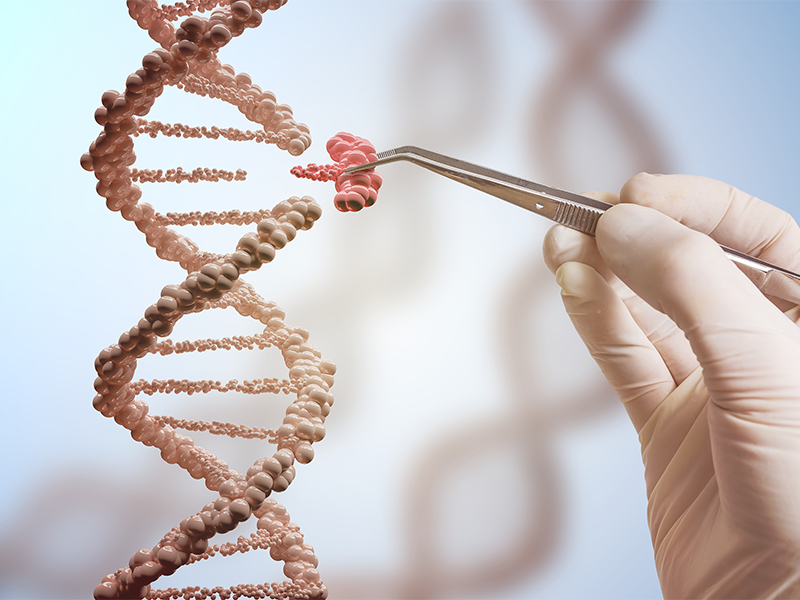
Not unlike vaccines, gene editing and synthetic biology stand to get a major boost from this crisis. I’ve written about gene editing tool like CRISPR in the past. I’ve touted it as a tool that could potentially treat all infectious disease, especially when combined with synthetic biology. That might have been hyperbole, but I stand by my claims on it’s potential.

Gene editing can do more than make pet fish glow. In theory, it can tweak and rewrite the DNA of organism, including the viruses that infect us. The challenge is refining the procedure so that we know how to modify diseases or create entirely new organisms that combat them through synthetic biology.

It’s not a small challenge. I’m grossly oversimplifying the obstacles in refining this technology into something usable. However, those obstacles are not insurmountable. It just requires time, resources, and motivation. After being economically and socially ravaged by a global pandemic, these efforts will have a lot more urgency.


Immersive Virtual Reality

While the scientists and doctors take up the challenge of fighting future pandemics, the rest of us are tasked with enduring the boredom they incur. I’ve noted before how boredom could become the plague of the future. I hope those stuck at home for weeks on end are done doubting me.

The entertainment industry may never be as vital as the medical industry, but it’ll play an important role in helping people stay sane, calm, and kind. Binge-watching TV and playing video games is helpful, but there’s room for improvement. At the end of the day, you’re still just sitting on a couch, looking at a screen.

To keep things both interesting and active, the development of virtual reality should get a major boost. It has existed for years and grown considerably from the days of the Virtual Boy, but it has room for improvement. Thanks to improving computer technology and more advanced interfaces like Neuralink, the experience could become even more immersive.

Beyond simply treating boredom, it could allow a greater sense of active engagement, which is critical when everyone is practicing social distancing. Being isolated and cut off from human contact may help temper a plague, but it’s not healthy. A way to immerse yourself in a realistic environment could help make future quarantines more bearable while also opening a new market, which gaming companies are sure to exploit.


Sex Robots (Obviously)

Does this one really need an explanation? When you’re stuck inside, horny, and run out of things to binge-watch, things are going to happen. Even if your partner or significant other is with you, they might get sick and you might feel lonely. Given how pandemics tend to temper the market for sex workers, a sex robot might be the best and only option.

If at least one company or horny entrepreneur hasn’t realized that by now, I’ll be shocked. The market for sex robots has been growing in recent years. After enduring a pandemic and weeks of social isolation, that market has likely grown. People rarely forget big global events like this. They’ll remember how lonely they were and that memory will fuel the development of sex robots more than any libido.

2 Comments

Filed under Current Events, futurism, technology

Body Weight Exercises For Those Wanting To Stay In Shape During A Crisis

At this point, almost everyone’s life has been disrupted in some form or another by the ongoing Coronavirus/COVID-19 pandemic. Unless you live on a deserted island, a cave, or shack in the mountains, you’ve been effected by this crisis. Whether it’s living in an area that’s on total lockdown or just had your favorite sporting events cancelled, you’re feel the pinch of this crisis.

I certainly have. Recently, the crisis hit home in another profound way. Every gym in my area, including the one I go to on a regular basis, closed for the foreseeable future. A few may not open again until mid-May. That’s a long time to not have access to a gym. If ever you wanted an excuse to avoid working out, this is it.

However, I actually enjoy working out. That’s something my 21-year-old self might laugh at, but it’s true. Working out is one of the most cathartic parts of my week. The prospect of not having a gym to go to is genuinely jarring for me.

As difficult as it is, that doesn’t mean I’m just going to let myself go. I still intend to stay in shape and I strongly encourage everyone else to do the same. If you have free weights, an exercise bike, a treadmill, or some other piece of gym equipment in your house, I say use it. I don’t because I always had access to a gym. I didn’t imagine everything could be shut down to this extent.

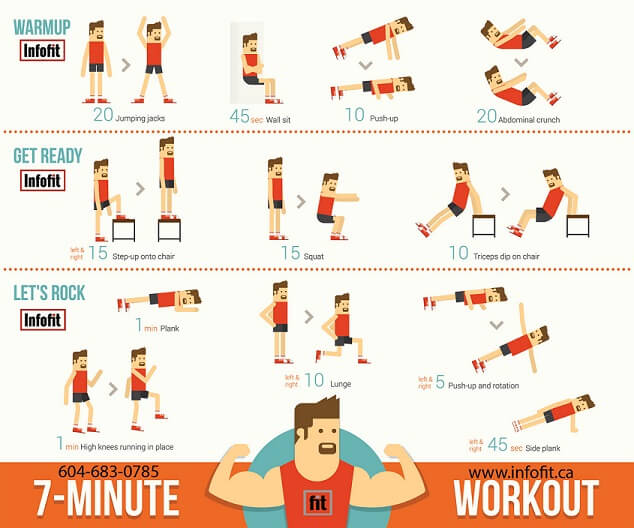
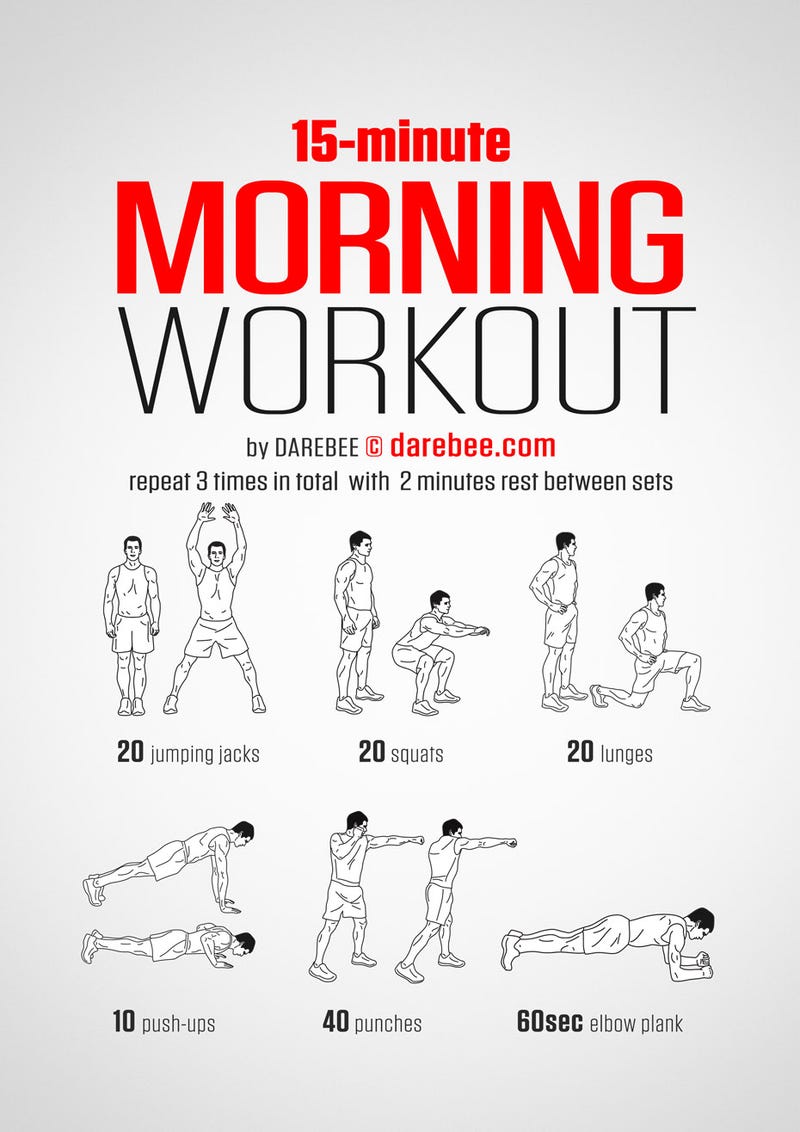
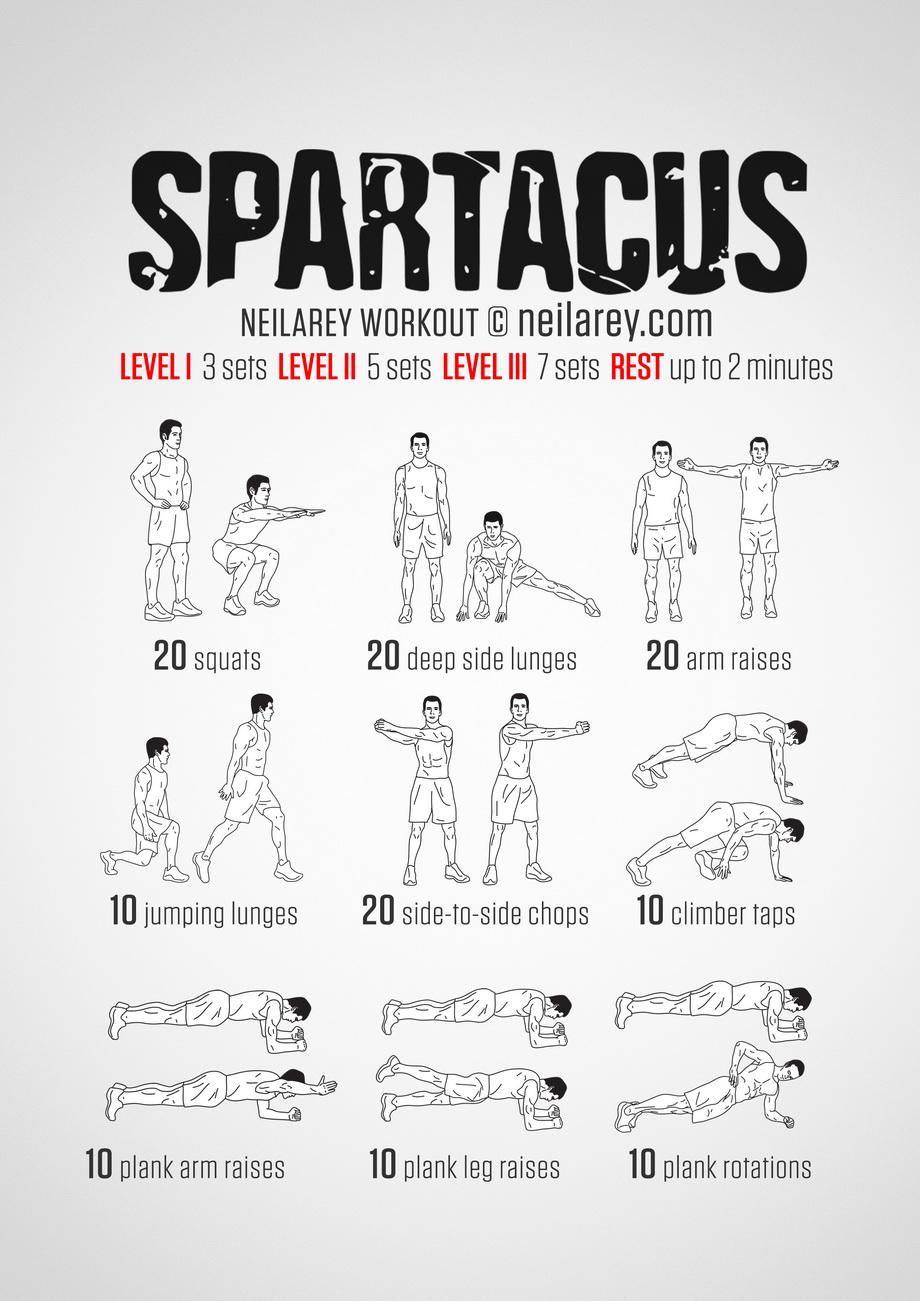
Luckily, there are ways to stay in shape without the aid of equipment. I know because I’ve used them whenever I’ve had to travel or be away from home for an extended period. They mostly consist of bodyweight exercises, which is exactly what it sounds like. You work out, but you don’t use weights or a machine. You just use your body, physics, and a clear space.

They’re not quite as effective or satisfying, in my opinion, as using weights. They still get the job done for the most part. Combined with regular running and jogging, which I highly recommend as well, you can maintain your health and your physique. At a time when a novel disease is ravaging civilization, good health has never been more important.

To that effect, here are some handy charts I’ve found that depict both the types of bodyweight exercises you can do and ways to go about doing them. If I find a routine that works, I’ll gladly share it. If you have a routine, please share it in the comments.

Image result for bodyweight exercise

Image result for bodyweight workout

See the source image

Stay safe, stay healthy, and stay awesome everyone.

2 Comments

Filed under Current Events, exercise, health

A (Hopeful) Perspective On The Coronavirus

See the source image

As a general rule, I always watch the news with a skeptical eye. That’s not just because we live in an era of fake news, misguided outrage, and conspiracy theories about shape-shifting lizard people. I’ve learned from time, experience, and observation that the news can only ever tell part of a story as it’s happening. The full story never comes out until much later. Sometimes, it’s years later.

That’s not easy when following stories like the coronavirus. Unlike other major news stories that make headlines for all the wrong reasons, this is a serious issue. This is something the public needs to know about. The coronavirus is not just a nasty cold. It’s killing people all over the world. That’s an indisputable fact and one that warrants serious concern.

At the same time, there’s a context worth noting. As bad as the coronavirus is, it’s not the second coming of the Black Death or the Spanish Flu. This is not the kind of disease that will turn the planet into a post-apocalyptic wasteland in the mold of a Stephen King novel. It’s still serious, but it’s not a global cataclysm. Even if it ends up killing millions, there are over 7.6 billion people on this planet.

Human beings adapt.

Human beings survive.

It’s one of the few things we’re good at.

There’s another perspective worth considering when following the news of the coronavirus. Unlike the devastating plagues of the past, humanity has developed a decent infrastructure for medicine, technology, and research. Granted, it took us centuries of trial, error, and mass death and there’s still plenty of room for improvement, but that system is there. It’s better than nothing. Just ask Medieval Europe.

That system is already doing its job in combating the virus. Already, researchers at the University of Texas in Austin have mapped out critical portions of the virus. That sort of thing couldn’t have been done this quickly or at all just 30 years ago. This data is critical for the development of treatments and, ultimately, a vaccine.

The fact that this happened so quickly after the outbreak is something the news hasn’t reported on. Even if treatments develop and the virus is contained, as we’ve seen with other recent outbreaks, it probably won’t be a huge story within the ever-changing news cycle.

We know this because in late 2019, the first vaccine for Ebola was approved for use by the FDA and it barely showed up in the headlines. Considering how much panic the Ebola outbreak caused several years ago, this is quite a triumph. It shows just how quickly our current system can respond to these diseases.

Again, there’s still room for improvement and accessibility to medicine is a major issue, but the coronavirus is not some new form of disease. It’s a virus. We know what viruses are. We have the technology to study, treat, and combat them, more so than we have at any point in human history. Considering how much better we’ve gotten since the heyday of the AIDS pandemic, I say that’s reason to be hopeful.

That doesn’t mean we should let our guard down. When the CDC issues a warning about the coronavirus, we should take it seriously. At the same time, we should take comfort in the knowledge that we live in an era where human ingenuity has limited the suffering caused by these devastating plagues.

As with Ebola, we will eventually develop a treatment for the coronavirus. It won’t be perfect, but it will limit the death and suffering it causes. It also won’t make the news because it’s just not scary or dire enough. At this point, finding effective treatments for diseases is so mundane it barely qualifies as news. That’s an objectively good thing.

I hope that helps provide a bit of context and hope to the news surrounding the coronavirus. It’s still worth taking seriously, but we shouldn’t let grim headlines distract us from the great things that humanity achieves when faced with a challenge.

2 Comments

Filed under biotechnology, Current Events, technology, Uplifting Stories

How Humanity Will Cure Death

immortality

When it comes to pushing the limits of technology, every goal once started as a fantasy. In the 19th century, the smartest minds of the time thought heavier-than-air flying machines were infeasible at best and impossible at worst. In the early 20th century, other people with legitimate scientific credentials said the same thing about a manned mission to the moon.

While it seems absurd today, at the time it made sense. The people of that era just couldn’t imagine technology advancing to a point where humanity regularly achieved feats that had once been relegated to science fiction. It’s easy it mock them with the benefit of hindsight, but there are plenty of smart people today who have made claims that will be mocked 50 years from now.

One claim that most individuals, including those who work at the forefront of science and research, is that we will never cure death. Science is certainly capable of doing a great deal, but death is one of those immutable barriers that it can never overcome.

We may be able to cure all infectious disease through biotechnology and genetic engineering. We may one day have technology that allows our bodies to become so durable that from the perspective of people alive today, they’ll be superhuman. They may even live for centuries, but never age past 30. Nothing other than a freak accident could kill them. I’ve already noted the potential issues with that.

However, even these highly-enhanced humans will eventually die at some point. That seems like a given. Efforts to avoid it are often subject to heavy criticism, especially approaches like cryonics or uploading your mind into a computer. While some of those criticisms are valid, they’re also short-sighted. They work under the same assumption as those who claimed humans would never walk on the moon.

Technology has limits, but humans have a bad track record with respect to understanding those limits. With respect to curing death, even the most advanced fields of emerging technology seem limited in their ability to help people escape such a fate. That doesn’t mean the concept is flawed. It doesn’t even mean that the technology is beyond the laws of physics.

Personally, I believe death can be cured, but not with approaches like cryonics or bodily enhancements. While those technologies may ultimately extend our lives, being able to transcend death requires another approach. Specifically, it requires a mechanism for preserving, transforming, and transferring the contents of our brains.

Medically speaking, the official definition of death is the irreparable cessation of all brain activity. Your body can be damaged. Every other organ could fail. Your brain is the last link in that chain. It contains your memories, your emotions, your personality, and your capacity to experience the world. To cure death, we simply need to preserve the brain and all its functions.

That’s much harder than it sounds, but it’s not physically impossible. The human brain is not made up of some mythical, exotic material. It’s made up of specialized cells and tissues, like any other organ. While we don’t entirely understand the workings of the brain, it operates using physical matter that is bound by the laws of physics and biology.

Those limits are the key and the mechanism for preserving that complex clump of biomatter already exists, both as a concept and in a very unrefined form. That technology involves nanobots and if there’s one technology that has the potential to make humans truly immortal, it’s this.

The concept of nanobots is already a common staple of science fiction, but it’s primarily used as the technological equivalent of a wizard’s spell. If you need something or someone to do the impossible without resorting to magic, just throw nanobots or nanites, as they’re often called, into the story and let the impossible seem mundane.

While it’s doubtful that nanobots can do everything that science fiction claims, there’s a good chance that they’ll come pretty close. It’s impossible to overstate the potential of nanorobotics. From mass-producing any kind of good to curing humans of all infectious disease, nanobots have the potential to literally and figuratively change our lives, our bodies, and our world.

At the moment, we only have crude prototypes. In time, though, nanobots could become something akin to programmable matter and, by default, programmable flesh. Technically speaking, a nanobot could be programmed to do whatever a typical brain cell does, but more efficiently.

In the late 90s, scientists like Robert Freitas Jr. envisioned nanobots called respirocytes, which functioned like artificial blood cells. In theory, these would be far more effective at getting air and nutrients to the rest of your body, so much so that you could hold your breath for hours or sprint indefinitely.

That’s all well and good for deep sea diving and Olympic sprinters, but for curing death, the concept needs to go even further. That means creating nanobots that mimic the same function as a neuron, but with more efficiency and durability. Create enough of those and you’ve got the exact same hardware and functionality as the brain, but with the utility of a machine.

Once we have that technology refined and perfected, we have everything we need to effectively cure death. Doing so means gradually replacing every neuron in our skulls with a more efficient, more durable nanobot that does everything that neuron did, and then some. The most important additional feature these nanobots would have is a measure of intelligence that could be programmed.

By being programmable, the nanobots in our skulls would be more plastic. It would be less an organ and more a synthetic substrate, of sorts. It could be drained into a container, implanted into a robot specifically designed to contain it, or just preserved indefinitely in the event that there are no bodies available, not unlike the systems used in, “Altered Carbon.”

To some, this still doesn’t count because it requires that every cell in our brains be replaced with something. Technically, that brain wouldn’t be yours and you might not even be use, as a result. I respectfully disagree with this criticism, primarily because it ignores the whole Ship of Theseus argument.

If you’re not familiar with this concept, it’s pretty simple, but the implications are profound. It starts with a real, actual ship used by the mythical hero, Theseus. If, at one point, you replace a piece of wood in that ship, it’s still the same ship. However, the more pieces you replace, the less of the original ship you have. Eventually, if you replace all pieces, is it the same ship?

The human brain, or any organ in your body, is an extreme version of that thought experiment. The brain cells can replicate, but it’s a slower process compared to most cells and the configurations are always changing. The way your brain is wired now is changing as you read this sentence. A cluster of nanobots doing the same thing won’t be any different.

Like the Ship of Theseus, it wouldn’t happen all at once. In principle, the brain cell doesn’t even get destroyed. It just gets subsumed by the mechanizations of the nanobot. How it goes about this is hard to determine, but there’s nothing in the laws of physics that prohibit it. At the molecular level, it’s just one set of atoms replacing another.

Once in place, though, the limits of biology go out the window. With programmable nanobots, a person doesn’t just have the same functionality as a biological brain. It’s has other functions that allow for easier programming. We could, in theory, supplement the nanobots with additional material, sort of like cloud computing. It could even create a neurobiological backup of your brain that could be kept in stasis.

At that point, death is effectively cured. Once your brain becomes a substrate of nanobots, you can just transfer it into a body, a robot, or some other containment vessel that allows it to experience the world in any way desired. If, by chance, that body and the substrate are destroyed or damaged, then the backup kicks in and it’ll be like you just jumped from one place to another.

Some of this relies on an improved understanding of how consciousness works and assumes that it could be somehow transferred, expanded, or transmitted in some way. That may very well be flawed. It may turn out to be the case that, even if you turn your brain into a glob of nanobots, you can’t transmit your consciousness beyond it. If it gets destroyed, you die.

There’s a lot we currently don’t understand about the mechanisms of consciousness, let alone our ability to manipulate those mechanisms. However, a lack of understanding doesn’t negate the possibilities. Our previous inability to understand disease didn’t prevent our ancestors’ ability to treat it to some extent.

If it is the case that we cannot transmit consciousness from our brains, then we can still craft a functional cure for death. It just requires that we put our brains in protective vats from which carry out our existence in a simulated world. Those vats could be protected in a massive artificial planet that’s powered by a black hole or neutron star. In theory, our brains would be preserved until the heat death of the universe.

Whatever the limitations, the technology and the concepts are already in place, if only on paper. It’s difficult to know whether anyone alive today will live long enough to see an advancement like this. Then again, the children alive in 1900 probably didn’t think they would live to see a man walk on the moon.

3 Comments

Filed under Artificial Intelligence, futurism, Sexy Future, technology

The First Genetically Modified Humans Have Been Born: Now What?

designerbabies

When the USSR launched Sputnik 1 on October 4, 1957, it didn’t just kick-start the space race. It marked a major technological paradigm shift. From that moment forward, venturing into space wasn’t just some futuristic fantasy. It was real and it had major implications for the future of our species.

On November 26, 2018, a Chinese scientist named He Jiankui announced that the first genetically modified humans had been born. Specifically, two twin girls actually had their genetic code modified at the embryonic stage to disable the CCR5 gene to make them highly resistant to HIV/AIDS. In the history of our species, this moment will likely exceed the importance of Sputnik.

This man may have just upstaged Neil Armstrong.

To appreciate why this is such a big deal, consider the full ramifications of what Mr. Jiankui achieved. The change he made to the genome of those girls was impossible for them to inherent. This particular allele is a result of a mutation within a small population of Northern Europeans and is present in no other ethnic group. It is best known for providing significant immunity to common strains of the HIV virus.

This is of significant interest to China because they’ve been dealing with a surge in HIV/AIDS rates in recent years. Even though AIDS isn’t a death sentence anymore, the medicine needed to manage it is costly and tedious. These two girls, who have not been publicly named thus far, may now have a level of resistance that they never would’ve had without genetic modification.

On paper, that’s an objective good. According to the World Health Organization, approximately 35 million people have died because of AIDS since it was first discovered and approximately 36.9 million people are living with the disease today. It’s in the best interest of society to take steps towards preventing the spread of such a terrible disease, especially in a country as large as China.

However, Mr. Jiankui has caused more consternation than celebration. Shortly after he announced the birth of the two unnamed children, China suspended his research activities. Their reasoning is he crossed ethical boundaries by subjecting humans to an untested and potentially dangerous treatment that could have unforeseen consequences down the line.

Those concerns have been echoed by many others in the scientific community. Even the co-inventor of CRISPR, the technology used to implement this treatment and one I’ve cited before as a game-changer for biotechnology, condemned Mr. Jiankui’s work. It’s one thing to treat adults with this emerging technology. Treating children in the womb carries a whole host of risks.

That’s why there are multiple laws in multiple countries regulating the use of this technology on top of a mountain of ethical concerns. This isn’t about inventing new ways to make your smartphone faster. This involves tweaking the fundamental code of life. The potential for good is immense, but so is the potential for harm.

Whether or not Mr. Jiankui violated the law depends heavily on what lawyers and politicians decide. Even as the man defends his work, though, there’s one important takeaway that closely parallels the launch of Sputnik. The genie is out of the bottle. There’s no going back. This technology doesn’t just exist on paper and in the mind of science fiction writers anymore. It’s here and it’s not going away.

Like the space race before it, the push to realize the potential of genetic modification is officially on. Even as the scientific and legal world reacts strongly to Mr. Jiankui’s work, business interests are already investing in the future of this technology. The fact this investment has produced tangible results is only going to attract more.

It’s impossible to overstate the incentives at work here. Biotechnology is already a $139 billion industry. There is definitely a market for a prenatal treatment that makes children immune to deadly diseases. Both loving parents and greedy insurance companies have many reasons to see this process refined to a point where it’s as easy as getting a flu shot.

Even politicians, who have historically had a poor understanding of science, have a great many reasons to see this technology improve. A society full of healthy, disease-free citizens is more likely to be prosperous and productive. From working class people to the richest one percent, there are just too many benefits to having a healthy genome.

The current climate of apprehension surrounding Mr. Jiankui’s work may obscure that potential, but it shouldn’t surprise anyone. During the cold war, there was a similar climate of fear, albeit for different reasons. People back then were more afraid that the space race would lead to nuclear war and, given how close we came a few times, they weren’t completely unfounded.

There are reasons to fear the dangers and misuse of this technology. For all we know, the treatment to those two girls could have serious side-effects that don’t come to light until years later. However, it’s just as easy to argue that contracting HIV and having to treat it comes with side-effect that are every bit as serious.

As for what will come after Mr. Jiankui’s research remains unclear. I imagine there will be controversy, lawsuits, and plenty of inquiries full of people eager to give their opinion. As a result, he may not have much of a career when all is said and done. He won’t go down in history as the Neil Armstong of biotechnology, but he will still have taken a small step that preceded a giant leap.

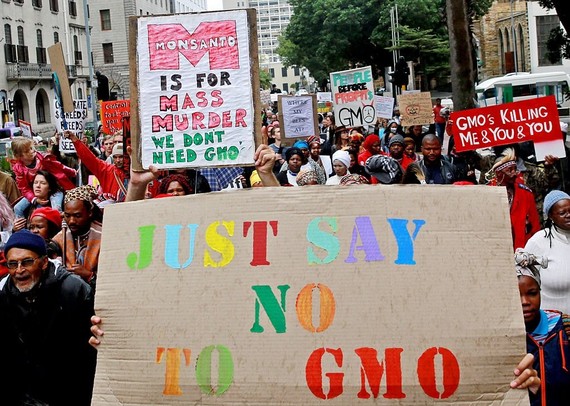
Even if Mr. Jiankui’s name fades from the headlines, the breakthrough he made will continue to have an impact. It will likely generate a new range of controversy on the future of biotechnology and how to best manage it in an ethical, beneficial manner. It may even get nasty at times with protests on par or greater than the opposition to genetically modified foods.

Regardless of how passionate those protests are, the ball is already rolling on this technology. There’s money to be made for big business. There’s power and prosperity to be gained by government. If you think other countries will be too scared to do what a science team in China did, then you don’t know much about geopolitics.

Before November 26, 2018, there were probably many other research teams like Mr. Jiankui who were ready and eager to do something similar. The only thing that stopped them was reservation about being the first to announce that they’d done something controversial with a technology that has been prone to plenty of hype.

Now, that barrier is gone. Today, we live in a world where someone actually used this powerful tool to change the genome of two living individuals. It may not seem different now, but technology tends to sneak up on people while still advancing rapidly. That huge network of satellites that now orbit our planet didn’t go up weeks after Sputnik 1, but they are up there now because someone took that first step.

There are still so many unknowns surrounding biotechnology and the future of medicine, but the possibilities just become more real. Most people alive today probably won’t appreciate just how important November 26, 2018 is in the history of humanity, but future generations probably will, including two remarkable children in China.

5 Comments

Filed under futurism, gender issues, sex in society, Sexy Future, technology

Scare Tactics, Sex Education, And The (Post-AIDS) Future

Let’s face it. We all have embarrassing memories about how we learned about sex. It might as well be a law of physics among youth. At some point, you’re going to learn about sex. Shortly after that, you’ll probably learn something you didn’t want to learn from a parent, teacher, or priest.

For me, one particular memory stands out and it’s one I suspect most people my age share, as well. It happened in health class during middle school, just as puberty kicked in. It had nothing to do with male or female anatomy. I already knew about that, thanks to my parents. This particular lesson was more basic in that it had a simple message.

“If you get AIDS, you will die.”

It wasn’t as much a lesson as it was a warning. Everyone in that class had been learning about sex, at least as much as any public school was allowed to teach us. We were all at that age when we started thinking, wanting, and obsessing over it. Then, this distressing caveat gets thrown into the mix and suddenly, these overwhelming desires we can’t turn off take on a whole new context.

I’m not going to lie. That was pretty terrifying. The idea that doing something you were hardwired to do, and needed to do for the propagation of the species, could kill you was akin to being forced into a cage match with a chainsaw-wielding John Cena.

It’s one thing to avoid angry predators, sharp cliffs, and confined spaces with O.J. Simpson. It’s quite another to avoid the natural horniness that comes with being human. It gives the impression that sex is so dangerous and so risky that we might as wear hazmat suits while doing it.

Thankfully, I was mistrustful enough of my health teachers to learn more on my own. Even with lousy, dial-up internet, I was able to find out that a some of the dangerous claims my teachers had given me about sex, disease, and all those other lurid topics was not entirely accurate.

Granted, I understood why they used those kinds of tactics on young, hormonal pre-teens like me. Back then, AIDS was a death sentence. A diagnosis with AIDS was like a diagnosis of terminal cancer. When it started claiming the lives of celebrities like Rock Hudson and Eazy-E, even hormonal kids took note of the danger.

It was still a dick move, though, using those kinds of scare tactics on hormonal teenagers. I remember entire classes dedicated to teaching kids the horrors of AIDS and other nasty diseases that we could get if we didn’t have sex in the way the Catholic Church or the Saudi Arabian government approved. In case you’re wondering, yes, some schools still use these tactics.

Ignoring, for a moment, the outright cruelty of scaring kids like that, it’s worth noting that the situation with AIDS and other diseases is very different. Medical science has advanced. Innovations in antibioticsanti-viral drugs and vaccines have improved treatment or even cured some of those terrible diseases that my teachers used to scare me with.

While AIDS still has no cure, it’s not a death sentence anymore. Just ask Magic Johnson. There’s even a pill called Truvada that, when taken daily, can prevent the spread if the HIV virus. While it’s still a huge problem in places like Sub-Saharan Africa, we’re at the point in modern medicine where it can be managed.

However, it’s not going to stop there. At some point, medical science will cure diseases like AIDS. We’re already closer than you think and I’m not just referring to recent advances in technology like CRISPR.

Just this past month, a research team at the Scripps Research Institute developed a method that effectively blocks the HIV virus from infecting new cells. They’re calling it a “functional cure” in that, while it doesn’t remove the virus from the body, it effectively stops it from spreading.

This news comes shortly after the National Institutes of Health announced that they had produced an anti-body that blocks 99 percent of all HIV strains. If the results are replicated, that means a functional vaccine is not that far off. Add tools like CRISPR to the mix and it’s entirely possible that there are children alive today that will never have to worry about diseases like AIDS.

Given the amount of suffering this disease has caused, that’s an undeniable good. However, it removes a major tactic from the arsenals of sex educators who don’t want teenagers experimenting with their genitals. Now, I can understand that worry to some extent. Teenagers do have a history of doing stupid things and not just with their genitals.

Even without that stupidity, how are teachers going to convince horny teenagers to keep their pants on when they can’t scare them with diseases like AIDS? How many parents are going to gasp in horror at the notion that their precious little angels might be able to have sex with minimal consequences?

I ask these questions only half-jokingly. I also ask them with the full understanding that I may have kids of my own at some point and I too might vomit uncontrollably at the thought of them having sex. Given our collective capacity for excuse banking, I don’t doubt that anxious parents and teachers will come up with some sort of scare tactic to discourage teenagers from having sex.

It’s just going to get a lot more challenging in a world where diseases like AIDS are no longer a factor. History is certainly not on the side of those clinging to such puritanical attitudes. As I’ve mentioned before, the advent of modern antibiotics played a major part in the sexual revolution of the 1960s. A cure for AIDS might incur the same.

If that weren’t challenging enough, advances in contraception are sure to compound that effort. Advances like Vasalgel for men and IUDs for women will make it so that even the fear of pregnancy won’t be much of a scare tactic. Unlike every other generation of teenager, those in the near future may never have to worry about the kinds of consequences that have plagued horny teenagers for centuries.

That naturally doesn’t sit well with the uptight regressive crowd that belabors personal responsibility and bemoans any level of sexual freedom that goes beyond what the Catholic Church sanctions. In years past, they could refer to diseases and unwanted pregnancy to justify those attitudes. Once those factors are removed, what will they have left?

Never mind the fact that teenagers are already having less sex now than previous generations. In the minds of parents, priests, and health teachers, it’s still too much. I could bemoan how much of that reflects our poor, unhealthy attitudes towards sex, but that’s not going to change minds or sell sexy novels.

A part of me genuinely worries that there will be some people who actively oppose treating diseases like AIDS. There’s already a precedent. There are people out there who oppose the widespread use of Gardasil, a vaccine meant to treat HPV, a common virus that is often transmitted during sex and known to cause cancer.

Think about that for a moment. There are people in this world who are willing to risk young people, including their own children, getting cancer rather than risk them having care-free sex. That shows the lengths certain people will go to in order to ensure sex still has serious consequences. It says something about these attitudes when they feel they need those consequences to get their message across.

In time, some of these regressive attitudes may fade. These days, most people aren’t going to be publicly scorned for not being a virgin on their wedding night. Some parts of the world still cling to those attitudes, but most people in the developed world don’t have to worry about the Spanish Inquisition bursting into their bedroom and arresting them for having sex just for fun.

Better education will help improve attitudes and addressing the orgasm gap will go a long way, as well. It’s hard to know for sure what a future health class will look like in a world without AIDS or major disease. That world isn’t here yet, but it’s fast approaching. Parents, priests, and puritans of all stripes need to prepare. However, we should worry about how far they’ll take those preparations.

1 Comment

Filed under gender issues, Marriage and Relationships, Second Sexual Revolution, Sexy Future

A Disease-Free World: We’re More Ready Than You Think

https://i0.wp.com/portuguese-american-journal.com/wp-content/uploads/2011/05/stem_cell_lab_hood05_10734.jpg

It’s such a frightening thought. It terrifies parents, priests, rabbis, mullahs, monks, and conservative republicans. People, especially young people, are having sex at this very moment. If that’s not horrifying enough, they’re having sex for fun.

They’re not doing it with their government-approved, religiously-sanctioned spouse. They’re not doing it to produce more babies that will grow into tax-paying, church-going citizens. They’re just doing it because they enjoy the wonderful, toe-curling pleasure that comes with sex.

The most horrifying thought of all, though, is that they’re doing it and they’re not facing any consequences for it. They’re not getting pregnant because of modern contraception. They’re not getting sick either because of modern medicine. There’s literally no legitimate reason other than stigma to dissuade people from having sex for fun. It’s such a horrifying thought.

Okay, that’s enough sarcasm for now. What I just described is an exaggerated extreme of the mentality of those who are opposed to a society that permits or does not punish sexual promiscuity. It’s a reverse of the thought experiment I pitched last year about a world where the diseases that used to scare people out of having sex are all cured.

I don’t think people realize just how much closer we are to that world than they think. Most people alive today don’t remember a world where the biggest dread wasn’t HIV. It was debilitating diseases like syphilis, gonorrhea, and chlamydia. To give you an idea of just how devastating they were, over 20,000 people died from syphilis alone in 1939.

Like small pox, these diseases ravaged generation after generation. Also like small pox, modern medicine eradicated it from our collective fears. In fact, the rise of antibiotics has been largely credited with kick-starting the sexual revolution of the 1960s, more so than contraception.

There are still some scary diseases out there, though. In some respects, those same parents, priests, rabbis, mullahs, monks, and conservative republicans can take a perverse comfort that diseases like HIV/AIDS provides a strong incentive to avoid excessive promiscuity. That comfort, however, won’t last.


In a previous post, I talked about an emerging medical tool called CRISPR and how it may hold the key to ending infectious disease as we know it. I also asked a question I’m sure the anti-promiscuity crowd dreads. Are we ready for a world where we don’t have to worry about sexually transmitted diseases?

There are people who believe that our society simply cannot function in a world where there aren’t any scary diseases to dissuade people from having more sex than the Catholic Church sanctions. On paper, their fears aren’t wholly unreasonable.

In a society with so much promiscuity, fewer people will get married. Fewer people will form the stable, nuclear family that every 50s sitcom championed. Without disease, why would anyone forge any stable family units? Then, there’s the children. How traumatic would it be for them if they grew up in a world where people just had sex for fun?


That’s not entirely sarcasm. That is a very real concern and I can empathize with it to some extent. A society without disease, but full of rampant promiscuity is just so different. Our society has always had to content with these horrible diseases. The idea that they would no longer be a factor just seems unnatural and uncharted for our species.

However, empathy or not, it’s also a sentiment that I believe is misguided. It’s rooted more in flawed assumptions about a specific cultural ideal than actual human biology. I would argue that human beings, as well as society in general, is more prepared for a disease-free world than the Vatican would have us believe.

I believe this because there is a precedent, sort of. In fact, this may be one of the few instances where caveman logic works in favor of our emerging future and not against it. To understand this, we have to go beyond the ways our hunter/gatherer ancestors functioned. We have to look at the practical aspects of these nasty diseases.

For a disease to be real nasty, it has to both spread easily and within a population of hosts that are able to infect as many potential hosts as possible. When you look at our modern infrastructure, or even our ancient trade routes, it’s easy to see why a nasty disease would choose humans.

It’s also easy to see why diseases would use sex to spread. Like eating, it’s a hardwired drive that built into every human being. The desire to mate is every bit as powerful as the desire to eat. Unlike foodborne disease, though, sex provides more opportunities to infect other hosts. On top of that, rubbing body parts together is a lot more direct than simply sneezing on someone.

However, while modern and even pre-modern infrastructure made sex an ideal mechanism for spreading disease, we have to remember that this situation is actually very recent. The ability to simply travel to other regions, meet other people, and possibly have sex with them is very new in the context of our evolutionary history. For most of that history, though, the story was very different.

That brings me back to the hunter/gatherer lifestyle from which all our ancestors evolved. Books like “Sex At Dawn,” which I’ve mentioned before, describe in great detail the particulars of this lifestyle. It’s a lifestyle that, ironically to some extent, makes sex a pretty lousy method for transmitting disease.

This is because during those hunter/gatherer days, we humans roamed and foraged in small bands of closely-knit tribes. These tribes rarely interacted with other tribes because most were spaced out over large areas. Naturally, roaming lands and foraging for food makes it hard to stay in one place, stake claim to a territory, and fight over it.

On top of that, these close-knit tribes had very low population density, a limited ability to travel long distances, and no elaborate trade networks. That means that within these tribes, a sexually transmitted disease is rightly screwed. Sure, it can infect a tribe, but not much else. If that disease is fatal, it may kill the tribe, but it also kills itself as well. So if a disease as nasty as AIDS did emerge, it never had a chance to spread.

If there were any diseases, they couldn’t be fatal and they couldn’t seriously affect fertility. Like the common cold or the flu, it could only ever be so nasty. Otherwise, it never would’ve survived into the modern era.

Keep in mind, also, that the hunter/gatherer lifestyle was the lifestyle of choice for our species for nearly 90 percent of its existence. Our evolution and biology emerged within this lifestyle. That lifestyle was also conducive to some fairly loose sexual practices, many of which would make the Rick Santorums of the world faint. That’s why it’s not unreasonable to say that our ancestors had better sex lives than we do.

Those sexual practices were rarely conducive to the world of white picket fence type families that is so idealized by western civilization. It’s also not conducive to the world of kings and his multiple wives/concubines/sex slaves. That kind of rigid structure or hierarchy just doesn’t work in in a hunter/gatherer society. That’s why many practice strong egalitarian traditions.

This makes sense in terms of sheer pragmatism. In a society of hunter/gatherers where you’re only working with small tribes, you can’t be too much of a bigot. Everyone has to pitch in. Everyone has to share. You can’t be too big an asshole because you won’t survive without your tribe, nor will you have a chance to have sex. From an evolutionary and society perspective, it’s a pretty good deal.

In this context, human beings are already well-wired for a more promiscuous society. In fact, as “Sex At Dawn” argues half-jokingly, it may be better for us overall. You need only look at the happy, sexy lives that Bonobo chimps live. They have a lot of sex. They rarely fight. Even by hippie standards, they’re pretty chill.

At the moment, we humans can’t live those lives. Our world is too developed, too connected, and too vast for our caveman brains to make sense of. Add nasty diseases that can now use sex to effectively spread and it just isn’t pragmatic anymore, even if our biology favors it.

That may change very soon though. Once tools like CRISPR and contraceptives like Vasalgel are refined, those barriers are gone. We can safely exercise the same libido that our ancestors got to enjoy. What will that do for society? What will that do for the dynamics between men and women? It’s hard to imagine, but it’s a damn sexy idea that’s worth imagining.

3 Comments

Filed under Sexy Future

A Disease-Free World: It’s Closer Than You Think

https://cdn2.hubspot.net/hub/62006/file-889628455-jpg/images/future_of_medicine_with_ehr.jpg

Last year, I proposed a little thought experiment that I’m sure everyone whoever sat through a high school health class outside of Texas has contemplated at some point. I simply asked people to imagine a world where all the dreaded infectious diseases, including the very unsexy kind, were cured.

I tailored the thought experiment to focus on our sex lives because disease is still a major concern for anyone that is sexually active. That’s not just because diseases are used as scare tactics to dissuade teenagers from having more sex than priests, rabbis, mullahs, and monks have deemed appropriate. These diseases still carry a stigma to them that you just don’t get with the cold or flu.

Anything that effects disease is bound to affect our sex lives and many underestimate just how big an effect it’s already had. Many attribute the sexual revolution of the 1960s to the rise of contraception, but in observing the historical data, it’s now clear that this remarkable advancement didn’t play quite as big a role.

https://s-media-cache-ak0.pinimg.com/originals/66/92/1d/66921d8c6bb216ae0d02fb9d39d42f5f.jpg

If any one breakthrough should be credited with the sexual revolution and the greater sexual freedom that came with it, it’s modern antibiotics. That’s right. Penicillin probably did more for your sex life than the pill ever did.

That’s because up until the 20th century, nasty diseases like syphilis, gonorrhea, and chlamydia weren’t just more prevalent. They were downright debilitating. Just ask Al Capone. There was a legitimate reason to avoid excessive sexual promiscuity. It could actually kill you.

These days, however, the diseases that ravaged generations and scared the extremely horny to death are no big deal. If caught early, a thorough round of antibiotics will ensure your blood is as clean as a chaste nun. While religious conservatives may hate that, it is one of the many benefits that modern medicine has bestowed upon us that our disease-weary ancestors could only dream of.

http://destination-yisrael.biblesearchers.com/.a/6a0120a610bec4970c017d412833e1970c-pi

At the moment, HIV is the only disease that’s still fatal, but even that is losing its grip because modern antiviral drugs can contain it to the point where it’s manageable. It’s still a concern and it’s still ravaging certain parts of the world. However, at some point, even diseases like this will succumb to modern medicine.

I bring all this up because a future without infectious disease, including the unsexy kind, is actually closer than you think. I’m not saying it’ll happen in the next few years so don’t throw all your condoms away just yet. Within the next couple decades, though, we may very well see a future where the horrifying diseases we dread today no longer plague us.

To understand the scope of this issue, we first need to understand how most of our modern medicine works when it comes to treating infectious disease. Modern antibiotics, as well as antiviral drugs, operate in a way that’s akin to carpet bombing in World War II. Anyone who has seen one too many History Channel documentary knows about that.

https://i0.wp.com/static4.businessinsider.com/image/57c70326b996eb26008b568f-538/b-2-spirit-bombing.jpg

It’s a messy, destructive, and potentially counterproductive effort that does a lot of collateral damage. Sure, you’ll probably kill a few Nazis, but you may also kill some of the folks opposing them. For many diseases, though, it does the trick. Our bodies can take the necessary punishment to take down these nasty bugs.

Now, we may have a new tool with which to fight disease and this one go beyond merely bombing its target. It’s more akin to sending a legion of Navy SEALs and ninjas to take down a handful of targets and do so with an efficiency that gives military commanders wet dreams. It’s called CRISPR and it will change the world in ways that even antibiotics never managed.

CRISPR stands for “Clustered Regularly Interspaced Short Palindromic Repeats,” but make no mistake. This exceedingly wordy, overly technical jargon is a game-changer. It’s modern medicines first functional gene-editing tool that allows scientists to cut and paste genes the same way we cut and paste text on a computer. That may not sound like a big deal, but if you’re concerned about your sex life, trust me. It’s a huge deal.

https://i0.wp.com/decisionstrat.com/wp-content/uploads/2014/10/iStock_000036737862Medium.jpg-628x326.jpeg

Infectious disease, be they a sore throat or total organ failure, relies on pathogenic organisms that are genetically programmed to infect others and spread to as many other hosts as possible. Anyone who saw the movie “Outbreak” understands this. Until CRISPR came along, we really couldn’t attack those genetics. That’s why we needed the biological equivalent of carpet bombing to combat them.

CRISPR changes that. It can specifically identify certain segments of DNA within an orgasm, snip them out, and either replace them with something else or nothing at all. For any robust infectious pathogen looking to ruin your weekend, that’s the equivalent of a head shot with a 44 magnum.

https://i0.wp.com/14544-presscdn-0-64.pagely.netdna-cdn.com/wp-content/uploads/2012/12/1339691715153zombie-headshot1.jpg

CRISPR is still in the early stages of its development. It is, essentially, in beta test mode wherein scientists and researchers are working out the kinks and refining various editing techniques. However, the implications are already taking shape.

Last year, a team at Temple University successfully proved that CRISPR could be used to remove HIV from infected cells. If CRISPR can take down something as robust and devious as HIV, a disease that has tormented medicine for decades, then all bets are off. Every disease that relies on a pathogenic microorganism is screwed.

Even antibiotic resistance won’t help them this time. That’s because CRISPR is akin to a chainsaw and a tree. The tree can only adapt so much to resist chemicals, pollutants, or whatever other lifeforms are used to kill it. No amount of adaptation will save it from a chainsaw. That’s why there are no chainsaw-resistant trees.

http://husqvarnacdn.azureedge.net//qs_h=700&crop=1&w=1470&ver=00000000T000000/_$$_/media/dam/husqvarna/forest%20chain%20saws%20electric%20saws%20power%20cutters%20and%20saw%20mills/chain%20saws/2014/12/03/09/00/h150-0213.ashx

Modern medicine already spurred one sexual revolution, but that one still had limits. This brings me back to the same thought experiment I pitched last year. What will happen to our society when tools like CRISPR are perfected and every infectious disease we ever worried about is no more?

This isn’t some distant scenario either. There may very well be children alive today who will grow into a world where they never have to worry about diseases like AIDS, the flu, SARS, or hepatitis. Add in advances in contraception like Vasalgel and the possibilities become even more intriguing, not to mention sexy.

https://s-media-cache-ak0.pinimg.com/originals/dc/c8/5b/dcc85b167b2683f610c5d2f8385929da.jpg

Again, don’t throw away your condoms just yet. CRISPR isn’t perfected just yet, but its potential is already clear. The days of the diseases that sex ed teachers have used to scare teenagers out of having sex are numbered. A world without infectious disease isn’t just possible. It’s very probable now. The question is are we ready for it?

32 Comments

Filed under Sexy Future

A Day In The Life Of An Enhanced Human

When I was 12-years-old, I was playing baseball with my friends, as any ordinary kid with limited athletic ability would. Then, on a total fluke play, I tried to pick up a ground ball with my bare hand so I could make the play at first. In the process, I jammed my middle finger badly.

This is a fairly normal injury that everybody gets at some point in their lives. It doesn’t kill you. It doesn’t even make you wish you were dead. It just hurts like a bitch and takes forever to heal. That simple, fluke injury ruined my week.

For six days, I couldn’t bend that finger so it looked like I was flipping everybody off. Something as simple as brushing my teeth became a test in pain tolerance and dexterity. I can’t help but think if I found this little injury so annoying, then I wouldn’t have lasted five seconds in the hunter/gatherer days of my ancestors. I’d have been the first to get eaten by a bear because I couldn’t stop complaining about a jammed finger.

Why do I bring this story up? Well, it highlights an important, not to mention inescapable, detail about the human condition. Our bodies, as wonderful and sexy they may be, are woefully inefficient. A good chunk of our lives and a major chunk of our civilization is built around mitigating these inefficacies. Why else would the pharmaceutical industry be a $1.06 trillion (that’s not a misprint) market?

There’s no doubt that the human body has its limits and we’re trying damn hard to manage them. However, there may come a day, and it may come sooner than you think, where we’ll do more than just manage those limits. We’ll subvert them.

That’s right. We’ll become the enhanced humans I often read about in my comic books. Men can become as fit as Captain America. Women can become as fit as Wonder Woman. Actually, scratch that. I’d rather the women become as fit as Starfire, for reasons I’ve already laid out on this blog. If you need a reminder, this should help.

It’s an appealing thought, in more ways than one. It’s a damn sexy thought as well, in far too many ways to list. It may seem so distant when the Centers for Disease Control shows that 591,699 people died from cancer and 55,227 died from influenza in 2015 alone. However, there is reason to believe that such a fanciful, sexy thought may become a reality.

I already revealed one possibility, courtesy of the 2015 James Bond movie, Spectre. In the movie, it’s called smart blood. In our world, it’s the alpha and omega of biotechnology. It’s Ryan Reynold’s abs, Jennifer Lopez’s butt, Pamela Anderson’s tits, and Ron Jeremey’s dick all rolled into one. Is that too sexy for you? Well change your panties because it gets better than Ryan Reynod’s abs if you can believe that.

Smart blood is basically programmable flesh. In theory, it’ll allow us to control our biology the same way we control apps on our smartphones. At first, it’ll be used for basic monitoring and diagnostics, but that’s not very sexy. The real appeal is how it will enhance us.

Let’s face it, human beings are really OCD about how we use our technology. It’s not enough to just fix a problem. We have to enhance it, even if it creates a whole new set of problems. So long as those problems don’t make our lives too inconvenient, we’ll gladly take them. It beats dying of small pox or not being able to get an erection after the age of 65.

Smart blood will enhance us in ways that we can’t predict. It’ll do this in ways I discussed in a previous post and explored in my book, “Skin Deep.” However, the events of “Skin Deep” only explored the effects on one particular character. What happens when a large number of people are enhanced with smart blood? What happens when there’s an entire society of people with smart blood in their system?

That’s something I’d like to discuss because it has many possibilities, many of which have sexy implications. It requires another thought experiment, one that means peering decades into the future after smart blood technology has been perfected. This is difficult because we can’t even predict the weather beyond a couple weeks. How can we predict something like this?

Well, history does offer an important guide. As we saw with the advent of birth control, technology does affect society in profound ways. If we’re going to speculate, let’s reasonably assume that humans are just as OCD when it comes to following the trends of history.

Picture this scenario. The year is 2055. Smart blood is not only perfected. It’s as widely available and universally accepted as aspirin. There is now an entire generation of children who grew up with smart blood in their system. In fact, smart blood is such a big part of them that it was with them in the womb because their mothers used it to ensure a healthy pregnancy.

This means that this generation sees having smart blood and all their benefits is normal. What do those benefits do for them? Well, the most obvious benefit is that far fewer members of this generation die in childhood or infancy. Smart blood doesn’t just fight off disease. It detects, suppresses, and treats genetic and autoimmune diseases. If it can’t cure the condition, it at least suppresses it in a way that allows people to live a healthy life.

So an entire generation never knows disease. They never know what it feels like to jam a finger, get the flu, or endure a hangover. Take a moment to envy those lucky shits, but then take it several steps further because the implications go beyond hangovers.

If smart blood enhances every part of the body, including the sexy parts, then that means it’ll enhance the sexiest body part of all, the brain. No, I’m not being factitious. It’s true. The brain is the center of all things sexy because it is the center of how we process all things. Those things include the sexy stuff.
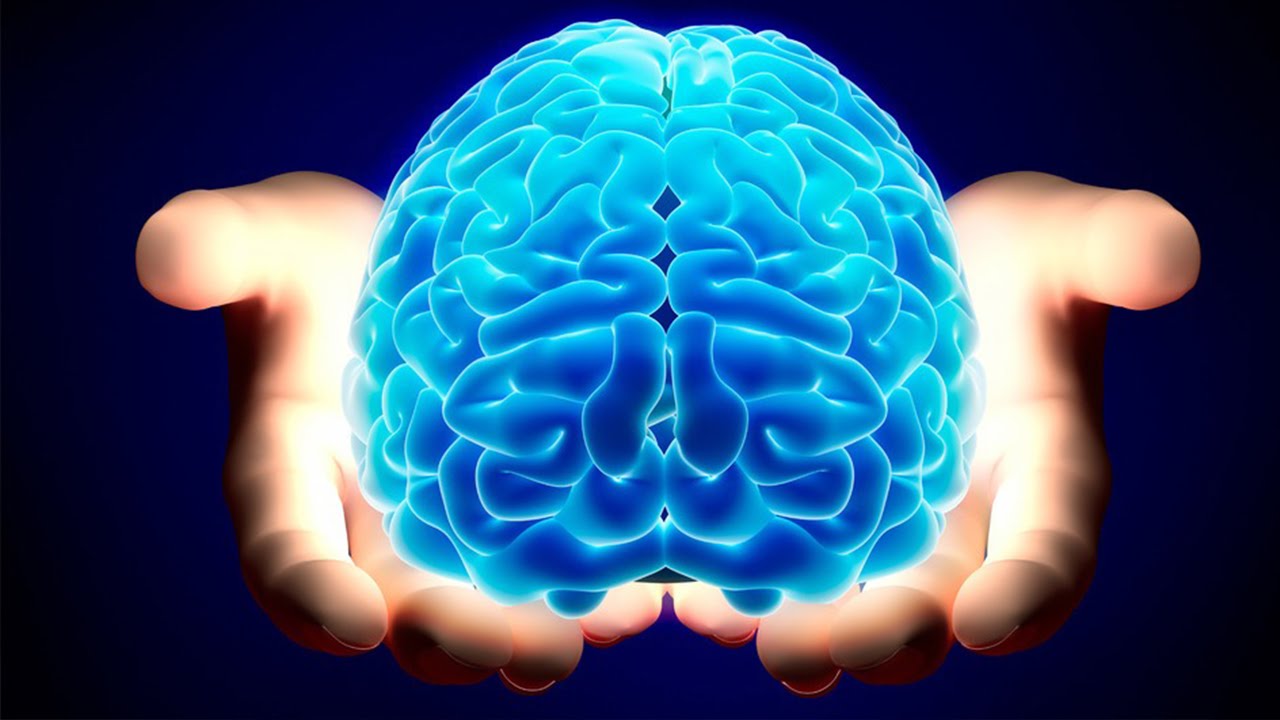
As amazing as the brain is, it still has room for improvement. It’s good at recognizing patterns and warning us when a hungry grizzly is near. It’s not so good at helping us endure the biological torture that is puberty, peer pressure, and high school. I’m pretty sure my brain shut down for significant parts of my sophomore and junior year. I imagine many more feel like their brains fail them in similar situations.

With smart blood, however, the brain is enhanced like every other organ. That means for this generation, they basically have cheat codes for learning and comprehending the world. That means they can read, listen, and learn with much greater efficiency than those of us who don’t have smart blood.

In terms of education, that’s a big fucking deal. A good chunk of our bloated, inefficient education system is a product of outdated methods that fail to educate kids. With smart blood and the growth of online learning programs like Khan Academy, everyone will be able to get a world class education, hopefully without having to endure mid-terms, acne, and lazy teachers who just teach for the health benefits.

As a result, this means that an entire generation could have the same educational aptitude as a high school valedictorian by the fourth grade, if not sooner. Sure, that means we’ll have a generation of smart-asses, but they’ll be smart-asses for the right reasons.

That education goes beyond simply knowing the name of every Russian Tsar or being able to factor 10-digit numbers in their head. In addition to memorizing facts, smart blood will also improve the parts of the brain that process our emotions and social cues.

Children’s brains are basically like a computer getting a long list of updates. It takes a long time and there are bound to be many glitches along the way, as anyone who ever attended a pre-school birthday party can attest. Smart blood can deal with those glitches and speed up the download. Imagine a 7-year-old having the maturity of a 27-year-old. Then again, given the recent trends in reality TV, that bar may be too low.

On top of being highly educated and emotionally healthy, keep in mind that smart blood would also basically eliminate unplanned pregnancies, teenage or otherwise. As I speculated before, smart blood will allow women to have total control over their fertility.

From the moment their born, it may even be their default setting. They cannot and will not ovulate until they inform the smart blood in their body to do so. It’s perfect contraception, no pills or uncomfortable implants needed.

Why is this a big deal? Why is being educated and not having unplanned pregnancies a big deal? Well, come back to the present time for a moment and you’ll see something pretty telling. According to Pew, couples who are college educated are among the least likely to get divorced and the most likely to marry for the right reasons. Apparently when people are smart, they make smart decisions in their love life. Go figure.

Now imagine an entire generation that’s even smarter and not burdened by unplanned pregnancies. That means that they’re less prone to loving someone for the wrong reasons or having sex with someone for the wrong reasons. How many of our problems in society have come from such stupid decisions? How many episodes of Jerry Springer did these stupid decisions create?

We can never know, but the generation that uses smart blood won’t have to deal with that burden. Sure, they’ll still make mistakes, but smart people know how to deal with mistakes and overcome them. Thanks to smart blood, these simple mistakes will be less likely to ruin their lives and harden their hearts.

What will this mean for the love they find? What will this mean for the relationships they create? What will this mean for their sex lives, their children, or their communities as a whole?

In terms of their sex lives, I think our imaginations are dirty enough to have some ideas. If this generation is intelligent in both facts and emotions, then they’ll be able to relate to one another with much greater efficiency. That means they’ll be able to form more meaningful bonds and have the emotional capacity to express those bonds in a mutually loving way.

That may very well make for the kind of hot, steamy sex life that every bad romance novel ever written has ever described. Even some of the overly heated, overly steamy romances I conjure in my books would be considered basic by these standards.

Think about it, provided you have clean underwear. A young couple, a highly educated man and highly educated woman with the kind of enhanced bodies that are usually reserved for bad Photoshop covers, wants to make love. They know each other’s wants, needs, and proclivities to the letter.

Thanks to the influence of smart blood, they have the fortitude, stamina, and desire to do anything and everything they want in their sex life. They can hump like lions in heat for hours on end. Or if they want to slow things down, they can play every Barry White song ever made and make love slowly and passionately like every Twilight movie ever made.

What kind world would we live in if people had sex lives like that? Would it be more peaceful? I imagine it would. I’ve never met anyone, male or female, who has a great sex life and is regularly in a bad mood. How can you have great sex an hate anybody? It’s not physically or emotionally possible.

A generation fueled by smart blood may very well consider this normal. Thanks to smart blood, this generation won’t suffer and decline with age. If anything, age will just give them time to come up with more creative ways of expressing their love and exploring their sexuality.

What this generation of super-smart, super-sexy, super-emotionally competent men and women come up with is beyond my imagination, but that won’t stop the romance/erotica writer in me from trying.

Beyond this point, it’s impossible to speculate. However, this is a future that may very well manifest within our lifetimes. What will we tell this generation? How will we explain to them that we lived in a time where we had to worry about diseases, unplanned pregnancies, divorce, sham marriages, and Tinder? I don’t imagine that’ll be a pleasant conversation. I just hope smart blood enhances their sense of humor as well.

11 Comments

Filed under Jack Fisher's Insights