Tag Archives: conservative

George Orwell, 1984, And The Perfect Totalitarian State

There were a lot of reasons I hated high school. I’ve listed more than a few of them on this blog. Somewhere on that list, but nowhere near the top, involved the books I had to read. To say they weren’t very sexy would be like saying a baseball bat to the head isn’t a very good massage.

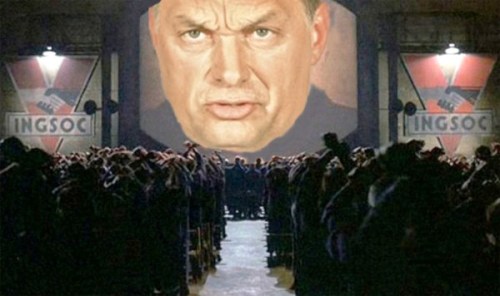
However, every now and then, my English and social studies teachers managed to assign a book that didn’t make me want to make me stick my head in a deep fryer. One of my favorite non-sexy books of all time, which also happened to be a homework assignment, is George Orwell’s “1984.” It’s a book that always seems relevant and insightful, albeit for all the wrong reasons.

When I read Orwell’s depiction of the ultimate dystopian future, I see it as the ultimate thought experiment, of sorts. Orwell wrote this book in the 1940s, a time when there were actual, dystopian totalitarian regimes operating in the world. Sadly, one of them was a chief ally during World War II.

He had a lot to reference in his time, much more so than we have today. Other than North Korea, most people today aren’t as familiar with rigid, totalitarian governments. Since the fall of the Soviet Union, there’s an entire generation of people whose idea of a totalitarian regime is relegated to detention at a high school. They can’t even begin to fathom the kind of world that “1984” described.

That’s a good thing in some respects. In a sense, those governments are almost impossible these days. The rise of the internet, modern technology, and complex geopolitics makes it next to impossible for a regime to be as totalitarian as “1984.” North Korea comes close, but even that regime is wholly inept compared to Big Brother.

However, I believe there’s a unique value, of sorts, when it comes to understanding what makes a totalitarian regime work. I also think there’s value in knowing the tenets behind it, the ways in which it operates, and why it takes hold in the first place. Even in an age of people protesting the removal of the McRib from McDonald’s menu, we’re not immune from the threat of a totalitarian regime.

With that in mind, let’s dig a little deeper into Orwell’s extreme thought experiment that played out in “1984.” If you haven’t read the book or had even worse English teachers than I did, you might not be familiar with Big Brother, how it operates, what what it represents. You might have heard the term, but you might not be familiar with what it is.

For the sake of providing context, here’s a quick video from the Alternate History Hub channel on YouTube. It’s a channel that focuses primarily on alternate history scenarios, which I’ve touched on before, but it also provides remarkable insight onto other subjects. Given how many totalitarian regimes are involved in alternate history, it makes sense to explore the ultimate extreme, as it played out in “1984.”

It’s hard for most people in the industrialized world to imagine a system like this. The idea that facts, history, and the very thoughts we think are all controlled by this all-encompassing, all-powerful government seems insane. It’s hard to imagine living in a world like that. It almost seems impossible. In a sense, it is.

No government in history has ever come close to wielding the kind of power that Big Brother does in “1984.” Some have tried. There’s the first emperor of China, the sun king in France, and our old frenemy, Joseph Stalin. They only ever succeeded in part and often failed in the long run.

That’s because, as we’re seeing with the ongoing health care debate in America, human beings are impossibly chaotic creatures. We all have so many different needs and wants. We’re all petty about different things and apathetic towards others. No two people are completely wired the same. We all think different thoughts for different reasons, sometimes with downright kinky undertones.

It’s because of all that chaos/diversity within the human condition that no government can hope to achieve what Big Brother achieved in “1984.” It would require so much power, so much micromanaging, and so much information that it just wouldn’t be practical for any one human or party of humans.

Again, that won’t stop some from trying and that’s where Orwell’s thought experiment becomes relevant. In looking at the structure of Big Brother, we can observe the nuts and bolts of the perfect totalitarian regime. We can see what the ultimate fascist is seeking when they want to create an all-power, completely centralized government.

Impossible or not, the features of this government reveal some common themes that have a basis in the real world. Those are themes worth understanding because they help us know when someone is trying too hard to emulate Big Brother. Without getting too deep into the book, here are the key features of a perfect totalitarian regime.

  • There’s a single, unambiguous ruling party and no opposition of any kind

  • The ruling party makes up a small percentage of the population, never more than one or two percent

  • The members of the ruling party rarely, if ever, interact with the public directly

  • The public consists of two classes, a professional middle class that never makes up more than a quarter of the population and a working lower class that usually makes up over two-thirds of the population

  • The middle class is educated to some degree, but wholly controlled by the ruling party and is completely dependent on them for their livelihood

  • The lower class is uneducated, under-informed, and easily manipulated

  • All economic activity is controlled or guided by the party, ensuring the middle class has just enough to do their job and the lower class has just enough to propagate

  • The ideals for family structure and social structure are imposed by the party with any variations being deemed deviant

  • The lower classes are allowed to be more deviant and decadent in order to keep them content with their state

  • The middle class is held to a higher standard of conduct to ensure their loyalty and submission to the party

  • The flow of information, the accepted knowledge of the world, and the entire history of the state is dictated by the party and accepted by the masses

There are probably more features I could list, but these are the core elements of Big Brother and the society we see in “1984.” Now, some people will attempt to apply these features to whatever state, country, or office environment they’re in at the moment. Some might actually apply, but never to the same degree as Orwell depicted.

The biggest takeaway from these traits, as well as the themes in “1984,” is how a society structures itself in the face of such overwhelming control. At the top, there’s always a ruling class. That class has only one primary purpose, which is to preserve its power. From the Galactic Empire in “Star Wars” to the battle for the iron throne in “Game of Thrones,” preservation is always the top concern of a totalitarian regime.

Part of preserving that power means relying on a professional middle class, of sorts, to deal with the bureaucracy and administration of the state. It’s in this area where totalitarian regimes tend to be most vulnerable. History has shown that authoritarian states like Nazi Germany were anything but efficient, which in turn undermined the ruling party’s primary goal.

It seems like a paradox, but it’s more a matter of pragmatism. A state needs people to run these massive, complex machinations to maintain so much control. To not impose such control would mean granting people freedom and that’s dangerous to any ruling party that wants to preserve control.

This is why those in these middle class professions are subject to such greater scrutiny. A poor, unemployed man taking a piss on a street corner creates no controversy. However, if a highly educated professional did that, it would be a major scandal. We often see this in how major corporate scandals play out.

In a sense, the lower classes have more freedom in this system than the professional middle class. That’s because the ruling party doesn’t really care about them. They don’t have to because they’re not a threat.

Uneducated, lower class people are too stupid and gullible to really pose a threat. So long as they work and breed, the ruling party has no reason to micromanage them. They don’t care if they have orgies in the streets, drink paint thinner for breakfast, or wear horse masks to work. Their only purpose is to work and breed. If they do that, then the ruling party couldn’t care less.

In a sense, the ruling party will always be at odds with a certain segment of the population. In order to exercise control in an authoritarian regime, there needs to be a sizable number of loyal, competent underlings to carry out the functions of the state. Finding people who can act as such underlings with perfect loyalty is difficult, if not impossible.

It’s hard to say whether Orwell knew this on some level. Keep in mind, he was heavily influenced by what he saw around him, a massive world war and the rise of communist states. Perhaps he had studied how powerful, repressive governments had operated in the ancient past and saw parallels in the present. Perhaps he saw that as an inevitable recourse for humanity.

I choose to have a more optimistic, albeit cynical view of human affairs. I don’t believe a system like Big Brother could ever take hold in a world where people can’t even agree on pizza toppings, let alone a singular vision for human civilization. I also don’t believe any government is equipped to exercise the kind of control that Big Brother did in “1984.”
However, that still won’t stop some from trying and the very process of trying can be very dangerous. Seeking order within the chaos is a very human trait, but one that can easily get derailed by pettiness and corruption. That’s why Orwell’s lessons in “1984” are more relevant than ever and may always be relevant to some extent.

6 Comments

Filed under Jack Fisher's Insights

On Fascism (And Why It Fails)

Brace yourself and temper your outrage because I’m about to talk about fascism. No, I’m not talking about the kind of fascism that teenagers whine about whenever they have a strict teacher in high school. I’m not even talking about the kind of fascism that that certain people attribute to college professors, LGBT rights, Hollywood, the NRA, the Catholic Church, and Negan from “The Walking Dead.”

Today, I’m going to talk about actual, real-world fascism and how it functions. I’m also going to talk about why it tends to fail in the long run and why it’s become such an empty term. Now, I know that means putting a big target on my ass and daring the more vocal parts of the internet to take a shot. I like think my ass is harder and more durable than most so I’m prepared to take that chance.

I know people like to throw the word fascism around like middle fingers in mid-day traffic, but it does have a definition. That definition has been twisted and amended many times over the past half-century, so much so that the word evokes so many different connotations.

For the sake of this post, I’ll be using the definition from Merriam-Webster’s dictionary. It offers a fairly concise assessment of what it entails.

A political philosophy, movement, or regime (such as that of the Fascisti) that exalts nation and often race above the individual and that stands for a centralized autocratic government headed by a dictatorial leader, severe economic and social regimentation, and forcible suppression of opposition.

Under this definition, America and most developed countries are not fascist. No matter what some kale-eating hippie or Jerry Falwell wannabe theocrat may claim, the systems and laws in place are antithetical to fascism.

Western countries have codified laws and traditions that value individual rights, protect minorities, and restrain central government power. Now, that’s not to say it’s perfect in practice. There are plenty of examples, historical and contemporary, that of inequality and oppression by the government.

However, those examples are more a product of misguided groups of people and inherent systemic corruption. To call an entire system fascist because of those instances would be like calling an entire swimming pool dirty because a few people spit in it. With fascism, the entire pool is spit so there’s no need for cherry picking.

Thanks to the cruel mistress that is history, we have a few well-known examples of true fascism that even vegan hippies can agree on. By most objective measures, Fascist Italy and Nazi Germany are the alpha and omega of all things fascist. If fascism were music, these two would be Elvis and the Beatles.

These governments were repressive, authoritarian, corrupt, and powerful. They could do whatever it wanted to its citizens and act however it wanted on a national stage, not giving a damn about public support of any kind. There was no hesitation to lie, cheat, and mislead the people. In these governments, people are either pawns or cogs in a machine. The very notion of freedom might as well be as fanciful as a unicorn fart.

There’s no question that these fascist governments did a lot of damage and caused a lot of suffering. There’s also no question that their actions scared and traumatized an entire world. They revealed to a modern world that wars between despots and industrial powers was truly horrific. Most human beings tend to avoid such horrors. A massive world war was enough to make everyone hyper-vigilant of all things fascist.

It’s in this heightened mentality where I think it’s worth having some perspective about fascism. We hear pundits, politicians, and protesters throw that word around, as though it’s the rhetorical equivalent of an “avoid critical thinking” card. It’s an easy label to throw around, but it rarely sticks because actual fascism is actually pretty frail.

In a modern context, fascism is different from the kings and despots of the ancient world. In those times, corrupt and blood-thirsty kings could only get away with so much. A kingdom and a nation state, complete with modern infrastructure, are two very different things.

A king needs to only hold a kingdom together and fight off the occasional invader. A nation state has to deal with bureaucracy, social welfare, and legal issues. No matter how big a king’s castle is, there’s just no way to manage all that in a modern context. There needs to be some sort of system in place.

A fascist government tries to centralize that system and organize it in a simple, stable way that definitively benefits certain persons or groups. Nazis sought to benefit a favored race. Italian Fascist sought to benefit a favored class. The argument could be made that Stalinist Russia and the current regime in North Korea are fascist in nature. I would tend to agree with those claims.

The goal is almost always the same. A fascist government directly and overtly attempts to control and centralize power for a select group of elites. It’s for this very reason that fascism tends to fail in the long run or never succeed in the first place.

Now, don’t go cheering and waving American flags just yet. That’s not to say that fascism inevitably falls under the glowing light of freedom, democracy, and bald eagles. That’s a romantic idea that makes for great war movies and comic book characters. It’s not necessarily reflective of real-world machinations.

The biggest flaw in fascism is its attempt to control and manage an entire state. That’s not just difficult. It’s impossible for any ordinary human or groups of humans. Our caveman brains can barely control when we get horny. How can we expect to control an entire government, let alone one meant to benefit a specific group of people?

The short answer is we can’t. The long answer is that such centralization and power requires a lot of bullying, corruption, subversion, and back-stabbing. That’s why you have Nazi Storm Troopers and Stalinist purges. It isn’t just because powerful people get a thrill out of ordering rampant death. They need to scare, bully, and intimidate everybody into going along with their agenda and being completely loyal.

That’s a huge problem though because, as I’ve pointed out before, it’s impossible to know how truthful someone is. You can never know who is truly loyal and who is plotting against you. That’s why men like Joseph Stalin were obscenely paranoid, which guaranteed that allies and enemies alike would die by his hand. Without those allies, any system is inherently weaker.

On top of that problem, there’s also the issue of the terrified masses who live under a fascist thumb. Say what you will about whiny protesters complaining about weed, but at least they’re willing to tell the government what they don’t want to hear. In a fascist system, the impoverished masses will likely keep their mouth shut.

That may help a paranoid fascist get through the day, but it limits their ability to make it through the year. That’s because in a complex world, having incomplete facts tends to be a huge detriment. If nobody is willing to tell a fascist ruler that their rusty old trucks with canons are no match for drone strikes, then that’s going to be a problem.

That’s why, contrary to what the History Channel and video games may claim, fascist regimes like Nazi Germany were never close to winning the war. Between major blunders and micromanaging, there was never a scenario that didn’t involve time travel or aliens that would’ve allowed them to win.

That’s because a fascist regime can’t trust anyone, be it military generals or the public. At some point, the political ties break down and the system just can’t handle it. They can delay the collapse, but they usually can’t stop it. It’s remarkable that Nazi Germany lasted as long as it did, given all the assassination attempts.

It’s the dirty, but unavoidable secret of almost every fascist governments. They function only to live another day, rather than build a future. Some are better at it than others. Castro’s Cuba has managed to survive for over a half-century, albeit with significant support from other neighboring countries.

The same goes for North Korea. The only reason that country still exists is because China doesn’t want a failed state on its border. At this point, North Korea can only endure, but not build. As the old dynastic cycle in China often proved, a system concerned only with survival tends to collapse in the long run.

I say this not as a way to undermine the horrors that fascism has and could potentially unleash on this world. It is a real danger in a world that’s full of crazy dictators and obscene corruption. However, it’s a danger with an inherent weakness and an expiration date. It’s one instance where you can depend on caveman logic to win out in the end.

It may not inspire the kind of ravenous patriotism that Americans tend to enjoy. However, it does show that, despite protests the contrary, there’s a lot to appreciate about our current system. It’s not perfect, but it’s building towards a better, sexier future more so than any fascist government ever will.

2 Comments

Filed under Jack Fisher's Insights

Why You Should NOT Take Documentaries Too Seriously

Throughout my life, I’ve gone through various phases where I become immersed in certain genres of movies. For a time, I was really into slasher movies. Then, I picked up on the distinct sex-negative themes of those movies and lost interest.

At another time, I became immersed in documentaries. Not surprisingly, that interest also coincided with me getting a subscription for Netflix, a service that puts you in immediate contact with documentaries of all kinds. From government conspiracies involving aliens to stories about porn stars after their career in porn ends. There’s something for everyone is what I’m saying.

On top of that, I also went through a phase where I was pretty big into government conspiracies. It wasn’t just that I believed them to some extent. It was the story around them that fascinated me. Given my love of telling stories, which has since manifested in some sexy novels, it checked all the right boxes for me.

It’s true. There was a time when I actually believed that the government was covering up evidence of an alien presence on this planet. There was also a time when I genuinely believed that the government colluded to manufacture wars from Vietnam to Iraq. I actually believed the government, and people in general, were capable of such confidence. I’ve since learned to temper my expectations.

While I’m no longer a fan of documentaries, I do watch them from time to time. However, I watch them with an overly critical eye. With every documentary I see, even if it has a message I agree with, I still assume that it only offers a tiny part of the story. Chances are a good chunk of this message is a result of cherry picking, clever cinematic, and outright lies.

Now, that’s not to say that the people making these documentaries are total frauds. I don’t doubt for a second that Michael Moore and Morgan Sporlock genuinely believe in the work they’re doing. They wouldn’t sink so much time and money into it if they didn’t. However, these men have agendas. That’s the flaw in every documentary.

This leads me to what specifically inspired this post. Last week, I couldn’t sleep so I decided to fire up Netflix and find some random show. Usually, certain documentaries help make me sleepy, usually the ones that narrated by soft British voices from the BBC. For some reason, I ended up watching a new documentary that came recommended on my list. It was called “What The Health.”

The premise of the documentary was simple. Pretty much all the food you enjoy eating, from fast food to candy to beef jerky to fried eggs, is terrible for you. It’s not just bad for you health-wise. It will give you cancer. I swear on Pamela Anderson’s tits that’s the actual message.

Kip Andersen, the director of this documentary, has a simple message. If your food has any animal products, then you might as well be sprinkling plutonium on your food. It’s also worth mentioning that Kip Andersen is an ardent vegan with a very pro-vegan agenda. He is to health conspiracy theories what Alex Jones is to government conspiracy theories.

That’s not to say that “What The Health” is completely devoid of facts, but it is very much an extended slate of pro-vegan, anti-meat, anti-corporate, pro-hippie propaganda. Even by liberal standards, this documentary is pretty slanted. It would be like a anti-gun control documentary that claims not having a gun makes your penis small, your tits shrink, and your asshole itch. It’s that bias.

Again, I don’t doubt for a second that Kip Andersen believes in what he’s saying. He comes off as the kind of guy who just obsesses so much over his health. That’s what gets him up in the morning. That’s what makes his dick hard at night. What sexy novels are to me, health is to Kip Andersen.

The problem with that, which also happens to be the problem with every documentary, is that it’s produced with an agenda in mind. The size and scope of that agenda varies. There are some documentaries that try to be objective. Most of those produced by PBS tend to be fairly balanced, but even they can fall into the same Alex Jones trap every now and then.

What bothers me about documentaries like “What The Health” is that it’s produced in a way that really preys on our caveman brain’s biggest flaws. There’s just no way to shrug off something like cancer. Pretty much everyone, myself included, knows someone who has suffered from cancer. According to the CDC, cancer killed nearly 600,000 people in 2014 alone. The suffering these people endured cannot be understated.

The problem is that cancer is such a complex disease. There are all sorts of genetic, environmental, lifestyle, disease, and chemical factors that go into it. There’s no one single virus, one single gene, or one single food group that causes it. The human body is too complex, as anyone who has ever studied the female orgasm can attest.

The message “What The Health” sends is not only horribly skewed to the hippie end of the political spectrum, but it’s downright misleading. It gives the impression that cancer and disease have a singular cause. All anyone needs to do to avoid is to just shun animal products, become a vegan, and eat cardboard for the rest of their lives. The fact that this is the same lifestyle as the director is just a hell of a coincidence.

I won’t deny it. “What The Health” does a damn good job of painting itself as credible. However, every documentary does that to some extent. They parade out all these doctors and experts in the field, making bold claims that they can legitimize with their PhDs and titles. However, it’s worth remembering that, as smart as these people are, they’re still human.

It’s also worth remembering that doctors do get things wrong more than we care to admit. There’s also a distressingly large amount of medical research that turns out to be wrong. Like I said, the human body is extremely complex and our caveman brains aren’t wired for that kind of complexity.

On some levels, Kip Andersen and Michael Moore exploit those flaws in our brains. They know how to craft a message that seems credible. They craft a slick, polished narrative that appeals to certain fears and misgivings that everybody has to some degree. They create a false or half-true narrative that preys on our desire to understand the world.

What often happens is that they’re very selective about the information they present. In a sense, they’re taking advantage of the same paradox I pointed out with health care. It’s not just very difficult to offer all the facts in a simple, two-hour documentary. It’s physically impossible. There isn’t enough film on a reel or enough seconds in two hours to convey all that information.

As a result, the message in every documentary is incomplete. In some cases, they’re so incomplete that someone else will try to verify those messages, only to find out how wrong they were.

This actually happened with Morgan Sporlock after his hit film, “Super Size Me.” That movie, much like Kip Andersen, had a very clear agenda. It was anti-corporate, anti-fast food, pro-nutrition. Sporlock even put himself in the line of fire, eating nothing but McDonald’s for 30 days. The proof seemed so clear and apparent.

Then, another documentary called “Fat Head” by Tom Naughton tried to replicate Sporlock’s experiment. There was just one glaring problem, though. The math didn’t add up. He literally could not eat as many calories as Sporlock claimed in “Super Size Me.” You can push an agenda all you want, but if the math doesn’t add up, you’ve got a problem.

On top of that, other people have done similar experiments and come up with different results. A science teacher armed with none of Sporlock’s movie-making resources was able to eat nothing but McDonald’s and actually lost weight. When there’s this kind of inconsistency on all sides, chances are there’s something missing from the story.

Again, I don’t believe that these people do what they do entirely out of malice and greed. Some might, but I choose to have a higher opinion of people in that respect. I think Andersen and Moore sincerely believe the messages in their documentaries, just as creationists ardently believe in their message, despite all the evidence to the contrary.

Now, you can choose to side with men like Moore, Sporlock, and Andersen on various issues. That doesn’t make you a bad or foolish person. However, it’s important to understand that documentaries are not the same as verified, scientific research. They are movies, made for the purpose of telling a story and gaining an audience. They may contain some elements of truth, but they will never tell the whole story.

1 Comment

Filed under Jack Fisher's Insights

Politics, Safety, And The Impossible Paradox

political_debates_in_the_usa_by_brokenteapot

As I’ve said before, I really don’t like talking about politics. I’ve learned over the course of my life, often the hard way, that nothing makes people less comfortable, less horny, and more insufferable than politics. It couldn’t have less sex appeal without involving a clogged toilet, a dead rabbit, and Sean Hannity.

For the most part, I try not to get too political on this blog. I’d much rather be talking about comic books, sex robots, and Leslie Knope. However, there are times when I feel compelled to say something about a particular issue. I often do that with gender issues like feminism because that indirectly ties to the sexier topics I talk about. I try not to take too strong a position. More than anything else, I try to give perspective.

That’s what I did with my post about the health care debate. I tried to be fair to both sides. I tried to frame the issue in a way that both Michael Moore and Ted Nugent could appreciate. I didn’t offer any easy fixes. I didn’t try to denigrate one political ideology over the other. I just tried to point out the inherent flaws in the issue itself.

In the course of writing about that particular debate, I wanted to apply it to a few other issues. However, I quickly realized that there was no way I could do so in a single article and remain concise. When I write on this blog, I tend to assume that part of the audience is drunk, horny, or some combination of the two. That means I can’t drone on for too long, even though I have a habit of doing that when it comes to comics.

Health care is just one issue. Granted, it’s an exceedingly complex issue, but it’s still one issue. The underlying argument I made was that, beyond the complexity, both sides of the political spectrum have the same goal. The problem is that what they want isn’t just logistically difficult. It’s physically impossible.

It’s another hard truth, one that I’d argue is even harder than the truth surrounding O.J. Simpson. Sometimes, even when the politics involved have a noble goal, the particulars of an issue are just beyond our capabilities as humans to produce. We humans can do all sorts of amazing things, from the Great Pyramids to solar-powered vibrators. However, we are a species of many limits, many of which we often fail to acknowledge.

This leads directly to an even bigger picture, of sorts. It also involves something that’s currently impossible in a world without superheros, super-powers, or computers that can’t be hacked for hilariously stupid reasons. Until we start enhancing ourselves, it’ll remain impossible for the foreseeable future.

I call it the impossibility paradox because most people, regardless of their political persuasion, act as though the impossible aspects aren’t there. They’re often smart, driven people who are every bit as driven as their ideological opponents. They work so hard to accomplish something that’s physically impossible. Then, they’re surprised when they come up short.

On top of that, the people they claim to represent or help get upset with them because they didn’t accomplish what they promised. Never mind that what they promised was never possible to begin with. Human beings just aren’t that reasonable, even if they like to pretend that they are. Everybody is still subject to the constraints of reality and, like a moody dominatrix, it doesn’t mind telling us who’s dominant.

Now, apply that dynamic to what might be an even bigger issue than health care for some people. Whether you’re gun-toting conservative or a pot-smoking liberal, most agree that a central function of any government entity is to keep citizens safe.

No state, kingdom, or Dungeons and Dragons guild can survive without providing some level of safety. People, society, and the economy can’t function unless there’s some level of safety. Nobody wants to make iPhones and exchange brownie recipes if there are barbarian hordes just a few miles away, ready to raze your home to the ground.

Since the dawn of civilization, every functioning society has had to provide some measure of safety and protection to its citizens. In exchange, citizens pay taxes to the state so that it can have the resources to perform these duties. Ideally, they’ll use those taxes carefully in accomplishing this goal. In the real world, however, nobody will ever say with a straight face that all taxpayer money is spent wisely.

However, this is where even the anti-government, Ron Swansons of the world have to face another cold, hard fact of reality. It’s every bit as inescapable as the health care debate. Even if, however unlikely, a government spent every penny of taxpayer money wisely and dedicated every resource into ensuring safety and security, it still wouldn’t be enough. That’s because of one simple truth.

“Nobody knows ALL the facts and nobody CAN know all the facts.”

If that sounds a bit too similar to the advice I recently gave on making sense of the world, then bear with me. There’s a reason for that. It’s similar, but not the same because the scope of the issue is different. Every issue takes on twisted, often frustrating new dimensions when politics enter the picture. Just ask Major League Baseball.

When it comes to safety, though, there’s an inescapable complication that has plagued every government entity that ever existed and will continue to plague governments until our robot overlords take over. To provide safety, you need to know everything about a situation and have the resources to deal with it. Unfortunately, or fortunately for privacy-minded folks, nobody can know everything about a given situation.

Nobody can know for sure when and where a terrorist attack will occur.

Nobody can know for sure whether or not a rival nation is plotting against them.

Nobody can know for sure whether a handful of countries are colluding to undermine them.

Nobody can know for sure whether that weird-looking guy walking down the street is about to go on a shooting spree or just skipped laundry day.

There are just so many unknowns in the world of geopolitics. There are a lot of unknowns for individuals as well. Hell, we still can’t figure out just how useful or useless pubic hair is. How are we supposed to know everything about the threats to our safety and sovereignty as people?

That’s just it, though. We can’t know. It’s physically impossible for any one human or group of humans to know everything about a certain situation, individual, or threat. Sure, the CIA could bug your phone and hack your browser history. That may even give them plenty of reason to believe that you’re conspiring with a hidden network of BDSM enthusiasts to take over the entire state of Montana.

At the end of the day, though, even the CIA can’t know for sure and that has proven costly throughout history. No agency, no matter what they call themselves or what sort of fancy acronyms they use, can know everything about a situation. I’m sure they’d like to know. If you’re of the mind of Alex Jones, you might even believe they’re working with aliens to remedy that.

Even if they did have some way to read all our thoughts, there’s still the matter of sifting through random daydreams and outright plots. Honestly, who hasn’t contemplated whipping out a can of lighter fluid and setting a coffee shop on fire because they got your order wrong? The difference between those thoughts and real action, though, is huge.

I’m not saying that governments and police forces should give up trying to keep people safe. We still need some measure of safety in order to function as a society. The problem is that because of this safety paradox, we end up in these brutal cycles that only make us more fearful. It goes like this.

  • Some strange, complex, dire threat is out there and the media blows it up to scare people

  • The people demand action from their politicians and authority figures

  • Those politicians and authority figures try to respond, if only to maintain their hold on power

  • Those politicians and authority figures fail to provide perfect safety because doing so is impossible

  • The public gets upset with the existing people in power and looks for alternatives

  • Some new power-seeking people enter the picture, making impossible promises to fix impossible situations’

  • The citizens, desperate to fix the impossible problem, put these people into power because anything seems like an improvement over the status quo

  • The people who made the impossible promises, predictably, fail to deliver and generate another round of disillusion

  • The cycle starts all over again

This is part of why congress’ approval rating is so low. It’s also why western countries keep cycling through political parties, constantly voting new people into office in hopes that they’ll find a way to solve impossible problems. In every case, they are unable to deliver. Most people don’t see the impossible logistics, though, so they just look to the next power-broker who can deliver.

For now, we’re very much at the mercy of impossible situations and the people who claim they can solve them. Some of these situations will become less impossible as we develop better tools. Until then, though, let’s be mindful of the impossible demands we make on those we entrust with our safety. It’s often when we have impossible standards that we doom ourselves to unlimited disappointment.

7 Comments

Filed under Jack Fisher's Insights

Bill O’Reilly: The Impact, Aftermath, And Implications

Last week was a good week for fans of workplace safety and opponents of old, cantankerous blowhards with their own TV show. Bill O’Reilly, the old, white, racially-insensitive troll, has been fired. I imagine feminists, hippies, and Michael Moore fans are still celebrating in the streets.

It turns out you can get away with being a raging dick to minorities, liberals, and anyone who ever protested a war. However, if you’re accused of sexual harassment by enough women over a long period of time, so much so that advertisers start ditching your show, you can only go for so long.

It’s not exactly tragic. Bill O’Reilly isn’t exactly stressed for money. He’s leaving Fox News with $25 million, which is on top of the boatloads of money he’s earned from various publishing and media contracts. He doesn’t have to work a day for the rest of his life. He has more than enough money to live in a mansion, eat caviar, and wipe his ass with hundred dollar bills until the day he dies.

https://s-media-cache-ak0.pinimg.com/originals/f8/2c/2e/f82c2e5f5f706fb464df0ac8e421d654.jpg

Even so, it certainly doesn’t look good. Love him or hate him, Bill O’Reilly was the highest-rated show on Fox News. He regularly crushed far more likable personalities with minimal effort and he probably did it with a goddamn boner. The man, as arrogant a prick he was at times, had a sizable audience. His voice carried weight.

Fox News had so many reasons to keep him and let him spew his brand right-wing verbal diarrhea for as long as he wanted. The public might have been willing to overlook his unacceptable treatment of women in the past, but it’s just not as easy to hide that sort of thing anymore.

This isn’t the era of Don Draper and Mad Men where sexual harassment might as well have been professional equivalent of a paper cut. This is an era where one poorly-worded tweet can and will ruin your life. I’m sure O’Reilly misses the days of Don Draper and pretty female secretaries who didn’t mind a light tap on the ass every now and then, but those days are long gone.

https://i0.wp.com/www.canadianbusiness.com/wp-content/uploads/2015/04/don-draper-impress-me-compressor.jpg

Now I could spend multiple posts going over Bill O’Reilly’s downfall. It’s certainly a hell of a story, albeit not a very sexy one. The man ruffled a lot of feathers and pissed off a lot of people, which is to be expected. Like Michael Moore and Lena Dunham, he’s a professional troll. That’s what he does and, based on his net worth, he does it very well.

That said, I’m going to hold off on joining the hippies still dancing in the streets. I’m also going to hold off joining the chorus of right-wing apologists who would defend O’Reilly, even if he was caught choking a bald eagle with his bare hands. Those are losing arguments with no substance.

Instead, I want to focus on the impact and implications of O’Reilly’s downfall because it’s not just a non-tragedy. It’s actually part of a trend that started with Roger Ailes. Like O’Reilly, Ailes wasn’t brought down by his politics or his competence. He was brought down by charges of harassment by women.

That alone is pretty telling. These man can have some pretty disgusting politics. They can spit on minorities, shame women, and support policies that only serve to facilitate old white men getting their dicks sucked in every possible way. However, they have to become serial abusers of women in order to be taken down.

https://i0.wp.com/images1.houstonpress.com/imager/u/original/8505816/gottabekidding.jpg

Don’t get me wrong. Men who abuse women, regardless of their position or politics, deserve to be punished. Abuse isn’t just wrong. It’s a crime. If O’Reilly and Ailes are guilty of this crime, then they should pay a price. If they don’t, then there’s no reason for them to stop. That’s just basic justice.

Unfortunately, this is where I know I’m going to piss off the dancing hippies. As bad as the allegations against O’Reilly are, it’s not clear just how true they are. Now many parts of it may actually be true. O’Reilly may be every bit as despicable as these women claim. However, without proof that can withstand scrutiny in a court of law, it’s unreasonable to just accept those claims outright.

I know. I can already hear angry feminists, beta males, and Rachel Maddow fans yelling at me. The very notion that O’Reilly didn’t do these horrible things, given the ugliness of his politics, seems downright offensive.

Let me make clear, though, that I’m not sticking up for O’Reilly or Ailes. I think both men are arrogant pieces of shit who trolled their way to fame and fortune. They’ve said and done things I don’t agree with, but you can say that about almost everyone in your life, be they a talking head on Fox News or a close family member. The difference is a matter of degree.

https://i0.wp.com/cdn.thedailybeast.com/content/dailybeast/articles/2014/01/14/speed-read-25-extraordinary-roger-ailes-revelations-from-the-loudest-voice-in-the-room/jcr%3Acontent/image.img.2000.jpg/1402507569916.cached.jpg

Now given the sheer number of claims, as well as the extent to which O’Reilly settled them, it’s reasonable to conclude that there’s something going on here. As we saw with the Duke Lacrosse case and the UVA rape case, false allegations tend to fall apart when subjected to scrutiny.

One or two women making an allegation with little evidence doesn’t prove much, especially when the allegation is against someone as rich and despised as Bill O’Reilly. There’s too much reason to suspect ulterior motives. It’s when multiple allegations emerge over time from multiple women who are not in contact with one another when a pattern emerges.

That’s still not to say that all the allegations against O’Reilly are true. Chances are, they’re not nearly as pornographic as the media claims. Anything that makes a media headline is usually designed to titillate more than inform. That’s just how media works. Ask any porn star.

http://vignette2.wikia.nocookie.net/prowrestling/images/3/30/Jenna_Jameson.jpg/revision/latest?cb=20160122144408

However, given how many rich men there are in media and how only a handful of them generate this many sexual harassment allegation, it’s not reasonable to say that every woman is lying. The truth, as is often the case, is usually somewhere in between and not nearly as sexy as we think.

Now that O’Reilly has joined Ailes as old, right-wing blowhards who were done in by sexual harassment claims, a larger pattern has emerged. Now, the ardent critics of these trolls, of which there are many, have a new tactic for taking them down. They don’t have to contest their politics or engage in meaningful debate. They just have to nail them for harassment.

That, in my opinion, is a dangerous precedent. Sexual harassment and sexual assault are serious crimes. They should be treated and adjudicated as such. If they become tactics for silencing blowhards, no matter how much an asshole they may be, then that denigrates actual victims of these crimes.

https://sapnaseestheworld.files.wordpress.com/2012/04/justice_mercy.jpg

It also gives opponents of these men powerful excuses to avoid actually confronting the substance of their words. As I’ve mentioned before, those kinds of excuses can create a dangerous mentality that allows people to circumvent critical thought of a situation.

In the end, I’m not going to miss Bill O’Reilly any more than I miss Roger Ailes. I really do hope the women accusing him prove their case. I hope that proof comes out and we can know with certainty whether they’re actually true. The truth has a way of adding greater weight to any situation. It also has a knack for getting lost in the media spectacle.

Whatever happens to O’Reilly from here on out is fairly inconsequential. He’s already made his money. He doesn’t need to troll any more unless he really misses the attention. With the precedent set, though, we may see more of this tactic against the professional trolls of the world. As annoying as these trolls are, the fact such tactics are necessary says a lot about how willing some are to find excuses instead of reasons.

3 Comments

Filed under Jack Fisher's Insights

Extremism: The Ultimate Excuse Bank

https://i0.wp.com/wp.production.patheos.com/blogs/quranalyzeit/files/2014/04/1900133_513898185402876_874183235_n.jpg

Strap yourselves in and tighten your sphincter because this is another one of those posts that I’m sure is going to offend a few people. I try not to do posts like this too often. I like to leave that kind of offending to shock jocks, Fox News, and Kanye West. I’m an aspiring erotica/romance writer. I’m not Howard Stern.

However, sometimes I need to dip my toes in the piss-filled pool of offense in order to make an important point. I did that last year when I explored the mind of misogynistic men that too many women don’t even try to understand. That was hard to write, but it was something I felt needed to be said.

This post is similar. I knew I was going to write something like this when I began my discussion on reasons versus excuses. I also knew that by doing so, I would offend a few people. I’m not going to apologize for that. Sometimes, a message needs to be offensive in order to get the point across.

In this instance, that point has to do with extremism. I’m not just talking about religious extremism. I’m not just talking about political extremism. I’m not just talking about the extremism you find on Twilight message boards either. I’m talking about extremism in all forms.

I want to keep the context broad so that the topic can be applied to every possible instance. From the Islamic extremism that every news outlet tries to mention a thousand times a day to the political extremism that builds shining “utopias” like North Korea, this issue can apply to all of them. It won’t be the most comfortable application. If anything, it’s akin to applying acid to a contact lens.

To understand the common link between all these various forms of extremism, some of which actively try to murder each other in the streets, we need to revisit the concept of “excuse banking.” Sure, it’s a concept I just invented and has as much scholastic weight as a Will Ferrell movie, but it’s a concept that helps make sense of the irrational whims of people who really think they’re rational.

The basics of excuse banking are simple. They take whatever actions, beliefs, knowledge, or social connections someone has and effectively molds them into a ready-made list of excuses to justify their future actions. Excuse banking is basically akin to stocking up on Twinkies so that when you get hungry, you’re ready.

Remember, we don’t make decisions based on logic. We decide first and then look for reasons or excuses to justify them. That’s just how the human brain is wired. That’s how it has been wired since our caveman days and we can’t change that wiring any more than we can change the color of the sky.

With extremism, excuse banking goes a step beyond justifying your decision to buy a thousand posters of a half-naked David Hasselhoff. Extremism, in many ways, is the ultimate manifestation of excuse banking. It provides people with a set of infinitely malleable, constantly excuses to justify pretty much anything. Why else would actual Flat Earth Societies still exist?

In such an extreme, excuse banking goes far beyond just justifying a decision. When someone has such a malleable excuse in unlimited supply, it can lead to a form of self-hypnosis and self-delusion wherein someone actively avoids looking for reasons. They favor, cling to, and obsess over their preferred excuses.

It takes many forms, but the patterns are fairly similar. In religion, especially in the big three Abrahamic religions, there’s a perfect, all-powerful, all-knowing excuse sitting in the clouds. Call that excuse any name you want, be it Yahweh, Allah, God, or Cthulhu, it still functions the same.

If you have faith in said deity, then that deity will bless you and vindicate you. You don’t need to provide reasons for anything. You can just claim that the deity commands or wishes it and that’s the end of the conversation. You don’t need to justify anything else.

You want to murder an abortion doctor? That’s okay because your deity says it’s justified.

You want to blow up a bus full of civilians? That’s okay because your deity says it’s justified.

You want to take slaves from neighboring tribes? That’s okay because your deity says it’s justified.

You want to mutilate the penises of infant boys? That’s okay because your deity says it’s justified.

Sometimes the justification comes in the form of holy books that cannot be questioned. Sometimes it comes in the form of charismatic cult leaders who want first dibs on all the pretty girls in room. Sometimes it’s just some guy claiming to be a prophet that somehow slipped through the cracks and works at Dairy Queen during the week.

However it happens, the pattern is fairly clear. In terms of excuse banking, it’s almost too perfect. Having vindication from an all-knowing, all-powerful deity is basically like playing an old video game with cheat codes. Nobody can argue with a deity like that. Nobody can even verify the will of that deity.

Think back to what distinguishes a reason from an excuse. Reasons, by their definition, need to be verifiable on some level. Deities can never be verified. That’s why many religious extremists emphasize faith, which is essentially accepting the belief beforehand, absent any reason.

For the Richard Dawkins’ of the world, that seems dishonest. However, from a purely pragmatic perspective, it perfectly meshes with the wiring of our brain. It perfectly aligns with the process of making decisions first and then justifying them. In that sense, religion has far more advantages than atheism ever will. Sorry, Richard Dawkins, but the game is just not in your favor.

Think about any religious zealot. They’ll claim the same thing. Their deity and their holy book condone, promote, and even command whatever behavior they do, no matter how irrational or atrocious it might be. That’s how terrorists justify their atrocities. That’s how someone can harass the families of dead soldiers and still think they’re a good person. They’ve banked the ultimate excuse to justify that sentiment.

Now I’m not just going to harp on religion. I’ll leave that in the capable hands of South Park and Seth MacFarlane. Religion is just the most obvious example. Political ideology is still a close second though.

By political ideology, I mean any ideology that has an extreme element to them, which is essentially all of them. There may not be an all-powerful, all-knowing deity, but there are still a set of infinitely malleable excuses that adherents use to justify anything and everything.

Communism is probably the most famous example. From the Soviet Union to North Korea, communisms as a concept basically functioned as a deity in that its adherents thought it was perfect. Anyone who claimed otherwise was killed and those who did the killing had a valid excuse. They were protecting communism and the god-like leaders that promoted it. How else could Kim Jong Ill get away with those ridiculous glasses?

It also scales to smaller domains. Here in America, we have political parties who treat their affiliation the same way religious zealots treat their deities. That’s how one party can get so outraged when the other does something, but be totally okay with it when they do the same thing.

Through excuse banking, a political party can justify their actions because they see their party as correct, moral, and ethical party. There’s no reason for this and there’s no way to truly justify that sentiment. By blindly accepting it, they have the ultimate excuse. That’s why it’s entirely possible for a party member who claims to be pro-life to pay for his mistresses’ abortion and still be considered moral.

Go beyond political parties and you’ll find extreme excuse banking in all sorts of fields. It has been happening a lot more in fields subject to political correctness, especially in areas like feminism. It’s already evolved its own set of language and terms, much like any religious or ideological movement.

Such excuse banking can end up dividing an ideology that actually has verifiably good ideas. The inequality of women was and still is an unfair practice, something that feminism worked hard to overcome. However, extreme measures of excuse banking led to horrendously misguided subcultures in that movement, some of which joked about the mass murder of an entire gender.

This is the part where I hope everyone can unclench their asshole a bit. I know this is a difficult discussion to have, but these are all topics that affect us profoundly. Whatever the balance in your own excuse bank might be, religion and ideology affect our lives in profound ways. That’s why it’s so important to have a way to make sense of it.

This is also the part where I want to remind everyone that extreme forms of excuse banking in no way makes someone a bad person. I still believe that most people are good people who operate under the same burdens as the rest of us. Some, either by circumstance or endowment, find themselves clinging to certain excuses more than others.

Now I’m not saying that the idea of excuse banking can make sense of every complex sociopolitical situation on the planet. It’s just one tool I’m offering to add to a toolbox that can never be too stocked.

10 Comments

Filed under Reasons and Excuses

Celebrating Women: An Ode To Leslie Knope

It’s been a long, busy week and not just because people can’t shut up about the Super Bowl. I’ve spend an unhealthy chunk of time talking about things like abortion and anti-sex crusaders who would put erotica/romance writers like me out of business. These are not rosy topics, I know. I also know that I don’t want this blog to get overly serious on overly political bullshit. I want this blog to be fun, sexy, and enjoyable.

In that spirit, I’d like to cap off this week with something that I think fits in nicely with all my recent discussions of women’s issues. Make no mistake. These are extremely sensitive issues. They’re not going away anytime soon. The next four years is sure to bring more protests, more controversies, and maybe even some more pussy grabbing. For women, it’s going to be tough.

It’s during times like this that it helps to turn to the women who truly inspire us. I come from a family of many strong women. I’m pretty sure all of them could kick my ass, even on a bad day, if I gave them a reason. I’ve always been surrounded by tough women, many of which could easily lead their own march and not let politically correct bullshit get in the way.

Beyond the kick-ass women of my family, there is one woman from the fictional world that inspires me in very special ways that don’t entirely involve my penis. She’s a woman who is strong, likable, competent, sexy, and sex-positive. She’s a character with flaws, but one who finds ways to overcome them in ways that both men and women can respect.

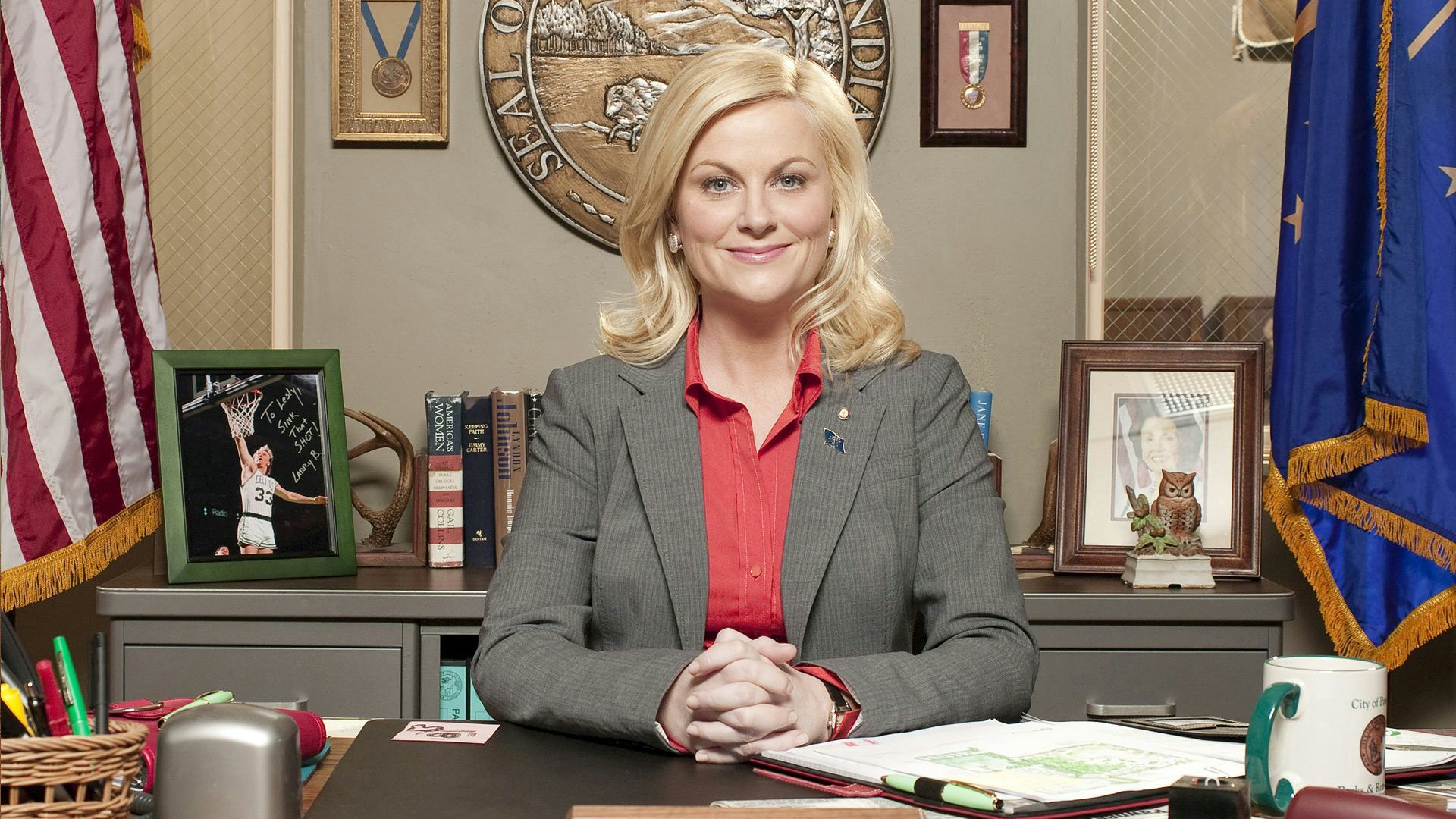
Her name is Leslie Knope, the alpha woman of one of my favorite shows, “Parks and Recreation.” While a part of me is still saddened that this show has been over for nearly two years now, Leslie Knope still has a special place in my heart.

She embodies so much of what a strong, ambitious woman can be. On top of that, she can do it without busting any man’s balls, at least not more than they deserve. She, along with ultra alpha male Ron Swanson, were the heart and soul of the show. They were both testaments to their gender, finding novel ways to get along, despite their differences.

That, in many ways, is the greatest legacy of “Parks and Recreation.” It showed us how great strong men and strong women could be. For that, I thank Leslie Knope for inspiring me and so many others, even those who aren’t aspiring erotica/romance writers. In honor of this legacy, here is a video I found that offers a fitting tribute to everything that makes Leslie Knope so awesome.

2 Comments

Filed under Jack Fisher's Insights

Pro-Life Vs. Anti-Sex: Why The Difference Matters

I promise I’m almost done talking about abortion on this blog. Again, I hate talking about this issue. I want to be very clear about that. As a man, I have nothing to contribute to issues of women’s health. I couldn’t be less qualified to talk about this issue if I were a disembodied squirrel.

With that said, there is one last component to the abortion issue I want to address. Unlike the various other complexities of this exceedingly controversial issue, this issue does affect me, albeit indirectly. It affects me because it involves attitudes towards sex and, being an erotica/romance writer, that’s kind of critical to my job.

Granted, sex and abortion are link. Without sex, abortion is a moot point. Abortion without sex is like a car without an engine. One doesn’t work without the other. It’s in this inescapable link that we find a stark divide in the pro-life/anti-abortion movement. It’s a divide in which one side is honest and the other has a mansion built upon a foundation of  wet horse shit.

There are those on one side of the abortion who can call themselves honest and genuine. These are the people who genuinely believe that abortion constitutes murder. They believe that the concept of personhood begins at conception. At the moment the sperm meets the egg in a woman’s womb, the issue ends for them. That’s a human life. Ending it in any way is no different than murder.

That’s a perfectly clear, easily understandable position. It passes through the Simpson Filter with ease. It makes ethical sense, even to our caveman brains. It appeals to both emotion and logic, a rare combination in any bit of political discourse. Granted, the actual science of when life begins is not at all settled, but as a clear position on an issue, this part of the pro-life is both clear and genuine.

If this was where the argument ended, then there wouldn’t be anything left to talk about. I could end this post here and go back to talking about the joys of sleeping naked. Unfortunately, there is another contingent of the pro-life crowd and they’re about as genuine as a Nigerian prince.

This contingent of the pro-life group will make the same claims. They’ll say abortion is evil on par with any notorious spammer. They’ll even march with others who sincerely believe that life begins at conception and abortion is murder. However, in the back of their minds, being pro-life is a form of glorified clown makeup. It just a convenient excuse to hide the fact that they’re anti-sex.

By that, I don’t mean they aspire to live in a world of nuns and eunuchs. By anti-sex, I mean they are vehemently opposed to any form of sexual expression that wouldn’t occur off-scene during a “Father Knows Best” rerun.

In their world, the only kind of sex that is permissible involves a married couple, a dark room, and a maximum of three minutes in the missionary position with the sole intent of producing a child who will grow up into a tax-payer. Orgasms are entirely optional in this case. Anything that deviates from this narrative even slightly is the moral equivalent of being sodomized by demons.

In that context, it’s easy to see why some use the pro-life movement as a cover. History has shown that even in the most repressive periods in history, human sexuality is difficult to contain. Being anti-sex is a losing battle on par with being against blue skies on sunny days. With the pro-life crowd, they can claim, “We’re not against sex! We’re against dead babies!”

This doesn’t just make their position inherently dishonest and insincere. It also has implications that go far beyond those I’ve discussed before on this issue. It’s easy to craft a message that passes the Simpson Filter, but sometimes the implications of that message go far beyond the content of that message, so much so that it’s in the same zip code as basic fraud.

For the anti-sex crowd, it means that abortion is less about dead babies and more about controlling sexuality in general. Make no mistake. This does happen. Some even go so far as to admit it outright. Major presidential candidates have even gone on record as saying they oppose contraception because it permits evil sexual practices, namely those that people might enjoy.

This is the part of the pro-life movement that has zero moral authority. They are about as honest and sincere as hungry lion running a hospital for wounded zebras. They may use politics or religion to justify their sentiment. That doesn’t make it less invalid.

In some cases, it makes parts of the pro-life crowd into outright hypocrites. As I’ve said before, we tolerate a lot of bullshit in our society, but hypocrisy is one of the few lines where the stench cannot be ignored.

In the case of the anti-sex crowd pretending to be pro-life, they cement their hypocrisy by also being against contraception. While most pro-life people don’t oppose contraception, those that do are akin to being football fans who hate contact sports. It’s just not possible for the position to make any sense, logically or morally.

This is where a lot of religion gets into the mix. The Catholic Church is, by far, the most famous entity for opposing both abortion and contraception. Again, it’s the implications that make this position wholly dishonest. To understand those implications, just do the same thing reporters do with lobbyists and follow the money.

For a church, or any religious organization, to thrive it needs money and adherents. Since most religions don’t sell anything tangible, they need to rely on adherents giving them money. Naturally, this creates an incentive to want them to procreate. The more babies they have, the more future adherents the religion will get. More future adherents means more money. In the end, wanting to control sexuality is all about money.

Imagine for a moment that someone claimed that killing puppies was wrong because it cost too much money to bury them. If someone bases their puppy-killing morality on that foundation, we wouldn’t think very highly of them. Hell, we’d probably train our dogs to use that person’s yard as a toilet.

It’s for this reason, and many more that I’m woefully unqualified to explore, that it’s so vital to distinguish those who are genuinely pro-life and those who just don’t want people having sex in ways they don’t like. One has a moral basis for their position. The other has a web of excuses, deceit, and hypocrisy.

If good, decent people truly wins out in the end, then it should be clear which side has the moral authority. There are those who deserve to march in support of their believes and there are those who should be marched over, spit on, and left to whither under the weight of their hypocrisy. In the end, no matter what excuses some people make, hypocrisy will never be appealing or sexy.

13 Comments

Filed under Jack Fisher's Insights

Appealing To The Masses: The Simpson Filter

ct-homer-simpson-live-pizza-debate-met-0517-20160516

I was going to make this part of my last post where I gave some tips and advice to the people behind the Women’s March. I am serious about being on their side on most major issues. I want them to succeed in protesting the current regime in Washington DC. I think it’s good for freedom and democracy when there’s a healthy opposition to established power structures.

At the moment, though, I don’t think their message is getting through. I also think their approach needs refinement. The tips I offered in my last post were fairly basic. This tip requires a bit more explanation because it applies a mix of caveman logic, sales techniques, and good old fashioned cunning. It’s basically the same technique people use to sell time shares and get laid. If it works for that, then it works for politics as well.

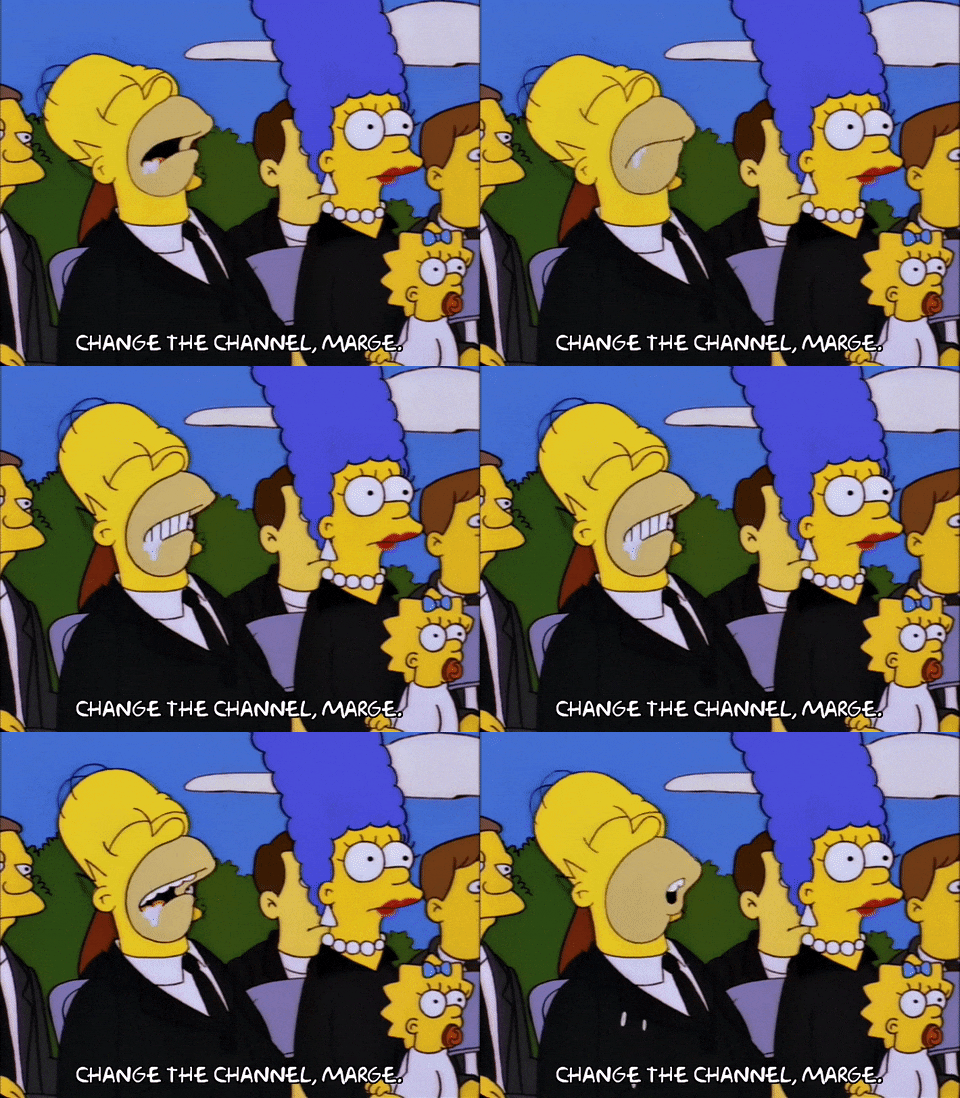
I’ve even given this bit of advice a name, one that I hope is easy to remember. I call it “The Simpson Filter.” It’s not quite as original as “Caveman Logic” and not just because it deals with something that is heavily trademarked and protected by an army of Fox’s lawyers. I promise there is a legitimate reason behind this label and I hope to make that reason abundantly clear by the end of this post.

So what exactly is the Simpson Filter? Well first off, in order to understand it, you need to know who the Simpsons are. If you’ve been near a TV it all in the past 30 years, that should be the easy part.

Most everybody on each side of the political spectrum knows who the Simpsons are. For the purposes of this tip, I’m going to focus on what they represent. By and large, the Simpsons are not the Waltons. They’re not happy, wholesome, and functional. They’re not the Bundy’s either. There is a sense love, sincerity, and family. On the spectrum of cartoon families, the Simpsons are somewhere in the middle.

Why is this important? Well, despite being fictional and full of exaggerated dysfunction, the Simpsons perfectly embody the sentiment of the average American. In fact, the show itself even acknowledged this in Season 2, Episode 16, “Oh Brother, Where Art Thou?” where Homer’s brother, Herb, wants him to design a car for the average American.

Yes, Homer Simpson fails miserably in that effort, but that only further highlights what makes him the perfect archetype for the average guy. He’s not an expert in a given field. He’s not smart enough to understand the complexities of big issues, be they social, political, or economic. Unless it involves beer and donuts, it’s not going to be a priority for Homer Simpson.

The same applies to Marge Simpson, the more thoughtful and less obnoxious part of the family. Marge also embodies an important component of the average American in that she’s focused primarily on keeping her family intact and semi-functional.

Given the various antics of her family, this is a herculean task, even on a good day. Her uncanny ability to manage her family often shows when she’s not around. This is best shown in Season 3, Episode 14, “Homer Alone,” in which Marge decides to go on a vacation and her family struggles mightily in her absence.

In that sense, Marge embodies the side of American society who struggle daily to keep their family intact and functioning for another day. It’s not that big issues involving the economy, politics, or social issues don’t interest her. It’s that she doesn’t have the time or resources to prioritize them. She can only focus on her more immediate concerns, namely preventing Homer from freaking out about the boogeyman.

Given this context, we can create the particulars of the “Simpson Filter.” If we’re going to use this fictional, animated, overtly dysfunctional family as a model, then any message we craft has to resonate with them. If it’s too much for Homer and Marge Simpson to handle, then it’s too much for most Americans.

For the Women’s March, this is vital. They don’t need to appeal to affluent, college-educated people living in cities and earning more than the median wage. They need to appeal to the vast swaths of less-affluent, less-educated people that occupy the non-urban parts of the country. In short, they need to cater their message to many Springfields of this Country and the Simpson families who live in them.

To appeal to them, it’s not enough to just shout anger and outrage at major protests. It’s not enough to hold large public lectures to inform these people either. Homer Simpson doesn’t do lectures and Marge is too worried about her family to even show up at one.

For any message to work on Homer or Marge Simpson, it can’t just have hard facts about the harsh realities of the world. It’s not enough to list, detail by detail, why the principles and policies they favor are worth supporting.

Homer Simpson doesn’t care for details. Marge can only care so much, given her many other concerns. So for every message about every issue, the contents need to go through a filter to make sure they’ll resonate. That filter includes the following provisions:

  • Get the attention of the Homer and Marge Simpsons of the world, but do it in a way that doesn’t shame or denigrate them for not supporting the message in the first place

  • Don’t assume that the Homer and Marge Simpsons of the world are racist, ignorant, or misogynistic and presume, by default, that they are decent people who just want to get by

  • Keep the message incredibly simple in that if it can’t fit into a commercial between a football game, then Homer and Marge aren’t going to care enough about it

  • Craft the message in a way that appeals to the feelings of Homer and Marge as appealing to emotions is the primary method of generating interest

  • Keep the facts secondary, but never let them be tertiary because in the long run, substance will help strengthen the emotions

  • Make sure the simple, emotional message inspires hope because Homer and Marge are more likely to support something that makes them feel hopeful

  • Link the more complex issues in your message with the simpler issues that affect Homer and Marge directly, ensuring they can associate these issues with their own lives

  • Avoid using language and rhetoric that Homer and Marge don’t understand or makes them feel alienated from those you want them to support

  • The message shouldn’t require that Homer and Marge change who they are, but it should make them want to be better

There are probably many more components to this filter that I haven’t articulated yet. Like Caveman Logic, I hope to refine it in future posts. In following the events of the Women’s March and the issues that will likely be more prominent over the next four years, the Simpson Filter will be a good way of revealing how successful or how flawed a message is.

At the end of the day, how right or valid your message is can only ever be secondary. If it fails to resonate or convince anyone, then it has as much impact as a history lecture by Ben Stein.

It’s an unfortunate, but unavoidable aspect of the human species. It’s not enough to be right or moral. You still have to communicate that message in a way that gets flawed, uninformed, and sometimes misguided humans on your side. If you can’t get Homer and Marge Simpson on your side, then your message has no chance.

9 Comments

Filed under Jack Fisher's Insights

My Advice To The Women’s March

As a general rule, I try to avoid giving advice on things I know I’m not qualified to explain. You want advice on writing erotica/romance? Sure, I’ll help, even though I’ve yet to achieve much success in that endeavor. You want advice on comics and superheroes? Hell, I’m your guy. I should be the first person you call.

In terms of complex sociopolitical issues, though, I’m as qualified to explain those topics as I am to perform brain surgery while blindfolded. I am not an expert. I’m not even in the same hemisphere as an expert. Then again, it’s not like experts have a perfect track record of explaining these issues either so it’s not like their voices are somehow more pure. At the end of the day, their farts stink as much as mine.

I establish this context because I’m going to make an exception to that general rule I mentioned earlier. I’m going to offer some advice to a group that I think needs all the help they can get. Specifically, I’m talking about the fine citizens of the United States who organized the Women’s March.

I’ve already given my reaction to this mark. I hope I made clear that I mostly agree with their policy positions at every level. They stand for principles that I don’t believe the current regime in Washington is going to protect. I support them in their efforts, even if I think their approach is lacking in substance. That’s exactly why I’d like to lend whatever help an aspiring erotica/romance writer can offer, however limited that might be.

What follows is a list of simple tips that I hope will help the people behind the Women’s March. What they seek is admirable and respectable. However, I worry that they will undermine their message by using a flawed, misguided approach in pursuing their goals. I hope with these tips, they’ll be better able to achieve those goals.


Tip #1: Acknowledge The Breadth Of The Audience You Seek To Influence

You see that map above? That’s a picture of how every county in the United States voted in the 2016 election. Notice anything unique about it, other than how it looks like a jigsaw puzzle designed by a brain-damaged orangutan? There’s a lot of red and only a few spots of blue. Why is that?

Well, the blue parts are the ones containing America’s largest cities. The red are largely rural, low-density areas full of small towns, tight-nit communities, and exceedingly few vegan restaurants. These areas make up a good chunk of the land, but less than half the population. That’s because the cities, which contain the urban crowds, draw in more people with more diverse economic opportunities.

Why does this matter? That’s because it’s these rural, under-developed areas are the ones who gravitate towards the conservative side of the political spectrum. They do this because their way of life is dying. It’s dying and the conservative crowd knows how to appeal to them, selling them false hope while the other side basically ignores them.

The Women’s March deals with issues that affect everybody, but they basically overlook this part of the country entirely. These are people whose lives are devoid of hope and issues like LGBT rights, speech codes on college campuses, and soda taxes aren’t going to affect their lives.

These are people who the Women’s March largely ignores, but they still vote. They still have hopes, dreams, and aspirations. Without acknowledging them or reaching out to them, they’re basically ignoring a huge part of the Country that desperately needs hlep and hope.


Tip #2: Abandon Political Correctness, Kill It, And Bury It In The Deepest Hole

I cannot stress this enough. It needs to be belabored, reinforced, and beaten down with a two-ton anvil. In order for the Women’s March to make their message resonate on the widest scale possible, those involved must abandon, kill, and disavow political correctness in all its forms.

I cannot be polite or funny about this. Jerry Seinfeld has tried, but even he can’t find the humor in it. That should tell you everything you need to know. If someone like Jerry Seinfeld can’t find humor in it, then nobody can.

By political correctness, I mean everything from speech codes to gender identity politics to people protesting the name of a football team. A big reason why the current regime is in power is because the vast majority of the population has heard the rhetoric of the politically correct and they hate it with a vitriol that rivals every Mortal Kombat character ever made.

If you really want to appeal to more people, you need to ditch the excessive PC bullshit that has alienated an entire generations from an entire end of the political spectrum. Either abandon it or watch as the new regime coaxes its way through election after election.


Tip #3: Focus on Justice For Everybody And Not Just For A Select Few

This seems obvious and most in the Women’s March probably agree with this sentiment. However, the problem with their style is that they focus too much on justice for one particular group. They focus on LGBT, women, minorities, and refugees. That’s all well and good. These people need justice too. However, don’t focus so much on them that you forget about everybody else.

Believe it or not, injustice knows no political party. It knows no political ideology. An LGBT person is vulnerable to injustice. A straight white man living in rural Alabama is vulnerable to it as well. If you want both of those individuals on your side, keeping mind that both vote, don’t focus on a few specific trees while ignoring the forest.

By focusing too much on one group or another, you get cases like the Duke Lacrosse case and the UVA false rape case. It also means that groups like radical feminists skew the message, throwing around toxic terms like “patriarchy” and “rape culture.” These terms poison the well and alienate others, all in addition to being mostly bunk.

It may be tempting to focus exclusively on minorities who are vulnerable, and they are, but alienating others in the process helps no one in the long run.


Tip #4: Be Serious (And Ditch The Goofy Hats And Costumes)

This directly address those who wear the goofy vagina costumes to these rallies. Look, I love vaginas as much as the next straight guy. I admire the beauty of vaginas all the time as an erotica/romance writer. However, when you make these costumes and use them in protests, you’re not sending a message of justice and inclusion. You just look like you came back from a Halloween party at the Playboy Mansion.

There’s a time and a place for comedy in politics. Those times should be few and targeted. It also helps to leave them up to the professionals, such as John Oliver and Trevor Noah. These are people who know how to inject humor into an issue for the right reasons. They are also funnier than 99 percent of the population.

Let them handle the humor. For everyone else, leave the goofy costumes at home. When you wear that stuff, people who don’t agree with you aren’t going to be swayed. They’re just going to roll their eyes and think it’s a joke. If you want to reach these people, this is not how you want to get their attention.

The same goes for those goofy pink hats. Those hats aren’t cute or convincing in any way. They just look goofy. If you really want to appeal to everyone, you need to come off as real, honest people. Believe it or not, people respond to others who they can relate to. What a concept, right?


Tip #5: Appeal To Feelings While Avoiding Insults

This may sound dishonest to some because shady car salesmen use the same tactics. They’ll come up to you and make you feel like the most important person in the world while trying to sell you shit on four wheels. It may be dishonest, but it works. There’s a reason why used car salesmen still exist.

If you learn nothing else from last year’s election, then at least learn this. Facts do matter, but they’ll always be secondary to feelings. When it comes to perception versus reality, perception wins 99 times out of 100. I’ve already written about this. I don’t want to belabor it, but I think it needs to be belabored.

This goes back to caveman logic. The human brain is not wired for truth and understanding. It’s wired for survival and reproduction. It doesn’t come to decisions based on facts. First, it has us react to the proverbial lion in the bushes. Then, our brains come up with a reason to justify our reaction. From a scientific perspective, it’s ass backwards. It’s also the only way you can relate to people.

If you can make someone feel like they matter to you, then they’re more likely to help you. That needs to be the first step. For the Women’s March to reach others who don’t already agree with them, they need to tap into those feelings that led them to vote for the other side in the last election. Those feelings are key. If you want to convince them of anything, you must first confront those feelings first.


Tip #6: Focus On Hope Over Outrage

This should be fairly obvious, but it’s one of those issues I think the Women’s March glossed over at times. Hope is a powerful message. Hope is what got Barack Obama elected twice. Hope is the ultimate motivator and rallying cry. That’s what got people off their asses and to the polls during the last election. Naturally, they chose the candidate that gave them the most hope.

Right now, the Women’s March is focused less on hope and more on outrage. That’s completely understandable. There’s plenty to be outraged about and I’m not just talking about grabbing women by the pussy. However, outrage is only slightly more meaningful than whining. It’s too easy for one to turn into the other.

The time for lamenting over losses is over. The election is over. The new regime is in. They’re already at an advantage because they’re going to find out that delivering hope is much harder than actually promising hope. This is where the Women’s March has the advantage. Instead of focusing on the failures of the past, they need to focus on the hope for the future.

What does that future mean? What can they offer that the current regime cannot or will not offer? Give people something to look forward to. Give them something to aspire to. It works for Superman. It works just as well for what the Women’s March seeks to accomplish.


Tip #7: Pick The Right Battles And Choose The Right Allies

This isn’t as important as hope or abandoning political correctness, but make no mistake. A movement will be judged on the allies it chooses. In the last election, the losing party chose poorly. How do I know this? Off the top of your head, who was the most reputable ally they chose?

Can’t think of anyone? I rest my case. You see, in addition to being big on feelings, the human brain is also big on association. If you associate yourself with something good, then that’s going to affect how others perceive you. If you don’t, then you leave yourself vulnerable to wild accusations that some people in the FBI can exploit.

If you want allies, make sure you pick the ones who will also fight your battles. You want someone who will fight for minority rights, religious rights, and the rights of women? Well, those organizations do exist. They’re easy to ally with and they accept donations. They include the likes of the American Civil Liberties Union, Amnesty International, and Habitat For Humanity.

Once you have allies like this, then you’re better able to pick the right battles. It’s a losing endeavor trying to shame, scorn, and scold others into accepting your views. By showing support through legitimate legal avenues, it shows you’re serious and people do react when they sense someone is putting in the effort.


Tip #8: Inspire Rather Than Demean

This is more a general rule than advice. Inspiration is every bit as powerful as hope. In the last election, one side inspired an entire population who had grown resentful of uptight, politically correct intellectuals who demeaned and denigrated them for the crime of not being a marginalized group. When you demean entire groups like that, you lose allies and send them running to your enemies.

Those people, however, can be swayed back. Doing so means changing the approach. It means changing the perception, style, and substance behind that approach. The people behind the Women’s March must show the college-educated urban elite and the poor white rural people that they matter. They think they’re good, decent human beings and they want to build a future with them.

All too often, a movement devolves into a classic “us against them” mantra. That may win elections in the short term, but it drives people apart in the long run. The people behind the Women’s March need to think about the long term. They need to think beyond the next election.

There are entire generations who believe that the people behind the Women’s March are only fighting for a few select minorities. They need to show that they will fight for everyone. It’s only when you can appeal to everyone that you can overcome everything. Remember that and you need not fear the outcome of any election.

1 Comment

Filed under Jack Fisher's Insights