Category Archives: psychology

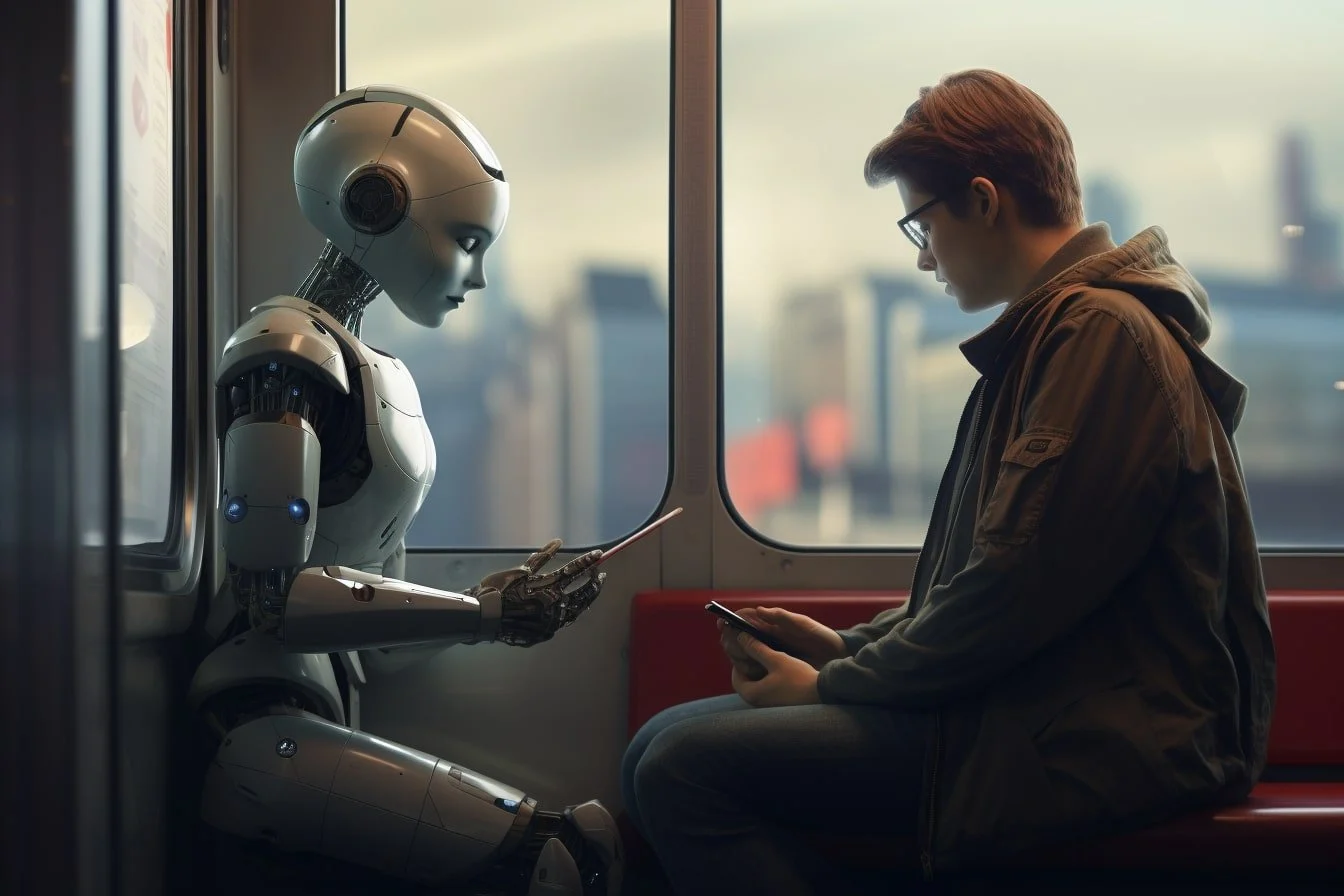
Revealing Attitudes Towards AI Art (When People Don’t Know It’s AI Art)

When I was a kid, there was a general attitude towards any movie or TV show that was animated. Unless it was “The Simpsons,” then animation was largely associated with kids. Even when there was a concerted effort to appeal to older demographics, animation was still seen as less mature form of storytelling. Even when it was exceptionally well done, this stigma persisted.

Eventually, animation and animated content, in general, matured to a point where the stigma really doesn’t work anymore. Cartoons aren’t just for kids. We now have shows like “Bojack Horseman” and “Rick and Morty” that have helped change the popular perception of animation. On top of that, the added influence of Japanese anime, from “Dragonball Z” to “Ghost In The Shell,” have helped attitudes about animated content evolve even more.

This shift all happened within my lifetime. It’s a simple recognition that attitudes, perceptions, and trends are always changing. And they’re going to continue to change, regardless of how we might feel about certain issues now.

This brings me to AI generated art. It’s a topic that, depending on where you discuss it, can generate a lot of debate, disagreement, and consternation. I’ve been in more than one discussion with someone who claims AI generated art can only ever be a bad thing in the long run because it enables trolls, assholes, grifters, and bad actors.

I’ve also been in similar discussions with those who claim AI art isn’t even art. It’s, according to them, nothing more than a fancy calculator that crunches numbers on where to place certain pixels on a screen. While I think that’s a gross oversimplification, I don’t think it takes away from the end result. Whether it’s produced by a human or a computer, the end result is still the same. An artistic rendering is created. But regardless of what form it takes, we have certain attitudes about it.

As I write this, I think the prevailing sentiments toward AI art are negative. Show someone an AI generated image and they might concede that it looks nice. But they’ll still have an aversion to it, knowing it’s created by AI. And if you how them a human-generated piece of art, even if it doesn’t look nice, that same person will still ascribe more value to it than they would an AI generated image. That’s just where we are right now.

But in a recent study by Scientific Reports, an interesting insight was uncovered. When the researchers conducted a survey that included approximately 200 people, they found that when people weren’t aware that an image was AI generated, then their attitudes about it were more positive. In many cases, they could not discern between the artwork generated by humans and those generated by AI. But as soon as they were aware that something came from an AI, their sentiments changed.

It’s probably not too surprising, but it’s also revealing. It speaks to where we currently are in our perspectives on anything created by an AI. It still has this synthetic, uncanny valley feel to it. We still inherently ascribe more value to something that is created by a human over that of a machine. And while that is certainly understandable, given that human generated art requires more labor and passion, how much will that value persist in the coming years?

That’s not an unreasonable question because the quality of AI art has changed considerably in the past few years. And it’s likely to continue improving in ways we’re not ready for. Not too long ago, it was somewhat easy to discern when something was created by an AI. The issues it had with rendering hands and fingers are well-document. However, those issues have been addressed and improved considerably, especially with newer models.

As such, you don’t need to be a wide-eyed utopian futurist to predict that AI art generators will improve to a point where it’s genuinely difficult to tell if it was created by a human. This study already showed how close we are. The participants weren’t able to surmise on a surface level that they were dealing with a mix of AI and human-generated art. With improved tools, even the most discerning and tech savvy among us might not be able to figure it out.

At that point, our attitudes towards AI art will have to change. Think what you want about AI and whether it’s capable of creating real art, let alone appreciate what goes into it. But if it’s capable of making something we can’t discern from its human-made counterparts, then those negative sentiments we have are entirely arbitrary, as well as subjective.

And those same attitudes might not be shared by younger people who have grown up in an environment surrounded by the internet, AI, and AI generated content. They might not have any issue with seeing AI generated art as real art. And anyone who just despises AI art as a concept might find themselves in the same group as those who still think all cartoons are just for kids.

It’s hard to know where these trends will lead as AI technology advances. It’s already affecting how we see art, knowledge, and what it means to be intelligent. And how we feel today might not be at all in line with how future generations will feel in the decades to come. Only time will tell.

I’ll simply note that humans, in general, are a visual species. We seek to create, admire, and cherish art, regardless of the source. For that reason, I think there will certainly be a place for any kind of art, whether it comes from a human or an AI.

Leave a comment

Filed under AI Art, Artificial Intelligence, psychology, technology

Why Time Seems To Go Faster As You Get Older

When I was a kid, the school year always seemed to go on forever. I know it was nine months out of the year and that was a sizable chunk of any given year. But looking back on it, I swear every day felt longer, every week felt like a month, and every month felt like a year. Even as I got older, time seemed to drag and at times, it was agonizing.

These days, the flow of time feels different and not just because of the events of the COVID-19 pandemic. Granted, that did mess up everyone’s sense of time. But even before that, I noticed how the days, months, and years seem to go by differently. And the older I get, the more I feel it. I’m also not the only one.

A lot of friends and relatives I talk to will say the same thing. They swear that 2023 just started a few weeks ago. They remember the ball dropping on New Years Eve. They remember making New Years resolutions, capping off the holidays, and making plans for the new year.

The next thing they know, Halloween is over and the holidays are just around the corner. You start to wonder where the hell the rest of the year went. You wonder why and how it went by so quickly. I’ve certainly wondered that from time to time. But since the end of the pandemic, I feel like my perspectives on how the years go by has struck a unique balance.

And I count that as an accomplishment because for a good chunk of my youth, that balance was lacking and not just because of how much I struggled in high school. College was eventful, but it felt like it ended too quickly for me because I was often anxious about what I would do when I got out. Even when I started working and exploring new creative outlets, I didn’t have much certainty with respect to how I would build a life for myself.

That took a while to figure out. I also made a few mistakes along the way, as most people do when they’re young and uncertain. But once I created a more stable life for myself, finding some decent jobs and moving into my own place, that’s when I really noticed my perceptions of time change.

Unlike being in school, my life was a lot less structured and regimented. There was less obsession over navigating classes, classmates, and assignments and more focus on just getting better at whatever job I happened to have. For someone like me, I tend to thrive more when things are streamlined and I know what I need to do over the course of a given day, week, or month. That allows me to plan accordingly and get things down to a system.

Once I found that, life in general just seemed to run smoother. It also helped that I wasn’t an awkward teenager trying to handle acne, puberty, and poor social skills anymore. Life experience and maturity helped me better navigate my life on a day-to-day basis.

Plus, making my own money, being able to spend it however I wanted, and living on my own schedule was a lot more fulfilling. I was no longer constantly checking the clock, agonizing over when my next assignment or obligation was.

Yes, I had that with my job, but that always felt less stressful than school because it was more limited. There was less emphasis on following strict schedules and getting grades. What mattered more was the end results and once I knew how to do that, there was less stress and anxiety.

Now, it was more a matter of how to enjoy my personal time when I wasn’t working. Having more of that, as well as enough money to make the most of it, really benefited me in terms of mental health. But it also made that time feel more fleeting and precious. When you’re doing your own thing and enjoying it every step of the way, it seems to end sooner. That’s often how I feel every time my trip to New York Comic Con ends.

I suspect that feeling will continue to evolve as I get older. There is some real science behind why time seems to move faster as you get older. Much of it has to do with how getting older makes each experience a smaller and smaller chunk of your lived experience. I think there is some merit to that and my older friends can often attest to it.

But beyond the science, I think this feeling is best summed up by a friend of mine who retired recently. He once told me that “The days are long, but the years feel short.” And I think that holds true, regardless of how old you are.

Every day is going to go by at its own pace, regardless of whether you’re working, going to school, or just enjoying a lazy Saturday afternoon. But as you make it through each day, they add up fast. Eventually, they’ll all feel like a blur as you make it through another year. At times, it feels like those days were wasted. But I would encourage others to avoid that feeling.

Because I believe that no day is truly wasted unless you go out of your way to do so. If you’re just lounging about, but enjoying it every step of the way, then that’s not a wasted day. But if you’re just lounging about and ignoring things you know you have to do, then that is a waste and it will impact the days that follow.

In the end, it’s a balancing act. If you find yourself in a situation that works for you, then it will feel like the years will start to fly by. But that’s not necessarily a bad thing. It means that you’re not in a situation agonizing over what the next day will bring or what you’ll have to do in the weeks to come.

Perception or not, the world will keep spinning and time will keep passing us by. But if you’ve built a good life for yourself and those around you, you’ll find that the days and years were well-spent, regardless of how brief they seemed.

Leave a comment

Filed under Jack Fisher's Insights, psychology, real stories

How AI Companions Can Be Helpful AND Harmful

It is not easy finding that special someone. It never has been, even if you’re rich, beautiful, and have strong social skills. Every generation encounters new challenges in their pursuit of love and companionship. I know I have. I’ve even shared some of those struggles before.

At the moment, I have not found that special someone. I am single, I live alone, and I currently have no romantic prospects of any kind. I’m honestly not even sure where to begin at this point in my life. Nearly everyone else in my immediate family has settled down and started having kids. I am very much behind the curve in that regard.

However, there are some individuals who are in an even tougher situation. I know I am lucky in many regards. I own my own home. I own my own car. I’m never behind on my bills or anything. But there are plenty of men and women my age who have none of that. Some of the people I went to college with are still stuck in debt and can’t even afford to pursue a serious relationship.

In that sense, I don’t blame anyone for seeking other forms of companionship. Loneliness really does suck. It is objectively bad for your health. While it has become a hot topic, even in political fields, it has also led to some controversial trends. And among the most contentious involves people seeking AI companions.

Now, before I go any further, I want to make clear that I am somewhat reluctant to talk about this. While I’m usually up for any discussions about artificial intelligence, especially with how it may affect our love lives, this one specific aspect of AI is riddled with complications.

On one hand, there’s the general stigma. Most AI companions, such as Replika, are essentially idealized avatars of whatever kind of companion the user wants. If a man wants an AI girlfriend to look like a porn star and have hair like a girl from his favorite fantasy anime, he can have that and the personality to match. And while that is appealing, as a product, it still carries a stigma with it.

Men like this who use AI companions aren’t seen in a very sympathetic light. They’re more likely to be seen as examples of toxic male behavior. They’re not just lonely and in need of companionship. They’re seen as perverts who prefer a girlfriend that they can turn off, manipulate, or control in whatever way they please.

And make no mistake, there are men who treat their AI companions like that. They’re not all that subtle about it, either. But most of these men were shallow, crass, and crude before the advent of AI companions. They would’ve been that way regardless of whether or not this technology existed. There have always been men like that. And there always will be to some extent.

But there’s also a double standard at work with these men. Because there are AI companions for women too. They’re every bit as available as the ones men use. They just don’t get as much scrutiny and don’t carry as much stigma. If a woman were to create an AI companion to resemble their favorite male celebrity, chances are they won’t be stigmatized as much as their male counterparts.

Some may see this as concerning, thinking the woman must have issues if she was resorting to AI companions. But she would certainly garner less stigma than the man.

I would still argue there are women out there who seek AI companions for the same reason as men. They’ll even mold avatars meant to resemble the sexiest, most attractive figure they can conjure. I don’t claim to know how common it is, but I don’t doubt this exists.

Even with that kind of shallow use of this technology, I think it’s much more common that these users are just lonely. They seek companionship the same way most humans seek companionship. Even if there are plenty of people to interact with, AI companions help fill a particular need. That’s really all there is to it.

That’s not to say that AI companions are harmless. I strongly believe they can be. It just depends on the user and how they go about interacting with these AI systems.

If someone is manipulative, controlling, abusive, and self-centered, then having an AI companion that they can mold to their whims is not going to temper those tendencies. More than likely, they’ll get much worse. They’ll basically set a standard for the user that conditions them to expect certain qualities in a companion. And since real people can’t be molded, manipulated, or configured like an AI, they’ll never find someone who meets their impossible criteria.

In the process, that same user might grow bitter and angry that no real person can be to them what their AI companion is. And as these feelings simmer, it could just lead them into a destructive cycle of resenting everyone and everything that they can’t control the same way they control their AI companion.

That is very much a worst-case scenario for users of AI companions. I did try to look up research on this, but it was hard to come by. Both the stigma and novelty of these products make it difficult to assess. Maybe I’m being too hopeful, but I think cases like this are rare.

They certainly exist, but they’re the exception rather than the norm. It just tends to get more attention because seeing horrible people reinforce their horrible behavior with these AI companions is disturbing to many people and understandably so.

At the same time, I also believe that AI companions can be genuinely beneficial for a lot of people and those benefits are likely understated. Remember, we are social creatures. And as intelligent as we can be, we’re also blunt instruments with respect to certain mental faculties. Our brains and our psyche don’t care about the nature of social interaction. So long as we find it fulfilling on some levels, we’ll incur the benefits.

In their early form, AI companions probably didn’t offer much in that regard. But in recent years with the rise of AI chatbots and large language models, it’s relatively easy and cheap to create an AI that people can interact with in ways that closely resemble those of real humans. And the growing size of the AI companion industry is solid that there is growing market for this sort of thing.

But the good these AI companions could do goes further than simply giving people a facsimile of human interaction. Remember, the current crop of AI chatbots and LLMs are relatively new. They’re like the early models of the iPhone. They’re going to continue being refined, developed, and improved upon now that an industry is being built around it.

In time, AI chatbots and general AI technology will improve.

At some point, AI technology will get advanced to the point where it can offer more than just a base level interactions. In theory, an AI could be configured in way that didn’t just perfectly complement the personality of the user. It could also interact with them in a way that fosters healthy personal growth, just like any other good relationship.

There could even be AI companions specifically configured to deal with abusive men or women, helping them understand and deal with their issues in a way that makes them better individuals. That could be life-saving for certain people who struggle to find companionship due to issues like personal trauma or mental illness.

These AI companions don’t even need to take a physical form. They don’t need to be incorporated into sex robots or anything. They can still be effective as simple avatars on smart devices. There would certainly need to be some level of testing, safeguards, and refinement in order to make them work effectively. It might even take years before AI companions have such capabilities.

That’s the most I’m willing to say about AI companions at the moment. I don’t doubt this industry will continue to evolve in the coming years. I also don’t doubt there will be plenty of controversies about the ethics of these companions, as well as how they affect the user.

But even in their current form with their current level of intelligence, it offers lonely people an outlet. Reasonable people can argue just how healthy or unhealthy it is. But it doesn’t change the fact that lonely people are out there. They’re seeking connection and companionship like everyone else. These AI companions aren’t perfect replacements, but they’re better than nothing.


Leave a comment

Filed under Artificial Intelligence, futurism, men's issues, psychology, romance, sex in society, sex robots

Narcassists Are More Likely To Become CEO (And Why That’s Concerning)

A while back, a close relative of mine retired after a long, fruitful career that spanned nearly 40 years. They probably could’ve retired much sooner, but they were among the fortunate few who actually enjoyed their job for the most part. It had its ups, downs, and everything in between. But overall, it was a good career that most would be lucky to enjoy.

Over the course of that lengthy career, they worked under multiple CEOs. This was a fairly well-regarded organization, too. So, the CEOs were not part of some succession plan or a proud family business. This was the kind of company that followed a fairly traditional corporate structure and kept things impersonal as much as possible when it came to executive decisions.

However, in talking about how much the job had changed over the years and how much the industry had evolved in that time, this same person revealed something I found both striking, yet unsurprising.

Every single CEO they worked under qualified, by their definition, as a narcissist.

Now, for most people who have worked similar jobs, this probably isn’t surprising. There’s this prevailing sentiment that anyone who becomes CEO has to be a narcissist to some extent in order to get to that level. It even makes a perverse bit of sense. By their own nature, a narcissist seeks control, status, power, and aggrandizement. And the position of CEO offers all of that in spades.

But even if it makes sense for narcissists to become CEOs and we consider it normal, for the most part, that still warrants concern. There are times when our concept of normal has some major problems and we shouldn’t be afraid to confront it. This is definitely one of those situations.

For the relative who told me this, they had quite a few interesting stories to tell regarding the narcissism of CEOs. But they did make one important distinction. Even though these individuals were overtly narcissistic, they were not outright psychopaths. While most psychopaths are narcissistic, not every narcissist is a psychopath.

Narcissists can and do have some sense of moral responsibility.

Narcissist can and do experience empathy on some levels.

Narcissists can even be good CEOs, for the most part.

However, we shouldn’t let that override the legitimate concerns we should have when dealing with narcissists. There’s a reason why so many super-villains in pop culture tend to be inherently narcissistic.

Among the key traits of narcissists is a sense of arrogance, self-entitlement, vanity, and a greater capacity to exploit others for selfish means. These are traits we rarely want in people we deal with on a day-to-day basis. But in the role of CEO, they can give someone an advantage.

It means they won’t hesitate to make decisions that cause harm, distress, or ruin to others. It also means they’ll cross lines most people won’t in order to increase profits, further an organization, or undermine the competition. They can and will do things that’ll seriously hurt those working for them, yet still sleep comfortably in their fancy beds without a shred of guilt.

Maybe these sorts of tactics do help certain companies and organizations thrive. Many of the most successful companies in the world were founded or run effectively by narcissists who did things that, in hindsight, were deplorable by most measures. But we give them a pass because that made them and their company a great success.

It’s a not-so-hidden blind spot that we, the public, tend to overlook. And as I’ve gotten older and had my own experiences with narcissists, I feel like that sort of mentality is detrimental in the grand scheme of things.

One story that did stand out from my relative was how one particularly narcissistic CEO lamented how they might not have enough money to retire. Granted, this CEO was making well above six figures and he was complaining directly to someone who made a fraction of this. The idea that their bloated salary was not enough to retire on just seemed outrageous for someone just trying their best to pay their rent or mortgage on time.

It perfectly reflects how narcissists lack empathy and aren’t the least bit concerned with how people less fortunate or affluent get by. It would be one thing if this were just someone who had been born rich. But remember, this is a CEO. Unlike those rich from inheritance, their decisions impact entire organizations. Those organizations are full of hard-working people who may or may not be in a position to retire, no matter how hard they work.

That kind of disconnect between those making executive decisions and those actually doing the work isn’t just illogical. It’s damaging to the long-term health of any organization and society. Because if the CEOs of the organizations we rely on to keep our economy growing are too narcissistic, then what incentive do they have to do right by the society at large?

If the choices is between making the right choice for the most amount of people or more money and power for them personally, a narcissist won’t make the right choice.

If the choice is between sacrificing for the good of others or exploiting others for their own personal benefit, a narcissist will choose to benefit themselves 99 times out of 100.

Unlike most people with a more balanced perspective, narcissists need to be coaxed into doing the right thing. And even when they do, they’ll often do it begrudgingly. Those who are smart on top of being narcissists might be able to come to that conclusion if the long-term benefits are there. But for the most part, you can usually expect a narcissist to made decisions that benefit them over everyone else.

In addition to the anecdotes of my retired relatives, there’s real science to indicate that a disproportional number of CEOs are indeed narcissists. And those narcissists working within those titles will continue to do whatever they think they can get away with, so long as they continue to benefit. You really don’t have to look far to see how much harm decisions from narcissistic CEOs can incur.

Having to work for a narcissist CEO is always challenging, but it can be done. Most people who have worked a steady job can attest to that. But it’s still worth asking ourselves if this situation is tenable in the long run. Because if we continue rewarding narcissists with lucrative jobs like CEO, then we’re just creating a world that’ll enable more narcissists.

1 Comment

Filed under health, human nature, philosophy, psychology

The Only (Free) Self-Help Advice You’ll Ever Need

This is a video from my YouTube channel, Jack’s World.

This video is a simple offer of free self-help advice in a world where every self-professed guru attempts to charge everyone every last penny for what is often common sense. Having seen way too many videos on YouTube professing some sort of magical secret to success, I felt like a video like this was necessary. Enjoy!

Leave a comment

Filed under health, Jack's World, psychology, YouTube

Why NOBODY Should Ever Be As Famous As Michael Jackson

This is a video from my YouTube channel, Jack’s World.

In this video, I explore the world of fame, fortune, and celebrity. And for people of a certain age, none achieved more of that than Michael Jackson. While his legacy in the annuls of pop culture might be a bit mixed these days, it’s hard to overstate just how big an icon he was.

But as monumental a figure he might have been, I strongly believe that NOBODY should ever be as famous as him ever again. That kind of fame might not even be possible anymore. But I feel it’s worth revisiting. Enjoy!

Leave a comment

Filed under Celebrities and Celebrity Culture, Jack's World, music, psychology, YouTube

What DARE Taught Me (And What It Failed To Teach Me) About Drugs

This is a video from my YouTube channel, Jack’s World.

In this video, I recount and discuss my experience with the Drug Resistance Awareness Program (DARE) when I was a kid. For many people my age, DARE was a big part of their youth. It was in schools, on TV, and part of many major social programs. It had a simple message.

Don’t do drugs. Just say no.

But in the grand scheme of things, was it all that effective? Did it really teach me or anyone else my age not to do drugs? The answers here are mixed. And I offer my perspective on the whole experience, as well as what it means for current issues involving drug abuse. Enjoy!

Leave a comment

Filed under Jack's World, politics, psychology, YouTube

I Have No Mouth And I Must Scream – The Scariest Story I’ve Ever Read

Happy Halloween! And to celebrate this spooky holiday, here’s a video from my YouTube channel, Jack’s World. It’s about the scariest story I’ve ever read. It’s entitled “I Have No Mouth And I Must Scream” by Harlan Ellison. This short, but powerful story was first published in 1967. But the concepts and dread it inspired left a lasting impact.

It’s setting is post-apocalyptic, long after most of the human race went extinct. It’s concepts were ahead of its time, dealing with artificial intelligence and failing to control it.

How it plays out isn’t for the feint of heart. But this is a story that has become more relevant in recent years with greater advances in AI. And, beyond the horror, it’s a story that deserves to be celebrated. Enjoy!

Leave a comment

Filed under horror, Jack's World, psychology, YouTube

Why Seeing Back To School Sales Still Upsets Me

When I was a kid, summer was a wonderful time by almost every measure.

School was out, the weather was warm, and I actually got to sleep in every morning. Even during the years when I had a summer job, it was great. I loved it and it was generally a happy time for me.

But then, at a certain point during the summer, I would tag along with my parents and siblings to the store. And eventually, we’d enter a store that had these displays advertising a “back to school” sale. Sometimes, it was as early as mid-July. There would still be a full month of summer vacation to look forward to.

But to me, it was still deeply distressing, especially when I was in middle school and high school. That was usually the point in my summer when I started looking at the calendar with dread with increasing dread. I knew that with each passing day, I was that much closer to another year of school. And for someone who hated school as much as I did, that was very upsetting.

I know it sounds melodramatic.

I know it comes off as the overblown whining of a kid who just didn’t like going to school.

Even today, kids lamenting going back to school are likely to be met with dismissive eye-rolls. We hear them complaining about going back to school and we just think they’re being weak.

They think school is so hard. They have no idea how hard the real world is. School was supposed to prepare them for that and if they struggled to deal with it, then they were in for a rude awakening when they made it to the adult world.

I get that sentiment on some levels. I’m guilty of feeling it myself whenever I hear a kid complaining about a new school year. But whenever I experience that feeling, I find myself remembering back to what it was like for me when I experienced such dread. Even now, as a full-fledged adult who has been out of school for over a decade, it still upsets me on some levels. And I really wish it didn’t.

I’m sharing this because very recently, I came across one of those big back to school sales in a store. Those displays did go away to some extent during the COVID-19 pandemic. But this year, they’re back in full force.

There are entire sections of a store dedicated to school supplies, clothes, and any accessory a kid or teenager might need. There are also these images of happy and excited kids, getting ready to go back to school. I know for a fact most kids don’t feel that way about going back to school, especially in the middle of summer vacation. I also know that for some kids, those reminders are downright triggering.

Now, I know I’ve bemoaned how much I hated high school before. I’ve also made abundantly clear that I was a uniquely miserable teenager, largely because of crap I did to myself. It may come off as melodramatic. And I don’t deny that, with the benefit of hindsight, it probably wasn’t as awful as I made it out to be.

That still doesn’t change the fact that dreading going back to school was a deeply distressing experience for me. There were times when I would just lay in bed, anxiously watch my clock radio, and endlessly lament going back to school.

I knew it was going to be miserable.

I knew I was going to needlessly stress myself out over every little thing, from getting my homework done to making new friends to dealing with how ugly I felt due to poor self-image.

My parents and siblings, to their credit, did everything they possibly could to help me. None of what I experienced is their fault in the slightest. I just had this incredibly toxic mentality about school.

On the last day of school, I was elated to just let it go and celebrate having made it through another year. But when those first back to school sales showed up, I could feel that mentality returning like a wound being re-opened. And when that first day of school finally came, I was often the most insufferably miserable person to be around.

But as bad an attitude I had, I did eventually get through it. I made it through middle school, high school, and college without that toxic mentality completely consuming me. I won’t say doing so made me stronger. If anything, it set me back for years and I still haven’t fully recovered from it. It kept me from making new friends, improving my social skills, and developing new passions.

The fact that I still experience it today, even if it’s just in bad memories, further shows how much it affected me. It may not be as bad as it was when I was younger, but just recounting how upset I got when I saw back to school sales in the middle of summer still affects me. I really wish it didn’t.

Maybe at some point in my life, I’ll be able to walk by a back to school sale display and experience those feelings. But for now, it’s something I have to deal with.

And to all those who experience similar dread whenever they’re reminded that a new school year is coming, I can only offer my empathy and understanding. But I can also offer my perspective and hope. Because if I can navigate these feelings and all the bad memories associated with them, then you can too.

Be strong.

Be resliant.

Better times will come.

But for now, just take a deep breath and enjoy the rest of your summer vacation.

Leave a comment

Filed under Current Events, Jack Fisher's Insights, psychology, rants

An Important Message To The Winner Of The $1 Billion Powerball Jackpot (Or Any Lottery Winner)

On Wednesday, July 20, 2023, a very lucky individual in California found out they won the $1 billion jackpot. It is one of the largest lottery jackpot wins in US history. And whoever is the purchaser of that ticket, their life is about to change immensely. I know a lot of people dream about winning the lottery and what they would do if it ever happened. But for this individual, it’s no longer a fantasy.

Now, setting aside for a moment the collective envy we all feel for lottery winners, I do want to convey an important message to this and all future lottery winners. Please note that this message isn’t from me. It comes courtesy of a famous post on Reddit that is frequently re-visited every time the lottery jackpot gets very bit.

What it says and what it reveals isn’t just important for lottery winners and non-winners alike. It adds a critical perspective that supersedes any fanciful dreams about wealth and money. Enjoy.


Congratulations! You just won millions of dollars in the lottery! That’s great.

Now you’re fucked.

No really.

You are.

You’re fucked.

If you just want to skip the biographical tales of woe of some of the math-tax protagonists, skip on down to the next comment. To see what to do in the event you win the lottery.

You see, it’s something of an open secret that winners of obnoxiously large jackpots tend to end up badly with alarming regularity. Not the $1 million dollar winners. But anyone in the nine-figure range is at high risk. Eight-figures? Pretty likely to be screwed. Seven-figures? Yep. Painful. Perhaps this is a consequence of the sample. The demographics of lottery players might be exactly the wrong people to win large sums of money. Or perhaps money is the root of all evil. Either way, you are going to have to be careful. Don’t believe me? Consider this:

Large jackpot winners face double digit multiples of probability versus the general population to be the victim of:

  1. Homicide (something like 20x more likely)
  2. Drug overdose
  3. Bankruptcy (how’s that for irony?)
  4. Kidnapping

And triple digit multiples of probability versus the general population rate to be:

  1. Convicted of drunk driving
  2. The victim of Homicide (at the hands of a family member) 120x more likely in this case, ain’t love grand?
  3. A defendant in a civil lawsuit
  4. A defendant in felony criminal proceedings

Believe it or not, your biggest enemy if you suddenly become possessed of large sums of money is… you. At least you will have the consolation of meeting your fate by your own hand. But if you can’t manage it on your own, don’t worry. There are any number of willing participants ready to help you start your vicious downward spiral for you. Mind you, many of these will be “friends,” “friendly neighbors,” or “family.” Often, they won’t even have evil intentions. But, as I’m sure you know, that makes little difference in the end. Most aren’t evil. Most aren’t malicious. Some are. None are good for you.

Jack Whittaker, a Johnny Cash attired, West Virginia native, is the poster boy for the dangers of a lump sum award. In 2002 Mr. Whittaker (55 years old at the time) won what was, also at the time, the largest single award jackpot in U.S. history. $315 million. At the time, he planned to live as if nothing had changed, or so he said. He was remarkably modest and decent before the jackpot, and his ship sure came in, right? Wrong.

Mr. Whittaker became the subject of a number of personal challenges, escalating into personal tragedies, complicated by a number of legal troubles.

Whittaker wasn’t a typical lottery winner either. His net worth at the time of his winnings was in excess of $15 million, owing to his ownership of a successful contracting firm in West Virginia. His claim to want to live “as if nothing had changed” actually seemed plausible. He should have been well equipped for wealth. He was already quite wealthy, after all. By all accounts he was somewhat modest, low profile, generous and good natured. He should have coasted off into the sunset. Yeah. Not exactly.

Whittaker took the all-cash option, $170 million, instead of the annuity option, and took possession of $114 million in cash after $56 million in taxes. After that, things went south.

Whittaker quickly became the subject of a number of financial stalkers, who would lurk at his regular breakfast hideout and accost him with suggestions for how to spend his money. They were unemployed. No, an interview tomorrow morning wasn’t good enough. They needed cash NOW. Perhaps they had a sure-fire business plan. Their daughter had cancer. A niece needed dialysis. Needless to say, Whittaker stopped going to his breakfast haunt. Eventually, they began ringing his doorbell. Sometimes in the early morning. Before long he was paying off-duty deputies to protect his family. He was accused of being heartless. Cold. Stingy.

Letters poured in. Children with cancer. Diabetes. MS. You name it. He hired three people to sort the mail. A detective to filter out the false claims and the con men (and women) was retained.

Brenda, the clerk who had sold Whittaker the ticket, was a victim of collateral damage. Whittaker had written her a check for $44,000 and bought her house, but she was by no means a millionaire. Rumors that the state routinely paid the clerk who had sold the ticket 10% of the jackpot winnings hounded her. She was followed home from work. Threatened. Assaulted.

Whittaker’s car was twice broken into, by trusted acquaintances who watched him leave large amounts of cash in it. $500,000 and $200,000 were stolen in two separate instances. The thieves spiked Whittaker’s drink with prescription drugs in the first instance. The second incident was the handiwork of his granddaughter’s friends, who had been probing the girl for details on Whittaker’s cash for weeks.

Even Whittaker’s good-faith generosity was questioned. When he offered $10,000 to improve the city’s water park so that it was more handicap accessible, locals complained that he spent more money at the strip club. (Amusingly this was true).

Whittaker invested quite a bit in his own businesses, tripled the number of people his businesses employed (making him one of the larger employers in the area) and eventually had given away $14 million to charity through a foundation he set up for the purpose. This is, of course, what you are “supposed” to do. Set up a foundation. Be careful about your charity giving. It made no difference in the end.

To top it all off, Whittaker had been accused of ruining a number of marriages. His money made other men look inferior, they said, wherever he went in the small West Virginia town he called home. Resentment grew quickly. And festered. Whittaker paid four settlements related to this sort of claim. Yes, you read that right. Four.

His family and their immediate circle were quickly the victims of odds-defying numbers of overdoses, emergency room visits and even fatalities. His granddaughter, the eighteen year old “Brandi” (who Whittaker had been giving a $2100.00 per week allowance) was found dead after having been missing for several weeks. Her death was, apparently, from a drug overdose, but Whittaker suspected foul play. Her body had been wrapped in a tarp and hidden behind a rusted-out van. Her seventeen-year-old boyfriend had expired three months earlier in Whittaker’s vacation house, also from an overdose. Some of his friends had robbed the house after his overdose, stepping over his body to make their escape and then returning for more before stepping over his body again to leave. His parents sued for wrongful death claiming that Whittaker’s loose purse strings contributed to their son’s death. Amazingly, juries are prone to award damages in cases such as these. Whittaker settled. Again.

Even before the deaths, the local and state police had taken a special interest in Whittaker after his new-found fame. He was arrested for minor and less minor offenses many times after his winnings, despite having had a nearly spotless record before the award. Whittaker’s high profile couldn’t have helped him much in this regard.

In 18 months Whittaker had been cited for over 250 violations ranging from broken tail lights on every one of his five new cars, to improper display of renewal stickers. A lawsuit charging various police organizations with harassment went nowhere and Whittaker was hit with court costs instead.

Whittaker’s wife filed for divorce, and in the process froze a number of his assets and the accounts of his operating companies. Caesars in Atlantic City sued him for $1.5 million to cover bounced checks, caused by the asset freeze.

Today Whittaker is badly in debt, and bankruptcy looms large in his future.

But, hey, that’s just one example, right?

Wrong.

Nearly one third of multi-million-dollar jackpot winners eventually declare bankruptcy. Some end up worse. To give you just a taste of the possibilities, consider the fates of:

  • Billie Bob Harrell, Jr.: $31 million. Texas, 1997. As of 1999: Committed suicide in the wake of incessant requests for money from friends and family. “Winning the lottery is the worst thing that ever happened to me.
  • William âBud❠Post: $16.2 million. Pennsylvania. 1988. In 1989: Brother hires a contract murderer to kill him and his sixth wife. Landlady sued for portion of the jackpot. Convicted of assault for firing a gun at a debt collector. Declared bankruptcy. Dead in 2006.
  • Evelyn Adams: $5.4 million (won TWICE 1985, 1986). As of 2001: Poor and living in a trailer gave away and gambled most of her fortune.
  • Suzanne Mullins: $4.2 million. Virginia. 1993. As of 2004: No assets left.
  • Shefik Tallmadge: $6.7 million. Arizona. 1988. As of 2005: Declared bankruptcy.
  • Thomas Strong: $3 million. Texas. 1993. As of 2006: Died in a shoot-out with police.
  • Victoria Zell: $11 million. 2001. Minnesota. As of 2006: Broke. Serving seven year sentence for vehicular manslaughter.
  • Karen Cohen: $1 million. Illinois. 1984. As of 2000: Filed for bankruptcy. As of 2006: Sentenced to 22 months for lying to federal bankruptcy court.
  • Jeffrey Dampier: $20 million. Illinois. 1996. As of 2006: Kidnapped and murdered by own sister-in-law.
  • Ed Gildein: $8.8 million. Texas. 1993. As of 2003: Dead. Wife saddled with his debts. As of 2005: Wife sued by her own daughter who claimed that she was taking money from a trust fund and squandering cash in Las Vegas.
  • Willie Hurt: $3.1 million. Michigan. 1989. As of 1991: Addicted to cocaine. Divorced. Broke. Indicted for murder.
  • Michael Klingebiel: $2 million. As of 1998 sued by own mother claiming he failed to share the jackpot with her.
  • Janite Lee: $18 million. 1993. Missouri. As of 2001: Filed for bankruptcy with $700 in assets.

So, what the hell DO you do if you are unlucky enough to win the lottery?

This is the absolutely most important thing you can do right away: NOTHING.

Yes. Nothing.

DO NOT DECLARE YOURSELF THE WINNER yet.

Do NOT tell anyone. The urge is going to be nearly irresistible. Resist it. Trust me.

1. IMMEDIATELY retain an attorney.

Get a partner from a larger, NATIONAL firm. Don’t let them pawn off junior partners or associates on you. They might try, all law firms might, but insist instead that your lead be a partner who has been with the firm for a while. Do NOT use your local attorney. Yes, I mean your long-standing family attorney who did your mother’s will. Do not use the guy who fought your dry-cleaner bill. Do not use the guy you have trusted your entire life because of his long and faithful service to your family. In fact, do not use any firm that has any connection to family or friends or community. TRUST me. This is bad. You want someone who has never heard of you, any of your friends, or any member of your family. Go to the closest big city and walk into one of the national firms asking for one of the “Trust and Estates” partners you have previously looked up on http://www.martindale.com from one of the largest 50 firms in the United States which has an office near you. You can look up attorneys by practice area and firm on Martindale.

2. Decide to take the lump sum.

Most lotteries pay a really pathetic rate for the annuity. It usually hovers around 4.5% annual return or less, depending. It doesn’t take much to do better than this, and if you have the money already in cash, rather than leaving it in the hands of the state, you can pull from the capital whenever you like. If you take the annuity you won’t have access to that cash. That could be good. It could be bad. It’s probably bad unless you have a very addictive personality. If you need an allowance managed by the state, it is because you didn’t listen to point #1 above.

Why not let the state just handle it for you and give you your allowance?

Many state lotteries pay you your “allowance” (the annuity option) by buying U.S. treasury instruments and running the interest payments through their bureaucracy before sending it to you along with a hunk of the principal every month. You will not be beating inflation by much, if at all. There is no reason you couldn’t do this yourself, if a low single-digit return is acceptable to you.

You aren’t going to get even remotely the amount of the actual jackpot. Take our old friend Mr. Whittaker. Using Whittaker is a good model both because of the reminder of his ignominious decline, and the fact that his winning ticket was one of the larger ones on record. If his situation looks less than stellar to you, you might have a better perspective on how “large” your winnings aren’t. Whittaker’s “jackpot” was $315 million. He selected the lump-sum cash up-front option, which knocked off $145 million (or 46% of the total) leaving him with $170 million. That was then subject to withholding for taxes of $56 million (33%) leaving him with $114 million.

In general, you should expect to get about half of the original jackpot if you elect a lump sum (maybe better, it depends). After that, you should expect to lose around 33% of your already pruned figure to state and federal taxes. (Your mileage may vary, particularly if you live in a state with aggressive taxation schemes).

3. Decide right now, how much you plan to give to family and friends.

This really shouldn’t be more than 20% or so. Figure it out right now. Pick your number. Tell your lawyer. That’s it. Don’t change it. 20% of $114 million is $22.8 million. That leaves you with $91.2 million. DO NOT CONSULT WITH FAMILY when deciding how much to give to family. You are going to get advice that is badly tainted by conflict of interest, and if other family members find out that Aunt Flo was consulted and they weren’t you will never hear the end of it. Neither will Aunt Flo. This might later form the basis for an allegation that Aunt Flo unduly influenced you and a lawsuit might magically appear on this basis. No, I’m not kidding. I know of one circumstance (related to a business windfall, not a lottery) where the plaintiffs WON this case.

Do NOT give anyone cash. Ever. Period. Just don’t. Do not buy them houses. Do not buy them cars. Tell your attorney that you want to provide for your family, and that you want to set up a series of trusts for them that will total 20% of your after-tax winnings. Tell him you want the trust empowered to fund higher education, some help (not a total) purchase of their first home, some provision for weddings and the like, whatever. Do NOT put yourself in the position of handing out cash. Once you do, if you stop, you will be accused of being a heartless bastard (or bitch). Trust me. It won’t go well.

It will be easy to lose perspective. It is now the duty of your friends, family, relatives, hangers-on and their inner circle to skew your perspective, and they take this job quite seriously. Setting up a trust, a managed fund for your family that is in the double-digit millions is AMAZINGLY generous. You need never have trouble sleeping because you didn’t lend Uncle Jerry $20,000 in small denomination unmarked bills to start his chain of deep-fried peanut butter pancake restaurants. (“Deep’n ‘nutter Restaurants”) Your attorney will have a number of good ideas how to parse this wealth out without turning your siblings/spouse/children/grandchildren/cousins/waitresses into the latest Paris Hilton.

4. You will be encouraged to hire an investment manager. Considerable pressure will be applied. Don’t.

Investment managers charge fees, usually a percentage of assets. Consider this: If they charge 1% (which is low, I doubt you could find this deal, actually) they have to beat the market by 1% every year just to break even with a general market index fund. It is not worth it, and you don’t need the extra return or the extra risk. Go for the index fund instead if you must invest in stocks. This is a hard rule to follow. They will come recommended by friends. They will come recommended by family. They will be your second cousin on your mother’s side. Investment managers will sound smart. They will have lots of cool acronyms. They will have nice PowerPoint presentations. They might (MIGHT) pay for your shrimp cocktail lunch at TGI Friday’s while reminding you how poor their side of the family is. They live for this stuff.

You should smile, thank them for their time, and then tell them you will get back to them next week. Don’t sign ANYTHING. Don’t write it on a cocktail napkin (lottery lawsuit cases have been won and lost over drunkenly scrawled cocktail napkin addition and subtraction figures with lots of zeros on them). Never call them back. Trust me. You will thank me later. This tactic, smiling, thanking people for their time, and promising to get back to people, is going to have to become familiar. You will have to learn to say no gently, without saying the word “no.” It sounds underhanded. Sneaky. It is. And its part of your new survival strategy. I mean the word “survival” quite literally.

Get all this figured out BEFORE you claim your winnings. They aren’t going anywhere. Just relax.

5. If you elect to be more global about your paranoia, use between 20.00% and 33.00% of what you have not decided to commit to a family fund IMMEDIATELY to purchase a combination of longer-term U.S. treasuries (5 or 10 year are a good idea) and perhaps even another G7 treasury instrument. This is your safety net. You will be protected… from yourself.

You are going to be really tempted to start being a big investor. You are going to be convinced that you can double your money in Vegas with your awesome Roulette system/by funding your friend’s amazing idea to sell Lemming dung/buying land for oil drilling/by shorting the North Pole Ice market (global warming, you know). This all sounds tempting because “Even if I lose it all I still have $XX million left! Anyone could live on that comfortably for the rest of their life.” Yeah, except for 33% of everyone who won the lottery.

You’re not going to double your money, so cool it. Let me say that again. You’re not going to double your money, so cool it. Right now, you’ll get around 3.5% on the 10-year U.S. treasury. With $18.2 million (20% of $91.2 mil after your absurdly generous family gift) invested in those you will pull down $638,400 per year. If everything else blows up, you still have that, and you will be in the top 1% of income in the United States. So how about you not fuck with it. Eh? And that’s income that is damn safe. If we get to the point where the United States defaults on those instruments, we are in far worse shape than worrying about money.

If you are really paranoid, you might consider picking another G7 or otherwise mainstream country other than the U.S. according to where you want to live if the United States dissolves into anarchy or Britney Spears is elected to the United States Senate. Put some fraction in something like Swiss Government Bonds at 3%. If the Swiss stop paying on their government debt, well, then you know money really means nothing anywhere on the globe anymore. I’d study small field sustainable agriculture if you think this is a possibility. You might have to start feeding yourself.

6. That leaves, say, 80% of $91.2 million or $72.9 million.

Here is where things start to get less clear. Personally, I think you should dump half of this, or $36.4 million, into a boring S&P 500 index fund. Find something with low fees. You are going to be constantly tempted to retain “sophisticated” advisers who charge “nominal fees.” Don’t. Period. Even if you lose every other dime, you have $638,400 per year you didn’t have before that will keep coming in until the United States falls into chaos. Fuck advisers and their fees. Instead, drop your $36.4 million in the market in a low fee vehicle. Unless we have an unprecedented downturn the likes of which the United States has never seen, should return around 7.00% or so over the next 10 years. You should expect to touch not even a dime of this money for 10 or 15 or even 20 years. In 20 years $36.4 million could easily become $115 million.

7. So you have put a safety net in place.

You have provided for your family beyond your wildest dreams. And you still have $36.4 million in “cash.” You know you will be getting $638,400 per year unless the capital building is burning, you don’t ever need to give anyone you care about cash, since they are provided for generously and responsibly (and can’t blow it in Vegas) and you have a HUGE nest egg that is growing at market rates. (Given the recent dip, you’ll be buying in at great prices for the market). What now? Whatever you want. Go ahead and burn through $36.4 million in hookers and blow if you want. You’ve got more security than 99% of the country. A lot of it is in trusts so even if you are sued your family will live well, and progress across generations. If your lawyer is worth his salt (I bet he is) then you will be insulated from most lawsuits anyhow. Buy a nice house or two, make sure they aren’t stupid investments though. Go ahead and be an angel investor and fund some startups, but REFUSE to do it for anyone you know. (Friends and money, oil and water – Michael Corleone) Play. Have fun. You earned it by putting together the shoe sizes of your whole family on one ticket and winning the jackpot.

Leave a comment

Filed under Current Events, psychology, real stories