Category Archives: Current Events

Why You Should Be Pessimistic About Optimistic News On Vaccines

In general, I’m a pretty optimistic person. I try to focus on the positives, even when I’m surrounded by a lot of negatives. It’s part of my personality. Granted, I wasn’t always like that. As a teenager, I was a pretty miserable, jaded, self-loathing cynic. There’s a long story behind that, but it’s not important right now

The reason I make that disclaimer is because the past few months have killed my sense of optimism. Actually, that’s an understatement. The impact of this massive global pandemic has taken my optimism, shot it five times with a shotgun, and ran it over eight times with a fully loaded pickup truck. My optimism is dead. It will be for the foreseeable future. That’s what this pandemic has done.

At this point, I question the sanity of anyone who has clung to any sense of optimism. Thousands of people are dead. Infections are in the millions. Things are getting worse every day. That’s not an opinion. That’s just basic goddamn math.

Now, I’m not trying to turn everyone into a pessimist, nor am I trying to crush everyone’s hopes. The point I want to make here is that there are just some things that hope cannot help, no matter how many inspirational quotes you read. Yes, hope and optimism can go a long way in many fields. A global pandemic just isn’t one of them.

To that point, I want to highlight the recent “optimism” surrounding vaccine research. I admit I too have been following this closely, too. How can you not? Even a cynic would agree. The best way to end this pandemic and get our lives back is with a vaccine. That’s somewhat distressing, given all the negative press vaccines had leading up to this moment.

At the same time, it’s remarkable how much the world has united behind this effort. I can’t remember a time when so many countries and so many organizations were this unified in their effort to achieve something. I want to find hope in that, but there are still a few intractable problem. This time, it has to do with both math and physics.

Making a vaccine is hard. There’s just no way around it. Even if you know the exact molecular sequence, producing it on a mass scale and distributing it to a large number of people is also difficult. It’s not a matter of will. It’s a matter of resources and logistics, the likes of which can’t be solved overnight or even within a year.

For that reason, when you see a positive story about a vaccine for COVID-19, you should be very pessimistic. Just look at this recent story from the Associated Press regarding Moderna’s vaccine research.

AP: First COVID-19 vaccine tested in US poised for final testing

There’s no guarantee but the government hopes to have results around the end of the year — record-setting speed for developing a vaccine.

The vaccine requires two doses, a month apart.

There were no serious side effects. But more than half the study participants reported flu-like reactions to the shots that aren’t uncommon with other vaccines — fatigue, headache, chills, fever and pain at the injection site. For three participants given the highest dose, those reactions were more severe; that dose isn’t being pursued.

Some of those reactions are similar to coronavirus symptoms but they’re temporary, lasting about a day and occur right after vaccination, researchers noted.

“Small price to pay for protection against COVID,” said Dr. William Schaffner of Vanderbilt University Medical Center, a vaccine expert who wasn’t involved with the study.

He called the early results “a good first step,” and is optimistic that final testing could deliver answers about whether it’s really safe and effective by the beginning of next year.

On the surface, it looks rosy. It hints that a vaccine is getting closer. It may even arrive at the end of the year. They’re even saying that research is moving at record speed. It all sounds so great.

Don’t get your hopes up.

Don’t expect this pandemic to be over by Christmas, either.

Notice that I bolded the phrase “a good first step.” Also, note how few details about the research are actually listed or linked to. It just notes how many people were involved and how many will be utilized in the next step. That’s both a sign and a red flag.

It’s a common problem whenever the media tries to report on science. Actual scientific research, namely the kind reported in journals, is not the kind of thing you can fit into a simple news blurb. You can’t fit it in an article, let alone a tweet. Most scientific research, especially of the medical variety, involves a lot of numbers, intimate details, and chemical constructs that most people aren’t equipped to understand.

It’s not that the news media has to dumb it down for us, the public. It just can only report on the broadest details. Those details often include the various complications and shortcomings of the research. Make no mistake. Those complications are there. If they weren’t, then the scientific research wouldn’t be necessary. It’s why becoming a doctor is so difficult and laborious.

I don’t doubt for a second that most of these doctors want to end this pandemic. Some are probably hopeful that they’re close. However, you can’t be a good doctor without sticking to rigorous science. Breakthroughs don’t happen all at once. Those light-bulb moments we see in movies and TV shows aren’t even close to what happens in real life.

In real life, medical breakthroughs still take years if not decades. The sheer complexity of disease and our methods for treating it preclude easy fixes to big problems. In terms of problems, pandemics are as big as they come. If ending it required only one breakthrough, it would’ve been found by now and thousands of lives wouldn’t have been lost.

That’s why you should never look at vaccine news in terms of a breakthrough. Even headlines that inspire hope in this field can only ever tell part of the story. Unfortunately, science is hard and so is creating effective medicine. You can’t rush it. You can’t encourage it. It’s at the mercy of hard limits that you can’t bullshit your way around. That’s what makes it hard. It’s also why it works.

Remember that the next time you see headlines about the prospect of vaccine research. Don’t assume it’s going to finish tomorrow. Don’t assume a miracle will speed it up. That’s not how science works and that’s not how this pandemic will end. For now, the best we can do is endure, brace ourselves, and retain our sanity until things eventually do change for the better.

1 Comment

Filed under Current Events, health

The Catholic Church Got $1.4 Billion In Coronavirus Aid And That Pisses Me Off

Every now and then, you come across a headline that just makes your blood boil. It’s so frustrating that you want to punch your computer screen, kick the nearest brick wall, and bury your face in the thickest pillow you can find. In general, I try to avoid those headlines. There’s enough awful news in the world. Unfortunately, those headlines sometimes find me.

That happened once again this past week. I was just scrolling through the AP news headline while drinking my morning coffee. I almost choked on it when I saw this little gem.

AP: Catholic Church lobbied for taxpayer funds, got $1.4B

The U.S. Roman Catholic Church used a special and unprecedented exemption from federal rules to amass at least $1.4 billion in taxpayer-backed coronavirus aid, with many millions going to dioceses that have paid huge settlements or sought bankruptcy protection because of clergy sexual abuse cover-ups.

The church’s haul may have reached — or even exceeded — $3.5 billion, making a global religious institution with more than a billion followers among the biggest winners in the U.S. government’s pandemic relief efforts, an Associated Press analysis of federal data released this week found.

Now, whenever I talk about religion, which happens quite often, I always try to make a disclaimer. I respect peoples’ religious beliefs. I have people in my family who are devoutly religious. They’re wonderful, caring people who are enriched by their faith. I do not wish to disparage them in any way.

That said, I can’t say anything nice about the Catholic Church these days.

Never mind the fact that their history, as an organization, is wrought with absurdities and atrocities.

Never mind the fact that they’ve covered up and evaded responsibility for the systematic abuse of children.

This is an organization that has no business being bailed out of anything. They’re one of the largest, most powerful religious organizations in the world. They have their own sovereign country, for crying out loud. They pay no taxes and constantly seek exemptions from the law under the guise of “religious freedom.”

On top of that, this is the same organization that has blatantly and unapologetically opposed basic medical provisions for preventing the spread of AIDS in Africa. Even if they changed their minds, they refused to apologize for all the death and suffering that this wholly damaging policy had caused.

Now, they’re getting $1.4 billion in taxpayer money? Money that will likely go to paying off the millions they incurred by covering up scandals that involved the horrendous abuse of children?

Are you fucking kidding me?

Again, if you’re a devout Catholic, this is not directed at you. This is directed at the organization that simply uses your faith to make money, evade taxes, and avoid any kind of responsibility for the atrocities they commit or facilitate.

I know there are two sides to every story, but sometimes something is just plain wrong. This definitely qualifies. I could say more about this, but for the sake of my computer screen, I’ll end this by calling this an unholy justice of the worst kind.

Leave a comment

Filed under Current Events, politics, rants, religion

What Exactly Does “Canceling” Someone Solve?

In general, I try not to comment on “cancel culture.” It’s not because I don’t have an opinion. I just think it’s a waste of time, for the most part. I’ve never seen it lead to a productive conversation on anything. Most of the time, it just amounts to people publicly whining about something they find offensive to a point where others cave, if only to stop the whining.

I am not a fan of this, to put it mildly.

Every time I see it trend, I want to bash my head on my computer screen while telling some of these people to grow thicker skin.

The world is a chaotic, ugly, offensive place. We can only do so much to change it. No matter how much change we manage to implement, it won’t change the past or the context in which it transpired. That’s especially true if the people others are trying to cancel are long dead.

Now, as much as I despite the term and what it represents, I also understand that it’s not as simple as its critics make it out to be. At times, I find the people who whine about cancel culture to be just as insufferable. Their whining can basically be boiled down to, “Other people want to cancel the stuff I like and it hurts my feelings!” That’s just as pathetic as wanting to blackball a celebrity for old tweets from 2009.

Both efforts are equally absurd.

Both efforts do nothing to make the world a safer, more tolerant, more inclusive place.

Most of the time, I find the effects of “cancel culture” to be inconsistent, at best. People will complain about the lack of diversity in media, politics, business, and certain industries, but those same people can’t be bothered to vote or support the things that reflect those preferences. They always revert to whining.

People on both sides of the political spectrum will do this. The same people who laugh at those who complain about a video game character being too sexy while whine just as much because Brie Larson said something that hurt their feelings. They’ll claim their efforts are not contributing to cancel culture, but it’s the same damn concept.

Unfortunately, despite the best efforts of decent human beings with thick skin and a good sense of humor, cancel culture is still a thing. People are going to condemn celebrities and public figures for things they said or did years ago. We saw it with Kevin Hart, which cost him a chance to host the Oscars. We’re seeing that now with celebrities like Jimmy Kimmel and Sarah Silverman, who once did skits involving blackface.

All this is happening as statues of historical figures who did deplorable things are coming down. Never mind the context or bigger picture of why they’re historical in the first place. They did something awful. Any image that exists that may glorify them in any way is just too much for our tender sensibilities.

In addition to people, the urge to cancel all things offensive has extended to art. Movies like “Gone With The Wind,” which definitely had some offensive imagery, was removed from streaming recently. Shows like “Paw Patrol,” which is geared towards children, was seen as too offensive at a time when police brutality is a hot topic.

Now, I’m not going to justify old tweets or outrage about movies from a different era. I know there’s nothing I can say to change the minds of those who are so offended by statutes, celebrities, or the names of football teams that they want them all canceled. There’s also nothing I can say to change the minds who think it’s part of some elaborate censorship effort meant to destroy freedom.

Instead, I’d like to ask a few simple questions for both sides to consider.

What exactly does canceling something achieve in the long run?

At what point does canceling something amount to censorship?

Why is canceling something more viable than simply growing thicker skin?

At what point does context stop mattering for something that’s offensive?

How does condemning the ugly history of the past make the present or future any better?

What right do you have to be offended by the feelings and preferences of someone else?

I won’t claim these are easy questions to answer, but to those who are behind or protesting certain cancel-this hashtags, I hope they offer perspective. Like it or not, cancel culture isn’t going away anytime soon. People are always going to be offended by something or someone.

In years past, it was uptight religious zealots who were aghast at anything that didn’t reflect or promote the values of a 1950s sitcom. Now, it’s uptight activists who are aghast at anything that doesn’t reflect their utopian fever dream that just happens to align with their politics. The passion is real, but the motivations are misguided.

You can tear down every monument.

You can censor every byte of media.

You can rewrite every textbook or novel that ever reflected outdated attitudes.

It won’t change what happened in the past. It won’t prevent people from being assholes in the future. If anything, it sends the message that people are too weak, stupid, or traumatized to handle certain ideas. That, in my opinion, is the most offensive thing of all.

Leave a comment

Filed under Celebrities and Celebrity Culture, Current Events, media issues, outrage culture, political correctness, politics, rants, television

Apologies For A Post That Did NOT Age Well

We all say, do, or write things that don’t age well and it’s not just because of cancel culture. Sometimes, you just do things that turn out to be dead wrong. It happens. It’s distressing, uncomfortable, and frustrating. It’s also unavoidable. We’re all fallible humans. We’re going to be wrong every now and then. It’s just a matter of degree.

To that end, I’d like to admit my own major error. I probably could’ve just casually ignored this, but I think it’s better that I confront this now rather than later. Back in late February, I wrote something about the coronavirus. Without getting into every detail on that piece, I’ll just say this. I was wrong. I was very, very wrong and I apologize.

For the full story and context, here’s a link and an excerpt.

A (Hopeful) Perspective On The Coronavirus

There’s another perspective worth considering when following the news of the coronavirus. Unlike the devastating plagues of the past, humanity has developed a decent infrastructure for medicine, technology, and research. Granted, it took us centuries of trial, error, and mass death and there’s still plenty of room for improvement, but that system is there. It’s better than nothing. Just ask Medieval Europe.

That system is already doing its job in combating the virus. Already, researchers at the University of Texas in Austin have mapped out critical portions of the virus. That sort of thing couldn’t have been done this quickly or at all just 30 years ago. This data is critical for the development of treatments and, ultimately, a vaccine.

The fact that this happened so quickly after the outbreak is something the news hasn’t reported on. Even if treatments develop and the virus is contained, as we’ve seen with other recent outbreaks, it probably won’t be a huge story within the ever-changing news cycle.

It almost seems quaint. I come off as so hopeful that this isn’t going to be a major issue. This isn’t going to utterly break the world and turn 2020 into a devolving mess of frustration, misery, and outrage. Usually, my optimism helps me navigate tough times, but optimism doesn’t do squat against a global pandemic.

This isn’t a renegade hashtag.

This isn’t some juicy celebrity scandal.

This isn’t even some horrific terrorist attack that brings out the best and worst and people.

Global pandemics are different. They don’t give a damn about politics, economic trends, social trends, or when baseball season is supposed to start. It’s a mindless disease and it’s killing us. Even at my most cynical, I never imagined it could cause this much suffering and death. Now, as a fresh spike in cases is starting to take hold, what I wrote in February only seems more foolish.

As such, I sincerely apologize. I was wrong. I had no idea it was going to get this bad. If you read that article and took comfort in it at the time, I’m very sorry.

I’m still trying to cling to some semblance of optimism. I do believe that this crisis, like many others before it, will pass. It’s just going to get a lot worse before it gets better.

2 Comments

Filed under Current Events, Jack Fisher's Insights, media issues, technology

A Message (And A Challenge) To Anti-Vaxxers

There’s a time for discussing serious politics.

There’s a time for discussing the veracity of certain scientific principles.

There’s even a time to question the very assumptions we once held without reservation.

All that said, a global pandemic is not one of those times.

I bring this up because, like so many others who have been stuck at home for months on end, my ears perk up every time I hear news about a potential vaccine for COVID-19. There’s a good reason for that. Every legitimate doctor, who doesn’t have a TV show or infomercial, says the same thing. The best and quickest way to end any pandemic is with a vaccine.

That’s not news for most people. If you passed high school biology, you know what a vaccine is and why it works. However, in the years leading up to this pandemic, there was a concerted movement against vaccines, especially for young children. It was called the anti-vaxx movement and, like many social movements relating to science, it was driven by misguided goals and faulty data.

I won’t get into the history of the movement. John Oliver already did a very comprehensive breakdown on the issue back in 2017, long before the pandemic. Here’s the video in case you need a refresher.

Even if you don’t support all the points Mr. Oliver made, I do have a message for those still skeptical of vaccines. Whether you were anti-vaccine before the pandemic or have just come to distrust modern medicine in general, I have one critical question to ask.

What’s your alternative for ending this pandemic?

It’s a legitimate question. Nearly every doctor agrees. Vaccines work. A vaccine is what will end this pandemic. If all those doctors are wrong and your side is right, then this is the best possible time to prove it.

You, whether you identify as an anti-vaxxer or are just skeptical of western medicine, have a chance to both show up the entire medical establishment and save thousands of lives. People are dying. Economies are faltering. Societies are frozen in place. The medical establishment, no matter what you think of them, are working on a solution. Where’s yours?

Now, I’m not saying the medical establishment is staffed by angels. There are many shady dealings in the modern medical industry, especially among pharmaceutical companies. Corrupt her not, however greedy their motivations might be, they’re still doing the work. They’re researching, developing, and testing potential treatments for this deadly disease.

There’s still time for the movement to do the same. If there’s any legitimacy to the anti-vaxxer’s stance, this would be their chance to demonstrate it. If anyone in this crowd, be it some renegade doctor or Jenny McCarthy, can come up with a better treatment, then they won’t just be a hero for saving so many lives. They’ll have proven their point beyond any reasonable doubt.

The time to make that statement is now. At some point, they’re going to find a treatment. It probably won’t be this year, but with lives, money, and prestige at stake, someone is going to succeed. Then, as the pandemic subsides and cases decline, what will the anti-vaxxer crowd have to say?

They’ll watch with the rest of the world as a vaccine ended a pandemic. On top of that, they’ll have sat around and done absolutely nothing to have developed another treatment. They had a chance to both save lives and show up the medical establishment, but failed. What does that say about the movement and its credibility?

That’s just some food for thought.

2 Comments

Filed under Current Events, health, technology

Happy 4th Of July!

To my fellow Americans, but current and aspiring, I wish you a very Happy 4th of July.

I promise there’s no cynicism in that sentiment. I also acknowledge that 2020 has been one of the most trying years in the history of the United States in over a century. It has certainly been one of the toughest years I’ve been through in my lifetime. As much a patriot as I am, I don’t deny that this year has brought out the best and worst aspects of America.

However, as hard as it might be to maintain some level of optimism, I remain proud of my country. I’m proud to be an American. I also intend to celebrate this day in whatever way I can. There may be no cookouts or large gatherings, but you don’t need those things to appreciate America. I encourage all other proud Americans to do the same.

Find a way to celebrate your country.

Find a way to celebrate freedom, liberty, and equality for all.

Find a way to cherish the ideals of what America represents, even in times of crisis.

Tough times make tough people. Tough Americans make a tougher country. We’ve got a lot of work ahead of us. For now, let’s celebrate how far we’ve come.

Leave a comment

Filed under Current Events

PSA: Wear A Mask (And Wear Condoms)

Under normal circumstances, we shouldn’t need to remind people to be safe and responsible.

Under normal circumstances, we shouldn’t have to explain why certain safety measures are worth the inconvenience.

These are not normal circumstances. Let’s not pretend otherwise.

We’re in the midst of a global pandemic that has killed hundreds of thousands of people. Thousands more are likely to die, even after we develop an effective treatment. This is serious. There’s a time for debating the balance between public safety and personal freedom. This is not it. Viruses don’t give a damn about politics, borders, race, economic trends, or who gets cast in a Disney movie.

With that being said, I have a simple statement/public service announcement.

Wear a mask when you go out in public.

Yes, it’s not convenient or comfortable.

Yes, it’s not stylish or flattering.

Yes, it’s infuriating that we’ve let it get this bad.

It’s still a simple, sensitive recourse that can help combat this crisis. The science is clear now . Wearing a mask helps in multiple ways. For someone who has the virus, it keeps them from spewing the droplets into the air around them, thus protecting others. For someone who doesn’t have the virus, it prevents those droplets from getting into your nose and mouth.

It’s essentially a double barrier. You protect yourself and you protect others. It doesn’t require a prescription or some overpriced medicine. Most people can make an effective mask with the right materials and a sewing machine. It’s not perfect, but it’s better than nothing. It doesn’t eliminate risk, but it does reduce it considerably.

It’s not unlike condoms, another protective measure that gets caught up in politics, albeit for different reasons. Like masks for your genitals, they do the same thing. They protect your body from outside invaders. It can be just as be as inconvenient and frustrating, but it beats the alternative of getting sick or pregnant. In fact, so long as we’re learning the value of masks, I’ll supplement my announcement.

Wear a condom when you have sex.

I understand the situation is different. Protecting yourself during sex is not like protecting yourself from an air-born virus. We all have to breathe every hour of every day. That’s not the same as sex. The principle is still the same, though.

It’s a simple safety measure that’s cheap, widely available, and effective when used properly. Granted, religious zealots love to make a big fuss about them both, but that’s part of a much larger problem and during a pandemic, you can’t be picky with priorities. Again, there will be a time to deal with them. This is not it.

I’ll say it again, just to belabor the point.

Wear a mask and wear condoms.

They protect you and the people around you. It’s the easiest thing anyone can do. During a global pandemic, that’s the best thing you can do to help stem the tide and save lives. That has to be our top priority now. Too many people have already died. We can prevent more deaths if we all do our part.


1 Comment

Filed under Current Events, health, media issues, politics

On “The Last Of Us II” Reactions, Review Bombs, And Recourse

How do you follow up a masterpiece? Whether it’s a painting, a TV show, a movie, or a video game, how can you improve on what many see as the best of the best? It’s a relevant question and one the “Terminator” franchise has failed to answer for 20 years.

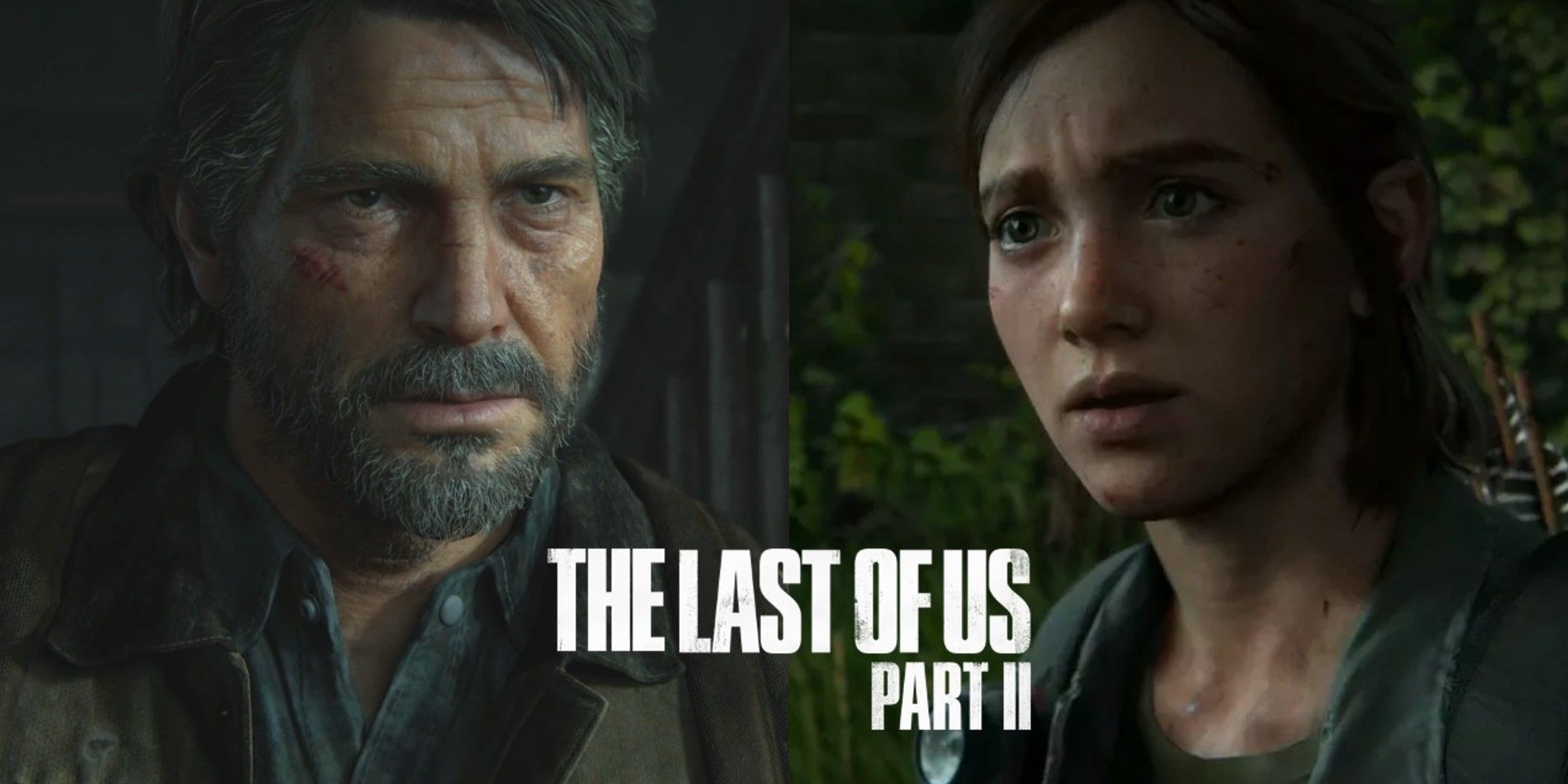
Now, “The Last of Us” is facing that same issue. Years ago, I cited this game as an incredible achievement in terms of storytelling and characterization. Like so many others, I eagerly awaited the release of the sequel. I wanted to see the next step in Joel and Ellie’s journey.

Then, the infamous leaks came out that spoiled large parts of the game. After that, my enthusiasm for the game quickly diminished.

Now, “The Last of Us II” has finally come out. Enough time has also passed to confirm how accurate these leaks are. In that sense, there’s some good news and bad news. The good news is, the leaks weren’t as disappointing as implied. The bad news is, they’re still pretty goddamn disappointing.

It’s akin to being run over by a Prius instead of a fully loaded dump truck.

The reasons for that disappointment are many. I haven’t bought the game. I actually canceled my pre-order after the leaks came out. I still intended to buy the game if the leaks were debunked, but that didn’t happen. I only confirmed them through both a friend and through a few Twitch streams.

I won’t get into the details of the spoilers. I’ll just note that they present a very bleak, very depressing resolution to this story that got us so emotionally invested in the first game. For a game company with as great a track record as Naughty Dog, that’s quite a downgrade. To appreciate just how bad it is, imagine if this was how the “Logan” movie played out.

In the first 20 minutes of the movie, some random character that nobody has ever heard of, let alone cared about, brutally kills Logan in front of Laura. Then, for the rest of the movie, it attempts to make us sympathize with this character who killed Logan. On top of that, when Laura gets a chance to avenge her fallen father, she opts not to for reasons that don’t make sense. She just lets this person go, offering no closure or catharsis.

Those who have played the game can probably fill in the blanks. Again, I don’t want to detail too many spoilers. I’ll just say that there’s a character named Abby in the game and she might very well go down in history as the most hated video game character of all time. It’s not just what she does that makes her deplorable. It’s how the game tries to make players care about her.

To some extent, I get the intention. The premise of the game actually has a novel concept. It attempts to send a message that violence and hatred is a brutal cycle. The more you pursue it, the more it perpetuates. In pursuing that path, you don’t know just how many people you hurt, destroy, or ruin. That’s a good message and a great premise, but this game just fails at every possible turn to make it fit the story.

It shows in how fans have reacted to it. As of this writing, the Metacritic score from users is in incredibly low. It stands in stark contrast to the critical reception of the game, which is always quite telling, as certain movies in recent years have shown. A recent Forbes article attempts to explain it away, using bigotry and bots.

However, I don’t think that’s accurate. I think that’s just making excuses for a story that clearly didn’t work with the audience. Now, even the creators behind the game are starting to attack that audience, which is a problem. I know I’m not a successful author or creator. The chances of me ever getting that success are very slim. However, I know enough to understand how idiotic it is to attack your audience/consumers.

It leaves me genuinely concerned about the larger impact of this game. It also has me concerned about what this will do to an industry that is already laden with controversies and negative hashtags. I’m already bracing for plenty of rants, excuses, and whining from every side. At this point, it’s inevitable. I also seriously doubt that “The Last of Us,” as a franchise, may have just destroyed its future.

It’s tragic. Hopefully, the pending release of “Cyberpunk 2077” and the graceful presence of Keanu Reeves will balance things out in the gaming world.

2 Comments

Filed under Current Events, outrage culture, political correctness, politics, video games