Category Archives: psychology

The Life Ryan O’Callaghan: A Sad (But Uplifting) Story About A Former NFL Player Coming Out

Ryan O'Callaghan #75 of the Kansas City Chiefs in action against the Denver Broncos at Invesco Field at Mile High on November 14, 2010 in Denver Colorado.

For a brief moment, picture a typical gay man. Depending on when you grew up, where you came from, and what sort of media you consumed, you probably have a certain image in your head. I suspect that image looks nothing like Ryan O’Callaghan.

Unless you’re a world class NFL football nerd, chances are you haven’t heard that name before. However, after learning about his story, I hope he’s someone who has changed your perception of what it means to be LGBTQ. That’s because Ryan O’Callaghan’s story is a sad, downright heartbreaking story on many levels, but one that has a happy, uplifting ending.

We need more stories like that, especially during Pride Month. We need them now more than ever.

To appreciate what Ryan O’Callaghan went through, it’s necessary to appreciate how hard it can be to live life as a closeted gay man. It’s also worth noting that this isn’t a story from decades ago. Ryan O’Callaghan was born in 1983. He’s pretty much the same age as I am. He was born at a time when things were steadily improving for the LGBTQ community.

However, that wasn’t much solace for him. He grew up in a very conservative part of California. After realizing he was gay, he had no idea how he was going to live that life in such an environment. That led him to hide his sexuality. At one point, he even made plans to kill himself.

It’s hard to imagine how agonizing it must be, having to hide a part of who you are from everyone around you. Forget, for a moment, how you feel about homosexuality in general. Imagine trying to hide a big part of who you are from everyone and being terrified of the truth coming out. Could we really manage keeping a secret like that?

I know I couldn’t. I question the honesty of anyone who claims they can. For Ryan O’Callaghan, it was too much. He really didn’t believe he could live a full life as an openly gay man. The best he could do was hide his secret as long as he could. That was where football came in.

This goes back to that picture I conjured earlier. Ryan O’Callaghan is 6 foot 7 inches tall. During his playing days through college and the NFL, he weight in between 250 and 330 pounds. He was an offensive lineman. He looked and played the part. In essence, he was the last person anyone expected to be gay and that’s how he liked it.

Through high school, college, and the NFL, he let football be his mask. It’s supposed to be the manliest sport in the world. Even after Michael Sam became the first openly gay player to play in the NFL in 2014, there’s still this perception that the men who play football fit a certain ideal and that ideal doesn’t involve being gay.

That’s not to say there haven’t been gay players in the NFL. In fact, there have been quite a few. One of the best tight ends in NFL history, Jerry Smith, played his entire 13 year career in the NFL as a closeted gay man. There’s a good chance there are active players in the NFL right now who are gay, but in the closet.

Be that as it may, it offered no comfort to Ryan O’Callaghan. Football was still his mask, but he loved playing it enough to keep going. It also helped that he was very good at it. He was so good that he managed to get a college scholarship with the California Golden Bears. He went onto play well enough to get drafted by the New England Patriots in 2006.

That’s a level of success very few football players ever reach, regardless of position. The fact that Ryan was able to go that far is a testament to both his skill and his talent for the game. Doing it all while in the closet just makes it all the more harrowing.

However, that success didn’t change his plans. Ryan still believed he could not live life as an openly gay man. Once his playing days were over, he still planned to take his own life. At one point, he even wrote a suicide letter, bought guns, and built a cabin. That’s how close he came to ending it all.

Thankfully, this story has a happy ending.

Before he took that fatal step, he got help from a clinical psychologist. She helped him out of that dark place. Eventually, he was able to come out, revealing his secret to the general manager who had drafted him. It’s hard to overstate how big that moment must have been for him.

I certainly can’t do it justice. I’ve only touched on some of the details surrounding Ryan O’Callaghan’s story. For a more a more complete picture, check out his book, My Life On The Line. Also, I highly recommend that everyone read this story done by Outsports. It covers Ryan’s struggles in far greater depth.

I should offer a bit of a trigger warning, though. Some of the details are difficult to take in, but it’s worth noting that this story has a happy ending. Here’s a brief snippet.

Outsports: Former Patriots and Chiefs tackle Ryan O’Callaghan comes out as gay

Very early on in the process he felt it was mandatory to share his truth with Pioli, the man who had brought him from New England and helped keep his career — and his life — moving forward.

Just after the 2011 season, O’Callaghan visited Pioli in his office.

The day before he had called his general manager, who had become a good friend, to ask him for a meeting. Pioli had known about O’Callaghan’s drug abuse, and the gravity in his player’s voice over the phone told him that something dire was on his mind.

“He had built this up like he was coming in to tell me that maybe he had done something truly terrible,” Pioli remembered.

O’Callaghan trudged into Pioli’s office the next day. After a hug and some small talk, O’Callaghan turned serious. He told Pioli he had been visiting with Wilson and had gotten “clean.” It was good news to Pioli.

“I’ve got something else I’ve got to tell you,” O’Callaghan said. At this point he was fighting back tears. Pioli’s mind raced, wondering if his player had harmed or killed someone.

“I’m gay,” O’Callaghan said.

His private announcement was met with immediate support from the GM. Then:

“So what’s the problem you wanted to talk me about?” Pioli asked.

O’Callaghan looked at him, bewildered, 27 years of fear, anxiety and self-loathing meeting Pioli’s stare.

“Scott,” O’Callaghan said, “I’m… gay.”

Pioli acknowledged that and asked again if O’Callaghan had done something wrong.

“People like me are supposed to react a certain way, I guess,” Pioli told Outsports. “I wasn’t minimizing what he was telling me, but I’m waiting for the other shoe to drop. He built this up and built this up to the point where he said he was nearly suicidal. What Ryan didn’t know is how many gay people I’ve had in my life.”

O’Callaghan also didn’t know that, according to Pioli, he wasn’t the first gay NFL player whom his GM had counseled.

The two men talked more and Pioli assured O’Callaghan that their conversation changed nothing, he was still there to support him, and they were still friends. O’Callaghan was shocked by the reaction. Pioli handled it pitch-perfectly, as though he had known all along. So O’Callaghan asked if his boss had, in fact, known.

“Ryan, how would I have known?” Pioli responded.

“Do you really think I like coffee that much?” O’Callaghan asked.

Pioli had no idea what his player was talking about.

O’Callaghan had, since his time in New England, headed to the training room after every practice to consume copious amounts of coffee, a convenient excuse to avoid being in the showers with the rest of his teammates.

Pioli got emotional at the thought of one of his players having to go to those lengths to keep some distance from his teammates. The mental toll this had all taken on O’Callaghan had come into focus.

As they rose to say goodbye, Pioli came around from behind his desk and opened his arms to embrace O’Callaghan. They had hugged countless times before, after games, after the offseason, even just moments ago when O’Callaghan walked into his office.

This time O’Callaghan stuck out his hand to shake.

“What’s with the handshake?” Pioli asked.

“I just told you I’m gay,” O’Callaghan replied sheepishly.

Pioli was having none of it and grabbed O’Callaghan.

“Dude, it’s OK,” Pioli said. Then, in his signature sense of humor, “Just don’t grab my butt.”

That broke the tension and O’Callaghan burst into laughter. The humor was a sign to him that Pioli wasn’t going to change. They could get along just as they always had.

“Don’t worry,” O’Callaghan replied, “You’re not my type.”

I sincerely hope this story resonates with others for all the right reasons. Whether you’re openly LGBTQ, in the closet, or just know people who are struggling with their sexuality, I hope the story of Ryan O’Callaghan offers insight and perspective.

Yes, we’ve made progress as a society. Life for the LGBTQ community is better now than it has been in the past. We still have room for improvement, as Ryan’s story perfectly illustrates. If you or anyone you know is struggling, I hope this story helps you in some way.

Also, if you need help or are at all feeling suicidal, please check out the resources of the Trevor Project. Thank you an have a Happy Pride Month.

2 Comments

Filed under football, LGBTQ, NFL, psychology, real stories, sports

Rethinking Homework For The Post-Pandemic World

Homework sucks. Nobody likes doing it. I think that’s an uncontroversial opinion, even in these contentious times. I may no longer be in school, but I vividly remember how much I hated it. From grade school to college, it was often the worst part of any class, course, or subject. I doubt I’m alone in that sentiment.

That said, I understand why it exists. Like taxes or colonoscopies, it’s a necessary evil. It’s a means by which we test and reinforce the knowledge we teach to young, curious minds. At the very least, it’s a mechanism for determining who is actually learning and who is not.

I bring this topic up not to start a crusade against homework, as some already have in the past. I’m not looking to uphold or expand it, either. I’m raising the issue because the current state of public education is in a precarious state, especially in America.

It’s already well-documented that America’s ranking in the world of education leaves a lot to be desired. There are many systematic issues for that, some of which I’ve ranted about before. Changing that system doesn’t come easy, but if ever there was a time to re-think our approach, it’s now.

A global pandemic has caused huge disruptions to a lot of things, our schooling system being just one of them. In the span of a year, we’ve upended decades of entrenched educational traditions. The whole ritual of getting on a bus, going to a big building, and shuffling kids through multiple classes every day has been tabled.

Yes, it’s distressing for students, parents, and teachers alike.

At the same time, it presents an opportunity. This is a chance to rethink how we go about education. Why not start with homework? Nobody likes it. If we’re going to change anything, let’s start with that.

As tempting as it is to claim homework doesn’t have a single benefit, I can’t overlook the research that has been done on this topic. People have actually studied it. While the conclusions aren’t clear-cut, the current body of evidence suggests some amount of homework is beneficial in terms of student achievement.

How much constitutes “some?” That depends on a lot, both in terms of the students and the subject matter. Some students can handle more homework than others. For others, it’s genuinely detrimental to a student’s achievement. When you look at the data, the only consistent result is inconsistency.

To me, a guy who despised homework as much as any other school-age kid, its impact varied. There were some subjects that I was naturally more interested in than others. Subjects like history, biology, and writing were already something I did in my free time. Homework in those subjects wasn’t too much of a burden.

In other subjects, like English, Spanish, and certain math classes, it was little more than a test in frustration. I never learned anything from it. I just did it to get it done so that I wouldn’t have to worry about it. I honestly can’t think of anything I actually learned from that kind of homework.

I know that’s just anecdotal on my part, but the research seems to bear that sentiment out. If a kid is interested in something, their natural curiosity will lead them to explore it. Homework can actually help with that effort. I can attest to that.

Back in high school, I took a world history course in my sophomore year. Around that same time, I developed a fondness for watching the History Channel, especially its many World War II documentaries. I wasn’t assigned to do it. I just did it because I was curious. It ended up paying off.

Later that year, we took an exam on the World War II period. I did not study at all for it, but I still got a perfect score. I just knew the material that well. The teacher even singled me out for my score, which was a nice bonus.

The same thing happened whenever I had to do an essay question for a test. I liked writing, so that was easy for me. I’m mediocre to awful at every other form of testing. I knew plenty of others who were the opposite. That’s kind of the point. Not everyone learns or tests the same way.

The same logic applies to homework. Since not everyone learns the same way, assigning the same kind of homework for everyone is bound to have mixed to negative results. It’s a blanket solution to a complex problem, which may ultimately hurt more students than it helps. It’s a reason why some jurisdictions have already experimented with eliminating it completely for certain grade levels.

I don’t think that solution is feasible, given how entrenched homework is within the current system. While I’m sure many students would celebrate its abolition, those same students may miss out on the benefits of learning outside school hours.

I know if there were no homework when I was going to school, I probably would’ve been more inclined to slack off. There’s a critical balance to strike when it comes to after-school learning. If school becomes too easy to brush off, then nobody benefits in the long run.

That’s why I’m more in favor of reforming it. One potential alternative is to switch from homework to retrieval practices. That practice emphasizes recalling what you learned rather than doing pre-made assignments. That may actually be easier in the current situation, given the growing prevalence of online schools and distance learning.

There are other alternatives that include a greater emphasis on projects, exploring basic life skills, or assigning certain educational games. Some may or may not be as effective, but like I said earlier. This might be the best possible time to consider those alternatives.

It has been year since I’ve been in school, but I remember enough to know that the system I went through had plenty of room for improvement. I also realize I was lucky. I went to public school in a relatively affluent area. I realize that my school had resources that others didn’t.

The current system for schooling hadn’t changed much since I graduated. Up until this year, public schools had clung to their tried and true traditions, which included their approach to homework. I think the time is right to rethink those traditions.

This past year has completely disrupted the schooling for an entire generation of kids. We don’t yet know the extent of that impact, but there’s still time to guide it. Reforming how we approach homework won’t fix everything, but it’ll definitely help the overall experience for the students. School is hard enough, even without a global pandemic. At the very least, let’s make this one arduous aspect of it a bit more bearable.

2 Comments

Filed under Current Events, health, psychology

Signs Someone Truly Loves You (According To Reddit)

How do you know when someone truly, sincerely loves you?

That’s a question that every love song, chick flick, and romance novel attempt to explore. I’ve certainly done my share of exploring with the novels and sexy short stories I’ve written. They don’t always answer the question, but they do give it drama and substance.

What about love in the real world? Stories are fanciful and theatric. The real world is not. However, true love still exists in this world. Being a lifelong lover of romance, and having seen it manifest first-hand in real people, I know just how real and powerful it can be.

Those real-life love stories are often more powerful than anything in fiction. Those stories are still out there, even in this cynical world we live in. You just have to know the signs, but that’s easier said than done.

What are those signs? Well, I certainly have my theories, but I understand the love manifests in many diverse ways. My experiences are limited, as are those of most people. Thankfully, that’s where Reddit comes in.

While it may have its dark corners, there are some genuinely heartfelt threads to explore. These threads will make your day for all the right reasons if you find them. Below is a video from the YouTube channel, Radio TTS, on a thread from r/AskReddit on signs that someone truly loves you.

If you’re a romantic or just want to explore the question, this is something that will definitely help. It may even help you realize for yourself just how much that special someone loves you. Enjoy!

Leave a comment

Filed under Love Or Obsession, psychology, romance, sex in society, YouTube

Suicides (Surprisingly) Went Down During 2020: Possible Reasons And Insights

Every now and then, I go out of my way to highlight good or uplifting news. From brave priests who do defy the Vatican to wholesome comic strips involving Mr. Rogers, I try to use these stories to lift everyone’s spirits during difficult times.

Let’s face it. We’ve had a lot of that lately. Last year gave us plenty of difficulties, to say the least. It certainly doesn’t help that good stories rarely make the news, mostly because it doesn’t garner ratings or shock value. I tried to do my part, but I admit it wasn’t easy.

I managed to find some silver linings, by they hardly made up for all the soul-crushing hardship that year wrought. My spirit is still not fully intact after being so broken by last year.

Even so, I still want to make that effort to highlight good news, especially when it’s unexpected or surprising. One such story involves the less-than-uplifting topic of suicide, something that is both emotionally charged and incredibly devastating for a great many people and their families.

If ever there was a year during which people could be forgiven for thinking such morbid thoughts, it’s 2020. If a story came out that indicated suicides went up during 2020 as the pandemic raged, then I doubt anyone would be surprised. It probably wouldn’t even be news.

However, according to a story from CBS, that’s not what happened. In fact, the opposite occurred. Against all dire assumptions and understandable cynicism, the number of suicides in the US declined significantly during 2020. I’ll give everyone a minute to wrap their heads around that.

CBS News: U.S. suicides dropped last year, defying pandemic expectations

The number of U.S. suicides fell nearly 6% last year amid the coronavirus pandemic — the largest annual decline in at least four decades, according to preliminary government data.

Death certificates are still coming in and the count could rise. But officials expect a substantial decline will endure, despite worries that COVID-19 could lead to more suicides.

It is hard to say exactly why suicide deaths dropped so much, but one factor may be a phenomenon seen in the early stages of wars and national disasters, some experts suggested.

“There’s a heroism phase in every disaster period, where we’re banding together and expressing lots of messages of support that we’re in this together,” said Dr. Christine Moutier, chief medical officer of the American Foundation for Suicide Prevention. “You saw that, at least in the early months of the pandemic.”

An increase in the availability of telehealth services and other efforts to turn around the nation’s suicide problem may have also contributed, she said.

I want to make one thing clear again before proceeding. Suicide is a serious issue that affects a lot of people. If at all you’re struggling with suicidal thoughts, please consider calling a help line or reaching out to someone. There are people out there who will listen.

Having said that, I also want to note that this news genuinely surprised me. Even as someone who tries to have more faith in humanity than most, this is pretty much the opposite of what I would’ve assumed and in the best possible way.

During a crisis, people tend to panic. We all saw that last year. Anyone who fought someone for access to toilet paper remembers that. When people panic, they get stressed out. When they get stressed, they tend to get depressed. How else are you supposed to feel when you see the death toll climbing every day?

Despite all that, fewer people fell beyond that darkest of dark points. More chose to endure. That bold part is something I highlighted because that is a real effect. Whenever a disaster strikes, people tend to come together. Things like political divisions, racial strife, and what not tend to fall to the wayside when we’re all at the mercy of something we can’t control.

It’s one of humanity’s greatest strengths. Our tribalism may divide us a lot during times of peace, but when the going gets tough, we come together for the sake of survival. That’s powerful sentiment and one that can bring out the best in people. During a global pandemic, we all have to come together to some extent to make it through.

In addition, some cite the rise of telemedicine and the ability to treat people with mental illness remotely as a contributing factor. I certainly think that played a part, but I suspect that the shared struggle and solidarity that often comes during a disaster was a larger factor.

That same shared sense of community and commonality directly counter some of the most powerful risk factors for suicide. Those who make that dire choice often feel alone and isolated. They feel they lack that core sense of community that’s so critical to any social species.

The fact it was strong enough to reduce suicide during a once-in-a-century pandemic is both revealing and encouraging. It shows that this shared sense of community has tangible benefits to large swaths of people. It also hints that the world we had prior to the pandemic wasn’t given enough people this sense of connection.

You can blame that on any number of things, from smartphones to outrage culture to politics. I certainly have my theories, but I’m not smart enough or informed enough to make them credible. I highlight this story because I think it offers and important perspective.

When things get really bad, people will come together. It’s only when they get bad enough that we realize how much more we can do as a community than we can as individuals. We shouldn’t forget that. Even after this pandemic is over and things revert to some semblance of normalcy, we can’t forget that we’re a social species.

We need each other.

We need friends, family, and neighbors. It doesn’t just make us all stronger during a crisis. It’s an integral part of being human.

Leave a comment

Filed under Current Events, health, human nature, politics, psychology

Was Socrates Right About Democracy?

Socrates - HISTORY

I am a proud American. I love my country, the ideals it espouses, and the vision it offers for freedom loving people. I consider myself lucky to have been born in the United States. I understand that being an American comes with many benefits that millions of others cannot enjoy. For that, I am eternally grateful.

However, I do not deny that this country I love has flaws. I am a patriot, but I do not overlook or underscore some of the objectively terrible things the United States has done in its brief history. We shouldn’t ignore those flaws. Loving your country doesn’t mean always believing it’s right, good, and just. I know that’s not a popular sentiment among certain Americans, but that’s exactly why I value it.

That same misguided sentiment also has a significant impact on democracy, one of America’s highest ideals. Regardless of your political leanings, that’s the one tradition that America holds more dear. We embrace democracy and empower the people to pick their leaders. Considering how leaders have traditionally come to power throughout history, it’s an admirable institution.

At the same time, it’s not without its flaws. Democracy, in principle, is great. It empowers the people. It allows the people to set the standards by which a ruler is put into power. Given how often power has been abused by rulers, that’s critical for a stable, functional society.

Despite that strength, it’s still worth asking an important question.

What are the greatest flaws of democracy?

I know just asking that will put me at odds with many of my fellow Americans. Thankfully, I’m not the first one to ask that question. In fact, this is a question that has been contemplated since before America was ever a country.

Democracy itself is not an exclusively American invention. Most educated people know that it existed in various forms throughout history, most notably in Ancient Athens. However, even back then, there were some who had major criticisms of democracy, both in principle and in practice. One of the most vocal critics was the Father of Philosophy himself, Socrates.

Now, I’m not a philosophy buff. I couldn’t begin to properly break down all the concepts, principles, and contributions that Socrates made to philosophy and Western Civilization in general. So, I won’t bother trying. Instead, I’ll just focus on what he said about democracy and why he viewed it so unfavorably.

To that end, this video form the YouTube channel, The School of Life, does a nice rundown of Socrates’ biggest criticisms of democracy. Watch it and follow his ideas. You may or may not agree with them, but they’re still worth contemplating.

Again, this is just a brief summary. The nuts and bolts of Socrates’ ideas and principles are far greater in terms of breadth and concept. With respect to democracy, though, his criticisms are fairly concise.

Democracy, namely the kind in which too many uneducated people have a vote, tends to lead towards demagoguery. Instead of diligent, qualified, well-meaning leaders, people will simply elect those who are capable of winning people over with promises and rhetoric. It doesn’t matter if they’re aristocrats or con-men. They just need to sway 51 percent of the population into giving them the power they seek.

I hope I don’t need to cite an example of this happening in the real world. I also hope I don’t need to name names of those who have carried themselves like demagogues in the American political landscape. In fact, there has been a distressing trend of American’s actively seeking to put their favorite demagogues for positions of power.

These are not skilled ship captains or trained doctors, like what Socrates described in his video. These are people who are just capable of persuading a large mass of people that they should wield power. They didn’t train to wield power like a doctor trains to treat illness. They just say they’re capable and it’s up to the people to believe them.

It’s not an unreasonable criticism. Does that mean I agree with it completely? No, I do not.

Does that mean I think there’s real merit to these criticism? Yes, I absolutely do and I think there are ways to address them.

Socrates’ issue wasn’t just with democracy in principle. He was more concerned about uneducated people who don’t appreciate or care for wisdom making critical decisions, such as who should lead a country. Another great philosopher, George Carlin, put it even better.

“Never underestimate the power of stupid people in large groups.”

I think this sentiment is more relevant now, especially after last year’s Presidential Election and the horrors of the January 6th insurrection at the Capitol. Me and my fellow Americans have never been more divided. As a proud American, this worries me a great deal.

I still love my country. I want it to be better. I want it to live up to its greatest ideals. However, I don’t think it can do so without taking the criticisms of someone like Socrates seriously.

Leave a comment

Filed under philosophy, politics, psychology

Dear America: Let’s NOT Have Another Satanic Panic

I’m a proud American. I love my country and I celebrate its highest ideals. I also believe most Americans are good, decent people who cherish these values as well. I don’t deny its flaws, nor do I deny its mistakes in the past, as well as the present. I genuinely want America to be the best it can be.

That’s why I’d like to make a plea to America and all my fellow Americans at the moment.

Please, for the love of whatever deity you believe it, let’s not have another Satanic Panic.

This isn’t just about politics, although there are some distressing links. This isn’t just about culture, even though the imagery is certainly present. This is me, a proud American, urging his fellow Americans to not give into the temptation to start blaming demons and devils for their problems.

It’s not just absurd and idiotic. We’ve done it before. I’ve written about it. The lives of innocent people were ruined because of it. On top of it all, none of it turned out to be true.

There was no reason for the panic. There were no Satanic cults secretly torturing or abusing children. It was all made up. It was basically Christian Conservative fan fiction that people took too seriously. Much like the character of the devil they fear has no basis in Christian theology. It’s just a boogie man for adults.

None of it amounted to anything other than baseless fear and ruined lives in the 1980s. Now, it seems too many people have forgotten what a huge waste of time that was because concern about Satanic cults abusing children are back and more political than ever.

Much of that is because of a bullshit conspiracy theory that I won’t name or link to. You probably know who I’m referring to. They’re the one that thinks Tom Hanks is part of a Satan worshipping cabal. As it just so happens, this same cabal includes everyone who leans right politically absolutely hates.

If they’re to the right of Ronald Regan, they’re a Satan Worshipper.

If they didn’t vote republican in the last four elections, they’re a Satan Worshipper.

If they support position that doesn’t involve cutting taxes, ignoring racist policies, or overfunding the military, they’re a Satan Worshipper.

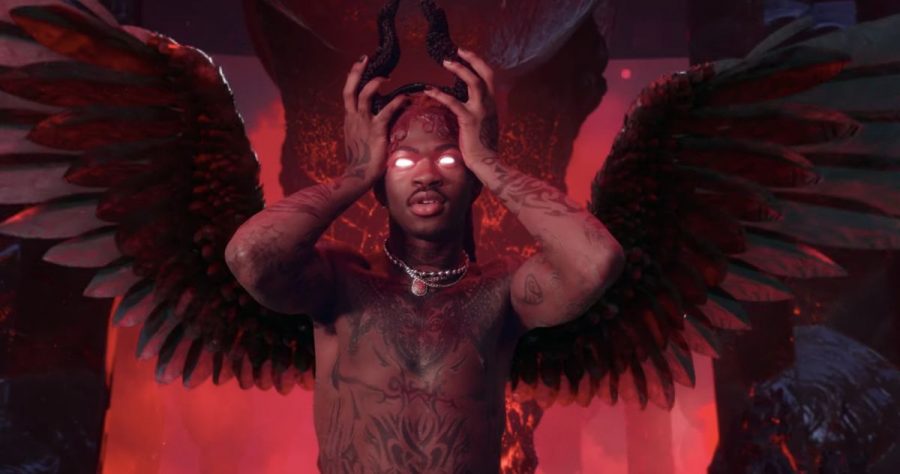
I’ve been avoiding this absurd, asinine, infuriating excuse for a conspiracy theory for years. It’s just too stupid to take seriously, let alone discuss in an honest, balanced way. However, thanks to the recent outrage surrounding Lil Nas X and his homoerotic, Satan-centered music video, I worry another panic is brewing.

Much of it is coming from the same part of the political spectrum as it did in the 1980s. This time, however, isn’t just a bunch of Christian conservatives with too much time and money on their hands. People who don’t even identify as religious are buying into this crap.

It’s not just about theology anymore. It all comes back to this age old belief that there’s a group of objectively evil supervillains who are causing all the problems in the world. Satan worshippers who eat children and deal in human trafficking is as evil as you can get. There’s nothing complicated or nuance about it. It’s the ultimate good versus evil match-up.

Except, and I cannot stress this enough, it isn’t real.

That evil conspiracy doesn’t exist. I could cite any amount of evidence, but I know that won’t convince those who ardently cling to it, even after its many predictions end up being wrong. Instead, I’m just going to point out one simple issue.

For any conspiracy of any level to function in any capacity, it requires that those involved are completely obedient, always keep their secrets, and never make mistakes. Since these conspiracies involve people and people, in general, are imperfect beings, they’re not just difficult to maintain. They’re impossible.

Human beings can’t keep secrets.

They can’t avoid simple mistakes.

When it comes to something as evil as Satan worship and child sacrifice, you’re just can’t keep that sort of thing a secret. Also, people that evil generally struggle to organize. It’s why most serial killers act alone. That kind of evil is an aberration. Building a conspiracy around that is like trying to herd a thousand cats all strung out on crack.

I’d sincerely hoped that after the events of the last election, the talk of evil Satan worshippers and conspiracies around them would die down. Sadly, I think Lil Nas X revealed there’s still a contingent of people out there who think the evil Satanic cabal is still out to get them.

That’s why I’m making this plea. My fellow Americans, this is not the way to a better tomorrow. Fighting invisible evil enemies will only ever succeed in making real enemies, both in our minds and among our fellow Americans. No good can ever come from something like that in the long run.

Moreover, believing and obsessing over a conspiracy of Satan worshippers acts as both a distraction and a delusion. Fighting something that isn’t there only keeps you from fighting actual problems involving actual people who are doing real harm, but not in the name of Satan.

It’s easy to think that there’s some centralized force of evil in the world. It makes the cause of all our problems seem tangible. It makes you feel like you’re a soldier on the front line of an epic battle, fighting alongside others who are every bit as committed as you. Unfortunately, this mindset is both dangerous and counterproductive.

There are real problems with America and the world. However, those problems don’t come from Satan, demons, or some secret cabal of lizard people. They come from other people. They come from your fellow humans, as well as your fellow Americans.

It’s complicated and messy. Just winning an epic battle against evil isn’t an option. We have to put in the work. We have to take responsibility. We have to operate in the real world with real people who have real issues. That’s how we do the most good for ourselves and our fellow Americans.

Once again, I urge everyone reading this to learn the lessons of the past and embrace the challenges of the present. Let’s hold off on another panic. Satan isn’t conspiring against us or our country or our fellow citizens. The cabal isn’t real, the conspiracy is fake, and Tom Hanks is a national treasure. If you really want to fight true evil, start by doing good by your fellow citizen.

2 Comments

Filed under Current Events, human nature, Lucifer, outrage culture, political correctness, politics, psychology, sex in society

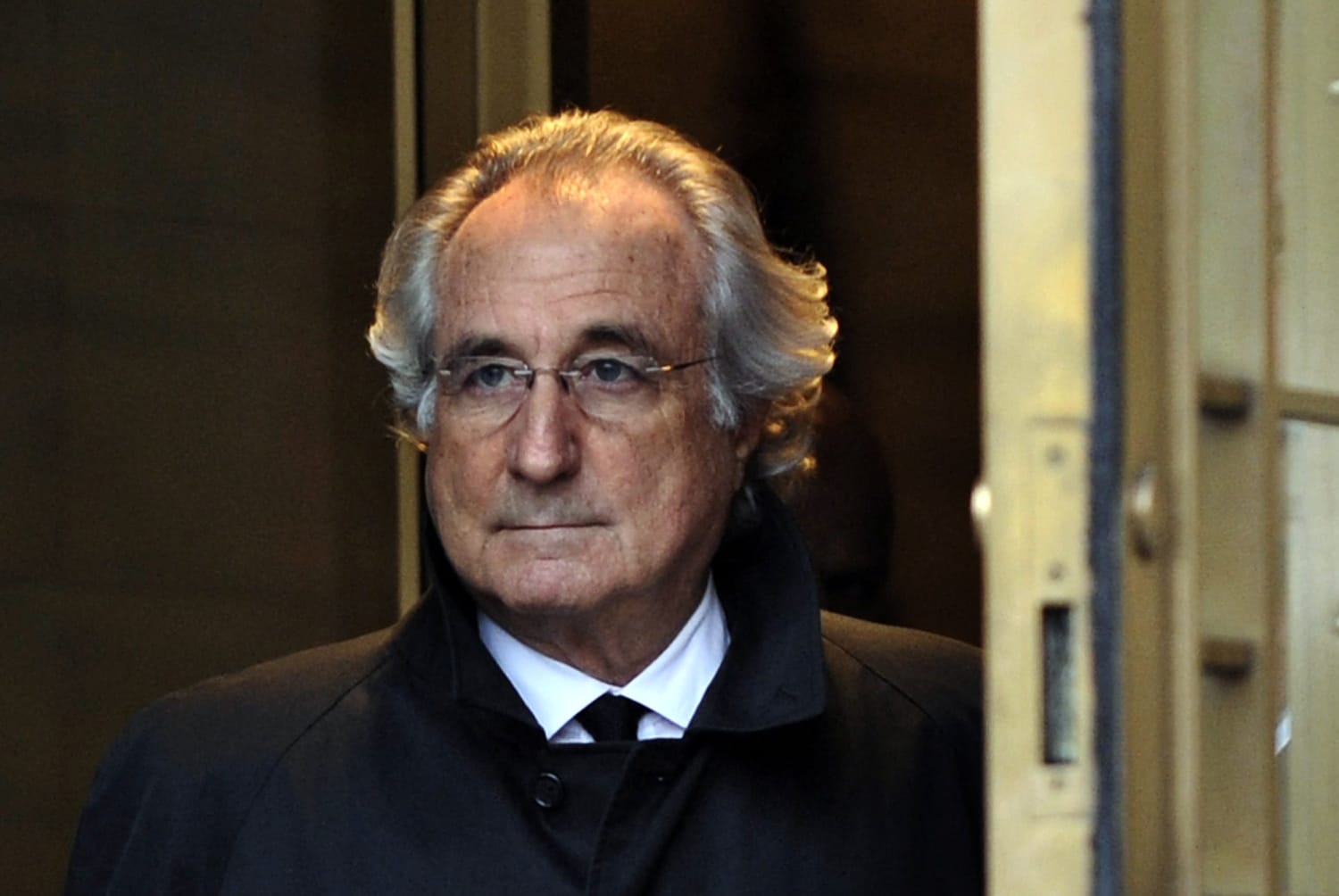
Bernie Madoff Is Dead: Reminders And Perspectives

In general, it’s wise and considerate to not celebrate another human being’s death. Even if you despise that person on so many levels, we should make an effort to not take too much satisfaction in someone else’s passing. It’s just basic human decency.

However, there are some exceptions and I think most would agree the death Bernie Madoff qualifies.

There aren’t a whole lot of people in this world who have managed to make themselves so universally hated. Somehow, Madoff found a way. Hatred of him and his crimes has transcended politics, ideology, race, religion, and geography. That’s a rare kind of hatred, but one Madoff rightly earned.

After his huge, decades-long Ponzi scheme was exposed, he became the face of evil and greed. The man stole from everyone. From Hollywood elites to holocaust survivors, he’d steal from anyone just to keep his scheme going.

For that reason, it’s entirely understandable that some are celebrating the recent news of his death. After decades of bilking people out of their money and living the life of immense wealth, Madoff died alone in prison with no friends, family, or loved ones to mourn him. It may very well be the most justice we can expect for a crime of this magnitude.

AP News: Ponzi schemer Bernie Madoff dies in prison at 82

Bernard Madoff, the infamous architect of an epic securities swindle that burned thousands of investors, outfoxed regulators and earned him a 150-year prison term, died behind bars early Wednesday. He was 82.

Madoff’s death at the Federal Medical Center in Butner, North Carolina, was confirmed by his lawyer and the Bureau of Prisons.

For his many victims, I’m sure Madoff’s death is cold comfort, at best. I certainly have my opinions of the man. I’d rather not share them, if only to avoid the ire of the FCC. Instead, I want to offer some perspective on the death of this fraudster and the lessons from it that we should heed.

Most people already know the basics of Madoff’s scheme. It was, by and large, a massive Ponzi scheme. It’s certainly not a new scam. It’s been around for decades. Madoff’s was just the biggest. How he went about sustaining it for so many years has been covered by many people far smarter than me.

However, the size and specifics of the scheme matter. It was always going to fall apart, as all Ponzi schemes do. It’s like gravity. There’s only so much money you can steal to give to previous investors. Eventually, you just run out of people and money. The math always works against you.

The fact that so many Ponzi schemes still occur, despite all these forces working against them, is something worth noting. The death of Bernie Madoff doesn’t mean these types of schemes will go away. There will always be some ruthless, amoral con-man out there who manages to scam people out of money through trickery, deceit, and fraud. The death of one famous fraudster isn’t going to discourage the fraud.

Another perspective that we shouldn’t forget is how Madoff’s scheme could’ve, and probably should’ve, been exposed years ago before it got this big. It’s well-documented that Harry Markopolos, a financial analyst from Boston, figured out the scheme as early as 2000 and tried multiple times to expose it. Unfortunately, the right people didn’t listen and the system didn’t work as it should’ve.

That’s another thing that tends to happen a lot with these schemes. There are often people who figure it out long before it makes the news or alerts the authorities. Sometimes, it hastens the collapse of the scheme, but skilled con-men find a way to get around it. That only ensures more people get hurt in the long run.

With Madoff’s death, it leads me to wonder just how many other schemes like his are out there, unexposed and operating under the guise of legitimacy. We may not think they’re scams. They may go out of their way to assure us that they’re nothing like Madoff. We should still be vigilant.

There are some proactive steps you can take. There are signs you can look for and government agencies you can call. Madoff was a skilled con-man, but even he couldn’t hide every aspect of his lies. Even the most determined fraudsters can only do so much to subvert the basic math of finance.

There’s also one other perspective I think is worth highlighting and it might be the most revealing of it all. Of all the distressing details surrounding the Madoff saga, the one that stands out most to me is how Madoff inevitably gave up on it.

When he was exposed, it wasn’t because someone at the FBI or SEC caught him lying. It wasn’t because he messed up and a regulator caught him in the act. Madoff went down because he willingly gave up. He turned himself over when he realized he just couldn’t keep the scheme going anymore.

It wasn’t a matter of law enforcement catching the criminal. It was a matter of the criminal just giving up because fighting it just wasn’t worth the effort anymore. Take a moment to think about that and the implications.

We, as a law-biding society, didn’t catch Bernie Madoff. He just gave up. That says a lot more about the system in place than it does about our collective hatred of con-men like him. It also raises the question of what would happen if someone even more ruthless and amoral found themselves in a similar position.

How much further could they take the scheme?

How many more victims could they exploit?

These are distressing questions and the answers should give us pause. A man as infamous and cunning as Bernie Madoff could only succeed in a system with enough flaws for him to exploit. Who’s to say there isn’t someone worse operating a similar fraud right now?

This infamous criminal is now dead and he will be rightly vilified for his crimes for years to come. However, let’s not let his death or our shared hatred of him give the false impression that crimes like his won’t happen. They certainly will. It’s just a matter of catching them before they hurt too many people.

There are many people like Bernie Madoff who are still alive and still operating their various frauds. We can’t stop all of them. At the very least, we can make sure they never succeed as long or as much as he did.

Leave a comment

Filed under Current Events, human nature, psychology, real stories

Jack’s World: Understanding And Appreciating The Power Of Boredom

The following is a video from my YouTube channel, Jack’s World. It’s a brief exploration of the power of boredom. It’s something I’ve touched on a number of times and will likely do so again. While writing about boredom has helped me appreciate its impact, I feel like this video helps get the point across even more. Keep it in mind the next time the power goes out. Enjoy!

Leave a comment

Filed under Jack's World, philosophy, politics, psychology, YouTube

A Message To Those Who Whine About The “Mainstream Media”

There are certain institutions and organization no one wants to defend. Usually, there’s a good reason for that. Who would ever want to stand on the side of the IRS, insurance companies, or oil companies? I don’t deny some will make the effort, but it’s often born of questionable motivations.

Now, I’m not out to defend any of those organizations or the people they pay to protect them. In fact, I’m going to try very hard to not take a side here. That may not be possible because in this case, I’m going to try and be balanced on an institution that has only become more imbalanced over the years.

I’m referring to “the mainstream media.” Yes, I put that term in quotes. There’s a good reason for that.

I’m also aware that people talk about “the mainstream media” the same way they talk about hemorrhoids, traffic jams, and malignant tumors. You’re unlikely to find anyone who will come to their defense. It’s why trust in “the mainstream media” is at an all-time low.

However, is that entirely the media’s fault?

Don’t get me wrong. The modern media is a mess and definitely needs a top-down overhaul, but I’m not smart enough to discuss that at any great length. Instead, I want to focus on those who constantly whine about “the mainstream media.”

You hear it from liberals who claim right-wing news sources peddle disinformation and outright propaganda.

You hear it from conservatives who claim left-leaning news sources basically treats anyone to the right of Jimmy Carter a fascist.

You basically hear it from everyone from every side of the political spectrum. Either “the mainstream media” is actively undermining democracy or they’re an unofficial arm of an oppressive government. There’s no middle-ground or nuance. No matter your politics, you’ll find an excuse to hate them.

I’m sorry, but I have to call bullshit.

Again, this is not me coming the defense of mainstream media. This is just me saying there’s legitimate criticism of modern media institutions and then there’s just bullshit whining. The latter has grossly overwhelmed the former as of late.

I see it in comments section and social media. It takes many forms, but it often boils down to this.

“The mainstream media is covering up the truth!”

“The mainstream media is spreading lies!”

“The mainstream media is attacking [insert favorite politician/pundit/celebrity]!”

“The mainstream media is destroying the country I love!”

Trust me, it gets more hyperbolic and vulgar. In some cases, real people faced outright death threats because of peoples’ hatred for “the mainstream media.” Even after the death of Rush Limbaugh, the hate isn’t subsiding. It’s only going to get worse.

That’s because it’s easier than ever to basically customize your news feed. If you want to only hear news from a right-wing bias, you can do that. If you only want to hear news from a left-wing bias, you can do that too. If you just want news that’s uplifting, there’s even a source for that too.

It’s not entirely a result of the internet. This has been happening since the rise of talk radio. People learned that you could garner a large, loyal audience by telling them the news and opinions that they want to hear. They won’t care how factually accurate it is. They just want to hear what makes them feel good.

That’s not inherently wrong. We’re human. We have our biases. There’s no way around it.

The problem is that, because people are having their biases satiated, they’re becoming more antagonistic towards anything that doesn’t do exactly that. That means any news that isn’t their preferred news is “the mainstream media” and “the mainstream media” is always bad.

I wish I could write that with more sarcasm, but this is a serious issue and one with deeply distressing implications.

This is part of why it’s becoming increasingly harder to convince people that a certain news story has been debunked or discredited. It’s also why people will cling to certain issues, citing only uncredible and bias sources, long after they’ve faded from the headlines.

You cannot reason with someone who clings to an unreasonable source of information. You also cannot have a civil discussion with someone who sees anything that doesn’t agree with them as wrong, evil, or a conspiracy by shape-shifting lizard people. I swear that last one is an actual conspiracy theory. I wish I was joking.

For this reason, I’ve had many unpleasant conversations with people who are otherwise decent human beings.

For that same reason, I’d like to send those people, as well as those who side with me on most arguments, a simple message.

The mainstream media is not out to get you.

The mainstream media is not out to destroy your way of life.

The mainstream media is not some evil organization run by a cabal of supervillains.

In essence, whining about “the mainstream media” has just become code for whining about certain people or organizations that don’t agree with you politically or ideologically. It’s a knee-jerk reaction that gives people an excuse to dismiss every point they make, even if it’s right, accurate, and completely credible.

It’s pathetic that people are that insecure about their politics, but it’s also dangerous. The events of January 6th at the Capitol is proof of that. I’m not saying we should all start trusting the media at every level. I’m just saying that there’s a better, more balanced way to get a clearer view of our world. You’re just not going to get that view if you only ever listen to Infowars.

Leave a comment

Filed under Current Events, media issues, political correctness, politics, psychology, rants

Dear Gina Carano And Her Supporters: Avoid Ben Shapiro (And Everyone Like Him)

Talking about politics is ugly.

Talking about issues like “cancel culture,” which I put in quotes for a reason, is often revolting.

Sometimes, though, we can’t avoid it. When it makes headlines, it’s like a massive traffic accident. We can’t look away. It’s just how we’re wired. It’s a problem that plays right into the flaws of human nature.

It affects us on an emotional level, appealing to tribalism and hate. It brings out the worst parts in some people. For others, it brings out a sense of greedy opportunism that is nothing short of exploitative.

This brings me to the ongoing saga involving Gina Carano, the new face of “cancel culture” after Disney fired her from “The Mandalorian.” She’s been making a lot of noise in the media lately, which is kind of ironic for someone claiming to be silenced or censored, but that’s beside the point.

However, a good chunk of that noise came out of her recent interview with Ben Shapiro of the Daily Wire. Now, I’m inclined to believe that Gina is sincere in her statements. I’m also inclined to believe that she’s not a hateful person, even though her words and tweets tend to the wrong message.

Reasonable people can have reasonable discussions about how justified Disney was in firing her. Those same people can have reasonable discussions about the merits of “cancel culture” and how conservatives are viewed in the media. Those are discussions we should have.

The problem is that Ben Shapiro is not a reasonable person, for the most part, nor are many conservative-leaning blowhards like him. Gina herself might already know the kind of person he is, but I doubt she fully grasps the bigger picture of who this man is and why people like him are not true allies.

It’s fine to be a conservative.

It’s fine to disagree with major liberal talking points.

Men like Ben Shapiro take it several steps further and cross way too many lines. He’s as much a conservative as Bugs Bunny is a real opera singer. He’s nothing more than a mouthpiece funded by a couple of oil billionaires, who are also huge funders of the religious right. These are people who think the only women’s right that matters is the right to obey her husband and pump out babies.

These are not people you want to ally with.

These are not people who have the best interest of America, women, and Star Wars fans in mind.

They have an agenda and Gina is nothing more than a tool, as are her fans. However, I don’t expect anyone to just take my word for it. The YouTube channel, Some More News, actually went through the trouble of creating a one-hour video detailing why Ben Shapiro is not a serious person who should be taken seriously about anything, let alone real conservatism.

Please, I implore both Gina and her supporters to watch this video and think carefully about who they’re throwing their support behind. As multiple Star Wars movies have shown us, making a deal with the dark side rarely works out for anyone who isn’t already in power.

Leave a comment

Filed under Current Events, politics, psychology, Star Wars, YouTube