

The following is a review I wrote for PopMatters on X-23 #1. Enjoy!
The following is a review I wrote for PopMatters on X-23 #1. Enjoy!

I love romance. I also love comics. I’ve made my fondness clear for both on numerous occasions. When they’re combined, I’m twice as thrilled. It has proven to be a very potent combination before. Like real life, comic book romance isn’t always done right, but when it works, it’s a beautiful thing.
That’s what I had hoped to see with the release of X-men Gold #30, which was billed as the overdue wedding between Kitty Pryde and Colossus. They’re one of the X-men’s most prominent romances, having a history that spans decades and includes death, resurrection, and being trapped in a giant bullet. I swear I’m not making that last part up.
Earlier this year, I detailed why the Kitty/Colossus romance was so special in annuls of X-men lore. It’s one of those romances that isn’t assumed like Superman and Lois Lane. They have to actually work to make their relationship strong, which makes it feel more real than most superhero couples.

It’s why I had such high hopes for X-men Gold #30. It promised to reward these characters for their love and the work they put into it. Being the romance fans I am, I’m a strong believer in having that kind of effort pay off for a couple.
Sadly, and this was spoiled before the comic even came out, that’s not how things played out for Kitty and Colossus. I don’t mind spoiling it, either. Kitty and Colossus don’t get married. Kitty, for reasons that are more asinine than I can put into words, gets cold feet at the last possible second and calls it off.
She doesn’t even wait until she and Colossus are alone so she doesn’t create this mass spectacle that is sure to humiliate and hurt someone she loves in a very public way. She actually gets to the point where Colossus is about to put the ring on her finger and that’s where she stops it. Short of punching his jaw after being told he can kiss the bride, it’s one of the worst things she could’ve done to this man.

On top of that, Kitty was the one who proposed to him. This isn’t a case where a man pressures a woman into marrying someone or a woman feels pressure from her family and peers. The idea, request, and desire to get married came from Kitty and her being the one to call it off like that, after her friends and family did so much to help her, just makes her look more callous than an entire army of Lex Luthors.
I wish I could provide some context to her decision. I really do. I just can’t find a believable way to make her decision anything other than an act of heartlessness, cruelty, and cowardice. There were no hints, whatsoever, in the events that led up to the wedding that would imply Kitty was having second thoughts. In fact, the events of X-men Gold #29 doubled down on her love for this man.
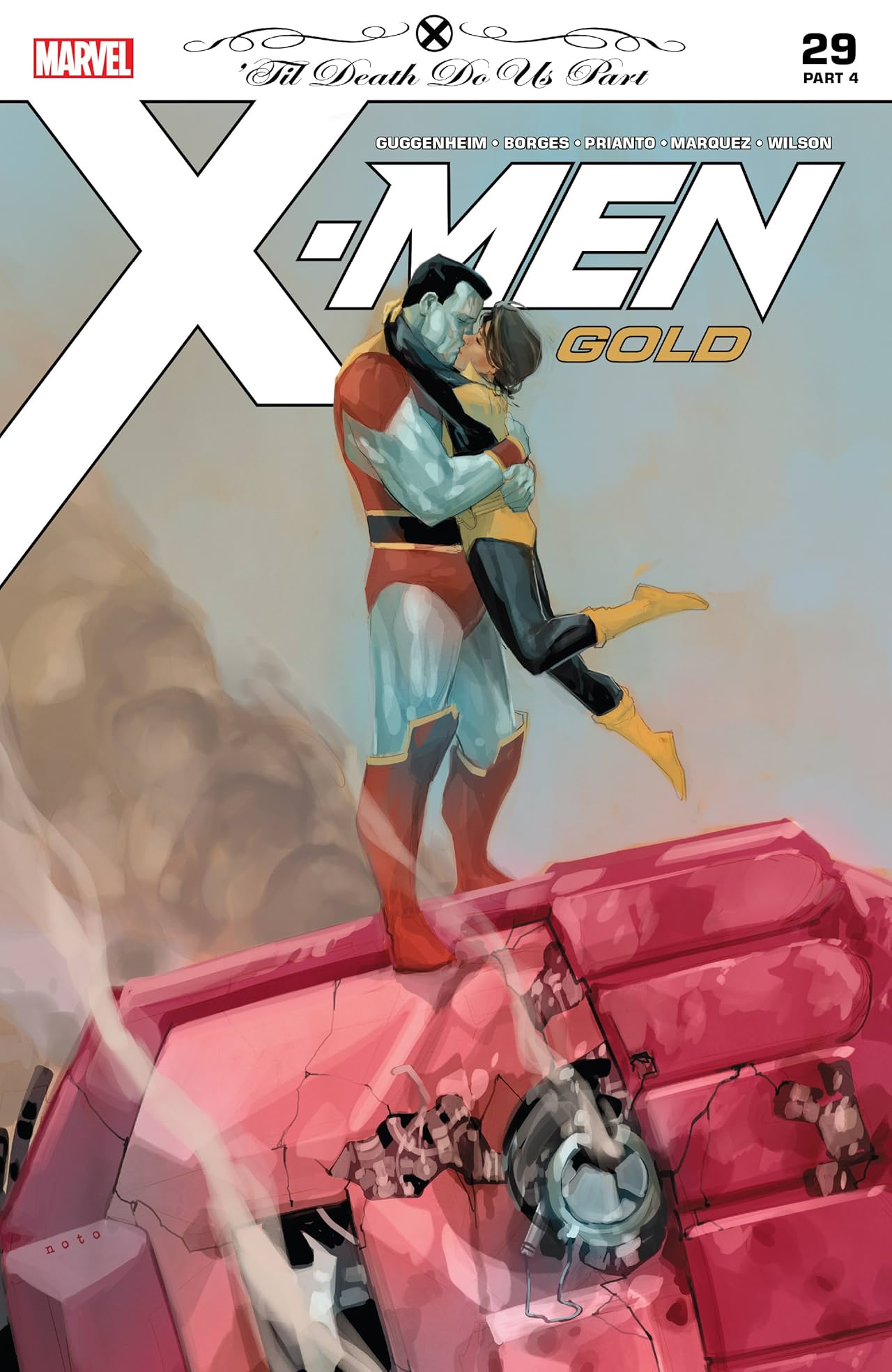
Then, in just one scene that played out early in X-men Gold #30, it all comes apart thanks to a short, unspectacular conversation with Colossus’ sister, Illyana “Magik” Rasputin. It’s not dramatic. It’s not that revealing, either. Again, I don’t mind spoiling it.
Magik just reminds Kitty that she and Colossus had to overcome a lot in order to get to this point. She also throws in that, if they were meant to be, it would’ve happened already. Bear in mind, Magik is considered one of Kitty Pryde’s closest friends on top of being Colossus’ sister. Even if that remark could be attributed to her alcohol intake, it’s still a terrible thing to say to someone who is about to get married.
It’s one of those comments that shouldn’t have derailed a couple that has worked so hard to be together, but it did. Seriously, that’s all it took to convince Kitty that she had to stop the wedding, in the middle of the ceremony, and in front of all her friends and family. Considering she’s supposed to be a leader of the X-men and one of the toughest female X-men of all time, it’s pretty pathetic.

Her decision and terrible timing, alone, could’ve made X-men Gold #30 one of the least romantic stories in the history of the comics. I still wouldn’t have put it on par with some very disturbing romantic sub-plots that played out in some Spider-Man comics. If breaking off a wedding was all this comic did, I would still appreciate it for how it imparted so much heartbreak into a story.
However, it gets even worse than that. It wasn’t enough for X-men Gold #30 to undermine one of the X-men’s most likable romances. It actually succeeded in denigrating the entire concept of romance in superhero comics. I know that sounds like an exaggeration on my part, but I’m dead serious.
Yes, Kitty and Colossus don’t get married in this issue. However, a marriage does occur and it is between another iconic X-men couple that I’m actually really fond of. The lucky couple here is Rogue and Gambit. If you watched the old X-men 90s animated series, you understand why that’s a big deal.

Now, I could write several articles on the quirks of the Rogue/Gambit relationship. It’s another one of those romances that has become iconic in its own right. I would even go so far as to put it slightly above the Kitty/Colossus relationship, if only because both characters have had to deal with some pretty unique obstacles, the least of which involves Mystique being Rogue’s adopted mother.
In the context of X-men Gold #30, though, those various quirks don’t really play into the moment. They haven’t even played into any of the events throughout X-men Gold that led up to this wedding. In fact, they only recently rekindled their relationship in a mini-series called “Rogue and Gambit” by Kelly Thompson, which I highly recommend.
Even with that development, though, them getting married at this point would’ve been rushed, forced, and downright inappropriate, given what just happened to Kitty and Colossus. It would’ve given the impression that someone had to get married in this comic. It didn’t matter who, why, or for what reason. It just had to happen to salvage the issue.

To hell with crafting a story that documents the emotional journey two characters make to get to that point. Never mind the fact that other iconic couples have gone on that journey and made for some of the most memorable moments in the history of comics. Just having Rogue and Gambit randomly decide, on the spot, to get married should carry the same weight. If I could write that with more sarcasm, I could.
Again, I want to make clear that I like the Rogue/Gambit relationship. I’m glad their romance is evolving, once more, especially after some of the other characters they’ve been stuck with. The way it was handled, though, and at Kitty and Colossus’ expense, no less, was just downright demeaning to the very concept of meaningful romance.
It sends the message that romance is as interchangeable as a box of frozen burritos. If one doesn’t heat up right, then another one works just as well. It’s not like they’re unique, having unique emotional dynamics and personal journeys specific to multiple characters. One is no more special or meaningful than the other. Again, if I could write that with more sarcasm, I would.

What happened to Kitty and Colossus in X-men Gold #30 was tragic, but it didn’t undercut romance in superhero comics, as a whole. As soon as Rogue and Gambit were randomly thrust into the moment, doing on a whim what took other couples so much time and effort, the whole issue undercut any deeper meaning that both romances had going for them.
Great romance, especially those that go onto become iconic, can’t be the kind of exchangeable gimmicks that can be sold as easily as plastic cups at Costco. Great romance is like the cookies you bake with your grandmother from scratch. There’s work, patience, and a deeper personal touch to the effort.
I get the appeal of throwing in a major twist. Comics, movies, and everything associated with M. Knight Shyamalan have been doing that for years. That appeal isn’t there in X-men Gold #30 because it comes at the cost of treating romance with the same recklessness as super-villains treat their henchmen.

On it’s own, I thought X-men Gold #30 was just really disappointing for how it handled Kitty and Colossus. However, it’s the precedent and the implications that leave me concerned for the future of romance in comics, particularly Marvel. If this is how love is treated, as something easily cut and pasted into a plot, then I worry for other comic book couples that may face similar denigration.
Here’s to hoping that the upcoming wedding between Batman and Catwoman sets a better precedent.

The following is a review I wrote for PopMatters for X-men Gold #30. Enjoy!

The following is a review I wrote for PopMatters for Deadpool Assassin #1. Enjoy!
The Maturation of (Regenerating) Degenerates In Deadpool Assassin #1

There’s an important, but understated difference between negative expectations and a self-fulfilling prophecy. Expectations are like reflexes. They’re somewhat involuntary, reflecting our assumptions and understanding of a situation. A self-fulfilling prophecy involves actual effort. Whether intentional or not, it guides our perceptions in a particular direction, one often associated with a particular bias.
To some extent, a self-fulfilling prophecy is akin to self-hypnosis. We convince ourselves so thoroughly of a particular outcome that to consider otherwise would be downright shocking, if not distressing. That’s why it’s so difficult, at times, to escape a particular expectation, especially if it’s negative.

I bring up expectations and self-fulfilling prophecies because they do plenty to shape our reactions and attitudes, especially in the media we consume. For better or for worse, often varying from person to person, we tend to determine how much we enjoy something before we even experience it.
Sometimes, it works to the benefit of a particular movie, video game, or TV show. The powerful brand of the Marvel Cinematic Universe is built heavily on the expectations that a long list of quality, well-received movies have established. Conversely, the DCEU struggles with negative expectations, thanks largely to a catalog of movies that have failed to consistently deliver.
Then, there’s “X-men: Dark Phoenix.” It’s a movie for which I’ve made my passion and my excitement very clear over the past year. It’s also a movie that is in the midst of an emerging crisis. It’s not the kind that involves negative press, actors melting down on set, or sordid sex scandals, for once. Instead, it’s an issue that involves negative expectations that may very well become a self-fulfilling prophecy.

As big an X-men fan as I am, I don’t deny that the X-men franchise is not on the same level it was in the early 2000s when it dominated the box office alongside Spider-Man. Even though I loved “X-men: Apocalypse,” I can’t deny it under-performed and underwhelmed.
Despite that, “X-men: Dark Phoenix” has more going for it. It’s attempting to tell the Dark Phoenix Saga, the most iconic X-men story ever told. Moreover, it’s attempting to tell that story after it botched it horribly in “X-men: The Last Stand.” Even the director, Simon Kinberg, has gone on record as saying that he wants to “X-men: Dark Phoenix” to succeed where the last one failed.
Given how rare that kind of humility is in Hollywood these days, X-men fans and fans of superhero movies in general have every reason to expect better things from this movie. Given how low the bar is after “X-men: The Last Stand,” I’m more optimistic than I dare to be when it comes to comic book movies.

Unfortunately, that sense of optimism seems to beg getting less and less prevalent. Whether due to the underwhelming performance of “X-men: Apocalypse” or a growing impatience to see the X-men join the MCU after the Disney/Fox merger is complete, there’s a general sentiment that this movie is going to be bad.
I see it on popular YouTube channels. I see in the many comic book message boards I frequent. The overall consensus is that this is a Marvel movie that isn’t part of the MCU. Therefore, it’s going to be terrible. That is, by every measure, a terrible excuse to dismiss a movie, especially when we haven’t even seen a trailer.
To make matters worse, a recent string of leaks from an alleged test screening revealed details that have only fueled those negative expectations. For reasons that I’ll make clear in a moment, I won’t list the details of those links. I will, however, offer a direct quote that aptly sums up the prevailing attitude for this movie.
“I do believe some things won’t change. What can’t change is the movie being really underwhelming. Really lower your expectations because this one is not good.”
This news, if accurate, is not encouraging to anyone hoping to see a well-done Dark Phoenix Saga on the big screen. To make matters worse, those who already had negative expectations about this movie have even more excuses to resent it.

As I’ve noted before, people tend to cling to excuses that justify their preconceived notions. It doesn’t even matter if the excuse is true. Once they have it, they cling to it. It’s usually not done out of malice. It’s just a lot easier to keep thinking what you’ve already thought rather than adjust your expectations.
In this case those, the story surrounding the leaks has already confirmed to be untrue. That leak came from a Reddit post, of all things, which is akin to getting your news from 4chan. On top of that, and this is a testament to Reddit’s users, the mods have stated outright that the user was not credible. This is an exact quote.
Apparently test screen guy is Atlanta Filming, created an account and sent fake spoilers/leaks. Trying to discredit other bloggers because he wants to be “the only legit source”.
If that weren’t telling enough, it was already announced back in March that the movie was going to undergo reshoots in August. Now thanks to “Justice League,” reshoots have gotten a bad name, but they’re a fairly common practice. Even the heavily-hyped, positively-perceived “Avengers 4” is scheduled for reshoots.
Even if those leaks were accurate, chances are the cut of the movie shown at test screenings isn’t the final cut. Kinberg himself has said that the reshoots are intended to shore up the final product, as one would expect of any piece of art. It sounds so reasonable and logical.

That still doesn’t matter, though. It doesn’t change the expectations. This movie still isn’t meeting the impossible set of criteria that fans spoiled by the MCU have so unreasonably set. It’s not in the MCU, nor is it being guided by Kevin Feige. Therefore, it must be terrible.
It’s unfair, unreasonable, and just plain asinine to judge “X-men: Dark Phoenix” by those standards, especially with reshoots to come and no official trailer. At this point, the negative expectations are so heavy that they’re starting to sound more and more like a self-fulfilling prophecy.
With that being the case, I feel like I can predict the reactions from people once the trailer drops. Sure, there will be some like me who are eager to give this movie a chance after what happened with “X-men: The Last Stand,” but I think there will be more comments like this.
“It’s not the MCU. I’ll pass.”
“X-men Apocalypse sucked! I’m not even giving this one a chance.”
“To hell with this movie! Just let Marvel have the rights back already! Fox can’t do anything right!”
Now, far be it from me to defend Fox, the same company that gave us “Wolverine: Origins,” but these are all intensely petty reasons to judge a movie. I say that as someone who is guilty of setting low expectations for movies, cartoons, comics, and TV shows. Hindsight has done plenty to reveal which of those were the result of self-fulfilling prophecies. That still doesn’t make the expectations any less absurd.

Even for those who aren’t just ardently opposed to any superhero movie that isn’t a product of the MCU, I think I can predict the criticisms they’ll probably levy against this movie even after it comes out. Chances are, they’ll be every bit as petty and include comments like this.
“It’s too dark and not cosmic enough!”
“It’s too cosmic and not grounded enough!’
“It’s too much like the comics!”
“It’s not enough like the comics!”
“It doesn’t have enough [Insert Favorite Character Here]!”
“It has too much [Insert Intensely Hated Character Here]!”
There will probably be plenty more excuses for hating this movie, far more than I can list. It doesn’t even matter how subjective they are or how empty they may be. People who are determined to hate something will find an excuse that satisfies their psyche and vindicates their feelings. Anything else would require that someone actually re-evaluate their expectations and that’s just untenable.
It’s frustrating and tragic that a movie or any piece of media would be subject to this kind of debasement before it’s even completed. It’s one thing for a movie to face skepticism because of production troubles, “Solo: A Star Wars Story” being the most recent example. For a movie whose primary crime is not being in the MCU, that’s just plain absurd.
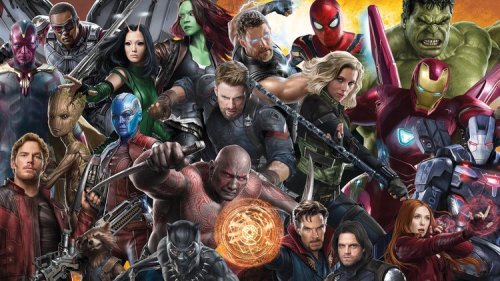
In terms of the bigger picture, it’s good for superhero movies, as a whole, if “X-men: Dark Phoenix” succeeds. It’s unhealthy for the genre if the MCU is the only acceptable avenue for quality superhero movies. We’ve seen with “Wonder Woman” that it is possible for a superhero movie to succeed in a world that doesn’t have Robert Downy Jr. or Chris Pratt.
“X-men: Dark Phoenix” deserves the same chance. That’s why I intend to keep my expectations high, but cautious for this movie. Even if it turns out to be good, though, I worry that it’ll be undercut by too many people who are too eager to hate it. It would be both a tragedy for the movie and all those involved, as well as a bad omen for the genre as a whole.
Filed under Comic Books, Jack Fisher, Superheroes, media issues, movies, X-men
Who doesn’t enjoy a good revenge story? That’s not a rhetorical question. I’m dead serious. Is there anyone out there who isn’t enamored with a story about sweet, bloody revenge? I know the success of movies like “John Wick” and the iconic status of Batman do plenty to answer that question.
The question is still worth asking because the answer says just as much about the appeal of stories about forgiveness. To some extent, it shows that forgiveness isn’t as sexy as revenge. A revenge story can be bloody, action-packed, exciting, and cathartic. Almost every moment in “John Wick” and every issue of the Punisher is like that. It’s not hard to see why that is the basis of so many movies, TV shows, comics, and video games.
That’s not to say that a story about forgiveness can’t have appeal as well. It most certainly can. Forgiveness may not offer the same spectacle as revenge, but it can incur a uniquely powerful emotional impact. There’s a reason why forgiveness has been shown to have therapeutic effects and was the basis of a major religion.

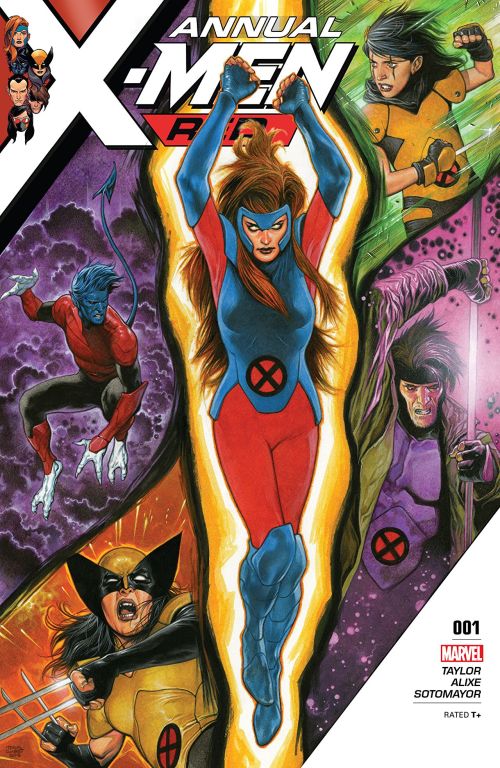
This brings me to a very special comic book entitled “X-men Red Annual #1.” Yes, I am going to tie this powerful human experience to a comic book. No, I’m not going to apologize for it. If you’ve had a chance to read this comic, you’ll understand why.
It’s been a while since I singled out a specific comic that I believe conveys a much larger message, but sometimes a comic comes along at just the right time and strikes just the right emotional chords. This one does all that and so much more, especially for a die-hard X-men fan like me. However, it’s the forgiveness themes I want to focus on here.
Without spoiling too much about the comic itself, which I encourage everyone to go out and buy, it’s important to establish the circumstances that make those themes work here. Those circumstances revolve around Jean Grey, a character who is no stranger to death, resurrection, love triangles, and clones. Even by superhero standards, she deals with a lot of emotional baggage.

Until recently, though, she didn’t have to deal with any, largely because she was dead. From 2004 until earlier this year, Jean was among the numerous superheroes who were “officially dead.” I put that in quotes because “dead” in the world of comics tends to have a pretty loose meaning, well past the point of absurdity. The fact that Jean Grey stayed dead for that long is, in and of itself, pretty remarkable.
However, it was never a matter of if she would return from the dead or even whether Marvel would resort to time travel to replace her. It was only ever a matter of when. Her return was bound to have a huge impact on the X-men and the entire world of Marvel comics. “X-men Red Annual #1” simply built a story around it and it’s a damn good one.
It unfolds mere moments after Jean officially comes back to life again on the final page of “Phoenix Resurrection #5.” That moment, in and of itself, is full of emotions that writer, Tom Taylor, captures beautifully. It provides insights into Jean’s thoughts, feelings, and emotions at that moment. It’s a lot to take in, but in addition to the joy, there’s also a heavy bit of sorrow thrown in.
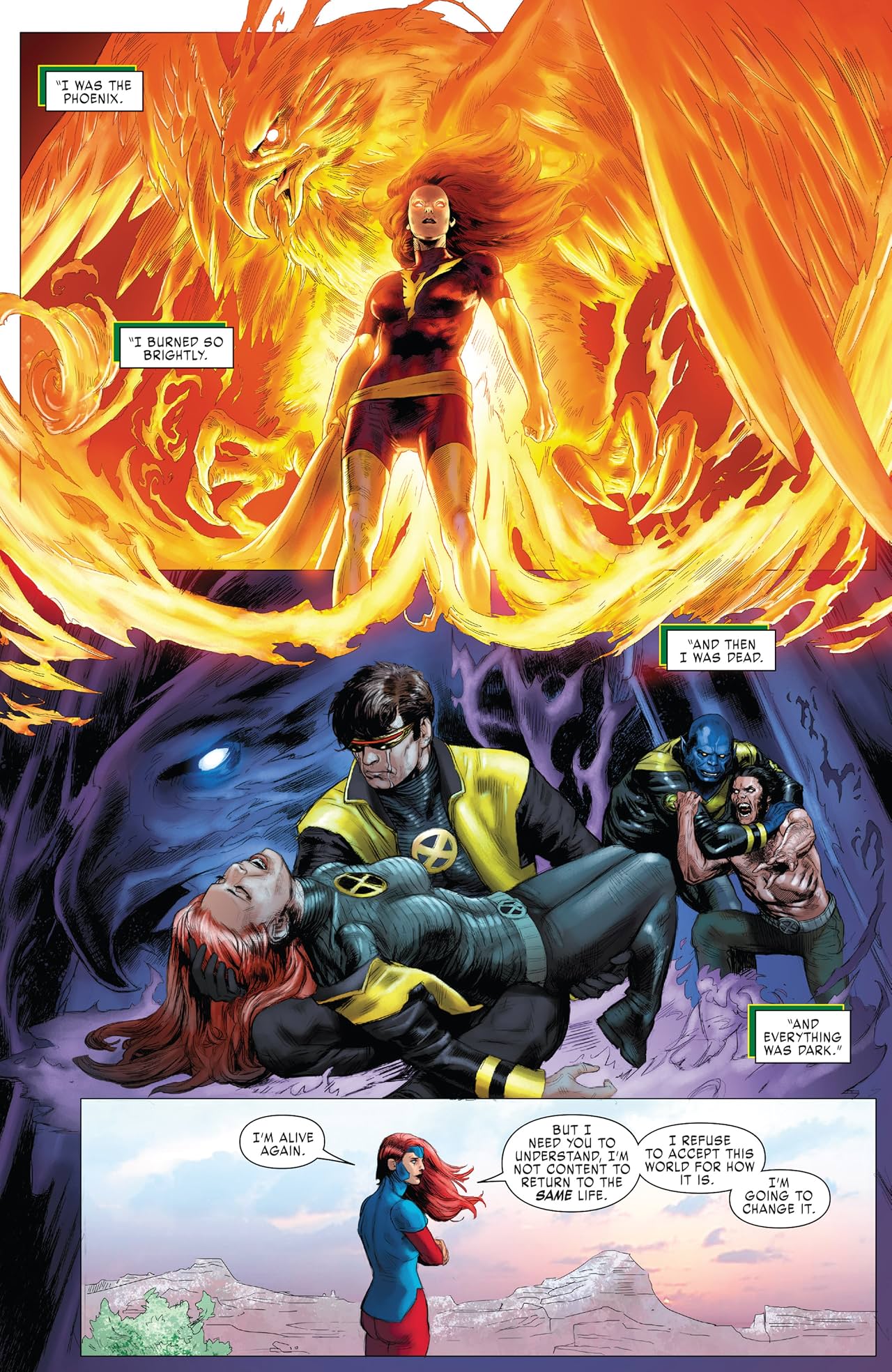
In a sense, Jean Grey picked a lousy time to come back to life. She’s coming into a world where her mentor, Charles Xavier, is dead. Her best friend and occasional love interest, Wolverine, is also dead, although that’s already changing. Most painful, though, is that her husband, Cyclops, is dead due to the events that unfolded in a series aptly named Death of X.
These are people near and dear to Jean Grey. She’s not the kind of character who just brushes off that kind of loss, hardens her heart, and moves forward. She’s someone who wears her emotions on her sleeve and does it with pride. It’s part of what makes her such a lovable, endearing character. Sure, those passions attract destructive cosmic forces every now and then, but she makes it one of her strengths.
As she reconnects with those who’ve sorely missed her, she has an opportunity to confront the one most responsible for her husband’s death, namely Black Bolt of the Inhuman royal family. While Cyclops’ death was largely an accident, he’s still the one whose decisions ended up killing him and many other innocent mutants. For that, Jean has many reasons to hunt Black Bolt down and make him pay.
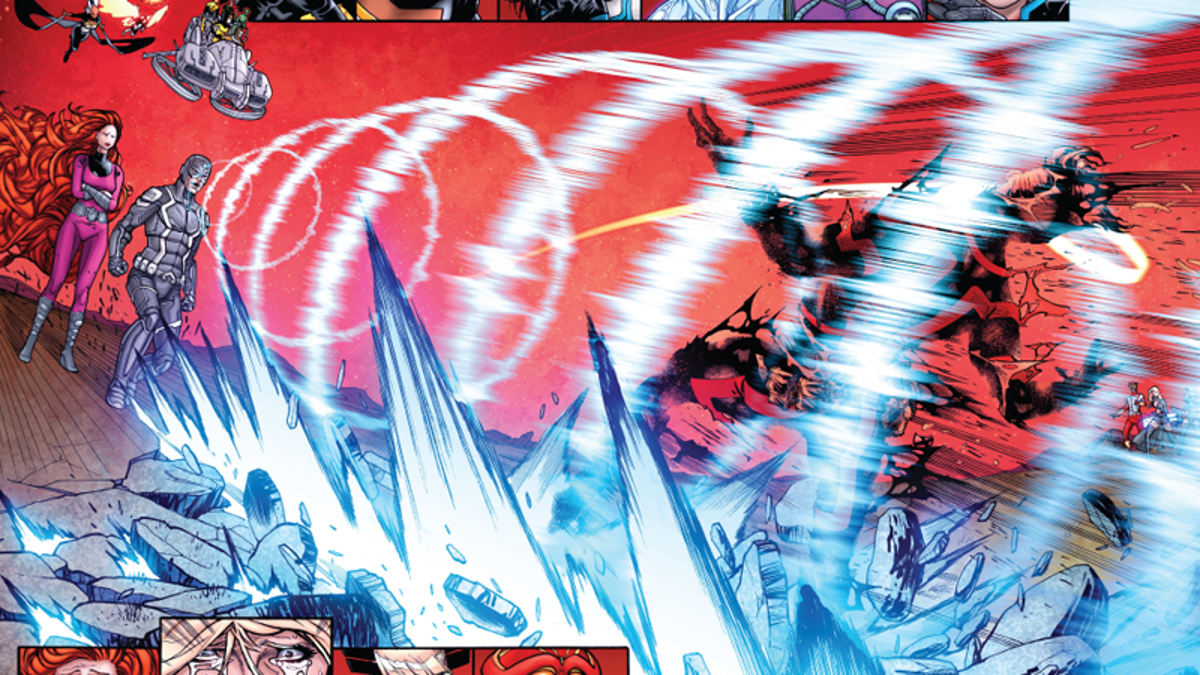
Had she gone that route, I don’t think anyone would’ve blamed her. Hell, some within the X-men would’ve gladly fought by her side, including a few who hate her guts. Accident or not, Black Bolt killed her husband by doing what he did. There’s no way around that. She has every possible excuse to channel her inner John Wick.
However, that’s not what happens. Yes, she still assembles a team of X-men to confront Black Bolt and the Inhumans. Yes, she has a very tense exchange with Black Bolt. What she doesn’t do, though, is seek vengeance for her husband’s death. Instead, she seeks forgiveness and that ends up being far more powerful.

Think about the mentality it takes to forgive someone like that. Imagine you knew there was someone responsible for the death of a loved one. Even if it was an accident or unintentional, chances are your first inclination wouldn’t be to forgive them. More than likely, you would rather see them suffer and pay for their crime.
Even if that person ends up going to jail or is held legally liable for your loved one’s death, you’re still going to resent them. They took the life of someone you loved and, assuming you’re not in a world where people regularly come back from the dead, you can never get back what you’ve lost.
That feeling would be even more intense if the person responsible never faces consequences for what they did. In the case of Black Blot, he didn’t face any repercussions for killing Cyclops. He wasn’t charged with murder or even for involuntary manslaughter. In fact, Cyclops becomes vilified for a while.
If anyone would be motivated to pursue retributive justice, it’s Jean Grey. She even has the perfect opportunity to do so when she fights her way towards Black Blot. At one point, she uses her telepathy to show him just how much she loved Cyclops and how much losing him hurt. She even admits she could make him feel some of that pain, if only to let him know why he deserves punishment.
She doesn’t do that, though. She doesn’t attempt to impart her pain onto him. What she ends up doing is much more heartfelt and meaningful. She gives Black Bolt a chance to offer genuine, sincere remorse for his role in Cyclops’ death. He ends up taking that chance. He apologizes for what he did and, more importantly, Jean accepts it.
For a woman confronting a man responsible for her husband’s death, even if she is a comic book character, it’s a pretty powerful moment. It’s one that carries a unique emotional weight that you wouldn’t otherwise get if Jean had just shot him in the head with a 44 magnum. It very much reflects the power of forgiveness.
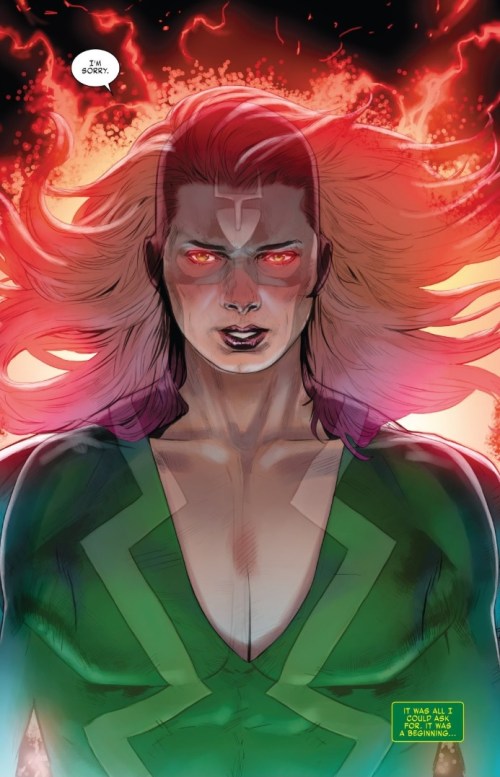
It’s the kind of heart that is exceedingly rare outside of Superman comics. At a time when we expect our superheroes to be edgy and tough, Jean Grey offers a very different approach in “X-men Red Annual #1.” It’s one that Tom Taylor uses to full effect, reaffirming Jean’s incredible capacity for love and compassion. It’s an approach that feels refreshing in an era of superhero civil wars.
It also reminds us that while vengeance may still be more appealing to our most basic instincts, it’s also incomplete at times. No matter how many criminals the Punisher kills or how many villains that Batman beats up, their loved ones are still dead. The pain continues and so too does the struggle. Forgiveness, on the other hand, offers a way forward.

Jean Grey feels the pain of loss like anyone else. She also has the choice to seek retribution or forgiveness. Forgiveness is, by far, a much harder recourse because it means accepting painful circumstances and even a certain level of injustice. Given how most of us are wired with an innate sense of justice, such acceptance seems untenable.
That’s what makes forgiveness so hard, but that’s also what makes it more impactful. Rather than focus on making Black Bolt pay for her husband’s death, Jean chooses to channel that pain into something positive. The very end of “X-men Red Annual #1” has her acknowledging how much it hurts losing her husband, but it also shows how this pain has inspired her.

Jean Grey is, essentially, doing the most heroic thing a superhero can do and it doesn’t even involve her powers. She decides to forgive the transgression that killed her husband and chooses to use that pain as motivation to make the world around her better. It’s still not as big a spectacle as watching John Wick kill 77 people over a dog, but it’s more dramatic for all the right reasons.
Filed under Comic Books, Jack Fisher, Superheroes, human nature, philosophy, X-men

The following is a review I wrote for PopMatters for X-men: Red Annual #1. Enjoy!
Overdue Resurrections and Heartfelt Reflections: ‘X-men Red Annual #1’

The following is a review I wrote for PopMatters for “Hunt For Wolverine: Mystery In Madripoor #1.” Enjoy!
Friends Matter in ‘Hunt for Wolverine: Mystery In Madripoor #1’

When a movie becomes an unexpected hit, both with critics and at the box office, the biggest question isn’t whether or not the studio will make a sequel. Major studios just love money too much. It’s just a matter of whether or not the sequel will be able to capture the magic of what made the first movie so great.
The first “Deadpool” movie was an unexpected hit that Fox didn’t even want to make. It broke so many rules, both with its R-rating and with its unorthodox approach to making superhero movies. In fact, it spent a good chunk of its overly violent first act establishing that “Deadpool” is not a superhero movie and Deadpool, the character, isn’t a traditional superhero.

By daring to be different while also embracing everything that’s lovable and unique about the character, “Deadpool” found a way to work, despite a paltry budget and an audience that still hadn’t forgotten Deadpool’s disastrous first appearance in “Wolverine Origins.” Now, “Deadpool 2” faces a new, but less daunting challenge in following up the unprecedented success of its predecessor.
Well, I’ll gladly spoil one detail about this movie. It matches, exceeds, and kicks the ever-loving shit out of those challenges. If you enjoyed the first “Deadpool” movie, then you’ll find plenty to enjoy with “Deadpool 2” and then some. Even if you found yourself unsatisfied with the first “Deadpool” movie, “Deadpool 2” will hit leave you feeling content in a way not possible without the aid of heavy stimulants and skilled hookers.
I realize that’s an overly vulgar way of saying that “Deadpool 2” is a great movie, but after seeing it, I think that’s perfectly in keeping with the spirit of the movie. It is, like its predecessor, an R-rated spectacle that does plenty to earn that rating. There’s plenty of profanity, violence, adult themes, and a lot of butt jokes.
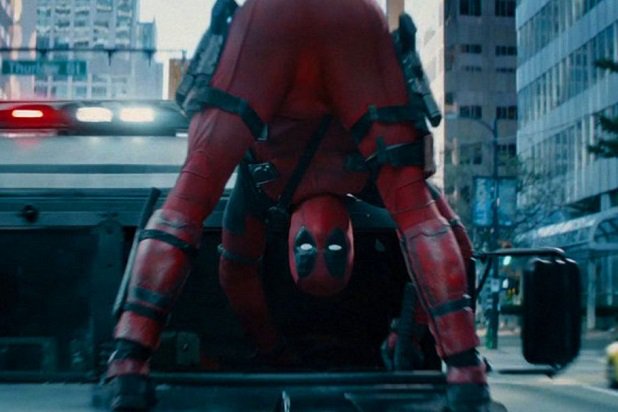
Seriously, this movie doubles down on the appeal of butt jokes. It’s not quite in the same cartoonish mold as “South Park,” but it works because it’s a Deadpool movie. It needs to be vulgar and crude for the same reason water needs to be wet.
However, it’s not just the butt jokes, the violence, the crude humor, or the inherent lovability of Ryan “Mr. Blake Lively” Reynolds brings to the table. There are deeper, less juvenile appeals in “Deadpool 2” that help distinguish it from other superhero movies. It’s true to the Deadpool brand, but still finds a way to transcend its genre.
In the same way the first “Deadpool” movie mixed its superhero narrative with that of a genuine, sex-positive romance story, “Deadpool 2” does something similar. Instead of a romance story, though, the movie frames itself as a story about family and how to find one in an unfair, unjust world.
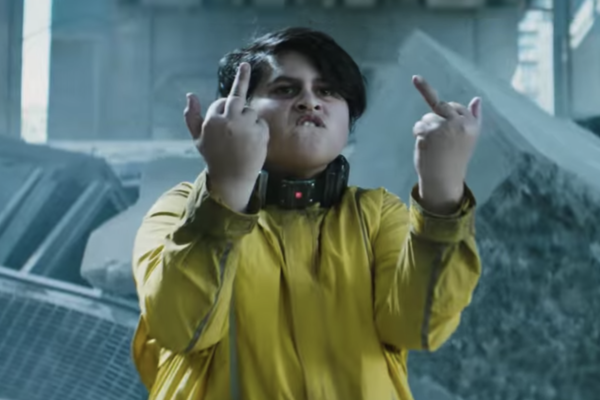
It’s a story that deals with serious issues of abandonment, abuse, and injustice. It does much more than its predecessor to incorporate the struggles minorities face that have played out in previous “X-men” movies. However, “Deadpool 2” never feels too much like an X-men movie. It keeps things personal and that’s key to making its story work.
Besides butt jokes and breaking the 4th wall, the underlying theme that drives the narrative in this movie is how everyone’s family gets shattered by various forces. Deadpool loses his family. Cable loses his family. Russell, also known as Firefist, is basically without a family from the beginning.
Those respective losses are what drive the characters through the story. That gives it a level of emotional weight that you wouldn’t expect for a movie based on a wise-cracking, exceedingly violent character who was heavily derived from an established DC character. That emotional weight is critical for both Deadpool and his supporting cast.
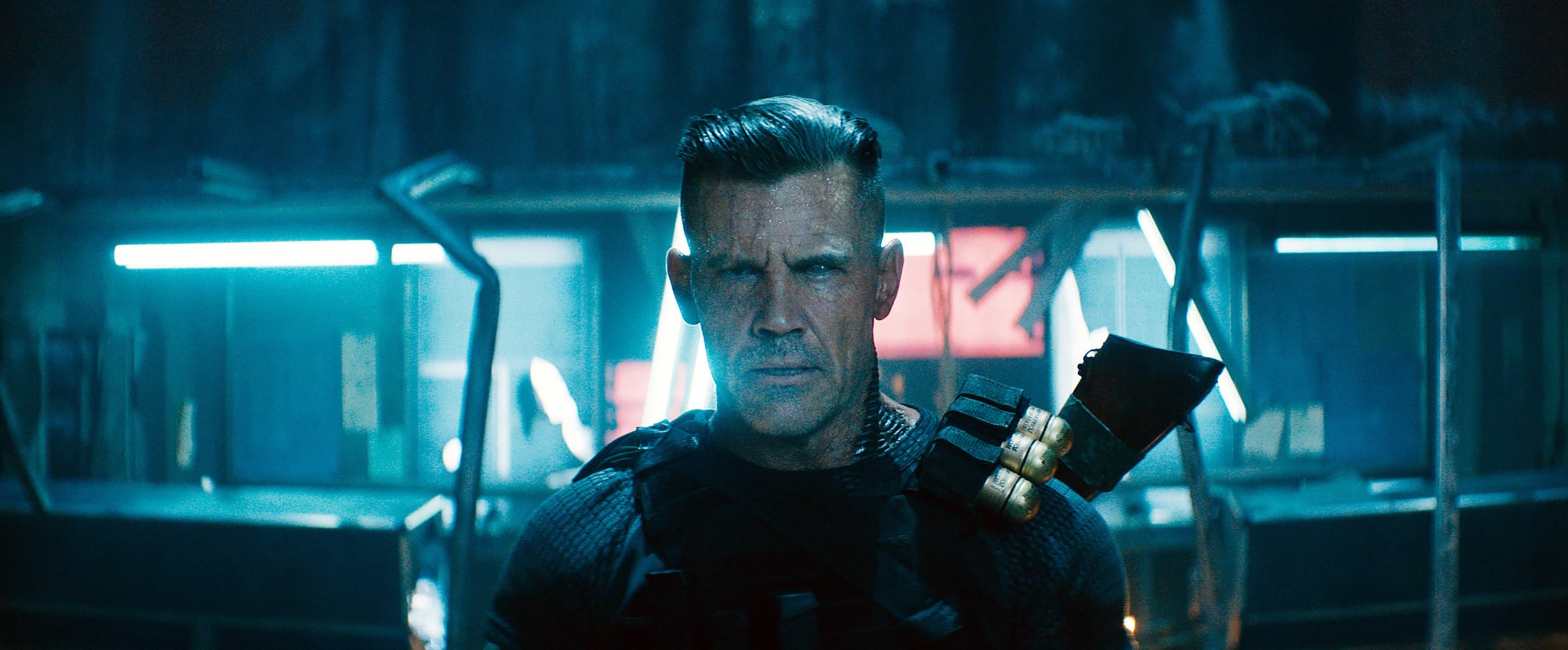
It’s here where “Deadpool 2” further improves on its predecessor. Unlike the first movie, it digs a little deeper into the vast catalog of X-men characters. The most important of those characters is Cable, the time-traveling badass whose convoluted origin story involves a clone of Jean Grey. It’s a character that Josh Brolin brings to life perfectly.
Already riding high from how he played Thanos in “Avengers: Infinity War,” Brolin’s Cable brings a gruff balance to Deadpool’s quirky persona. That’s not just critical for the overall feel of the movie. It’s a critical element to their relationship, as established in the comics.
It’s not at all necessary to be familiar with their history in the comics to appreciate it in this movie, but as a life-long X-men fan, it’s nice bonus to see the spirit of the comics find their way into the movies. Given how often superhero movies take liberties with comic lore these days, that does count for something for fans like me.
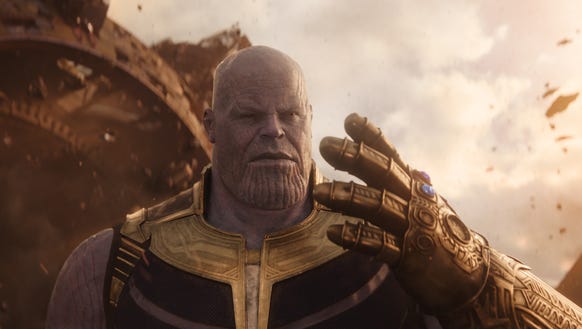
As a result, Cable’s gruff, overly serious demeanor complements Deadpool’s eccentricities perfectly. Having both suffered immense personal losses, they both seek the same thing. Their methods are just very different and that makes for some glorious conflict, complete with references to Brolin’s role as Thanos and his role in “The Goonies.”
Aside from Cable, “Deadpool 2” also brings in other familiar X-men characters. That includes Colossus and Negasonic Teenage Warhead, who had significant roles in the first movie. It also involves newcomers Bedlam, Shatterstar, and most notably, Zazie Beetz’s Domino. While not all these characters get a chance to shine, Domino does plenty to steal the show in multiple scenes.

There’s even a lengthy list of cameos throughout the movie and not just of the Stan Lee variety. The movie, even with its more serious themes involving family and loss, still finds plenty of ways to lighten the mood and have fun with itself. It never takes itself too seriously or gets too dark. It finds a way to mix in just the right amount of humor into everything.
By nearly every measure, “Deadpool 2” checks all the necessary boxes for an appropriately uncanny sequel. It offers a rich array of content that builds on what the first movie established along with plenty of bonus material, including one of the best post-credits scene of any superhero movie. Even if you don’t care for the movie, that post-credits scene will put a smile on your face, especially if you hated “Wolverine Origins.”
That’s not to say it’s a flawless movie. I wouldn’t put this movie above “Avengers: Infinity War” and not just because it’s a different kind of movie. “Deadpool 2” does a lot of things right, but it leaves some things unfinished. There are times when it rushes certain plot elements. As a result, characters like Vanessa and the lovably under-powered Peter feel wasted.

There are also a few instances where the the story feels choppy. Those instances are minor, though. While it would’ve been nice to establish a few other details about characters like Cable and Domino, the overall structure of the movie still works because it keeps the plot of “Deadpool 2” concise. It never tries to cram too much into the story, which has derailed more than a few superhero movies. See “Spider-Man 3.”
Overall, “Deadpool 2” is awesome because it has an identity and sticks to it. There’s crude humor, violence, and plenty of 4th wall breaking. There’s also genuine heart. In the same way the romance elements in the first movie felt sincere, the themes of family and finding a place in an unjust world feel just as sincere in this movie.

You’ll laugh and you’ll feel throughout “Deadpool 2,” but chances are you’ll probably do more laughing. As a whole package, “Deadpool 2” gives you plenty of reasons to leave the movie with a big smile on your face. Whether you’re an X-men fan, a superhero fan, or a fan of neither, this movie gives you something to enjoy.
If I had to score “Deadpool 2,” I would give it a 9 out of 10. It’s not flawless, but it’s pretty damn close. It’s exactly what you want it to be and then some. The ability to make more butt jokes is just a nice bonus.

The following is a review I wrote for PopMatters on X-men: The Wedding Special #1. Enjoy!


 Jack Fisher's Official Publishing Blog