Tag Archives: lonely

Why I Live Alone, But Don’t Feel Lonely

Loneliness is an awful, solemn feeling. Nobody denies that.

We’ve all probably had points in our lives when we’ve felt utterly alone, literally and figuratively. I know I have. There have been times when I’ve just laid in bed at night, staring up at the ceiling, and feeling like I’m in this dark prison cell that I can never escape. I don’t care who you are or how tough you think you are. That feeling hurts on a fundamental level.

Human beings are social creatures. That’s not an opinion. That’s a tangible, fundamental aspect of our species. No matter how much of a rugged individualist you think you are, we still need some level of social interaction to maintain our mental well-being. It doesn’t have to be overly elaborate. It just has to be there.

I make this point because there has been increasing talk of a loneliness epidemic. And it’s something that the COVID-19 pandemic did plenty to intensify. I know I felt it at times. I’m sure others felt it far worse than me. And even though the worst of the pandemic is behind us, those lingering feelings of loneliness are still there.

Now, I don’t claim to be an expert. I also won’t try to offer some contrived bullshit solution that a life coach might charge someone for. That’s not my style. All I can do is share my own experience and how I’ve dealt with loneliness in the past.

Because years ago, especially when I was out of college and starting off on my own, I felt pretty damn lonely. In college, I was surrounded by people my age. And even though I had awful social skills, poor self-image, and lingering personal problems that started in high school, I took some comfort in knowing I was surrounded by others like me. Even if I didn’t interact with them as much as I wish I had, I felt like we were all sharing the same struggles that came with going to class, studying for exams, and budgeting our limited money.

Then, I graduated and got out into the real world. Suddenly, I was in an environment where I was expected to fend for myself. Even though I had a wonderful family who supported me every step of the way, it was overwhelming. I felt isolated and lonely, wondering if I was strong enough to handle all of this.

Keep in mind, I still lived with others at the time. Even after I moved out of my parents’ house, I went through a period in which I lived in shared houses and apartments with other people. Most were around my age. And for the most part, I got along with these people. At one point, I lived in this large suburban house with five other people who all met on Craigslist. It’s not quite as chaotic as it sounds, but I was rarely ever completely alone in that place.

But I still felt lonely. I still felt isolated, even though my parents were just a 20-minute drive away. Those were difficult times.

However, I did get through it. Things did get better.

Now, as I write this, I live alone. I have my own place and I have no roommates. I’m also single, at the moment. I was single throughout the COVID-19 pandemic, as well.

And yet, I don’t feel nearly as lonely as I did during those years when I lived in a shared home. I don’t even feel as lonely as I did in college, despite being on a large campus surrounded by people in a similar situation.

I know that sounds like a paradox, but it’s the truth. I can only do so much to explain why I feel this way. I’ll only say that loneliness is an easy feeling to fall into without much effort. And it takes a lot more effort to actually escape it.

By that, I don’t mean pushing yourself to go out, meet people, and make new friends just to feel less lonely. That’s a mistake I see a lot of people making, especially socially awkward people like I was for much of my early life. If your reason for making friends is to just be less lonely, then you’re not making friends for the right reasons. And if you’re trying to talk to people just to feel less lonely, that’s just as bad a reason. That essentially turns your social interactions into something selfish.

It’s not about actually wanting to meet peole and be their friends. It’s about you and making yourself feel better.

That’s not a healthy mentality. And I freely admit I had that mentality for a good chunk of my early 20s. Growing out of it took time, as well as a concerted effort. It also required efforts that went beyond just improving my inherently poor social skills.

I’ve noted before how hard it was for me to get into shape after having many unhealthy habits throughout my life. I didn’t start working out regularly until I was almost 30 and when I started, it took a while for me to really feel the benefits. And while it might not have been my primary goal, working on myself and trying to be healthier really helped me feel less lonely.

Beyond just improving my mental well-being and self-image, it made me much more comfortable in my own skin. I feel like it sent a message to myself that I care enough about myself to put in the effort to be better, even when it requires spending an hour at the gym or running through freezing weather in the middle of January. Once that message sank in, I felt more confident to connect with others for the right reasons.

At the same time, my general social skills and communication skills had improved to a point where I really felt the benefits. It showed in how I interacted with family and friends. It showed in how I interacted with total strangers, both in real life and online. And during the COVID-19 pandemic, I leaned on those new skills to help me feel connected with others.

Those connections didn’t have to be big or elaborate. One thing that really helped was scheduling regular Zoom calls with my siblings and parents. That ended up helping me make entirely new connections because I met a lot of my siblings’ friends that I usually don’t get to interact with. Later on, once the pandemic faded, I met up with them in real life and it was a great experience. It felt like a true mark of progress that I didn’t realize I was achieving.

And if I can achieve that kind of progress, then I’m confident everyone reading this can as well. Yes, there are still times when I feel lonely. But it’s a feeling that doesn’t hit nearly as hard as it once did. Even though I live alone at the moment, I never feel the same crippling isolation I used to feel years ago.

For that, I’m grateful to the friends I’ve made in that time.

And I’m even more grateful to my parents and family, who were there for me during those times.

I realize I’m very lucky in some regards. Not everyone can enjoy the opportunities I’ve had. But we’re all capable of confronting loneliness in our own unique way. And I sincerely hope that by sharing my experience, others can draw strength from it.
Leave a comment

Filed under human nature, Jack Fisher's Insights, psychology, real stories

How AI Companions Can Be Helpful AND Harmful

It is not easy finding that special someone. It never has been, even if you’re rich, beautiful, and have strong social skills. Every generation encounters new challenges in their pursuit of love and companionship. I know I have. I’ve even shared some of those struggles before.

At the moment, I have not found that special someone. I am single, I live alone, and I currently have no romantic prospects of any kind. I’m honestly not even sure where to begin at this point in my life. Nearly everyone else in my immediate family has settled down and started having kids. I am very much behind the curve in that regard.

However, there are some individuals who are in an even tougher situation. I know I am lucky in many regards. I own my own home. I own my own car. I’m never behind on my bills or anything. But there are plenty of men and women my age who have none of that. Some of the people I went to college with are still stuck in debt and can’t even afford to pursue a serious relationship.

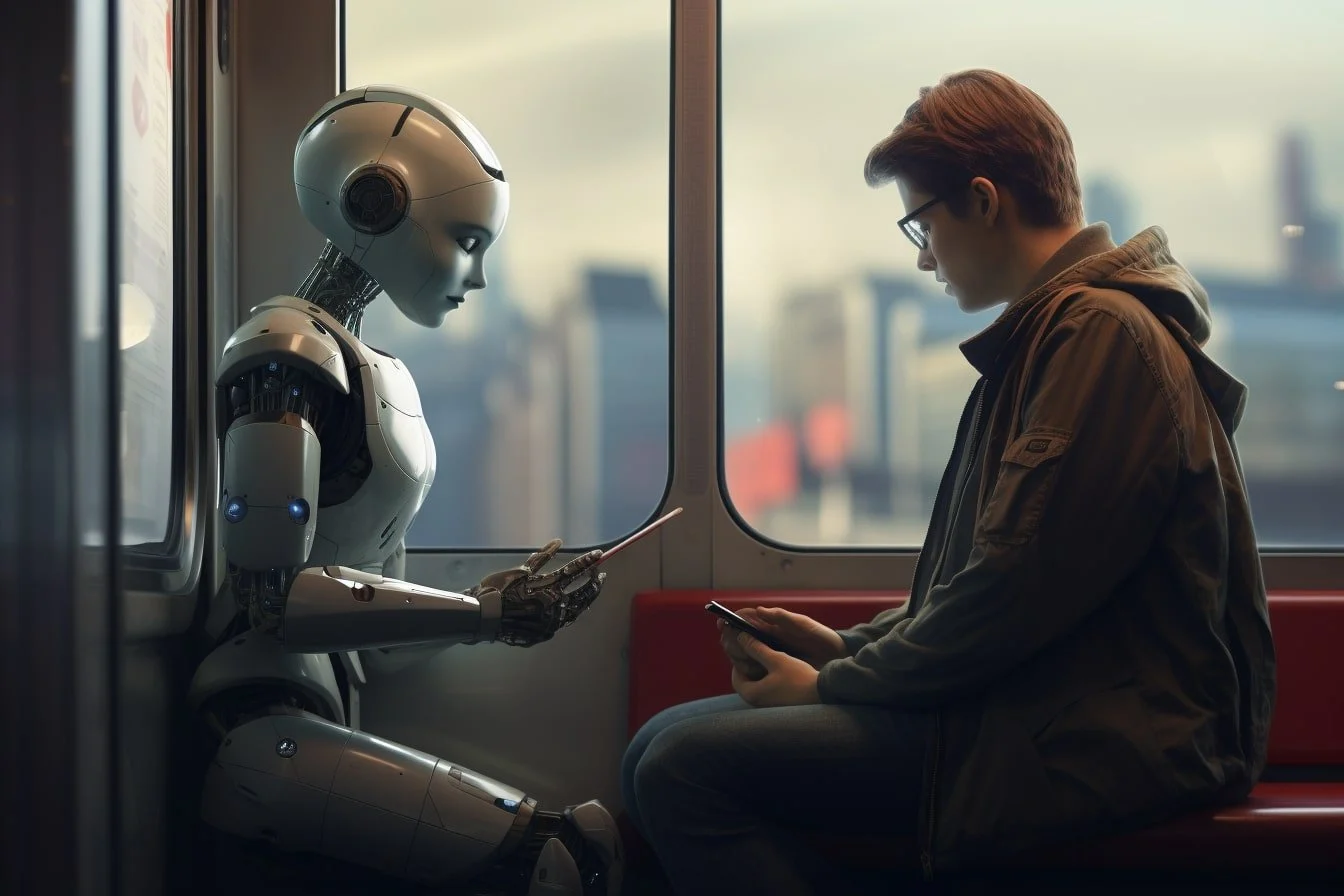
In that sense, I don’t blame anyone for seeking other forms of companionship. Loneliness really does suck. It is objectively bad for your health. While it has become a hot topic, even in political fields, it has also led to some controversial trends. And among the most contentious involves people seeking AI companions.

Now, before I go any further, I want to make clear that I am somewhat reluctant to talk about this. While I’m usually up for any discussions about artificial intelligence, especially with how it may affect our love lives, this one specific aspect of AI is riddled with complications.

On one hand, there’s the general stigma. Most AI companions, such as Replika, are essentially idealized avatars of whatever kind of companion the user wants. If a man wants an AI girlfriend to look like a porn star and have hair like a girl from his favorite fantasy anime, he can have that and the personality to match. And while that is appealing, as a product, it still carries a stigma with it.

Men like this who use AI companions aren’t seen in a very sympathetic light. They’re more likely to be seen as examples of toxic male behavior. They’re not just lonely and in need of companionship. They’re seen as perverts who prefer a girlfriend that they can turn off, manipulate, or control in whatever way they please.

And make no mistake, there are men who treat their AI companions like that. They’re not all that subtle about it, either. But most of these men were shallow, crass, and crude before the advent of AI companions. They would’ve been that way regardless of whether or not this technology existed. There have always been men like that. And there always will be to some extent.

But there’s also a double standard at work with these men. Because there are AI companions for women too. They’re every bit as available as the ones men use. They just don’t get as much scrutiny and don’t carry as much stigma. If a woman were to create an AI companion to resemble their favorite male celebrity, chances are they won’t be stigmatized as much as their male counterparts.

Some may see this as concerning, thinking the woman must have issues if she was resorting to AI companions. But she would certainly garner less stigma than the man.

I would still argue there are women out there who seek AI companions for the same reason as men. They’ll even mold avatars meant to resemble the sexiest, most attractive figure they can conjure. I don’t claim to know how common it is, but I don’t doubt this exists.

Even with that kind of shallow use of this technology, I think it’s much more common that these users are just lonely. They seek companionship the same way most humans seek companionship. Even if there are plenty of people to interact with, AI companions help fill a particular need. That’s really all there is to it.

That’s not to say that AI companions are harmless. I strongly believe they can be. It just depends on the user and how they go about interacting with these AI systems.

If someone is manipulative, controlling, abusive, and self-centered, then having an AI companion that they can mold to their whims is not going to temper those tendencies. More than likely, they’ll get much worse. They’ll basically set a standard for the user that conditions them to expect certain qualities in a companion. And since real people can’t be molded, manipulated, or configured like an AI, they’ll never find someone who meets their impossible criteria.

In the process, that same user might grow bitter and angry that no real person can be to them what their AI companion is. And as these feelings simmer, it could just lead them into a destructive cycle of resenting everyone and everything that they can’t control the same way they control their AI companion.

That is very much a worst-case scenario for users of AI companions. I did try to look up research on this, but it was hard to come by. Both the stigma and novelty of these products make it difficult to assess. Maybe I’m being too hopeful, but I think cases like this are rare.

They certainly exist, but they’re the exception rather than the norm. It just tends to get more attention because seeing horrible people reinforce their horrible behavior with these AI companions is disturbing to many people and understandably so.

At the same time, I also believe that AI companions can be genuinely beneficial for a lot of people and those benefits are likely understated. Remember, we are social creatures. And as intelligent as we can be, we’re also blunt instruments with respect to certain mental faculties. Our brains and our psyche don’t care about the nature of social interaction. So long as we find it fulfilling on some levels, we’ll incur the benefits.

In their early form, AI companions probably didn’t offer much in that regard. But in recent years with the rise of AI chatbots and large language models, it’s relatively easy and cheap to create an AI that people can interact with in ways that closely resemble those of real humans. And the growing size of the AI companion industry is solid that there is growing market for this sort of thing.

But the good these AI companions could do goes further than simply giving people a facsimile of human interaction. Remember, the current crop of AI chatbots and LLMs are relatively new. They’re like the early models of the iPhone. They’re going to continue being refined, developed, and improved upon now that an industry is being built around it.

In time, AI chatbots and general AI technology will improve.

At some point, AI technology will get advanced to the point where it can offer more than just a base level interactions. In theory, an AI could be configured in way that didn’t just perfectly complement the personality of the user. It could also interact with them in a way that fosters healthy personal growth, just like any other good relationship.

There could even be AI companions specifically configured to deal with abusive men or women, helping them understand and deal with their issues in a way that makes them better individuals. That could be life-saving for certain people who struggle to find companionship due to issues like personal trauma or mental illness.

These AI companions don’t even need to take a physical form. They don’t need to be incorporated into sex robots or anything. They can still be effective as simple avatars on smart devices. There would certainly need to be some level of testing, safeguards, and refinement in order to make them work effectively. It might even take years before AI companions have such capabilities.

That’s the most I’m willing to say about AI companions at the moment. I don’t doubt this industry will continue to evolve in the coming years. I also don’t doubt there will be plenty of controversies about the ethics of these companions, as well as how they affect the user.

But even in their current form with their current level of intelligence, it offers lonely people an outlet. Reasonable people can argue just how healthy or unhealthy it is. But it doesn’t change the fact that lonely people are out there. They’re seeking connection and companionship like everyone else. These AI companions aren’t perfect replacements, but they’re better than nothing.

Leave a comment

Filed under Artificial Intelligence, futurism, men's issues, psychology, romance, sex in society, sex robots

Happy Valentine’s Day (To Couples And Singles)

Today is Valentine’s Day.

Being a fan of romance and having written my share of romantic content, I like to think I appreciate the sentiment of this day as much as any straight man. For that reason, I encourage everyone who is lucky enough to have a special someone in their lives to make this day count.

It doesn’t matter if it’s a minor gesture or needlessly elaborate.

It doesn’t matter if it’s sappy, cliched, or corny.

So long as what you for the one you love is genuine, sentimental, and loving, it’s worth doing. This is the kind of day where you can show that special someone just how much they matter to you. Even if they already know, just make an effort to remind them. Go out of your way to be extra romantic. Don’t do it because you want something romantic or sexy in return. Do it out of love.

That’s what Valentine’s Day is all about. Do things out of love and do them with heart.

But if you’re like me and you don’t have that special someone, then you can still enjoy Valentine’s Day. I freely admit that in years past, I did not like this day very much. Being single and alone on Valentine’s Day can be rough. Seeing other couples do something special feels like a gut punch reminder that you’re single, alone, and have nobody to cuddle up to on a cold winter night.

However, being single on Valentine’s Day doesn’t mean you can’t appreciate feeling loved. As I’ve gotten older, I’ve come to appreciate more and more the love I get from friends, family, and those close to me. It may not be romantic, but it’s definitely genuine. And as you get older, you come to appreciate that kind of love just as much.

Now, I’m not sure if I’ll ever meet that special someone. I’m not getting any younger and meeting people these days is more challenging than it was when I was young. But I won’t let that discourage me. And I won’t let that undermine the love I feel from those close to me. Valentine’s Day, to me, is a nice reminder of just how loved I am. And that’s worth celebrating.

So, with this sentiment in mind and heart, I wish everyone, single and non-single alike, a safe and happy Valentine’s Day!

Leave a comment

Filed under romance, Uncategorized

Sad/Tragic/Revealing Requests: Powerful Stories From Sex Workers

We all have certain assumptions about prostitutes and the people who hire them. We have just as many assumptions about drug dealers, politicians, spies, celebrities, athletes, CEOs, minorities, the elderly, and our next door neighbors. Most of the time, those assumptions are inaccurate or incomplete. Even those with a shred of truth are just a tiny tree in a vast forest.

When it comes to prostitutes, though, it’s hard to shake those assumptions. It’s easy to find horror stories about victims of human trafficking and people who fell into sex work because they were desperate or coerced. However, those stories don’t paint a full picture of what this illicit and taboo world is like.

I’ve talked about prostitution before and why decriminalizing it is a good idea, both for sex workers and their clients. I’ve tried to be fair and objective when it comes to assessing the issue. I try to paint it in a legal, logical, and moral framework that does justice to all those involved. However, there are real human stories within this issue that are worth telling that transcend the legal and ethical issues.

Forget for a moment that sex is so taboo and complicated. For a moment, just focus on the people involved. Specifically, focus on those who actually hire sex workers. The profession wouldn’t exist without them. Most have assumptions about who these people are.

When you picture someone who hires a sex worker, you picture some fat, ugly, self-professed misogynist who sees women as walking playthings and their bodies as nothing more than toys to rent. I won’t say there aren’t assholes like that in this world, but they make up a very small minority. The actual people who hire sex workers are very different and very diverse.

Below is a video from Radio TTS, a channel I highly recommend, that has former and current sex workers tell the stories of clients who have made sad, tragic requests. By that, I don’t mean kinky or perverse. These are requests that reveal real, damaged individuals who seek the comfort of a sex worker. Some of these stories are very powerful. I urge you to listen to them with an open and compassionate mind.

I do have to issue a bit of a trigger warning, though. The last story in this video is not for the faint of heart. It’s downright tragic, but it’s still a story worth telling.

https://youtu.be/REtZ7IGsQoU

I hope that shifted your perceptions about sex workers and their clients. Like I said, their stories are worth telling. Regardless of how you feel about sex, sex work, or the people who hire them, the industry will continue to exist and stories like this will keep happening.

Leave a comment

Filed under men's issues, prostitution, psychology, sex in society, sexuality, women's issues

Lessons In Love According To Rick Sanchez

mv5botexyzyxodytogrimi00mzbmltkwnzmty2q5zdu2zjdmogzmxkeyxkfqcgdeqxvyntkymje3ndu-_v1_

What is love? Can we ask that question without referencing to a one-hit wonder R&B song from 1993? I think it’s a question worth asking and one people have been asking since the dawn of our species. Many men who are way smarter than I’ll ever be have tried to answer this question. Some have offered revealing insights. Others just use it as an excuse to whine about a cheating spouse.

Then, there’s Rick Sanchez. I know that by saying that name, I’ve completely altered the tone of this topic. I could’ve easily spent the next several paragraphs breaking down how the smartest men in history view love and how that understanding reveals itself in our modern concept of romance. For now, I’d rather scrutinize love from the perspective of a hard-drinking, brutally honest, nihilistic cartoon character from Adult Swim.

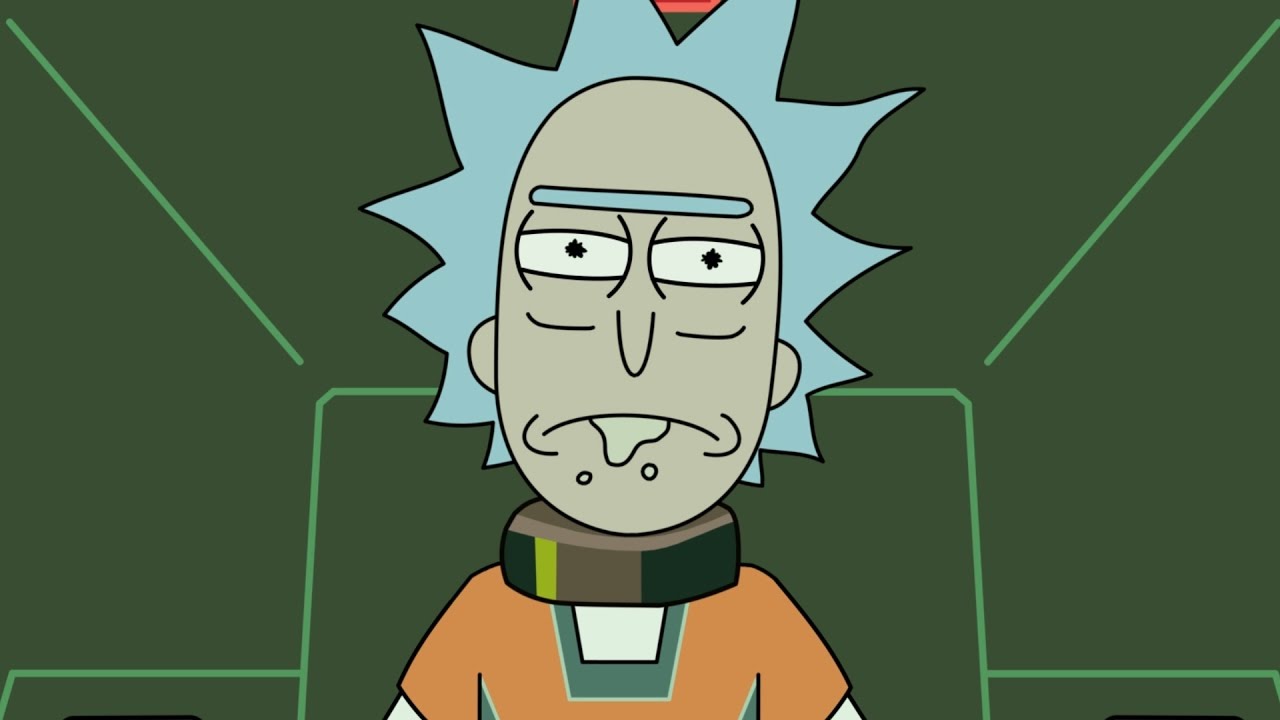
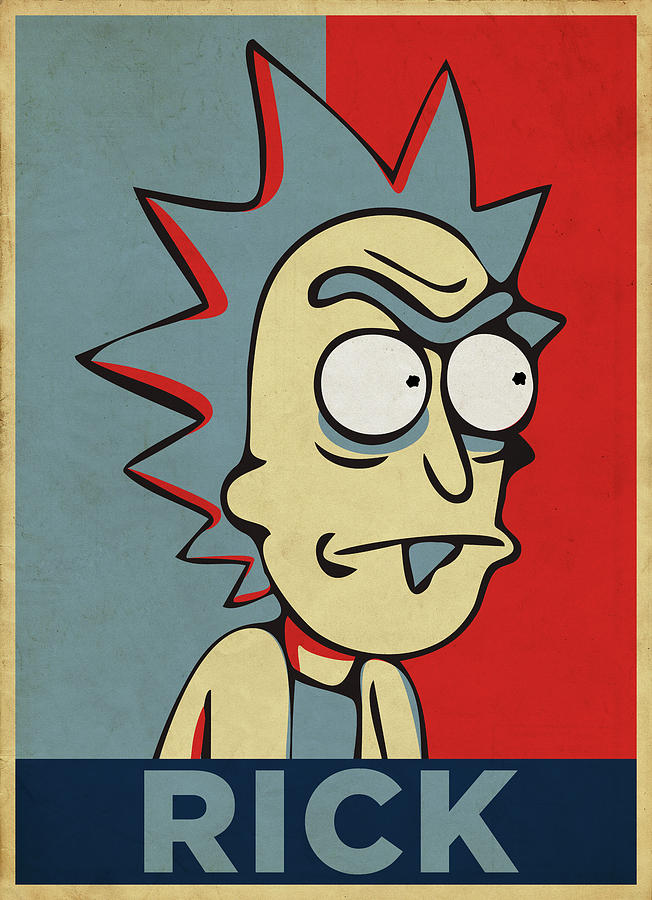
Yep, I’m referring to this guy again.

Make no mistake. I’m not just using this as another excuse to talk about “Rick and Morty,” although I wouldn’t blame anyone for thinking that. I really do think characters like Rick Sanchez have something to teach us on the topic of love. Being an admitted romantic and aspiring erotica/romance writer, I believe those lessons are worth heeding.

On paper, Rick Sanchez is the last person most would go to for insights into love. From the first scene in the first episode, he establishes himself as an overly-cynical, high-functioning alcoholic who may or may not be okay with blowing up the world for the sake of a fresh start. To say he’s not the romantic type would be like saying Jerry needs help with his golf game.

However, Rick does demonstrate throughout the show that he has a capacity for love. He has even had a few moments where he has shown genuine heart. There’s an odd mix of eccentricity and complexity to Rick’s behavior. That’s part of what makes him such an endearing character and why he resonates so much with an emerging generation.

From all that chaos, though, there are insights worth noting. “Rick and Morty” may go heavy with nihilism and moments of existential crisis, but it doesn’t avoid the impact of love. Whether it’s Morty constantly trying to get with Jessica or the constant upheavals in Beth and Jerry’s marriage, love is an underlying factor throughout the show.

This is despite the fact that Rick is pretty overt about his feelings on love. In “Rick Potion #9,” the sixth episode of the first season, he gives his clearest, most quote-worthy opinion on love.

“Listen, Morty, I hate to break it to you but what people call ‘love’ is just a chemical reaction that compels animals to breed. It hits hard, Morty, then it slowly fades, leaving you stranded in a failing marriage. I did it. Your parents are gonna do it. Break the cycle, Morty. Rise above. Focus on science.”

That sounds pretty jaded, to say the least. It’s perfectly fitting with Rick’s misanthropic mentality. However, there is a context here and one that’s fairly subtle, as things tend to be in the world of “Rick and Morty.”

Part of that context is Rick’s family situation. Beyond being a drunk and an eccentric mad scientist, he also has a family. It’s not just his daughter and two grandkids, either. He mentions in his cynical musings that he’d fallen in love and gotten married at one point.

That, alone, has some pretty profound implications. It shows that even the smartest, most capable man in the multiverse cannot avoid the impact of love. Keep in mind, this is a man who travels the multiverse on a whim, defeats Thanos-level super-villains while drunk, and understands how meaningless everything is in the grand scheme of things.

Despite all that, Rick Sanchez still fell in love. He still got married. That, in and of itself, shows the power of love better than any Huey Lewis song. While the show hasn’t revealed much about his former wife, Diane, it does establish an important fact. Rick is capable of love, even when he sees it as just a confluence of brain chemicals.

The show goes onto to reveal that Rick is still influenced by love, despite this reductionist understanding of it. The most comprehensive example comes in Season 2, Episode 3, “Auto Erotic Assimilation.” In many ways, this episode helps convey the most meaningful lesson in love that any animated series has ever attempted.

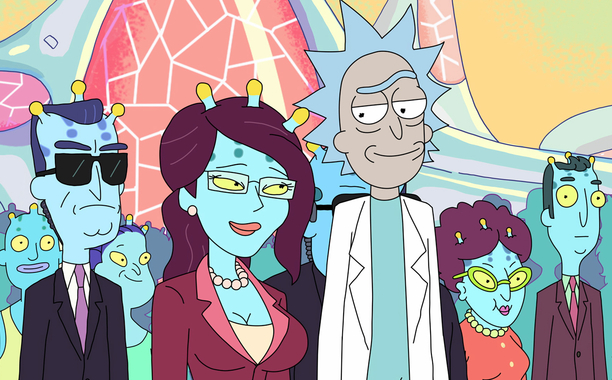
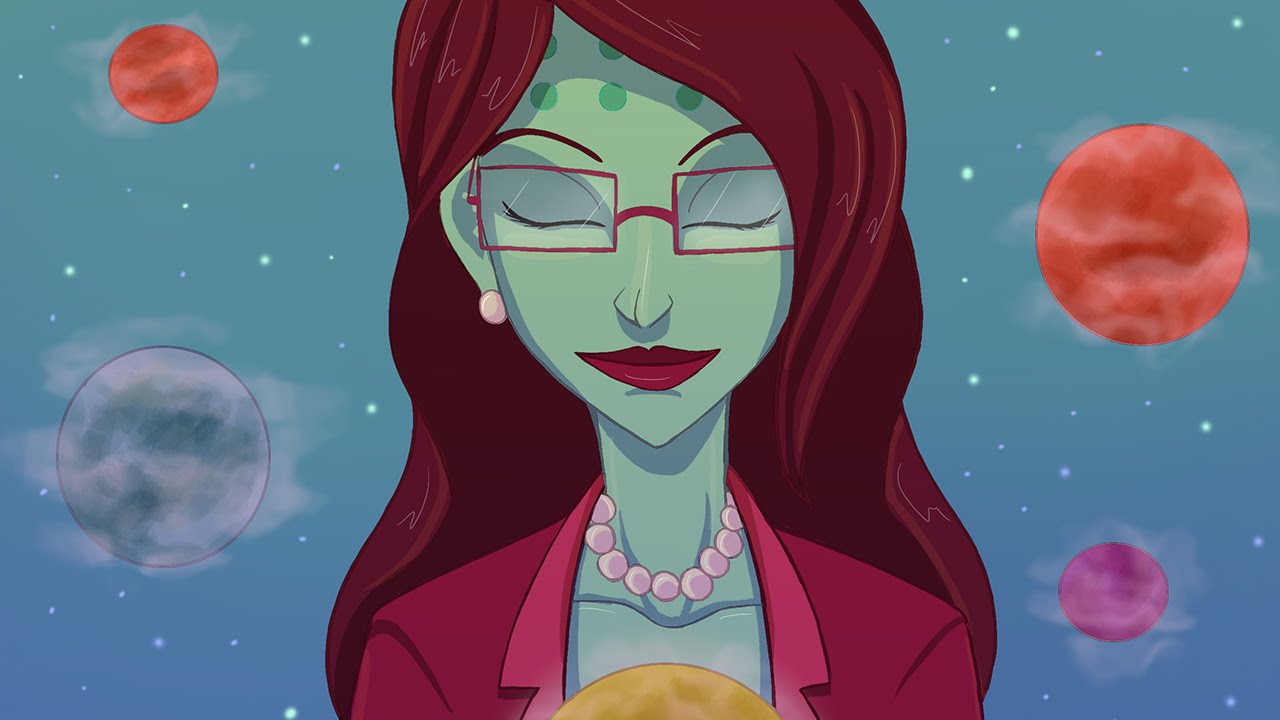
In the episode, Rick catches up with an old girlfriend, who happens to be an alien hive mind named Unity. If that sounds weird, even by “Rick and Morty” standards, trust me when I say it doesn’t crack the top ten. The fact that Unity is a hive mind is part of why the insights are so unique and impactful.

Throughout the episode, we learn about the particulars of Rick and Unity’s relationship. Unity establishes herself as one of the few beings in the multiverse who can keep up with Rick’s eccentricities. If anything, she has to be a hive mind in order to do so, as evidenced by Rick’s elaborately kinky requests.

In this context, Unity is the ultimate manifestation of supportive lover. She can literally do anything and be anywhere because she has the collective resources of an entire planet at her disposal. She’s more capable than a shape-shifter like Mystique or even an advanced sex robot.

If she wants to make love as a beautiful, buxom blond right out of a Playboy centerfold, she can do that. If she wants to do it as a greasy-haired, middle-aged man with a hairy back and bad breath, she can do that too. She can be two people, ten people, or as many people as she wants to be to love Rick and express that love however they want.

This breaks down, however, when Unity’s efforts to pursue that romance with Rick ends up straining her ability to maintain her hive mind. It gets so strenuous, at one point, that it leads to a nipple-driven race war on the planet. Again, this is pretty standard in terms of weirdness for “Rick and Morty.”

The implications of this breakdown are serious and I’m not referring to the nipple-driven race war. Logistically speaking, Rick and Unity had everything they needed to make their relationship work. They had unlimited resources and unlimited opportunities for intimacy, decadence, and everything in between. In exercising that, though, their relationship devolved into an ongoing spiral of self-destruction.

There was clear, unambiguous love between Rick and Unity. However, the act of being together proved toxic to both of them. Unity couldn’t be with Rick without losing herself, literally and figuratively. Rick couldn’t be with Unity without descending into a spiral of debauchery. Even if the love is there, embracing it leads to both of them getting hurt.

This made for one of the most dramatic and emotional moments of the show, one that reveals just how much Rick loved Unity. After she leaves him, it really hits him on an emotional level, so much so that he nearly kills himself. Remember, this is a man who said love is nothing more than a chemical reaction in the brain.

The pain in that moment, though, belabors a much larger point about love and being with someone. Just loving someone is easy. As Rick says, it’s just a chemical reaction in your brain. It’s something that can happen to anyone, even the smartest man in the multiverse.

However, being with someone and expressing the full spectrum of love involves much more than convergent brain chemistry. For some people, love can be downright destructive. If pursuing love means undermining your sense of being, as happened with Unity, then that’s a sign that the relationship isn’t tenable.

It’s tragic, but unavoidable. You can love someone with all your heart, but not be capable of having a functional relationship. It’s a harsh reality, one that’s perfectly in line with the nihilistic subtext in “Rick and Morty.” At the same time, though, there’s a less dire lesson to be learned.

Even if love is just a brain function that helps propogate the species, it has the power to affect us in the best and worst of ways. It can lead us to the greatest of joys, as Rick and Unity experienced for a brief time. It can also lead us to the worst of sorrows. Few other brain functions can make that claim.

That wide range of experiences are a powerful mechanism for finding meaning in a meaningless universe. Rick Sanchez doesn’t avoid the pain in those experiences and he doesn’t hesitate to pursue the joys, often to a reckless degree. Finding meaning in this universe is hard enough, but love can do plenty to carry us forward. You don’t have to be a Rick-level genius to appreciate that, although that’s probably a good thing.

7 Comments

Filed under gender issues, Marriage and Relationships, philosophy, Rick and Morty, romance