
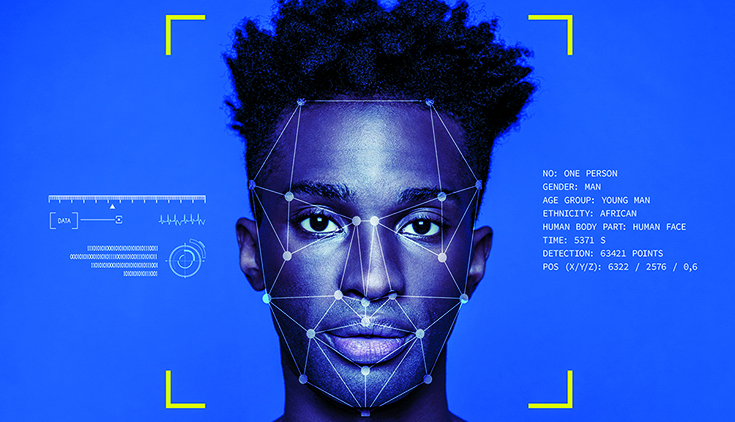
There’s no doubt that artificial intelligence will fundamentally change the world. Its potential is so vast that some even say it will be mankind’s last invention. Once it gets to a certain point, it won’t just be better at everything humans do. It may very well supplant humanity as the dominant life form on this planet. There are no shortage of movies that depict how dire that could be.
That said, it’s bound to go through some growing pains. Not all of those pains will involve a Skynet-level malfunction, but they will warrant concern.
At the moment, our artificial intelligence is still limited. It’s not dumb, but it’s very limited. It can do certain tasks very well, like play chess or win Jeopardy. It can’t apply that intelligence at a broader macro level like a human.
That still makes them useful and they’re still advancing rapidly. Artificial intelligence programs are used frequently for tasks like moderating comments sections and tracking sales data. The problem with these programs is that, since the AI is not generally intelligent, humans have to fill in the gaps. Since humans are flawed and bias, those traits sometimes find their way into the AI.
That’s what happened recently with YouTube’s comment moderation algorithms. As an aspiring YouTuber, I know how imperfect those algorithms can be. The intentions are noble. These AI programs are supposed to curtail hate speech. The internet needs that right now. Anyone who has ever visited 4chan knows that.
However, sometimes the AI systems are so narrow that they don’t ese the forest from the trees. That’s what happened recently when those systems mistook discussions about chess for racist language. Tech Xplore did an article on it and while it’s somewhat humorous on the surface, it’s also quite revealing.
Tech Xplore: AI May Mistake Chess Discussions as Racist Talk
“The Queen’s Gambit,” the recent TV mini-series about a chess master, may have stirred increased interest in chess, but a word to the wise: social media talk about game-piece colors could lead to misunderstandings, at least for hate-speech detection software.
That’s what a pair of Carnegie Mellon University researchers suspect happened to Antonio Radic, or “agadmator,” a Croatian chess player who hosts a popular YouTube channel. Last June, his account was blocked for “harmful and dangerous” content.
YouTube never provided an explanation and reinstated the channel within 24 hours, said Ashiqur R. KhudaBukhsh a project scientist in CMU’s Language Technologies Institute (LTI). It’s nevertheless possible that “black vs. white” talk during Radi?’s interview with Grandmaster Hikaru Nakamura triggered software that automatically detects racist language, he suggested.
Now, should we be concerned? Is it worrying that an AI with the backing of Google couldn’t surmise that simple terms like “black vs. white” were referring to chess and not race relations?
The short answer is not really.
The longer answer is not really, but we should learn important lessons from this.
The AI systems that moderate YouTube comments are nowhere near the kinds of systems we’d see in an artificial general intelligence. It’s like comparing a steam engine to a modern rocket. That said, we had to learn how to make a damn good steam engine before we could learn to make a decent rocket.
With something like advanced artificial intelligence, the margin for error is very small. You could even argue there is no margin for error. That’s why so many worry that such an AI could be an existential threat to humanity. If its too flawed to understand the difference between chess and racist rhetoric, then we could be in serious trouble.
The problem, in this case, isn’t with the nature of the AI. It’s with us, its creators. Since we humans are so flawed, racism being one of our worst flaws, it’s understandable that this sort of thing would find its way into our programming. It already has in a number of fields.
Again, those types of systems are limited and narrow. There’s a lot of room for human flaws to enter the system.
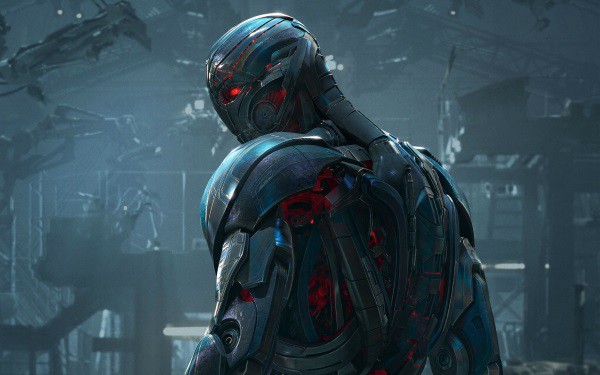
With advanced AI, those flaws could end up being extremely damaging. If too many of them find their way into a more advanced AI, we wouldn’t end up with a helpful, usable system. We’d end up with something like Skynet or Ultron. At that point, we’d be in serious trouble and we wouldn’t be able to rely on John Conner or the Avengers to save us.
We still have time. This latest issue with YouTube’s algorithms is minor, in the grand scheme of things, and fairly easy to correct. Once we get around to creating more advanced systems, though, we need to be aware of these flaws. We need to remember that any advanced AI we create will reflect our best and worst qualities. Let’s make sure our best win out in the long run.













 Jack Fisher's Official Publishing Blog
An Artificial Intelligence That Can Debate: The Promise And The Perils
Even in an era as divided and chaotic as this, there’s still a place for reasonable debate on important issues.
Yes, I understand it’s hard to say that with a straight face these days.
Yes, I’ve been to comments sections, Reddit, and 4chan.
Yes, I know how ugly the discourse is right now, but that’s exactly why I’m bringing this up.
In general, people are curious. Even though they cling to cherished beliefs and refuse to change their minds when confronted with evidence, we’re still curious about things that are different. It’s not always honest, but it’s a powerful feeling. Even if you despise those on the other side of the debate, a part of you will still wonder why they hold the opinions they have.
That’s why debate is such a powerful tool. Humans are such a social species by nature. We’re hard-wired to interact, connect, and discuss things with one another, even when we don’t agree. It may frustrate us to no end, as anyone who has debated a creationist can attest. However, the fact we keep doing it is proof, in my opinion, that there’s still value in the process.
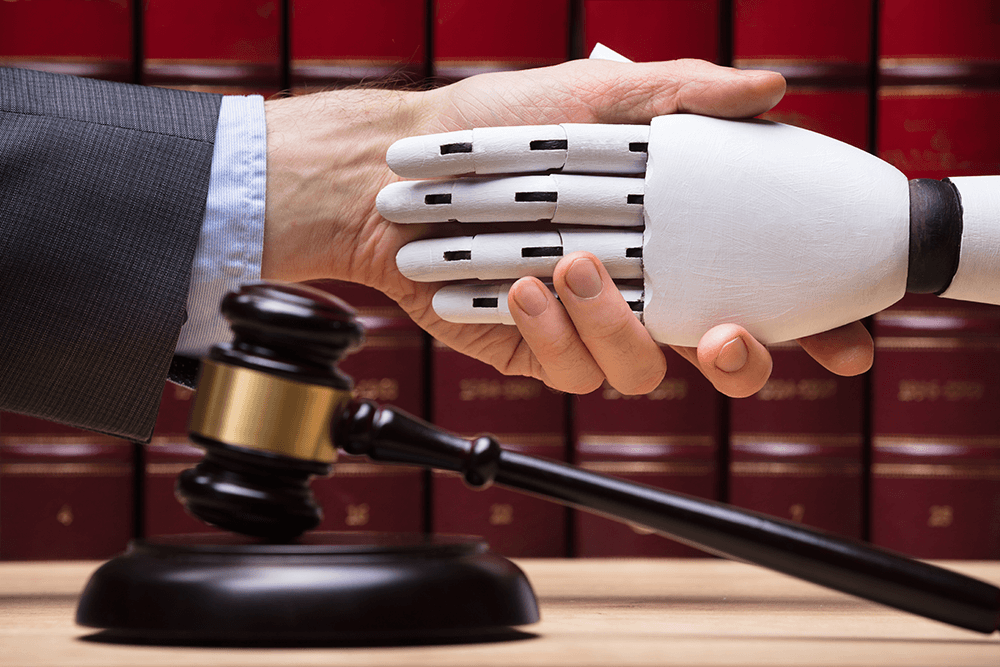
Regardless of how you feel about the merit and value of debating, the whole process might become more complicated in the near future. That’s because IBM, the same company behind Watson, the Jeopardy playing computer, just created an artificial intelligence that can debate at the same level as a skilled human debater.
Here’s an excerpt from a piece in TechXplore on this new system. It’s not as scary as some of the things we’ve seen from Boston Dynamics lately, but it’s still intriguing.
TechXplore: IBM’s AI debating system able to compete with expert human debaters
Now, before you get too nervous, it’s worth noting that this AI is far from the kind of advanced artificial intelligence systems I’ve mentioned before. This is not the kind of AI that will become Skynet or Hal 9000, no more so than Watson or AlphaGo. This is a system is very much a narrow AI, as in it’s made to excel at a specific task.
We have AI’s that can beat world class chess players and Jeopardy champions. This AI just happens to excel at debate. However, that has implications that go beyond simply outclassing the best human debaters in the world at the moment. In fact, this is one form of AI that might not need human-level intelligence to incur a major impact.
Take a moment to think about how erratic and inconsistent most debates are. No matter how intelligent or informed you are, it tends to get messy fast. That’s why so many comments sections and Reddit threads devolve into shouting matches and personal attacks. The end result is people becoming more angry and unreasonable, which can have major real-world consequences.
However, what would happen if every debate on any issue included someone who was better than the best debater on the planet? Even if the two people on each side of the debate were dumb and inept, such a presence would have a major impact on the discourse.
That’s because winning a debate has little to do with how well someone knows a particular subject. It also has little to do with how forcefully and clearly someone explains a topic. Again, people who debate creationists know this all too well. Winning a debate doesn’t mean proving your expertise. It means proving the merit of your argument.
An AI that can do that may not convince someone that they’re wrong about something. However, losing a debate tends to have a lasting impact. Just ask any aspiring politician. It can also lead people to question their beliefs, even if they still cling to them. That, alone, can be powerful.
For proof, look no further than the story of Megan Phelps-Roper, a former member of the infamously hateful and dogmatic Westboro Baptist Church. She was as locked into her beliefs as anyone could possibly be. She was raised by religious zealots and indoctrinated into strict religious dogma from the time she was a child. She’s not someone whose mind is prone to change.
Then, she got into a discussion with someone on Twitter of all places. That person began a conversation. It started as a nasty debate, but it evolved into something that led her to question her beliefs. Ultimately, she left that hateful and bigoted environment. She’s now an activist against the same religiously motivated hate that she once fostered.
It’s a powerful story, but one that couldn’t have happened without a debate. To date, people have only been able to have those debates with other people. Not everyone is equally skilled. In fact, I would argue most people are woefully unskilled at debating anything and I include myself in that category. I am not good at it, either. I freely admit that.
Now, there’s an AI system that can theoretically win any debate the same way other systems can defeat any chess player. That does hold promise if it can be used to temper the heated rhetoric that has caused real-life hostilities. At the same time, there are reasons for concern.
What side would this system be on?
Moreover, who decides what position these AI systems take?
If no one decides, then how does the AI determine which side on a debate it takes?
These are relevant questions because if you have an AI that can win any debate, then the side it takes really matters. That can be used for good when countering dangerous disinformation, like those from the antivaxx crowd or hate groups like the Westboro Baptist Church. Like any tool, though, it can be weaponized for ill.
I can easily imagine political organizations getting a hold of these systems and trying to use them to benefit their agenda. I can also see some trying to use it to spam message boards, social media, and Reddit threads to derail certain movements or arguments. That’s a powerful tool and we can’t be certain that those using it will use it responsibly. That’s the dilemma with all technology. It can be used for good and for evil. With technology like artificial intelligence, the stakes are a lot higher, as are the perils. This technology may not be as dangerous as a more advanced AI, but it could be a precursor to just how disruptive this technology can be.
1 Comment
Filed under Artificial Intelligence, futurism, technology
Tagged as AI, AI Systems, Artificial General Intelligence, Artificial Intelligence, artificial superintelligence, comments section, debate, debate strategies, debating, futurism, IBM, IBM Watson, internet debates, Narrow AI, Strong AI, tech, technological progress, technological singularity, technology, technology and society, Watson, Weak AI, winning debates