Category Archives: technology

Earth, Jeff Bezos, And The Overview Effect

The Overview Effect: How Seeing the Earth from Space Changes You

What happens to someone when they’ve spent their entire life seeing the world one way, only to have it radically change in an instant?

What happens to someone’s perspective when everything they thought they knew and understood suddenly seems smaller and less grand than they thought?

It can be a jarring experience. For some, it might even be traumatic. It can take the form of a religious experience, a major life-changing event, or even something as simple as falling in love. Whatever the case, it’s powerful. You see the world one way when the day starts. Then, when the sun sets, you see it completely differently.

That brings me to astronauts, space flight, and Jeff Bezos. I promise there’s a connection there and it’s one worth highlighting.

Most are aware that Amazon founder, and world’s richest man, Jeff Bezos, took his first flight into space. It was well-covered by the media and was certainly fodder for plenty of criticism, some of which was quite warranted. However, I’m not going to touch on that. Instead, I want to focus on how this experience might affect him and his outlook.

That’s where the Overview Effect comes in. If you’re not familiar with this unique psychological phenomenon, then think back to the questions I asked earlier. Those are very relevant in that they’re part of what certain people experience when they go into space.

In short, the Overview Effect is a byproduct of this newfound prospective astronauts have when they go into space and see Earth from afar. Some treat it as a religious experience, so much so that it has an almost euphoric effect. That’s to be expected.

Up in space, there are no national boundaries. There are no politics, prejudices, and personal gripes. It’s only in space that you realize just how small Earth is and how small humanity is by comparison. That has a major impact on a person’s psyche. Some in the field of neuroscience have even studied it. One retired astronaut, Scott Kelly, once described it like this:

“The planet is incredibly beautiful, breathtakingly beautiful. Having said that, parts of it are polluted, like with constant levels of pollution in certain parts of Asia. You see how fragile the atmosphere looks. It’s very thin. It’s almost like a thin contact lens over somebody’s eye, and you realized all the pollutants we put into the atmosphere are contained in that very thin film over the surface. It’s a little bit scary actually to look at it.

And then you realize looking at the Earth, that despite its beauty and its tranquility, there’s a lot of hardship and conflict that goes on. You look at the planet without borders, especially during the day. At night you can see countries with lights, but during the daytime it looks like we are all part of one spaceship, Spaceship Earth.

And we’re all flying through space together, as a team, and it gives you this perspective — people have described it as this ‘orbital perspective’ — on humanity, and you get this feeling that we just need to work better — much, much better — to solve our common problems.”

That sort of perspective is hard for most to imagine. The number of people who have been into space is less than 600. Jeff Bezos is only the latest entry into a very exclusive club. That may also mean he’s the latest to experience the Overview Effect.

Now, it’s hard to say how much or how little he was influenced by that effect. His trip to space didn’t last very long. However, the journey may have already left an impression. He has already been quoted as saying this:

“The most profound piece of it, for me, was looking out at the Earth, and looking at the Earth’s atmosphere….But when you get up above it, what you see is it’s actually incredibly thin. It’s this tiny little fragile thing, and as we move about the planet, we’re damaging it. It’s one thing to recognize that intellectually. It’s another thing to actually see with your own eyes how fragile it really is.”

That could just be him making good PR, but it could also be revealing. Again, not many people have gone into space. They haven’t had a chance to experience the Overview Effect for themselves. While plenty of trained astronauts have done it, none of them are Jeff Bezos. None of them are worth in excess of $200 billion.

There aren’t many people on this planet who have access to resources like him. There are even fewer with the means and the skills to take a grand vision and make it real. Now, Bezos has seen the world in a new light. He has had his perspective changed. What will that mean for him and for us?

Before he took his famous space flight, Bezos stepped down from Amazon. He’s still very involved, but he now has time to focus on new ventures. Some of those ventures may take us into space. Some may go towards fixing the environment.

It’s hard to know where this will lead. However, if someone like Jeff Bezos can be impacted by the Overview Effect, then what does that say about the rest of us? How much would the world change if more people got to experience that perspective? Maybe we’ll find out one day. Maybe we’ll get that chance because Jeff Bezos funded it.

Only time will tell. Personally, I’d like to experience the Overview Effect myself. Maybe I will one day.

Also, Jeff Bezos should still pay his workers more.

Leave a comment

Filed under Current Events, human nature, philosophy, psychology, real stories, technology, Uplifting Stories

In Honor Of Pride Month: A Tribute To Alan Turing (The Man Who Decoded The Future)

Life of Alan Turing, Code-Breaking Computer Scientist

I’m a straight male. I don’t deny that. I’m also a strong proponent of LGBTQ rights and will gladly side with them against all those who would undermine, alienate, or denigrate that community. In honor of Pride Month, I’d like to make that clearly and proudly.

At the same time, being a straight male means I can only do so much to understand the plight of LGBTQ individuals. I can never fully understand the feelings they feel or the thoughts they think as they live their lives in a world that’s still very hostile to them. Even though I have close relatives who are openly gay, my perspective is still limited.

Having said all that, I’d like to make another small contribution to Pride Month 2021. It’s not much, but it’s something I hope adds to the greater perspective of others, regardless of their orientation. During times like this, that perspective is more important than other.

Like it or not, our lives have been profoundly affected by people who identify as LGBTQ. You may not realize it, but you wouldn’t even be able to read this, nor would I be able to share it, were it not for one prominent member of the LGBTQ community.

His name is Alan Turing. He’s the reason why we know how to make the computer or smartphone you’re using right now. He may also be the reason why some of us aren’t saluting a Nazi flag.

The life of Mr. Turing may have been tragic in many respects, especially towards the end, but few men have affected the modern world more than him. He was more than just a brilliant mathematician, computer scientist, and philosopher. He practically laid the foundation for our modern world through his work.

The fact that he was a gay man living in an era where being gay was considered a mental illness only makes these accomplishment more remarkable. However, his sexuality was still often secondary to his brilliance.

Alan Turing had a genuine gift for math and science. That gift earned him diplomas from universities like Cambridge and Princeton. It also earned him a role at Bletchley Park during Word War II, the home of Britain’s efforts to break the seemingly unbreakable German Enigma Code. It’s not unreasonable to say that this effort wouldn’t have succeeded without Alan Turing.

You also don’t need to be an expert in alternative history to know that breaking the Enigma Code played a big part in ensuring World War II ended the way it did. Even if you believe the Allies were always going to win, that victory came sooner and saved more lives because of Turing’s role in breaking that code.

The breadth and details of that effort are vast. It would take too long to go over everything he did to help the Allies in World War II. Thankfully, others with more expertise than me have done so. Check out this YouTube video to get a better feel for how Turing did what he did in cracking Enigma.

It’s also through that same effort that he laid the foundations for modern computing. He is largely credited with creating the fundamental structure of things like algorithms and computation. He may not have built the first modern computer, but he created the model by which all future computers were built.

Without Alan Turing, computer technology would not be where it is today.

Without Alan Turing, the internet as we know it would not exist.

Without Alan Turing, the modern world as we know it simply would not be possible.

That’s a hell of an accomplishment for anyone, let alone someone who was gay. It is a great tragedy that Turing had to spend most of his life hiding his sexuality. He did marry a woman who knew his secret, but that was only a cover. He still had to live a lie day after day for most of his life.

It only came crashing down in 1952 when Turing was arrested in Manchester for the “indecency” of admitting to a sexual relationship with another man. As a result, Turing lost his various security clearances. All that work he’d done to help the world was suddenly an afterthought. On top of that, he was forced to take hormones to “treat” his desires.

I put “treat” in quotes because what this did to him was nothing short of unconscionable. I won’t go into the disturbing details. I’ll just say that this “treatment” played a major role in him eventually taking his own life in 1954. It was a sad end to the life of a man who gave us so much through his brilliance and his work.

Now, to be fair, the British Government did eventually apologize for the role it played in destroying Alan Turing’s life. Unfortunately, that didn’t happen until 2009. I’d usually say better late than never, but that’s really pushing it.

It’s hard to say how much we lost because Alan Turing’s life was cut short. Who knows where we would be if he hadn’t been persecuted because of his sexuality? Even if we ended up at the same place, Turing deserved better. This is a man who served his country and contributed immensely to the knowledge of mankind, only to be ruined by bigotry.

How many other brilliant men and women suffered a similar fate?

How many of those individuals had something to contribute to mankind, but never got the chance?

How many had to live their entire lives hiding this part of themselves, suffering in silence out of fear of enduring a fate like Turing’s?

We can never know the answer to those questions. The answers are probably as distressing as they are tragic.

If nothing else, the story of Alan Turing should give us pause in how we see the past, present, and future of LGBTQ struggles. It’s true that we’ve made a great deal of progress since the days of Alan Turing. In more recent years, awareness surrounding the struggles and accomplishments of men like Turing has grown.

There are still challenges to overcome and we should be ready and willing to face those challenges. Despite how it ended, the life and accomplishments of Alan Turing should inspire us to do better. The fact we can make those efforts through the very machines he helped create is a fitting tribute. So, in honor of Pride Month 2021, let us take a moment to remember and celebrate the life of Alan Turing. He contributed immensely to our modern world, despite living at a time when his very identity was criminal. That’s an accomplishment and a strength that’s worthy of pride.

Leave a comment

Filed under Current Events, LGBTQ, technology

Turning Thoughts Into Images: A New Era Of Art With Brain/Computer Interface

BCI Technology: How does a Brain-Computer Interface Work?

There are any number of skills you can learn, practice, and eventually master. I highly encourage everyone to do to this, whether it involves computer programming, cooking, crafts, or any other hobby. You may not always like or master them, but they’re still fun and rewarding to try.

For some skills, though, no amount of learning or practice will help you master them or even be competent. Some things just take talent. That’s why only a handful of human beings ever become Olympic athletes, professional quarterbacks, or brain surgeons. There’s nothing wrong with that. We need that kind of diverse skill set, as a species.

I consider myself to be good, if not above-average, at a number of skills. I’ve learned plenty over the years and there are some that I just have a knack for more than others. I like to think writing is one of them. However, there’s one particular skill that I just have absolutely zero talent for and it’s something that has bugged me for years.

That skill is drawing.

Please understand that this is somewhat personal for me. I’ve always had an artistic side, but for reasons I can’t quite grasp, I’ve never been able to draw worth a damn. I’ve taken art classes in school. I’ve tried practicing here and there. It just never works. I can barely draw stick figures, let alone an image of a typical person that doesn’t look like it was drawn by a five-year-old.

Some of that actually runs in my family. Quite a few relatives can attest that they can’t draw, either. At the same time, an unusually high number of relatives are good writers, poets, etc. We’re all great with words, for the most part. That’s a talent that seems to get passed down, but we just can’t turn those words into pictures.

For me, that’s kind of frustrating. I’ve always enjoyed telling stories. For a time, I wanted to be a comic book writer, but I learned quickly that’s next to impossible when you can’t draw. There are also times when I wish I could draw well enough to describe a scene from a story. I just don’t have that talent or that skill.

As much as I enjoy writing, I don’t deny that humans are visual creatures. If I could incorporate images into my work, then I believe it’ll have a much greater impact. Sadly, I doubt I’ll ever have the necessary talent and skill to create those images.

However, it certain technological trends continue, I might not have to. A recent article in Psychology Today gave me hope that one day, I’ll be able to take some of these images I see in my head and make them real for others to see. It also leads me to believe that art, as we know it, is about to change in a big way.

Psychology Today: New Brain-Computer Interface Transforms Thoughts to Images

Achieving the next level of brain-computer interface (BCI) advancement, researchers at the University of Helsinki used artificial intelligence (AI) to create a system that uses signals from the brain to generate novel images of what the user is thinking and published the results earlier this month in Scientific Reports.

“To the best of our knowledge, this is the first study to use neural activity to adapt a generative computer model and produce new information matching a human operator’s intention,” wrote the Finnish team of researchers.

The brain-computer interface industry holds the promise of innovating future neuroprosthetic medical and health care treatments. Examples of BCI companies led by pioneering entrepreneurs include Bryan Johnson’s Kernel and Elon Musk’s Neuralink.

Studies to date on brain-computer interfaces have demonstrated the ability to execute mostly limited, pre-established actions such as two-dimensional cursor movement on a computer screen or typing a specific letter of the alphabet. The typical solution uses a computer system to interpret brain-signals linked with stimuli to model mental states.

Seeking to create a more flexible, adaptable system, the researchers created an artificial system that can imagine and output what a person is visualizing based on brain signals. The researchers report that their neuroadaptive generative modeling approach is “a new paradigm that may strongly impact experimental psychology and cognitive neuroscience.”

Naturally, this technology is very new and nowhere near ready for commercial use. It’ll probably be a while before I could use it to create my own graphic novels of the books I’ve written and the sexy short stories I’ve told. That still won’t stop me from entertaining thoughts of incorporating images into my stories.

I doubt I’m the only one who feels that way, too. I know plenty of people like me who just do not have the talent or skill to draw anything more detailed than a stick figure. Those same people have images in their minds that they wish to share. If products like Neuralink, which the article directly references, become more mainstream, then this could be among its many uses.

With some refinement, it won’t just allow artistically challenged people like me to make competent drawings. It’ll allow people who never would’ve otherwise produced that art create something that they can share with the world.

Just take a moment to appreciate how many beautiful images exist only in the minds of people who never get an opportunity to share them. Maybe someone did have an idea for a piece of artwork that would’ve brought beauty, joy, and inspiration to the world, but they just didn’t have the skill, resources, or talent to make it tangible. How many masterpieces have we lost because of that limitation?

We can never know, but any loss of beautiful art is a tragic one. With a process like this, people who never even thought about having an artistic side could explore it. Moreover, they would be able to do it without messy art supplies, sketchbooks, or ink stains. They would just need a neural prosthesis and a computer.

Almost everyone has a computer, so we’re already halfway there. If ever a product came out that allowed us to develop this ability of turning thoughts into images, I would be among the first to try it. I would eagerly line up to take the plunge, if only to open the possibility that some of the images I see when I’m writing can become real one day. I hope I live long enough to see this. Our bodies and minds may ultimately fail us, but great art can last for multiple lifetimes.

Leave a comment

Filed under Artificial Intelligence, biotechnology, Neuralink, technology

My Thoughts On Facebook And #DeleteFacebook

Here is how to delete Facebook | TechCrunch

There are certain people, groups, and companies that are difficult to defends. It’s not impossible, as is the case with tobacco companies, criminal organizations, and whoever designs unskippable video ads. It’s just difficult and I’m certainly not qualified to carry out such with any real expertise.

I’m just not that smart or informed.

I make that disclaimer because I’m about to defend a company that doesn’t have a stellar reputation, to say the least. If anything, their name and its famous founder have gained such a negative connotation that they’re just a few steps away from being a tobacco company. Given how one actually sells products that gives people cancer, that’s saying something.

That company is Facebook. I know that just typing that word out for people to read is going to garner a reaction and not in a good way.

I get that. I really do. I’m very much aware of some of the many scandals and shady dealings that Facebook has engaged in since its inception. I’m also aware of the objectively negative impacts that Facebook has had on certain people. That’s not something I can defend, nor would I want to.

There are any number of bad things about Facebook and its impact that I can go over. However, there is one important aspect to those things that I would like to highlight. I don’t think it constitutes a defense of Facebook or its practices, but some may construe it as such. I’m still going to point it out, if only to add some perspective. It all comes down to this.

Facebook is still just a tool. At some point, all its damaging ills are on us, the users, and not the company.

I understand that’s an unpopular sentiment. It’s not that dissimilar from what gun advocates say about guns. Like any inanimate object, it’s not deadly or damaging until somebody willfully uses it. That’s certainly true to some extent. It’s just a matter of the extent that people disagree on.

However, Facebook is not akin to a firearm or some tool that can actually be used to cause tangible, physical harm to someone. It’s a website/software program. Using it requires people to go out of their way to access it. In addition, getting any meaningful use out of it requires active engagement. It’s not just something you can give to a kid and they would easily figure it out.

It can still be damaging, but in a very different way. Like it or not, some of those ways are ultimately our responsibility and not that of Facebook. I know it’s just a lot easier to criticize the company, its practices, and the conduct of its founder, Mark Zuckerburg. That doesn’t change the actual nature of the product.

Yes, there is objectively toxic content on Facebook that degrades, demeans, and deceives people.

However, that toxic content doesn’t come directly from Facebook. It comes from us.

I bring this up because I saw the hashtag, #DeleteFacebook, trending again. That seems to happen several times a year, often after a new scandal or in wake of an unpopular decision. It’s becoming so routine that it’s hard to take seriously.

On top of that, the hashtag rarely accomplishes anything. Despite all the scandals and negative press, the overall usership of Facebook is still growing. As of this writing, it has approximately 2.85 billion users. Criticism and hashtags aside, it hasn’t kept the company from growing. It hasn’t made Mark Zuckerberg any less rich and influential.

I know hashtags are notorious for presenting a false reality to those who seek it, but this particular hashtag has become more a virtue signal than an actual protest. More and more these days, the hashtag has become less about Facebook’s unscrupulous business practices and more about protesting Big Tech, as they’re called.

While there’s certainly a place for protesting the practices of large, powerful corporations, I feel like the substance of that effort gets lost in virtue signaling. People are more inclined to just whine about how bad Facebook is and say how much better their lives are after deleting it. It’s rare for anyone to actually highlight a substantive policy or practice that warrants protest. It’s all about people saying, “Look at me! I gave up Facebook, so I’m better than you!”

I know that’s a simplistic statement that doesn’t apply to everyone. I’m sure there are people whose lives did improve after deleting their Facebook account. At the same time, there are people whose lives are still enriched by Facebook.

Personally, I’ve met great people through Facebook. I’ve also been able to keep up with friends and family that I never would’ve been able to keep up with. I genuinely value those connections. They even prove critical when there’s a major family crisis that everyone is trying to keep up with. That happened several years back when my grandmother got sick. It happened more recently with helping my father connect with other relatives during the pandemic.

Facebook can be used for good. Like any tool, it can have a positive impact on its users. It’s just a matter of how it’s used.

There will always be people who seek to use any tool for something wrong, deviant, or nefarious. We don’t criticize ski masks the same way we criticize Facebook and for good reason. At the end of the day, it comes back to the individuals using it.

Again, that doesn’t excuse some of the shady things the company has done over the years. I’m not defending that. This extended rant is just me reminding people that some of the worst parts of Facebook only exist because of us, the users. At some point, we have to take responsibility for that. We can’t expect a multi-billion dollar software company to do it for us.

Leave a comment

Filed under Current Events, human nature, media issues, rants, technology

Ode To Zoom And How It Helped Me Get Through The Pandemic

Zoom for beginners: how to best use the app for your video calls - The Verge

A year and a half ago, not many people knew what Zoom was. In fact, if you asked someone if you wanted to set up a Zoom call, they would probably just stare at you blankly and wonder if you had been watching too many cartoons. They were more likely to respond to Skype calls or FaceTime. That seemed to do the trick for most video conferencing needs.

Then, the COVID-19 pandemic hit. Need I say more?

Suddenly, we couldn’t just wake up, meet up with friends or family, and interact like we’ve always done. We had to rely more and more on technology, especially video conferencing, to fill that gap. In doing so, we realized that Skype and FaceTime just weren’t enough.

That’s where Zoom came in. We all learned quickly that this software wasn’t just much more useful. It was a vital link between friends, family, teachers, students, and so much more. We all came to rely so heavily on Zoom that it has basically supplanted all other forms of video conferencing in the span of a year. That’s a hell of a accomplishment.

Most people don’t fully appreciate the story behind Zoom. It’s actually really sweet in that it has a romantic sub-plot. Being a lover of romance, I certainly appreciate that. The basics are that the company’s founder, Eric Yuan, was struggling to maintain a long-distance relationship with his then-girlfriend, now-wife. He was familiar with video conferencing technology, but quickly realized its limitations.

Rather than lament on the frustrations of long-distance relationships, he decided to actually do something about it. That’s what led him to create Zoom. It really is a beautiful story and I just gave the bare basics of it. If you want a more complete story, check out this video by the YouTube channel, Company Man. Seriously, you’ll appreciate Mr. Yuan and Zoom even more.

Beyond the story behind this software, I can attest to how vital it has been to keep me connected with friends and family. When the pandemic hit, we had no idea how long it was going to last. I had still made plans to visit friends and family over the course of the year. As those plans were crushed by the pandemic, just maintaining contact became a challenge.

At first, we tried to use FaceTime, but that proved unreliable. It was also a pain in the ass to get multiple people on the same call. Once we discovered Zoom, an entire world opened up. It started simply with my mother organizing this big group Zoom call between the family and a relative who was getting married. It proved so successful that many of us started finding other uses for Zoom.

One of the most important to me, personally, came from my dad. While he’s usually reluctant to adopt new technology, he came to enjoy scheduling video chats with me and my brother every Saturday morning. We would just sit in our kitchens, open up a chat, and sip coffee while talking about this or that. It felt very much like a normal meet-up. Even after we’ve all been vaccinated, we still do it. It’s a much better way to keep up than a typical phone all.

On top of that, Zoom has helped me strengthen ties with siblings who don’t live nearby anymore. One of my favorite daily rituals during the week is to join my oldest sister in a Zoom call while she and her friends watch Jeopardy. It has been a great way to both meet new people and grow closer to her, even though she doesn’t live nearby anymore.

Without Zoom, none of this would’ve happened. It wouldn’t have even been possible, given how cumbersome FaceTime and Skype has been. For that, I’m grateful. I’m sure I’m not the only one. I imagine Zoom has helped plenty of people stay connected with friends and family in ways they wouldn’t have been able to do with simple phone calls. It has also helped people who usually resist new technology to embrace it. I consider that a good thing.

Even after the pandemic is over, I still plan on using Zoom to keep up with friends and family, especially during times of the year when it’s harder to travel. I hope others do the same. Connecting with loved ones is critical during a crisis. Staying connected when times are good is every bit as important.

To Mr. Yuan, on behalf of everyone who has benefited so much from Zoom, I sincerely thank you.

Leave a comment

Filed under Current Events, human nature, Jack Fisher's Insights, technology, YouTube

Why We Should Embrace Synthetic Meat (As Soon As Possible)

awd4jrrsg8n0c1uzjgmi

If you’re reading this, then there’s a good chance you drank milk at some point this year. You probably drank a lot more of it when you were a kid. The fact that you’re reading this proves that you didn’t die, as a result. That may not seem like a big deal, but compared to 100 years ago, it counts as a noteworthy feat.

Between 1850 and 1950, approximately a half-million infants died due to diseases contracted by drinking milk. If you do the math, that’s about 5,000 deaths a year, just from drinking milk. Keep in mind, these are children. That’s a lot of death and suffering for drinking one of the most basic substances the animal kingdom.

These days, death by drinking milk is exceedingly rare. Thanks to processes like pasteurization, milk is one of the safest substances you can drink. If anyone does get sick, it’s usually from drinking raw or unpasteurized milk. However, it’s so rare that most people don’t think about it. It’s just a normal part of how we manage our food and nourish ourselves.

I bring up milk because it nicely demonstrates what happens when we apply technology to improve the quality, safety, and abundance of our food. Despite what certain misguided critics may say, many of which probably haven’t experienced extreme starvation, this has been an objective good for humanity, civilization, and the world, as a whole.

Modern medicine and the Green Revolution, championed by the likes of Norman Borlaug, helped give us more efficient ways of producing massive quantities of food. Now, there’s another technological advancement brewing that might end up being more impactful. You’ve probably seen commercials for it already. It has many names, but for now, I’m just going to call it synthetic meat.

It’s almost exactly what it sounds like. It’s the process of producing meat through artificial processes, none of which involve the slaughtering of animals. For those concerned about animal welfare and environmental impacts, it’s the ultimate solution. At most, the animals contribute a few cells. The rest is grown in a laboratory. Nobody has to get hurt. Nobody has to go vegan, either.

It seems too good to be true and there are certainly aspects of synthetic meats that are overhyped. However, unlike other advancements like Neuralink or nanobots, this is already an evolving market. The first synthetic burger was made and consumed in 2013. It was the culmination of a long, laborious effort that cost upwards of $300,000.

Those costs soon came down and they came down considerably. By 2017, the cost of that same meat patty was around $11. People have paid much more for expensive caviar. That’s impressive progress for something that’s still a maturing technology with many unresolved challenges. With major fast food companies getting in on the game, the technology is likely to progress even more.

It’s here where I want to make an important point about this technology. Regardless of how you feel about it or why it’s being developed, there’s one aspect to it that’s worth belaboring.

We should embrace synthetic meat.

In fact, we should embrace this technology faster than others because the benefits of doing so will only compound.

I say this as someone who has tried an impossible meat burger. It’s not terrible. I wouldn’t mind eating them regularly if they were the only option available. That said, you can still tell it’s not traditional beef. That’s because this meat isn’t exactly the kind of cultured meat that’s grown in a lab. It’s assembled from plant proteins and various other well-known substances.

Ideally, synthetic meat wouldn’t just be indistinguishable from traditional beef. It would actually be safer than anything you could get naturally. Meat grown in a lab under controlled conditions can ensure it’s free of food-born illnesses, which are still a problem with meat production. It can also more effectively remove harmful byproducts, like trans fats.

In theory, it might also be possible to produce meat with more nutrients. Imagine a burger that’s as healthy as a bowl of kale. Picture a T-bone steak that has the same amount of nutrients as a plate of fresh vegetables. That’s not possible to do through natural means, but in a lab where the meat is cultured at the cellular level, it’s simply a matter of chemistry and palatability.

Meat like that wouldn’t just be good for our collective health. It would be good for both the environment and the economy, two issues that are rarely aligned. Even if you don’t care at all about animal welfare, synthetic meats has the potential to produce more product with less resources. On a planet of over 7.6 billion, that’s not just beneficial. It’s critical.

At the moment, approximately 70 percent of the agricultural land in the world is dedicated to the meat production. In terms of raw energy requirements, meat requires considerably more energy than plants. That includes water consumption, as well. Making meat in its current form requires a lot of resources and with a growing population, the math is working against us.

Say what you want about vegetarians and vegans when they rant about the meat industry. From a math and resources standpoint, they have a point. However, getting rid of meat altogether just isn’t feasible. It tastes too good and it has too many benefits. We can’t make people hate the taste of burgers, but we can improve the processes on how those burgers are made.

Instead of industrial farms where animals are raised in cramped quarters, pumped full of hormones, and raised to be slaughtered, we could have factories that produce only the best quality meat from the best animal cells. It wouldn’t require vast fields or huge quantities of feed. It would just need electricity, cells, and the assorted cellular nutrients.

Perhaps 3D printing advances to a point where specific cuts of meat could be produced the same way we produce specific parts for a car. Aside from producing meat without having to care for than slaughter animals, such a system would be able to increase the overall supply with a smaller overall footprint.

Needing less land to produce meat means more land for environmental preservation or economic development. Farming, both for crops and for meat, is a major contributor to deforestation. Being able to do more with less helps improve how we utilize resources, in general. Even greedy corporations, of which the food industry has plenty, will improve their margins by utilizing this technology.

Increased supply also means cheaper prices and if the taste is indistinguishable from traditional meat, then most people are going to go with it, regardless of how they feel about it. There will still be a market for traditional, farm-raised meats from animals, just as there’s a market for non-GMO foods. However, as we saw with the Green Revolution in the early 20th century, economics tends to win out in the long run.

It’s a promising future for many reasons. There are many more I could list relating to helping the environment, combating starvation, and improving nutrition. Alone, they’re all valid reasons to embrace this technology and seek greater improvements. If I had to pick only one, though, it’s this.

If we don’t develop this technology, then these delicious meats that we love could be exceedingly scarce or prohibitively expensive in the future.

Like I said earlier, the way we currently produce meat is grossly inefficient. At some point, the demand for meat is going to exceed the current system’s capacity to produce it in an economical way. At that point, this delicious food that we take for granted might not be so readily available and the substitutes might not be nearly as appetizing.

The issue becomes even more pressing if we wish to become a space-faring civilization, which will be necessary at some point. If we still want to enjoy burgers, chicken wings, and bacon at that point, we’ll need to know how to make it without the vast fields and facilities we currently use. Otherwise, we might be stuck dining on potatoes like Matt Damon in “The Martian.”

While the situation isn’t currently that urgent, this is one instance where a new technology is the extra push. You don’t have to be a major investor in companies like Beyond Meat or Impossible Foods. Just go out of your way to try one of these new synthetic meat products. Let the market know that there’s demand for it and the machinations of capitalism will do the rest.

I understand that our inner Ron Swanson will always have a craving for old fashioned burgers, steaks, and bacon. Those things don’t have to go away completely, just as traditional farming hasn’t gone away completely. However, when a particular technology already exists and has so many potential benefits, it’s worth pursuing with extra vigor.

The planet will benefit.

The people will benefit.

The animals will benefit.

Our society, as a whole, will benefit.

Leave a comment

Filed under biotechnology, CRISPR, Current Events, Environment, futurism, health, technology

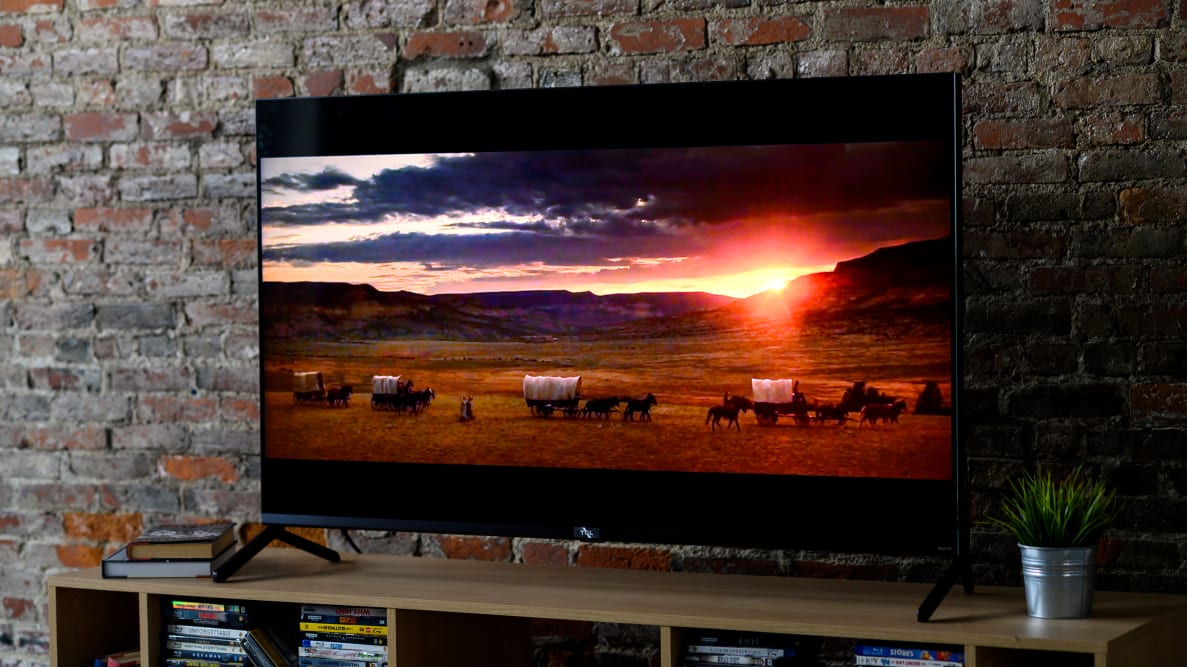
How HBO Max May Prompt Me To Get A Bigger TV

TCL 6-Series (55R625, 65R625) QLED TV Review - Reviewed

In general, I try to budget my money carefully when it comes to big purchases. By big, I don’t mean things you’d splurge on like fancy shoes, custom suits, jewelry, or a lap dance at a strip club. Those are more akin to casual indulgences. There’s nothing wrong with those in moderation.

For me, a single guy who has a mortgage and his own place, major purchases tend to involve large appliances and utility upgrades. Those upgrades can be expensive. One of the biggest purchases I had to make after buying my place was a new HVAC system. That purchase cost thousands. I had to taper some indulgences, as a result.

It was still worth doing. I feel like those purchases have paid for themselves many times over, in terms of quality of life. That’s how I gauge every major purchase. If it has an overall positive effect on quality of life, then it’s worth budgeting for. I learned in college that sometimes you need to endure a few nights of Ramen noodles before you can enjoy a good steak dinner.

This brings me to what could be my next major purchase. Earlier this year, I had a few things in mind that I considered saving for. My plan was to re-evaluate my priorities around the summer before I made a choice. Well, after watching Zack Snyder’s “Justice League” and “Godzilla vs. Kong,” those plans may have changed.

These past few weeks, I’ve documented how watching these movies as they debut on HBO Max has changed the way I’ve consumed new movies. I think it’s safe to say that my approach to viewing new movies has changed in a big way. Now, when a new movie is set to come out, I’ll have to weigh whether I want to see it in a theater or create my own experience at home.

I’ll be facing that choice quite a bit this year. Warner Brothers and HBO Max have a very promising slate of movies. Some of these were movies I planned on seeing in theaters. Now, after “Justice League” and “Godzilla vs. Kong,” I’m not so sure. To complicate the choice even more, I’m no considering a major upgrade to my living room in the form of a new TV.

At the moment, I have a 55-inch HDTV that has served me well for about five years. It’s not the highest end TV, but it gets the job done. It has seen me through multiple NFL seasons and plenty superhero movie marathons. However, I know I’ll have to upgrade at some point. With more and more content coming out in 4K, the incentives are there and growing.

However, given my recent efforts to re-create the theater experience in my living room, those incentives increased considerably. After watching “Godzilla vs. Kong,” I really felt the limits of my current TV. It still looks great and thanks to the sound bar I bought a couple years ago, the sound felt very similar to that of a movie theater.

The only thing that didn’t quite match that experience was the screen itself. It was good, but not great. For that reason, a newer, larger TV might very well be the kind of major purchase that pays off big time, in terms of quality of life. It may ultimately change even more how I determine whether I’ll see a new movie in a theater or at home.

Before this year, a new TV was a low priority for me. It’s not that I don’t want a bigger, better TV in general. I just didn’t see much value, given how few shows or events are broadcast in 4K. That may be changing, but it just wasn’t happening fast enough to justify the cost.

For me, the tipping point was whether NFL games would be broadcast in 4K. Thus far, that hasn’t happened. I was waiting until that announcement became official before I got serious about a new TV. Now, I don’t think sports are the tipping point anymore. HBO Max has suddenly changed the whole value structure for a new TV.

It’s exciting. I love the idea of being able to watch new movies on HBO Max or some other streaming service on a bigger, better TV. Whenever the NFL or baseball joins the 4K party, then that’ll only add to the value.

There’s still a real chance that I might find there’s a limit to recreating the movie experience in my living room. Once the novelty wears off, I might find there’s just now re-creating that theater or IMAX experience. No matter what I do to my living room, it just can’t measure up. I’m prepared to accept that outcome, should that be the case.

On the other hand, there’s also a chance I might recreate that experience a bit too well. If I get a good enough TV with a good enough picture, then going to the movies might end up being a last resort instead of an option. If I find that the experience in my living room is more enjoyable than any movie theater, then that will be my first choice for new movies.

That raises the stakes even more for this new TV. For once, it’s not just about seeking a better way to watch football games. It’s about turning my living room into something that can recreate that cinematic experience in the best possible way.

I’ll certainly keep everyone updated on this effort. As of this writing, I haven’t made any purchases, nor have I set a date for making one. For now, I’m just focusing on budgeting my money appropriately so that when the time comes, I’ll be ready to take that plunge. If anyone has any tips or insights into creating that special theatrical experience in their living room, please share it in the comments. Like any major purchase, I value the expertise and experiences of others. If all goes well, then I hope to be watching “The Matrix 4” on an awesome new TV by Christmas this year.

1 Comment

Filed under HBO Max, Jack Fisher's Insights, movies, technology, television

A Cyber Attack Managed To Shut Down A Major US Pipeline: Why We Should Be (Very) Concerned

In general, fearmongering is not productive. It’s one thing to raise awareness or express concern about an issue. It’s quite another to say that it’ll lead to the end of the world as we know it and everyone should drop what they’re doing immediately to address it.

One is a serious, substantive conversation.

The other is outright panic porn mixed with doom-saying.

This is why certain alarmists are hard to take seriously. I believe that climate change is real. I believe it’s a serious issue. However, I think those who just publicly yell about how awful the situation is and how terrible it’s bound to get aren’t helping. They’re just making it easier for people to write off valid concerns as fearmongering.

I don’t want to fall into that trap whenever I talk about issues I think warrant serious concern. At the very least, I’d like to raise reasonable awareness about an issue that may very well affect large swaths of people, both locally and globally. Even if an issue is urgent, we can’t let fearmongering obscure the issue.

Having said all that, I want to state outright that we should all be very concerned about the recent cyber attack on a major pipeline in the southern United States. You may not have felt its effects yet, but it’s likely you’ll notice the next time you have to gas up your car. To appreciate just how serious this attack was, here’s the story from Reuters.

Reuters: Cyber attack shuts down U.S. fuel pipeline ‘jugular,’ Biden briefed

Top U.S. fuel pipeline operator Colonial Pipeline shut its entire network, the source of nearly half of the U.S. East Coast’s fuel supply, after a cyber attack on Friday that involved ransomware.

The incident is one of the most disruptive digital ransom operations ever reported and has drawn attention to how vulnerable U.S. energy infrastructure is to hackers. A prolonged shutdown of the line would cause prices to spike at gasoline pumps ahead of peak summer driving season, a potential blow to U.S. consumers and the economy.

“This is as close as you can get to the jugular of infrastructure in the United States,” said Amy Myers Jaffe, research professor and managing director of the Climate Policy Lab. “It’s not a major pipeline. It’s the pipeline.”

Now, before you start freaking out about the possibility of terrorists hacking major utilities, it’s worth looking at this attack in context. This was not an attack done in the mold of the movie, “Live Free Or Die Hard.” These criminals were not Hans Gruber or some super-hacker in the mold of “Tron.” This was a ransomware attack.

For those not familiar with cyber crimes, a ransomware attack is when someone gets into a network or a specific computer and installs a piece of software that effectively locks all your drives. The only way to unlock it is to pay the hacker a certain sum of money, often in Bitcoin.

In general, these cyber-criminals are out to cause chaos and destroy entire countries. They’re just looking for some money. I guess in that sense they are like Hans Gruber.

For most people, there are established procedures to protect against ransomware and to weed it out. However, that’s just for personal computers and basic IT infrastructure in an average company. This attack hit a major utility. That fundamentally changes the context of this attack.

Ransoming someone with poor computer skills is one thing. That person will only suffer so much loss and frustration if they cannot save their data. A major utility is very different by orders of magnitude. Utilities like the Colonial Pipeline are critical for the basic functioning of our infrastructure. Shutting them down, even for a brief period, can cause a lot of damage.

On top of that, you’d think that a major utility would have some pretty robust cyber security, but you’d be distressingly wrong. Major government networks are still routinely hacked and hacked successfully. While most of these attacks are after personal data, the idea of a more malicious cyber attack is not an unreasonable concern at this point.

If a simple ransomware attack can disrupt a major pipeline, then what could a more coordinated attack do? It’s a disturbing question with equally disturbing answers. Remember, those who attacked the Colonial Pipeline were just after money. Imagine if they were looking to cause serious damage and loss of life.

This kind of cyber attack is not the stuff of science fiction and sub-par Die Hard movies. It has happened in the real world, the most famous being the Stuxnet attack that crippled Iran’s nuclear weapons program. That was a government-on-government attack that had major geopolitical ramifications.

Also, that’s just an attack we know about. I don’t think it takes an elaborate conspiracy theory to surmise that there have been other attacks like this that have not been made public. Some of those attacks might be many times scarier than either Stuxnet or the Colonial Pipeline.

This is all serious cause for concern. With each passing year, the world is becoming more connected and more tech savvy. An entire generation is coming up in a world where the internet is everywhere, both in industrialized nations and in developing countries. Like every generation before it, there will be conflict. It just won’t be fought in the same ways we’re used to.

If it’s possible to shut down a country’s pipelines, electricity, and communication networks without ever dropping a bomb or deploying a single troop, then we can’t assume it’ll never happen. We also can’t assume that it will, especially if we actively work on addressing the issue.

We managed to do that with nuclear weapons. We should make a similar effort with cyber attacks. We just learned that hackers can disrupt a major utility using a type of attack that is almost a decade old. Let’s not wait for another bolder attack on a larger target.

That still doesn’t mean freaking out and trying to live off the grid. It just means doing the necessary work to improve computer security, both on a personal level, as well as a governmental level. I don’t claim to be an expert in either, but if we can all do our part by just not having such an easily guessable password, we can all make a difference.

Leave a comment

Filed under Current Events, politics, real stories, technology

My Early Experiences With Bitcoin And Helpful Tips I’ve Uncovered

Recently, I finally took the plunge and bought some Bitcoin. I even wrote shared the experience. Overall, it wasn’t that groundbreaking. It didn’t involve a radical rethinking of how I used or thought about money. It was not that different from depositing money in a new account from an ATM. The account in this case just happened to be Bitcoin.

Since then, I’ve bought more Bitcoin. To date, I have a couple hundred bucks in my lone Bitcoin wallet. I’m still using BRD, which is one of the simplest wallets you can get. I have looked into getting others that have more features, but many of them seem to be more trouble than they’re worth.

That may change. I am quite interested in what BitPay has to offer with some of their services, but for now, I’m content to stick with BRD.

However, since I bought my Bitcoins, one issue has come up and I suspect it’s still the primary issue that most people face when they first get involved in this. It’s probably the same issue that prevents a lot of people from getting into it to begin with.

How do I spend my Bitcoins once I have them?

It’s the main issue that all these cryptocurrencies face. Getting them and securing them is challenging enough. Actually spending them like real money is still a challenge. While there are some noteworthy merchants that accept Bitcoin, most major retail outlets do not. You cannot use Bitcoin at Amazon or WalMart or even a standard grocery store just yet. Until that changes, its use will be limited.

This is what kept me from buying much of anything with my Bitcoins. Then, I discovered a useful tool that has helped make that easier and I think it’s worth sharing. While it’s true that companies like Amazon and Apple don’t accept Bitcoin directly, you can still use them. You just have to do it indirectly.

One way to do this is to use a site I found called Bitrefill. What it does is simple. You just use your Bitcoins to purchase digital gift cards for popular retail outlets. It works like this.

Step 1: Go to Bitrefill.com and browse the various gift card options, which includes the likes of Amazon and Walmart.

Step 2: Pick a gift card, choose an amount, and enter your Bitcoin account information for the desired amount, which is usually around $50 to $100.

Step 3: Complete the purchase and wait for the gift card code to come in via email. Then, just add the amount to your existing account.

For those who buy most of their stuff on Amazon, this is a quick way to turn your Bitcoins into something spendable. There are a few other workarounds, like Moon and Purse.io, but I’ve found this to be the easiest. There’s even a similar website called CoinsBee that allows you to do the same to your Apple iTunes account.

Basically, if you know how to send or spend gift cards, you can spend Bitcoin. Does it require a few extra steps from traditional cash? Yes, it does, but you can still spend it.

That may still raise the question as to why bother with Bitcoin in the first place. If it’s just adding an extra step between you and the retailers you prefer, then what’s the point? Well, this is where I’d like to share another part of my Bitcoin experience.

After buying my first batch, the price went up. I don’t know why, but it did. Suddenly, the first hundred bucks I put in was worth $125. That was great. It was downright thrilling. Granted, it did go down to around $103, but it was still impactful in a major way.

That’s because Bitcoin, unlike traditional money, fluctuates in value. Many see it as a reason why they don’t buy in. It’s just too volatile. I can understand that, but I also understand the impact of inflation.

If you go to your bank account right now and look at your money, you won’t see it change much in terms of value. However, inflation does ensure that its value goes down. It’s not a conspiracy. It’s just basic economics. Over time, most fiat currency loses value. That has been the trend for nearly a century.

With Bitcoin, it fluctuates. One day, it has more value. The other, it has less. You’ll win on some days, but lose with others. With regular cash, though, you always lose. You don’t lose nearly as much. Most of the time, it happens so slowly that you don’t even notice. Even so, losing is still losing.

The Bitcoins I have now may only be worth a few hundred bucks. By this time next year, they could be worth a lot more. That’s even more money I can convert to Amazon or WalMart gift cards. There’s also a chance the price could crash, as it has before, but given the finite nature of Bitcoin, there’s more incentive for its value to increase rather than decrease.

That doesn’t mean its value will always go up. There’s still a non-zero chance that Bitcoin’s value could stall or outright collapse, as other currencies have in the past. That’s why I’m not converting all my money into Bitcoin anytime soon.

For the time being, though, I’m satisfied and encouraged by my Bitcoin experience. I also encourage others to get into it as well, if only to get a feel for it. Hopefully, the sites I’ve listed here will help you get some use out of your Bitcoins. Money is a powerful force in this world. So long as Bitcoin and other cryptocurrencies keep operating as such, they’ll have a part in our future. Now is as good a time as any to carve your place in that future.

1 Comment

Filed under Bitcoin, Jack Fisher's Insights, technology

Why I Don’t Miss Blockbuster Video (For The Most Part)

Everyone has something they’re nostalgic for. There’s nothing wrong with that, for the most part. There are some people nostalgic for the kind of things that require massive social regression that would do immense harm to every marginalized minority you can think of. That kind of nostalgia isn’t healthy. It’s just for entitled assholes.

For me, personally, my nostalgia is pretty limited. I have a soft spot for old school Saturday morning cartoons. They made waking up early on the weekends fun. I’m also nostalgic for a time when the only people trying to cancel stuff were uptight conservative Christians who opposed anything fun, new, or sexy

It almost seems quaint now. I think many of us still long for the days when everything didn’t have a political agenda or bias. It’s getting to a point where it’s hard to remember a time when politics wasn’t so damn tribal. I miss those days too.

However, I don’t want to focus too much on the things I miss. Instead, I want to highlight something that I honestly don’t miss for the most part, but it’s something a lot of people have fond memories over.

That something is Blockbuster video.

Now, most people over the age of 30 remember Blockbuster video. I certainly remember it. In fact, it was once a regular ritual for my dad to take us all to Blockbuster on Friday evening to rent a movie. At one point, I lived within walking distance of a Blockbuster. Those were good times.

Those times eventually came to an end. Blockbuster’s rise and fall from its position as an institution of the movie business is relatively well-documented. It’s also well-known that there was a point where Blockbuster could’ve bought Netflix for just $50 million, but chose not to.

That choice has since gone down in infamy as one of the dumbest decisions in the history of business. To understand just how dumb it was, Netflix as of this writing is worth over $30 billion. Take a moment to appreciate just how much history changed with that fateful choice.

At the same time, there are people out there still nostalgic for Blockbuster. Recently, there was even a mini-documentary on the last Blockbuster video in operation in Bend, Oregon. Fittingly enough, that documentary is on Netflix.

Having watched that documentary recently, I found myself thinking back to those times I mentioned earlier. I also thought about how the stories that people in the documentary told about going to Blockbuster or video stores, in general. They remembered it so fondly. When they visited the last Blockbuster, they looked downright enamored.

I can’t say I blame them. It probably took them back to a time in their lives that they remember fondly. I can certainly appreciate that.

At the same time, I can’t avoid one simple fact.

I really don’t miss Blockbuster that much.

That’s not to denigrate the people who do or the experiences I had in my youth. When I look back on Blockbuster in its totality, both in terms of the good times and the not-so-good times, I just don’t miss it. As a hub for movies, it had its place at a certain point in time. That time has long past and I’d rather not go back.

As much as I enjoyed browsing movie racks and chatting it up with the people who worked at Blockbuster, I can’t overlook the shortcomings. There were plenty of times in which I really wanted to see a particular movie, but there were just no copies available. That happened constantly with certain shows I followed closely. It got to a point where I just stopped trying.

Then, there were the late fees.

I promise that nobody misses the late fees.

I recall more than one occasion where my parents scolded me and my siblings for not returning a movie on time. Even without inflation, those fees really added up. They were a constant point of frustration and I really don’t miss having to deal with them.

There were still parts of the Blockbuster experience that I enjoyed. The stores themselves were great to be in. My brother and I spent a lot of time losing ourselves in that store. While it was nice to just come across some obscure movie or game every now and then, I feel like that was the exception rather than the norm.

Since I got Netflix, I find it a lot easier to come across some obscure movie I’ve never seen or heard of. Last Halloween, I spent an entire afternoon just browsing the Horror section of Netflix and found several movies that I probably couldn’t have found in a Blockbuster. It was a great experience.

I don’t deny that Netflix is a lot more impersonal. There’s none of that social aspect you get by visiting a Blockbuster store. That certainly had its moments, but I feel like other social spaces have more than compensated, at least for me.

I’ll always have a soft spot for Blockbuster for making Friday nights more fun with my family. I’ll always remember that distinct smell of buttered popcorn that every Blockbuster seemed to have. Beyond that, though, I’m not all that nostalgic for it. Blockbuster had a good run. It just didn’t adapt to changing times. That being said, just imagine how different the world would be if they had bought Netflix.

Leave a comment

Filed under Current Events, movies, rants, real stories, technology, television