
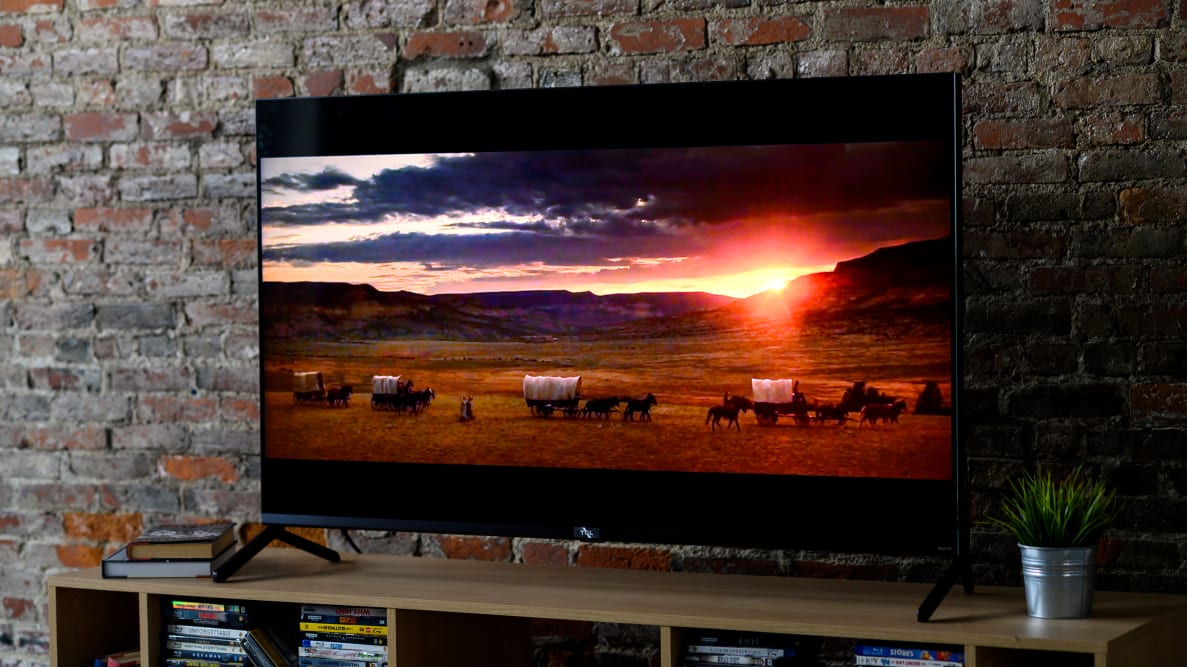
In general, I try to budget my money carefully when it comes to big purchases. By big, I don’t mean things you’d splurge on like fancy shoes, custom suits, jewelry, or a lap dance at a strip club. Those are more akin to casual indulgences. There’s nothing wrong with those in moderation.
For me, a single guy who has a mortgage and his own place, major purchases tend to involve large appliances and utility upgrades. Those upgrades can be expensive. One of the biggest purchases I had to make after buying my place was a new HVAC system. That purchase cost thousands. I had to taper some indulgences, as a result.
It was still worth doing. I feel like those purchases have paid for themselves many times over, in terms of quality of life. That’s how I gauge every major purchase. If it has an overall positive effect on quality of life, then it’s worth budgeting for. I learned in college that sometimes you need to endure a few nights of Ramen noodles before you can enjoy a good steak dinner.
This brings me to what could be my next major purchase. Earlier this year, I had a few things in mind that I considered saving for. My plan was to re-evaluate my priorities around the summer before I made a choice. Well, after watching Zack Snyder’s “Justice League” and “Godzilla vs. Kong,” those plans may have changed.
These past few weeks, I’ve documented how watching these movies as they debut on HBO Max has changed the way I’ve consumed new movies. I think it’s safe to say that my approach to viewing new movies has changed in a big way. Now, when a new movie is set to come out, I’ll have to weigh whether I want to see it in a theater or create my own experience at home.
I’ll be facing that choice quite a bit this year. Warner Brothers and HBO Max have a very promising slate of movies. Some of these were movies I planned on seeing in theaters. Now, after “Justice League” and “Godzilla vs. Kong,” I’m not so sure. To complicate the choice even more, I’m no considering a major upgrade to my living room in the form of a new TV.
At the moment, I have a 55-inch HDTV that has served me well for about five years. It’s not the highest end TV, but it gets the job done. It has seen me through multiple NFL seasons and plenty superhero movie marathons. However, I know I’ll have to upgrade at some point. With more and more content coming out in 4K, the incentives are there and growing.
However, given my recent efforts to re-create the theater experience in my living room, those incentives increased considerably. After watching “Godzilla vs. Kong,” I really felt the limits of my current TV. It still looks great and thanks to the sound bar I bought a couple years ago, the sound felt very similar to that of a movie theater.
The only thing that didn’t quite match that experience was the screen itself. It was good, but not great. For that reason, a newer, larger TV might very well be the kind of major purchase that pays off big time, in terms of quality of life. It may ultimately change even more how I determine whether I’ll see a new movie in a theater or at home.
Before this year, a new TV was a low priority for me. It’s not that I don’t want a bigger, better TV in general. I just didn’t see much value, given how few shows or events are broadcast in 4K. That may be changing, but it just wasn’t happening fast enough to justify the cost.
For me, the tipping point was whether NFL games would be broadcast in 4K. Thus far, that hasn’t happened. I was waiting until that announcement became official before I got serious about a new TV. Now, I don’t think sports are the tipping point anymore. HBO Max has suddenly changed the whole value structure for a new TV.
It’s exciting. I love the idea of being able to watch new movies on HBO Max or some other streaming service on a bigger, better TV. Whenever the NFL or baseball joins the 4K party, then that’ll only add to the value.
There’s still a real chance that I might find there’s a limit to recreating the movie experience in my living room. Once the novelty wears off, I might find there’s just now re-creating that theater or IMAX experience. No matter what I do to my living room, it just can’t measure up. I’m prepared to accept that outcome, should that be the case.
On the other hand, there’s also a chance I might recreate that experience a bit too well. If I get a good enough TV with a good enough picture, then going to the movies might end up being a last resort instead of an option. If I find that the experience in my living room is more enjoyable than any movie theater, then that will be my first choice for new movies.
That raises the stakes even more for this new TV. For once, it’s not just about seeking a better way to watch football games. It’s about turning my living room into something that can recreate that cinematic experience in the best possible way.
I’ll certainly keep everyone updated on this effort. As of this writing, I haven’t made any purchases, nor have I set a date for making one. For now, I’m just focusing on budgeting my money appropriately so that when the time comes, I’ll be ready to take that plunge. If anyone has any tips or insights into creating that special theatrical experience in their living room, please share it in the comments. Like any major purchase, I value the expertise and experiences of others. If all goes well, then I hope to be watching “The Matrix 4” on an awesome new TV by Christmas this year.



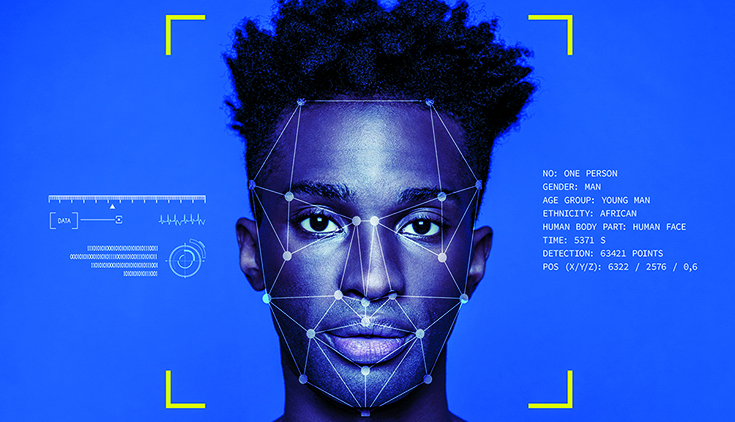


An Artificial Intelligence That Can Debate: The Promise And The Perils
Even in an era as divided and chaotic as this, there’s still a place for reasonable debate on important issues.
Yes, I understand it’s hard to say that with a straight face these days.
Yes, I’ve been to comments sections, Reddit, and 4chan.
Yes, I know how ugly the discourse is right now, but that’s exactly why I’m bringing this up.
In general, people are curious. Even though they cling to cherished beliefs and refuse to change their minds when confronted with evidence, we’re still curious about things that are different. It’s not always honest, but it’s a powerful feeling. Even if you despise those on the other side of the debate, a part of you will still wonder why they hold the opinions they have.
That’s why debate is such a powerful tool. Humans are such a social species by nature. We’re hard-wired to interact, connect, and discuss things with one another, even when we don’t agree. It may frustrate us to no end, as anyone who has debated a creationist can attest. However, the fact we keep doing it is proof, in my opinion, that there’s still value in the process.
Regardless of how you feel about the merit and value of debating, the whole process might become more complicated in the near future. That’s because IBM, the same company behind Watson, the Jeopardy playing computer, just created an artificial intelligence that can debate at the same level as a skilled human debater.
Here’s an excerpt from a piece in TechXplore on this new system. It’s not as scary as some of the things we’ve seen from Boston Dynamics lately, but it’s still intriguing.
TechXplore: IBM’s AI debating system able to compete with expert human debaters
Now, before you get too nervous, it’s worth noting that this AI is far from the kind of advanced artificial intelligence systems I’ve mentioned before. This is not the kind of AI that will become Skynet or Hal 9000, no more so than Watson or AlphaGo. This is a system is very much a narrow AI, as in it’s made to excel at a specific task.
We have AI’s that can beat world class chess players and Jeopardy champions. This AI just happens to excel at debate. However, that has implications that go beyond simply outclassing the best human debaters in the world at the moment. In fact, this is one form of AI that might not need human-level intelligence to incur a major impact.
Take a moment to think about how erratic and inconsistent most debates are. No matter how intelligent or informed you are, it tends to get messy fast. That’s why so many comments sections and Reddit threads devolve into shouting matches and personal attacks. The end result is people becoming more angry and unreasonable, which can have major real-world consequences.
However, what would happen if every debate on any issue included someone who was better than the best debater on the planet? Even if the two people on each side of the debate were dumb and inept, such a presence would have a major impact on the discourse.
That’s because winning a debate has little to do with how well someone knows a particular subject. It also has little to do with how forcefully and clearly someone explains a topic. Again, people who debate creationists know this all too well. Winning a debate doesn’t mean proving your expertise. It means proving the merit of your argument.
An AI that can do that may not convince someone that they’re wrong about something. However, losing a debate tends to have a lasting impact. Just ask any aspiring politician. It can also lead people to question their beliefs, even if they still cling to them. That, alone, can be powerful.
For proof, look no further than the story of Megan Phelps-Roper, a former member of the infamously hateful and dogmatic Westboro Baptist Church. She was as locked into her beliefs as anyone could possibly be. She was raised by religious zealots and indoctrinated into strict religious dogma from the time she was a child. She’s not someone whose mind is prone to change.
Then, she got into a discussion with someone on Twitter of all places. That person began a conversation. It started as a nasty debate, but it evolved into something that led her to question her beliefs. Ultimately, she left that hateful and bigoted environment. She’s now an activist against the same religiously motivated hate that she once fostered.
It’s a powerful story, but one that couldn’t have happened without a debate. To date, people have only been able to have those debates with other people. Not everyone is equally skilled. In fact, I would argue most people are woefully unskilled at debating anything and I include myself in that category. I am not good at it, either. I freely admit that.
Now, there’s an AI system that can theoretically win any debate the same way other systems can defeat any chess player. That does hold promise if it can be used to temper the heated rhetoric that has caused real-life hostilities. At the same time, there are reasons for concern.
What side would this system be on?
Moreover, who decides what position these AI systems take?
If no one decides, then how does the AI determine which side on a debate it takes?
These are relevant questions because if you have an AI that can win any debate, then the side it takes really matters. That can be used for good when countering dangerous disinformation, like those from the antivaxx crowd or hate groups like the Westboro Baptist Church. Like any tool, though, it can be weaponized for ill.
I can easily imagine political organizations getting a hold of these systems and trying to use them to benefit their agenda. I can also see some trying to use it to spam message boards, social media, and Reddit threads to derail certain movements or arguments. That’s a powerful tool and we can’t be certain that those using it will use it responsibly. That’s the dilemma with all technology. It can be used for good and for evil. With technology like artificial intelligence, the stakes are a lot higher, as are the perils. This technology may not be as dangerous as a more advanced AI, but it could be a precursor to just how disruptive this technology can be.
1 Comment
Filed under Artificial Intelligence, futurism, technology
Tagged as AI, AI Systems, Artificial General Intelligence, Artificial Intelligence, artificial superintelligence, comments section, debate, debate strategies, debating, futurism, IBM, IBM Watson, internet debates, Narrow AI, Strong AI, tech, technological progress, technological singularity, technology, technology and society, Watson, Weak AI, winning debates