Category Archives: sex in media

Sex Advice From Porn Stars (And Why We Should Listen)

There are certain people who just love giving advice, but overestimate the quality of that advice. Usually, their heart is in the right place. They genuinely believe they have something to offer and are willing to share it. Sincere or not, though, their advice doesn’t always line up with their expertise.

When it comes to advice about something as expansive as sex, everyone likes to think they have a unique skill to offer. Ask anyone who isn’t a priest, mullah, or monk and they’ll claim to have the secret to a satisfying sex life, especially after a few beers. More often than not, those secrets are just a bland mixture of common sense and basic anatomy.

For the more advanced stuff, you need to find people who really do have expertise. When you want to learn more about building houses, you go to an architect. When you want to know about finances, you talk to a licensed accountant. Following that same logic, if you want advanced advice on sex, then you should consult a porn star.

No, that’s not the basis of a dirty joke or a kinky anecdote. I’m as serious as a rug burn on a newlywed’s honeymoon. A satisfying sex life is a major ingredient to a satisfying life, in general. It’s also the kind of advice that’s more than a little awkward to get from your parents or family members. As such, porn stars are uniquely qualified to help.

Granted, porno sex and actual sex are as different as drag racing and your typical morning commute. Sure, porn can be a great way to spice things up, as can reading sexy novels. It shouldn’t be your sexual baseline any more than Ron Jeremy should be the baseline for penis size.

Even if porn is essentially a Photoshopped version of sex, those involve have more experience with sex than 99 percent of us ever will. You don’t have that much experience without gaining some level of expertise. That’s why I’ve compiled a few tips from famous porn stars, courtesy of the fine folks at Women’s Health Magazine and Maxim.

Beyond the advice, I’d also like to highlight its merits. Porn stars may engage in the kind of sex that most people without fake tits or a nine-inch cock can only dream of, but experience is experience. That’s why their advice should carry more weight than most.


Porn Star Sex Tip #1: Alternate Between Foreplay And Intercourse

This one comes courtesy of Jessica Drake, a veteran porn star that most men will claim not to know, but are definitely aware of. It’s also my favorite sex tip ever and one I try to employ in my sexy novels at every turn.

I’ve already made my love of foreplay known, but it’s one of those things that’s worth belaboring. Using it in conjunction with all the juicier bits of sex makes for a potent combination. With it, the physical act of sex gains a whole new dimension.

It becomes intense, emotional, and even a little exhausting. A porn star knows all those things in their work, but it works just as well for ordinary people. A little sex here, followed by some foreplay, followed by some more sex, and followed by even more foreplay doesn’t just mix it up. It turns up the heat, the energy, and everything else that goes into sex.

If you only follow one tip from one porn star, make it this one. You and your lover will be glad you did.


Porn Star Sex Tip #2: Talk Dirty

This is another one of those tips that uniquely appeals to aspiring erotica/romance writers. I kind of have to have my characters talk dirty in order to set the tone, build the passion, and create drama.

Porn stars have to use it too. It’s how they keep a scene hot and sexy to improve the overall experience. Again, this comes from Jessica Drake, who is known to have as dirty a mouth as any porn star can claim. However, that kind of talk isn’t relegated to porn stars and erotica/romance writers.

A big part of great sex involves communication. Talking dirty, while not the most refined form of conversation, helps convey your desires. Sure, it can get vulgar and crude at times, but that kind of rhetoric is uniquely appropriate for the bedroom. Also, crude and vulgar also tends to be blunt and easy to understand. It might just be the easiest way for lovers to communicate their desires so it makes sense to use it.


Porn Star Tip #3: Listen To EVERYTHING

This tip is deceptively simple, but exceedingly important. It comes from a male porn star named Ryan Driller. You might not recognize the name, but if you’ve been on the internet for more than a year, you’ve probably seen his face or his penis. The man has acted in both straight and gay porn so he knows how to tend both sides of the field.

Unlike dirty talk, though, this kind of listening involves more than just getting the right moans out of your partner. When Ryan Driller says listen to everything, he means everything. That means listening to your partner’s breathing, their heartbeat, and the way they react to every move you make.

Even with dirty talk, some people are going to struggle to convey their wants and needs in the bedroom. Sometimes, you have to be the one who listens to those subtle queues and make the most of them. Sure, it’s more work, but the end result is a more satisfied partner who think you can read their mind. Is there any other kind of work that’s more worth it?


Porn Star Tip #4: Make Your Lover Feel Desired

This is one of those sex tips that should be common sense, but is easy to forget in the heat of the moment. It’s also another one of those tips that takes center stage in erotica/romance novels like mine. However, in the real world, that sentiment becomes an afterthought all too often.

This tip comes from Veronica Vain, who doesn’t have the same pedigree as Jessica Drake, but still has enough experience to know the value of desire. Porn stars may make their living having crazy kinky sex with people they don’t have any emotional connection with, but they still have feelings. They still share in basic concepts of desire.

Making your partner feel desired is another one of those things that takes work. Again, it’s the kind of work that’s worth doing. It gives depth and meaning behind the basic mechanics of sex. Put in that work and those actions become more than basic. The more desired your partner feels, the more they’ll desire you. Everybody wins and has orgasms. That’s as big a win-win as you’ll ever get.


Porn Star Tip #5: Pay Attention To Your Needs

This is one more tip from Jessica Drake. Like I said, she has a lot of experience. As such, she has a lot of intimate wisdom to share. This is also a tip that most other porn stars tend to give, on and off the camera. Porn stars don’t always get to prioritize their needs any more than a baker prioritizes theirs when they’re making a cream pie. Actually, that might not be the best terminology for this discussion.

Whatever the case, the nature of a porn star’s work means they know the value of their needs better than most. They also know that taking care of those needs can add to the spectacle, as many porn scenes and sexy novels. This is one of those tips that works as well in real life, as well as porn and novels.

Sure, it’s important to put in the work, as I’ve stated with other tips. However, that doesn’t mean doing all the work. Sex is supposed to be mutual. Sex that involves one person doing everything while the other just lays there is barely a step above masturbation.

Meeting your needs is an important part of sex, although it’s not the only part. However, taking care of them helps ensure that everything else after that is just a bonus. When used in conjunction with the other tips, it can make for one hell of a bonus.

2 Comments

Filed under Marriage and Relationships, polyamory, sex in media, sexuality

Teaching About Sex, Consent, And Relationships (Through Video Games)

Let’s face it. Most kids aren’t that eager to learn about the stuff that their teachers, parents, and school administrators want them to learn about. They’re not interested in knowing the skills that will make them healthy, productive, tax-paying consumers who will keep society running. They’re interested in the skills that will make them popular and/or get them laid.

The deficiencies of our education system are many and I’ve made no secret of my disdain for the experiences I had within that system. However, I don’t want to dwell too much on that this time. Talking about how much I hated high school is rarely that sexy.

Instead, I want to focus on something that most kids are eager to enjoy and how some people are using that to improve their understanding of sex, sexuality, and relationship. What could kids possibly excite kids that much to learn about something that they would rather not learn from the same gym teacher that makes them run laps in winter?

The answer is more obvious than you think. It’s video games. Admit it, that almost makes too much sense.

There’s no question that kids love playing video games more than learning about quadratic functions. According to a survey done by the MacArthur Foundation, approximately 97 percent of kids between the ages of 12 and 17 play video games. When it comes to statistics and surveys, you can’t get much more definitive without asking kids whether chocolate fudge tastes good.

Kids might not be able to agree whether Superman could beat the Hulk, which he totally could, but they agree that video games are awesome. So if kids love video games so much, why not use that love to teach them valuable lessons about sex, relationships, and consent?

That’s not a rhetorical question. I’m not being facetious either. It’s not about the medium or whatever asinine controversies it may have. It’s about working with what kids already love and using that to help them in valuable ways. It’s not that radical a concept. Hit movies have been made about it.

When it comes to teaching kids about sex, though, I wouldn’t expect Edward James Olmos to star in a movie about that. That doesn’t mean the concept is entirely flawed. Teaching kids about sex is hard enough. Teaching them in a way they’ll remember and take seriously might be beyond the power of Hollywood.

That still doesn’t stop some from trying. In a story by Kimberly Lawson at Vice, an associate professor of medicine at Yale University has helped create a game called PlayForward: Elm City Stories. It’s a fairly straightforward, two-dimensional role playing game that is less about killing aliens or Nazis and more about guiding players through a narrative, showing how their decisions affect them along the way.

That’s not quite as radical as it sounds. Role-playing games represent a large chunk of the video game industry. Major game franchises like “Mass Effect” and “Final Fantasy” are built around the idea of having players make choices and face repercussions of those choices. Take away the aliens and the monsters, though, and you’ve got a solid basis for understanding real life choices.

PlayForward: Elm City Stories plays less like Dungeons & Dragons and more like the classic board game, Life. In it, you play as avatar in a fictional, but fairly realistic city where you have to navigate a variety of activities and make choices along the way.

Some of those activities involve who you your friends are. Some involve going to certain events and parties. Some even involve whether or not to make out with a cute girl. It may sound mundane, but like most RPGs, the appeal is diving into the world of the character and leading them through it. Here’s how Vice describes the experience.

Players have to make important, life-changing decisions, including whether or not they should go upstairs to make out with someone, if they should use a condom or not during sex, and whether they should accept pills found in someone’s grandmother’s medicine cabinet. At any point, they can fast-forward to the epilogue to see what their character’s life looks like at 30, based on the decisions they’ve made.

Through that experience, players learn about more than just saying no to the guy on the street corner offering a free hit of crack. They experience both the short-term and long-term impacts of their decisions. Given the notoriously short attention spans and limited foresight of kids, that kind of insight in indispensable when teaching them about sex and relationships.

It’s no “Super Mario Brothers,” but the lessons it conveys are more valuable than any princess. It puts the players in a position to choose the right and wrong path. It shows them just how right and wrong those paths can be in the long run for their character and themselves, by default.

Beyond just consequences, the game gives players a chance to explore situations involving intimacy, consent, and relationships. Their choices help forge the relationships they have throughout the game. To get a better outcome, they actually need a better understanding of intimacy and consent. The fact that gives them tools to apply those lessons in the real world just a pleasant side-effect.

In a sense, PlayForward: Elm City Stories is coming along at the perfect time. We live in a world where sexual harassment and sexual assault are heated issues. We, as a society, are not as willing to turn a blind eye to these sorts of indiscretions anymore.

Just punishing the Harvey Weinsteins of the world isn’t enough, though. We need to teach the emerging generation that there’s a time and a place to show a beautiful woman your genitals. Knowing those circumstances will be the difference between having a great sex life and being sued into oblivion.

Kids aren’t going to learn those skills through lectures, after school specials, and cute puppets. Some of the most effective learning methods involve active engagement with real activities that offer real rewards. In that sense, video games are the perfect medium for that kind of teaching.

While I doubt that PlayForward: Elm City Stories will win any game of the year awards, it sets an important precedent that is worth building upon. Saving princesses and shooting killer aliens is still fun, but learning about relationships, consent, and sex will take a player much further in life.

Kids, and people in general, learn best when they don’t know they’re learning something. Video games may still have a nasty reputation in some circles, but it offers opportunities to teach valuable skills that aren’t easy to teach, especially to hormonal teenagers. We should take advantage of those opportunities and hopefully, PlayForward: Elm City Stories is just the beginning.

1 Comment

Filed under Current Events, gender issues, sex in media

When A Controversy (That Involves Scantily Clad Women) Should NOT Be A Controversy

We live in a controversial time within a controversial place surrounded by all sorts of high-tech tools that allow us to spread controversy in every direction. It may very well be the first time in human history where controversy of any kind has a chance to spread discord among large swaths of people with too much free time and a cell phone.

That can be a good and a bad thing in that it makes us more aware of the world outside our immediate surroundings. However, when it’s a bad thing, it’s bad for frustratingly insipid reasons. Lately, whenever those reasons involve beautiful women, the people who admire them, and sexism, it becomes even more frustrating.

Like many other self-professed comic book fans, I’ve been eagerly following the news surrounding “Justice League.” After the success of “Wonder Woman,” this movie marks a huge step in the development of DC’s evolving cinematic universe, which Warner Brothers is hoping will compete directly with the cinematic juggernaut known as the Marvel Cinematic Universe.

That kind of competition is bound to attract some controversy, if only from angry fans trash-talking each other about whether Wonder Woman could beat up Thor. Sometimes, that controversy is healthy. This is not one of those times.

Just days before the movie came out, this little incident sparked the wrong kind of controversy for all the wrong reasons. Unfortunately, it involves beautiful women in sexy attire. It’s something that should be innately fun, enjoyable, and positive for everyone who isn’t a celibate monk seeking to avoid temptation. Instead, it sparks Round 8,839,272,093 of another angry debate about gender and sexism.

Now, I’m as sick of these debates as everyone else. I’d much rather be focusing on enjoying this movie and seeing how it measures up to “Wonder Woman,” but certain people just can’t help themselves whenever they see an opportunity to evoke some fresh outrage.

This time, it has to do with how the Amazons are dressed. After their introduction in “Wonder Woman,” which made for some truly wonderful moments, they’re set to participate again in “Justice League.” That should be a good thing. They’re a tribe of powerful ancient warriors. Why shouldn’t they participate in a battle to save the world?

That fact might as well be an afterthought for some people because apparently, they’re not dressed appropriately. I must have missed a meeting because at some point, someone passed a rule that said you couldn’t look sexy while saving the world. As an aspiring erotica/romance writer, I oppose such a rule with every fiber of my being.

Wherever it came from, it seems to be an issue now. There are real people who insist on making this a major issue, which requires them to ignore the fact that a tribe of badass warrior women is involved in the first place. Instead, they’re just focusing on how they’re dressed. Seriously, is this really worth that level of outrage?

Never mind the fact that warrior women kind of have to be really fit and being fit is a major factor in sex appeal. The fact that “Justice League” dares to offer that kind of sex appeal in any capacity is somehow an affront to women, feminism, and progress in the 21st century. If I could write that with more sarcasm, I would.

Before I go on too angry a rant, it’s worth noting that this sort of thing stands in direct contract to Gal Gadot’s own message that women should dress however the hell they want. It’s also worth noting that one of the actresses, Brooke Ence, who plays one of the Amazons, did not see much controversy with the attire. In a USA Today interview, she said this:

As she recalls, not every warrior wore a two-piece, and “the girls on set, we never thought of (the new costumes) as a sexy version. It felt a little more glamorous, if anything, because we had bigger, beautiful hair, which I loved.”

In fact, the CrossFit champion, who gets a heroic scene in the new movie, added, “I’m an athlete first, right? (Usually) I can’t wear anything without someone commenting about my (muscular) body. So for me, it was actually really cool to be able to show it and not immediately feel masculine, but still very feminine.”

By the actual words of a woman who actually wore that attire, she liked that sexy attire. She thought it was glamorous and showed off the body that she clearly worked so hard to sculpt. There’s no hint, whatsoever, that she was forced to dress this way to appeal to horny men.

That implies, shockingly enough, that sometimes women want to dress sexy. It implies that it’s okay to look sexy and it’s okay for men to appreciate that. I even made a formal announcement about it last year. I guess some people didn’t get the memo.

I’ll try to limit the sarcasm from here on out, but this is the key factor in determining whether a controversy involving scantily-clad women even warrants controversy to begin with. This is not an old Carl’s Junior ad or necessarily softcore standards utilized by Victoria’s Secret. These are female characters in a movie that is trying to appeal to everyone, including men.

The women wearing that attire never claimed they were being exploited. There was no noticeable uptick in sex crimes as a result of this attire being worn. The only offense anyone took were those claiming to be offended on behalf of all women. Therein lies the problem, though.

If one of the actresses had come out and said they felt degraded by that attire, that would be one thing. If it came out that some asshole producer forced them to wear it after they’d objected, that would be quite another. Given the recent climate surrounding sexual exploitation, they probably would’ve had a lot of allies.

That didn’t happen, though. Instead, those allies jumped the gun. They didn’t wait to hear from the women wearing the sexy attire. They didn’t even ask how they felt about wearing it. They just assumed, outright, that it was degrading, offensive, and sexist. That’s not just arrogant and presumptuous. It’s counterproductive because it turns allies in the fight against sexism into assholes.

In order to be offended for everyone, you have to assume everyone feels the same way you do. That’s a flawed, egotistical, narcissistic assumption. That’s exactly the kind of selfishness that Wonder Woman and Gal Gadot oppose with their emphasis on compassion and understanding. Anyone who feels as though they have to be offended for someone other than themselves is basically forcing unwarranted outrage.

This is the kind of thing that gives feminism, men’s rights activists, and people who make excuses for being arrogant dicks a bad name. It’s not that they react to something that’s controversial. They have to either create it or bend it to fit their agenda. I guarantee that as I type this, there are countless debates going on about the merits of sexism, scantily clad women, and sex appeal that aren’t making anyone horny.

That’s not to say that scantily clad women are always positive. Even an aspiring erotica/romance writer understands there’s a line between beauty and gratuity. There’s nothing about the Amazons’ attire that’s so gratuitous that it should require someone’s credit card number and a quick clearing of their browser history. The fact that it has been addressed by those who participated in it should be the end of the story.

Sadly, I suspect this won’t be the end. Even after the outrage over this issue passes, there will be another. For reasons that I wish I didn’t have to discuss, there will still be controversy every time a beautiful woman decides to show more skin than a priest, monk, or mullah deems appropriate.

Until we’re all comfortable in our own skin, or find a way to upgrade our brains to avoid the outrage before it starts, I suspect these kinds of controversies will continue. Just remember that if it has to be forced by those not involved, it’s not a controversy of merit. All it does is take away from those who just want to enjoy being sexy or admire those who are.

1 Comment

Filed under Celebrities and Celebrity Culture, Comic Books, Jack Fisher, Superheroes, gender issues, sex in media

Cheap Sex, Sexual Revolutions, And Why It’s A GOOD Thing

When something is cheap, you tend to get what you pay for. I learned that the hard way when I tried to spend as little money as possible on a trip to Florida. I ended up staying in an awful hotel with dirty sheets, piss-poor room service, and towels that felt like sandpaper. I definitely paid for not wanting to pay too much.

In any functional economy, that’s how it’s supposed to work. If you’re not willing to put effort and resources into a product, then you’re not going to get much out of it. It’s the cornerstone of how western society has prospered, according to Adam Smith. With sex, however, you can’t always apply the same rules.

Granted, I’ve often tied certain sexual attitudes to economic factors. I still stand by some of those comparisons, but I don’t deny some special circumstances, with respect to sex. Unlike the stock market, new smartphones, or junk bonds, sex isn’t a product, nor is it a simple service.

We’re not hard-wired to want to buy the new iPhone X, even if some people feel otherwise. We are, however, hard-wired to seek sex. It’s one of the most basic drives any animal can have, including humans. Unlike other markets, we can’t just opt out or cash in our investment, so to speak. Even those who try to avoid it, the desire is still there. In some cases, avoiding it can have a high cost as well.

I bring this up because current sexual trends have certain people who care a lot about how much sex other people are having seem to be taking our society into uncharted territory. Even though sexual activity among younger people is down, there’s a growing sentiment that the sex people are having is cheap, dispassionate, and empty.

Now, I’m certainly not the one saying this. As a man who writes erotica/romance novels, I always put a special premium on all thing sexy. That may make me an anomaly, but others interpret our sexual trends differently.

That brings me to the article that inspired this post. According to Ian Snively of the Daily Signal, our society is being undermined by the notion of cheap sex. While I certainly don’t agree, this is the argument he makes.

He says people’s dependence on “cheap sex” has a lot to do with the influences of the “sex market.” Specifically, the products and media that promote sex don’t cater to women’s best interests.

“The mating market no longer seems to favor women’s interests like it once did,” said Regnerus. “It favors men’s interests, which is why so many women find dating in their 20s and early 30s so frustrating.”

Regnerus thinks that because women generally want a long-term commitment in a relationship, their interests make selling sex more difficult. Instead, the sex market plays into the interests of men, who generally prefer less commitment.

“If you asked men and you asked women, ‘What is your ideal relationship?’” he said, “more men than women will say, ‘Oh, I would love something short-term, where I can just go over, and replace whenever I feel like it.’”

And because the market has exposed society to “cheap sex” for so long, Regnerus thinks people have a hard time getting out of that mindset.

“People have been so trained into cheap sex, that they don’t know how to get out of this pattern that’s been bothering them,” he said.

Now, I’m going to resist the urge to go on a long-winded tirade about how this man interprets our current sexual climate. In many ways, he’s not much different from any priest, mullah, monk, or rabbi who claims that too many people aren’t having monogamous, missionary-style sex for the sole purpose of producing new adherents/tax payers/workers/etc.

The one aspect in which he’s all too similar to these age-old, anti-sex sentiments is how he makes the broad assumption of what women want in a long-term commitment and what men want, conversely. The idea that all women want the same thing and men always want something inherently different is, to be honest, both insulting and misguided.

Mr. Snively doesn’t entertain the possibility that maybe some women might want a casual relationship wherein the sole purpose to have regular, recreational sex for the sole purpose of enjoying the toe-curling pleasure it brings them. At the same time, he doesn’t entertain the possibility that men actually want love and commitment.

He’s basically assuming that every gender stereotype that every teen movie ever made is correct. Never mind the fact that movies have a horrible track record when it comes to reflecting reality, especially with firearms. The man here is building his entire understanding about “cheap sex” around assumptions that anyone with even a little non-Hollywood life experience knows are flawed, at best.

Mr. Snively calls these trends in cheap sex a new sexual revolution. Having already written about the prospects of future sexual revolutions, I can say his standards for revolutions are laughably low. In addition, just researching sexual revolutions reveals that there’s nothing revolutionary about cheap sex.

No matter what religion, government, culture, or peer pressure tries to do, horny men and horny women, alike, will seek outlets. Some will be legitimate. Some will be illicit. In any case, the culture and attitudes will ascribe a cost to getting that outlet.

If the cost is high and sex is expensive, then not everyone can afford it. Sure, the rich and the powerful will have their mistresses, concubines, and side-lovers. The not-so-rich, however, will have a problem. They will have an unmet need that their biology won’t allow them to ignore completely. Like famine, you can only do so much to ignore how hungry you are.

It’s for this reason that others have argued that societies full of sexually-deprived people will be an unstable one. When the cost of sex is that high and your biology won’t let you forget you have this unmet need, you’ll do anything to meet that need, no matter how irrational or horrific it might be.

That’s cost of expensive sex. Flip the scrip, make sex cheaper, and suddenly, there’s a different dynamic at work. In a world of cheaper sex, it’s easier to meet those needs. With the rise of dating apps like Tinder and eHarmony, it’s easier today to seek both cheap sex and deeper relationships. Individuals have options to pursue, depending on what they seek and why.

Mr. Snively sees this as revolutionary. It’s really not and I’m not just talking about the old hippie concept of free love. There have been numerous cultures where sex was even cheaper than it is today. Those cultures functioned and faltered in their own unique way. The cheapness of sex was not seen as all that groundbreaking.

That’s not to say that cheap sex came without a cost. It certainly did. Cheap sex does have consequences that include increased transmission of diseases, unwanted pregnancies, and unstable family structures. However, I would argue that those costs are far less than the alternative.

I’ve mentioned before how fascist regimes need to control sexuality to some extent. Therein lies the key, though. It takes an extremely authoritarian government to impart the kind of force necessary to counter something as powerful as the human sex drive. Pretty much every government/church that has tried that in the past has failed in the long run.

In a sense, the cost of trying to make sex more expensive is actually far higher than making it cheap. It requires a lot of power, suppression, and micromanaging to manage, let alone contain the sex drives of every person in a society. That kind of effort requires a level of cost and resources that no government can hope to manage, especially in the long run.

That’s why I believe Mr. Snively is wrong. Cheap sex is not that revolutionary. In addition, cheap sex is actually far better for a free and open society than the alternative. In that sense, it should be celebrated and I intend to use my sexy novels to contribute to that effort.

1 Comment

Filed under Current Events, gender issues, Second Sexual Revolution, sex in media

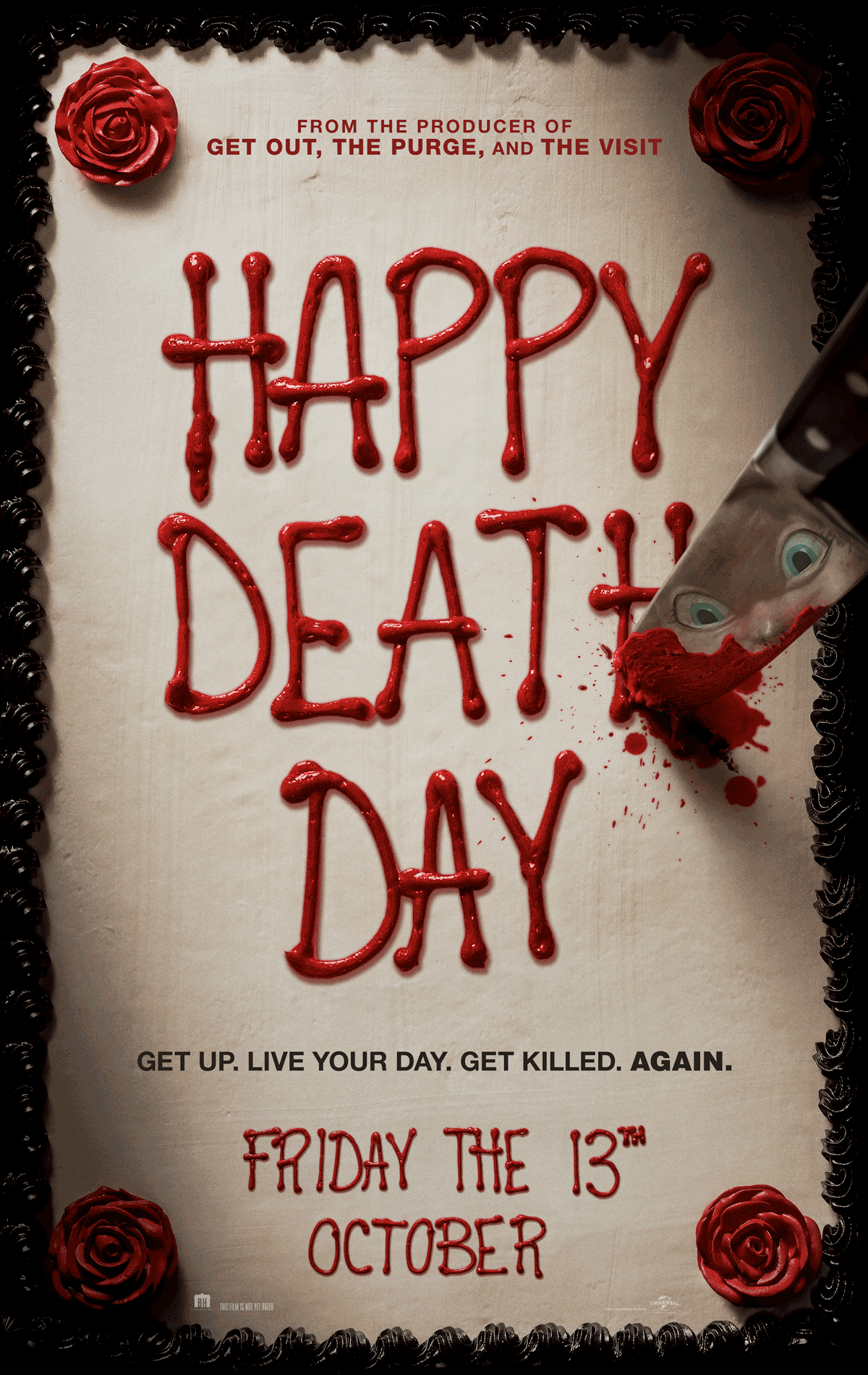
How “Happy Death Day” (Surprisingly) Enriches Horror/Slasher Movies

When it comes to horror/slasher movies, it’s hard to break new ground these days. That’s because most still cling to the tried and true formula established by the likes of “Friday The 13th” and “Halloween.” That means there is usually going to be some crazed killer, some horny teenagers, and some sweet, yet sexy virgin who survives it all. You can practically set your watch to it, along with the standard jump scares.

It’s for that reason that slasher movies aren’t really as big a draw as they used to be. On top of that, they tend to be annoyingly sex negative and not in a subtle way either. If you’re a horny teenager in a slasher movie, then there’s a 99 percent chance you’ll be dead by the time the credits roll.

That’s why when a movie comes along to shake up that narrative, it’s worth noticing. That brings me to a recent horror movie that caught my intrigue and defied my expectations. It’s called “Happy Death Day” and, apart from the goofy title, it accomplishes something remarkable.

The first major accomplishment, for me personally, is that the trailer actually made me want to see the movie. In this era where every movie trailer follows a similar formula, we’ve all become fairly numb to their effects. We know what they’re trying to do and how they’re trying to do it. Unless you were already planning to see the movie, as is often the case with superhero movies, then a trailer probably won’t do much.

With “Happy Death Day,” the trailer struck a chord for me because it presented a different kind of slasher/horror movie. Moreover, it did so in a way where the concept was more appealing than the actual slashing/horror. Whereas most horror movies will try to build every promotional effort around that horror, “Happy Death Day” threw something else into the mix that proved enticing.

That concept may not seem radically new, on paper. “Happy Death Day” doesn’t radically reinvent the genre as much as it innovates with established concepts. It’s basically a combination of “Friday The 13th,” “Final Destination,” and “Groundhog Day.” It uses familiar themes like masked killers, time loops, and  exceedingly elaborate scenes. However, it’s the way in which they’re presented that makes the movie work.

It also helps that the presentation is done through a beautiful female protagonist named Teresa “Tree” Gelbman, who is played by a very emotive Jessica Rothe. Beyond being a pretty face, though, Tree embodies everything audiences love to hate about beautiful, sexually active women in horror movies.

She’s shallow, callous, self-centered, dismissive, and just plain mean. I won’t say she’s on the same level as Regina George from “Mean Girls,” but she’s in the same time zone. Essentially, she’s basically a female version of Phil Connors in “Groundhog Day” in the sense that she’s a fairly reprehensible person that we’re not supposed to like from the get-go.

When someone is nice to her, she just blows them off. When someone tries to wish her a happy birthday, she just rolls her eyes. On top of that, she’s openly promiscuous, hooking up with her friends’ boyfriends and having an affair with her married teacher. By every measure, this is a girl who should be at the top of Jason Voorhees’ kill list.

However, “Happy Death Day” actually digs a bit deeper than “Groundhog Day” in that, over the course of the movie, we learn why Tree is the way she is. She isn’t just bitchy for the sake of being bitchy. There’s a reason for it and as the movie goes on, it’s hard not to root for her as she struggles against her killer.

Speaking of her killer, that’s another part about “Happy Death Day” that stands out. Unlike Freddy Krueger or Jason Voorhees, there’s never a sense that this killer is someone to root for. In typical slasher movies, it’s easy to root for the killer because they have a certain personality or charisma to them. That’s not the case here. In a sense, the killer in this movie is less a person and more deadly obstacle for Tree to overcome.

I don’t want to reveal too much about the killer because that would be getting into spoiler territory. I enjoyed this movie enough to actually want people to go and see it or rent it. This movie definitely is worth seeing because it doesn’t play out entirely like a traditional slasher/horror movie. There are twists and turns that help it stand out.

That leads me to one of the most unique and intriguing elements of “Happy Death Day.” Unlike so many other slasher movies, this movie doesn’t implicitly penalize characters for being overly sexual. I won’t go so far as to say it’s sex positive, like the “Deadpool” movie. Essentially, it’s entirely sex neutral and for a horror movie, that’s still pretty remarkable.

What happens to Tree in “Happy Death Day” has nothing to do with the fact that she’s a beautiful young woman who enjoys having sex for the fun of it. If you take away the sex, but keep the rest of her personality traits intact, she’s still the same person. She would still be subject to the same horrors that unfold throughout the movie.

Her being trapped in an endless cycle of being killed and re-killed has little to do with her promiscuity and everything to do with what a rotten person she is. That’s the part of her that puts her in the crosshairs of a killer. Overcoming that rotten persona is every bit the struggle as the one that involves running from a psycho-killer.

Needless to say, it gets pretty chaotic and messy. Being a horror/slasher movie,  “Happy Death Day” has more than its share of gratuitous violence and bloodshed. That’s one horror element that this movie doesn’t try to subvert, but it doesn’t have to. It just makes it work in a whole new way.

Now, I enjoyed this movie thoroughly. I highly recommend others see it as well, either in theaters or on TV when it comes out. That’s not to say it’s flawless, though. There are some elements in “Happy Death Day” that left much to be desired.

For one, the movie is rated PG-13. While I understand the studio wanting to appeal to a wider audiences, I think that was a mistake for a horror/slasher movie. At times, the violence and nudity seem incredibly watered-down. Compared to a standard “Friday The 13th” sequel, it felt unbelievably tame.

On top of that, some of the supporting characters, namely the nice/generic love interest, Carter Davis, played by Israel Broussard, left a lot to be desired. Carter is likable and all, but he comes off as too flat. There’s never a sense that he and Tree should be together for any other reason beside the fact he’s nice. While it never feels outright forced, it lacks depth.

There’s also the somewhat tongue-in-cheek humor that the movie tries to squeeze in. It tries to be meta in that it acknowledges that elements of the story are similar to “Groundhog Day.” This effort falls somewhat flat and kind of takes away from the drama. I get why it’s there since the parallels are so obvious, but saying it out loud really undermines the mood.

Even with those shortcomings, “Happy Death Day” was still an incredibly enjoyable experience. I honestly can’t remember the last time I enjoyed seeing a horror/slasher movie in the theater. The concept, the story, and the characters involved all offered a unique appeal, one that dared to defy traditional horror formulas. For that, I give this movie two thumbs up and a special place on my list of horror movies.


1 Comment

Filed under Movie Reviews, sex in media

The Rise (and Necessary Fall) of the Beta Male

Over the course of the past couple decades, which are the primary decades in which I’ve lived my adult life, I’ve noticed a trend in popular culture. I think others have noticed it as well. I see it in novels, TV shows, cartoons, comics, and movies. It doesn’t matter if the themes are erotic or romantic. It shows up everywhere. More specifically, they show up everywhere. Who are they? I’m talking about beta males.

Let’s face it. Whether we admit it or not, we all know the traits of an alpha male. We know because those traits show up in pretty much every story that needs a villain. They’re aggressive, tough, angry, mean, self-centered, self-absorbed, and self-centered. They are bullies, plain and simple. Look at Biff Tanner from the “Back to the Future” movies. He’s basically the template of the alpha male.

Why is this an issue? It’s simple. We hate the alpha male. More often than not, he is the least likable character in a story. Never mind that these are traits associated only with men and never women. They are the enemies. They are the villains. They are the ones we’re supposed to root against, even if they’re the ones we turn to for protection and strength in the real world.

Enter the beta male, the lovable underdog who is everything the alpha male is not. He’s sweet, he’s sensitive, he’s caring, and above all, he’s emphatic. In other words, he’s basically a stereotypical woman.

In many respects, he’s an affront to both men and women. He is the antithesis of masculinity and symbolic of all the weaker traits we associate with women. It’s almost as if popular culture can’t stand the idea of men being tough without being assholes. It demeans both genders when you think about it.

So how did we get here? Well, that’s hard to say and probably something that requires multiple blog posts. I suspect it comes from our innate desire to root for the underdog or the unspoken acknowledgment that most men don’t possess the traits of an alpha male, which in turn makes us jealous. I can look into that later. For now, I’m talking about the beta male and why he matters.

There’s no dictionary definition for a beta male. We define him basically as what an alpha male is not. That’s not a good definition, defining something solely by what it isn’t. Urban Dictionary isn’t exactly a definitive site, but it does offer some interesting takes.

An unremarkable, careful man who avoids risk and confrontation. Beta males lack the physical presence, charisma and confidence of the Alpha male.

That’s a short and simple definition. Then, there are those favored by radical feminist and extremely liberal types.

A man who is content with nontraditional gender roles; i.e., he is not threatened by intelligent and/or powerful women, and he does not have to be in control of every situation to maintain his sense of self. (Frequently, he does manifest a quiet kind of confidence and control over his surroundings, but it’s not important to him that this is noticed by others.)

A beta male is often introverted, intelligent, and introspective. Though he may have been branded a “nerd” growing up, the adult beta is frequently a thoughtful, capable, and fascinating individual whom many women find appealing.

Then, there’s the opposite side of that coin.

To be a bitch like male.

In many respects, the beta male embodies the agenda of whatever someone or some line of thinking wants. If feminists want the beta male to be their ideal template for men, then that’s what he’ll be. If liberals want the beta male to be the superior, enlightened, understanding men who embody their ideals, that’s what he’ll be. The beta male is basically the universal tool for those looking to play into stereotypes for their protagonists.

There are already plenty of them. There’s Ross from “Friends.” There’s George from “Seinfeld.” There’s Peter Parker from “Spider-Man.” There’s the entire cast of “The Big Bang Theory.” There are even movies built entirely around this concept, my personal favorite being “She’s Out of My League.”

In every case, the story is the same. The weaker beta male is the underdog who never gets a break. Then, through some magical thinking and obscene luck, they win the day against the odds. It can be a good story and it makes for a nice fantasy, but that is what it is at the end of the day: a fantasy.

In real life, we don’t want beta males running everything. We don’t want beta males being our police officers, our fire fighters, or our star athletes. We want alpha males for those jobs.

When we look for a spouse or a lover, we tend not to favor those who we constantly have to coddle and protect. We want someone who will at least be our equal. We want someone who makes us stronger or at least can stand by our side on the same playing field.

So in a sense, our sentiment towards the beta male is downright schizophrenic. We love them in movie, but we discount them in real life. In real life, we see alpha males still dominating in terms of success. They get more attention, more sex, and more opportunity. Can this kind of discrepancy last? I say it can’t.

Reality, being the frustrating force that it is, tends to chip away at false fantasies in the long run. The cult of the beta male cannot last. There are only so many times we can watch Peter Parker get dumped or Ross from “Friends” get rejected. At some point, it stops being entertaining and we seek something else.

I say this as someone who has, to an extent, used beta male characteristics in my own stories. My book, “Skin Deep,” gives the main protagonist, Ben Prescott, a few beta male traits. It also gives his main rival, Zachery Crenshaw, a number of stereotypical alpha male traits. In this story, I stop short of making them too flat. I do make a conscious effort to balance them out. I like to think I succeed more than a typical episode of “The Big Bang Theory.” However, it’s a skill I’m still trying to refine.

In my other stories, I try to avoid too many beta males. I’ve actually noticed that erotic fiction in general tends to avoid beta males. Even in BDSM stories, they favor alpha male traits for both men and women alike. The success of “50 Shades of Grey” is a sign that there is a market for these kinds of characters. I hope to contribute to that market with future books, as well as my current books.

So for those who are as sick of beta males as me, check out my books or look back on the beta males in previous stories. Yes, that’s a shameless promotion of my own work. Yes, it’s entirely self-serving. However, it’s not something you’d expect of a beta male, would you? I rest my case.

8 Comments

Filed under gender issues, Jack Fisher's Insights, sex in media, sex in society, Uncategorized