Category Archives: health

Rethinking Homework For The Post-Pandemic World

Homework sucks. Nobody likes doing it. I think that’s an uncontroversial opinion, even in these contentious times. I may no longer be in school, but I vividly remember how much I hated it. From grade school to college, it was often the worst part of any class, course, or subject. I doubt I’m alone in that sentiment.

That said, I understand why it exists. Like taxes or colonoscopies, it’s a necessary evil. It’s a means by which we test and reinforce the knowledge we teach to young, curious minds. At the very least, it’s a mechanism for determining who is actually learning and who is not.

I bring this topic up not to start a crusade against homework, as some already have in the past. I’m not looking to uphold or expand it, either. I’m raising the issue because the current state of public education is in a precarious state, especially in America.

It’s already well-documented that America’s ranking in the world of education leaves a lot to be desired. There are many systematic issues for that, some of which I’ve ranted about before. Changing that system doesn’t come easy, but if ever there was a time to re-think our approach, it’s now.

A global pandemic has caused huge disruptions to a lot of things, our schooling system being just one of them. In the span of a year, we’ve upended decades of entrenched educational traditions. The whole ritual of getting on a bus, going to a big building, and shuffling kids through multiple classes every day has been tabled.

Yes, it’s distressing for students, parents, and teachers alike.

At the same time, it presents an opportunity. This is a chance to rethink how we go about education. Why not start with homework? Nobody likes it. If we’re going to change anything, let’s start with that.

As tempting as it is to claim homework doesn’t have a single benefit, I can’t overlook the research that has been done on this topic. People have actually studied it. While the conclusions aren’t clear-cut, the current body of evidence suggests some amount of homework is beneficial in terms of student achievement.

How much constitutes “some?” That depends on a lot, both in terms of the students and the subject matter. Some students can handle more homework than others. For others, it’s genuinely detrimental to a student’s achievement. When you look at the data, the only consistent result is inconsistency.

To me, a guy who despised homework as much as any other school-age kid, its impact varied. There were some subjects that I was naturally more interested in than others. Subjects like history, biology, and writing were already something I did in my free time. Homework in those subjects wasn’t too much of a burden.

In other subjects, like English, Spanish, and certain math classes, it was little more than a test in frustration. I never learned anything from it. I just did it to get it done so that I wouldn’t have to worry about it. I honestly can’t think of anything I actually learned from that kind of homework.

I know that’s just anecdotal on my part, but the research seems to bear that sentiment out. If a kid is interested in something, their natural curiosity will lead them to explore it. Homework can actually help with that effort. I can attest to that.

Back in high school, I took a world history course in my sophomore year. Around that same time, I developed a fondness for watching the History Channel, especially its many World War II documentaries. I wasn’t assigned to do it. I just did it because I was curious. It ended up paying off.

Later that year, we took an exam on the World War II period. I did not study at all for it, but I still got a perfect score. I just knew the material that well. The teacher even singled me out for my score, which was a nice bonus.

The same thing happened whenever I had to do an essay question for a test. I liked writing, so that was easy for me. I’m mediocre to awful at every other form of testing. I knew plenty of others who were the opposite. That’s kind of the point. Not everyone learns or tests the same way.

The same logic applies to homework. Since not everyone learns the same way, assigning the same kind of homework for everyone is bound to have mixed to negative results. It’s a blanket solution to a complex problem, which may ultimately hurt more students than it helps. It’s a reason why some jurisdictions have already experimented with eliminating it completely for certain grade levels.

I don’t think that solution is feasible, given how entrenched homework is within the current system. While I’m sure many students would celebrate its abolition, those same students may miss out on the benefits of learning outside school hours.

I know if there were no homework when I was going to school, I probably would’ve been more inclined to slack off. There’s a critical balance to strike when it comes to after-school learning. If school becomes too easy to brush off, then nobody benefits in the long run.

That’s why I’m more in favor of reforming it. One potential alternative is to switch from homework to retrieval practices. That practice emphasizes recalling what you learned rather than doing pre-made assignments. That may actually be easier in the current situation, given the growing prevalence of online schools and distance learning.

There are other alternatives that include a greater emphasis on projects, exploring basic life skills, or assigning certain educational games. Some may or may not be as effective, but like I said earlier. This might be the best possible time to consider those alternatives.

It has been year since I’ve been in school, but I remember enough to know that the system I went through had plenty of room for improvement. I also realize I was lucky. I went to public school in a relatively affluent area. I realize that my school had resources that others didn’t.

The current system for schooling hadn’t changed much since I graduated. Up until this year, public schools had clung to their tried and true traditions, which included their approach to homework. I think the time is right to rethink those traditions.

This past year has completely disrupted the schooling for an entire generation of kids. We don’t yet know the extent of that impact, but there’s still time to guide it. Reforming how we approach homework won’t fix everything, but it’ll definitely help the overall experience for the students. School is hard enough, even without a global pandemic. At the very least, let’s make this one arduous aspect of it a bit more bearable.

2 Comments

Filed under Current Events, health, psychology

COVID-19 Restrictions Lifted: Thoughts, Feelings, And (Unexpected) Implications

Mayo Expert: Fla. Will Suffer 'Unnecessary Deaths' As COVID-19 Restrictions  Are Lifted | WJCT NEWS

This past week marked a huge milestone for my home state. Like so many others, the COVID-19 restrictions that have pretty much defined our lives since late March of 2020 were finally lifted. At this very moment, we are no longer in a State of Emergency.

There are no more capacity restrictions on restaurants, bars, gyms, and movie theaters.

There are no more mask requirements that are enforced by the state.

There are no more social distancing requirements for outdoor or indoor events.

Just typing that out put a smile on my face. It also fills me with this strange array of emotions that I don’t quite know how to articulate. Like so many other fellow Americans, I watched this year-long horror show that was the COVID-19 pandemic unfold before my eyes.

I felt it affect me, my friends, my community, and my family in profound ways. I know people who got the disease. Some of them still don’t have their sense of taste and smell back entirely. I know people who have died from this disease. I also was unable to attend major family events, including a wedding, because of this damned disease.

I could go on, but I won’t. It’s just impossible to overstate how big an impact this disease had on our world. It’s going to leave scars that will last years. It’s going to define an entire generation and beyond. If I ever have kids, I’m going to struggle to explain to them what it was like, navigating this pandemic.

For a time, it felt truly apocalyptic. There was a long stretch last year where my dad and I were constantly making up dates for when things would get back to “normal.” At one point, it was May 15th, 2020. At another, we thought the 4th of July would be the end of it. Then, we started looking towards Labor Day.

At some point, we just came to realize that there was no use hoping anymore. We had no idea when this would end. For all we knew, this pandemic would draw out for years. Even after news about a vaccine emerged, we were still skeptical. A life without COVID-19 restrictions still seemed so far away.

Now, that day has come.

However, the effects are still there.

Recently, I went out to have breakfast with my parents at one of our favorite diners. There were no capacity restrictions. There were no mask requirements either. However, a number of people were still wearing masks, including most of the staff. My parents even wore masks when they first entered, even though they’re both fully vaccinated. I didn’t wear one, but I had one with me, just in case.

To some extent, it was downright jarring, not having to wear a mask. Yes, it was liberating in some ways, but it still felt so unusual after having spent over a year under these restrictions. You almost feel more vulnerable not wearing one, especially in an enclosed space like a crowded diner. I’m sure that’s a feeling we’ll have to get used to again, but it doesn’t change one inescapable truth.

This “normal” that we’ve been waiting for doesn’t feel “normal” to us anymore.

I don’t know if that’s temporary or if that’s something that will linger on for years to come. I know people who have stated outright that they’re going to keep wearing masks, even if the number of COVID-19 cases drops to zero. To them, the mask has become just another part of their lives. The see it like a seatbelt or hand soap. It’s not about avoiding a disease anymore. It’s about staying healthy.

That’s an implication that I don’t know that we’ve collectively processed. I certainly haven’t. I’ve no inclination to throw away my masks. I also have no plans to stop the frequent handwashing that I’ve come to embrace since last March. That does lead me to wonder whether this is truly our new “normal.”

I put that in quotes because, now that the state mandated restrictions are lifted, it’s on us to determine what form that normal takes. Will that mean always wearing a mask in certain settings? Just the other day, I went to the grocery store and I still wore a mask. The signs on the front doors saying they were required were still there. Until they come down, I’ll keep doing so.

At the same time, a part of me feels like I’m still adjusting. I’m almost reluctant to embrace a post-pandemic world because I saw how bad it got last year. Maybe that feeling will fade with time. Maybe within a few months, mask wearing will become a rarity and everyone will be eager to put the memories of the pandemic behind them.

I don’t claim to know what will happen. I just know that it’s going to take a while to get out of this mindset that a year of pandemic restrictions has wrought.

That’s just my experience, though. How do you feel? Have the restrictions in your state been lifted? If so, how have you and your family reacted? Please feel free to share your thoughts and experiences in the comments.

1 Comment

Filed under Current Events, health, Jack Fisher's Insights

Why We Should Embrace Synthetic Meat (As Soon As Possible)

awd4jrrsg8n0c1uzjgmi

If you’re reading this, then there’s a good chance you drank milk at some point this year. You probably drank a lot more of it when you were a kid. The fact that you’re reading this proves that you didn’t die, as a result. That may not seem like a big deal, but compared to 100 years ago, it counts as a noteworthy feat.

Between 1850 and 1950, approximately a half-million infants died due to diseases contracted by drinking milk. If you do the math, that’s about 5,000 deaths a year, just from drinking milk. Keep in mind, these are children. That’s a lot of death and suffering for drinking one of the most basic substances the animal kingdom.

These days, death by drinking milk is exceedingly rare. Thanks to processes like pasteurization, milk is one of the safest substances you can drink. If anyone does get sick, it’s usually from drinking raw or unpasteurized milk. However, it’s so rare that most people don’t think about it. It’s just a normal part of how we manage our food and nourish ourselves.

I bring up milk because it nicely demonstrates what happens when we apply technology to improve the quality, safety, and abundance of our food. Despite what certain misguided critics may say, many of which probably haven’t experienced extreme starvation, this has been an objective good for humanity, civilization, and the world, as a whole.

Modern medicine and the Green Revolution, championed by the likes of Norman Borlaug, helped give us more efficient ways of producing massive quantities of food. Now, there’s another technological advancement brewing that might end up being more impactful. You’ve probably seen commercials for it already. It has many names, but for now, I’m just going to call it synthetic meat.

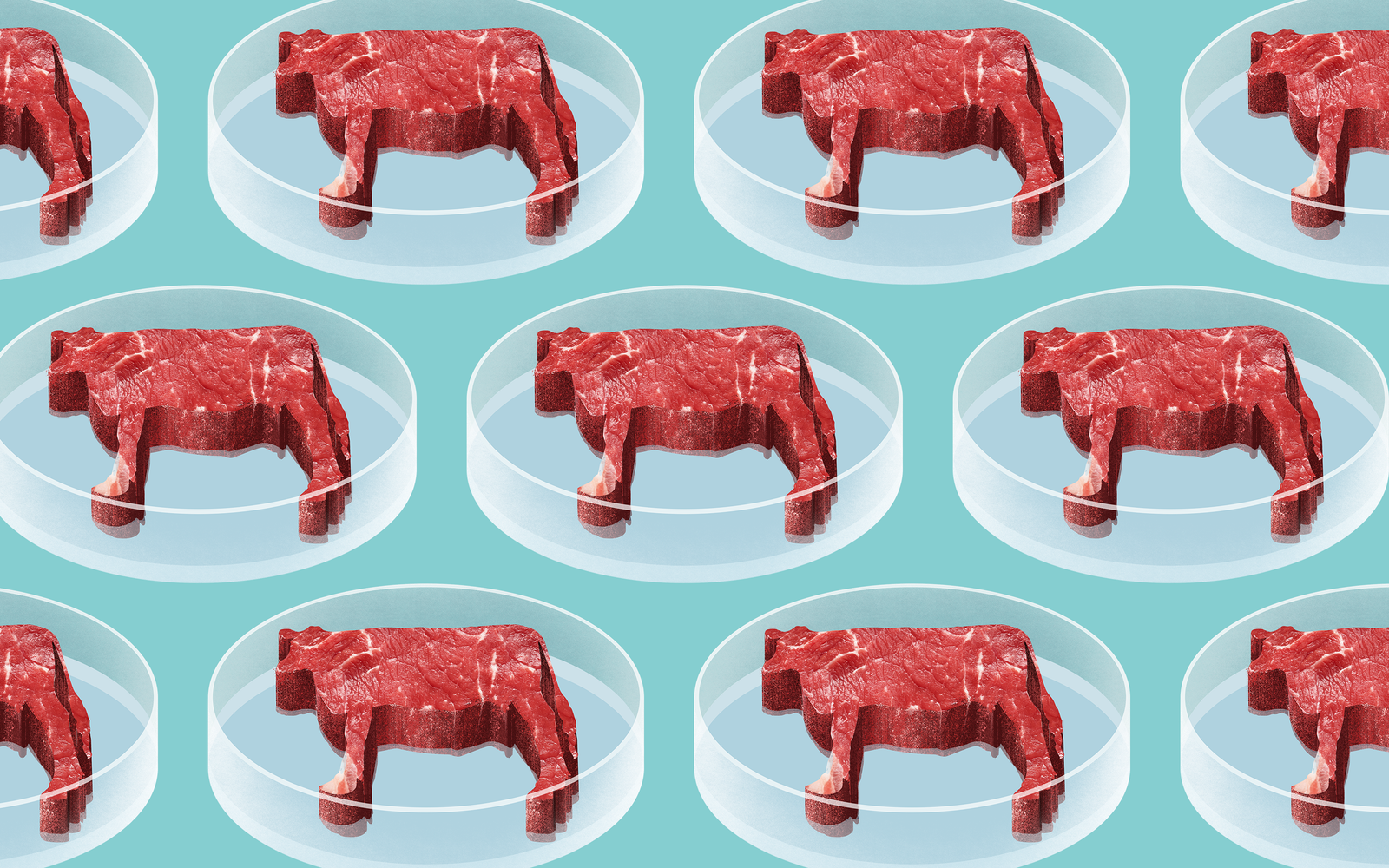
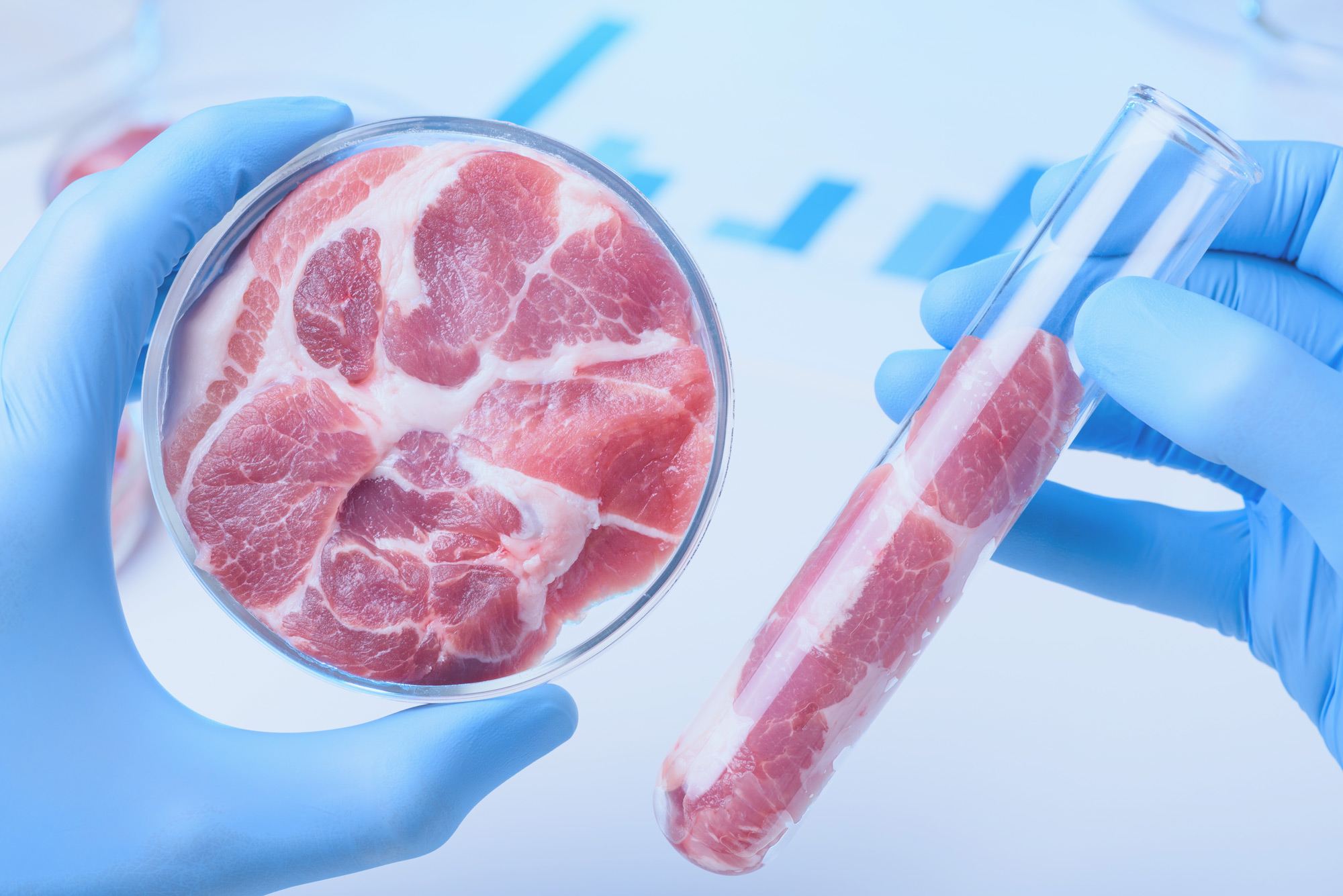
It’s almost exactly what it sounds like. It’s the process of producing meat through artificial processes, none of which involve the slaughtering of animals. For those concerned about animal welfare and environmental impacts, it’s the ultimate solution. At most, the animals contribute a few cells. The rest is grown in a laboratory. Nobody has to get hurt. Nobody has to go vegan, either.

It seems too good to be true and there are certainly aspects of synthetic meats that are overhyped. However, unlike other advancements like Neuralink or nanobots, this is already an evolving market. The first synthetic burger was made and consumed in 2013. It was the culmination of a long, laborious effort that cost upwards of $300,000.

Those costs soon came down and they came down considerably. By 2017, the cost of that same meat patty was around $11. People have paid much more for expensive caviar. That’s impressive progress for something that’s still a maturing technology with many unresolved challenges. With major fast food companies getting in on the game, the technology is likely to progress even more.

It’s here where I want to make an important point about this technology. Regardless of how you feel about it or why it’s being developed, there’s one aspect to it that’s worth belaboring.

We should embrace synthetic meat.

In fact, we should embrace this technology faster than others because the benefits of doing so will only compound.

I say this as someone who has tried an impossible meat burger. It’s not terrible. I wouldn’t mind eating them regularly if they were the only option available. That said, you can still tell it’s not traditional beef. That’s because this meat isn’t exactly the kind of cultured meat that’s grown in a lab. It’s assembled from plant proteins and various other well-known substances.

Ideally, synthetic meat wouldn’t just be indistinguishable from traditional beef. It would actually be safer than anything you could get naturally. Meat grown in a lab under controlled conditions can ensure it’s free of food-born illnesses, which are still a problem with meat production. It can also more effectively remove harmful byproducts, like trans fats.

In theory, it might also be possible to produce meat with more nutrients. Imagine a burger that’s as healthy as a bowl of kale. Picture a T-bone steak that has the same amount of nutrients as a plate of fresh vegetables. That’s not possible to do through natural means, but in a lab where the meat is cultured at the cellular level, it’s simply a matter of chemistry and palatability.

Meat like that wouldn’t just be good for our collective health. It would be good for both the environment and the economy, two issues that are rarely aligned. Even if you don’t care at all about animal welfare, synthetic meats has the potential to produce more product with less resources. On a planet of over 7.6 billion, that’s not just beneficial. It’s critical.

At the moment, approximately 70 percent of the agricultural land in the world is dedicated to the meat production. In terms of raw energy requirements, meat requires considerably more energy than plants. That includes water consumption, as well. Making meat in its current form requires a lot of resources and with a growing population, the math is working against us.

Say what you want about vegetarians and vegans when they rant about the meat industry. From a math and resources standpoint, they have a point. However, getting rid of meat altogether just isn’t feasible. It tastes too good and it has too many benefits. We can’t make people hate the taste of burgers, but we can improve the processes on how those burgers are made.

Instead of industrial farms where animals are raised in cramped quarters, pumped full of hormones, and raised to be slaughtered, we could have factories that produce only the best quality meat from the best animal cells. It wouldn’t require vast fields or huge quantities of feed. It would just need electricity, cells, and the assorted cellular nutrients.

Perhaps 3D printing advances to a point where specific cuts of meat could be produced the same way we produce specific parts for a car. Aside from producing meat without having to care for than slaughter animals, such a system would be able to increase the overall supply with a smaller overall footprint.

Needing less land to produce meat means more land for environmental preservation or economic development. Farming, both for crops and for meat, is a major contributor to deforestation. Being able to do more with less helps improve how we utilize resources, in general. Even greedy corporations, of which the food industry has plenty, will improve their margins by utilizing this technology.

Increased supply also means cheaper prices and if the taste is indistinguishable from traditional meat, then most people are going to go with it, regardless of how they feel about it. There will still be a market for traditional, farm-raised meats from animals, just as there’s a market for non-GMO foods. However, as we saw with the Green Revolution in the early 20th century, economics tends to win out in the long run.

It’s a promising future for many reasons. There are many more I could list relating to helping the environment, combating starvation, and improving nutrition. Alone, they’re all valid reasons to embrace this technology and seek greater improvements. If I had to pick only one, though, it’s this.

If we don’t develop this technology, then these delicious meats that we love could be exceedingly scarce or prohibitively expensive in the future.

Like I said earlier, the way we currently produce meat is grossly inefficient. At some point, the demand for meat is going to exceed the current system’s capacity to produce it in an economical way. At that point, this delicious food that we take for granted might not be so readily available and the substitutes might not be nearly as appetizing.

The issue becomes even more pressing if we wish to become a space-faring civilization, which will be necessary at some point. If we still want to enjoy burgers, chicken wings, and bacon at that point, we’ll need to know how to make it without the vast fields and facilities we currently use. Otherwise, we might be stuck dining on potatoes like Matt Damon in “The Martian.”

While the situation isn’t currently that urgent, this is one instance where a new technology is the extra push. You don’t have to be a major investor in companies like Beyond Meat or Impossible Foods. Just go out of your way to try one of these new synthetic meat products. Let the market know that there’s demand for it and the machinations of capitalism will do the rest.

I understand that our inner Ron Swanson will always have a craving for old fashioned burgers, steaks, and bacon. Those things don’t have to go away completely, just as traditional farming hasn’t gone away completely. However, when a particular technology already exists and has so many potential benefits, it’s worth pursuing with extra vigor.

The planet will benefit.

The people will benefit.

The animals will benefit.

Our society, as a whole, will benefit.

Leave a comment

Filed under biotechnology, CRISPR, Current Events, Environment, futurism, health, technology

Suicides (Surprisingly) Went Down During 2020: Possible Reasons And Insights

Every now and then, I go out of my way to highlight good or uplifting news. From brave priests who do defy the Vatican to wholesome comic strips involving Mr. Rogers, I try to use these stories to lift everyone’s spirits during difficult times.

Let’s face it. We’ve had a lot of that lately. Last year gave us plenty of difficulties, to say the least. It certainly doesn’t help that good stories rarely make the news, mostly because it doesn’t garner ratings or shock value. I tried to do my part, but I admit it wasn’t easy.

I managed to find some silver linings, by they hardly made up for all the soul-crushing hardship that year wrought. My spirit is still not fully intact after being so broken by last year.

Even so, I still want to make that effort to highlight good news, especially when it’s unexpected or surprising. One such story involves the less-than-uplifting topic of suicide, something that is both emotionally charged and incredibly devastating for a great many people and their families.

If ever there was a year during which people could be forgiven for thinking such morbid thoughts, it’s 2020. If a story came out that indicated suicides went up during 2020 as the pandemic raged, then I doubt anyone would be surprised. It probably wouldn’t even be news.

However, according to a story from CBS, that’s not what happened. In fact, the opposite occurred. Against all dire assumptions and understandable cynicism, the number of suicides in the US declined significantly during 2020. I’ll give everyone a minute to wrap their heads around that.

CBS News: U.S. suicides dropped last year, defying pandemic expectations

The number of U.S. suicides fell nearly 6% last year amid the coronavirus pandemic — the largest annual decline in at least four decades, according to preliminary government data.

Death certificates are still coming in and the count could rise. But officials expect a substantial decline will endure, despite worries that COVID-19 could lead to more suicides.

It is hard to say exactly why suicide deaths dropped so much, but one factor may be a phenomenon seen in the early stages of wars and national disasters, some experts suggested.

“There’s a heroism phase in every disaster period, where we’re banding together and expressing lots of messages of support that we’re in this together,” said Dr. Christine Moutier, chief medical officer of the American Foundation for Suicide Prevention. “You saw that, at least in the early months of the pandemic.”

An increase in the availability of telehealth services and other efforts to turn around the nation’s suicide problem may have also contributed, she said.

I want to make one thing clear again before proceeding. Suicide is a serious issue that affects a lot of people. If at all you’re struggling with suicidal thoughts, please consider calling a help line or reaching out to someone. There are people out there who will listen.

Having said that, I also want to note that this news genuinely surprised me. Even as someone who tries to have more faith in humanity than most, this is pretty much the opposite of what I would’ve assumed and in the best possible way.

During a crisis, people tend to panic. We all saw that last year. Anyone who fought someone for access to toilet paper remembers that. When people panic, they get stressed out. When they get stressed, they tend to get depressed. How else are you supposed to feel when you see the death toll climbing every day?

Despite all that, fewer people fell beyond that darkest of dark points. More chose to endure. That bold part is something I highlighted because that is a real effect. Whenever a disaster strikes, people tend to come together. Things like political divisions, racial strife, and what not tend to fall to the wayside when we’re all at the mercy of something we can’t control.

It’s one of humanity’s greatest strengths. Our tribalism may divide us a lot during times of peace, but when the going gets tough, we come together for the sake of survival. That’s powerful sentiment and one that can bring out the best in people. During a global pandemic, we all have to come together to some extent to make it through.

In addition, some cite the rise of telemedicine and the ability to treat people with mental illness remotely as a contributing factor. I certainly think that played a part, but I suspect that the shared struggle and solidarity that often comes during a disaster was a larger factor.

That same shared sense of community and commonality directly counter some of the most powerful risk factors for suicide. Those who make that dire choice often feel alone and isolated. They feel they lack that core sense of community that’s so critical to any social species.

The fact it was strong enough to reduce suicide during a once-in-a-century pandemic is both revealing and encouraging. It shows that this shared sense of community has tangible benefits to large swaths of people. It also hints that the world we had prior to the pandemic wasn’t given enough people this sense of connection.

You can blame that on any number of things, from smartphones to outrage culture to politics. I certainly have my theories, but I’m not smart enough or informed enough to make them credible. I highlight this story because I think it offers and important perspective.

When things get really bad, people will come together. It’s only when they get bad enough that we realize how much more we can do as a community than we can as individuals. We shouldn’t forget that. Even after this pandemic is over and things revert to some semblance of normalcy, we can’t forget that we’re a social species.

We need each other.

We need friends, family, and neighbors. It doesn’t just make us all stronger during a crisis. It’s an integral part of being human.

Leave a comment

Filed under Current Events, health, human nature, politics, psychology

Why I’m Still Going To Wear A Mask (For Now)

Australia's about-face on masks and Covid-19: why our health advice was  late to the party | Health | The Guardian

The past few months have been full of objectively great news in terms of ending the COVID-19 pandemic. Given how, at this time last year, the entire world was shutting down and the news kept getting worse with each passing day, I welcome that news. Hell, I’m willing to celebrate it.

It’s now safe to say with a straight face that we’re almost through this once-in-a-century pandemic. The trend line, both in terms of new cases and deaths, is going down. It’s still terrible in some parts of the world, but unlike last year, we have multiple vaccines with which to fight it.

Again, this is a good thing. I got my vaccination and I cannot overstate the relief I felt when it was all said and done. I still take precautions when I go out in public, mostly because there are still some restrictions in place and I understand that not everyone has gotten their vaccine. That includes wearing a mask.

Then, last week, a big announcement from the Centers for Disease Control brought more good news to those who have been vaccinated. Apparently, if we get the vaccine, then there’s no reason to keep wearing a mask. Here’s the story from NPR.

NPR: Fully Vaccinated People Can Stop Wearing Masks Indoors And Outdoors, CDC Says

The Centers for Disease Control and Prevention says that fully vaccinated adults can safely resume activities indoors or outdoors without masks or distancing, in gatherings large or small. The announcement marks a major milestone in the effort to emerge from the coronavirus pandemic in the United States.

CDC Director Dr. Rochelle Walensky announced the new guidance Thursday.

“You can do things you stopped doing because of the pandemic,” Walensky said.

The new policy is based on recent real-world studies from Israel and the U.S. on people who’ve been vaccinated, she said.

Once again, I welcome this news. Like everyone else, I’m sick of having to wear a mask, just to go and get groceries. I also don’t like wearing a mask when I work out. That’s just one other piece of cloth that gets all sweaty and stinky. I’m as eager as everyone else to discard them.

However, despite this welcome news, I’ve already made a choice. I will continue wearing a mask in public, at least for now.

My reason for doing so has nothing to do with my trust in the science. I believe it’s legitimate. This is the Center for Disease Control. They’re not some wannabe guru trying to sell vitamins as a cure all. These brave men and women have been on the front lines since this crisis began. They’ve earned that credibility.

For that same reason, I choose to wear a mask because I understand that not everyone trusts the news and policies that public officials have given. That includes those who refuse to get the vaccine and refuse to wear masks. As a result, these people, who are a sizable chunk of the population, are still vulnerable. They’ll remain vulnerable until the infection rate is at a point where it’s easy to track, treat, and contain.

We’re not quite at that place yet. As of this writing, only about half the population has been vaccinated by at least one of the available vaccines. Just this past week, most clinics and pharmacies in my area started offering walk-in vaccinations without an appointment. That’s a great thing and people now have no excuse not to get one.

However, until that vaccination rate gets to a point where the virus can’t easily spread, I’m still wearing a mask. Even though the vaccine does prevent me from getting ill or showing symptoms, there’s still the possibility of breakthrough infections. While those vaccinated may never feel ill at all, they may still spread it and they could spread it to someone who is not vaccinated.

I do not want to be one of those people.

I do not want to be someone who spreads this terrible disease to someone, even if I never feel sick.

Yes, wearing a mask is uncomfortable and I look forward to discarding them.

No, I’m not willing to risk hurting other people for my own personal comfort.

That’s not just an informed choice. It’s the right thing to do and it’ll get us out of this crisis that much sooner.

Leave a comment

Filed under Current Events, health, rants

Got My Second Shot Of The COVID-19 Vaccine!

Countries in the Americas notified of first COVID-19 vaccine allocations  through COVAX - PAHO/WHO | Pan American Health Organization

It’s official. I got my second shot of the COVID-19 vaccine! As of now, I can count myself among those who are fully vaccinated against this terrible disease that has so ravaged the world. To say it’s a great feeling doesn’t do justice to all those who have endured hardship over the past year.

Once again, I cannot praise the brave nurses and doctors behind this effort enough. They are true heroes and, coming from a lifelong fan of superhero comics and movies, that’s saying something. This pandemic has been harder on you than most. Your efforts, your bravery, and your commitment to healing the sick is truly astonishing.

Like my first shot, this one was just as smooth. I showed up a few minutes early, stood in line for a bit, showed the nurse my vaccine card, and they did the rest. It was no worse than a flu shot. My arm was sore for a while, but other than that, I felt fine.

Now, I feel even better. I cannot overstate how big a relief it is that I’ve gotten this vaccine. It’s not just more peace of mind than I’ve had since early last year. Having been vaccinated, along with other friends and family, I can actually start planning things beyond this pandemic.

Last year, I couldn’t travel. In fact, I have not left my home county since October last year. I’m ready to get out again. I’m ready to visit friends, family, and beaches. I am so ready.

I missed out on a lot of great moments last year.

I don’t intend on missing out this year.

Once again, to the doctors, nurses, researchers, and scientists who helped develop this vaccine in record time, I sincerely thank you. On behalf of everyone who has lived through this once-in-a-generation pandemic, thank you from the bottom of our collective hearts.

2 Comments

Filed under health, Jack Fisher's Insights, Uplifting Stories

Jack’s World: How Will We Tell Future Generations About The COVID-19 Pandemic?

The following is a video from my YouTube channel, Jack’s World. It’s a more serious video than I usually do. I started working on it a number of weeks ago. I’ve been writing about the COVID-19 pandemic off and on since it began last year. It has been depressing, to say the least. I don’t deny I have been downright dire at times.

However, the end is in sight. Having gotten my first shot of the vaccine, I can honestly say the worst is behind us. It’s not over, but it does raise a number of questions. This pandemic is going to have a ripple effect for generations. People are going to remember this. It led me to wonder how we’ll talk about it in the future. I decided to make this video as a means of offering a big picture overview.

It’s serious, but I try to make it hopeful. Enjoy!

Leave a comment

Filed under Current Events, health, Jack's World, YouTube

A Brief Video To Address (And Debunk) Vaccine Hesitancy

Last week, I got my first dose of the COVID-19 vaccine. It was a smooth, pleasant experience by every measure. Those involved were kind, professional, and diligent. My arm was a bit sore for a while, but other than that, I felt no major side-effects.

Having covered the development of this vaccine, I cannot overstate what a monumental achievement this is for science, health, and the general improvement of human well-being. Those involved in the development of this vaccine are real-life heroes. It’s because of them that this terrible pandemic will never claim as many lives as it could’ve.

However, there are still those who are reluctant to take the vaccine. Some do it for religious reasons. Some do it for political reasons. Whatever their reason is, I won’t mince words. It’s stupid, selfish, and is putting other people at risk. This pandemic will drag on longer and kill more people because of them. They should be criticized for that.

Some of those people cannot be reasoned with and are just a lost cause. For others, though, who may be nervous or reluctant to take this vaccine, I feel we should reach out to those people. I’m sure they’ve heard plenty of conflicting messages as well about the vaccine. There are real answers to those concerns and I’d like to share them.

Below is a video from the YouTube channel, asapSCIENCE. They’re a good YouTube channel with millions of subscribers and great production values. They have a talent for breaking down major science-related issues in a simple, easy-to-follow manner. I sincerely hope this video allays any concerns you might have about getting the COVID-19 vaccine.

2 Comments

Filed under Current Events, health, YouTube

My (Unprofessional) Opinion On The Peloton

I’ve said it before. I was not in good shape for a good chunk of my life. It’s still worth belaboring. It’s hard to overstate how poor my exercise habits were for most of my early adult life. If I hadn’t gotten serious about my health, I might have done some real damage.

That’s why I encourage everyone to make the same effort. Try to get in shape. Try to fit a good workout into your daily or weekly routine. Try to tweak your diet so that it’s healthier. It doesn’t pay off immediately, but you certainly appreciate the results in the long run.

When I say that, I also usually encourage people to avoid fitness and diet fads. A good rule of thumb is that, if you saw it on an infomercial, chances are it’s a gimmick or a scam. There’s just no way around it. At some point, you have to exercise and eat better. It’s just basic physics with respect to body mass, calories, and exertion.

However, there are some fitness trends that can help. When I started working out, everyone was calling Crossfit the greatest revolution in all of fitness. I admit I was tempted to try it. Then, like many others, I saw that it shared a few too many traits with a cult and backed off.

This brings me to the latest fitness craze, the Peloton. Chances are if you know someone who has one, they’ve talked about it. They may even treat it like one of their most prized possessions. It’s not quite on the same level as Crossfit, but its popularity is still worth noting.

Now, before I give my opinion on this latest fitness trend, I need to reiterate that I’m not a personal trainer. I’m not a professional in any way. There are people way more qualitied to give you a more informed opinion about the Peloton and any other fitness routine. This is just me, a guy who stumbled his way to better fitness, offering my perspective.

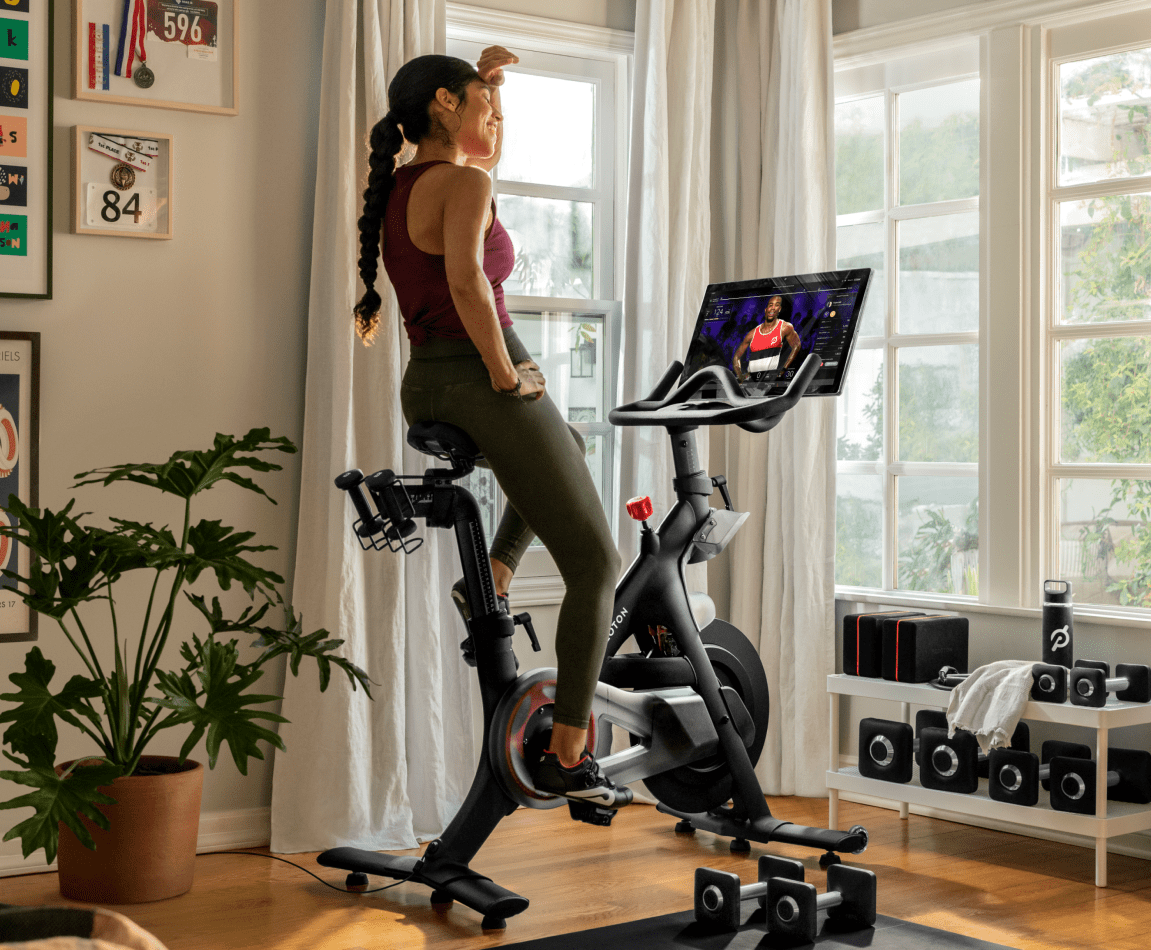
At its core, the Peloton is an exercise bike with a screen. I know its ardent fans will passionately argue otherwise, but logistically speaking, that’s what it is. It’s an exercise bike. You can find them at almost any gym. I’ve used them before. I still use ellipticals regularly because they’re better for my joints.

What sets Peloton apart is the social aspect of it. When you use it, you don’t just use an exercise bike. You link into a social network, of sorts, that offers a professional level spin class to its users. That social component isn’t just a supplemental feature, either. It’s actually one of the most important components of Peloton.

That screen it includes isn’t just a fancy tablet. It links you to other users and attempts to recreate the experience of being in an actual spin class. That experience does add to the cost, considerably. However, it’s also here where I think Peloton shows its value.

For some people, they don’t need much motivation to work out. They’re able to push themselves to do it. For a while, I certainly needed that motivation to get me out of the house and into a gym. Eventually, it got to a point where I was self-motivated. I don’t need people yelling at me to encourage me to keep pushing myself.

That’s just me, though. Some people are just wired differently. They need that yelling. They need that added bit of competitive drive. That pushes them to push themselves more than they would have on their own. That’s what Peloton can offer without having to hire a personal trainer.

It offers the added incentive of peer pressure, solidarity, and social support. Being the very social species we are, that’s powerful. We may think we’ve done enough exercise for the day, but hearing someone yell at us to do a little more can keep us going. Sometimes, that’s the difference between falling short of your fitness goals and raising the bar.

In that respect, I think Peloton is better than most fitness fads. It takes a familiar exercise machine that people have used for years and adds a social component. It offers something other than just another fancy device. It gets people involved in a community without them having to leave their homes.

Given the situation with the pandemic, I think that component is even more valuable. I still think Peloton, as a whole, is grossly overpriced. However, if you’re someone who struggles to stay motivated to get into shape, it might be worth the investment. Your health is one of the few investments in which you’ll feel the benefits in ways that go beyond your body. It’s not easy and, as Peloton’s price shows, it’s rarely cheap. However, it’s still worth doing and if Peloton helps you, then I say go for it.

Leave a comment

Filed under exercise, health

I’m Officially Vaccinated! Please Do The Same

Today, I feel like I’ve just finished running a long marathon over rocky terrain through a snowstorm and with a pack of hungry wolves chasing me. If it sounds like I’m being melodramatic, I make no apologies. I’m just that excited and relieved because, as of this writing, I received my first dose of the COVID-19 vaccine.

Having watched with everyone else over the past year as this once-in-a-generation pandemic has ravaged the world, I’ve been anxiously waiting for this moment, like so many others. Most of us know people who have been infected or in some ways impacted by this terrible disease. The only way we’re going to beat it while minimizing further loss of life is through a vaccine.

I’ve covered the news surrounding the development of multiple vaccines for this disease. I’ve also made it very clear that I am not sympathetic to those who cut in line to get their dose or those who try to undermine public health for political or religious reasons. I know there was and still is a lot of drama surrounding vaccines. I’m willing to set that all aside for now.

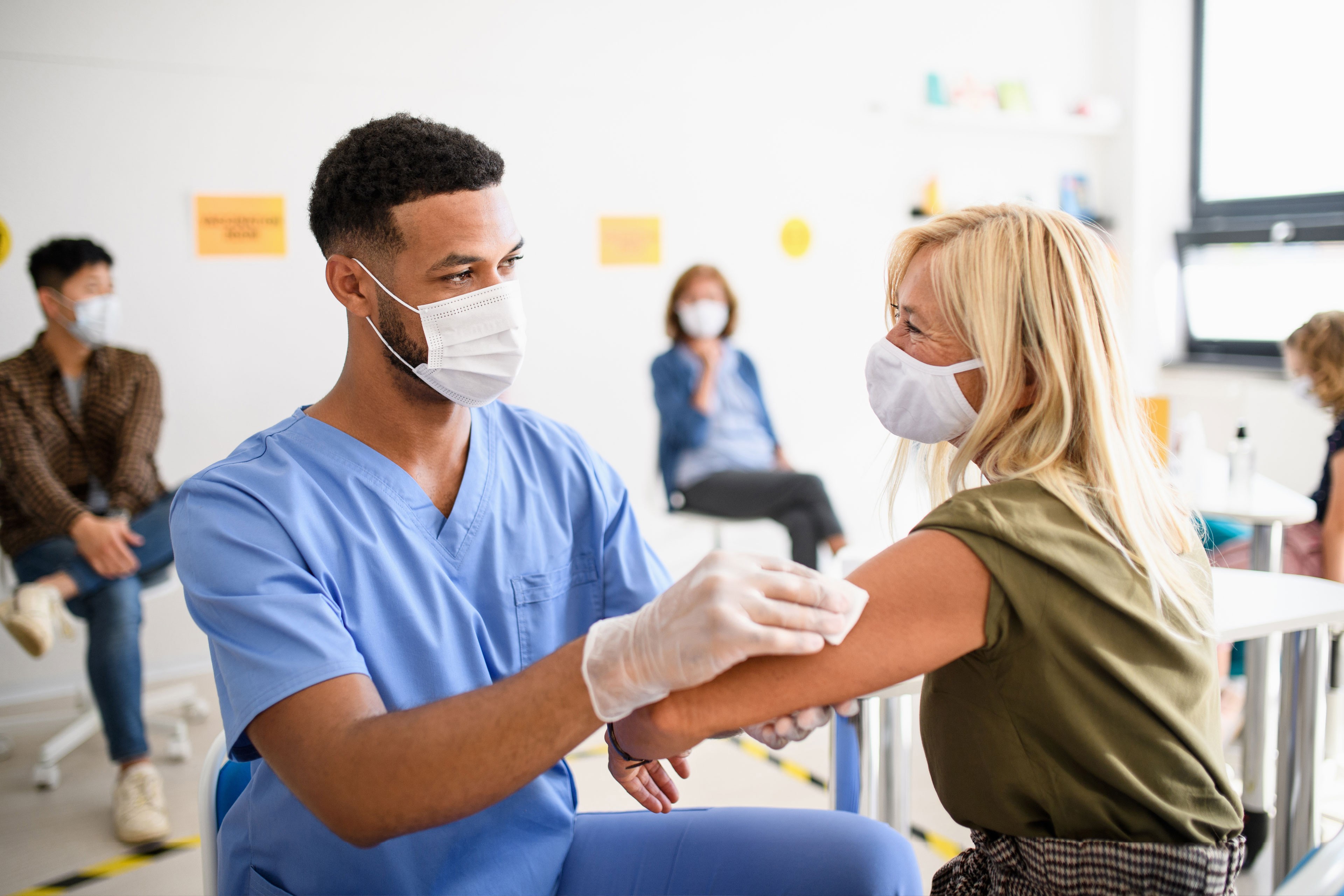
Getting vaccinated after living through so many upheavals is a great feeling. For those who may be concerned, I can attest that the process is simple and quick. Those involved were kind, diligent, and professional every step of the way. I was in and out within a half-hour. I couldn’t be happier with how the whole operation went down.

Since I’ll still need a second dose, I will have to return. Having seen the dedication and efficiency of those involved, I am perfectly comfortable with that. I also encourage everyone, including those who hate needles, to make the effort to get this vaccine.

Check with your local government.

Talk to your family doctor.

Call up a CVS or local pharmacy.

Use this handy tool that I’ve linked to before.

Whatever steps you have to take, make the effort. You’ll be doing yourself, your neighbors, and your family a huge favor. I’m as sick of this pandemic as everyone else. This vaccine is how we’ll get out of it and get our lives back. Please make the effort. Regardless of your politics, religion, or ideology, get this vaccine.

I got mine and I can attest that it’s a great feeling.

Also, to all the wonderful men and women who helped develop this vaccine and other treatments, I sincerely thank you. You are all the true heroes of this pandemic.

10 Comments

Filed under health, Jack Fisher's Insights, real stories