Category Archives: Current Events

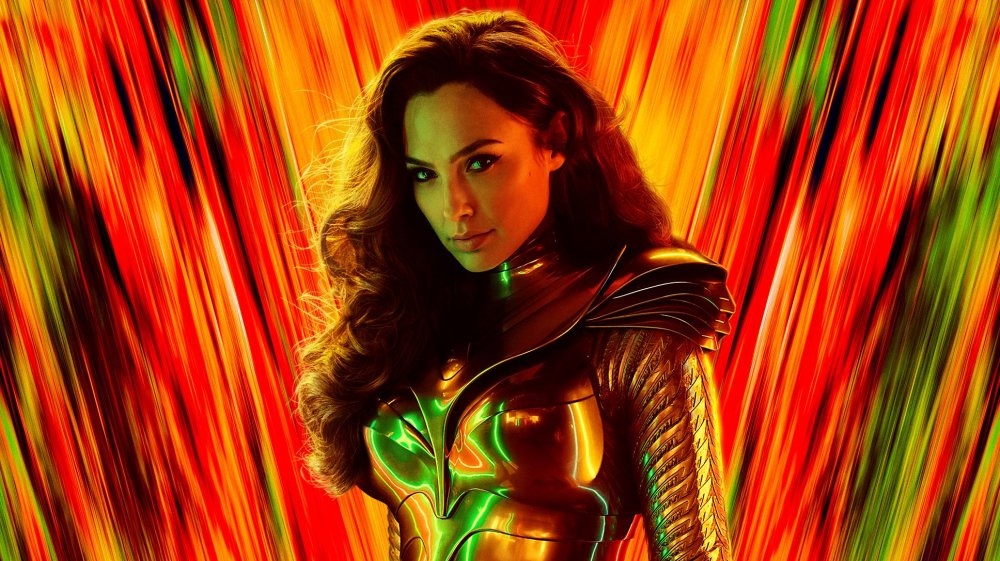
“Wonder Woman: 1984” To Be Released In Theaters AND HBO Max On Christmas: Why This Is A BIG Deal

More often than not, we don’t realize when a fateful decision is a big deal that has ramifications for years to come. Those kinds of moments are rare, but powerful. I doubt the first person to use a cell phone knew just how big a deal that breakthrough was when they made that first call.

Other decisions are more obvious. You know from the get-go that this is one of those choices that might not be surprising, but you get the sense it’ll be one of those moments that you can cite as a major turning point years from now.

This Christmas, we may just experience one of those moments because that’s the day “Wonder Woman 1984” is set to come out, both in theaters and on streaming. I don’t think it’s a stretch to claim this decision could change movies, entertainment, and media for years to come.

It finally became official. After being originally set for release in June 2020, Warner Brothers decided that, rather than simply wait for this once-in-a-century pandemic to end, they’re going to release “Wonder Woman 1984” in theaters and on HBO Max on the same day. This is what The Hollywood Reporter had to say.

THR: ‘Wonder Woman 1984’ Heading to HBO Max, Theaters Dec. 25

With a second wave of COVID-19 impacting many parts of the globe, Wonder Woman 1984 is changing course yet again.

The tentpole is all but giving up on a traditional theatrical release and will instead bow in whatever cinemas remain open Dec. 25 as well as stream on HBO Max in the U.S. for one month beginning on Christmas Day. In international markets where HBO Max is not available, the film starts rolling out Dec. 16.

“At some point you have to choose to share any love and joy you have to give, over everything else,” director Patty Jenkins said in a statement Wednesday. “We love our movie as we love our fans, so we truly hope that our film brings a little bit of joy and reprieve to all of you this holiday season.”

Jenkins urged audiences to watch the $200 million tentpole in theaters where it was safe to do so, and on HBO Max where it is not. In a note echoing Jenkins, star Gal Gadot added, “It wasn’t an easy decision and we never thought we’d have to hold on to the release for such a long time but COVID rocked all of our worlds.”

Growing the number of HBO Max customers is of huge import to TimeWarner, even if it means giving up on potential box office ticket sales that Wonder Woman 1984 would have earned had it been pushed to sometime in 2021. The hope is that a high-profile Christmas Day title such as the superhero sequel will lure new subscribers (HBO Max is pricier than most other streamers, at $15.99 a month).

That’s just the basics. “Wonder Woman 1984” is still coming out in theaters, as it was always meant to. However, with theaters on the brink of collapse in wake of the pandemic, Warner Brothers is opting to gamble on the future of streaming media. They’re dropping this big name blockbuster that cost $200 million to make on their signature streaming service, HBO Max.

Logistically speaking, it’s understandable. The news surrounding the pandemic has been bleak, even by 2020 standards. Even though a vaccine seems imminent, it might be too late to save the movie industry as we know it. The damage has been done. That industry must change. This may very well be the biggest change we’ve seen since in decades.

This is not some forgettable movie like “Trolls World Tourskipping theaters for streaming. That could’ve been written off as a calculated risk for a movie that was never going to make much at the box office to begin with. This is a tentpole blockbuster from a studio’s biggest franchise skipping over what many see as the most critical part of a movie’s life.

The first “Wonder Woman” movie made north of $800 million on a budget of $150 million during its theatrical run. That’s a lot of profit, but may be a profit that even a blockbuster movie just can’t make anymore in a post-pandemic world. Even after the pandemic ends, who’s to say that the theater industry will just go back to the way it used to be?

Now, it seems Warner Brothers are prepared to leveraging their future on their HBO Max streaming service. “Wonder Woman 1984” is, by far, their biggest chip and most valuable asset. It, more than any other movie they had in the can, was most likely to get their studios’ profits going again once the pandemic waned.

Instead, this movie that has so many excited and eager, myself include, is going to be Warner Brothers’ boldest gamble at turning HBO Max into a viable Netflix competitor. They’re not just looking to do for HBO Max what “The Mandaloriandid for Disney Plus. They want to go a step further and make streaming the new avenue for big title blockbusters.

It’s impossible to overstate how big a shift this is for the movie industry. Whereas “Trolls World Tour” on streaming was a sign, releasing “Wonder Woman 1984” on the same day it comes out in theaters is a monumental shift.

It’s essentially sacrificing potential profits at the box office for a new host of subscribers to HBO Max. Will that ultimately make more money in the long run? It’s possible.

After all, those who buy a movie ticket to see “Wonder Woman 1984” are only going to pay for that ticket. From that purchase, Warner Brothers will only see a fraction. If a bunch of people subscribe to HBO Max, they may ultimately pay much more to the studio through its monthly $16 fee.

Even if most just buy an HBO MAX subscription for a single month and cancel, it’s very likely that plenty will stay subscribed, keep paying, and keep coming back for more wonderful blockbusters. In the long run, “Wonder Woman 1984might make more money for its studio overlord than it ever would have in the theaters.

That’s still a big if. So much of a movies profits is still tied to its box office. Nobody quite knows how this new model of releasing a movie will work. Streaming a movie on the same day it comes out in theaters may help widen the audience, but without those profits, the idea of footing the bill for a $200 million movie might be less tenable.

Would that mean that big budget blockbusters like “Wonder Woman 1984” became less rare?

Would that mean that theaters as a whole would diminish both in numbers and in importance for the industry?

Would that mean that blockbusters will ultimately have to cater to a streaming audience instead of a casual movie-goer?

It’s hard to say. Nobody knows. I certainly don’t know. I doubt anyone knows, but most can already sense that this could be the start of a much larger trend. Releasing “Wonder Woman 1984” on streaming and in theaters could ultimately be the point of no return for the movie industry.

This could be the future of entertainment and movies. Theaters are no longer the center of all things film and there’s no going back. Whether other blockbusters follow suit remains to be seen. I have a feeling Disney will be watching how “Wonder Woman 1984” performs closely, given how it opted to delay “Black Widow” until May 2021.

If it proves profitable in the long run, I suspect that Disney will follow suit and so will every other studio. At that point, the movie industry will have permanently changed and we’ll be able to cite this announcement as the moment it began.

There’s only one certainty at this point. On Christmas this year, I’ll be curled up on my couch to watch “Wonder Woman 1984” through my current HBO MAX subscription. Whatever monumental changes this movie inspires in the industry, it’s still Wonder Woman. I still intend to partake in her wonder, no matter what form it takes.

Leave a comment

Filed under Current Events, movies, superhero comics, superhero movies, Wonder Woman

Post-Election Day PSA: Do NOT Trust Or Expect Politicians To Solve Your Problems

It’s over, my fellow Americans.

It’s finally over.

Election Day has come and gone. I won’t get into the drama leading up to it or the drama that’s still unfolding, as I write this. I just want to take a step back, catch my breath, and offer some perspective to those who will hear it.

I agree this was rough. I think most others will agree with me when I say this was the most chaotic, divisive, and downright stressful election in recent memory. I’ve spoken to relatives who voted for Kennedy in 1960. They agree that this year was, by far, the worst in terms of stakes, rhetoric, and tone.

That’s saying a lot, by the way.

However you feel about the candidates or who you voted for, I genuinely hope this election has been revealing, to a certain extent. It’s tempting to be cynical about it. I certainly wouldn’t blame anyone for feeling that way. At the same time, we should also take stock as to why this election was so harrowing, for lack of a better word.

The world is such a messed-up place right now. We’ve got wars, economic collapse, and a once-in-a-century pandemic has that killed over a million people in the span of nine months. Things are bad right now, more so than they’ve been at any point in my lifetime.

Most don’t question that, unless they’re rich and well-connected.

What I do question, however, is why people trust or even expect politicians to help solve these problems.

That’s a notion that, in my opinion, fuels stressful elections like this. An election is supposed to be a job interview for a position for a public-serving official. It’s not supposed to be some expensive spectacle in which we all get behind the candidate who says the right things to just enough people in a handful of swing states.

That’s not democracy.

That’s a bad reality TV show.

Now, it’s tempting to just blame the politicians and that’s understandable. Politicians are easy targets for mockery and they’ve no one to blame but themselves for that. We should criticize them. They are, after all, in positions of power and public trust. They should be held to a higher standard.

That standard, however, should not involve trusting them to fix everything that ails us, from the economy to who pays a fine for when a female nipple is shown during a halftime show. That’s not just asking too much of one person. It’s asinine.

It’s also self-defeating. Politicians make lots of promises and break plenty of them, but let’s not lay the blame entirely on their honesty or lack thereof. They’re only human. Even the most selfless, hard-working politician can only do so much to deliver on every promise. There just aren’t enough hours in the day or enough personnel to get it done.

That’s not even accounting for the times when politicians make objectively impossible promises. Certain policy pitches may sound like great slogans or taglines, but logistically speaking, they just cannot be done in the real world. It’s not that the sincerity isn’t there. There just isn’t enough people or resources.

Therein lies the source of the great cycle of toxic politics. It goes something like this.

Politician A makes a bold promise. People rally behind them. Politician A get elected.

Politician A cannot deliver on those promises. People turn against them.

Politician B comes along, offering new or better promises. People rally behind them. Politician B get elected.

Again, Politician B can’t deliver on all those promises. People turn against them.

Politician C comes along to make another set of promises and the cycle continues.

It goes beyond party affiliation, political systems, or shifts in power. It’s an unavoidable flaw in a democratic system. An election, by default, isn’t going to elect someone with the greatest governing skill. It can only elect someone with the skills to convince enough people that they can govern.

I won’t say it’s a terrible system. Compared to the alternatives, it’s probably the best we can manage right now in our current environment. However, it is not a system in which any politician, no matter how successful, can solve the problems we want them to solve. Even when the system is working at its best, it’s still limited.

That’s not to say politicians can’t be part of a solution. They definitely can be. A politician can be a facilitator of sorts, either by leadership or by policy. The specifics, though, are best left to people with the right drive, incentives, and know-how.

Whether it involves combating climate change, reducing poverty, or promoting public health, the bulk of the responsibility will still fall on the general public. We, as a people, have to collectively work on these issues together. That’s how any social species within a functional society adapts, grows, and prospers.

The role of government and politicians is always changing. The extent or details of that role depends heavily on the issue at hand. The Presidents we elect, as well as the various legislators and judges at all levels, will always have some impact on how we further our interests. The key is balancing that impact with actual, tangible efforts on our part.

The next four years are sure to be eventful. Hopefully, they’re eventful for all the right reasons. Whatever happens, use this past election as a teachable moment.

Politicians come and go.

Ambitious people will keep making bold promises and breaking them, either on purpose or through no fault of their own. At the end of the day, it all comes back to us. We have a part to play in making our world and our lives better. Let’s focus on doing ours before we trust anyone else to do it for us.

1 Comment

Filed under Current Events, human nature, media issues, political correctness, politics

How Early Is Too Early For Christmas Decoration? An Honest Question (With A Bias Answer)

The holidays are right around the corner.

That’s probably something you’ve heard more than once in the past few weeks. Chances are, you started hearing it the day after Halloween. If you’ve been to a mall or a major box store recently, you’ve probably seen Christmas decoration and displays popping up. A few even went up alongside displays for Halloween candy.

This raises a question that always seems to come up around this time of year, usually in the weeks between Halloween and Thanksgiving.

How early is too early for Christmas decoration?

Sometimes, it’s asked cynically. Other times, it asked with the same whiny undertone as a kid who complains that he can’t have ice cream for every meal. It still gets asked every year, it seems. Even a global pandemic hasn’t stopped seasonal displays and holiday themed commercials from popping up.

Before I even try to answer this, I need to make one important disclaimer. It’ll likely undermine my credibility in addressing this question, but I don’t care. I’m putting it out there.

I already have my Christmas decorations up.

I actually put them up the day before Halloween.

Yes, I understand that’s much earlier than most.

No, I don’t care if you think that’s too early.

I love Christmas and I love holiday decorations. I make no apologies for that. Talk to anyone in my family. They’ll tell you the same thing. I take Christmas seriously. I’m the guy who has his decorations up before everyone else. I’m also the guy who keeps them up longer than everyone else. I also usually start my Christmas shopping before Thanksgiving.

I say all this to make abundantly clear that I am hopelessly bias when it comes to this question. In my defense, I live alone and I own my own place. Legally speaking, I can put up Christmas decorations whenever I want and keep them up for as long as I want. I have the HOA documents to prove it.

I still realize that I’m an anomaly with respect to Christmas decorations. What counts as too early for me is going to be different from most other people, even if they love Christmas as much as I do. It’s still a question worth taking seriously, if only to maintain some consistency in our holiday traditions.

Growing up, we had a simple rule in my family. The earliest we can put up decorations is the week after Thanksgiving. Sometimes, we did it earlier, but only because we had other things going on and had to get it out of the way. I think that’s a fair rule.

I have friends and family members who say any day after Thanksgiving is no longer considered “too early.” The way they see it, Thanksgiving is the last holiday before Christmas. Once it passes, it’s perfectly acceptable to start looking forward to and planning for Christmas. I can’t disagree with that.

A select few take it a step further. They say that, if stores and malls are going to have Christmas displays, then it’s perfectly acceptable for everyone else to do the same. Why should these businesses play by different rules? They are, after all, responding to market forces. We, the consumers, are part of the market. They’re not setting the tone. We are because we respond to it.

That’s an interesting sentiment, albeit one I’m not sure I buy into. I’ve seen some stores put up holiday displays on the first day of October. Even for me, that’s a little too early, if only because the weather is still warm and Christmas is a winter-themed holiday. Putting it up while the weather is still warm is like getting ready for bed at noon.

I’ve never had a particular date or signal that I follow when I put my decorations up. One key indicator that often prompts me is the arrival of a few cold days. That triggers in me an inclination to start thinking about the holidays because they always seem to arrive faster than we expect. I just like to be proactive.

That was the case this year. A few days before Halloween, it got very cold. It didn’t stay cold, but that was enough of a sign for me to dust off my storage bins and break out the decorations. For me, that’s the point when it no longer became “too early” for Christmas decorations.

You may or may not agree with that point, but that was part of my decision-making process with respect to putting up my decorations. I won’t say it was the biggest part. I just love the holidays that much. I’ll look for any excuse to put my decorations up. I may do it even earlier next year, but I still understand that makes me an anomaly.

If you decide through a different process, I respect that. I even offer you to share it in the comments. I gave my justification for putting my decorations up. At this point, it’s no longer “too early” by my standards to put up your decorations. What does your standard say and how do you determine it?

Please let me know. We’re going to be hearing this question a lot between now and Thanksgiving. Let’s not avoid it or the implications.

3 Comments

Filed under Current Events, Jack Fisher's Insights

Major Vaccine Update: My Reaction, Expectations, And Concerns

Like everyone else in this pandemic-ravaged world, I have been closely following any and all news regarding a COVID-19 vaccine. I liken it to waiting in a burning building with millions of other people and only a handful of firefighters trying to save the day. Those who have been working on this effort are real-life superheroes and we should be cheering them on.

Now, I’ve had some strong opinions about those who denigrate science, but I’ve also been very reluctant to get excited about any potentially good news. I attribute some of that to being jaded and cynical after seeing this pandemic do so much damage. I don’t deny that my spirit is still quite wounded after nearly a year of objectively awful news.

Well, wounded or not, the work continues. Those real-life superheroes I mentioned have never stopped this vital effort. To them, we should all be in awe, as well as grateful, because it looks like an effective vaccine is actually on the horizon, courtesy of Pfizer.

For those who might be a bit behind, this is what the Associated Press reported.

AP News: Pfizer says COVID-19 vaccine is looking 90% effective

Pfizer Inc. said Monday that its COVID-19 vaccine may be a remarkable 90% effective, based on early and incomplete test results that nevertheless brought a big burst of optimism to a world desperate for the means to finally bring the catastrophic outbreak under control.

The announcement came less than a week after an election seen as a referendum on President Donald Trump’s handling of the scourge, which has killed more than 1.2 million people worldwide, including almost a quarter-million in the United States alone.

“We’re in a position potentially to be able to offer some hope,” Dr. Bill Gruber, Pfizer’s senior vice president of clinical development, told The Associated Press. “We’re very encouraged.”

Pfizer, which is developing the vaccine with its German partner BioNTech, now is on track to apply later this month for emergency-use approval from the U.S. Food and Drug Administration, once it has the necessary safety information in hand.

Even if all goes well, authorities have stressed it is unlikely any vaccine will arrive much before the end of the year, and the limited initial supplies will be rationed.

Dr. Anthony Fauci, the U.S. government’s top infectious-disease expert, said the results suggesting 90% effectiveness are “just extraordinary,” adding: “Not very many people expected it would be as high as that.”

I don’t want to understate or overstate the importance of this news. This is a big deal. This isn’t some hyped up treatment, like Hydroxychloroquine. This is a real vaccine developed by a real company by real scientists.

It’s also not one of those treatments that just came off the drawing board. This vaccine is currently in Phase 3 trials, which is the last phase for any vaccine or treatment to pass before it’s ultimately approved for public use. That means this vaccine is on the home stretch. It could conceivably be approved within the next few months.

That’s very different from some of the other overhyped treatments that were floating around earlier this year. That’s also why I didn’t get my hopes up. Most of those treatments weren’t beyond the first phase of testing and the vast majority of new drugs never make it to the final phase. The fact that this vaccine is even at that point is reason for hope.

Now, a part of me is genuinely encouraged by this. However, another part is still concerned.

My concern, however, has little to do with the science or the testing. I understand why it has to be so rigorous. I would defer to those much smarter and more experienced than me to deal with the specifics. Much of my concern has to do with the perceptions and perspectives this vaccine will bring if and when it’s approved.

The first part of that concern stems somewhat from lingering cynicism. I genuinely worry that once news comes out that the vaccine is approved and being used, too many people will start behaving as though the pandemic is over. They’ll stop wearing masks and they’ll stop social distancing.

Even with a working vaccine, that will make things worse and people will suffer because of it. We already have enough problems with people refusing to wear masks. A vaccine could only make it worse and cause a spike in cases before the effects can take hold.

That is worth belaboring. It will take time for a vaccine’s effects to be felt. Even if this particular vaccine is available on January 1st, 2021, it’s going to take months for enough doses to be given. That doesn’t even get into the challenge of manufacture and distribution.

If we do eventually get to a post-pandemic world in 2021, it’s probably not going to be until some point later in the year. That’s not pessimism or cynicism. That’s just science and biology.

Another concern I have is basically the same I had when this mess started. Thanks to anti-science, anti-vaccine advocates, this pandemic could ultimately get extended because of peoples’ reluctance to take the vaccine. Even if these people are a minority, that’s still a huge problem that will ultimately hurt people.

Even those who aren’t advocates may still be reluctant to accept the science. There are members of my own family who are as reasonable and rational as they come, but even they say they will not be first in line to get the vaccine. That’s actually a popular sentiment. People say they support vaccines, but they won’t be first in line to get it.

To those people, I respectfully ask that you reconsider that position. Like it or not, this pandemic won’t end until enough people take this vaccine and develop immunity. Someone has to be first in line. If no one is willing to take the chance, then the virus will just keep spreading. It does not care how reluctant you are. It just cares that you’re vulnerable.

To that end, I’d like to state outright that, should this particular vaccine get approved for public use, I will gladly be first in line to take it. I’ll take that risk. I’ll roll up my sleeve and trust the scientists who worked so hard on this thing. If nothing happens, then I hope that’s enough to allay your fears and concerns.

I want this pandemic to end. We all do, at this point. I’d like to go to a movie theater or a baseball game at some point next year. However, we can’t wait for someone to end it for us. We have to play a part. The scientists and doctors are clearly doing theirs, more so than I can put into words. Now, let’s be ready and willing to do ours.

3 Comments

Filed under Current Events, health

The Day Before Veterans Day: A Story And A Request

Tomorrow is Veterans Day. As I’ve done before in previous years, I go out of my way to acknowledge the sacrifice and service those who have served in the military. It’s one of the few issues that transcends ideology, politics, and debate. Those who have served deserve our utmost admiration and respect.

There’s a personal element for me, as well. I have many close family members who have served in the United States Military. I have grandparents who served in World War II. I have an uncle who served in Vietnam. They know what it means to serve their country in times of war and peace.

I know it is often used as a platitude by politicians and pundits, supporting the troops. That doesn’t make it any less deserving of such support. I certainly offer my thanks and my respect to our veterans, especially on days like Veterans Day. I also encourage others to do so and to support various veterans charities.

In the past, I’ve donated to the Wounded Warrior Project. I strongly encourage others to do the same, donating to this or other veteran-supporting charities. On top of that, I’d like to share a quick story that was told to me a few years back by one of my uncles.

Out of respect for his privacy, I won’t reveal my uncle’s name or which branch he served. I’ll just state that he has been very involved in supporting veterans since he got out of the service many years ago. He’s actively involved with churches and organizations. He’s the kind of man who will go above and beyond for a fellow veteran.

This particular story he shared took place at a local church. For years, a group of World War II veterans would meet there around a certain date. They’d catch up, drink, and laugh in all the ways you’d expect of old friends. It was a tradition they all cherished.

However, in recent years, that group’s numbers have been dwindling. Even though millions served in World War II, there are only an estimated 300,000 left alive. That may sound like a lot, but in a small group like this, they noticed when many of their friends began dying. It got to a point where the group was small, so much so that there was little to catch up on.

This is where my uncle comes in. At one particular gathering at a church, he met up with this old guy wearing the distinct World War II veteran attire most recognize. He was sitting alone and not in the best shape, health-wise. He didn’t look sad, but you could tell he was among the last of the friends he served with.

My uncle, being the wonderful man he is, sat down and talked to the man. They got along well. In doing so, my uncle found out that this old man was the last surviving member of his platoon. They’d been close for many years, but now he was the last one. Given his age, it wouldn’t be long before his entire platoon joined the many others who made the ultimate sacrifice.

It struck my uncle because he knew that, once this man passed, too many of his stories would pass with him. That just couldn’t stand. My uncle sat with that man and just listened to him reminisce. I don’t know how long they chatted, but my uncle made it a point to hear his story, knowing those who could tell them were dwindling fast.

It’s a special kind of way to honor a veteran. You can help them in many ways, but I like to think just listening to them and their story goes a long way. War and combat has consumed entire generations. They leave lasting marks, including many scars.

That’s why it’s important to remember and honor them. There are memories worth preserving, full of lessons worth learning. Times may change. Warfare often changes with it. The one constant is the strength it takes to fight, serve, and sacrifice.

I hope this story from my uncle gets that point across. I also hope it inspires others to help and honor our veterans in their own special way.

Thank you and to all those who are serving now or have served, I hope you feel the love and support you deserve on Veterans Day this year.

Leave a comment

Filed under Current Events, real stories, Uplifting Stories

A Message To America After Election 2020

It’s over, America. We did it. The election of 2020 has concluded. We now have a winner and, come January 20, 2021, there will be a new occupant of the White House. Let’s all take a moment to appreciate this. It is, after all, a cornerstone of American democracy.

We, the people, elect our leaders. We don’t always like who wins, but it’s still on us, as a people, to make that decision. I know that sounds cheesy, given these cynical times, but it’s still worth saying.

With those platitudes out of the way, I have another important message I’d like to share with my fellow Americans. It’s simple, succinct, and apolitical. It’s simply this.

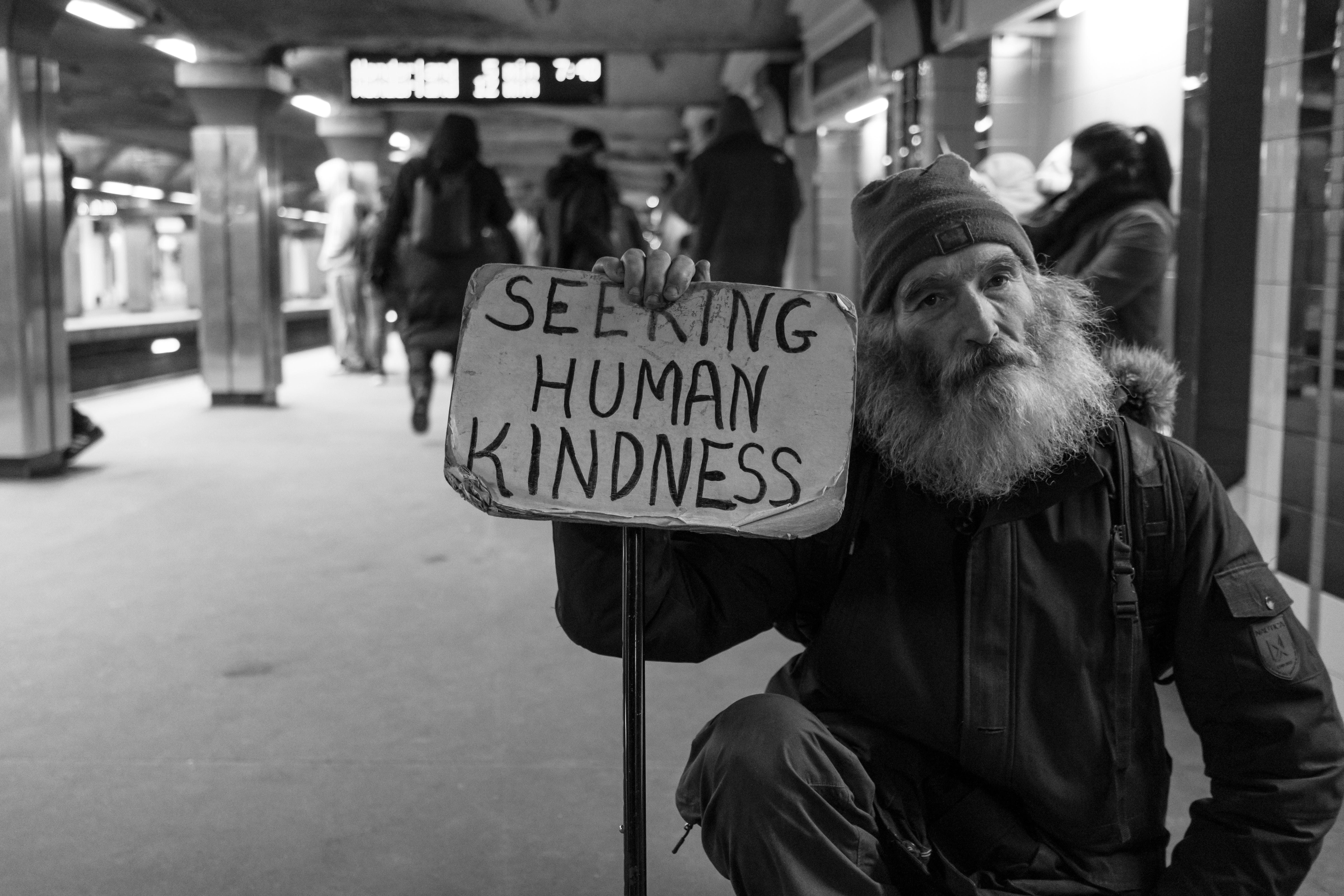
Regardless of how you voted, let’s all make an effort to be kinder to one another.

It’s not a tall request. It’s not something that requires great sacrifice or rigor. It’s just a simple act that anyone can do, regardless of their affiliations or ideology.

It shouldn’t seem so daunting, but these past few years have made it difficult to grasp. I’m on the internet every day. I see plenty of instances of horrendous, unbridled hatred. It’s on social media, message boards, Reddit, and even text messages. I won’t offer examples because it’s just that disgusting.

It’s not always political, but for these past few years, politics has been a catalyst for such hatred. It’s no longer enough to simply disagree with someone on a particular issue. The default has become utter and complete hatred of anyone who disagrees with you.

Whether it’s on abortion, LGBTQ rights, party affiliation, or sexy characters in video games, there’s no room for understanding and nuance anymore. Either someone agrees with you or you hate them in the utmost.

That is not healthy.

That is not conducive to a functional society.

Moreover, that is not in keeping with the American spirit.

America was not founded on hatred. No society founded on hatred could ever become so strong and dominant. It takes people living, loving, and cooperating with one another, regardless of differences, to build what America has built.

Have we made mistakes? Absolutely, we have. Every country has, some more so than others.

We’re human. We have flaws. Hatred is one of our most egregious flaws, but it need not be our most defining.

So, with that made, I sincerely hope that my fellow Americans will use this recent election as a turning point. We don’t need to “own” our opponents to vindicate ourselves. We don’t need to hate each other to prove ourselves right. We just need to be kind and make the most of the lives we live, as Americans and as fellow humans.

To that end, I’ll end this message with one of my favorite quotes by John F. Kennedy.

“We have the power to make this the best generation of mankind in the history of the world or make it the last.”

1 Comment

Filed under Current Events, politics

Happy Election Day! Now Vote!

It’s Election Day here in the United States of America. I don’t know how many people have been following the news for the past four years, but even if you’ve somehow avoided it, I hope one thing is still abundantly clear.

This election is a big fucking deal.

Regardless of which party you’re affiliated with or which candidate you support, this is the day where the rubber meets the road for democracy. This is where citizens exercise the power granted to them by the constitution.

As such, I encourage everyone to use it.

I’ve got no larger point to make today. I’ve got no sexy twist to put on it or larger narrative to explore. I’m just going to say what so many others have been saying for months now.

Go out and vote!

Get out there early. Bring water, snacks, and a lawn chair if you must. Stand in line as long as necessary. Just make sure you vote.

This is America. We value democratic principles. Those principles don’t work if people don’t vote. So please, my fellow Americans. I’ll say it again.

Go out and vote!

America will be better because of it. Thank you.

1 Comment

Filed under Current Events, politics

Shaming Vs. Criticism: Why The Difference Matters

Let’s be honest. It’s very difficult to have honest, civil discourse with anyone these days. I won’t say it’s impossible, but it sure feels that way sometimes. Try expressing any opinion about any issue that’s even mildly controversial. Chances are you won’t spark a civil discussion. You’ll likely trigger a flame war, especially once Godwin’s Law comes into play.

Now, I’m not going to blame all of this on the internet and social media. I don’t deny that it plays a role, but let’s not miss the forest from the trees here. We, the users of these tools, are the ones driving the content. We’re the ones who guide these discussions towards angry, hate-filled outrage. The medium is only secondary.

There are a lot of reasons why civil discourse is so difficult, but I want to highlight just one that has become far more prominent in recent years. It’s an objectively bad trend and one I genuinely believe we need to reverse. It involves this inability to distinguish shaming someone from criticizing them.

It goes like this. Two people connect, either in person or via the internet. They have a disagreement. When there’s criticism, it tends to go like this.

Person A: I hold Opinion X.

Person B: I hold Opinion Y.

Person A: Why do you hold that opinion? I don’t understand how you could.

Person B: Well, it’s because of X, Y, and Z.

Person A: I don’t disagree with Y and Z, but I take issue with X.

Person B: Why is that?

Person A: Well, it goes like this…

Ideally, both people in this exchange get something out of this discourse. Person A offers Person B another point of view. Person B has their opinion challenged and they’re now in a position to defend it. In doing so, they may reaffirm or question their position. They may even convince Person A of the merit of their position.

That’s a healthy level of discourse, guided by fair and civil criticism. There’s certainly a place for that. I even see it on social media from time to time. However, that’s not what makes the headlines. It’s the shaming that usually generates the most noise. Shaming is very different from criticism, both by definition and by practice. At its worst, it goes like this.

Person A: I hold Opinion X.

Person B: I hold Opinion Y.

Person A: What? You’re a horrible human being for holding an opinion like that! You must be a fucking asshole fascist Nazi prick!

Person B: Fuck you! Your opinion is a goddamn atrocity! Only a true fucking asshole fascist Nazi prick would even entertain it! You should be fucking ashamed!

Person A: No, you should be ashamed! You should lose your job, your money, and all manner of sympathy for the rest of your fucking life!

Person B: No, you should be ashamed! You should cry like a baby, get on your knees, and beg everyone like me to forgive you! And you should also lose your job, money, and any semblance of sympathy until the end of time!

I don’t deny that’s an extreme example. I wish I were exaggerating, but I’ve seen stuff like this play out. I’ve seen it in comments section, message boards, Twitter threads, and Facebook posts. It’s not enough to just criticize someone for holding a different opinion. People have to outright shame them to the point where they’re mentally and physically broken.

In some cases, people look for that kind of rhetoric. Some people just love trolling others by posting opinions they know will piss people off and start a flame war. They don’t care about civil discourse. They just care about riling people up. It’s what gives them a cheap thrill.

Those people are trolls. The best thing anyone can do is ignore them.

They’re also in the minority. They may be a vocal minority, but they are the minority. Most people, in my experience, are inclined to be civil. They’ll give people a chance, even if they don’t agree with them. Things just go off the rails when they interpret criticism as shaming. It’s not always intentional, either. Some people just frame their criticism poorly, which sends all the wrong messages.

Whereas criticism is impersonal, shaming evokes some very basic emotions. There’s a tangible, neurobiological process behind it. It’s linked heavily to guilt, an objectively terrible feeling that most people try to avoid at all costs. Shame attempts to impose guilt. While there are some things we should definitely feel guilty about, holding certain opinions is rarely one of them.

Does someone deserve to be shamed for how they voted in the last presidential election?

Does someone deserve to be shamed for believing “Star Wars: The Last Jedi” was a terrible movie?

Does someone deserve to be shamed for thinking certain female characters in media are too sexualized?

Does someone deserve to be shamed for thinking they shouldn’t believe every claim a woman makes about being sexually harassed?

These are difficult, emotionally charged issues. With that kind of complexity, there’s going to be many points of criticism. Some have real merit and they should be discussed. That’s how we learn and make sense of our world and the people in it. Once shame enters the picture, though, the merit tends to vanish.

The problem is that once the shaming starts, it escalates quickly. It doesn’t even need to escalate that much before a person stops listening and gets defensive. At that point, there’s basically no going back. It’s less about understanding someone else’s perspective and all about defending yourself.

That’s not a metaphor, either. Like it or not, people take their opinions seriously. Attacking them with words, even if it’s through a computer screen, still feels like a physical attack on some levels. You’re not just attacking an opinion, anymore. You’re attacking a person. You’re throwing metaphorical punches that have non-metaphorical meanings to those you’re attacking.

With that in mind, look at it from a purely instinctual level. When someone is physically assaulting you, is your first inclination to engage in a reasoned, civil discussion? For most people, it’s not. You go into survival mode and that often involves attacking the attacker.

You throw your punches.

They throw theirs.

They call you a fascist, Nazi-loving bully.

You call them a worse fascist, Nazi-loving bully.

There’s no logic or reason to it. Once emotions override everything, criticism becomes a moot point. It’s all about hitting back to defend yourself. It’s not about being right. It’s about survival, at least from your brain’s perspective.

If there’s one silver lining, it’s that people get burned out quickly on this kind of discourse. You can only hear two sides call each other fascist for so long before the rhetoric loses its impact. It also gets boring. It takes too much energy to sustain that kind of hatred towards someone you don’t know. Most people who aren’t trolls have better things to do with their time.

As I write this, I understand that we live in contentious times. I see the same heated debates online and in person as everyone else. I know that civil discourse is a scant and precious commodity at the moment. That’s exactly why we should make the effort, regardless of what opinions we hold.

Once we stop shaming each other for daring to think differently, we’ll realize just how much we have in common. We don’t have to agree with one another. We don’t even have to like one another. We can and should still be civil with one another. That’s the only way we’ll make any real progress.

Leave a comment

Filed under Current Events, human nature, outrage culture, philosophy, political correctness, politics, psychology

Has Tribalism And Ideology Supplanted Religion?

If you’re an American, chances are you’re painfully aware that 2020 is an election year. That means that, on top all the other awful crap that has transpired this year, we’re in the midst of a political firestorm that regularly brings out the worst in people. Trust me, my non-American audience. It’s even uglier than you think.

As proud as I am to be an American, I’ve grown increasingly frustrated with politics and discourse. I know that’s not saying much. I didn’t live through the turbulent eras of the 60s and 70s. My parents have told me it has been very bad before, but even they admit that this year is a special case of awful. They almost long for the hippie-style protests of the 60s.

I won’t get into why things have become so contentious, although most people can probably discern the most noteworthy source. I don’t have the patience or the sanity to digest that. Instead, I want to offer an observation that I’ve noticed as this election drama has played out. It has to do with both politics and religion, two incredibly divisive forces with a strong basis in absurdities.

I’ve done plenty to highlight the flaws, failures, and outright atrocities that have been committed or justified in the name of religion. I’ve also touched on some of the frustrations and annoyances that manifest in politics. Together, both can be extremely damaging to people and society alike. History has proven that on multiple occasion.

Lately, however, I get the sense that a new kind of zealotry has taken hold. It’s not entirely political or entirely religious. It just take the most destructive elements in both and channels them in a way that inspires some objectively deplorable behavior.

In essence, the same dogmatic stubbornness that often fuels religious extremists has now been applied to someone’s political leanings. By that, I don’t just mean what party they belong to or who they voted for in the last election. I’m saying they now see their political affiliation in the same light some see their religious adherence.

To some extent, this makes sense. Organized religion, in general, has been in a steep decline for decades. The rise of the internet, as well as a more educated public, has significantly undermined religion’s ability to lock in adherents for generations. However, a lack of a religion doesn’t make someone any less inclined to believe absurd, misguided, or demonstrably false concepts.

The same tribalism that often fuels religious rhetoric is becoming a larger factor in politics. I won’t go so far as to say that political ideology is replacing organized religion outright. I just think that same tribalism is becoming a more prominent factor.

It often goes like this. In the past, I often saw discussions like this play out.

Liberal: I believe the minimum wage should be raised to $15 an hour.

Conservative: I respectfully disagree. I think a minimum wage ultimately harms the working poor by limiting the number of entry level jobs.

Liberal: I don’t think the data bears that out, but can we agree to disagree?

Conservative: Of course.

That’s fairly civil. Ideally, that’s how political debates should go. It’s not an argument about whose deity is better and who’s going to Hell when they die. It’s just a simple exchange of ideas to further a discussion about real-world issues. It can get ugly at times, but it rarely ventures into the same damaging extremism that often comes with religion.

That kind of civil exchange now feels so long ago. These days, you need only look at a comments section or a thread on social media to see how outrageous the discourse has become. It tends to go more like this.

Liberal: I believe the minimum wage should be raised to $15 an hour.

Conservative: You American-hating, baby-murdering, politically correct cuck! What kind of Marxist wannabe are you? Get the fuck out of this country! You don’t belong here!

Liberal: Fuck you! You’re a racist, sexist fascist, gay-bashing hypocrite! Go back to Nazi Germany and beat your women somewhere else! You’re destroying America!

Conservative: No, you’re destroying America!

Liberal: No, you are!

Conservative: Fuck you!

Liberal: Fuck you!

I admit, this is a generalization, but it’s not that far off. Between Reddit, Twitter, Facebook, and 4chan, this kind of hateful rhetoric is fairly common. Even the street preachers who hold up signs, telling everyone that their deity wants to send them to Hell, isn’t nearly this vitriolic. Anyone who tries to be civil or inject some simple facts into the discussion is quickly drowned out by hateful dogma.

The internet and social media has acted as a catalyst, of sorts. It’s one thing to hold extreme, dogmatic political views. It’s quite another to share them in a community that constantly reinforces, reaffirms, and encourages those views. It’s become incredibly easy to exercise your own confirmation bias. If you have an opinion or want evidence for a crazy belief, chances are you can find it on some dark corner of the internet.

It’s at a point where if you try to criticize someone’s political leanings, it’s not just a point of disagreement. It’s treated as outright blasphemy. I’ve seen it on both sides, although I think those who lean right/conservative are worse offenders. Trying to convince any side that they’re wrong is akin to trying to convince a creationist or flat-Earther that they’re wrong. It just evokes more extremism.

This is not a healthy trend. Religious extremism is bad enough. Plenty of people have died because someone was convinced that a certain holy text was literally true and it was their duty to attack those who don’t agree. To religious zealots, the mere act of disagreeing and disbelieving as they do is seen as an insult, an affront, and an act of violence. That can’t be how we treat politics.

At the same time, the ugly forces of tribalism are still as strong as ever, if not more so in the age of the internet. Those influences aren’t going away anytime soon. Being part of a tribe or group is fine. We’re a very social species. It’s part of why we’re so successful. However, that same force that unites us can also inspire the ugliest kind of hate.

At its worst, it makes view anyone who disagrees with us as a non-person. They’re not sub-human, but they are someone we would rather not have in our domain. It’s not enough to disagree with them. We’d prefer they not even exist in any way that affects us.

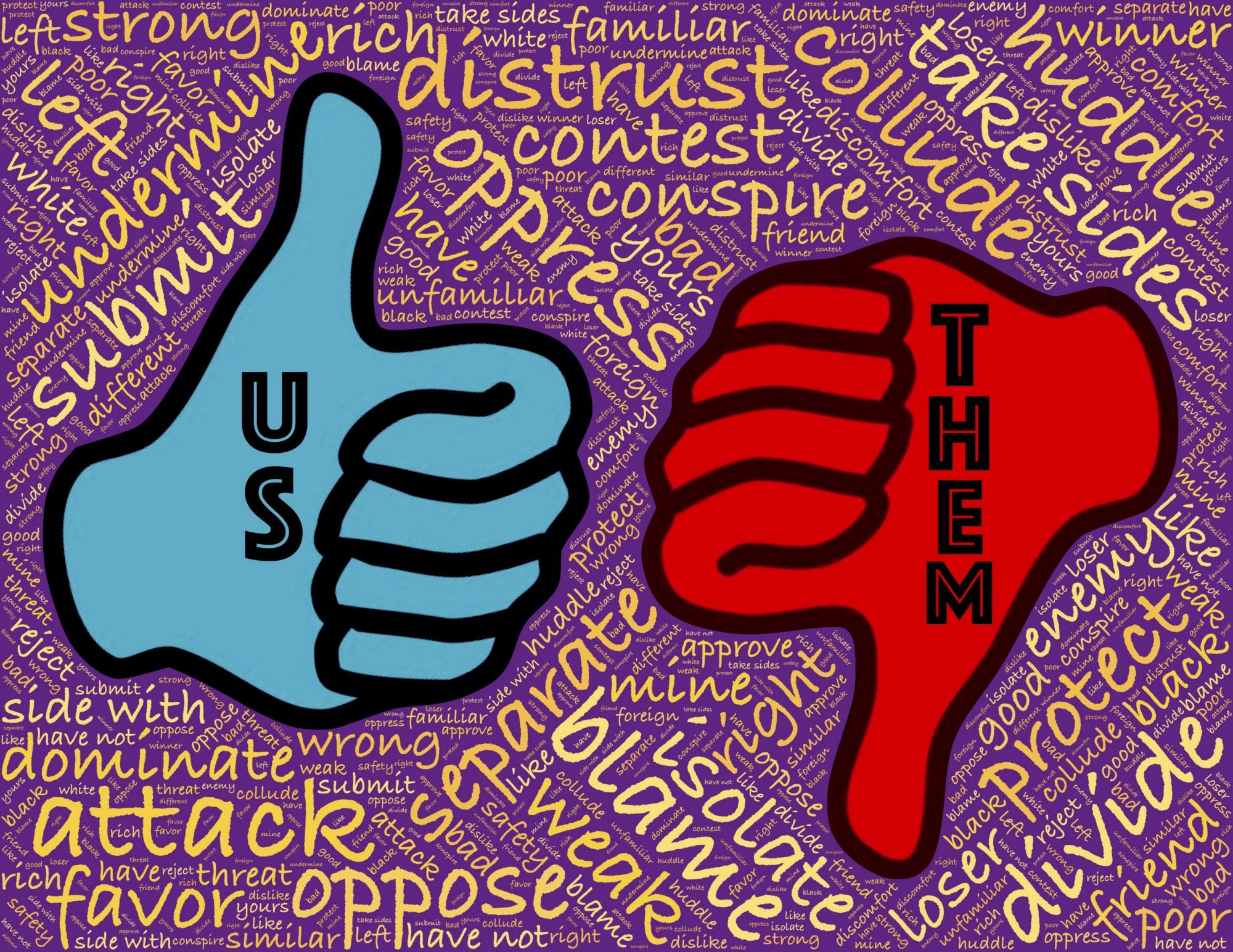
It’s a special kind of dehumanizing and something religion has done for centuries, weaponizing the age-old us-versus-them mentality. We can only do so much to temper our tribal nature, but there comes a point where the line between differences and hatred become too blurred. We share this same planet. We also live in countries full of people who don’t agree with us.

That’s okay. We can still be friends with these people. We don’t have to hate, scold, insult, demean, or dehumanize them. That’s a conscious choice we make and, unlike religion, it requires little in terms of indoctrination. As society becomes less religious, it’s important to remember why we’re moving away from organized religion in the first place.

In the same way most religious people are decent, good people, most people of any political affiliation are the same. We’re still human at the end of the day, but I sincerely worry that the increasing ugliness of politics is making us forget that.

Leave a comment

Filed under Current Events, human nature, media issues, outrage culture, political correctness, politics, religion

A Personal Story (And Perspective) On Daylight Savings Day

It’s that time of year again, at least if you’re in these countries. Daylight Savings day is upon us. It’s not a holiday, nor a means for major celebration. It just means that this weekend, we can all look forward to an extra hour of sleep.

Honestly, after the year we’ve all endured, an extra hour of sleep is literally the least we can hope for. I’ll gladly take it.

Now, I don’t have an opinion on daylight savings, why it’s observed, or whether we should continue observing it. That sort of contention is just not worth my time or anyone else’s. Instead, I’d like to take a moment in these last few days before we fall back to share another personal story.

It involves high school, but I promise it’s not nearly as awkward or angst-ridden as some of the others I’ve shared. This story is more an observation than a personal account and one I think is more relevant. Say what you will about teenagers and young people in this current environment. They do have issues and they’re worth highlighting.

To appreciate this story, I need to offer a little context. While I was in high school, the last week of October was uniquely difficult. It wasn’t just because the weather was getting colder, mid-terms had just wrapped up, and the holidays were still too far off to warrant excitement. Much of the difficulty, in this case, had to do with sleep.

It wasn’t so much about getting enough of it, which is a challenge in its own right, as it was about waking up. I lived in a school district where high school classes started at 7:20 a.m. If you weren’t in your first period class by that time, you were late and you could get in trouble. That might not have been an issue if you lived nearby. Unfortunately, I wasn’t that lucky.

My family lived on the boundaries of the school district. That meant I had to take the bus to school, which wasn’t too big a deal. However, in order to get to school on time, the bus had to pick me and my classmates at 6:30 a.m. to make it on time.

Now, I know some people are already rolling their eyes. We had to be at the bus stop by 6:30 in the morning. Why is that such a big deal? There are people with jobs that require they wake up even earlier.

To those people, I have a simple message.

First off, we don’t get paid to go to high school. We’re forced to, by law. Second, we were teenagers. We’re not exactly used to night shifts at the salt mines. We’re still going through puberty, trying to transition into adulthood, and dealing with plenty of awkward feelings along the way. Have some goddamn sympathy.

With that in mind, take a moment to appreciate what it’s like the week before we fall back with daylight savings. You wake up at 6:00 a.m. and it’s still nearly pitch black outside. You can still see stars in the sky. You can barely see any hint of the sun.

If you’re a functional adult who is used to early mornings, it’s no big deal. If you’re a teenager who’s several steps away from being that functional, the world is basically asking us why the hell we aren’t still sleeping. Our collective response is the same. We have no choice. This is what we have to do, by law, to get to school on time.

Make no mistake. Waking up this early and standing outside when it’s still dark out is jarring to a teenager’s mind and body. The last week of October was just the most pronounced. During the first weeks of school, you could at least depend on the sun coming up, which helped wake you up. By this time, however, you had no such benefit. It was still dark out and it stayed dark until you got to school.

This is where my story comes into play. It’s not just one particular incident on one particular day, either. For the entirety of my high school career, this sort of thing played out every year on the last week of October. If I were to catch up with my old classmates, they’d probably share the same sentiment.

It went like this.

We wake up at 5:30 a.m. to get ready for school. It’s pitch black out.

We take a shower, eat some breakfast, and gather our things. It’s still pitch black out.

We go out to the bus stop at about 6:25 a.m. It’s still pitch black out.

The bus arrives, we get on, and we settle in for the ride. It’s still pitch black out.

For the entire trip, we’re all only half-awake. Nobody talks. Nobody socializes. We just sit there, try to keep our eyes open, and get whatever sliver of rest we can before we arrive. Most of the time, the sun is just barely starting to rise when we get to school.

I know it’s not the most harrowing story about high school, but it does stand out and it wouldn’t be at all possible without daylight savings. It’s because of that time shift that it’s still so dark out in the morning on that final week leading up to it. An adult may see that as a trivial detail, but from the perspective of tired teenage minds, I assure you it isn’t.

I try to forget a lot of things from that time in my life. I’ll never forget those early morning bus rides on the last week of October. They always had this strange, ominous feel to them. Setting aside the ambience, the impact it had on me and the rest of my classmates was distinct.

Being out at that bus stop when it was still so dark and riding to school before the sun came up just put everyone in a drowsy, lethargic mood. Riding to school in that environment wasn’t just quiet. It was dead silent at time.

Nobody said a word.

Nobody talked, socialized, or screwed around.

It was just too dark and we were all too tired. You think packing a bunch of teenagers in a bus is bound to create something rowdy and decadent? Well, when it’s that dark out and that early in the morning, you don’t have to worry. When you’re still tired, you’re not going to have the energy.

Now, that did change to an extent the following week. Once we set the clocks back, there’s usually daylight outside when we go to the bus stop. That does make a difference. In fact, it makes a big difference. There’s even some science behind it.

I was still a miserable high school student, but at least it easier to stay awake when the sun was out. I also noticed that once we had some sunlight, people talked and socialized more on the bus. It was just less depressing overall. Being less tired will have that effect.

In hindsight, I’m amazed that we all functioned as well as we did in those conditions. The science is also catching up to the sentiment. More and more people are uncovering the negative effects of having high school start so early. Teenagers may be immature and dumb at times, but they’re still human. If they don’t get enough sleep, they’re not going to function well.

A lack of sleep has all sorts of negative impacts. Add the rigors of adolescence to the mix and you’re just going to make both much worse. It’s something I find myself contemplating every year in the days leading up to daylight savings.

We have a lot of problems in this world and teenagers have a lot to deal with. Nobody can do much of anything if they’re too tired or sleep deprived.

1 Comment

Filed under Current Events, Jack Fisher's Insights, real stories