Tag Archives: Friends

Why I Live Alone, But Don’t Feel Lonely

Loneliness is an awful, solemn feeling. Nobody denies that.

We’ve all probably had points in our lives when we’ve felt utterly alone, literally and figuratively. I know I have. There have been times when I’ve just laid in bed at night, staring up at the ceiling, and feeling like I’m in this dark prison cell that I can never escape. I don’t care who you are or how tough you think you are. That feeling hurts on a fundamental level.

Human beings are social creatures. That’s not an opinion. That’s a tangible, fundamental aspect of our species. No matter how much of a rugged individualist you think you are, we still need some level of social interaction to maintain our mental well-being. It doesn’t have to be overly elaborate. It just has to be there.

I make this point because there has been increasing talk of a loneliness epidemic. And it’s something that the COVID-19 pandemic did plenty to intensify. I know I felt it at times. I’m sure others felt it far worse than me. And even though the worst of the pandemic is behind us, those lingering feelings of loneliness are still there.

Now, I don’t claim to be an expert. I also won’t try to offer some contrived bullshit solution that a life coach might charge someone for. That’s not my style. All I can do is share my own experience and how I’ve dealt with loneliness in the past.

Because years ago, especially when I was out of college and starting off on my own, I felt pretty damn lonely. In college, I was surrounded by people my age. And even though I had awful social skills, poor self-image, and lingering personal problems that started in high school, I took some comfort in knowing I was surrounded by others like me. Even if I didn’t interact with them as much as I wish I had, I felt like we were all sharing the same struggles that came with going to class, studying for exams, and budgeting our limited money.

Then, I graduated and got out into the real world. Suddenly, I was in an environment where I was expected to fend for myself. Even though I had a wonderful family who supported me every step of the way, it was overwhelming. I felt isolated and lonely, wondering if I was strong enough to handle all of this.

Keep in mind, I still lived with others at the time. Even after I moved out of my parents’ house, I went through a period in which I lived in shared houses and apartments with other people. Most were around my age. And for the most part, I got along with these people. At one point, I lived in this large suburban house with five other people who all met on Craigslist. It’s not quite as chaotic as it sounds, but I was rarely ever completely alone in that place.

But I still felt lonely. I still felt isolated, even though my parents were just a 20-minute drive away. Those were difficult times.

However, I did get through it. Things did get better.

Now, as I write this, I live alone. I have my own place and I have no roommates. I’m also single, at the moment. I was single throughout the COVID-19 pandemic, as well.

And yet, I don’t feel nearly as lonely as I did during those years when I lived in a shared home. I don’t even feel as lonely as I did in college, despite being on a large campus surrounded by people in a similar situation.

I know that sounds like a paradox, but it’s the truth. I can only do so much to explain why I feel this way. I’ll only say that loneliness is an easy feeling to fall into without much effort. And it takes a lot more effort to actually escape it.

By that, I don’t mean pushing yourself to go out, meet people, and make new friends just to feel less lonely. That’s a mistake I see a lot of people making, especially socially awkward people like I was for much of my early life. If your reason for making friends is to just be less lonely, then you’re not making friends for the right reasons. And if you’re trying to talk to people just to feel less lonely, that’s just as bad a reason. That essentially turns your social interactions into something selfish.

It’s not about actually wanting to meet peole and be their friends. It’s about you and making yourself feel better.

That’s not a healthy mentality. And I freely admit I had that mentality for a good chunk of my early 20s. Growing out of it took time, as well as a concerted effort. It also required efforts that went beyond just improving my inherently poor social skills.

I’ve noted before how hard it was for me to get into shape after having many unhealthy habits throughout my life. I didn’t start working out regularly until I was almost 30 and when I started, it took a while for me to really feel the benefits. And while it might not have been my primary goal, working on myself and trying to be healthier really helped me feel less lonely.

Beyond just improving my mental well-being and self-image, it made me much more comfortable in my own skin. I feel like it sent a message to myself that I care enough about myself to put in the effort to be better, even when it requires spending an hour at the gym or running through freezing weather in the middle of January. Once that message sank in, I felt more confident to connect with others for the right reasons.

At the same time, my general social skills and communication skills had improved to a point where I really felt the benefits. It showed in how I interacted with family and friends. It showed in how I interacted with total strangers, both in real life and online. And during the COVID-19 pandemic, I leaned on those new skills to help me feel connected with others.

Those connections didn’t have to be big or elaborate. One thing that really helped was scheduling regular Zoom calls with my siblings and parents. That ended up helping me make entirely new connections because I met a lot of my siblings’ friends that I usually don’t get to interact with. Later on, once the pandemic faded, I met up with them in real life and it was a great experience. It felt like a true mark of progress that I didn’t realize I was achieving.

And if I can achieve that kind of progress, then I’m confident everyone reading this can as well. Yes, there are still times when I feel lonely. But it’s a feeling that doesn’t hit nearly as hard as it once did. Even though I live alone at the moment, I never feel the same crippling isolation I used to feel years ago.

For that, I’m grateful to the friends I’ve made in that time.

And I’m even more grateful to my parents and family, who were there for me during those times.

I realize I’m very lucky in some regards. Not everyone can enjoy the opportunities I’ve had. But we’re all capable of confronting loneliness in our own unique way. And I sincerely hope that by sharing my experience, others can draw strength from it.

Leave a comment

Filed under human nature, Jack Fisher's Insights, psychology, real stories

Five Terrible Life Lessons That I Learned From Sitcoms

This video is a video from my YouTube channel, Jack’s World. And in this video, I going over some of the terrible life lessons I picked up from watching sitcoms. Enjoy!

Leave a comment

Filed under Aliens, Jack's World, television, YouTube

Thanksgiving 2022: A Thankful Message With Hopeful Sentiments

The following is a video from my YouTube channel, Jack’s World. This video is just a brief message of thanks to friends, family, and those who have supported me and this this channel in the spirit of the holidays. Enjoy!

Leave a comment

Filed under Jack's World, YouTube

Should You Marry Your Best Friend?

The following is a video from my YouTube channel, Jack’s World. This video is an honest exploration into a profound question involving romance.

Should you marry your best friend?

Being a romantic, I’ve heard form many people that your best friend is the only person you should marry. I’ve heard from plenty others that they’re the last person you should marry. I’ve asked it in many forms and I thought it was worth talking about in a video. I also explored this question in a blog post I wrote back in 2018. And I tried to expand on in in this video. Enjoy!

Leave a comment

Filed under Jack's World, romance, YouTube

Five Terrible Life Lessons I Learned From Sitcoms

featuuuure

As a kid, I loved cartoons and comics. I think I’ve made my love of superhero comics abundantly clear on multiple occasions. However, I had other guilty pleasures as a kid that weren’t as common. Among those pleasures were sitcoms.

I’m not just referring to the popular or iconic ones, either. There was a time in my life where I would literally watch any sitcom that happened to be on TV at the moment. It didn’t matter if the premise was stupid. I still watched and I still enjoyed it. I certainly have my favorites. “Married With Children” and “Malcom in the Middle” are near the top of that list.

A big part of that love came from how I consumed them. My awesome mother also enjoyed sitcoms. I often watched them with her. She even let me watch sitcoms with themes that weren’t exactly kid friendly. That didn’t stop us from laughing hysterically at episodes of “Seinfeld” together. Those were good times.

As fun as they were, I also feel like I gleaned some less-than-helpful lessons from those shows. Unlike cartoons or kids shows, sitcoms involve real people who deal with real situations. I wasn’t the smartest kid, but I knew a show that involved superheroes, killer robots, and talking turtles was wholly unrealistic. Most kids with functional brains know that.

Sitcoms were a bit trickier. When the people are real and the scenarios look real, your inexperienced can’t always make sense of it. Even as an adult, the message of a sitcom can become muddled, even if it’s not based on a ridiculous premise.

Since I probably watched more sitcoms as a kid than most people did as an adult, I think I’ve been exposed to those misguided messages more than most. As a result, I learned plenty of terrible life lessons that did not help when reality hit me with a few gut punches.

I’m not saying that sitcoms were the reasons for my problems, growing up. I don’t blame the sitcoms themselves. I think that, in terms of the bigger picture, the themes of these shows tend to get complicated when it clashes with reality. In the same way fairy tales and porn create unrealistic expectations of romance and sex, sitcoms present false assumptions for making sense of the world.

What follows are five of those terrible lessons that I surmised from my excessive sitcom assumption. If you have other lessons you’d like to add, please share them in the comments. Some sitcoms tell better lessons than others, but these are some of the worst.


Terrible Lesson #1: All Great Romances Begin As Friendships

This lesson preyed off my inherent love of romance. While superhero comics offered plenty in terms of in-depth romance and melodrama, sitcoms were a bit more limited, thanks to their half-hour format. It was a tough, but not insurmountable limitation. Unfortunately, a great many sitcoms relied heavily on flawed, incomplete concepts of romance.

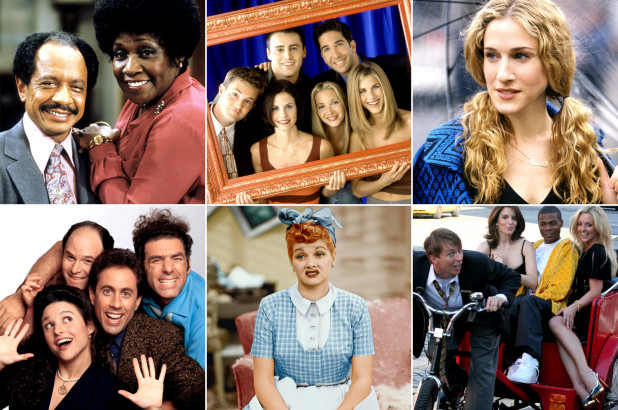
The most common involved romances that begin as friendships. Shows like “Friends” built almost every meaningful romance around this concept. While it wasn’t the only sitcom that did this, it’s by far the worst offender in sending the message that an epic romance starts with a great friendship.

While that makes for good TV, it’s a very flawed approach in the real world. I’m not saying that being friends with someone can’t lead to meaningful romance. It definitely can. However, shows like “Friends” give the impression that this is the only romance that has true depth. Every other romance is just flat and uninspiring, by comparison.

In the real world, seeking friendship is a good thing, but using that as a pre-cursor to romance can come off as deceitful. Sometimes, a person wants a friend more than a love interest and if that’s the only reason you’re friends with them, then that just comes off as insincere and a little creepy.

That’s not to say that sitcoms don’t contain meaningful romance lessons. This just isn’t one of them.


Terrible Lesson #2: Everyone Always Has Ulterior Motives

Chief among the hallmarks of sitcoms are the conflicting motivations of the characters involved. Whether it’s Charlie Harper trying to hook up with a new woman in “Two and a Half Men” or Kelly Bundy trying to win a modeling gig in “Married With Children,” those motivations are rarely that complicated. The only conflict arises when they encounter others whose interests aren’t in line with theirs.

In a half-hour sitcom, there’s little room for characters whose agenda has nothing to do with that of the main characters. Unlike real life, everyone around these characters is either looking to help or thwart their efforts. There’s rarely anyone who just wants to live their life and doesn’t care if someone like Kelly Bundy gets a modeling gig for a pest control company.

While that makes logistical sense within the context of a sitcom, it has some nasty implications for the real world. It further fosters a mentality that anyone who isn’t helping you is actively opposing you. That us versus them mentality already brings out the worst in people, both in the real and fictional world.

At least in the fictional world, that mentality is somewhat justified. It often is the case that the people around you, including close friends and family, have ulterior motives. In many sitcoms, close family members are the ones who screw you over the worst. It’s not a healthy approach to dealing with the world. If you can’t trust your family, then who can you trust?


Terrible Lesson #3: Every Authority Figure Conspires Against You

When it comes to villains or antagonists, there isn’t much room for nuance in sitcoms. You’re not going to find a Walter White within those constraints. Most of the time, the bad guys in a story are painfully obvious. That, in and of itself, isn’t too big a problem. Villains don’t have to be complex to work, even in a sitcom.

However, if a sitcom does have a villain of any kind, it’s almost guaranteed to be an authority figure. They can be a parent, a teacher, or an older sibling. If they have even a shred of authority, no matter how arbitrary, you can assume they’re going to oppose the protagonists in some form or another.

Whether it’s Red Foreman clamping down on the pot smoking in “That 70s Show” or Lois being a tyrannical mom in “Malcom in the Middle,” the authority figures are always the problem. There’s really not much to their villainy. They exist solely to prevent the main characters from having fun and achieving their goals.

Now, I’m not going to claim authority figures can’t be corrupt. There are real cases of authority figures acting like real villains. There are also cases in which authority figures do genuine good. Whether it’s the leader of a country or the chief of a police unit, it is possible for someone to wield authority over others and not be an asshole.

If your understanding of authority comes solely from sitcoms, then that’s like claiming pigs can do algebra. It’s not just that power corrupts. In sitcoms, any kind of power corrupts and it does so completely. It’s as simplistic as it is absurd. In reality, there are authority figures worthy of respect and sitcoms seem to go out of their way to avoid that point.


Terrible Lesson #4: There’s Never A Reason For Someone Being A Bully

In the same way sitcoms present a simplistic view of authority and villains, they take an equally bland approach when it comes to villains. For the most part, bullies in sitcoms aren’t characters. They might as well be robots programmed to insult, denigrate, or annoy the main characters at every turn. There’s no deeper motivation beyond that. They’re just mean, unrepentant assholes.

Characters like Libby Chessler in “Sabrina The Teenage Witch” and Harley Keener in “Boy Meets World” don’t exist to give depth to a sitcom. As bullies, they’re function is to present obstacles and setbacks for others. Giving them a reason for being a bully, be it a personality disorder or past trauma, would hinder their ability to achieve that function.

While this makes sense in the context of plotting a sitcom, it grossly simplifies the concept of bullying. When it happens in the real world, it’s nothing like what we see in a sitcom. I know this because I dealt with bullies in my childhood. It did not play out like any sitcom I ever saw.

Bullies aren’t robots fueled by the whimpering cries of their victims. They are human beings too and while few will sympathize with them, few people are born bullies. They may not even see themselves as one. There are some deeper complexities to the mental makeup of a bully and sitcoms pretend those complexities don’t against.

Granted, it’s difficult for a half-hour TV show to explore and flesh out the personality of a bully. It’s considerably easier to make them an unlikable asshole who helps glorify the main characters. As a result, it’s easy to see bullies as blunt instruments rather than people you need to deal with in your day-to-day life. In such a complicated world full of complicated people, it’s bound to cause problems beyond losing lunch money.


Terrible Lesson #5: Hard Work Is For Suckers

Let’s not lie to ourselves. Growing up, we tend not to appreciate hard work. Most of us go out of our way to avoid it or when we can’t, we take the path of least resistance. Many sitcoms reflect this sentiment. They certainly aren’t the reason why people avoid hard work. That inclination existed long before sitcoms, but they do take it to extremes that can be both hilarious and asinine.

In the world of sitcoms, hard work is tantamount to waterboarding. From Lucy standing on an assembly line in “I Love Lucy” to the over-the-top slacker behavior that plays out in “Workaholics,” hard work is only a step down from bullies. It’s something every major character either avoids or gets crushed by.

Sitcoms build entire plots around characters looking for a way to get out of hard work. Francis in “Malcom in the Middle” is the personification of this struggle. He once spent an entire episode willingly distracting himself from an overdue history assignment. While characters like him often pay a price for their slacking, it’s rarely a worse alternative than hard work.

In the world of sitcoms, you only work hard if you have your dream job. Since most people don’t get their dream job, hard work is basically tantamount to defeat. That’s the main take-away from sitcoms. Anyone with just a small amount of life experience knows how flawed that is.

Even when I was working a part-time job in high school, I learned the value of hard work very quickly. It’s a means to an end. It’s something that, when done right, gives you a sense of accomplishment. While we all can’t approach it with the same passion as Hank Hill, it does have value and sitcoms would have you believe that value doesn’t exist.


I still enjoy sitcoms. I still watch them regularly when there aren’t superhero movies or TV shows to see. While they can be funny and entertaining, they can also present a very flawed concept of life, people, and how to handle it. There are a lot of bad lessons to be learned from even great sitcoms, but if they make us a laugh, then I say that’s a price worth paying.

2 Comments

Filed under human nature, media issues, romance, television

Why You Should (And Shouldn’t) Marry Your Best Friend

marrying-your-best-friend

Love is complicated. You don’t need to be an aspiring erotica/romance writer to understand that. Anyone who has any experience with love, good and bad alike, finds that out very quickly. As someone who writes about and contemplates it more than most men dare admit, I find many of those complications both fascinating and frustrating.

Recently, one particular complication has interested/confounded me. It has to do with who we ultimately decide we want to spend the rest of our lives with. I know marriage is rapidly changing and I’ve highlighted some of its past deficiencies, but I’m focusing primarily on the romance part. I know love hasn’t always been linked to marriage, but love is a feeling that goes beyond any institution.

That’s what makes it so special when we find someone who we love so much that we want to indelibly link our lives with theirs. Whether or not you call it a marriage is beside the point. Seeking a romantic connection that deep isn’t just the premise of a good romance story. It’s a powerful human drive that has guided us since the hunter/gatherer days.

Whether or not we marry that special someone, having that kind of love for someone and wanting to be with them is a romantic constant that transcends institutions. This brings me to a question that I’ve asked more than once over the years and gotten many conflicting answers that all sound legitimate.

Should you marry your best friend?

I’ve asked it to close friends and family members. I’ve asked that question on Reddit. I’ve even asked it on Twitter. No matter where or how I ask it, though, I always get a wide range of answers. Some say your best friend is the only person you should marry. Others say that’s the last person you should marry. Both give reasons that I can’t entirely disagree with.

As an admitted romantic, this really confounds me. Beyond complicating my efforts to write compelling love stories, it highlights the complexity and diversity surrounding love. Even though it’s a feeling most of us experience, people go about it in such wildly different ways. Remarkably, people can make those ways work and experience intensely meaningful romances.

To understand how, I want to share some of the responses I’ve gotten over the years. When I first started asking the question among close friends and relative, most said without hesitation that you should definitely marry your best friend. Your best friend is someone you know, care for, and stand by through thick and thin. Marrying them is just an extension of that depth.

I’ve seen relationships built on this. When one of my close relatives lost his wife after a nearly 50-year marriage, I could hear the strain in his voice when he said he’d just lost his best friend. To him, there was no line dividing the woman he loved and his best friend. The same person he hung out with on a Saturday night is the same person who bore his two children.

It seems definitive, but at the same time, I have another close relative who sees it very differently. To him, a spouse is someone very different from your best friend. A spouse is someone with which you share a unique intimacy that you can’t have with any other friend, no matter how close you are. Trying to mix friends and spouses is like trying to get a plumber to fix your computer.

Whether you agree with that sentiment or not, this same relative has been married to the same woman for over four decades. Their love is every bit as intimate as anyone else’s. I’ve seen them interact differently with each other than they do with their friends. This is how they go about their relationship and it works for them.

On the other side of the spectrum, I’ve seen people who’ve tried to answer this question prove themselves dead wrong. One of my cousins made it clear in seeking a partner that he didn’t want a best friend. He wanted a wife. He wanted someone he could share his life with and later build a family. He eventually did find someone and they had that family.

However, their relationship was never that stable. They ended up getting divorced after less than 10 years and it was one of those divorces that surprised nobody. My cousin and his wife both shared the same goal. They even shared the same approach to finding love. Despite that, they couldn’t make it work.

Something similar happened to a girl I knew in college. She was a romantic like me and she once told me that she would only marry her best friend. I believed her and I may have even encouraged her. Right around my senior year, she claimed she found her best friend and she couldn’t wait to marry him. Like my cousin, though, it didn’t work out. They got divorced.

Their reasons for breaking up aren’t mine to reveal. I’ll only say that if you spent a just few days with them, even at their best, you wouldn’t have been surprised about their relationship failing. They were one of those couples that just never took anything seriously enough. They acted as though just being best friends was enough. Relationships, no matter how good they are, still require work.

I could list dozens more examples that prove or disprove both sides. There are plenty of cases where best friends go onto become strong relationships. There are others in which attempting to turn a best friend into a spouse fails miserably. It’s possible that either approach could lead to a profound love story or an agonizing heartbreak.

To add even more complications to the mix, friendship and romance can be one of those things that just never intersects for some people. While some may disagree with me, I believe it is possible for people of different genders and complementary sexual orientations to be just friends. I’ve had female friends that I could never dream of marrying and I guarantee they would say the same thing about me.

At the end of the day, this is one of those rare questions where there are just as many right answers as there are wrong answers. The people who claim their answer is correct can cite plenty of examples beyond their own experiences that are perfectly valid. They could just as easily argue that the other side is wrong and be objectively right on some levels.

In discussing and contemplating this question for many years, I can’t claim I have more insight than anyone else. I feel like I’ve had experience on many friends, both with friends and with romantic partners. In light of that and all the other responses I’ve gotten from this question, I think the only true answer is best summed up with two simple words.

It depends.

I know that sounds like the kind of answer that only a politician would give, but it’s probably the most comprehensive. Some people just approach love in a way that precludes their best friend entirely. Others go about it in a way that practically requires it. Both can work if you and your lover are on the same page. Both can make for great romance stories with plenty of sex appeal.

It can still be frustrating. It can be downright counter-intuitive at times. It’s for that very reason, though, that love and romance can be so intriguing. If something can confound and compel you at the same time, then you know you’re dealing with something uniquely powerful.

Leave a comment

Filed under gender issues, human nature, Marriage and Relationships, psychology, romance, sex in society