This is a video from my YouTube channel, Jack’s World.
There have been many concerns and criticisms regarding artificial intelligence. One area that has been impacted more than most involves art.
Generative AI has caused serious disruptions to the world of art. And in 2025, this became a much larger controversy with “Ghiblification” trend that began with Open AI. This has led to more vocal criticisms about AI art being “soulless” in nature.
However, that criticism is worth scrutinizing. And in this video, I attempt to offer what I feel is a more balanced perspective on this issue. Enjoy!
When I was a kid, there was a general attitude towards any movie or TV show that was animated. Unless it was “The Simpsons,” then animation was largely associated with kids. Even when there was a concerted effort to appeal to older demographics, animation was still seen as less mature form of storytelling. Even when it was exceptionally well done, this stigma persisted.
Eventually, animation and animated content, in general, matured to a point where the stigma really doesn’t work anymore. Cartoons aren’t just for kids. We now have shows like “Bojack Horseman” and “Rick and Morty” that have helped change the popular perception of animation. On top of that, the added influence of Japanese anime, from “Dragonball Z” to “Ghost In The Shell,” have helped attitudes about animated content evolve even more.
This shift all happened within my lifetime. It’s a simple recognition that attitudes, perceptions, and trends are always changing. And they’re going to continue to change, regardless of how we might feel about certain issues now.
This brings me to AI generated art. It’s a topic that, depending on where you discuss it, can generate a lot of debate, disagreement, and consternation. I’ve been in more than one discussion with someone who claims AI generated art can only ever be a bad thing in the long run because it enables trolls, assholes, grifters, and bad actors.
I’ve also been in similar discussions with those who claim AI art isn’t even art. It’s, according to them, nothing more than a fancy calculator that crunches numbers on where to place certain pixels on a screen. While I think that’s a gross oversimplification, I don’t think it takes away from the end result. Whether it’s produced by a human or a computer, the end result is still the same. An artistic rendering is created. But regardless of what form it takes, we have certain attitudes about it.
As I write this, I think the prevailing sentiments toward AI art are negative. Show someone an AI generated image and they might concede that it looks nice. But they’ll still have an aversion to it, knowing it’s created by AI. And if you how them a human-generated piece of art, even if it doesn’t look nice, that same person will still ascribe more value to it than they would an AI generated image. That’s just where we are right now.
But in a recent study by Scientific Reports, an interesting insight was uncovered. When the researchers conducted a survey that included approximately 200 people, they found that when people weren’t aware that an image was AI generated, then their attitudes about it were more positive. In many cases, they could not discern between the artwork generated by humans and those generated by AI. But as soon as they were aware that something came from an AI, their sentiments changed.
It’s probably not too surprising, but it’s also revealing. It speaks to where we currently are in our perspectives on anything created by an AI. It still has this synthetic, uncanny valley feel to it. We still inherently ascribe more value to something that is created by a human over that of a machine. And while that is certainly understandable, given that human generated art requires more labor and passion, how much will that value persist in the coming years?
That’s not an unreasonable question because the quality of AI art has changed considerably in the past few years. And it’s likely to continue improving in ways we’re not ready for. Not too long ago, it was somewhat easy to discern when something was created by an AI. The issues it had with rendering hands and fingers are well-document. However, those issues have been addressed and improved considerably, especially with newer models.
As such, you don’t need to be a wide-eyed utopian futurist to predict that AI art generators will improve to a point where it’s genuinely difficult to tell if it was created by a human. This study already showed how close we are. The participants weren’t able to surmise on a surface level that they were dealing with a mix of AI and human-generated art. With improved tools, even the most discerning and tech savvy among us might not be able to figure it out.
At that point, our attitudes towards AI art will have to change. Think what you want about AI and whether it’s capable of creating real art, let alone appreciate what goes into it. But if it’s capable of making something we can’t discern from its human-made counterparts, then those negative sentiments we have are entirely arbitrary, as well as subjective.
And those same attitudes might not be shared by younger people who have grown up in an environment surrounded by the internet, AI, and AI generated content. They might not have any issue with seeing AI generated art as real art. And anyone who just despises AI art as a concept might find themselves in the same group as those who still think all cartoons are just for kids.
It’s hard to know where these trends will lead as AI technology advances. It’s already affecting how we see art, knowledge, and what it means to be intelligent. And how we feel today might not be at all in line with how future generations will feel in the decades to come. Only time will tell.
I’ll simply note that humans, in general, are a visual species. We seek to create, admire, and cherish art, regardless of the source. For that reason, I think there will certainly be a place for any kind of art, whether it comes from a human or an AI.
This is a video from my YouTube channel, Jack’s World.
This video covers some recent news surrounding accusations about major comic publishers utilizing AI art and the larger implications that this new technology will have on the industry. Artificial Intelligence promises to impact a lot of industries, but the comic industry is uniquely vulnerable. And it’s definitely worth confronting as the technology continues to improve.
This is a video from my YouTube channel, Jack’s World.
This video explores my thoughts, feelings, and overall sentiments surrounding AI art. You might have noticed that some of my more recent videos have been incorporating more AI art lately. I do so with the understanding there is a fair amount of controversy and concern surrounding this technology. I do my best to address that while offering what I hope is a balanced perspective on AI art and the use of generative AI. Enjoy!
There are certain celebrities and pop culture icons that we tend to appreciate more after they’ve passed away. Like everyone else, they too must face death at some point in their illustrious lives. And when they do, all the work they did becomes inherently more precious because it is now finite. There can be nothing new added to their body of work. It’s as set as the strongest bedrock. It might be upsetting to many fans, but it’s just a fact of life.
Then, artificial intelligence comes along and suddenly, there’s a crack in that bedrock.
Recently, a couple of comedians utilizing an unspecified AI created an hour-long comedy special featuring the late, great George Carlin. That “special,” and I use that term loosely, is currently on YouTube right now. For reasons that I hope are understandable, I’m not going to link to it. Just know that, as of me writing this, it has racked up over 427,000 views and 11,000 likes.
Now, in general, I support the development of artificial intelligence. I still genuinely believe it is the most important technological advancement we could develop as a species. But this particular manifestation of its use has me both concerned and distressed.
For one, George Carlin is my favorite comedian. I would go so far as to call him the single greatest comedian of all time. And that’s an opinion many share. Ask most people who the best comedian of all time is and George Carlin is usually in the top five alongside the likes of Richard Pryor, Lenny Bruce, Rodney Dangerfield, Sam Kinison, and Robin Williams.
To me, George Carlin is the best and there’s no close second. He’s one of those comedians who didn’t just find success over the course of multiple decades. You can still go back and watch his specials from the 1970s and his material is still relevant. His jokes, his style, and his brilliant insights are still on point, as well as hilarious.
George Carlin really was a one-of-a-kind artist, comedian, and philosopher. And when he passed away in 2008, his death hit a lot harder than most. But his legacy has only strengthened in that time as more people discover or re-discover his comedy. But this AI version of him is sure to complicate that legacy and for all the wrong reasons.
For one, this “special” was done without permission, review, or compensation to George Carlin’s family. His daughter, Kelly Carlin, has gone on record as stating that she did not authorize this, let alone receive compensation for it. This was not an instance of a celebrity willingly licensing their voice or likeness to a company, as James Earl Jones did with Disney in 2022. This was done without any consideration whatsoever for how Carlin’s family might react to this or what it might do to his legacy.
As for the special itself, I do admit I have listened to it. And I can confirm that it sounds nothing like George Carlin. The voice sounds like a terrible impersonation of George that someone half-drunk would try to do on a five-dollar bar bet. I promise nobody is ever going to mistake the voice in this “special” for George Carlin. I don’t know if that’s by design or just a limit of the current technology.
But with regards to the actual substance, this is where it gets even more distressing. Because in many instances, there are jokes and comments that actually sounds like something Carlin would say. Yes, they lack his distinct delivery, tone, and mannerisms. But many of his comments on politics, pop culture, people, and society really do feel like they might come up in a real special.
That said, there are also instances where it says things Carlin probably wouldn’t say. There’s nothing too egregious. He never says anything that sounds so out-of-character that it’s jarring. But it’s also clear that the content was edited. There are distinct breaks in the audio that indicate someone edited this to sound more refined. That leads me to believe that, whatever AI was used to make this definitely conjured some content that would’ve been too obviously out-of-character.
I’ll even go so far as to say that there are some parts of the special that are funny. It still doesn’t resonate as well as one of Carlin’s classic comedy specials. But there are jokes in this special that probably will make some people laugh. It’s not entirely clear if those jokes were purely the product of the AI or if those behind it tweaked the language. But the humor is there.
Be that as it may, just listening to a small part of this special feels off. Beyond just sounding painfully synthetic, it establishes a precedent that the estates of other dead celebrities would be wise to consider. Because George Carlin isn’t the only one with a long catalog of comedy, writings, interviews, and movie credits.
Who’s to say that an AI like this won’t do the same for Robin Williams or Richard Pryor? It wouldn’t even be restricted to comedians, either. The works of musicians like John Lennon, Kurt Cobain, Michael Jackson, and Elvis Prestly could also be used to create entirely new songs that might sound eerily similar to something they might have created.
If that happens, what does it do to their legacy? What happens if an AI creates something in the mold of a dead celebrity that says or does something outrageous, offensive, or detrimental? What would it do to their legacy? What would it do to their still-living families?
I honestly can’t imagine how someone like Kelly Carlin must feel hearing a poor imitation of her dead father. But I can easily imagine other celebrity heirs or estates willingly licensing their dead relatives to make extra money somehow.
It could mean we’ll be seeing more strange, distressing content like this in the coming years. And as AI technology continues to improve, it will likely get to a point where it’s so capable that it’s almost too believable. I don’t claim to know what kind of world that might create or lead to. I just know that “specials” like this won’t stop with George Carlin.
We live in strange, tense, and frustrating times. I know you could say that about any point in any era. But it feels like we’ve been saying that a lot late. I know I have. Just look at some of the posts I’ve made onor near Election Day in the United States. But as someone who lives less than two hours from Washington DC, I tend to feel the politics of these times more than most. And I’ve been around long enough to see some strange and troubling trends.
Then, there are certain acts or phenomena that are just plain stupid on a level that defies parody.
I generally try to empathize and understand where other people are coming from, especially if they have a different background or ideology from my own. There are just some instances where that’s not possible. The breadth of the stupidity is just too great.
That’s exactly how I feel about book bans. For reasons that are too fucking idiotic for me to paraphrase, there are real people living in real places in the United States of America who are advocating for book bans. Some are going so far as to burn them.
Again, this is not 1933. This is happening in 2023. That point is worth belaboring.
Now, I don’t want to name names or organizations. But you don’t have to look far to see who are advocating for book bans. You also don’t have to dig too deep to uncover what sort of ideology they ascribe to.
Here’s a hint. It’s the same ideology the requires stormtroopers, secret police, and prison camps.
But all you really need to know is that these efforts are usually the ones the villains in every TV show, book, or movie get behind. They see people reading books with ideas they don’t like. They worry that those same people, which include children and young adults needed for factories and war zones, embracing or identifying with those ideas.
But rather than confront those ideas, the book banning advocates would just prefer that people never know about those ideas in the first place. The evil, sadistic logic is that if people never read about it, then they can never think about it. And if they can never think about it, then they’re easier to control and guide.
That may not be the reason book banning advocates say out loud, but that is the effect. They’ll usually frame it as “protecting children” or “combating obscenity.” But don’t fall for that. At the end of the day, those who seek to ban books just want to eliminate ideas and stories they don’t like from the public consciousness.
That’s not conducive to protecting children and fostering a healthy society.
That’s a tactic for fascists, authoritarians, dictators, and general assholes.
Now, those tactics were certainly damaging in the past. Until very recently, books were the primary source of important information. If people didn’t have access to books, then they didn’t have access to knowledge, stories, and new ideas. Finding or preserving banned books used to take a concerted effort and many brave individuals put their lives at risk to further those efforts.
However, what makes modern book bans especially stupid is the simple fact that the internet exists. Libraries and book stores are no longer the lone repositories of knowledge and stories. Anyone with a smartphone can access more knowledge in five seconds than an entire university of academics could 50 years ago.
At this point, trying to ban books is akin to trying to censor telegrams. All they achieve now is raising the profile of these books they’re trying to ban. Hell, the book banning advocates might as well identify as free advertising because sales of banned books tend to spike whenever they bitch and moan about certain titles.
So, in addition to being a dick move, as well as tactics used primarily by fascists, it’s completely counterproductive. It wastes time, money, energy, and has the opposite effect of what’s intended. With that in mind, I have just one last message to those who still think banning books is a worthwhile endeavor.
Every now and then, a story slips under the radar of a much larger, but closely related story. The larger story makes more headlines and attracts more attention, but the smaller story might end up having a far more lasting impact.
That seems to be happening a lot with news involving artificial intelligence and the various AI tools that have emerged in recent years. I’ve already talked about plenty, giving my opinion on the rise of ChatGPT and showing off some AI-Generated artwork I made. There’s so much going on in this field that it’s hard to keep up with, let alone discuss.
But recently, one of those little stories caught my attention. It involves the same AI-Generated art I mentioned earlier and comic books, something for which I’ve shared my passion for in many forms. And it’s a story that I don’t think is getting enough attention.
It has to do with a comic called Zarya of the Dawn, a comic created by Kris Kashtanova. It’s not published by Marvel, DC, Dark Horse, Image, or any other mainstream comic publisher. You can actually download it right now for free. But what makes this comic different isn’t the story, writing, or style. It’s how it was made.
This comic was written by a person.
However, all the artwork inside was created with AI-generating art tools, most notably MidJourney.
That, in and of itself, is quite remarkable. The visuals within this book are certainly eye-catching. They might not rank on the same level as a Jim Lee or a Jack Kirby, but it’s a solid visual spectacle that brings to life a story.
For people like me, who cannot draw and don’t have the money to pay artists to depict the stories we want to tell, this is truly remarkable. I would go so far as to say it’s genuinely exciting. It shows just what’s possible with these tools. A writer with no drawing skills was able to produce this comic using only an AI art generating tool with text prompts. And the end result is stunning.
But this is where the story takes a turn. When Kashtanova attempted to copyright this comic, the US Copyright Office issued a surprising decision that might very well set a major precedent moving forward. Because the comic used AI to create the artwork, it could not be granted copyright protection. This was the exact statement, according to Ars Technica:
“We conclude that Ms. Kashtanova is the author of the Work’s text as well as the selection, coordination, and arrangement of the Work’s written and visual elements. That authorship is protected by copyright. However, as discussed below, the images in the Work that were generated by the Midjourney technology are not the product of human authorship.”
That bolded part is my doing because that’s the section with the biggest implication. This is the US Copyright Office stating outright that images and artwork created by AI can’t get copyright protection. That means that every piece of AI art you create for whatever reason can’t be owned by you in any legal sense. Because technically, you didn’t make it. The program made it for you.
Without getting too deep into the legal issues, I don’t think enough people realize the ramifications this might have for the future of the comics industry and for the art industry as a whole. On the comics side, there are actually two sides to consider.
On one, this technology will allow ordinary people with little to no art skills to produce comics with quality artwork. People who never once had the skills or means to make comics could suddenly start producing them on their own without a publisher or a skilled artist.
That means many great comics that wouldn’t have otherwise been made can be made. Great stories that once only existed with words could be brought to life through beautiful renderings.
But on the other side, the absence of copyright protection is an issue. Yes, these comics could bring to life amazing stories. However, the creators won’t be able to monetize their work, nor would they be able to stop others from using it for their own ends.
That means that, in theory, you or I could create a beautiful comic with this technology. It could find a massive audience and become a beloved story with countless fans. Then, a big company like Disney or Warner Brothers could come in, take the story and the depictions, and basically turn it into their own entertainment product. And since they have more resources and better lawyers, the creators likely wouldn’t get a penny of the profits.
This story also doesn’t account for how those same companies might use this technology to further undercut their workers and creators. Comic companies already have a not-so-great reputation for screwing over writers and artists who create iconic characters. Just look at what happened between Jack Kirby and Marvel for a hint of those issues.
If these same companies can use this same AI technology to produce more comics while not having to pay their artists or writers as much, they will do it. They’re a business. They’ll jump at any chance to pay less to get more. It’s cold, callous, and uncreative. But that’s the world we live in.
Add other tools like ChatGPT into the mix and it’s entirely possible that an AI could create an entire comic from scratch. And everything within it, from the art to the story to the characters, could not be copyrighted in any way. At a certain point, the AI might get so good that it would be hard to tell if there was ever a human creator to begin with.
These are all strange scenarios, equal parts exciting and distressing. We’re already seeing so much change as a result of these new tools, but I don’t think we’ve even seen a fraction of what’s possible. As AI technology improves, art generation and storytelling will change a great deal. The comics industry is more vulnerable than most, as Zarya of the Dawn just proved.
It’s hard to know what this will lead to. But whatever happens, it all started with this story and the precent it set.
In fact, that’s an understatement. I would go so far as to say I’m so terrible at drawing that most 10-year-olds couple probably match or exceed my drawing skills.
Believe me, I’ve tried to draw things. My love of comic books inspired me early on to try. But I learned very quickly that this is just not a skill that I have, nor is it a skill I can ever be good at. No amount of classes can make me good at it. No amount of lessons, encouragement, or practice could ever make me halfway decent at it. I genuinely wish I had some drawing skills, but I don’t.
Now, I’m going out of my way to bemoan my terrible drawing skills for a reason. For much of my life, I’ve accepted that this just isn’t something I can do. Everybody has shortcomings. This just happens to be mine. And for the most part, I’ve been content to live my life knowing I’ll never draw anything worthwhile.
Then, AI-generated art started to emerge. And suddenly, there’s an alternative. It may just give people like me hope that they can one day create genuinely beautiful artwork without any tangible drawing skills.
I mentioned it recently, but I don’t think I adequately conveyed just how exciting this new technology is for someone like me. I’ve talked a lot about the potential of artificial intelligence, good and bad. But a lot of that was just me speculating on the potential. This is a real, usable product of artificial intelligence that anyone with an internet connection and basic language skills can use right now for free.
This isn’t some fanciful tech from a fictional future. This is real.
It might not be overly advanced in that it can perfectly turn out thoughts into an image. It’s still relatively crude in that it basically just takes images from the internet and uses them to mix, mash, and compile images based on prompts. But like all emerging technology, it has to start off crude. Over time, people and organizations implement refinements. The product gets better, more advanced, and more efficient.
Eventually, it becomes so capable that we marvel at how crude it used to be. Just show anyone under the age of 20 an old flip-phone for proof of that.
For me personally, AI-generated art is more than just a toy or a novelty. It’s a way for me, a man with no ability to draw anything, to turn ideas into an image. I can’t overstate how powerful that is for some people. And I really do look forward to seeing this technology grow in terms of capability and efficiency.
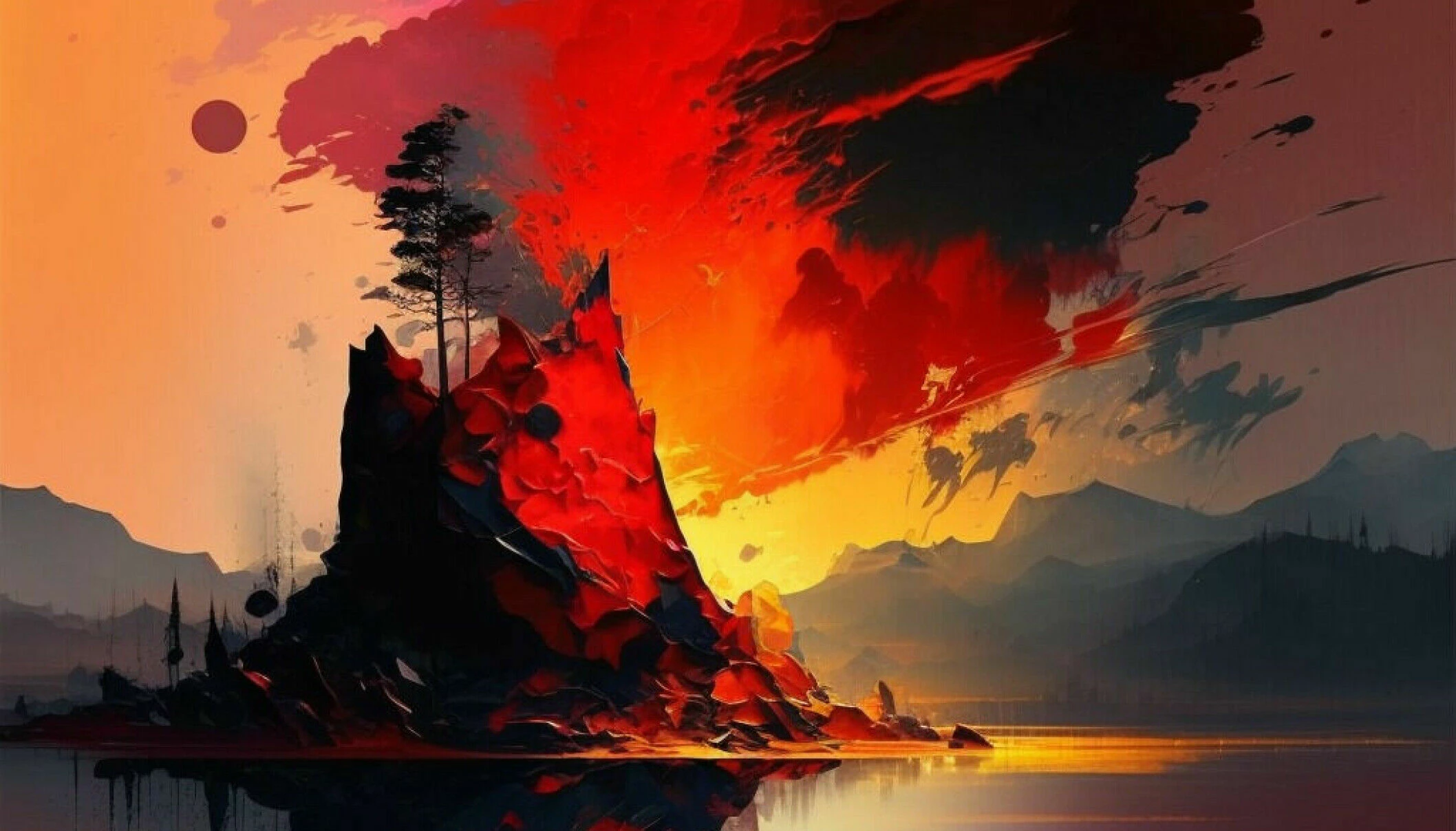
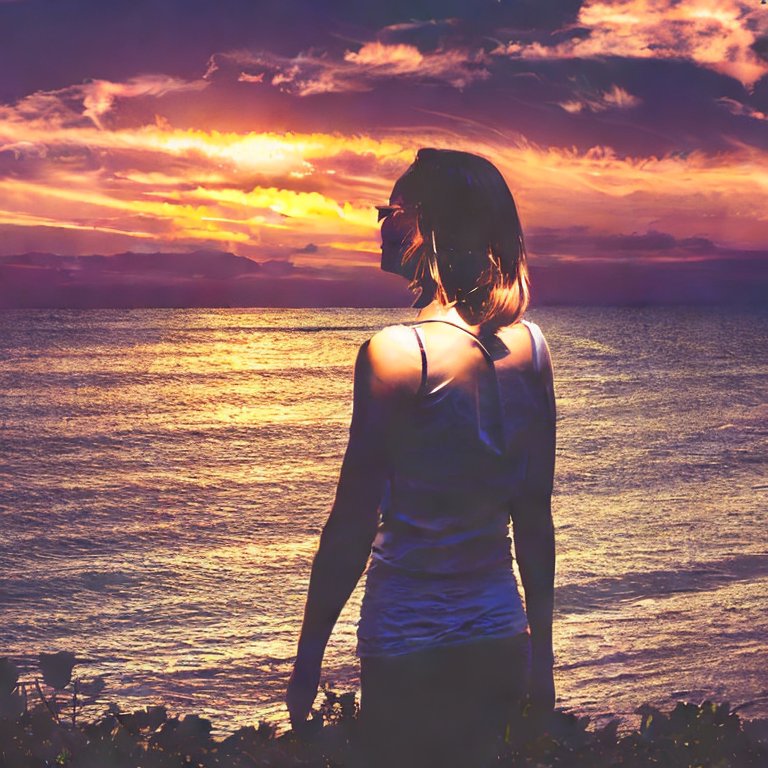
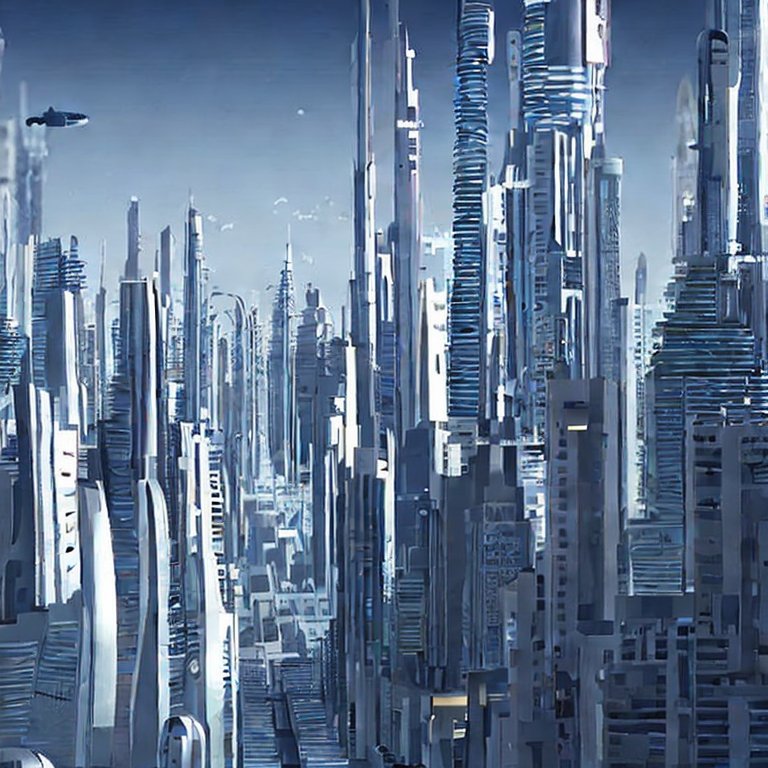
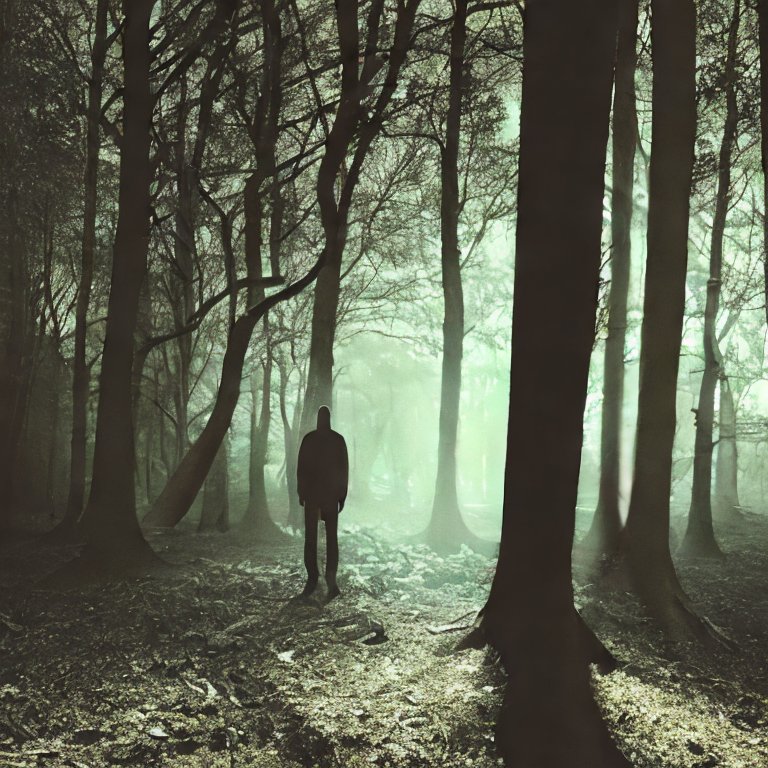
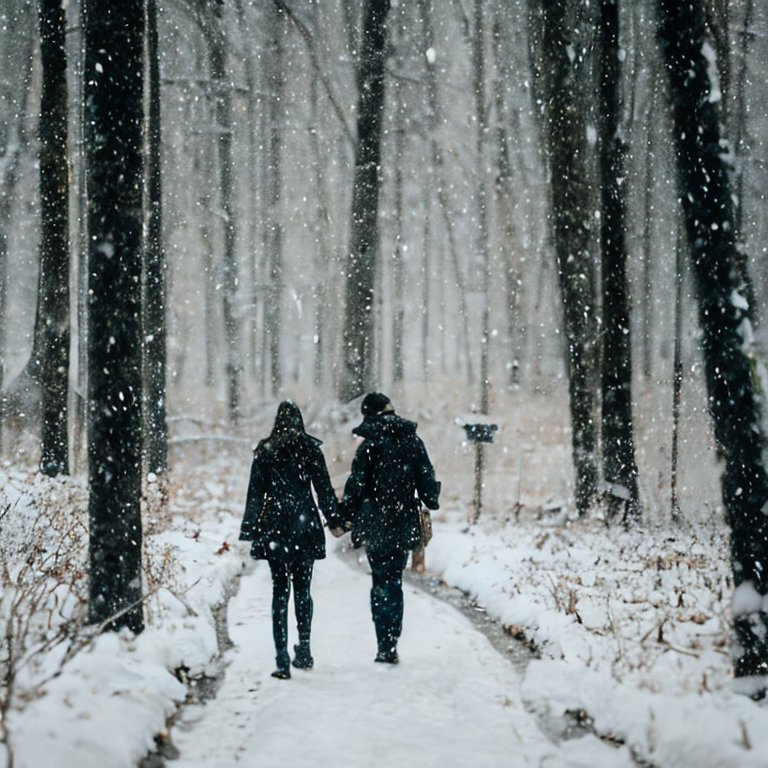
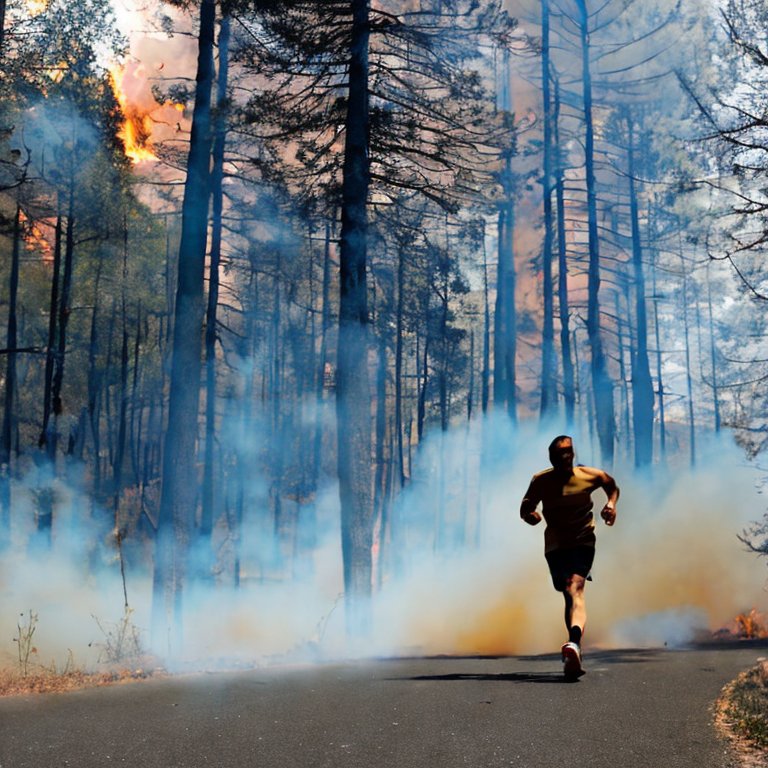
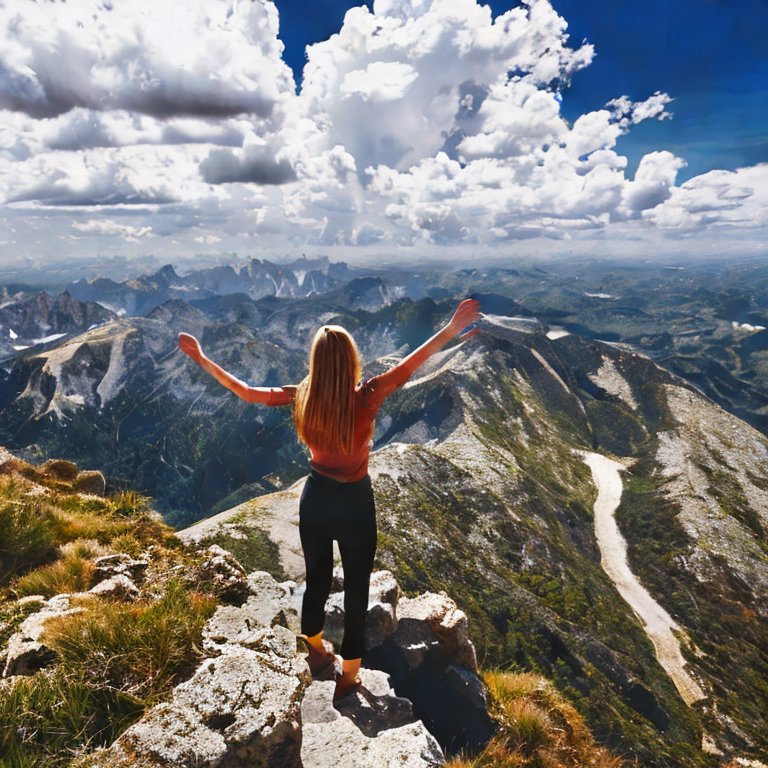
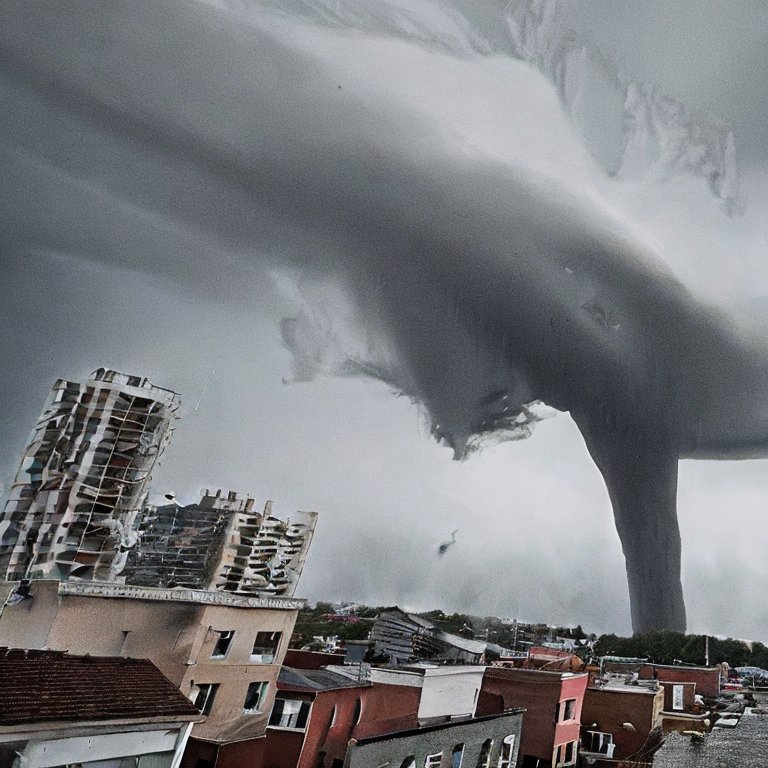
To demonstrate just how remarkable it is, I used an AI-generating art programs on the web called Stable Diffusion to create some art. This is something anyone can use right now for free. Granted, this is a beta version so the results aren’t going to look overly professional. But for something that’s free and easy to use, it’s still remarkable.
Below are just some of the images I created, along with the prompts I used.
A beautiful woman admiring a sunset.
A Christmas tree in the forest during a snowstorm.
A lush Amazon jungle with a river.
A futuristic city skyline.
A female android with blue eyes.
A shadowy figure in a forest.
A couple walking through a forest during a snowstorm.
A man running from a forest fire.
A woman standing at the summit of a mountain.
A tornado forming in a city.
Again, I cannot draw. I cannot paint or create images on a piece of paper or a computer screen. But thanks to Stable Diffusion, I was able to create these in just a few minutes. It cost me nothing and it was a genuinely profound experience, turning ideas into an image.
And keep in mind, this was just the free beta of the program. There are more advanced programs you can test out, but you do have to sign up and apply for their use. There are also some versions that you have to pay for. Once this technology gets especially refined, that might be something worth the money. Knowing I’ll never be able to physically draw, it’s definitely something I’ll consider.
For now, I’ll be keeping a close eye on this emerging technology. If I create more quality AI-Generated art, I’ll be sure to share it too.
And if you’re like me in that you don’t have good drawing skills, or any drawing skills for that matter, check out Stable Diffusion. Create some art that you never would’ve been able to otherwise create. It’s a great feeling and something that might help get you excited about the future of creativity.
Whenever I talk about artificial intelligence, I often talk about the possibilities and potential it has for the near and distant future. I admit I sometimes to a bit overboard with the speculation and the hyperbole. In case I haven’t made it abundantly clear already, I am not an expert. I do not consider myself exceptionally smart or well-informed on this topic. I just find it very interesting and quite tantalizing, given how much I’ve seen computer technology evolve over the course of my lifetime.
However, in talking about artificial intelligence, I rarely get a chance to talk about some actual tools and products powered by AI that we can use today. That’s just the nature of technology like this. It takes a while to develop and refine. It also takes a while to actually create a usable product with it that don’t require a Masters Degree in computer programming.
But this past year has seen the rise of a new type of AI-powered product that is making its presence felt. It’s called AI-Generated art and it’s exactly what it sounds like. It’s art entirely created by an artificial intelligence that uses massive amounts of data on art, shapes, and design to craft artwork based solely on text suggestions.
It’s not entirely new. For a number of years now, there have been AI systems that can essentially create photo-realistic depictions of people who don’t exist. That, alone, is an impressive feat and one that has some distressing implications for those worried about fake IDs, identity theft, or catfishing. However, these new AI-Generated art programs have the potential to do so much more.
While the mechanisms behind it are very complex, the interface itself is very simple. A user just enters a brief description of what kind of artwork they want. Then, the program processes that and crunches the data. Finally, it generates an image. Sometimes, it takes a few seconds. Sometimes, it takes a bit longer, especially if the prompt is more elaborate. If you want to see a good example of what it can create, just check out the brief, but hilarious skit John Oliver did. Just don’t watch it while eating cabbage.
Aside from the inherent comedy gold that can be mined from this technology, just take a step back and consider the larger implications of these tools. These are prompts being entered by people who probably don’t have much in terms of art skills. And as John Oliver noted, some are being entered by people who aren’t entirely sober. While the images they generate don’t exactly look like masterpieces or anything someone would mistake for photo-realism, it’s still remarkable they’re as good as they are.
In seeing some of this art, it actually reminds me somewhat of early video game consoles that began rendering 3D graphics. I’m old enough to remember the somewhat clunky transition between 2D to 3D graphics. Just look at early Playstation games or games like Super Mario 64. They weren’t exactly polished, but they were a step in that direction.
Now, compare that to a typical game on the Playstation 5. In the span of just 20 years, the graphics and renderings have become so realistic that they’re navigating uncanny valley territory. With that in mind, imagine what these AI-generating art programs will do with that kind of refinement. I don’t know if it’ll take 20 years or longer, but it does create some tantalizing possibilities.
Ordinary people could conjure detailed, photo-realistic backgrounds for games, portraits, or stock art.
Ordinary people could conjure elaborate scenes and illustrations for stories they wish to tell.
Ordinary people could create artistic depictions of elaborate fantasies, including the sexy kind.
This is especially intriguing for someone like me because, as I’ve noted in the past, I cannot draw worth a damn. I have practically no skills when it comes to creating visual artwork, be it with a pencil or a computer program. I’ve never had that skill. I’ve tried many times in the past do develop those skills. I’ve never succeeded. I’ve always been better with writing and words. And I’ve been perfectly content with that.
Now, this technology gives someone like me an opportunity to craft images to go along with my words. It opens the possibility that I could one day write a story, sexy or non-sexy, and supplement it with real, vivid depictions of the characters and scenes. That is definitely something I want to pursue. I have experimented a bit with the AI art programs, but they’re still someone limited. I won’t be incorporating them into my sexy short stories anytime soon.
But if these programs continue to improve, then it’s only a matter of time before I craft a story in that manner. Honestly, that really does excite me, more so than a lot of the promising news surrounding artificial intelligence. I understand there are aspects to the technology that may never happen or just won’t be happening within my lifetime. But these AI art programs are real. They exist now and they’re going to be refined, like most emerging technology. It remains to be seen how fast they’ll achieve a higher quality, but I will certainly be watching it closely.
Please note that most of these services are limited and none allow anyone to create images that are overly pornographic or outright illegal. However, you can still create some legitimately good images, which you can save and use in whatever way you please. I’m already hoping to use some for my YouTube channel.
But even though this technology is especially intriguing to people like me with no art skills, I don’t deny it has actual artists very concerned. There has already been one instance where an AI-generated artwork won an art contest, which the real artists did not appreciate. It’s not just that an AI like this won without putting in the effort an artist usually would. In many cases, these programs used art other artists had created to refine its code. Over time, these programs could conceivably put those same artists out of work.
I can totally understand that concern. Who would hire a talented, but expensive artists to create images if they could just use an AI program to create it in seconds and for free? Do you really think big companies like Disney, Warner Brothers, and Universal wouldn’t fire their entire art team if they could get the same results for a fraction of the cost? They’re billion-dollar profit-driven companies. You know they would.
Even if this technology doesn’t completely replace real-life artists, it’s still essentially doing most of the work. On some level, it dehumanizes the artistic process, even more so than a camera. A camera can only render the image in front of it. These programs could conceivably conjure images that nobody has ever seen or imagined, a feat that once belonged solely to artists.
What does that mean for the future of artists?
What does that mean for the future of art?
I don’t claim to know the answers. I’m not even sure how to speculate on something like this. Again, I have no art skills with respect to drawing or creating images from scratch. I’m the kind of person who will embrace this technology more than most, so I’m going to be somewhat bias in that regard.
But artists and governments are starting to take notice. China has already made waves by attempting to ban AI-generated media that isn’t appropriately marked. While that may temper some trends in this field, it’s not going to stop it. There’s just too much to be gained at this point. The genie is out of the bottle and there’s no putting it back.
It’s sure to cause more issues, especially as the technology becomes more refined. It probably won’t be long before a major problem occurs because someone used AI-generated art in some nefarious way. Some are already trying, but they can only achieve so much, given the limits of technology.
That will eventually change. If you’re reading this, you’re likely to see some AI-generated artwork that you’ll mistake for something real. At that point, even concerns about deep fakes will be minor in comparison. Only time will tell.
Until then, non-artistically inclined people like me can start contemplating what thoughts and ideas we can one day make real.
Art is one of those eclectic concepts that means so many things. For one person, it’s the ugly finger-paintings kids do in pre-school. For another, it’s a sculpture of Elvis made out of Ramen noodles. When it comes to sexy art, however, the ideas are a bit more concise. Like any other kink, it’s one of those things you know when you feel.
I may not be able to draw worth a damn, but I know plenty about using artistic skills to capture elements of sex appeal. I do it in my novels and in my sexy short stories. I’ve always had a way with words, using them to convey all sorts of colorful ideas, especially the sexy kind. That skill is even responsible for some of the serious romantic relationships I’ve had in my life.
While I utilize the written word, others tap different skills. Some are much better at it than others. You don’t have to look far to find art with overtly sexual imagery or undertones. Sometimes, it’s barely distinguishable from porn. Other times, though, it can be sexy in a wholly unique way. That’s the kind of art that leaves a hell of an impression.
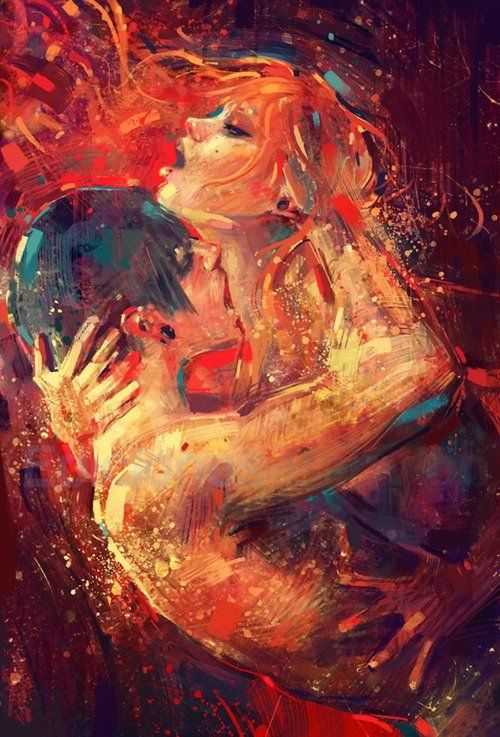
The following Daily Sexy Musing is a celebration of the sexy side of art and the wondrous effects it has on all of us. It’s not always enough to just see someone else naked and let that be the sole manifestation of sensual imagery. There’s plenty of room for creativity of all kinds. I intend to do my part and I trust plenty of other skilled artists out there to do the same. Enjoy!
The world outside our window is so static and cold, changing only with the time of day and the direction of the winds. It is untouched by imagination, governed by strict rules that can neither be bent nor broken. Lacking color and passion, there’s room for so much more. It’s up to us to forge it.
I am your artist.
You are my canvas.
Our passion is the inspiration.
From it, imagination both loving and lurid roams free.
We coordinate in a process, one that requires tools and mediums to make our vision real. We assemble them in once place. On their own, they are nothing more than means to an end. As artists, we can control both.
Our minds explore boundless possibilities. From that treasure trove of thought, one goal emerges. We must turn our love from a powerful feeling into something tangible. Whether it’s a picture, a sculpture, or a sequence of words, the immaterial essence that is our love must become real. That, we believe, is art worth treasuring.
Maybe it’s a portrait, one that depicts our bodies entwined.
Maybe it’s a poem, one that describes our love through a tapestry of words.
Maybe it’s a symbol, one that we make our own and share with a passionless world.
There are so many choices, but only a few are fit for creation. Just thinking about it feels like an arduous journey in which the end is our own to forge. It’s overwhelming, but exciting. We don’t know where to begin or where it will end. That doesn’t matter, though. All that matters is the passion put into it.
From the whims of emotion and imagination, we decide on our path. In our minds, the perfect manifestation of our love appears as clear as the morning sun. Every detail becomes clear. Thought becomes vision. All that remains is to make it real through an artist’s hands.
Together, we craft something that will transcend our bodies and minds.
Together, we create a masterpiece that perfectly captures our love.









 Jack Fisher's Official Publishing Blog