Tag Archives: 90s Cartoons

The New Captain Planet Comic Is Weird (In A Good Way)

This is a video from my YouTube channel, Jack’s World.

Dynamite Entertainment has dug deep into early 90s nostalgia and brought back Captain Planet in the form of a new comic with a much grittier tone. I didn’t know what to make of the news when it first came out. I wasn’t planning on checking it out, either. But I decided to give it a try. And while it did exceed my expectations, it always just felt…weird. But it’s a good kind of weird.

And in this video, I try to explore that feeling. Enjoy!

Leave a comment

Filed under comic book reviews, Jack's World, YouTube

The Critic Revival: Could It Really Work?

This is a video from my YouTube channel, Jack’s World.

This video entertains the possibility of a revival of The Critic, a remarkable, yet forgotten show from the 90s. After my previous video, both Jon Lovitz and Al Jean came out in support of a revival. And while I’d love to see Jay Sherman return, I think it’s worth asking whether such a revival could work.

Leave a comment

Filed under Jack's World, television, YouTube

The Critic: A Forgotten (But Relevant) 90s Animated Gem

This is a video from my YouTube channel, Jack’s World.

This video revisits and celebrates The Critic, one of my favorite shows from the 90s. This brief, but memorable animated series was unique in so many ways. It was even ahead of its time in how it approached modern movies. Even though it ended too soon, it left quite a mark that’s worth exploring.

Leave a comment

Filed under Jack's World, television, YouTube

X-Men 97 Update: News (And Exciting) Details!

This is another video from my YouTube channel, Jack’s World. This video is me sharing my excitement about the latest news about X-Men 97. If I sound overly giddy, I promise it’s for a good reason. Enjoy!

Leave a comment

Filed under Jack's World, Marvel, superhero comics, X-men, YouTube

Jack’s World: The Harsh Truths Of “Daria” And Why They Still Matter

The following is a video from my YouTube channel, Jack’s World. It’s my first video about “Daria” and was based on an earlier article I wrote a number of years back. I reworked it a bit to make for a better video. I’m very pleased with how it turned out. Depending on the response, I may make more “Daria” videos. Enjoy!

Leave a comment

Filed under Daria, philosophy, psychology, television, YouTube

“The Animaniacs” Reboot: A Zany Revival For An Insaney Time

Depending on who you ask, we either live in a golden age of television or a deepening dark age. The rise of streaming media and the decline of traditional TV models has completely changed how Hollywood does business. Some say it’s a good thing. Some say it’ll lead to the utter destruction of the entertainment industry, as we know it.

I don’t want to talk about such dire issues.

Instead, I want to talk about “The Animaniacs” reboot.

It’s a relevant topic because this reboot just wouldn’t have been possible 10 years ago. It wouldn’t have been possible 5 years ago, either. It’s riding an ongoing wave of reboots and revivals. Many of them are banking on nostalgia from certain eras to attract an audience.

Is it shamelessly desperate in the never-ending fight for more eyeballs and subscribes? Yes, it is.

Is most of it utterly forgettable and completely unfit for the current media landscape? For the most part, it is.

That’s exactly why “The Animaniacs” reboot is such a wonderfully refreshing achievement. It’s doesn’t just bring back a beloved show that many kids in the 90s, myself included, grew up watching. It perfectly captures the spirit of that show while still embracing a modern aesthetic that fits perfectly in 2020.

It helps that this show didn’t try to completely reinvent itself. It brought back the original voice actors for Yakko, Wakko, and Dot. It didn’t significantly change the theme song, the comedic style, or the overall structure of the show. The only noticeable changes were updated animation and a more contemporary setting.

Everything else is as zany, irreverent, and meta as you remember. It’s the same style long-time fans grew to love in the mid-1990s. Remarkably, that style works just as well 22 years later.

A big appeal to that style is just how self-aware the show is of its absurdities. The Warner Brothers, and the Warner Sister, know who and what they are in the grand scheme of things. They gleefully mock, tease, and joke about anything and anyone that crosses their path.

Some of that humor is more mature than a simple pie in the face. Other times, it’s as simple as Dot hitting her brothers with an oversized mallet. Both brands of humor are still funny and cartoonishly over-the-top.

It’s the kind of humor that works for kids and adults alike. That was a big part of what made the original show so popular and endearing. In watching this reboot, I still found myself laughing hysterically at times.

My inner 90s kid and my full-fledged adult delighted in the same jokes and gags. It never felt like my love of the old show was being exploited or mocked. It just felt like a fresh influx of zany comedy that I had missed for 22 years.

Even the Warners acknowledge in the first episode that the world has changed. The type of humor they did in the 90s just won’t land like it once did. That doesn’t stop them from making plenty of 90s reference, but that’s not the sole source of appeal. It’s just a small part of it.

No matter the era, “The Animaniacs” works by sticking to a simple formula. Put Yakko, Wakko, and Dot in a strange situation, be it the gods of Olympus or in search of a donut thief. Then, let them be their zany selves as they encounter various characters and obstacles along the way. The comedy just naturally emerges from there.

This reboot did not radically change that formula, both for the Warners and for Pinky and the Brain. It just updated the dates and settings while not avoiding the many ways the world has changed.

There are hipster douche-bags running donut shops.

There are self-importance CEOs who don’t give a damn about anything other than profits and themselves.

There are assholes who take up way too much space in a movie theater.

Some of these things existed in the 1990s too, but they’re more relevant to current pop culture trends. “The Animaniacs” gleefully and hilariously rides those waves.

That’s not to say that all the jokes land. Not every episode is perfect. Some jokes just don’t land and not every musical number is as memorable as Yakko’s famous countries of the world song. There are still many more hits than misses. I argue their song about reboots is the best of the bunch.

Now, you could say a lot about how relevant “The Animaniacs” is in this current era of adult animation. There’s no doubt the landscape is very different than what it was during the 1990s. This show was part of its own golden era in the 1990s, but that era is long gone.

These days, adult animation is dominated by shows like “Bojack Horseman” and “Rick and Morty.” Those shows still utilize comedy, but their brand of humor is a lot darker, built largely on the increasingly cynical trends that have been unfolding since the early 2000s.

I don’t deny that the kids who grew up watching the original Animaniacs weren’t nearly as jaded as kids today. Even before the awfulness of 2020, generations of kids and adults alike have seen a steady decline in hope for the future. Given that kind of attitude, it’s a lot harder for that zany style of comedy to land.

However, “The Animaniacs” reboot finds a way. It resists the urge to fall into the same dark traps as many other failed reboots. It doesn’t try to be “Bojack Horseman” or “Rick and Morty.” It just tries to be the same Animaniacs we know and love.

That’s what makes it work.

That’s what makes it funny.

That’s what makes it totally insaney, even in a year as insane as this.

That’s exactly why I love it and highly recommend it to anyone with a Hulu subscription.

Leave a comment

Filed under Current Events, media issues, technology, television

Celebrating The Return Of “Animaniacs” (With A Zany Personal Story Of Meeting Rob Paulsen)

We live in a strange era of reboots, re-launches, and revivals. It’s brought out a lot of mixed feelings and extreme reactions from fans of all stripes. Some people love it. Some people hate it. Some people are just completely indifferent.

Regardless of how you feel about it, there’s no escaping it. The rise of streaming media and the public’s endless appetite for new content makes it as inevitable as death, taxes, and Thanos. We’ve no one to blame for this trend but ourselves is what I’m saying.

It doesn’t always go well. In fact, there have been more misses than hits. Just as fans of “Star Trek,” “Star Wars,” and “Roseanne.” However, some franchises are just more conducive to reboots/revivals more than others. That brings me to the latest revival effort by Hulu for a zany show called “Animaniacs.”

Now, if you were a kid or pre-teen in the 90s, there’s a very good chance you grew up watching this show. It debuted during the apex of 90s era cartoons. Alongside classic Marvel cartoons like “X-Men” and “Spider-Man,” as well as heavy-hitters like “Power Rangers,” this show epitomized wacky, goofy cartoon antics to the utmost.

Personally, I have many fond memories of this show. It was one of my favorite shows to watch when I was a kid. It was even one of those rare cartoons I could still appreciate as I got older. Teenagers could watch this show and still laugh at the jokes, alongside young kids. Some jokes were surprisingly mature.

Just look up the infamous “Finger Prince” joke.

Of all the 90s shows in need of a rivial, “Animaniacs” is probably the best suited. It’s style of comedy and antics might actually work better today than it did in the 90s. When Hulu released a trailer for the upcoming revival, I became even more convinced.

We need this show.

The world needs a little zaniness.

It needs it like it needs an anvil to the head right now.

I’ve watched the trailer at least 100 times and it still puts a smile on my face. Here it is in case you still haven’t seen it.

I couldn’t be more excited about the return of this show. In celebration of the “Animaniacs” comeback, I’d like to share a quick personal story. It involves a real-life zany encounter between me and Rob Paulsen, the voice of Yakko Warner, Pinkie, and about half of every great cartoon character of the past 30 years.

Now, I need to preface this by saying this encounter is one of the high points of my adult life. I had a chance to meet Mr. Paulsen, as well as Jess Harnell and Tess MacNeille, who voiced Wakko and Dot respectively, at New York Comic Con.

Having made many trips to New York Comic Coon, which I’ve documented before, I can attest that getting in line to meet celebrities of this caliber can be harrowing. The voice actors for “Animaniacs” are among the top of the heap in terms of the voice acting hierarchy. Just getting in line to meet them required a significant effort.

That meant getting to the Jacob Javits Convention Center extra early and essentially making a beeline to the celebrity booths as soon as the doors opened. Even then, it still took a while to get to these three amazing human beings.

It was still worth the effort. However, my effort included a zany twist that just made it that much more special.

In an zany fluke of luck, I just happened to get in line in front of this girl who dressed up in this amazing costume of Dot. I wish I could find the picture of it, but I cannot overstate how amazingly adorable it was. I knew as soon as she stood behind me that I was not going to be the center of Mr. Paulsen’s attention.

I was proven correct.

Shortly before the booth opened, Mr. Paulsen himself came walking out to greet the crowd. Jess and Tess were with him. We all cheered, our inner 90s kids going crazy. Then, knowing this girl’s costume was special, I tried pointing her out to Mr. Paulsen as he walked by.

It didn’t take long for him to notice. As soon as he saw this girl’s costume, his face lit up in a way that would’ve made any cartoon character from any era proud. He immediately started talking like Yakko and greeted the girl.

Yes, by the way. He greeted her by saying “Hello Nurse!”

Keep in mind, I’m standing right next to her. Mr. Paulsen is within arm’s reach of me. I came hoping for an autograph and to express my gratitude, but seeing him react to that girl’s costume felt like something so much more. The love he had for the characters and the show really revealed itself.

You just don’t get that from most celebrities, be they athletes, celebrity chefs, or voice actors. Just being there, seeing Mr. Paulsen react to the love of the fans and these characters, was such an experience. I must have smiled for a good hour or so after that.

While that girl was definitely the star of the show, I still managed to get my picture and an autograph from Mr. Paulsen. I tried to put into words how much I appreciated his work. I’m not going to lie. My voice cracked somewhat while talking to him. I probably sounded like an idiot. He still never stopped smiling.

He, Jess, and Tess were just so wonderful on so many levels. They took the time to talk to fans. At one point, Mr. Paulsen even sung his famous countries of the world song with a fan who claimed he could sing it faster. Seeing and hearing that was a spectacle in and of itself. I wish I could put into words how amazing it was. I don’t think I can.

That’s one of the many cherished memories I have of New York Comic Con. Now that “Animaniacs” is coming back, I find myself recalling it regularly. It still brings a smile to my face.

To Mr. Paulsen, as well as Jess and Tess, I doubt he’ll ever read this. I’ll still say it. From the bottom of my heart, thank you.

Thank you for being so awesome that day.

Thank you for bring so many insaney, zany voices to this world.

Countless kids in the 90s and countless more kids today will be forever grateful for it.

2 Comments

Filed under Jack Fisher's Insights, real stories, television

What “Daria” Can Teach Us About Educating (Uninterested) Teenagers

daria-920x584

Some shows have one particular episode that you can watch again and again while still enjoying it. Great shows have multiple episodes like that. By that measure, “Daria” is greater than most. Even by the standards of late 90s animation, the show stands out in so many ways. It’s one of those rare shows that has aged remarkably well and feels more relevant now than when it originally aired.

I’ve already praised “Daria” for its unique approach to shedding a critical light on a world full of lies, half-truths, and fake news. I’ve even singled out a single episode for how the show handled a sensitive issue like mental health. These are issues that have only become more relevant since the show went off the air.

In that same spirit, I’d like to highlight another episode from the show that highlights another major issue. It also happens to be my favorite episode and the one I’ve probably re-watched the most. That episode is “Lucky Strike,” the sixth episode of the fifth season. On top of being one of the funniest episodes of the series, it also has some of the shows best moments while still tackling a major issue.

The issue, this time around, is education. It might not be the kind of a hot-button issue that makes for major headlines, but it’s still as relevant as ever, especially if we’re referring to the American education system. It’s not hard to find stories about just how bad it is, especially when compared to how other industrialized countries do it.

It was a big deal in the 90s and early 2000s, as well. Fittingly enough, this episode aired just a few months before the passage of the No Child Left Behind Act, which has been the cornerstone of the American education system. While reasonable people can debate how well it has or hasn’t worked, “Daria” has already made one of the most effective arguments about what constitutes good education.

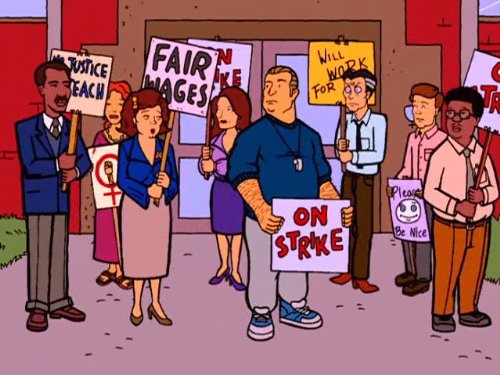
The premise of the episode begins with a teacher strike, an issue that has become distressingly common in recent years. Lawndale High’s notoriously uptight principal, Angela Li, short-changes a group of teachers who are underpaid, under-appreciated, and have to deal with uninterested idiots like Kevin Thompson and Brittney Taylor. By any measure, they have a very good reason to strike.

Never one to concede defeat or express genuine concern for student aptitude, she keeps the school running by hiring substitute teachers, some of which demonstrate limited qualifications at best. One even showed an overtly creepy attraction with one of the female students. This leads to Daria getting roped into teaching a class.

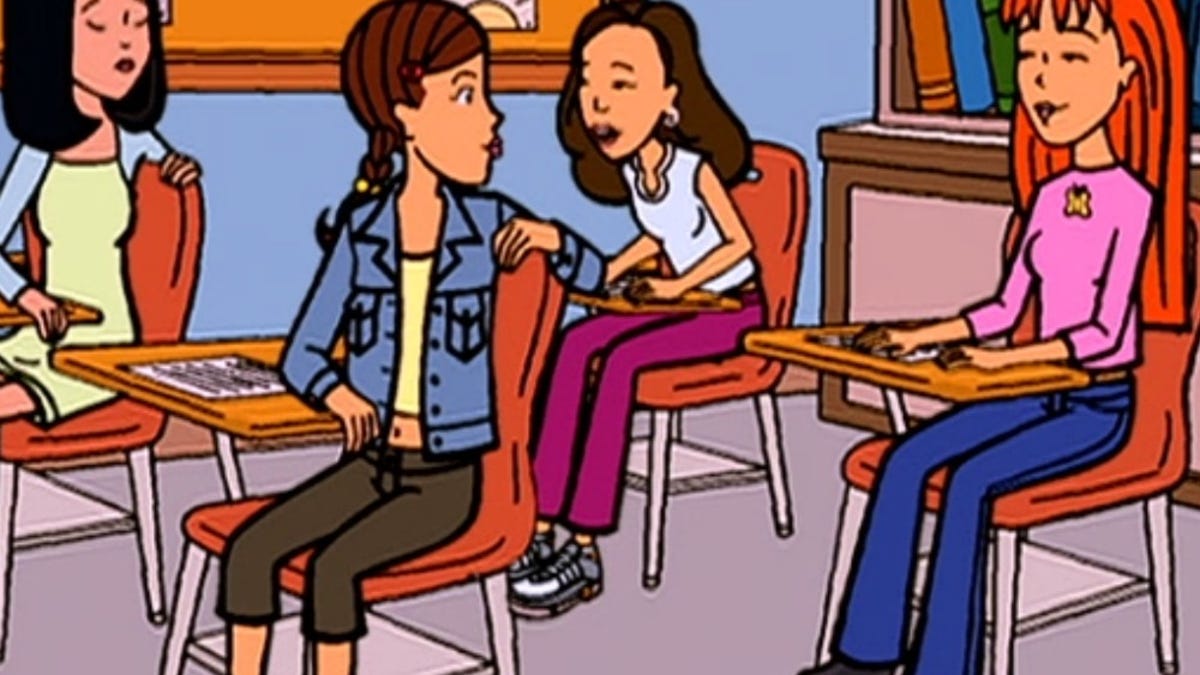
As it just so happens, the class she’s teaching is the same class that her sister and unapologetic popularity whore, Quinn, is in. Given how Quinn has spent almost the entire series denying she’s even related to Daria, it’s a great opportunity to make things awkward. Daria makes more than a few quips about it in her own wonderfully misanthropic way.

However, when it comes to actually teaching the class, Daria does something that sets herself apart from most substitutes. Even if she’s only doing it to mess with her sister, she takes her role seriously. She shows a genuine desire to teach, but she doesn’t use the same approach as the rest of her teachers. She utilizes her own unique way.

It helps that the class is an English class. Daria is a voracious reader. That is established in the first episodes of the series and belabored on multiple occasions. It also helps that the assignment is simple. The class is reading Romeo and Juliet, a story that almost every high school English class reads at some point. In terms of substitute teacher gigs, it’s as standard as it comes.

I remember reading this play in high school as well. I don’t remember it fondly, though. In class, we would just read through each act, do a few assignments in a textbook, and take a test at the end. Most of the time, the test involved multiple choice or short answer. There were only right and wrong answers. That was really all there was to it.

Daria’s approach is different. Daria doesn’t just teach from a textbook. She has the students read the play, but not so they can get the answers for an assignment. She takes the time to help them appreciate it. When one of her air-headed students doesn’t appreciate a particular part, she helps put it into a more relevant context. It doesn’t just work. It makes the story feel like something other than an assignment.

It’s an approach that anyone who loathes standardized tests can appreciate. I’ve made my disdain for standardized tests known before, but it’s not a personal peeve on my part. There is legitimate research that indicates that standardized testing is not a good way to educate kids.

Teaching kids to take a test is not the same as teaching. They’re learning how to memorize answers for a test. That’s not real learning. You can memorize all the answers for a particular test, but not know why those answers are correct. For someone like Daria Morgendorffer, who places a high value on thinking for yourself, this approach just doesn’t work for her.

For everyone else, the test is the only thing that matters. For the always-superficial Quinn, that’s her primary concern. She laments about how her sister might screw her over or worse, undermine her popularity. It’s such a burden that actually reading the play and knowing what it’s about barely registers.

Then, in one of Daria’s finest moments, she further deviates from the traditional educational model and gives her class a simple essay test. There’s no multiple choice or short answer. She just gives them a simple question.

What is Romeo and Juliet about?

That’s it. The only requirement is that they write at least 250 words and support their answer. For those who didn’t care enough to read the play, like Quinn’s equally-superficial posse, the Fashion Club, it’s the worst possible scenario. For Quinn, who actually read the play, it was easy.

In fact, it was because of that test that Quinn also had her finest hour. In one of the few moments of the show in which she’s actually likable, she defends Daria’s approach to teaching to the entire class. Then, in another pivotal moment for the series, she admits that Daria is her sister.

In addition to this critical moment of personal growth, Daria shows that she truly values people who think for themselves. Even when one of her students makes an objectively foolish comment about Romeo and Juliet, she still gives him a good grade because he actually tried to back it up. For her, that’s more valuable than simply knowing the difference between Paris and Tybalt.

Her approach is even appreciated by her students. Keep in mind, these are the same students who show little to no interest in class throughout the show. They are, like most teenagers, not that big on having to be at school for seven hours a day, learning things they don’t want to learn about. Daria understands this and tries to make the class less tedious. It’s something even an air-headed teenager can appreciate.

Most of them, anyway.

It’s also a valuable lesson that has real-world applications. Some places have even applied Daria’s approach, to some extent. Countries like Finland have a system that doesn’t rely so heavily on standardized tests. Not surprisingly, Finland’s education ranking is significantly better than the United States and by a significant margin. Daria would’ve actually fit in with that system.

It’s not just because that system eschews standardized tests. It actually emphasizes teaching a student how to think and reason. A test isn’t going to reveal that. On top of that, teachers are better-educated and well-compensated in places like Finland. They would not have had to strike like the teachers in this episode.

In some respects, Daria showed how much better someone could teach a class if they didn’t have to deal with the constraints of the current system. It even helped that the Principal Li was more focused on outwitting the teacher union than she was with teaching students. Without those constraints, Daria managed to teach a class in a way that her students appreciated.

Between that moment and the moment she shared with her sister, “Lucky Strike” accomplishes a great deal. Daria has a chance to shine and makes the most of it. On top of that, she demonstrates that it is possible to educate a room of disinterested teenagers in a way that’s genuinely effective.

There are many other moments in “Daria” where major complications, and the many absurdities they entail, get cut down by the show’s distinct brand of misanthropic humor. Daria rarely sets out to make big statements, be they about the educations system or our flawed understanding of mental health. However, she still finds a way to make her point and never crack a smile.

That’s why Daria is so lovable. It’s also why we need wisdom like hers more than ever.

Leave a comment

Filed under Current Events, Daria, human nature, psychology, television

Six Reasons Why Hank Hill Would Be The Perfect Pimp

hqdefault

Some people have a calling in life and they go to great lengths to pursue it. Not everyone has the opportunity or resources, but those who do show a genuine passion for their calling. Their talents, skills, and work ethic reveal themselves and it nicely reflects the kind of person they are.

For Hank Hill of “King of the Hill,” selling propane and propane accessories is definitely his calling. He pursues it with a passion that few can match, regardless of whether they exist in the real world or animated shows from the early 2000s. It’s a big part of his character and I’ve highlighted on multiple occasions how it reflects concepts ranging from noble masculinity to a good work ethic.

Hank is a rare breed among fictional characters. He doesn’t spend all 13 seasons of his show endlessly driving to achieve his dream job. He already has his dream job. He loves what he does and he dedicates himself to doing well. It’s part of what makes him a respectable, engaging character.

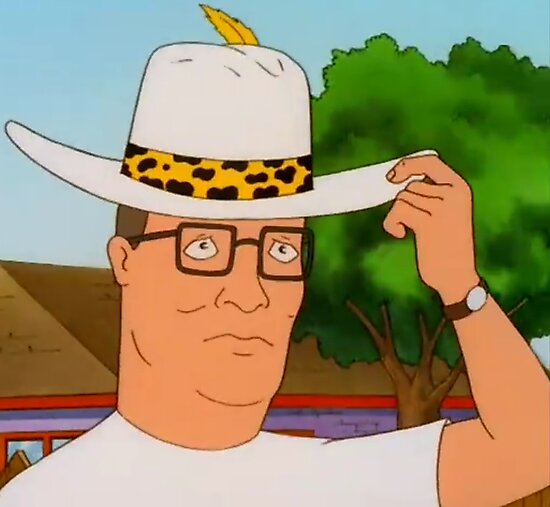
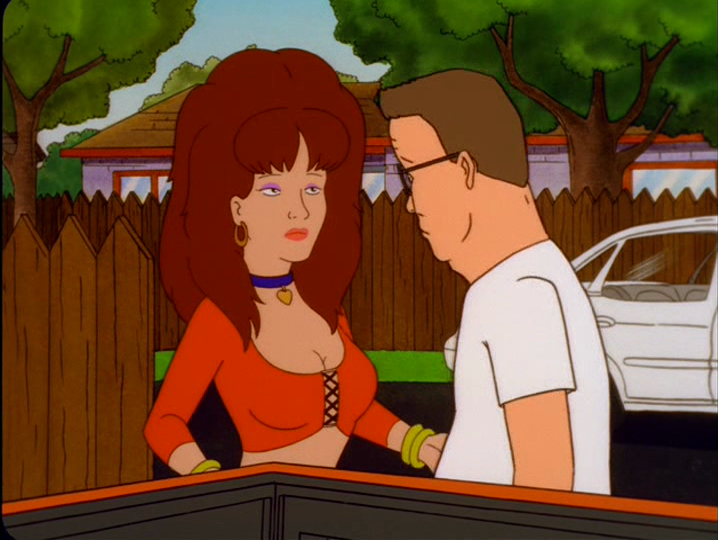
While I don’t deny Hank Hill’s passion for propane and propane accessories, I would also make the argument that the same skills with which he does that job so well also makes him perfectly suited for another job, namely that of a pimp. As it just so happens, it’s a job he briefly did in Season 5, Episode 13, “Ho Yeah!

Granted, he did that job unknowingly, as Hank can be laughably oblivious at times, but that one episode has always been a personal favorite of mine. In watching it multiple times, it convinced me of something. Hank Hill, armed with the same skills that help him sell propane and propane accessories, would make the perfect pimp.

I know the popular image of pimps is mixed, at best. Some that has more to do with the illegality of prostitution, which I’ve talked about before, but it’s the world’s oldest profession for a reason. Where there are prostitutes, there are also people who manage them. Call them what you want. Pimp just happens to be the most comprehensive in a modern context.

Setting aside the legality of prostitution and the less-than-respectable behavior associated with pimps, I contend that Hank would be able to navigate the world of prostitution and pimping better than almost anyone, fictional or otherwise. He would set a gold standard in how to succeed in this lurid industry in all the right ways for all the right reasons.

What follows are six reasons that I believe prove that Hank Hill would make the perfect pimp. Having seen every episode of “King of the Hill” and researched the sex industry, I’ll try to make my points as effectively as possible. In the spirit of Hank’s dedication to getting the job done, I can do no less.


Reason #1: He Makes Customer Satisfaction A Top Priority
In the context of prostitution, customer satisfaction may seem like an afterthought and for good reason. It’s a service that involves providing intimacy and pleasure to a client in one of the most basic ways possible. Aside from connecting prostitutes with clients, how can a pimp affect this?

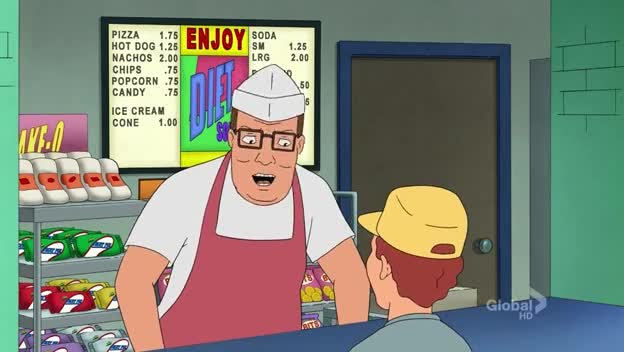
This is where Hank’s unceasing dedication to customer service comes in. Throughout many episodes in “King of the Hill,” he puts satisfying the customer first. His approach is simple. If the customer is satisfied, then both the products and the business take care of themselves.

This is wonderfully demonstrated in Season 7, Episode 16, “The Miseducation of Bobby Hill” in which Hank’s customer-oriented sales tactics win out over the less scrupulous approach that Bobby tried. As is often the case, Hank emphasizes doing things the right way and not in the way that’s most expedient.

As a pimp, Hank would definitely emphasis this for those working for him. Just as he tried to do with Bobby, he would preach customer satisfaction over money or expediency. He would tell them not to do the bare minimum. He believes in making sure customers are fully satisfied with their service and then some.

That kind of satisfaction breeds customer loyalty. In any industry, including prostitution, a loyal customer base goes a long way towards success. It’s why companies like Apple can get away with charging extra for their products. They’ve earned their consumer’s loyalty. For Hank, that loyalty is often more valuable than money.


Reason #2: He Commands Loyalty For The Right Reasons
This builds directly off the first reason, but it goes beyond just satisfying the customer. For Hank Hill, loyal customers aren’t just an important component of sales. Loyalty from co-workers and superiors is every bit as important. That loyalty isn’t given to him, either. He earns it, even when the people he works with don’t make it easy for him.

A prostitute working for Hank Hill wouldn’t be expected to give their loyalty by default. He would earn that loyalty by demonstrating how hard he’s willing to work. He would set an example for those around him. That means showing up on time, responding to calls or complaints, and resolving conflicts quickly and effectively.

While the propane industry is very different from the sex industry, I would argue the value of loyalty is much greater in prostitution. One of the key responsibilities of a pimp or manager is to ensure that those around them feel safe, secured, and valued. At no point in any episode of “King of the Hill” does he ever see his fellow employees as cogs in a machine.

He calls people by their first name. He treats them with the same respect that he seeks. For prostitutes, who are more likely to deal with difficult customers than propane salesmen, this kind of dedication is invaluable. They would feel safe and comfortable going to Hank with their issues and feel confident that he could resolve them.

If satisfying the customer is the top priority, then earning the loyalty of employees is a close second. Hank dedicates himself to both. It helped Strickland Propane succeed over the course of 13 seasons. It would serve him well as a pimp.


Reason #3: He Sets High Standards For Employees, Products, And Services
You could accuse Hank Hill a lot of things. He can be uptight, dense, and exceedingly set in his ways. He’ll even get upset when his favorite mower is revamped. However, nobody will ever accuse him of having low standards.

When it comes to his job, Hank sets the bar high for everything. Whether it’s the quality of the grill or the safety of a propane tank, he will never settle for anything sub-standard. Maintaining that quality for both products and services are critical in every industry. Prostitution is no exception.

Hank would not be the kind of pimp who encourages his prostitutes to do the bare minimum. Anyone could get a customer off. He would set his sights higher for both his customers and his prostitutes. He would expect them to go the extra mile with respect to serving the customer and presenting themselves as a competent employee.

He wouldn’t just bark orders, though. In multiple episodes, Hank is shown doing everything from polishing propane tanks to arranging the grills. For his prostitutes, he would make sure that their clothes, their makeup, and whatever accessories they might use are of the highest quality. He would not settle for trashy or dirty. That would be like selling a rusty propane tank.

I imagine some of the prostitutes would be annoyed by such standards, but those who take it seriously would reap the benefits. Those who don’t abide by those standards would either be let go or would never work with him in the first place. Hank is not one to just tell people the right way to do things. He lets the results speak for themselves and most of the time, they prove him right.


Reason #4: He Dedicated Himself To His Work And Maintains A Working Knowledge Of Everything It Involves
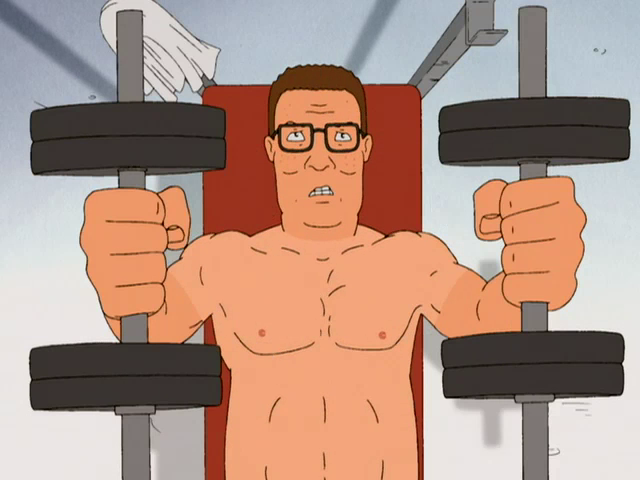
To succeed in any industry, it helps to have in-depth knowledge of it. When it comes to propane, you won’t find many people who are as knowledgeable or informed as Hank Hill. He knows propane and propane accessories. It’s not just facts and details, either. His face lights up whenever people talk about it. When something happens in the propane world, he knows about it.

That kind of dedication is just as important in sex work. Most people know how sex works in the same way they know how a grill works. However, only someone as knowledgeable as Hank understands the nuts and bolts to it all. Imagine if someone had the same working knowledge of sex work as Hank does with propane. That kind of expertise would go a long way.

As a pimp truly dedicated to his craft, Hank would understand the workings of successful sex work the same way he does with grills. He would know the difference between an effective tool and a trendy gimmick. For the prostitutes and the clients they serve, it would maintain those high standards he sets.

Beyond just knowing his trade, Hank would go out of his way to educate others. In the show, he never misses an opportunity to tell someone about propane. As a pimp, he would never hesitate to tell an aspiring prostitute how to do their job well. Like any profession, people may think they know what it entails, but someone like Hank would be able to help them see the forest from the trees.


Reason #5: He Treats His Employees Fairly And Goes Out Of His Way To Support Them
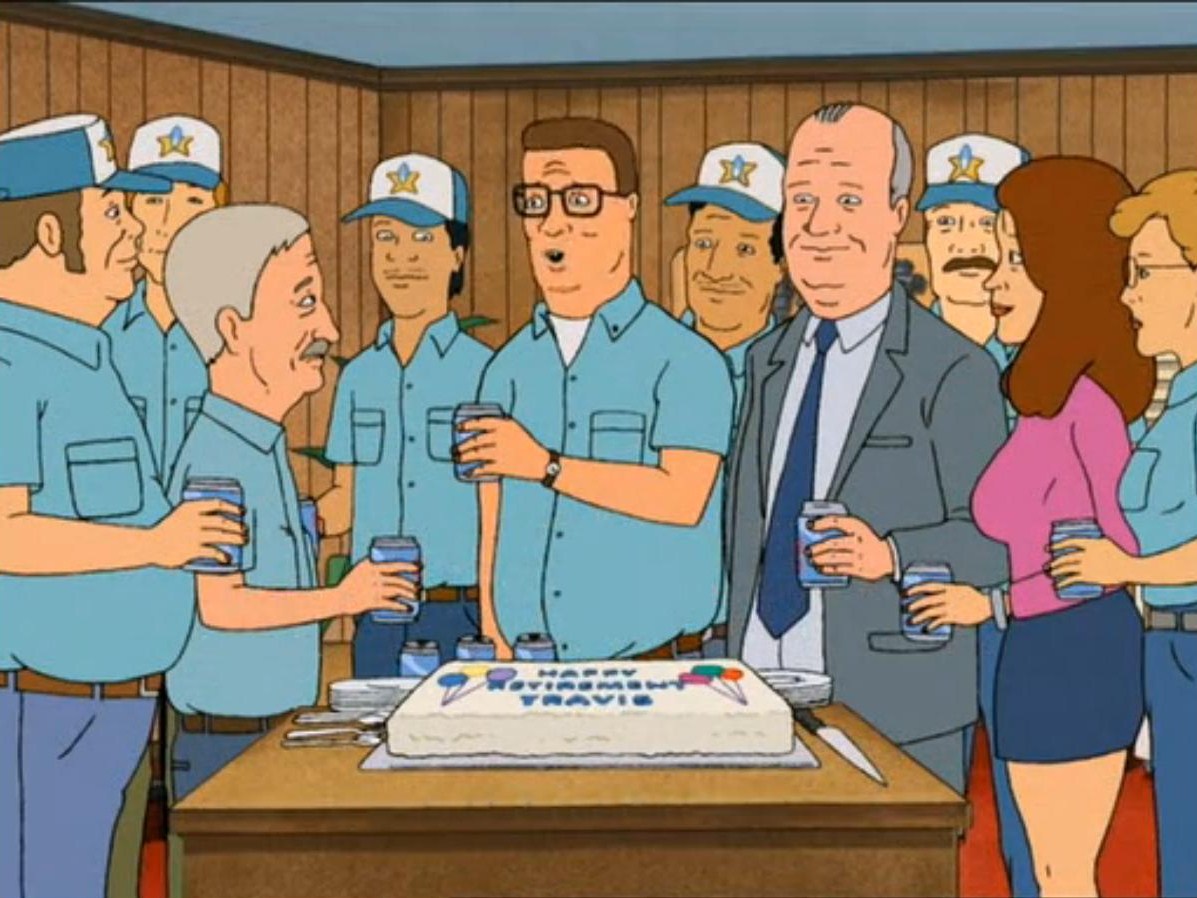
Throughout the course of “King of the Hill,” the employees of Strickland Propane rarely change. While most of them are background characters, some distinguish themselves more than others. Some episodes focus entirely on Hank helping them deal with their issues, even when it doesn’t involve their work.

That’s because, as I noted earlier, Hank doesn’t see his employees as cogs in a machine. He treats them like human beings. If they have an issue, he’ll help them as best he can. He’s always honest, transparent, and genuine with them.

Those practices are even more effective as a pimp. Prostitution is an intimate business, in more ways than one. They’re selling more than just a product. They’re selling an experience. Having someone like Hank, who supports them and treats them fairly, would go a long way towards helping them deliver that experience.

Beyond just being there for them, Hank is also someone who understands that work life is work life and personal life is none of his business. He’s not the kind of person who micromanages his employees when they’re off the clock. In fact, he sets clear and unambiguous boundaries about what constitutes work and what constitutes personal affairs.

In an industry where pimps have been known to micromanage prostitutes to an egregious extent, Hank Hill would offer the perfect balance. He would give prostitutes an ability to separate their life as a sex worker from the personal life they’re trying to build. For those looking for a job and not wanting it to define them, this would set Hank apart from other pimps in the best possible way.


Reason #6: He’s Willing To Kick An Ass When It Needs To Be Kicked

I don’t think I need to make an elaborate argument for this reason. Hank Hill’s ability and willingness to kick ass is well documented throughout the show. Generally, he avoids confrontations, but he will kick an ass when it needs to be kicked. He even proved that in “Ho Yeah!” when he took on another pimp who dared to challenge him. Needlessly to say, Hank won.

As dedicated as Hank is to serving customers and helping employees, he has a limit to how much bullshit he’ll endure. If someone dares cross a certain threshold, he won’t hesitate to respond. If someone disrespects one of his prostitutes or even his loyal customers, he won’t hold back. He’ll kick all the asses that need kicking.

For his prostitutes, it only deepens that loyalty he so values. Even other clients could appreciate that. Hank Hill may be uptight and uncompromising, but he doesn’t give a pass to people who cross lines that shouldn’t be crossed. He will kick ass and he’ll make sure he kicks the right ones.


There are probably many other reasons why Hank Hill would make a great pimp. If you have a few I didn’t mention, please share them in the comments. Hank is a great character and “King of the Hill” did plenty to show why he’s so compelling.

Even though his pimping potential may never be realized, but even Tammi, the secret prostitute at the center of the “Ho Yeah!” episode, told him outright that he would be a great pimp. I just don’t think she realized how right she was.

Leave a comment

Filed under King of the Hill, sex in society, sexuality

Helga Pataki: Profile Of A Tragic Love Story (From A 90s Kids Cartoon)

heyarnold2

I was lucky to be a kid in the 1990s. Talk to most people my age and they’ll agree. The 1990s was a golden age for cartoons. That may seem somewhat egocentric, but I’ve yet to hear a convincing counter-argument. This was the era that brought us the animated classes for “X-Men,” “Batman,” “Daria,” “Animaniacs,” and so much more.

As a kid during that era, there were many great shows that I still hold dear to my heart. I’ve mentioned a few of them in the past. A few of these shows hold up, even by today’s standards. I contend that the “Batman” animated series only gets better with age. One show, however, has taken on a very different meaning over the years the air and, being an aspiring romance writer, it still resonates with me.

That show is “Hey Arnold!” and for most cartoon-loving kids in the 1990s, this was one of the best shows that didn’t involve talking babies. It was a unique show that followed a diverse cast of characters, each with their own unique connection to the titular Arnold. By almost any measure, Arnold was a lovable, relateable idealist who you just can’t help but root for.

How can you not love that football shaped head?

He’s loyal, altruistic, friendly, compassionate, and empathetic. Even as a 4th grader, he’s the kind of kid you want to be friends with. He’ll go to bat for you. He’ll stand by you when the chips are down. When the whole world around him is wrong, he’ll stand for what’s right. Whether it’s the 90s or today, there’s a lot to like about a character like that.

However, the best part of “Hey Arnold!” isn’t how inherently likable Arnold is. In fact, one of the most endearing sub-plots of the show is built around a character who, on paper, couldn’t be more different. That character is Helga Pataki, the short-tempered, overly hostile, overly dramatic girl who often threatens others with her fists.

She’s also secretly in love with Arnold. It’s not just a childish crush, either. She’s really in love with Arnold.

When I watched this show as a kid, I thought that crush was kind of odd. It’s not that I didn’t care for romantic sub-plots. Even as a kid, I enjoyed romance, even in cartoons. It was one of the reasons I loved the 90s Marvel cartoons so much. I just didn’t understand the romance in “Hey Arnold!” Then, when I watched it with a more refined perspective, it gained a whole new context.

In essence, the love story of Helga and Arnold is built around tragedy, but somehow manages to feel sincere and genuine. It’s a love story that initially comes off as obsessive and unhealthy. However, as we learn more about each character, they gain more complexity. With each subsequent refinement, it becomes clear just how much these two complement each other.

It’s worth reiterating that this is a kids show from the 1990s. Things like tragedy, romance, and chemistry are things that usually don’t fit into a show within the pre-Spongebob Nickelodeon era. Even within those limitations, the complicated love story between Helga and Arnold is surprisingly mature.

To appreciate the depth of that story, it’s necessary to understand some of Helga’s story. Even by the skewed standards of a kids cartoon, it’s pretty sad. Helga does not come from a nurturing, supportive environment. Her parents are a wreck. Her father is a self-centered blowhard who cares more about his business than his family. Her mother is a dazed alcoholic who always seems hung over.

Then, there’s her older sister, Olga. She’s basically the perfect daughter who sucks up all the attention in her family. She’s sweet, successful, kind, and an overachiever. She sets the bar so high that Helga has no chance of ever matching it, so she doesn’t even try. As such, her parents barely notice her. Her father often forgets her name. Most of the time, she just calls her “the girl.”

This pretty much sums it up.

This is not a happy home life for anyone, let a lone a 4th grade kid. Nobody pays attention to her. Nobody shows her any semblance of affection or love. Nobody is even nice to her. Then, she meets Arnold. He’s the first person to show her real, sincere kindness. It’s not out of pity, either. That’s just the kind of person Arnold is. Naturally, it makes an impression.

It’s a tragic foundation for any love story, but it’s one that isn’t fully fleshed out until later seasons. If there’s one episode that defines Helga’s character, it’s Season 4, Episode 78, entitled “Helga on the Couch.” This is the episode that lays bare just how tragic her life was and still is. It also puts all the obsessive feelings she has for Arnold into a larger context.

It’s almost disturbing how sad things were for her. As early as pre-school, we see just how neglected she was. We also see just how big an influence Arnold was for her at that moment.

Again, it’s worth reiterating that this is a kids show. If there were a story about a pre-school kid who was that neglected by her family, it would make headlines and stir plenty of outrage on social media. However, “Hey Arnold!” managed to make this distressing story feel genuine and heartfelt.

The romance isn’t entirely one-sided, either. In the early seasons of the show, Arnold mostly saw Helga as his bully. He rarely saw her as anything more than that. However, as the show went on, he starts noticing her complexities. He even manages to get through her tough, hostile exterior on a few occasions.

While there are more than a few occasions when she comes close to confessing her feelings for him, it’s not until the series finale/movie that they actually become an item, at least as much as a couple of 4th graders can be. The way they go about is part of what makes the romance feel genuine.

It doesn’t just revolve around Helga finally coming clean. Without getting too heavy into spoilers, Arnold gets to see first-hand just how far Helga is willing to go for him. She shows him with her actions how much she cares. It’s not something she could ever put into words and not just because she’s a kid. Remember, she comes from a home where she never got a shred of affection from anyone.

This moment, which was a culmination of many hints and sub-plots that developed over many seasons, is incredibly cathartic. Even my inner 90s kid could appreciate it. It effectively completed a journey that started with the first episode. Helga starts off as this obsessive, stalker-like bully. Then, over time, we understand why she feels the way she does and why Arnold reacts to it so strongly.

It’s still tragic on many levels. As a foundation for romance, Helga and Arnold don’t start off on the right foot. This is a relationship that could’ve easily become a one-sided affair that quickly devolved into stalking. Somehow, “Hey Arnold!” managed to make it work. It even managed to make it feel sweet.

The fact that such a complicated, yet genuine romance could manifest in a kids show is further evidence that the 1990s truly was a golden age for cartoons. For that reason, and many others, “Hey Arnold!” and the unique love story it told will have a special place in my heart.

3 Comments

Filed under romance, television