Here in the United States of America, it’s often celebrated as the unofficial start of summer. The school year is ending for most kids. Pools, beaches, and theme parks are opening full-time. And most start planning ambitious vacations.
But the true heart of this day has always been about military veterans and honoring their service. As someone who has multiple relatives who served, as well as grandparents who fought in major wars, it’s certainly a day worth cherishing.
Whether they serve in the army, navy, marines, air force, or coast guard, the demands we put on them are high. And the debt we, as a country, incur for their service is far higher. And sadly, we don’t always honor those debts as well as we should.
There’s certainly a larger discussion to be had about how we treat and care for our veterans, especially those who have suffered serious injury from their service. But today, let’s take a moment to simply acknowledge and thank these remarkable individuals for what they do.
They chose to serve their country.
They chose to put their bodies, their minds, and their hearts on the line for others.
They committed themselves to a standard and an idea that embodies the best this country has to offer.
Let’s celebrate them. Let’s honor them.
If you can, please consider donating to a major military charity. Or volunteer to assist a veteran or organization.
They gave all of themselves to this country so that we could continue to survive and prosper. Let’s use today to return the favor.
As I’m writing this, a great many school-age kids in middle school and high school are anxious for summer to begin. For many school districts in the United State, the end of the school year is in sight. It no longer seems so far away and so out of reach. I imagine many are already counting down the days until that magical moment when the final bell rings and school is out for the summer.
I know that wait can be agonizing, at times.
I have not forgotten the elation I often felt on the last day of school
But before any students get to that wondrous moment, they have one last obstacle to face. It involves the last round of standardized tests and exam. It may vary from district to district, but this is usually the time of year when most students take the SATs, AP and IP exams, or a general final exam for each class. They are often among the most difficult and stressful tests of the entire year. I haven’t forgotten how hard they were, either. And while I’ve already made my opinions on standardized testing clear, I’d like to use this moment to share another insight.
Back in high school, I took a number of AP exams during this time of year. And towards my junior and senior year, I also took final exams that often required much more studying than your standard quiz. I took many similar exams in college, but most of those varied in that they didn’t rely entirely on scantron sheets and multiple-choice tests. To date, it was those major exams towards the end of high school that ended up being the hardest test I ever took.
I vividly remember staying up late at night during the days leading up to the test, often going over page after page of notes that weren’t always well-organized. I also remember reading over textbooks again and again, but still struggling to remember key points. It resulted in many restless nights. On the nights before tests, I often laid awake in my bed, going over notes and concepts that I knew I had to remember for the exam the next day.
It was not healthy. I can’t overstate how stressful this was for me.
Even though I ended up passing and even acing some of these exams, the work I had to put in just didn’t feel worth it. And in the grand scheme of things, I don’t feel like all that studying helped me actually learn the concept. Even if I passed or aced the exam, I genuinely can’t remember any helpful knowledge coming from it.
However, this harrowing experience did have one important impact. But I wouldn’t feel it until I graduated college and started working in the real world.
Looking back on all the jobs I’ve had since college, including the ones I found really terrible, I don’t think I’ve ever been as stressed or as anxious as I was when studying or taking those tests. That’s not to say all the jobs I’ve had were easy, by comparison. They certainly weren’t. I’ve had a number of jobs over the years in which I’ve come home feeling sore, drained, and miserable. But even on my busiest days at those jobs, I still didn’t feel nearly as stressed.
And I think that’s an important perspective to share because I imagine there are a lot of young people right now worrying about what the adult world has in store for them. Their only real experience with hard work and stress comes from school. They’re constantly told by teachers, counselors, and administrators that the work their doing now is critical. And it’s meant to prepare them for the much harder work they’ll face in college or the adult world.
If someone out there has been telling you that, I’ve got an important message for you.
Unless you plan on being a doctor or lawyer or a sweatshop laborer, that’s not accurate. That’s just administrators trying to get you to work harder so that you’ll get better grades, which consequently makes them look better. The truth is never that simplistic. And you often don’t find that out until much later in life and after some significant life experience.
But even if you don’t have that experience, you can still maintain a better perspective than I ever did when I was young. I made the mistake of treating every major exam like a defining moment in my life. I genuinely believed that if I didn’t ace every test, my life would fall apart and I would fail at everything moving forward. I also believed that each passing year would get harder and harder. Eventually, I’d have to spend every waking hour studying or working, never having time to enjoy my life. Again, it was not healthy. I did real harm to my mental health by thinking that.
I eventually had to learn that both college and the adult world don’t have to be this never-ending toil of joyless rigor. Once you have some agency and guidance, you can chart your own path. Yes, you’ll still have to work. And yes, you’ll still have to struggle at times. But it’s not nearly as arduous as these exams and the teachers who give them make them out to be. In time, they will be a small sliver of a much richer life.
To date, I don’t think I’ve ever worked as hard or been as stressed out as I was when taking my high school exams from this time of year. Every job I’ve had came with challenges. But rising to those challenges never felt so tedious and arduous. On top of that, I actually got paid for that effort. That definitely took some of the stress out of it. And even in the worst jobs I’ve had, there was a general structure and logic to it all. I knew what I had to do and why. Whereas with school, it was just a matter of doing what the teachers said and getting the grades they said you needed to get.
Time, life experiences, and the benefit of hindsight has helped me see those exams for what they were. As agonizing as they were, a part of me is grateful that they hardened me to the rigors of hard work and stressful nights. Compared to my last few years of high school, every job I’ve had has been less stressful and more manageable. That helped make navigating the adult world easier in the long run.
Even so, I wouldn’t wish that kind of stress on anyone. And I sincerely hope anyone reading this who’s still in school can gain some insight from what I’ve shared.
I know it’s still so overwhelming, having the end of the school year be so close, yet having to navigate final exams.
I know it seems like your entire life revolves around school and these tests, at the moment.
I only ask that you take a step back and appreciate that these challenges will help make you stronger in the long run. You need not fear what comes next. Because if you can survive high school even slightly better than I did, then I promise you’re already strong enough to build a brighter future for yourself in the years to come.
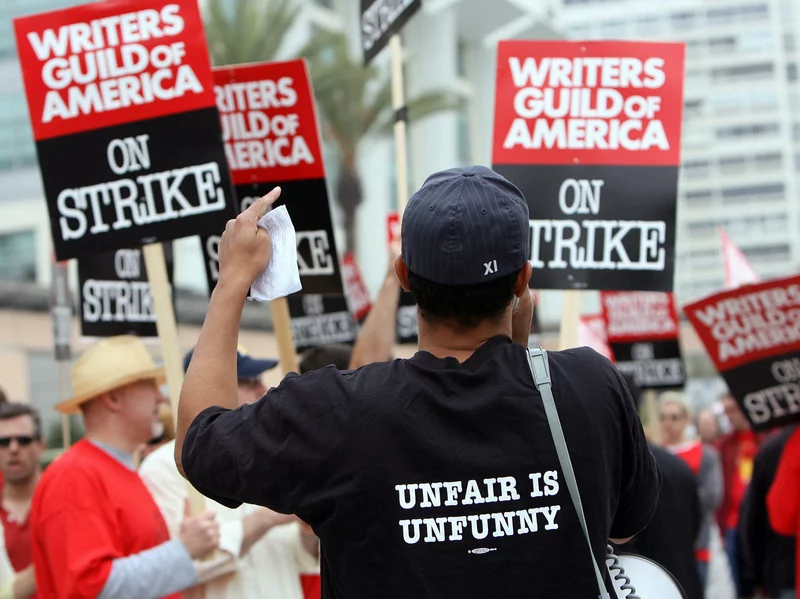
Back in late 2007, there was a three-month strike between the major studios of Hollywood and the Writer’s Guild of America (WGA), the largest labor union representing professional writers working in the entertainment industry. That strike was one of the most disruptive forces to hit the industry in decades. Like many other labor strikes, much of the issue came down to money. MOst of it came down to how much writers were getting paid in residuals for things like DVD sales and other emerging distribution channels.
Even though the dispute was resolved, there were major effects on various shows and movies. If you want to know why there were so many reality TV shows that emerged in the late 2000s, this is a major factor. Shows that don’t employ elaborate stories or scripted content don’t have to pay a large writing staff. That means more profits for the studios and the executives.
As someone who tends to despise reality TV, I hated this trend.
And to those who watched those shows and continue to do so, just know that the situation we now find ourselves in with respect to entertainment is largely because of you.
Flash forward to today and the WGA has gone on strike again. Now, I’m sure most peoples’ primary concern is whether or not this will affect their favorite shows. As someone who loves binging non-reality TV shows, I admit that is a concern for me too. However, even if your favorite shows end up affected, do not cast the blame on the writers. That’s like blaming the miners who get trapped in a mine and not the corrupt executives who skimped on safety.
This latest strike promises to be different compared to what happened in 2007. A lot has changed in the entertainment industry since then, even before the impact of the COVID-19 pandemic. Now, residual revenue for DVD sales is less a concern because fewer consumers are buying DVDs. So much of everything has gone to streaming now and that’s seriously impacting writers’ ability to make a living from their craft.
On top of that, there’s the emergence of AI chatbots like ChatGPT that could potentially undermine writers even more by allowing studios to basically let AI fill in rather than paying another writer. And anyone who knows anything about how most industries operates, including entertainment, understands that if executives can increase profits by squeezing out workers, they’ll do it. And they usually won’t hesitate because the financial incentives are just too strong.
This, more than anything, is why we the consumers should side with the WGA. Even if it means your favorite shows get delayed, this is one labor struggle that goes beyond just pay disputes. Writers in entertainment weren’t making much beforehand. I’ve even heard a few jokes online among the comic publishing crowd that certain comic writers, especially those who independently publish, make more money than some of the writers on major shows and movies.
And it’s set to get worse and many studios are seeking to treat their writers like gig workers. Instead of employing a consistent, stable writing staff that knows each other and understands the product, studios think they can just hire a few freelancers, pay them less, and get a product that’ll still be watched by fans. And since these writers won’t have rights to residuals or copyrights, then the studio can keep more of the profits.
This should concern you, the consume. Because if the entertainment industry is screwing skilled writers out of money, then that will eventually affect the quality of every show and movie you see. If you think things are bland now with every major studios just milking established franchises to death, I promise it’ll get worse if they squeeze out talented writers.
Great writing is how underrated shows like “Arcane” can somehow find an audience.
Great writing is how movies like “Puss in Boots: The Last Wish” can end up being way better than anyone thought it could be.
As someone who still aspires to be a good writer one day, I may have some bias when it comes to who I side with in an issue like this. But if you’re a consumer of entertainment that doesn’t suck, or just don’t want to go through another glut of reality TV again, it’s in your interest to side with the WGA.
They work hard to entertain us.
They work hard to enchant, inspire, and enlighten us.
That’s not something you can reduce to gig work. That deserves both our respect, as well as fair compensation for their labor.
This is another video from my YouTube channel, Jack’s World. This video explores the tragic, but unique love story between Helga and Arnold in the classic 90s animated series, Hey Arnold! It’s a story that started off as a strange obsession between a girl and a boy with a football-shaped head. But over the course of the series, it became so much more. Enjoy!
This is another video from my YouTube channel, Jack’s World. This video is a thought experiment about capitalism. Specifically, it challenges us to contemplate alternatives that we could actually implement in the real world. Given the current trends in politics, which either glorify or villainize capitalism, I think this sort of idea is increasingly relevant. And it’s something we should contemplate seriously as technology, society, and the world continues to change. Enjoy!
I’ve been reading comic books all my life. A good chunk of those comics are superhero comics. And a good chunk of those superhero comics are X-Men comics. I’ve made no secret of this on this website or my YouTube channel. So, I hope my love of comics, superheroes, and X-Men should be beyond dispute.
That’s why I find it so disturbing when something happens in the real world that is dangerously similar to what I’ve read in so many comics. I used to think in my youthful innocence that people in the real world could never be as evil, heartless, or cruel as the villains I saw in comics. In general, I had a high opinion of people in the real world. Sure, there were assholes here and there. But most were good and most at least try to do good.
That opinion has since been shattered on multiple occasions, but nothing has shattered it more than the current state of politics.
Now, I don’t want to go off on a long rant about how divided people are politically and how toxic political discussions have become. I already did enough of that duringmajorelections. I’ll just note that most of the political figures, be they elected officials or media personalities, who sound like villains are coming from one particular part of the political spectrum.
I won’t even bother being tactful. That villainous rhetoric is coming almost exclusively from conservative republicans in the United States, especially those who identify as being religious or sympathetic to the causes of Christian Nationalists.
These are the people who are pushing for laws and policies that do the sorts of things that X-Men villains seek to do. They actively try to marginalize vulnerable minorities, especially those within the LGBTQ+ community. They spew hate, bigotry, and ignorance of these people. They call them horrible names and constantly accuse them of grooming children, despite the fact that children are far more vulnerable to abuses in churches. They haven’t yet unleashed killer robot sentinels against these communities, but I don’t doubt for a second that they would if they had access to them.
It’s been especially bad for the transgender community. They’ve become some of the biggest targets of this particular wing of villainous politics. A decade ago, conservative republicans at least tried to cloak their opposition. They didn’t show outward hatred to people they hated or didn’t agree with. But after 2016, the masks are coming off.
They don’t seem to be trying to hide it anymore. They hate transgender people. They hate the LGBTQ+ community. They hate anyone who isn’t on their team and will do anything they can to marginalize, hurt, or denigrate them. In Florida, which has become immersed in petty right-wing political discourse, it has gotten especially bad. It’s gotten to the point where a real-life republican has actually cited X-Men to justify his bigotry in support of an anti-trans bill.
I wish this were a side-plot in an X-Men comic. But unfortunately, this is real. Here’s what Vice reported.
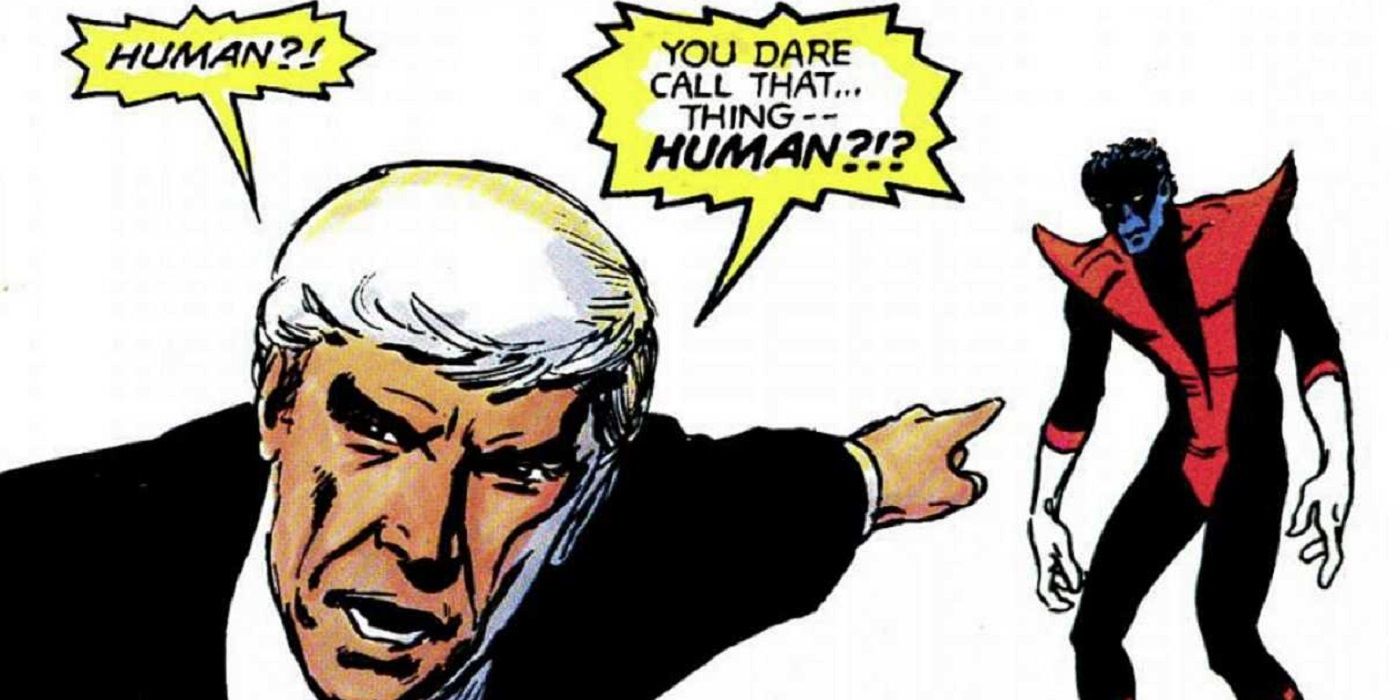
A Republican lawmaker in Florida called transgender people “mutants and imps” on Monday in an anti-trans rant that appeared to almost imitate vitriolic lines from X-Men movies.
Florida Rep. Webster Barnaby shared anti-trans views at the state capitol while lawmakers deliberated House Bill 1521, a piece of legislation that would criminalize trans people for using public bathrooms that don’t correspond to their sex assigned at birth.
“I’m looking at society today and it’s like I’m watching an X-Men movie,” Barnaby said at the start of his speech.
“It’s like we have mutants living among us on planet earth,” Barnaby continued. “That’s a fact: we have people that live among us today on Planet Earth that are happy to display themselves as if they were mutants from another planet.”
Now, to be fair, Representative Barnaby has come out and apologized for his remarks. In general, I try to be a forgiving and understanding guy.
However, I can only be so forgiving to people who talk like supervillains.
Seriously, fuck this guy. Fuck you, Representative Webster.
In case you don’t understand why his sentiments were so villainous, here’s a quick reminder of what the X-Men stand for.
They are outcasts.
They are freaks.
They are subject to hate, fear, discrimination, and mistrust.
Despite all this, they try to be heroes. But the villains they often face involve humans who either want to wipe them out completely or make their lives objectively worse on every level.
This asshole, who clearly knows what the X-Men are, didn’t seem to grasp that. He might have seen the first X-Men movie and thought it was a tragedy about a brave senator who tried to pass Draconian laws on an entire class of people. Now, he wants to do the same to transgender people, but it will not stop with them.
We’ve already seen this script play out before. It’s happening as we speak with abortion. It’ll keep happening as long as the people in power believe they can get away with it, keep their jobs, and earn money from their doners, who are often villains in their own right.
People like Representative Webster aren’t going to stop with bullshit policies like this. They won’t stop for the same reason the X-Men’s villains never stop. They believe they can get away with it. They believe they’ll get more power, money, and prestige out of it. Some may very well just be hateful assholes who just want to make people they don’t like suffer.
Those people exist.
I’ve had to deal with them.
But unlike the X-Men’s villains, these people are real. They’ll continue doing whatever they think they can get away with, either out of malice, spite, or just plain ignorance. And we can’t expect superheroes to come along and save us. These are villains we’ll have to deal with.
It’s not as easy or cinematic as Wolverine cutting up a Sentinel attacking the Xavier Institute. But it’s something we all need to be aware of. Because the alternative is letting the villains win in the long run. And take it from someone who has read enough comics about dark timelines and dystopian futures.
This is another video from my YouTube channel, Jack’s World. This video essay is an exploration of what makes something truly Orwellian. It’s a term that gets thrown around a lot in political circles these days. But those who use it have likely not read any of Orwell’s work and don’t fully understand the larger message of 1984. I attempt to break down that message and apply it to the larger idea of what makes something truly Orwellian. Enjoy!
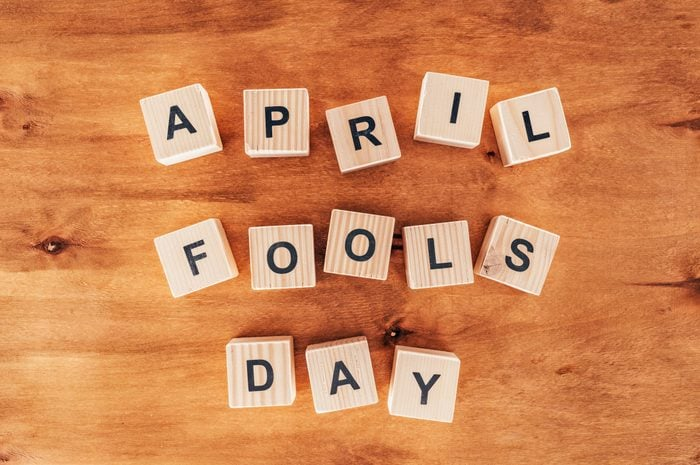
So, to all those who take that sort of thing serious, Happy April Fools Day!
To everyone else, I have another message.
Let’s end this bullshit excuse for a holiday.
Yes, I understand there’s a history behind it. And yes, I understand that there’s a time and a place for a good prank. I have a sense of humor. I love to laugh as much as anyone else. But April Fools Day, as a holiday and a concept, just doesn’t work anymore.
This sentiment is fairly new for me. I didn’t used to have an opinion on April Fools Day. That has changed in the past few years and not just because of the COVID-19 pandemic. It’s not because was the victim of a nasty prank or because I know anyone who gets way too into it. This is just a conclusion I’ve come to after living on this planet long enough and being on the internet long enough to understand the dangers of human stupidity.
If it sounds like bitter musings from someone who is getting older than he cares to admit, I promise that’s not an overriding factor here. There are plenty of idiots on this planet and you don’t have to look hard to find hilarious examples of their idiocy. They’re the entire reason why the Darwin Award exists. And they don’t restrict their antics to a single day.
Thanks to the internet, we can easily look up and follow the fools of this world and all their stupidity fueled mishaps whenever we want. In years past, that wasn’t as easy. And celebrating our foolish side made sense to some extent. Some people do need to remind themselves that there’s humor in this world and it’s okay to laugh at yourself.
But these are different times. This is an era in which mind-numbingly stupid individuals can use the internet to actually influence people. Between flat-Earthers and creationists, idiots and fools aren’t just documenting how stupid they are. They’re actively trying to entice people to join them in being idiots with them. And at a time when we’re so divided politically and socially that we can’t even agree on objective reality, that’s not just foolish. That’s dangerous.
We’ve seen what happens when large groups of idiots buy into a stupid lie. The internet and news cycles have made it frustratingly easy to spread those stupid lies. This kind of foolishness isn’t funny. It actually causes real damage, both to our political discourse and to actual people.
There’s still a time for jokes, pranks, and general foolishness. I’m all in favor of people not taking themselves too seriously. But we already have way too many people who fall for fake headlines from the Onion. We don’t need to celebrate that once a year.
Again, I wish those who take it seriously a very Happy April Fools Day.
From the outside, it looks like a typical McDonald’s. It has the same aesthetics and architecture that have become so iconic. But inside, there are none of the usual fast-food workers. There are just rows of kiosks and a conveyer belt. Once you place your order, it’s automatically prepared behind the scenes in the kitchen. Then, when it’s ready, it’s bagged and wheeled out to you.
When it’s working optimally, you never have to interact with another human being. Whether you consider that a good or bad thing is entirely up to you, but that’s the ideal. As for how it handles orders that aren’t properly bagged, food that isn’t properly cooked, or drinks that aren’t properly prepared, that’s not yet clear.
This isn’t intended to be the start of a massive effort to automate every McDonald’s restaurant. It’s largely a test to see just how much a standard fast food restaurant can be automated.
As someone who’s first paying job was in fast food, I have some mixed feelings about this.
On one hand, I welcome this kind of automation. I remember what it was like working at these restaurants. The pay was awful. The conditions sucked. And you had to regularly clean up messes that made you want to throw up.
On the other, this is an undeniable sign that automation is accelerating and the low-skilled jobs that many people rely on might become less and less available in the coming years. And for those who really need a job, even if it’s a lousy, low-paying job, that could be seriously detrimental to large swaths of people.
In terms of the bigger picture, I think this is a much larger story than people realize. Automation has been a popular talking point for years now. I’ve certainly touched on it. And I think the recent rise of artificial intelligent programs like ChatGPT have really raised the profile of automation, mostly because it revealed that it’s more than just factory jobs that are vulnerable to it.
It might even be because of ChatGPT that this story about McDonald’s flew under the radar. But I honestly think automation in the fast food and restaurant industry could be more disruptive in the short-term than products like ChatGPT.
In the coming years, we might look back at this automated McDonald’s as the first step towards a new trend in automation. People have talked about automating things like fast food for years. Then, the lingering effects of the COVID-19 pandemic and new trends in labor converged to create new incentives.
This is no longer just an idea that exists on paper or in the imaginations of CEO’s fantasizing about not having to pay minimum-wage workers anymore. This restaurant actually exists. People in the Fort Worth area can visit it right now.
Again, it’s not part of an ongoing effort to automate every McDonald’s. If you go to this restaurant, chances are you’ll deal with a system that’s still being refined. There’s probably still people there behind the scenes, monitoring and fixing whatever bugs emerge in the system. There’s a good chance those people are paid much more than minimum wage. There’s also a good chance that this particular McDonald’s isn’t going to be more profitable than those with human workers.
But those are just logistical issues that can be polished, refined, and streamlined. All it takes is time and experience. It’s not unlike the first assembly line or the first 3D-printer. It’s messy and clunky at first, but it steadily becomes more efficient with time and investment.
Eventually, it’ll get to a point where a functional McDonald’s won’t ever need a staff of low-skilled employees anymore. In principle, it would only need one person to be there to make sure the ingredients are re-stocked and the equipment doesn’t break. The company probably wouldn’t even need to pay the person that much. If they’re qualified to work as an unpaid intern in a standard IT department, they’re probably qualified to manage this system.
And if McDonald’s finds a way to make it work, you can expect the competition to catch up quickly. There would just be too much incentive to remove all the low-skilled wage labor as a means of increasing profits. It won’t happen overnight, but one company only needs to succeed once before others copy it.
Fittingly enough, that’s something McDonald’s did before. Their system of fast food was pioneered in the early 1950s and proved so successful that many other competitive, including Burger King and Taco Bell, embraced it. It’s very likely we’ll see something similar play out with automation.
But what does that mean for low-skilled labor, in general?
That’s a relevant question. There’s no way this kind of automation will stop at fast food restaurants. Add AI tools like ChatGPT into the mix and even mid-skill jobs could be at risk.
I don’t claim to know the answer, but I suspect we’re going to see some major upheavals in how we work in the coming years. That’s going to have consequences, good and bad. And I honestly worry that we’re not prepared for the bad consequences in the slightest.
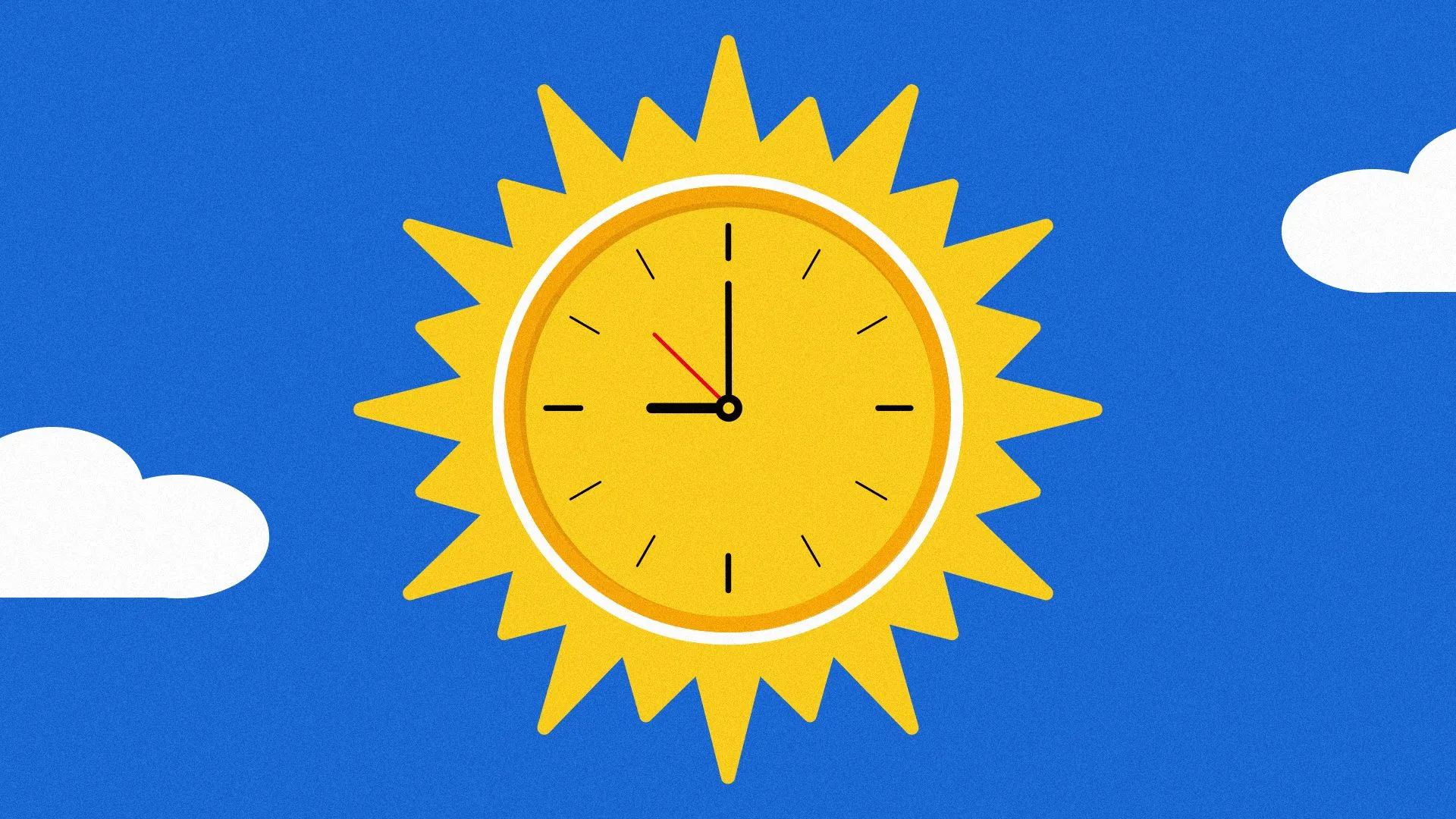
This past weekend marked the continuation of one of the most annoying biannual rituals in America. We once again changed our clocks to adjust for Daylight Savings Time. I understand it’s a practice that most of us have been doing all our lives. We’re so used to it that, for the most part, we see it as a temporary annoyance more than anything else.
But beyond the annoyance, this practice is one of those various things that have no practical use, yet we still continue to do. And the more we do it, the less sense it makes. I know because I’ve tried to explain why we do Daylight Savings Time to people from other countries. Their reactions are usually quite telling. I don’t deny that America has many strange practices and traditions, but Daylight Savings Time is definitely one of the strangest, at least in a contemporary sense.
Now, there was a time when Daylight Savings had a practical use. When it was passed by the United States in 1918, it was actually part of a larger trend among industrialized nations at the time. Canada and various countries in Europe had adopted similar practices for similar reasons. The idea was to adjust clocks so that criticizes had more waking hours in sunlight, which reduced energy consumption. This was also done to coincide sunlight with the standard working schedule that had emerged during that era, which was dominated largely by industrial labor.
Whether Daylight Savings achieved this goal or not, it made some sense at the time. In an era when work and scheduled were much more regimented, it made sense to align these schedules with daylight hours to the greatest extent possible, especially for regions at higher latitudes. However, there’s not much evidence that Daylight Savings time has a tangible benefit in that regard. In some instances, it may even be detrimental.
That alone should be cause enough to consider ending the practice. And people far smarter than me have already made plenty of valid arguments towards ending it. Here’s just one video that nicely lays it out.
Even if you don’t fully agree with all these points, there’s one other I’d like to offer and I think it’s the most important.
Getting rid of Daylight Savings Time would be a solid demonstration that we, as a society, can end practices that no longer make sense and no longer offer any tangible benefits. That, more than anything else, is a good reason to do it.
Beyond the fact that the practice is wildly unpopular, regardless of political leanings, plenty of other countries have decided to end it and have not had many ill effects. They saw that this practice just wasn’t incurring any benefits and maintaining it just made no sense. So, why keep doing it? Why continue a practice that only ever succeeds in annoying or inconveniencing people?
Doing it because it’s just something we’ve always done is not a valid reason. If anything, that’s quite possibly the worst excuse for continuing anything that has no tangible benefit. And in this case, there’s reason to believe it does more harm than good. Ending this practice might make things a little strange during the times of the year when the days are really short or really long, but that’s easier to adapt to because it’s less abrupt and jarring.
Let’s at least prove to ourselves that we can stop or change practices like this. We can end a dumb, outdated, annoying tradition that few care for. It’s not a serious or overly controversial issue. And if we can’t somehow figure out a way to stop, then we have much bigger problems than losing an hour of sleep every spring.






 Jack Fisher's Official Publishing Blog