Tag Archives: writing

The Galbrush Paradox And The Challenge Of Female Characters

rey1

Anyone who’s written anything longer than a haiku will tell you that one of the biggest challenges is coming up with great characters. Stan Lee may make it look easy, but it’s most definitely not. Without great characters, your story might as well be a sandwich without bread. It just can’t function.

I can certainly attest to the challenge of creating great characters. In the eight novels I’ve written, I’ve tried to put as much energy and nuance as possible. Whether it’s Ben Prescott in “Skin Deep” or Mary Ann Scott in “Passion Relapse,” I make a concerted effort to help them stand out for all the right reasons.

In doing so, I have noticed something that’s both distinct and frustrating. It’s something I think every writer, including the Stan Lees and J.K. Rowlings of the world, have noticed at some point. When it comes to creating great characters, there’s a lot of flexibility when it comes to male characters. With female characters, though, there are too many unwritten rules to keep track of.

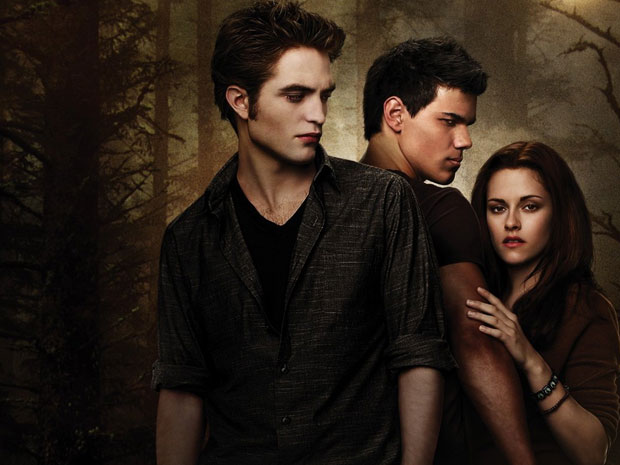
It’s only gotten more frustrating in recent years because the demand for strong female characters has never been greater. The success of movies like “Wonder Woman” and “Mad Max: Fury Road,” as well as novels like “Harry Potter” and “Twilight,” have raised the bar. Make no mistake. There are a lot of incentives to create these characters.

I’ve talked about why characters like Wonder Woman matter now more than ever. However, there’s one caveat that I didn’t mention and for good reason. I think it’s an issue that the William Marstons and Stephanie Meyers of the world understood, albeit indirectly. When it comes to creating female characters, the margin for error is painfully small.

By that, I mean there are a lot of things you can do with a male character that you just can’t do with a female character. Even male minority characters have a lot more flexibility, in terms of what you can put them through. Every character that Samuel L. Jackson has ever played is proof of that.

With female characters, it’s a lot trickier. If you don’t believe me, think back to that disturbing thought experiment I pitched a while back that reversed the genders of certain famous scenes, thereby creating a much more disturbing result. With that in mind, try to craft a story about a flawed, vulnerable character that has the potential to be interesting.

Maybe the character is a former cop who suffered a terrible injury at the hands of a deranged criminal.

Maybe the character is someone who made a huge mistake with a former lover and is haunted by it.

Maybe the character is someone who found themselves in a vulnerable state, had a few too many drinks, and had a messy one-night stand with a total stranger.

These are all fairly standard setups for typical characters. Think about those characters for a second. Chances are the character that comes to mind is a man. That’s not too surprising. That doesn’t make you a terrible sexist who deserves to lick the mud off the shoes of every radical feminist form now until the end of time. By and large, most of the iconic characters in popular culture are male.

Now, try to imagine that same character as a female. Chances are your reaction will be different. Even if it isn’t, there’s a good chance you’ll be more reluctant to develop this character because you know the kind of responses you’ll get from certain people.

Remember that cop who suffered a terrible injury? Well, if that cop is a female, then you’re a horrible misogynistic monster because you subjected that woman to violence and we can’t tolerate that.

Remember that character who made a huge mistake with a former lover? Well, if that character is a female, you’re also a horrible, misogynistic monster because you utterly failed the Bechdal Test by defining her through a relationship with a man.

Remember that character who was vulnerable and had a one-night stand? Well, guess what? You’re also a horrible, misogynistic monster because you overtly sexualized the female character in a way that propagates the idea that women are sexual objects to be used by men.

Are you seeing the pattern here? Are you getting that twinge of pain in your palms while you grind your teeth? Don’t worry. You’re not having a stroke. That’s normal. It also gives you a taste of just how hard/frustrating it is to create good female characters without making it an agenda.

That agenda didn’t used to be that big a deal. Then, in recent years, with the rise of third-wave feminism and social media scandals that have made people hyper-sensitive to sexism, the challenge got that much harder.

That’s not to say there isn’t some merit behind the sentiment. There are only so many Disney Princesses and horny vixens in “James Bond” movies before the narrative gets old, predictable, and outright insulting. Even I think Super Mario has had to rescue Princess Peach way too many times.

The problem is that when people try to create characters that aren’t princesses or Joss Whedon characters, they run into a wall, of sorts. They quickly find that creating those characters is a minefield, one where a single misstep can get you labeled a racist, misogynist, homophobe at a time when a single misworded tweet can ruin your life.

It’s such a frustrating challenge that someone gave it a name. It’s called the Galbrush Paradox and it emerged during the infamous GamerGate scandal in 2014. I won’t get into the particulars of that shit storm, if only because every discussion about that topic tends to lower people’s IQ by at least a dozen points. I’ll just focus on what the Galbrush Paradox is, as defined by its creators.

Do you know why there’s so many white male characters in video games? Especially leads? Because no one cares about them. A white male can be a lecherous drunk. A woman can’t or it’s sexist. Sexualizing women and what all. A white male can be a mentally disturbed soldier who’s mind is unraveling as he walks through the hell of the modern battlefield. A woman can’t or you’re victimizing women and saying they’re all crazy.

Consider Guybrush Threepwood, start of the Monkey Island series. He’s weak, socially awkward, cowardly, kind of a nerd and generally the last person you’d think of to even cabin boy on a pirate ship, let alone captain one. He is abused, verbally and physically, mistreated, shunned, hated and generally made to feel unwanted.

Now let’s say Guybrush was a girl. We’ll call her Galbrush. Galbrush is weak, socially awkward, cowardly, kind of a nerd and generally the last person you’d think of to even cabin boy on a pirate ship, let alone captain one. She is abused, verbally and physically, mistreated, shunned, hated and generally made to feel unwanted.

Now, you might notice that I’ve given the exact same description to both of these characters. But here’s where things deviate. While no one cares if Guybrush takes a pounding for being, for lack of a better term, less than ideal pirate, Galbrush will be presumed to be discriminated against because of her gender. In fact, every hardship she will endure, though exactly the same as the hardships Guybrush endured, will be considered misogyny, rather than someone being ill suited to their desired calling.

And that ending. She goes through ALL that trouble to help, let’s call him Eli Marley, escape the evil clutches of the ghost piratess Le Chuck, it turns out he didn’t even need her help and she even screwed up his plan to thwart Le Chuck. Why, it’d be a slap in the face to every woman who’s ever picked up a controller. Not only is the protagonist inept, but apparently women make lousy villains too!

And that’s why Guybrush exists and Galbrush doesn’t. Men can be comically inept halfwits. Women can’t. Men can be flawed, tragic human beings. Women can’t. And why? Because every single female character reflects all women everywhere.

It’s a fairly new concept, but a relevant one. We’ve already seen it play out in a number of ways in recent years. The best example is probably Rey from “Star Wars: The Force Awakens.”

If you’ve done any digging whatsoever into “Star Wars” beyond seeing the movie and listening to arguments about whether Han shot first, then you’ve probably seen some of the criticisms about her. She’s what some call a “Mary Sue.”

A Mary Sue is a byproduct of the Galbrush Paradox in that she’s a character who’s too perfect. While this character can be a man, it most often takes the shape of a female character who’s so skilled, so beautiful, so perfect that it’s hard to make her interesting.

Rey faced this issue, and for good reason. Throughout “Star Wars: The Force Awakens,” she was perfect at everything she did. She flew the Millennium Falcon, wielded a light sabre, and used the Force as though she’d been doing it all her life. Everything that happened to her just happened so easily. She was never allowed to struggle, suffer, or slip up too much like Finn or Poe Dameron.

I can even understand why. If she had been tortured like Poe or lied like Finn, there would be mass protests and hashtags. A very vocal contingent of fans and professional whiners with nothing better to do would’ve condemned Rey as an affront to women everywhere. Her flaws would’ve been taken as huge insults against an entire gender. If she were a man, though, nobody would’ve batted an eye.

It’s tragic, in a sense, because it shackles characters and stories. It creates self-imposed limits that don’t need to be there. It’s true that there is real sexism in the world. There’s even plenty in movies, especially slasher movies. However, nitpicking every little detail of a female character to ensure sufficient purity, so to speak, is counterproductive. All it does is discourage people from even trying to create these characters in the first place.

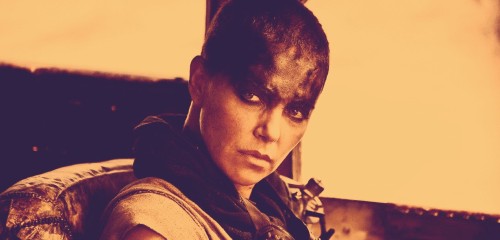
That’s not good for either gender because it is possible to create great female characters. From Furiosa in “Mad Max: Fury Road” to Sarah Conner in “Terminator” to Ripley in “Alien,” there are plenty of great female characters that go onto become iconic in their own right. That’s why it’s so important to avoid the pitfalls of the Galbrush Paradox, otherwise we’ll be doomed to a future of Mary Sues.

20 Comments

Filed under Jack Fisher's Insights

“Rescued Hearts” Update: First Edits Complete And Lessons On Sexy Scenes

If becoming an successful erotica/romance writer is like sex, I like to think I’ve at least gotten to second base at this point. Just writing a sexy novel is hard enough. I’ve written eight so far, which I think counts for something. I’m not saying every one of those novels is an erotica masterpiece on the same level as Jenna Jameson’s tits, but they show I have put the work in. I am that determined to be an erotica/romance writer.

Getting “Passion Relapse” published by Totally Entwined Group was my first taste of the official publishing process. It was a novel experience, to say the least. That experience included no less than three rounds of edits, one of which involved me rewriting an entire chapter. If you’ve read the novel, and you should, you may be able to sense which part got rewritten. It’s a sign of just how far I have to go in this endeavor.

Since “Rescued Hearts” got accepted by Totally Entwined Group, I’m getting another chance at learning the process. While “Rescued Hearts” is a different kind of erotica/romance novel compared to “Passion Relapse,” it still relies heavily on the same elements to make the story sexy.

I say all this because earlier this week, I received the first batch of edits along with my contract by Totally Entwined Group. The edits, this time around, weren’t quite as extensive as the first batch I got with “Passion Relapse.” Some of that counts as progress, but I think most of it has to do with me just being more familiar with Totally Entwined Group’s writing style.

Even so, I managed to complete the edits and send them back. Usually, the first round is the most extensive so getting them done means we’re on track with the release date this October. I expect a few more rounds of edits over the next month or so, but I’ll be surprised if I have to rewrite an entire chapter like I did with “Passion Relapse.”

However, one issue did come up in the first round of edits that also came up with “Passion Relapse.” In both cases, my editor paid extra attention to the sexy parts and often asked me to rewrite them. I get that’s important. This is an erotica/romance novel. People read it for the sex appeal and not the pretty dots on the page.

This being my second published novel, though, I think I need to put more work into making my sexy scenes a bit sexier. One of the problems I had during the edits with “Passion Relapse” was that I got too detailed about the wrong things. That’s exactly as lurid as it sounds.

My editor often remarked how those scenes often had me describing the movements of body parts, as though they operated on their own. That really took away from the actual actions and sentiments of the characters involved. That makes sense. You can’t treat a character’s body as though it’s separate from the story. We save those kinds of disoriented narratives for rip-offs of “The Matrix.”

I was mindful of that when I wrote “Rescued Hearts.” I tried to make sure that I didn’t separate characters from body parts too much. This time, though, my editor also pointed out certain scenes that just weren’t sexy enough. I described what characters did, but not in an overly sexy sort of way. Given that this is an erotica/romance novel, that’s a big deal.

In some of my other self-published novels, namely “The Final Communion,” I was exceedingly detailed with the sexy scenes. I don’t think it ever got to the level of being gratuitous, but I did come dangerously close a few times. There’s a fine line between being sexy and just being crude. It’s a hard line to walk and one I’m going to have to walk skillfully if I’m to have a viable writing career.

I get that this is one of those skills that needs to be refined. I also get that these moments are the proverbial icing on the cake that readers of erotica/romance will savor. It matters that I make these scenes as sexy as possible.

As to how I’m going to go about that, that’s something I’ll have to learn and refine. It’s a process and one I’m still learning. These first rounds of edits show that I still have a ways to go. However, like any skill, including the sexy kinds, the more you do it, the better you get at it. I hope it shows this October when “Rescued Hearts” is released.

3 Comments

Filed under Book Announcement

Another Manuscript Complete!

Just a quick announcing today and then I promise, I’ll get back to talking about fun, fuzzy topics like hugs and orgasms. I have an announcement to make and one that always puts a smile on my face. I, Jack Fisher, finished another manuscript. That’s right! Another elaborate tale from my creative (and at times perverse) mind is complete and it feels so good.

I love this part of the creative process. I like to think of it as the writing equivalent of afterglow. You did all the foreplay. You worked through each position. You achieved what you wanted. It may or may not have gotten a bit messy and uncomfortable at times. You still did it though. You finished the job and it’s a damn good feeling.

It’s a great feeling. It kind of reminds me of some other great feeling that involves physical exertion, intense focus, a touch of creativity, and intense satisfaction that makes you want to light up a cigarette and smile. I’m not sure which feeling it is right now, but I’m guessing most of you can figure it out for yourselves.

This story, which is still untitled, ended up being longer and more elaborate than I planned. I announced it months ago as a sci-fi thriller mixed with a little romance and erotica. I originally intended it to be short, focused, and concise. As is often the case, those intentions got thrown away faster than a used condom once I got into the dirty details of the story.

Overall, the final word count ended up being over 73,000 words. Without any revisions, that would make it the second longest book I’ve written after “Skin Deep.” Make no mistake though. There will be revisions. That’s a big part of the writing process. Anyone who writes a story with more plot than “Go Dog Go” knows this.

Revisions can be tedious and cumbersome. Like most pranks involving alcohol and fireworks, there are some concepts in a story that seem like good ideas at the time. Then, you read them over with a fresh set of eyes and question how sober you were when you came up with that idea.

I’ve certainly done my share of revising. Every book I’ve written has been subject to extensive revisions. I think “The Escort and the Gigolo” ended up being several thousand words shorter after I got done with it. When you’re trying to add polish to a story, especially one that emphasizes erotic and romantic elements, you want it to shine.

This book will be no different. It’s one of those projects that I’ll probably keep on the back-burner for a while until I can get a publisher or an editor to help me finalize it. That’s something I’m still working on with my other manuscripts. At the moment, it’s the biggest obstacle that stands between me and becoming a marginally successful writer.

I’m still wondering if I should pay for “Writers Market” services to find myself a publisher. I’m also still waiting to hear back from publishers like Crimson Frost on my previous submissions. Waiting sucks, but good things are worth waiting for. I hope this is one of them.

So now I have yet another completed project in my portfolio. In my line of work, you can never have too much. That also means I’m just about ready to start my next project, which I’ve already discussed in a previous post. I hope to start that soon once the afterglow wears off.

As always, I’m interested in what others have to say about my ambitions. I’m not a success yet. I’m an aspiring writer, not a successful one. That means I don’t have the luxury of turning away advice, criticism, and general comments. I know this blog gets about as much traffic as store that sells only used gum, but I’m willing to put in the work to make this endeavor a success. Another completed manuscript is just another part of the process.

1 Comment

Filed under Book Announcement

How To Craft A Love Triangle That DOESN’T Suck

I’ve spent most of this week complaining about how much I despise love triangles and why they’re the worst invention since the concept of sparkling vampires. I’ve explained why they suck and singled out one that sucks the most. Well, now I’m done complaining.

My parents raised me to understand that complaints that aren’t followed up with solutions is nothing more than glorified bitching and moaning. I will not permit bitching and moaning on this blog. Instead, I’m going talk about solutions instead of problems. It’s a step 95 percent of complaints on the internet never bother to make. I’m taking that step here.

As much as I hate love triangles, I know they’re not going away. So long as people keep telling love stories, with or without vampires, love triangles are going to manifest in some form or another. Enews even did an article a while back ranking the “hottest” love triangles on TV. I contest their characterization of these love triangles, but I don’t deny their appeal.

It’s inevitable that plenty of these love triangles will be god-awful for the same reasons I described in previous posts. With that in mind, let me just say that this post isn’t about those. I’m directing this post to those yet-to-be-told stories that have some sliver of hope of being decent.

So how do we go about it? How do we utilize love triangles in a way that doesn’t destroy the story? It requires a little more work and effort on the part of the writer. Those who make porn parodies and fan fiction may not be inclined to do that extra work, but it’s definitely worth doing. There are enough bad love triangles as it stands. Do we really need another reminder?

The primary problem with love triangles, as a concept, is that it narrows the characters. It reduces them to serving singular, shallow roles that limits their development. If a character’s sole purpose is to serve as a source of tension for a particular romance, then that character has as much depth and appeal as a speed-bump. Since we want to inspire love and not road rage, it’s important to have a focused approach.

With this in mind, here are Jack Fisher’s four key tips for making a good love triangle.

1. Make sure the emotions between all parties involved are balanced.

Let’s face it. Lopsided victories are boring. Would a Rocky movie be entertaining if Rocky Balboa got his ass kicked in every fight? Even if you’re going to have a Biff Tanner somewhere in this story, make sure there’s some meaningful depth to the emotions involved here.

This applies to romances involving two men and one woman, two women and one man, or multiple men and multiple women of various sexual orientations. It’s vital, regardless of which body parts are involved. The emotions with everyone involved should be sincere. The people in the love triangle can’t just be attracted to one another. They have to have real, genuine passion for one another. If it’s not genuine, then it’s just creepy and misguided. Look at Wolverine in the X-men movies for proof of how bad this can get.

2. As a plot, a love triangle must be a secondary plot at most.

This isn’t as easy as it seems. I’ve noticed this in reading other romance stories and trying to craft my own. Whenever a love triangle enters the picture, it often comes to dominate the underlying plot of the story, so much so that it derails whatever major plot came before it.

I’ve seen this happen in fan fiction, comic books, animes, and erotic thrillers. The tension within a love triangle tends to consume the story, becoming one big distraction that keeps the audience from getting too engaged. That’s why a love triangle must always be, except in the rarest of cases, be a secondary plot.

This is challenging, but it is possible. Books like The Hunger Games and TV shows like True Blood (at least the first few seasons) are able to do this in a meaningful way. If done right, it can make stars out of Jennifer Lawrence and Anna Paquin superstars.

3. Don’t force the emotions. Let them manifest naturally.

This is actually easier than it sounds, but it can be tedious. I know this because I found myself taking a lot of extra steps when writing my book, Holiday Heat. That entire story is structured around a pseudo-love triangle of sorts, but no vampires are involved and there’s nobody resembling Biff Tanner. As such, I needed to add a few extra steps to develop the characters so that their emotions made sense.

This is critical because if a romance feels forced, then you’ll make the same mistake that Chris Claremont and the X-men movies made with Wolverine, essentially forcing emotions into a character for all the wrong reasons. If any character is going to have any genuine passion for another, it can’t just be for the hell of it.

4. The end result of a love triangle must be satisfying to all sides

This may sound hypocritical coming from an erotica writer, but try to make sure nobody gets screwed over too badly. This is what happened to X-men. This is what happened to Twilight. This is what happens with almost every bad love triangle. One character gets horribly screwed over and unless that character is a Biff Tanner type, it’s not going to be satisfying to the audience.

Most human beings who don’t have personality disorders tend to have an innate sense of justice. When we see injustice play out in the fictional world, it tends to upset us, just as it does when it occurs in the real world. So if there’s a character in a love triangle who doesn’t win the heart of his or her lover and gets unceremoniously cast off, then that’s not going to be satisfying. That’s going to be the literary equivalent of a dick move.

Again, this requires a bit of extra work. It means crafting a more complex plot wherein all parties involved achieve some kind of satisfying resolution to the emotional upheavals. It doesn’t always have to mean finding another love or forcing some other character to fill the void. Sometimes, it requires some extra layers to a plot, but it’s worth the effort if we, the audience, feel that everyone ends up satisfied on some level. It’s kind of sexy when you think about it.

So there you have it. Those our my four tips for making love triangles that don’t suck. I hope to employ them to some degree as I write more romance and erotica. I hope others can make use of them as well. This world has enough terrible love triangles. Let’s not create more. After Twilight, I think our civilization has had enough.

2 Comments

Filed under Jack Fisher's Insights