Tag Archives: technology

Thought Experiment: What Is The Endgame For Human Civilization?

This is a video from my YouTube channel, Jack’s World.

This video is another thought experiment that contemplates where human civilization is heading and where it will ultimately end up. Humanity, as a whole, has undergone many upheavals, collapses, and advancements over the centuries. But as far as we’ve come, there’s still so much farther we have to go. That raises the question.

What’s the endgame?

What is human civilization’s ultimate form?

try to explore that with this thought experiment.

Leave a comment

Filed under Artificial Intelligence, biotechnology, futurism, Jack's World, YouTube

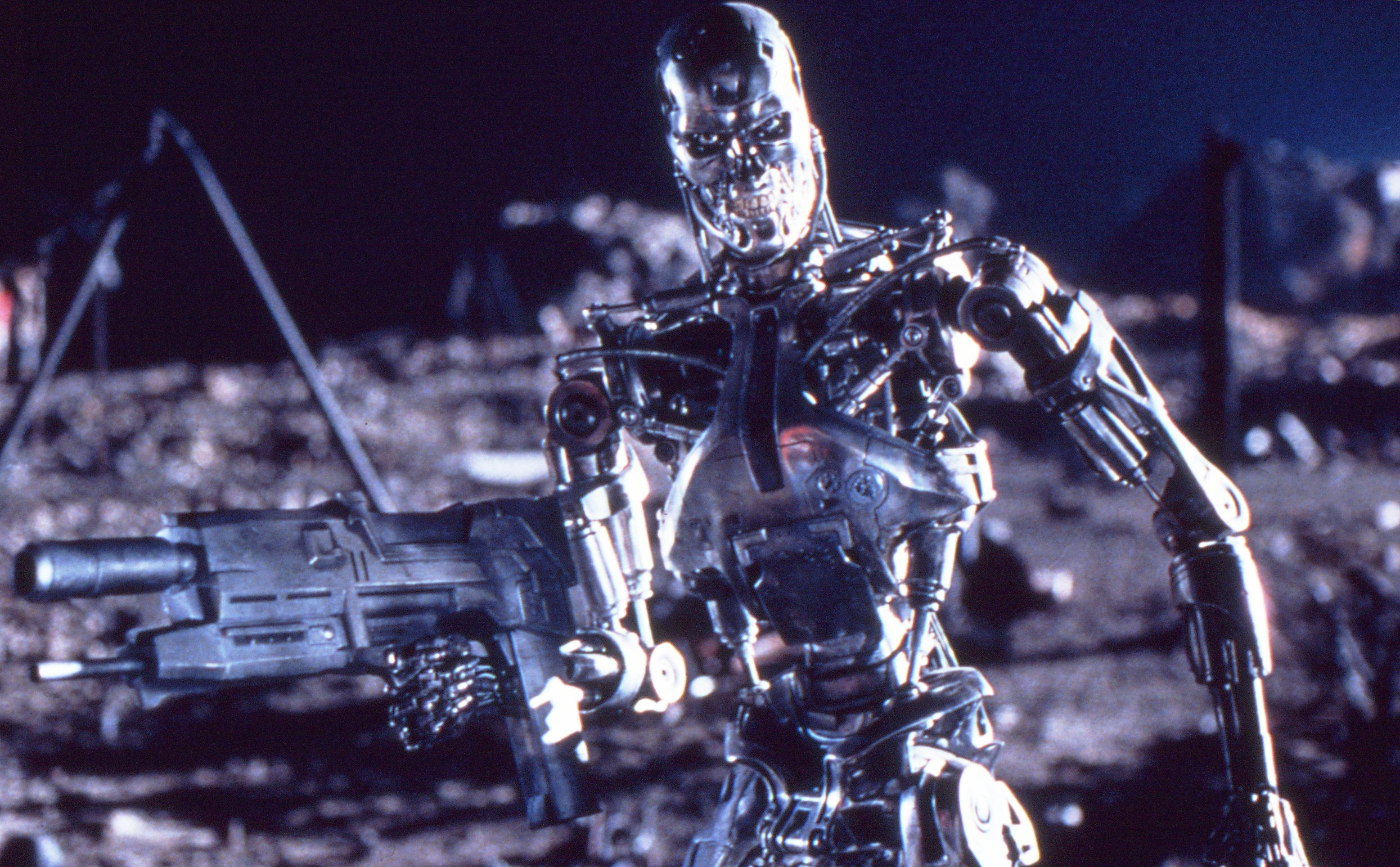
Happy (Terminator) Judgement Day!

Today is August 29, 2024.

Officially, it’s just an ordinary day. It has no historical or legal significance of any kind.

But if you happen to be a serious movie buff, or a big fan of the Terminator franchise, it is the official canon date of Judgement Day. According to the events documented in “Terminator 2, Judgement Day,” Skynet became self-aware at 2:14 a.m., Eastern Standard Time, on August 29, 1997. Shortly afterwards, it launched a full-scale war on the whole of humanity.

While it is true that this date has fluctuated over the years due to numerous time travel anomalies and sub-par sequels, the August 29, 1997, date tends to be the most well-known and accepted. And in recent years, I think that date has become even more noteworthy and not just because it celebrates the greatest action movie of all time.

In recent years, artificial intelligence has emerged as something far greater than a standard movie trope. It is now a rapidly growing field, as well a multi-billion-dollar industry. I’ve discussed the possibilities in the past and tried to put more recent advancements like ChatGPT into a proper context. But even I have been astonished at how quickly artificial intelligence has gone from an intriguing possibility to something that’s very real.

At this very moment, anyone with an internet connection can utilize what is essentially a limited AI for various tasks in a manner that would’ve seemed like a futuristic dream less than 10 years ago. It’s very likely that in the next 10 years, AI will advance in plenty of other ways, some which we can’t possibly predict.

But these AI systems are nothing like Skynet. They’re very narrow in terms of their scope and capabilities. They’re not going to become self-aware or gain human-level intelligence. But make no mistake. At some point, we will have an AI that is as smart as an average human, if not smarter. This is not a technological feat that requires a huge breakthrough that defies or redefines physics. It’s largely an engineering and logistical challenge.

Whether it happens next year or several decades from now, it will happen. We will eventually create an AI that’s as capable and self-aware as Skynet. At that point, what happens next has been a huge point of contention and speculation.

Unless someone is stupid enough to give this future AI access to a nuclear weapons system, I don’t see it launching a full-scale nuclear war like Skynet did. Even if it wanted to, I doubt it would be given that level of access. That doesn’t mean it’ll be friendly. The first self-aware AI may very well be hostile in that it sees humanity as a threat. If it does choose to pursue conflict with us, that could result in some truly unprecedented dangers.

It’s unlikely it will manifest like the war we saw unfold in multiple Terminator movies. It’s also unlikely it’ll operate in any body that resembles Arnold Schwarzenegger. Whatever form it does ultimately take, it will still likely mark a turning point for technology and human history, as a whole.

Whether we call it Judgement Day, the technological singularity, Doomsday, or just another day that ends in Y, it’s a date we should take seriously. Because with all technology, there are risks and benefits. There are also best-case scenarios to go along with the worst case. “Terminator 2, Judgement Day” offered us a cinematic experience of how bad it can get if AI becomes hostile.

But we also shouldn’t let that obscure how good it could potentially be if utilized properly. I would even argue that, as the world continues to face unprecedented dangers and uncertainty, we need to advance AI. It might very well be our most important tool in solving critical issues having to do with climate change, medicine, ecological destruction, power generation, and surviving the eventual destruction of our planet.

As such, we should continue to proceed carefully. We should remain cautious as we journey into the future. As Sarah Conner once said, there is no fate but what we make. And when it comes to developing an AI that will eventually become self-aware, let’s make that fate a good one for everyone, be that human or machine.

Leave a comment

Filed under Artificial Intelligence, ChatGPT, technology

Why You Should NOT Trust Elon Musk (Or Any Promises He Makes)

As we get older, we often learn the hard way that the people we admire and those we’ve placed our trust in are painfully human. With very few exceptions, people are complicated. They have their flaws, failures, warts, and regrets. It doesn’t matter how high their profile or how long their list of accomplishments. They’re just as human as us. And sometimes, that same high profile can exacerbate their worst tendencies.

That’s what I’ve come to learn about Elon Musk, someone who I used to reference in admiration on this site. Like many others, there was a time when I respected and admired Musk for his efforts to forge a better future through technology and investment. Whenever he spoke on these issues, I listened closely and took his words seriously. I still believe the work he did making electric cars more mainstream and pursuing brain/computer interfaces are a net positive for the world.

However, recent years have caused me to re-evaluate many of my opinions on this man. It’s not just that I’ve become more jaded and cynical over the years. I’ve watched, along with many others, as Elon Musk has proven himself to be out of touch, egotistical, petty, ruthless, and increasingly unhinged with respect to his political leanings.

He’s also a billionaire who, like many others before him, has shown no qualms about ruthlessly exploiting his workers, even during a global pandemic. Let’s not forget about that.

Now, I freely admit my attitude towards billionaires has soured a great deal in recent years. I’m now of the opinion that billionaires really shouldn’t exist in a civilized society. I also believe it’s impossible to become a billionaire without being ruthlessly exploitative. But that’s beside the point.

Even if Musk wasn’t a billionaire, he still wouldn’t be someone worthy of his reputation among supporters. The past four years have shown that he is not the future tech visionary he pretends to be. He is also not a self-made billionaire in any sense, considering how much of his wealth was inherited.

At his core, Elon Musk is a sales pitch man, plain and simple. He’s about as honest as a used car salesman trying to sell cars that he knows aren’t what he claims them to be. This is not just my opinion of the man. You need only look up the long list of predictions/promises he’s made over the past 15 years.

He claimed he could get humans to Mars by 2024. He hasn’t even made it back to the Moon.

He claimed fully autonomous self-driving cars would be ready by 2018. He was wrong about that too.

He claimed COVID-19 would go away by April 2020. He was distressingly wrong in that prediction.

It’s an age-old tactic of many sales pitchmen. Make big, bold promises that you can’t possibly deliver, but deliver just barely enough to keep people from calling you a total fraud. And on the things Musk has delivered, there’s still a lot to be desired on that front.

Then, there are Musk’s politics, which he just loves sharing on social media to a disturbing degree. Some have claimed that the COVID-19 pandemic radicalized him. It was around 2020 when his politics became much more reactionary, so much so that it got him in trouble. And once he bought Twitter outright, he essentially emboldened everyone who shares in his reactionary outlook, including a few who have done serious harm.

There’s a lot more I can say about his political leanings, but that’s a rabbit hole nobody can dive into without losing too much of their soul. I’ll just say that people far smarter than me have been much more thorough in debunking the myths surrounding Musk’s persona. I’ll even concede that Musk is still capable of worthwhile efforts, even if he’s not a likable person in general.

But, as someone who used to buy into the hype on which this man built his fortune, I want to make one thing clear. Elon Musk is not someone you should trust.

If he makes a bold promise, don’t assume for a second he’ll deliver until he actually does.

If he makes a confident statement about politics, don’t assume it’s anything other than self-serving aggrandizement.

If he makes a bold prediction, don’t take it seriously until you remind yourself how many other predictions he’s gotten wrong.

And, most important, don’t forget for a second that Elon Musk is not normal in the sense that he’s a billionaire. You just can’t be normal and become a billionaire through wholly ethical means.

It still remains to be seen what Elon Musk’s legacy will be in the grand scheme of things. It’s very likely that, whatever it ends up being, it’ll be skewed by both his supporters and detractors. But while it’s being built, it’s worth being cautious, skeptical, and even a little extra cynical when it comes to this man.

1 Comment

Filed under futurism, Neuralink, rants, technology

Mass Effect: The Danger And Soul Of Artificial Intelligence

This is a video from my YouTube channel, Jack’s World.

This video explores the inherent dangers and genuine hopes of artificial intelligence through one of my favorite video game franchises of all time, Mass Effect.

Artificial Intelligence is a big part of this galaxy-spanning saga. The main antagonists, the Reapers, represent a worst-case scenario. The synthetic race, the Geth, are also a recurring danger. However, in exploring the vast history and lore of Mass Effect, we gain some remarkable insights into what the future might hold for how we navigate AI. Enjoy!

Leave a comment

Filed under Aliens, Artificial Intelligence, comic book reviews, Mass Effect, YouTube

Revealing Attitudes Towards AI Art (When People Don’t Know It’s AI Art)

When I was a kid, there was a general attitude towards any movie or TV show that was animated. Unless it was “The Simpsons,” then animation was largely associated with kids. Even when there was a concerted effort to appeal to older demographics, animation was still seen as less mature form of storytelling. Even when it was exceptionally well done, this stigma persisted.

Eventually, animation and animated content, in general, matured to a point where the stigma really doesn’t work anymore. Cartoons aren’t just for kids. We now have shows like “Bojack Horseman” and “Rick and Morty” that have helped change the popular perception of animation. On top of that, the added influence of Japanese anime, from “Dragonball Z” to “Ghost In The Shell,” have helped attitudes about animated content evolve even more.

This shift all happened within my lifetime. It’s a simple recognition that attitudes, perceptions, and trends are always changing. And they’re going to continue to change, regardless of how we might feel about certain issues now.

This brings me to AI generated art. It’s a topic that, depending on where you discuss it, can generate a lot of debate, disagreement, and consternation. I’ve been in more than one discussion with someone who claims AI generated art can only ever be a bad thing in the long run because it enables trolls, assholes, grifters, and bad actors.

I’ve also been in similar discussions with those who claim AI art isn’t even art. It’s, according to them, nothing more than a fancy calculator that crunches numbers on where to place certain pixels on a screen. While I think that’s a gross oversimplification, I don’t think it takes away from the end result. Whether it’s produced by a human or a computer, the end result is still the same. An artistic rendering is created. But regardless of what form it takes, we have certain attitudes about it.

As I write this, I think the prevailing sentiments toward AI art are negative. Show someone an AI generated image and they might concede that it looks nice. But they’ll still have an aversion to it, knowing it’s created by AI. And if you how them a human-generated piece of art, even if it doesn’t look nice, that same person will still ascribe more value to it than they would an AI generated image. That’s just where we are right now.

But in a recent study by Scientific Reports, an interesting insight was uncovered. When the researchers conducted a survey that included approximately 200 people, they found that when people weren’t aware that an image was AI generated, then their attitudes about it were more positive. In many cases, they could not discern between the artwork generated by humans and those generated by AI. But as soon as they were aware that something came from an AI, their sentiments changed.

It’s probably not too surprising, but it’s also revealing. It speaks to where we currently are in our perspectives on anything created by an AI. It still has this synthetic, uncanny valley feel to it. We still inherently ascribe more value to something that is created by a human over that of a machine. And while that is certainly understandable, given that human generated art requires more labor and passion, how much will that value persist in the coming years?

That’s not an unreasonable question because the quality of AI art has changed considerably in the past few years. And it’s likely to continue improving in ways we’re not ready for. Not too long ago, it was somewhat easy to discern when something was created by an AI. The issues it had with rendering hands and fingers are well-document. However, those issues have been addressed and improved considerably, especially with newer models.

As such, you don’t need to be a wide-eyed utopian futurist to predict that AI art generators will improve to a point where it’s genuinely difficult to tell if it was created by a human. This study already showed how close we are. The participants weren’t able to surmise on a surface level that they were dealing with a mix of AI and human-generated art. With improved tools, even the most discerning and tech savvy among us might not be able to figure it out.

At that point, our attitudes towards AI art will have to change. Think what you want about AI and whether it’s capable of creating real art, let alone appreciate what goes into it. But if it’s capable of making something we can’t discern from its human-made counterparts, then those negative sentiments we have are entirely arbitrary, as well as subjective.

And those same attitudes might not be shared by younger people who have grown up in an environment surrounded by the internet, AI, and AI generated content. They might not have any issue with seeing AI generated art as real art. And anyone who just despises AI art as a concept might find themselves in the same group as those who still think all cartoons are just for kids.

It’s hard to know where these trends will lead as AI technology advances. It’s already affecting how we see art, knowledge, and what it means to be intelligent. And how we feel today might not be at all in line with how future generations will feel in the decades to come. Only time will tell.

I’ll simply note that humans, in general, are a visual species. We seek to create, admire, and cherish art, regardless of the source. For that reason, I think there will certainly be a place for any kind of art, whether it comes from a human or an AI.

Leave a comment

Filed under AI Art, Artificial Intelligence, psychology, technology

How Much Are You Willing To Spend/Risk On Emerging Longevity/Anti-Aging Treatments?

We’re all born with youthful energy. As kids and young adults, this energy helps fuel us as with build lives for ourselves and our families, be they our close relatives or any children we might have. But over time, that energy fades. Our health, our looks, and our overall energy for living fades. It is an inescapable fact of life.

One of my old health teachers once summed it up with this endearing quote that I remember to this day.

“Once your body is done growing, it starts dying. The only part you can control is how rapidly that process unfolds.”

This has become more and more relevant for me, personally. I am no longer young by most measures. My teenage years and my early 20s feel like a lifetime ago. Who I was then is very different from who I am now. And while I have gotten much better at taking care of myself since I turned 30, I know that’s just slowing the aging process. It doesn’t stop it.

At some point, my body and mind will start to break down.

At some point, I’ll start succumbing to the many ailments often associated with age.

I am not looking forward to that. I prefer to delay that as much as possible. I’ve always been somewhat self-conscious about my looks and my health. I don’t deny that the prospect of aging is scary to me. That’s one of the reasons I often keep a close eye on advancements in biotechnology. And with each passing year, I also find myself paying more attention to advances in the fields of longevity.

I know there are many conflicting perspectives when it comes to body image, beauty standards, and the idea of aging gracefully. For everyone in human history, you didn’t really have a choice. You just had to accept that you were going to get older. Your looks, your energy, and your body was going to fade. But if this technology is able to mature, there might be other options in the future.

Whether or not I’ll live long enough to take advantage of those opportunities, it’s hard to say. It may already be too late for someone my age. Even if new treatments emerge, there’s a good chance they’ll be reserved for the rich and well-connected. Unless I win the lottery, I doubt I’ll be in a position to utilize them.

But that might not be the case for my nieces and nephews, who are still young children at the moment. It might not even be the case for those just graduating college at the moment. In the same way artificial intelligence has had a sudden surge of advancement, longevity might experience a similar surge, thanks in no small part to AI.

As I write this, science has uncovered so much about the mechanics of aging. We know considerably more today than we did 20 years ago. We’re sure to uncover more in the coming years. At some point, we may even develop effective treatments that don’t just slow aging. We might find a way to actually reverse it.

This sort of technology isn’t some far-off sci-fi fantasy on par with a warp drive. Reversing aging doesn’t break the laws of physics. It doesn’t even break the laws of biology, given how some animals never seem to age. It’s just a matter of developing the right tools, the right treatments, and the right approach. I have no idea what form that will take. I doubt it will be something as simple as a pill, an injection, or something you could buy at a pharmacy.

But if such a treatment were available, it’s worth asking how much you’d be willing to risk in order to take advantage of it. Because, like any emerging medicine, there is risk early on. When something is unproven in the long-term, you will be putting your mind and body at risk by embracing it so quickly. Even if it’s tested to a point where very major health organization gives it the thumbs-up, there’s always a chance something could go wrong. That’s just how medicine and biology works.

Some people might not be willing to take that risk.

For me personally, I totally would. Even if my health and appearance is generally good, I would definitely take a chance at a treatment that would help preserve both for a longer period. I would certainly expect side-effects. But if it delivers good results, I’ll endure those.

But there’s also the cost to consider. Even if a treatment is shown to be effective at keeping you feeling young, beautiful, and energetic, it doesn’t do you much good if it costs you every penny you have and then some. Sure, you’d have your youth and your looks, but you’d be broke and in debt. Is that worth it?

Personally, I wouldn’t be willing to spend everything or go that deep into debt, just to look young and remain healthy. Few good things ever come from indebting yourself to that extent.

But others might feel differently. Some might not want that kind of longevity, even if it were available. That’s perfectly fine. We should certainly respect anyone who makes such a choice. But we should also put real thought and effort into attacking aging the same way we attack any disease. Regardless of how we age or how we choose to approach it, we’re subject to the chaotic ravages of time.

Emerging technology will give us more options than we’ve ever had at any point in our existence as a species. How we choose to exercise those options remains to be seen. I might not get that choice. But I sincerely hope that some reading this do.

Leave a comment

Filed under biotechnology, CRISPR, technology

Jack’s CreepyPastas: Project Death Screen

This is a video from my YouTube channel, Jack’s World.

This video is a CreepyPasta story about mental torment that I wrote and narrated myself. Enjoy!

Leave a comment

Filed under CreepyPasta, horror, Jack's World, YouTube

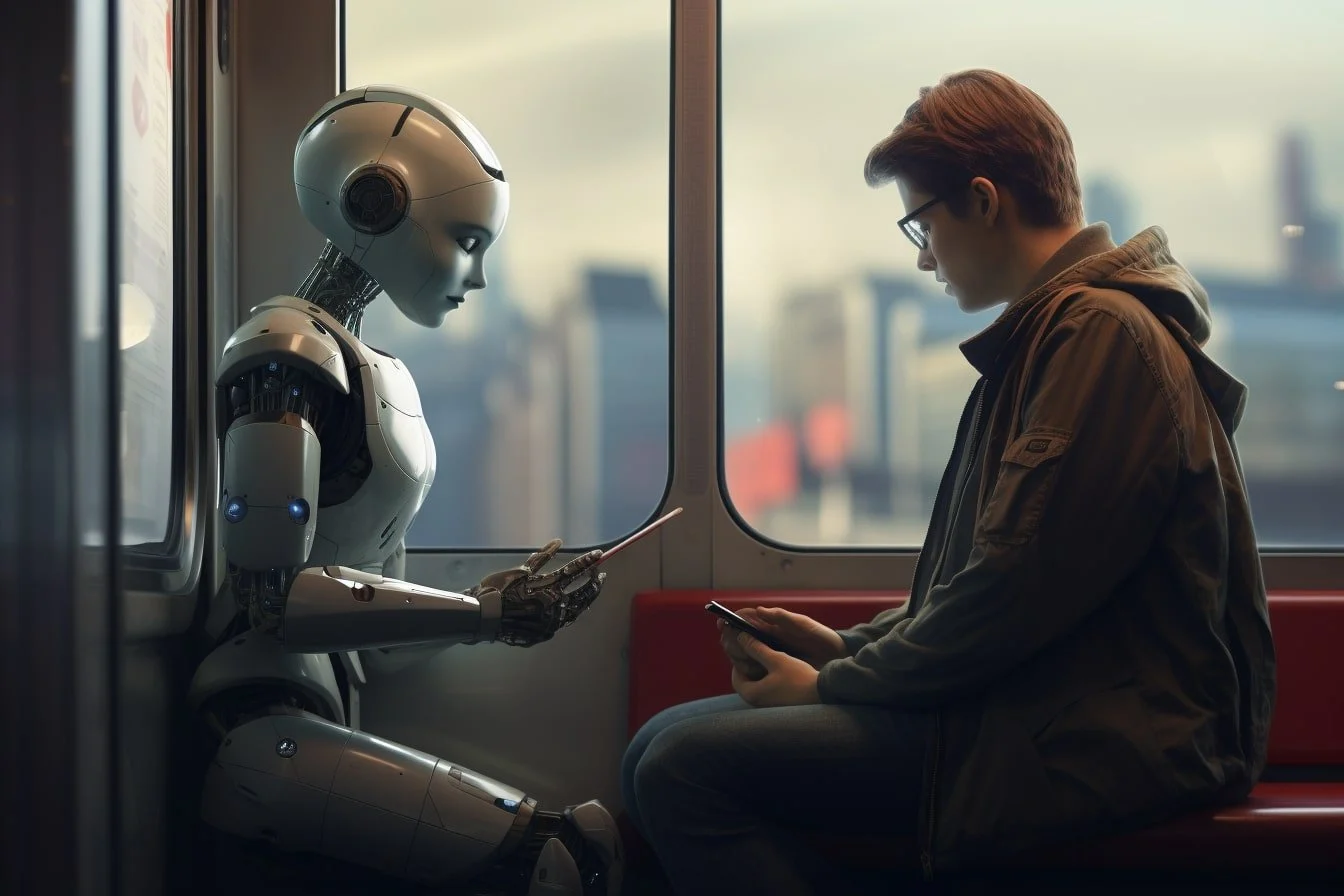
How AI Companions Can Be Helpful AND Harmful

It is not easy finding that special someone. It never has been, even if you’re rich, beautiful, and have strong social skills. Every generation encounters new challenges in their pursuit of love and companionship. I know I have. I’ve even shared some of those struggles before.

At the moment, I have not found that special someone. I am single, I live alone, and I currently have no romantic prospects of any kind. I’m honestly not even sure where to begin at this point in my life. Nearly everyone else in my immediate family has settled down and started having kids. I am very much behind the curve in that regard.

However, there are some individuals who are in an even tougher situation. I know I am lucky in many regards. I own my own home. I own my own car. I’m never behind on my bills or anything. But there are plenty of men and women my age who have none of that. Some of the people I went to college with are still stuck in debt and can’t even afford to pursue a serious relationship.

In that sense, I don’t blame anyone for seeking other forms of companionship. Loneliness really does suck. It is objectively bad for your health. While it has become a hot topic, even in political fields, it has also led to some controversial trends. And among the most contentious involves people seeking AI companions.

Now, before I go any further, I want to make clear that I am somewhat reluctant to talk about this. While I’m usually up for any discussions about artificial intelligence, especially with how it may affect our love lives, this one specific aspect of AI is riddled with complications.

On one hand, there’s the general stigma. Most AI companions, such as Replika, are essentially idealized avatars of whatever kind of companion the user wants. If a man wants an AI girlfriend to look like a porn star and have hair like a girl from his favorite fantasy anime, he can have that and the personality to match. And while that is appealing, as a product, it still carries a stigma with it.

Men like this who use AI companions aren’t seen in a very sympathetic light. They’re more likely to be seen as examples of toxic male behavior. They’re not just lonely and in need of companionship. They’re seen as perverts who prefer a girlfriend that they can turn off, manipulate, or control in whatever way they please.

And make no mistake, there are men who treat their AI companions like that. They’re not all that subtle about it, either. But most of these men were shallow, crass, and crude before the advent of AI companions. They would’ve been that way regardless of whether or not this technology existed. There have always been men like that. And there always will be to some extent.

But there’s also a double standard at work with these men. Because there are AI companions for women too. They’re every bit as available as the ones men use. They just don’t get as much scrutiny and don’t carry as much stigma. If a woman were to create an AI companion to resemble their favorite male celebrity, chances are they won’t be stigmatized as much as their male counterparts.

Some may see this as concerning, thinking the woman must have issues if she was resorting to AI companions. But she would certainly garner less stigma than the man.

I would still argue there are women out there who seek AI companions for the same reason as men. They’ll even mold avatars meant to resemble the sexiest, most attractive figure they can conjure. I don’t claim to know how common it is, but I don’t doubt this exists.

Even with that kind of shallow use of this technology, I think it’s much more common that these users are just lonely. They seek companionship the same way most humans seek companionship. Even if there are plenty of people to interact with, AI companions help fill a particular need. That’s really all there is to it.

That’s not to say that AI companions are harmless. I strongly believe they can be. It just depends on the user and how they go about interacting with these AI systems.

If someone is manipulative, controlling, abusive, and self-centered, then having an AI companion that they can mold to their whims is not going to temper those tendencies. More than likely, they’ll get much worse. They’ll basically set a standard for the user that conditions them to expect certain qualities in a companion. And since real people can’t be molded, manipulated, or configured like an AI, they’ll never find someone who meets their impossible criteria.

In the process, that same user might grow bitter and angry that no real person can be to them what their AI companion is. And as these feelings simmer, it could just lead them into a destructive cycle of resenting everyone and everything that they can’t control the same way they control their AI companion.

That is very much a worst-case scenario for users of AI companions. I did try to look up research on this, but it was hard to come by. Both the stigma and novelty of these products make it difficult to assess. Maybe I’m being too hopeful, but I think cases like this are rare.

They certainly exist, but they’re the exception rather than the norm. It just tends to get more attention because seeing horrible people reinforce their horrible behavior with these AI companions is disturbing to many people and understandably so.

At the same time, I also believe that AI companions can be genuinely beneficial for a lot of people and those benefits are likely understated. Remember, we are social creatures. And as intelligent as we can be, we’re also blunt instruments with respect to certain mental faculties. Our brains and our psyche don’t care about the nature of social interaction. So long as we find it fulfilling on some levels, we’ll incur the benefits.

In their early form, AI companions probably didn’t offer much in that regard. But in recent years with the rise of AI chatbots and large language models, it’s relatively easy and cheap to create an AI that people can interact with in ways that closely resemble those of real humans. And the growing size of the AI companion industry is solid that there is growing market for this sort of thing.

But the good these AI companions could do goes further than simply giving people a facsimile of human interaction. Remember, the current crop of AI chatbots and LLMs are relatively new. They’re like the early models of the iPhone. They’re going to continue being refined, developed, and improved upon now that an industry is being built around it.

In time, AI chatbots and general AI technology will improve.

At some point, AI technology will get advanced to the point where it can offer more than just a base level interactions. In theory, an AI could be configured in way that didn’t just perfectly complement the personality of the user. It could also interact with them in a way that fosters healthy personal growth, just like any other good relationship.

There could even be AI companions specifically configured to deal with abusive men or women, helping them understand and deal with their issues in a way that makes them better individuals. That could be life-saving for certain people who struggle to find companionship due to issues like personal trauma or mental illness.

These AI companions don’t even need to take a physical form. They don’t need to be incorporated into sex robots or anything. They can still be effective as simple avatars on smart devices. There would certainly need to be some level of testing, safeguards, and refinement in order to make them work effectively. It might even take years before AI companions have such capabilities.

That’s the most I’m willing to say about AI companions at the moment. I don’t doubt this industry will continue to evolve in the coming years. I also don’t doubt there will be plenty of controversies about the ethics of these companions, as well as how they affect the user.

But even in their current form with their current level of intelligence, it offers lonely people an outlet. Reasonable people can argue just how healthy or unhealthy it is. But it doesn’t change the fact that lonely people are out there. They’re seeking connection and companionship like everyone else. These AI companions aren’t perfect replacements, but they’re better than nothing.

Leave a comment

Filed under Artificial Intelligence, futurism, men's issues, psychology, romance, sex in society, sex robots

How To Get Around (Certain) Paywalls

First off, fuck paywalls.

I understand why the exist. I understand that content creators, media outlets, and individuals need to make money for their efforts. It’s a necessary evil to fund the many good things the internet provides.

That being said, fuck paywalls. They’re one of the most annoying things to manifest on the internet that don’t involve whiny trolls with too much free time.

With each passing year, it seems, more and more websites are resorting to paywalls to restrict or limit access to their content. This is especially common with news outlets, including major newspapers like the Washington Post and the New York Times. But I’m also seeing it on smaller outlets that aren’t major newspapers, especially those that cover sports, entertainment, or various genre news.

They’re all annoying as hell. They’re basically asking for a newspaper subscription that can range anywhere from a couple of dollars to the equivalent of a yearly Netflix subscription. At a time when most people are already annoyed by the amount of subscriptions they have to pay for, this is making a bad problem much worse. It’s essentially segmenting the internet in ways that run counter to how it began.

But rather than lament on this annoying trend, I’d like to offer some guidance to those who hate paywalls as much as I do. Even if you too understand why they exist, nobody will blame you for not wanting to purchase an entire subscription just to read one or two articles. For those instances, there are some ways to get around that.

For the sites that offer a handful of free articles before requiring a subscription, you could always use a VPN. These VPNs, also known as Virtual Private Networks, basically mask your IP address so that it always seems like you’re coming from a new location. While some sites are aware of this tactic, it’s very difficult for them to filter it out. VPNs offer many other uses aside from getting around paywalls. They do come at a cost, but you do get a lot out of them.

But if you don’t want to invest in a VPN, another way to get around paywalls is to use certain free sites. They don’t necessary get around the paywall. They just allow you to see the content in a more raw format. It’s like seeing copying the sheet music instead of the song and letting another program play it. All you do is put in the URL to an article or site section into the site and let it work.

There a number of sites that do this. Not all of them work on every site, but here are the ones that work best.

https://12ft.io

www.archive.org

Please note that these don’t work for every site. For some media outlets, you will get errors or your browser will just freeze. But in most cases, you can usually expect to get around the paywall and at least read the main substance of an article.

It works for now. I don’t doubt for a second that many outlets are already looking for a way to block this sort of thing. And if there comes a day when all paywalls can be circumvented, then those same outlets will find another annoying way to fund their operations.

Again, I get why this happens. Before paywalls, there were all sorts of insufferable pop-up ads, banner ads, and mailing lists. Once those fell out of favor, site operators looked for another way to monetize their content. Paywalls are just the latest manifestation of that effort.

They’re annoying and most people still hate them. But, so long as they exist, we need to live with them and know how to get around them. I hope this helps.

Leave a comment

Filed under media issues, technology

AI Chatbots May (Thankfully) Render Homework Obsolete

Homework sucks.

Let’s get that out of the way.

I doubt anyone will disagree with that sentiment. No matter who you are or how many years you’ve been out of school, you probably don’t miss doing homework. It’s one of those special shared hatreds reserved only for traffic jams, parking tickets, and slow internet. But unlike those undeniable frustrations, homework isn’t an inescapable force of nature or law. It’s something we, as a society, choose to continue.

I’ve certainly questioned that choice, going back to when I was still in school. Having to do homework was among the many reasons why I was so miserable in school. And even though it was required, I can’t honestly say it ever helped me learn anything. Most teachers and administrators often explained why it was important to ensure we were adequately learning the material. But as I’ve gotten older, I’ve come to realize that, even if that were a valid reason, it still was still ineffective.

Just ask yourself honestly. Did you ever do homework because you were curious and wanted to learn?

Now, I could rant and lament on why homework sucks for days on end. But rather than torture myself to such an extreme, I wanted to highlight something that might offer hope to those who still remember how much homework sucked, as well as those currently in school at this very moment. It has to do with the impact of artificial intelligence and chatbots like ChatGPT.

I know I’ve talked a lot about artificial intelligence in the past. I’ve also highlighted the impact and hype surrounding ChatGPT. It is definitely one of the most intriguing and disruptive technologies to come along in decades. But unlike other discussions about whether artificial intelligence and ChatGPT will lead to the destruction of the human race, this is one issue in which the impact is already happening.

Recently, Vox produced an intriguing video about how ChatGPT has impacted education, especially homework. Even as someone who graduated school years ago, I found the issues and insights of this video remarkable. I encourage everyone to check it out.

The long and short of it is simple. ChatGPT is rendering most homework assignments, be they essays or worksheets, obsolete. Students are using ChatGPT to basically do the bulk of the work for them. The only real effort they need to do is make sure that whatever they produce isn’t obviously the product of a chatbot.

That alone can be difficult. It is well-documented that chatbots like ChatGPT can be inaccurate. But when compared to having to do a long, boring assignment that a student probably isn’t interested in, that kind of challenge seems manageable by comparison.

Also, in the interest of full disclosure, I freely admit that I probably would’ve used ChatGPT when I was in school if I had access to it. I promise it wouldn’t be entirely out of laziness or an unwillingness to learn. I just found most homework assignments to be so dull and pointless that I cared more about just getting them done rather than actually learning anything.

I imagine I’m not the only one who feels this way. I suspect the majority of students simply see homework as a means of ensuring grades rather than actually learning something. And even if that assumption is flawed, it’s still an issue that speaks to major flaws in how we educate ourselves and others.

And until ChatGPT, it was easy to ignore that issue. Schools, teachers, and administrators had no reason to stop giving homework or question whether it was an effective tool. It was just one of those things that our education system had always done. So, why not keep doing it?

Well, now there’s a valid reason. Homework, as we know it, can be easily completed by any student with an internet connection. If there was any learning potential, it’s pretty much lost. As the Vox video stated, it has led schools and educators to consider an entirely new recourse.

The knee-jerk response that I suspect most will adopt is to try and ban or limit the use of chatbots. There are software programs out there that can help detect content that has been generated by a chatbot. However, I liken these programs to using scotch tape to seal the ever-widening cracks of a faulty foundation.

Because, like it or not, these AI chatbots are becoming more advanced. And the tools to keep up with them are always going to lag behind. That is a losing race and one no education system should attempt.

There’s even precedent for surmising why that’s a bad approach. When I was in college, there was a blanket ban on using Wikipedia. But enforcing that ban was a losing battle that caused more problems than it solved. It also created some nasty situations where students were accused of plagiarism when they did nothing of the sort. It took a few high-profile incidents, but most schools eventually came to embrace Wikipedia as a useful tool when approached correctly.

I think the impact of chatbots will have to go through a similar process. But unlike Wikipedia, the application of chatbots is a lot broader. These are tools that can effectively summarize books, write essays, and even write poetry with a few simple prompts. And in the same way young people have become more tech savvy than their parents, I suspect they’ll become more adept than most with respect to navigating chatbots.

That means homework, as we’ve been doing it for the past several decades, will be obsolete. While that’s certainly cause for celebration for many, it’s also an opportunity to take a step back and evaluate the process of education, as a whole.

It’s still very important that we educate young people in a meaningful way.

It’s also important to acknowledge that young people today will have access to resources that others have not.

If homework is no longer useful in that regard, what else could we do? What’s a more effective way to teach kids a concept, even when they’re not that motivated to learn it?

I don’t claim to know the answers. I am not a teacher, but I do remember how miserable I was in school and how little it really taught me. Hopefully, the impact of chatbots like ChatGPT will prompt a more thorough evaluation of how we approach education. Because if we keep clinging to old methods, then nobody will benefit in the long run, especially kids.

1 Comment

Filed under Artificial Intelligence, ChatGPT, technology