This is a video from my YouTube channel, Jack’s World.
This video recounts the brilliant, but controversial message of the first Joker movie. A lot has happened with this character over the years. But Todd Phillips and Joaquin Phoenix offered a take that has resonated in ways that are both remarkable and distressing.
These days, it’s easy to look back on old movies and TV shows you once found funny and cringe. Sometimes, it’s just part of changing trends. Sometimes, it’s just part of getting older. What you found hilarious when you were 10-years-old isn’t going to be as funny when you’re 40. It’s just a sad fact of life.
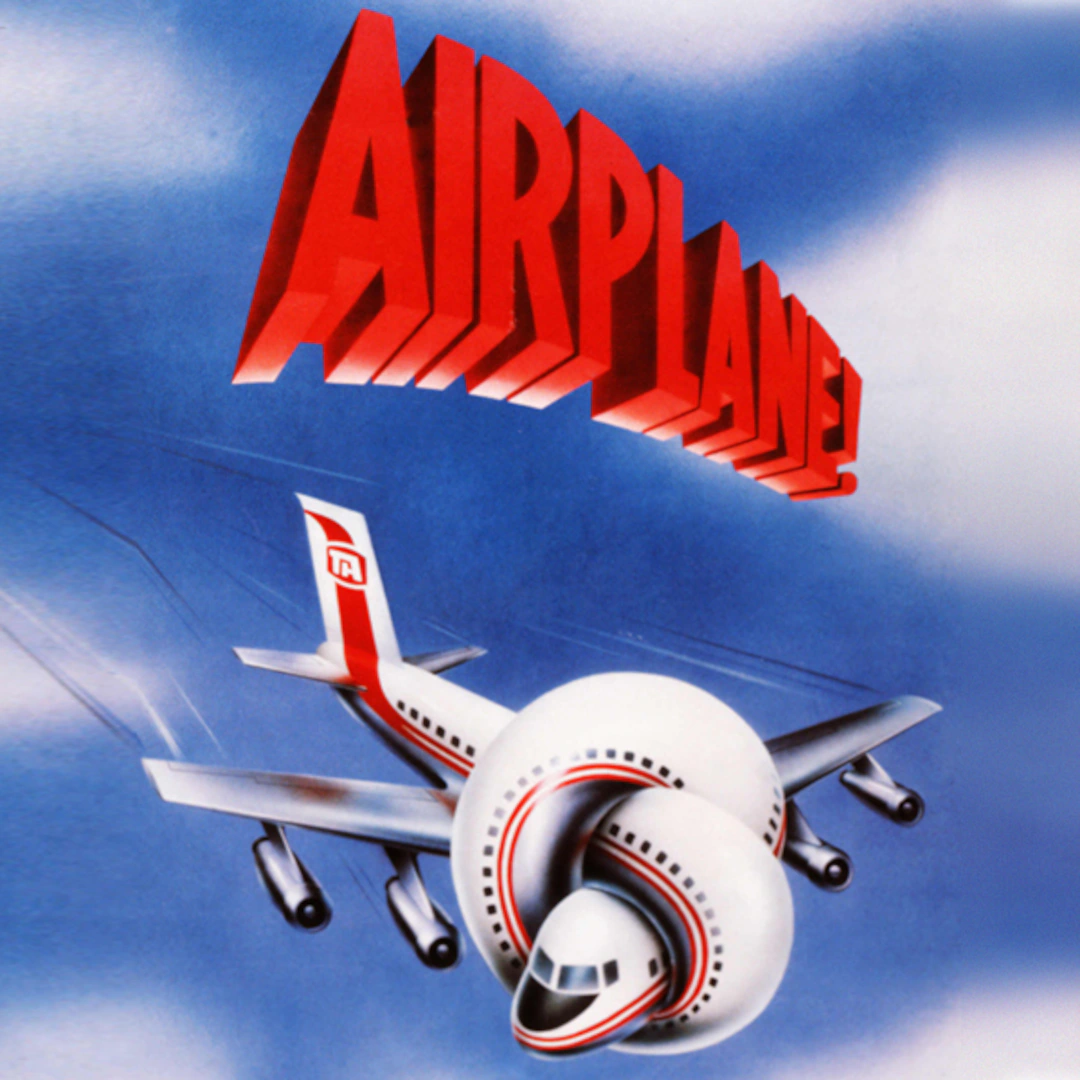
But then, there’s a movie like “Airplane!” And I submit that, in terms of comedies that have aged like the finest of wines, this movie is the gold standard.
I certainly understand that comedy and tastes are objective. I also don’t doubt that some people will watch a movie like this, not get the jokes, or take offense to it. But I would also argue that, while you can levy those kinds of criticisms about many comedies from that era, you can’t reasonably apply it to “Airplane!“
This movie isn’t just a classic comedy gem from the early 1980s. It’s one of those rare movies that takes a simple, but effective approach at being funny. It doesn’t try to be too smart for its own good. It doesn’t try to be too crude, so as only to appeal to a specific demographic and/or stoners. It just uses the basics of what makes good, endearing comedy and runs with it.
The story itself is not really that complicated. A traumatized ex-fighter pilot, Ted Striker, tries to win back his stewardess girlfriend, Elaine Dickinson, before she moves away and leaves him for good. He follows her to the airport, ends up on a plane with her to Chicago, and just happens to be there when disaster strikes and the flight crew falls ill. Along the way, some truly remarkable comedy gold ensues.
In essence, this movie is largely a parody of common tropes from that era regarding romance, war, and disaster movies. It also used the premise of a far more serious, less funny movie from 1957 called “Zero Hour!” But you don’t have to have seen that movie to appreciate plot, jokes, and comedy of “Airplane!” You just have to have the smallest semblance of a sense of humor.
It does get crude at times, but not so crude as to be juvenile.
It does get quirky with recurring gags, but it never overuses them.
It also gets more than a little suggestive at times, but not to the point where it needs to be rated R.
This movie came out before I was born. However, it was a movie my parents loved. Every time my mother watched it, she would keel over and laugh. I was only around nine-years-old when I first saw it. And even though some of the jokes flew over my head, I still found it funny.
Years later, when I rewatched it, I laughed even harder once I actually got the jokes. To this day, I can re-watch the movie any time of year and still find it hilarious. I still crack up at the scenes that involve speaking Jive. I still laugh every time Leslie Nielson says “And don’t call me Shirley!” And the autopilot steals the show every time.
While I wouldn’t go so far as to call “Airplane!” my favorite movie or even my favorite comedy, I can’t recall a single movie or TV show that has consistently made me laugh over the years. And at a time when so many other TV shows and movies are aging poorly, it just makes me appreciate “Airplane!” that much more.
So, for that, I thank David and Jerry Zucker, and all those involved in making this movie, for giving the world this timeless comedy gem. And if you haven’t seen it yet and are in the mood for some quality comedy, give “Airplane!” a watch. If laughter truly is good for the soul, this movie should give you plenty of nourishment.
This is a video from my YouTube channel, Jack’s World.
This video revisits one of my favorite movies from the early 2000s, Legally Blonde. I’ve always been fond of romantic comedies, but this one was different in a very special way.
Legally Blonde isn’t your typical romantic comedy starring the ever-lovable Reese Witherspoon. This movie explores and celebrates the joy of pure, unfiltered femininity through Elle Woods.
She may look like a stereotypical blonde from a college sorority. But after her boyfriend breaks up with her in the first 10 minutes, she quickly proves that she is so much more. And in doing so, Elle goes onto become one of the most lovable, endearing female characters in cinematic history. Enjoy!
This is a video from my YouTube channel, Jack’s World.
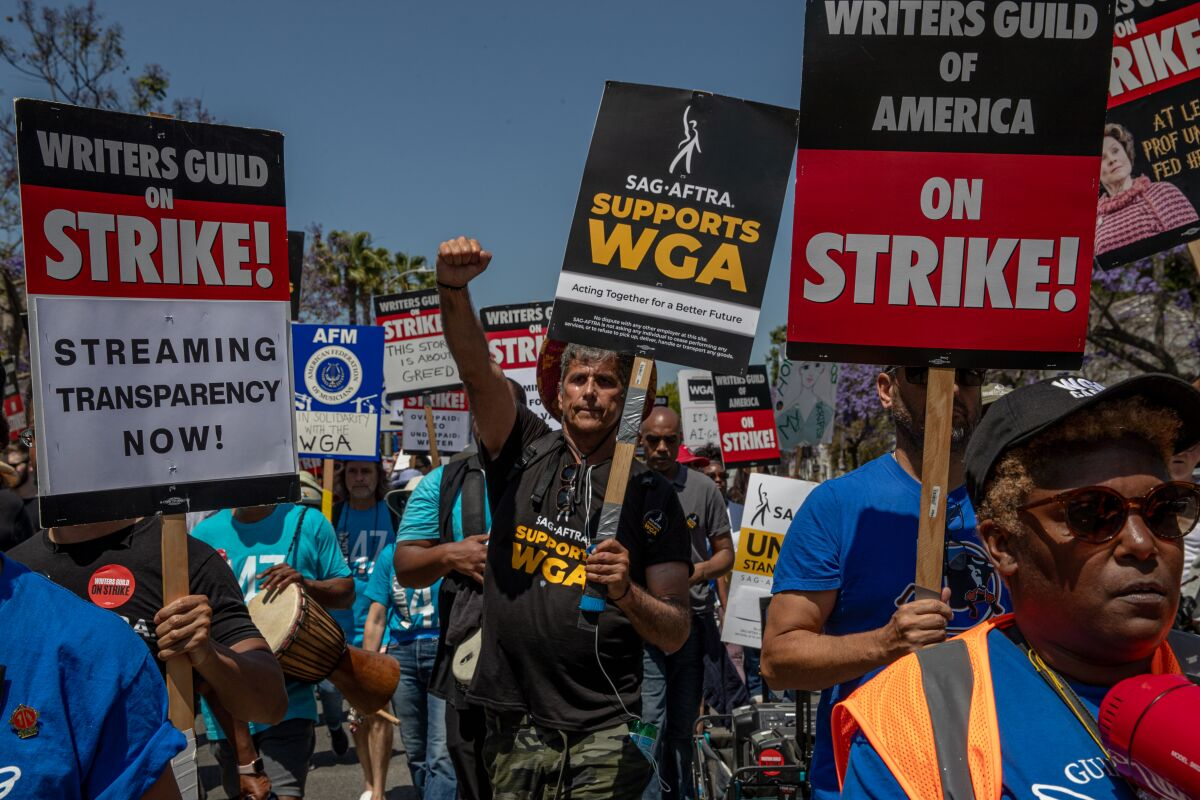
This video is part speculation and part thought experiment on the impact of artificial intelligence and the entertainment industry. Since the WGA/SAG strikes of 2023, the impact of AI on entertainment is impossible to ignore. While the technology is still in a very early stage, we’re already seeing it affect the course of multiple industries, but entertainment might be the most profound.
What could this mean for consumers?
What could it mean for the companies, studios, artists, and workers that produce our entertainment?
It’s difficult to determine at this early stage, but I make an effort to imagine what artificial intelligence could mean for the future of entertainment.
We live in strange, tense, and frustrating times. I know you could say that about any point in any era. But it feels like we’ve been saying that a lot late. I know I have. Just look at some of the posts I’ve made onor near Election Day in the United States. But as someone who lives less than two hours from Washington DC, I tend to feel the politics of these times more than most. And I’ve been around long enough to see some strange and troubling trends.
Then, there are certain acts or phenomena that are just plain stupid on a level that defies parody.
I generally try to empathize and understand where other people are coming from, especially if they have a different background or ideology from my own. There are just some instances where that’s not possible. The breadth of the stupidity is just too great.
That’s exactly how I feel about book bans. For reasons that are too fucking idiotic for me to paraphrase, there are real people living in real places in the United States of America who are advocating for book bans. Some are going so far as to burn them.
Again, this is not 1933. This is happening in 2023. That point is worth belaboring.
Now, I don’t want to name names or organizations. But you don’t have to look far to see who are advocating for book bans. You also don’t have to dig too deep to uncover what sort of ideology they ascribe to.
Here’s a hint. It’s the same ideology the requires stormtroopers, secret police, and prison camps.
But all you really need to know is that these efforts are usually the ones the villains in every TV show, book, or movie get behind. They see people reading books with ideas they don’t like. They worry that those same people, which include children and young adults needed for factories and war zones, embracing or identifying with those ideas.
But rather than confront those ideas, the book banning advocates would just prefer that people never know about those ideas in the first place. The evil, sadistic logic is that if people never read about it, then they can never think about it. And if they can never think about it, then they’re easier to control and guide.
That may not be the reason book banning advocates say out loud, but that is the effect. They’ll usually frame it as “protecting children” or “combating obscenity.” But don’t fall for that. At the end of the day, those who seek to ban books just want to eliminate ideas and stories they don’t like from the public consciousness.
That’s not conducive to protecting children and fostering a healthy society.
That’s a tactic for fascists, authoritarians, dictators, and general assholes.
Now, those tactics were certainly damaging in the past. Until very recently, books were the primary source of important information. If people didn’t have access to books, then they didn’t have access to knowledge, stories, and new ideas. Finding or preserving banned books used to take a concerted effort and many brave individuals put their lives at risk to further those efforts.
However, what makes modern book bans especially stupid is the simple fact that the internet exists. Libraries and book stores are no longer the lone repositories of knowledge and stories. Anyone with a smartphone can access more knowledge in five seconds than an entire university of academics could 50 years ago.
At this point, trying to ban books is akin to trying to censor telegrams. All they achieve now is raising the profile of these books they’re trying to ban. Hell, the book banning advocates might as well identify as free advertising because sales of banned books tend to spike whenever they bitch and moan about certain titles.
So, in addition to being a dick move, as well as tactics used primarily by fascists, it’s completely counterproductive. It wastes time, money, energy, and has the opposite effect of what’s intended. With that in mind, I have just one last message to those who still think banning books is a worthwhile endeavor.
This is a video from my YouTube channel, Jack’s World.
This video is my personal take on Smile, a 2022 horror movie that I was really excited about when I first saw the trailer. But after seeing it in theaters, I found myself a bit underwhelmed with how it played out. I still thought it was a good movie, but it had the potential to be much greater. And I think that shortcoming offers some lessons for future horror movies. Enjoy!
Firstly, let me go on record saying that I fully support the WGA and SAG’s strike. I’ve said before that we should support them as they fight the very powerful, very well-funded Hollywood studios who profit from all their hard work.
The fact that both the actors and writers stand united in this strike for the first time since 1960 is promising. As I write this, pretty much every major movie production has shut down. The studios could only do so much without their writers, but they literally can’t do anything without their actors. That likely means highly-anticipated movies will be delayed, but it also means the people actually making those movies might actually enjoy some of the profits.
There’s a lengthy list of issues associated with AI and how it may impact the entertainment industry at large. I’m not qualified to go over all the particulars. So, here’s a video I found that should help break it down.
With that out of the way, the first part of that message goes to the actors. Their concerns about AI might not be as significant as the writers, but I strongly believe they’re not showing enough concern. And even if they don’t understand the true impact of AI, I hope they at least heed this critical message.
Do NOT under any circumstances sign away your likeness, voice, and persona to any studio without retaining some measure of control and an appropriate structure for long-term compensation.
Seriously, I don’t care how big a star you are or how well-off you might be. Do not give any studio, large or small, the right to use your voice and likeness at the moment. The current laws are not at all equipped to protect against the never-ending efforts by studios to exploit the hell out of any star, franchise, or intellectual property.
This is not a popular novel, character, or fairy tale for which copyright laws were intended to protect. This is your name, identity, voice, and brand. Giving any studio complete or even partial control over that right now is akin to giving every hacker on the Dark Web your tax returns and credit reports for free.
I don’t know when or if the law will ever catch up to this. Right now, your best bet is to make sure your next union contract addresses this issue and ensures at least some level of control. Because I promise the technology to fully render someone in a way that’s indistinguishable from reality is coming within our lifetime. You need only look at the current state of deep-fakes to appreciate why this is the time to act.
The second part of my warning is to the writers. They are definitely more aware of how AI technology could affect their livelihood. They’ve all seen how products like ChatGPT can write a movie script in seconds. That’s not to say it writes those scripts particularly well. Most reasonable people can still tell when a piece of writing is generated by AI. And no skilled writer or studio executive will mistake an AI written script for the real deal at the moment.
But therein lies the issue that I’d like to highlight. So, to the WGA writers striking right now, please heed my words when I offer this important message.
Plan for the long term with respect to AI. Because it will get better over time. And at some point, it’ll be better than you at almost every writing task.
This is not a dire prediction. I’m not trying to be overly fatalistic, either. When I say plan for the long-term, I don’t just mean get a binding contract that gets everyone back to work for another decade or two. I’m saying the writers striking right now need to think much furthe ahead.
Right now, AI products like ChatGPT are a long way from replacing skilled writers, but not as long as most people think. I’ve heard a number of writers and influencers scoff at AI, saying it’s nothing more than autocorrect on steroids. Some even call it a script blender, which just takes a bunch of data from other writers and scrambles it like a blender until it produces something that just seems original.
If that’s what you’re thinking, then I strongly encourage you to find a better source of information on emerging technology. Because writing off the ability of ChatGPT to write scripts is like writing off the first iPhone because it just looks like an iPod with a call feature. You’re not seeing the forest from the trees.
The current AI programs we have right now are limited, clunky, and crude. They’re very much akin to the early models of the iPhone in that they are in the early stages of refinement. You could definitely make the case that early versions of ChatGPT were basically fancier versions of autocorrect blended with your standard virtual assistant.
However, the latest version of ChatGPT is much more capable in terms of scale and ability. To simply call it a more advanced version of autocorrect is like calling a motorcycle a more advanced version of a kids’ tricycle. And it will continue to improve. That is the only certainty we have at this point with AI technology.
That’s not to say it’ll become sentient and go full-blown Skynet on the human race. In fact, AI doesn’t even need to achieve human-level intelligence to be just as capable as any writer or producer. It just needs to be refined, capable, and developed to a point where it can “think” about entertainment on a level that’s better than any human being ever has or ever will.
That kind of AI might not be feasible now. It might not even be feasible this decade. But make no mistake, it will likely happen in your lifetime. And the studio executives you’re up against now would love nothing more than to see this technology perfected so that the process of creating hit shows and movies is as automated as a modern assembly line.
It doesn’t matter to them if it means putting you, the actors, or the many crews on movie sets out of work. It just matters that it turns a profit in the short and long term.
That means that when negotiating with the studios, it’s not enough to just think 10 years ahead. It’s not even enough to think 20 or 30 years ahead. This may very well be your first and only chance to get something in writing that ensures writers will have some stake in the creative process moving forward. And if you fail to achieve that now, then rest assure the studios will screw you over the nanosecond an AI can write scripts as good as you.
Don’t let that happen.
Don’t let the studios screw you like that.
Get something in writing that ensures or at least complicates those efforts as technology continues to change entertainment.
But if I have one final message to the actors and writers alike, It’s this.
You cannot stop AI from affecting your industry.
We’re past the point of no return on this. The genie is out of the bottle. Like smartphones and electricity, the technology can’t be uninvented. You’re not going to convince the studios to just ignore AI moving forward. That’s like trying to convince horse-and-buggy manufacturers to ignore cars.
One way or another, you’ll have to find a way to co-exist with AI. I don’t claim to know how this will manifest in terms of a contract or some sort of legal protection. I just know that in the history of any industry, fighting new technology is a losing battle.
We’re still with you.
We still want you to succeed.
Just don’t assume that the AI you’re concerned about now is anywhere near as disruptive as it’s going to be.
This is another video from my YouTube channel, Jack’s World. This video essay is an exploration of how American Psycho broke so many rules, as both a book and a movie, yet somehow succeeded.
This is another video from my YouTube channel, Jack’s World. This video is me making the case for Mr. Sinister to being the X-Men’s primary antagonist in the Marvel Cinematic Universe. He was only teased briefly in the Fox movies. And we’ve already had over a decade of Magneto being the X-Men’s main villain on the big screen. The time is right for Mr. Sinister to show just how devious he can be. And given the current state of the MCU, the timing couldn’t be better. Enjoy!




 Jack Fisher's Official Publishing Blog