Category Archives: politics

An Unholy Way To Handle Claims Of Sexual Assault (According To Liberty University)

Scandal at Liberty University: How a Christian college dismisses students'  reports of sexual assault | Salon.com

Every now and then, we encounter a story in the news that is outright egregious, but not the least bit shocking. There’s no question the details are awful. No matter how cynical or jaded you are, there are real injustices in this world. Innocent people are victimized in horrible crimes. A part of us wants to be outraged, but it’s just too unsurprising to get worked up.

I feel like we’ve had a lot of those stories over the past two years. I get the sense that a lot of people have just become so numb to horrible news.

Even so, we should still take notice when a terrible injustice is exposed, even if it doesn’t surprise us. That means that when another high-profile religious institution is found to be culpable in some egregious misdeeds involving sexual assault, we should still try and take interest.

Now, organized religion and egregious sex crimes aren’t new. They aren’t even that shocking anymore. Even if you consider yourself religious and strongly value your faith, it’s hard to miss the headlines that expose heinous crimes of sexual abuse and efforts to cover them up. It’s become so common and belabored that “South Parkdoes jokes about it.

It’s still serious and egregious. There are still real-life victims who suffer this abuse, but cannot get justice because the abusers hide behind religion and religious institutions. Regardless of your affiliation, I hope that upsets you, even if it doesn’t shock you.

For that reason, I also hope we can all share in the dismay and disgust regarding the recent revelations from Pro Publica about how Liberty University failed victims of sexual assault. If you haven’t read this recent report, I highly recommend doing so, but on an empty stomach. Some of the details are a bit graphic, but they’re still worth reading.

It’s a lengthy report that follows how multiple women who attended Liberty University, one of the most prominent Christian private schools in the United States, were sexually assaulted and the school failed to help them. In some cases, they were punished and shamed for the egregious sin of being victimized. It’s even more egregious than it sounds.

I won’t highlight every detail. Again, I encourage everyone to actually read the report. However, I will cite one excerpt that nicely sums up the environment that Liberty University created for victims of sexual assault.

Ten more former students told me they chose not to report their rapes to campus officials amid fear of being punished. “I knew I would face the blame for putting myself in that situation,” said Chelsea Andrews, a Liberty alum who said she was assaulted by a Liberty graduate student.

I hope it goes without saying that this is abhorrent. I also hope most reasonable people agree that we should be careful, understanding, and diligent when it comes to addressing accusations of sexual assault. I’ve said in the past that this can be tricky because sex crimes are difficult to prove and false accusations do happen, even if they’re rare.

In any case, lives can be ruined. People can be scarred for years because of what happened to them. We should definitely make an effort to improve how we handle these sorts of issues, but we should also actively work to not make things worse.

After reading this report, I won’t hide my underlying sentiment. By nearly every measure, Liberty University offers a case study in how not to handle claims of sexual assault. The fact it’s a religious school that touts conservative Christian values only makes it worse, not to mention hypocritical.

That also makes it unsurprising because, as we’ve seen, hypocrisy from organized religion is not that hard to find. However, this is a bit more personal for me because I actually know people who’ve gone to Liberty University. I’ve visited the area around Lynchburg, Virginia where the campus is based and have spent some extended time there.

That school is a big deal in that region. It’s hard to explain to people who have never traveled to that part of Virginia how big a presence they have. They’re not just another college within a college town. This is a university that is closely aligned with all things conservative and Christian.

It was founded by Jerry Falwell, a man who basically spent his entire adult life advocating for a Christian theocracy in America. That’s not hyperbole. Falwell and many like him actively promoted an ideology that sought to impose their brand of Christianity on every domain of American society.

That, in and of itself, should concern everyone who doesn’t want to live in a world devoid of fun, freedom, and anything remotely sexy. However, I’ve already touched on that thorny issue, so I won’t belabor it.

All you need to know is that Liberty University espouses an ultra-conservative brand of Christianity. That also means they impose strict codes of conduct on their students and faculty. I’m not just talking about rules against drinking, smoking, mini-skirts, and premarital sex. This is a school that forbids cursing, extended hugging, and R-rated movies.

Basically, it’s the antithesis of a party school. People go here to be educated in conservative Christian traditions. That’s why they’ve often been closely aligned with the religious right in America.

Now, that’s not to say everyone who goes to that school is some uptight carbon copy of Kirk Cameron. Some of the people I know went to that school found ways to drink, smoke, and get laid while attending. They just had to be extra careful than usual.

After reading this story, I find myself wondering how many gross misdeeds happened in the shadows that never came to light. That same code of conduct I just mentioned made it next to impossible to responsibly address matters involving sexual assault. You could go so far as to say it demonstrates the worst possible way to handle such issues.

Think of it in terms of both context and theology. Here is this very conservative school that is extremely anti-sex in any way that doesn’t result married people producing more Christians. That means any sex act, be it consensual or forced, is a gross violation of that code of conduct they hold so dear.

Then, imagine being someone who was sexually assaulted. You can try to report it, but in doing so, you just admitted to having sex. Even if it was forced on you, neither the code nor the theology seems to take that into account. They might not be able to prove the accuser assaulted you, but they already can prove that you had sex.

That gives them two options. They have to spend time, money, and resources investigating the incident, not knowing whether they’ll be able to find enough proof to warrant prosecution. The other option is to just focus on the fact that someone admitted to having sex, assume they were somehow responsible, and make whatever excuses are necessary to close the case.

One requires a lot of work and investigation.

One just requires assumptions and reinforcing time-tested traditions about blaming the victim.

That’s why investigations at places like Liberty will often focus on what the victim was wearing, what they were doing at the time, and why they put themselves in that position. It’s cruel on a level that defies description, but for religious schools, there are plenty of unfortunate precedents.

For those working these cases at Liberty, they had every incentive to take the path of least resistance. It’s easy to just shame someone who had sex. It’s a lot harder to actually prosecute a crime. That same process also requires that the institute admit some form of responsibility for not protecting people.

If nothing else, this Pro Publica report only confirms what we’ve seen with plenty of other religious organizations. When it comes down to doing the right thing by the people they’ve failed or protecting their power/influence/tax free status, these institutions will do whatever allows them to keep doing what they’re doing.

It doesn’t matter if their preferred holy book gives strict guidelines on what is right and what is wrong.

It doesn’t even matter if basic human decency is enough to surmise that this way of doing things is a gross disservice to victims.

All that matters is protecting the institution and the power it wields. I definitely felt that when I visited Lynchburg. You could say a lot of things about politics and Christianity, but you could not say certain things about Liberty University. That’s just what happens to an institution that is given that much prestige.

Sadly, I doubt these revelations will change that. Liberty University already dealt with some bad press regarding some acts of sordid adultery and some financial scandals. However, this school will still find a way to keep doing what it’s doing. Not enough people care and the school just has too much influence, both on the region and on the nation.

At the very least, this story is out there and that could help inform anyone who is thinking of sending their children to this school. Even if you’re a devout conservative Christian, I hope the knowledge that this is how they handle matters of sexual assault gives you pause.

Leave a comment

Filed under Current Events, human nature, politics, psychology, religion, sex in society, sexuality

The Assassination Of John F. Kennedy And How It Changed History (In All The Wrong Ways)

Assassination of John F. Kennedy - Wikipedia

For a certain people of a certain age, the date of November 22 will always carry a unique impact. No matter how many years pass or how many opinions are shared, it still affects them. It acts as a yearly reminder of a powerful moment in history that they experienced first-hand. From their perspective, the entire course of history changed on that day.

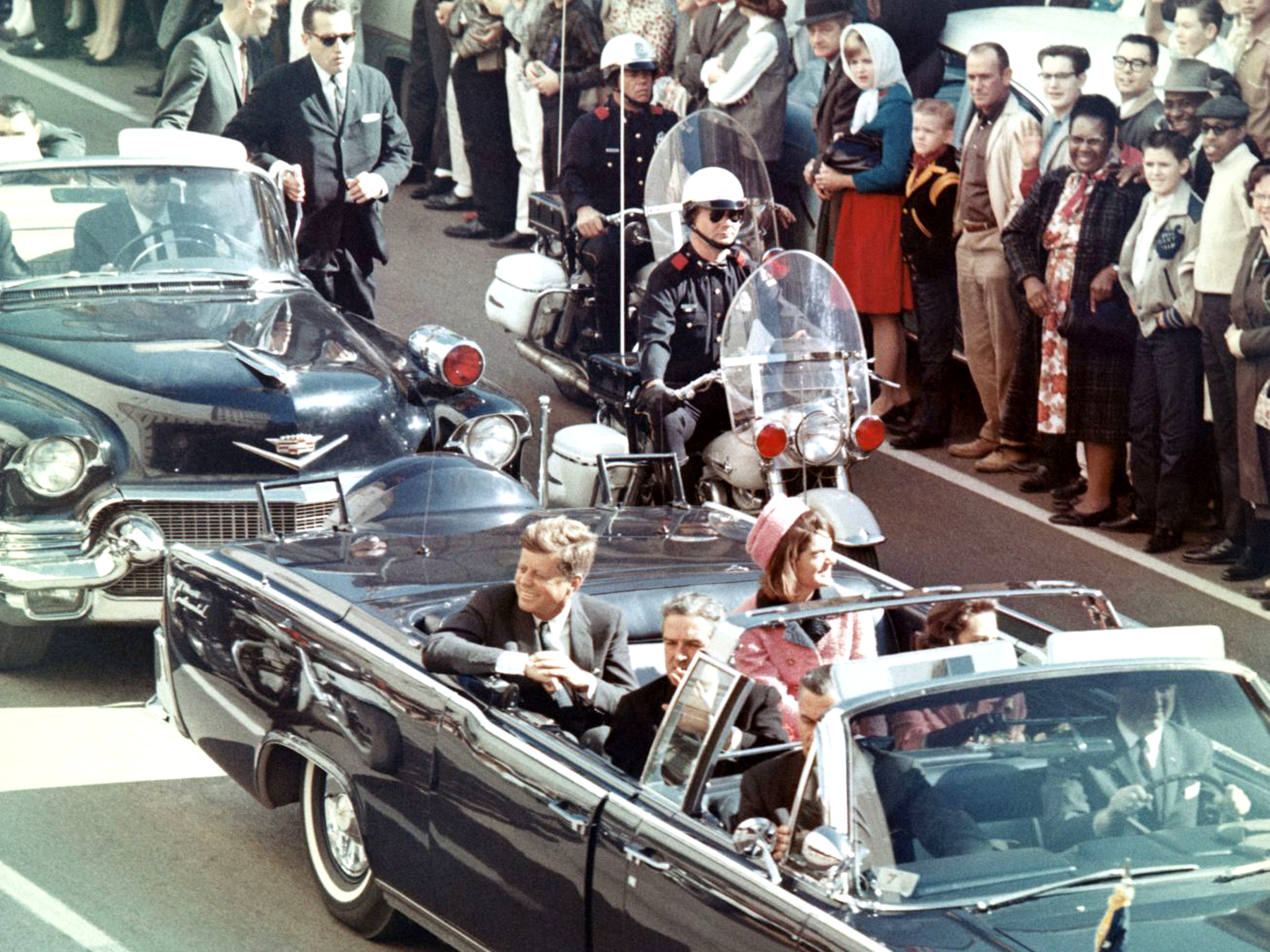
On November 22, 1963, President John F. Kennedy was assassinated in Dallas, Texas in broad daylight in front of hundreds of civilians. To say the event was historic, as well as traumatic, would be an understatement of immense proportions. There are few dates in world history that many can single out as a turning point. This is one of them.

Now, since this was such a monumental moment in history, this event has been the subject of a lot of conspiracy theories, some more absurd than others. I’m not going to delve into those rabbit holes. All I’ll say is that pretty much all of them fall apart with the slightest bit of scrutiny. They also degrade and detract from the full impact of that day.

I know this because my father has frequently told me about this day. He was still a kid in 1963. He still remembers it vividly, so much so that I can sense it still affects him to this day. He frequently recounts how they all got this dire announcement in school the afternoon it happened. He also tells me about how schools were closed the next day and how much people dreaded what might come next.

Keep in mind, this was the middle of the Cold War. For everyone alive at the time, including my dad, nuclear war could’ve broken out at any moment. For all they knew, the death of JFK was just the first shot of World War III. All they could do at this point was brace themselves.

It’s hard for anyone who didn’t live through that to appreciate that kind of dread. I know many will cite September 11, 2001 as a date of similar importance to the current generation and while I do think that too was a major turning point in history, the JFK assassination was still bigger in terms of impact.

That’s a sentiment my father has also conveyed to me. He and plenty others who remember that day said that nothing was ever the same afterwards. Before November 22, 1963, there was still this sense that everything was getting better. We, as both a country and a world, were on the right track.

We defeated the fascists in World War II.

We were making social progress with the Civil Rights Movement.

The war in Vietnam hadn’t yet become the tragedy it ultimately became.

We were even venturing into space.

Then, this happens. The President of the United States is gunned down in broad daylight. Everything action, choice, and sentiment is suddenly fueled by fear rather than hope. This notion of looking forward to the future gives way to anxiously agonizing over the present. Fear becomes distress and distress becomes anger and from anger comes chaos.

The way the 1960s played out after JFK’s death certainly took a turn. My dad also had plenty of stories to tell me about that. However, he could tie a lot of what happened back to that fateful date of November 22, 1963.

Naturally, the notion of what might have happened had JFK never been assassinated has been pondered many times and inspired many elaborate alternate history scenarios. While they may make for great stories, they still don’t change how much real people and real history is affected.

In many respects, we’re still reeling from the impact of that day. I’m no history, but I still believe that November 22, 1963 changed history for the worse. Losing the President of the United States in such a public way didn’t just shake the world. It filled everyone with dread and anxiety, which has affected us on so many levels for years to come.

We’re still dealing with many of those effects. The turmoil and chaos from that date affected geopolitics, major wars, and social trends. Since few good decisions are made in the midst of such chaos, I honestly don’t believe we as a country or a society made the best decisions we could’ve after that day. The consequences of those decisions are still being felt by many, even by those who weren’t alive that day.

It’s impossible to grasp all the ways that the JFK assassination affected history. It’s just as impossible to appreciate how it still affects our lives to this day. With each passing year, more and more of those who were alive that day either pass away or bury away those memories. As a result, many younger people don’t realize just how impactful it was.

I may not have been alive on that day, but the world I live in was shaped significantly by the events of November 22, 1963. If you’re reading this, regardless of your age, there’s a good chance that applies to you too. Our world and our history took a dark, tragic turn that day.

We can’t change it.

We can’t forget it, either.

We can only appreciate its impact, learn from it, and try to move forward.

Leave a comment

Filed under Current Events, history, politics

X-Men The Animated Series Is Coming Back! (And All The Politics Therein)

Every now and then, some news comes along that is so incredible and so exciting that words simply fail to convey the joy I feel. I could spend hours on end on multiple blog posts trying to do justice to those feelings and it would still fall short.

Just a couple days ago, some news came about with Disney’s annual Disney Plus Day that just filled my heart and soul with omega level joy. I’m still buzzing from it, so I’ll just say it outright.

X-Men: The Animated series is coming back, former producers and voice actors and all!

Just typing that out put a smile on my face.

Seriously, this is the kind of news you have to shake your head several times to be sure that it’s real. I’ve since lost track of how many times I’ve pinched myself or slapped my own face, on the off-chance that this is a dream. I’m now convinced that this is the real deal. The same X-Men cartoon that got me into X-Men and comics, in general, is coming back in all it’s 90s glory.

Now, rest assured I will be following this story. Before I wrote this, I began work on a script for a video on my YouTube channel. I have every intention of making that video a priority. It should cover the full breadth of my reaction, as well as my hopes and dreams for this series.

However, even before I could fully process my excitement, some assholes and whiny grifters began making content of their own. I won’t give their names or link to their content, but they’re the same assholes who whine about everything being “political” or “woke” or just plain “Too different/diverse for my liking.”

First off, fuck these people. Fuck them to the end of the multiverse.

Second, the very fact they’re whining about X-Men being “political” is definitive proof that they don’t know shit about X-Men or why this show was so groundbreaking. Thankfully, I’m not the only one who noticed that. On Twitter, stuff like this began popping up the day after the announcement.

Now, make no mistake. This sort of thing does nothing to temper my joy and excitement for this announcement. However, I’m already expecting asshole grifters like this to whine as loudly as the internet will allow, harping on everything they deem too ”political” for their liking.

They’ve done that with every franchise for the past six years and I don’t expect them to stop. Grifters will never stop, so long as there’s a grift to be maintained.

For that reason, I want to make one statement to these assholes and anyone who might take them seriously. Brace yourself because this might be a distressing revelation for some of you. It’s simply this.

X-Men was ALWAYS political.

I’ll give you a moment to pick your jaw up off the floor, but it’s true. Take it from someone who has been following X-Men since Clinton Administration. As a franchise, a concept, and a narrative, it was always political to begin with.

It’s not about some handsome square-jawed demigod coming down to Earth and saving the day. It’s about people born different, using their extraordinary powers to find their place in a world that hates and fears them. It was always about minorities and their struggles. It was always about civil rights and social issues.

That’s not just my opinion. That’s exactly what Stan Lee and the creators of the original series have stated outright. It’s not exactly a secret, nor is it subtle. Hell, there are multiple episodes of the original show that belabor and explore that. It’s pretty overt, as it should be. After all, that’s what X-Men has always been about.

Now, I don’t expect this revelation to stop asshole grifters from doing plenty of grifting. I know the second someone in this show says something about social justice, racism, bigotry, or anything else that might offend you’re typical racist asshole, grifters are going to melt with the force of a trillion snowflakes. It’ll be infuriating and pathetic, but it will happen.

Never-the-less, I will NOT let that stop me from getting excited about this show, nor will I let it undermine everything I love about X-Men. This show is coming back in all its 90s glory and I, for one, am eager to celebrate!

Stay tuned for a more comprehensive reaction on my YouTube channel. In the meantime, let’s all just take a moment to appreciate this moment and the catchy opening theme that we’ll be humming until 2023.

1 Comment

Filed under Marvel, Marvel Cinematic Universe, politics, superhero comics, television, X-men, YouTube

It’s Election Day 2021 America: Go Vote!

Voter's Guide 2021: Candidates, endorsements, polling places - Riverhead  News Review

Halloween is over.

We had a good time. We ate a lot of candy. We watched way too many horror movies and CreepyPastas. It was fun for many. I hope everyone enjoyed it.

Now, we need to get serious again. For my fellow Americans, today is one of the most serious days we’ll experience.

It’s Election Day.

It may not be a Presidential Election like last year, which tend to get glossed over if voter turnout is any indication. That doesn’t make it any less important. If anything, years like this are becoming more important because the assholes who tend to stay in power do so because the people don’t care enough to vote them out. The only way to keep these assholes from undermining America is to vote them out or keep them from getting in.

Unfortunately, doing so means keeping up with local politics. I know that tends to be a test in pain tolerance these days. Talking about politics is akin to throwing undercooked steak at a hungry grizzly. It’s bound to get messy and dangerous. We already saw just how dangerous it could get earlier this year with the Capitol Riot.

We cannot and should not let that danger dissuade us from doing our American duty and voting.

So, I implore all my fellow Americans to do whatever they have to do today in order to vote. Check with your local government. Look up sites like this one. Find out where you have to go, what you have to do, and who’s on the ballot. Then, get out there and vote!

It’s not just a right.

It’s a responsibility.

Happy Election Day, America. Let’s make democracy work.

1 Comment

Filed under Current Events, politics

A Brief Message To Those Who Threaten Election Workers And Officials

Ballot box fabricator navigates unprecedented demand for early voting

Fuck you.

Seriously, fuck you and fuck your bullshit excuses for doing something so stupid, cruel, and outright un-American.

Fuck you and your ass-backwards definition of patriotism.

I apologize for the harsh language, but sometimes some extra profanity is both justified and necessary to get the point across. In general, I try to be fair and understanding, especially for touchy issues that include hot-button political topics. I always make it a point to offer respect to those who might not agree with me on certain topics, be they abortion or religion.

I just can’t do that here.

I just can’t muster a shred of sympathy or understanding to people who go out of their way to harass, threaten, and denigrate the people who volunteer their time and energy to ensure American democracy functions.

In case you’re not aware of this deplorable trend, this has actually been an ongoing issue since the 2020 election. A sizable segment of the American population did not like how that election turned out and, like whiny children who didn’t get their way, those same people have been lashing out ever since. Then again, most children don’t make death threats to public officials, so I’m hesitant to call them childish.

Now, I’ve actively avoided this topic since the end of 2020. I’ve seen time and again how it brings out the worst people and the ugliest kind of politics. There’s really no convincing anyone something other than what they’ve come to dogmatically believe. They only ever consume news that tells them what they want to hear and assume every fact to the contrary is a lie.

Usually, I’m perfectly fine with someone living inside their own bubble, provided that they don’t harm anyone else. This is America. We can believe whatever we’d like. However, I draw a hard line when those beliefs become an excuse for making threats to election workers and people who volunteer in the name of democracy.

Some of these threats aren’t vague, either. Here is one story from Reuters that offers some rather graphic examples.

Here’s another video from CNBC. Again, the examples they give are pretty damn graphic.

There are plenty more I could give, but this news is upsetting enough. I don’t care what your political affiliation is or how you voted in the last election or several. This is not how civilized people in a functioning democracy conduct themselves. This isn’t even how children conduct themselves at a little league baseball game.

This is fucking outrageous.

If you are a proud American and actually value the principles of democracy, then I hope this upsets you. These aren’t people with a political agenda being threatened. These are just ordinary Americans doing their jobs. Threatening them because you don’t like how the numbers are panning out doesn’t make you a patriot. It makes you an asshole.

Again, fuck those people.

Fuck them and all their un-American values.

Leave a comment

Filed under Current Events, outrage culture, politics, rants, real stories

Honest Question: Do Political Ads Convince Anyone Of Anything?

Political ads have little persuasive power | YaleNews

It’s that time of year again for my fellow Americans. It’s election season. Now granted, it’s not a Presidential election, which have a tendency to get messy, ugly, heated, and hostile. The last two Presidential elections have sadly demonstrated that. However, democracy is still an important part of the American tradition. That means we have elections every year.

Years like this are what we call “off-year elections.” We don’t elect a President, but we do elect senators, representatives, governors, and various other officials. It may not be as glamorous or high-stakes as a Presidential election, but it’s something I encourage every American to take seriously.

Even if you hate politics and politicians, you should still vote.

If you’re not sure how, depending on where you live, check out this website and follow the steps. It’s not just a civic duty. It’s the lifeblood of democracy.

That being said, I do have one major bone to pick with election season. It has to do with the political ads that seem to run every five minutes on every channel I watch, as well as every video I stream online. Chances are, my fellow Americans are seeing plenty of those ads too. I have a feeling they’re as sick of them as I am.

With that in mind, I have a simple question to those who make these ads, as well as those who can’t avoid seeing them.

Do these ads actually convince anyone of anything?

I promise I’m not being facetious. I’m asking an honest, sincere question.

Has anyone actually been swayed by these ads? Have they ever affected your voting habits in any meaningful way?

I know people tend to be exceedingly partisan about everything these days. There are people who will vote for alleged sexual predators over someone of the opposing party. I know people who are registered republicans or democrats. Their candidate could run over puppies in the street and they would still vote for them.

It’s sad, frustrating, and antithetical to core American principles, but that’s the current situation we live in. It also makes these political ads all the more irrelevant. Seriously, if people are this partisan and dogmatic about their political affiliations, is an ad going to change that? If not, why spend money on them in the first place?

It’s not an insignificant sum of money, either. Running ads on TV and online make up a sizable chunk of campaign costs for aspiring politicians and that cost is only increasing. If they don’t work, then why spend all that money in the first place? What’s the point if it doesn’t change a single voter’s mind?

I suspect that’s not entirely the point of these ads. It might just be the case that these ads are just reminders for people who planned to vote a certain way to get out there and vote. After all, voter turnout has been historically low in the Untied States. While I agree that’s an issue, are these ads really the best way to address it?

Again, it’s an honest question. I’m not trying to come off as jaded or cynical, although I don’t blame anyone for feeling this way after the past five years of American politics. If these ads aren’t helping, though, then I think these questions are still worth asking.

Jaded or not, I still fully intend to vote and I already know who I’m voting for. I encourage every registered voter in America to do the same. Try not to vote blindly, either. Look into each candidate. Get a feel for who they are and decide for yourself whether you want them representing you. It can be tedious, I know, but that’s how you do democracy. That’s how you preserve the core values that make the Untied State of America what it is. Put in that effort, even if you find these ads insufferably annoying.

Leave a comment

Filed under Current Events, politics

Why Do Preachers Need/Deserve Private Jets? (A Sincere Question)

Televangelist Kenneth Copeland Defends His Private Jets: 'I'm A Very  Wealthy Man' - Flipboard

Whenever I talk about religion on this site, I try to be as respectful and tactful as possible. I don’t seek to offend or insult anyone who identifies as religious. I also don’t seek to denigrate certain religious practices, although I do believe a few warrant extra scrutiny. I’m sure I’ve overstepped those bounds in the past and for that, I do apologize.

All that being said, I have a serious question I’d like to present to those who are genuine and sincere with their faith.

Why do preachers need, let alone deserve, private jets?

I promise I’m not being facetious. I’m also not trying to make a larger point about certain religions. I would genuinely like someone who identifies as religious to explain this to me. Don’t just throw bible quotes at me. Explain it to me like I’m a child.

I know preachers having private jets isn’t new. However, recent events have made preachers and their spending habits a lot more noteworthy. Some make elaborate excuses as to why they have private jets. I still don’t get it.

These are not CEOs who run multi-billion dollar companies.

These are not heads of state who have to be able to travel the world at a moment’s notice.

These aren’t even celebrities who have achieved a level of success that affords them the option of some added luxury.

These are preachers who, for the most part, make their living giving sermons to adherents. I’m not saying that isn’t a noble profession. I went to church as a child. I remember the preachers and priests who led the sermons. They were genuinely nice people and they didn’t have private jets. One of them didn’t even own a car.

Now, I know these kinds of religious leaders are in a different hemisphere compared to the charismatic televangelists who have their own megachurches. I also know that more than a few adherents who utterly despise these people. One of them once told me, “That jet won’t help them escape where they’re going.”

Regardless of whether or not you believe that, I would still like someone to explain this practice to me. I get that charismatic people will attract crowds, money, and power. I get that those same people will abuse that power in one way or another. That’s just human nature.

What I don’t understand is how the adherents who believe, support, and send money to these people can accept this sort of thing and not have it clash with their faith somehow. Nearly every major religion has strict condemnations of greed and excess. How can this be justified?

Again, this is a sincere question. I hope to get a sincere answer because the absence of an answer is every bit as revealing.

Leave a comment

Filed under Current Events, politics, rants, religion

Whistleblower Confirms That Facebook Is Harmful: So What Do We Do About It?

See the source image

There are certain products in this world that we know are harmful, but use them anyway. Cars kill thousands every year through traffic accidents. Thousands die every year by overdosing on drugs that were legally prescribed to them. However, we still use these products because they are essential for our way of life.

With that in mind, I think most people already know that certain social media platforms, such as Facebook, can be harmful. You don’t need to look that hard to find harmful or damaging misinformation on Facebook. Having been in college at the time Facebook really took off, I think most people understood to some extent that this product could be used for immense harm.

So, was it really that surprising when a whistleblower came out and revealed just how much Facebook was aware of the damage they were doing? Just like tobacco companies before them, they could see that harm unfolding in real time. They just weren’t willing to take the kinds of steps that would hinder their profits.

They’re a multi-billion dollar business. They want to keep making billions for years to come. That shouldn’t surprise anyone. That’s the nature/flaw of capitalism.

In case you haven’t been following this story, the fallout from this whistleblower’s revelations are still unfolding. If you want details on the story, here is what NPR reported:

NPR: Whistleblower to Congress: Facebook products harm children and weaken democracy

Facebook’s products “harm children, stoke division, weaken our democracy and much more,” Frances Haugen, the former Facebook employee who leaked tens of thousands of pages of internal documents, will tell lawmakers on Tuesday.

“When we realized tobacco companies were hiding the harms [they] caused, the government took action. When we figured out cars were safer with seat belts, the government took action,” she will say, according to her prepared testimony. “I implore you to do the same here.”

Haugen will urge lawmakers to take action to rein in Facebook, because, she says, it won’t do so on its own. “The company’s leadership knows ways to make Facebook and Instagram safer and won’t make the necessary changes because they have put their immense profits before people,” she will say.

There’s much more to the article, but I singled out this excerpt because it effectively sums up the situation. Again, most reasonable people probably suspected that a platform like Facebook was doing real harm to public discourse and the psychology of teenagers, especially girls. It’s still nice to have confirmation.

As someone who uses Facebook, I can attest to its harms. There is some pretty toxic crap throughout the site, as well as some equally toxic people. Sadly, some of that toxicity comes from friends and relatives sharing content, often of a political nature, that gets people upset and outraged. That’s not a bug, either. According to the whistleblower, that’s entirely on purpose.

Now, in the interest of maintaining some kind of perspective, I’m inclined to remind everyone where that content on Facebook comes from. Remember, they’re not the one’s producing it. They’re just the platform. It’s the users and the people who are creating that. It’s people willing to lie, denigrate, demean, and troll who create the content that makes Facebook and social media so toxic.

To blame Facebook entirely for these harms is like blaming car manufacturers for traffic fatalities. At the end of the day, the car itself doesn’t cause the harm. It’s the person using it.

That being said, Facebook is not a car, nor should we treat it like one. It’s also not a tobacco company and we shouldn’t treat it like that, either. Facebook doesn’t create a tangible product that we can hold in our hands to harm ourselves, nor is it a chemical we willingly put in our bodies. It’s a digital service that we engage with and, in turn, it engages with us.

From that exchange, real harm is possible. This whistleblower confirms that and, based on the available information, I think the data presented is valid. That still leaves one question to ponder.

What do we do about Facebook and other companies like it?

That’s still an unresolved question and one that too many people try to answer bluntly. Shortly after this story came out, the ever-popular #DeleteFacebook hashtag started trending. However, I doubt anything will come of that. I’ve seen that hashtag trend on multiple occasions and it has done little to affect Facebook’s growth.

These revelations are bad, but I doubt they’ll be enough to bring Facebook down completely. They may lose subscribers and revenue in the short-term, but they’ll adapt and grow in the long run. You don’t become a multi-billion dollar company without being able to adapt in lieu of bad press.

At the same time, I think we should take some action to mitigate the impact of Facebook and social media. What could that entail? I’m not smart enough to offer a comprehensive answer, but I do know the extremes people are throwing around just won’t work.

For one, Facebook can’t be banned or shuttered. It makes too much money and it would set a dangerous precedent for every business, online or otherwise. It’s also probably grossly unconstitutional, at least in western democracies like the United States and Britain.

Even if it were banned, people would find a way to get around it. Just look at the countries that have tried to ban porn. People still find a way to get it.

Others have thrown around ideas like splitting up Facebook, just like America once did with oil companies and phone companies. That would certainly be extreme and there are precedents for doing so. However, would that really change how Facebook and social media are utilized by real people? Would those not satisfied with the newly broken up Facebook simply create something similar under a different name?

The most logical recourse might just involve demanding that Facebook make the changes they refused to make, according to the whistleblower. They could also be subject to major fines and taxes, as we’ve done before with tobacco. Will those measures be effective? I don’t know, but I’m skeptical, to say the least.

I honestly don’t think there’s an easy answer to the question. I also think that, even if governments did implement new measures on social media companies to combat their harms, both the companies and the users would find a way around it. Both sides are just too motivated at this point.

I still believe there’s a better solution. I just don’t know what it is and if anyone has one to offer, please share it in the comments. In the meantime, I guess the best recourse we can all do is to just be careful about what we place on Facebook and be more mindful of the content we consume.

Leave a comment

Filed under Current Events, health, human nature, outrage culture, political correctness, politics, psychology, technology

Rethinking Jobs And Business: How Pandemics And Relief Benefits May Change Both

Help wanted? | Free | hometownsource.com

The world is always changing. That’s the only constant.

Sometimes, it changes more rapidly and chaotically than usual. That tends to happen a lot when major events transpire, such as a once-in-a-generation pandemic that infected millions and shut down entire countries. I hope I don’t have to belabor that to anyone with a news feed for the past year.

At the same time, these kinds of rapid upheavals can get us thinking harder about things we tend not to question. I’m not just talking about how much we take our health, our infrastructure, and our essential workers for granted. I’m referring to bigger concepts about how we approach life, society, and how we structure our lives.

One area that seems to be getting more scrutiny lately is how we approach jobs, work, and careers. I’ve certainly given it more thought, mostly in terms of the impacts of telework and how I used my stimulus check. I suspect many others have contemplated these topics in new ways in wake of recent events.

Now, as the pandemic nears its end, some of those concepts are already manifesting in the real world. One effect, in particular, has been especially jarring in America, mostly for reasons that other industrialized countries may find laughable. It has to do with people not wanting to work for a lousy, unlivable wage.

I know that shouldn’t be such a radical concept, but it is and as a proud American, I find it infuriating. There’s no getting around it. The ages for the average, non-CEO American have been stagnant for decades. It’s an issue that has been festering since long before the pandemic and even before I was born.

Before the pandemic swept in, there was an ongoing debate on whether the minimum wage should be increased to $15 nationally. I won’t get too heavily into the politics and talking points behind it, mostly because it ultimately descends into cycle of speculation and fallacies. I’ll just say that the pandemic has complicated that debate in unexpected ways.

During the height of the pandemic, the economy was basically shut down. Suddenly, millions were out of work and businesses had to shut down. Many still haven’t fully recovered. A big reason why many didn’t starve to death or end up on the streets was because of government relief packages, which included extended unemployment benefits.

While America’s relief package wasn’t nearly as generous as other countries, it was certainly better than nothing. I know plenty of people who genuinely needed that relief to stay afloat in terms of paying bills and feeding their families. It’s also not unreasonable to say that this was a critical measure in terms of preventing the pandemic from getting even worse.

However, this effort revealed something remarkable. According to a study done last year, the unemployment benefits that many workers received was actually better than their previous wages. It wasn’t an insignificant chunk of the work force, either. The benefits were greater for approximately 68 percent of American workers.

What does that say about the wages we’re paying our workers?

Moreover, what does that say about the system in general that workers can make more by not working than they would if they were?

Something about that doesn’t add up, literally and conceptually. I get that this was an unprecedented situation. At the same time, it reveal something about how we see work and workers. It’s something businesses are starting to realize too.

As the country and the world opens up, new job opportunities are arising. That’s good news for those who have been out of work. Unfortunately, those same businesses are having a hard time filling those positions.

The jobs are there.

The workers are there.

They just aren’t gravitating towards one another.

Here’s a brief rundown of the situation, courtesy of NPR. If you haven’t been working or are lucky enough to have kept your job during the pandemic, it should offer some insight and perspective.

NPR: Millions Are Out Of A Job. Yet Some Employers Wonder: Why Can’t I Find Workers?

At a time when millions of Americans are unemployed, businessman Bill Martin has a head-scratching problem: He’s got plenty of jobs but few people willing to take them.

“I keep hearing about all the unemployed people,” Martin says. “I certainly can’t find any of those folks.”

Martin helps run M.A. Industries, a plastics manufacturing company in Peachtree City, Ga. The company makes products used in the medical industry — specifically, in things like coronavirus tests and vaccine manufacturing and development.

But as he struggles to keep up with demand, Martin is finding it almost impossible to find new workers.

As someone who has worked his share of lousy, low-paying jobs, I can’t say I’m surprised by this. Don’t get me wrong. I still feel for the business owners who need workers to keep things going. I just can’t forget how arduous it was, working hard at a job that paid so little and left me so exhausted at the end of the day.

If the alternative is staying home and collecting unemployment, which ultimately pays more, then the choice is easy. That’s especially true for those who have kids or relatives they need to take care of. It’s not that they’re lazy, as some overpaid pundits love pointing out. It’s just that the nature of these jobs aren’t that appealing, especially when the pay is so low.

If anything, this situation has inspired us all to take a step back and look at how we approach work, jobs, careers, and business. When you think about it, it’s a little distressing that we build so much of our lives around work. It’s not just something we do out of obligation and responsibility. Many literally have to work in order to survive.

Is that right?

Is that just?

Is that healthy for society as a whole?

I say this as someone who has been lucky enough to have jobs that I’ve both loved and hated. I know what it’s like to work for a business that you hate. I also know what it’s like to have a job you find genuinely fulfilling. Not everyone is that lucky. In fact, I suspect the vast majority of the population, even in America, never experience that luck.

I get that there are economic reasons why some businesses can’t pay their employees high wages. I’ve worked in fast food restaurants. I know the profit margins aren’t exactly large. I also know that, even when I could make more than minimum wage, it was rarely enough to live on. That’s not even factoring the physical toll some of this work takes.

Despite that toll, there was still an undeniable stigma to those who didn’t work or those who simply avoided low paying jobs. In America, it’s a direct extension of that old protestant work ethic that equates moral worth with a willingness to do backbreaking labor for minimal pay. I’m not saying that work ethic is wrong, but I do think it needs to be re-evaluated.

The pandemic suddenly gave people an option on whether or not they wanted to do these kinds of low-paying jobs. Many understandably opt to just collect unemployment. They may not live luxuriously, but they will live. In some cases, they’re even better off.

It may be a sign of things to come. I already speculated on how the pandemic relief bills could be a precursor to a universal basic income. Now that people have experienced life in which their survival isn’t directly tied to having a low-paying job, I think it’ll be difficult to back.

I also think that’s a good thing. Regardless of how you feel about minimum wages, work ethic, or running a business, I think it’s generally a positive trend that we’re starting to decouple work with the right to survive. I think it’s a trend that has to happen, especially as automation does more and more of the low-skilled labor traditionally done by human workers.

It’s true. Some people are lazy and don’t like to work. Some people are just so driven and incapable of not working. Both still deserve to live without needed a job to keep them from starving to death or losing their home. As bad as this pandemic has been, I sincerely hopes it inspires us to rethink how we structure our society. There is a better way of doing things. We should always strive to do things better. Sometimes, that means rethinking everything we’ve come to believe about work, business, and life in general.

Leave a comment

Filed under Current Events, health, human nature, politics

Thought Experiment: How Much SHOULD Society Seek To Control People?

Make and Enforce the Rules Without Making Enemies | FirstService Residential

The older I get, the more I realize how complicated the world can be. By the world, I don’t just mean complex socio-political or cultural trends that manifest over extended periods of time. I’ve found that most people, in general, are complicated.

Every individual has their own story to tell.

Every person has their own goals, wants, needs, morals, and methods for doing things.

Every community and culture has their own approach to molding a functioning society.

There’s no one perfect way to go about it. If anything, there are too many approaches that are good, bad, or some messy combination of both. Many of us like to think there’s a single way to maximize the happiness and potential of all individuals. Many even believe they know it when they’re young and idealistic.

Then, we get older and we realize that’s not just impossible. It’s untenable.

I say this as someone who went through his share of ideological shifts, especially in college. I won’t bore everyone with the details. I’ll just say that my perspectives on politics, religion, and culture when I was 20 were vastly different from what they were when I turned 30.

In developing those perspectives, there weren’t many common threads, especially when religion and politics were involved. I know I’ve touched on both many times before and while I try to be fair, I don’t deny I have certain leanings that I don’t hide.

I am generally mistrustful of organized religion, as well as the agendas of those who are overly extreme in their beliefs. I am just as mistrustful as those who take extreme positions on certain political ideologies, be they conservative or liberal.

I am deeply critical of conservative religious types who basically seek to impose a theocracy.

I am also deeply critical of extreme left-wing liberals who seek to impose a politically correct autocracy.

People on both sides will likely claim they’re not seeking anything bad or negative. They genuinely believe that their way will be for the greater good. They believe people will be happier and more prosperous of everything they believe is imposed and integrated into a larger order.

Sincere or not, I still say those beliefs are misguided. I also suspect those same people don’t understand the complexities and nuances of individuals or humanity, as a whole. At the same time, I do think they raise an important question, which also warrants a larger thought experiment.

How much SHOULD society seek to control people?

It’s a question both sides of the political/ideological/cultural/religious spectrum grapple with, even if they don’t say it out loud. It often comes back to this. Whether it involves determine morals, crafting laws, or developing a larger culture, this is one of the most common issues.

It’s not an unreasonable concern, either. To some extent, society needs to exact some control over peoples’ behavior. Even in small, tribal settings, individual behavior can have a profound impact on others. If people just did anything they want without any regard for others, we couldn’t function. We couldn’t cooperate, coordinate, or collectively thrive.

Humans evolved to be a social species. One individual, on their own, can only do so much to function and survive. A group of individuals can achieve so much more. With a large enough group, we can create a civilization that can literally reshape the face of the planet.

That kind of coordination requires some level of control over the individual. Whether it’s by punishing or shaming certain behaviors or strongly encouraging others, we need some mechanism for maintaining social cohesion. It’s just a matter of extent.

Some ideologies go to incredible extremes. Religious conservatives can be particularly draconian in enforcing control. They don’t just seek to punish certain behaviors while censoring certain messages. They actively seek to police peoples’ thoughts and feelings, often in a way that’s damaging to many individuals.

Extreme liberals can be just as bad. There are those who seek to not just punish those who do so much as tell an offensive joke or depict video game characters in a way that’s too sexual. They seek to punish individuals in the present for the actions of those in the past. Like their religious counterparts, they also attempt to police others’ thoughts.

Then, you’ve got the extreme libertarians who try to minimize social control to the greatest extend possible. I would argue that too is not practical, if only because it ignores the nuances and complexities necessary for a functioning society at large.

For most people and societies, the extent of the control they impose varies. In some places, free speech is protected while in others, it’s tempered in the name of ensuring social harmony. The same goes for things like encouraging or discouraging certain behaviors, like drinking, gambling, or promiscuous sex. Some involve laws while others involve shaming. The goal is still the same.

It all comes back to control. To complicate things even more, some individuals require less control than others. There are those who are perfectly responsible and don’t need the law or shaming to be decent, upstanding members of society. There are also those who are just pathologically incapable of following the rules and getting along with other people. What does society do about them?

I understand I’m using “society” in a broad, generalized term. That’s because the question, and any thought experiment surrounding it, needs to focus on the bigger picture. I know that’s not easy for any one individual. Like I said, we all have our biases, prejudices, and predispositions. We also tend to believe we’re right and are generally resistant to change.

I maintain that’s exactly why we should ask questions like this. It’s also why we should dare to think about how much or how little we control one another on a societal level. Civilization and society, for all the wonders they achieve, is an ongoing process. That means there are always opportunities for refinement. We can and should take every opportunity to do so.

If you have any insights on this thought experiment, please share them in the comments. Also, if you have any thought experiments you’d like me to discuss, please share those as well.

1 Comment

Filed under philosophy, politics, Thought Experiment