Category Archives: health

Common Side Effects: A Bold Show With Bolder Ideas

This is a video from my YouTube channel, Jack’s World.

In this video, I highlight a remarkable new show called Common Side Effects. It’s rare for a show to come along and really impress me after just one season. But this show, which debuted on Adult Swim, really raised the bar for just how great adult animation can be. And I highly encourage everyone to check it out for themselves. Enjoy!

Leave a comment

Filed under health, Jack's World, television, YouTube

Cheering Yourself Up With The Help Of George Carlin And Thomas The Tank Engine

Sometimes, you find yourself having a bad day.

And when you have a bad day, you often find yourself doing dumb, irrational things to make it less bad.

And when you do too many dumb, irrational things, you find that it’s too late and you’ve somehow made your day worse.

I promise that what you just read was not a direct quote from an episode of “Bojack Horseman,” although when you read it again, it sure sound like it ought to be. These admittedly bleak musings are just a byproduct of anyone navigating life, in general. I guarantee that anyone who has lived past the age of 24 has experienced this sort of thing more than once.

We all have bad days. They’re unavoidable.

Even if you’re rich, beautiful, and well-connected, you’re just going to go through periods where you feel like the universe wants to throw your soul into an industrial furnace. But even if these kinds of days are unavoidable, there are ways we can deal with it. And not all of them have to involve potent drugs or expensive therapy.

As someone who has had his share of bad days, I’ve uncovered numerous little ways to make them better over the years. Some are simple, common sense that most people with functional brain cells can figure out. Others are more personal that I prefer not to share.

I also understand that what makes my day better isn’t going to be the same for everyone. I can immediately make myself feel better by simply getting fully naked, reading some of my favorite comic books, and putting on a playlist that’s loaded with every song by AC/DC and Nirvana. That does plenty to boost my spirits, but it’s not for everyone.

But as unique as we all are as human beings, I also believe we all share certain commonalities that bind us. I also believe that through those commonalities, we can all find ways to make our bad days feel a little less awful. And in that spirit, I’d like to share a video I discovered a while back that has had an uncanny ability to put me in a better mood, no matter what kind of day I’m having.

It involves the comedy of the late, great George Carlin.

It also involves the iconic and beloved children’s show, Thomas The Tank Engine.

I promise I’m being completely serious. This is real. This is not a product of AI. This is actually something George Carlin worked on while he was still with us. And while the kid-friendly version of Thomas The Tank Engine is beloved by generations of kids and adults, Carlin found a way to give it his own special/vulgar/hilarious twist.

And thanks to talented video editors and the wonders of YouTube, there’s a 45-minute video of George Carlin voicing numerous characters from Thomas The Tank Engine while mixing in the kind of brilliantly glorious comedy that still gives everyone who works at the FCC night terrors. I’ve made it a point to save this video and memorize the URL. Because it’s not just delightfully funny. It is the ultimate medicine for any and all jaded souls.

If you don’t believe me, watch for yourself. It may very well ruin your childhood to some degree if you’re a fan of Thomas The Tank Engine, but I promise you it’s worth it.

To this day, I still can’t get through this video without laughing so hard that my throat hurts. I’ve also watched this video, in part or in full, during some of the worst days I’ve ever had. It never fails to make me feel better. It’s like medicine for my mind, body, and soul.

It requires no prescription.

It has no side-effects.

You can even take it with alcohol and various other intoxicating drugs.

I don’t know how big the universe is or how vast the multiverse might be. I just know that I’m grateful to live in a plane of reality where a mash-up of George Carlin and Thomas The Tank Engine exist.

Leave a comment

Filed under comedy, funny, health, philosophy, psychology

A Hilarious Headline With Promising News Regarding Medical Exams (Involving Butts)

Every now and then, you come across a headline that covers a serious issue, but is still inherently funny. Sometimes, it’s on purpose and not just for the sake of clickbait. There are often subjects that need a bit of humor in order to get people to pay attention to something important. I’m not saying it’s right, wrong, or indifferent. But there is an underlying reason and it can be used for good.

So, when an article is written about something as serious as rectal exams, we should expect a certain amount of toilet humor to enter the conversation. It doesn’t matter if you’re a serious person with serious concerns about human health. We were all immature kids at some point. We all laugh, chuckle, or cringe at jokes involving butts, poop, and farts.

To that end, I commend Slate.com for daring to lean into the humor of the topic when discussing something as serious as prostate health, which often involves rectal exams. Butts and buttholes aside, prostate cancer kill thousands of men every year. In 2022 alone, over 33,000 men died as a result of this disease.

Thankfully, this is one of those forms of cancer that, if caught early, can be effectively treated. However, catching it early often involves men of a certain age getting regular exams. And some of those exams just happen to involve a doctor sticking a finger up your butt to feel your prostate.

Take all the time you need to laugh and/or cringe at that notion. I’m sure there’s a sizable population of men that are hilariously insecure about anyone putting anything up their buttholes. By contrast, there are others who may feel the exact opposite.

To both crowds, this latest news is certainly of interest to them. But rather than go over the serious medical details, I’ll just let the headline speak for itself:

Slate: The Rectal Exam Has Almost Bottomed Out: Men Feared It for Decades. Now It’s Finally Disappearing. What Happened?

First, let’s just take a moment to appreciate the sheer poetry of that headline. Yes, I understand that’s not the headline you see when you click on the link. That’s kind of the point. The text above isn’t meant to catch your interest with the very valid seriousness that’s associated with prostate health. It’s meant to draw out your inner 13-year-old, if only to remind you about certain aspects of your health that you’d rather not think about.

As a man who is right around that special age where examining that part of my body is necessary, this news is encouraging. It’s not just the notion that fingers up buttholes might no longer be necessary. It’s that we’re getting better at testing for and detecting prostate issues. As a man, this is important to me. While prostate cancer doesn’t run in my family, at least to my knowledge, I still take my health seriously.

If there is an ailment that awaits me in the near or distant future, I want to catch it early. I want to treat it early. Most importantly, I don’t want to let immature attitudes about things going into men’s butts to prevent me from better health.

Hopefully, other men take the same approach. Because I get it. The idea of a doctor’s finger going up your butt is bound to trigger certain feelings. But I urge you, for the sake of your health and your loved ones, get over it. The whole of your body will be better off because of it.

Leave a comment

Filed under funny, health

Narcassists Are More Likely To Become CEO (And Why That’s Concerning)

A while back, a close relative of mine retired after a long, fruitful career that spanned nearly 40 years. They probably could’ve retired much sooner, but they were among the fortunate few who actually enjoyed their job for the most part. It had its ups, downs, and everything in between. But overall, it was a good career that most would be lucky to enjoy.

Over the course of that lengthy career, they worked under multiple CEOs. This was a fairly well-regarded organization, too. So, the CEOs were not part of some succession plan or a proud family business. This was the kind of company that followed a fairly traditional corporate structure and kept things impersonal as much as possible when it came to executive decisions.

However, in talking about how much the job had changed over the years and how much the industry had evolved in that time, this same person revealed something I found both striking, yet unsurprising.

Every single CEO they worked under qualified, by their definition, as a narcissist.

Now, for most people who have worked similar jobs, this probably isn’t surprising. There’s this prevailing sentiment that anyone who becomes CEO has to be a narcissist to some extent in order to get to that level. It even makes a perverse bit of sense. By their own nature, a narcissist seeks control, status, power, and aggrandizement. And the position of CEO offers all of that in spades.

But even if it makes sense for narcissists to become CEOs and we consider it normal, for the most part, that still warrants concern. There are times when our concept of normal has some major problems and we shouldn’t be afraid to confront it. This is definitely one of those situations.

For the relative who told me this, they had quite a few interesting stories to tell regarding the narcissism of CEOs. But they did make one important distinction. Even though these individuals were overtly narcissistic, they were not outright psychopaths. While most psychopaths are narcissistic, not every narcissist is a psychopath.

Narcissists can and do have some sense of moral responsibility.

Narcissist can and do experience empathy on some levels.

Narcissists can even be good CEOs, for the most part.

However, we shouldn’t let that override the legitimate concerns we should have when dealing with narcissists. There’s a reason why so many super-villains in pop culture tend to be inherently narcissistic.

Among the key traits of narcissists is a sense of arrogance, self-entitlement, vanity, and a greater capacity to exploit others for selfish means. These are traits we rarely want in people we deal with on a day-to-day basis. But in the role of CEO, they can give someone an advantage.

It means they won’t hesitate to make decisions that cause harm, distress, or ruin to others. It also means they’ll cross lines most people won’t in order to increase profits, further an organization, or undermine the competition. They can and will do things that’ll seriously hurt those working for them, yet still sleep comfortably in their fancy beds without a shred of guilt.

Maybe these sorts of tactics do help certain companies and organizations thrive. Many of the most successful companies in the world were founded or run effectively by narcissists who did things that, in hindsight, were deplorable by most measures. But we give them a pass because that made them and their company a great success.

It’s a not-so-hidden blind spot that we, the public, tend to overlook. And as I’ve gotten older and had my own experiences with narcissists, I feel like that sort of mentality is detrimental in the grand scheme of things.

One story that did stand out from my relative was how one particularly narcissistic CEO lamented how they might not have enough money to retire. Granted, this CEO was making well above six figures and he was complaining directly to someone who made a fraction of this. The idea that their bloated salary was not enough to retire on just seemed outrageous for someone just trying their best to pay their rent or mortgage on time.

It perfectly reflects how narcissists lack empathy and aren’t the least bit concerned with how people less fortunate or affluent get by. It would be one thing if this were just someone who had been born rich. But remember, this is a CEO. Unlike those rich from inheritance, their decisions impact entire organizations. Those organizations are full of hard-working people who may or may not be in a position to retire, no matter how hard they work.

That kind of disconnect between those making executive decisions and those actually doing the work isn’t just illogical. It’s damaging to the long-term health of any organization and society. Because if the CEOs of the organizations we rely on to keep our economy growing are too narcissistic, then what incentive do they have to do right by the society at large?

If the choices is between making the right choice for the most amount of people or more money and power for them personally, a narcissist won’t make the right choice.

If the choice is between sacrificing for the good of others or exploiting others for their own personal benefit, a narcissist will choose to benefit themselves 99 times out of 100.

Unlike most people with a more balanced perspective, narcissists need to be coaxed into doing the right thing. And even when they do, they’ll often do it begrudgingly. Those who are smart on top of being narcissists might be able to come to that conclusion if the long-term benefits are there. But for the most part, you can usually expect a narcissist to made decisions that benefit them over everyone else.

In addition to the anecdotes of my retired relatives, there’s real science to indicate that a disproportional number of CEOs are indeed narcissists. And those narcissists working within those titles will continue to do whatever they think they can get away with, so long as they continue to benefit. You really don’t have to look far to see how much harm decisions from narcissistic CEOs can incur.

Having to work for a narcissist CEO is always challenging, but it can be done. Most people who have worked a steady job can attest to that. But it’s still worth asking ourselves if this situation is tenable in the long run. Because if we continue rewarding narcissists with lucrative jobs like CEO, then we’re just creating a world that’ll enable more narcissists.

1 Comment

Filed under health, human nature, philosophy, psychology

The Only (Free) Self-Help Advice You’ll Ever Need

This is a video from my YouTube channel, Jack’s World.

This video is a simple offer of free self-help advice in a world where every self-professed guru attempts to charge everyone every last penny for what is often common sense. Having seen way too many videos on YouTube professing some sort of magical secret to success, I felt like a video like this was necessary. Enjoy!

Leave a comment

Filed under health, Jack's World, psychology, YouTube

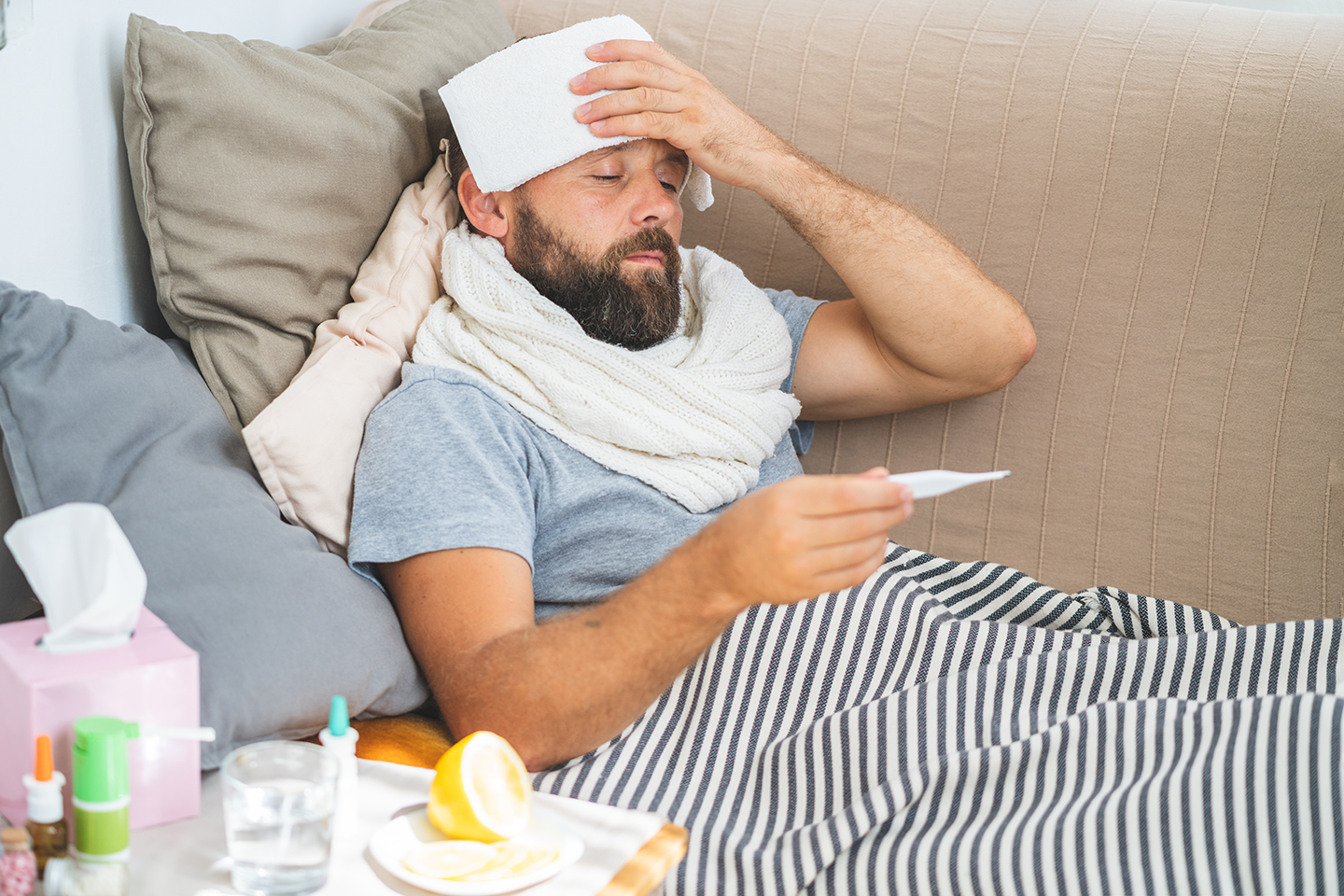
My (Terrible) Experience With COVID-19 (And A Reminder To Get Vaccinated)

Being sick sucks. I think we can all agree on that.

It doesn’t matter what you’re sick with. That doesn’t make the experience any less debilitating. Even something as simple as a headache can hinder your ability to do anything, major or minor. But when you’re sick with something serious, that compounds every aspect of why being sick sucks.

I know this because over the holidays, I got very sick. In fact, I’ll go so far as to say the 2023 holiday season was the sickest I’ve been in over five years. Being someone who works out regularly and makes a concerted effort to stay healthy, it was more than a little jarring. To make everything so much worse, I found out early on that I was sick with COVID-19.

While many believe the COVID-19 pandemic to be over, there’s no question that the disease is still raging. Granted, the strains going around today aren’t nearly as severe as the ones we saw at the start of the pandemic in 2020. On top of that, we have better treatments and multiple vaccines with which to combat it. But it is still a serious disease and one you do not want to deal with.

I can say that definitively, having dealt with it. And I freely admit, I was among those who thought I no longer had to worry about COVID-19. Since it began in 2020, I felt very fortunate to have never contracted it. I did test myself regularly and even on days when I didn’t feel 100 percent, they came back negative.

At times, that was surprising because a lot of people within my family and friends did contract the disease at some point. My parents got it. My siblings dealt with it. I even had multiple cousins and their friends deal with it. By 2023, I worked under the assumption that I had probably been exposed, but didn’t show any symptoms. And since I had also been vaccinated, I thought I didn’t have anything to worry about.

I was wrong.

I was painfully, frustratingly wrong.

I actually started feeling sick shortly after Christmas dinner. At the time, I thought it was just me having eaten too much or a general product of a stressful holiday season. But then, the symptoms compounded. My throat got sore. I started coughing a lot. And my face became hot, even in the middle of winter. At times, my face felt like I had just stuck my head in the oven. That’s when I started to get worried, but I thought it was something I could sleep off.

Again, I was wrong.

The day after Christmas was the day I felt really sick. I had plans to visit my uncle and siblings. I even had plans to go out to breakfast that day. I thought I could push through it. Then, one of my siblings demanded I take a COVID test before I drove over. I ended up taking two. And when both came back positive, pretty much all my holiday plans from that point forward were cancelled.

It was very upsetting. I vividly remember cursing more in that morning than I had at any point in 2023. But it gave me painful confirmation that I was very sick and this was not something I could tough out. It was also not something I could risk spreading to family members. My relatives include young children and cancer survivors. And there was no way I was ever going to put them at risk.

So, from December 26th until several days after New Year, I isolated in my home. And no, it was not a relaxing staycation. I didn’t just missed out on multiple holiday activities with friends and loved ones. I ended up experiencing a wide range of horrible symptoms that felt like my body was torturing me from the inside.

My sinuses were stuffed and clogged in ways I had not experienced, despite a long history of allergies.

My throat was sore and my voice was weak in a way that exceeded the worst cases of strep throat I ever had.

My lung capacity was severely diminished, so much so that just talking on the phone or walking up a flight of stairs would leave me winded. As someone who regularly runs three miles a day, this genuinely scared me.

But the fever was still probably the worst symptom and not just because of my temperature. My head kept getting physically hot as my fever fluctuated constantly, despite the cold weather outside. At one point, I had to go out on my deck at 2:00 a.m. in 24-degree weather to cool down because my head was so hot.

But the weirdest and most disturbing symptom I experienced during my entire bout with COVID-19 was the insomnia. That was probably the most frustrating and the most disturbing. Usually, when you get sick, you just want to sleep it off or sleep until it runs its course. But with this strain of COVID-19, I physically could not get tired.

For three solid nights, I would just lay in bed trying to sleep. But no matter what I did, I remained painfully alert, even when the rest of my symptoms were tempered with medications. I tried cutting out coffee. I tried avoiding sugar. But nothing seemed to work. I couldn’t make myself tired. I couldn’t even make myself drowsy. And I almost always get drowsy in the afternoon, so that was a strange experience.

By the fourth day, I took some over-the-counter sleeping pills that finally allowed me to sleep through the night. I still felt like crap the next day, but just getting some sleep did help. And after that night, the worst of my symptoms started to lesson.

By New Years Eve, I was able to sleep on my own and manage most of the symptoms. I was still coughing a lot and my sinuses were still stuffed up. But my fever had gone down, my appetite was normal, and I didn’t feel quite as weak. I still kept losing my breath when I went up a flight of stairs and people could tell I was sick whenever I talked to them on the phone. But I was on the road to recovery.

As I write this, I feel fine. My lung capacity is almost back to what it once was, my sinuses are normal, and my sleep schedule is back to normal. But make no mistake, this disease left an impression on me and, having gone through it, I have a few important messages to those who think COVID-19 is over.

For one, get vaccinated! Seriously people, stop making excuses and stop giving any attention to anti-vaxxers.

In this regard, I failed to take my own advice. This past fall, I did get my usual flu shot. The flu had surged in my area and I thought that was more pressing. But I did not get a COVID-19 booster because I foolishly thought it was no longer an issue. I had opportunities. I could’ve gotten one at pharmacy that’s less than three blocks from my home.

But I didn’t and, as a result, my holiday was ruined and I experienced the worst sickness I’ve had in years.

Even so, I still consider myself lucky. As bad as I felt, I never felt sick enough to go to a hospital. I also didn’t go to an ER or visit my doctor, although I probably should have after the shortness of breath got very bad. But I did manage to heal. I did manage to get through without any noticeable damage. That might be more a product of me being relatively healthy and having a rigorous gym routine. I understand not everyone else can make that claim.

But even if you are as health conscious as me, I still highly recommend that you get a COVID-19 vaccine or a booster as soon as possible. Do not leave something like this to chance. Do not assume that the worst is behind you and if you get exposed, you’ll be able to manage it.

Trust me, you do not want to experience what I did over the holidays. You’ll be doing yourself and your loved ones a favor by being proactive. My 2023 holiday plans might have been ruined by COVID-19, but it could’ve been so much worse. And I hope everyone will take this experience I’ve shared to heart.

The pandemic might be over, but COVID-19 is still a concern. Take it seriously. Otherwise, it might cost you more than your holiday plans.

Leave a comment

Filed under Current Events, health, Jack Fisher's Insights

Why We REALLY Should End Daylight Savings

This past weekend marked the continuation of one of the most annoying biannual rituals in America. We once again changed our clocks to adjust for Daylight Savings Time. I understand it’s a practice that most of us have been doing all our lives. We’re so used to it that, for the most part, we see it as a temporary annoyance more than anything else.

But beyond the annoyance, this practice is one of those various things that have no practical use, yet we still continue to do. And the more we do it, the less sense it makes. I know because I’ve tried to explain why we do Daylight Savings Time to people from other countries. Their reactions are usually quite telling. I don’t deny that America has many strange practices and traditions, but Daylight Savings Time is definitely one of the strangest, at least in a contemporary sense.

Now, there was a time when Daylight Savings had a practical use. When it was passed by the United States in 1918, it was actually part of a larger trend among industrialized nations at the time. Canada and various countries in Europe had adopted similar practices for similar reasons. The idea was to adjust clocks so that criticizes had more waking hours in sunlight, which reduced energy consumption. This was also done to coincide sunlight with the standard working schedule that had emerged during that era, which was dominated largely by industrial labor.

Whether Daylight Savings achieved this goal or not, it made some sense at the time. In an era when work and scheduled were much more regimented, it made sense to align these schedules with daylight hours to the greatest extent possible, especially for regions at higher latitudes. However, there’s not much evidence that Daylight Savings time has a tangible benefit in that regard. In some instances, it may even be detrimental.

That alone should be cause enough to consider ending the practice. And people far smarter than me have already made plenty of valid arguments towards ending it. Here’s just one video that nicely lays it out.

Even if you don’t fully agree with all these points, there’s one other I’d like to offer and I think it’s the most important.

Getting rid of Daylight Savings Time would be a solid demonstration that we, as a society, can end practices that no longer make sense and no longer offer any tangible benefits. That, more than anything else, is a good reason to do it.

Beyond the fact that the practice is wildly unpopular, regardless of political leanings, plenty of other countries have decided to end it and have not had many ill effects. They saw that this practice just wasn’t incurring any benefits and maintaining it just made no sense. So, why keep doing it? Why continue a practice that only ever succeeds in annoying or inconveniencing people?

Doing it because it’s just something we’ve always done is not a valid reason. If anything, that’s quite possibly the worst excuse for continuing anything that has no tangible benefit. And in this case, there’s reason to believe it does more harm than good. Ending this practice might make things a little strange during the times of the year when the days are really short or really long, but that’s easier to adapt to because it’s less abrupt and jarring.

Let’s at least prove to ourselves that we can stop or change practices like this. We can end a dumb, outdated, annoying tradition that few care for. It’s not a serious or overly controversial issue. And if we can’t somehow figure out a way to stop, then we have much bigger problems than losing an hour of sleep every spring.

Leave a comment

Filed under Current Events, health, psychology, rants

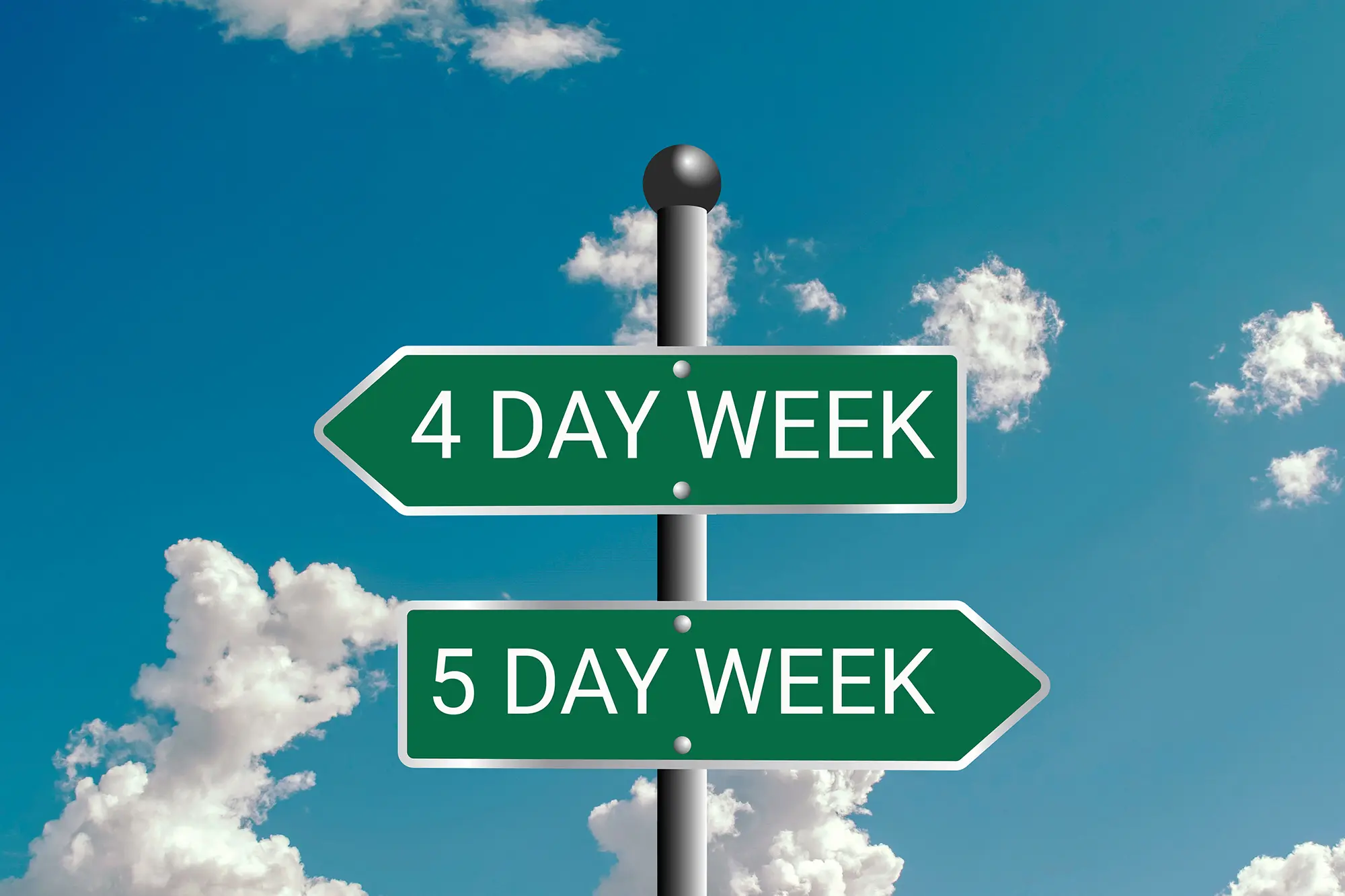
Why We Should Embrace A Four-Day Work Week

If you’ve ever worked a full-time job, chances are that job had set hours during certain days of the week. It may vary from job to job, but in most developed countries there’s this concept of a standard work week. And it goes like this.

You work five days a week, often Monday through Friday.

You work eight hours a day, usually around 9:00 a.m. to 5:00 p.m.

You typically don’t work major holiday or overtime. But if you do, you get paid overtime.

That’s seen as a “normal” work week these days. I put “normal” in quotes because what constitutes a normal workday has changed a great deal over the years. But I prefer not to focus on the history of the work week. I just want to ask a simple question about the work week as we currently accept it.

Is the five eight-hour workday schedule really the most effective approach to work?

It’s an honest question and one I think the COVID-19 pandemic has made more relevant. Beyond revealing how much work we can be done remotely and from the comfort of our homes, it also revealed that our concept of a normal work schedule is somewhat skewed. And it might be a good time to re-evaluate our understanding.

Some are already doing that. A number of companies in various parts of the world are starting to experiment with a four-day work week. It doesn’t always entail less work. In some cases, people opt to work four ten-hour days instead of five eight-hour days. The duration of the shifts don’t change. It’s just the structure.

And according to the conclusions of multiple studies, the results have been a massive success for everyone involved.

Overall productivity remained unchanged or actually improved.

Worker satisfaction increased, as did overall work/life balance.

The same amount of work got done, even when fewer hours overall were worked.

There were practically no real downsides. People got an extra day off, but were just as productive. They were also happier, overall. Even if you’re a ruthless business tycoon with no sympathy for others whatsoever, these results are encouraging. After all, happier and more fulfilled workers means less turnover and less conflicts overall. Unless your company runs on the tears and suffering of others, that’s generally good for business.

Even in the absence of these studies, I can personally attest to the appeal and the merits of a four-day work week. While I wasn’t lucky enough to have that schedule with any of the full-time jobs I worked, I do know it was a popular option in one particular company.

Since I don’t know if my former employer visits my site, I won’t say their name or their industry. I’ll just say that this company utilized a lot of shift-work. There were some typical nine-to-five shifts, but most varied considerably in order to ensure 24/7 coverage of our operations. I typically worked five days a week, usually 10:00 a.m. to 6:00 p.m.

However, there was an option for those with kids to work four ten-hour days. The day of the week they got off varied. My supervisor actually encouraged those who used this option to coordinate and decide amongst themselves which day of the week they would take off. Some preferred having Monday off. Some preferred having Friday off. One even preferred having Tuesdays off.

It was probably the most popular shift, but one that wasn’t widely adopted. It was always framed as a shift reserved for those with young children who needed an extra day to take care of doctor’s appointments, personal matters, and what not.

Personally, I would’ve definitely preferred working four ten-hour days. Even if it meant those four days were longer, I would’ve gladly worked that time in exchange for a longer weekend. It would’ve made a lot of things easier, especially when I was young and just out of college. Even today, it would make a lot of things easier. An extra day would give me more time to rest, run errands, work out, and work on my personal life.

I suspect many feel the same way. Just think about how excited/relieved you are every time you have a long weekend to look forward to. But honestly, is a three-day weekend really that long? It’s still less than half of the week. And can you honestly say you get less done on a shorter work week?

Now, I understand that not all work is the same. There are certain jobs for which a four-day work week just isn’t practical. By the same token, there are also types of work for which a five-day work week isn’t practical, either. We just still use that schedule because it’s considered standard and “normal.” We’re so used to it that we don’t even question it.

But we should. The results of the studies I mentioned imply that there are better ways to get just as much work done with less time in a manner that is just as productive, if not more so. So why not embrace that?

I suspect a part of it has to do with how the five-day, 40-hour work week is engrained in a lot of labor laws. That is not a trivial detail that we can just overlook. But laws can be changed. And in this case, there’s a better and more efficient option available.

In a world with so many diverse people and so many diverse forms of work, it makes sense to be flexible. If a shorter work week means equal or greater amounts of efficiency, then the only thing stopping us is outdated assumptions about what constitutes “full-time work.”

I sincerely hope that changes in the coming years, especially as people continue to realize the value of a good work/life balance. Just because we’ve been structuring our jobs a certain way for decades doesn’t mean we should keep doing it that way. If a four-day work week is better by every measure, then we’re only making our jobs more miserable by clinging to outdated practices.

Leave a comment

Filed under Current Events, health, politics, psychology

Some Post-Thanksgiving Workout Tips (And Tweaks To My Current Routine)

I had an awesome Thanksgiving last week. I really did enjoy spending time with my family, enjoying a hardy feast, and watching plenty of football, both NFL and NCAA.

Unfortunately, those good times do come at a price. I consumed more calories in the span of three days than I usually do over the course of a week. To be fair, that’s common for a lot of people, even those who are very health conscious. For the sake of the Thanksgiving spirit and family, we set aside our diets and just let ourselves gorge for a few days.

Personally, I think I overdid it. Anyone who was with me on Thanksgiving can attest that I ate more than my share of the turkey and deserts. It was a festive environment and we all savored every bite. For that, I have no regrets.

But that does mean the last few days have been particularly arduous when it comes to my exercise routine. I’ve noted before that I go to the gym quite frequently. I actually go more frequently now than I did before the COVID-19 pandemic. I rarely skip workouts, even around holidays. But even when I don’t skip a trip to the gym, I definitely feel it when I eat a lot of calories.

I suspect I’m not the only one dealing with that. I also suspect more than a few people are trying to get back into a healthy routine after all the family, feasts, and desserts. If you are, then I hope you find this helpful because I’d like to share a few tips on post-Thanksgiving workouts. I’m sharing it because there is a right and wrong way to do it. I know because the day after Thanksgiving, I’m pretty sure I did it the wrong way and was very sore for a while because of it.

You don’t need to go through that pain, nor should you.

Also, I always feel inclined to note that I am not a personal trainer. I would never claim to be an expert at exercise, health, or getting into shape. I’m just sharing my experience and strategies in hopes that others will find it useful. I’m not even charging anyone for it. This is completely free advice.

The first tip I’d like to give is that, if you had a regular routine before Thanksgiving, do not try and go straight back to it the day after you’ve consumed so many calories. Your body just went through an abnormal experience that is holiday festivities. You can’t expect it to quickly re-adjust as though it never happened.

You will hurt yourself. I know because I badly strained my quad, chest, and abdominal muscles. It hurt more than I care to admit.

The second tip I’d like to offer is that, when it comes to consume lots of calories, cardio should be a greater priority over weight training. Even if you’re primarily focused on building muscle mass, it’s necessary to do extra cardio after consuming excess calories. That means a bit more time running outdoors, running on a treadmill, or using an exercise bike or elliptical. I’ve done a little of everything in that regard. And even just doing an extra 10 to 15 minutes of cardio makes a huge difference.

It’s primarily a matter of physics. You eat a lot of calories. You need to burn them off. Cardio, in addition to helping with blood flow and heart health, burns more calories than lifting weights. Eating all that turkey just means having to burn extra.

The third and final tip I’d like to offer has to do with how you go about weight training. Depending on your goals, you either try to do a few reps with heavy weights, usually 5 rep sets of 5, or lots of reps with lighter weights. For the most part, I’ve favored doing fewer reps with heavy weights. That’s fairly common for men looking to add muscle mass, whereas the higher reps with lower weights are common for women looking to slim down.

I had to change that recently to ensure I don’t strain my body more than I should. So, in the interest of burning off my holiday calories, I’ve started doing more reps per set with fewer sets. This way, I can emphasize good form and work to strain the muscles more concisely rather than using brute strength with lower reps. I’ve already found this to be quite effective in that I get a good burn going, but with less painful strain.

To illustrate, this is the current workout I’m using for most of my gym trips:

Start off with 35 minutes of cardio, either on an elliptical or running outside.

Do 100 weighted ab crunches (basically a crunch with a free weight on your chest).

Then, I do a the following weight training routine.

Do 3 sets of 20 reps of a butterfly curls (machine or free weights).

Do 3 sets of 20 reps of reverse butterfly curls.

Do 3 sets of 20 reps of bicep curls.

Do 3 sets of 20 reps for tricep extensions.

Do 3 sets of 20 reps of shoulder press.

Do 3 sets of 20 reps of lat pull downs.

Do 3 sets of 20 reps for leg press.

Do 3 sets of 20 reps for leg extensions.

Do 2 sets of 20 reps of pull-ups.

In general, this routine takes me about an hour and 15 minutes. I’ve been doing it for a few days now and I’m already feeling much better in terms of energy, mood, and fitness. I still do my other routine of doing 5 sets of 5 reps with more weight. But I’m thinking of maybe alternating the days when I do that in order to get the most benefits out of my workout.

One general rule of exercise is that if your body gets too used to one particular thing, it ceases to be as effective. That’s why it’s important to mix things up. It keeps the workout interesting and it helps get you better results in the long run.

Chances are I’ll probably tweak this workout as time goes on. If I uncover other useful tips, I’ll be sure to share them and they’ll continue to be free.

We all need to take time to enjoy the holidays with our families and get off our diet for a while. And if the price for doing so is more time at the gym to stay strong, healthy, and sexy, I say that’s a price worth paying.

1 Comment

Filed under exercise, health

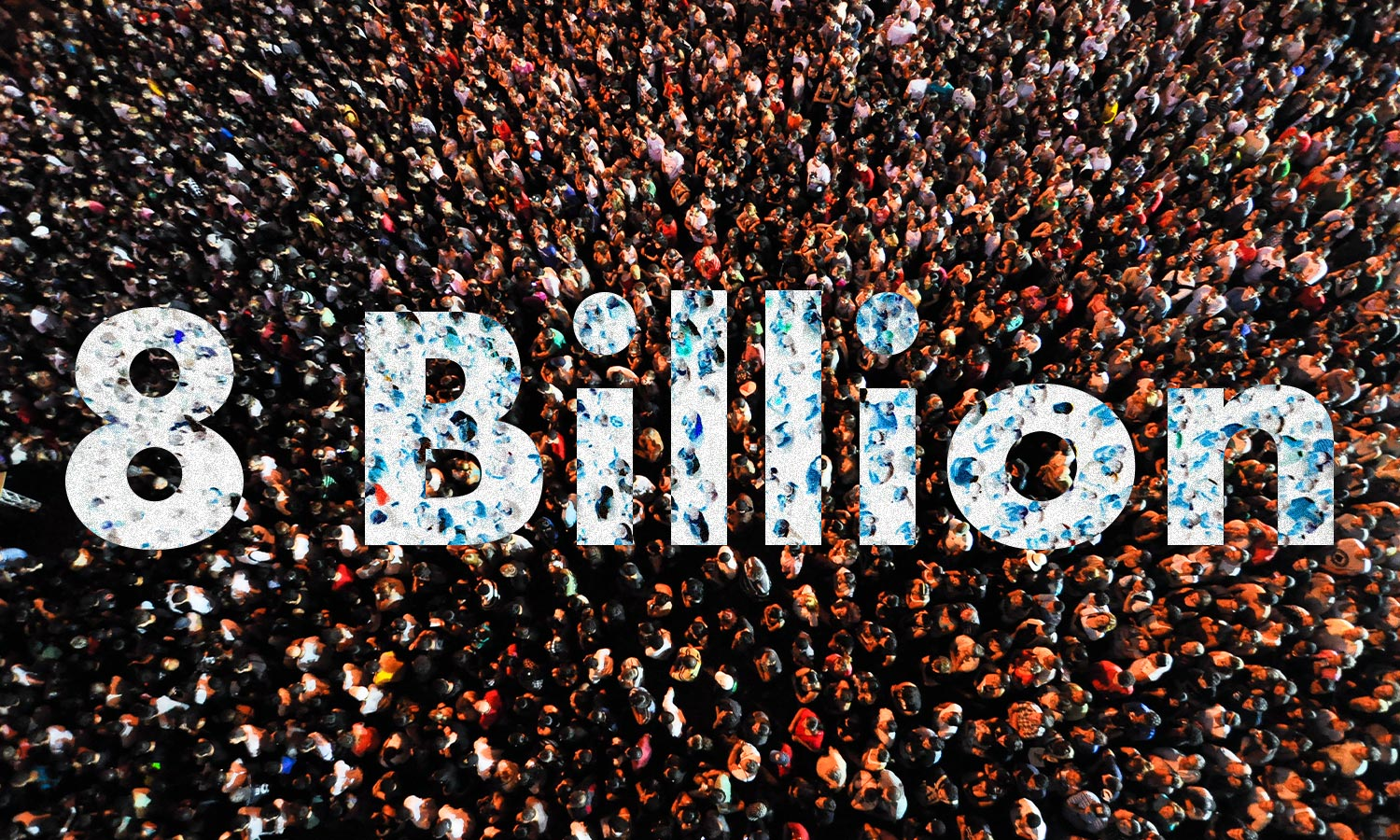
The Human Population Has Reached 8 Billion: Thoughts, Feelings, Hopes, And (Dirty) Jokes

Recently, the human race achieved a major milestone.

According to the United Nations, the human population of this planet exceeded 8 billion for the first time.

It became official on November 15, 2022. That’s not to say the measure was precise. We are talking about global population here on a chaotic world. The best we can ever do is reasonable, educated guesses. And using that standard and the limited tools available to us, we can confidently determine that we’ve crossed that special 8 billion threshold.

We’ll probably never know who was the 8 billionth human.

We’ll probably never know where they were born, what their circumstances were, or whether they were aware of their importance.

But whoever they are, they got us to that milestone and beyond. What it means for us, as a species, is hard to quantify, even for exceptionally smart people. I don’t consider myself exceptionally smart, but I’m still going to try.

Now, it’s easy for the cynical crowd to see this milestone and say to themselves, “Just what we need. More humans on this overpopulated planet to suck more dwindling resources.” Believe me, I get that mentality. I’ve certainly shared my own growing cynicism from time to time. I think it’s largely a byproduct of getting older and being more aware of just how complicated and messy people can be.

However, as cynical as I often feel at times, I have not completely abandoned hope for humanity or our collective future. I’ve come close a few times. The events of 2020 certainly tested me. But for the moment, that hope is still intact and I think this milestone offers perspective, as well as encouragement.

For one, it definitively shows that, as bad as the COVID-19 pandemic has been these past two years, it hasn’t been apocalyptic. It did disrupt our society, our world, and our lives. But it didn’t send our entire population into a death spiral in the same mold as the plagues of the past. In another time and another era, it might have really hit our species harder, so much so that we might be in far greater danger.

But we endured. We adapted, innovated, and survived. While there are still some who insist on dragging their feet with respect to progress and modern medicine, that hasn’t completely dragged down the whole of humanity. More than anything else, it reveals just how complicated, erratic, and diverse we can be.

It’s easy to focus on the worst of humanity and get lost in the horror. I know I have. Anyone who has picked up a history book probably feels that way, too. But that just makes this milestone all the more impressive. The fact that we’ve lasted as long as we have on this planet and grown our population to this level definitely counts as an accomplishment.

On top of that, much of that growth is actually quite recent. The human species, in their most modern form, is only about 200,000 years old. And for much of that history, our population never exceeded more than a few hundred million. We didn’t cross the billion threshold until around 1800. Just 200 years later, we’ve increased that eightfold. Numerically speaking, that’s incredible growth.

If that weren’t impressive enough, consider one other factor. For the vast majority of human history, women endured the rigors of pregnancy and childbirth without the aid of modern pain killers and medicine. That’s right. We were humping and birthing millions of humans in dirty, unsanitary conditions for centuries on end. If you’re a woman who has given birth, take a moment to think about how our ancestors endured. Also take a moment to consider how many women and children died because of those challenges.

It says a lot about humanity, especially women, that we made it to this point. You need only look at some of the natural disasters this planet is capable of to appreciate what we’ve been up against during our reign on this planet. We managed to survive, thrive, and birth our way towards 8 billion people through it all.

And if you’ve got an exceptionally dirty mind, it might also belabor just how horny the human species can be. Now, I’ll try not to get too explicit.

If I had a truly dirty mind, I could joke about how the orgasm has single-handedly endured the survival of our species.

I could joke about how great sex has to be for women to endure the rigors of pregnancy and childbirth before the advent of modern medicine.

I could joke about how nature’s wrath and constant disasters hasn’t kept people from getting horny, hooking up, and birthing more equally horny humans.

I could even joke about just how much sex we, as a species, had to have in order to get to 8 billion people.

But I’m not going to. I have as dirty mind as any straight guy who writes sexy stories, but not that dirty. Instead, I’d like to offer one simple message to this mass of humanity that we’ve created.

Congratulations!

We made it. We’ve succeeded on a planet on which 99 percent of all the species that have ever existed are now extinct. We may not have been on this planet for very long, relatively speaking. But we’ve certainly left our mark, literally and figuratively.

We’ve achieved great things.

We’ve done things no species has ever done before.

We’ve literally made islands within the sea, traveled into space, and reshaped entire landscapes to our whim.

Yes, we have been irresponsible and reckless, at times.

And yes, we still have much to learn. Being a fairly young species, we’re still maturing. We’re still charting our own path. We will encounter more obstacles. We’ll also endure plenty of setbacks, some of which will leave future generations distraught and distressed.

But we are still in position to achieve so much more. We may very well be capable of succeeding in ways no previous species on this planet has ever succeeded. We may take control of our own evolution, transcend the limits of biology, and build greater wonders than we can possibly imagine.

Those reading this may not live to see it, but you will still have played a role in helping this vast species we call humanity succeed. That’s something to be proud of. But it should also grant us perspective.

We are still very vulnerable to so many dangers, some of which we create ourselves and some of which are inherent to the universe we live in. But let’s not shy away from these dangers or the challenges they bring. Let’s also not dwell incessantly on the morbid past, but let’s not forget it either.

Every individual is so complex in their own sense of being. Add 8 billion of those individuals to the mix and the complexities become exponentially greater.

But through it all, we’re still here. We still made it this far.

There’s so much more ahead of us. Let’s make our way towards it. While one human alone can only ever achieve so much. The possibilities for 8 billion humans and counting promises to be so much greater.

Leave a comment

Filed under Current Events, health, history