Category Archives: Current Events

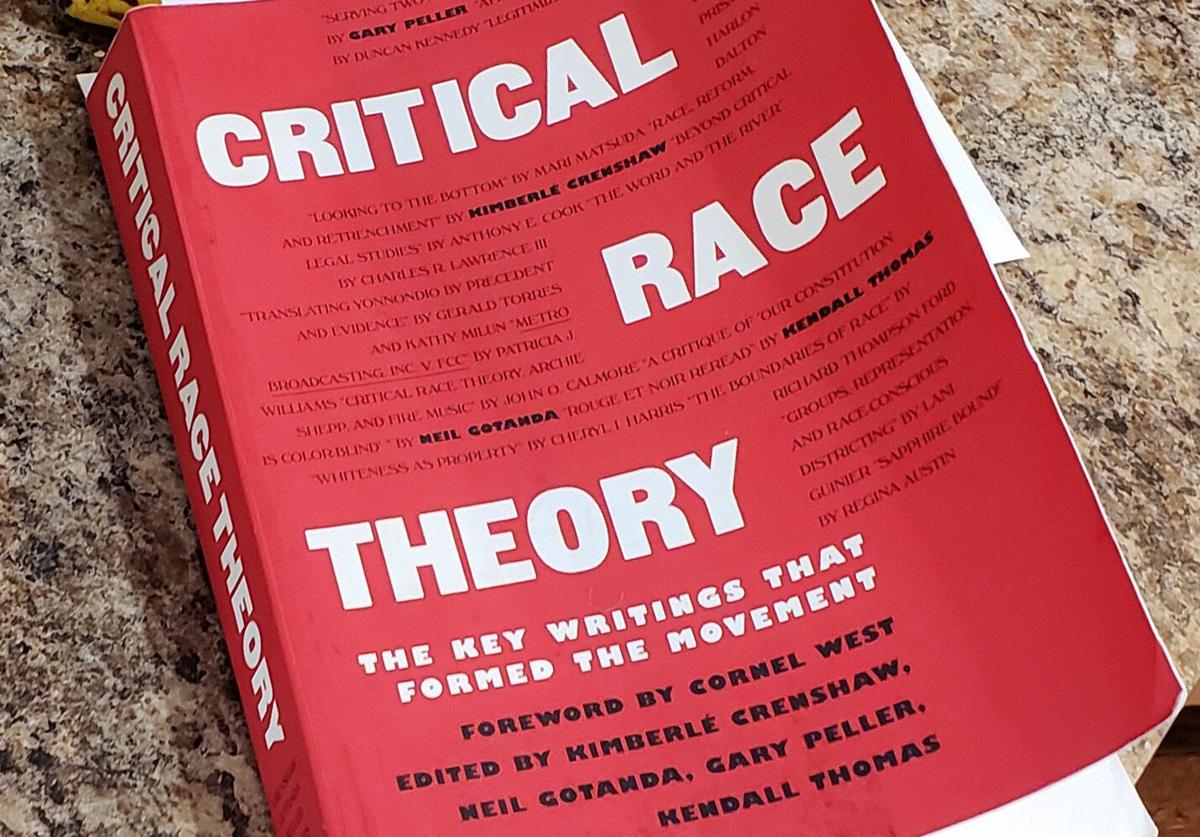
A (Sincere) Question To Critics Of Critical Race Theory

Sawicky: Critical Race Theory is not what its critics suggest it is |  Community Views | loudountimes.com

In general, I try not to wade into a hot button political topic until the rhetoric has become less heated. I think it’s rarely productive to throw your voice into the fray when everyone is still shouting their talking points at the top of their lungs. I know I’ve weighed in on political issues in the past, but I’ve tried to do so from a broader, bigger picture perspective.

Sometimes, though, it’s too hard to wait for everyone to stop shouting. In certain instances, the extent of that shouting is symptomatic of a larger mentality. It’s not just about the topic that’s relevant. It’s the general sentiment, passions, and feelings surrounding it.

Not too long ago, it was social justice and feminism.

Before that, it was same-sex marriage.

Before that, it was civil rights and sex discrimination.

Go back far enough and you’ll see similar discourse. When an issue is very relevant, it brings out both heated rhetoric and the prevailing attitudes of the time.

Today, I get the sense that Critical Race Theory has become that issue. Whenever people talk about it, their political tribalism rears its head and it’s neither subtle nor pretty. While I don’t doubt this issue will eventually pass to make way for the next one, it’s something worth touching on.

At its core, the particulars of Critical Race Theory aren’t that radical. If you look it up on Wikipedia, it doesn’t sounds wholly unreasonable. It’s simply a study to evaluate how social, culture, and legal traditions have impacted larger institutions and social systems.

As a social science, it’s hardly revolutionary. These are concepts that social scientists have been studying for decades. The main difference with Critical Race Theory is its emphasis on race, especially those pertaining to the African American community. After what happened with the murder of George Floyd in 2020, it only grew in relevance.

Now, I’ve stated before that we, as Americans, should not avoid the less flattering parts of our history. Acknowledging past mistakes doesn’t make you any less patriotic. It just offers a larger perspective towards certain American ideals.

However, that’s a point that those protesting Critical Race Theory don’t seem to harbor. Ever since the George Floyd protests erupted last year, this theory has been attacked and protested on multiple levels. In general, I try to sympathize and empathize with the passions of these people. They are my fellow Americans, after all. I believe they have a right to voice those passions.

At the same time, I cannot help but groan and cringe. I also genuinely wonder if they understand the full implication of what they’re arguing.

It’s true that Critical Race Theory has some distressing implications. Beyond acknowledging America’s racist past, it further complicates efforts to create a more just society. Addressing the transgressions of the past is not as simple as passing a few pieces of landmark legislation.

The system, as it functions now, is still very flawed. Fixing it may require greater effort, as well as a larger cost. Many people, who likely believe in themselves to not be racist, are bound to have a problem with that. They see it as an agenda, one that will label them and their children as a racist by default.

Whether or not that’s a reasonable concern is beside the point. I won’t claim to know what those protesting Critical Race Theory are truly thinking. I’m not psychic. However, in reviewing all this heated discourse, I’d like to offer a simple question to these people. It’s a sincere question and one I ask you consider seriously.

Why do you oppose teaching or discuss one particular idea over the other?

With that in mind, take a step back and look at this without Critical Race Theory being the main subject. Now, take a moment to appreciate what you’re asking of society, at large. You’re saying this idea that you think is wrong or flawed should not be discussed.

Even if you think it shouldn’t be discussed outside certain fields, you’re still making a statement. This is a dangerous idea and it shouldn’t be discussed, especially with children. Even in a country like America, which espouses the value of free speech, you’re arguing for an idea to be censored or suppressed.

Now, I don’t doubt there are some horrible ideas out there. Some are legitimate precursors to violence. That’s why organizations like the Ku Klux Klan are rightly vilified and prosecuted. Except, Critical Race Theory is nothing like that. So why, in that context, does it warrant so much outrage? Again, it’s a sincere question and I’d like to get a sincere answer. Please explain your reasoning in whatever way you see fit.
1 Comment

Filed under Current Events, history, human nature, outrage culture, political correctness, politics

Why Amazon Accepting Bitcoin Would Be A Game Changer (And Why They Might NOT Do It)

Jeff Bezos Directs Amazon to Accept Bitcoin and Other Popular  Cryptocurrencies: Report – Bitcoin News

In all the years I’ve been browsing the internet, I’ve never seen something so divisive or so disruptive as cryptocurrencies. Yes, that includes both video games and internet porn. Crypto’s impact has been that profound. That impact is likely to continue in unexpected ways for years to come.

However, there is still plenty of uncertainty and confusion surrounding cryptocurrencies. I recently had dinner with my parents and my mother asked me to explain it to her. I tried. I’m pretty sure I failed. I tried to simply frame it as digital money, but that didn’t even come close to explaining what cryptocurrency is, how it works, and why it has become such a huge industry.

There are far smarter people than me who can explain what cryptocurrencies are and how they work. This video here does a decent job of explaining it to beginners who aren’t particularly tech savvy.

While I’ve been following the rise, fall, revival, and growth of cryptocurrencies for years, I didn’t actually buy any until very recently. I even wrote about my experience, which ended up being somewhat mundane. It was no different than using an ATM.

That’s somewhat illustrative of where cryptocurrencies are right now. Buying currencies like Bitcoin has never been easier. You can download any number of wallets for free on your phone. If you don’t want to link your bank account to it, then finding an ATM like I did is very easy.

If you have any spare change lying around, you can turn it into Bitcoin. That’s where we’re at now with cryptocurrencies.

The harder part at the moment is actually spending Bitcoins. While you can find numerous online merchants who take Bitcoins, you can’t exactly use them to pay your bills, buy your groceries, or just purchase something on a whim. That’s one of the biggest barriers to cryptocurrencies in general. Using it is more cumbersome than regular cash. That’s why most see Bitcoin as an investment asset rather than a usable currency.

That could change very soon, however. The reason for that change could come from the largest retail entity on this planet, Amazon. If ever there was a company that could completely change the way we see and use cryptocurrencies, it’s this one. It may ultimately make Jeff Bezos even richer than he already is, but let’s table that concern for a moment.

This isn’t just me speculating. There was a recent rumor among the business world that Amazon was looking to start accepting Bitcoins as a payment method. While Amazon ultimately shot down that rumor, they did not say they would never accept Bitcoins.

In fact, I would go so far as to say it’s only a matter of time before Amazon starts accepting cryptocurrencies in some capacity. There’s just too much money to be made from doing so and Amazon, like all big businesses, is always looking to grow. This would be one way of doing that and it’s impossible to overstate the larger impact that would have.

For one, it would send shockwaves through all currency markets, crypto and otherwise, more so than a million tweets by Elon Musk. Suddenly, this asset isn’t just an investment vehicle anymore. It’s a form of money with an actual use.

Amazon is already the biggest retailer in the world. It’s also becoming one of the largest grocery chains. It still has some competition, mostly through companies like Walmart. None of them accept Bitcoin yet, but you can be reasonably certain that as soon as one of them takes that leap, the others will follow.

Beyond just being a novel payment method, Amazon accepting Bitcoins could have a far broader change. One of the main driving forces behind the development of cryptocurrencies is that this is money that has no boarders. It doesn’t matter where you are in this world. You could be in America, China, or the middle of Africa. So long as you have an internet connection, you can access this currency.

For companies like Amazon, that means accessing a customer base that has been traditionally inaccessible. There are over a billion people in this world who have no bank accounts. In some parts of the world, their currency just isn’t usable for companies like Amazon. Converting them to other currencies is already a hassle. Bitcoin could change that.

By accepting Bitcoin, Amazon and other retailers like it have the potential to the entire world in ways that weren’t possible until recently. If they’re going to keep growing, they need those customers and, like it or not, these people need Amazon. Opening more people up to an accessible market can only help get goods to people who need them.

All that being said, I can also understand why Amazon and other large retailers might resist accepting cryptocurrencies. Beyond them just being too loosely regulated, their volatile nature could be a problem for large retailers.

I can attest to that volatility personally. When I bought my first Bitcoins, the price was around $35,000. Then, it shot up to over $60,000 for a while. A few months later, it crashed to the point where it was worth less than my initial investment. It eventually recovered, but that’s a lot of instability for a currency.

That’s something I’m sure Amazon is aware of. By taking Bitcoins as payments, they’re also accepting its wild volatility. All those Bitcoins that paid for all those goods could be worth a thousand dollars one day and worth a fraction of that the next. Even if Bitcoin represents only a small portion of payment, that’s sure to create some anxiety among investors.

Given the current state of the economy and the world, as a whole, I understand why Amazon would hold off on diving into cryptocurrencies. For a large, publicly traded company, anything that makes the stock price or the overall value of its assets less certain might just be too much to handle for now.

It may not happen this year. It may not even happen next year. However, I’m not among those who think all cryptocurrencies are a scam, a scheme, or a fad. These aren’t Pokémon cards or Beanie Babies. This is a valuable tool for the digital world that has the potential to open up exchange with everyone, regardless of where they live.

That tool still needs refinements. Bitcoin certainly has its flaws. That’s beyond dispute. Amazon is aware of those flaws, as well. As they are refined, currencies like Bitcoin will gain more acceptance. Amazon and other big retailers will be part of that process. When that day finally comes, expect a whole new world to emerge. I don’t claim to know what kind of world that’ll be, but I’m excited to see how it unfolds.

Leave a comment

Filed under Bitcoin, Current Events, futurism, technology

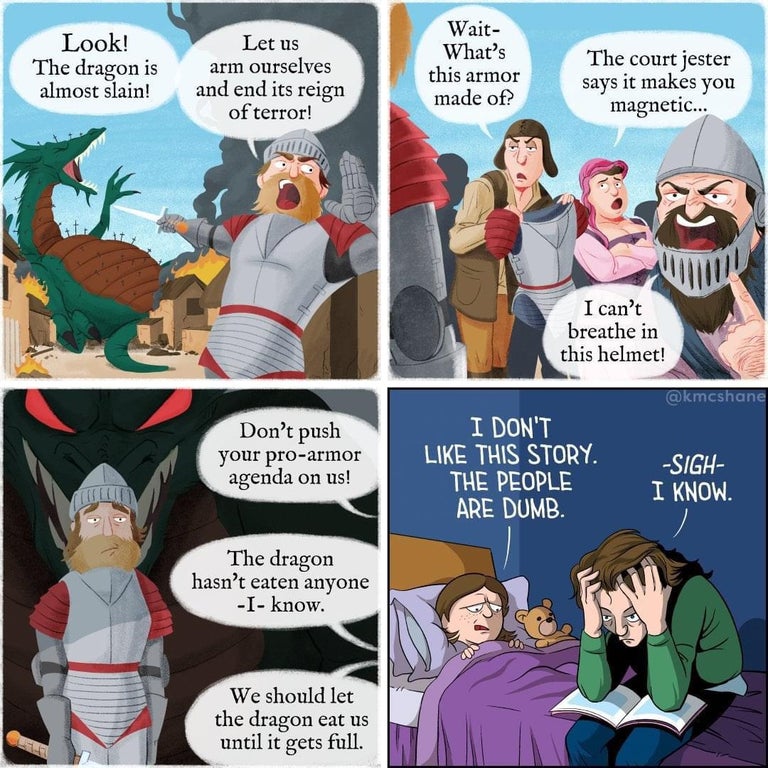
A Perfect Cartoon To Highlight The Frustrating Absurdity Of Anti-Vaxxers

I know I’ve been giving those who refuse to get the COVID-19 vaccine a hard time in recent months. I won’t apologize for that because I don’t regret that in the slightest.

I’ll say it again. These people are being assholes. They’re the reason why this pandemic is still raging. They’re also the reason there’s a new variant that’s causing cases to spike in various parts of the country. I’m sorry, but I can only be so understanding when people are being assholes to a point that gets other people killed.

However, rather than bemoan these people for their dumb decisions and dumber politics, I thought I’d share something I found on Reddit that perfectly illustrates why the anti-vaxx crowd are so infuriating. It’s funny and it’s dumb, but it’s also painfully relevant.

Again, get vaccinated people. Quit being assholes.

3 Comments

Filed under Current Events, health

Why I Love Sports, But Don’t Watch The Olympics

Abolish the Olympics

I love sports. I think I’ve made that abundantly clear on this site. During certain times of the year I build a good chunk of my weekend around a six pack of beer and whatever sports happen to be on. Since I was a kid watching ball games with my dad, it’s one of my favorite things to do.

However, as much as I love sports, I don’t watch the Olympics.

Even when the Olympics were held in America cities and during primetime TV, I didn’t care to watch. I usually stuck to baseball games and preseason football.

That’s not to say I don’t respect the Olympics or the athletes who dedicate years of their lives to training for them. Those athletes are remarkable individuals. I don’t doubt that for a second. Their stories are certainly worth telling. I’ll gladly cheer for those stories.

I just don’t care to watch. That’s just my personal preference.

As for why I feel this way, I promise it has nothing to do with the politics that often get caught up in the Olympics. I understand that has always been an issue. This year has been no exception, especially with the pandemic.

Politics in sports has never bothered me. I honestly think people make way too big a deal out of it, so much so that it basically becomes a virtue signaling contest for both sides. However, I won’t get into that.

The underlying reason why I just don’t care for the Olympics is that it’s just so hard to follow. That’s somewhat unavoidable. Unlike football, baseball, or basketball season, the Olympics only happen every four years. Each time, the athletes change and unless they do something incredible, you never know their names.

It’s hard to have a favorite athlete.

It’s also hard to have a favorite team.

Since the Olympics are divided by country, you’re pretty much set into who you’re rooting for, unless you want to make things awkward to your fellow countrymen. There’s no regional drama like there is in other sports. With the end of the Cold War, there aren’t many rivalries either.

It’s just the best athletes from one country competing for another. The only competitive force driving them has to do with their nationality. It’s rarely something they chose. It’s just a matter of circumstance. Honestly, where’s the drama in that?

The reason why other professional sports are so compelling is because there’s a story behind a franchise. There’s a legacy and a history behind a team or an identity. Whether it’s a football team, a soccer team, or a baseball team, there’s a underlying narrative behind the game.

With the Olympics, that story is restricted to each individual athlete. While those stories can be compelling, those athletes usually only compete once and never again. That means their story is over quickly and there’s nothing worth following after that.

For me, sports without a larger story is like cake without frosting. You can still eat it, but it’s going to be bland. Again, this isn’t me knocking the Olympics or what they stand for. This is just my reason for not watching or following it, despite my love of sports. Then, there are many scandals and controversy, but that’s another story altogether.

Leave a comment

Filed under Current Events, sports

How Much Sympathy Should We Have For Anti-Vaxxers Who Get COVID-19?

Vietnam companies agree COVID-19 vaccine tech transfer with Japan's  Shionogi - media | Reuters

In general, I try to be a compassionate, understanding person. That’s how my parents raised me. That’s how most decent human beings are brought up in this world. It’s how we, as a species, learn to cooperate, co-exist, and work together to survive and thrive. It’s a beautiful thing, indeed.

However, it has limits.

Lately, the anti-vaxx crowd who refuse to get the COVID-19 vaccine are really testing it.

I’ve gone on my share of rants about the anti-vaxx crowd whose idiocy is bound to get people killed. With each passing day, those who resist or protest the vaccines become less and less sympathetic. We’re getting to a point where there’s no real excuse for concern or hesitation.

Not getting this vaccine to end this deadly plague is no longer a product of politics or protest. It’s just people being assholes.

With all that in mind, I’m honestly not sure how to feel about vocal anti-vaxx people who get seriously sick with COVID-19. These stories are becoming increasingly common. A few have even died because they refused to get the vaccine. Reckless behavior aside, they’re human beings. Their lives mattered and their death will be felt by family and loved ones.

At the same time, these people were fucking idiots. This is not a mild case of Chicken Pox. COVID-19 is a deadly pandemic. Before the vaccines came along, it was killing people by the thousands. It didn’t care about borders, ethnicity, political affiliation, or religion. People were suffering and dying. We all had to drastically change our lives just to contain it.

Then, a vaccine comes along and it works. It works incredibly well and promises to end this pandemic once and for all. We can have our lives back and save countless more.

Somehow, that’s not enough for these people. They still refuse to subject themselves to a simple shot, which could save their lives and the lives of those around them. We have the cure, but they refuse to take it.

How can we have sympathy for that?

Moreover, how can we be compassionate when these same people get horribly sick?

I honestly don’t have an answer. It’s an open question that I find myself struggling with each passing day. I tend to have a lot of faith in humanity. Even for people I despise, I try to be understanding and compassionate.

This time, however, I have a hard time mustering much sympathy. These people lived through the same horrors we all did. They saw all the death and suffering that this virus was causing. Then, when a vaccine comes along to stop all that, they choose not to take it.

At that point, they’re not victims anymore. They’re responsible for this state. They willingly jumped off a cliff without a parachute because they didn’t trust the parachute. I can sympathize with a lot of things, but I can’t sympathize with this.

Maybe I’ll feel differently as things play out. For now, I just don’t know.

I’ll pose this question to anyone who reads this. How much sympathy should we have for these people at this stage of the pandemic? Please share your thoughts in the comments.

Also, and I know this might be a futile effort, please get vaccinated.

2 Comments

Filed under Current Events, health, politics, rants, real stories

Why Superhero Secret Identities Are More Relevant Than Ever

Superman

You don’t have to be a lifelong fan of superheroes to know the role that secret identities play in their over-arching narrative. It’s one of those story elements that often goes hand-in-hand with a hero’s journey. Part of becoming a hero involves forging an identity and, more often than not, this identity can’t function alongside the one they start with.

It’s a story that has roots in the early days of modern superhero comics. It wasn’t just a common plot point. It was practically a given. It was as necessary as capes, colorful costumes, and punishing masked criminals.

From a practical standpoint, having a secret identity has some legitimate merit. There are things Bruce Wayne can do as Batman that he cannot do and vice versa. The same goes for Superman, Wonder Woman, Spider-Man, and many other iconic heroes. In “Batman Begins,” Bruce Wayne set the stage for his secret identity by crafting Batman as a symbol, one that conveyed an idea that went beyond the person in the costume.

In recalling that scene, I think that idea was more prophetic than Christopher Nolan initially intended. When I look at how secret identities have come to define many characters, I believe they’re more important today than they have been in any other era.

I don’t just say that as a long-time fan of superhero comics who has used his knowledge of the genre to explore serious issues. I believe that we, as a society, are entering uncharted territory when it comes to how we manage our identities. The influence of the internet, social media, and an increasingly connected world is more powerful than any fictional hero. It’s already finding its way into superhero media.

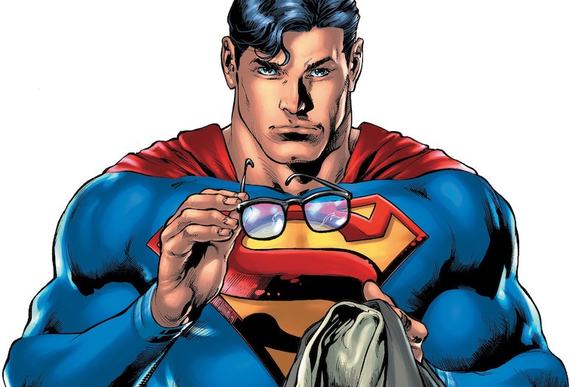
This topic became especially relevant for Superman fans because back in late 2019, the release of “Superman #18” officially revealed Superman’s identity as Clark Kent. Now, it wasn’t not the first time Superman’s identity has been exposed, but this time it wasn’t a gimmick. Now, Superman had to learn how to be Superman without a secret identity.

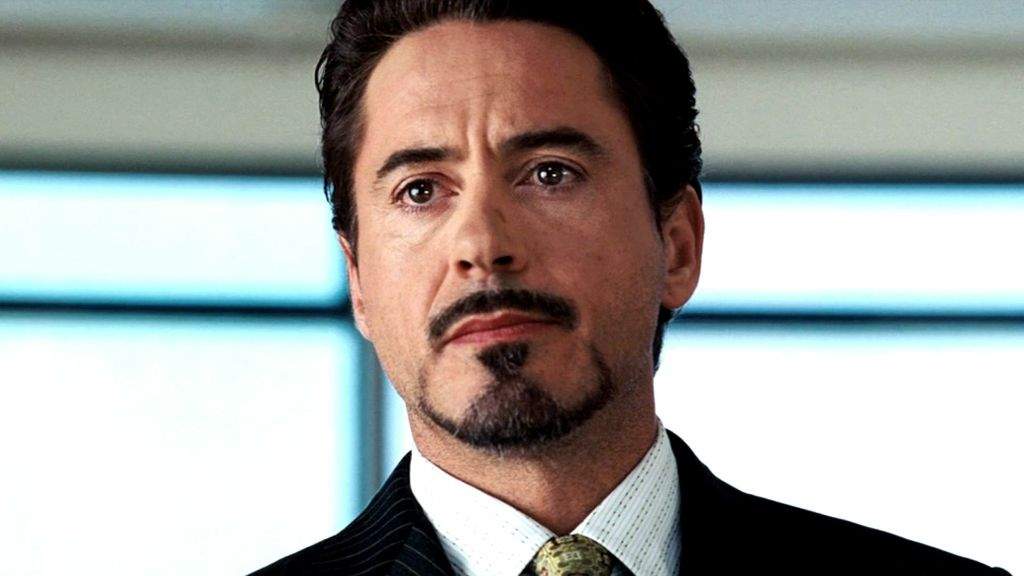
Over the past decade, the value and vulnerabilities of secret identities have been under fire. One of the most jarring moments of the original “Iron Man” movie was the very end when Tony Stark didn’t attempt to hide the fact he was Iron Man. For those not familiar with the comics, it might not have seemed like a big issue. Trust me, it was a major shift.

While Tony Stark debuted as Iron Man in 1963, his identity didn’t become public until the early 2000s. That’s nearly four decades of him operating with a secret identity. In the context of his journey, this was not a trivial decision.

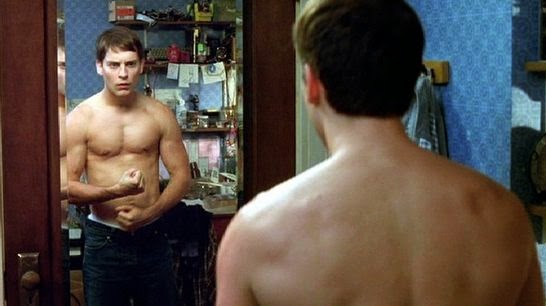
What happened to Spider-Man at the end of “Spider-Man: Far From Home” was even more jarring. While his secret identity has been revealed many times in the comics, it’s almost always retconned. Like Batman and Superman, he has to have a secret identity. He has to have a civilian life that’s separate from his superhero life.

There’s even a notable episode of “Superman: The Animated Series” in which Superman flat out admits that he’d go crazy if he couldn’t be Clark Kent. Think about that for a second. Superman, one of the most powerful and iconic superheroes of all time, admits that can’t handle a life without a secret identity. This is someone who can handle Lex Luthor, Darksied, and Brainiac. If he can’t handle it, then what hope do we have?

That question might not have been too relevant 20 years ago. Before the age of smartphones, broadband internet, and social media, a superhero might have been able to get away with having their identity exposed. You could say the same for anyone who happened to have a dirty secret or a double life. Whether it was an affair or a secret hobby, you didn’t have to work that hard to keep it secret.

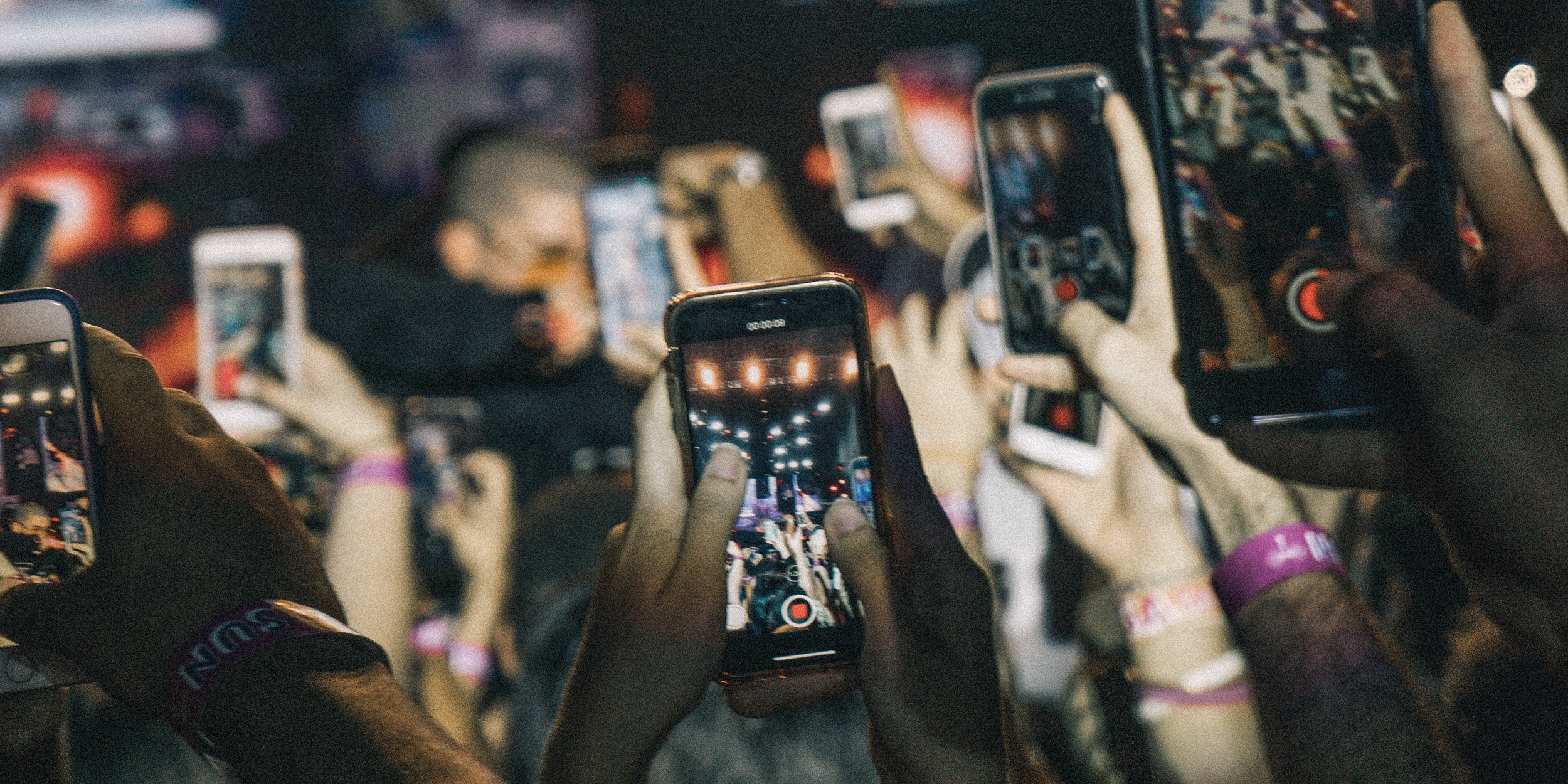
Back then, not everyone had a fully-functional camera in their pocket or a means of sharing their media on a mass scale. Even if someone did manage to take a compromising picture or video, it wouldn’t be a huge revelation unless it was published by a major news source and even then there was no guarantee it would have staying power, especially if other major stories broke at the same time.

Now, anyone with a smartphone and an internet connection can capture compromising footage of anyone and share it with the world in seconds. In the world of superheroes, it makes keeping an identity harder than ever. Spider-Man found that out the hard way at the end of “Spider-Man: Far From Home.” Ordinary people and major celebrities are finding that out as well in the real world.

The internet and social media has created an unusual, yet potent system that skews the dynamics of having an identity, secret or otherwise. On one hand, it’s easier than ever to create an anonymous persona on the internet. With that persona, people are unbound by the propriety of real-world interaction.

It’s part of why the comments section of any website or social media feed is full of deplorable rhetoric that highlights the worst in people. Ordinary people can use the anonymity of the internet to say thing they would never say to another human being face-to-face. At the same time, celebrities and people of influence have the opposite problem.

In this hyper-connected world, every word and every action is permanently archived and subject to greater scrutiny. Every mistake or misstep is amplified and blown out of proportion. Every bit of subtext and nuance is completely lost in the various biases and agendas of the public. In essence, public figures have little to no control of their identity. They are very much at the mercy of how others perceive them.

That kind of scrutiny can have benefits and drawbacks. You could argue that the added scrutiny of social media has held celebrities and people of influence to a higher standard. They can no longer operate in the shadows with impunity. Dirty secrets will come out. Bad behavior will be documented. The O.J. Simpsons and Bill Cosbys of yesteryear could not get away with their deplorable behavior in today’s environment.

That may be a good thing on some levels, but it comes at a cost and not just for those who have had their lives ruined by the internet. In a world where anonymous identities are easily created and valued identities are easily ruined, how can anyone hope to maintain a balanced perspective? Whether you’re an accomplished celebrity or just some random blogger, don’t you still need a persona that feels true?

For people who are stuck in difficult situations, such as those belonging to racial, religious, or LGBTQ minorities, having that secret identity might be the only one that feels true or genuine. If that gets exposed, then those individuals could be in legitimate danger. There are parts of the world who will punish these individuals in ways far more serious than online trolling.

In the past, these kinds of people didn’t have an outlet or a means of connecting with others who share their struggles. They either had to organize in secret or set up their own communities, which often meant making themselves real-life targets. The ability to create an identity, secret or otherwise, can be a powerful mechanism for helping people forge an identity that feels true to who they are.

To some extent, superheroes embody the importance of these identities. They can’t do what they do without them. They can’t remain connected to the people and the world they’re trying to protect if they’re always in costume, trying to maintain this persona they’ve created. Without it, they become disconnected and overwhelmed. As a result, they can’t be the heroes they need to be.

For people in the real world, having these identities is more important than ever. You don’t have to be a superhero to appreciate their value, but as our world becomes more connected, it’s become a lot easier to understand why Spider-Man and Batman work so hard to preserve their secret identities.

The fact they still struggle, despite having super-powers and billions of dollars, is a testament to just how difficult it can be. As the world becomes increasingly connected and increasingly tribal, it’s only going to get harder.

Leave a comment

Filed under Current Events, Marvel, media issues, outrage culture, political correctness, politics, psychology, Spider-Man, superhero comics, superhero movies

Earth, Jeff Bezos, And The Overview Effect

The Overview Effect: How Seeing the Earth from Space Changes You

What happens to someone when they’ve spent their entire life seeing the world one way, only to have it radically change in an instant?

What happens to someone’s perspective when everything they thought they knew and understood suddenly seems smaller and less grand than they thought?

It can be a jarring experience. For some, it might even be traumatic. It can take the form of a religious experience, a major life-changing event, or even something as simple as falling in love. Whatever the case, it’s powerful. You see the world one way when the day starts. Then, when the sun sets, you see it completely differently.

That brings me to astronauts, space flight, and Jeff Bezos. I promise there’s a connection there and it’s one worth highlighting.

Most are aware that Amazon founder, and world’s richest man, Jeff Bezos, took his first flight into space. It was well-covered by the media and was certainly fodder for plenty of criticism, some of which was quite warranted. However, I’m not going to touch on that. Instead, I want to focus on how this experience might affect him and his outlook.

That’s where the Overview Effect comes in. If you’re not familiar with this unique psychological phenomenon, then think back to the questions I asked earlier. Those are very relevant in that they’re part of what certain people experience when they go into space.

In short, the Overview Effect is a byproduct of this newfound prospective astronauts have when they go into space and see Earth from afar. Some treat it as a religious experience, so much so that it has an almost euphoric effect. That’s to be expected.

Up in space, there are no national boundaries. There are no politics, prejudices, and personal gripes. It’s only in space that you realize just how small Earth is and how small humanity is by comparison. That has a major impact on a person’s psyche. Some in the field of neuroscience have even studied it. One retired astronaut, Scott Kelly, once described it like this:

“The planet is incredibly beautiful, breathtakingly beautiful. Having said that, parts of it are polluted, like with constant levels of pollution in certain parts of Asia. You see how fragile the atmosphere looks. It’s very thin. It’s almost like a thin contact lens over somebody’s eye, and you realized all the pollutants we put into the atmosphere are contained in that very thin film over the surface. It’s a little bit scary actually to look at it.

And then you realize looking at the Earth, that despite its beauty and its tranquility, there’s a lot of hardship and conflict that goes on. You look at the planet without borders, especially during the day. At night you can see countries with lights, but during the daytime it looks like we are all part of one spaceship, Spaceship Earth.

And we’re all flying through space together, as a team, and it gives you this perspective — people have described it as this ‘orbital perspective’ — on humanity, and you get this feeling that we just need to work better — much, much better — to solve our common problems.”

That sort of perspective is hard for most to imagine. The number of people who have been into space is less than 600. Jeff Bezos is only the latest entry into a very exclusive club. That may also mean he’s the latest to experience the Overview Effect.

Now, it’s hard to say how much or how little he was influenced by that effect. His trip to space didn’t last very long. However, the journey may have already left an impression. He has already been quoted as saying this:

“The most profound piece of it, for me, was looking out at the Earth, and looking at the Earth’s atmosphere….But when you get up above it, what you see is it’s actually incredibly thin. It’s this tiny little fragile thing, and as we move about the planet, we’re damaging it. It’s one thing to recognize that intellectually. It’s another thing to actually see with your own eyes how fragile it really is.”

That could just be him making good PR, but it could also be revealing. Again, not many people have gone into space. They haven’t had a chance to experience the Overview Effect for themselves. While plenty of trained astronauts have done it, none of them are Jeff Bezos. None of them are worth in excess of $200 billion.

There aren’t many people on this planet who have access to resources like him. There are even fewer with the means and the skills to take a grand vision and make it real. Now, Bezos has seen the world in a new light. He has had his perspective changed. What will that mean for him and for us?

Before he took his famous space flight, Bezos stepped down from Amazon. He’s still very involved, but he now has time to focus on new ventures. Some of those ventures may take us into space. Some may go towards fixing the environment.

It’s hard to know where this will lead. However, if someone like Jeff Bezos can be impacted by the Overview Effect, then what does that say about the rest of us? How much would the world change if more people got to experience that perspective? Maybe we’ll find out one day. Maybe we’ll get that chance because Jeff Bezos funded it.

Only time will tell. Personally, I’d like to experience the Overview Effect myself. Maybe I will one day.

Also, Jeff Bezos should still pay his workers more.

Leave a comment

Filed under Current Events, human nature, philosophy, psychology, real stories, technology, Uplifting Stories

ANOTHER COVID-19 Surge Among Unvaccinated: A Product Of Math, Science, Politics, And No More Excuses

More vaccinated than unvaccinated Britons are now dying from the coronavirus

I do not want to keep talking about the COVID-19 pandemic. I really don’t.

I don’t want to keep urging people to get vaccinated. I’ve already provided tools. I proudly announced when I got my dose of the vaccine. I even went so far as to tell the anti-vaxx crowd that they’re actively killing people. I even cited a video to help debunk the most common anti-vaxx claims.

Now, I understand that I am not a very influential figure. My audience is very small, compared to other voices on the internet. I’m completely aware of my limitations with respect to getting my message out there. At the same time, I can’t keep hiding my frustrations.

This pandemic should be over. We have multiple vaccines. They’re free, they’re widely available, and they work. Most of the restrictions that we lived under for over a year have been lifted. We are in a better place now compared to last year and we have these vaccines to thank for that.

Unfortunately, it’s still a problem. The crisis is not over yet, but it’s not because we lack the tools to resolve it. It’s because people are refusing to do what’s necessary to save lives and end this madness.

I still like to have faith in humanity, as a whole. I really do believe that most people are good. However, the people currently prolonging this pandemic are really challenging that faith. These are people who, for reasons that range from politics to ignorance to completely insane conspiracy theories, refuse to take this vaccine.

As a result, there’s another surge of COVID-19 cases across the country, including my area. However, this surge is different. This surge isn’t as widespread and indiscriminate as previous surges. This time around, the surge in cases is among the unvaccinated. That’s not too surprising, but it’s also a perfect manifestation of the current political land social divide.

NPR: U.S. COVID Deaths Are Rising Again. Experts Call It A ‘Pandemic Of The Unvaccinated’

The death rate from COVID-19 in the U.S. is rising steadily for the first time in months as the nation grapples with a renewed burst of cases in what’s become “a pandemic of the unvaccinated,” the head of the Centers for Disease Control and Prevention said Friday.

The seven-day average of new cases has increased by nearly 70% to almost 30,000 per day; hospitalizations are up 36%. And deaths from the virus have risen steadily in recent days, reversing a months-long downward trend that began in mid-January.

“There is a clear message that is coming through: This is becoming a pandemic of the unvaccinated,” Dr. Rochelle Walensky, the CDC’s director, said at a Friday briefing of the White House COVID-19 Response Team. “Our biggest concern is we are going to continue to see preventable cases, hospitalizations and sadly deaths among the unvaccinated.”

The upward trend in national statistics is being driven almost entirely by outbreaks in places with low vaccination rates, such as the Ozarks, Florida and parts of the Mountain West. Some counties, especially in Missouri and Arkansas, are recording more cases now than they did during the winter.

“Unvaccinated Americans account for virtually all recent COVID-19 hospitalizations and deaths,” said Jeff Zients, the White House COVID-19 response coordinator. “Each COVID-19 death is tragic, and those happening now are even more tragic because they are preventable.”

More than 99% of recent deaths were among the unvaccinated, infectious disease expert Dr. Anthony Fauci said earlier this month on NBC’s Meet the Press, while Walensky noted on Friday that unvaccinated people accounted for over 97% of hospitalizations.

That bolded text is my doing because it makes an important point that I haven’t been able to make until now. A reasonable can have reasonable concerns about a vaccine that was approved in record time. A reasonable person can even be forgiven for waiting until a certain amount of the population took it before getting it themselves.

I understand that.

I really do.

Nobody likes getting shots. They’re uncomfortable, stressful, and leave your arm feeling sore for days.

However, there comes a point where reluctance becomes absurdity and that absurdity is causing more suffering. It doesn’t help that these vaccines have also become politically charged. There is a clear, but distressing correlation between how you identify politically and whether or not you’re getting vaccinated.

If you’re liberal or left leaning, chances are you already got vaccinated and this surge isn’t affecting you.

If you’re conservative or right leaning, chances are you haven’t been vaccinated and you’ll eagerly cite less-than-reputable sources to justify those choices.

While I don’t want to get into the politics of those pushing anti-vaccine messages, I do want to point one thing out to those who take them seriously. Please note that this is not a personal attack. This is not me talking down to you as someone who has been vaccinated and who probably gets his news from very different sources. This is just me making a sincere, honest observation.

At this point, we’re beyond politics and science. You can have different politics. You can even have certain attitudes towards science. At the very least, though, you have to undestand that simple, basic math cannot have an agenda.

I’ll restate what the NPR article said. This latest spike in COVID-19 cases is affecting the unvaccinated at a rate of 99 percent in terms of deaths and 97 percent in terms of hospitalizations.

That is not a trivial difference in terms of margin.

When something is 99 percent, it’s as close to definitive as you can get without god-like aliens coming down to Earth and affirming the results. Think of it in terms like this.

If a pill had a 99 percent chance of curing cancer, would you take it?

If a fruit had a 99 percent chance of killing you, would you eat it?

If a car had a 99 percent chance of exploding every time you turned the key, would you drive it?

If a slot machine had a 99 percent chance of winning the jackpot, would you play it?

I could go on, but I honestly don’t know how much more I can belabor this point. These vaccines work. They prevent COVID-19 from infecting and spreading. If enough people get it, the pandemic will end. The suffering will stop. That’s all there is to it.

The science says they work.

The doctors, experts, and medical authorities throughout the world who dedicate their lives to this sort of thing says they work.

Now, even the math says they work.

At this point, if you’re still skeptical or hesitant, you’re not just being unreasonable. You’re not just being absurd. You’re just being an asshole. We all want this pandemic to end and you’re preventing that. As a result, more people will suffer and die. Face it. You’re out of excuses and the damage this surge does is on you.

Leave a comment

Filed under Current Events, health, human nature, political correctness, politics, psychology, real stories

It’s Official: I’m Going To New York Comic Con 2021!

New York Comic Con Essentials You Need to Know | Expedia Viewfinder

I’ve been sitting on this news for a while. In my defense, I needed some time to make sure it was real and make the necessary plans. I make no apologies because I’m just too excited to announce this.

I got my ticket to New York Comic Con 2021!

Just typing that put a big smile on my face. Words cannot do justice to the joy I felt once it sank in.

Now, I’ve been to New York Comic Con before. I’ve shared my experience on this site on multiple occasions. It has been my favorite annual tradition since I started going back in 2013. Being in that big convention hall, surrounded by so many spectacles and people who share my love of comics, is such a thrill. Every year, it seems, I find another reason to love it.

However, last year was nothing short of heartbreaking for reasons I don’t want to dwell on. Even though I expected it, the news that the New York Comic Con was cancelled was just devastating on so many levels. It felt weird in those first few weeks of October, not dressing up and spending time in New York City. I had serious concerns that I might go another year without going to a comic book convention.

Well, I can set most of those concerns aside for now. I have my ticket. I made my travel plans. I’m even making plans to wear a different costume this year. Again, I cannot overstate how excited I am for this.

It’s not just a sign that the world is healing and things are steadily returning to a sense of normalcy. It’s a chance to make up for what was lost last year. Every year I go to New York Comic Con is special, but I’m more determined than ever to make this year even more special.

I’ll be sure to share some of those plans as they materialize. I don’t want to confirm anything now, but you can be certain I won’t be able to contain my joy, more so than usual. Also, if anyone else is going to the New York Comic Con this year, I encourage them to follow that same spirit.

Last year sucked.

This year, more than most, is worth making extra awesome.

Leave a comment

Filed under Current Events, Jack Fisher's Insights, real stories

Post 4th Of July Celebration: An Ode To Ron Swanson

Please bear with me, people. I’m still digesting all the burgers, beer, and hot dogs I ate yesterday while celebrating the 4th of July and the country I love. My energy is lacking today and I don’t expect that to change for a while. However, even though today is the 5th of July, most places are still treating it as part of the 4th of July holiday.

Now, I’m never one to turn down an extra day off. So, I intend to continue enjoying it. I encourage everyone to do so. Celebrating America shouldn’t be confined to just one day. In that spirit, I’ll try contribute to that effort in the best way I can.

Since I’m still drained and tired, please accept these clips of Ron Swanson, on of the greatest fictional Americans of all time, to nourish your patriotic spirit. Enjoy!

Leave a comment

Filed under Current Events, television