Tag Archives: strong female characters

The Galbrush Paradox And The Challenge Of Female Characters

rey1

Anyone who’s written anything longer than a haiku will tell you that one of the biggest challenges is coming up with great characters. Stan Lee may make it look easy, but it’s most definitely not. Without great characters, your story might as well be a sandwich without bread. It just can’t function.

I can certainly attest to the challenge of creating great characters. In the eight novels I’ve written, I’ve tried to put as much energy and nuance as possible. Whether it’s Ben Prescott in “Skin Deep” or Mary Ann Scott in “Passion Relapse,” I make a concerted effort to help them stand out for all the right reasons.

In doing so, I have noticed something that’s both distinct and frustrating. It’s something I think every writer, including the Stan Lees and J.K. Rowlings of the world, have noticed at some point. When it comes to creating great characters, there’s a lot of flexibility when it comes to male characters. With female characters, though, there are too many unwritten rules to keep track of.

It’s only gotten more frustrating in recent years because the demand for strong female characters has never been greater. The success of movies like “Wonder Woman” and “Mad Max: Fury Road,” as well as novels like “Harry Potter” and “Twilight,” have raised the bar. Make no mistake. There are a lot of incentives to create these characters.

I’ve talked about why characters like Wonder Woman matter now more than ever. However, there’s one caveat that I didn’t mention and for good reason. I think it’s an issue that the William Marstons and Stephanie Meyers of the world understood, albeit indirectly. When it comes to creating female characters, the margin for error is painfully small.

By that, I mean there are a lot of things you can do with a male character that you just can’t do with a female character. Even male minority characters have a lot more flexibility, in terms of what you can put them through. Every character that Samuel L. Jackson has ever played is proof of that.

With female characters, it’s a lot trickier. If you don’t believe me, think back to that disturbing thought experiment I pitched a while back that reversed the genders of certain famous scenes, thereby creating a much more disturbing result. With that in mind, try to craft a story about a flawed, vulnerable character that has the potential to be interesting.

Maybe the character is a former cop who suffered a terrible injury at the hands of a deranged criminal.

Maybe the character is someone who made a huge mistake with a former lover and is haunted by it.

Maybe the character is someone who found themselves in a vulnerable state, had a few too many drinks, and had a messy one-night stand with a total stranger.

These are all fairly standard setups for typical characters. Think about those characters for a second. Chances are the character that comes to mind is a man. That’s not too surprising. That doesn’t make you a terrible sexist who deserves to lick the mud off the shoes of every radical feminist form now until the end of time. By and large, most of the iconic characters in popular culture are male.

Now, try to imagine that same character as a female. Chances are your reaction will be different. Even if it isn’t, there’s a good chance you’ll be more reluctant to develop this character because you know the kind of responses you’ll get from certain people.

Remember that cop who suffered a terrible injury? Well, if that cop is a female, then you’re a horrible misogynistic monster because you subjected that woman to violence and we can’t tolerate that.

Remember that character who made a huge mistake with a former lover? Well, if that character is a female, you’re also a horrible, misogynistic monster because you utterly failed the Bechdal Test by defining her through a relationship with a man.

Remember that character who was vulnerable and had a one-night stand? Well, guess what? You’re also a horrible, misogynistic monster because you overtly sexualized the female character in a way that propagates the idea that women are sexual objects to be used by men.

Are you seeing the pattern here? Are you getting that twinge of pain in your palms while you grind your teeth? Don’t worry. You’re not having a stroke. That’s normal. It also gives you a taste of just how hard/frustrating it is to create good female characters without making it an agenda.

That agenda didn’t used to be that big a deal. Then, in recent years, with the rise of third-wave feminism and social media scandals that have made people hyper-sensitive to sexism, the challenge got that much harder.

That’s not to say there isn’t some merit behind the sentiment. There are only so many Disney Princesses and horny vixens in “James Bond” movies before the narrative gets old, predictable, and outright insulting. Even I think Super Mario has had to rescue Princess Peach way too many times.

The problem is that when people try to create characters that aren’t princesses or Joss Whedon characters, they run into a wall, of sorts. They quickly find that creating those characters is a minefield, one where a single misstep can get you labeled a racist, misogynist, homophobe at a time when a single misworded tweet can ruin your life.

It’s such a frustrating challenge that someone gave it a name. It’s called the Galbrush Paradox and it emerged during the infamous GamerGate scandal in 2014. I won’t get into the particulars of that shit storm, if only because every discussion about that topic tends to lower people’s IQ by at least a dozen points. I’ll just focus on what the Galbrush Paradox is, as defined by its creators.

Do you know why there’s so many white male characters in video games? Especially leads? Because no one cares about them. A white male can be a lecherous drunk. A woman can’t or it’s sexist. Sexualizing women and what all. A white male can be a mentally disturbed soldier who’s mind is unraveling as he walks through the hell of the modern battlefield. A woman can’t or you’re victimizing women and saying they’re all crazy.

Consider Guybrush Threepwood, start of the Monkey Island series. He’s weak, socially awkward, cowardly, kind of a nerd and generally the last person you’d think of to even cabin boy on a pirate ship, let alone captain one. He is abused, verbally and physically, mistreated, shunned, hated and generally made to feel unwanted.

Now let’s say Guybrush was a girl. We’ll call her Galbrush. Galbrush is weak, socially awkward, cowardly, kind of a nerd and generally the last person you’d think of to even cabin boy on a pirate ship, let alone captain one. She is abused, verbally and physically, mistreated, shunned, hated and generally made to feel unwanted.

Now, you might notice that I’ve given the exact same description to both of these characters. But here’s where things deviate. While no one cares if Guybrush takes a pounding for being, for lack of a better term, less than ideal pirate, Galbrush will be presumed to be discriminated against because of her gender. In fact, every hardship she will endure, though exactly the same as the hardships Guybrush endured, will be considered misogyny, rather than someone being ill suited to their desired calling.

And that ending. She goes through ALL that trouble to help, let’s call him Eli Marley, escape the evil clutches of the ghost piratess Le Chuck, it turns out he didn’t even need her help and she even screwed up his plan to thwart Le Chuck. Why, it’d be a slap in the face to every woman who’s ever picked up a controller. Not only is the protagonist inept, but apparently women make lousy villains too!

And that’s why Guybrush exists and Galbrush doesn’t. Men can be comically inept halfwits. Women can’t. Men can be flawed, tragic human beings. Women can’t. And why? Because every single female character reflects all women everywhere.

It’s a fairly new concept, but a relevant one. We’ve already seen it play out in a number of ways in recent years. The best example is probably Rey from “Star Wars: The Force Awakens.”

If you’ve done any digging whatsoever into “Star Wars” beyond seeing the movie and listening to arguments about whether Han shot first, then you’ve probably seen some of the criticisms about her. She’s what some call a “Mary Sue.”

A Mary Sue is a byproduct of the Galbrush Paradox in that she’s a character who’s too perfect. While this character can be a man, it most often takes the shape of a female character who’s so skilled, so beautiful, so perfect that it’s hard to make her interesting.

Rey faced this issue, and for good reason. Throughout “Star Wars: The Force Awakens,” she was perfect at everything she did. She flew the Millennium Falcon, wielded a light sabre, and used the Force as though she’d been doing it all her life. Everything that happened to her just happened so easily. She was never allowed to struggle, suffer, or slip up too much like Finn or Poe Dameron.

I can even understand why. If she had been tortured like Poe or lied like Finn, there would be mass protests and hashtags. A very vocal contingent of fans and professional whiners with nothing better to do would’ve condemned Rey as an affront to women everywhere. Her flaws would’ve been taken as huge insults against an entire gender. If she were a man, though, nobody would’ve batted an eye.

It’s tragic, in a sense, because it shackles characters and stories. It creates self-imposed limits that don’t need to be there. It’s true that there is real sexism in the world. There’s even plenty in movies, especially slasher movies. However, nitpicking every little detail of a female character to ensure sufficient purity, so to speak, is counterproductive. All it does is discourage people from even trying to create these characters in the first place.

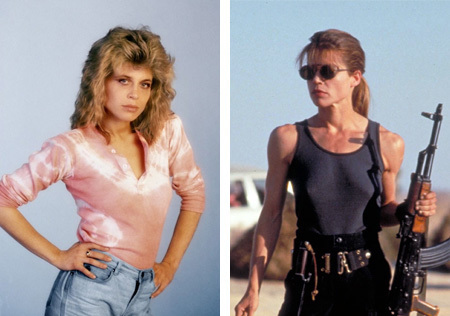
That’s not good for either gender because it is possible to create great female characters. From Furiosa in “Mad Max: Fury Road” to Sarah Conner in “Terminator” to Ripley in “Alien,” there are plenty of great female characters that go onto become iconic in their own right. That’s why it’s so important to avoid the pitfalls of the Galbrush Paradox, otherwise we’ll be doomed to a future of Mary Sues.

20 Comments

Filed under Jack Fisher's Insights

Emma Frost: The Future Of Female Villains?

Not long ago, I dedicated several posts to the defining traits of villains and why Walter White was such a game-changer, beyond getting Bryan Cranston more Emmys than he’ll ever need. I could’ve done many more posts because quality villains are every bit as integral to any story as a quality hero. Just look at Batman’s rogues gallery, and the number of cos-players that dress as them, for proof of that.

In these discussions, I kept things fairly general and if I did, I singled out a specific character like Walter White or Magneto. Well, recent events and ongoing trends have inspired me to re-address the issue of villains from a different angle. Specifically, I’d like to talk a bit about female villains.

Quickly, take a moment and recall your favorite female villain of all time. Chances are it’ll take you a moment and not just because a great many female villains made us both scared and horny at the same time. It may also be difficult because some female villains don’t exactly carry themselves as villains. Catwoman may be a thief, a deceiver, and the subject of one of the worst comic book movies of all time, but she’s not an outright villain.

Female villains are one of those difficult concepts to flesh out and not just because men can’t resist turning female villains into sexy anti-heroes, some more egregiously than others. It’s just one of those elements that either gets under-used or overlooked.

Well, as is often the case with the ever-changing/insanely-erratic tastes of pop culture, that may be changing. At a time when a new generation of strong female characters, badass female superheroes, and women who just do more than give the male characters something to obsess over, it was only a matter of time before female villains caught up.

Now I generally suck at making predictions. I’m the same guy who was convinced that Cleveland Cavaliers would never win the NBA championship last year. I’m not proud of the things I had to do for the bets I made on that game, but it does show that everybody, including aspiring erotica/romance writers, can be dead wrong. With this, however, it’s not just a prediction. It’s based, in part, on an observation.

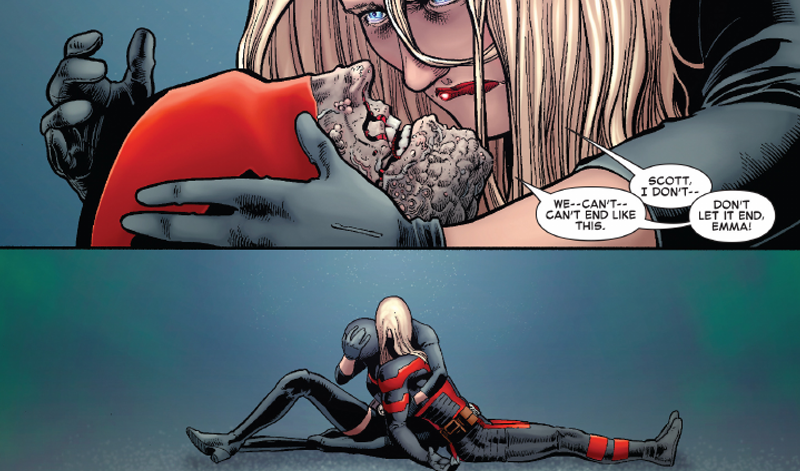
As most regular readers of this blog already knew, I love comic books and superheros. Specifically, I have a special affinity for X-men comics. So it should come as no surprise that I follow the events of the X-men comics very closely. Well, this past week, something pretty damn major happened in the X-men comics and it has to do with this woman.

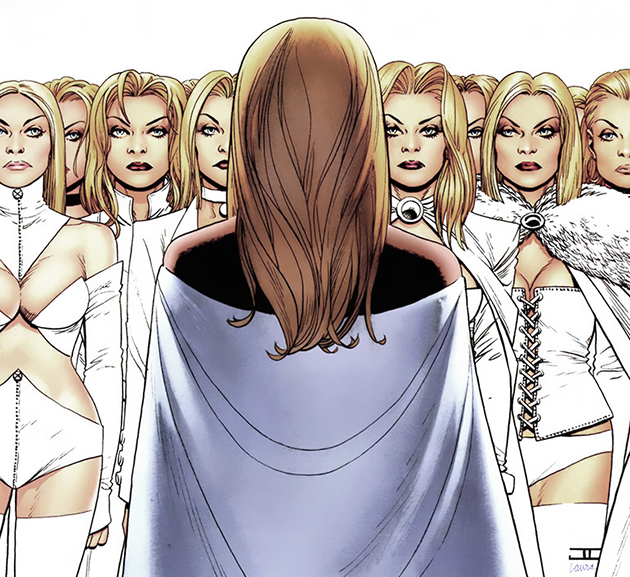
Her name is Emma Frost. Trust me, she’s even sexier than her fan art would imply. She’s a prominent character in the X-men comics and has had numerous roles throughout the series for over 30 years now.

At times, she’s been a devious villainous vixen. At others, she’s been a cunning heroic vixen. In every role she’s in, she generally makes it a point to be sexy as hell. She doesn’t mind getting naked, she doesn’t mind having sex, she doesn’t give half-a-tortoise fart about what anyone things. In short, she’s a perfect blend of Regina George and Wonder Woman.

Now Emma Frost is somewhat unique in that she’s had so many roles, but she’s never defined herself completely as a hero or villain. She hasn’t even been an anti-hero. If you were to do the villain’s journey test I laid out in a previous post, she wouldn’t complete it, but she would come pretty damn close.

The same goes for the hero’s journey. She would check some boxes, but not all. She’d just look a million times sexier than anyone else on that journey.

Why is this important? Well, in a major X-men crossover event that just concluded recently, Emma’s role changed again. After a clash between the X-men and the Inhumans, one Marvel built up over the course of two years, Emma crossed a line that effectively sealed a new fate for her. She’s a villain now. However, she’s a very different kind of villain.

What do I mean by that? Why is that even relevant? Well, to answer that, think back to what I said about listing your favorite female villains. Go back to that list again. Exactly how many of those villains are refined, well-rounded, complex characters? Chances are your list will shrink considerably or outright disappear.

That’s because female villains have a history of being annoyingly flat. Going all the way back to the Wicked Witch of the West, they rarely had many compelling traits. Most of the time, they were just evil witches or devious vixens. Basically, just think of every evil female character in a James Bond movie. That’s the extent of the depth female villains usually get.

This is what makes the development with Emma Frost so intriguing. Emma Frost isn’t like Pussy Galore or the Wicked Witch of the West and not just because she looks better in a thong. As a character, she has a rich history. She even had her own comic series at one point. She has various layers as well. She’s not just out to be a total bitch and look good doing it, although she does make it look pretty damn easy.

Emma Frost has real, genuine motivations. They’re not always pure either. For a time, she was a stripper who didn’t mind using her sexuality to get ahead in the Hellfire Club, who have been major X-men villains for many years. When she was a teacher, she watched many of her students die in an attack that she had no chance to stop.

However, she has never been one to play the part of a victim. She never uses tragedy or excuses to justify her actions. She does what she thinks needs to be done and anyone who disagrees with her can just kiss her perfectly shaped ass. Hell, she could probably charge for that and it would be worth every penny.

The recent events in the X-men comics pushed her to extreme actions and for good reason. As part of the story that set up the clash between the X-men and the Inhumans, she lost someone near and dear to her. Cyclops, a character she had been romantically involved with, died in her arms. It affected her profoundly, which is saying a lot for someone who killed her own sister.

That effect leads her to do more than just lead a conflict. They put her in a position to become a hardened, but complex villain, both to the X-men and anyone else who generally pisses her off.

Her timing really couldn’t be better. Just as everyone from Disney Princesses to Taylor Swift prove that there’s a market for strong female personalities, she’s entering a domain that’s ripe for new energy. Emma Frost could very well be the first of a new push for better female villains to go along with the female heroes that every comic company and movie studio is pushing these days.

I feel like this is a trend that needs to happen. Women can kick ass as heroes. That much they’ve proven. Why not show they can do the same as villains? Emma Frost is unique in that she has the kind of complexity that allows her to be a hero when she needs to be and a villain when she wants to be. I believe there will be a market for that kind of complexity.

Sure, some parents would still prefer that their daughters dress up as Disney princesses rather than Emma Frost, if only to avoid any Honey Boo Boo comparisons, but having strong female villains still does something important. It adds balance to the greater narrative between heroes and villains as a whole.

Now I’m somewhat guilty myself of not fleshing out female villains. In my book, “The Escort and the Gigolo,” the main villain was a woman named Madam Felicity. While I did make an effort to give her some complexity, I admit she’s not more ground-breaking than a James Bond villain with boobs.

I’d like to change that in future novels. I just hope that by then, Emma Frost will have set the bar and set it high. As any X-men fan will tell you, Emma never does anything haphazardly. If she’s going to usher in a new wave of strong female villains, then she’s going to make damn sure she’s the best and looks damn sexy while doing that. For that, she’ll always have a special place in the hearts and pants of X-men fans everywhere.

5 Comments

Filed under Uncategorized

Jack Fisher’s Top 5 Most Underrated Female Characters

When it comes to great female characters in pop culture, there are plenty of obvious choices. Contrary to what radical feminists believe about massive patriarchal conspiracies, our culture has created some pretty amazing women, real and fictional alike. So if there is a patriarchal conspiracy, they’re doing a piss poor job.

The best of the best, when it comes to female characters, are difficult to dispute. In the world of fiction, there’s Wonder Woman, Storm of the X-men, Captain Marvel from the Avengers, Supergirl, Sarah Conner from Terminator, Ripley from the Alien movies, Leslie Knope from “Parks and Recreation,” and Furiosa from “Mad Max: Fury Road.”

In the real world, we have just as many amazing women that raise the bar for both genders. We have Senator Elizabeth Warren, Madonna, Oprah Winfrey, Emma Stone, Maralyn Munroe, Lady Gaga, Janet Jackson, Malala Yousafzai, Michelle Obama, Taylor Swift, and whoever manages Taylor Swift’s public image. In either case, men and women alike have a great many choices in admirable female icons.

As great as these female characters are, however, there are still some characters that get overlooked and under-utilized. They’re still great characters in their own right. They just tend to get lost in the vast, chaotic, and constantly-shifting landscape of popular culture.

The same thing happens to male characters, but for better reasons. While they’re are plenty of great men in pop culture, there are a few too many that are blatant rip-offs of Superman, John McClane, and Batman.

So with that in mind, I’d like to acknowledge some of the overlooked, under-appreciated female characters that help make our culture great in their own unique way. For the sake of keeping this post brief and concise, I’ll focus on fictional characters. I find it’s a lot harder to ignore a real person these days when the media landscape is so vast, broad, and prone to strange memes and piss poor fact checking.

Since fictional characters can’t raise their voice, create a hashtag, or get thrown in jail for violating their probation, I figure they need this acknowledgement more than most. So without further adieu, here are Jack Fisher’s top 5 most underrated female characters.


5. Elaine Benes (Seinfeld)

This one may be a bit controversial because Seinfeld is a sitcom from a very different era. It’s also a show that gets constantly criticized by the politically correct crowd, but these humorless assholes only serve to undermine a female character who is balanced, compelling, and every bit as broken as the men.

In a show that has so many memorable characters, including Soup Nazis, Elaine still stands out as a great female character that brought out the best in actress, Julia Louis-Dreyfus. Elaine was an ex-girlfriend of Jerry Seinfeld, but that was never the primary emphasis for her character.

Elaine is smart. She has a distinct personality beyond just being the only woman in the main cast. She’s also every bit as quirky. In a show that has someone like Cosmo Kramer, that’s an accomplishment. On top of that, she can dance like no one else.


4. Berta (Two And A Half Men)

I’m not going to deny it. “Two and a Half Men” is as dirty a show as they come. It’s crude. It’s vulgar. It contains some of the least likable characters this side of South Park. I can totally understand why the same politically correct assholes that whined about “Seinfeld” would whine about this show.

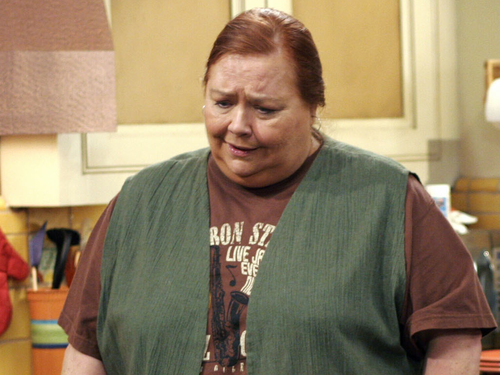
Despite all the crude vulgarity, this show still had Berta. Played by Conchata Ferrell, she was one of the best parts of this show. Even though she played the role of a housekeeper, she was one of the few who really stood up to Charlie and Alan Harper throughout the series. Those two can disrespect and denigrate all the women they want. However, they never dared to disrespect Berta.

Given the nature of the show and the very public meltdown that accompanied it, Berta definitely deserves credit for standing out. In a world with personalities like Charlie Sheen, that’s also an accomplishment.


3. Maria Hill (Marvel Comics)

In the world of Marvel Comics, there are dozens upon dozens of powerful female characters. From heavy hitters like She-Hulk to lovable underdogs like Jubilee, there are so many iconic characters who have a strong place in comic book lore.

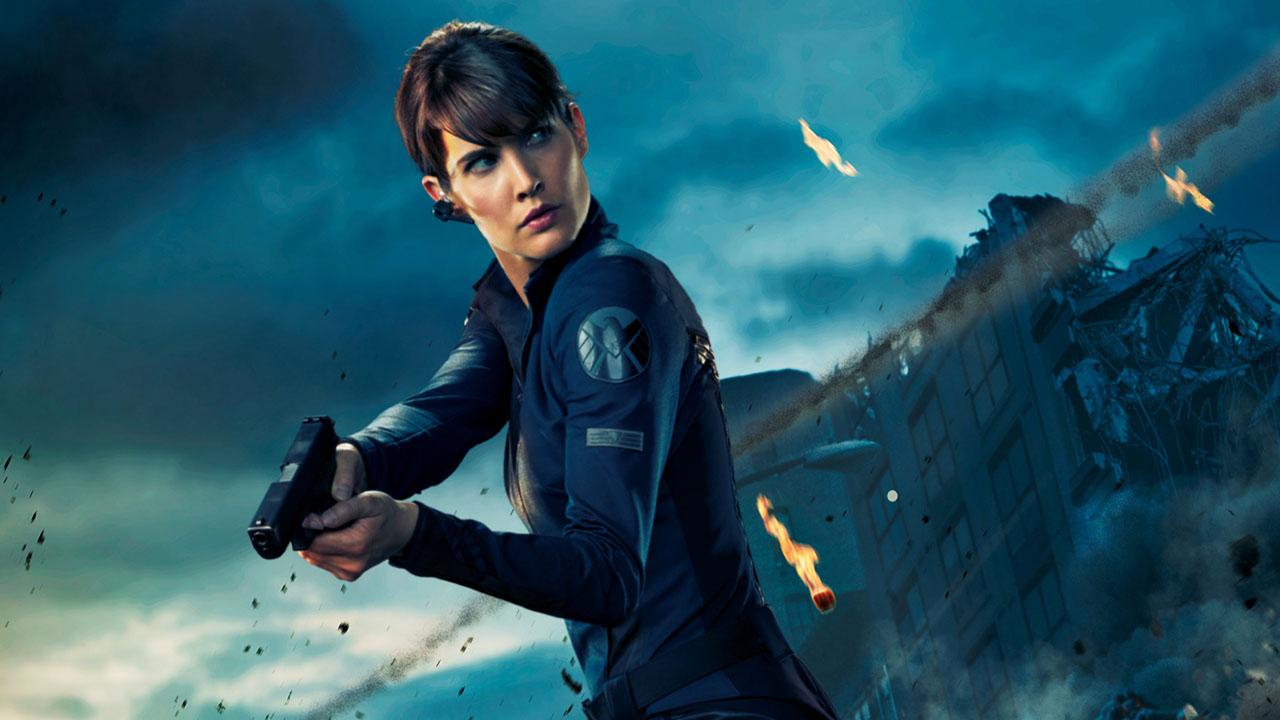
Then, there’s Maria Hill. She’s not a super spy martial artist like Black Widow. She’s not a sexy assassin like Elektra. She’s not even a side-kick like Batgirl. She’s the director of SHIELD and often the right hand of its one-eyed visionary, Nick Fury. The fact she doesn’t have superpowers and is in such a high position of authority in the same comic book universe that has She-Hulk says a lot about her.

She’s not just a hardass authority figure, although she can be at time. She’s not just someone who’s every bit as determined and capable as Nick Fury either. She commands respect in her own way. She has a personality that’s distinct and tough. She could easily be a CEO or a drill sergeant. Whatever she is, she’s someone others eagerly follow. For any character, male or female, that’s pretty awesome.


2. Samus Aran (Metroid)

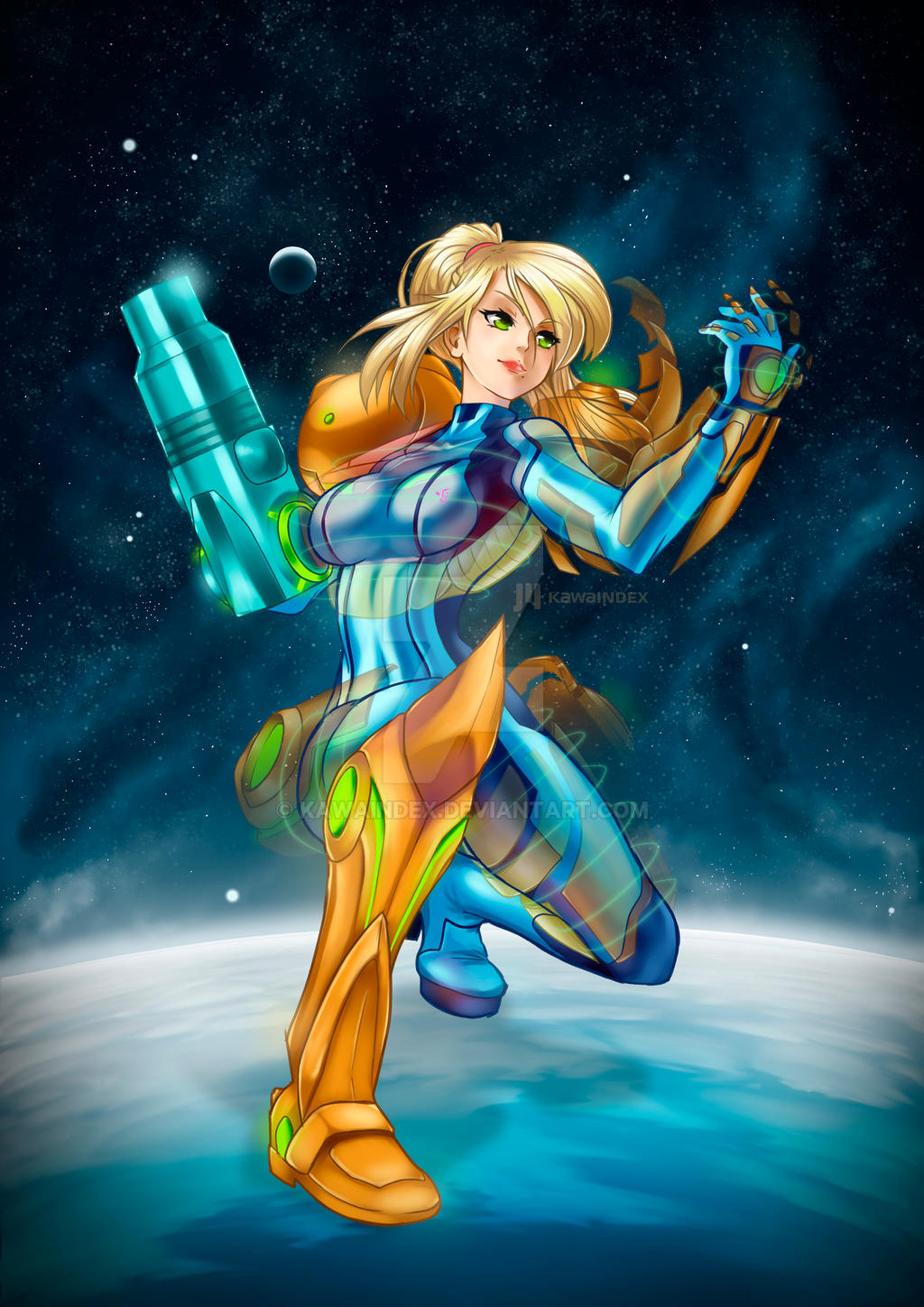
Video games tend to be a hot-button issue when it comes to women, thanks largely to some whiny, asshole critics who go out of their way to piss people off. I won’t get into all the inane bullshit surrounding that issue, but I will concede that in the early days, women were basically the same as Disney princesses. If they weren’t being rescued, they were often in the process of being kidnapped by some giant lizard monster.

Then, Samus Aran came along. In the early 8-bit days of gaming, she set herself apart by being a badass female bounty hunter at a time when other characters were either elves, plumbers, or GI Joe knock-offs. Her ability to kick ass in games was so surprising that some gamers didn’t realize that she was a woman until the very end.

Samus was, and still is, a breakthrough character who tends to get overlooked in an era where more emphasis is on outrage over female characters rather than whether the character is actually awesome. She fought, kicked ass, and looked damn sexy while doing it. What more could you want out of a female character that doesn’t involve a bottle of lube?


1. Daria Morgendorffer

Some concepts are just too ahead of their time to have the kind of impact they deserve. The same goes for certain characters. Sometimes, a character comes along in a certain era that embodies something that doesn’t become truly meaningful until years later.

For Daria Morgendorffer of the classic 90s MTV show aptly titled, “Daria,” she’s one of those characters who would’ve been a much bigger deal if her show was on today. Daria is not your typical female protagonist. She’s not overly sexual. She’s not overly charismatic either. However, what she lacks in overt femininity, she more than makes up for with a distinct, memorable persona.

She’s dry and sarcastic. She’s coarse and brutally honest. She’s also caring and understanding when she needs to be. She’ll say what others are afraid to say and not give a damn who gets upset in the process. She never comes off as an overplayed trope or cliche. She’s very much her own person.

She’s also got an emotional side. Her feminine side isn’t completely subverted. Throughout the show, she has multiple love interests, including one that becomes a steady boyfriend. As a character, she feels both unique and real. She’s someone that men and women alike want as a friend and a companion. Few characters, female or otherwise, can make that same claim in modern TV show.

For me, personally, Daria has a special place in my heart. She was, and still is, one of my favorite TV characters in the 90s. I feel like TV has been missing something since her show ended. While she may have been ahead of her time, her words of wisdom ring true in any era. With that in mind, I’ll leave everyone with this:

Um, thank you. I’m not much for public speaking. Or much for speaking. Or, come to think of it, much for the public. And I’m not very good at lying. So let me just say that, in my experience, high school sucks. If I had to do it all over again, I’d have started advanced placement classes in preschool so I could go from eighth grade straight to college. However, given the unalterable fact that high school sucks, I’d like to add that if you’re lucky enough to have a good friend and a family that cares it doesn’t have to suck quite as much. Otherwise my advice is; Stand firm for what you believe in, until and unless experience proves you wrong. Remember, when the emperor looks naked, the emperor is naked. The truth and a lie are not sort of the same thing. And there is no aspect, no facet, no moment of life that can’t be improved with pizza. Thank you.

3 Comments

Filed under Jack Fisher's Insights

Takeaways From The “You Fight Like A Girl!” Panel At New York Comic Con

img_1686

Are you tired of hearing me talk about how awesome the New York Comic Con was this year? Well too bad! I’m still going to talk about it because there are issues and experiences worth discussing. Some of those issues apply to my work as a romance/erotica writer, both directly and indirectly. Some of them even manifested in strange, but fitting ways.

There was a lot to see at the New York Comic Con. I was only there for a day so I had to make everything I saw and experienced count. This includes being very selective with the panels I attended. Make no mistake. There were so many panels at this thing that it would take a week and a fuckton of coffee to attend every one of them. That said, I felt I selected the right panels in the end.

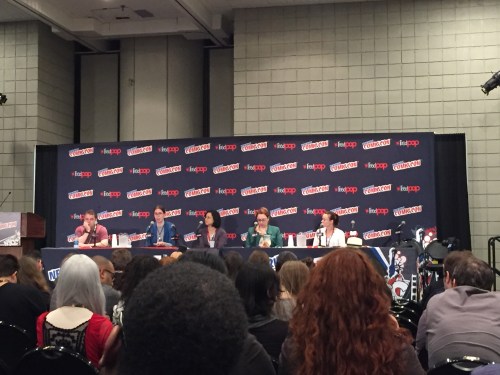
One of the first panels I attended turned out to be the most informative, at least as it applied to my romance/erotica endeavors. It was a panel entitled “You Fight Like A Girl!” and was meant to discuss trends in female superheroes and female characters in general. Seeing as how the kind of romance/erotica I write tends to involve multi-layered female characters, often out of necessity, it was a worthwhile discussion to have.

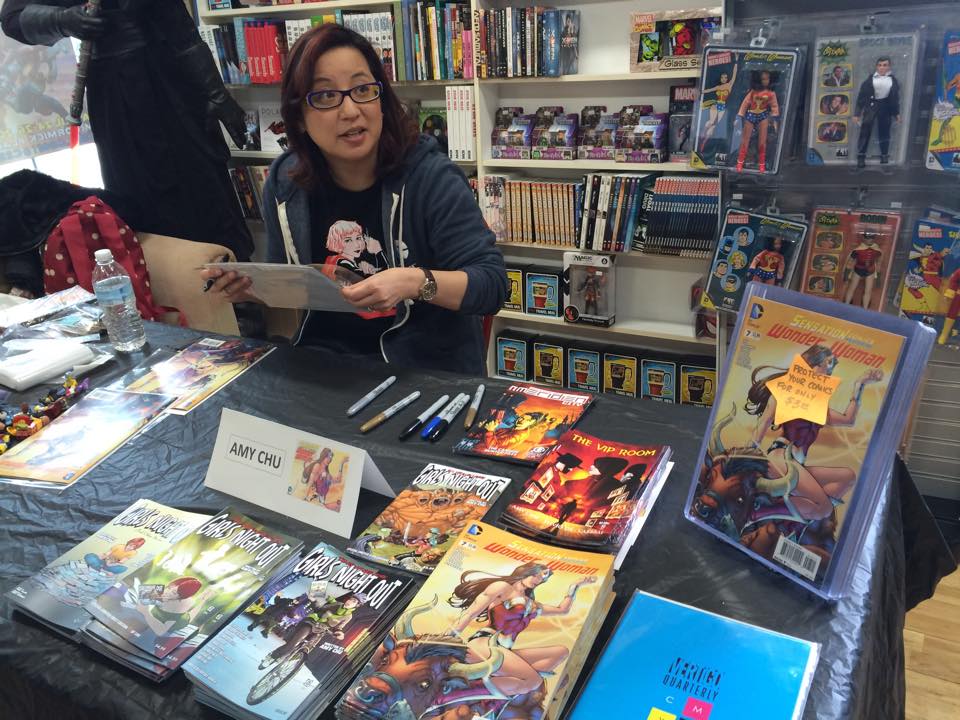
At this panel were some notable female writers, some of which I knew more than others. They included Tami Stronach, Amy Chu, Heidi Maconald, Dr. Katie Monnin, and Gina Gagliano, although one of them could not attend due to illness. A man named Michael Gianfrancesco moderated the panel, but he didn’t do much talking. The women here had plenty to say.

They discussed a great many topics. At first, they just shared some of the challenges they faced as women trying to break into comics, a traditionally male medium. They never gave the impression that they had to punch someone in the dick to get their foot in the door, but they definitely had to put in more effort compared to their male counterparts.

This led to some pretty entertaining stories that drew a few laughs, but one story in particular really stood out to me. It came courtesy of Amy Chu, an accomplished female comic book writer who has a unique talent for making female characters more interesting. She’s basically the kind of woman who I’d have sent wildly inappropriate love letters to if she went to my high school.

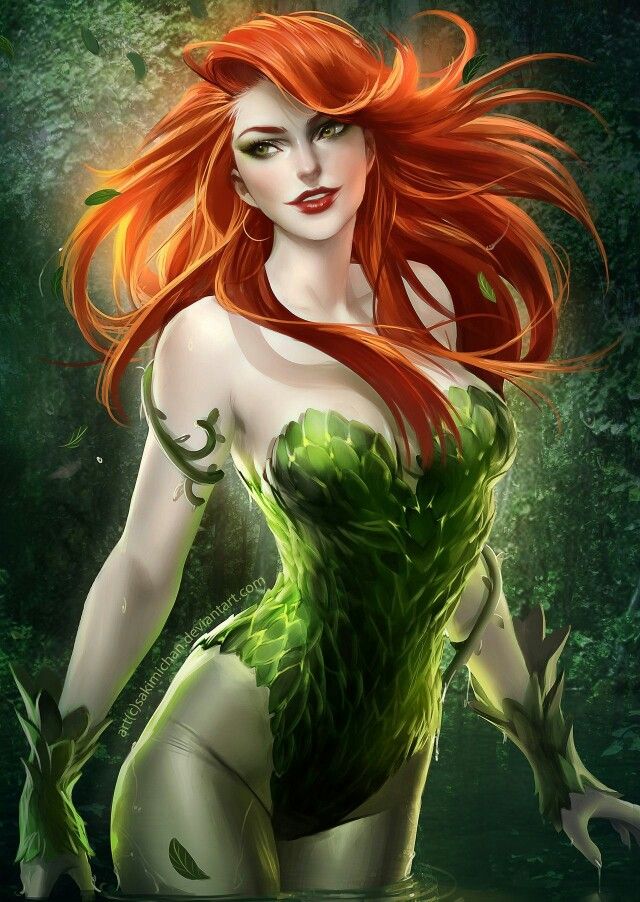
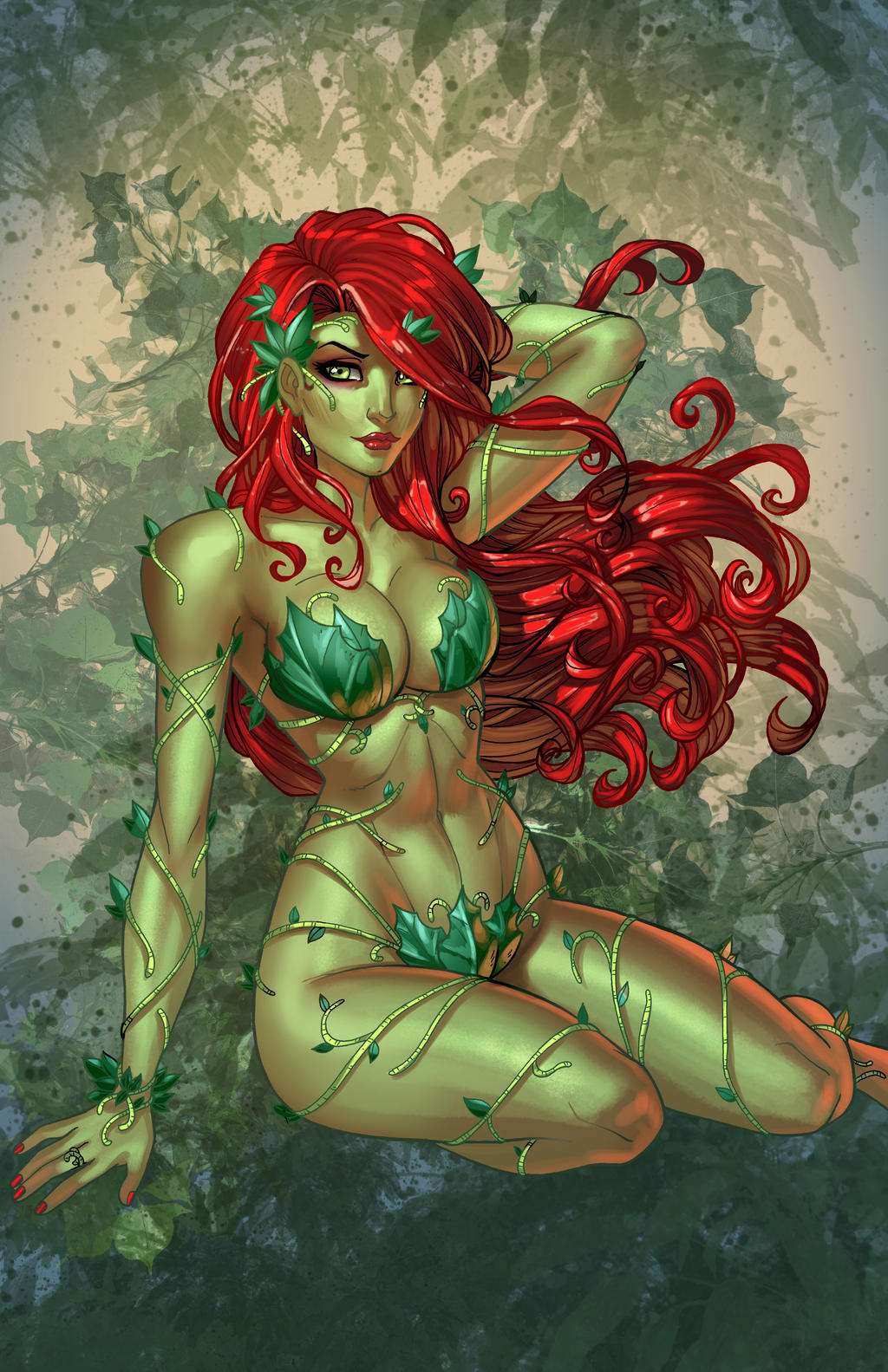
She told a brief story about her work on the title, “Poison Ivy.” For those of you who don’t know, Poison Ivy is a major Batman villain who sets herself apart in two major ways. First and foremost, she’s less a criminal and more a radical eco-terroists that even PETA would deem unhinged. Second, and perhaps more importantly for the subject of this discussion, she looks like this.

She looks like the embodiment of a lurid fantasy from a radical male vegan. Naturally, she’s one of those female characters that is frequently subjected to excessive sexualization. How could she not be? She wears only leaves for clothes for crying out loud. The imagination of horny men doesn’t have to be that elaborate.

This presents a challenge for Amy Chu. How does a female writer handle a character whose sex appeal is at a level that’ll likely guide many teenage boys through puberty? How does she make this character more than the sexy, villainous vixen that shows up in every bad porn parody ever made?

It is a challenge, but one that Amy Chu took on and subsequently kicked its ass. She then told a story about how she discussed her plan for this character with DC’s main editor, Dan Dido. The nature of this discussion definitely resonated with me for reasons that should be obvious to anyone who has ever heard someone whine about female superheroes showing too much super-cleavage.

During this discussion, Dan Dido brought up Poison Ivy’s uniform with Ms. Chu. He favored giving her more clothing, making it slightly less easy for men to masturbate to. For a character like Poison Ivy, that’s asking a lot. However, what was really remarkable about this discussion was how Ms. Chu opposed it.

She said outright that she didn’t want to “de-sexualize” Poison Ivy. She wanted to keep that aspect of her character while exploring other parts of it. She said that a female character doesn’t need to be a goddamn nun in order to explore other parts of her personality. This may sound like the most logical concept in the world, but in this insanely politically correct culture of ours, it may as well be on par with quantum mechanics.

Needless to say, my respect for Amy Chu went way up when she told this story. It also revealed something telling/troubling about the male side of the discussion. From the perspective of her editor, Poison Ivy had to put on more clothes in order to become more complex. She had to be less sexual for those complexities to reveal themselves.

As a man, I can understand this to some extent. If a topless woman walked up to me and began telling me all about her charity work in South Sudan, I’d be distracted. Heterosexual men are biologically wired to stare at boobs. It’s a bug in the system, but it’s not a bug that needs to crash the whole system.

This is where I think Amy Chu earned her credibility as a skilled writer. She shows that she willing to embrace every trait of a female character and not just ignore those that may be distractions. She’s willing to work with and/or around those distractions, but she’s not going to ignore them. Sure, she’s making it harder on herself, but the end result is a more balanced female character who also isn’t afraid to show cleavage. As a man and a comic book fan, I can only praise Ms. Chu for such dedication.

There were many fun and entertaining panels at the New York Comic Con this year, but this one was definitely the most revealing. It highlights that popular culture, despite the progress we’ve made since the days of shitty slasher movies, still has issues with what constitutes a strong female character.

Thanks to women like Amy Chu though, we’re making progress. I hope I can be part of that progress with my own work as a romance/erotica writer.

1 Comment

Filed under Jack Fisher's Insights

Strong Female Characters and the (Strange) Assumptions About Them

I’m of the opinion that we make more progress than we think, but not nearly as much as we should. There’s no doubt about it. Novels, TV shows, cartoons, comics and video games have come a long way with respect to female characters.

We’re all familiar with the time-tested tropes. For a long time, a female character could basically be cut and pasted from any James Bond movie. Either she’s a devious, femme-fatale or a pretty love interest meant to supplement the story of the male protagonist. If she’s promiscuous in any way, she’s probably going to die. If she’s innocent and pure, she’ll probably live and be the hero or the prize for the hero. While there’s a place for these kinds of stories, the times are changing.

In recent years, there is a renewed interest in strong female characters who don’t fit into these same tropes. I’ve mentioned a few, like Vanessa in the Deadpool movie. Other more prominent characters include Black Widow in “The Avengers,” Furiosa from “Mad Max: Fury Road,” and Katniss Everdeen from “The Hunger Games.” These are all characters that take center stage, neither supplementing male protagonists nor becoming too similar to male protagonists. It’s a beautiful thing and an overdue change.

However, is our understanding of what makes up a strong female character really that refined? I’m of the opinion that pop culture in general is still stumbling around in the dark like a drunk monkey, trying to figure it out. It’s kind of important for me to acknowledge because I’m a writer. I’m trying to create strong female characters in my books. I admit it’s a work-in-progress, but how much progress have we actually made?

Once again, the fine folks at Cracked.com use a little dirty humor to point out some of the flaws in our current understanding in strong female characters. I don’t agree entirely with their assessment of certain aspects of pop culture, but some of their points are worth making and they’re points I need to consider for my own work. They focus specifically on movies, but I think it can apply to any medium right now.

6 Bizarre Assumptions Movies Make About Strong Women

So maybe we’re not as progressive as we think we are. The one quote in the article that stands out the most is this one:

It seems to come back to this idea that this is all a zero-sum game, that anyone asking for more female characters really hates males and wants to see them mocked and emasculated. “Oh, you say you want more strong female characters? How about if we just showed them shooting a dude right in the penis? Would that do it?”

This, I think, is the key to understanding the core of a strong female character. Their strength doesn’t come from overpowering men or being better than men. It comes from being able to operate on a level playing field with men. It’s not about one gender dominating the other. It’s about equality. There’s a time and place for dominant and submissive personalities. The success of “50 Shades of Grey” is proof of that. Those times and places, however, should be the exceptions rather than the norms.

It’s a challenge. That’s for sure. Everything worth doing is a challenge. It’s one I want to take on. I believe I did to some extent with “The Big Game.” Yes, it is a story that utilizes some BDSM elements. However, I do it in a way that allows both male and female characters to operate equally. It’s my next book that will present a far greater challenge.

This next book, which is still without a title, is structured around what I hope to be a strong female character. I don’t want that character to fall into some of the same traps that Cracked.com so eloquently laid out. I want her to be tough and strong without having to dominate over every male character. I won’t claim I’ll succeed in full, but I’d like to make a concerted effort. If I can find a publisher willing to take a chance as well, I’d like to see that effort pan out.

8 Comments

Filed under Jack Fisher's Insights, Uncategorized