
This is a video from my YouTube channel, Jack’s World.
This video is a CreepyPasta story I wrote and narrated myself about an AI with a direct connection to the Almighty. Enjoy!

Whenever I talk about religion on this site, I try to be as respectful and tactful as possible. I don’t seek to offend or insult anyone who identifies as religious. I also don’t seek to denigrate certain religious practices, although I do believe a few warrant extra scrutiny. I’m sure I’ve overstepped those bounds in the past and for that, I do apologize.
All that being said, I have a serious question I’d like to present to those who are genuine and sincere with their faith.
Why do preachers need, let alone deserve, private jets?
I promise I’m not being facetious. I’m also not trying to make a larger point about certain religions. I would genuinely like someone who identifies as religious to explain this to me. Don’t just throw bible quotes at me. Explain it to me like I’m a child.
I know preachers having private jets isn’t new. However, recent events have made preachers and their spending habits a lot more noteworthy. Some make elaborate excuses as to why they have private jets. I still don’t get it.
These are not CEOs who run multi-billion dollar companies.
These are not heads of state who have to be able to travel the world at a moment’s notice.
These aren’t even celebrities who have achieved a level of success that affords them the option of some added luxury.
These are preachers who, for the most part, make their living giving sermons to adherents. I’m not saying that isn’t a noble profession. I went to church as a child. I remember the preachers and priests who led the sermons. They were genuinely nice people and they didn’t have private jets. One of them didn’t even own a car.
Now, I know these kinds of religious leaders are in a different hemisphere compared to the charismatic televangelists who have their own megachurches. I also know that more than a few adherents who utterly despise these people. One of them once told me, “That jet won’t help them escape where they’re going.”
Regardless of whether or not you believe that, I would still like someone to explain this practice to me. I get that charismatic people will attract crowds, money, and power. I get that those same people will abuse that power in one way or another. That’s just human nature.
What I don’t understand is how the adherents who believe, support, and send money to these people can accept this sort of thing and not have it clash with their faith somehow. Nearly every major religion has strict condemnations of greed and excess. How can this be justified?
Again, this is a sincere question. I hope to get a sincere answer because the absence of an answer is every bit as revealing.
Filed under Current Events, politics, rants, religion

Picture, for a moment, the following scenario.
You’re at a prestigious awards ceremony. The nature of the ceremony and the award aren’t important. The only factor that matters is the awards are granted to only a few individuals who have achieved feats that few human beings have achieved. It’s an honor just to be nominated, but an even bigger honor to win.
With that in mind, imagine two different winners for two different feats. The first winner comes up onto the stage, accepts their award, and gives a heartfelt speech that’s something along the lines of this.
“Thank you so much for this incredible honor. It was a long, hard road to get to this point, but I’ve been so blessed with wondrous gifts and amazing support. To them and to the higher power that blessed me, I am eternally grateful!”
Chances are you’ve heard a speech like that before. We hear it all the time with athletes, celebrities, and major public figures. They achieve something spectacular and their first inclination is to say they are blessed. They don’t always thank a god for it, but it’s such a common refrain that most come to expect it. Some even joke about it.
That being said, try to imagine your reaction for the second winner. They come out on stage with the same immense joy as the previous winner. They also give a heartfelt speech of their own, but it goes like this.
“Thank you so much for this incredible honor. It was a long, hard road to get to this point, but I was just really lucky to be born with talent and amazing support. I like to think I’ve made the most of it. This award is just part of it. For that, I am so proud of myself and those who helped me!”
I doubt a celebrity has given an acceptance speech like this before. If they did, chances are it would either be a joke or an elaborate act of trolling, which some celebrities are known to do. For the sake of this little thought experiment, imagine the person was sincere. How would you feel about them? Would be different than the first?
I crafted this scenario as a way of illustrating the difference between being blessed and being lucky. These terms tend to get used interchangeably. In common language, they’re somewhat synonymous. Even though dictionary definitions have some key distinctions, the standard usage of these words carries a particular meaning.
Part of that meaning stems from the general discomfort we feel about the universe being so chaotic and meaningless. We’re wired to seek patterns and surmise order. It doesn’t even matter if the patterns or order is real or an outright trick. When people can make sense of the world, we’re better able to function. It’s a big reason why humans have been able to adapt and survive with such success.
The ideas being lucky and being blessed reflect opposite sentiments of a similar principle. We see luck as a fluke. There’s no meaning behind it. It just happens randomly and without any defined goal.
A kid is randomly born with talent that makes them a great athlete.
A person randomly picks the winning numbers to win a big lottery prize.
A person just happens to be in the right place at the right time to meet the love of their life.
None of these situations are inherently right or wrong. That’s part of what makes it so distressing on some levels. The people who benefit from luck do nothing to deserve or warrant their good fortune. It goes against that innate sense of fairness that most sensible human beings have wired into their brains.
Being blessed, on the other hand, carries a very different connotation. To be blessed implies that some person, deity, or sentient force chose to grant someone such benefits. It’s not random. It’s part of a larger plan. It may not seem like one on the surface. It may even be an outright illusion. That ultimately doesn’t matter. The semblance of a plan is enough.
To be blessed also carried with it a sense of humility. Someone who just says they’re lucky doesn’t come off as moral or gracious. Even if they’re entirely ambivalent about it, they won’t inspire respect or admiration for acknowledging their luck. If they say they’re blessed, though, it changes the context.
A person who is blessed with talent means their achievements have a greater meaning.
A person who is blessed with picking winning lotto numbers means their good fortune is part of some larger plan.
A person who is blessed with meeting the love of their live means their love is somehow pre-ordained by fate.
The difference lies within the meaning. Being blessed conveys influence from a source greater than the person receiving the blessing. To show gratitude to that force is to accept that it’s not just about you. There’s a larger plan and you’re just part of it. That sounds humble, but at the same time, it detracts from the true extent of an achievement.
Luck or no luck, it takes effort and dedication to achieve something of value. Whether it’s an award for world’s largest nose ring or setting a record for most pop tarts consumed in a day, an accomplishment still requires work. Even lottery winners have to go out of their way to pick the numbers, get the ticket, and claim their prize.
To call that process a blessing is to dehumanize the actions involved. It undercuts the countless other factors in play. Some are entirely controllable. A champion of any sport usually has talent, determination, and a willingness to refine their skill. Others are simply beyond their control, from the conditions of an event to just the general randomness of a particular moment.
To assume these factors as part of some over-arching plan is to assume there’s a governing force that consciously cares about these random happenings. Whether that force is a deity or some idea of conscious fate, people will consciously devalue their own worth to believe they’re part of something greater. It might not be real, but that’s beside the point.
It helps us wrap our brains around incredible achievements and improbable events. It shows in how people can resent those who are just deemed lucky. Again, just look at lottery winners. Those who have enjoyed that rare level of luck can attest that they are generally looked down upon by those who gained their fortune in other ways.
This isn’t to imply that the whole concept of being blessed is inherently wrong. There may actually be a higher governing power behind certain peoples’ fortunes, be it an all-powerful deity or the shape-shifting lizard men of the Illuminati. There’s no evidence of it now, but as believers and conspiracy theorists will often point out, absence of evidence isn’t evidence of absence.
That said, I believe the dehumanizing aspect of blessings over luck does more harm than good in the long run. Humility is an admirable trait, but there are better ways to encourage it that don’t involve assigning some arbitrary meaning to random events. In addition, saying someone or something is blessed has some indirect implications that are even less desirable than a random universe.
If one person is blessed, then that implies other people were deemed undeserving.
If one moment is blessed, then those that came before it are nothing more than prelude, no matter how much they meant to those involved.
If a people or society are blessed, then that basically declares that everyone else is somehow beneath them and that mentality rarely brings out the best in people.
Human beings are capable of remarkable feats. Many of those feats don’t require a higher power or some conscious force. They simply require an opportunity and a willingness to strive for something greater. Granted, opportunities can be random and there’s only so much anyone can do to control the luck they get. However, I submit that gives it even more meaning in the grand scheme of things.
Filed under human nature, outrage culture, philosophy, politics
The following is a video from my YouTube channel, Jack’s World. It’s a full review and reaction to the latest season of “Lucifer,” a show I’ve praised many times before. I already reviewed the first part of Season 5. It’s only fitting that I give the same treatment to the second part. This show just keeps finding devilishly delightful ways to explore the world of Lucifer Morningstar and this season is no exception.
Please note that this video does contain extensive spoilers. So, if you haven’t binged Season 5 yet, please do so before you watch this. You have been warned. Enjoy!
Filed under Jack's World, Lucifer, television, YouTube

I tend to be very critical of organized religion and those who take religion to extremes. I make no apologies for that, but I do make an effort to be fair. That’s why I go out of my way to highlight that most religious people, regardless of the religion they follow, are generally good, decent people whose faith genuinely enriches their lives.
That’s worth acknowledging because people can do genuinely good things in the name of their faith. It’s a beautiful thing. Just look at someone like Fred Rogers. That’s religious devotion at its finest.
I know I don’t highlight those stories enough. In my defense, the stories of people who actually practice what they preach and do genuine good for the world rarely makes the news. Then again, the news relies almost entirely on doom and gloom these days, so that shouldn’t be surprising.
That makes the effort to highlight the good a lot harder, but it’s still worth doing. To that end, I want to highlight a good story about religious people that stemmed from a bad story about a religious institution with a history of unholy behavior.
Recently, I bemoaned the Vatican’s decision to essentially cling to their traditions of marginalizing LGBTQ people. They still call homosexuality a sin and refuse to bless same-sex unions. Never mind the fact that Catholics still get divorced and eat shellfish, the Vatican still refuses to embrace change.
At a time when religion, as a whole is in decline and support for LGBTQ rights is growing, this just feels backwards, even by the standards of the Catholic Church. However, not all those who identify as Catholic feel the same way.
Even though the Vatican is set up as the central power of the Catholic world, there are those who go against that power. A few priests are daring to defy the Vatican and I want to take a minute to acknowledge their boldness. This is what Reuters has reported.
Reuters: Rebel priests defy Vatican, vow to bless same-sex couples
A dissident band of Roman Catholic priests leading a disobedience campaign against the Vatican said on Tuesday they would carry on blessing same-sex couples in defiance of Church orders.
The Vatican said on Monday that priests cannot bless same-sex unions and that such blessings are not valid, in a ruling that disappointed gay Catholics who had hoped their Church was becoming more welcoming under Pope Francis.
In some countries, parishes and ministers have begun blessing same-sex unions in lieu of marriage, and there have been calls for bishops to institutionalise de facto such blessings. Conservatives in the 1.3 billion-member Roman Catholic Church have expressed alarm over such practices.
“We members of the Parish Priests Initiative are deeply appalled by the new Roman decree that seeks to prohibit the blessing of same-sex loving couples. This is a relapse into times that we had hoped to have overcome with Pope Francis,” the Austrian-based group said in a statement.
“We will — in solidarity with so many — not reject any loving couple in the future who ask to celebrate God’s blessing, which they experience every day, also in a worship service.”
Whether you’re religious or not, let’s take a moment to applaud these priests. They’re doing something that Jesus himself once did. They see a powerful institution doing something wrong and they’re protesting that by doing what’s right.
In the process, they’re providing love, tolerance, and acceptance to a marginalized group that has suffered plenty, often in the name of religion. You can call that ironic, but I prefer to call it heroic. They have to know on some levels that they’re going to get in trouble for this.
They are likely going to get criticized. They’ll likely face protests from hardline conservative Catholics who cannot tolerate any deviation of any kind from certain traditions, no matter how outdated or intolerant they are. The fact these priests still went through with it says a lot about their character, as well as their faith.
It’s also worth emphasizing that what they’re doing is commendable in ways beyond the religious angle. They are just a small group of individual priests. The Vatican is a vast, powerful organization with immense wealth and influence. They have the benefit of being able to say with a straight face that their authority comes directly from a deity.
That’s a power that many governments envy. Some claim they’re inherently divine, but the results are often less-than-divine.
That power matters because it means they can change if they wanted. It would be a lot easier than what these rebellious priests are doing. The Pope could just come out and say that homosexuality isn’t a sin anymore for the same reason eating shellfish isn’t a sin anymore. He did it with purgatory. Why not do it with homosexuality?
That’s the problem with powerful organizations, though. When they’re powerful, they have the luxury of taking the path of least resistance. The easiest thing for powerful organizations to do is not change. It’s much less strenuous on the people and the systems around them to just keep doing what they’ve always been doing.
It keeps them in power.
It means less work for them and those who support them.
It means less thinking, contemplating, and second-guessing that maybe they’re doing something wrong.
At best, it’s lazy. At worst, it’s callous and negligent. Contrast that with the Catholic Priests who dare to go against such power. They know what they’re doing will bring consequences. They know they’re going to upset some powerful people, but they do it anyway.
That’s brave.
That’s bold.
That’s a level of spirit that religious and non-religious people alike can respect.
Regardless of your affiliation or your opinions of Christianity or Catholicism, take a moment to acknowledge that these men of faith are doing something great. They’re offering love and acceptance to their fellow human beings, even though they’re marginalized and demonized. It’s probably the most Christian thing they could possibly do and I, for one, salute them. I suspect Jesus would, as well.
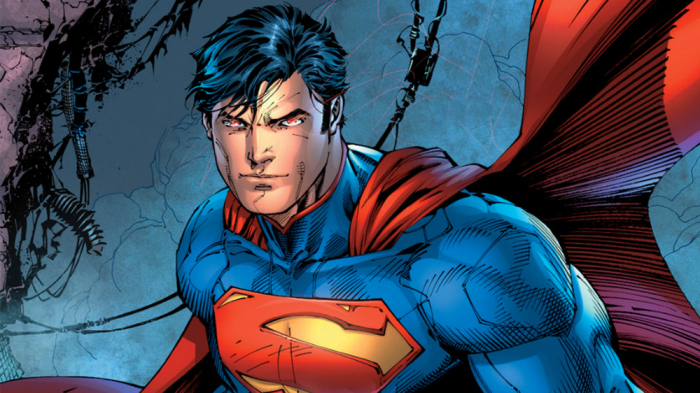
Superheroes mean many things to many people, especially at a time when superhero movies routinely dominate the box office. For some, they’re just gimmicks, fads, and marketing tools by big media companies. For others, they are akin to modern day mythology. It’s an apt comparison. Even contemporary heroes have a lot in common with the mythological legends of the past.
Some take it even further than that. Some will go so far as to claim that superheroes are filling the same roles as gods and deities. It’s not just the ones based on Norse or Greek mythology, either. In many respects, many iconic heroes fit many of the common traits ascribed to gods.
Superman is all-good.
Thanos wielding the Infinity Gauntlet is all-powerful.
Lex Luthor, Dr. Doom, and even Mr. Fantastic are so smart that they might as well be all-knowing to most people.
Such divine, god-like feats make for iconic stories that offer lessons and insights on everything from morality to justice to society, at large. While superheroes aren’t worshiped within organized institutions or granted tax-exempt status by governments, they utilize a similar structure to that of other holy texts.
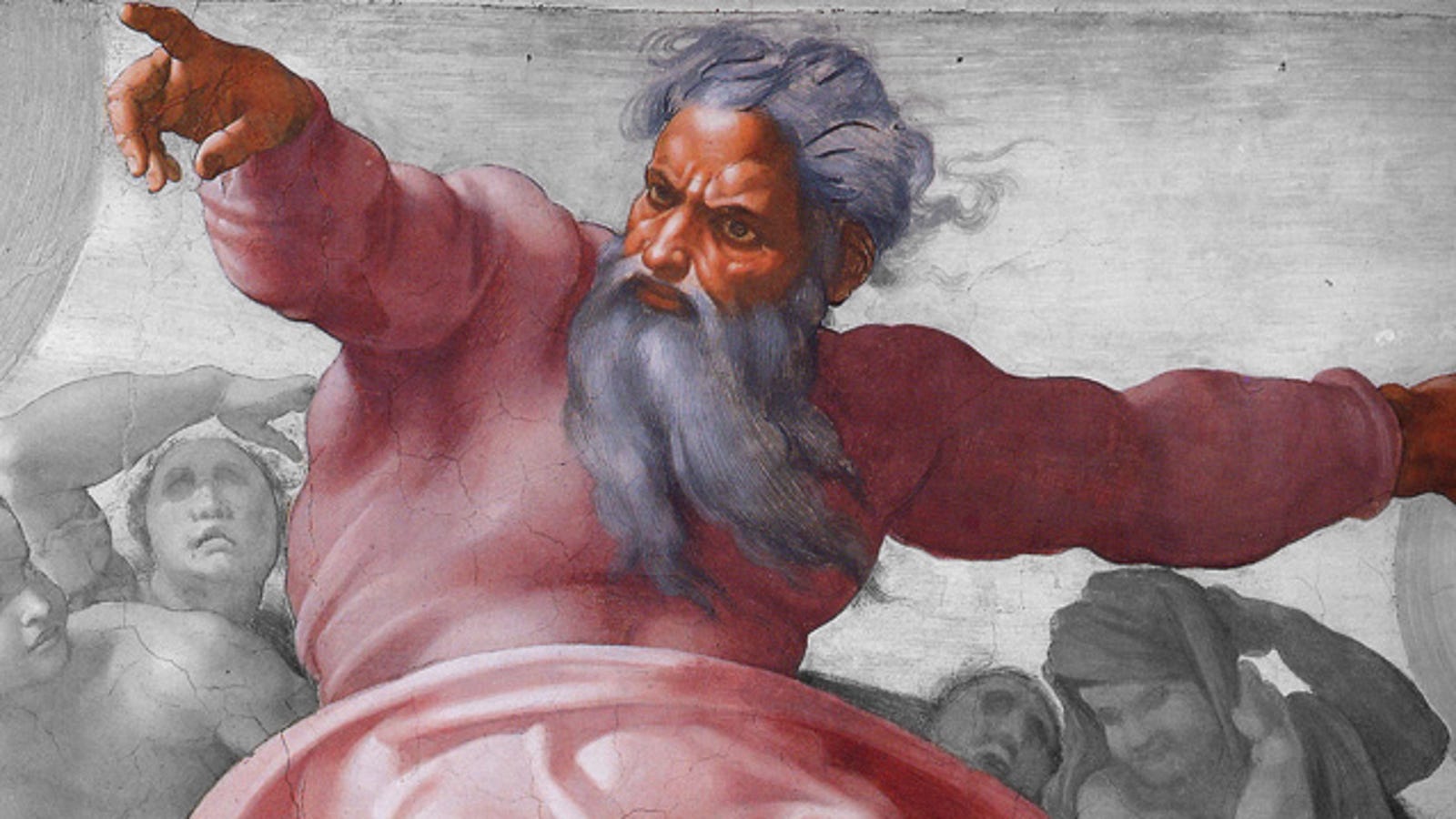
The narrative surrounding superheroes revolves around good, evil, and the struggles that occur in between. Both the good and the evil in these stories takes the form of some grand, larger-than-life character who embodies these traits and implements them on a level that’s impossible for ordinary people to comprehend. That’s what helps make the message so powerful.
However, it’s the qualities that set superheroes apart from deities that offers the most insights. I would even argue those insights are more critical now than they were before Superman, Batman, or Iron Man ever showed up on a movie screen. At a time when organized religion continues to exert immense influence on society, we should be scrutinizing these discrepancies.
I hope it goes without saying that modern superheroes can only do so much to compare with the deities of organized religion. No matter how much money “Avengers Endgame” made at the box office, it will never exert the same influence that the three main Abrahamic faiths have imparted over the two millennia. For better or for worse, history, politics, and the entire species has been influenced by these religions.

The most notable and obvious difference between them and superheroes is that the deities of religion aren’t presented as entertaining fiction. To the believers of Christianity, Judaism, Islam, and many other religions, the deities and the characters in their holy texts are real. They’re not myths or legends. They’re real people and real forces that have real effects.
Regardless of how true that is, and I know atheists will point out how none of those effects can be verified, this is the critical difference between superheroes and deities. Adherents don’t just believe that these characters are real. They place their trust and faith in them, believing that doing so will guide them in life and protect them in death.
I understood this difference as a kid. I was both a fan of superhero comics and surrounded by relatives who were devout believers. I knew they didn’t see their holy texts the same way I saw Superman comics. Superman was just another character. They knew who created him. They knew he was a licensed fictional character from DC Comics.

However, even back then, I found myself wondering whether those same relatives would see Superman differently if they didn’t know he was a comic book character. I imagine if there were old stories about him from centuries ago, written as though they actually happened, they might be less inclined to discount him as fiction. Some might actually be more inclined to place their faith in him over other deities.
It’s an interesting thought experiment, but it only scratches the surface of what sets superheroes apart from ancient lore. Aside from how real people think these characters are, and some take it much further than others, the standard superhero narrative reveals something striking about the standard religious narrative.
To illustrate, take a moment to contemplate how Superman goes about being a hero. As the gold standard of superheroes for the past 80 years, he sets the highest bar and embodies the highest ideals for a hero. On top of that, he has powers and abilities on par with many deities. At times, he has been shown as capable of destroying an entire solar system with a single sneeze.

Despite all this power, Superman seeks only to help humanity. He doesn’t ask for praise, worship, payment, or sacrifice. He simply does it because it’s the right thing to do. He’s the ultimate paragon, selfless and compassionate to the utmost. The people of Metropolis, and the world at large, don’t need to have faith in him. They just need to trust that he’ll keep doing the right thing.
Contrast that with the deities in holy texts. Many are every bit as powerful as Superman, but display qualities that aren’t exactly heroic. Certain versions of certain deities have been shown to be petty, jealous, and vindictive, sometimes to an extreme. A deity does often help or guide believers in a conflict like a superhero, but it’s rarely done out of pure altruism.
These deities, many of which are believed to have created humanity and the world, exercise a certain level of authority over people. It’s not always outright forced, but the nature of the story provides plenty of incentives and/or punishments to those who rebel or subvert that authority. Some become cautionary tales or outright villains.

Some villains are sexier than others.
In this context, the religious narrative builds an over-arching theme that has little room for heroics. These deities and super-powered beings aren’t necessarily there to save the day. They’re there to maintain the order that they helped create. They function as the glue that holds the universe and humanity together. Anyone or anything that goes against it requires recourse from both adherents and divine forces.
We often see this manifest in the real world when religious people argue that things like homosexuality, which is often condemned in holy books, are this bigger threat to the world. That’s why you’ll hear plenty of dogmatic preachers claim that homosexuality won’t just give people distressing thoughts. They’ll say it will destroy society.
Religious dogma, by its nature, depends on a strict adherence to what is the status quo for a particular place, people, and time. Defending it isn’t just seen as an act of piety. It’s akin to a superhero saving the day from evil forces. Whether those evil forces are demons from the underworld or a gay couple who want to get married doesn’t matter. It’s all about preserving a system.
Conversely, superheroes like Superman don’t limit themselves to a status quo. They’re less driven about how things are and more focused on how things could be. Superman doesn’t just want to save the day and help people who need it. He seeks to give people an ideal for them to aspire towards. This is perfectly reflected in his father’s message to him, as read by the late Marlon Brando.
It is now time for you to rejoin your new world and to serve its collective humanity.
Live as one of them, Kal-El
Discover where you strength and your power are needed
Always hold in your heart the pride of your special heritage
They can be a great people, Kal-El, they wish to be
They only lack the light to show the way
For this reason above all, their capacity for good
I have sent them you, my only son
It’s in this defining message that the superhero narrative distinguishes itself from religious traditions. These superheroes, as powerful as they are, didn’t create us. They don’t hold any inherent dominion over us. They didn’t create the current situation, however flawed it might be. They still seek to help people, carrying out feats that others cannot. That’s what makes them heroes.

One fights to maintain what society is while the other fights for what society could be. These narratives can exist alongside one another and can carry greater meaning for certain people. There are critical lessons in both, but I believe the lessons of Superman are more relevant than anything offered by the stories of religion.
For much of human history, organized religion was part of that social glue that helped keep society stable. For a good deal of that history, society was only as stable as the conditions around it. People hoped and prayed that there wouldn’t be a famine, a storm, or some other catastrophe that they could not control. Survival, even among kings and emperors, was their primary concern.
Things are different now. At a time when food is abundant, poverty is in decline, and education is more widespread than ever, survival isn’t enough. For a planet of billions to thrive, people need to prosper. Doing so means aspiring to something greater than the status quo. That’s exactly what superheroes embody.

That’s not to say that the rise of superheroes is directly linked to the ongoing decline of religion, but the contrasting narratives reflect just how much priorities have changed. Superheroes don’t demand faith, sacrifice, and reverence, just to keep things as they are. They go out of their way to save a world that they believe is worth saving, hoping that it can better itself.
They can help, but they can’t do it for us. That’s another trait that Superman demonstrates, much to the chagrin of villains like Lex Luthor. Like deities of old, he doesn’t use his powers to achieve everything for humanity. He seeks to empower them to achieve those feats on their own. That process of aspiring to be greater than is often an affront to a religious narrative, but critical to the themes of superheroes.
Even if superhero movies stop making billions at the box office, the over-arching message will still be relevant. Faith in what is just isn’t as appealing as hope for what can be. The gods of religion offer comfort in familiar order, but superheroes can inspire hope in something better. Given the many flaws in this chaotic world, I believe that hope is more valuable than any ancient doctrine.

Whenever the news is consistently awful, you tend to get numb to it. At some point, you just can’t bring yourself to get too worked up anymore. It’s not a good thing. Once you get numb to terrible news, you’re less inclined to do something about it. That’s not healthy for any society.
I don’t deny that the news surrounding the Coronavirus/COVID-19 has been awful. It might be the single worst news story we’ve collectively endured in over a decade. It’s bad, especially if you’re a sports fan. It may very well get worse before it gets better.
However, it’s for that same reason that we should all laugh and take comfort in stories that expose absurdities, frauds, and assholes who don’t deserve the notoriety they usually enjoy. Of all the things that fit every one of those criteria, faith healers are right up there with creationists, snake oil salesmen, and conspiracy theorists.
Now, I could go on an extended rant about how faith healers are one of the most perverse manifestations of organized religion. I’ve gone on similar rants before on far less serious subjects. However, this is one instance where no rant is necessary. The facts alone expose the absurdity, hypocrisy, and stupidity of the whole endeavor.
It comes courtesy of a megachurch in California and a story covered by Raw Story. Rather than describe all the crazy details, I’ll just leave a link and a brief summary of the best parts.
Raw Story: ‘Faith-healing’ megachurch cancels hospital sessions over coronavirus fears
A megachurch in California that regularly conducts “faith-healing” sessions at local hospitals apparently doesn’t believe the power of prayer is strong enough to cure coronavirus.
The Bethel Church in Redding, California, which serves as the spiritual home to an estimated 6,300 weekly worshipers, announced this week that it is canceling its regularly scheduled visits to hospitals as fears of the coronavirus pandemic take hold.
Think about that for a moment. Faith healers profess the power of healing through prayer, specifically through prayers to their favored deity. They claim that their spiritual service can bring wellness to the sick while protecting the healthy. That’s the power of their faith.
Then, a virus comes along that is utterly unaffected by their dogma. It infects everyone, regardless of what they believe, and no amount of prayers can stop it. The fact that these “faith healers” have ceased going to hospitals out of fear of infection is an indirect admission that their healing doesn’t work. It also exposes just how weak it really is.
A virus is not some invading army or repressive government. It’s a tiny bit of biomatter. Despite that, it’s still strong enough to defeat any prayers that a believer may offer. No matter how ardent they may be, the virus still infects because wishful thinking is no match for harsh reality.
Now, I’m not foolish enough to believe that this crisis will put all faith healers out of business. At the very least, this offers a huge red flag to anyone whoever crosses paths with someone claiming to heal by faith. If they can’t heal you from a simple virus, then what does that say about their faith, their religion, and their motivations?
In this case, washing your hands more powerful than any prayers you could offer.
Filed under Current Events, health, psychology, religion


 Jack Fisher's Official Publishing Blog