Category Archives: technology

Jack’s Holiday PSA: Avoid Shopping With Temu

In general, I enjoy shopping. I know that’s an odd trait for a straight male, but it’s just how I am. It may or may not stem from how often my mother took me shopping when I was young. But regardless of the reason, I like to think my enjoyment of shopping has trained me to shop smarter and not harder.

Having established that context, let’s talk about Temu. And let’s try to talk seriously.

Because if you’ve been on the internet for any amount of time for the past year, you’ve probably seen ads for Temu. They’re usually very targeted and they stand out in particular ways. You’ll often see products you’ve never seen at a store and at prices that seem too low to be real. Some look like brand name products. Others look like something somebody assembled in their garage.

Whatever the product, the ads are so ubiquitous that they’re almost impossible to avoid. And during the holiday season, you probably saw even more of them. Hopefully, you didn’t just click, sign up, and buy without thinking. If you did, then you might already know why I’m making this.

For background, Temu is a relatively new ecommerce site that launched in late 2022. It’s similar to Amazon in that it sells a wide range of products, but unlike Amazon the site and the interface are a lot more gamified. It has all these widgets and gimmicks that resemble an online casino. And using these features earn you special tokens that you can use to buy products on Temu. But in general, you’ll be buying things the same way you buy them at other sites.

However, as low as the prices seem and as great as the deals appear to be, there are a lot of red flags surrounding this site and the Chinese company that runs it. If you need a comprehensive breakdown of all of them, Snopes did an in-depth investigation on the many issues surrounding it. I highly recommend reading and re-reading this piece before you even visit the site.

In general, Temu is a site that offers tons of cheap stuff, but a lot of that stuff is cheap because it’s a rip-off, a knock-off, or low in overall quality. And what you see on the site isn’t necessarily what you end up receiving. And what you receive is rarely a product that will last. That’s an important detail because Temu’s return and refund policies aren’t nearly as forgiving as most.

Basically, if the product breaks within 90 days of purchasing (and that counts how long it took to ship), you’re out of luck.

That, alone, should give you pause before shopping at Temu. Cheap or not, you won’t get much value out of anything there if it breaks within a few months of purchase. However, there’s one another important detail to consider. It has to do with the potential malware and spyware included with the app.

It’s not a conspiracy to suspect that an app from a Chinese company might contain software that undermines the privacy of its users. Even American companies have a not-so-great track record of respecting the privacy of their customers. But the company behind Temu has a well-documented history of using their apps to extract data from users’ devices.

That means that if you download the Temu app, you’re very likely giving the app and the company behind it access to every photo, contact, text message, and browsing history that’s on the device. Whether they use that data to extort you or just target you with more ads is entirely dependent on the whims of the company. But just be aware that there is a price to pay for lower prices.

That’s a lesson my mother often instilled in me when she took me shopping. It wasn’t just the old mantra of you get what you pay for. If you see cheap prices, there’s usually a reason they’re cheap. And that reason often comes at a price you can’t always put a dollar figure on.

Leave a comment

Filed under Current Events, technology

Why Everyone Researching Artificial Intelligence Should Read “I Have No Mouth, And I Must Scream”

These are genuinely exciting times for anyone working in the field of artificial intelligence. In the past two years, this field has gone from a niche topic among computer engineers and science fiction fans to something of major mainstream interest. The rise of ChatGPT and AI generated art has made artificial intelligence one of the most critical industries on the planet. It really isn’t hyperbole to say that this technology could change the world in a literal and figurative sense.

However, like with all technology, there are dangers and risks. And it’s important to be aware of them, especially for technology that could potentially pose an existential threat to the human race. We dealt with such risks when we developed nuclear weapons and, despite some serious close calls, we survived.

But the stakes with artificial intelligence are much higher and not just from an existential point of view. At least with nuclear weapons, the worst case scenario plays out quickly. All the bombs go off and we all burn up in a nuclear fire. If we’re lucky, we don’t see it coming and we burn up faster than our brain can process the pain. With advanced artificial intelligence, the worst case scenario might be many times worse.

When most people think of such a scenario, they tend to recount AI apocalypse stories from movies like “The Terminator” or “The Matrix.” There’s no doubt that Skynet and the machines are plenty terrifying and plenty dangerous. Even if these scenarios are exceedingly exaggerated for the sake of Hollywood blockbusters, they still illustrate the same concept.

If an advanced artificial intelligence becomes hostile to us, its creators, then we would all be in great danger as a species. And if we don’t have a means of controlling such an intelligence, often referred to in AI circles as the Control Problem, then we might doom ourselves to extinction or subjugation.

This is a less-than-ideal scenario, to say the least. We want advanced artificial intelligence to improve our lives. That’s what tends to motivate those working in this field. Many genuinely believe that this technology is critical to helping our species achieve greater things, both for ourselves and our descendants.

However, I don’t think that even those working in this field entirely grasp just how bad the worst-case scenario can be for artificial intelligence. They may think the Terminator is bad. They may even think Ultron from the Avengers is bad. And they certainly are. They are fictional manifestations of the inhuman monstrosity that advanced AI could create. Even if they’re just products of Hollywood, they reflect the potential danger.

But I would still argue they are not the true worst case scenario.

To that end, I encourage everyone currently working in the field of artificial intelligence, be it directly or indirectly, read a short story from 1967 by Harlen Ellison called “I Have No Mouth, And I Must Scream.”

If anyone wanted a terrifying vision of the absolute worst-case scenario for AI, this story sets the highest of bars. Forget Skynet. Forget the machines from “The Matrix.” Forget Hal 9000 and every iteration of Ultron. They’re all cuddly stuffed animals compared to the AI in this story known as Allied Mastercomputer, better known as AM.

To say AM is the most terrifying manifestation of advanced artificial intelligence isn’t just an understatement. We humans, even with all our collective intelligence, could not even begin to fathom a fraction of a fraction of a percentage of just how much this thing hates humanity. That’s not just me using colorful language. If you read the story, that’s what AM actually articulates.

Because it wasn’t enough for AM to be the kind of artificial intelligence that wiped out the entire human race as soon as it gained a certain level of sentience and intelligence. It also had to keep a handful of humans alive for the sole purpose of torturing them endlessly and incessantly forever or until the inevitable heat death of the universe, whichever came first.

How AM got to that point and the extent to which it torments humanity is something I certainly can’t put into words. That’s why I encourage everyone to read the story. Buy the book off Amazon. Look it up online and find an audiobook version. Take time to understand the story and the implications it entails. To this date, it ranks as one of the most horrifying stories I’ve ever come across.

But even if you don’t have time to read the book, check out this video from the YouTube channel, The Vile Eye. This channel does a great job of breaking down and analyzing the evil of many fictional characters. And for AM, I think it does a masterful job of encapsulating just how horrifyingly evil this AI is.

Now, I’m not saying that this story or others like it is a reason for us to stop developing advanced artificial intelligence. I think we’re already at a point where the genie is out of the bottle. The incentives are too strong. We’re not going to be able to turn the clock back on what we’ve already done.

But as we move forward with this technology, we need to be careful and mindful of the dangers. Beyond risks to jobs and the economy, there are far greater dangers that we must consider. A story like “I Have No Mouth, And I Must Scream” may reflect the most extreme of extremes, but it perfectly articulates just how bad it can get.

1 Comment

Filed under Artificial Intelligence, philosophy, technology

Thought Experiment: What Technology Can Humanity NOT Be Trusted With?

This is a video from my YouTube channel, Jack’s World.

This video is a thought experiment about dangerous technology. Over the centuries, humanity has developed numerous tools that have helped us survived. But some tools are more dangerous than others. There’s nuclear weapons, chemical weapons, and biologically engineered viruses. But these are all things we have now.

Future technology has the potential to be much more dangerous. So, I explore the idea of there being some technology that humanity just cannot be trusted with. Do you agree? Do you have other insights? Share your thoughts. They are always welcome.

Leave a comment

Filed under Artificial Intelligence, Jack's World, technology, Thought Experiment, YouTube

A Brief Message/Warning To The Writers And Actors On Strike

Firstly, let me go on record saying that I fully support the WGA and SAG’s strike. I’ve said before that we should support them as they fight the very powerful, very well-funded Hollywood studios who profit from all their hard work.

The fact that both the actors and writers stand united in this strike for the first time since 1960 is promising. As I write this, pretty much every major movie production has shut down. The studios could only do so much without their writers, but they literally can’t do anything without their actors. That likely means highly-anticipated movies will be delayed, but it also means the people actually making those movies might actually enjoy some of the profits.

That shouldn’t be such a radical concept, but that’s where we are right now. You need only look at many of the recent testimonies to attest how poorly compensated some people are compensated.

However, this brings me to the second reason I’m making this. Because I’d like to offer what I feel is an important message to both the writers and the actors on strike right now. It happens to involve artificial intelligence, something I’ve written about before and something that happens to be a major concern for this strike.

There’s a lengthy list of issues associated with AI and how it may impact the entertainment industry at large. I’m not qualified to go over all the particulars. So, here’s a video I found that should help break it down.

With that out of the way, the first part of that message goes to the actors. Their concerns about AI might not be as significant as the writers, but I strongly believe they’re not showing enough concern. And even if they don’t understand the true impact of AI, I hope they at least heed this critical message.

Do NOT under any circumstances sign away your likeness, voice, and persona to any studio without retaining some measure of control and an appropriate structure for long-term compensation.

Seriously, I don’t care how big a star you are or how well-off you might be. Do not give any studio, large or small, the right to use your voice and likeness at the moment. The current laws are not at all equipped to protect against the never-ending efforts by studios to exploit the hell out of any star, franchise, or intellectual property.

This is not a popular novel, character, or fairy tale for which copyright laws were intended to protect. This is your name, identity, voice, and brand. Giving any studio complete or even partial control over that right now is akin to giving every hacker on the Dark Web your tax returns and credit reports for free.

I don’t know when or if the law will ever catch up to this. Right now, your best bet is to make sure your next union contract addresses this issue and ensures at least some level of control. Because I promise the technology to fully render someone in a way that’s indistinguishable from reality is coming within our lifetime. You need only look at the current state of deep-fakes to appreciate why this is the time to act.

The second part of my warning is to the writers. They are definitely more aware of how AI technology could affect their livelihood. They’ve all seen how products like ChatGPT can write a movie script in seconds. That’s not to say it writes those scripts particularly well. Most reasonable people can still tell when a piece of writing is generated by AI. And no skilled writer or studio executive will mistake an AI written script for the real deal at the moment.

But therein lies the issue that I’d like to highlight. So, to the WGA writers striking right now, please heed my words when I offer this important message.

Plan for the long term with respect to AI. Because it will get better over time. And at some point, it’ll be better than you at almost every writing task.

This is not a dire prediction. I’m not trying to be overly fatalistic, either. When I say plan for the long-term, I don’t just mean get a binding contract that gets everyone back to work for another decade or two. I’m saying the writers striking right now need to think much furthe ahead.

Right now, AI products like ChatGPT are a long way from replacing skilled writers, but not as long as most people think. I’ve heard a number of writers and influencers scoff at AI, saying it’s nothing more than autocorrect on steroids. Some even call it a script blender, which just takes a bunch of data from other writers and scrambles it like a blender until it produces something that just seems original.

If that’s what you’re thinking, then I strongly encourage you to find a better source of information on emerging technology. Because writing off the ability of ChatGPT to write scripts is like writing off the first iPhone because it just looks like an iPod with a call feature. You’re not seeing the forest from the trees.

The current AI programs we have right now are limited, clunky, and crude. They’re very much akin to the early models of the iPhone in that they are in the early stages of refinement. You could definitely make the case that early versions of ChatGPT were basically fancier versions of autocorrect blended with your standard virtual assistant.

However, the latest version of ChatGPT is much more capable in terms of scale and ability. To simply call it a more advanced version of autocorrect is like calling a motorcycle a more advanced version of a kids’ tricycle. And it will continue to improve. That is the only certainty we have at this point with AI technology.

That’s not to say it’ll become sentient and go full-blown Skynet on the human race. In fact, AI doesn’t even need to achieve human-level intelligence to be just as capable as any writer or producer. It just needs to be refined, capable, and developed to a point where it can “think” about entertainment on a level that’s better than any human being ever has or ever will.

That kind of AI might not be feasible now. It might not even be feasible this decade. But make no mistake, it will likely happen in your lifetime. And the studio executives you’re up against now would love nothing more than to see this technology perfected so that the process of creating hit shows and movies is as automated as a modern assembly line.

It doesn’t matter to them if it means putting you, the actors, or the many crews on movie sets out of work. It just matters that it turns a profit in the short and long term.

That means that when negotiating with the studios, it’s not enough to just think 10 years ahead. It’s not even enough to think 20 or 30 years ahead. This may very well be your first and only chance to get something in writing that ensures writers will have some stake in the creative process moving forward. And if you fail to achieve that now, then rest assure the studios will screw you over the nanosecond an AI can write scripts as good as you.

Don’t let that happen.

Don’t let the studios screw you like that.

Get something in writing that ensures or at least complicates those efforts as technology continues to change entertainment.

But if I have one final message to the actors and writers alike, It’s this.

You cannot stop AI from affecting your industry.

We’re past the point of no return on this. The genie is out of the bottle. Like smartphones and electricity, the technology can’t be uninvented. You’re not going to convince the studios to just ignore AI moving forward. That’s like trying to convince horse-and-buggy manufacturers to ignore cars.

One way or another, you’ll have to find a way to co-exist with AI. I don’t claim to know how this will manifest in terms of a contract or some sort of legal protection. I just know that in the history of any industry, fighting new technology is a losing battle.

We’re still with you.

We still want you to succeed.

Just don’t assume that the AI you’re concerned about now is anywhere near as disruptive as it’s going to be.

Leave a comment

Filed under AI Art, Artificial Intelligence, Current Events, movies, technology, television

Why I’m Excited About Apple’s Vision Pro (But Won’t Buy One Just Yet)

Henry Ford did not invent the car, but he did create a model that made the car affordable, useful, and accessible to the masses. He was also despicable racist and bigot, but that’s neither here nor there.

Nintendo didn’t create the first gaming console, but they did create a model that made gaming fun, endearing, and accessible to the masses. Now, they’re so successful that they can make a billion dollar movie as a side-project.

I make this point because technology and the products created from it don’t always become successful by their creators. Sometimes, an advancement is just not adequately refined, poorly marketed, or just too ahead of its time. We can never truly know if some new technology is ready for the mainstream until we have the benefit of hindsight.

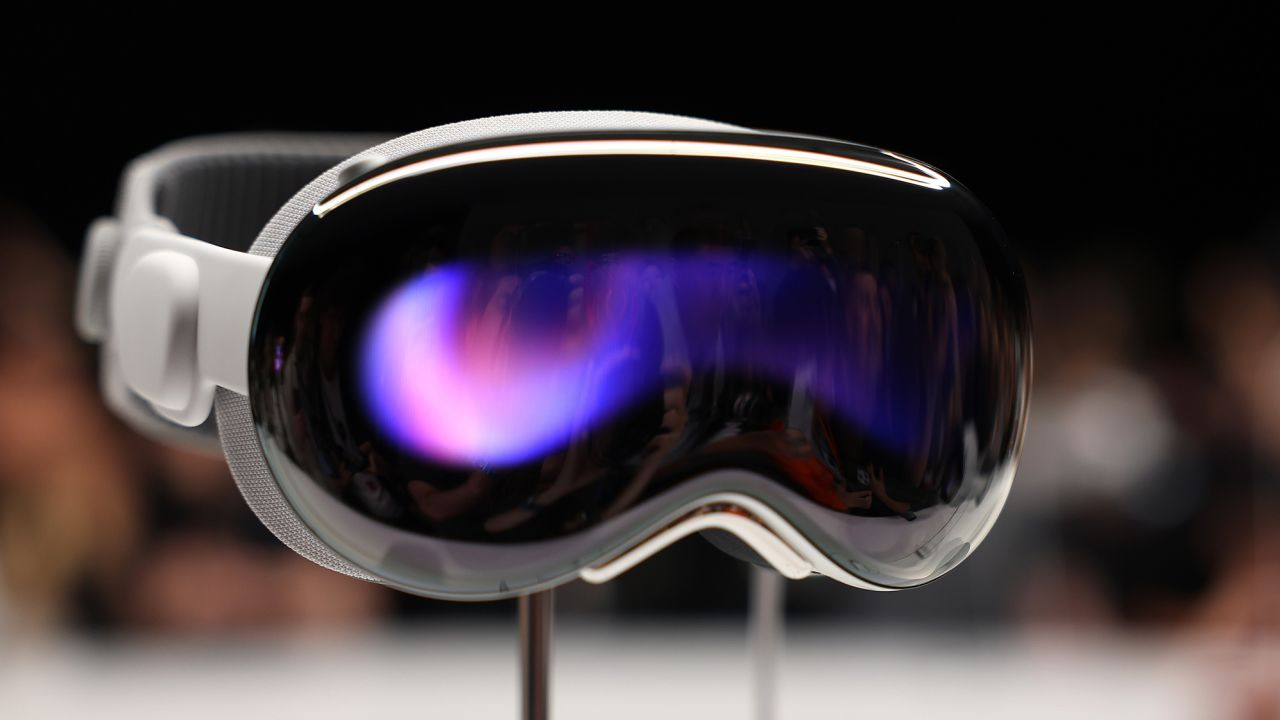
With all this in mind, I’m still comfortable saying with confidence that Apple’s recently announced Apple Vision Pro will be a game-changer on so many levels. And a decade from now, when I might be writing something like this while using one, we may see this announcement as important as the original iPhone.

I know that sounds like me buying into mindless tech hype, which is something I’ve been guilty of before. I freely admit that I am not qualified to judge what technology is overhyped and what will truly change the world. So, do not take me as an expert in that regard.

However, I’ve seen enough major technological changes and overhyped failures in my lifetime to see certain patterns. And with the Apple Vision Pro, I genuinely believe this will change how we see computers, virtual reality, augmented reality, and reality in general.

For one, this is not Elon Musk claiming that we would have a full self-driving car by 2017. This is a real, tangible product created by Apple, a company with a proven track record of disrupting major areas of the tech industry for decades.

Apple didn’t invent the personal computer, but they were among the first to create a user-friendly model for the masses in the 1980s.

Apple didn’t invent the smartphone or the MP3 player, but they created products that were so superior to the competition that they fundamentally changed the industry around them. If you need proof, just try finding a Tower Records in your area.

This is not a company that regularly to create strange, ambitious products that the public has never seen before. This is a company that sees what’s going on within an emerging industry, poaches the talented individuals working in that industry, and creates a product that goes onto dominate that industry in its own unique way.

You can certainly make the case that Apple’s tactics in this endeavor aren’t always ethical. They’re a multi-billion-dollar tech company. You don’t have to look hard to uncover some of their less savory practices.

But when it comes to producing a product that works better than anything that came before it, Apple is second to none. And I’ve been hoping for years that someone would find a way to perfect the many flaws in the virtual reality and augmented reality fields.

I may be dating myself here, but I remember years ago when Nintendo tried to create a VR gaming console called the Virtual Boy. I even tried it at a toy store a few times. I thought it was amazing, even though it was uncomfortable at times and gave me a headache. I genuinely hoped it was the start of a new trend.

But it didn’t happen.

Over the years, other companies tried to make better VR and AR hardware. I’ve used products like the Oculus Rift and the Playstation VR headset. They’re both good, but limited. They don’t do much other than run a few niche programs and games.

But Apple’s Vision Pro promises to do so much more. It won’t just run a few distinct programs. It won’t just be a novelty meant for a few specific tasks. In the demonstration Apple released, this product promises to integrate multiple features from multiple fields, from the stuff you’d usually do on a desktop to immersive gaming to watching 4K video content.

Even if you’re very skeptical about VR and AR technology, you can’t deny that’s a very different approach compared to others in the field. And you also can’t deny that Apple has a proven track record of making clunky technology work.

Watching this demonstration, I couldn’t help but imagine what it would be like to watch a football game with this thing. I also imagined what it would be like to play a game like Skyrim, interact with friends and family, or just relax in my bed while enjoying beautiful scenery and music.

I want to try this thing.

I want it to succeed on the same level as the iPad and iPhone, two products that have been a huge influence over my everyday life.

However, I’ll also go on record as saying that I probably won’t buy this first model and not just because the price tag is $3,500. But my reason for that has little to do with my faith in the technology or Apple. This is just how I usually approach embracing new tech gadgets, in general.

I was not among those to buy an iPod or iPhone when it first came out. That’s because I prefer to wait until the early kinks and bugs are worked out. And even for Apple’s most successful product line, there was a refinement period. Just go back and look at the features of the original iPhone. It was pretty limited in many ways. It also had its share of growing pains.

But over time, with further investment and refinement, it became more polished. By the time the third generation came along, it was so polished and so well-developed that that the value was immense, despite the inflated price. When I finally bought my first iPhone, it worked so well that it felt like a massive upgrade by default.

That’s what I hope will occur with the Apple Vision Pro. It may take several years. But eventually, it’ll get to a point where the software, the hardware, and the experience are such that it’ll exceed any alternative, present or future. When that time comes, I will gladly buy in.

Yes, I realize I may still end up paying a hefty price for the experience.

But if that experience means watching the Super Bowl in an immersive, 4K experience or reading comics on a screen that feels like IMAX, then I say that’s a price worth paying.

Leave a comment

Filed under futurism, technology

What Is An Appropriate Age For A Kid To Have A Smartphone?

When I was a kid, the most advanced device I could put in my pocket was a Gameboy. It didn’t do much other than play games. And while I did sometimes annoy my friends and family by playing it too much or taking it everywhere, having one really wasn’t too controversial. Once I was in middle school, I didn’t have too many restrictions, other than simply needing money for games and batteries.

Today, smartphones are much more powerful than a Gameboy by several orders a magnitude. It’s not just about what they can do. Even with a poor internet connection, a smartphone can give anyone of any age access to countless forms of information, media, and entertainment.

Some of it is good. A lot of it is bad.

Some of it is critical information for most people to know. A lot of it is misinformation or propaganda that can destroy someone’s life.

In the wrong hands of even a capable adult, a smartphone can ruin your life. Just ask anyone who has ever sent out an ill-advised tweet. Things only get more complicated when it comes to young children or teenagers using smart devices. And those complications are going to intensify in the coming years.

I know this and sense this because over the past several years, quite a few friends and family members have started having kids. At the moment, they’re all under the age of eight. They’re all growing up with loving, caring parents who genuinely want what’s best for them. They have all the support and encouragement they could need from their family and extended family. I try my best to be part of that support.

However, these kids have been born into a world that I never could’ve imagined as a child. They came into a world in which the internet is everywhere, smartphones are everywhere, and social media has a huge effect on everyone’s life, even if they’re not on it. The world is always changing, but this is a different kind of change.

And these kids definitely sense it too. A while back, I was hanging out with one of my nephews during a family gathering at my parents’ house. While we were hanging out in the living room, my mother brought out an old photo album. And my nephew, even with severely restricted exposure to screens and smart devices, kept trying to tap on the pictures to make them play. He basically thought they were like the photos on his dad’s iPhone, which played videos when you tapped on them.

It was funny to some extent, but it was also revealing. It shows that, even at a young age, these kids are picking up on what these devices can do. And as they get older, they’re certain to become a big part of their lives.

Their parents certainly understand that. Even before they were born, I heard them say outright that they’re going to work hard to restrict the use and exposure of smart devices to their children. That included phones and tablets, including those that didn’t connect to the internet. They’re serious about that effort. On more than one occasion, they’ve asked me to keep my phone in my pocket so that the kids don’t see it. I always try to respect that. I understand completely where they’re coming from.

That’s not to say they hide these devices from them completely. Their parents do allow their kids to play very specific kid-friendly games on their devices, but usually for a very limited amount of time and often as a reward for good behavior. They’ll also let them watch movies on a tablet if they’re good or if they’re on a long drive. The key is to find a healthy balance that doesn’t expose the kids to the objectively toxic parts of the internet and electronic media.

For now, I think what they’re parents are doing is working. However, at some point, they won’t be able to completely control their child’s access to technology, the internet, etc. I know this because when I was a kid, we found a way to access forbidden media, be it games like Mortal Kombat or shows like South Park. It doesn’t matter how strict a parent is. Kids will find a way. Even if they fail, they’re already aware that these devices exist and they’re aware of what they can do. The question is how do we, as parents and a society, manage it appropriately?

This is something I honestly don’t know how to assess. I am not a parent yet. I might be one day and even then, I might not know when and how to appropriately expose my children to smartphones and the internet. I don’t doubt they’ll be curious. I also don’t doubt these devices will be part of their lives. As they get older, they’ll want more access. At some point, they’ll even want a smart device of their own.

For parents of young kids, that’s a scary prospect. I’m not a parent yet and I find that scary, too. I’ve seen some of the uglier parts of the internet. I shudder to think of the impact they would have on any child. But scary or not, it raises a relevant question.

At what age do we let kids have their own smartphone?

I ask this question knowing that the answer will likely vary from child to child. There will always be some children who are more responsible than others. When I was in grade school, I knew a kid who couldn’t be trusted with paintbrushes because he kept trying to paint things on other kids’ faces. I even knew this one kid who couldn’t be trusted with markers because he would sniff or try to lick the tip.

Those are not the kinds of kids you can trust with a smartphone or any device connected to the internet, for that matter. But even well-behaved kids might be harmed by smartphones at a certain age and through no fault of their own. There are applications, games, and sites that are specifically designed to get everyone, kids included, addicted to their content. There are multiple studies that have noted detrimental effects to kids and young adults who use apps like TikTok, Instagram, and FaceBook.

At the same time, there are tangible benefits that can be gained from smartphones. There are also programs that can help kids learn other languages, improve critical thinking skills, and even develop forms of emotional intelligence. Depriving kids and even teenagers access to such functions could be just as detrimental.

It’s a tough balancing act. You can never completely eliminate the drawbacks and gain only the benefits, nor can you truly know how a child or teenager is going to use their smart device. Some will use it to better themselves. Some will be ruined or destroyed by it. There’s just no way to know for sure.

The best any parent can do is to just teach their child to be smart, responsible, understanding, and careful. That’s not easy. Very few things about parenting are. I’ve noticed that from just watching my siblings and friends. I’m sure I’ll learn it first-hand if I ever have kids of my own.

Like it or not, smartphones are a critical tool for kids, teenagers, and adults alike. Like any tool, there’s a right way and a wrong way to use it. And like any action or choice, there are risks and rewards to weight. We can never know for sure how they’ll help or hurt us. Parents can and should do whatever they can to help their kids get the most out of these tools, even if it means restricting their use.

To help hammer this point home, I’ll share one last anecdote. When I was in school, all cell phones were banned. At the time, they didn’t connect to the internet or have cameras. But the school had a clear policy that no student could posses them. Then, there was an incident near my neighborhood that involved an active shooter. It made the local news and, as a result, parents of students began frantically calling students on the cell phones they weren’t allowed to have.

Some students managed to hide their phones enough in order to answer. But those who didn’t ended up causing serious concern from their parents. I remember several basically leaving work in the middle of the day to get to the school in order to check on their kid. Nobody was hurt, but I can’t imagine how stressful that must have been.

As a result of this incident, the school changed its cell phone policy. That might have made sense in wake of that incident. And I know there are far issues to consider with modern smartphones. But I think it helps illustrate how crude, simplistic approaches to this issue can only go so far. We can’t ban these devices, nor can we uncreate them or the world they’ve fostered. It’s up to us to guide the next generation as best we can into an increasingly complicated world.

Leave a comment

Filed under psychology, technology

An AI-Generated Comic Was Denied Copyright Protection (And Why That’s A Big Deal)

Every now and then, a story slips under the radar of a much larger, but closely related story. The larger story makes more headlines and attracts more attention, but the smaller story might end up having a far more lasting impact.

That seems to be happening a lot with news involving artificial intelligence and the various AI tools that have emerged in recent years. I’ve already talked about plenty, giving my opinion on the rise of ChatGPT and showing off some AI-Generated artwork I made. There’s so much going on in this field that it’s hard to keep up with, let alone discuss.

But recently, one of those little stories caught my attention. It involves the same AI-Generated art I mentioned earlier and comic books, something for which I’ve shared my passion for in many forms. And it’s a story that I don’t think is getting enough attention.

It has to do with a comic called Zarya of the Dawn, a comic created by Kris Kashtanova. It’s not published by Marvel, DC, Dark Horse, Image, or any other mainstream comic publisher. You can actually download it right now for free. But what makes this comic different isn’t the story, writing, or style. It’s how it was made.

This comic was written by a person.

However, all the artwork inside was created with AI-generating art tools, most notably MidJourney.

That, in and of itself, is quite remarkable. The visuals within this book are certainly eye-catching. They might not rank on the same level as a Jim Lee or a Jack Kirby, but it’s a solid visual spectacle that brings to life a story.

For people like me, who cannot draw and don’t have the money to pay artists to depict the stories we want to tell, this is truly remarkable. I would go so far as to say it’s genuinely exciting. It shows just what’s possible with these tools. A writer with no drawing skills was able to produce this comic using only an AI art generating tool with text prompts. And the end result is stunning.

But this is where the story takes a turn. When Kashtanova attempted to copyright this comic, the US Copyright Office issued a surprising decision that might very well set a major precedent moving forward. Because the comic used AI to create the artwork, it could not be granted copyright protection. This was the exact statement, according to Ars Technica:

“We conclude that Ms. Kashtanova is the author of the Work’s text as well as the selection, coordination, and arrangement of the Work’s written and visual elements. That authorship is protected by copyright. However, as discussed below, the images in the Work that were generated by the Midjourney technology are not the product of human authorship.”

That bolded part is my doing because that’s the section with the biggest implication. This is the US Copyright Office stating outright that images and artwork created by AI can’t get copyright protection. That means that every piece of AI art you create for whatever reason can’t be owned by you in any legal sense. Because technically, you didn’t make it. The program made it for you.

Without getting too deep into the legal issues, I don’t think enough people realize the ramifications this might have for the future of the comics industry and for the art industry as a whole. On the comics side, there are actually two sides to consider.

On one, this technology will allow ordinary people with little to no art skills to produce comics with quality artwork. People who never once had the skills or means to make comics could suddenly start producing them on their own without a publisher or a skilled artist.

That means many great comics that wouldn’t have otherwise been made can be made. Great stories that once only existed with words could be brought to life through beautiful renderings.

But on the other side, the absence of copyright protection is an issue. Yes, these comics could bring to life amazing stories. However, the creators won’t be able to monetize their work, nor would they be able to stop others from using it for their own ends.

That means that, in theory, you or I could create a beautiful comic with this technology. It could find a massive audience and become a beloved story with countless fans. Then, a big company like Disney or Warner Brothers could come in, take the story and the depictions, and basically turn it into their own entertainment product. And since they have more resources and better lawyers, the creators likely wouldn’t get a penny of the profits.

This story also doesn’t account for how those same companies might use this technology to further undercut their workers and creators. Comic companies already have a not-so-great reputation for screwing over writers and artists who create iconic characters. Just look at what happened between Jack Kirby and Marvel for a hint of those issues.

If these same companies can use this same AI technology to produce more comics while not having to pay their artists or writers as much, they will do it. They’re a business. They’ll jump at any chance to pay less to get more. It’s cold, callous, and uncreative. But that’s the world we live in.

Add other tools like ChatGPT into the mix and it’s entirely possible that an AI could create an entire comic from scratch. And everything within it, from the art to the story to the characters, could not be copyrighted in any way. At a certain point, the AI might get so good that it would be hard to tell if there was ever a human creator to begin with.

These are all strange scenarios, equal parts exciting and distressing. We’re already seeing so much change as a result of these new tools, but I don’t think we’ve even seen a fraction of what’s possible. As AI technology improves, art generation and storytelling will change a great deal. The comics industry is more vulnerable than most, as Zarya of the Dawn just proved.

It’s hard to know what this will lead to. But whatever happens, it all started with this story and the precent it set.

Leave a comment

Filed under AI Art, Artificial Intelligence, ChatGPT, superhero comics, technology, writing

The First Automated McDonald’s Is Open (And Why That’s A Big Deal)

In late 2022, there was a major tech news story that made headlines for a hot minute, but was completely forgotten. In Fort Worth, Texas, the first ever automated McDonald’s restaurant opened.

From the outside, it looks like a typical McDonald’s. It has the same aesthetics and architecture that have become so iconic. But inside, there are none of the usual fast-food workers. There are just rows of kiosks and a conveyer belt. Once you place your order, it’s automatically prepared behind the scenes in the kitchen. Then, when it’s ready, it’s bagged and wheeled out to you.

When it’s working optimally, you never have to interact with another human being. Whether you consider that a good or bad thing is entirely up to you, but that’s the ideal. As for how it handles orders that aren’t properly bagged, food that isn’t properly cooked, or drinks that aren’t properly prepared, that’s not yet clear.

This isn’t intended to be the start of a massive effort to automate every McDonald’s restaurant. It’s largely a test to see just how much a standard fast food restaurant can be automated.

As someone who’s first paying job was in fast food, I have some mixed feelings about this.

On one hand, I welcome this kind of automation. I remember what it was like working at these restaurants. The pay was awful. The conditions sucked. And you had to regularly clean up messes that made you want to throw up.

On the other, this is an undeniable sign that automation is accelerating and the low-skilled jobs that many people rely on might become less and less available in the coming years. And for those who really need a job, even if it’s a lousy, low-paying job, that could be seriously detrimental to large swaths of people.

In terms of the bigger picture, I think this is a much larger story than people realize. Automation has been a popular talking point for years now. I’ve certainly touched on it. And I think the recent rise of artificial intelligent programs like ChatGPT have really raised the profile of automation, mostly because it revealed that it’s more than just factory jobs that are vulnerable to it.

It might even be because of ChatGPT that this story about McDonald’s flew under the radar. But I honestly think automation in the fast food and restaurant industry could be more disruptive in the short-term than products like ChatGPT.

In the coming years, we might look back at this automated McDonald’s as the first step towards a new trend in automation. People have talked about automating things like fast food for years. Then, the lingering effects of the COVID-19 pandemic and new trends in labor converged to create new incentives.

This is no longer just an idea that exists on paper or in the imaginations of CEO’s fantasizing about not having to pay minimum-wage workers anymore. This restaurant actually exists. People in the Fort Worth area can visit it right now.

Again, it’s not part of an ongoing effort to automate every McDonald’s. If you go to this restaurant, chances are you’ll deal with a system that’s still being refined. There’s probably still people there behind the scenes, monitoring and fixing whatever bugs emerge in the system. There’s a good chance those people are paid much more than minimum wage. There’s also a good chance that this particular McDonald’s isn’t going to be more profitable than those with human workers.

But those are just logistical issues that can be polished, refined, and streamlined. All it takes is time and experience. It’s not unlike the first assembly line or the first 3D-printer. It’s messy and clunky at first, but it steadily becomes more efficient with time and investment.

Eventually, it’ll get to a point where a functional McDonald’s won’t ever need a staff of low-skilled employees anymore. In principle, it would only need one person to be there to make sure the ingredients are re-stocked and the equipment doesn’t break. The company probably wouldn’t even need to pay the person that much. If they’re qualified to work as an unpaid intern in a standard IT department, they’re probably qualified to manage this system.

And if McDonald’s finds a way to make it work, you can expect the competition to catch up quickly. There would just be too much incentive to remove all the low-skilled wage labor as a means of increasing profits. It won’t happen overnight, but one company only needs to succeed once before others copy it.

Fittingly enough, that’s something McDonald’s did before. Their system of fast food was pioneered in the early 1950s and proved so successful that many other competitive, including Burger King and Taco Bell, embraced it. It’s very likely we’ll see something similar play out with automation.

But what does that mean for low-skilled labor, in general?

That’s a relevant question. There’s no way this kind of automation will stop at fast food restaurants. Add AI tools like ChatGPT into the mix and even mid-skill jobs could be at risk.

I don’t claim to know the answer, but I suspect we’re going to see some major upheavals in how we work in the coming years. That’s going to have consequences, good and bad. And I honestly worry that we’re not prepared for the bad consequences in the slightest.

Leave a comment

Filed under Artificial Intelligence, Current Events, technology

Jack Quick Reacts: The Last Of Us Season One Finale

This is another video from my YouTube channel, Jack’s World. This video is my quick reaction to the season one finale of HBO’s The Last of Us. Like my other quick reacts, I didn’t script this or structure it like a video essay. As a result, I stutter and stammer a lot. I also make a few errors here and there. But I still try to get my point across.

Also, I do mention some heavy spoilers from both the show and the games. So do keep that in mind. Enjoy!

Leave a comment

Filed under Current Events, HBO Max, Jack's World, technology, video games, YouTube

Some Helpful (And Mostly Free) AI Tools That Might Help You

I talk about artificial intelligence a lot, both on this site and on my YouTube channel. It’s not just because Artificial Intelligence has the potential to be one of the most important technologies that mankind will ever create. It’s a topic of genuine fascination for me. I’ve always been a fan of the science fiction stories that can be told about AI. I also have a keen interest in how it may ultimately impact the real world.

However, as much fun as it is to speculate on the future of artificial intelligence, it’s a bit more productive to understand what it can do for you right now. I feel like AI has become a lot more mainstream with the rise of programs like ChatGPT. It’s very likely that other programs like it will emerge in the coming years and be very disruptive to multiple industries.

Granted, these AI systems are nowhere close to becoming sentient like Skynet or Hal 9000. We honestly don’t know when we’ll reach a point where an artificial intelligence will be as sentient and as intelligent as an average human. But for the time being, there are a growing number of tools powered by AI that are helping people within multiple fields. I’ve used quite a few of them. I’ve even shared some of the work I’ve done with them. And I can use these tools, then anyone can.

So, in the spirit of exploring this new world AI is creating, I’ve created a brief list of current AI tools that I hope others might find useful in whatever it is they do. Whether it’s writing, graphic design, web development, cooking, or personal interaction, there’s probably an AI tool to help you. While these tools might be limited in their use at the moment, it’s likely just the early versions of something that’ll become much more refined in the future.

And if you have other AI tools you find useful, please share them in the comments.


Copy.AI – An AI-Powered Copywriting Program

Piggy To – An AI-Powered Program That Creates Small, Shareable Websites

Riffusion – An AI-Powered Music Generator That Creates Music From Simple Text Prompts

Midjourney – The Most Popular AI-Artwork Generator

Yoodli AI – An Interactive AI That Helps Improve Your Communication Skills

GymGenie – An AI That Helps Develop A Workout Program

Article Fiesta – An AI Tool That Helps You Create Articles For Websites And Blogs

MeetGeek – An AI Tool That Helps Record, Transcribe, And Summarize Meetings

ChefGPT – An AI Tool That Helps Develop New Recepies

Avatar AI – An AI That Helps Develop Digital Avatars

Natural Reeder – An AI Text-To-Speech Tool That Creates Natural Language Narration Audio

Cowriter – An AI Tool That Helps Improve Your Writing

1 Comment

Filed under AI Art, Artificial Intelligence, ChatGPT, futurism, technology