Category Archives: technology

What Is An Appropriate Age For A Kid To Have A Smartphone?

When I was a kid, the most advanced device I could put in my pocket was a Gameboy. It didn’t do much other than play games. And while I did sometimes annoy my friends and family by playing it too much or taking it everywhere, having one really wasn’t too controversial. Once I was in middle school, I didn’t have too many restrictions, other than simply needing money for games and batteries.

Today, smartphones are much more powerful than a Gameboy by several orders a magnitude. It’s not just about what they can do. Even with a poor internet connection, a smartphone can give anyone of any age access to countless forms of information, media, and entertainment.

Some of it is good. A lot of it is bad.

Some of it is critical information for most people to know. A lot of it is misinformation or propaganda that can destroy someone’s life.

In the wrong hands of even a capable adult, a smartphone can ruin your life. Just ask anyone who has ever sent out an ill-advised tweet. Things only get more complicated when it comes to young children or teenagers using smart devices. And those complications are going to intensify in the coming years.

I know this and sense this because over the past several years, quite a few friends and family members have started having kids. At the moment, they’re all under the age of eight. They’re all growing up with loving, caring parents who genuinely want what’s best for them. They have all the support and encouragement they could need from their family and extended family. I try my best to be part of that support.

However, these kids have been born into a world that I never could’ve imagined as a child. They came into a world in which the internet is everywhere, smartphones are everywhere, and social media has a huge effect on everyone’s life, even if they’re not on it. The world is always changing, but this is a different kind of change.

And these kids definitely sense it too. A while back, I was hanging out with one of my nephews during a family gathering at my parents’ house. While we were hanging out in the living room, my mother brought out an old photo album. And my nephew, even with severely restricted exposure to screens and smart devices, kept trying to tap on the pictures to make them play. He basically thought they were like the photos on his dad’s iPhone, which played videos when you tapped on them.

It was funny to some extent, but it was also revealing. It shows that, even at a young age, these kids are picking up on what these devices can do. And as they get older, they’re certain to become a big part of their lives.

Their parents certainly understand that. Even before they were born, I heard them say outright that they’re going to work hard to restrict the use and exposure of smart devices to their children. That included phones and tablets, including those that didn’t connect to the internet. They’re serious about that effort. On more than one occasion, they’ve asked me to keep my phone in my pocket so that the kids don’t see it. I always try to respect that. I understand completely where they’re coming from.

That’s not to say they hide these devices from them completely. Their parents do allow their kids to play very specific kid-friendly games on their devices, but usually for a very limited amount of time and often as a reward for good behavior. They’ll also let them watch movies on a tablet if they’re good or if they’re on a long drive. The key is to find a healthy balance that doesn’t expose the kids to the objectively toxic parts of the internet and electronic media.

For now, I think what they’re parents are doing is working. However, at some point, they won’t be able to completely control their child’s access to technology, the internet, etc. I know this because when I was a kid, we found a way to access forbidden media, be it games like Mortal Kombat or shows like South Park. It doesn’t matter how strict a parent is. Kids will find a way. Even if they fail, they’re already aware that these devices exist and they’re aware of what they can do. The question is how do we, as parents and a society, manage it appropriately?

This is something I honestly don’t know how to assess. I am not a parent yet. I might be one day and even then, I might not know when and how to appropriately expose my children to smartphones and the internet. I don’t doubt they’ll be curious. I also don’t doubt these devices will be part of their lives. As they get older, they’ll want more access. At some point, they’ll even want a smart device of their own.

For parents of young kids, that’s a scary prospect. I’m not a parent yet and I find that scary, too. I’ve seen some of the uglier parts of the internet. I shudder to think of the impact they would have on any child. But scary or not, it raises a relevant question.

At what age do we let kids have their own smartphone?

I ask this question knowing that the answer will likely vary from child to child. There will always be some children who are more responsible than others. When I was in grade school, I knew a kid who couldn’t be trusted with paintbrushes because he kept trying to paint things on other kids’ faces. I even knew this one kid who couldn’t be trusted with markers because he would sniff or try to lick the tip.

Those are not the kinds of kids you can trust with a smartphone or any device connected to the internet, for that matter. But even well-behaved kids might be harmed by smartphones at a certain age and through no fault of their own. There are applications, games, and sites that are specifically designed to get everyone, kids included, addicted to their content. There are multiple studies that have noted detrimental effects to kids and young adults who use apps like TikTok, Instagram, and FaceBook.

At the same time, there are tangible benefits that can be gained from smartphones. There are also programs that can help kids learn other languages, improve critical thinking skills, and even develop forms of emotional intelligence. Depriving kids and even teenagers access to such functions could be just as detrimental.

It’s a tough balancing act. You can never completely eliminate the drawbacks and gain only the benefits, nor can you truly know how a child or teenager is going to use their smart device. Some will use it to better themselves. Some will be ruined or destroyed by it. There’s just no way to know for sure.

The best any parent can do is to just teach their child to be smart, responsible, understanding, and careful. That’s not easy. Very few things about parenting are. I’ve noticed that from just watching my siblings and friends. I’m sure I’ll learn it first-hand if I ever have kids of my own.

Like it or not, smartphones are a critical tool for kids, teenagers, and adults alike. Like any tool, there’s a right way and a wrong way to use it. And like any action or choice, there are risks and rewards to weight. We can never know for sure how they’ll help or hurt us. Parents can and should do whatever they can to help their kids get the most out of these tools, even if it means restricting their use.

To help hammer this point home, I’ll share one last anecdote. When I was in school, all cell phones were banned. At the time, they didn’t connect to the internet or have cameras. But the school had a clear policy that no student could posses them. Then, there was an incident near my neighborhood that involved an active shooter. It made the local news and, as a result, parents of students began frantically calling students on the cell phones they weren’t allowed to have.

Some students managed to hide their phones enough in order to answer. But those who didn’t ended up causing serious concern from their parents. I remember several basically leaving work in the middle of the day to get to the school in order to check on their kid. Nobody was hurt, but I can’t imagine how stressful that must have been.

As a result of this incident, the school changed its cell phone policy. That might have made sense in wake of that incident. And I know there are far issues to consider with modern smartphones. But I think it helps illustrate how crude, simplistic approaches to this issue can only go so far. We can’t ban these devices, nor can we uncreate them or the world they’ve fostered. It’s up to us to guide the next generation as best we can into an increasingly complicated world.


Leave a comment

Filed under psychology, technology

An AI-Generated Comic Was Denied Copyright Protection (And Why That’s A Big Deal)

Every now and then, a story slips under the radar of a much larger, but closely related story. The larger story makes more headlines and attracts more attention, but the smaller story might end up having a far more lasting impact.

That seems to be happening a lot with news involving artificial intelligence and the various AI tools that have emerged in recent years. I’ve already talked about plenty, giving my opinion on the rise of ChatGPT and showing off some AI-Generated artwork I made. There’s so much going on in this field that it’s hard to keep up with, let alone discuss.

But recently, one of those little stories caught my attention. It involves the same AI-Generated art I mentioned earlier and comic books, something for which I’ve shared my passion for in many forms. And it’s a story that I don’t think is getting enough attention.

It has to do with a comic called Zarya of the Dawn, a comic created by Kris Kashtanova. It’s not published by Marvel, DC, Dark Horse, Image, or any other mainstream comic publisher. You can actually download it right now for free. But what makes this comic different isn’t the story, writing, or style. It’s how it was made.

This comic was written by a person.

However, all the artwork inside was created with AI-generating art tools, most notably MidJourney.

That, in and of itself, is quite remarkable. The visuals within this book are certainly eye-catching. They might not rank on the same level as a Jim Lee or a Jack Kirby, but it’s a solid visual spectacle that brings to life a story.

For people like me, who cannot draw and don’t have the money to pay artists to depict the stories we want to tell, this is truly remarkable. I would go so far as to say it’s genuinely exciting. It shows just what’s possible with these tools. A writer with no drawing skills was able to produce this comic using only an AI art generating tool with text prompts. And the end result is stunning.

But this is where the story takes a turn. When Kashtanova attempted to copyright this comic, the US Copyright Office issued a surprising decision that might very well set a major precedent moving forward. Because the comic used AI to create the artwork, it could not be granted copyright protection. This was the exact statement, according to Ars Technica:

“We conclude that Ms. Kashtanova is the author of the Work’s text as well as the selection, coordination, and arrangement of the Work’s written and visual elements. That authorship is protected by copyright. However, as discussed below, the images in the Work that were generated by the Midjourney technology are not the product of human authorship.”

That bolded part is my doing because that’s the section with the biggest implication. This is the US Copyright Office stating outright that images and artwork created by AI can’t get copyright protection. That means that every piece of AI art you create for whatever reason can’t be owned by you in any legal sense. Because technically, you didn’t make it. The program made it for you.

Without getting too deep into the legal issues, I don’t think enough people realize the ramifications this might have for the future of the comics industry and for the art industry as a whole. On the comics side, there are actually two sides to consider.

On one, this technology will allow ordinary people with little to no art skills to produce comics with quality artwork. People who never once had the skills or means to make comics could suddenly start producing them on their own without a publisher or a skilled artist.

That means many great comics that wouldn’t have otherwise been made can be made. Great stories that once only existed with words could be brought to life through beautiful renderings.

But on the other side, the absence of copyright protection is an issue. Yes, these comics could bring to life amazing stories. However, the creators won’t be able to monetize their work, nor would they be able to stop others from using it for their own ends.

That means that, in theory, you or I could create a beautiful comic with this technology. It could find a massive audience and become a beloved story with countless fans. Then, a big company like Disney or Warner Brothers could come in, take the story and the depictions, and basically turn it into their own entertainment product. And since they have more resources and better lawyers, the creators likely wouldn’t get a penny of the profits.

This story also doesn’t account for how those same companies might use this technology to further undercut their workers and creators. Comic companies already have a not-so-great reputation for screwing over writers and artists who create iconic characters. Just look at what happened between Jack Kirby and Marvel for a hint of those issues.

If these same companies can use this same AI technology to produce more comics while not having to pay their artists or writers as much, they will do it. They’re a business. They’ll jump at any chance to pay less to get more. It’s cold, callous, and uncreative. But that’s the world we live in.

Add other tools like ChatGPT into the mix and it’s entirely possible that an AI could create an entire comic from scratch. And everything within it, from the art to the story to the characters, could not be copyrighted in any way. At a certain point, the AI might get so good that it would be hard to tell if there was ever a human creator to begin with.

These are all strange scenarios, equal parts exciting and distressing. We’re already seeing so much change as a result of these new tools, but I don’t think we’ve even seen a fraction of what’s possible. As AI technology improves, art generation and storytelling will change a great deal. The comics industry is more vulnerable than most, as Zarya of the Dawn just proved.

It’s hard to know what this will lead to. But whatever happens, it all started with this story and the precent it set.

Leave a comment

Filed under AI Art, Artificial Intelligence, ChatGPT, superhero comics, technology, writing

The First Automated McDonald’s Is Open (And Why That’s A Big Deal)

In late 2022, there was a major tech news story that made headlines for a hot minute, but was completely forgotten. In Fort Worth, Texas, the first ever automated McDonald’s restaurant opened.

From the outside, it looks like a typical McDonald’s. It has the same aesthetics and architecture that have become so iconic. But inside, there are none of the usual fast-food workers. There are just rows of kiosks and a conveyer belt. Once you place your order, it’s automatically prepared behind the scenes in the kitchen. Then, when it’s ready, it’s bagged and wheeled out to you.

When it’s working optimally, you never have to interact with another human being. Whether you consider that a good or bad thing is entirely up to you, but that’s the ideal. As for how it handles orders that aren’t properly bagged, food that isn’t properly cooked, or drinks that aren’t properly prepared, that’s not yet clear.

This isn’t intended to be the start of a massive effort to automate every McDonald’s restaurant. It’s largely a test to see just how much a standard fast food restaurant can be automated.

As someone who’s first paying job was in fast food, I have some mixed feelings about this.

On one hand, I welcome this kind of automation. I remember what it was like working at these restaurants. The pay was awful. The conditions sucked. And you had to regularly clean up messes that made you want to throw up.

On the other, this is an undeniable sign that automation is accelerating and the low-skilled jobs that many people rely on might become less and less available in the coming years. And for those who really need a job, even if it’s a lousy, low-paying job, that could be seriously detrimental to large swaths of people.

In terms of the bigger picture, I think this is a much larger story than people realize. Automation has been a popular talking point for years now. I’ve certainly touched on it. And I think the recent rise of artificial intelligent programs like ChatGPT have really raised the profile of automation, mostly because it revealed that it’s more than just factory jobs that are vulnerable to it.

It might even be because of ChatGPT that this story about McDonald’s flew under the radar. But I honestly think automation in the fast food and restaurant industry could be more disruptive in the short-term than products like ChatGPT.

In the coming years, we might look back at this automated McDonald’s as the first step towards a new trend in automation. People have talked about automating things like fast food for years. Then, the lingering effects of the COVID-19 pandemic and new trends in labor converged to create new incentives.

This is no longer just an idea that exists on paper or in the imaginations of CEO’s fantasizing about not having to pay minimum-wage workers anymore. This restaurant actually exists. People in the Fort Worth area can visit it right now.

Again, it’s not part of an ongoing effort to automate every McDonald’s. If you go to this restaurant, chances are you’ll deal with a system that’s still being refined. There’s probably still people there behind the scenes, monitoring and fixing whatever bugs emerge in the system. There’s a good chance those people are paid much more than minimum wage. There’s also a good chance that this particular McDonald’s isn’t going to be more profitable than those with human workers.

But those are just logistical issues that can be polished, refined, and streamlined. All it takes is time and experience. It’s not unlike the first assembly line or the first 3D-printer. It’s messy and clunky at first, but it steadily becomes more efficient with time and investment.

Eventually, it’ll get to a point where a functional McDonald’s won’t ever need a staff of low-skilled employees anymore. In principle, it would only need one person to be there to make sure the ingredients are re-stocked and the equipment doesn’t break. The company probably wouldn’t even need to pay the person that much. If they’re qualified to work as an unpaid intern in a standard IT department, they’re probably qualified to manage this system.

And if McDonald’s finds a way to make it work, you can expect the competition to catch up quickly. There would just be too much incentive to remove all the low-skilled wage labor as a means of increasing profits. It won’t happen overnight, but one company only needs to succeed once before others copy it.

Fittingly enough, that’s something McDonald’s did before. Their system of fast food was pioneered in the early 1950s and proved so successful that many other competitive, including Burger King and Taco Bell, embraced it. It’s very likely we’ll see something similar play out with automation.

But what does that mean for low-skilled labor, in general?

That’s a relevant question. There’s no way this kind of automation will stop at fast food restaurants. Add AI tools like ChatGPT into the mix and even mid-skill jobs could be at risk.

I don’t claim to know the answer, but I suspect we’re going to see some major upheavals in how we work in the coming years. That’s going to have consequences, good and bad. And I honestly worry that we’re not prepared for the bad consequences in the slightest.

Leave a comment

Filed under Artificial Intelligence, Current Events, technology

Jack Quick Reacts: The Last Of Us Season One Finale

This is another video from my YouTube channel, Jack’s World. This video is my quick reaction to the season one finale of HBO’s The Last of Us. Like my other quick reacts, I didn’t script this or structure it like a video essay. As a result, I stutter and stammer a lot. I also make a few errors here and there. But I still try to get my point across.

Also, I do mention some heavy spoilers from both the show and the games. So do keep that in mind. Enjoy!

Leave a comment

Filed under Current Events, HBO Max, Jack's World, technology, video games, YouTube

Some Helpful (And Mostly Free) AI Tools That Might Help You

I talk about artificial intelligence a lot, both on this site and on my YouTube channel. It’s not just because Artificial Intelligence has the potential to be one of the most important technologies that mankind will ever create. It’s a topic of genuine fascination for me. I’ve always been a fan of the science fiction stories that can be told about AI. I also have a keen interest in how it may ultimately impact the real world.

However, as much fun as it is to speculate on the future of artificial intelligence, it’s a bit more productive to understand what it can do for you right now. I feel like AI has become a lot more mainstream with the rise of programs like ChatGPT. It’s very likely that other programs like it will emerge in the coming years and be very disruptive to multiple industries.

Granted, these AI systems are nowhere close to becoming sentient like Skynet or Hal 9000. We honestly don’t know when we’ll reach a point where an artificial intelligence will be as sentient and as intelligent as an average human. But for the time being, there are a growing number of tools powered by AI that are helping people within multiple fields. I’ve used quite a few of them. I’ve even shared some of the work I’ve done with them. And I can use these tools, then anyone can.

So, in the spirit of exploring this new world AI is creating, I’ve created a brief list of current AI tools that I hope others might find useful in whatever it is they do. Whether it’s writing, graphic design, web development, cooking, or personal interaction, there’s probably an AI tool to help you. While these tools might be limited in their use at the moment, it’s likely just the early versions of something that’ll become much more refined in the future.

And if you have other AI tools you find useful, please share them in the comments.


Copy.AI – An AI-Powered Copywriting Program

Piggy To – An AI-Powered Program That Creates Small, Shareable Websites

Riffusion – An AI-Powered Music Generator That Creates Music From Simple Text Prompts

Midjourney – The Most Popular AI-Artwork Generator

Yoodli AI – An Interactive AI That Helps Improve Your Communication Skills

GymGenie – An AI That Helps Develop A Workout Program

Article Fiesta – An AI Tool That Helps You Create Articles For Websites And Blogs

MeetGeek – An AI Tool That Helps Record, Transcribe, And Summarize Meetings

ChefGPT – An AI Tool That Helps Develop New Recepies

Avatar AI – An AI That Helps Develop Digital Avatars

Natural Reeder – An AI Text-To-Speech Tool That Creates Natural Language Narration Audio

Cowriter – An AI Tool That Helps Improve Your Writing

1 Comment

Filed under AI Art, Artificial Intelligence, ChatGPT, futurism, technology

Putting The Hype Behind ChatGPT Into Perspective

I’ve been meaning to touch on this topic for a while now. For someone who writes a lot about and makes multiple videos on the subject of artificial intelligence, it might be somewhat surprising that I haven’t talked much about ChatGPT. I promise there’s a reason for that. I don’t claim it’s a good reason, but I think it’s relevant because it has to do with perspective.

Now, I’ve been following the sudden surge in interest surrounding ChatGPT since it started making headlines. I actually became aware of it when I saw this video on YouTube from a channel called Cold Fusion. For reference, here’s the video.

From here, I started following numerous newsfeeds about ChatGPT, how it’s being used, and how people are coming to perceive it. It has been amazing to watch. I honestly can’t remember the last time a piece of software getting this much hype. And the incredible pace of user growth it’s had in the past few months is nothing short of remarkable.

People have been talking about the potential for artificial intelligence for years, myself included. But we’ve never seen that potential manifest beyond a certain point. ChatGPT has changed that because it’s a real, tangible product that ordinary people can use. For an entire generation, it’s likely to be the first interaction with an artificial intelligence that can do more than your typical virtual assistant.

I don’t think it’s hyperbole to say that this technology could change the world in profound ways. It has the potential to radically alter how we work, learn, create, and do business with one another.

At the same time, it has raised a lot of concerns and not just with respect to how it might displace large segments of the job market. There’s genuine concern it’ll facilitate cheating, help scammers, or add to ongoing issues surrounding misinformation. I think those concerns are plenty warranted.

There’s already some major concern that ChatGPT is somehow the precursor to Skynet and we’re actively creating something that will eventually turn against us. Those concerns aren’t quite as warranted.

Let’s get one thing clear. ChatGPT is not an artificial intelligence on par with Skynet or any other fictional AI we’re familiar with. That’s not how it’s programmed. It can’t become Skynet any more than your cell phone can become a dishwasher. The hardware and software just aren’t there yet.

That being said, ChatGPT is a manifestation of how far artificial intelligence has come. This isn’t something that just uses algorithms to link us to new web pages. This is a system that can actually interact with people in a way that feels familiar. Talking to ChatGPT is less like doing a web search and more like talking to another person. That person just happens to be capable of culling through massive amounts of data and presenting it in a useful, legible form.

I admit that’s not a trivial difference. I also don’t doubt that entire industries and tech companies are rightly concerned about what ChatGPT could lead to, with respect to the future of the internet. But that’s where having a balanced perspective really matters.

For me, personally, I look at ChatGPT the same way I look at the first iteration iPhone. If you get a chance, just go back and look at old videos and news stories about the first iPhone. That too was touted as something revolutionary and world-changing. And in the grand scheme of things, it was. But looking at the specs of that first model today, it’s easy to forget how long it took for that impact to take hold.

Granted, that first iPhone was a bit overhyped and most did not see the potential of this device at first. However, that potential was realized more and more over time as people began refining how they used. Then, as later models came out that improved on what the first one did, it really began to have an impact.

I wouldn’t expect ChatGPT to follow the exact same path. For one, this program was developed by a non-profit research laboratory and not some multi-billion dollar tech company. The purpose, intentions, and incentives are all very different with this technology compared to that of the iPhone.

But, like all emerging technology, there will be updates and refinements. Another version of ChatGPT is already being teased. Like the second iPhone, it promises to improve and expand on the function of the first. In time, another version will come out and another one after that. Each time, the use and utility will grow. It won’t happen all at once. It might not even be noticeable at the time. But the impact will be felt in the long run.

That’s probably the most balanced perspective I can offer for ChatGPT at the moment. I don’t doubt for a second that this perspective will change with future updates and capabilities. There’s a chance ChatGPT ends up being a popular fad that simply falls out of favor because nobody can figure out how to utilize it beyond a certain point. It could become the AI equivalent of Windows Vista.

But there’s also a chance that ChatGPT could lead to some truly unprecedented growth and change in the world of artificial intelligence. It could completely upend how we interact with technology. And ultimately, it could lead to the development of a functioning artificial general intelligence capable of matching and exceeding an average human. If that does happen and ChatGPT was the catalyst for it, then it might go down as one of humanity’s most important technological developments.

At this point, I honestly don’t know how it’ll play out. And I question anyone who claims to know. Nobody truly knew how the iPhone would change the world until that change became apparent. We probably won’t know the true extent of ChatGPT’s impact until a similar change takes hold.

Who knows what the world will be like when that time comes?

While a part of me is nervous about it, I’m also genuinely curious to see where ChatGPT will lead us,

15 Comments

Filed under Artificial Intelligence, ChatGPT, technology

My First Attempt At Creating AI Art With Stable Diffusion

I cannot draw worth a damn.

In fact, that’s an understatement. I would go so far as to say I’m so terrible at drawing that most 10-year-olds couple probably match or exceed my drawing skills.

Believe me, I’ve tried to draw things. My love of comic books inspired me early on to try. But I learned very quickly that this is just not a skill that I have, nor is it a skill I can ever be good at. No amount of classes can make me good at it. No amount of lessons, encouragement, or practice could ever make me halfway decent at it. I genuinely wish I had some drawing skills, but I don’t.

Now, I’m going out of my way to bemoan my terrible drawing skills for a reason. For much of my life, I’ve accepted that this just isn’t something I can do. Everybody has shortcomings. This just happens to be mine. And for the most part, I’ve been content to live my life knowing I’ll never draw anything worthwhile.

Then, AI-generated art started to emerge. And suddenly, there’s an alternative. It may just give people like me hope that they can one day create genuinely beautiful artwork without any tangible drawing skills.

I mentioned it recently, but I don’t think I adequately conveyed just how exciting this new technology is for someone like me. I’ve talked a lot about the potential of artificial intelligence, good and bad. But a lot of that was just me speculating on the potential. This is a real, usable product of artificial intelligence that anyone with an internet connection and basic language skills can use right now for free.

This isn’t some fanciful tech from a fictional future. This is real.

It might not be overly advanced in that it can perfectly turn out thoughts into an image. It’s still relatively crude in that it basically just takes images from the internet and uses them to mix, mash, and compile images based on prompts. But like all emerging technology, it has to start off crude. Over time, people and organizations implement refinements. The product gets better, more advanced, and more efficient.

Eventually, it becomes so capable that we marvel at how crude it used to be. Just show anyone under the age of 20 an old flip-phone for proof of that.

For me personally, AI-generated art is more than just a toy or a novelty. It’s a way for me, a man with no ability to draw anything, to turn ideas into an image. I can’t overstate how powerful that is for some people. And I really do look forward to seeing this technology grow in terms of capability and efficiency.

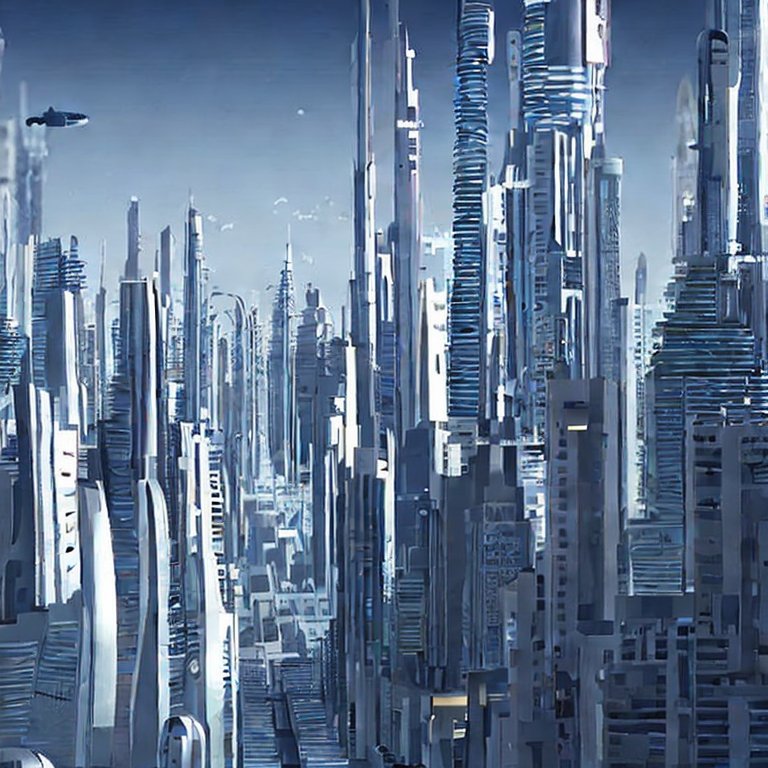
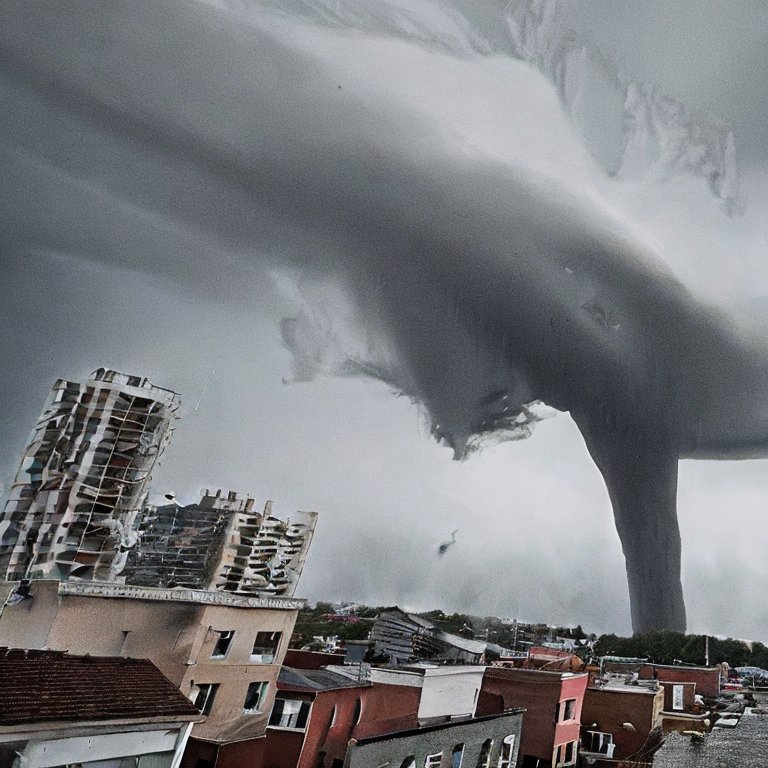
To demonstrate just how remarkable it is, I used an AI-generating art programs on the web called Stable Diffusion to create some art. This is something anyone can use right now for free. Granted, this is a beta version so the results aren’t going to look overly professional. But for something that’s free and easy to use, it’s still remarkable.

Below are just some of the images I created, along with the prompts I used.


A beautiful woman admiring a sunset.


A Christmas tree in the forest during a snowstorm.


A lush Amazon jungle with a river.


A futuristic city skyline.


A female android with blue eyes.


A shadowy figure in a forest.


A couple walking through a forest during a snowstorm.


A man running from a forest fire.


A woman standing at the summit of a mountain.


A tornado forming in a city.


Again, I cannot draw. I cannot paint or create images on a piece of paper or a computer screen. But thanks to Stable Diffusion, I was able to create these in just a few minutes. It cost me nothing and it was a genuinely profound experience, turning ideas into an image.

And keep in mind, this was just the free beta of the program. There are more advanced programs you can test out, but you do have to sign up and apply for their use. There are also some versions that you have to pay for. Once this technology gets especially refined, that might be something worth the money. Knowing I’ll never be able to physically draw, it’s definitely something I’ll consider.

For now, I’ll be keeping a close eye on this emerging technology. If I create more quality AI-Generated art, I’ll be sure to share it too.

And if you’re like me in that you don’t have good drawing skills, or any drawing skills for that matter, check out Stable Diffusion. Create some art that you never would’ve been able to otherwise create. It’s a great feeling and something that might help get you excited about the future of creativity.

6 Comments

Filed under AI Art, Artificial Intelligence, technology

The Exciting/Distressing World Of AI-Generated Art

Whenever I talk about artificial intelligence, I often talk about the possibilities and potential it has for the near and distant future. I admit I sometimes to a bit overboard with the speculation and the hyperbole. In case I haven’t made it abundantly clear already, I am not an expert. I do not consider myself exceptionally smart or well-informed on this topic. I just find it very interesting and quite tantalizing, given how much I’ve seen computer technology evolve over the course of my lifetime.

However, in talking about artificial intelligence, I rarely get a chance to talk about some actual tools and products powered by AI that we can use today. That’s just the nature of technology like this. It takes a while to develop and refine. It also takes a while to actually create a usable product with it that don’t require a Masters Degree in computer programming.

But this past year has seen the rise of a new type of AI-powered product that is making its presence felt. It’s called AI-Generated art and it’s exactly what it sounds like. It’s art entirely created by an artificial intelligence that uses massive amounts of data on art, shapes, and design to craft artwork based solely on text suggestions.

It’s not entirely new. For a number of years now, there have been AI systems that can essentially create photo-realistic depictions of people who don’t exist. That, alone, is an impressive feat and one that has some distressing implications for those worried about fake IDs, identity theft, or catfishing. However, these new AI-Generated art programs have the potential to do so much more.

While the mechanisms behind it are very complex, the interface itself is very simple. A user just enters a brief description of what kind of artwork they want. Then, the program processes that and crunches the data. Finally, it generates an image. Sometimes, it takes a few seconds. Sometimes, it takes a bit longer, especially if the prompt is more elaborate. If you want to see a good example of what it can create, just check out the brief, but hilarious skit John Oliver did. Just don’t watch it while eating cabbage.

Aside from the inherent comedy gold that can be mined from this technology, just take a step back and consider the larger implications of these tools. These are prompts being entered by people who probably don’t have much in terms of art skills. And as John Oliver noted, some are being entered by people who aren’t entirely sober. While the images they generate don’t exactly look like masterpieces or anything someone would mistake for photo-realism, it’s still remarkable they’re as good as they are.

In seeing some of this art, it actually reminds me somewhat of early video game consoles that began rendering 3D graphics. I’m old enough to remember the somewhat clunky transition between 2D to 3D graphics. Just look at early Playstation games or games like Super Mario 64. They weren’t exactly polished, but they were a step in that direction.

Now, compare that to a typical game on the Playstation 5. In the span of just 20 years, the graphics and renderings have become so realistic that they’re navigating uncanny valley territory. With that in mind, imagine what these AI-generating art programs will do with that kind of refinement. I don’t know if it’ll take 20 years or longer, but it does create some tantalizing possibilities.

Ordinary people could conjure detailed, photo-realistic backgrounds for games, portraits, or stock art.

Ordinary people could conjure elaborate scenes and illustrations for stories they wish to tell.

Ordinary people could create artistic depictions of elaborate fantasies, including the sexy kind.

This is especially intriguing for someone like me because, as I’ve noted in the past, I cannot draw worth a damn. I have practically no skills when it comes to creating visual artwork, be it with a pencil or a computer program. I’ve never had that skill. I’ve tried many times in the past do develop those skills. I’ve never succeeded. I’ve always been better with writing and words. And I’ve been perfectly content with that.

Now, this technology gives someone like me an opportunity to craft images to go along with my words. It opens the possibility that I could one day write a story, sexy or non-sexy, and supplement it with real, vivid depictions of the characters and scenes. That is definitely something I want to pursue. I have experimented a bit with the AI art programs, but they’re still someone limited. I won’t be incorporating them into my sexy short stories anytime soon.

But if these programs continue to improve, then it’s only a matter of time before I craft a story in that manner. Honestly, that really does excite me, more so than a lot of the promising news surrounding artificial intelligence. I understand there are aspects to the technology that may never happen or just won’t be happening within my lifetime. But these AI art programs are real. They exist now and they’re going to be refined, like most emerging technology. It remains to be seen how fast they’ll achieve a higher quality, but I will certainly be watching it closely.

If you want, you can even test these programs out yourself. This site lists 10 sites you can go to right now, but these are the sites I recommend.

Dall-E 2

Artbreeder

DeepAI

StarryAI

Please note that most of these services are limited and none allow anyone to create images that are overly pornographic or outright illegal. However, you can still create some legitimately good images, which you can save and use in whatever way you please. I’m already hoping to use some for my YouTube channel.

But even though this technology is especially intriguing to people like me with no art skills, I don’t deny it has actual artists very concerned. There has already been one instance where an AI-generated artwork won an art contest, which the real artists did not appreciate. It’s not just that an AI like this won without putting in the effort an artist usually would. In many cases, these programs used art other artists had created to refine its code. Over time, these programs could conceivably put those same artists out of work.

I can totally understand that concern. Who would hire a talented, but expensive artists to create images if they could just use an AI program to create it in seconds and for free? Do you really think big companies like Disney, Warner Brothers, and Universal wouldn’t fire their entire art team if they could get the same results for a fraction of the cost? They’re billion-dollar profit-driven companies. You know they would.

Even if this technology doesn’t completely replace real-life artists, it’s still essentially doing most of the work. On some level, it dehumanizes the artistic process, even more so than a camera. A camera can only render the image in front of it. These programs could conceivably conjure images that nobody has ever seen or imagined, a feat that once belonged solely to artists.

What does that mean for the future of artists?

What does that mean for the future of art?

I don’t claim to know the answers. I’m not even sure how to speculate on something like this. Again, I have no art skills with respect to drawing or creating images from scratch. I’m the kind of person who will embrace this technology more than most, so I’m going to be somewhat bias in that regard.

But artists and governments are starting to take notice. China has already made waves by attempting to ban AI-generated media that isn’t appropriately marked. While that may temper some trends in this field, it’s not going to stop it. There’s just too much to be gained at this point. The genie is out of the bottle and there’s no putting it back.

It’s sure to cause more issues, especially as the technology becomes more refined. It probably won’t be long before a major problem occurs because someone used AI-generated art in some nefarious way. Some are already trying, but they can only achieve so much, given the limits of technology.

That will eventually change. If you’re reading this, you’re likely to see some AI-generated artwork that you’ll mistake for something real. At that point, even concerns about deep fakes will be minor in comparison. Only time will tell.

Until then, non-artistically inclined people like me can start contemplating what thoughts and ideas we can one day make real.

Leave a comment

Filed under Artificial Intelligence, futurism, technology

A Note/Warning To Anyone Investing In Cryptocurrency

A close relative once told me that investing in something you don’t understand is as irrational as hating something you don’t understand. To date, those words still ring true and time has only further vindicated them.

When it comes to a subject like cryptocurrency, which involves both money and mechanisms that are difficult to grasp, even a basic understanding is hard to come by. And when people don’t understand something, they’re inclined to make flawed judgements.

It’s why you have famous investors like Warren Buffet saying Bitcoin is completely worthless or notable publications like Forbes claiming all cryptocurrencies are Ponzi schemes.

This is hyperbole. It’s also a clear indication that these individuals don’t fully understand Bitcoin or what cryptocurrencies are. And getting that information isn’t the same as getting the secret investment strategies of famous investors. It’s an open-source program and you can read the white paper that helps explain it at any time for free, courtesy of this link.

It’s hard to understand because it involves math and encryption, two topics most people don’t know much about. But whether they understand it or not, they still use it. If they use a smartphone, a computer, or anything that connects to the internet, they are utilizing some of the same type of technology that goes into cryptocurrencies.

Now, I say all that because things in the cryptocurrency world have been pretty rocky this year. If you just look at the prices of most major cryptocurrencies, this has been a historically bad year. If you bought any crypto in January, there’s a good chance that investment has lost money by now. I know because I’m one of them.

I’ve noted before that I do own some cryptocurrency. I’ve also talked about it before as both an investment and a useful tool for the internet age. I won’t deny that while my investment in Bitcoin was very small, never exceeding more than a few hundred dollars, the returns this year have not been great. And I would never recommend anyone put all their savings or investments into Bitcoin, or any asset for that matter.

In addition, I would never advise anyone to invest their money in a way that would limit their control of said money. When you put your money in a bank, whether it’s in person or online, you’re trusting a system and the people within it to handle your money. By law and by the fine print of the contracts you sign, you have control over that money and they can’t take that control from you absent some very limited circumstances.

With that in mind, I think there’s an important lesson to learn from the recent collapse of FTX. If you’re at all involved with crypto, chances are you’re aware of this and have felt the impact. I certainly have. It helped make an already terrible year for cryptocurrency that much worse. Last I checked, my Bitcoin value went down a good 20 percent and will likely go lower.

It was a bad turn among many for cryptocurrency and it wasn’t even the first. Before FTX, other famous cryptocurrency exchanges like Mt. Gox also suffered a similar fate. It’s collapse is actually very similar to FTX. The issue was this.

A new institution or organization is set up to buy, sell, and store cryptocurrency.

It becomes successful by making cryptocurrency accessible to more people.

Due to greed and a lack of supervision or understanding of cryptocurrency, the organization begins skimming money while lying about how much actual cryptocurrency it has.

Ultimately, the scheme is either uncovered or it collapses like a Ponzi scheme when too many people try to withdraw their assets.

In both cases, the problem was the same. People were buying cryptocurrency on an exchange and keeping it on that exchange. They weren’t exactly owning any currency. They were essentially paying the exchange to stake a claim on a certain pool of currency that didn’t exist.

In that context, nobody should be that surprised that FTX and Mt. Gox crumbled. I get the appeal of investing in cryptocurrency without having to go through the trouble of storing or securing the coins on your own computers or devices. However, it’s worth remembering that these are not banks. These are not institutions that are subject to the same laws and regulations as banks.

That’s not to say all crypto exchanges are frauds, but fraud is just a lot easier for them than most.

So, if there’s one lesson to take away from FTX and the collapse of any exchange, it’s this. If you’re going to invest in cryptocurrency, make damn sure you actually own or possess the coins in some tangible medium. That’s what I’ve done with all my Bitcoins. I keep them all in a digital wallet that is not at all connected to any exchange. I also keep a backup to ensure that even if I lose one of my devices, I can still access my coins on another.

It’s not that hard to do. In fact, it’s easier now than it was back when Mt. Gox was still active. It’s even become a common refrain from those who still defend the value of cryptocurrency. The mantra is if the Bitcoins aren’t in your own wallet, then they’re not yours.

Exchanges still have their place in the world of cryptocurrencies and probably will for the foreseeable future. I also don’t expect cryptocurrencies to recover from these latest downturns anytime soon. But if you’re going to invest in cryptocurrency in any capacity, there’s a right and wrong way to do it. Even if you don’t understand the math and the science behind cryptocurrency, you’ll do better in the long run if you just do things the right way.

Don’t use exchanges.

Use digital wallets.

Here’s a list of some that I encourage others to look into before buying any crypto.

Leave a comment

Filed under Bitcoin, technology

Putting Recent News About A Nuclear Fusion Breakthrough In (Balanced) Perspective

As a general rule-of-thumb, you should never take news of a “scientific breakthrough” at face value. It’s not that the science is flawed or that the media reporting it are uninformed or misguided. It’s just incomplete. The rhetoric rarely matches the results, nor does it fully grasp the implications.

To some extent, that’s unavoidable. People who actually do science rarely use terms like “breakthrough” or “revolutionary.” Despite what popular media might depict, science doesn’t make giant leaps like that. It usually makes gradual steps full of small, but meaningful advances. It rarely makes for attention-grabbing headlines, but that’s how most scientific progress is made. It’s like building a house brick-by-brick. One brick alone is not a breakthrough. It’s the totality of the structure that garner’s the most vlaue.

When it comes to any news on nuclear fusion, it helps to be even more restrained. I’ve been following tech news for most of my life. During that time, I’ve seen plenty of articles and news releases from mainstream sources claiming some major breakthrough. Some give the impression that we’re just a few years away from using fusion to power starships to Mars. That’s a very flawed, very uniformed perspective.

In that same mold, I’ve also seen plenty of news articles saying nuclear fusion is an impossible dream that nobody will see in their lifetime. There’s a common refrain among these skeptics. They’ll often say something along the lines of “Nuclear fusion is 30 years away and always will be.” It’s a very cynical, very narrow-minded understanding of the issue. It also paints a flawed perspective of where we actually are in the science.

With those two perspectives in mind, how do we make sense of the latest news purporting a fusion breakthrough? In case you haven’t heard, the news came courtesy of Lawrence Livermore National Laboratory, which is not some fringe company or organization. This is something they’ve been working on for decades and this was a big moment for them, according to the Financial Times.

FT: Fusion energy breakthrough by US scientists boosts clean power hopes

US government scientists have made a breakthrough in the pursuit of limitless, zero-carbon power by achieving a net energy gain in a fusion reaction for the first time, according to three people with knowledge of preliminary results from a recent experiment.

Physicists have since the 1950s sought to harness the fusion reaction that powers the sun, but no group had been able to produce more energy from the reaction than it consumes — a milestone known as net energy gain or target gain, which would help prove the process could provide a reliable, abundant alternative to fossil fuels and conventional nuclear energy.

The federal Lawrence Livermore National Laboratory in California, which uses a process called inertial confinement fusion that involves bombarding a tiny pellet of hydrogen plasma with the world’s biggest laser, had achieved net energy gain in a fusion experiment in the past two weeks, the people said.

Although many scientists believe fusion power stations are still decades away, the technology’s potential is hard to ignore. Fusion reactions emit no carbon, produce no long-lived radioactive waste and a small cup of the hydrogen fuel could theoretically power a house for hundreds of years.

The US breakthrough comes as the world wrestles with high energy prices and the need to rapidly move away from burning fossil fuels to stop average global temperatures reaching dangerous levels.

Now, compared to other news about “breakthroughs” from mainstream media, this is fairly balanced in that it doesn’t make too many bold claims. It makes clear that commercial fusion power stations are still decades away. But that was never the point of this experiment, nor is it the purpose of the article.

The most important detail from this news is the results the scientists produced. For the first time, a nuclear fusion reactor achieved a net energy gain. That means the generator put out more energy than was put into it. Specifically, the experiment produced an excess of 1.37 megajoules of energy, which amounted to approximately 70 percent more than the energy that was put into the reactor.

That is major news.

That is an achievement worth celebrating.

Because to date, plenty of laboratories throughout the world had achieved fusion. That’s not some act of scientific magic on par with anti-gravity or perpetual motion. The issue with fusion has never been about the physics. It has always been an engineering and logistic challenge, more so than fission ever was.

Creating fusion only requires a few ingredients. You need lots of heat, some hydrogen, and a way to confine it all in a structure. The big challenge that has been taking so many years has been to do all this in a way that generates more power than what goes into it. That’s something no other reactor has achieved until this experiment.

Now, it has been done.

We now know it’s possible to create a nuclear fusion reaction that generates more energy than what goes into it.

This is akin to the first ever cell phone call, which occurred in 1973. And it wasn’t until 1983, a full decade later, that the first commercial cell phone went on the market. That first phone was not very good and nowhere near as efficient as the cheapest phone you can get today. But it did work and it did get the ball rolling on the market.

That’s not to say that fusion will follow a similar timeline, but that comparison helps give perspective to where we’re at right now. Just getting a new technology to work is one thing. Making it a commercial product on some level takes time because the technology requires greater refinement, investment, and engineering.

But that process can only start after someone proves that it is technically possible. Fusion did not have that until this news. On top of that, investment in nuclear fusion has never been very high, compared to other technologies. In fact, it has only been in the past couple of years that more public and private investment has flowed in to developing nuclear fusion. So, that old joke about fusion always being 30 years away was missing a key detail. Any technology is going to develop slowly if there isn’t sufficient investment.

Now that one lab has succeeded in showing that a net energy gain is possible with fusion, others can follow. Hopefully, it inspires even more investment. With those investments will come more refinements and efficiencies. If those efforts are sustained, fusion doesn’t just become possible. It becomes inevitable.

The past couple decades have seen one too many price spikes in oil and other fossil fuels. Recent geopolitical conflicts have only shown just how vital it is for us to get off fossil fuels as quickly as possible. And our energy demands are only going to keep going up in the coming years. Add on top of that all the environmental concerns surrounding fossil fuels and the urgency for nuclear fusion has never been greater.

We’re still not going to see fusion plants popping up tomorrow, next year, or the year after that. But with this news, we’ve taken a critical first step. And many of those reading this will likely live to see the day when fusion energy powers their homes. That’s something worth looking forward to.

Leave a comment

Filed under Current Events, technology