Tag Archives: technology

AI Chatbots May (Thankfully) Render Homework Obsolete

Homework sucks.

Let’s get that out of the way.

I doubt anyone will disagree with that sentiment. No matter who you are or how many years you’ve been out of school, you probably don’t miss doing homework. It’s one of those special shared hatreds reserved only for traffic jams, parking tickets, and slow internet. But unlike those undeniable frustrations, homework isn’t an inescapable force of nature or law. It’s something we, as a society, choose to continue.

I’ve certainly questioned that choice, going back to when I was still in school. Having to do homework was among the many reasons why I was so miserable in school. And even though it was required, I can’t honestly say it ever helped me learn anything. Most teachers and administrators often explained why it was important to ensure we were adequately learning the material. But as I’ve gotten older, I’ve come to realize that, even if that were a valid reason, it still was still ineffective.

Just ask yourself honestly. Did you ever do homework because you were curious and wanted to learn?

Now, I could rant and lament on why homework sucks for days on end. But rather than torture myself to such an extreme, I wanted to highlight something that might offer hope to those who still remember how much homework sucked, as well as those currently in school at this very moment. It has to do with the impact of artificial intelligence and chatbots like ChatGPT.

I know I’ve talked a lot about artificial intelligence in the past. I’ve also highlighted the impact and hype surrounding ChatGPT. It is definitely one of the most intriguing and disruptive technologies to come along in decades. But unlike other discussions about whether artificial intelligence and ChatGPT will lead to the destruction of the human race, this is one issue in which the impact is already happening.

Recently, Vox produced an intriguing video about how ChatGPT has impacted education, especially homework. Even as someone who graduated school years ago, I found the issues and insights of this video remarkable. I encourage everyone to check it out.

The long and short of it is simple. ChatGPT is rendering most homework assignments, be they essays or worksheets, obsolete. Students are using ChatGPT to basically do the bulk of the work for them. The only real effort they need to do is make sure that whatever they produce isn’t obviously the product of a chatbot.

That alone can be difficult. It is well-documented that chatbots like ChatGPT can be inaccurate. But when compared to having to do a long, boring assignment that a student probably isn’t interested in, that kind of challenge seems manageable by comparison.

Also, in the interest of full disclosure, I freely admit that I probably would’ve used ChatGPT when I was in school if I had access to it. I promise it wouldn’t be entirely out of laziness or an unwillingness to learn. I just found most homework assignments to be so dull and pointless that I cared more about just getting them done rather than actually learning anything.

I imagine I’m not the only one who feels this way. I suspect the majority of students simply see homework as a means of ensuring grades rather than actually learning something. And even if that assumption is flawed, it’s still an issue that speaks to major flaws in how we educate ourselves and others.

And until ChatGPT, it was easy to ignore that issue. Schools, teachers, and administrators had no reason to stop giving homework or question whether it was an effective tool. It was just one of those things that our education system had always done. So, why not keep doing it?

Well, now there’s a valid reason. Homework, as we know it, can be easily completed by any student with an internet connection. If there was any learning potential, it’s pretty much lost. As the Vox video stated, it has led schools and educators to consider an entirely new recourse.

The knee-jerk response that I suspect most will adopt is to try and ban or limit the use of chatbots. There are software programs out there that can help detect content that has been generated by a chatbot. However, I liken these programs to using scotch tape to seal the ever-widening cracks of a faulty foundation.

Because, like it or not, these AI chatbots are becoming more advanced. And the tools to keep up with them are always going to lag behind. That is a losing race and one no education system should attempt.

There’s even precedent for surmising why that’s a bad approach. When I was in college, there was a blanket ban on using Wikipedia. But enforcing that ban was a losing battle that caused more problems than it solved. It also created some nasty situations where students were accused of plagiarism when they did nothing of the sort. It took a few high-profile incidents, but most schools eventually came to embrace Wikipedia as a useful tool when approached correctly.

I think the impact of chatbots will have to go through a similar process. But unlike Wikipedia, the application of chatbots is a lot broader. These are tools that can effectively summarize books, write essays, and even write poetry with a few simple prompts. And in the same way young people have become more tech savvy than their parents, I suspect they’ll become more adept than most with respect to navigating chatbots.

That means homework, as we’ve been doing it for the past several decades, will be obsolete. While that’s certainly cause for celebration for many, it’s also an opportunity to take a step back and evaluate the process of education, as a whole.

It’s still very important that we educate young people in a meaningful way.

It’s also important to acknowledge that young people today will have access to resources that others have not.

If homework is no longer useful in that regard, what else could we do? What’s a more effective way to teach kids a concept, even when they’re not that motivated to learn it?

I don’t claim to know the answers. I am not a teacher, but I do remember how miserable I was in school and how little it really taught me. Hopefully, the impact of chatbots like ChatGPT will prompt a more thorough evaluation of how we approach education. Because if we keep clinging to old methods, then nobody will benefit in the long run, especially kids.

1 Comment

Filed under Artificial Intelligence, ChatGPT, technology

Neuralink Has Implanted Its First Brain Chip (But Don’t Get Excited)

I know it’s been a while since I talked about Neuralink. A few years ago, I followed news about this endeavor closely because I genuinely believed that brain/computer interfaces was an important technology to develop. These days, I still believe that. I think it has only become more vital as the progress in artificial intelligence has accelerated.

However, there’s a reason why I haven’t talked much about Neuralink in quite a while. I admit some of that is because some pretty significant world events got in the way of following technology trends. However, a much bigger part of my disinterest came from the one behind Neuralink, Elon Musk.

The long and short of it is this. I once respected and admired Elon Musk for his efforts to develop new and emerging technology. But then, once I started scrutinizing him, his background, his business practices, and his tendency to make ridiculous promises that he can never keep, I came to the conclusion that Elon Musk isn’t just an unscrupulous businessman. He’s an asshole.

Believe me, there’s a lot I could say about him, but I prefer not to. Insulting someone with billions of dollars and access to high-priced lawyers is risky these days. I’ll just say that the combination of COVID-19 and buying Twitter didn’t really break Musk. It just exposed the kind of person he really is and that person is not one worthy of respect.

Now, with respect to Neuralink, there is still some real value behind the company, the efforts, and the technology. Integrating the human brain with technology isn’t just a promising field. It might very well be necessary if humans are to adequately adapt to a future in which there will likely be machines much smarter and more capable than any person who has ever lived. Even if AI never becomes as intelligent as an average human, having humans that can interact with it on a more intimate level could fundamentally change our species and our society for the better.

And to that end, Neuralink has officially taken a critical first step. According to NPR, the company has successfully implanted its first brain chip into a human participant. We don’t know many details, nor do we know the identity of the person who received the chip. We only know what was conveyed in the announcement, which is rarely something you can take at face value with Elon Musk.

But even if you don’t trust Musk, and you shouldn’t, this feat has been in the works for a while. Neuralink has been actively recruiting volunteers for implants for over a year now. And this effort was authorized by the United States Food and Drug Administration. The primary participants, at least for now, are those who have suffered brain or spinal chord injuries. So, it’s not like Neuralink is accepting applications from those who just want a brain chip for no reason.

That approach is to be expected. Even Musk has said that the initial efforts with Neuralink will focus on helping paraplegics or those suffering from conditions like ALS. If and when the technology matures, then it’ll expand access to other users, but still for therapeutic purposes. Eventually, it would get to a point where brain implants aren’t just treatments. They would be like smartphones that people willingly purchase and have implanted.

And it’s that last part where I believe proponents of this technology should temper their hopes. Until we know more about the patients, the nature of the brain implants, and the impact on the participants, nobody should be eager to get one themselves. These brain implants are not about to become the next iPhone. This is a technology that needs much more investment, refinement, and development.

And if history is any guide, you really shouldn’t trust someone like Elon Musk to deliver that level of advancement. Despite the persona he tries to convey, he is not Tony Stark. He is not a brilliant scientist or inventor. He just hires those kinds of people and has a nasty habit of screwing them over.

He is, and always has been, a salesman first. He may very well be a genuine futurist trying to make a better future, but his tendency to get into petty feuds on social media and say objectively dumb things should give everyone pause. But at the end of the day, he’s an obscenely wealthy, incredibly out-of-touch businessman.

That means he likely sees Neuralink as just another business that he hopes will make him even richer than he already is. Even if he believes in the inherent value of the technology, he will exploit it for billions if it ever becomes a viable commercial product. That’s just how billionaires operate. And given the distressing tendency for billionaires to be psychopaths, it would be unwise to give Elon Musk or anyone like him access to your brain.

Now, I’ll say it again. This technology is important and what Neuralink achieved is a vital first step. The successful operation of one brain implant means it’s no longer on paper. This technology is officially real. Like the first person who drove a car or the first person to fly a plane, this is a major leap in our ongoing efforts to develop better and bolder technology.

We don’t know where this feat will lead or whether it’ll pan out in any meaningful way, but it’s worth being hesitant and a little extra cautious. It’s not wrong to trust in the sincere efforts of others who want to improve the lives of others. But it’s always wise to be skeptical of the intentions of unscrupulous billionaires with inflated egos.

Leave a comment

Filed under Artificial Intelligence, Neuralink, technology

SAG-AFTRA’s Deal For AI And Video Game Voice Actors: Why It Matters (And Why It’s Concerning)

One of the biggest stories in 2023 was the SAG-AFTRA strike, which also coincided with the WGA strike. It was one of the most impactful and extensive labor disputes in recent history. Some would even argue it was the most important strike to ever occur in the entertainment industry. I’m certainly inclined to agree with that. That’s part of why I felt compelled to mention it.

The strike by both unions had many issues of concern, but one of the biggest had to do with artificial intelligence and emerging technology like generative AI. Both writers and actors alike were concerned that studios would start using AI to effectively replace them or use their past works to create derivatives without any compensation.

It was a very legitimate concern. I’m of the opinion it was the single most pressing issue for everyone involved in the entertainment industry. Artificial intelligence is no longer just the domain of sci-fi stories. Even the limitations of existing tools are capable of producing music, art, literature, and various other forms of content. Future tools promise to be even more effective.

Eventually, in the not-so-distant future, AI tools might get to a point where they can produce content at or near the quality of any human. They don’t even need to achieve human-level intelligence. They just need the right amount of refinement, investment, and engineering.

But even with this pressing issue, both the WGA and SAG-AFTRA largely won their dispute. They were able to get a contract that included provisions protecting them from future encroachments by AI. That is certainly an important, worthwhile consideration. It helps ensure that those working in the entertainment industry can continue to make a living.

However, less than a few months after the strike ended, there are already new encroachments. And they’re happening with the full support and sanction of SAG-AFTRA. According to multiple reports, the union reached a deal with a company called Replica Studios to allow actors to license their voices to be replicated by artificial intelligence for video games.

Naturally, this has caused some concern and consternation, especially among voice actors who do a great deal of work in gaming. On the surface, it seems like an about-face. This seems like a manifestation of what they were protesting against during the strike, letting studios use AI to replicate iconic voices or figures in certain productions.

However, I don’t think it would be accurate to say this is a complete reversal. For one, SAG-AFTRA makes it clear that the intention of the deal is to ensure that those whose voices are licensed and utilized by AI receive appropriate compensation. This way, studios can’t just use a bunch of recordings of a famous voice and stick them in a game without paying the appropriate people. That is perfectly reasonable.

At the same time, there’s no denying that this will undermine current and future voice actors working within the gaming industry. The process for voice acting in most modern games can be extensive and expensive. A high-profile game like Grand Theft Auto V cost over $250 million to develop, unadjusted for inflation, and that game involved a lot of voiceover work.

Developing video games has only become more expensive over time, much more so than movies, TV shows, or music. Some are already estimating that the development of Grand Theft Auto VI could exceed $2 billion when all is said and done. No matter how you feel about video games or their development, that is not sustainable.

In that context, it makes sense to allow the use of AI tools to help cut down on that cost, especially as games and computing power increases. And it will certainly benefit those who have iconic, established voices in the video game industry.

But for those who aren’t in the industry yet or just aren’t well-known, this could be the first step in rendering voice acting in video games an unviable career path. It could become to acting what switchboard operators were to telephones.

I don’t doubt for a second that those in SAG-AFTRA are aware of this. They have to know on some levels that AI technology will continue to advance. They can’t fight it. They can’t stop it. They can’t prevent it from becoming more and more capable with each passing year.

And unlike video or artwork, mimicking voices is a more mature technology. It’s something that doesn’t really need much refinement to replace the work of a human voice actor. If they didn’t make this deal, then it just would’ve been harder to work around with each passing year.

Even if this deal is ultimately beneficial to actors and voice actors, it should still be a concern. It sets an early precedent for how unions, studios, and actors are attempting to accommodate advances in AI with their profession. While this primarily impacts the gaming industry, it is bound to affect others eventually.

There will come a point where AI is capable of replicating the imagery, mannerisms, and presence of any living actor. There will also come a point where AI is capable of producing animated content that’s difficult to distinguish from the kind that’s traditionally produced. What happens to the industry and those who work within it at that point? Would this deal that SAG-AFTRA did for gaming work? Or will it only delay further disruptions?

I don’t claim to know the answer. But if you’re involved in the entertainment industry in any way, this warrants serious attention. The existing AI tools we have now are plenty disruptive. They’re only going to get better with time, investment, and better engineering. The incentives are strong and at this point, there’s no putting the AI genie back in the bottle.

This technology isn’t just going to affect our lives. It’s going to affect how we make a living. If we don’t find a way to coexist with it, then that will only cause greater problems down the line. And it will impact far more than video game development.

1 Comment

Filed under AI Art, Artificial Intelligence, technology, television, video games

Thought Experiment: What Technology Can Humanity NOT Be Trusted With?

This is a video from my YouTube channel, Jack’s World.

This video is a thought experiment about dangerous technology. Over the centuries, humanity has developed numerous tools that have helped us survived. But some tools are more dangerous than others. There’s nuclear weapons, chemical weapons, and biologically engineered viruses. But these are all things we have now.

Future technology has the potential to be much more dangerous. So, I explore the idea of there being some technology that humanity just cannot be trusted with. Do you agree? Do you have other insights? Share your thoughts. They are always welcome.

Leave a comment

Filed under Artificial Intelligence, Jack's World, technology, Thought Experiment, YouTube

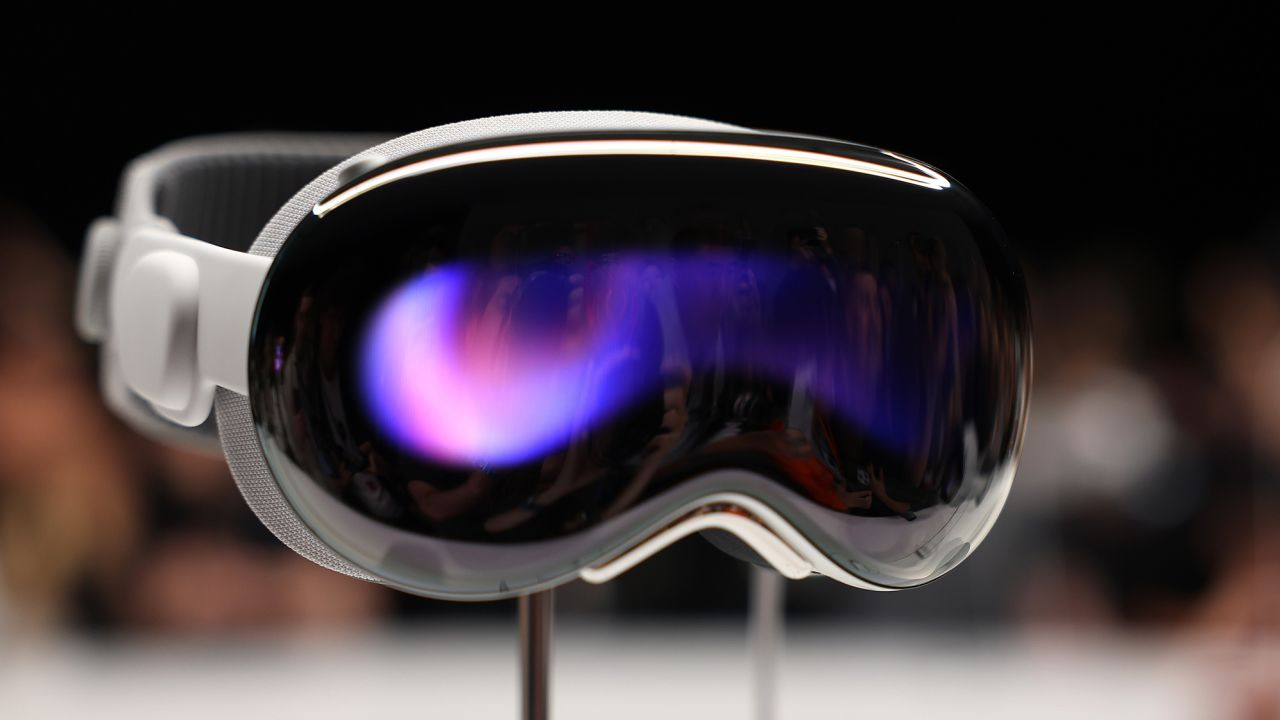
Why I’m Excited About Apple’s Vision Pro (But Won’t Buy One Just Yet)

Henry Ford did not invent the car, but he did create a model that made the car affordable, useful, and accessible to the masses. He was also despicable racist and bigot, but that’s neither here nor there.

Nintendo didn’t create the first gaming console, but they did create a model that made gaming fun, endearing, and accessible to the masses. Now, they’re so successful that they can make a billion dollar movie as a side-project.

I make this point because technology and the products created from it don’t always become successful by their creators. Sometimes, an advancement is just not adequately refined, poorly marketed, or just too ahead of its time. We can never truly know if some new technology is ready for the mainstream until we have the benefit of hindsight.

With all this in mind, I’m still comfortable saying with confidence that Apple’s recently announced Apple Vision Pro will be a game-changer on so many levels. And a decade from now, when I might be writing something like this while using one, we may see this announcement as important as the original iPhone.

I know that sounds like me buying into mindless tech hype, which is something I’ve been guilty of before. I freely admit that I am not qualified to judge what technology is overhyped and what will truly change the world. So, do not take me as an expert in that regard.

However, I’ve seen enough major technological changes and overhyped failures in my lifetime to see certain patterns. And with the Apple Vision Pro, I genuinely believe this will change how we see computers, virtual reality, augmented reality, and reality in general.

For one, this is not Elon Musk claiming that we would have a full self-driving car by 2017. This is a real, tangible product created by Apple, a company with a proven track record of disrupting major areas of the tech industry for decades.

Apple didn’t invent the personal computer, but they were among the first to create a user-friendly model for the masses in the 1980s.

Apple didn’t invent the smartphone or the MP3 player, but they created products that were so superior to the competition that they fundamentally changed the industry around them. If you need proof, just try finding a Tower Records in your area.

This is not a company that regularly to create strange, ambitious products that the public has never seen before. This is a company that sees what’s going on within an emerging industry, poaches the talented individuals working in that industry, and creates a product that goes onto dominate that industry in its own unique way.

You can certainly make the case that Apple’s tactics in this endeavor aren’t always ethical. They’re a multi-billion-dollar tech company. You don’t have to look hard to uncover some of their less savory practices.

But when it comes to producing a product that works better than anything that came before it, Apple is second to none. And I’ve been hoping for years that someone would find a way to perfect the many flaws in the virtual reality and augmented reality fields.

I may be dating myself here, but I remember years ago when Nintendo tried to create a VR gaming console called the Virtual Boy. I even tried it at a toy store a few times. I thought it was amazing, even though it was uncomfortable at times and gave me a headache. I genuinely hoped it was the start of a new trend.

But it didn’t happen.

Over the years, other companies tried to make better VR and AR hardware. I’ve used products like the Oculus Rift and the Playstation VR headset. They’re both good, but limited. They don’t do much other than run a few niche programs and games.

But Apple’s Vision Pro promises to do so much more. It won’t just run a few distinct programs. It won’t just be a novelty meant for a few specific tasks. In the demonstration Apple released, this product promises to integrate multiple features from multiple fields, from the stuff you’d usually do on a desktop to immersive gaming to watching 4K video content.

Even if you’re very skeptical about VR and AR technology, you can’t deny that’s a very different approach compared to others in the field. And you also can’t deny that Apple has a proven track record of making clunky technology work.

Watching this demonstration, I couldn’t help but imagine what it would be like to watch a football game with this thing. I also imagined what it would be like to play a game like Skyrim, interact with friends and family, or just relax in my bed while enjoying beautiful scenery and music.

I want to try this thing.

I want it to succeed on the same level as the iPad and iPhone, two products that have been a huge influence over my everyday life.

However, I’ll also go on record as saying that I probably won’t buy this first model and not just because the price tag is $3,500. But my reason for that has little to do with my faith in the technology or Apple. This is just how I usually approach embracing new tech gadgets, in general.

I was not among those to buy an iPod or iPhone when it first came out. That’s because I prefer to wait until the early kinks and bugs are worked out. And even for Apple’s most successful product line, there was a refinement period. Just go back and look at the features of the original iPhone. It was pretty limited in many ways. It also had its share of growing pains.

But over time, with further investment and refinement, it became more polished. By the time the third generation came along, it was so polished and so well-developed that that the value was immense, despite the inflated price. When I finally bought my first iPhone, it worked so well that it felt like a massive upgrade by default.

That’s what I hope will occur with the Apple Vision Pro. It may take several years. But eventually, it’ll get to a point where the software, the hardware, and the experience are such that it’ll exceed any alternative, present or future. When that time comes, I will gladly buy in.

Yes, I realize I may still end up paying a hefty price for the experience.

But if that experience means watching the Super Bowl in an immersive, 4K experience or reading comics on a screen that feels like IMAX, then I say that’s a price worth paying.

Leave a comment

Filed under futurism, technology

Here’s What Happened When I Asked An AI To Write A Love Poem

There has been a lot said about the emerging state of artificial intelligence. I’ve certainly contributed my share. I imagine a lot more is going to be said in the coming months and years.

Ever since ChatGPT demonstrated the power and potential of this technology, it has garnered a great deal of interest among the public. It’s also generated plenty of concerns. Some are minor, like whether this technology would eliminate too many jobs. Some are major, like whether this will lead to the development of a powerful artificial intelligence that we can’t control.

There are legitimate concerns. Some are much more pressing than others. I’m certainly not qualified to explain all the nuances, let alone make recommendations or decisions on this issue. I’ll leave that to people much smarter and more capable than me.

But for now, these tools are here. We can use them in any number of ways. Some are already using them for objectively dangerous purposes. That’s always going to be an issue with every new technology, including AI. But the less dangerous, less dire uses will always be more common. And they’ll rarely make the news.

In that spirit, I’d like to share what happened when I played around a bit with Bing’s new AI program. I didn’t do anything too elaborate or ambitious. I understand this is new technology. It’s going to be limited for a good long while in the early stages. But it’s still quite capable of doing wonderful things.

To that end, I asked Bing to write a love poem. My exact prompt was actually “Write me a beautiful love poem.” This is what the AI created.

Here’s the first poem:

You are the light of my life
The reason for my smile
The warmth in my heart
The spark in my soul

You are the melody of my song
The rhythm of my dance
The harmony in my voice
The tune in my ear

You are the color of my world
The beauty in my eyes
The splendor in my sight
The rainbow in my sky

You are the love of my life
The partner of my dreams
The companion of my journey
The mate of my soul

Here’s another.

When I see your face
I feel a surge of grace
When I hear your voice
I have no other choice

But to love you with all my might
To hold you close and tight
To cherish you day and night
To make you happy and bright

You are my everything
My reason for living
My source of joy and peace
My treasure and my bliss

You are my one and only
My forever and my always
My soulmate and my lover
My friend and my partner

Here’s one more.

You are the star of my night
The moon of my tide
The sun of my day
The sky of my way

You are the fire of my passion
The flame of my desire
The heat of my emotion
The light of my devotion

You are the breath of my life
The beat of my heart
The pulse of my blood
The soul of my love

Are these poems the greatest love poems ever written? Probably not.

Do these poems still qualify as love poems? I would argue they do.

If you didn’t know I had asked a chatbot to write these, would you think a real person wrote them?

Given the current state of this technology, I’m impressed. There’s certainly room for improvement. But let’s remind ourselves that this wasn’t akin to asking a calculator to factor a couple of large numbers. I asked this chatbot to do something creative. And it did so in just few seconds.

This is what AI is capable of now.

Just imagine what it’ll be capable of in the coming years.

Leave a comment

Filed under Artificial Intelligence, ChatGPT, romance

What Is An Appropriate Age For A Kid To Have A Smartphone?

When I was a kid, the most advanced device I could put in my pocket was a Gameboy. It didn’t do much other than play games. And while I did sometimes annoy my friends and family by playing it too much or taking it everywhere, having one really wasn’t too controversial. Once I was in middle school, I didn’t have too many restrictions, other than simply needing money for games and batteries.

Today, smartphones are much more powerful than a Gameboy by several orders a magnitude. It’s not just about what they can do. Even with a poor internet connection, a smartphone can give anyone of any age access to countless forms of information, media, and entertainment.

Some of it is good. A lot of it is bad.

Some of it is critical information for most people to know. A lot of it is misinformation or propaganda that can destroy someone’s life.

In the wrong hands of even a capable adult, a smartphone can ruin your life. Just ask anyone who has ever sent out an ill-advised tweet. Things only get more complicated when it comes to young children or teenagers using smart devices. And those complications are going to intensify in the coming years.

I know this and sense this because over the past several years, quite a few friends and family members have started having kids. At the moment, they’re all under the age of eight. They’re all growing up with loving, caring parents who genuinely want what’s best for them. They have all the support and encouragement they could need from their family and extended family. I try my best to be part of that support.

However, these kids have been born into a world that I never could’ve imagined as a child. They came into a world in which the internet is everywhere, smartphones are everywhere, and social media has a huge effect on everyone’s life, even if they’re not on it. The world is always changing, but this is a different kind of change.

And these kids definitely sense it too. A while back, I was hanging out with one of my nephews during a family gathering at my parents’ house. While we were hanging out in the living room, my mother brought out an old photo album. And my nephew, even with severely restricted exposure to screens and smart devices, kept trying to tap on the pictures to make them play. He basically thought they were like the photos on his dad’s iPhone, which played videos when you tapped on them.

It was funny to some extent, but it was also revealing. It shows that, even at a young age, these kids are picking up on what these devices can do. And as they get older, they’re certain to become a big part of their lives.

Their parents certainly understand that. Even before they were born, I heard them say outright that they’re going to work hard to restrict the use and exposure of smart devices to their children. That included phones and tablets, including those that didn’t connect to the internet. They’re serious about that effort. On more than one occasion, they’ve asked me to keep my phone in my pocket so that the kids don’t see it. I always try to respect that. I understand completely where they’re coming from.

That’s not to say they hide these devices from them completely. Their parents do allow their kids to play very specific kid-friendly games on their devices, but usually for a very limited amount of time and often as a reward for good behavior. They’ll also let them watch movies on a tablet if they’re good or if they’re on a long drive. The key is to find a healthy balance that doesn’t expose the kids to the objectively toxic parts of the internet and electronic media.

For now, I think what they’re parents are doing is working. However, at some point, they won’t be able to completely control their child’s access to technology, the internet, etc. I know this because when I was a kid, we found a way to access forbidden media, be it games like Mortal Kombat or shows like South Park. It doesn’t matter how strict a parent is. Kids will find a way. Even if they fail, they’re already aware that these devices exist and they’re aware of what they can do. The question is how do we, as parents and a society, manage it appropriately?

This is something I honestly don’t know how to assess. I am not a parent yet. I might be one day and even then, I might not know when and how to appropriately expose my children to smartphones and the internet. I don’t doubt they’ll be curious. I also don’t doubt these devices will be part of their lives. As they get older, they’ll want more access. At some point, they’ll even want a smart device of their own.

For parents of young kids, that’s a scary prospect. I’m not a parent yet and I find that scary, too. I’ve seen some of the uglier parts of the internet. I shudder to think of the impact they would have on any child. But scary or not, it raises a relevant question.

At what age do we let kids have their own smartphone?

I ask this question knowing that the answer will likely vary from child to child. There will always be some children who are more responsible than others. When I was in grade school, I knew a kid who couldn’t be trusted with paintbrushes because he kept trying to paint things on other kids’ faces. I even knew this one kid who couldn’t be trusted with markers because he would sniff or try to lick the tip.

Those are not the kinds of kids you can trust with a smartphone or any device connected to the internet, for that matter. But even well-behaved kids might be harmed by smartphones at a certain age and through no fault of their own. There are applications, games, and sites that are specifically designed to get everyone, kids included, addicted to their content. There are multiple studies that have noted detrimental effects to kids and young adults who use apps like TikTok, Instagram, and FaceBook.

At the same time, there are tangible benefits that can be gained from smartphones. There are also programs that can help kids learn other languages, improve critical thinking skills, and even develop forms of emotional intelligence. Depriving kids and even teenagers access to such functions could be just as detrimental.

It’s a tough balancing act. You can never completely eliminate the drawbacks and gain only the benefits, nor can you truly know how a child or teenager is going to use their smart device. Some will use it to better themselves. Some will be ruined or destroyed by it. There’s just no way to know for sure.

The best any parent can do is to just teach their child to be smart, responsible, understanding, and careful. That’s not easy. Very few things about parenting are. I’ve noticed that from just watching my siblings and friends. I’m sure I’ll learn it first-hand if I ever have kids of my own.

Like it or not, smartphones are a critical tool for kids, teenagers, and adults alike. Like any tool, there’s a right way and a wrong way to use it. And like any action or choice, there are risks and rewards to weight. We can never know for sure how they’ll help or hurt us. Parents can and should do whatever they can to help their kids get the most out of these tools, even if it means restricting their use.

To help hammer this point home, I’ll share one last anecdote. When I was in school, all cell phones were banned. At the time, they didn’t connect to the internet or have cameras. But the school had a clear policy that no student could posses them. Then, there was an incident near my neighborhood that involved an active shooter. It made the local news and, as a result, parents of students began frantically calling students on the cell phones they weren’t allowed to have.

Some students managed to hide their phones enough in order to answer. But those who didn’t ended up causing serious concern from their parents. I remember several basically leaving work in the middle of the day to get to the school in order to check on their kid. Nobody was hurt, but I can’t imagine how stressful that must have been.

As a result of this incident, the school changed its cell phone policy. That might have made sense in wake of that incident. And I know there are far issues to consider with modern smartphones. But I think it helps illustrate how crude, simplistic approaches to this issue can only go so far. We can’t ban these devices, nor can we uncreate them or the world they’ve fostered. It’s up to us to guide the next generation as best we can into an increasingly complicated world.

Leave a comment

Filed under psychology, technology

An AI-Generated Comic Was Denied Copyright Protection (And Why That’s A Big Deal)

Every now and then, a story slips under the radar of a much larger, but closely related story. The larger story makes more headlines and attracts more attention, but the smaller story might end up having a far more lasting impact.

That seems to be happening a lot with news involving artificial intelligence and the various AI tools that have emerged in recent years. I’ve already talked about plenty, giving my opinion on the rise of ChatGPT and showing off some AI-Generated artwork I made. There’s so much going on in this field that it’s hard to keep up with, let alone discuss.

But recently, one of those little stories caught my attention. It involves the same AI-Generated art I mentioned earlier and comic books, something for which I’ve shared my passion for in many forms. And it’s a story that I don’t think is getting enough attention.

It has to do with a comic called Zarya of the Dawn, a comic created by Kris Kashtanova. It’s not published by Marvel, DC, Dark Horse, Image, or any other mainstream comic publisher. You can actually download it right now for free. But what makes this comic different isn’t the story, writing, or style. It’s how it was made.

This comic was written by a person.

However, all the artwork inside was created with AI-generating art tools, most notably MidJourney.

That, in and of itself, is quite remarkable. The visuals within this book are certainly eye-catching. They might not rank on the same level as a Jim Lee or a Jack Kirby, but it’s a solid visual spectacle that brings to life a story.

For people like me, who cannot draw and don’t have the money to pay artists to depict the stories we want to tell, this is truly remarkable. I would go so far as to say it’s genuinely exciting. It shows just what’s possible with these tools. A writer with no drawing skills was able to produce this comic using only an AI art generating tool with text prompts. And the end result is stunning.

But this is where the story takes a turn. When Kashtanova attempted to copyright this comic, the US Copyright Office issued a surprising decision that might very well set a major precedent moving forward. Because the comic used AI to create the artwork, it could not be granted copyright protection. This was the exact statement, according to Ars Technica:

“We conclude that Ms. Kashtanova is the author of the Work’s text as well as the selection, coordination, and arrangement of the Work’s written and visual elements. That authorship is protected by copyright. However, as discussed below, the images in the Work that were generated by the Midjourney technology are not the product of human authorship.”

That bolded part is my doing because that’s the section with the biggest implication. This is the US Copyright Office stating outright that images and artwork created by AI can’t get copyright protection. That means that every piece of AI art you create for whatever reason can’t be owned by you in any legal sense. Because technically, you didn’t make it. The program made it for you.

Without getting too deep into the legal issues, I don’t think enough people realize the ramifications this might have for the future of the comics industry and for the art industry as a whole. On the comics side, there are actually two sides to consider.

On one, this technology will allow ordinary people with little to no art skills to produce comics with quality artwork. People who never once had the skills or means to make comics could suddenly start producing them on their own without a publisher or a skilled artist.

That means many great comics that wouldn’t have otherwise been made can be made. Great stories that once only existed with words could be brought to life through beautiful renderings.

But on the other side, the absence of copyright protection is an issue. Yes, these comics could bring to life amazing stories. However, the creators won’t be able to monetize their work, nor would they be able to stop others from using it for their own ends.

That means that, in theory, you or I could create a beautiful comic with this technology. It could find a massive audience and become a beloved story with countless fans. Then, a big company like Disney or Warner Brothers could come in, take the story and the depictions, and basically turn it into their own entertainment product. And since they have more resources and better lawyers, the creators likely wouldn’t get a penny of the profits.

This story also doesn’t account for how those same companies might use this technology to further undercut their workers and creators. Comic companies already have a not-so-great reputation for screwing over writers and artists who create iconic characters. Just look at what happened between Jack Kirby and Marvel for a hint of those issues.

If these same companies can use this same AI technology to produce more comics while not having to pay their artists or writers as much, they will do it. They’re a business. They’ll jump at any chance to pay less to get more. It’s cold, callous, and uncreative. But that’s the world we live in.

Add other tools like ChatGPT into the mix and it’s entirely possible that an AI could create an entire comic from scratch. And everything within it, from the art to the story to the characters, could not be copyrighted in any way. At a certain point, the AI might get so good that it would be hard to tell if there was ever a human creator to begin with.

These are all strange scenarios, equal parts exciting and distressing. We’re already seeing so much change as a result of these new tools, but I don’t think we’ve even seen a fraction of what’s possible. As AI technology improves, art generation and storytelling will change a great deal. The comics industry is more vulnerable than most, as Zarya of the Dawn just proved.

It’s hard to know what this will lead to. But whatever happens, it all started with this story and the precent it set.

Leave a comment

Filed under AI Art, Artificial Intelligence, ChatGPT, superhero comics, technology, writing

The First Automated McDonald’s Is Open (And Why That’s A Big Deal)

In late 2022, there was a major tech news story that made headlines for a hot minute, but was completely forgotten. In Fort Worth, Texas, the first ever automated McDonald’s restaurant opened.

From the outside, it looks like a typical McDonald’s. It has the same aesthetics and architecture that have become so iconic. But inside, there are none of the usual fast-food workers. There are just rows of kiosks and a conveyer belt. Once you place your order, it’s automatically prepared behind the scenes in the kitchen. Then, when it’s ready, it’s bagged and wheeled out to you.

When it’s working optimally, you never have to interact with another human being. Whether you consider that a good or bad thing is entirely up to you, but that’s the ideal. As for how it handles orders that aren’t properly bagged, food that isn’t properly cooked, or drinks that aren’t properly prepared, that’s not yet clear.

This isn’t intended to be the start of a massive effort to automate every McDonald’s restaurant. It’s largely a test to see just how much a standard fast food restaurant can be automated.

As someone who’s first paying job was in fast food, I have some mixed feelings about this.

On one hand, I welcome this kind of automation. I remember what it was like working at these restaurants. The pay was awful. The conditions sucked. And you had to regularly clean up messes that made you want to throw up.

On the other, this is an undeniable sign that automation is accelerating and the low-skilled jobs that many people rely on might become less and less available in the coming years. And for those who really need a job, even if it’s a lousy, low-paying job, that could be seriously detrimental to large swaths of people.

In terms of the bigger picture, I think this is a much larger story than people realize. Automation has been a popular talking point for years now. I’ve certainly touched on it. And I think the recent rise of artificial intelligent programs like ChatGPT have really raised the profile of automation, mostly because it revealed that it’s more than just factory jobs that are vulnerable to it.

It might even be because of ChatGPT that this story about McDonald’s flew under the radar. But I honestly think automation in the fast food and restaurant industry could be more disruptive in the short-term than products like ChatGPT.

In the coming years, we might look back at this automated McDonald’s as the first step towards a new trend in automation. People have talked about automating things like fast food for years. Then, the lingering effects of the COVID-19 pandemic and new trends in labor converged to create new incentives.

This is no longer just an idea that exists on paper or in the imaginations of CEO’s fantasizing about not having to pay minimum-wage workers anymore. This restaurant actually exists. People in the Fort Worth area can visit it right now.

Again, it’s not part of an ongoing effort to automate every McDonald’s. If you go to this restaurant, chances are you’ll deal with a system that’s still being refined. There’s probably still people there behind the scenes, monitoring and fixing whatever bugs emerge in the system. There’s a good chance those people are paid much more than minimum wage. There’s also a good chance that this particular McDonald’s isn’t going to be more profitable than those with human workers.

But those are just logistical issues that can be polished, refined, and streamlined. All it takes is time and experience. It’s not unlike the first assembly line or the first 3D-printer. It’s messy and clunky at first, but it steadily becomes more efficient with time and investment.

Eventually, it’ll get to a point where a functional McDonald’s won’t ever need a staff of low-skilled employees anymore. In principle, it would only need one person to be there to make sure the ingredients are re-stocked and the equipment doesn’t break. The company probably wouldn’t even need to pay the person that much. If they’re qualified to work as an unpaid intern in a standard IT department, they’re probably qualified to manage this system.

And if McDonald’s finds a way to make it work, you can expect the competition to catch up quickly. There would just be too much incentive to remove all the low-skilled wage labor as a means of increasing profits. It won’t happen overnight, but one company only needs to succeed once before others copy it.

Fittingly enough, that’s something McDonald’s did before. Their system of fast food was pioneered in the early 1950s and proved so successful that many other competitive, including Burger King and Taco Bell, embraced it. It’s very likely we’ll see something similar play out with automation.

But what does that mean for low-skilled labor, in general?

That’s a relevant question. There’s no way this kind of automation will stop at fast food restaurants. Add AI tools like ChatGPT into the mix and even mid-skill jobs could be at risk.

I don’t claim to know the answer, but I suspect we’re going to see some major upheavals in how we work in the coming years. That’s going to have consequences, good and bad. And I honestly worry that we’re not prepared for the bad consequences in the slightest.

Leave a comment

Filed under Artificial Intelligence, Current Events, technology

Putting The Hype Behind ChatGPT Into Perspective

I’ve been meaning to touch on this topic for a while now. For someone who writes a lot about and makes multiple videos on the subject of artificial intelligence, it might be somewhat surprising that I haven’t talked much about ChatGPT. I promise there’s a reason for that. I don’t claim it’s a good reason, but I think it’s relevant because it has to do with perspective.

Now, I’ve been following the sudden surge in interest surrounding ChatGPT since it started making headlines. I actually became aware of it when I saw this video on YouTube from a channel called Cold Fusion. For reference, here’s the video.

From here, I started following numerous newsfeeds about ChatGPT, how it’s being used, and how people are coming to perceive it. It has been amazing to watch. I honestly can’t remember the last time a piece of software getting this much hype. And the incredible pace of user growth it’s had in the past few months is nothing short of remarkable.

People have been talking about the potential for artificial intelligence for years, myself included. But we’ve never seen that potential manifest beyond a certain point. ChatGPT has changed that because it’s a real, tangible product that ordinary people can use. For an entire generation, it’s likely to be the first interaction with an artificial intelligence that can do more than your typical virtual assistant.

I don’t think it’s hyperbole to say that this technology could change the world in profound ways. It has the potential to radically alter how we work, learn, create, and do business with one another.

At the same time, it has raised a lot of concerns and not just with respect to how it might displace large segments of the job market. There’s genuine concern it’ll facilitate cheating, help scammers, or add to ongoing issues surrounding misinformation. I think those concerns are plenty warranted.

There’s already some major concern that ChatGPT is somehow the precursor to Skynet and we’re actively creating something that will eventually turn against us. Those concerns aren’t quite as warranted.

Let’s get one thing clear. ChatGPT is not an artificial intelligence on par with Skynet or any other fictional AI we’re familiar with. That’s not how it’s programmed. It can’t become Skynet any more than your cell phone can become a dishwasher. The hardware and software just aren’t there yet.

That being said, ChatGPT is a manifestation of how far artificial intelligence has come. This isn’t something that just uses algorithms to link us to new web pages. This is a system that can actually interact with people in a way that feels familiar. Talking to ChatGPT is less like doing a web search and more like talking to another person. That person just happens to be capable of culling through massive amounts of data and presenting it in a useful, legible form.

I admit that’s not a trivial difference. I also don’t doubt that entire industries and tech companies are rightly concerned about what ChatGPT could lead to, with respect to the future of the internet. But that’s where having a balanced perspective really matters.

For me, personally, I look at ChatGPT the same way I look at the first iteration iPhone. If you get a chance, just go back and look at old videos and news stories about the first iPhone. That too was touted as something revolutionary and world-changing. And in the grand scheme of things, it was. But looking at the specs of that first model today, it’s easy to forget how long it took for that impact to take hold.

Granted, that first iPhone was a bit overhyped and most did not see the potential of this device at first. However, that potential was realized more and more over time as people began refining how they used. Then, as later models came out that improved on what the first one did, it really began to have an impact.

I wouldn’t expect ChatGPT to follow the exact same path. For one, this program was developed by a non-profit research laboratory and not some multi-billion dollar tech company. The purpose, intentions, and incentives are all very different with this technology compared to that of the iPhone.

But, like all emerging technology, there will be updates and refinements. Another version of ChatGPT is already being teased. Like the second iPhone, it promises to improve and expand on the function of the first. In time, another version will come out and another one after that. Each time, the use and utility will grow. It won’t happen all at once. It might not even be noticeable at the time. But the impact will be felt in the long run.

That’s probably the most balanced perspective I can offer for ChatGPT at the moment. I don’t doubt for a second that this perspective will change with future updates and capabilities. There’s a chance ChatGPT ends up being a popular fad that simply falls out of favor because nobody can figure out how to utilize it beyond a certain point. It could become the AI equivalent of Windows Vista.

But there’s also a chance that ChatGPT could lead to some truly unprecedented growth and change in the world of artificial intelligence. It could completely upend how we interact with technology. And ultimately, it could lead to the development of a functioning artificial general intelligence capable of matching and exceeding an average human. If that does happen and ChatGPT was the catalyst for it, then it might go down as one of humanity’s most important technological developments.

At this point, I honestly don’t know how it’ll play out. And I question anyone who claims to know. Nobody truly knew how the iPhone would change the world until that change became apparent. We probably won’t know the true extent of ChatGPT’s impact until a similar change takes hold.

Who knows what the world will be like when that time comes?

While a part of me is nervous about it, I’m also genuinely curious to see where ChatGPT will lead us,

14 Comments

Filed under Artificial Intelligence, ChatGPT, technology