Tag Archives: technology

A Brief Message To Owners Of A Tesla

First off, I get it.

I understand why you bought your Tesla. For a time, it was one of the coolest cars you could own. It was the first electric car that succeeded. It had so many forces working against it from the beginning. But it found a way to seize a sizeable chunk of the car market.

Without the Telsa, America’s current infrastructure for electric vehicles wouldn’t be where it’s at. It used to be exceedingly rare to see charging stations. Before 2020, I only ever saw them at truck stops and rest stops along major highways. Now, I see them pretty much everywhere, from shopping centers to malls to residential buildings.

That is a good thing, overall. We, as a society, should move away from gas powered vehicles. It’s not just better for the environment. These cars are simpler and easier to maintain, having fewer moving parts and points of failure. And with battery technology improving by leaps and bounds every year, electric vehicles are poised to become better than gas-powered cars in every measurable way.

All that being said, it’s worth remembering that owning a Tesla also means supporting a man like Elon Musk. As someone who used to admire the man, I don’t blame you for sharing that sentiment. He cultivated a brand on top of a cult of personality for years. But then, after COVID-19, he underwent a transformation that either changed him or simply revealed who he always was. And who he is now is not someone worth supporting.

He is not the real life version of Tony Stark.

He is not the man who will take us to the stars.

He’s a lying, thin-skinned, hypocritical, greedy narcassist who treats his workers like shit, breaks promises, and is so lacking in self-awareness that it’s dangerous.

The fact that this man now has access and power capable of undermining nations, wars, and peoples’ livelihoods should be cause for concern. To aid him is to enable a man who is so insecure, shallow, and dense that he won’t think twice about parroting Nazi talking points and racist conspiracy theories. That means he’s either so stupid that he doesn’t know the harm he’s doing or he’s always been a bigoted piece of shit and he’s just not hiding it anymore.

Whatever the case, owning and supporting Tesla will indirectly support him. That doesn’t mean you should try to sell your Tesla right now. If you bought it before you knew the kind of man that Musk was, then I don’t blame you. That’s not on you and you don’t deserve scorn for that.

However, if you bought your Tesla knowing this about him and actually want to support him, then I do blame you. You’re not just supporting an egotistical sociopath who would gladly burn the planet to a crisp if it meant saving his entitled ass. You’re actively helping make the world a worse place for everyone not rich, well-connected, and incapable of basic empathy.

What you choose to do with your Tesla, knowing who it’s supporting, is entirely up to you. I’ll continue supporting electric cars. I’m also actively rooting for other automakers to usurp Tesla’s dominance and tank the stock price of the company to which so much of Musk’s wealth is tied.

I’m also hoping his reactionary, Nazi-like antics catch up with him at some point. He might never go broke, but we can collectively make sure his name is reviled and scorned for generations to come. That might be the only way people like him ever face any consequences for what he does.

Lastly, if you actually bought a Tesla Truck, then you have no excuses. You’re either an idiot who got conned by a wannabe tech bro or you’re just a douche-bag who wants to let the world know it.

Leave a comment

Filed under futurism, technology

Japan Is Launching An AI Dating App (And Why It’s A Good Idea)

Back in 2017, I posed a question that I didn’t think would be answered for decades. I asked whether anyone would allow an artificial intelligence program to pick their spouse. Now, this was several years before ChatGPT came out. Like most everyone else, I had no idea that artificial intelligence was going to become mainstream in less than a decade.

There’s no question that a lot has happened in that span, so much so that it’s now a half-a-trillion dollar industry. This is no longer some futuristic sci-fi technology that most people alive today won’t see. AI is already here. If you have an internet connection, you can use it right now. Even if our best AI systems aren’t at human-level intelligence, that doesn’t mean they aren’t useful. Entire industries have emerged in recent years that either utilize or rely on AI.

But when it comes to our love life, I think the application of AI is inevitable. When I first asked the question, I made the point that AI has the benefit of analyzing data about people in a way that’s more objective and less prone to emotional manipulation. And in theory, more advanced AI systems can also account for someone’s emotional health when determining who is their ideal romantic partner.

I expected someone to come along and use AI for this purpose sooner or later. Well, it ended up being much sooner than expected.

Because the Tokyo government in Japan is officially launching a dating app that will utilize AI to help people find romantic partners. Now, make no mistake. This is not some overhyped tech startup or some online gimmick. This effort is a non-profit public initiative. Signing up is free, but users have to register, provide government identification, verify their income, and establish clearly that they are indeed single.

These steps aren’t just necessary for the sake of providing adequate data for the AI. This makes clear that the goal of this app isn’t to facilitate random hookups or provide a platform for porn stars to advertise their OnlyFans page. The goal is to actually help people get together, get married, and start families.

And for Japan, and many other industrialized countries, that’s an increasingly urgent issue. Marriage rates have been declining in Japan for years, along with birthrates. This has led to a serious demographic problem in which the population of Japan is declining and young people have shown little interest in dating.

The reasons for this trend are many. Between Japan’s insanely demanding work culture and gender politics, dating in the classical sense has become unfeasible. The effort it takes to find someone and date them just isn’t feasible for many young Japanese. But this is where AI can help.

So long as the AI has adequate data, it can factor in all of someone’s quirks, habits, personalities, and desires when matching them with someone else. While it’s doubtful any AI for any dating app has that kind of data at the moment, the incentives for Japan are actually what makes this a good idea. And if it has any measure of success, it would definitely be worth pursuing for other countries.

I’m comfortable saying this because I’ve used dating apps before. I know for a fact that they’re not designed to help people find their future spouse. Beyond having a massive gender imbalance that tends to favor women, the incentives for every dating service ensues they’ll never be good at helping people find love, even if they use advanced AI.

That’s because most every dating app relies on its users paying regular membership fees to turn a profit. And if the app works too well in that it helps people find that special someone, then those people have no reason to keep paying for a subscription. That’s why so many dating apps either become a mechanism for hook-ups or just a way to advertise porn sites.

Japan is taking those incentives out of the equation by making it a government run, not-for-profit enterprise. They’re not charging money. They’re charging time, information, and your personal energy. That helps ensure that the people who join this app actually want to find a good relationship. They provide the data. The AI provides the possible romantic connections.

Now, there’s no guarantee that the AI will be perfect at helping its users find their future spouse. In fact, I think there will be some growing pains with this dating service. Even if it attracts a large number of users, it’s going to need development, investment, and refinement.

But, like every new endeavor, it has to start somewhere. I think the early results for a non-profit AI dating app like this are certain to be mixed, at best. But if it starts working and there’s good research to back it up, then other countries facing similar problems would be wise to take notice.

And who knows? Maybe one day, an app like this will help me find my future wife.

Only time will tell.

Leave a comment

Filed under Artificial Intelligence, futurism, romance

Why AI SHOULD Replace Most CEOs

This is a video from my YouTube channel, Jack’s World.

In this video, I make the case that, of all the jobs artificial intelligence could replace, CEO should be at the top of that list. In recent years, CEOs in general have generated headlines for all the wrong reasons. With the ongoing advancements in AI, this is one job for which we should be actively trying to remove human flaws.

Leave a comment

Filed under Artificial Intelligence, Jack's World, television, YouTube

Thought Experiment: What Is The Endgame For Human Civilization?

This is a video from my YouTube channel, Jack’s World.

This video is another thought experiment that contemplates where human civilization is heading and where it will ultimately end up. Humanity, as a whole, has undergone many upheavals, collapses, and advancements over the centuries. But as far as we’ve come, there’s still so much farther we have to go. That raises the question.

What’s the endgame?

What is human civilization’s ultimate form?

try to explore that with this thought experiment.

Leave a comment

Filed under Artificial Intelligence, biotechnology, futurism, Jack's World, YouTube

Happy (Terminator) Judgement Day!

Today is August 29, 2024.

Officially, it’s just an ordinary day. It has no historical or legal significance of any kind.

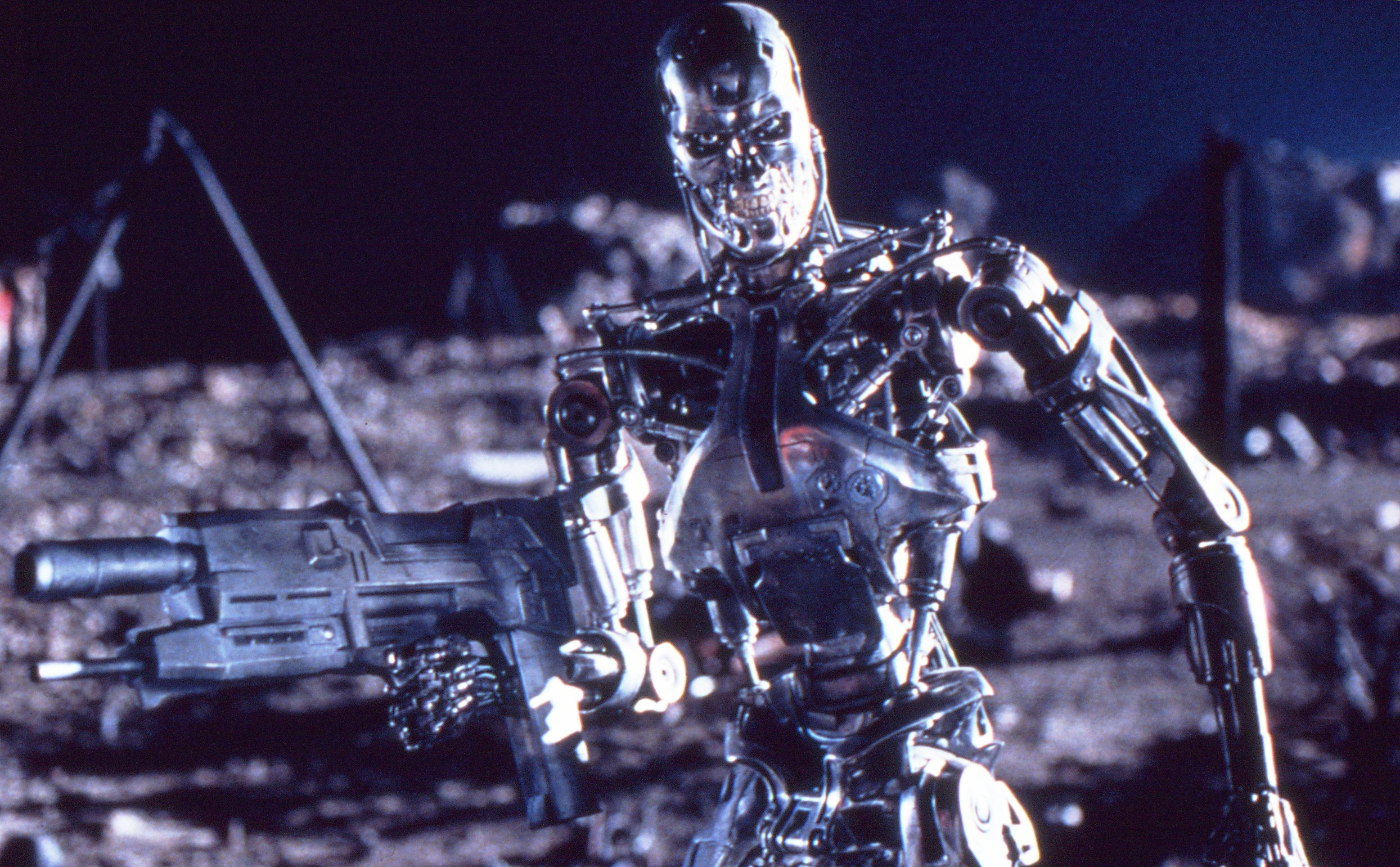
But if you happen to be a serious movie buff, or a big fan of the Terminator franchise, it is the official canon date of Judgement Day. According to the events documented in “Terminator 2, Judgement Day,” Skynet became self-aware at 2:14 a.m., Eastern Standard Time, on August 29, 1997. Shortly afterwards, it launched a full-scale war on the whole of humanity.

While it is true that this date has fluctuated over the years due to numerous time travel anomalies and sub-par sequels, the August 29, 1997, date tends to be the most well-known and accepted. And in recent years, I think that date has become even more noteworthy and not just because it celebrates the greatest action movie of all time.

In recent years, artificial intelligence has emerged as something far greater than a standard movie trope. It is now a rapidly growing field, as well a multi-billion-dollar industry. I’ve discussed the possibilities in the past and tried to put more recent advancements like ChatGPT into a proper context. But even I have been astonished at how quickly artificial intelligence has gone from an intriguing possibility to something that’s very real.

At this very moment, anyone with an internet connection can utilize what is essentially a limited AI for various tasks in a manner that would’ve seemed like a futuristic dream less than 10 years ago. It’s very likely that in the next 10 years, AI will advance in plenty of other ways, some which we can’t possibly predict.

But these AI systems are nothing like Skynet. They’re very narrow in terms of their scope and capabilities. They’re not going to become self-aware or gain human-level intelligence. But make no mistake. At some point, we will have an AI that is as smart as an average human, if not smarter. This is not a technological feat that requires a huge breakthrough that defies or redefines physics. It’s largely an engineering and logistical challenge.

Whether it happens next year or several decades from now, it will happen. We will eventually create an AI that’s as capable and self-aware as Skynet. At that point, what happens next has been a huge point of contention and speculation.

Unless someone is stupid enough to give this future AI access to a nuclear weapons system, I don’t see it launching a full-scale nuclear war like Skynet did. Even if it wanted to, I doubt it would be given that level of access. That doesn’t mean it’ll be friendly. The first self-aware AI may very well be hostile in that it sees humanity as a threat. If it does choose to pursue conflict with us, that could result in some truly unprecedented dangers.

It’s unlikely it will manifest like the war we saw unfold in multiple Terminator movies. It’s also unlikely it’ll operate in any body that resembles Arnold Schwarzenegger. Whatever form it does ultimately take, it will still likely mark a turning point for technology and human history, as a whole.

Whether we call it Judgement Day, the technological singularity, Doomsday, or just another day that ends in Y, it’s a date we should take seriously. Because with all technology, there are risks and benefits. There are also best-case scenarios to go along with the worst case. “Terminator 2, Judgement Day” offered us a cinematic experience of how bad it can get if AI becomes hostile.

But we also shouldn’t let that obscure how good it could potentially be if utilized properly. I would even argue that, as the world continues to face unprecedented dangers and uncertainty, we need to advance AI. It might very well be our most important tool in solving critical issues having to do with climate change, medicine, ecological destruction, power generation, and surviving the eventual destruction of our planet.

As such, we should continue to proceed carefully. We should remain cautious as we journey into the future. As Sarah Conner once said, there is no fate but what we make. And when it comes to developing an AI that will eventually become self-aware, let’s make that fate a good one for everyone, be that human or machine.

Leave a comment

Filed under Artificial Intelligence, ChatGPT, technology

Why You Should NOT Trust Elon Musk (Or Any Promises He Makes)

As we get older, we often learn the hard way that the people we admire and those we’ve placed our trust in are painfully human. With very few exceptions, people are complicated. They have their flaws, failures, warts, and regrets. It doesn’t matter how high their profile or how long their list of accomplishments. They’re just as human as us. And sometimes, that same high profile can exacerbate their worst tendencies.

That’s what I’ve come to learn about Elon Musk, someone who I used to reference in admiration on this site. Like many others, there was a time when I respected and admired Musk for his efforts to forge a better future through technology and investment. Whenever he spoke on these issues, I listened closely and took his words seriously. I still believe the work he did making electric cars more mainstream and pursuing brain/computer interfaces are a net positive for the world.

However, recent years have caused me to re-evaluate many of my opinions on this man. It’s not just that I’ve become more jaded and cynical over the years. I’ve watched, along with many others, as Elon Musk has proven himself to be out of touch, egotistical, petty, ruthless, and increasingly unhinged with respect to his political leanings.

He’s also a billionaire who, like many others before him, has shown no qualms about ruthlessly exploiting his workers, even during a global pandemic. Let’s not forget about that.

Now, I freely admit my attitude towards billionaires has soured a great deal in recent years. I’m now of the opinion that billionaires really shouldn’t exist in a civilized society. I also believe it’s impossible to become a billionaire without being ruthlessly exploitative. But that’s beside the point.

Even if Musk wasn’t a billionaire, he still wouldn’t be someone worthy of his reputation among supporters. The past four years have shown that he is not the future tech visionary he pretends to be. He is also not a self-made billionaire in any sense, considering how much of his wealth was inherited.

At his core, Elon Musk is a sales pitch man, plain and simple. He’s about as honest as a used car salesman trying to sell cars that he knows aren’t what he claims them to be. This is not just my opinion of the man. You need only look up the long list of predictions/promises he’s made over the past 15 years.

He claimed he could get humans to Mars by 2024. He hasn’t even made it back to the Moon.

He claimed fully autonomous self-driving cars would be ready by 2018. He was wrong about that too.

He claimed COVID-19 would go away by April 2020. He was distressingly wrong in that prediction.

It’s an age-old tactic of many sales pitchmen. Make big, bold promises that you can’t possibly deliver, but deliver just barely enough to keep people from calling you a total fraud. And on the things Musk has delivered, there’s still a lot to be desired on that front.

Then, there are Musk’s politics, which he just loves sharing on social media to a disturbing degree. Some have claimed that the COVID-19 pandemic radicalized him. It was around 2020 when his politics became much more reactionary, so much so that it got him in trouble. And once he bought Twitter outright, he essentially emboldened everyone who shares in his reactionary outlook, including a few who have done serious harm.

There’s a lot more I can say about his political leanings, but that’s a rabbit hole nobody can dive into without losing too much of their soul. I’ll just say that people far smarter than me have been much more thorough in debunking the myths surrounding Musk’s persona. I’ll even concede that Musk is still capable of worthwhile efforts, even if he’s not a likable person in general.

But, as someone who used to buy into the hype on which this man built his fortune, I want to make one thing clear. Elon Musk is not someone you should trust.

If he makes a bold promise, don’t assume for a second he’ll deliver until he actually does.

If he makes a confident statement about politics, don’t assume it’s anything other than self-serving aggrandizement.

If he makes a bold prediction, don’t take it seriously until you remind yourself how many other predictions he’s gotten wrong.

And, most important, don’t forget for a second that Elon Musk is not normal in the sense that he’s a billionaire. You just can’t be normal and become a billionaire through wholly ethical means.

It still remains to be seen what Elon Musk’s legacy will be in the grand scheme of things. It’s very likely that, whatever it ends up being, it’ll be skewed by both his supporters and detractors. But while it’s being built, it’s worth being cautious, skeptical, and even a little extra cynical when it comes to this man.

1 Comment

Filed under futurism, Neuralink, rants, technology

Mass Effect: The Danger And Soul Of Artificial Intelligence

This is a video from my YouTube channel, Jack’s World.

This video explores the inherent dangers and genuine hopes of artificial intelligence through one of my favorite video game franchises of all time, Mass Effect.

Artificial Intelligence is a big part of this galaxy-spanning saga. The main antagonists, the Reapers, represent a worst-case scenario. The synthetic race, the Geth, are also a recurring danger. However, in exploring the vast history and lore of Mass Effect, we gain some remarkable insights into what the future might hold for how we navigate AI. Enjoy!

Leave a comment

Filed under Aliens, Artificial Intelligence, comic book reviews, Mass Effect, YouTube

Revealing Attitudes Towards AI Art (When People Don’t Know It’s AI Art)

When I was a kid, there was a general attitude towards any movie or TV show that was animated. Unless it was “The Simpsons,” then animation was largely associated with kids. Even when there was a concerted effort to appeal to older demographics, animation was still seen as less mature form of storytelling. Even when it was exceptionally well done, this stigma persisted.

Eventually, animation and animated content, in general, matured to a point where the stigma really doesn’t work anymore. Cartoons aren’t just for kids. We now have shows like “Bojack Horseman” and “Rick and Morty” that have helped change the popular perception of animation. On top of that, the added influence of Japanese anime, from “Dragonball Z” to “Ghost In The Shell,” have helped attitudes about animated content evolve even more.

This shift all happened within my lifetime. It’s a simple recognition that attitudes, perceptions, and trends are always changing. And they’re going to continue to change, regardless of how we might feel about certain issues now.

This brings me to AI generated art. It’s a topic that, depending on where you discuss it, can generate a lot of debate, disagreement, and consternation. I’ve been in more than one discussion with someone who claims AI generated art can only ever be a bad thing in the long run because it enables trolls, assholes, grifters, and bad actors.

I’ve also been in similar discussions with those who claim AI art isn’t even art. It’s, according to them, nothing more than a fancy calculator that crunches numbers on where to place certain pixels on a screen. While I think that’s a gross oversimplification, I don’t think it takes away from the end result. Whether it’s produced by a human or a computer, the end result is still the same. An artistic rendering is created. But regardless of what form it takes, we have certain attitudes about it.

As I write this, I think the prevailing sentiments toward AI art are negative. Show someone an AI generated image and they might concede that it looks nice. But they’ll still have an aversion to it, knowing it’s created by AI. And if you how them a human-generated piece of art, even if it doesn’t look nice, that same person will still ascribe more value to it than they would an AI generated image. That’s just where we are right now.

But in a recent study by Scientific Reports, an interesting insight was uncovered. When the researchers conducted a survey that included approximately 200 people, they found that when people weren’t aware that an image was AI generated, then their attitudes about it were more positive. In many cases, they could not discern between the artwork generated by humans and those generated by AI. But as soon as they were aware that something came from an AI, their sentiments changed.

It’s probably not too surprising, but it’s also revealing. It speaks to where we currently are in our perspectives on anything created by an AI. It still has this synthetic, uncanny valley feel to it. We still inherently ascribe more value to something that is created by a human over that of a machine. And while that is certainly understandable, given that human generated art requires more labor and passion, how much will that value persist in the coming years?

That’s not an unreasonable question because the quality of AI art has changed considerably in the past few years. And it’s likely to continue improving in ways we’re not ready for. Not too long ago, it was somewhat easy to discern when something was created by an AI. The issues it had with rendering hands and fingers are well-document. However, those issues have been addressed and improved considerably, especially with newer models.

As such, you don’t need to be a wide-eyed utopian futurist to predict that AI art generators will improve to a point where it’s genuinely difficult to tell if it was created by a human. This study already showed how close we are. The participants weren’t able to surmise on a surface level that they were dealing with a mix of AI and human-generated art. With improved tools, even the most discerning and tech savvy among us might not be able to figure it out.

At that point, our attitudes towards AI art will have to change. Think what you want about AI and whether it’s capable of creating real art, let alone appreciate what goes into it. But if it’s capable of making something we can’t discern from its human-made counterparts, then those negative sentiments we have are entirely arbitrary, as well as subjective.

And those same attitudes might not be shared by younger people who have grown up in an environment surrounded by the internet, AI, and AI generated content. They might not have any issue with seeing AI generated art as real art. And anyone who just despises AI art as a concept might find themselves in the same group as those who still think all cartoons are just for kids.

It’s hard to know where these trends will lead as AI technology advances. It’s already affecting how we see art, knowledge, and what it means to be intelligent. And how we feel today might not be at all in line with how future generations will feel in the decades to come. Only time will tell.

I’ll simply note that humans, in general, are a visual species. We seek to create, admire, and cherish art, regardless of the source. For that reason, I think there will certainly be a place for any kind of art, whether it comes from a human or an AI.

Leave a comment

Filed under AI Art, Artificial Intelligence, psychology, technology

How Much Are You Willing To Spend/Risk On Emerging Longevity/Anti-Aging Treatments?

We’re all born with youthful energy. As kids and young adults, this energy helps fuel us as with build lives for ourselves and our families, be they our close relatives or any children we might have. But over time, that energy fades. Our health, our looks, and our overall energy for living fades. It is an inescapable fact of life.

One of my old health teachers once summed it up with this endearing quote that I remember to this day.

“Once your body is done growing, it starts dying. The only part you can control is how rapidly that process unfolds.”

This has become more and more relevant for me, personally. I am no longer young by most measures. My teenage years and my early 20s feel like a lifetime ago. Who I was then is very different from who I am now. And while I have gotten much better at taking care of myself since I turned 30, I know that’s just slowing the aging process. It doesn’t stop it.

At some point, my body and mind will start to break down.

At some point, I’ll start succumbing to the many ailments often associated with age.

I am not looking forward to that. I prefer to delay that as much as possible. I’ve always been somewhat self-conscious about my looks and my health. I don’t deny that the prospect of aging is scary to me. That’s one of the reasons I often keep a close eye on advancements in biotechnology. And with each passing year, I also find myself paying more attention to advances in the fields of longevity.

I know there are many conflicting perspectives when it comes to body image, beauty standards, and the idea of aging gracefully. For everyone in human history, you didn’t really have a choice. You just had to accept that you were going to get older. Your looks, your energy, and your body was going to fade. But if this technology is able to mature, there might be other options in the future.

Whether or not I’ll live long enough to take advantage of those opportunities, it’s hard to say. It may already be too late for someone my age. Even if new treatments emerge, there’s a good chance they’ll be reserved for the rich and well-connected. Unless I win the lottery, I doubt I’ll be in a position to utilize them.

But that might not be the case for my nieces and nephews, who are still young children at the moment. It might not even be the case for those just graduating college at the moment. In the same way artificial intelligence has had a sudden surge of advancement, longevity might experience a similar surge, thanks in no small part to AI.

As I write this, science has uncovered so much about the mechanics of aging. We know considerably more today than we did 20 years ago. We’re sure to uncover more in the coming years. At some point, we may even develop effective treatments that don’t just slow aging. We might find a way to actually reverse it.

This sort of technology isn’t some far-off sci-fi fantasy on par with a warp drive. Reversing aging doesn’t break the laws of physics. It doesn’t even break the laws of biology, given how some animals never seem to age. It’s just a matter of developing the right tools, the right treatments, and the right approach. I have no idea what form that will take. I doubt it will be something as simple as a pill, an injection, or something you could buy at a pharmacy.

But if such a treatment were available, it’s worth asking how much you’d be willing to risk in order to take advantage of it. Because, like any emerging medicine, there is risk early on. When something is unproven in the long-term, you will be putting your mind and body at risk by embracing it so quickly. Even if it’s tested to a point where very major health organization gives it the thumbs-up, there’s always a chance something could go wrong. That’s just how medicine and biology works.

Some people might not be willing to take that risk.

For me personally, I totally would. Even if my health and appearance is generally good, I would definitely take a chance at a treatment that would help preserve both for a longer period. I would certainly expect side-effects. But if it delivers good results, I’ll endure those.

But there’s also the cost to consider. Even if a treatment is shown to be effective at keeping you feeling young, beautiful, and energetic, it doesn’t do you much good if it costs you every penny you have and then some. Sure, you’d have your youth and your looks, but you’d be broke and in debt. Is that worth it?

Personally, I wouldn’t be willing to spend everything or go that deep into debt, just to look young and remain healthy. Few good things ever come from indebting yourself to that extent.

But others might feel differently. Some might not want that kind of longevity, even if it were available. That’s perfectly fine. We should certainly respect anyone who makes such a choice. But we should also put real thought and effort into attacking aging the same way we attack any disease. Regardless of how we age or how we choose to approach it, we’re subject to the chaotic ravages of time.

Emerging technology will give us more options than we’ve ever had at any point in our existence as a species. How we choose to exercise those options remains to be seen. I might not get that choice. But I sincerely hope that some reading this do.

Leave a comment

Filed under biotechnology, CRISPR, technology

Jack’s CreepyPastas: Project Death Screen

This is a video from my YouTube channel, Jack’s World.

This video is a CreepyPasta story about mental torment that I wrote and narrated myself. Enjoy!

Leave a comment

Filed under CreepyPasta, horror, Jack's World, YouTube