Tag Archives: psychology

Why I’m NOT Nostalgic For The 90s (Or Any Past Decade)

This is a video from my YouTube channel, Jack’s World.

A lot of people my age talk fondly about growing up in the 90s. A lot of older friends and relatives talk just as fondly about life in previous decades. This sort of nostalgia is understandable, but it’s also misguided.

Even with the current state of the world, I’m NOT nostalgic for the 90s. And I’m here to make the case that nostalgia for any past decade is empty and incomplete. Enjoy!

Leave a comment

Filed under Jack's World, psychology, rants, YouTube

Why I Live Alone, But Don’t Feel Lonely

Loneliness is an awful, solemn feeling. Nobody denies that.

We’ve all probably had points in our lives when we’ve felt utterly alone, literally and figuratively. I know I have. There have been times when I’ve just laid in bed at night, staring up at the ceiling, and feeling like I’m in this dark prison cell that I can never escape. I don’t care who you are or how tough you think you are. That feeling hurts on a fundamental level.

Human beings are social creatures. That’s not an opinion. That’s a tangible, fundamental aspect of our species. No matter how much of a rugged individualist you think you are, we still need some level of social interaction to maintain our mental well-being. It doesn’t have to be overly elaborate. It just has to be there.

I make this point because there has been increasing talk of a loneliness epidemic. And it’s something that the COVID-19 pandemic did plenty to intensify. I know I felt it at times. I’m sure others felt it far worse than me. And even though the worst of the pandemic is behind us, those lingering feelings of loneliness are still there.

Now, I don’t claim to be an expert. I also won’t try to offer some contrived bullshit solution that a life coach might charge someone for. That’s not my style. All I can do is share my own experience and how I’ve dealt with loneliness in the past.

Because years ago, especially when I was out of college and starting off on my own, I felt pretty damn lonely. In college, I was surrounded by people my age. And even though I had awful social skills, poor self-image, and lingering personal problems that started in high school, I took some comfort in knowing I was surrounded by others like me. Even if I didn’t interact with them as much as I wish I had, I felt like we were all sharing the same struggles that came with going to class, studying for exams, and budgeting our limited money.

Then, I graduated and got out into the real world. Suddenly, I was in an environment where I was expected to fend for myself. Even though I had a wonderful family who supported me every step of the way, it was overwhelming. I felt isolated and lonely, wondering if I was strong enough to handle all of this.

Keep in mind, I still lived with others at the time. Even after I moved out of my parents’ house, I went through a period in which I lived in shared houses and apartments with other people. Most were around my age. And for the most part, I got along with these people. At one point, I lived in this large suburban house with five other people who all met on Craigslist. It’s not quite as chaotic as it sounds, but I was rarely ever completely alone in that place.

But I still felt lonely. I still felt isolated, even though my parents were just a 20-minute drive away. Those were difficult times.

However, I did get through it. Things did get better.

Now, as I write this, I live alone. I have my own place and I have no roommates. I’m also single, at the moment. I was single throughout the COVID-19 pandemic, as well.

And yet, I don’t feel nearly as lonely as I did during those years when I lived in a shared home. I don’t even feel as lonely as I did in college, despite being on a large campus surrounded by people in a similar situation.

I know that sounds like a paradox, but it’s the truth. I can only do so much to explain why I feel this way. I’ll only say that loneliness is an easy feeling to fall into without much effort. And it takes a lot more effort to actually escape it.

By that, I don’t mean pushing yourself to go out, meet people, and make new friends just to feel less lonely. That’s a mistake I see a lot of people making, especially socially awkward people like I was for much of my early life. If your reason for making friends is to just be less lonely, then you’re not making friends for the right reasons. And if you’re trying to talk to people just to feel less lonely, that’s just as bad a reason. That essentially turns your social interactions into something selfish.

It’s not about actually wanting to meet peole and be their friends. It’s about you and making yourself feel better.

That’s not a healthy mentality. And I freely admit I had that mentality for a good chunk of my early 20s. Growing out of it took time, as well as a concerted effort. It also required efforts that went beyond just improving my inherently poor social skills.

I’ve noted before how hard it was for me to get into shape after having many unhealthy habits throughout my life. I didn’t start working out regularly until I was almost 30 and when I started, it took a while for me to really feel the benefits. And while it might not have been my primary goal, working on myself and trying to be healthier really helped me feel less lonely.

Beyond just improving my mental well-being and self-image, it made me much more comfortable in my own skin. I feel like it sent a message to myself that I care enough about myself to put in the effort to be better, even when it requires spending an hour at the gym or running through freezing weather in the middle of January. Once that message sank in, I felt more confident to connect with others for the right reasons.

At the same time, my general social skills and communication skills had improved to a point where I really felt the benefits. It showed in how I interacted with family and friends. It showed in how I interacted with total strangers, both in real life and online. And during the COVID-19 pandemic, I leaned on those new skills to help me feel connected with others.

Those connections didn’t have to be big or elaborate. One thing that really helped was scheduling regular Zoom calls with my siblings and parents. That ended up helping me make entirely new connections because I met a lot of my siblings’ friends that I usually don’t get to interact with. Later on, once the pandemic faded, I met up with them in real life and it was a great experience. It felt like a true mark of progress that I didn’t realize I was achieving.

And if I can achieve that kind of progress, then I’m confident everyone reading this can as well. Yes, there are still times when I feel lonely. But it’s a feeling that doesn’t hit nearly as hard as it once did. Even though I live alone at the moment, I never feel the same crippling isolation I used to feel years ago.

For that, I’m grateful to the friends I’ve made in that time.

And I’m even more grateful to my parents and family, who were there for me during those times.

I realize I’m very lucky in some regards. Not everyone can enjoy the opportunities I’ve had. But we’re all capable of confronting loneliness in our own unique way. And I sincerely hope that by sharing my experience, others can draw strength from it.

Leave a comment

Filed under human nature, Jack Fisher's Insights, psychology, real stories

Why Hate And Bigotry Always Win Out (To A Point)

This is a video from my YouTube channel, Jack’s World.

This video is about hatred and bigotry. I’ve witnessed it manifest in many forms over the course of my life. It is a dark, disturbing insight into humanity’s collective psyche. But in that same experience, I came to a number of realizations about hatred and bigotry that I wish to share. Hopefully, it broadens everyone’s perspective on the matter.

Leave a comment

Filed under Current Events, human nature, Jack's World, psychology, rants, YouTube

How To Tell If You’re In A Cult And Why it Matters

This is a video from my YouTube channel, Jack’s World.

This video is about cults and how to tell if you might be in one. It was a difficult video to make in that I tried to be sensitive to the difference between a cult and a religion. I also tried to be fair in discussing those who get roped into cults. These people are often victimized by these groups and it is important to keep that in mind when discussing this topic.

I also highlight the BITE model when determining the practices of cults. If you’d like to know more about this model, please see the link below.

Leave a comment

Filed under history, Jack's World, philosophy, politics, psychology, religion, YouTube

An Important Hypothetical Question To Consider (Before Any Debate)

I’ve been using the internet for a good chunk of my life. I’m old enough to remember the days of slow dial-up, AOL chatrooms, and messy Geocities websites. And while I don’t miss those days, there are certain elements of my internet experience that have remained fairly constant.

One of them has to do with debates. And if you’ve ever talked politics, comics, anime, or movies with anyone on any medium, you know how heated that can get.

Believe me, I know this as well as anyone. I still haven’t forgotten how heated some debates got on the old comic book message boards I used to frequent. Some want to say social media ruined discourse by making it too easy to engage in such debates. But I respectfully disagree.

This sort of tension between people always existed. Human beings have always had their share of strongly held opinions that they were debate, discuss, and defend far past the point of reason. It doesn’t matter how smart, educated, or well-informed they are. The passion with which they hold their views has always been strong. The internet and social media simply made it more prominent.

I’m bringing this up for two reasons. For one, I see a lot of debates and arguments online, especially in comments sections and on social media. I freely admit that I engage in some of that discourse. It’s rarely productive. And I’ve yet to meet anyone who has been convinced to change their position on something based on a point someone made in a Facebook comment.

Second, I live in the United States of America and this year happens to be an election year. Debates about politics, issues, and policies are bound to get more heated. And that’ll only escalate the closer we get to Election Day on November 5, 2024. I fully expect to see plenty of discourse that will make me lose my faith in democracy, the future, and humanity in general.

For those reasons, and plenty others I don’t care to articulate, I want to present a simple hypothetical to anyone seeking to debate others in any capacity on any issue, be it political or otherwise. It’s not a thought experiment. It’s just a simple perspective that I hope provides greater context into the nature of discourse. It goes like this.

You and one other person are standing in a room. You both hold opposite positions on a particular issue. You spend five minutes making your case to the other person. Then, the other person spends five minutes making theirs. You are not at all swayed by their argument and they are not at all swayed by yours.

But before you start any further discussion, a third person enters the room and pulls out a special phone containing critical, indisputable information about the issue.

In one scenario, the phone contains information that vindicates your position.

In another scenario, the phone contains information that completely disproves your position.

In which scenario do you actively fight for possession of the phone?

What I just described is situation that I hope adds context to the what, why, and how of debating others. Because if you approach this hypothetical in good faith, it puts you in a difficult position. Either you admit you seek vindication and are willing to fight for it or you actively avoid the implication that your position is wrong.

Call it confirmation bias.

Call it cognitive dissonance.

Call it an impossible scenario that will never play out because there are too many issues that cannot be completely verified beyond any and all doubts.

If you’re honest with yourself, you know how you’ll react in that scenario. And if you’re honest about how most people operate in heated discourse, you’ll know how your opponent would react in this scenario.

However you feel about what I just presented, I only ask that you keep it in mind as you engage in further discourse moving forward.

Leave a comment

Filed under philosophy, political correctness, politics, Thought Experiment

Sharing A Weird (But Funny) Dream Involving My Nephew

Dreams are strange, mysterious things. Many of us have them, regardless of age, culture, language, or circumstances. Science has tried studying them, but even decades of medical research hasn’t shed much insight into what they are or why they happen.

For most of us, they these strange experiences that we struggle to remember once we wake up. They may leave us confused, restless, or anxious. But whenever they happen, it feels like our brain is trying to tell us something and we’re struggling to listen.

Trying to navigate them or just being able to remember them can be a challenge. For a time, when I was in college, I actually tried to keep a dream journal. I honestly don’t know where it is. But I did find that keeping a journal did help me remember my dreams more vividly. They were still rarely clear. They also weren’t very logical or revealing. But I did find it helpful, at least in terms of exploring the experience.

Over the course of my life, certain dreams have stood out more than others. Some have been pleasant. Some have been not-so-pleasant. Others just don’t make any sense and weren’t worth remembering. But one in particular, which occurred just a couple years ago, still stands out to me. For some reason, I can remember this dream more clearly than most. And I wasn’t even keeping a journal at the time.

I’d still like to share it because, in addition to actually remembering it, I found it funny. On top of that, it involves one of my adorable nephews, which is probably why it stands out more than others. It happened when one of them was still an infant who couldn’t walk. But to this day, I often find myself thinking about that dream whenever I visit him to get in some quality Uncle Jack time.

The dream played out in a strange, surreal sequence, as many dreams do. I found myself lying on a floor with soft white rug. It wasn’t exactly comfortable, but I did recognize where I was. It was a room in my sister and her husband’s house. Specifically, it was my nephew’s room. I’d been there before whenever I visited them with my parents. It’s where he kept his toys and took his naps.

But for reasons I don’t fully understand, I somehow fell asleep in this room while lying on the floor. To be honest, that does sound like something I might do. If I ever get tired and groggy, I’ll fall asleep in strange situations. But what made this stand out even more was that my infant nephew was right there with me.

However, he wasn’t sleeping. He was sitting up right next to me. He had this big marker in his hand, not unlike the ones I’d seen him draw with before. And he was using it to write something on my face. I distinctly remember feeling it. I also remember looking up at him, seeing that distinct look in his face he got whenever he drew, and surmising what he was doing.

At this point in the dream, my sister and her husband show up. I become a bit more alert, so I’m able to get up slightly. But when I see them, they’re both laughing hysterically. They’re laughing so hard they’re holding onto each other to keep from keeling over. Then, my nephew begins laughing too. And I can still feel the marker on my face.

As the laughter escalates, I become urgently curious. I try to get up and find a mirror to see what my nephew drew on my face. The bathroom in my sister’s house just happens to be across from his room. So, I rush in. But before I can see what he drew on my face, I woke up.

It was a somewhat jarring feeling, waking up from a dream like that. On this particular morning, I distinctly remember it being around 4:30 a.m. I also remember just sitting up in my bed, shaking my head, and laughing to myself as well. I was honestly still very curious. I really did want to know what my nephew drew on my face that had my sister and her husband laughing so hard. Sadly, I’ll probably never know.

But to this day, I still remember that dream fondly. I’ve included it in the many other fond memories I’ve forged with my nephew, as well as my nieces. I’ve said before how much I love being an uncle. Maybe this dream was my brain’s way of telling me how much I’d embraced that role and how important my nieces and nephews are to me.

If that’s the case, then that just makes this dream more precious.

Leave a comment

Filed under Jack Fisher's Insights, psychology, real stories

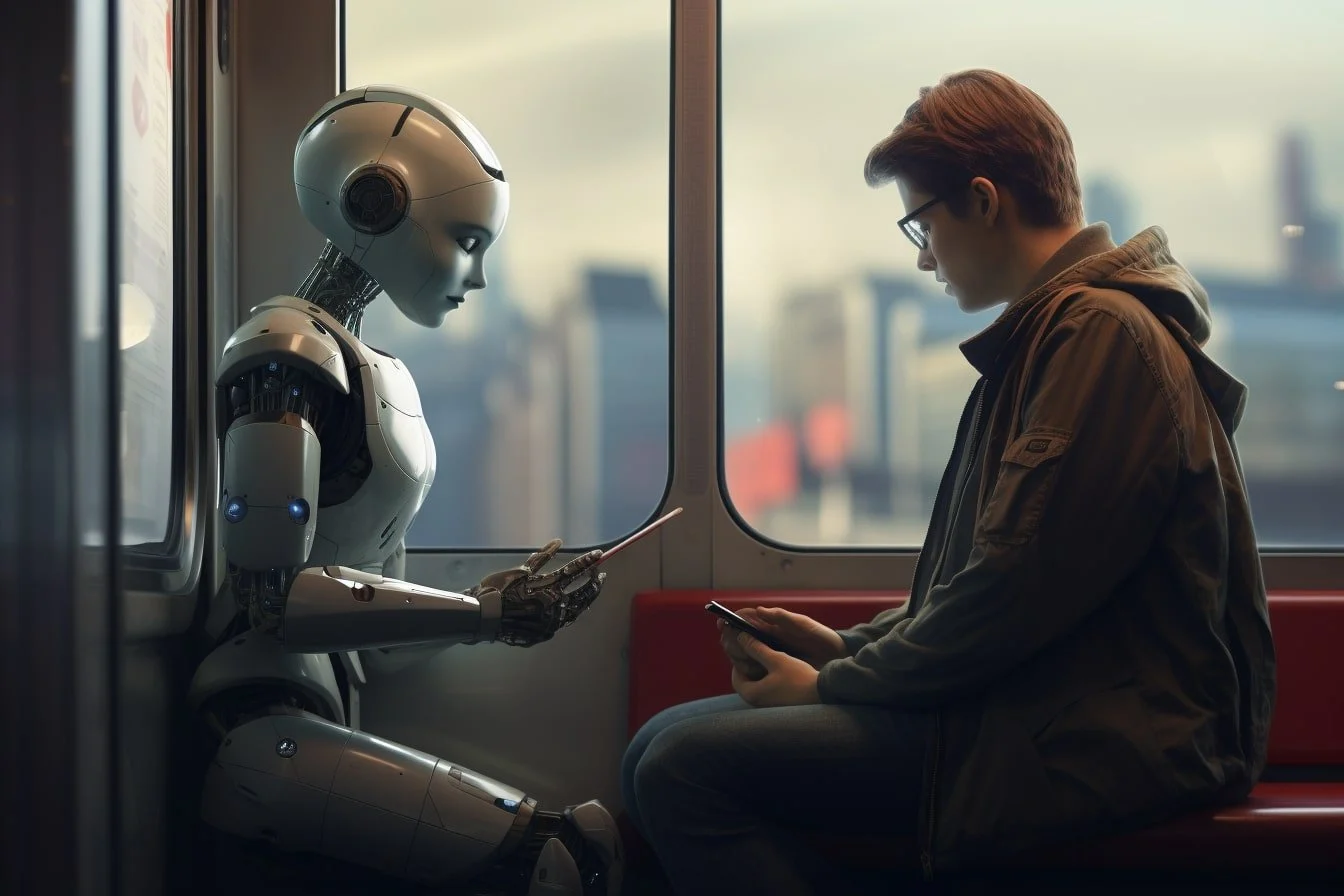
How AI Companions Can Be Helpful AND Harmful

It is not easy finding that special someone. It never has been, even if you’re rich, beautiful, and have strong social skills. Every generation encounters new challenges in their pursuit of love and companionship. I know I have. I’ve even shared some of those struggles before.

At the moment, I have not found that special someone. I am single, I live alone, and I currently have no romantic prospects of any kind. I’m honestly not even sure where to begin at this point in my life. Nearly everyone else in my immediate family has settled down and started having kids. I am very much behind the curve in that regard.

However, there are some individuals who are in an even tougher situation. I know I am lucky in many regards. I own my own home. I own my own car. I’m never behind on my bills or anything. But there are plenty of men and women my age who have none of that. Some of the people I went to college with are still stuck in debt and can’t even afford to pursue a serious relationship.

In that sense, I don’t blame anyone for seeking other forms of companionship. Loneliness really does suck. It is objectively bad for your health. While it has become a hot topic, even in political fields, it has also led to some controversial trends. And among the most contentious involves people seeking AI companions.

Now, before I go any further, I want to make clear that I am somewhat reluctant to talk about this. While I’m usually up for any discussions about artificial intelligence, especially with how it may affect our love lives, this one specific aspect of AI is riddled with complications.

On one hand, there’s the general stigma. Most AI companions, such as Replika, are essentially idealized avatars of whatever kind of companion the user wants. If a man wants an AI girlfriend to look like a porn star and have hair like a girl from his favorite fantasy anime, he can have that and the personality to match. And while that is appealing, as a product, it still carries a stigma with it.

Men like this who use AI companions aren’t seen in a very sympathetic light. They’re more likely to be seen as examples of toxic male behavior. They’re not just lonely and in need of companionship. They’re seen as perverts who prefer a girlfriend that they can turn off, manipulate, or control in whatever way they please.

And make no mistake, there are men who treat their AI companions like that. They’re not all that subtle about it, either. But most of these men were shallow, crass, and crude before the advent of AI companions. They would’ve been that way regardless of whether or not this technology existed. There have always been men like that. And there always will be to some extent.

But there’s also a double standard at work with these men. Because there are AI companions for women too. They’re every bit as available as the ones men use. They just don’t get as much scrutiny and don’t carry as much stigma. If a woman were to create an AI companion to resemble their favorite male celebrity, chances are they won’t be stigmatized as much as their male counterparts.

Some may see this as concerning, thinking the woman must have issues if she was resorting to AI companions. But she would certainly garner less stigma than the man.

I would still argue there are women out there who seek AI companions for the same reason as men. They’ll even mold avatars meant to resemble the sexiest, most attractive figure they can conjure. I don’t claim to know how common it is, but I don’t doubt this exists.

Even with that kind of shallow use of this technology, I think it’s much more common that these users are just lonely. They seek companionship the same way most humans seek companionship. Even if there are plenty of people to interact with, AI companions help fill a particular need. That’s really all there is to it.

That’s not to say that AI companions are harmless. I strongly believe they can be. It just depends on the user and how they go about interacting with these AI systems.

If someone is manipulative, controlling, abusive, and self-centered, then having an AI companion that they can mold to their whims is not going to temper those tendencies. More than likely, they’ll get much worse. They’ll basically set a standard for the user that conditions them to expect certain qualities in a companion. And since real people can’t be molded, manipulated, or configured like an AI, they’ll never find someone who meets their impossible criteria.

In the process, that same user might grow bitter and angry that no real person can be to them what their AI companion is. And as these feelings simmer, it could just lead them into a destructive cycle of resenting everyone and everything that they can’t control the same way they control their AI companion.

That is very much a worst-case scenario for users of AI companions. I did try to look up research on this, but it was hard to come by. Both the stigma and novelty of these products make it difficult to assess. Maybe I’m being too hopeful, but I think cases like this are rare.

They certainly exist, but they’re the exception rather than the norm. It just tends to get more attention because seeing horrible people reinforce their horrible behavior with these AI companions is disturbing to many people and understandably so.

At the same time, I also believe that AI companions can be genuinely beneficial for a lot of people and those benefits are likely understated. Remember, we are social creatures. And as intelligent as we can be, we’re also blunt instruments with respect to certain mental faculties. Our brains and our psyche don’t care about the nature of social interaction. So long as we find it fulfilling on some levels, we’ll incur the benefits.

In their early form, AI companions probably didn’t offer much in that regard. But in recent years with the rise of AI chatbots and large language models, it’s relatively easy and cheap to create an AI that people can interact with in ways that closely resemble those of real humans. And the growing size of the AI companion industry is solid that there is growing market for this sort of thing.

But the good these AI companions could do goes further than simply giving people a facsimile of human interaction. Remember, the current crop of AI chatbots and LLMs are relatively new. They’re like the early models of the iPhone. They’re going to continue being refined, developed, and improved upon now that an industry is being built around it.

In time, AI chatbots and general AI technology will improve.

At some point, AI technology will get advanced to the point where it can offer more than just a base level interactions. In theory, an AI could be configured in way that didn’t just perfectly complement the personality of the user. It could also interact with them in a way that fosters healthy personal growth, just like any other good relationship.

There could even be AI companions specifically configured to deal with abusive men or women, helping them understand and deal with their issues in a way that makes them better individuals. That could be life-saving for certain people who struggle to find companionship due to issues like personal trauma or mental illness.

These AI companions don’t even need to take a physical form. They don’t need to be incorporated into sex robots or anything. They can still be effective as simple avatars on smart devices. There would certainly need to be some level of testing, safeguards, and refinement in order to make them work effectively. It might even take years before AI companions have such capabilities.

That’s the most I’m willing to say about AI companions at the moment. I don’t doubt this industry will continue to evolve in the coming years. I also don’t doubt there will be plenty of controversies about the ethics of these companions, as well as how they affect the user.

But even in their current form with their current level of intelligence, it offers lonely people an outlet. Reasonable people can argue just how healthy or unhealthy it is. But it doesn’t change the fact that lonely people are out there. They’re seeking connection and companionship like everyone else. These AI companions aren’t perfect replacements, but they’re better than nothing.


Leave a comment

Filed under Artificial Intelligence, futurism, men's issues, psychology, romance, sex in society, sex robots

Narcassists Are More Likely To Become CEO (And Why That’s Concerning)

A while back, a close relative of mine retired after a long, fruitful career that spanned nearly 40 years. They probably could’ve retired much sooner, but they were among the fortunate few who actually enjoyed their job for the most part. It had its ups, downs, and everything in between. But overall, it was a good career that most would be lucky to enjoy.

Over the course of that lengthy career, they worked under multiple CEOs. This was a fairly well-regarded organization, too. So, the CEOs were not part of some succession plan or a proud family business. This was the kind of company that followed a fairly traditional corporate structure and kept things impersonal as much as possible when it came to executive decisions.

However, in talking about how much the job had changed over the years and how much the industry had evolved in that time, this same person revealed something I found both striking, yet unsurprising.

Every single CEO they worked under qualified, by their definition, as a narcissist.

Now, for most people who have worked similar jobs, this probably isn’t surprising. There’s this prevailing sentiment that anyone who becomes CEO has to be a narcissist to some extent in order to get to that level. It even makes a perverse bit of sense. By their own nature, a narcissist seeks control, status, power, and aggrandizement. And the position of CEO offers all of that in spades.

But even if it makes sense for narcissists to become CEOs and we consider it normal, for the most part, that still warrants concern. There are times when our concept of normal has some major problems and we shouldn’t be afraid to confront it. This is definitely one of those situations.

For the relative who told me this, they had quite a few interesting stories to tell regarding the narcissism of CEOs. But they did make one important distinction. Even though these individuals were overtly narcissistic, they were not outright psychopaths. While most psychopaths are narcissistic, not every narcissist is a psychopath.

Narcissists can and do have some sense of moral responsibility.

Narcissist can and do experience empathy on some levels.

Narcissists can even be good CEOs, for the most part.

However, we shouldn’t let that override the legitimate concerns we should have when dealing with narcissists. There’s a reason why so many super-villains in pop culture tend to be inherently narcissistic.

Among the key traits of narcissists is a sense of arrogance, self-entitlement, vanity, and a greater capacity to exploit others for selfish means. These are traits we rarely want in people we deal with on a day-to-day basis. But in the role of CEO, they can give someone an advantage.

It means they won’t hesitate to make decisions that cause harm, distress, or ruin to others. It also means they’ll cross lines most people won’t in order to increase profits, further an organization, or undermine the competition. They can and will do things that’ll seriously hurt those working for them, yet still sleep comfortably in their fancy beds without a shred of guilt.

Maybe these sorts of tactics do help certain companies and organizations thrive. Many of the most successful companies in the world were founded or run effectively by narcissists who did things that, in hindsight, were deplorable by most measures. But we give them a pass because that made them and their company a great success.

It’s a not-so-hidden blind spot that we, the public, tend to overlook. And as I’ve gotten older and had my own experiences with narcissists, I feel like that sort of mentality is detrimental in the grand scheme of things.

One story that did stand out from my relative was how one particularly narcissistic CEO lamented how they might not have enough money to retire. Granted, this CEO was making well above six figures and he was complaining directly to someone who made a fraction of this. The idea that their bloated salary was not enough to retire on just seemed outrageous for someone just trying their best to pay their rent or mortgage on time.

It perfectly reflects how narcissists lack empathy and aren’t the least bit concerned with how people less fortunate or affluent get by. It would be one thing if this were just someone who had been born rich. But remember, this is a CEO. Unlike those rich from inheritance, their decisions impact entire organizations. Those organizations are full of hard-working people who may or may not be in a position to retire, no matter how hard they work.

That kind of disconnect between those making executive decisions and those actually doing the work isn’t just illogical. It’s damaging to the long-term health of any organization and society. Because if the CEOs of the organizations we rely on to keep our economy growing are too narcissistic, then what incentive do they have to do right by the society at large?

If the choices is between making the right choice for the most amount of people or more money and power for them personally, a narcissist won’t make the right choice.

If the choice is between sacrificing for the good of others or exploiting others for their own personal benefit, a narcissist will choose to benefit themselves 99 times out of 100.

Unlike most people with a more balanced perspective, narcissists need to be coaxed into doing the right thing. And even when they do, they’ll often do it begrudgingly. Those who are smart on top of being narcissists might be able to come to that conclusion if the long-term benefits are there. But for the most part, you can usually expect a narcissist to made decisions that benefit them over everyone else.

In addition to the anecdotes of my retired relatives, there’s real science to indicate that a disproportional number of CEOs are indeed narcissists. And those narcissists working within those titles will continue to do whatever they think they can get away with, so long as they continue to benefit. You really don’t have to look far to see how much harm decisions from narcissistic CEOs can incur.

Having to work for a narcissist CEO is always challenging, but it can be done. Most people who have worked a steady job can attest to that. But it’s still worth asking ourselves if this situation is tenable in the long run. Because if we continue rewarding narcissists with lucrative jobs like CEO, then we’re just creating a world that’ll enable more narcissists.

1 Comment

Filed under health, human nature, philosophy, psychology

Why Seeing Back To School Sales Still Upsets Me

When I was a kid, summer was a wonderful time by almost every measure.

School was out, the weather was warm, and I actually got to sleep in every morning. Even during the years when I had a summer job, it was great. I loved it and it was generally a happy time for me.

But then, at a certain point during the summer, I would tag along with my parents and siblings to the store. And eventually, we’d enter a store that had these displays advertising a “back to school” sale. Sometimes, it was as early as mid-July. There would still be a full month of summer vacation to look forward to.

But to me, it was still deeply distressing, especially when I was in middle school and high school. That was usually the point in my summer when I started looking at the calendar with dread with increasing dread. I knew that with each passing day, I was that much closer to another year of school. And for someone who hated school as much as I did, that was very upsetting.

I know it sounds melodramatic.

I know it comes off as the overblown whining of a kid who just didn’t like going to school.

Even today, kids lamenting going back to school are likely to be met with dismissive eye-rolls. We hear them complaining about going back to school and we just think they’re being weak.

They think school is so hard. They have no idea how hard the real world is. School was supposed to prepare them for that and if they struggled to deal with it, then they were in for a rude awakening when they made it to the adult world.

I get that sentiment on some levels. I’m guilty of feeling it myself whenever I hear a kid complaining about a new school year. But whenever I experience that feeling, I find myself remembering back to what it was like for me when I experienced such dread. Even now, as a full-fledged adult who has been out of school for over a decade, it still upsets me on some levels. And I really wish it didn’t.

I’m sharing this because very recently, I came across one of those big back to school sales in a store. Those displays did go away to some extent during the COVID-19 pandemic. But this year, they’re back in full force.

There are entire sections of a store dedicated to school supplies, clothes, and any accessory a kid or teenager might need. There are also these images of happy and excited kids, getting ready to go back to school. I know for a fact most kids don’t feel that way about going back to school, especially in the middle of summer vacation. I also know that for some kids, those reminders are downright triggering.

Now, I know I’ve bemoaned how much I hated high school before. I’ve also made abundantly clear that I was a uniquely miserable teenager, largely because of crap I did to myself. It may come off as melodramatic. And I don’t deny that, with the benefit of hindsight, it probably wasn’t as awful as I made it out to be.

That still doesn’t change the fact that dreading going back to school was a deeply distressing experience for me. There were times when I would just lay in bed, anxiously watch my clock radio, and endlessly lament going back to school.

I knew it was going to be miserable.

I knew I was going to needlessly stress myself out over every little thing, from getting my homework done to making new friends to dealing with how ugly I felt due to poor self-image.

My parents and siblings, to their credit, did everything they possibly could to help me. None of what I experienced is their fault in the slightest. I just had this incredibly toxic mentality about school.

On the last day of school, I was elated to just let it go and celebrate having made it through another year. But when those first back to school sales showed up, I could feel that mentality returning like a wound being re-opened. And when that first day of school finally came, I was often the most insufferably miserable person to be around.

But as bad an attitude I had, I did eventually get through it. I made it through middle school, high school, and college without that toxic mentality completely consuming me. I won’t say doing so made me stronger. If anything, it set me back for years and I still haven’t fully recovered from it. It kept me from making new friends, improving my social skills, and developing new passions.

The fact that I still experience it today, even if it’s just in bad memories, further shows how much it affected me. It may not be as bad as it was when I was younger, but just recounting how upset I got when I saw back to school sales in the middle of summer still affects me. I really wish it didn’t.

Maybe at some point in my life, I’ll be able to walk by a back to school sale display and experience those feelings. But for now, it’s something I have to deal with.

And to all those who experience similar dread whenever they’re reminded that a new school year is coming, I can only offer my empathy and understanding. But I can also offer my perspective and hope. Because if I can navigate these feelings and all the bad memories associated with them, then you can too.

Be strong.

Be resliant.

Better times will come.

But for now, just take a deep breath and enjoy the rest of your summer vacation.

Leave a comment

Filed under Current Events, Jack Fisher's Insights, psychology, rants

Combating Hate And Politics With Kindness (With Lessons From Mr. Rogers)

We live in a strange time.

I know you could say that about many other periods in history. Even within my own lifetime, I’ve experienced periods that are well beyond the scope of what we think of as normal. The recent upheavals with the COVID-19 pandemic certainly qualify.

But as overwhelming as that was, I still find today’s current state of affairs both unusual and striking. It’s not just that things are changing so fast and we’re all struggling to keep up. That has been a constant for much of the modern world. It’s more that people seemed so overwhelmed, so upset, and so frustrated that they’re forgetting the most basic elements of getting along with fellow human beings.

It’s true. People have always been mean, hateful, and downright cruel to one another. You don’t have to look far into the recent or distant past to see humans committing egregious atrocities on other humans. And I certainly don’t deny there have been worse times in that regard. If you’re alive today, you should consider yourself somewhat lucky. It wasn’t that long ago that such atrocities were both disturbingly common and largely unpunished.

But even with that perspective in mind, I feel like our collective capacity to hate one another has escalated considerably. You could blame politics, going back to the 2016 Presidential Election or even the 2008 Presidential Election. You could also blame the media, pop culture, social trends, religion, and everything in between. I know I’ve criticized those things plenty and will likely continue to do so in the future.

At the end of the day, though, I understand there’s only so much you can do to influence another person. Whether it’s on politics, personal tastes, or personality quirks, we’re all still individuals. We still have our own thoughts, feelings, and biases. That has always been the case. But I can’t recall a time when those elements we all share have been the fuel for so much outright hatred.

It’s easy to notice online, but it’s happening more and more in real life. Real people are committing real acts of violence and hatred towards other people for the simple crime of not agreeing with them on something, be it politics, ideology, or pop culture. It’s getting to a point where the disagreements don’t even have to be about something big like politics or religion. Just being different and existing is now sufficient to invite someone’s hatred.

That is not a tenable state of affairs.

That is not good for individuals, people, or the world in general.

You can blame the internet and political polarization all you want on this, but that only goes so far. At the end of the day, it’s people who still act. It’s people who still speak and send messages through various mediums, be it mundane or hateful. The tools we use don’t create the hate. They may reinforce and spread it. But like it or not, we are the ones that create it. We are the ones that use it as excuses for violence and hate.

I don’t deny that I’ve said dumb things on the internet. I’ve expressed hateful sentiments, both in real life and online. I’m only human and I do regret it. But I also try to counter those inclinations with something stronger. And as I’ve gotten older, I’ve come to realize that doing so is not that difficult. It doesn’t even require some kind of radical rethinking of your current thoughts, beliefs, or biases.

It all comes down to a simple approach.

Be kind.

That’s it. That’s really all you need to counter so much of the hate and mistrust that seems to infect our world at every turn. It may sound simplistic or cliched, but make no mistake. There’s real power in kindness. Most people understand that on some levels. But one man, in particular, dedicated his life to understanding it. You’ve probably heard of him. His name is Fred Rogers, better known to generations of kids as Mr. Rogers from “Mr. Rogers Neighborhood.”

Now, there’s a lot I could say about him and his message. There are no shortage of stories about him that are so heartwarming, they help renew your faith in humanity. But in the spirit of keeping things simple, I’ll just share this clip that I think best explains the true power of kindness.

Please take Mr. Rogers’ message of kindness to heart. In a world as divided as ours, a little kindness goes a long way.

2 Comments

Filed under Current Events, human nature, Jack Fisher's Insights