Tag Archives: MTV

Why I’m NOT Nostalgic For The 90s (Or Any Past Decade)

This is a video from my YouTube channel, Jack’s World.

A lot of people my age talk fondly about growing up in the 90s. A lot of older friends and relatives talk just as fondly about life in previous decades. This sort of nostalgia is understandable, but it’s also misguided.

Even with the current state of the world, I’m NOT nostalgic for the 90s. And I’m here to make the case that nostalgia for any past decade is empty and incomplete. Enjoy!

Leave a comment

Filed under Jack's World, psychology, rants, YouTube

Daria Retrospective: The Evolution And (Partial) Redemption Of Quinn Morgendorffer

This is a video from my YouTube channel, Jack’s World.

In this video, I once again revisit 90s MTV gem, Daria. And this time, I focus on the evolution and (partial) redemption of her younger, super-shallow, super-popular sister, Quinn.

Now, I freely admit that Quinn Morgendorffer was the character I hated most on this show. For the first two seasons, she was insufferable. But towards the end, she went on an interesting arc. And while I won’t say she completely redeemed herself, her evolution is worth exploring. Enjoy!

Leave a comment

Filed under Jack's World, television, YouTube

Why NOBODY Should Ever Be As Famous As Michael Jackson

This is a video from my YouTube channel, Jack’s World.

In this video, I explore the world of fame, fortune, and celebrity. And for people of a certain age, none achieved more of that than Michael Jackson. While his legacy in the annuls of pop culture might be a bit mixed these days, it’s hard to overstate just how big an icon he was.

But as monumental a figure he might have been, I strongly believe that NOBODY should ever be as famous as him ever again. That kind of fame might not even be possible anymore. But I feel it’s worth revisiting. Enjoy!

Leave a comment

Filed under Celebrities and Celebrity Culture, Jack's World, music, psychology, YouTube

Lessons From Daria: Lucky Strike, Modern Education, And Quinn’s Evolution

This is a video from my YouTube channel, Jack’s World.

In this video, I revisit the misanthropic world of Daria Morgendorffer to highlight one of my favorite episodes of the entire series, Lucky Strike. This episode wasn’t just a high point for the series. It marked a major turning point for Daria’s sister, Quinn. It even found time to cast new light on modern education, everything that’s wrong with it, and how Daria found a way to make it not suck.

Yes, this episode did a lot. It’s a big reason why it’s one of my favorite. And for those who endured high school like Daria, this episode will definitely resonate. Enjoy! Enjoy!

Leave a comment

Filed under Daria, Jack's World, television, YouTube

Boxing Daria: A Dramatic Insight Into A Character (And An Era)

The following is a video from my YouTube channel, Jack’s World. This video is another deep dive in to the sick sad world of Daria, the MTV show that captured the spirit of a sick sad era.

For much of the show, Daria is a harsh, but necessary counter to the absurdities and eccentricities of late 90s Lawndale. When crazy and/or dumb things happen, she’s usually the one to call it out. But in one very unique episode, Boxing Daria, we see a different side of Daria. We see that, beyond the stoic cynicism, there’s some vulnerability that rarely comes out. And when it finally shows in an unexpected way, it makes for one of the best moments of the entire show.

Leave a comment

Filed under Daria, Jack's World, YouTube

Jack’s World: The Harsh Truths Of “Daria” And Why They Still Matter

The following is a video from my YouTube channel, Jack’s World. It’s my first video about “Daria” and was based on an earlier article I wrote a number of years back. I reworked it a bit to make for a better video. I’m very pleased with how it turned out. Depending on the response, I may make more “Daria” videos. Enjoy!

Leave a comment

Filed under Daria, philosophy, psychology, television, YouTube

A Band, A Song, And A Music Video That Has Aged Too Well

It’s a sad fact of life. Certain movies, TV shows, songs, toys, and products just don’t age well. For every timeless classic, like “Citizen Kane” or Mozart operas or Betty White, there’s an “All In The Family” or “Gone With The Wind.” That’s not to say these pieces of popular media are bad or should be censored. They just have a cringy impact in today’s climate.

I love classics as much as the next guy, but even I can’t deny that the lyrics for songs like “Brown Sugar” or “Under My Thumb” by the Rolling Stones have some distressing connotations. I don’t judge anyone who still enjoys those songs or loves the Rolling Stones. Let’s just acknowledge that times change, societies change, and certain media just doesn’t fit anymore.

That being said, it’s also possible for something to age a little too well. Again, I’m not just talking about Keanu Reeves or Betty White. Every now and then, you revisit an old movie, show, or song that doesn’t just fit right into the current cultural climate. It almost fits too well.

That’s how I felt recently while going over some old music. I was updating my workout playlist when I came across some old songs I had from Rage Against The Machine, a band I hadn’t followed closely since high school. In re-listening to some of those songs, I realized two things.

One, they still rock. They rock every bit as much as they did when I was a teenager.

Two, their music has aged way too well in the current political climate.

Now, if you know anything about this band, the kind of music they play, and what they stand for, you’re probably not surprised. Rage Against The Machine is not subtle. Their music is very political. It always has been, going back to their formative years in the mid-1990s.

They’re anti-authoritarian, revolution-heavy act that you don’t see much outside the heyday of the hippie era in the 1960s. As a teenager, I didn’t appreciate that kind of political rhetoric in music. At the time, the only politics I cared about involved how many snow days we were allowed at school.

Now, having grown up and become painfully aware of the current state of politics, I find myself appreciating Rage Against The Machine even more. I know it’s a couple decades too late, but it’s still profound. Just listening to the songs I have, I feel like they could’ve come out today and be just as relevant.

The best example that I came across just happens to be my favorite Rage Against The Machine song of all time, “Sleep Now In The Fire.” When I hear this song, it blows my mind that it came out in 1999. It feels so long ago, but it still rings so true.

Even the music video, which I remember seeing on MTV regularly, has aged remarkably well. I would argue it aged too well. Just see for yourself.

To anyone born after the year 2000, please take a moment to appreciate what the band did here. They defied a decision made by New York City. They played on the steps of the Wall Street Stock Exchange for this video. That could not happen today. In a world after September 11, 2001, they wouldn’t get off with a fine or a warning. They’d go to prison.

Then, there are the lyrics. Just take a moment and read over these lyrics. How much more relevant are they now compared to 1999?

Yeah
The world is my expense
The cost of my desire
Jesus blessed me with its future
And I protect it with fire
So raise your fists and march around
Just don’t take what you need
I’ll jail and bury those committed
And smother the rest in greed
Crawl with me into tomorrow
Or I’ll drag you to your grave
I’m deep inside your children
They’ll betray you in my name

[Chorus]
Hey, hey
Sleep now in the fire
Hey, hey
Sleep now in the fire

[Verse 2]
The lie is my expense
The scope of my desire
The party blessed me with its future
And I protect it with fire

[Pre-Chorus]
I am the Niña, the Pinta, the Santa Maria
The noose and the rapist, the fields’ overseer
The agents of orange, the priests of Hiroshima
The cost of my desire
Sleep now in the fire

[Chorus]
Hey, hey
Sleep now in the fire
Hey, hey, hey
Sleep now in the fire

[Verse 3]
For it’s the end of history
It’s caged and frozen still
There is no other pill to take
So swallow the one that makes you ill

[Pre-Chorus]
The Niña, the Pinta, the Santa Maria
The noose and the rapist, the fields’ overseer
The agents of orange, the priests of Hiroshima
The cost of my desire
Sleep now in the fire
Yeah

It’s downright eerie. The whole song is about how the rich, powerful, and well-connected can get away with anything. They lie, cheat, and steal with impunity. They’ll pay lip service to revolution and change, but never hesitate to throw people in a fire if they get out of line.

It feels like a perfectly dystopian indictment of the current political rhetoric. People on both sides of the political spectrum, liberal and conservative, jealously protect their power and influence. They’ll tell people what they think they want to hear, stoking hatred and fear, all while enjoying the fruits of their position.

Regardless of your politics, you can’t help but appreciate this kind of hard-hitting message. It feels like we’re always at the mercy of the rich and powerful. They play political games. We’re just brought along for the ride.

Rage Against The Machine was making music about this long before the internet, social media, and cable news made those politics so hateful. They dared to rage against a corrupt system before it became a common tool of political theater.

They warned us.

They yelled it out in song.

We didn’t listen and we should’ve.

At the very least, they still rock.

Leave a comment

Filed under Current Events, media issues, music, political correctness, politics, YouTube

Why The World Needs “Beavis And Butthead” Now More Than Ever

This is cool.

This news is so cool.

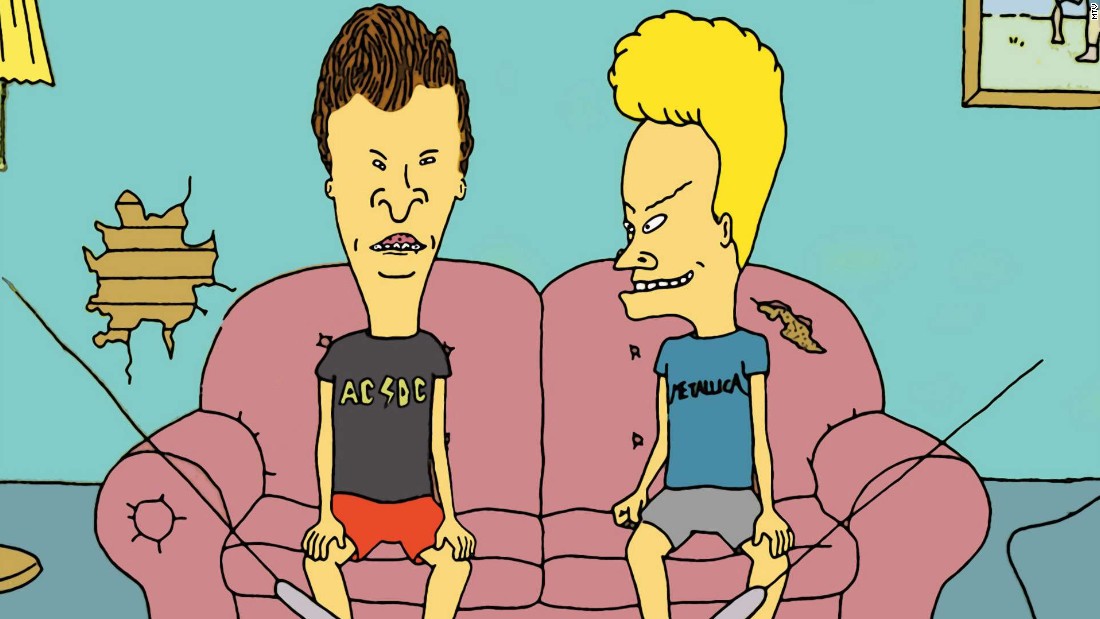
I wish I could do the laugh, but you’ll just have to use your imagination. It may take some paint fumes and expired soda, but it’ll help convey how cool this is. “Beavis and Butthead,” the lovable, dim-witted, foul-mouthed burnouts from the heart of 1990s MTV, are coming back to laugh, chuckle, and sneer at everything we hold dear in the 21st century.

It had been rumored for a while, but it was finally confirmed by The Hollywood Reporter.

THR: ‘Beavis and Butt-Head’ Returning With Two New Seasons (and Spinoffs) at Comedy Central

The Viacom CBS-owned cable network is reviving Beavis and Butt-Head, with series creator Mike Judge returning to relaunch and reimagine the franchise as part of a sizable deal that includes a two-season order and plans for additional spinoffs and specials.

Judge will return as the show’s central driving force and will write, produce and provide voices for both of the iconic characters, who became pop culture sensations in the early 1990s on Comedy Central’s corporate sibling MTV.

In the new incarnation, Beavis and Butt-Head will enter a “whole new Gen Z world” with meta-themes that are said to be relatable to both new fans, who may be unfamiliar with the original series, and old.

For this, we should all be grateful and not just because “Beavis and Butthead” promise the kind of crude laughter we all badly need right now. I genuinely believe that we, as a culture, need this not-so-dynamic duo back in our lives.

Those who weren’t alive or of age in the mid-90s neither understand nor appreciate the impact that “Beavis and Butthead” had. I don’t think it’s hyperbole to say that they were very much the pre-cursor to shows like “South Park,” “Family Guy,” and “Rick and Morty.” They pushed the envelope at a time when we could afford to push it and pop culture is better because of that.

They were very politically incorrect, even by the skewed standards of the mid-90s. I remember plenty of parents protesting their vulgar humor. They were also one of the few shows that my parents would not allow me to watch. They’d still let me watch R-rated movies like “The Terminator,” but “Beavis and Butthead” was off-limits. That’s how crude they were.

In hindsight, I’m sure my parents might feel differently. By today’s standards, “Beavis and Butthead” almost seem quaint. They were a couple of brain-dead teenagers mocking and scoffing at the world around them, not caring about larger issues or bigger pictures. They just wanted to hang out, slack off, and look at boobs. They are the antithesis of the hyperactive activists who swarm social media with politically-charged rhetoric.

That’s exactly what makes them so necessary at the moment. It feels like every show these days, be it an adult cartoon or a sitcom, has to take part in some larger discussion about politics or social issues. It can’t just be funny or entertaining. The professional whiners of this world won’t let that happen. I have a feeling those whiners will have a hard time with “Beavis and Butthead.”

They can yell, whine, preach, and criticize these two all they want. They could scold them for objecting women, perpetuating stereotypes, or offending the wrong people all they want. The reaction would be the same. Beavis and Butthead would just keep laughing and snickering, not at all moved by their rhetoric, and make some crude remark.

I believe, in some respects, that kind of reaction is what a lot of young people are feeling these days. They hear so many protests, criticisms, and complaints about the present and the past. Everyone is yelling, whining, and accusing the other side of being Nazis. At some point, it all just becomes noise. It burns out your mind, your soul, and your capacity to give a damn.

Beavis and Butthead” offers those tortured souls a breath of fresh air. They’re not going to preach to them. They’re not going to demand that they take a side on any issue. They’re just going to laugh, snicker, and make dirty jokes. Given how toxic the world has become in recent years, that’s just what we all need.

1 Comment

Filed under outrage culture, political correctness, television

How The Backstreet Boys’ “I Want It That Way” Became Less Romantic Over Time

Some love songs are just assumed to be romantic, regardless of what the lyrics say or how the song was inspired. You hear it on the radio. You see the music video. Like a reflex, you think love. It might be the cheesiest kind of romance there is, but it’s still romance none-the-less.

It has its place in pop music. I certainly appreciate music like that to some degree, but it only works if you don’t think too hard about it. To really enjoy it, you just have to turn off your brain and let it feel like it’s in a bad romantic comedy. This was, to a large degree, a part of what made boy bands so popular in the late 90s and early 2000s.

I remember that era. I was still young at the time. I heard all those cheesy love songs and the fanatical girls who squealed with incoherent joy whenever they heard them. I wasn’t a big fan, but I didn’t hate boy bands. I see their music like overly processed cheese. It’s good, but you can taste how bland and superficial it is.

To me, the absolute apex of the boy band era came with the Backstreet Boys and their sappy super-hit, “I want it that way.” It’s hard to overstate how big this song was in 1999. You could turn on any radio, find a random station, and hear it at some point. It was played on a loop at proms and middle school dances. I imagine more than one teenager lost their virginity because of this song.

It is, by far, the quintessential boy band song. It’s cute hot guys singing about love. You can’t get much more basic than that. Just listen to the music video that MTV played at least once an hour from that era. Even if you weren’t alive during that era, the romantic undertones are overt.

All that said, I doubt anyone who was alive in the late 90s or ever really scrutinized the lyrics. Even though the pace of the song is slow and every word is understandable, I don’t think anyone takes the time to read them in their entirety. The tune and the backdrop is just so romantic that the ambiance overshadows the actual words, but when taken as a whole, those words undermine that romantic intent.

I started noticing this years after the boy band crazed die down. Being a romance lover, I have a tendency to scrutinize all things romantic more than most. I’ve already shared some of my favorite love songs and at one point, this song was on that list. However, over the years, as I’ve listened closer to the lyrics, the song just got less and less romantic.

For reference, here are the lyrics without the backdrop of an attractive boy band and a soothing overtone. Read it closely. Really think about what they’re saying.

Yeah
You are my fire
The one desire
Believe when I say
I want it that way
But we are two worlds apart
Can’t reach to your heart
When you say
That I want it that way
Tell me why
Ain’t nothin’ but a heartache
Tell me why
Ain’t nothin’ but a mistake
Tell me why
I never want to hear you say
I want it that way
Am I, your fire?
Your one, desire
Yes I know, it’s too late
But I want it that way
Tell me why
Ain’t nothin’ but a heartache
Tell me why
Ain’t nothin’ but a mistake
Tell me why,
I never want to hear you say
I want it that way
Now I can see that we’ve fallen apart
From the way that it used to be, yeah
No matter the distance
I want you to know
That deep down inside of me
You are my fire
The one desire
You are (you are, you are, you are)
Don’t want to hear you say
Ain’t nothin’…

Parts of it are romantic. I don’t doubt that. When taken in their totality, though, it walks a fine line between love and obsession. I won’t say that it echoes with the sentiments of a stalker or someone with a creepy obsession, but it does walk the line. I would argue it’s way too close to the line.

Those first few lines about someone being their one singular desire are sweet, but more than a little obsessive. Making someone your deep, loving desire is one thing. Making them your only desire is a little unhealthy.

Then, there are the parts about heartache, being apart, and drifting away. Those are concepts inherent in many great love songs, but it doesn’t quite work here. Again, look at that first line. It’s telling someone they don’t want to hear them say they want something a certain way. It sends the message that what someone else wants is wrong. That’s not really romantic. That’s an accusation of a thought crime.

Wanting someone to love you is one thing.

Wanting them to not want something is very different. It also has some disturbing implications.

The lyrics alone tell a story of two people drifting apart and separated by distance. One person wants it that way. The other person doesn’t. On top of that, the other person has a singular focus on the other and doesn’t want them to feel that way. Is that sentiment love? Is it even romantic?

You can twist the meaning through music and context. You can make the song about longing for someone over a distance, but it requires a hell of a stretch with the words. Anything that requires that much of a stretch shows just how lacking the romance is.

I’m not saying this song isn’t a great song. I think it is. It’s popularity and staying power is proof of that. As a love song, though, it’s one of those songs that gets less and less romantic the more you scrutinize it. For any song that’s supposed to convey a romantic sentiment, why would you ever want it that way?

1 Comment

Filed under Marriage and Relationships, political correctness, romance, sexuality

What “Daria” Can Teach Us About Educating (Uninterested) Teenagers

daria-920x584

Some shows have one particular episode that you can watch again and again while still enjoying it. Great shows have multiple episodes like that. By that measure, “Daria” is greater than most. Even by the standards of late 90s animation, the show stands out in so many ways. It’s one of those rare shows that has aged remarkably well and feels more relevant now than when it originally aired.

I’ve already praised “Daria” for its unique approach to shedding a critical light on a world full of lies, half-truths, and fake news. I’ve even singled out a single episode for how the show handled a sensitive issue like mental health. These are issues that have only become more relevant since the show went off the air.

In that same spirit, I’d like to highlight another episode from the show that highlights another major issue. It also happens to be my favorite episode and the one I’ve probably re-watched the most. That episode is “Lucky Strike,” the sixth episode of the fifth season. On top of being one of the funniest episodes of the series, it also has some of the shows best moments while still tackling a major issue.

The issue, this time around, is education. It might not be the kind of a hot-button issue that makes for major headlines, but it’s still as relevant as ever, especially if we’re referring to the American education system. It’s not hard to find stories about just how bad it is, especially when compared to how other industrialized countries do it.

It was a big deal in the 90s and early 2000s, as well. Fittingly enough, this episode aired just a few months before the passage of the No Child Left Behind Act, which has been the cornerstone of the American education system. While reasonable people can debate how well it has or hasn’t worked, “Daria” has already made one of the most effective arguments about what constitutes good education.

The premise of the episode begins with a teacher strike, an issue that has become distressingly common in recent years. Lawndale High’s notoriously uptight principal, Angela Li, short-changes a group of teachers who are underpaid, under-appreciated, and have to deal with uninterested idiots like Kevin Thompson and Brittney Taylor. By any measure, they have a very good reason to strike.

Never one to concede defeat or express genuine concern for student aptitude, she keeps the school running by hiring substitute teachers, some of which demonstrate limited qualifications at best. One even showed an overtly creepy attraction with one of the female students. This leads to Daria getting roped into teaching a class.
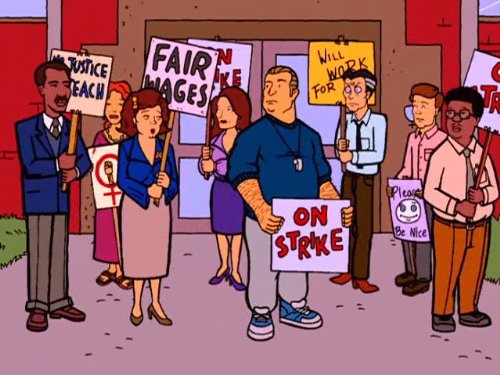
As it just so happens, the class she’s teaching is the same class that her sister and unapologetic popularity whore, Quinn, is in. Given how Quinn has spent almost the entire series denying she’s even related to Daria, it’s a great opportunity to make things awkward. Daria makes more than a few quips about it in her own wonderfully misanthropic way.

However, when it comes to actually teaching the class, Daria does something that sets herself apart from most substitutes. Even if she’s only doing it to mess with her sister, she takes her role seriously. She shows a genuine desire to teach, but she doesn’t use the same approach as the rest of her teachers. She utilizes her own unique way.

It helps that the class is an English class. Daria is a voracious reader. That is established in the first episodes of the series and belabored on multiple occasions. It also helps that the assignment is simple. The class is reading Romeo and Juliet, a story that almost every high school English class reads at some point. In terms of substitute teacher gigs, it’s as standard as it comes.

I remember reading this play in high school as well. I don’t remember it fondly, though. In class, we would just read through each act, do a few assignments in a textbook, and take a test at the end. Most of the time, the test involved multiple choice or short answer. There were only right and wrong answers. That was really all there was to it.

Daria’s approach is different. Daria doesn’t just teach from a textbook. She has the students read the play, but not so they can get the answers for an assignment. She takes the time to help them appreciate it. When one of her air-headed students doesn’t appreciate a particular part, she helps put it into a more relevant context. It doesn’t just work. It makes the story feel like something other than an assignment.

It’s an approach that anyone who loathes standardized tests can appreciate. I’ve made my disdain for standardized tests known before, but it’s not a personal peeve on my part. There is legitimate research that indicates that standardized testing is not a good way to educate kids.

Teaching kids to take a test is not the same as teaching. They’re learning how to memorize answers for a test. That’s not real learning. You can memorize all the answers for a particular test, but not know why those answers are correct. For someone like Daria Morgendorffer, who places a high value on thinking for yourself, this approach just doesn’t work for her.

For everyone else, the test is the only thing that matters. For the always-superficial Quinn, that’s her primary concern. She laments about how her sister might screw her over or worse, undermine her popularity. It’s such a burden that actually reading the play and knowing what it’s about barely registers.

Then, in one of Daria’s finest moments, she further deviates from the traditional educational model and gives her class a simple essay test. There’s no multiple choice or short answer. She just gives them a simple question.

What is Romeo and Juliet about?

That’s it. The only requirement is that they write at least 250 words and support their answer. For those who didn’t care enough to read the play, like Quinn’s equally-superficial posse, the Fashion Club, it’s the worst possible scenario. For Quinn, who actually read the play, it was easy.
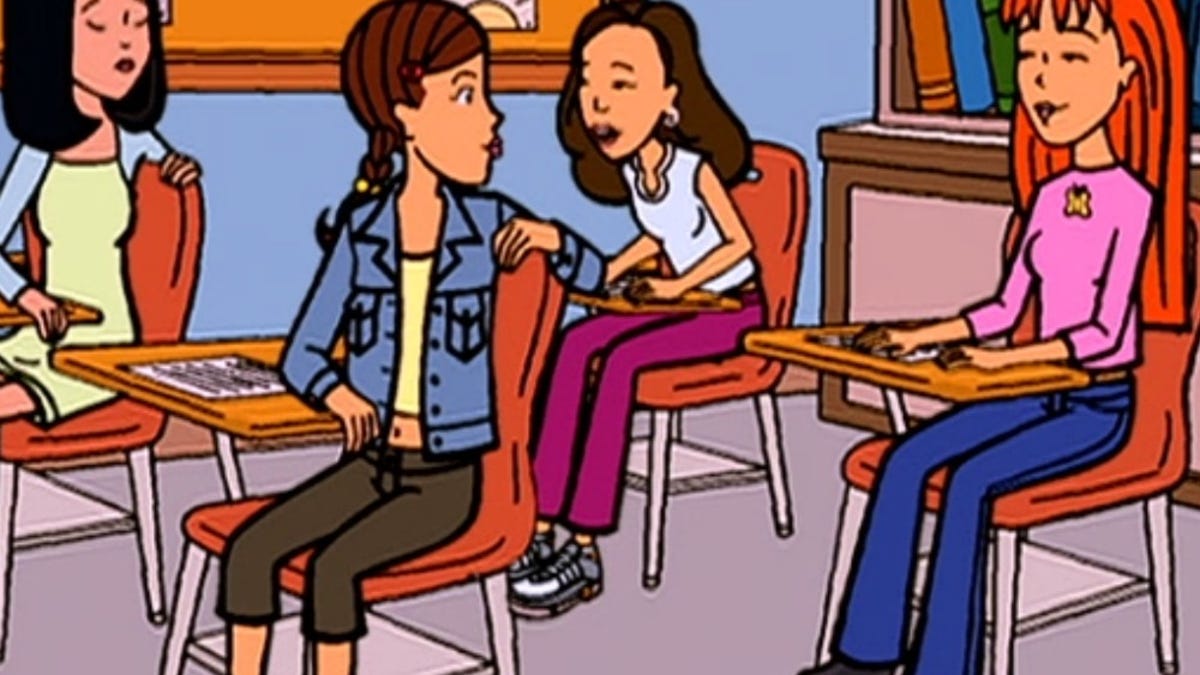
In fact, it was because of that test that Quinn also had her finest hour. In one of the few moments of the show in which she’s actually likable, she defends Daria’s approach to teaching to the entire class. Then, in another pivotal moment for the series, she admits that Daria is her sister.

In addition to this critical moment of personal growth, Daria shows that she truly values people who think for themselves. Even when one of her students makes an objectively foolish comment about Romeo and Juliet, she still gives him a good grade because he actually tried to back it up. For her, that’s more valuable than simply knowing the difference between Paris and Tybalt.

Her approach is even appreciated by her students. Keep in mind, these are the same students who show little to no interest in class throughout the show. They are, like most teenagers, not that big on having to be at school for seven hours a day, learning things they don’t want to learn about. Daria understands this and tries to make the class less tedious. It’s something even an air-headed teenager can appreciate.

Most of them, anyway.

It’s also a valuable lesson that has real-world applications. Some places have even applied Daria’s approach, to some extent. Countries like Finland have a system that doesn’t rely so heavily on standardized tests. Not surprisingly, Finland’s education ranking is significantly better than the United States and by a significant margin. Daria would’ve actually fit in with that system.

It’s not just because that system eschews standardized tests. It actually emphasizes teaching a student how to think and reason. A test isn’t going to reveal that. On top of that, teachers are better-educated and well-compensated in places like Finland. They would not have had to strike like the teachers in this episode.

In some respects, Daria showed how much better someone could teach a class if they didn’t have to deal with the constraints of the current system. It even helped that the Principal Li was more focused on outwitting the teacher union than she was with teaching students. Without those constraints, Daria managed to teach a class in a way that her students appreciated.

Between that moment and the moment she shared with her sister, “Lucky Strike” accomplishes a great deal. Daria has a chance to shine and makes the most of it. On top of that, she demonstrates that it is possible to educate a room of disinterested teenagers in a way that’s genuinely effective.
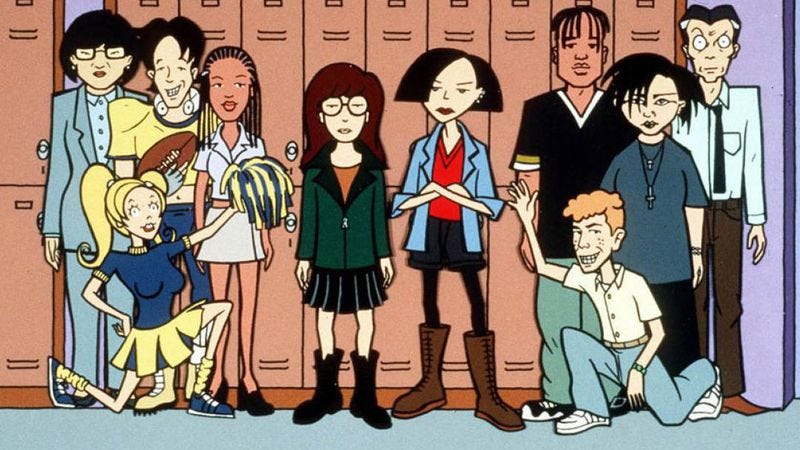
There are many other moments in “Daria” where major complications, and the many absurdities they entail, get cut down by the show’s distinct brand of misanthropic humor. Daria rarely sets out to make big statements, be they about the educations system or our flawed understanding of mental health. However, she still finds a way to make her point and never crack a smile.

That’s why Daria is so lovable. It’s also why we need wisdom like hers more than ever.

Leave a comment

Filed under Current Events, Daria, human nature, psychology, television