Category Archives: politics

ANOTHER COVID-19 Surge Among Unvaccinated: A Product Of Math, Science, Politics, And No More Excuses

More vaccinated than unvaccinated Britons are now dying from the coronavirus

I do not want to keep talking about the COVID-19 pandemic. I really don’t.

I don’t want to keep urging people to get vaccinated. I’ve already provided tools. I proudly announced when I got my dose of the vaccine. I even went so far as to tell the anti-vaxx crowd that they’re actively killing people. I even cited a video to help debunk the most common anti-vaxx claims.

Now, I understand that I am not a very influential figure. My audience is very small, compared to other voices on the internet. I’m completely aware of my limitations with respect to getting my message out there. At the same time, I can’t keep hiding my frustrations.

This pandemic should be over. We have multiple vaccines. They’re free, they’re widely available, and they work. Most of the restrictions that we lived under for over a year have been lifted. We are in a better place now compared to last year and we have these vaccines to thank for that.

Unfortunately, it’s still a problem. The crisis is not over yet, but it’s not because we lack the tools to resolve it. It’s because people are refusing to do what’s necessary to save lives and end this madness.

I still like to have faith in humanity, as a whole. I really do believe that most people are good. However, the people currently prolonging this pandemic are really challenging that faith. These are people who, for reasons that range from politics to ignorance to completely insane conspiracy theories, refuse to take this vaccine.

As a result, there’s another surge of COVID-19 cases across the country, including my area. However, this surge is different. This surge isn’t as widespread and indiscriminate as previous surges. This time around, the surge in cases is among the unvaccinated. That’s not too surprising, but it’s also a perfect manifestation of the current political land social divide.

NPR: U.S. COVID Deaths Are Rising Again. Experts Call It A ‘Pandemic Of The Unvaccinated’

The death rate from COVID-19 in the U.S. is rising steadily for the first time in months as the nation grapples with a renewed burst of cases in what’s become “a pandemic of the unvaccinated,” the head of the Centers for Disease Control and Prevention said Friday.

The seven-day average of new cases has increased by nearly 70% to almost 30,000 per day; hospitalizations are up 36%. And deaths from the virus have risen steadily in recent days, reversing a months-long downward trend that began in mid-January.

“There is a clear message that is coming through: This is becoming a pandemic of the unvaccinated,” Dr. Rochelle Walensky, the CDC’s director, said at a Friday briefing of the White House COVID-19 Response Team. “Our biggest concern is we are going to continue to see preventable cases, hospitalizations and sadly deaths among the unvaccinated.”

The upward trend in national statistics is being driven almost entirely by outbreaks in places with low vaccination rates, such as the Ozarks, Florida and parts of the Mountain West. Some counties, especially in Missouri and Arkansas, are recording more cases now than they did during the winter.

“Unvaccinated Americans account for virtually all recent COVID-19 hospitalizations and deaths,” said Jeff Zients, the White House COVID-19 response coordinator. “Each COVID-19 death is tragic, and those happening now are even more tragic because they are preventable.”

More than 99% of recent deaths were among the unvaccinated, infectious disease expert Dr. Anthony Fauci said earlier this month on NBC’s Meet the Press, while Walensky noted on Friday that unvaccinated people accounted for over 97% of hospitalizations.

That bolded text is my doing because it makes an important point that I haven’t been able to make until now. A reasonable can have reasonable concerns about a vaccine that was approved in record time. A reasonable person can even be forgiven for waiting until a certain amount of the population took it before getting it themselves.

I understand that.

I really do.

Nobody likes getting shots. They’re uncomfortable, stressful, and leave your arm feeling sore for days.

However, there comes a point where reluctance becomes absurdity and that absurdity is causing more suffering. It doesn’t help that these vaccines have also become politically charged. There is a clear, but distressing correlation between how you identify politically and whether or not you’re getting vaccinated.

If you’re liberal or left leaning, chances are you already got vaccinated and this surge isn’t affecting you.

If you’re conservative or right leaning, chances are you haven’t been vaccinated and you’ll eagerly cite less-than-reputable sources to justify those choices.

While I don’t want to get into the politics of those pushing anti-vaccine messages, I do want to point one thing out to those who take them seriously. Please note that this is not a personal attack. This is not me talking down to you as someone who has been vaccinated and who probably gets his news from very different sources. This is just me making a sincere, honest observation.

At this point, we’re beyond politics and science. You can have different politics. You can even have certain attitudes towards science. At the very least, though, you have to undestand that simple, basic math cannot have an agenda.

I’ll restate what the NPR article said. This latest spike in COVID-19 cases is affecting the unvaccinated at a rate of 99 percent in terms of deaths and 97 percent in terms of hospitalizations.

That is not a trivial difference in terms of margin.

When something is 99 percent, it’s as close to definitive as you can get without god-like aliens coming down to Earth and affirming the results. Think of it in terms like this.

If a pill had a 99 percent chance of curing cancer, would you take it?

If a fruit had a 99 percent chance of killing you, would you eat it?

If a car had a 99 percent chance of exploding every time you turned the key, would you drive it?

If a slot machine had a 99 percent chance of winning the jackpot, would you play it?

I could go on, but I honestly don’t know how much more I can belabor this point. These vaccines work. They prevent COVID-19 from infecting and spreading. If enough people get it, the pandemic will end. The suffering will stop. That’s all there is to it.

The science says they work.

The doctors, experts, and medical authorities throughout the world who dedicate their lives to this sort of thing says they work.

Now, even the math says they work.

At this point, if you’re still skeptical or hesitant, you’re not just being unreasonable. You’re not just being absurd. You’re just being an asshole. We all want this pandemic to end and you’re preventing that. As a result, more people will suffer and die. Face it. You’re out of excuses and the damage this surge does is on you.

Leave a comment

Filed under Current Events, health, human nature, political correctness, politics, psychology, real stories

What Recent X-Men Comics Can Teach Us About Present (And Future) Politics

house-of-x-variant-cover-xavier-1200x676

Trying to make sense of politics is like trying to understand quantum mechanics while stoned. The process of governing humanity has always been tricky. Ever since we exchanged our basic hunter/gatherer ways for a more formal system of order, the process has only become more difficult over time. You don’t have to look far to see the complexities and the overall absurdities of politics.

I’ve tried to talk about politics before, albeit with a limited focus on hot-button issues. I never claim to be an expert or an authority on the matter. I’m an aspiring erotica/romance writer. My understanding of politics is as limited as most people who don’t live, work, and breath these issues. Despite those limitations, I still want to make an effort to talk politics in a novel way.

As it just so happens, I’ve come up with just such a way and it involves X-Men comics. Considering how much I’ve written about X-Men and superhero comics in general, this should surprise no one.

More specifically, I want to take the events that have been unfolding in the X-Men comics for the past two years and use it to make sense of the current state politics. I also want to use it to speculate a bit on where these politics might lead us. Again, I am not even close to an expert, but I do believe that art and media have an uncanny way of shining a light on the real world and there are few narratives more uncanny than the X-Men.

The current state of politics, especially in the United States and Western Europe, has been dominated by polarization. More and more, citizens are becoming more tribal. On top of that, people are becoming more divided. That’s not just an anecdote, either. According to Pew Research, the public has become more ideologically split over the past 20 years and it’s only getting worse.

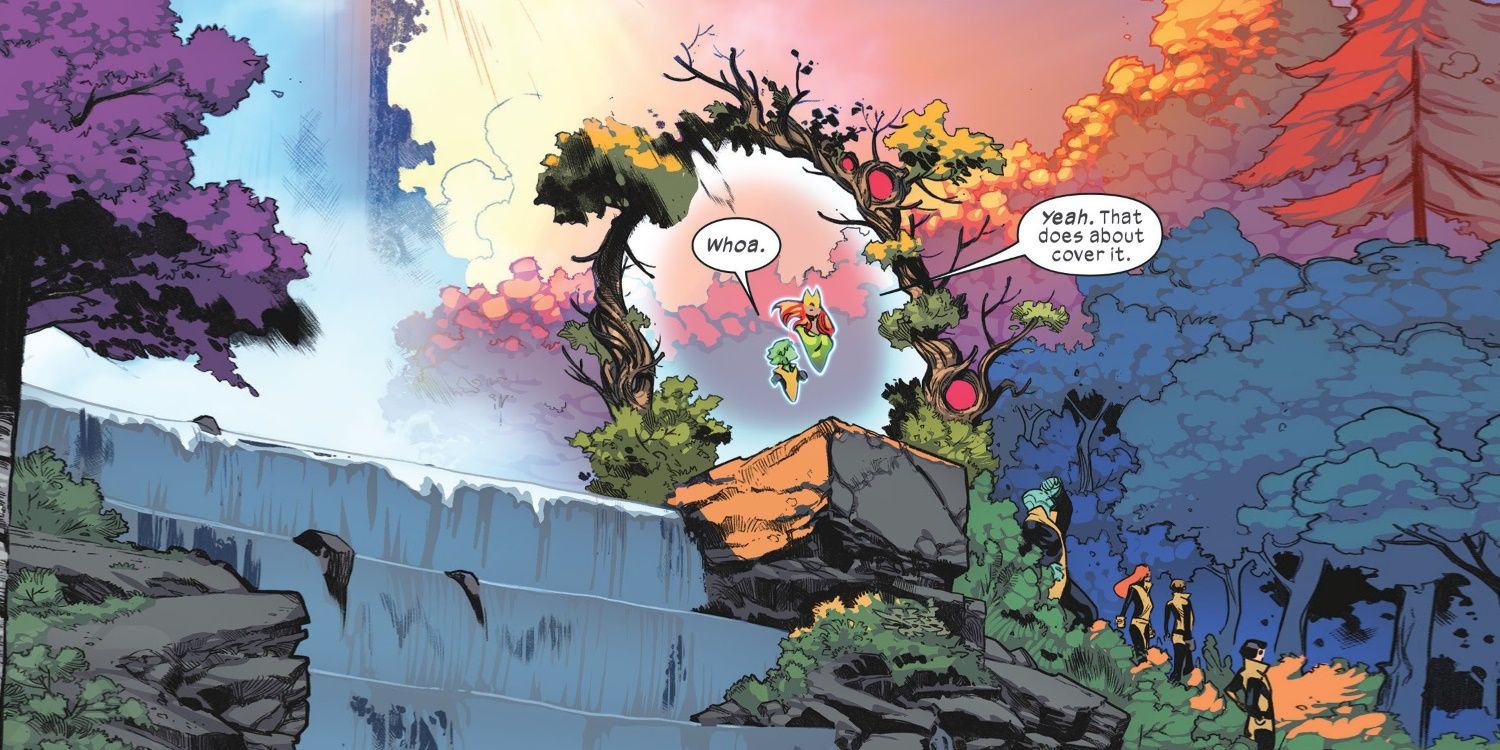
Rather than try to make sense of these decade-long trends, I want to apply it to the politics in the X-Men comics. More than any other superhero comic or franchise, politics are a major driving force for the X-Men, more so than killer robots. Co-creator, Stan Lee, stated that the inspiration for the X-Men was drawn from the ongoing Civil Rights movement that was in full swing in the early 1960s.

Over the years, this idea of mutants being an oppressed minority who were hated and feared for being different has been the driving force behind the X-Men’s story. It is also a big part of what helped them gain such a wide appeal. Some of the X-Men’s most iconic stories come from conflicts inspired by the hate and fear that ordinary humans feel towards mutants.

In the real world, hatred and fear are powerful forces that don’t need killer robots to cause upheaval. Hatred and fear is at the heart of debates surrounding migrants and immigrants. That same hatred and fear is at the heart of the political polarization.

Liberals hate and fear conservatives because they think they want to turn the world into one big plantation ruled by rich, wealthy slave-owners.

Conservatives hate and fear liberals because they think they want to abandon their heritage, punish people for the sins of their ancestors, and micromanage their lives.

In the world of X-Men, humans hate and fear mutants because they think they’re too dangerous, unpredictable, and uncontrollable. On top of that, if they truly are a new species, then that means their survival means humanity’s extinction.

The parallels aren’t perfect, but they are there. Mutants aren’t just a metaphor for any minority who has been oppressed, segregated, and denigrated. They represent just how divided two groups can be. Constant conflict ensures that hatred and fear will fester. However, it’s the events of House of X and Powers of X that the entire concept of X-Men has gained greater political relevance.

In case you haven’t been following superhero comics, the details of these events are many, but the theme is relatively simple. After years of fighting, running, surviving, and being marginalized because of movie rights, the entire mutant race has decided to reorganize themselves into a new society.

This isn’t some exclusive club or superhero team. With help from Charles Xavier and the powerful foresight provided by Moira MacTaggart, the mutants of the Marvel Universe have united within a new homeland, which happens to be a living island. They also have their own mysterious language that only they understand. They are essentially establishing themselves as a new political entity.

In the scope of the X-Men’s 50-plus year history, the idea isn’t new. There have been multiple efforts over the years to give mutants a homeland. One was called Genosha. One was called Utopia. Both enjoyed some measure of short-term success, but both ended up destroyed or abandoned. The reasons for this aren’t important. What sets them apart from Krakoa is the scale.

To understand it in a real-world context, think of Genosha and Utopia as enclaves within a community. They’re akin to neighborhoods in America or Europe that are predominantly populated by a particular ethnic group or religion. Many are quite successful in their own right. Others have become the sites of atrocities and tragedies.

What the mutants are doing with Krakoa in the comics is something bigger than an enclave. They’re not just seeking to be recognized as a full-fledged country, either. Charles Xavier, the X-Men, and every other mutant is building Krakoa to be a society that can function with or without humanity. It’s not land borrowed from humans. It’s land that’s theirs and theirs alone.

That’s not to say Krakoa operates in isolation, as Wakanda once did. They actually seek to maintain diplomatic relations with the world. They even have valuable resources with which to trade. They don’t have to make these kinds of deals, but under Charles Xavier, they do anyway. It culminates in “House of X #5,” in which Krakoa gains formal recognition by the UN.

This is where the politics of the X-Men comics add some necessary nuance to what we’re seeing in the real world. When people feel marginalized, they tend to feel unwelcome. Even if you are legally an American, a German, an Italian, or a Wakandan, being hated and feared by a large segment of the country makes you feel like you don’t belong.

Between divided polls and America’s colorful electoral map, it’s not hard for anyone to feel out of place. The added polarization provided by the internet, social media, and cable news only adds to the divisions and the animosity. As a result, people naturally retreat into groups and tribes where they feel welcome. Whether it’s a political group, a religious group, or an identity, they seek some form of sanctuary.

In doing so, these groups essentially create their own little world within their community. It’s a world that might as well be a separate reality from what others see. It’s how different people can see the same facts, but have wildly different interpretations. Their brains are still working and the facts are still facts. It’s how they apply them to their world that’s different.

Each group feels they don’t belong. They may even feel victimized. It doesn’t matter if the group happens to make up the vast majority of the population. They still feel like they’re the ones under attack, not unlike the X-Men when they constantly confront fearful, hate-filled humans. They act as though they need to carve their own place in the world and defend it at all costs.

This is where House of X and Powers of X can provide some possible insights into the future of politics. To some extent, Krakoa is a natural byproduct of mutants being hunted, attacked, and denigrated at every turn. They tried isolating themselves on islands. They tried living among humans, sometimes in their most populated cities. Now, they’re trying something bigger.

It’s not exactly peaceful and not everyone understands it, which seems antithetical to Charles Xavier’s dream. However, it’s pragmatic in a very political sense. They have a homeland that they can control. They have barriers for entering and exiting that homeland. Nobody who isn’t authorized can enter it. It’s basically the ultimate immigration control.

On top of that, it has valuable resources that the rest of the world wants. The mutants of Krakoa are willing to share them, but only if they respect their new homeland and treat it like a legitimate country with its own culture, laws, and norms. In a world where people constantly attack others for not respecting their culture or norms, it feels like the ultimate endgame of sorts.

Those who want their culture and way of life preserved will only have more incentive to become more organized. If they keep feeling hatred and fear, they may look for ways to simply function without those they feel don’t belong. People won’t just become more ideologically divided. They may end up more divided in a very literal sense.

It’s the ultimate manifestation of our natural tribal instincts. We seek to join, maintain, and protect our tribe from others, be they real or imagined. It doesn’t matter if there are objective facts that show our tribe is somehow wrong or misguided. We still feel inclined to protect it at all cost.

This era of X-Men comics has been exciting. Writer, Jonathan Hickman, has turned the X-Men from just another superhero team into a blossoming community with its own culture, identity, and borders. As an X-Men fan, I’ve been enjoying it a great deal. As someone in the real world who can’t always avoid politics, it leaves me worried about just how divided we’ll ultimately become.

Leave a comment

Filed under human nature, politics, superhero comics, X-men

A Brief Message On Love And Patriotism

How the American Flag Became a Threat | Time

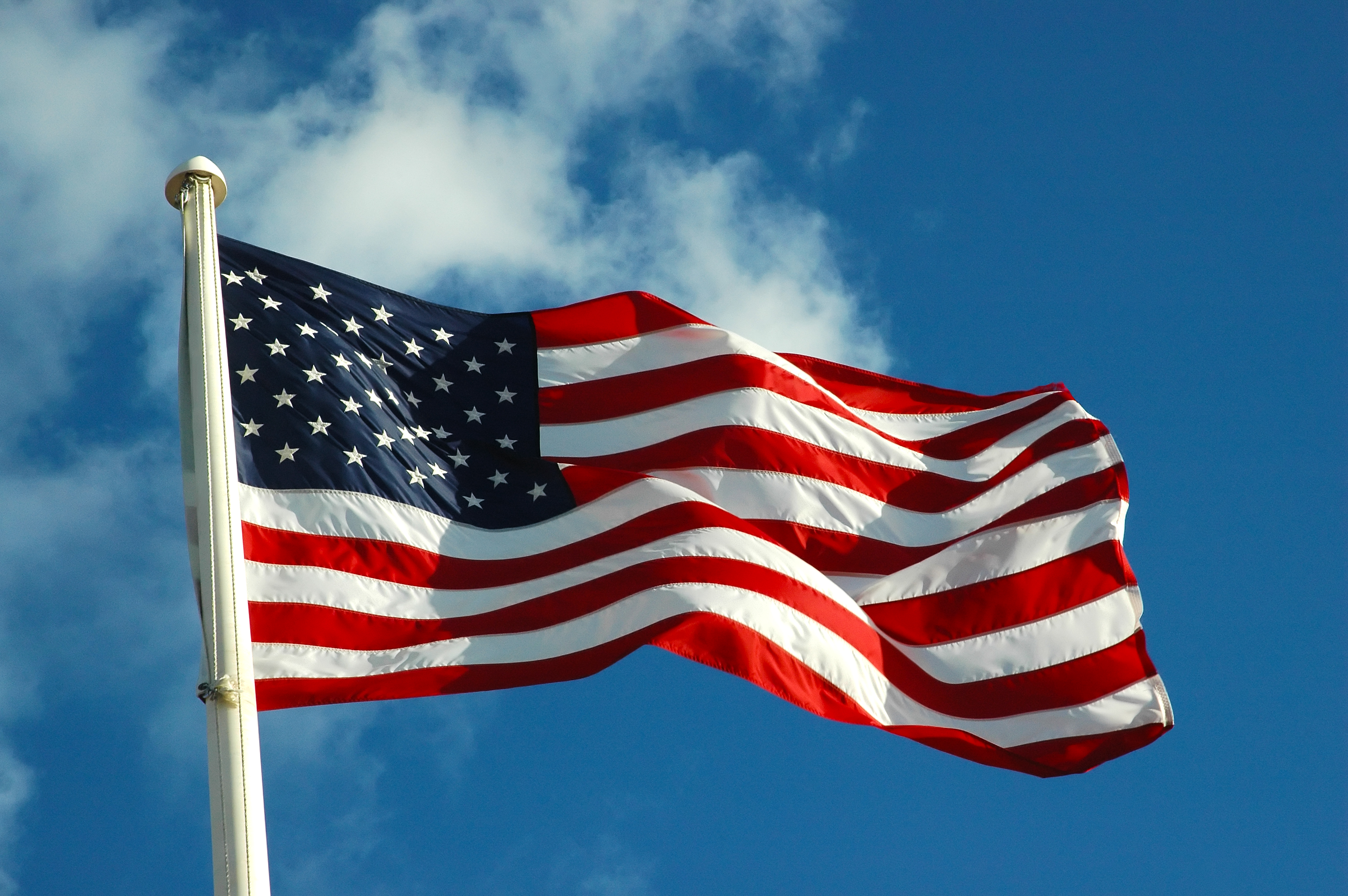
I’m a proud American and I love my country. In that respect, I do consider myself a patriot.

I’m also a big romance fan who genuinely appreciates the power of love.

As a result, my understanding of love has an impact on my understanding of patriotism. You can look up the definition of patriotism and love to get a basic understanding of the concept. However, a basic understanding will only take you so far. It’s also shallow. It only scratches the surface of a much deeper feeling.

Now, in the spirit of the 4th of July, America’s most patriotic holiday, I thought I’d take a moment to share my understanding of what it means to be patriotic and to love your country. I feel like it’s an important message to send, given the events of the past year.

I won’t bemoan those events or the people, politics, and ideology behind it. Love and patriotism go beyond all that. This is me, a proud American, seeking to share my perspective with my other fellow Americans as we get ready to celebrate the country we so deeply love.

To love your country is like to love your family. You didn’t choose the time, place, or circumstances of your birth. You came into it vulnerable and unaware. You grow up in it with the support, guidance, and values of those around you. They seek to protect you and you seek to learn from them.

It’s not always ideal. Nothing ever is. That doesn’t stop you from loving your family, nor does it stop you from loving your country.

Later on in life, you seek a different kind of love with another. You look for that special someone who you can love with all your heart and who will love you back in return. It’s not an easy search. You’re bound to endure loss, heartache, and disappointment along the way, but you keep searching. You endure because that feeling and that connection is just that powerful.

When you find that love, you sense that power. It fills you with energy, passion, and resolve. You come to cherish it. You’re willing to fight to protect it at all costs. We admire that kind of drive in others. We cling to it, as it becomes part of our identity.

This kind of love is very similar to patriotism. Our love for our country is very much an extension of our love for our family. The same energy that drives us to love, cherish, and protect our loved ones drives us to do the same for our country. Many Americans share that feeling. However, like with the love we have for families and spouses, it can blind us.

There’s a fine line between love and obsession.

By that same token, there’s a fine line between patriotism and blind loyalty.

One is healthy and productive while the other is toxic and damaging. A big part of loving someone is not ignoring their flaws. When they’re wrong, you point it out. When they’re doing something destructive, you try to stop them. When they’re wounded, lost, or angry, you try to help them. That’s what you do for someone you love. That’s also what you do for your country.

The United States of America is a wonderful place, but it’s not perfect. The history of this country has has many dark moments. Both the government and large swaths of its citizens have been wrong, unjust, and misguided on a great many subjects since its founding. Ignoring that isn’t an act of love or patriotism. In fact, it’s the exact opposite.

You don’t let someone you love keep doing what you know is wrong.

You don’t let someone you love descend into toxic, self-destructive cycles.

You don’t let someone you love forget their mistakes, thereby never learning from them.

The same applies to your country. To love it is to love its flaws, too. To love it is to want to see it get better. Like with those we love, we want them to become the best version of themselves they can be. Again, it’s challenging and even daunting at times. However, we endure because that’s what we do for someone we love.

As a patriot, you want your country to be the best it can be. That’s exactly what I want for America. That’s what I seek to celebrate every Fourth of July holiday.

I understand that not everyone has the same vision for this country as I do. Some actively pursue a vision for this country that’s utterly antithetical to the ideals it was founded upon all those years ago. Those are not patriots because they aren’t guided by love. They’re guided by selfish agendas.

In both love and patriotism, you can’t be selfish. You can’t be guided by hate or malice. You have to be willing to do what’s right and difficult over what’s selfish and expedient. You and those you love will make mistakes. Everybody does. We’re all flawed, imperfect human beings. Every country, including America, is made up of those same beings.

That’s why we keep striving to be better. Like any good loving relationship, you encourage those you love to be better with you. You work together, but not by always agreeing on everything or avoiding conflict. True love is a willingness to take the bad with the good and confront both.

This is a perspective that has always been crucial for patriotic Americans, but never more so than recently. After over 200 years, we’ve had plenty of time to grow and mature. We’re not a young country anymore. We’re one of the most powerful nations on the planet. With that power comes responsibility and we must never forget that.

Keep that in mind as you celebrate your love for your country, as I will be doing in a few days. Each year brings a new challenge for us all. Let’s be willing to face it, but let us do so while remembering what it truly means to love our country as true patriots.

Leave a comment

Filed under Current Events, political correctness, politics, rants

Being Blessed Vs. Being Lucky: The (Major) Difference And Why It Matters

Picture, for a moment, the following scenario.

You’re at a prestigious awards ceremony. The nature of the ceremony and the award aren’t important. The only factor that matters is the awards are granted to only a few individuals who have achieved feats that few human beings have achieved. It’s an honor just to be nominated, but an even bigger honor to win.

With that in mind, imagine two different winners for two different feats. The first winner comes up onto the stage, accepts their award, and gives a heartfelt speech that’s something along the lines of this.

“Thank you so much for this incredible honor. It was a long, hard road to get to this point, but I’ve been so blessed with wondrous gifts and amazing support. To them and to the higher power that blessed me, I am eternally grateful!”

Chances are you’ve heard a speech like that before. We hear it all the time with athletes, celebrities, and major public figures. They achieve something spectacular and their first inclination is to say they are blessed. They don’t always thank a god for it, but it’s such a common refrain that most come to expect it. Some even joke about it.

That being said, try to imagine your reaction for the second winner. They come out on stage with the same immense joy as the previous winner. They also give a heartfelt speech of their own, but it goes like this.

“Thank you so much for this incredible honor. It was a long, hard road to get to this point, but I was just really lucky to be born with talent and amazing support. I like to think I’ve made the most of it. This award is just part of it. For that, I am so proud of myself and those who helped me!”

I doubt a celebrity has given an acceptance speech like this before. If they did, chances are it would either be a joke or an elaborate act of trolling, which some celebrities are known to do. For the sake of this little thought experiment, imagine the person was sincere. How would you feel about them? Would be different than the first?

I crafted this scenario as a way of illustrating the difference between being blessed and being lucky. These terms tend to get used interchangeably. In common language, they’re somewhat synonymous. Even though dictionary definitions have some key distinctions, the standard usage of these words carries a particular meaning.

Part of that meaning stems from the general discomfort we feel about the universe being so chaotic and meaningless. We’re wired to seek patterns and surmise order. It doesn’t even matter if the patterns or order is real or an outright trick. When people can make sense of the world, we’re better able to function. It’s a big reason why humans have been able to adapt and survive with such success.

The ideas being lucky and being blessed reflect opposite sentiments of a similar principle. We see luck as a fluke. There’s no meaning behind it. It just happens randomly and without any defined goal.

A kid is randomly born with talent that makes them a great athlete.

A person randomly picks the winning numbers to win a big lottery prize.

A person just happens to be in the right place at the right time to meet the love of their life.

None of these situations are inherently right or wrong. That’s part of what makes it so distressing on some levels. The people who benefit from luck do nothing to deserve or warrant their good fortune. It goes against that innate sense of fairness that most sensible human beings have wired into their brains.

Being blessed, on the other hand, carries a very different connotation. To be blessed implies that some person, deity, or sentient force chose to grant someone such benefits. It’s not random. It’s part of a larger plan. It may not seem like one on the surface. It may even be an outright illusion. That ultimately doesn’t matter. The semblance of a plan is enough.

To be blessed also carried with it a sense of humility. Someone who just says they’re lucky doesn’t come off as moral or gracious. Even if they’re entirely ambivalent about it, they won’t inspire respect or admiration for acknowledging their luck. If they say they’re blessed, though, it changes the context.

A person who is blessed with talent means their achievements have a greater meaning.

A person who is blessed with picking winning lotto numbers means their good fortune is part of some larger plan.

A person who is blessed with meeting the love of their live means their love is somehow pre-ordained by fate.

The difference lies within the meaning. Being blessed conveys influence from a source greater than the person receiving the blessing. To show gratitude to that force is to accept that it’s not just about you. There’s a larger plan and you’re just part of it. That sounds humble, but at the same time, it detracts from the true extent of an achievement.

Luck or no luck, it takes effort and dedication to achieve something of value. Whether it’s an award for world’s largest nose ring or setting a record for most pop tarts consumed in a day, an accomplishment still requires work. Even lottery winners have to go out of their way to pick the numbers, get the ticket, and claim their prize.

To call that process a blessing is to dehumanize the actions involved. It undercuts the countless other factors in play. Some are entirely controllable. A champion of any sport usually has talent, determination, and a willingness to refine their skill. Others are simply beyond their control, from the conditions of an event to just the general randomness of a particular moment.

To assume these factors as part of some over-arching plan is to assume there’s a governing force that consciously cares about these random happenings. Whether that force is a deity or some idea of conscious fate, people will consciously devalue their own worth to believe they’re part of something greater. It might not be real, but that’s beside the point.

It helps us wrap our brains around incredible achievements and improbable events. It shows in how people can resent those who are just deemed lucky. Again, just look at lottery winners. Those who have enjoyed that rare level of luck can attest that they are generally looked down upon by those who gained their fortune in other ways.

This isn’t to imply that the whole concept of being blessed is inherently wrong. There may actually be a higher governing power behind certain peoples’ fortunes, be it an all-powerful deity or the shape-shifting lizard men of the Illuminati. There’s no evidence of it now, but as believers and conspiracy theorists will often point out, absence of evidence isn’t evidence of absence.

That said, I believe the dehumanizing aspect of blessings over luck does more harm than good in the long run. Humility is an admirable trait, but there are better ways to encourage it that don’t involve assigning some arbitrary meaning to random events. In addition, saying someone or something is blessed has some indirect implications that are even less desirable than a random universe.

If one person is blessed, then that implies other people were deemed undeserving.

If one moment is blessed, then those that came before it are nothing more than prelude, no matter how much they meant to those involved.

If a people or society are blessed, then that basically declares that everyone else is somehow beneath them and that mentality rarely brings out the best in people.

Human beings are capable of remarkable feats. Many of those feats don’t require a higher power or some conscious force. They simply require an opportunity and a willingness to strive for something greater. Granted, opportunities can be random and there’s only so much anyone can do to control the luck they get. However, I submit that gives it even more meaning in the grand scheme of things.

Leave a comment

Filed under human nature, outrage culture, philosophy, politics

The Supreme Court Rules Against NCAA: An (Overdue) First Step For “Student” Athletes

House members add new elements to NCAA name, image, likneess bill

Certain kinds of progress are so overdue that when it finally happens, even in part, we’re just frustrated that it took so long. That’s certainly how many people felt when it took until 2017 to get a proper “Wonder Woman” movie. Those sentiments aside, we should still celebrate such progress. Overdue or not, it’s still progress.

For the “student” athletes who have been playing under the NCAA for over a century, progress has been harder to come by than most. I put “student” in quotes because in many cases, a “student athlete” is an empty term.

These are not student athletes in the literal sense of the word. These are athletes who go to certain schools to play a sport. They’re just called “students” so they can be compensated with a scholarship rather than actual money. Even if you value higher education, that scholarship rarely translates into a proper study.

See the 2014 UNC scandal that exposed just how little energy is put into the student part of student athlete. Keep in mind, that’s just the scandal that got exposed. There’s a good chance there are far more egregious cases that were better hidden.

I also have some personal experience with student athletes. I went to a college that had a nationally ranked football and basketball program. I met some of these student athletes. I can attest that they were not there for class. They were there to play their sport and that scholarship was the only thing they were getting in return.

I vividly recall classes in which basketball players slept in the back of a lecture hall.

I recall classes that had football players enrolled, but they rarely showed up for any classes.

This is not a fair system. These young athletes are generating millions for the school, but getting little in return beyond their scholarship. On top of that, the value of that scholarship is questionable when you consider some of the classes that athletes take.

That’s why I’m very much in favor of reforming this system, if not completely tossing it aside. It’s basically a quasi-plantation system that’s meant to compensate athletes as little as possible so that their efforts can generate the most amount of money for the schools and the NCAA. There have been past efforts to change this, but they rarely result in anything substantive.

Now, after a long string of legal battles, that might finally change. Recently, the Supreme Court of the United States made a ruling that opens the door for NCAA athletes to seek greater compensation. It’s not a massive overhaul of the system, but it is a very overdue first step.

NPR: The Supreme Court Sides With NCAA Athletes In A Narrow Ruling

Faced with the prospect of reshaping college athletics, the U.S. Supreme Court issued a narrow but potentially transformative ruling Monday in a case that pitted college athletes against the National Collegiate Athletic Association.

At issue in the case were NCAA rules that limit educational benefits for college players as part of their scholarships.

The athletes maintained that the NCAA has, in effect, been operating a system that is a classic restraint of competition — in short, a system that violates the nation’s antitrust laws. The NCAA countered that its rules are largely exempt from antitrust laws because they are aimed at preserving amateurism in college sports and because the rules “widen choices for consumers by distinguishing college sports from professional sports.”

On Monday, however, a unanimous court ruled that the NCAA rules are not reasonably necessary to distinguish between college and professional sports.

Writing for the court, Justice Neil Gorsuch said that the NCAA “seeks immunity from the normal operation of the antitrust laws,” an immunity which Gorsuch said is justified neither by the antitrust law nor the previous opinions of the Supreme Court. Noting that big-time NCAA sports have turned into a multibillion-dollar business, Gorsuch said that a couple of sentences from a 1984 opinion did not declare then or now that there is some sort of immunity based on the concept of amateurism.

Without getting too heavy into the legalistic elements of this case, the court finally told the NCAA that they cannot operate as the sole arbiter of college supports. Doing so puts them at odds with anti-trust laws. Unless they change their practices, those laws will be applied and there’s nothing they can do to avoid them.

Again, it’s frustrating that it took this long for someone to sanction the NCAA in a meaningful way, but it still counts as progress. You don’t have to do much digging to see how the NCAA exploits student athletes. It’s such an open secret that South Park even did a parody of it.

There’s just no getting around it anymore. College sports are making billions off of branding and TV deals every year, but very little of that ever gets to the athletes. They’re the ones putting their bodies on the line to produce the spectacles. They’re more than deserving of fair compensation and a scholarship just isn’t enough.

I don’t claim to know how to structure a better system. Plenty of people far smarter than me have offered some ideas. We won’t know which actually work until we start trying. Until this ruling, the NCAA never had a reason to try. Now, they have to do something.

I sincerely hope that whatever they do benefits these young athletes. Having known more than a few, I can attest that these are wonderful, talented young people. They have a rare gift that allows them to compete at a high level. They should be able to get compensated for that gift in a manner that helps them, as well as their families.

It may take time and any subsequent reforms will also be frustratingly overdue. That still counts as progress and that’s something that college sports desperately needs.

Leave a comment

Filed under Current Events, politics, sports

A Brief Message For Juneteenth 2021

Metro Parks observes Juneteenth holiday - Metro Parks Tacoma

History is full of dark, distressing moments. It doesn’t matter who you are, where you live, or what your country’s history entails. Wars, famine, disease, atrocities, bigotry, and oppression are part of our collective narrative. We are flawed, imperfect beings trying to navigate an equally flawed, grossly imperfect world. It’s a challenge and, like any challenge, there are missteps and failures.

By every measure, slavery was a dark moment in that narrative. In America, it is a sad, painful stain on its history. It certainly wasn’t the first country to practice slavery, nor was it the twentieth. However, the very concept of owning another human being stands in stark contrast to the ideals of life, liberty, and the pursuit of happiness on which the country was founded.

It took 80 years after the American Revolution to officially end slavery, but doing so required a bloody civil war that killed over 600,000 Americans. Even after it ended, the struggle for justice didn’t stop. Conflict continued in the form of racism, segregation, and white supremacy. Parts of that conflict still continue to this day.

However, where we are now is far better than where we’ve been. No matter how many dark moments our history contains, they’re often contrasted by moments of triumph. The America of 1860 probably never thought slavery would end. The idea that we would have the level of social and legal equality we have today might have been unthinkable.

What once seemed impossible is now real. Things are far from perfect, especially with respect to race relations, but they stand in stark contrast to where we once were. As Dr. Martin Luther King Jr. once said, “We shall overcome because the arc of a moral universe is long, but it bends toward justice.”

That’s the spirit I encourage everyone to embrace today. On this day, on Juneteenth, now set to become an official federal holiday in America, let’s take a moment to appreciate just how far we’ve come. At the same time, we cannot forget how much farther we have to go. Even if that arc Dr. King mentions is long, the extent to which we bend it towards justice is our choice.

Moving forward, let us choose wisely.

Leave a comment

Filed under Current Events, politics

Why We Should Teach The Uglier Parts Of History (And Why Avoiding It Is Pointless)

Tulsa Race Massacre Sidelined Legacy of Black Wealth in Greenwood - WSJ

I am an American.

I am proud to be an American.

There’s no other country I’d want to be born in.

I say all while also acknowledging that America isn’t perfect. I’ve taken plenty of history classes, both in high school and in college. I’ve also sought out information about America’s past and the facts are clear. The United States of America does have some undeniably dark moments in its history. Some could be classified as outright atrocities.

It’s not wrong to state that those events happened and they were awful. In fact, I believe it’s critical for any country, nation, or community of any kind to admit their past failures and flaws. We cannot learn, grow, or improve as a society if we ignore those less favorable parts of our history. If we only ever know the good stuff, then we have no reason to improve and that only breeds complacency, arrogance, and stagnation. That’s something the world needs less of.

This brings me the controversy surrounding critical race theory. I know that just uttering that phrase in passing these days is sure to draw ire from certain crowds, some more so than others. In general, I try to avoid touching on topics like this when the outrage machine is still going full-throttle. Even when I do discuss something controversial, like abortion, I try to focus on the bigger picture.

Now, the specifics of critical race theory are too vast for me to get into. I’m certainly no expert, nor would I ever claim to be. I encourage people to investigate it themselves on Wikipedia. However, do not seek sources from the likes of PragerU, the Heritage Foundation, or any information source that claims to espouse the “truth” about Critical Race Theory.

They’re just right-wing propaganda pushers who are lying to you on behalf of their donors. They are not credible on this matter.

While I don’t see Critical Race Theory as being completely neutral either, it does have some relative themes. It gives greater scrutiny to how racism and past racist policies in America have had lasting effects on minority communities, even after the progress made during the civil rights movement.

That’s not an unreasonable approach to studying the past and present. After all, it’s undeniable that racism and its past effects still exist. If you deny that, then you’re just denying reality outright. Certain aspects of racism can’t be resolved by simply passing a law or enacting a certain policy. People and societies are just too complex.

Now, the way in which Critical Race Theory scrutinizes these issues isn’t perfect. In terms of analyzing and making sense of history, I think it doesn’t paint the clearest picture in terms of America’s racist past and how that past affects the present.

That said, I support it being taught or, at the very least, explored within a school. I think this is something we should teach kids and young people about in order to get them thinking about history, race, and the society in which they live. At the same time, I also think it exposes a critical element with respect to appreciating history and its many lessons.

The reason I’m bringing it up now is two-fold. Firstly, I think those protesting it are absurd and their reasons for criticizing critical race theory are equally absurd. Some are going so far as to try and ban it. Instead, they favor a more “patriotic” education for school age children. I put “patriotic” in quotes because there’s nothing patriotic about it. It’s just pure propaganda, plain and simple.

A true patriot doesn’t need propaganda to be proud of their country.

A true patriot loves their country, despite their flaws. Just like you do with someone you love, you don’t ignore those flaws and use them as motivation to be better.

The second reason I’m bringing it up has less to do with the political rhetoric surrounding Critical Race Theory. It’s being framed as though this is somehow redefining the story of America. It’s seen as somehow diminishing America’s greatness and ideals. Those who are blindly patriotic or excessively nationalistic are going to have a problem with that.

Now, blind and excessive nationalisms is a problem all its own. I won’t get into that, but I do feel that it highlights another important point about protesting new forms of study. In essence, those complaining about Critical Race Theory are working against their own agenda. They seem to forget that the internet still exists.

It doesn’t matter if efforts to ban Critical Race Theory succeed. It doesn’t matter if every American textbook removes all mentions of slavery, Jim Crow, Japanese internment camps, or atrocities committed against Native Americans. That information is still out there. It’s on the internet and it’s easy for anyone with an internet connection to find.

In fact, by outright banning or opposing certain studies of history, it may only raise greater interest in it. Like it or not, people are going to get curious. Tell kids and teenagers that they should never learn about Critical Race Theory is only going to make them more curious. So long as they still have an internet connection, they will find that information.

That’s exactly why I’m in favor of teaching history that explores, analyzes, and dares to extrapolate from the uglier parts of history. It can do more than educate. It can also help us come to terms with our flaws and inspire us to be better.

A good example of this is the recent relevance of the Tulsa Race Massacre. There’s no getting around it. This event was a horrendous moment in American history and one that reveals just how ugly racism got in this country. Growing up, I never learned about this event. Most people probably never would’ve learned about it, had it not re-entered the news amidst recent pushes for racial justice.

This moment in history was awful. There’s no getting around that. Even if you’re an American who wasn’t alive during this event, we should still acknowledge it. We should still learn from it. That’s how we’ll get better. The past has so many painful lessons and we’ll never learn those lessons if we try to gloss over them.

2 Comments

Filed under Current Events, history, outrage culture, political correctness, politics

Dear Rich People: Pay Your Damn Taxes

The richest people in the world: billionaires across the globe - CBS News

I’m a proud American. I love my country and I celebrate its ideals while not ignoring its shortcomings. That’s what you do for a country you love.

I also hate taxes as much as the next American. It’s one of the few things that we can agree on these days. Taxes suck. It costs us money, the process is a real a hassle, and it’s not always spent on something you approve of. I understand that. I empathize with it, even. It’s like a prostate exam or a colonoscopy. It’s uncomfortable, but when done properly, it spares you plenty of pain and illness later on.

As much as I hate taxes, I’m not among those hardcore libertarian types who call taxation outright thievery. I’ve learned over the course of my adult life that taxes are just part of life. It’s what we collectively pay to operate a functional civil society. It may not be efficient or ideal, but it’s better than the alternative.

That’s why I make it a point to pay my taxes early and in full every year. I’m not rich. I also don’t have a complex array of assets and what not. However, my finances do require that I put a little extra effort every year to make sure I pay what I need. Thanks to the internet and free tax software, it usually takes up half an afternoon at most.

I’m not particularly smart when it comes to taxes and finances. I just know how to keep track of my budget, monitor my money, and spend within my means. That doesn’t take any special education or talent. It’s just common sense and basic math.

This brings me to the purpose behind this post. Very recently, a report came out from ProPublica. It basically confirms through a trove if IRS files what most of us already knew. The richest individuals in this country, and the world for that matter, have been avoiding taxes for decades. Read the report for yourself. If it doesn’t make you upset as a taxpayer, then check your pulse.

ProPublica: The Secret IRS Files: Trove of Never-Before-Seen Records Reveal How the Wealthiest Avoid Income Tax

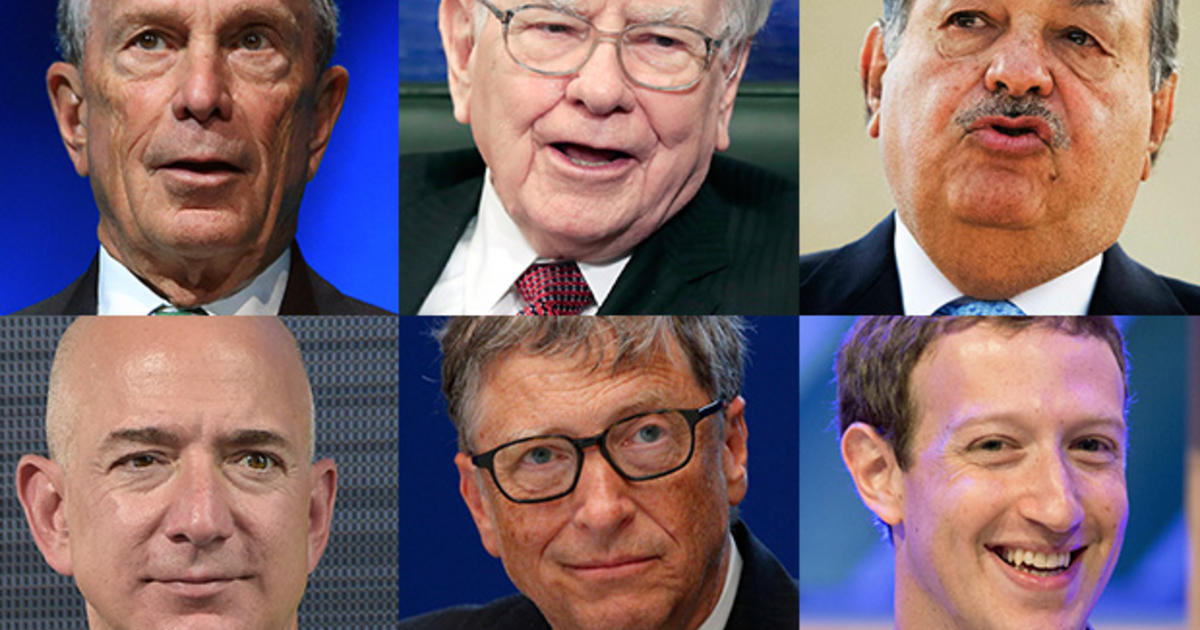
ProPublica has obtained a vast trove of Internal Revenue Service data on the tax returns of thousands of the nation’s wealthiest people, covering more than 15 years. The data provides an unprecedented look inside the financial lives of America’s titans, including Warren Buffett, Bill Gates, Rupert Murdoch and Mark Zuckerberg. It shows not just their income and taxes, but also their investments, stock trades, gambling winnings and even the results of audits.

Taken together, it demolishes the cornerstone myth of the American tax system: that everyone pays their fair share and the richest Americans pay the most. The IRS records show that the wealthiest can — perfectly legally — pay income taxes that are only a tiny fraction of the hundreds of millions, if not billions, their fortunes grow each year.

Now, I understand that I’m not rich. Most of us will never know what it’s like to live in the world of a billionaire. Their day-to-day life, as well as their perspective of the world, is just so completely different from most people that it might as well be alien. We can barely grasp the idea of having a million dollars, let alone billions.

However, I can still do basic math.

At the moment, the highest federal income bracket for a single person in the United States is 37 percent. Compared to the rest of the world, that’s pretty reasonable. If you made $10 million in one year, your federal tax liability would be approximately $3.7 million. Add in state and local taxes and it’s about $4.4 million.

Yes, that’s a considerable amount of money.

However, $5.6 million is also a considerable amount of money.

That’s enough money to buy a good sized home or several. That’s enough to buy a fleet of overpriced cars, crash them, and then laugh about it the next morning. If your lifestyle is such that you can’t live comfortably for a year on that, then something’s amiss here.

Again, I understand the world of the super rich is different. They have legitimate concerns that us non-rich people don’t. It’s not unusual for a rich person to spend a considerable amount on home and personal security. Then again, such elaborate security would be less necessary in a functioning civil society with quality public services, solid institutions, and well-funded infrastructure.

That’s not a utopian vision. Other countries are able to achieve this while still maintaining a commitment to free enterprise, individual liberty, and entrepreneurial endeavors. Doing so requires taxes. Moreover, it’s necessary that citizens actually pay those taxes.

This brings me back to the rich people who put so much effort into paying as little as possible every year for taxes. I know they’ll never read this. They’re too busy counting their money and/or deciding what to spend it on next. After reading this piece, I have just one simple request for you on behalf of all Americans, as well as anyone with a shred of decency.

Please pay your goddamn taxes.

It’s good for society.

It’s good for the economy.

It’s good for the public institutions that we all rely on to have a functioning, civil society.

It’s even good business for you, overall.

Just think about it. If rich people paid their taxes, then we could improve infrastructure, pay for quality education for more people, and just put more money in the pockets of people who need it. That is not a radical idea. It’s not socialism, communism, or some other anti-American ideology. In fact, preventing a system that has a class of aristocrats with immense power over the masses is as American as it gets.

On top of that, there’s a good chance that the poor and middle class people who get that money are going to spend it on something. They may even spend it on one of the businesses that rich people own and operate.

In a sense, you’ll get that money back eventually. You’ll just help improve the lives of ordinary people, who also happen to be your customers. It’s win/win at every level. There is literally no downside, other than the fact that obscenely rich people will not be nearly as obscenely rich.

Honestly, though, what’s the difference between having $15 billion and $1 billion? That’s still more money than most people could ever spend in a lifetime. When you die, you can’t take it with you and those who inherit it will not value it as much, since they did not earn it.

In essence, paying your taxes is probably the best thing you could do with that money in the grand scheme of things. Even once you pay your share, you’ll still have plenty for cars, yachts, and gold toilets. I love capitalism too, but greed and hoarding will destroy it in the long run. Taxes are the price we pay to keep that system as fair and honest as possible in an imperfect world.

Do your part.

Pay your taxes.

If we can do it, then obscenely rich people with immense resources have no excuses.

Leave a comment

Filed under Current Events, politics

Why The Pentagon’s Upcoming Report On UFOs Won’t Change Anything (For Now)

US Intel Report on UFOs Can't Confirm or Deny Link to Aliens | Technology  News

There was a time in my life when I was a true believer in UFOs. I bought into nearly every UFO conspiracy you’ve ever heard and probably a few you haven’t. I really believed that UFOs were real, aliens were real, and the governments of the world were covering it up.

Those beliefs quickly fell apart when I learned how fallible and flawed humans can be, especially at the government level. The idea that a government could keep a secret this big for so long isn’t just laughable. It’s contrary to our nature.

Looking back on it, I feel downright foolish. To all the friends and family I annoyed with these beliefs, I sincerely apologize. I was young, gullible, and ignorant. I understand that’s not a good excuse.

Despite my disillusion with UFOs, I’m still very interested in the possibilities surrounding extraterrestrial life. I also still believe that making contact with an alien civilization would be a huge game-changer for humanity, as a species and a civilization. I believe many die-hard believers in UFOs feel the same way.

I imagine those same believers are excited about the recent resurgence in interest surrounding UFOs. It’s not just coming from fringe areas of the internet or your typical conspiracy websites. The topics is being treated with a rare level of seriousness by both government entities and major news organizations.

Recently, the Pentagon announced that they were releasing a major report on UFOs to Congress and its findings would be made available to the public. It’s a rare act of transparency from a government known for keeping nasty secrets. Some hope that this report will blow the door wide open on the phenomenon, inspiring a new generation of UFO enthusiasts.

I would caution those people to temper their interests. Having been in that mindset before, I can attest how tempting it might be to believe that we’ll finally get the full story we’ve been hoping for. It’s far more likely that the truth will be a lot less fanciful than we wish.

That’s not just me being a downer. That’s built within the news surrounding this report. If you need more context, here’s how ABC News reported on it.

ABC News: Upcoming UFO report to Congress creating lots of buzz

Later this month, U.S. intelligence agencies will present to Congress a highly-anticipated unclassified report about what they know about UFOs, or as the Pentagon now calls them, Unexplained Aerial Phenomena (UAPs).

However, the jury is still out on whether the report will contain the answers that UFO enthusiasts are looking for: that recent military encounters with UAPs may be proof of contacts with extraterrestrial life.

The preparation of the report marks a milestone as interest in UFOs has taken off in recent years following the Navy’s release of once-classified videos of encounters that fighter pilots had in 2004 and 2014 with UAPs.

The videos raised interest not only with UFO enthusiasts, but also among members of Congress eager to learn if the UAPs captured in the videos represent advanced technological threats from foreign adversaries.

Please note the bolded parts. That was my doing. That’s a detail that needs to be emphasized. The simple admission by the Pentagon that there are credible witnesses to unidentified arial phenomena is not an admission that these phenomena are alien spacecrafts. It just means they don’t know what they witnessed, hence the word unidentified.

I don’t mean to belabor the semantics, but it’s a huge leap to go from someone admitting that they don’t know what they saw in the sky to believing what they saw was an alien spacecraft. There are a lot of possibilities in between that are probably more likely.

Even if the witnesses are credible, we’re still dealing with fallible people. Since we’re dealing with experienced fighter pilots and military personnel, I’m inclined to believe that these aren’t crackpots who jump at the chance to label anything a UFO. They’re just honest, sincere people who don’t know what they saw.

It’s just unreasonable to make the leap from an unidentified arial phenomenon to an alien spacecraft. There’s a real possibility that the people involved were just mistaken. There’s also a possibility that there are currently aircraft being tested by the military that are so advanced that they seem alien to us. Remember how alien the F-117 stealth fighter once looked.

Even if that’s the case, it’s very unlikely we’ll know the full truth in this report. At most, it’ll just state what we’ve already heard from the witnesses. Credible people saw something in the sky and they don’t know what it is. That’s it. That’s all we can confirm for now.

The key words there are “for now.” There may very well be more to the report, but it’s very unlikely that it’ll confirm or even hint at the existence of aliens. The government may be inept at times, but it isn’t stupid. People can see strange things that aren’t there and make wild assumptions based on a misunderstanding of a situation. That’s just how people work.

If aliens really do exist and they’re aware of our presence on Earth, I think it’s doubtful they would make their presence known through something like UFOs. If you have technology that can traverse the stars, then it makes no sense on any level to just show up in ways that only ever emerge in blurred photos and videos. In an era where everyone has an HD camera in their pocket, the aliens have no excuses and neither do we.

Leave a comment

Filed under Current Events, politics

Jack’s World: Appreciating George Orwell’s 1984 And Its Dire (But Crucial) Message

We all have that one book that has a lasting impact on us. Sometimes, we seek it out. Sometimes, it comes to us unexpectedly. Even if you’re not a voracious reader, it still affects you in a profound way. Whether it’s the story, the characters, or the underlying message, it resonates with you and you still feel it years later.

That’s how I feel about Gorge Orwell’s famous novel, 1984. To date, it’s one of my favorite novels and that’s counting all the comic books I’ve read. It’s considered a modern classic and for good reason. This book, its author, and its message came along at a dangerous time for civilization. While times have changed and 1984 has passed us by on the calendar, the message of this book is still as important as ever.

To celebrate that message, I made a video about it on my YouTube channel, Jack’s World. If you need a book to add to your summer reading list, I hope this video convinces you to put 1984 at the top. It had a profound effect on me. It changed the way I thought about politics, authority, and freedom. I hope it can do the same for others.

Leave a comment

Filed under Jack's World, philosophy, politics, YouTube