Category Archives: Current Events

Vaccine Update: Making Sense Of The (Critical) Data On The Johnson & Johnson Vaccine

Last year did a lot to crush my usually optimistic outlook on the future. I experienced a level of cynicism I haven’t felt since high school, a time when I only ever assumed things would get worse and rarely made an effort to change that. It was bad. Global pandemics have that effect on people.

I still made it a point to note when positive things actually happened, especially when it came to news of the vaccine. That marked the ultimate turning point. A vaccine was always going to be our best weapon in terms of ending the pandemic, regardless of what the anti-vaxx crowd says. The fact that we now have two vaccines at our disposal is genuinely encouraging.

Yes, I know the distribution of these vaccines has been a mess, to say the least.

I also don’t deny that the emergence of new mutant strains of the virus could hinder their effectiveness.

Those are legitimate concerns. We should all be worried about how this will impact our ability to finally end this awful pandemic that has caused so much damage. At the same time, we should also be hopeful. Believe me, I’m trying.

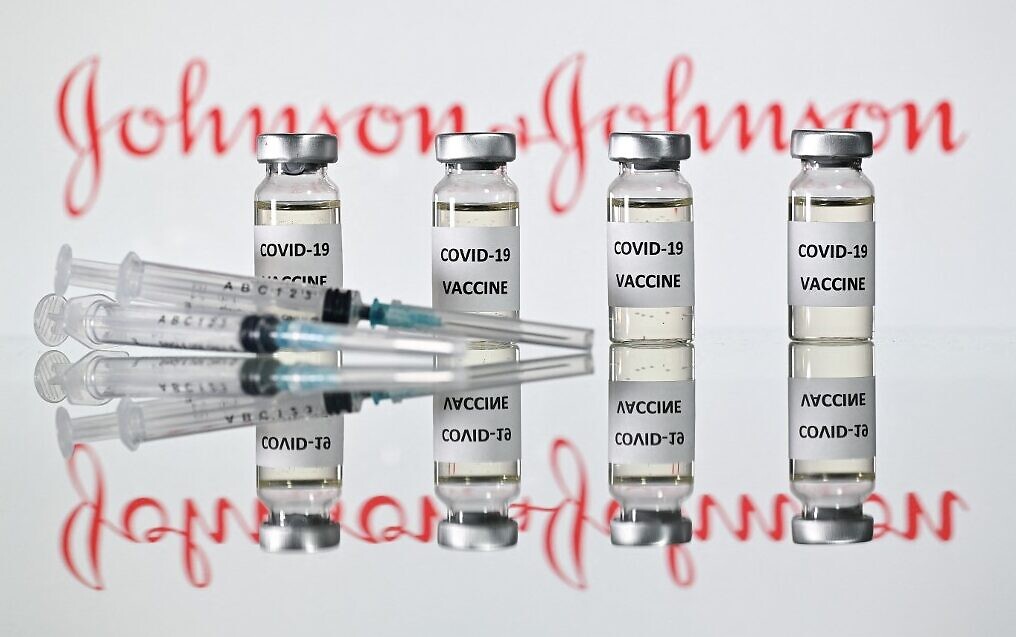
That hope got another boost recently when it was announced that a third vaccine developed by Johnson & Johnson had completed its final round of trials. Having a third weapon against this virus can only help. In addition, this one has the advantage of being a one-shot vaccine, as opposed to the two required by Moderna and Pfizer.

While that’s good news for those who hate needles, there is a trade-off. According to the research reported by the media, the vaccine is effective. However, the numbers aren’t quite as promising as what we got with the first two. This is what CNN reported.

CNN: Johnson & Johnson Covid-19 vaccine is 66% effective in global trial, but 85% effective against severe disease, company says

Johnson & Johnson’s Covid-19 single-shot vaccine was shown to be 66% effective in preventing moderate and severe disease in a global Phase 3 trial, but 85% effective against severe disease, the company announced Friday.

The vaccine was 72% effective against moderate and severe disease in the US, the company said.

It’s a striking difference from vaccines from Pfizer/BioNTech and Moderna, and it may give pause to people uncertain about which vaccine to get or when they can get one. The vaccines already on the market in the US are about 95% effective overall against symptomatic Covid-19, with perhaps even higher efficacy against severe cases.

But experts say the Johnson & Johnson vaccine will still be useful against the pandemic in the United States and around the world.

I know the numbers are the only thing that stands out in this piece. That seems to be the main sticking point for most reports about this virus.

Those numbers are still good. The 66% may not be as promising as the 90% promised by the other two, but that’s still more effective than a standard flu vaccine. On top of that, being a one-shot vaccine that can be easily stored in a typical refrigerator will help even more. It means more of this vaccine can get to people, especially in places with less-than-ideal health infrastructure.

This will definitely help in terms of ending or at least mitigating this pandemic. However, there’s one other critical point of data that’s worth highlighting with this vaccine. It’s in some of the reports, but it’s often difficult to discern, mostly because the media’s track record with reporting science is not that great.

For this vaccine, it’s boils down to certain degrees within the data. It’s true the Johnson & Johnson vaccine won’t give you the same protection you’d get from the other two. There’s a good chance that, even after getting this vaccine, you could still become very sick with COVID-19. However, and this is the key, it will help ensure that you don’t become severely ill and die.

That’s not just a sales pitch. According to the research, there were no hospitalizations or deaths among people in the vaccine arm. That may mean some did get sick. Some might have even spread it. However, they didn’t get so sick that they ended up in the hospital. They all survived.

To me, at least, that’s the most important result. Getting sick is one thing. Getting so sick that you die in a hospital bed is something else entirely. One is a bad flu. The other is debilitating illness. That alone makes this vaccine a critical tool in the effort to end this pandemic.

I admit that if I had a choice between the three, I would choose Moderna or Pfizer. I actually know someone who got the Pfizer vaccine and their experience gives me great assurance that it works as intended.

However, if those two were not available and all I could get was the Johnson & Johnson vaccine, I’d take it in a heartbeat. It could mean the difference between being sick and being deathly ill. In a pandemic, that’s the only difference that matters. To all the doctors, nurses, participants, and health care workers who were part of this effort, I sincerely thank you. A lot of lives will be saved because of this vaccine. That makes you true heroes in a world that badly needs them.

1 Comment

Filed under Current Events, health, technology

A Post-Pandemic Valentine’s Day Prediction (That I Hope Is Wrong)

I’m sick of this pandemic. I know that’s a poor choice of words, but there’s no better way to say it.

I hate this goddamn virus. It has done so much damage to this world, killing so many people and causing so much suffering. I want it gone as much as everyone else.

Thankfully, the end is in sight. We now have two effective vaccines with which to end this pandemic. A third one is likely be approved very soon. This, along with other treatments, will help get this monster virus under control. It may not happen as fast as we hope, but it will happen.

I eagerly await the day when I can go to a movie theater, hang out at a bar, and not panic every time I forget my mask when I leave my house. Like many others, I find myself watching the trendline of the virus every day. I watched with the same dread as everyone when it went up towards the end of 2020. That was genuinely distressing.

Now, it’s trending downward. As more and more people get the vaccine, that trend is likely to continue and accelerate. Again, it won’t happen as fast as we want, but the data is encouraging. I sincerely hope that the worst of this pandemic is behind us.

That being said, I do have a prediction/suspicion about that trend. I’m not the best when it comes to predicting the future and I freely admit that every time I try. However, if ever there was an instance where my prediction turned out dead wrong, it’s this one.

That’s because I predict we’re going to have one last surge of COVID-19 cases before we can say the pandemic is over.

It probably won’t be nearly as big as the one we saw in late 2020. The vaccines will make certain of that. I still think we’ll see one last spike. Moreover, I think that spike will come as a direct result of Valentine’s Day.

I know those who are single, lonely, and/or not a romance fan like I am already despise this holiday. I personally have mixed feelings about it, being both single and a romance fan. At the same time, I don’t deny that some people take it seriously. Others just use it as an excuse to get frisky. It can be a beautiful thing most of the time.

There’s nothing wrong with getting extra romantic on Valentine’s Day when there’s not a pandemic going on. Unfortunately, this is not one of the times. It’s for that reason I believe the weeks following Valentine’s Day will see a surge that will frustrating everyone hoping the current trend continued downward.

Let’s face it. Being romantic on Valentine’s Day doesn’t exactly accommodate social distancing. Unless your fetish involves washing hands, it’ll probably create a few extra opportunities for the virus to spread. The same thing happened with the holidays in 2020. All the gatherings and get-togethers basically gave the virus a free ride to infect.

Valentine’s Day may not inspire as much traveling and gathering as Thanksgiving or Christmas, but it’s still an excuse for getting cozy and frisky with that special someone. Let’s face it. When you’re in love and/or horny, you’re not going to think straight. You may forget to wash your hands and cover your face for a while. Many will get away with it, but a few won’t.

Again, I sincerely hope I’m wrong about this. In the coming weeks, as more and more vaccinations occur, the end of this pandemic will draw closer. We’ll continue seeing those numbers drop. It’ll happen gradually, but it will happen. I don’t know when we’ll be able to officially declare this pandemic over, but that day will come sooner rather than later. I just worry that the various activities associated with Valentine’s Day may push that day back.

Leave a comment

Filed under Current Events, health, romance

Happy President’s Day America! (Let’s Try To Appreciate That)

Hello, my fellow Americans.

As many of you know, it’s President’s Day. In most years, that’s just a day off from school or work, as well as a formal acknowledgement of America’s history. It’s our indirect way of appreciating the ideals of American democracy and the people who made it possible.

However, this isn’t most years. Hell, last year wasn’t most years and not just because of a historic pandemic. The events of January 6 at the Capitol didn’t help much, either.

Many others have already said it, but it still holds true. America is very divided. That’s not an opinion. It’s backed up by real numbers. Half of Americans hate each other, based on their political ideology. There’s no respectful disagreements. There’s just a growing us-versus-them mentality and it’s incredibly toxic.

Since a new president was sworn in last month, there have been a lot of talk about unity and healing. That talk hasn’t resulted in much, in the grand scheme of things. Many Americans still hate each other. They also still refuse to accept that a President they didn’t like or vote for won the election.

How do we come back from that?

How do we heal from that?

How do we ever get to a point where we can just get along again?

I honestly don’t know. I wish I did. I really do. As a proud American who loves his country as much as any patriotic American, I want to see us do better. I want to see us transcend our flaws, of which there are many, and become more akin to the vision that our founders set out to create.

I don’t expect it to start today. I don’t expect it to start tomorrow, either. However, I believe in making the effort.

Maybe today is a day when we can all start trying. Even if you didn’t vote for the current President, don’t let that stop you from making America the best it can possibly be. Look forward to the future and not to the past. See your fellow Americans as fellow Americans and not an insurgent army.

I know that’s asking a lot. I also understand there are some people who truly cannot be reached. They will not be satisfied until America, as we know it, is destroyed and rebuilt in their own perverse image. Those people are an extreme minority, but they often talk the loudest and resort to violence most readily.

Let’s not let them derail the vision for a better America.

Let’s not let them keep us divided.

We’re Americans. We are lucky beyond measure to be born in this great land. In our country, a President is not a King, but they are those tasked with carrying America forward. They’ll continue to do their part. That’s why we elected them. Now, on this President’s Day, let’s do ours.

Leave a comment

Filed under Current Events, political correctness, politics

A Note To Investors/Enthusiasts Of Dogecoin

We live in a strange time. I know you could say that about almost any point in history, but let’s face it. The past year has been more eventful than most. The past few months have been even more eventful if you’re an investor or follow economic news. We recently learned that a multi-billion dollar hedge fund is no match for a bunch of shit-posters on Reddit.

I’m not gonna lie. That story still puts a smile on my face. Last year sucked, but when a bunch of shit-posters on Reddit tank a predatory hedge fund, the world is an objectively better place.

As much fun as that is, there are some other stories related to investing that are worth noting. On top of the craziness caused by r/WallStreetBets, it has been just as chaotic for investors of cryptocurrencies. When the financial world is in chaos, cryptocurrencies that thumb their nose at old economic institutions tend to thrive.

Now, full disclosure, I do own Bitcoins. That’s the only cryptocurrency I own and I don’t own much. I’m not a bold investor. I buy index funds and ETFs. I would not fit in on r/WallStreetBets, nor would I be a good evangelist for Bitcoin.

For that same reason, I’d like to send a special note to those currently caught up in the Dogecoin craze. If you don’t know what Dogecoin is, then that’s understandable. It is a cryptocurrency like Bitcoin, but it’s unique in a few very particular ways.

Most notably, Dogecoin is often treated as a joke. That’s because it started off as one.

That’s not my opinion. That’s literally part of its origin. Its creators, Billy Markus and Jackson Palmer, were legitimately surprised when people started using it. I guess they didn’t get the joke.

That doesn’t mean Dogecoin has absolutely nothing going for it. It is a functioning cryptocurrency that uses some of the same technology as Bitcoin. Its most notable difference is that, unlike Bitcoin, there’s no limit to how many Dogecoins can be mined. Whereas Bitcoin can only ever have 21 million, Dogecoins can be mined indefinitely.

It may seem like a small difference, but that difference matters if you understand the basics of scarcity in economics. Most people understand it on some levels. If you can make an infinite amount of something, then it’s not going to have much value. If something is incredibly finite and difficult to obtain, like gold or Bitcoins, it’s going to have more value.

It’s that concept that I’d like to convey to those cheering on Dogecoin. Thanks to the recent upheavals from r/WallStreetBets, Dogecoin has been surging more than most currencies and even people like Elon Musk are cheering it on.

That’s not unusual. Sometimes, certain assets get propped up for a brief period. That has happened a lot with cryptocurrencies over the past decade. However, with Dogecoin, it’s a lot more style than substance.

Whereas Bitcoin gains value as it becomes more accepted in various sectors of the economy, Dogecoin gains value because people are just cheering it on. One has long-term sustainability. The other ends as soon as people get bored or find something else to cheer on.

Today, it’s Dogecoin.

Tomorrow, it could be JackCoin, a cryptocurrency made exclusively for people named Jack.

Is that the dumbest idea in the history of finance? I don’t know, but entire economies have gone bust for dumb things before.

Again, I’m not an investment expert. I’m not giving investment advice to anyone. However, to those thinking about getting in on the Dogecoin craze, I offer one important message.

You can win with style over substance in a lot of things, but not when it comes to money. At some point, a product has to demonstrate its value. You can only prop it up for so long before basic economic forces take over. It’s not fair and it’s not rational, but that’s how economics work.

Dogecoin will find that out at some point. Investors may have to find out the hard way.

Leave a comment

Filed under Bitcoin, Current Events, rants

A Quick (And Critical) Lesson On Tolerance And “Cancel Culture”

There are certain topics that I find difficult to talk about, but I’ll still make the effort because they’re worth discussing. That’s why I’ll write something about abortion or religion every now and then. These are serious, emotionally charged issues. There’s merit to discussing them.

Then, there’s “cancel culture.”

I’m sorry, but I’ve yet to see a single discussion about “cancel culture” that has ever been productive. Some say it’s a threat to free speech and western values. Some say it’s not really a thing. I say both are wrong and both aren’t helping by making sub-par arguments.

Every few months or so, it starts trending and for bullshit reasons. Usually, what some bemoan as “cancel culture” depends heavily on their political affiliation. A conservative won’t see Colin Kaepernick being shut out of the NFL as cancel culture, but they’ll whine endlessly about Rosanne Barr getting fired from her show.

Conversely, a liberal will cheer when Lou Dobbs gets fired, but will make endless excuses for liberal celebrities who say objectively dumb shit. It always seems to boil down whether you’re politics align with whoever or whatever is canceled. It’s arbitrary, it’s petty, and it’s absurd. I really don’t have any other way to describe it.

Now, I could rant for hours about bullshit “cancel culture” arguments. However, I’d rather do something more productive with my time. I’d also prefer not to add to the whining. The only reason I’m bringing this up is because that’s all anyone has been doing since the story about Gina Carano broke.

If you’re not up to speed, consider yourself lucky. I won’t recount the details. The long and short of it is she got fired by Disney for some stupid tweets that mentioned the holocaust. Now, I won’t give my opinion on the contents of these tweets. Again, that’s not a productive use of my time or anyone’s time, for that matter.

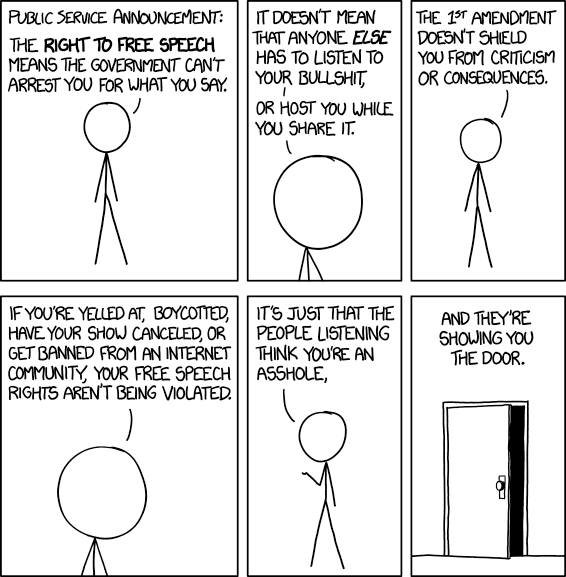
However, I don’t want to bring this topic up just to rant about it. Instead, I’d like to use the ongoing whining about “cancel culture” to offer some perspective about what it is, what it isn’t, and why it matters. I could try to put it into words. Thankfully, people far smarter and more talented than me already have.

The following image that I found on Twitter sums it up nicely.

If that doesn’t get the point across, please see this helpful little image detailing the paradox of tolerance by Karl Popper.

In short, being tolerant is a good thing. Protecting free speech is a good thing. However, there are lines, limits, and context. Failing to understand them will only cause more outrage and whining. The world already has too much of that. Let’s not add to it.

Leave a comment

Filed under Celebrities and Celebrity Culture, censorship, Current Events, human nature, media issues, psychology, television

Why We Should Treat Our Data As (Valuable) Property

Many years ago, I created my first email address before logging into the internet. It was a simple AOL account. I didn’t give it much thought. I didn’t think I was creating anything valuable. At the time, the internet was limited to slow, clunky dial-up that had little to offer in terms of content. I doubt anyone saw what they were doing as creating something of great value.

I still have that email address today in case you’re wondering. I still regularly use it. I imagine a lot of people have an email address they created years ago for one of those early internet companies that used to dominate a very different digital world. They may not even see that address or those early internet experiences as valuable.

Times have changed and not just in terms of pandemics. In fact, times tends to change more rapidly in the digital world than it does in the real world. The data we created on the internet, even in those early days, became much more valuable over time. It served as the foundation on which multi-billion dollar companies were built.

As a result, the data an individual user imparts onto the internet has a great deal of value. You could even argue that the cumulative data of large volumes of internet users is among the most valuable data in the world.

Politicians, police, the military, big businesses, advertising agencies, marketing experts, economists, doctors, and researchers all have use for this data. Many go to great lengths to get it, sometimes through questionable means.

The growing value of this data raises some important questions.

Who exactly owns this data?

How do we go about treating it from a legal, fiscal, and logistical standpoint?

Is this data a form of tangible property, like land, money, or labor?

Is this something we can exchange, trade, or lease?

What is someone’s recourse if they want certain aspects of their data removed, changed, or deleted?

These are all difficult questions that don’t have easy answers. It’s getting to a point where ownership of data was an issue among candidates running for President of the United States. Chances are, as our collective data becomes more vital for major industries, the issue will only grow in importance.

At the moment, it’s difficult to determine how this issue will evolve. In the same way I had no idea how valuable that first email address would be, nobody can possibly know how the internet, society, the economy, and institutions who rely on that data will evolve. The best solution in the near term might not be the same as the best solution in the long term.

Personally, I believe that our data, which includes our email addresses, browsing habits, purchasing habits, and social media posts, should be treated as personal property. Like money, jewels, or land, it has tangible value. We should treat it as such and so should the companies that rely on it.

However, I also understand that there are complications associated with this approach. Unlike money, data isn’t something you can hold in your hand. You can’t easily hand it over to another person, nor can you claim complete ownership of it. To some extent, the data you create on the internet was done with the assistance of the sites you use and your internet service provider.

Those companies could claim some level of ownership of your data. It might even be written in the fine print of those user agreements that nobody ever reads. It’s hard to entirely argue against such a claim. After all, we couldn’t create any of this data without the aid of companies like Verizon, AT&T, Amazon, Apple, Facebook, and Google. At the same time, these companies couldn’t function, let alone profit, without our data.

It’s a difficult question to resolve. It only gets more difficult when you consider laws like the “right to be forgotten.” Many joke that the internet never forgets, but it’s no laughing matter. Peoples’ lives can be ruined, sometimes through no fault of their own. Peoples’ private photos have been hacked and shared without their permission.

In that case, your data does not at all function like property. Even if it’s yours, you can’t always control it or what someone else does with it. You can try to take control of it, but it won’t always work. Even data that was hacked and distributed illegally is still out there and there’s nothing you can do about it.

Despite those complications, I still believe that our data is still the individual’s property to some extent, regardless of what the user agreements of tech companies claim. Those companies provide the tools, but we’re the ones who use them to build something. In the same way a company that makes hammers doesn’t own the buildings they’re used to make, these companies act as the catalyst and not the byproduct.

Protecting our data, both from theft and from exploitation, is every bit as critical as protecting our homes. An intruder into our homes can do a lot of damage. In our increasingly connected world, a nefarious hacker or an unscrupulous tech company can do plenty of damage as well.

However, there’s one more critical reason why I believe individuals need to take ownership of their data. It has less to do with legal jargon and more to do with trends in technology. At some point, we will interact with the internet in ways more intimate than a keyboard and mouse. The technology behind a brain/computer interface is still in its infancy, but it exists and not just on paper.

Between companies like Neuralink and the increasing popularity of augmented reality, the way we interact with technology is bound to get more intimate/invasive. Clicks and link sharing are valuable today. Tomorrow, it could be complex thoughts and feelings. Whoever owns that stands to have a more comprehensive knowledge of the user.

I know it’s common refrain to say that knowledge is power, but when the knowledge goes beyond just our browsing and shopping habits, it’s not an unreasonable statement. As we build more and more of our lives around digital activities, our identities will become more tied to that data. No matter how large or small that portion might be, we’ll want to own it as much as we can.

It only gets more critical if we get to a point where we can fully digitize our minds, as envisioned in shows like “Altered Carbon.” At some point, our bodies are going to break down. We cannot preserve it indefinitely for the same reason we can’t preserve a piece of pizza indefinitely. However, the data that makes up our minds could be salvaged, but that opens the door to many more implications.

While that kind of technology is a long way off, I worry that if we don’t take ownership of our data today, then it’ll only get harder to do so in the future. Even before the internet, information about who we are and what we do was valuable.

This information forms a big part of our identity. If we don’t own that, then what’s to stop someone else from owning us and exploiting that to the utmost? It’s a question that has mostly distressing answers. I still don’t know how we go about staking our claim on our data, but it’s an issue worth confronting. The longerwe put it off, the harder it will get.

Leave a comment

Filed under Artificial Intelligence, biotechnology, Current Events, futurism, Neuralink, politics, technology

Why Starlink Is The Next Step In The Evolution Of The Internet

Say what you will about Elon Musk. Believe me, a lot can be said about a Tony Stark wannabe whose wealth is on par with Jeff Bezos. Not all of it is flattering, either. I know I’ve expressed a strong appreciation for him in the past. I genuinely believe some of the technology he’s working on will change the world.

I don’t deny that he can be eccentric.

I also don’t deny he says dumb things, often on Twitter.

The man has his faults, but thinking small isn’t one of them. You don’t get to be as rich or successful as Elon Musk by being careful. You also don’t create world-changing technology by being short-sighted. Love him or hate him, Musk has changed the world. He’ll likely change it even more in the coming years.

Some of those changes are years away. A product like Neuralink is probably not going to become mainstream in this decade. However, there is one that’s likely to change the world a lot sooner. In fact, it’s already up and running to some extent. It’s just in the beta phase. Some people can already use it and it’s already proving its worth.

That technology is called Starlink and I believe this will change the internet in a profound way.

Now, you can be forgiven for not keeping up with all of Elon Musk’s elaborate ventures. This one isn’t quite as sexy as brain implants or rockets, but it’s every bit as groundbreaking. If you value internet speeds that don’t suck or lag, then it should be of great interest.

In essence, Starlink is the name and brand of a new satellite-based internet service provider that Musk is creating through his other ambitious venture, SpaceX. The goal is simple on paper, but resource intensive. Instead of the messy network of ground-based hardware that most providers use to deliver the internet to hour homes and businesses, Starlink will deliver it from space.

It’s actually not a new idea or product, for that matter. Satellite based internet service has been around for years. In terms of speeds and utility, though, it just sucks. At most, you’d be lucky to get speeds on par with old school 3G wireless. For some people, that’s better than nothing. For most, it’s not nearly enough to maximize the full power of the internet.

Starlink is hoping to change that. Instead of expensive satellites with high latency and limited bandwidth, these new brand of low-Earth satellites promise to deliver on speeds at or greater than the best 4G internet providers.

On top of that, you don’t need the same elaborate infrastructure and or cell towers to deliver it. You just need a constellation of satellites, a receiver no larger than a pizza box, and a clear view of the sky. If you have all that, you can get the full breadth of the internet. It doesn’t matter if you’re in the middle of the desert or at the top of the Empire State Building. It’s there for you to access.

Make no mistake. That’s a big deal for the 3.8 billion people in the world who don’t have internet access. Whether due to lack of infrastructure or funds, it’s just not an option for them. It’s not just underdeveloped third-world countries either. Even here in America, there are large swaths of the country that have little to no reliable internet access.

It’s a big factor in the ongoing divide between rural and urban areas. If you live in a small rural community full of good, honest, hard-working people, they’re still going to struggle if they don’t have reliable internet. They’ll struggle economically, socially, and financially. To date, the efforts to expand the internet to their communities has been lackluster at best.

I can personally attest how bad it is. A few years back, I drove through a very rural part of West Virginia. For a good chunk of that drive, there was pretty much no reliable internet, be it Wi-Fi or cell phone coverage. The people there didn’t hide their frustration and I certainly sympathized with them.

There are many reasons for this, not all of which is because of how awful cable companies can be. A bit part of that has to do with the tools we use to access the internet. As good as they are for urban areas, they don’t work on a global level. It’s one thing to wire a big, advanced city like New York with fiber optics. It’s quite another to wire an entire planet.

Starlink promises to change that. These satellites aren’t bound by those logistics. They just orbit overhead without us even realizing it. They’re small and easy to mass produce. They can be taken out of orbit easily and replaced with better models. In principle, they could easily deliver the same high level gigabit speeds that are currently at the top of the market.

In terms of opening the internet to the rest of the world, that’s a big deal.

In terms of disrupting the market for delivering the internet, that’s an even bigger deal.

That’s because, to date, the world wide web has struggled to be truly world-wide. When nearly half the world can’t access it, then you can’t truly call it a global network. With Starlink, the internet can become truly global. People in rural India can have access to the same internet speeds as people in downtown Los Angeles. That promises to open up the world up in ways we can’t predict.

It’ll also provide some badly needed competition to internet delivery. For most people in America, you don’t have much choice when it comes to internet service. Cable companies basically have a monopoly on the whole enterprise, which is a big reason why it’s so expensive compared to other countries. Starlink will be the first real competition they’ve had in years for many areas.

I don’t doubt those companies will complain, whine, and lobby, but they’re not going to stop something like Starlink. They’re also not going to muscle out someone like Elon Musk. You don’t become the world’s richest person by being a push-over. Musk has already made clear that Starlink is a big part of his business model for the future.

At the moment, Starlink is still in beta, but Musk himself proves the technology works. He even used it to send a tweet. There are people right now who are testing it and they can confirm its speeds are way better than the crappy DSL internet of yesteryear. Many others have also expressed a keen interest in buying into this service.

At the moment, it’s still expensive. It costs $99 a month to access Starlink and it also costs $500 to buy the necessary antenna to receive it. However, that’s not a whole lot more than what I pay for internet in a month. Once it’s refined, that cost will come down.

Remember, there are over 3 billion people in the world without internet who have no options to access it. Starlink could be their only option and it could be a damn good one. It could be the key to the rest of the world becoming truly connected. That has big implications for society, commerce, and governments. Some countries are already making Starlink illegal for its people to access. Don’t expect that to stop it, though.

The promise of fast, reliable internet at all corners of the globe is too enticing for too many people. It will both connect the world and make Elon Musk even richer. However, for a man who connected the world and pissed off cable companies, I’d say he’ll have earned it.

1 Comment

Filed under Current Events, futurism, Neuralink, technology

The Future Of Telework: A Trend That Transcends Pandemics

In early 2020, which might as well be another lifetime, I speculated on the lasting impact of increased telework and distance learning due to the pandemic that uprooted our entire society. At the time, I didn’t know just how bad this pandemic would get. In my defense, my hopes were still intact. Now, they’re charred ashes, but that’s beside the point.

In essence, I speculated that once people got used to teleworking, they would not be eager to go back, even after the pandemic had passed. That wasn’t exactly a bold speculation. You don’t have to be a world class psychic to surmise that people will come to enjoy working in their underwear, not having to commute, and enjoying the general flexibility that telework affords.

I’ve been stuck in enough traffic jams to appreciate that kind of flexibility. I know I’m not the only one who might become too fond of telework.

Well, that all-too-obvious insight is starting to take hold in many sectors. It’s not just related to typical office work in cubicles. Everyone from the United States Military to big tech companies to law firms are embracing this new normal for the workplace. Even though it’s more out of necessity than innovation or good will, it’s still happening and there may be no going back.

The pandemic has already forced a mentality shift among the workforce. According to research done by Pew, telework was mostly seen as an optional benefit reserved for an affluent few. That’s not surprising. That kind of flexibility just felt more like a luxury, one that someone had to earn by establishing trust and credibility from an organization.

Now, it’s not just a necessity. It’s unavoidable. The world we’re living in now just cannot accommodate the same professional environment we once knew. I’ve worked in many professional environments before. I can attest that some of them are not built with pandemics in mind.

At one point, I worked at a company in which my desk was crammed into a closet-sized space with three other people. If even one of us caught a cold, we’d all be sick by the end of the week. It was that bad.

I doubt that’s an isolated case. In some of the jobs I’ve had, I have been able to work from home, but it’s only as a last resort. The only times I actually had to do it involved an emergency that occurred on a Saturday morning and one instance where the office was being renovated. In both cases, I still got plenty of work done. I just did it in my underwear.

In that sense, I get why many organizations reserve telework as a luxury rather than a norm. There’s this underlying sentiment that people will abuse it. If they can work from home, they just won’t get as much done. They’ll be too tempted to just grab a bag of chips, lie down on the couch, and watch game shows.

While I don’t doubt there are people who do that, this pandemic has revealed that most people aren’t assholes on that level. In some cases, it’s increasing productivity. Apparently, when workers are comfortable and afforded flexibility, they can get more done. That shouldn’t be too surprising, but it’s still remarkable in its own way.

This has born itself out in subsequent studies and surveys. For some industries, telework is probably more productive in the grand scheme of things and that shouldn’t be surprising. Anyone who has ever had a lousy commute knows why. If a good chunk of your day is spent waking up, putting on itchy clothes, and spending hours in traffic, you’re not going to be in a very productive mood.

That won’t be the case for certain industries. If you’re a doctor, a police officer, a fire fighter, or a trucker, you just can’t telework. The nature of the work doesn’t allow it. That’s still going to be the case, at least until we have robots capable of doing those tasks, which we are working on. However, there’s also sizable chunk of work that could probably be done remotely.

I think the impacts of this emerging truth will extend far beyond the pandemic. I’ve already seen it with people I know. They enjoy teleworking. They don’t want to stop, even after the pandemic becomes a bleak footnote in history. Some are willing to still go into the office some of the time, but they would prefer to telework. I suspect that’s going to become the new normal.

Last year has proven that people can, for the most part, be responsible with the flexibility afforded by telework. As long as they’re getting the work done, who cares if they do it in their underwear while Netflix plays in the background? Considering how costly commutes can be and how expensive office space can be, it might just make more fiscal sense in the long run.

Like it or not, businesses and various organizations tend to err on the side of reducing operating costs. It may mean more employees waste time at home, but if the difference is made up by better productivity, then it’s a net gain overall.

That shift could have impacts that go far beyond business operations. If people have to commute less, then that makes living out beyond urban and suburban settings more feasible. Given how expensive it is to live in those areas, this could spread people out even more, which is an objectively good thing if you’re looking to prevent future pandemics.

It might even help those in depressed rural areas in need of human capital. I can easily imagine some people preferring the quiet, less crowded environment afforded by a rural setting. If they can live in that environment while still getting their work done via internet, assuming they have a reliable connection, then that’s another big benefit that goes beyond the business itself.

This is likely to be a trend. That’s not a fanciful prediction. We’re already seeing it happen. The pandemic just forced it to accelerate. There will likely be other impacts. It may very well change how cities, suburbs, and rural areas are planned from here on out.

I don’t claim to know the specifics, but we’ll likely see it continue in the coming years. I, for one, welcome this change. If I can reduce the amount of time spent in traffic and increase the amount of time I spend in my underwear, then my overall well-being improves considerably.

2 Comments

Filed under Current Events, futurism, human nature, technology

Buying My First Bitcoin: My Reason And Experience

I talk about the future a lot on this site. That’s because, in general, the future excites me. I genuinely want to see some of the emerging technologies under development manifest. From advanced artificial intelligence to hacking our own biology to sex robots, I think these developments will lead to some major upheavals in society and I want to be around to see them.

I don’t know if I’ll live long enough to see all of them, but I want to make the effort. I want to experience the future and not just speculate about it.

This brings me to Bitcoin. Now, before I go any further, let me disclose that I am not one of those hardcore, uber-libertarian Bitcoin fans who see Bitcoin as the technology that will bring down corrupt governments and banking cartels. I’m also not among those who think Bitcoin is a total scam. For this technology, I try to keep my perspective balanced.

I see Bitcoin the same way I see email. It’s basically a digital form of a tangible thing/service that we’re familiar with. Email was a supplement to regular mail. Bitcoin is simply a supplement for money. Email didn’t end all forms of regular mail. As such, I don’t see Bitcoin ending all other forms of money.

As for the technology behind it, I’m no expert, but I definitely see the value. Bitcoin, unlike other currencies, has no boarders. It has no middlemen or central authorities. It doesn’t require a big bank or some other financial institution to authorize it. All it requires is an internet connection and a smart device with an app.

Beyond the money, the technology behind it, most notably the blockchain, has some exciting applications. It promises to change the way we process, manage, and scale big data. It has the potential to create secure, decentralized operations that can’t be run from the top-down by the future Mark Zuckerbergs of the world.

Even if you think Bitcoin has no inherent value, I hope you see the value in that.

Now, I have been following news about Bitcoin since 2013. I remember the first time it became a major source of headlines. It was primarily associated with black market economies on the dark web, namely the Silk Road. That was not necessarily a good association, but that didn’t stop Bitcoin from growing considerably in both value and use.

However, I didn’t invest in it or seek to buy any Bitcoins. Some of that was mostly because it was still so new. I wasn’t sure what to make of it and I didn’t necessarily trust the early Bitcoin wallets. It also didn’t help that some of the early Bitcoin exchanges went completely bust.

I understand this era still created plenty of Bitcoin millionaires. Those people are the lucky ones. Even after 2013, I don’t think we’ll see Bitcoin create any more millionaires like that. I still watched Bitcoin with a skeptical eye. I didn’t want to buy in until I could be sure it was able to weather these upheavals.

In hindsight, I think I waited too long. At this point, I think Bitcoin has proven its worth and its utility. It’s been around for more than a decade now. If it were a bubble or a scam, it would’ve failed long ago. Even if I’m late to the party, I can safely say that I have finally joined in.

Granted, I didn’t put my whole life savings into Bitcoin. I decided to start off small and honestly, it was a lot easier than I thought.

Here’s what I did to get my first batch of Bitcoin money.

Step 1: I downloaded a basic Bitcoin wallet, namely BRD. It’s the simplest, least cumbersome wallet I could find.

Step 2: I compiled about $100 in cash. These were just a bunch of $20 bills I had in my drawer. They were actually bills I got from Christmas cards. Since I buy most of my stuff with credit cards and my phone, I really didn’t have much use for them.

Step 3: I went to a gas station up the road from my house, which had a Bitcoin ATM. I used that ATM to purchase $100 in Bitcoin. It took less than four minutes.

That’s it. That’s all I did. I didn’t have to give my bank account number to anyone. I didn’t have to give my credit card number to anyone. I just took some bills that I probably wasn’t going to spend anyways and turned it into digital currency. I have every intention of purchasing more down the line.

In terms of loose change or extra bills, I believe Bitcoin is actually better than just letting that paper money gather dust. Unlike bills, Bitcoin’s value actually has the potential to go up. That’s something paper money rarely does.

It’s a key part of Bitcoin’s legendary volatility. That sort of thing turns a lot of people off and I understand that. They don’t want to wake up one mourning and find out their money lost half its value.

However, I would counter that paper money would lose that same value, but just over a longer period of time. It’s like owning fruit. It’ll only ever rot. It’s never going to get fresher. Bitcoin is a bit more like a game of cards, but with the odds in your favor.

Sometimes the value goes up.

Sometimes the value goes down.

Overall, due to the scarce nature of Bitcoin, its value is inclined to go up.

That $100 was only going to get less valuable sitting in my drawer. At least with Bitcoin, there’s at least a possibility that $100 could be worth a lot more later this year. Compared to what inflation does to money, I’ll take those odds.

For now, I just wanted to share my experience. I genuinely believe that Bitcoin and the technology behind it is going to be a big part of our future. It may not completely replace money, but it will improve on what we’ve got.

I’ll share more stories as the year unfolds. In the meantime, I’ll leave everyone with this little anecdote.

The first known Bitcoin purchase was on May 22, 2010 when a man named Laszlo Hanyecz bought a pizza for 10,000 Bitcoins. As of this post, one Bitcoin is valued at $32,711. That means someone payed $327,110,000 for a pizza.

That must have been a damn good pizza.

4 Comments

Filed under Bitcoin, Current Events, Jack Fisher's Insights, real stories

Jack’s World Thoughts Experiment: How Much Money Do You Need?

The following is a video for my YouTube channel, Jack’s World. It explores another thought experiment, something I’ve done plenty of times before. This one just happens to involve money. Given the recent events with the stock market, I think the time is right to contemplate money and how it guides our lives. Enjoy!

1 Comment

Filed under Current Events, Jack's World, Thought Experiment, YouTube